Search Results: "tar"

21 May 2015

Michal Čihař: Translating Sphinx documentation

Few days ago, I've started writing Odorik module to manipulate with API of one Czech mobile network operator. As usual, the code comes with documentation written in English. Given that vast majority of users are Czech, it sounds useful to have in Czech language as well. The documentation itself is written in Sphinx and built using Read the Docs. Using those to translate the documentation is quite easy. First step is to add necessary configuration to the Sphinx project as described in their Internationalization Quick Guide. It's matter of few configuration directives and invoking of sphinx-intl and the result can be like this commit. Once the code in repository is ready, you can start building translated documentation on the Read the docs. There is nice guide for that as well. All you need to do is to create another project, set it's language and link it from master project as translation. The last step is to find some translators to actually translate the document. For me the obvious choice was using Weblate, so the translation is now on Hosted Weblate. The mass import of several po files can be done by import_project management command. And thanks to all these you can now read Czech documentation for python Odorik module.

Filed under: Coding English Odorik Weblate 0 comments

20 May 2015

Rhonda D'Vine: Berge

I wrote well over one year ago about Earthlings. It really did have some impact on my life. Nowadays I try to avoid animal products where possible, especially for my food. And in the context of vegan information that I tracked I stumbled upon a great band from Germany: Berge. They recently started a deal with their record label which says that if they receive one million clicks within the next two weeks on their song 10.000 Tr nen their record label is going to donate 10.000,- euros to a German animal rights organization. Reason enough for me to share this band with you! :)
(For those who are puzzled by the original upload date of the video: Don't let yourself get confused, the call for it is from this monday) Like always, enjoy!

/music permanent link Comments: 3 Flattr this

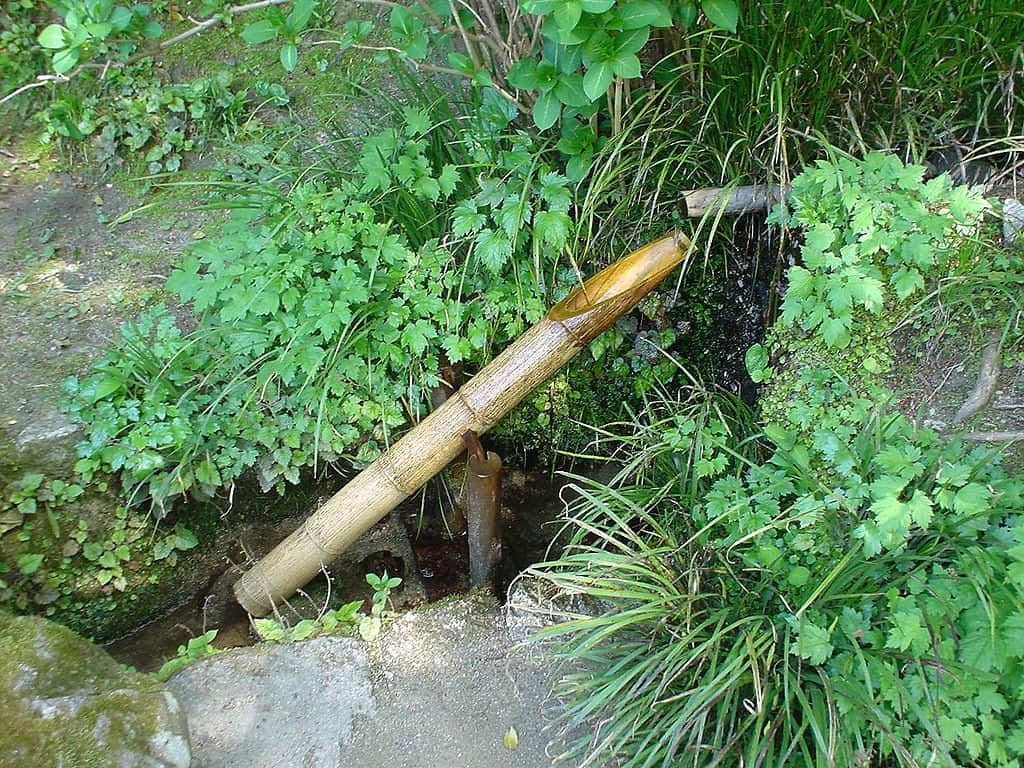
Norbert Preining: Shishiodoshi or Us and They On the perceived exclusivity of Japanese

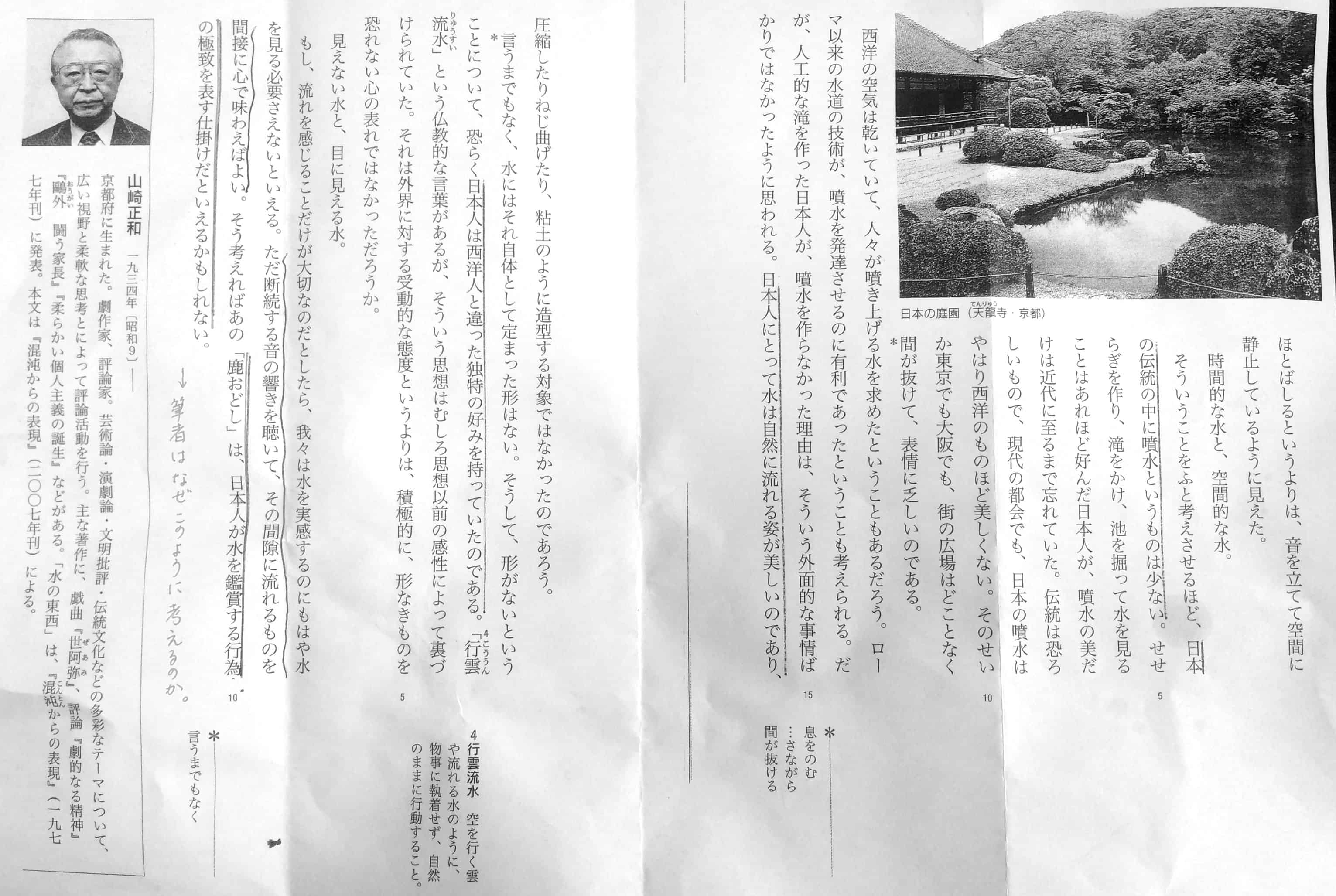
The other day I received from my Japanese teacher an interesting article by Yamazaki Masakazu comparing garden styles, and in particular the attitude towards and presentation of water in Japanese and European gardens (page 1, page 2). The author s list of achievements is long, various professorships, dramatist, literature critique, recognized as Person of Cultural Merit, just to name a view. I was looking forward to an interesting and high quality article! The article itself introduces the reader to Shishiodoshi, one of the standard ingredients of a Japanese garden: It is a device where water drips into a bamboo tube that is also a seesaw. At some point the water in the bamboo tube makes the seesaw switch over and the water pours out, after which the seesaw returns to the original position and a new cycle begins. Shishiodoshi The author describes his feelings and thoughts about the shishiodoshi, in particular connects human life (stress and relieve, cycles), the flow of time, and some other concepts with the shishiodoshi. Up to here it is a wonderful article providing interesting insights into the way the author thinks. Unfortunately, then the author tries to underline his ideas by comparing the Japanese shishiodoshi with European style water fountains, describing the former with all favorable properties and full of deep meaning, while the latter is qualified as beautiful and nice, but bare of any deeper meaning. I don t go into details that the whole comparison is anyway a bad one, as he is comparing Baroque style fountains, a very limited period, and furthermore ignores the fact that water fountains are not genuinely European (isn t there one in the Kenrokuen, one of the three most famous gardens in Japan!?), nor does he consider any other water-installation that might be available. What really destroys the in principle very nice article is the tone: The general tone of the article then can be summarized into: The shishiodoshi is rich on meaning, connects to the life of humans, instigates philosophical reflections, represents nature, the flow of time etc. The water fountain is beautiful and gorgeous, but that is all. I don t think that this separation, or this negative undertone, was created on purpose by the author. A person of his stature is supposedly above this level of primitive comparison. I believe that it is nothing else but a consequence of upbringing and the general attitude that permeates the whole society with this feeling of separateness. Us and They Repeatedly providing sentences like Japanese people and Western people have different tastes.. ( ). About 10 times in this short article expressions like Japanese and Westerner appear, leaving the reader with a bitter taste of an author that considers first the Japanese a people (what about Ainu, Ryukyu, etc?), and second that the Japanese are exclusive in the sense that they are set apart from the rest of the world in their way of thinking, living, being. What puzzles me is that this is not only a singular opinion, but a very general straight in the Japanese media, TV, radio, newspaper, books. Everyone considers Japan and Japanese as something that is fundamentally and profoundly different from everyone else in the world. There is We the Japanese (and that doesn t mean nationality of passport, but blood line!), and there are They the Rest or, as the way of writing and and description on many occasion suggestions, They the Barbarians . A short anecdote will underly this: One of the favorite TV talk show / pseudo-documentary style is about Japanese living abroad. That day a lady married in Paris was interviewed. What followed was a guided tour through Paris showing: Dirt in the gutter, street cleaning cars, waste disposal places. Yes, that was all. Just about the dirt . Of course, at length the (unfortunately only apparent) cleanliness of Japanese cities and neighborhoods are mentioned and shown to remind everyone how wonderful Japan is and how dirty the Barbarians. I don t want to say that I consider Japan more dirty than most other countries just the visible part is clean, the moment you step a bit aside and around the corner, there are the worst trash just thrown away without consideration. Anyway. To return to the topic of Us and They I consider us all humans, first and foremost, and nationality, birthplace, and all that are just by chance. I do NOT reject cultural differences, they are here, of course. But cultural differences are one thing, separating one self and one s perceived people from the rest of the world is another. Conclusion I repeat, I don t think that the author had any ill intentions, but it would have been nicer if the article wouldn t make such a stark distinction. He could have written about Shishiodoshi and water fountains without using the Us They categorization. He could have compared other water installations, could have discussed the long tradition of small ponds in European gardens, just to name a few things. But the author choose to highlight differences instead of commonalities. It is the Us against Them feeling that often makes life in Japan for a foreigner difficult. Japanese are not special, Austrians, too, are not special, nor are Americans, Russians, Tibetans, or any other nationality. No nationality is special, we are all humans. Maybe at some point this will arrive also in the Japanese society and thinking.
Email this to someonePrint this pageShare on FacebookShare on Google+Tweet about this on TwitterShare on LinkedInFlattr the author

19 May 2015

Gunnar Wolf: Feeling somewhat special

Today I feel more special than I have ever felt. Or... Well, or something like that. Thing is, there is no clear adjective for this But I successfully finished my Specialization degree! Yes, believe it or not, today I can formally say I am Specialist in Informatic Security and Information Technologies (Especialista en Seguridad Inform tica y Tecnolog as de la Informaci n), as awarded by the Higher School of Electric and Mechanic Engineering (Escuela Superior de Ingenier a Mec nica y El ctrica) of the National Polytechnical Institute (Instituto Polit cnico Nacional). In Mexico and most Latin American countries, degrees are usually incorporated to your name as if they were a nobiliary title. Thus, when graduating from Engineering studies (pre-graduate universitary level), I became "Ingeniero Gunnar Wolf". People graduating from further postgraduate programs get to introduce themselves as "Maestro Foobar Baz" or "Doctor Quux Noox". And yes, a Specialization is a small posgraduate program (I often say, the smallest possible posgraduate). And as a Specialist... What can I brag about? Can say I am Specially Gunnar Wolf? Or Special Gunnar Wolf? Nope. The honorific title for a Specialization is a pointer to null, and when casted into a char* it might corrupt your honor-recognizing function. So I'm still Ingeniero Gunnar Wolf, for information security reasons. So that's the reason I am now enrolled in the Masters program. I hope to write an addenda to this message soonish (where soonish 18 months) saying I'm finally a Maestro. As a sidenote, many people asked me: Why did I take on the specialization, which is a degree too small for most kinds of real work recognition? Because it's been around twenty years since I last attended a long-term scholar program as a student. And my dish is quite full with activities and responsabilities. I decided to take a short program, designed for 12 months (I graduated in 16, minus two months that the university was on strike... Quite good, I'd say ;-) ) to see how I fared on it, and only later jumping on the full version. Because, yes, to advance my career at the university, I finally recognized and understood that I do need postgraduate studies. Oh, and what kind of work did I do for this? Besides the classes I took, I wrote a thesis on a model for evaluating covert channels for establishing secure communications.

Simon Josefsson: Scrypt in IETF

Colin Percival and I have worked on an internet-draft on scrypt for some time. I realize now that the -00 draft was published over two years ago, turning this effort today somewhat into archeology rather than rocket science. Still, having a published RFC that is easy to refer to from other Internet protocols will hopefully help to establish the point that PBKDF2 alone no longer provides state-of-the-art protection for password hashing. I have written about password hashing before where I give a quick introduction to the basic concepts in the context of the well-known PBKDF2 algorithm. The novelty in scrypt is that it is designed to combat brute force and hardware accelerated attacks on hashed password databases. Briefly, scrypt expands the password and salt (using PBKDF2 as a component) and then uses that to create a large array (typically tens or hundreds of megabytes) using the Salsa20 core hash function and then de-references that large array in a random and sequential pattern. There are three parameters to the scrypt function: a CPU/Memory cost parameter N (varies, typical values are 16384 or 1048576), a blocksize parameter r (typically 8), and a parallelization parameter p (typically a low number like 1 or 16). The process is described in the draft, and there are further discussions in Colin s original scrypt paper. The document has been stable for some time, and we are now asking for it to be published. Thus now is good time to provide us with feedback on the document. The live document on gitlab is available if you want to send us a patch.

Ritesh Raj Sarraf: Lenovo Yoga 2 13 with Debian

I recently acquired a Lenovo Yoga 2 13. While, at the time, the Yoga 3 was available, I decided to go for Yoga 2 13. The Yoga 3 comes with the newer Core M Broadwell family, which, in my opinion, doesn't really bring any astounding benefits. The Yoga 2 13 comes in mulitple variants worldwide. Infact these hardware variations have different effets when run under Linux. My varaint of Yoga 2 13 is:
CPU: Intel(R) Core(TM) i7-4510U CPU @ 2.00GHz
RAM: 8 GiB - Occupying 2 slots
Memory Controller Information
        Supported Interleave: One-way Interleave
        Current Interleave: One-way Interleave
        Maximum Memory Module Size: 8192 MB
        Maximum Total Memory Size: 16384 MB
       
Handle 0x0006, DMI type 6, 12 bytes
Handle 0x0007, DMI type 6, 12 bytes
The usual PCI devices:
rrs@learner:~$ lspci
00:00.0 Host bridge: Intel Corporation Haswell-ULT DRAM Controller (rev 0b)
00:02.0 VGA compatible controller: Intel Corporation Haswell-ULT Integrated Graphics Controller (rev 0b)
00:03.0 Audio device: Intel Corporation Haswell-ULT HD Audio Controller (rev 0b)
00:14.0 USB controller: Intel Corporation 8 Series USB xHCI HC (rev 04)
00:16.0 Communication controller: Intel Corporation 8 Series HECI #0 (rev 04)
00:1b.0 Audio device: Intel Corporation 8 Series HD Audio Controller (rev 04)
00:1c.0 PCI bridge: Intel Corporation 8 Series PCI Express Root Port 4 (rev e4)
00:1d.0 USB controller: Intel Corporation 8 Series USB EHCI #1 (rev 04)
00:1f.0 ISA bridge: Intel Corporation 8 Series LPC Controller (rev 04)
00:1f.2 SATA controller: Intel Corporation 8 Series SATA Controller 1 [AHCI mode] (rev 04)
00:1f.3 SMBus: Intel Corporation 8 Series SMBus Controller (rev 04)
01:00.0 Network controller: Realtek Semiconductor Co., Ltd. RTL8723BE PCIe Wireless Network Adapter
17:37          
And the storage devices
Device Model:     WDC WD5000M22K-24Z1LT0-SSHD-16GB
Device Model:     KINGSTON SM2280S3120G
Storage

The drive runs into serious performance problems when its SSHD's NCQ (mis)feature is under use in Linux <= 4.0.

[28974.232550] ata2.00: configured for UDMA/133
[28974.232565] ahci 0000:00:1f.2: port does not support device sleep
[28983.680955] ata1.00: exception Emask 0x10 SAct 0x7fffffff SErr 0x400100 action 0x6 frozen
[28983.681000] ata1.00: irq_stat 0x08000000, interface fatal error
[28983.681027] ata1: SError:   UnrecovData Handshk  
[28983.681052] ata1.00: failed command: WRITE FPDMA QUEUED
[28983.681082] ata1.00: cmd 61/40:00:b8:84:88/05:00:0a:00:00/40 tag 0 ncq 688128 out
                        res 40/00:3c:78:a9:88/00:00:0a:00:00/40 Emask 0x10 (ATA bus error)
[28983.681152] ata1.00: status:   DRDY  
[28983.681171] ata1.00: failed command: WRITE FPDMA QUEUED
[28983.681202] ata1.00: cmd 61/40:08:f8:89:88/05:00:0a:00:00/40 tag 1 ncq 688128 out
                        res 40/00:3c:78:a9:88/00:00:0a:00:00/40 Emask 0x10 (ATA bus error)
[28983.681271] ata1.00: status:   DRDY  
[28983.681289] ata1.00: failed command: WRITE FPDMA QUEUED
[28983.681316] ata1.00: cmd 61/40:10:38:8f:88/05:00:0a:00:00/40 tag 2 ncq 688128 out
                        res 40/00:3c:78:a9:88/00:00:0a:00:00/40 Emask 0x10 (ATA bus error)
[28983.681387] ata1.00: status:   DRDY  
[28983.681407] ata1.00: failed command: WRITE FPDMA QUEUED
[28983.681435] ata1.00: cmd 61/40:18:78:94:88/05:00:0a:00:00/40 tag 3 ncq 688128 out
                        res 40/00:3c:78:a9:88/00:00:0a:00:00/40 Emask 0x10 (ATA bus error)
[28983.697642] ata1.00: status:   DRDY  
[28983.697643] ata1.00: failed command: WRITE FPDMA QUEUED
[28983.697646] ata1.00: cmd 61/40:c8:38:65:88/05:00:0a:00:00/40 tag 25 ncq 688128 out
                        res 40/00:3c:78:a9:88/00:00:0a:00:00/40 Emask 0x10 (ATA bus error)
[28983.697647] ata1.00: status:   DRDY  
[28983.697648] ata1.00: failed command: WRITE FPDMA QUEUED
[28983.697651] ata1.00: cmd 61/40:d0:78:6a:88/05:00:0a:00:00/40 tag 26 ncq 688128 out
                        res 40/00:3c:78:a9:88/00:00:0a:00:00/40 Emask 0x10 (ATA bus error)
[28983.697651] ata1.00: status:   DRDY  
[28983.697652] ata1.00: failed command: WRITE FPDMA QUEUED
[28983.697656] ata1.00: cmd 61/40:d8:b8:6f:88/05:00:0a:00:00/40 tag 27 ncq 688128 out
                        res 40/00:3c:78:a9:88/00:00:0a:00:00/40 Emask 0x10 (ATA bus error)
[28983.697657] ata1.00: status:   DRDY  
[28983.697658] ata1.00: failed command: WRITE FPDMA QUEUED
[28983.697661] ata1.00: cmd 61/40:e0:f8:74:88/05:00:0a:00:00/40 tag 28 ncq 688128 out
                        res 40/00:3c:78:a9:88/00:00:0a:00:00/40 Emask 0x10 (ATA bus error)
[28983.697662] ata1.00: status:   DRDY  
[28983.697663] ata1.00: failed command: WRITE FPDMA QUEUED
[28983.697666] ata1.00: cmd 61/40:e8:38:7a:88/05:00:0a:00:00/40 tag 29 ncq 688128 out
                        res 40/00:3c:78:a9:88/00:00:0a:00:00/40 Emask 0x10 (ATA bus error)
[28983.697667] ata1.00: status:   DRDY  
[28983.697668] ata1.00: failed command: WRITE FPDMA QUEUED
[28983.697672] ata1.00: cmd 61/40:f0:78:7f:88/05:00:0a:00:00/40 tag 30 ncq 688128 out
                        res 40/00:3c:78:a9:88/00:00:0a:00:00/40 Emask 0x10 (ATA bus error)
[28983.697672] ata1.00: status:   DRDY  
[28983.697676] ata1: hard resetting link
[28984.017356] ata1: SATA link up 6.0 Gbps (SStatus 133 SControl 300)
[28984.022612] ata1.00: configured for UDMA/133
[28984.022740] ata1: EH complete
[28991.611732] Suspending console(s) (use no_console_suspend to debug)
[28992.183822] sd 1:0:0:0: [sdb] Synchronizing SCSI cache
[28992.186569] sd 1:0:0:0: [sdb] Stopping disk
[28992.186604] sd 0:0:0:0: [sda] Synchronizing SCSI cache
[28992.189594] sd 0:0:0:0: [sda] Stopping disk
[28992.967426] PM: suspend of devices complete after 1351.349 msecs
[28992.999461] PM: late suspend of devices complete after 31.990 msecs
[28993.000058] ehci-pci 0000:00:1d.0: System wakeup enabled by ACPI
[28993.000306] xhci_hcd 0000:00:14.0: System wakeup enabled by ACPI
[28993.016463] PM: noirq suspend of devices complete after 16.978 msecs
[28993.017024] ACPI: Preparing to enter system sleep state S3
[28993.017349] PM: Saving platform NVS memory
[28993.017357] Disabling non-boot CPUs ...
[28993.017389] intel_pstate CPU 1 exiting
[28993.018727] kvm: disabling virtualization on CPU1
[28993.019320] smpboot: CPU 1 is now offline
[28993.019646] intel_pstate CPU 2 exiting

In the interim, to overcome this problem, we can force the device to run in degraded mode. I'm not sure if it is really the degraded mode, or the device was falsely advertised as a 6 GiB capable device. Time will tell, but for now, force it to run in 3 GiB mode, and so far, I haven't run into the above mentioned probems. To force 3 GiB speed, apply the following.

rrs@learner:~$ cat /proc/cmdline
BOOT_IMAGE=/vmlinuz-4.0.4+ root=/dev/mapper/sdb_crypt ro cgroup_enable=memory swapaccount=1 rootflags=data=writeback libata.force=1:3 quiet
16:42          

And then verify it... As you can see below, I've forced it for ata1 because I want my SSD drive to run at full-speed. I've done enough I/O, which earlier resulted in the kernel spitting the SATA errors. With this workaround, the kernel does not spit any error messages.

[    1.273365] libata version 3.00 loaded.
[    1.287290] ahci 0000:00:1f.2: AHCI 0001.0300 32 slots 4 ports 6 Gbps 0x3 impl SATA mode
[    1.288238] ata1: FORCE: PHY spd limit set to 3.0Gbps
[    1.288240] ata1: SATA max UDMA/133 abar m2048@0xb051b000 port 0xb051b100 irq 41
[    1.288242] ata2: SATA max UDMA/133 abar m2048@0xb051b000 port 0xb051b180 irq 41
[    1.288244] ata3: DUMMY
[    1.288245] ata4: DUMMY
[    1.606971] ata1: SATA link up 3.0 Gbps (SStatus 123 SControl 320)
[    1.607906] ata1.00: ATA-9: WDC WD5000M22K-24Z1LT0-SSHD-16GB, 02.01A03, max UDMA/133
[    1.607910] ata1.00: 976773168 sectors, multi 0: LBA48 NCQ (depth 31/32), AA
[    1.608856] ata1.00: configured for UDMA/133
[    1.609106] scsi 0:0:0:0: Direct-Access     ATA      WDC WD5000M22K-2 1A03 PQ: 0 ANSI: 5
[    1.927167] ata2: SATA link up 6.0 Gbps (SStatus 133 SControl 300)
[    1.928980] ata2.00: ATA-8: KINGSTON SM2280S3120G, S8FM06.A, max UDMA/133
[    1.928983] ata2.00: 234441648 sectors, multi 16: LBA48 NCQ (depth 31/32), AA
[    1.929616] ata2.00: configured for UDMA/133

And the throughput you get out of your WD SATA SSHD drive, with capability set to 3.0 GiB is:

rrs@learner:/media/SSHD/tmp$ while true; do dd if=/dev/zero of=foo.img bs=1M count=20000; sync; rm -rf foo.img; sync; done
20000+0 records in
20000+0 records out
20971520000 bytes (21 GB) copied, 202.014 s, 104 MB/s
20000+0 records in
20000+0 records out
20971520000 bytes (21 GB) copied, 206.111 s, 102 MB/s

Hannes Reinecke has submitted patches for NCQ enhancements, for Linux 4.1, which I hope will resolve these problems. Another option is to disable NCQ for the drive, or else blacklist the make/model in driver/ata/libata-core.c

By the time I finished this blog entry draft, I had tests to conclude that this did not look like an NCQ problem. Because in degraded mode too, it runs with NCQ enabled (check above).

rrs@learner:~$ sudo fstrim -vv /media/SSHD
/media/SSHD: 268.2 GiB (287930949632 bytes) trimmed
16:58          
rrs@learner:~$ sudo fstrim -vv /
[sudo] password for rrs:
/: 64 GiB (68650749952 bytes) trimmed
16:56          

Another interesting feature of this drive is support for TRIM / DISCARD. This drive's FTL accepts the TRIM command. Ofcourse, you need to ensure that you have discard enabled in all the layers. In my case, SATA + Device Mapper (Crypt and LVM) + File System (ext4) Display

The overall display of this device is amazing. It is large enough to give you vibrant look. At 1920x1080 resolution, things look good. The display support was available out-of-the-box.

There were some suspend / resume hangs that occured with kernels < 4.x, during suspend / resume. The issue was root caused and fixed for Linux 4.0.

You may still notice the following kernel messages, though not problematic to me so far.

[28977.518114] PM: thaw of devices complete after 3607.979 msecs
[28977.590389] i915 0000:00:02.0: BAR 6: [??? 0x00000000 flags 0x2] has bogus alignment
[28977.590582] i915 0000:00:02.0: BAR 6: [??? 0x00000000 flags 0x2] has bogus alignment
[28977.591095] i915 0000:00:02.0: BAR 6: [??? 0x00000000 flags 0x2] has bogus alignment
[28977.591185] i915 0000:00:02.0: BAR 6: [??? 0x00000000 flags 0x2] has bogus alignment
[28977.591368] acpi device:30: Cannot transition to power state D3cold for parent in (unknown)
[28977.591911] pci_bus 0000:01: Allocating resources
[28977.591933] i915 0000:00:02.0: BAR 6: [??? 0x00000000 flags 0x2] has bogus alignment
[28977.592093] i915 0000:00:02.0: BAR 6: [??? 0x00000000 flags 0x2] has bogus alignment
[28977.592401] i915 0000:00:02.0: BAR 6: [??? 0x00000000 flags 0x2] has bogus alignment

You may need to disable the Intel Management Engine Interface (mei.ko), incase you run into suspend/resume problems.

rrs@learner:/media/SSHD/tmp$ cat /etc/modprobe.d/intel-mei-blacklist.conf
blacklist mei
blacklist mei-me
17:01          

You may also run into the following Kernel Oops during suspend/resume. Below, you see 2 interation of sleep because it first hibernates and then sleeps (s2both).

[  180.470206] Syncing filesystems ... done.
[  180.473337] Freezing user space processes ... (elapsed 0.001 seconds) done.
[  180.475210] PM: Marking nosave pages: [mem 0x00000000-0x00000fff]
[  180.475213] PM: Marking nosave pages: [mem 0x0006f000-0x0006ffff]
[  180.475215] PM: Marking nosave pages: [mem 0x00088000-0x000fffff]
[  180.475220] PM: Marking nosave pages: [mem 0x97360000-0x97b5ffff]
[  180.475274] PM: Marking nosave pages: [mem 0x9c36f000-0x9cffefff]
[  180.475356] PM: Marking nosave pages: [mem 0x9d000000-0xffffffff]
[  180.476877] PM: Basic memory bitmaps created
[  180.477003] PM: Preallocating image memory... done (allocated 380227 pages)
[  180.851800] PM: Allocated 1520908 kbytes in 0.37 seconds (4110.56 MB/s)
[  180.851802] Freezing remaining freezable tasks ... (elapsed 0.001 seconds) done.
[  180.853355] Suspending console(s) (use no_console_suspend to debug)
[  180.853520] wlan0: deauthenticating from c4:6e:1f:d0:67:26 by local choice (Reason: 3=DEAUTH_LEAVING)
[  180.864159] cfg80211: Calling CRDA to update world regulatory domain
[  181.172222] PM: freeze of devices complete after 319.294 msecs
[  181.196080] ------------[ cut here ]------------
[  181.196124] WARNING: CPU: 3 PID: 3707 at drivers/gpu/drm/i915/intel_display.c:7904 hsw_enable_pc8+0x659/0x7c0 [i915]()
[  181.196125] SPLL enabled
[  181.196159] Modules linked in: rfcomm ctr ccm bnep pci_stub vboxpci(O) vboxnetadp(O) vboxnetflt(O) vboxdrv(O) bridge stp llc xt_conntrack iptable_filter ipt_MASQUERADE nf_nat_masquerade_ipv4 iptable_nat nf_conntrack_ipv4 nf_defrag_ipv4 nf_nat_ipv4 nf_nat nf_conntrack xt_CHECKSUM xt_tcpudp iptable_mangle ip_tables x_tables nls_utf8 nls_cp437 vfat fat rtsx_usb_ms memstick snd_hda_codec_hdmi joydev mousedev hid_sensor_rotation hid_sensor_incl_3d hid_sensor_als hid_sensor_accel_3d hid_sensor_magn_3d hid_sensor_gyro_3d hid_sensor_trigger industrialio_triggered_buffer kfifo_buf industrialio hid_sensor_iio_common iTCO_wdt iTCO_vendor_support hid_multitouch x86_pkg_temp_thermal intel_powerclamp coretemp intel_rapl iosf_mbi kvm_intel kvm btusb hid_sensor_hub bluetooth uvcvideo videobuf2_vmalloc videobuf2_memops
[  181.196203]  videobuf2_core v4l2_common videodev media pcspkr evdev mac_hid arc4 psmouse serio_raw efivars i2c_i801 rtl8723be btcoexist rtl8723_common rtl_pci rtlwifi mac80211 snd_soc_rt5640 cfg80211 snd_soc_rl6231 snd_hda_codec_realtek i915 snd_soc_core snd_hda_codec_generic ideapad_laptop ac snd_compress dw_dmac sparse_keymap drm_kms_helper rfkill battery dw_dmac_core snd_hda_intel snd_pcm_dmaengine snd_soc_sst_acpi snd_hda_controller video 8250_dw regmap_i2c snd_hda_codec drm snd_hwdep snd_pcm spi_pxa2xx_platform i2c_designware_platform soc_button_array snd_timer i2c_designware_core snd i2c_algo_bit soundcore shpchp lpc_ich button processor fuse ipv6 autofs4 ext4 crc16 jbd2 mbcache btrfs xor raid6_pq algif_skcipher af_alg dm_crypt dm_mod sg usbhid sd_mod rtsx_usb_sdmmc rtsx_usb crct10dif_pclmul
[  181.196220]  crc32_pclmul crc32c_intel ghash_clmulni_intel aesni_intel aes_x86_64 lrw gf128mul glue_helper ablk_helper cryptd ahci libahci libata xhci_pci ehci_pci xhci_hcd ehci_hcd scsi_mod usbcore usb_common thermal fan thermal_sys hwmon i2c_hid hid i2c_core sdhci_acpi sdhci mmc_core gpio_lynxpoint
[  181.196224] CPU: 3 PID: 3707 Comm: kworker/u16:7 Tainted: G           O    4.0.4+ #14
[  181.196225] Hardware name: LENOVO 20344/INVALID, BIOS 96CN29WW(V1.15) 10/16/2014
[  181.196230] Workqueue: events_unbound async_run_entry_fn
[  181.196233]  0000000000000000 ffffffffa0706f68 ffffffff81522198 ffff880064debc88
[  181.196235]  ffffffff8106c5b1 ffff880251460000 ffff880250f83b68 ffff880250f83b78
[  181.196237]  ffff880250f83800 0000000000000001 ffffffff8106c62a ffffffffa071407c
[  181.196238] Call Trace:
[  181.196248]  [<ffffffff81522198>] ? dump_stack+0x40/0x50
[  181.196251]  [<ffffffff8106c5b1>] ? warn_slowpath_common+0x81/0xb0
[  181.196254]  [<ffffffff8106c62a>] ? warn_slowpath_fmt+0x4a/0x50
[  181.196278]  [<ffffffffa06ae349>] ? hsw_enable_pc8+0x659/0x7c0 [i915]
[  181.196289]  [<ffffffffa0643ee0>] ? intel_suspend_complete+0xe0/0x6e0 [i915]
[  181.196300]  [<ffffffffa0644501>] ? i915_drm_suspend_late+0x21/0x90 [i915]
[  181.196311]  [<ffffffffa0644690>] ? i915_pm_poweroff_late+0x40/0x40 [i915]
[  181.196318]  [<ffffffff813fa7ba>] ? dpm_run_callback+0x4a/0x100
[  181.196321]  [<ffffffff813fb010>] ? __device_suspend_late+0xa0/0x180
[  181.196324]  [<ffffffff813fb10e>] ? async_suspend_late+0x1e/0xa0
[  181.196326]  [<ffffffff8108b973>] ? async_run_entry_fn+0x43/0x160
[  181.196330]  [<ffffffff81083a5d>] ? process_one_work+0x14d/0x3f0
[  181.196332]  [<ffffffff81084463>] ? worker_thread+0x53/0x480
[  181.196334]  [<ffffffff81084410>] ? rescuer_thread+0x300/0x300
[  181.196338]  [<ffffffff81089191>] ? kthread+0xc1/0xe0
[  181.196341]  [<ffffffff810890d0>] ? kthread_create_on_node+0x180/0x180
[  181.196346]  [<ffffffff81527898>] ? ret_from_fork+0x58/0x90
[  181.196349]  [<ffffffff810890d0>] ? kthread_create_on_node+0x180/0x180
[  181.196350] ---[ end trace 8e339004db298838 ]---
[  181.220094] PM: late freeze of devices complete after 47.936 msecs
[  181.220972] PM: noirq freeze of devices complete after 0.875 msecs
[  181.221577] ACPI: Preparing to enter system sleep state S4
[  181.221886] PM: Saving platform NVS memory
[  181.222702] Disabling non-boot CPUs ...
[  181.222731] intel_pstate CPU 1 exiting
[  181.224041] kvm: disabling virtualization on CPU1
[  181.224680] smpboot: CPU 1 is now offline
[  181.225121] intel_pstate CPU 2 exiting
[  181.226407] kvm: disabling virtualization on CPU2
[  181.227025] smpboot: CPU 2 is now offline
[  181.227441] intel_pstate CPU 3 exiting
[  181.227728] Broke affinity for irq 19
[  181.227747] Broke affinity for irq 41
[  181.228771] kvm: disabling virtualization on CPU3
[  181.228793] smpboot: CPU 3 is now offline
[  181.229624] PM: Creating hibernation image:
[  181.563651] PM: Need to copy 379053 pages
[  181.563655] PM: Normal pages needed: 379053 + 1024, available pages: 1697704
[  182.472910] PM: Hibernation image created (379053 pages copied)
[  181.232347] PM: Restoring platform NVS memory
[  181.233171] Enabling non-boot CPUs ...
[  181.233246] x86: Booting SMP configuration:
[  181.233248] smpboot: Booting Node 0 Processor 1 APIC 0x1
[  181.246771] kvm: enabling virtualization on CPU1
[  181.249339] CPU1 is up
[  181.249389] smpboot: Booting Node 0 Processor 2 APIC 0x2
[  181.262313] kvm: enabling virtualization on CPU2
[  181.264853] CPU2 is up
[  181.264903] smpboot: Booting Node 0 Processor 3 APIC 0x3
[  181.277831] kvm: enabling virtualization on CPU3
[  181.280317] CPU3 is up
[  181.288471] ACPI: Waking up from system sleep state S4
[  182.340655] PM: noirq thaw of devices complete after 0.637 msecs
[  182.378087] PM: early thaw of devices complete after 37.428 msecs
[  182.378436] rtlwifi: rtlwifi: wireless switch is on
[  182.451021] rtc_cmos 00:01: System wakeup disabled by ACPI
[  182.697575] ata1: SATA link up 3.0 Gbps (SStatus 123 SControl 320)
[  182.697617] ata2: SATA link up 6.0 Gbps (SStatus 133 SControl 300)
[  182.699248] ata1.00: configured for UDMA/133
[  182.699911] ata2.00: configured for UDMA/133
[  182.699917] ahci 0000:00:1f.2: port does not support device sleep
[  186.059539] PM: thaw of devices complete after 3685.338 msecs
[  186.134292] i915 0000:00:02.0: BAR 6: [??? 0x00000000 flags 0x2] has bogus alignment
[  186.134479] i915 0000:00:02.0: BAR 6: [??? 0x00000000 flags 0x2] has bogus alignment
[  186.134992] i915 0000:00:02.0: BAR 6: [??? 0x00000000 flags 0x2] has bogus alignment
[  186.135080] i915 0000:00:02.0: BAR 6: [??? 0x00000000 flags 0x2] has bogus alignment
[  186.135266] acpi device:30: Cannot transition to power state D3cold for parent in (unknown)
[  186.135950] pci_bus 0000:01: Allocating resources
[  186.135974] pcieport 0000:00:1c.0: bridge window [mem 0x00100000-0x000fffff 64bit pref] to [bus 01] add_size 200000
[  186.135980] i915 0000:00:02.0: BAR 6: [??? 0x00000000 flags 0x2] has bogus alignment
[  186.136049] pcieport 0000:00:1c.0: res[15]=[mem 0x00100000-0x000fffff 64bit pref] get_res_add_size add_size 200000
[  186.136072] pcieport 0000:00:1c.0: BAR 15: assigned [mem 0x9fb00000-0x9fcfffff 64bit pref]
[  186.136174] i915 0000:00:02.0: BAR 6: [??? 0x00000000 flags 0x2] has bogus alignment
[  186.136490] i915 0000:00:02.0: BAR 6: [??? 0x00000000 flags 0x2] has bogus alignment
[  199.454497] Suspending console(s) (use no_console_suspend to debug)
[  200.024190] sd 1:0:0:0: [sdb] Synchronizing SCSI cache
[  200.024356] sd 0:0:0:0: [sda] Synchronizing SCSI cache
[  200.025359] sd 1:0:0:0: [sdb] Stopping disk
[  200.028701] sd 0:0:0:0: [sda] Stopping disk
[  201.106085] PM: suspend of devices complete after 1651.336 msecs
[  201.106591] ------------[ cut here ]------------
[  201.106628] WARNING: CPU: 0 PID: 3725 at drivers/gpu/drm/i915/intel_display.c:7904 hsw_enable_pc8+0x659/0x7c0 [i915]()
[  201.106628] SPLL enabled
[  201.106656] Modules linked in: rfcomm ctr ccm bnep pci_stub vboxpci(O) vboxnetadp(O) vboxnetflt(O) vboxdrv(O) bridge stp llc xt_conntrack iptable_filter ipt_MASQUERADE nf_nat_masquerade_ipv4 iptable_nat nf_conntrack_ipv4 nf_defrag_ipv4 nf_nat_ipv4 nf_nat nf_conntrack xt_CHECKSUM xt_tcpudp iptable_mangle ip_tables x_tables nls_utf8 nls_cp437 vfat fat rtsx_usb_ms memstick snd_hda_codec_hdmi joydev mousedev hid_sensor_rotation hid_sensor_incl_3d hid_sensor_als hid_sensor_accel_3d hid_sensor_magn_3d hid_sensor_gyro_3d hid_sensor_trigger industrialio_triggered_buffer kfifo_buf industrialio hid_sensor_iio_common iTCO_wdt iTCO_vendor_support hid_multitouch x86_pkg_temp_thermal intel_powerclamp coretemp intel_rapl iosf_mbi kvm_intel kvm btusb hid_sensor_hub bluetooth uvcvideo videobuf2_vmalloc videobuf2_memops
[  201.106694]  videobuf2_core v4l2_common videodev media pcspkr evdev mac_hid arc4 psmouse serio_raw efivars i2c_i801 rtl8723be btcoexist rtl8723_common rtl_pci rtlwifi mac80211 snd_soc_rt5640 cfg80211 snd_soc_rl6231 snd_hda_codec_realtek i915 snd_soc_core snd_hda_codec_generic ideapad_laptop ac snd_compress dw_dmac sparse_keymap drm_kms_helper rfkill battery dw_dmac_core snd_hda_intel snd_pcm_dmaengine snd_soc_sst_acpi snd_hda_controller video 8250_dw regmap_i2c snd_hda_codec drm snd_hwdep snd_pcm spi_pxa2xx_platform i2c_designware_platform soc_button_array snd_timer i2c_designware_core snd i2c_algo_bit soundcore shpchp lpc_ich button processor fuse ipv6 autofs4 ext4 crc16 jbd2 mbcache btrfs xor raid6_pq algif_skcipher af_alg dm_crypt dm_mod sg usbhid sd_mod rtsx_usb_sdmmc rtsx_usb crct10dif_pclmul
[  201.106711]  crc32_pclmul crc32c_intel ghash_clmulni_intel aesni_intel aes_x86_64 lrw gf128mul glue_helper ablk_helper cryptd ahci libahci libata xhci_pci ehci_pci xhci_hcd ehci_hcd scsi_mod usbcore usb_common thermal fan thermal_sys hwmon i2c_hid hid i2c_core sdhci_acpi sdhci mmc_core gpio_lynxpoint
[  201.106714] CPU: 0 PID: 3725 Comm: kworker/u16:25 Tainted: G        W  O    4.0.4+ #14
[  201.106715] Hardware name: LENOVO 20344/INVALID, BIOS 96CN29WW(V1.15) 10/16/2014
[  201.106720] Workqueue: events_unbound async_run_entry_fn
[  201.106723]  0000000000000000 ffffffffa0706f68 ffffffff81522198 ffff880064dd7c88
[  201.106725]  ffffffff8106c5b1 ffff880251460000 ffff880250f83b68 ffff880250f83b78
[  201.106727]  ffff880250f83800 0000000000000002 ffffffff8106c62a ffffffffa071407c
[  201.106728] Call Trace:
[  201.106737]  [<ffffffff81522198>] ? dump_stack+0x40/0x50
[  201.106740]  [<ffffffff8106c5b1>] ? warn_slowpath_common+0x81/0xb0
[  201.106742]  [<ffffffff8106c62a>] ? warn_slowpath_fmt+0x4a/0x50
[  201.106765]  [<ffffffffa06ae349>] ? hsw_enable_pc8+0x659/0x7c0 [i915]
[  201.106776]  [<ffffffffa0643ee0>] ? intel_suspend_complete+0xe0/0x6e0 [i915]
[  201.106786]  [<ffffffffa0644501>] ? i915_drm_suspend_late+0x21/0x90 [i915]
[  201.106797]  [<ffffffffa0644690>] ? i915_pm_poweroff_late+0x40/0x40 [i915]
[  201.106802]  [<ffffffff813fa7ba>] ? dpm_run_callback+0x4a/0x100
[  201.106805]  [<ffffffff813fb010>] ? __device_suspend_late+0xa0/0x180
[  201.106809]  [<ffffffff813fb10e>] ? async_suspend_late+0x1e/0xa0
[  201.106811]  [<ffffffff8108b973>] ? async_run_entry_fn+0x43/0x160
[  201.106813]  [<ffffffff81083a5d>] ? process_one_work+0x14d/0x3f0
[  201.106815]  [<ffffffff81084463>] ? worker_thread+0x53/0x480
[  201.106818]  [<ffffffff81084410>] ? rescuer_thread+0x300/0x300
[  201.106821]  [<ffffffff81089191>] ? kthread+0xc1/0xe0
[  201.106824]  [<ffffffff810890d0>] ? kthread_create_on_node+0x180/0x180
[  201.106827]  [<ffffffff81527898>] ? ret_from_fork+0x58/0x90
[  201.106830]  [<ffffffff810890d0>] ? kthread_create_on_node+0x180/0x180
[  201.106832] ---[ end trace 8e339004db298839 ]---
[  201.130052] PM: late suspend of devices complete after 23.960 msecs
[  201.130725] ehci-pci 0000:00:1d.0: System wakeup enabled by ACPI
[  201.130885] xhci_hcd 0000:00:14.0: System wakeup enabled by ACPI
[  201.146986] PM: noirq suspend of devices complete after 16.930 msecs
[  201.147591] ACPI: Preparing to enter system sleep state S3
[  201.147942] PM: Saving platform NVS memory
[  201.147948] Disabling non-boot CPUs ...
[  201.147999] intel_pstate CPU 1 exiting
[  201.149324] kvm: disabling virtualization on CPU1
[  201.149337] smpboot: CPU 1 is now offline
[  201.149640] intel_pstate CPU 2 exiting
[  201.151096] kvm: disabling virtualization on CPU2
[  201.151108] smpboot: CPU 2 is now offline
[  201.152017] intel_pstate CPU 3 exiting
[  201.153250] kvm: disabling virtualization on CPU3
[  201.153256] smpboot: CPU 3 is now offline
[  201.156229] ACPI: Low-level resume complete
[  201.156307] PM: Restoring platform NVS memory
[  201.160033] CPU0 microcode updated early to revision 0x1c, date = 2014-07-03
[  201.160190] Enabling non-boot CPUs ...
[  201.160241] x86: Booting SMP configuration:
[  201.160243] smpboot: Booting Node 0 Processor 1 APIC 0x1
[  201.172665] kvm: enabling virtualization on CPU1
[  201.174982] CPU1 is up
[  201.175013] smpboot: Booting Node 0 Processor 2 APIC 0x2
[  201.187569] CPU2 microcode updated early to revision 0x1c, date = 2014-07-03
[  201.188796] kvm: enabling virtualization on CPU2
[  201.191130] CPU2 is up
[  201.191158] smpboot: Booting Node 0 Processor 3 APIC 0x3
[  201.203297] kvm: enabling virtualization on CPU3
[  201.205679] CPU3 is up
[  201.210414] ACPI: Waking up from system sleep state S3
[  201.224617] ehci-pci 0000:00:1d.0: System wakeup disabled by ACPI
[  201.332523] xhci_hcd 0000:00:14.0: System wakeup disabled by ACPI
[  201.332634] PM: noirq resume of devices complete after 121.623 msecs
[  201.372718] PM: early resume of devices complete after 40.058 msecs
[  201.372892] rtlwifi: rtlwifi: wireless switch is on
[  201.373270] sd 0:0:0:0: [sda] Starting disk
[  201.373271] sd 1:0:0:0: [sdb] Starting disk
[  201.445954] rtc_cmos 00:01: System wakeup disabled by ACPI
[  201.692510] ata2: SATA link up 6.0 Gbps (SStatus 133 SControl 300)
[  201.694719] ata2.00: configured for UDMA/133
[  201.694724] ahci 0000:00:1f.2: port does not support device sleep
[  201.836724] usb 2-4: reset high-speed USB device number 2 using xhci_hcd
[  201.890158] psmouse serio1: synaptics: queried max coordinates: x [..5702], y [..4730]
[  201.930768] psmouse serio1: synaptics: queried min coordinates: x [1242..], y [1124..]
[  202.076784] usb 2-5: reset full-speed USB device number 3 using xhci_hcd
[  202.205100] usb 2-5: ep 0x2 - rounding interval to 64 microframes, ep desc says 80 microframes
[  202.316799] usb 2-7: reset full-speed USB device number 5 using xhci_hcd
[  202.444945] usb 2-7: No LPM exit latency info found, disabling LPM.
[  202.556817] usb 2-8: reset full-speed USB device number 6 using xhci_hcd
[  202.908691] usb 2-6: reset high-speed USB device number 4 using xhci_hcd
[  203.932602] ata1: SATA link up 3.0 Gbps (SStatus 123 SControl 320)
[  204.044890] ata1.00: configured for UDMA/133
[  206.228698] PM: resume of devices complete after 4855.892 msecs
[  206.380738] i915 0000:00:02.0: BAR 6: [??? 0x00000000 flags 0x2] has bogus alignment
[  206.383152] i915 0000:00:02.0: BAR 6: [??? 0x00000000 flags 0x2] has bogus alignment
[  206.385775] i915 0000:00:02.0: BAR 6: [??? 0x00000000 flags 0x2] has bogus alignment
[  206.388066] i915 0000:00:02.0: BAR 6: [??? 0x00000000 flags 0x2] has bogus alignment
[  206.390415] acpi device:30: Cannot transition to power state D3cold for parent in (unknown)
[  206.393078] pci_bus 0000:01: Allocating resources
[  206.393098] i915 0000:00:02.0: BAR 6: [??? 0x00000000 flags 0x2] has bogus alignment
[  206.395470] i915 0000:00:02.0: BAR 6: [??? 0x00000000 flags 0x2] has bogus alignment
[  206.397927] i915 0000:00:02.0: BAR 6: [??? 0x00000000 flags 0x2] has bogus alignment
[  206.518516] Restarting kernel threads ... done.
[  206.518812] PM: Basic memory bitmaps freed
[  206.518816] Restarting tasks ... done.

There is one more occasional Kernel Oops (below), which I believe again has to do with Intel.

[ 8770.745396] ------------[ cut here ]------------
[ 8770.745441] WARNING: CPU: 0 PID: 7206 at drivers/gpu/drm/i915/intel_display.c:9756 intel_check_page_flip+0xd2/0xe0 [i915]()
[ 8770.745444] Kicking stuck page flip: queued at 466186, now 466191
[ 8770.745445] Modules linked in: cpuid rfcomm ctr ccm bnep pci_stub vboxpci(O) vboxnetadp(O) vboxnetflt(O) vboxdrv(O) bridge stp llc xt_conntrack iptable_filter ipt_MASQUERADE nf_nat_masquerade_ipv4 iptable_nat nf_conntrack_ipv4 nf_defrag_ipv4 nf_nat_ipv4 nf_nat nf_conntrack xt_CHECKSUM xt_tcpudp iptable_mangle ip_tables x_tables nls_utf8 nls_cp437 vfat fat rtsx_usb_ms memstick snd_hda_codec_hdmi joydev mousedev hid_sensor_rotation hid_sensor_incl_3d hid_sensor_als hid_sensor_accel_3d hid_sensor_magn_3d hid_sensor_gyro_3d hid_sensor_trigger industrialio_triggered_buffer kfifo_buf industrialio hid_sensor_iio_common iTCO_wdt iTCO_vendor_support hid_multitouch x86_pkg_temp_thermal intel_powerclamp coretemp intel_rapl iosf_mbi kvm_intel kvm btusb hid_sensor_hub bluetooth uvcvideo videobuf2_vmalloc videobuf2_memops
[ 8770.745484]  videobuf2_core v4l2_common videodev media pcspkr evdev mac_hid arc4 psmouse serio_raw efivars i2c_i801 rtl8723be btcoexist rtl8723_common rtl_pci rtlwifi mac80211 snd_soc_rt5640 cfg80211 snd_soc_rl6231 snd_hda_codec_realtek i915 snd_soc_core snd_hda_codec_generic ideapad_laptop ac snd_compress dw_dmac sparse_keymap drm_kms_helper rfkill battery dw_dmac_core snd_hda_intel snd_pcm_dmaengine snd_soc_sst_acpi snd_hda_controller video 8250_dw regmap_i2c snd_hda_codec drm snd_hwdep snd_pcm spi_pxa2xx_platform i2c_designware_platform soc_button_array snd_timer i2c_designware_core snd i2c_algo_bit soundcore shpchp lpc_ich button processor fuse ipv6 autofs4 ext4 crc16 jbd2 mbcache btrfs xor raid6_pq algif_skcipher af_alg dm_crypt dm_mod sg usbhid sd_mod rtsx_usb_sdmmc rtsx_usb crct10dif_pclmul
[ 8770.745536]  crc32_pclmul crc32c_intel ghash_clmulni_intel aesni_intel aes_x86_64 lrw gf128mul glue_helper ablk_helper cryptd ahci libahci libata xhci_pci ehci_pci xhci_hcd ehci_hcd scsi_mod usbcore usb_common thermal fan thermal_sys hwmon i2c_hid hid i2c_core sdhci_acpi sdhci mmc_core gpio_lynxpoint
[ 8770.745561] CPU: 0 PID: 7206 Comm: icedove Tainted: G        W  O    4.0.4+ #14
[ 8770.745563] Hardware name: LENOVO 20344/INVALID, BIOS 96CN29WW(V1.15) 10/16/2014
[ 8770.745565]  0000000000000000 ffffffffa0706f68 ffffffff81522198 ffff88025f203dc8
[ 8770.745569]  ffffffff8106c5b1 ffff880250f83800 ffff880254dcc000 0000000000000000
[ 8770.745572]  0000000000000000 0000000000000000 ffffffff8106c62a ffffffffa0709d50
[ 8770.745575] Call Trace:
[ 8770.745577]  <IRQ>  [<ffffffff81522198>] ? dump_stack+0x40/0x50
[ 8770.745592]  [<ffffffff8106c5b1>] ? warn_slowpath_common+0x81/0xb0
[ 8770.745595]  [<ffffffff8106c62a>] ? warn_slowpath_fmt+0x4a/0x50
[ 8770.745616]  [<ffffffffa06a0bb3>] ? __intel_pageflip_stall_check+0x113/0x120 [i915]
[ 8770.745634]  [<ffffffffa06af042>] ? intel_check_page_flip+0xd2/0xe0 [i915]
[ 8770.745652]  [<ffffffffa067cde1>] ? ironlake_irq_handler+0x2e1/0x1010 [i915]
[ 8770.745657]  [<ffffffff81092d1a>] ? check_preempt_curr+0x5a/0xa0
[ 8770.745663]  [<ffffffff812d66c2>] ? timerqueue_del+0x22/0x70
[ 8770.745668]  [<ffffffff810bb7d5>] ? handle_irq_event_percpu+0x75/0x190
[ 8770.745672]  [<ffffffff8101b945>] ? read_tsc+0x5/0x10
[ 8770.745676]  [<ffffffff810bb928>] ? handle_irq_event+0x38/0x50
[ 8770.745680]  [<ffffffff810be841>] ? handle_edge_irq+0x71/0x120
[ 8770.745685]  [<ffffffff810153bd>] ? handle_irq+0x1d/0x30
[ 8770.745689]  [<ffffffff8152a866>] ? do_IRQ+0x46/0xe0
[ 8770.745694]  [<ffffffff8152866d>] ? common_interrupt+0x6d/0x6d
[ 8770.745695]  <EOI>  [<ffffffff8152794d>] ? system_call_fastpath+0x16/0x1b
[ 8770.745701] ---[ end trace 8e339004db29883a ]---
Network

In my case, the laptop came with the Realtek Wireless device (details above in lspci output). Note: The machine has no wired interface.

While the Intel Wifi devices shipped with this laptop have their own share of problems, this device (rtl8723be) works out of the box. But only for a while. There is no certain pattern on what triggers the bug, but once triggered, the network just freezes. Nothing is logged.

If your Yoga 2 13 came with the RTL chip, the following workaround may help avoid the network issues.

rrs@learner:/media/SSHD/tmp$ cat /etc/modprobe.d/rtl8723be.conf
options rtl8723be fwlps=0
17:06          
MCE

Almost every boot, eventually, the kernel reports MCE errors. Not something I understand well, but so far, it hasn't caused any visible issues. And from what I have googled so far, nobody seems to have fixed it anywhere

So, with fingers crossed, lets just hope this never translates into a real problem.

What the kernel reports of the CPU's capabilities.

[    0.041496] mce: CPU supports 7 MCE banks
[  299.540930] mce: [Hardware Error]: Machine check events logged

The MCE logs extracted from the buffer.

mcelog: failed to prefill DIMM database from DMI data
Hardware event. This is not a software error.
MCE 0
CPU 0 BANK 5
MISC 38a0000086 ADDR fef81880
TIME 1432455005 Sun May 24 13:40:05 2015
MCG status:
MCi status:
Error overflow
Uncorrected error
MCi_MISC register valid
MCi_ADDR register valid
Processor context corrupt
MCA: corrected filtering (some unreported errors in same region)
Generic CACHE Level-2 Generic Error
STATUS ee0000000040110a MCGSTATUS 0
MCGCAP c07 APICID 0 SOCKETID 0
CPUID Vendor Intel Family 6 Model 69
Hardware event. This is not a software error.
MCE 1
CPU 0 BANK 6
MISC 78a0000086 ADDR fef81780
TIME 1432455005 Sun May 24 13:40:05 2015
MCG status:
MCi status:
Uncorrected error
MCi_MISC register valid
MCi_ADDR register valid
Processor context corrupt
MCA: corrected filtering (some unreported errors in same region)
Generic CACHE Level-2 Generic Error
STATUS ae0000000040110a MCGSTATUS 0
MCGCAP c07 APICID 0 SOCKETID 0
CPUID Vendor Intel Family 6 Model 69
Hardware event. This is not a software error.
MCE 2
CPU 0 BANK 5
MISC 38a0000086 ADDR fef81880
TIME 1432455114 Sun May 24 13:41:54 2015
MCG status:
MCi status:
Error overflow
Uncorrected error
MCi_MISC register valid
MCi_ADDR register valid
Processor context corrupt
MCA: corrected filtering (some unreported errors in same region)
Generic CACHE Level-2 Generic Error
STATUS ee0000000040110a MCGSTATUS 0
MCGCAP c07 APICID 0 SOCKETID 0
CPUID Vendor Intel Family 6 Model 69
Hardware event. This is not a software error.
MCE 3
CPU 0 BANK 6
MISC 78a0000086 ADDR fef81780
TIME 1432455114 Sun May 24 13:41:54 2015
MCG status:
MCi status:
Uncorrected error
MCi_MISC register valid
MCi_ADDR register valid
Processor context corrupt
MCA: corrected filtering (some unreported errors in same region)
Generic CACHE Level-2 Generic Error
STATUS ae0000000040110a MCGSTATUS 0
MCGCAP c07 APICID 0 SOCKETID 0
CPUID Vendor Intel Family 6 Model 69

Categories:

Keywords:

Andrew Cater: CI20 - MIPS dev. board - first impressions.

Annoyingly, I've bought one of these just before the form factor changes and it becomes a nice square board.

Up and running immediately out of the box, which is nice.

The kernel supplied on NAND flash is recent enough that it supports CONFIG_FHANDLE which is needed for the upgrade to Jessie.

The instructions for Jessie upgrade are straightforward and appear to be working correctly: they also suggest apt-get autoremove and apt-get autoclean to clean up which is a very nice touch.

The sources.list in apt was already pointing to my country's Debian mirror which was even nicer.

Quite a good experience immediately from unboxing: it also adds to the number of machine architectures I've run Debian on:
alpha, amd64, arm, armel, armhf, i386, sparc - not bad for a start.

It's a bit slow - but it's a SoC, so what can you expect? The PowerVR graphics demos were spectacular but the drivers are very definitely non-free - you can't have everything.

[I do notice that there is an FSF-friendly Debian variant, though not yet certified as such - presumably not including PowerVR drivers]

(Lots of occurrences of the word "nice" in this post that I've just noticed. It's either understatement or just that I'm British)

18 May 2015

Daniel Pocock: Free and open WebRTC for the Fedora Community

In January 2014, we launched the rtc.debian.org service for the Debian community. An equivalent service has been in testing for the Fedora community at FedRTC.org. Some key points about the Fedora service:
  • The web front-end is just HTML, CSS and JavaScript. PHP is only used for account creation, the actual WebRTC experience requires no server-side web framework, just a SIP proxy.
  • The web code is all available in a Github repository so people can extend it.
  • Anybody who can authenticate against the FedOAuth OpenID is able to get a fedrtc.org test account immediately.
  • The server is built entirely with packages from CentOS 7 + EPEL 7, except for the SIP proxy itself. The SIP proxy is reSIProcate, which is available as a Fedora package and builds easily on RHEL / CentOS.
Testing it with WebRTC Create an RTC password and then log in. Other users can call you. It is federated, so people can also call from rtc.debian.org or from freephonebox.net. Testing it with other SIP softphones You can use the RTC password to connect to the SIP proxy from many softphones, including Jitsi or Lumicall on Android. Copy it The process to replicate the server for another domain is entirely described in the Real-Time Communications Quick Start Guide. Discuss it The FreeRTC mailing list is a great place to discuss any issues involving this site or free RTC in general. WebRTC opportunities expanding Just this week, the first batch of Firefox OS televisions are hitting the market. Every one of these is a potential WebRTC client that can interact with free communications platforms.

Rapha&#235;l Hertzog: Freexian s report about Debian Long Term Support, April 2015

A Debian LTS logoLike each month, here comes a report about the work of paid contributors to Debian LTS. Individual reports In April, 81.75 work hours have been dispatched among 5 paid contributors (20.75 hours where unused hours of Ben and Holger that were re-dispatched to other contributors). Their reports are available: Evolution of the situation May has seen a small increase in terms of sponsored hours (66.25 hours per month) and June is going to do even better with at least a new gold sponsor. We will have no problems sustaining the increased workload it implies since three Debian developers joined the team of contributors paid by Freexian (Antoine Beaupr , Santiago Ruano Rinc n, Scott Kitterman). The Jessie release probably shed some light on the Debian LTS project since we announced that Jessie will benefit from 5 years of support. Let s hope that the trend will continue in the following months and that we reach our first milestone of funding the equivalent of a half-time position. In terms of security updates waiting to be handled, the situation is a bit contrasted: the dla-needed.txt file lists 28 packages awaiting an update (12 less than last month), the list of open vulnerabilities in Squeeze shows about 60 affected packages in total (4 more than last month). The extra hours helped to make a good stride in the packages awaiting an update but there are many new vulnerabilities waiting to be triaged. Thanks to our sponsors The new sponsors of the month are in bold.

No comment Liked this article? Click here. My blog is Flattr-enabled.

17 May 2015

Andrew Pollock: [debian] Fixing some issues with changelogs.debian.net

I got an email last year pointing out a cosmetic issue with changelogs.debian.net. I think at the time of the email, the only problem was some bitrot in PHP's built-in server variables making some text appear incorrectly. I duly added something to my TODO list to fix it, and it subsequently sat there for like 13 months. In the ensuing time, Debian changed some stuff, and my code started incorrectly handling a 302 as well, which actually broke it good and proper. I finally got around to fixing it. I also fixed a problem where sometimes there can be multiple entries in the Sources file for a package (switching to using api.ftp-master.debian.org would also address this), which caused sometimes caused an incorrect version of the changelog to be returned. In the resulting tinkering, I learned about api.ftp-master.debian.org, which is totally awesome. I could stop maintaining and parsing a local copy of sid's Sources file, and just make a call to this instead. Finally, I added linking to CVEs, because it was a quick thing to do, and adds value. In light of api.ftp-master.debian.org, I'm very tempted to rewrite the redirector. The code is very old and hard for present-day Andrew to maintain, and I despise PHP. I'd rather write it in Python today, with some proper test coverage. I could also potentially host it on AppEngine instead of locally, just so I get some experience with AppEngine It's also been suggested that I fold the changes into the changelog hosting on ftp-master.debian.org. I'm hesitant to do this, as it would require changing the output from plain text to HTML, which would mess up consumers of the plain text (like the current implementation of changelogs.debian.net)

Lunar: Reproducible builds: week 2 in Stretch cycle

What happened about the reproducible builds effort for this week: Media coverage Debian's effort on reproducible builds has been covered in the June 2015 issue of Linux Magazin in Germany. Cover of Linux Magazin June 2015 Article about reproducible builds in Linux Magazin June 2015 Toolchain fixes josch rebased the experimental version of debhelper on 9.20150507. Packages fixed The following 515 packages became reproducible due to changes of their build dependencies: airport-utils, airspy-host, all-in-one-sidebar, ampache, aptfs, arpack, asciio, aspell-kk, asused, balance, batmand, binutils-avr, bioperl, bpm-tools, c2050, cakephp-instaweb, carton, cbp2make, checkbot, checksecurity, chemeq, chronicle, cube2-data, cucumber, darkstat, debci, desktop-file-utils, dh-linktree, django-pagination, dosbox, eekboek, emboss-explorer, encfs, exabgp, fbasics, fife, fonts-lexi-saebom, gdnsd, glances, gnome-clocks, gunicorn, haproxy, haskell-aws, haskell-base-unicode-symbols, haskell-base64-bytestring, haskell-basic-prelude, haskell-binary-shared, haskell-binary, haskell-bitarray, haskell-bool-extras, haskell-boolean, haskell-boomerang, haskell-bytestring-lexing, haskell-bytestring-mmap, haskell-config-value, haskell-mueval, haskell-tasty-kat, itk3, jnr-constants, jshon, kalternatives, kdepim-runtime, kdevplatform, kwalletcli, lemonldap-ng, libalgorithm-combinatorics-perl, libalgorithm-diff-xs-perl, libany-uri-escape-perl, libanyevent-http-scopedclient-perl, libanyevent-perl, libanyevent-processor-perl, libapache-session-wrapper-perl, libapache-sessionx-perl, libapp-options-perl, libarch-perl, libarchive-peek-perl, libaudio-flac-header-perl, libaudio-wav-perl, libaudio-wma-perl, libauth-yubikey-decrypter-perl, libauthen-krb5-simple-perl, libauthen-simple-perl, libautobox-dump-perl, libb-keywords-perl, libbarcode-code128-perl, libbio-das-lite-perl, libbio-mage-perl, libbrowser-open-perl, libbusiness-creditcard-perl, libbusiness-edifact-interchange-perl, libbusiness-isbn-data-perl, libbusiness-tax-vat-validation-perl, libcache-historical-perl, libcache-memcached-perl, libcairo-gobject-perl, libcarp-always-perl, libcarp-fix-1-25-perl, libcatalyst-action-serialize-data-serializer-perl, libcatalyst-controller-formbuilder-perl, libcatalyst-dispatchtype-regex-perl, libcatalyst-plugin-authentication-perl, libcatalyst-plugin-authorization-acl-perl, libcatalyst-plugin-session-store-cache-perl, libcatalyst-plugin-session-store-fastmmap-perl, libcatalyst-plugin-static-simple-perl, libcatalyst-view-gd-perl, libcgi-application-dispatch-perl, libcgi-application-plugin-authentication-perl, libcgi-application-plugin-logdispatch-perl, libcgi-application-plugin-session-perl, libcgi-application-server-perl, libcgi-compile-perl, libcgi-xmlform-perl, libclass-accessor-classy-perl, libclass-accessor-lvalue-perl, libclass-accessor-perl, libclass-c3-adopt-next-perl, libclass-dbi-plugin-type-perl, libclass-field-perl, libclass-handle-perl, libclass-load-perl, libclass-ooorno-perl, libclass-prototyped-perl, libclass-returnvalue-perl, libclass-singleton-perl, libclass-std-fast-perl, libclone-perl, libconfig-auto-perl, libconfig-jfdi-perl, libconfig-simple-perl, libconvert-basen-perl, libconvert-ber-perl, libcpan-checksums-perl, libcpanplus-dist-build-perl, libcriticism-perl, libcrypt-cracklib-perl, libcrypt-dh-gmp-perl, libcrypt-mysql-perl, libcrypt-passwdmd5-perl, libcrypt-simple-perl, libcss-packer-perl, libcss-tiny-perl, libcurses-widgets-perl, libdaemon-control-perl, libdancer-plugin-database-perl, libdancer-session-cookie-perl, libdancer2-plugin-database-perl, libdata-format-html-perl, libdata-uuid-libuuid-perl, libdata-validate-domain-perl, libdate-jd-perl, libdate-simple-perl, libdatetime-astro-sunrise-perl, libdatetime-event-cron-perl, libdatetime-format-dbi-perl, libdatetime-format-epoch-perl, libdatetime-format-mail-perl, libdatetime-tiny-perl, libdatrie, libdb-file-lock-perl, libdbd-firebird-perl, libdbix-abstract-perl, libdbix-class-datetime-epoch-perl, libdbix-class-dynamicdefault-perl, libdbix-class-introspectablem2m-perl, libdbix-class-timestamp-perl, libdbix-connector-perl, libdbix-oo-perl, libdbix-searchbuilder-perl, libdbix-xml-rdb-perl, libdevel-stacktrace-ashtml-perl, libdigest-hmac-perl, libdist-zilla-plugin-emailnotify-perl, libemail-date-format-perl, libemail-mime-perl, libemail-received-perl, libemail-sender-perl, libemail-simple-perl, libencode-detect-perl, libexporter-tidy-perl, libextutils-cchecker-perl, libextutils-installpaths-perl, libextutils-libbuilder-perl, libextutils-makemaker-cpanfile-perl, libextutils-typemap-perl, libfile-counterfile-perl, libfile-pushd-perl, libfile-read-perl, libfile-touch-perl, libfile-type-perl, libfinance-bank-ie-permanenttsb-perl, libfont-freetype-perl, libfrontier-rpc-perl, libgd-securityimage-perl, libgeo-coordinates-utm-perl, libgit-pureperl-perl, libgnome2-canvas-perl, libgnome2-wnck-perl, libgraph-readwrite-perl, libgraphics-colornames-www-perl, libgssapi-perl, libgtk2-appindicator-perl, libgtk2-gladexml-simple-perl, libgtk2-notify-perl, libhash-asobject-perl, libhash-moreutils-perl, libhtml-calendarmonthsimple-perl, libhtml-display-perl, libhtml-fillinform-perl, libhtml-form-perl, libhtml-formhandler-model-dbic-perl, libhtml-html5-entities-perl, libhtml-linkextractor-perl, libhtml-tableextract-perl, libhtml-widget-perl, libhtml-widgets-selectlayers-perl, libhtml-wikiconverter-mediawiki-perl, libhttp-async-perl, libhttp-body-perl, libhttp-date-perl, libimage-imlib2-perl, libimdb-film-perl, libimport-into-perl, libindirect-perl, libio-bufferedselect-perl, libio-compress-lzma-perl, libio-compress-perl, libio-handle-util-perl, libio-interface-perl, libio-multiplex-perl, libio-socket-inet6-perl, libipc-system-simple-perl, libiptables-chainmgr-perl, libjoda-time-java, libjsr305-java, libkiokudb-perl, liblemonldap-ng-cli-perl, liblexical-var-perl, liblingua-en-fathom-perl, liblinux-dvb-perl, liblocales-perl, liblog-dispatch-configurator-any-perl, liblog-log4perl-perl, liblog-report-lexicon-perl, liblwp-mediatypes-perl, liblwp-protocol-https-perl, liblwpx-paranoidagent-perl, libmail-sendeasy-perl, libmarc-xml-perl, libmason-plugin-routersimple-perl, libmasonx-processdir-perl, libmath-base85-perl, libmath-basecalc-perl, libmath-basecnv-perl, libmath-bigint-perl, libmath-convexhull-perl, libmath-gmp-perl, libmath-gradient-perl, libmath-random-isaac-perl, libmath-random-oo-perl, libmath-random-tt800-perl, libmath-tamuanova-perl, libmemoize-expirelru-perl, libmemoize-memcached-perl, libmime-base32-perl, libmime-lite-tt-perl, libmixin-extrafields-param-perl, libmock-quick-perl, libmodule-cpanfile-perl, libmodule-load-conditional-perl, libmodule-starter-pbp-perl, libmodule-util-perl, libmodule-versions-report-perl, libmongodbx-class-perl, libmoo-perl, libmoosex-app-cmd-perl, libmoosex-attributehelpers-perl, libmoosex-blessed-reconstruct-perl, libmoosex-insideout-perl, libmoosex-relatedclassroles-perl, libmoosex-role-timer-perl, libmoosex-role-withoverloading-perl, libmoosex-storage-perl, libmoosex-types-common-perl, libmoosex-types-uri-perl, libmoox-singleton-perl, libmoox-types-mooselike-numeric-perl, libmousex-foreign-perl, libmp3-tag-perl, libmysql-diff-perl, libnamespace-clean-perl, libnet-bonjour-perl, libnet-cli-interact-perl, libnet-daap-dmap-perl, libnet-dbus-glib-perl, libnet-dns-perl, libnet-frame-perl, libnet-google-authsub-perl, libnet-https-any-perl, libnet-https-nb-perl, libnet-idn-encode-perl, libnet-idn-nameprep-perl, libnet-imap-client-perl, libnet-irc-perl, libnet-mac-vendor-perl, libnet-openid-server-perl, libnet-smtp-ssl-perl, libnet-smtp-tls-perl, libnet-smtpauth-perl, libnet-snpp-perl, libnet-sslglue-perl, libnet-telnet-perl, libnhgri-blastall-perl, libnumber-range-perl, libobject-signature-perl, libogg-vorbis-header-pureperl-perl, libopenoffice-oodoc-perl, libparse-cpan-packages-perl, libparse-debian-packages-perl, libparse-fixedlength-perl, libparse-syslog-perl, libparse-win32registry-perl, libpdf-create-perl, libpdf-report-perl, libperl-destruct-level-perl, libperl-metrics-simple-perl, libperl-minimumversion-perl, libperl6-slurp-perl, libpgobject-simple-perl, libplack-middleware-fixmissingbodyinredirect-perl, libplack-test-externalserver-perl, libplucene-perl, libpod-tests-perl, libpoe-component-client-ping-perl, libpoe-component-jabber-perl, libpoe-component-resolver-perl, libpoe-component-server-soap-perl, libpoe-component-syndicator-perl, libposix-strftime-compiler-perl, libposix-strptime-perl, libpostscript-simple-perl, libproc-processtable-perl, libprotocol-osc-perl, librcs-perl, libreadonly-xs-perl, libreturn-multilevel-perl, librivescript-perl, librouter-simple-perl, librrd-simple-perl, libsafe-isa-perl, libscope-guard-perl, libsemver-perl, libset-tiny-perl, libsharyanto-file-util-perl, libshell-command-perl, libsnmp-info-perl, libsoap-lite-perl, libstat-lsmode-perl, libstatistics-online-perl, libstring-compare-constanttime-perl, libstring-format-perl, libstring-toidentifier-en-perl, libstring-tt-perl, libsub-recursive-perl, libsvg-tt-graph-perl, libsvn-notify-perl, libswish-api-common-perl, libtap-formatter-junit-perl, libtap-harness-archive-perl, libtemplate-plugin-number-format-perl, libtemplate-plugin-yaml-perl, libtemplate-tiny-perl, libtenjin-perl, libterm-visual-perl, libtest-block-perl, libtest-carp-perl, libtest-classapi-perl, libtest-cmd-perl, libtest-consistentversion-perl, libtest-data-perl, libtest-databaserow-perl, libtest-differences-perl, libtest-file-sharedir-perl, libtest-hasversion-perl, libtest-kwalitee-perl, libtest-lectrotest-perl, libtest-module-used-perl, libtest-object-perl, libtest-perl-critic-perl, libtest-pod-coverage-perl, libtest-script-perl, libtest-script-run-perl, libtest-spelling-perl, libtest-strict-perl, libtest-synopsis-perl, libtest-trap-perl, libtest-unit-perl, libtest-utf8-perl, libtest-without-module-perl, libtest-www-selenium-perl, libtest-xml-simple-perl, libtest-yaml-perl, libtex-encode-perl, libtext-bibtex-perl, libtext-csv-encoded-perl, libtext-csv-perl, libtext-dhcpleases-perl, libtext-diff-perl, libtext-quoted-perl, libtext-trac-perl, libtext-vfile-asdata-perl, libthai, libthread-conveyor-perl, libthread-sigmask-perl, libtie-cphash-perl, libtie-ical-perl, libtime-stopwatch-perl, libtk-dirselect-perl, libtk-pod-perl, libtorrent, libturpial, libunicode-japanese-perl, libunicode-maputf8-perl, libunicode-stringprep-perl, libuniversal-isa-perl, libuniversal-moniker-perl, liburi-encode-perl, libvi-quickfix-perl, libvideo-capture-v4l-perl, libvideo-fourcc-info-perl, libwiki-toolkit-plugin-rss-reader-perl, libwww-mechanize-formfiller-perl, libwww-mechanize-gzip-perl, libwww-mechanize-perl, libwww-opensearch-perl, libx11-freedesktop-desktopentry-perl, libxc, libxml-dtdparser-perl, libxml-easy-perl, libxml-handler-trees-perl, libxml-libxml-iterator-perl, libxml-libxslt-perl, libxml-rss-perl, libxml-validator-schema-perl, libxml-xpathengine-perl, libxml-xql-perl, llvm-py, madbomber, makefs, mdpress, media-player-info, meta-kde-telepathy, metamonger, mmm-mode, mupen64plus-audio-sdl, mupen64plus-rsp-hle, mupen64plus-ui-console, mupen64plus-video-z64, mussort, newpid, node-formidable, node-github-url-from-git, node-transformers, nsnake, odin, otcl, parsley, pax, pcsc-perl, pd-purepd, pen, prank, proj, proot, puppet-module-puppetlabs-postgresql, python-async, python-pysnmp4, qrencode, r-bioc-graph, r-bioc-hypergraph, r-bioc-iranges, r-bioc-xvector, r-cran-pscl, rbenv, rlinetd, rs, ruby-ascii85, ruby-cutest, ruby-ejs, ruby-factory-girl, ruby-hdfeos5, ruby-kpeg, ruby-libxml, ruby-password, ruby-zip-zip, sdl-sound1.2, stterm, systemd, taktuk, tcc, tryton-modules-account-invoice, ttf-summersby, tupi, tuxpuck, unknown-horizons, unsafe-mock, vcheck, versiontools, vim-addon-manager, vlfeat, vsearch, xacobeo, xen-tools, yubikey-personalization-gui, yubikey-personalization. The following packages became reproducible after getting fixed: Some uploads fixed some reproducibility issues but not all of them: Patches submitted which did not make their way to the archive yet: reproducible.debian.net Alioth now hosts a script that can be used to redo builds and test for a package. This was preliminary done manually through requests over the IRC channel. This should reduce the number of interruptions for jenkins' maintainers The graph of the oldest build per day has been fixed. Maintainance scripts will not error out when they are no files to remove. Holger Levsen started work on being able to test variations of CPU features and build date (as in build in another month of 1984) by using virtual machines. debbindiff development Version 18 has been released. It will uses proper comparators for pk3 and info files. Tar member names are now assumed to be UTF-8 encoded. The limit for the maximum number of different lines has been removed. Let's see on reproducible.debian.net how it goes for pathological cases. It's now possible to specify both --html and --text output. When neither of them is specified, the default will be to print a text report on the standard output (thanks to Paul Wise for the suggestion). Documentation update Nicolas Boulenguez investigated Ada libraries. Package reviews 451 obsolete reviews have been removed and 156 added this week. New identified issues: running kernel version getting captured, random filenames in GHC debug symbols, and timestamps in headers generated by qdbusxml2cpp. Misc. Holger Levsen went to re:publica and talked about reproducible builds to developers and users there. Holger also had a chance to meet FreeBSD developers and discuss the status of FreeBSD. Investigations have started on how it could be made part of our current test system. Laurent Guerby gave Lunar access to systems in the GCC Compile Farm. Hopefully access to these powerful machines will help to fix packages for GCC, Iceweasel, and similar packages requiring long build times.

16 May 2015

Ian Campbell: A vhosting git setup with gitolite and gitweb

Since gitorious' shutdown I decided it was time to start hosting my own git repositories for my own little projects (although the company which took over gitorious has a Free software offering it seems that their hosted offering is based on the proprietary version, and in any case once bitten, twice shy and all that). After a bit of investigation I settled on using gitolite and gitweb. I did consider (and even had a vague preference for) cgit but it wasn't available in Wheezy (even backports, and the backport looked tricky) and I haven't upgraded my VPS yet. I may reconsider cgit this once I switch to Jessie. The only wrinkle was that my VPS is shared with a friend and I didn't want to completely take over the gitolite and gitweb namespaces in case he ever wanted to setup git.hisdomain.com, so I needed something which was at least somewhat compatible with vhosting. gitolite doesn't appear to support such things out of the box but I found an interesting/useful post from Julius Plenz which included sufficient inspiration that I thought I knew what to do. After a bit of trial and error here is what I ended up with: Install gitolite The gitolite website has plenty of documentation on configuring gitolite. But since gitolite is in Debian its even more trivial than even the quick install makes out. I decided to use the newer gitolite3 package from wheezy-backports instead of the gitolite (v2) package from Wheezy. I already had backports enabled so this was just:
# apt-get install gitolite3/wheezy-backports
I accepted the defaults and gave it the public half of the ssh key which I had created to be used as the gitolite admin key. By default this added a user gitolite3 with a home directory of /var/lib/gitolite3. Since they username forms part of the URL used to access the repositories I want it to include the 3, so I edited /etc/passwd, /etc/groups, /etc/shadow and /etc/gshadow to say just gitolite but leaving the home directory as gitolite3. Now I could clone the gitolite-admin repo and begin to configure things. Add my user This was simple as dropping the public half into the gitolite-admin repo as keydir/ijc.pub, then git add, commit and push. Setup vhosting Between the gitolite docs and Julius' blog post I had a pretty good idea what I wanted to do here. I wasn't too worried about making the vhost transparent from the developer's (ssh:// URL) point of view, just from the gitweb and git clone side. So I decided to adapt things to use a simple $VHOST/$REPO.git schema. I created /var/lib/gitolite3/local/lib/Gitolite/Triggers/VHost.pm containing:
package Gitolite::Triggers::VHost;
use strict;
use warnings;
use File::Slurp qw(read_file write_file);
sub post_compile  
    my %vhost = ();
    my @projlist = read_file("$ENV HOME /projects.list");
    for my $proj (sort @projlist)  
        $proj =~ m,^([^/\.]*\.[^/]*)/(.*)$, or next;
        my ($host, $repo) = ($1,$2);
        $vhost $host  //= [];
        push @ $vhost $host  => $repo;
     
    for my $v (keys %vhost)  
        write_file("$ENV HOME /projects.$v.list",
                     atomic => 1  , join("\n",@ $vhost $v ));
     
 
1;
I then edited /var/lib/gitolite3/.gitolite.rc and ensured it contained:
LOCAL_CODE                =>  "$ENV HOME /local",
POST_COMPILE => [ 'VHost::post_compile', ],
(The first I had to uncomment, the second to add). All this trigger does is take the global projects.list, in which gitolite will list any repo which is configured to be accessible via gitweb, and split it into several vhost specific lists. Create first repository Now that the basics were in place I could create my first repository (for hosting qcontrol). In the gitolite-admin repository I edited conf/gitolite.conf and added:
repo hellion.org.uk/qcontrol
    RW+     =   ijc
After adding, committing and pushing I now have "/var/lib/gitolite3/projects.list" containing:
hellion.org.uk/qcontrol.git
testing.git
(the testing.git repository is configured by default) and /var/lib/gitolite3/projects.hellion.org.uk.list containing just:
qcontrol.git
For cloning the URL is:
gitolite@$ VPSNAME :hellion.org.uk/qcontrol.git
which is rather verbose ($ VPSNAME is quote long in my case too), so to simplify things I added to my .ssh/config:
Host gitolite
Hostname $ VPSNAME 
User gitolite
IdentityFile ~/.ssh/id_rsa_gitolite
so I can instead use:
gitolite:hellion.org.uk/qcontrol.git
which is a bit less of a mouthful and almost readable. Configure gitweb (http:// URL browsing) Following the documentation's advice I edited /var/lib/gitolite3/.gitolite.rc to set:
UMASK                           =>  0027,
and then:
$ chmod -R g+rX /var/lib/gitolite3/repositories/*
Which arranges that members of the gitolite group can read anything under /var/lib/gitolite3/repositories/*. Then:
# adduser www-data gitolite
This adds the user www-data to the gitolite group so it can take advantage of those relaxed permissions. I'm not super happy about this but since gitweb runs as www-data:www-data this seems to be the recommended way of doing things. I'm consoling myself with the fact that I don't plan on hosting anything sensitive... I also arranged things such that members of the groups can only list the contents of directories from the vhost directory down by setting g=x not g=rx on higher level directories. Potentially sensitive files do not have group permissions at all either. Next I created /etc/apache2/gitolite-gitweb.conf:
die unless $ENV GIT_PROJECT_ROOT ;
$ENV GIT_PROJECT_ROOT  =~ m,^.*/([^/]+)$,;
our $gitolite_vhost = $1;
our $projectroot = $ENV GIT_PROJECT_ROOT ;
our $projects_list = "/var/lib/gitolite3/projects.$ gitolite_vhost .list";
our @git_base_url_list = ("http://git.$ gitolite_vhost ");
This extracts the vhost name from $ GIT_PROJECT_ROOT (it must be the last element) and uses it to select the appropriate vhost specific projects.list. Then I added a new vhost to my apache2 configuration:
<VirtualHost 212.110.190.137:80 [2001:41c8:1:628a::89]:80>
        ServerName git.hellion.org.uk
        SetEnv GIT_PROJECT_ROOT /var/lib/gitolite3/repositories/hellion.org.uk
        SetEnv GITWEB_CONFIG /etc/apache2/gitolite-gitweb.conf
        Alias /static /usr/share/gitweb/static
        ScriptAlias / /usr/share/gitweb/gitweb.cgi/
</VirtualHost>
This configures git.hellion.org.uk (don't forget to update DNS too) and sets the appropriate environment variables to find the custom gitolite-gitweb.conf and the project root. Next I edited /var/lib/gitolite3/.gitolite.rc again to set:
GIT_CONFIG_KEYS                 => 'gitweb\.(owner description category)',
Now I can edit the repo configuration to be:
repo hellion.org.uk/qcontrol
    owner   =   Ian Campbell
    desc    =   qcontrol
    RW+     =   ijc
    R       =   gitweb
That R permission for the gitweb pseudo-user causes the repo to be listed in the global projects.list and the trigger which we've added causes it to be listed in projects.hellion.org.uk.list, which is where our custom gitolite-gitweb.conf will look. Setting GIT_CONFIG_KEYS allows those options (owner and desc are syntactic sugar for two of them) to be set here and propagated to the actual repo. Configure git-http-backend (http:// URL cloning) After all that this was pretty simple. I just added this to my vhost before the ScriptAlias / /usr/share/gitweb/gitweb.cgi/ line:
        ScriptAliasMatch \
                "(?x)^/(.*/(HEAD   \
                                info/refs   \
                                objects/(info/[^/]+   \
                                         [0-9a-f] 2 /[0-9a-f] 38    \
                                         pack/pack-[0-9a-f] 40 \.(pack idx))   \
                                git-(upload receive)-pack))$" \
                /usr/lib/git-core/git-http-backend/$1
This (which I stole straight from the git-http-backend(1) manpage causes anything which git-http-backend should deal with to be sent there and everything else to be sent to gitweb. Having done that access is enabled by editing the repo configuration one last time to be:
repo hellion.org.uk/qcontrol
    owner   =   Ian Campbell
    desc    =   qcontrol
    RW+     =   ijc
    R       =   gitweb daemon
Adding R permissions for daemon causes gitolite to drop a stamp file in the repository which tells git-http-backend that it should export it. Configure git daemon (git:// URL cloning) I actually didn't bother with this, git http-backend supports the smart HTTP mode which should be as efficient as the git protocol. Given that I couldn't see any reason to run another network facing daemon on my VPS. FWIW it looks like vhosting could have been achieved by using the --interpolated-path option. Conclusion There's quite a few moving parts, but they all seems to fit together quite nicely. In the end apart from adding www-data to the gitolite group I'm pretty happy with how things ended up.

Craig Small: Debian, WordPress and Multi-site

For quite some time, the Debian version of WordPress has had a configuration tweak that made it possible to run multiple websites on the same server. This came from a while ago when multi-site wasn t available. While a useful feature, it does make the initial setup of WordPress for simple sites more complicated. I m looking at changing the Debian package slightly so that for a single-site use it Just Works. I have also looked into the way WordPress handles the content, especially themes and plugins, to see if there is a way of updating them through the website itself. This probably won t suit everyone but I think its a better default. The idea will be to setup Debian packages something like this by default and then if you want more fancier stuff its all still there, just not setup. It s not setup at the moment but the default is a little confusing which I hope to change. Multisite The first step was to get my pair of websites into one. So first it was backing up time and then the removal of my config-websitename.php files in /etc/wordpress. I created a single /etc/wordpress/config-default.php file that used a new database. This initial setup worked ok and I had the primary site going reasonably quickly. The second site was a little trickier. The problem is that multisite does things like foo.example.com and bar.example.com while I wanted example.com and somethingelse.com There is a plugin wordpress-mu-domain-mapping that almost sorta-kinda works. While it let me make the second site with a different name, it didn t like aliases, especially if the alias was the first site. Some evil SQL fixed that nicely. UPDATE wp_domain_mapping SET blog_id=1 WHERE id=2 So now I had: Files and Permissions We really three separate sets of files in wordpress. These files come from three different sources and are updated using three different ways with a different release cycle. The first is the wordpress code which is shipped in the Debian package. All of this code lives in /usr/share/wordpress and is only changed if you update the Debian package, or you fiddle around with it. It needs to be readable to the webserver but not writable. The config files in /etc/wordpress are in this lot too. Secondly, we have the user generated data. This is things like your pictures that you add to the blog. As they are uploaded through the webserver, it needs to be writable to it. These files are located in /var/lib/wordpress/wp-content/uploads Third, is the plugins and themes. These can either be unzipped and placed into a directory or directly loaded in from the webserver. I used to do the first way but are trying the second. These files are located in /var/lib/wordpress/wp-content Ever tried to update your plugins and get the FTP prompt? This is because the wp-content directory is not writable. I adjusted the permissions and now when a plugin wants to update, I click yes and it magically happens! You will have to reference the /var/lib/wordpress/wp-content subdirectory in two places: What broke Images did, in a strange way. My media library is empty, but my images are still there. Something in the export and reimport did not work. For me its a minor inconvenience and due to moving from one system to another, but it still is there.

Rog rio Brito: A Small Python Project (coursera-dl) Activites

Lately, I have been dedicating a lot of my time (well, at least compared to what I used to) to Free Software projects. In particular, I have spent a moderate amount of time with two projects written in Python. In this post, I want to talk about the first, more popular project is called coursera-dl. To be honest, I think that I may have devoted much more time to it than to any other project in particular. With it I started to learn (besides the practices that I already used in Debian), how to program in Python, how to use unit tests (I started with Python's built-in unittest framework, then progressed to nose, and I am now using pytest), hooking up the results of the tests with a continuous integration system (in this case, Travis CI). I must say that I am sold on this idea of testing software (after being a skeptical for way too long) and I can say that I find hacking on other projects without proper testing a bit uncomfortable, since I don't know if I am breaking unrelated parts of the project. My use/migration to pytest was the result of a campaign from pytest.org called Adopt Pytest Month which a kind user of the project let me know about. I got a very skilled volunteer assigned from pytest to our project. Besides learning from their pull requests, one side-effect of this whole story was that I spent a moderate amount of hours trying to understand how properly package and distribute things on PyPI. One tip learned along the way: contrary to the official documentation, use twine, not python setup.py upload. It is more flexible for uploading your package to PyPI. You can see the package on PyPI. Anyway, I made the first upload of the package to PyPI on the 1st of May and it already has almost 1500 downloads, which is far more than what I expected. A word of warning: there are other similarly named projects, but they don't seem to have as much following as we have. A speculation from my side is that this may be, perhaps, due to me spending a lot of time interacting with users in the bug tracker that github provides. Anyway, installation of the program is now as simple as:
pip install coursera
And all the dependencies will be neatly pulled in, without having to mess with multi-step procedures. This is a big win for the users. Also, I even had an offer to package the program to have it available in Debian! Well, despite all the time that this project demanded, I think that I have only good things to say, especially to the original author, John Lehmann. :) If you like the project, please let me know and consider yourselves invited to participate lending a hand, testing/using the program or triaging some bugs.

Norbert Preining: Plex Home Theater 1.4.1 for Debian Jessie and Sid

Recently Plex Plex Home Theater was updated to 1.4.1 with fixes for some errors, in particular concerning the new music handling introduced in 1.4.0. As with 1.4.0, I have compiled PHT for both jessie and sid, both for amd64 and i386. plex-debian-new Jessie Add the following lines to your sources.list:
deb http://www.preining.info/debian/ jessie pht
deb-src http://www.preining.info/debian/ jessie pht
You can also grab the binary for amd64 directly here for amd64 and i386, you can get the source package with
dget http://www.preining.info/debian/pool/pht/p/plexhometheater/plexhometheater_1.4.1-1~bpo8+1.dsc
Sid Add the following lines to your sources.list:
deb http://www.preining.info/debian/ sid pht
deb-src http://www.preining.info/debian/ sid pht
You can also grab the binary for amd64 directly here for amd64 and i386, you can get the source package with
dget http://www.preining.info/debian/pool/pht/p/plexhometheater/plexhometheater_1.4.1-1.dsc
The release file and changes file are signed with my official Debian key 0x860CDC13. Enjoy!
Email this to someonePrint this pageShare on FacebookShare on Google+Tweet about this on TwitterShare on LinkedInFlattr the author

14 May 2015

Craig Small: Hello world!

Welcome to WordPress. This is your first post. Edit or delete it, then start blogging!

MJ Ray: Recorrecting Past Mistakes: Window Borders and Edges

A while ago, I switched from tritium to herbstluftwm. In general, it s been a good move, benefitting from active development and greater stability, even if I do slightly mourn the move from python scripting to a shell client. One thing that was annoying me was that throwing the pointer into an edge didn t find anything clickable. Window borders may be pretty, but they re a pretty poor choice as the thing that you can locate most easily, the thing that is on the screen edge. It finally annoyed me enough to find the culprit. The .config/herbstluftwm/autostart file said hc pad 0 26 (to keep enough space for the panel at the top edge) and changing that to hc pad 0 -8 -7 26 -7 and reconfiguring the panel to be on the bottom (where fewer windows have useful controls) means that throwing the pointer at the top or the sides now usually finds something useful like a scrollbar or a menu. I wonder if this is a useful enough improvement that I should report it as an enhancement bug.

Gunnar Wolf: Everybody seems to have an opinion on the taxis vs. Uber debate...

The discussion regarding the legality and convenience of Uber, Cabify and similar taxi-by-app services has come to Mexico City Over the last few days, I've seen newspapers talk about taxi drivers demonstrating against said companies, early attempts at regulating their service, and so on. I hold the view that every member of a society should live by its accepted rules (i.e. laws) and if they hold the laws as incorrect, unfair or wrong, they should strive to get the laws to change. Yes, it's a hard thing to do, most often filled with resistence, but it's the only socially responsible way to go. Private driver hiring applications have several flaws, but maybe the biggest one is that they are... How to put it? I cannot find a word better than illegal. Taxi drivers in our city (and in most cities, as far as I have read) undergo a long process to ensure they are fit for the task. Is the process incomplete? Absolutely. But the answer is not to abolish it in the name of the free market. The process must be, if anything, tightened. The process for granting a public driver license to an individual is way stricter than to issue me a driving license (believe it or not, Mexico City abolished taking driving tests several years ago). Taxis do get physical and mechanical review Is their status mint and perfect? No way. But compare them to taxis in other Mexican states, and you will see they are in general in a much better shape. Now... One of the things that angered me most about the comments to articles such as the ones I'm quoting is the middle class mentality they are written from. I have seen comments ranging from stupidly racist humor attempts (Mr. Mayor, the Guild of Kidnappers and Robbers of Iztapalapa demand the IMMEDIATE prohibition on UBER as we are running low on clients or the often repeated comment that taxi drivers are (...) dirty, armpit-smelly that listen to whatever music they want) to economic culture-based discrimination Uber is just for credit card users as if it were enough of an argument... Much to the opposite, it's just discrimination, as many people in this city are not credit subjects and do not exist in the banking system, or cannot have an always-connected smartphone Should they be excluded from the benefits of modernity just because of their economic difference? And yes, I'm by far not saying Mexico City's taxi drivers are optimal. I am an urban cyclist, and my biggest concern/fear are usually taxi drivers (more so than microbus drivers, which are a class of their own). Again , as I said at the beginning of the post, I am of the idea that if current laws and their enforcement are not enough for a society, it has to change due to that society's pressure It cannot just be ignored because nobody follows the rules anyway. There is quite a bit that can be learnt from Uber's ways, and there are steps that can be taken by the company to become formal and legal, in our country and in others where they are accused of the same lacking issues. We all deserve better services. Not just those of us that can pay for a smartphone and are entitled to credit cards. And all passenger-bearing services require strict regulations.

13 May 2015

Lucas Nussbaum: systemd: Type=simple and avoiding forking considered harmful?

(This came up in a discussion on debian-user-french@l.d.o) When converting from sysvinit scripts to systemd init files, the default practice seems to be to start services without forking, and to use Type=simple in the service description. What Type=simple does is, well, simple. from systemd.service(5):

If set to simple (the default value if neither Type= nor BusName= are specified), it is expected that the process configured with ExecStart= is the main process of the service. In this mode, if the process offers functionality to other processes on the system, its communication channels should be installed before the daemon is started up (e.g. sockets set up by systemd, via socket activation), as systemd will immediately proceed starting follow-up units. In other words, systemd just runs the command described in ExecStart=, and it s done: it considers the service is started. Unfortunately, this causes a regression compared to the sysvinit behaviour, as described in #778913: if there s a configuration error, the process will start and exit almost immediately. But from systemd s point-of-view, the service will have been started successfully, and the error only shows in the logs:

root@debian:~# systemctl start ssh
root@debian:~# echo $?
0
root@debian:~# systemctl status ssh
  ssh.service - OpenBSD Secure Shell server
 Loaded: loaded (/lib/systemd/system/ssh.service; enabled)
 Active: failed (Result: start-limit) since mer. 2015-05-13 09:32:16 CEST; 7s ago
 Process: 2522 ExecStart=/usr/sbin/sshd -D $SSHD_OPTS (code=exited, status=255)
 Main PID: 2522 (code=exited, status=255)
mai 13 09:32:16 debian systemd[1]: ssh.service: main process exited, code=exited, status=255/n/a
mai 13 09:32:16 debian systemd[1]: Unit ssh.service entered failed state.
mai 13 09:32:16 debian systemd[1]: ssh.service start request repeated too quickly, refusing to start.
mai 13 09:32:16 debian systemd[1]: Failed to start OpenBSD Secure Shell server.
mai 13 09:32:16 debian systemd[1]: Unit ssh.service entered failed state.
With sysvinit, this error is detected before the fork(), so it shows during startup:
root@debian:~# service ssh start
 [....] Starting OpenBSD Secure Shell server: sshd/etc/ssh/sshd_config: line 4: Bad configuration option: blah
 /etc/ssh/sshd_config: terminating, 1 bad configuration options
 failed!
 root@debian:~#
It s not trivial to fix that. The implicit behaviour of sysvinit is that fork() sort-of signals the end of service initialization. The systemd way to do that would be to use Type=notify, and have the service signals that it s ready using systemd-notify(1) or sd_notify(3) (or to use socket activation, but that s another story). However that requires changes to the service. Returning to the sysvinit behaviour by using Type=forking would help, but is not really a solution: but what if some of the initialization happens *after* the fork? This is actually the case for sshd, where the socket is bound after the fork (see strace -f -e trace=process,network /usr/sbin/sshd), so if another process is listening on port 22 and preventing sshd to successfully start, it would not be detected. I wonder if systemd shouldn t do more to detect problems during services initialization, as the transition to proper notification using sd_notify will likely take some time. A possibility would be to wait 100 or 200ms after the start to ensure that the service doesn t exit almost immediately. But that s not really a solution for several obvious reasons. A more hackish, but still less dirty solution could be to poll the state of processes inside the cgroup, and assume that the service is started only when all processes are sleeping. Still, that wouldn t be entirely satisfying

Next.

Previous.