Recently I've been seeing lot of posts about DNSSEC on Internet and I
thought I should configure my domain to be secured by DNSSEC.
copyninja.info domain is now secured with DNSSEC you can verify
this by DNSSEC analyzer by Verisign and DNSViz online tool or by
installing DNSSEC validator addon for
your browser.
There are good amount of tutorials and guides available to enable
DNSSEC for your domain, still I want to note down steps I followed to
here for the record (of course it will be helpful for me if I forget
it ;-))
First step will be installing bind9 and dnssec-tools package, if
you use aptitude installing dnssec-tools will pull down the bind9
unless you have configured aptitude to not install the Recommends.
Next setting up the zone file for your domain, for this first make a
copy of /etc/bind/db.local as /etc/bind/db.example.com, replace
example.com with your domain name. Now you need to add your zone
records to the zone file.
Next edit the /etc/bind/named.conf.local file and add following lines
zone "example.com"
    type master;
    file "/etc/bind/db.copyninja.info";
    allow-transfer  secondary; ;
 ;
Here replace secondary with your secondary DNS servers, if you don't
have one you can ommit this but its always recommended to have
secondary DNS servers for a zone, in cases when primary fails. After
this we need to enable DNSSEC on bind, this is done by editing the
file /etc/bind/named.conf.options. Add following lines into
options section.
A more explanation on this can be found on Linux Journal article.
Now its time to create DNSSEC keys and sign your zone, more about
different DNSSEC keys and records can be found in the Linux Journal
Article on implementation.
I used zonesigner utility from dnssec-tools which does job of
signing and including KSK and ZSK keys into bind configuration which
otherwise should be done manually. Here is the command line I used for
generating keys, thanks to Jonas for this.
Here we store our keys into /etc/bind/keys directory, and use
RSASHA256 algorithm for key generation which is more stronger than
the default used RSASHA1 (atleast thats what Jonas told me). This will
create ZSK and KSK for the signing zone and creates a signed zone file
db.example.com.signed in same directory as original zone file. Now all
you need to do is replace the zone file from db.example.com to
db.example.com.signed in file directive with your named.conf.local
file.
Note that this keys expire after 30 days so you need to resign your
zone before 30 days. For resigning just run zonesigner from
/etc/bind/keys. You can setup cron job to do this periodically.
Our signed zone is ready but we are not done yet! For DNSSEC to work
others should trust your signed record for this you need to register
your public keys with registrar for your domain and this can be done
via your domain provider (in my case this is Gandi).
You need to check your domain name providers documentation on how to
do this. For Gandi users there is a nice documentation.
For some years LVM (the Linux Logical Volume Manager) has been used in most Linux systems. LVM allows one or more storage devices (either disks, partitions, or RAID sets) to be assigned to a Volume Group (VG) some of which can then allocated to a Logical Volume (LVs) which are equivalent to any other block device, a VG can have many LVs.
One of the significant features of LVM is that you can create snapshots of a LV. One common use is to have multiple snapshots of a LV for online backups and another is to make a snapshot of a filesystem before making a backup to external storage, the snapshot is unchanging so there s no problem of inconsistencies due to backing up a changing data set. When you create a snapshot it will have the same filesystem label and UUID so you should always mount a LVM device by it s name (which will be /dev/$VGNAME/$LVNAME).
One of the problems with the ReiserFS filesystem was that there was no way to know whether a block of storage was a data block, a metadata block, or unused. A reiserfsck --rebuild-tree would find any blocks that appeared to be metadata and treat them as such, deleted files would reappear and file contents which matched metadata (such as a file containing an image of a ReiserFS filesystem) would be treated as metadata. One of the impacts of this was that a hostile user could create a file which would create a SUID root program if the sysadmin ran a --rebuild-tree operation.
BTRFS solves the problem of filesystem images by using a filesystem specific UUID in every metadata block. One impact of this is that if you want to duplicate a BTRFS filesystem image and use both copies on the same system you need to regenerate all the checksums of metadata blocks with the new UUID. The way BTRFS works is that filesystems are identified by UUID so having multiple block devices with the same UUID causes the kernel to get confused. Making an LVM snapshot really isn t a good idea in this situation. It s possible to change BTRFS kernel code to avoid some of the problems of duplicate block devices and it s most likely that something will be done about it in future. But it still seems like a bad idea to use LVM with BTRFS.
The most common use of LVM is to divide the storage of a single disk or RAID array for the use of multiple filesystems. Each filesystem can be enlarged (through extending the LV and making the filesystem use the space) and snapshots can be taken. With BTRFS you can use subvolumes for the snapshots and the best use of BTRFS (IMHO) is to give it all the storage that s available so there is no need to enlarge a filesystem in typical use. BTRFS supports quotas on subvolumes which aren t really usable yet but in the future will remove the need to create multiple filesystems to control disk space use. An important but less common use of LVM is to migrate a live filesystem to a new disk or RAID array, but this can be done by BTRFS too by adding a new partition or disk to a filesystem and then removing the old one.
It doesn t seem that LVM offers any benefits when you use BTRFS. When I first experimented with BTRFS I used LVM but I didn t find any benefit in using LVM and it was only a matter of luck that I didn t use a snapshot and break things.
Snapshots of BTRFS Filesystems
One reason for creating a snapshot of a filesystem (as opposed to a snapshot of a subvolume) is for making backups of virtual machines without support from inside the virtual machine (EG running an old RHEL5 virtual machine that doesn t have the BTRFS utilities). Another is for running training on virtual servers where you want to create one copy of the filesystem for each student. To solve both these problems I am currently using files in a BTRFS subvolume. The BTRFS kernel code won t touch those files unless I create a loop device so I can only create a loop device for one file at a time.
One tip for doing this, don t use names such as /xenstore/vm1 for the files containing filesystem images, use names such as /xenstore/vm1-root. If you try to create a virtual machine named vm1 then Xen will look for a file named vm1 in the current directory before looking in /etc/xen and tries to use a filesystem image as a Xen configuration file. It would be nice if there was a path for Xen configuration files that either didn t include the current directory or included it at the end of the list. Including the current directory in the path is a DOS mistake that should have gone away a long time ago.
Psychology and Block Devices
ZFS has a similar design to BTRFS in many ways and has some similar issues. But one benefit for ZFS is that it manages block devices in a zpool , first you create a zpool with the block devices and after that you can create ZFS filesystems or ZVOL block devices. I think that most sysadmins would regard a zpool as something similar to LVM (which may or may not be correct depending on how you look at it) and immediately rule out the possibility of running a zpool on LVM.
BTRFS looks like a regular Unix filesystem in many ways, you can have a single block device that you mount with the usual mount command. The fact that BTRFS can support multiple block devices in a RAID configuration isn t so obvious and the fact that it implements equivalents to most LVM functionality probably isn t known to most people when they start using it. The most obvious way to start using BTRFS is to use it just like an Ext3/4 filesystem on an LV, and to use LVM snapshots to backup data, this is made even more likely by the fact that there is a program to convert a ext2/3/4 filesystem to BTRFS. This seems likely to cause data loss.
Crowdsourcing ventures with disruptive business models are a regular point of contention these days.
In London, taxi drivers are threatening to create gridlock as part of an anti-Uber protest. In Melbourne, Uber drivers have been issued with $1,700 fines for operating without a taxi license. San Francisco city officials, despite being the birthplace of many of these ventures, are debating whether AirBNB should be regulated.
An orderly society or an old-school protection racket?
Just what exactly is it that established players in these industries are trying to achieve through their protests and lobbying efforts?
In the case of apartment rentals, many people have sympathy for respecting the wishes of neighbourhoods over those of individual landlords. In the case of car pooling schemes, the arguments tend to come not from motorists at large but from those who are afraid of competition.
Without competition, could things be any worse?
Melbourne actually provides the perfect backdrop for this debate. Only a couple of years before Uber came on the scene, the government had made a detailed study into the taxi industry. One of Australia's most prominent economic experts, a former chairman of the Australian Competition and Consumer Commission spent 18 months studying the industry.
One of the highlights of the incumbent system (and the reason I suggest Melbourne is the perfect backdrop for this debate) is the way licenses are issued to taxi drivers. There are a fixed number of licenses issued by the government. The licenses are traded on the open market so prices can go up and down just like real-estate. Under the rules of Australia's pension scheme, people have even been able to use money from their pension fund to purchase a taxi license as an investment. It goes without saying that this has helped rampant speculation and the price of a license is now comparable to the price of a house.
The end result is that no real taxi driver can afford a license: most of them have to rent their license from one of the speculators who bought the license. These fixed rental fees have to be paid every month whether the driver uses their car or not. Consequently, taxi drivers have cut back on other expenses, they are often criticised for failing to keep their cars clean and the industry as a whole is criticised due to the poor quality of drivers who don't even know their way around the city. The reason, of course, is simple: by the time some newly arrived immigrant has learnt his way around Melbourne he has also figured out that the economics of driving a taxi are not in his favor. Realizing there is no way to break even, they take other jobs instead.
It was originally speculated that the government review would dramatically reduce or abolish these speculative practices but ultimately lower license charges have only been used for the issue of 60 new licenses, barely 1% of the taxi fleet in the city today. Furthermore, the new licenses were only available to existing players in the industry.
Uber to the rescue?
Uber drove into the perfect storm as they launched their service in Melbourne in 2013.
Uber drivers get a significant benefit over their competitors in traditional taxis. In particular, as they don't have the fixed monthly payment to rent a taxi license, they don't have to work every day and can even take holidays or take time to clean the cars. These things may simultaneously benefit road safety and passenger comfort.
Meanwhile, those people who speculated on the old taxi licenses have tried hunger strikes and all kinds of other desperate tactics to defer the inevitable loss of their "investment".
The reality is that crowdsourcing is here to stay. Even if Uber is stopped by bullying and intimidation, the inefficiency of Melbourne's taxi system is plain for all to see and both customers and drivers will continue looking for alternatives. Other car-pooling apps based on barter or cost sharing will continue to find ways to operate even if the Uber model is prohibited.
It is interesting to note that the last great reform of Melbourne taxis, under Premier Jeff Kennett in the 1990s, simply resulted in a change of paint with the aim of making them look like those in New York City. Disruptive services like Uber (with their numerous technology-powered innovations to save time and money) appear to be doing far more to improve the lives of passengers and drivers.
The hidden cost
That said, large scale schemes like Uber do also have a down side for customer privacy. Hailing cabs in the street leaves no records of your movements. This new model, however, is leaving a very detailed trail of breadcrumbs that can be used for both marketing purposes or extracted (lawfully or otherwise) by some third party who wishes to monitor a particular customer's past or future movements. This is the trade-off that arises when we benefit from the efficiencies of any cloud-based service.
The Linux Security Summit is happening in Chicago August 18th and 19th, just before LinuxCon. Send us some presentation and topic proposals, and join the conversation with other like-minded people. :)
I d love to see what people have been working on, and what they d like to work on. Our general topics will hopefully include:
System hardening
Access control
Cryptography
Integrity control
Hardware security
Networking
Storage
Virtualization
Desktop
Tools
Management
Case studies
Emerging technologies, threats & techniques
The Call For Participation closes June 6th, so you ve got about a month, but earlier is better.
As promised, today I would like to write a bit about the making of
The Hacker's Guide to Python. It has
been a very interesting experimentation, and I think it is worth sharing it
with you.
The inspiration
All started out at the beginning of August 2013. I was spending my summer,
as the rest of the year, hacking on OpenStack.
As years passed, I got more and more deeply involved in the various tools
that we either built or contributed to within the OpenStack community. And I
somehow got the feeling that my experience with Python, the way we used it
inside OpenStack and other applications during these last years was worth
sharing. Worth writing something bigger than a few blog posts.
The OpenStack project is doing code reviews, and therefore so did I for
almost two years. That inspired a lot of topics, like
the definitive guide to method decorators
that I wrote at the time I started the hacker's guide. Stumbling upon the
same mistakes or misunderstanding over and over is, somehow, inspiring.
I also stumbled upon Nathan Barry's blog and book
Authority which were very helpful to
get started and some sort of guideline.
All of that brought me enough ideas to start writing a book about Python
software development for people already familiar with the language.
The writing
The first thing I started to do is to list all the topics I wanted to write
about. The list turned out to have subjects that had no direct interest for
a practical guide. For example, on one hand, very few developers know in
details how metaclasses work, but on the other hand, I never had to write a
metaclass during these last years. That's the kind of subject I decided not
to write about, dropped all subjects that I felt were not going to help my
reader to be more productive. Even if they could be technically interesting.
Then, I gathered all problems I saw during the code reviews I did during
these last two years. Some of them I only recalled in the days following the
beginning of that project. But I kept adding them to the table of contents,
reorganizing stuff as needed.
After a couple of weeks, I had a pretty good overview of the contents that
there I will write about. All I had to do was to fill in the blank (that
sounds so simple now).
The entire writing of the took hundred hours spread from August to November,
during my spare time. I had to stop all my other side projects for that.
The interviews
While writing the book, I tried to parallelize every thing I could. That
included asking people for interviews to be included in the book. I already
had a pretty good list of the people I wanted to feature in the book, so I
took some time as soon as possible to ask them, and send them detailed
questions.
I discovered two categories of interviewees. Some of them were very fast to
answer ( 1 week), and others were much, much slower. A couple of them even
set up Git repositories to answer the questions, because that probably
looked like an entire project to them. :-) So I had to not lose sight and
kindly ask from time to time if everything was alright, and at some point
started to kindly set some deadline.
In the end, the quality of the answers was awesome, and I like to think that
was because I picked the right people!
The proof-reading
Once the book was finished, I somehow needed to have people proof-reading
it. This was probably the hardest part of this experiment. I needed two
different types of reviews: technical reviews, to check that the content was
correct and interesting, and language review. That one is even more
important since English is not my native language.
Finding technical reviewers seemed easy at first, as I had ton of contacts
that I identified as being able to review the book. I started by asking a
few people if they would be comfortable reading a simple chapter and giving
me feedbacks. I started to do that in September: having the writing and the
reviews done in parallel was important to me in order to minimize latency
and the book's release delay.
All people I contacted answered positively that they would be interested in
doing a technical review of a chapter. So I started to send chapters to
them. But in the end, only 20% replied back. And even after that, a large
portion stopped reviewing after a couple of chapters.
Don't get me wrong: you can't be mad at people not wanting to spend their
spare time in book edition like you do.
However, from the few people that gave their time to review a few chapters,
I got tremendous feedback, at all level. That's something that was very
important and that helped a lot getting confident. Writing a book alone for
months without having anyone taking a look upon your shoulder can make you
doubt that you are creating something worth it.
As far as English proof-reading, I went ahead and used
ODesk to recruit a professional proof-reader. I looked
for people with the right skills: a good English level (being a native
English speaker at least), be able to understand what the book was about,
and being able to work with correct delays. I had mixed results from the
people I hired, but I guess that's normal. The only error I made was not to
parallelize those reviews enough, so I probably lost a couple of months on
that.
The toolchain
While writing the book, I did a few breaks to build a toolchain. What I call
a toolchain is set of tools used to render the final PDF, EPUB and MOBI
files of the guide.
After some research, I decided to settle on
AsciiDoc, using the
DocBook output, which is then being transformed to
LaTeX, and then to PDF, or either to EPUB directly. I realy on
Calibre to convert the EPUB file to MOBI. It
took me a few hours to do what I wanted, using some magic LaTeX tricks to
have a proper render, but it was worth it and I'm particularly happy with
the result.
For the cover design, I asked my talented friend
Nicolas to do something for me, and he
designed the wonderful cover and its little snake!
The publishing
Publishing in an interesting topic people kept asking me about. This is what
I had to answer a few dozens of time:
"Who is your editor?"
"Me."
I never had any plan for asking an editor to publish this book. Nowadays,
asking an editor to publish a book feels to me like asking a major company
to publish a CD. It feels awkward.
However, don't get me wrong: there can be a few upsides of having an editor.
They will find reviewers and review your book for you. Having the book
review handled for you is probably a very good thing, considering how it was
hard to me to get that in place. It can be especially important for a
technical book.
Also, your book may end up in brick and mortar stores and be part of a
collection, both improving visibility. That may improve your book's selling,
though the editor and all the intermediaries are going to keep the largest
amount of the money anyway.
"Oh, you will publish it yourself, great. So you will print it and sell it
to people?"
"Not really."
I've heard good stories about people using Gumroad to
sell electronic contents, so after looking for competitors in that market, I
picked them. I also had the idea to sell the book with Bitcoins, so I
settled on Coinbase, because they have a nice API to
do that.
Setting up everything was quite straight-forward, especially with Gumroad.
It only took me a few hours to do so. Writing the Coinbase application took
a few hours too.
"Oh, you will sell it only as an ebook? That's too bad. You need a paper
version. Many people will want a paper version."
My initial plan was to only sell online an electronic version. On the other
hand, since I kept hearing that a printed version should exist, I decided to
give it a try. I chose to work with Lulu because I knew
people using it, and it was pretty simple to set up.
The launch
Once I had everything ready, I built the selling page and connected
everything between Mailchimp, Gumroad, Coinbase, Google Analytics, etc.
Writing the launch email was really exciting. I used Mailchimp feature to
send the launch mail in several batches, just to have some margin in case of
a sudden last minute problem. But everything went fine. Hurrah!
I distributed around 200 copies of the ebook in the first 48 hours, for
about $5000. That covered all the cost I had from the writing the book, and
even more, so I was already pretty happy with the launch.
Retrospective
In retrospect, something that I didn't do the best way possible is probably
to build a solid mailing list of people interested, and to build an
important anticipation and incentive to buy the book at launch date. My
mailing list counted around 1500 people subscribed because they were
interested in the launch of the book subscribed; in the end, probably only
10-15% of them bought the book during the launch, which is probably a bit
lower than what I could expect.
But more than a month later, I distributed in total almost 500 copies of the
book (including physical units) for more than $10000, so I tend to think
that this was a success. I still sell a few copies of the book each weeks,
but the number are small compared to the launch.
I sold less than 10 copies of the ebook using Bitcoins, and I admit I'm a
bit disappointed and surprised about that.
Physical copies represent 10% of the book distribution. It's probably a lot
lower than most people that pushed me to do it thought it would be. But it
is still higher of what I thought it would be. So I still would advise to
have a paperback version of your book. At least because it's nice to have it
in your library.
I only got positive feedbacks, a few typo notices, and absolutely no refund
demand, which I really find amazing.
The good news is also that I've been contacted with a couple of Korean and
Chinese editors to get the book translated and published in those countries.
If everything goes well, the book should be translated in the upcoming
months and be available on these markets in 2015!
If you didn't get a copy,
it's still time to do so!
pub  2048R/9C6C32C7 2014-02-16 Laura ARJONA REINA <larjona99@gmail.com>
                               Laura ARJONA REINA <larjona@fsfe.org>
                               Laura ARJONA REINA <laura.arjona@upm.es>
                               Old key 0xE20474C3 no longer valid: lost secret key. (Clave antigua 0xE20474C4 ya no es v lida: clave secreta perdida.)
Fingerprint=F29B A6D8 D1DC A30F 3E34  53DF 5CD1 FDE5 9C6C 32C7
Please act as if it does not exist. The reason is that I cannot remember the passphrase of my master GPG key. This is why I didn t signed any of the keys of people that I met in Barcelona MiniDebconf. My geek self steem is a bit undermined, but feeling sorry for myself accomplishes nothing, so I think I will not hide problems and move on.
I ll post about my new key soon.
Long version
The bad news
The bad news are many.
I generated my key in February 2014 (I generated my very first GPG Key in 2010, as an exercise, but never used it again, and in 2014 I couldn t remember the passphrase, and the paper where it was written, had got lost before). Anyway, February 2014, new GPG key. I followed the Howto in FSFE wiki in order to use my brand new FSFE SmartCard. I have to admit that I didn t understand very well how all this works, and it seems that my main mistake was to miss-understand that since I was using a smartcard, with a PIN and an Admin PIN, remembering passphrases was no longer required (only remembering the PINs). I was WRONG! PINs are for daily use with the subkeys of your card (for encryption, decryption, and signing stuff different than GPG keys), you still have the master key that is not in the card (but in a separate medium in a safe place), and for the master key we still use passphrase, and the master key is the one that allows signing keys from other people, and changing, revoking, adding subkeys, etc.
So, it seems I used a random passphrase that I didn t write down and I could not remember, due to this terrible missunderstanding.
Another bad news is that I didn t generate a revocation certificate (well in fact, I was going to generate just before signing the first key of another person, and then I realize that it was asking the passphrase, hence the problem). First I thought that it should ask the PIN and my smartcard setup was wrong or anything, but after reading and interchanging emails with other people more experienced than me, I realized that I should remember that passphrase. And I couldn t. So there are no revocation certificates :(
Another bad news is that some (awesome) people already signed my key, and it will be difficult to meet again so they sign my new key. I was thinking about applying to the Debian new member process this summer, and I have not many opportunities to meet Debian people in person, so I gathered quite a lot signs last March in MiniDebConf Barcelona. Now I m again at the starting point (well, this is perfect excuse to try to join a Debian event soon :) I don t know how I would manage to do it, but I ll try!).
The good news (Always look at the bright side of life )
The main good news is that I didn t used the GPG key for signing/encrypting important stuff: I just interchanged some encrypted mail as test with friends, and signed some mails sent to public mailing lists (for signing mails I was using the smartcard PIN so I didn t notiece the problem).
The other main good news is that my key is not compromised (well, you can never be sure, but I think so). I cannot revoke it but I m quite sure nothing important depends on that key.
Other good news is that I have read a lot about how GPG works and how the smartcard works, keys and subkeys and all this stuff, and I think now I understand everything quite better. I have learned (and also tried) tools as nasty, John The Ripper and rephrase to try to recover the passphrase. I didn t recover it, but at least I know that all those (free software) tools exist and how to use them :)
And I have learned the lesson: to be extremely careful, test that everything works (not just try one or two things, test everything) and to not leave work for later (and for example, generate the revocation certificates just right after the keys).
Next steps
I ll send a message to all the friends that signed or downloaded my old GPG key apologysing and pointing to this blog post so they learn the details about why I create a new key.
I ll take this opportunity to download and use the Tails (The Agnostic Incognito System, a Debian derivative which is a live system and is focused in protecting privacy and anonymity of the user). Tails will be my safe, network disconnected environment to generate the new keys and do the sensible tasks with them. I think this time I will create my main key 4096-bit long (since now I understand that the main key is not stored in the card) and the subkeys can be 2048-bit or 3072 to fit in the smarcard.
Well, hands on! I ll write another blog post when my new GPG keys are ready. I hope third time s the charm!
Note: Thank you to all the people that gave me advice and support (knowledge, links, moral support) about this issue. You know who you are! Filed under: My experiences and opinion, Tools Tagged: Debian, encryption, English, Free Software, gpg, libre software, Moving into free software, mswl-cases
Dashkiosk is a solution to manage dashboards on multiple
displays. It comes in four parts:
A server will manage the screens by sending URL to be
displayed. A web interface enables an administrator to configure
groups of dashboards and attach them to a set of displays.
A receiver runs in a browser attached to each screen. On
start, it contacts the server and waits for the URL to display.
An Android application provides a simple fullscreen webview to
display the receiver.
A Chromecast custom receiver which will run the regular
receiver to display dashboards using Google Chromecast
devices. The server is able to drive Chromecast devices through
nodecastor, a reimplementation of the sender API.
For a demo, have a look at the following video (it is also available
as an Ogg Theora video).
I ve done some clean-up in the Debian BTS. The result can be seen in the QA graphs:
The last remaining 6 bugs are only affecting OpenStack Essex (which is what Wheezy ships, and which unfortunately I have not enough time to support properly), and the last one is waiting for FTP masters approval after I added Python 3 support to oslo-config (OpenStack is slowly moving to Python3, and I ve tried to add support to Python3 in the packages as well each time it was possible). Also, the Icehouse packages have passed the tempest tests (a set of functional tests) which we run in our continuous integration system.
As I was doing some triaging, it is possible that some bugs have been closed a bit quickly (like for example the Ceilometer FTBFS which I couldn t reproduce, even with sbuild and cowbuilder), so it is well possible that some more QA work will be needed later on. I m also expecting a new set of patches for supporting Ceph in Nova. I m sure there s issues which we will discover later on, however, it is nice to have this result right after the first Icehouse release of OpenStack.
Next up: testing new components that I uploaded for this release: Trove (DB as a Service), Designate (DNS as a Service), Ironic (Metal as a Service, or cloud computing on bare-metal), and TripleO (OpenStack on OpenStack). I unfortunately know already that TripleO and Tuskar wont really work yet, and that it needs some patches to be sent upstream for it to support Debian correctly (let s work it out for Juno!). So please consider it as a technology preview only. Though Trove, Designate and Ironic are supposed to be in good enough shape, I didn t have the chance to test them more than just installing the packages and checking daemons are running and connected to the various components of OpenStack (eg: database, keystone and RabbitMQ). Please do test them and report bugs in the BTS.
I d like to thanks Gustavo Panizzo & Thomas Bechtold who contributed to this release, and also the folks at eNovance (Emilien, Cyril, Seb ) who provided precious help with the CI and package quality. See you in the Juno Atlanta design summit next week (as hopefully, my plane ticket issue will be soon solved).
Together with many phpMyAdmin guys, I'm traveling to LinuxTag 2014 in few days. We'll have a booth there (hall 6, booth A13), where we will show some demos and you can stop by and chat with us.
Of course my presence there will not be just about phpMyAdmin, I'll meet there few Weblate users and developers, but if you have anything else to discuss, just stop by, I'll be usually around the booth.
Just saw http://sny.no/2014/04/dbts and I feel compelled to note that distributed bug trackers are not new the earliest I personally encountered was Aaron Bentley s Bugs everywhere coming up on it s 10th birthday. BE meets many of the criteria in the dbts post I read earlier today, but it hasn t taken over the world and I think this is in large part due to the propogation nature of bugs being very different to code different solutions are needed.
XXXX: With distributed code versioning we often see people going to some effort to avoid conflicts semantic conflicts are common, and representation conflicts extremely common.The idions
Take for example https://bugs.launchpad.net/ubuntu/+source/ntp/+bug/805661. Here we can look at the nature of the content:
Concurrent cannot-conflict content e.g. the discussion about the bug. In general everyone should have this in their local bug database as soon as possible, and anyone can write to it.
Observations of fact e.g. the code change that should fix the bug has landed in Ubuntu or Commit C should fix the bug .
Reports of symptoms e.g. Foo does not work for me in Ubuntu with package versions X, Y and Z .
Collaboratively edited metadata tags, title, description, and arguably even the fields like package, open/closed, importance.
Note that only one of these things the commit to fix the bug happens in the same code tree as the code; and that the commit fixing it may be delayed by many things before the fix is available to users. Also note that conceptually conflicts can happen in any of those fields except 1).
Anyhow my humble suggestion for tackling the conflicts angle is to treat all changes to a bug as events in a timeline e.g. adding a tag foo is an event to add foo , rather than an event setting the tags list to bar,foo then multiple editors adding foo do not conflict (or need special handling). Collaboratively edited fields would be likely be unsatisfying with this approach though last-writer-wins isn t a great story. OTOH the number of people that edit the collaborative fields on any given bug tend to be quite low so one could defer that to manual fixups.
Further, as a developer wanting local access to my bug database, syncing all of these things is appealing but if I m dealing with a million-bug bug database, I may actually need the ability to filter what I sync or do not sync with some care. Even if I want everything, query performance on such a database is crucial for usability (something git demonstrated convincingly in the VCS space).
Lastly, I don t think distributed bug tracking is needed it doesn t solve a deeply burning use case offline access would be a 90% solution for most people. What does need rethinking is the hugely manual process most bug systems use today. Making tools like whoopsie-daisy widely available is much more interesting (and that may require distributed underpinnings to work well and securely). Automatic collation of distinct reports and surfacing the most commonly experienced faults to developers offers a path to evidence based assessment of quality something I think we badly need.
A Git annex hook for Hubic
I've just finished the git annex hook I was writing. It create a
special remote that will use Hubic as a storage
for git annex's objects.
To use it, you will have to download it from
github. It depend on
ruby (the ruby debian package will do)
mechanize (the ruby-mechanize debian package, you can also use
gems)
dbus (the ruby-dbus package)
To use it, you first need to initialize your account.
You need an hubic account, but also a client_id and client_secret,
that you can generate in My account then
Developer. For my hook
to work, you need to use http://localhost:4090/ as the
Redirect URI (Domaine de redirection in french)
Credential will be stored in dbus's org.freedesktop.secrets service,
both gnome and kde will give you one. So run hubic-git-annex-hook --init,
it will ask for your hubic username, password, your client id
and your client secret that you just generate, and store them in the
org.freedesktop.secrets service.
Then configure git-annex to use it :
the CONTAINER is openstack concept, that contain the files.
Hubic use the container default for its synchronization application,
you should probably use another. If the CONTAINER do not exist, the
hook will create it.
You finally need to create the special remote :
If you're looking to get started at packaging free software for
Debian, you should start with the excellent
New Maintainers' Guide or
the
Introduction to Debian Packaging
on the Debian wiki.
Once you know the basics, or if you prefer to learn by example, you may be
interested in the full walkthrough which follows. We will look at the
contents of three simple packages.
node-libravatar
This package is a
node.js library for the
Libravatar service.
Version 2.0.0-3
of that package contains the following files in its debian/ directory:
changelog
compat
control
copyright
docs
node-libravatar.install
rules
source/format
watch
debian/control
Source: node-libravatar
Priority: extra
Maintainer: Francois Marier <francois@debian.org>
Build-Depends: debhelper (>= 9)
Standards-Version: 3.9.4
Section: web
Homepage: https://github.com/fmarier/node-libravatar
Vcs-Git: git://git.debian.org/collab-maint/node-libravatar.git
Vcs-Browser: http://git.debian.org/?p=collab-maint/node-libravatar.git;a=summary
Package: node-libravatar
Architecture: all
Depends: $ shlibs:Depends , $ misc:Depends , nodejs
Description: libravatar library for NodeJS
 This library allows web application authors to make use of the free Libravatar
 service (https://www.libravatar.org). This service hosts avatar images for
 users and allows other sites to look them up using email addresses.
 .
 node-libravatar includes full support for federated avatar servers.
This is probably the most important file since it contains the bulk of the
metadata about this package.
Maintainer is a required field listing the maintainer of that package,
which can be a person or a team. It only contains a single value though, any
co-maintainers will be listed under the optional Uploaders field.
Build-Depends lists the packages which are needed to build the
package (e.g. a compiler), as opposed to those which are needed to
install the binary package (e.g. a library it uses).
Standards-Version refers to the version of the
Debian Policy that this package
complies with.
The Homepage field refers to the upstream homepage, whereas the
Vcs-* fields point to the repository where the packaging is stored. If
you take a look at the
node-libravatar packaging repository
you will see that it contains three branches:
upstream is the source as it was in the tarball downloaded from
upstream.
master is the upstream branch along with all of the Debian
customizations.
pristine-tar is unrelated to the other two branches and is used by the
pristine-tar tool
to reconstitute the original upstream tarball as needed.
After these fields comes a new section which starts with a Package
field. This is the definition of a binary package, not to be confused
with the Source field at the top of this file, which refers to the name of
the source package. In this particular example, they are both the same
and there is only one of each, however this is not always the case, as we'll
see later.
Inside that binary package definition, lives the Architecture field which
is normally one of these two:
all for a binary package that will work on all architectures but only
needs to be built once
any for a binary package that will work everywhere but that will need to
be built separately for each architecture
Finally, the last field worth pointing out is the Depends field which
lists all of the runtime dependencies that the binary package has. This is
what will be pulled in by apt-get when you apt-get install
node-libravatar. The two variables will be substituted later by debhelper.
debian/changelog
node-libravatar (2.0.0-3) unstable; urgency=low
  * debian/watch: poll github directly
  * Bump Standards-Version up to 3.9.4
 -- Francois Marier <francois@debian.org>  Mon, 20 May 2013 12:07:49 +1200
node-libravatar (2.0.0-2) unstable; urgency=low
  * More precise license tag and upstream contact in debian/copyright
 -- Francois Marier <francois@debian.org>  Tue, 29 May 2012 22:51:03 +1200
node-libravatar (2.0.0-1) unstable; urgency=low
  * New upstream release
    - new non-backward-compatible API
 -- Francois Marier <francois@debian.org>  Mon, 07 May 2012 14:54:19 +1200
node-libravatar (1.1.1-1) unstable; urgency=low
  * Initial release (Closes: #661771)
 -- Francois Marier <francois@debian.org>  Fri, 02 Mar 2012 15:29:57 +1300
This may seem at first like a mundane file, but it is very important since
it is the canonical source of the package version (2.0.0-3 in this
case). This is the only place where you need to bump the package version
when uploading a new package to the Debian archive.
The first line also includes the
distribution
where the package will be uploaded. It is usually one of these values:
stable-security for security fixes to the stable version of Debian that
cannot wait until the next stable point release and have been
approved by the security team
Packages uploaded to unstable will migrate automatically to testing
provided that a few conditions are met (e.g. no release-critical bugs were
introduced). The length of time before that migration is influenced by the
urgency field (low, medium or high) in the changelog entry.
Another thing worth noting is that the first upload normally needs to close
an ITP (Intent to Package) bug.
As can be gathered from the first two lines of this file, this is a
Makefile. This
is what controls how the package is built.
There's not much to see and that's because most of its content is
automatically added by debhelper. So
let's look at it in action by building the package:
$ git buildpackage -us -uc
and then looking at parts of the build log (../node-libravatar_2.0.0-3_amd64.build):
One of the first things we see is the debian/rules file being run with the
clean target. To find out what that does, have a look at the
dh_auto_clean
which states that it will attempt to delete build residues and run something
like make clean using the upstream Makefile.
Next we see the build target being invoked and looking at
dh_auto_configure
we see that this will essentially run ./configure and its
equivalents.
The
dh_auto_build
helper script then takes care of running make (or equivalent) on the
upstream code.
This should be familiar to anybody who has ever built a piece of free
software from scratch and has encountered the usual method for building
from source:
./configure
make
make install
Finally, we get to actually build the .deb:
 fakeroot debian/rules binary
dh binary
   dh_testroot
   dh_prep
   dh_installdirs
   dh_auto_install
   dh_install
...
   dh_md5sums
   dh_builddeb
dpkg-deb: building package  node-libravatar' in  ../node-libravatar_2.0.0-3_all.deb'.
Here we see a number of helpers, including
dh_auto_install
which takes care of running make install.
Going back to the debian/rules, we notice that there is manually defined
target at the bottom of the file:
override_dh_auto_test:
which essentially disables
dh_auto_test
by replacing it with an empty set of commands.
The reason for this becomes clear when we take a look at the test target
of the upstream Makefile and the
dependencies
it has: tap, a node.js library that is
not yet available in Debian.
In other words, we can't run the test suite on the build machines so we need
to disable it here.
debian/compat
9
This file simply specifies the version of debhelper that is required by the
various helpers used in debian/rules. Version 9 is the latest at the moment.
debian/copyright
Format: http://www.debian.org/doc/packaging-manuals/copyright-format/1.0/
Upstream-Name: node-libravatar
Upstream-Contact: Francois Marier <francois@libravatar.org>
Source: https://github.com/fmarier/node-libravatar
Files: *
Copyright: 2011 Francois Marier <francois@libravatar.org>
License: Expat
Files: debian/*
Copyright: 2012 Francois Marier <francois@debian.org>
License: Expat
License: Expat
 Permission is hereby granted, free of charge, to any person obtaining a copy of this
 software and associated documentation files (the "Software"), to deal in the Software
 without restriction, including without limitation the rights to use, copy, modify,
 merge, publish, distribute, sublicense, and/or sell copies of the Software, and to
 permit persons to whom the Software is furnished to do so, subject to the following
 conditions:
 .
 The above copyright notice and this permission notice shall be included in all copies
 or substantial portions of the Software.
 .
 THE SOFTWARE IS PROVIDED "AS IS", WITHOUT WARRANTY OF ANY KIND, EXPRESS OR IMPLIED,
 INCLUDING BUT NOT LIMITED TO THE WARRANTIES OF MERCHANTABILITY, FITNESS FOR A
 PARTICULAR PURPOSE AND NONINFRINGEMENT. IN NO EVENT SHALL THE AUTHORS OR COPYRIGHT
 HOLDERS BE LIABLE FOR ANY CLAIM, DAMAGES OR OTHER LIABILITY, WHETHER IN AN ACTION OF
 CONTRACT, TORT OR OTHERWISE, ARISING FROM, OUT OF OR IN CONNECTION WITH THE SOFTWARE
 OR THE USE OR OTHER DEALINGS IN THE SOFTWARE.
This machine-readable file lists all of the different licenses encountered in this
package.
It requires that the maintainer audits the upstream code for any copyright
statements that might be present in addition to the license of the package
as a whole.
debian/docs
README.md
This file contains a list of upstream files that will be copied into the
/usr/share/doc/node-libravatar/ directory by dh_installdocs.
debian/node-libravatar.install
lib/* usr/lib/nodejs/
The install file is used by
dh_install
to supplement the work done by dh_auto_install which, as we have seen
earlier, essentially just runs make install on the upstream Makefile.
Looking at that
upstream Makefile,
it becomes clear that the files will need to be installed manually by the
Debian package since that Makefile doesn't have an install target.
This is the file that allows Debian tools like the
Package Tracking System
to automatically detect that a new upstream version is available.
What it does is simply visit the
upstream page which contains all of the
release tarballs and look
for links which have an
href
matching the above regular expression.
Running uscan --report --verbose will show us all of the tarballs that can
be automatically discovered using this watch file:
-- Scanning for watchfiles in .
-- Found watchfile in ./debian
-- In debian/watch, processing watchfile line:
   https://github.com/fmarier/node-libravatar/tags /fmarier/node-libravatar/archive/node-libravatar-([0-9.]+)\.tar\.gz
-- Found the following matching hrefs:
     /fmarier/node-libravatar/archive/node-libravatar-2.0.0.tar.gz
     /fmarier/node-libravatar/archive/node-libravatar-1.1.1.tar.gz
     /fmarier/node-libravatar/archive/node-libravatar-1.1.0.tar.gz
     /fmarier/node-libravatar/archive/node-libravatar-1.0.1.tar.gz
     /fmarier/node-libravatar/archive/node-libravatar-1.0.0.tar.gz
Newest version on remote site is 2.0.0, local version is 2.0.0
 => Package is up to date
-- Scan finished
pylibravatar
This second package is the
equivalent Python library for the Libravatar service.
Version 1.6-2
of that package contains similar files in its debian/ directory, but let's
look at two in particular:
control
upstream/signing-key.asc
debian/control
Source: pylibravatar
Section: python
Priority: optional
Maintainer: Francois Marier <francois@debian.org>
Build-Depends: debhelper (>= 9), python-all, python3-all
Standards-Version: 3.9.5
Homepage: https://launchpad.net/pyLibravatar
...
Package: python-libravatar
Architecture: all
Depends: $ misc:Depends , $ python:Depends , python-dns, python
Description: Libravatar module for Python 2
 Module to make use of the federated Libravatar.org avatar hosting service
 from within Python applications.
...
Package: python3-libravatar
Architecture: all
Depends: $ misc:Depends , $ python3:Depends , python3-dns, python3
Description: Libravatar module for Python 3
 Module to make use of the federated Libravatar.org avatar hosting service
 from within Python applications.
...
Here is an example of a source package (pylibravatar) which builds two
separate binary packages: python-libravatar and python3-libravatar.
This highlights the fact that a given upstream source can be split into
several binary packages in the archive when it makes sense. In this case,
there is no point in Python 2 applications pulling in the Python 3 files, so
the two separate packages make sense.
Another common example is the use of a -doc package to separate the
documentation from the rest of a package so that it doesn't need to be
installed on production servers for example.
debian/upstream/signing-key.asc
-----BEGIN PGP PUBLIC KEY BLOCK-----
Version: GnuPG v1
mQINBEpQYz4BEAC7REQD1za69RUnkt6nRCFhSJmmoeJc+yEiWTKc9GOIMAwJDme1
+CMYgVn4Xzf1VQYwD/lE+mfWgyeMomLQjDM1mxx/LOM2a1WWPOk9+PvQwKfRJy92
...
UxDtZm/4yUmU6KvHvOGiDCMuIiB+MqhqJJ5wf80wXhzu8nmC+fyGt6nvu0ggMle8
sAMgXt/aQUTZE5zNCQ==
=RkTO
-----END PGP PUBLIC KEY BLOCK-----
This is simply the
OpenPGP key
that the upstream developer uses to sign release tarballs.
Since PGP signatures are available on the upstream
download page, it's possible
to instruct
uscan
to check signatures before downloading tarballs.
The way to do that is to use the pgpsigurlmange option in debian/watch:
which is simply a regular expression replacement string which takes the
tarball URL and converts it to the URL of the matching PGP signature.
fcheck
The last package we will look at
is a file integrity checker. It essentially goes through all of the files in
/usr/bin/ and /usr/lib/ and stores a hash of them in its database. When
one of these files changes, you get an email.
In particular, we will look at the following files in the debian/ directory of
version 2.7.59-18:
dirs
fcheck.cron.d
fcheck.postrm
fcheck.postinst
patches/
README.Debian
rules
source/format
debian/patches
This directory contains ten patches as well as a file called series which
lists the patches that should be applied to the upstream source and in which
order. Should you need to temporarily disable a patch, simply remove it from
this file and it will no longer be applied at build time.
Let's have a look at patches/04_cfg_sha256.patch:
This is a very simple patch which changes the default configuration of
fcheck to promote the use of a stronger hash function. At the top of the
file is a bunch of metadata in the
DEP-3 format.
Why does this package contain so many customizations to the upstream code
when Debian's policy is to push fixes upstream and work towards reduce the
delta between upstream and Debian's code? The answer can be found in
debian/control:
This package no longer has an upstream maintainer and its original source is
gone. In other words, the Debian package is where all of the new bug fixes
get done.
debian/source/format
3.0 (quilt)
This file contains what is called the source package format. What it
basically says is that the patches found in debian/patches/ will be
applied to the upstream source using the
quilt tool at build time.
debian/fcheck.postrm
#!/bin/sh
# postrm script for fcheck
#
# see: dh_installdeb(1)
set -e
# summary of how this script can be called:
#        * <postrm>  remove'
#        * <postrm>  purge'
#        * <old-postrm>  upgrade' <new-version>
#        * <new-postrm>  failed-upgrade' <old-version>
#        * <new-postrm>  abort-install'
#        * <new-postrm>  abort-install' <old-version>
#        * <new-postrm>  abort-upgrade' <old-version>
#        * <disappearer's-postrm>  disappear' <overwriter>
#          <overwriter-version>
# for details, see http://www.debian.org/doc/debian-policy/ or
# the debian-policy package
case "$1" in
    remove upgrade failed-upgrade abort-install abort-upgrade disappear)
    ;;
    purge)
      if [ -e /var/lib/fcheck/fcheck.dbf ]; then
        echo "Purging old database file ..."
        rm -f /var/lib/fcheck/fcheck.dbf
      fi
      rm -rf /var/lib/fcheck
      rm -rf /var/log/fcheck
      rm -rf /etc/fcheck
    ;;
    *)
        echo "postrm called with unknown argument \ $1'" >&2
        exit 1
    ;;
esac
# dh_installdeb will replace this with shell code automatically
# generated by other debhelper scripts.
#DEBHELPER#
exit 0
This script is one of the many possible
maintainer scripts that a
package can provide if needed.
This particular one, as the name suggests, will be run after the package is
removed (apt-get remove fcheck) or purged (apt-get remove --purge
fcheck). Looking at the case statement above, it doesn't do anything extra in the
remove case, but it deletes a few files and directories when called with
the purge argument.
debian/README.Debian
This optional README file contains Debian-specific instructions that might
be useful to users. It supplements the upstream README which is
often more generic and cannot assume a particular system configuration.
debian/rules
#!/usr/bin/make -f
# -*- makefile -*-
# Sample debian/rules that uses debhelper.
# This file was originally written by Joey Hess and Craig Small.
# As a special exception, when this file is copied by dh-make into a
# dh-make output file, you may use that output file without restriction.
# This special exception was added by Craig Small in version 0.37 of dh-make.
# Uncomment this to turn on verbose mode.
#export DH_VERBOSE=1
build-arch:
build-indep:
build: build-stamp
build-stamp:
    dh_testdir
    pod2man --section=8 $(CURDIR)/debian/fcheck.pod > $(CURDIR)/fcheck.8
    touch build-stamp
clean:
    dh_testdir
    dh_testroot
    rm -f build-stamp
    rm -f $(CURDIR)/fcheck.8
    dh_clean
install: build
    dh_testdir
    dh_testroot
    dh_prep
    dh_installdirs
    cp $(CURDIR)/fcheck $(CURDIR)/debian/fcheck/usr/sbin/fcheck
    cp $(CURDIR)/fcheck.cfg $(CURDIR)/debian/fcheck/etc/fcheck/fcheck.cfg
# Build architecture-independent files here.
binary-arch: build install
# Build architecture-independent files here.
binary-indep: build install
    dh_testdir
    dh_testroot
    dh_installdocs
    dh_installcron
    dh_installman fcheck.8
    dh_installchangelogs
    dh_installexamples
    dh_installlogcheck
    dh_link
    dh_strip
    dh_compress
    dh_fixperms
    dh_installdeb
    dh_shlibdeps
    dh_gencontrol
    dh_md5sums
    dh_builddeb
binary: binary-indep binary-arch
.PHONY: build clean binary-indep binary-arch binary install
This is an example of a old-style debian/rules file which you still
encounter in packages which haven't yet upgraded to the latest version of
debhelper 9, as can be shown by the contents of debian/compat:
8
It does essentially the same thing that what we've seen in the build log,
but in a more verbose way.
debian/dirs
usr/sbin
etc/fcheck
This file contains a list of directories that
dh_installdirs
will create in the build directory.
The reason why these directories need to be created is that files are copied
into these directories
in the install target of the debian/rules file.
Note that this is different from directories which are created at the time
of installation of the package. In that case, the directory
(e.g. /var/log/fcheck/) must be
created in the postinst script
and removed in the postrm script.
debian/fcheck.cron.d
#
# Regular cron job for the fcheck package
#
30 */2  * * *   root    test -x /usr/sbin/fcheck && if ! nice ionice -c3 /usr/sbin/fcheck -asxrf /etc/fcheck/fcheck.cfg >/var/run/fcheck.out 2>&1; then mailx -s "ALERT: [fcheck]  hostname --fqdn " root </var/run/fcheck.out ; /usr/sbin/fcheck -cadsxlf /etc/fcheck/fcheck.cfg ; fi ; rm -f /var/run/fcheck.out
This file is the cronjob which drives the checks performed by this
package. It will be copied to /etc/cron.d/fcheck by dh_installcron.
The GNOME and many other infrastructures have been recently attacked by an huge amount of subscription-based spam against their Mailman istances. What the attackers were doing was simply launching a GET call against a specific REST API URL passing all the parameters it needed for a subscription request (and confirmation) to be sent out. Understanding it becomes very easy when you look at the following example taken from our apache.log:
May 3 04:14:38 restaurant apache: 81.17.17.90, 127.0.0.1 - - [03/May/2014:04:14:38 +0000] "GET /mailman/subscribe/banshee-list?email=example@me.com&fullname=&pw=123456789&pw-conf=123456789&language=en&digest=0&email-button=Subscribe HTTP/1.1" 403 313 "http://spam/index2.html" "Mozilla/5.0 (Windows NT 6.1; WOW64) AppleWebKit/537.36 (KHTML, like Gecko) Chrome/34.0.1847.131 Safari/537.36"
As you can the see attackers were sending all the relevant details needed for the subscription to go forward (and specifically the full name, the email, the digest option and the password for the target list). At first we tried to either stop the spam by banning the subnets where the requests were coming from, then when it was obvious that more subnets were being used and manual intervention was needed we tried banning their User-Agents. Again no luck, the spammers were smart enough to change it every now and then making it to match an existing browser User-Agent. (with a good percentage to have a lot of false-positives)
Now you might be wondering why such an attack caused a lot of issues and pain, well, the attackers made use of addresses found around the web for their malicius subscription requests. That means we received a lot of emails from people that have never heard about the GNOME mailing lists but received around 10k subscription requests that were seemingly being sent by themselves.
It was obvious we needed to look at a backup solution and luckily someone on our support channel suggested the freedesktop.org sysadmins recently added CAPTCHAs support to Mailman. I m now sharing the patch and providing a few more details on how to properly set it up on either DEB or RPM based distributions. Credits for the patch should be given to Debian Developer Tollef Fog Heen, who has been so kind to share it with us.
Before patching your installation make sure to install the python-recaptcha package (tested on Debian with Mailman 2.1.15) on DEB based distributions and python-recaptcha-client on RPM based distributions. (I personally tested it against Mailman release 2.1.15, RHEL 6)
The Patch
diff --git a/Mailman/Cgi/listinfo.py b/Mailman/Cgi/listinfo.py
index 4a54517..d6417ca 100644
--- a/Mailman/Cgi/listinfo.py
+++ b/Mailman/Cgi/listinfo.py
@@ -22,6 +22,7 @@

 import os
 import cgi
+import sys

 from Mailman import mm_cfg
 from Mailman import Utils
@@ -30,6 +31,8 @@ from Mailman import Errors
 from Mailman import i18n
 from Mailman.htmlformat import *
 from Mailman.Logging.Syslog import syslog
+sys.path.append("/usr/share/pyshared")
+from recaptcha.client import captcha

 # Set up i18n
 _ = i18n._
@@ -200,6 +203,9 @@ def list_listinfo(mlist, lang):
     replacements[''] = mlist.FormatFormStart('listinfo')
     replacements[''] = mlist.FormatBox('fullname', size=30)

+    # Captcha
+    replacements[''] = captcha.displayhtml(mm_cfg.RECAPTCHA_PUBLIC_KEY, use_ssl=False)
+
     # Do the expansion.
     doc.AddItem(mlist.ParseTags('listinfo.html', replacements, lang))
     print doc.Format()
diff --git a/Mailman/Cgi/subscribe.py b/Mailman/Cgi/subscribe.py
index 7b0b0e4..c1c7b8c 100644
--- a/Mailman/Cgi/subscribe.py
+++ b/Mailman/Cgi/subscribe.py
@@ -21,6 +21,8 @@ import sys
 import os
 import cgi
 import signal
+sys.path.append("/usr/share/pyshared")
+from recaptcha.client import captcha

 from Mailman import mm_cfg
 from Mailman import Utils
@@ -132,6 +130,17 @@ def process_form(mlist, doc, cgidata, lang):
     remote = os.environ.get('REMOTE_HOST',
                             os.environ.get('REMOTE_ADDR',
                                            'unidentified origin'))
+
+    # recaptcha
+    captcha_response = captcha.submit(
+        cgidata.getvalue('recaptcha_challenge_field', ""),
+        cgidata.getvalue('recaptcha_response_field', ""),
+        mm_cfg.RECPTCHA_PRIVATE_KEY,
+        remote,
+        )
+    if not captcha_response.is_valid:
+        results.append(_('Invalid captcha'))
+
     # Was an attempt made to subscribe the list to itself?
     if email == mlist.GetListEmail():
         syslog('mischief', 'Attempt to self subscribe %s: %s', email, remote)
Additional setup
Then on the /var/lib/mailman/templates/en/listinfo.html template (right below <mm-digest-question-end>) add:
      <tr>
        <td>Please fill out the following captcha</td>
        <td><mm-recaptcha-javascript></TD>
      </tr>
Make also sure to generate a public and private key at https://www.google.com/recaptcha and add the following paramaters on your mm_cfg.py file:
RECAPTCHA_PRIVATE_KEY
RECAPTCHA_PUBLIC_KEY
Loading reCAPTCHAs images from a trusted HTTPS source can be done by changing the following line:
EPEL 6 related details
A few additional details should be provided in case you are setting this up against a RHEL 6 host: (or any other machine using the EPEL 6 package python-recaptcha-client-1.0.5-3.1.el6)
Importing the recaptcha.client module will fail for some strange reason, importing it correctly can be done this way:
and then fix the imports also making sure sys.path.append( /usr/share/pyshared ) is not there:
from recaptcha import captcha
That s not all, the package still won t work as expected given the API_SSL_SERVER, API_SERVER and VERIFY_SERVER variables on captcha.py are outdated (filed as bug #1093855), substitute them with the following ones:
British taxpayers are paying for extra support for Windows XP due to a lack of planning by the UK government [1]. While the cost of this is trivial compared to other government stupidity (such as starting wars of aggression) this sort of thing should be stopped.
The best way to solve such problems is for governments to only use free software. If the UK government used Red Hat Enterprise Linux then when Red Hat dropped support for old versions they would have the option of providing their own support for old versions, hiring any other company to support old versions, or paying Red Hat for supporting it. In that case the Red Hat offer would probably be quite reasonable as competition drives the prices down.
It doesn t seem likely that the UK government will start using only free software in the near future. It s not impossible to do so, there are organisations dedicated to this task such as Free-gov.org which aims to develop e-government software that is under GPL licenses [2]. The Wikipedia page List of Linux Adopters [3] has a large section on government use, while not all entries are positive (some have reverted) it shows that it s possible to use Linux for all areas of government. But governments often move slowly and in the case of wealthy countries such as the UK it can be easier to just tax the citizens a little more than to go to the effort of saving money.
But when governments use proprietary software they shouldn t be restricted in support. It seems that the only way to ensure that the government can do what it needs is to have a source escrow system. Then if the company that owned the software ceased supporting it anyone who wanted to offer support would be able to do so. This would probably require that software which is out of support be released to the public domain so that anyone who wanted to tender for such support work could first inspect the code to determine if they were capable of doing the work.
People who believe the myths about secret source software claim that allowing the source code to be released would damage the company that owns it. This has been proved incorrect by the occasions when source code for software such as MS-Windows has been released on the Internet with no apparent harm. Also Microsoft have a long history of licensing their source code to universities, governments, and other companies for various purposes (including porting Windows to other CPUs). It s most likely that some part of the UK government already has the full source code to Windows XP, and it s also quite likely that computer criminals have obtained copies of the source by now for the purpose of exploiting security flaws. Also they stop supporting software when they can t make money from providing the usual support, so by definition the value to a company of the copyright is approaching zero by the time they decide to cease support.
Given the lack of success experienced by companies that specialise in security (for example the attack on RSA to steal the SecurID data [4]) it doesn t seem plausible that Microsoft has had much success in keeping the source to Windows XP (or any other widely used product) secret over the course of 12 years.
In summary source code to major proprietary software products is probably available to criminals long before support expires and is of little value to the copyright owners. But access to it can provide value to governments and other users of the software.
The only possible down-side to the software vendor is if the new version doesn t provide any benefits to the user. This could be a problem for Microsoft who seem to have the users hate every second version of Windows enough to pay extra for the old version. The solution is to just develop quality software that satisfies the needs of the users. Providing a legal incentive for this would be a good idea.
More than one has contacted me about this, and I can't stop
laughing.
I'm looking for a substitute free font with a similar
energetic and personal expression. (I was anyway).
I've been asked to make another design proposal for the
Minidebconf. People have been brainstorming. I could have
asked them to do that months ago. I didn't, because I was
working with my own ideas.
We need to know who and what we are aiming at with the graphic
communication, as well as with the conference. Who is the design for?
What should they do? Why? Who is the conference for? Who should
be interested?
Is the design for people in Barcelona only?
Is it for women only?
Is it for current developers?
Or is it for local politicians? Male or female?
Students? - only?
Does the communication have other goals than getting people
at the venue?
Should the design reflect the organizers - or rather not?
Does the geography have to play a role in the visual imagery?
These are questions that should always be asked. I made
the mistake to answer a lot of the questions myself, based
on my second hand knowledge and guesses. A common mistake,
I've made before and will probably make again. I'm used to
working on my own, that's my poor excuse.
To my mind, the gathering, the meeting in the flesh and the
communication and sharing of knowledge, is far more important
than local landmarks.
I don't feel that strongly for a location oriented
identity design. La Sagrada Familia doesn't have anything to
do with a gathering for free software development, does it. How?
Oh, that was the minidebconf in Barcelona
Oh, that was the minidebconf arranged by Debian Women
Oh, that was the minidebconf that made a point out of being inclusive
Oh, that was the minidebconf that
The identity design might have more to do with support to the
local group than with any of the other aspects of the
conference. Interesting.
This table of colors shows different ways a blue and a purple
could go. I put the green colors there to have more options
covered for the discussion today. You can see how the different
hues interacts with the red of the logo.
The colors can be referred to like this: B3, C6, A4 etc.
Click on the image for full size version.
Here is an idea based on all the purple colors. Fun, uplifting,
feels like many voices. Too many colors for T-shirt print, maybe:
Here is some ideas of how to implement a minimalistic
solution that I recommend for minidebconfs:
My suggestion is that the banner (and everything else
displaying the event) has the logo of the organizers placed on
it. The font used for headlines etc is semantically of another
nature than the logo, though it could be the same. I prefer
neutral fonts, that can be reused by the next minidebconf, and I
suggest a sans serif font. A condensed font makes huge display
easier to fit.
Don't be confused by displayfonts, I aim to show you that type
alone speaks loudly, and if this typography should be recycled,
we should not choose one of them, but go with the "neutral" sans
serif.
I need suggestions of free and good sans serif fonts.
Since the MiniDebConf Jonas and I have been travelling in
Spain, France and finally staying in Belgium for a week,
getting some work done. It's been harder than imagined to
work during travel. I haven't exercised either, and regained
at least three of four kilos I spent much time and effort
getting rid in the year preceding. I thrive in my home and
find it hard to keep my own time and focus when I am deprived
of my own space.
It was challenging to give a talk, "Why aren't more designers
using Debian or working for Debian", my first public talk.
I've been working to recapture my points in writing, to make a
stronger statement, but I seem to blur my own views with
conflicting ones, and I'm loosing momentum every day.
One of my reasons for speaking up was to do it even though
I'm not at trained speaker and have "nothing" to contribute
but my opinions from the angle of a user that happens to be a
designer. Not claiming to be a superior designer, but one that
would like to contribute if it was easier to figure out how.
And since the community wants to encourage designers to
contribute to the Debian project, I figured it to be a good
idea to talk about how this has been challenging to me as a
dedicated user and completely out of the question for any
other designer I know - or knew before the minidebconf. No
reseach, no scientific proofs, just my wiew from my "dumb
user" and designer's perspective.
I saw one single attendant rolling his eyes during my talk.
I didn't care at that time, but I've given that look more
consideration than the people approaching me after the talk,
saying thank you for voicing their opinions and thoughts.
I think that's absolutely astonishing and at the same time
it's just typically me. It makes me angry, first with myself
for not speaking to this man's perception of things, then with
myself for not just letting go of that image. I'm really glad
that so many seemed to listen with curiosity and interest.
What if one more - or half of the auditorium - had rolled
their eyes? I don't like to feel that vulnerable.
The truth is, though, that I'm really not. I gave the talk
against my fear of failure and public humiliation and I'm
convinced that my thoughts and actions matter, just as
anybody's does, if we dare to say what's on our minds and to
take action. I believe it's in anybody's power to "make a
difference" and even "change the world" - at least in a small
way. I guess that's one of the underlying reasons to be a
designer in the first place. That is quite a strong position
to take.
I've created the wikipage http://wiki.debian.org/Design - well
knowing that design is a word with many meanings. Everything
is design. Since the talk I've been in doubt about that page.
About the project, my aim with it, what to do about it, how to
move on with just a tiny babystep, and I realise that I'm
simply afraid to be disturbing someone's peace, making people
angry or roll their eyes at my fumbling attempts to figure out
in public what can be done to make a thriving community of
designers collaborating with coders to make better, more
usable and attractive software in the free, wide world. I'm
starting a design process, not presenting a perfect, finished
solution.
Now, having put these thoughts into words, perhaps, my mind
will be somewhat appeaced and let me move on with my intended
tasks of cultivating that acclaimed space in the Debian
information jungle into a friendly and welcoming place with
info that makes it easier to be a contributing designer in Debian.
This morning Zoe woke up again at around 4am and ended up in bed with me. I
don't even remember why she woke up, and neither does she, but she's assuring
me it won't happen tomorrow morning. We'll see.
As a result of the disturbed night's sleep, we had a bit of a slow start to the
day. Zoe was happy to go off and watch some TV after she woke up for the day,
and that let me have a bit more of a doze before I got up, which made things
vaguely better for me.
ABC 4 Kids has been
showing a lot of ads for Ha Ha Hairies,
which airs at 10:20am, lately, and it's one of the shows that isn't available
on iView. Zoe had been
lamenting that she never got to see it, and asking me if she could. Today the
schedule was fairly open, so I made sure we were home at 10:20am. That involved
a quick dash out to Woolies first to get a few bits and pieces for Zoe's
birthday party.
While Zoe watched the Ha Ha Hairies, I did some bulk egg hard boiling
in the oven. After the Ha Ha Hairies and a little bit of general
mucking around, we drove out to Spotlight to pick up the helium tank I'd
rented. Zoe nearly fell asleep on the way out there.
We picked up the helium tank and headed back home. That errand alone probably
took a bit over an hour all up. We got back home and had lunch, but by the time
all of that was out of the way, Zoe seemed to have missed the window for her
nap. She did have a bit of a rest in bed, flipping through her library books,
and I got to read some of my book as well, so that was nice. During that time,
I got the call from Bunkers saying
they were about half an hour out with the delivery of Zoe's bunk bed (my
birthday present for her). That worked out well, as it was towards the start of
the two hour window they'd advised me of.
The bunk bed was delivered and then we popped out to Overflow to see if they had any
food covers for the party food (they did) so we picked up a few of them. Today
I learned that "As Seen On TV" is trademarked, and so "Similar To As Seen On
TV" is the trademark dodging thing to put on cheap knock-offs. As Overflow is
two doors down from Petbarn, we
stopped in there as well and grabbed some more kitty litter. One does not just
pop into Petbarn with Zoe, so we spent some time there looking at the fish and
assorting aquarium paraphernalia. They also had some hermit crabs now too.
On the way back home, we stopped in at (a different) Woolies to pick up the
half slab of chocolate mudcake that I'd ordered for Zoe's birthday cake. I'd
decided that the upright Minion
cake I'd initially wanted to do was just way too adventurous for my
abilities and not a good use of my time (and the quotes I'd sought for
outsourcing it had come in at over $300). I scaled things back to just a flat
slab Minion, which may still exceed my cake decorating abilities, but we'll
find out tomorrow.
There'd been a miscommunication at Woolworths, and my half slab hadn't been
boxed up and wasn't ready for my collection. All the bakery staff had already
gone home, and I didn't really want to come back tomorrow, because I had this
crazy idea of possibly starting on the cake tonight (not going to happen), so a
couple of non-bakery staff had to find the cake and figure out how to extract a
full slab from the baking tray and cut it in half and box it up. It provided
some entertainment for Zoe and I.
We finally got home, and I rehashed some frozen leftovers for dinner. I decided
to try something different for the bath time and bed time routine to see if
it'd reduce procrastination. I got Zoe to pick out the three books she wanted
to read at bed time before we got to story time, so we'd have something
concrete to negotiate with. I also threw in the possibility of a "bonus story"
if she didn't muck around. It seemed to work, and we had a fairly streamlined
bath time. There's no doubt she was pretty tired today, and she went to bed
without any fuss, so I'm hopeful that we'll have a good night tonight.
Last week, in the spirit of always getting better, I asked Twitter how
to practice saying "um" less while speaking. Here's what I learned.
Most people suggested to practice intentionally inserting pauses instead
of saying "um". Various strategies include voice acting classes, having
a friend aid with a buzzer (presumably to help you notice), and to
record practice sessions as well as the real deal.
Nagle suggested that meditation helped
him, which makes sense to me as I've experienced meditation helping me
be more mindful in many different areas of my life, including mundane
things like noticing that I've touched something that's probably not
that clean and remembering not to touch my face until I wash them.
Wilfully directing mindfulness toward noticing how I speak is something
I'm really stoked about, though it's easy to get swept away in a default
"performance mode" in front of a crowd.
Hendrick pointed out that Cognitive
Behavioural
Therapy is
the principle behind changing speech behaviour and is a great starting
point for more research.
This is going to be really useful next time I'm practicing for a talk!
Thanks @zmagg,
@hendricklee,
@bcrypt,
@ebroder,
@mscain,
and @nagle5000 for playing. (original Twitter
thread)
 Recently I've been seeing lot of posts about DNSSEC on Internet and I
thought I should configure my domain to be secured by DNSSEC.
copyninja.info domain is now secured with DNSSEC you can verify
this by DNSSEC analyzer by Verisign and DNSViz online tool or by
installing DNSSEC validator addon for
your browser.
There are good amount of tutorials and guides available to enable
DNSSEC for your domain, still I want to note down steps I followed to
here for the record (of course it will be helpful for me if I forget
it ;-))
First step will be installing bind9 and dnssec-tools package, if
you use aptitude installing dnssec-tools will pull down the bind9
unless you have configured aptitude to not install the Recommends.
Next setting up the zone file for your domain, for this first make a
copy of /etc/bind/db.local as /etc/bind/db.example.com, replace
example.com with your domain name. Now you need to add your zone
records to the zone file.
Next edit the /etc/bind/named.conf.local file and add following lines

 The end result is that no real taxi driver can afford a license: most of them have to rent their license from one of the speculators who bought the license. These fixed rental fees have to be paid every month whether the driver uses their car or not. Consequently, taxi drivers have cut back on other expenses, they are often criticised for failing to keep their cars clean and the industry as a whole is criticised due to the poor quality of drivers who don't even know their way around the city. The reason, of course, is simple: by the time some newly arrived immigrant has learnt his way around Melbourne he has also figured out that the economics of driving a taxi are not in his favor. Realizing there is no way to break even, they take other jobs instead.
It was originally speculated that the government review
 The

 As promised, today I would like to write a bit about the making of


 I ve done some clean-up in the Debian BTS. The result can be seen in the QA graphs:
 The last remaining 6 bugs are only affecting OpenStack Essex (which is what Wheezy ships, and which unfortunately I have not enough time to support properly), and the last one is waiting for FTP masters approval after I added Python 3 support to oslo-config (OpenStack is slowly moving to Python3, and I ve tried to add support to Python3 in the packages as well each time it was possible). Also, the Icehouse packages have passed the tempest tests (a set of functional tests) which we run in our continuous integration system.
As I was doing some triaging, it is possible that some bugs have been closed a bit quickly (like for example the Ceilometer FTBFS which I couldn t reproduce, even with sbuild and cowbuilder), so it is well possible that some more QA work will be needed later on. I m also expecting a new set of patches for supporting Ceph in Nova. I m sure there s issues which we will discover later on, however, it is nice to have this result right after the first Icehouse release of OpenStack.
Next up: testing new components that I uploaded for this release: Trove (DB as a Service), Designate (DNS as a Service), Ironic (Metal as a Service, or cloud computing on bare-metal), and TripleO (OpenStack on OpenStack). I unfortunately know already that TripleO and Tuskar wont really work yet, and that it needs some patches to be sent upstream for it to support Debian correctly (let s work it out for Juno!). So please consider it as a technology preview only. Though Trove, Designate and Ironic are supposed to be in good enough shape, I didn t have the chance to test them more than just installing the packages and checking daemons are running and connected to the various components of OpenStack (eg: database, keystone and RabbitMQ). Please do test them and report bugs in the BTS.
I d like to thanks Gustavo Panizzo & Thomas Bechtold who contributed to this release, and also the folks at eNovance (Emilien, Cyril, Seb ) who provided precious help with the CI and package quality. See you in the Juno Atlanta design summit next week (as hopefully, my plane ticket issue will be soon solved).
 Together with many

 If you're looking to get started at packaging free software for
 The GNOME and many other infrastructures have been recently attacked by an huge amount of subscription-based spam against their Mailman istances. What the attackers were doing was simply launching a GET call against a specific REST API URL passing all the parameters it needed for a subscription request (and confirmation) to be sent out. Understanding it becomes very easy when you look at the following example taken from our apache.log:

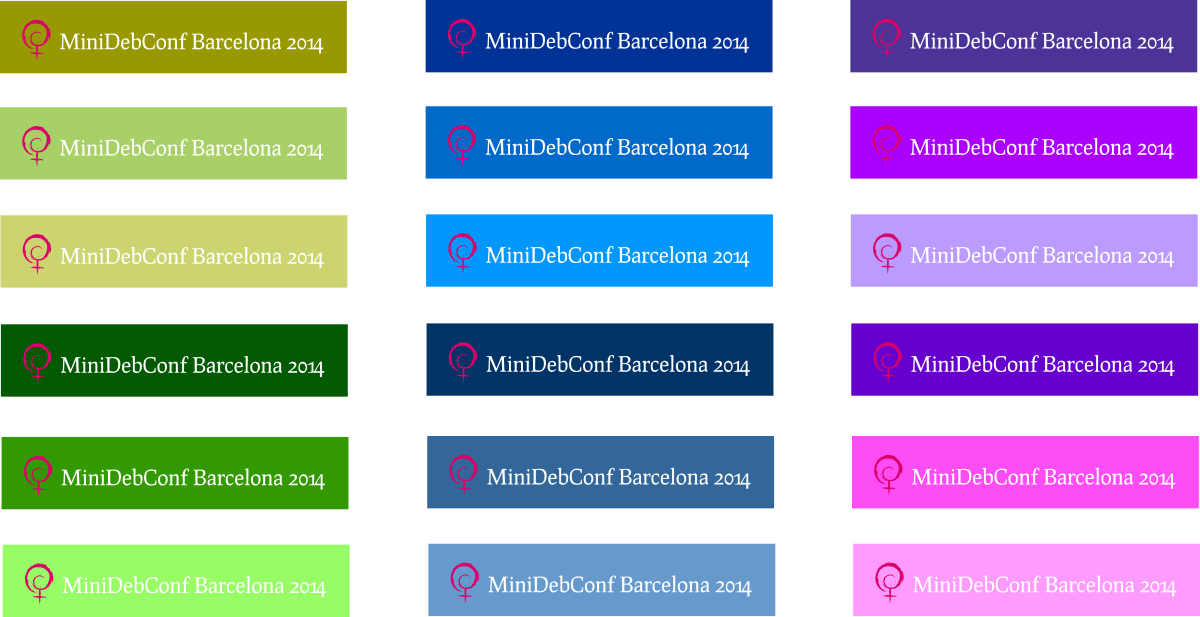

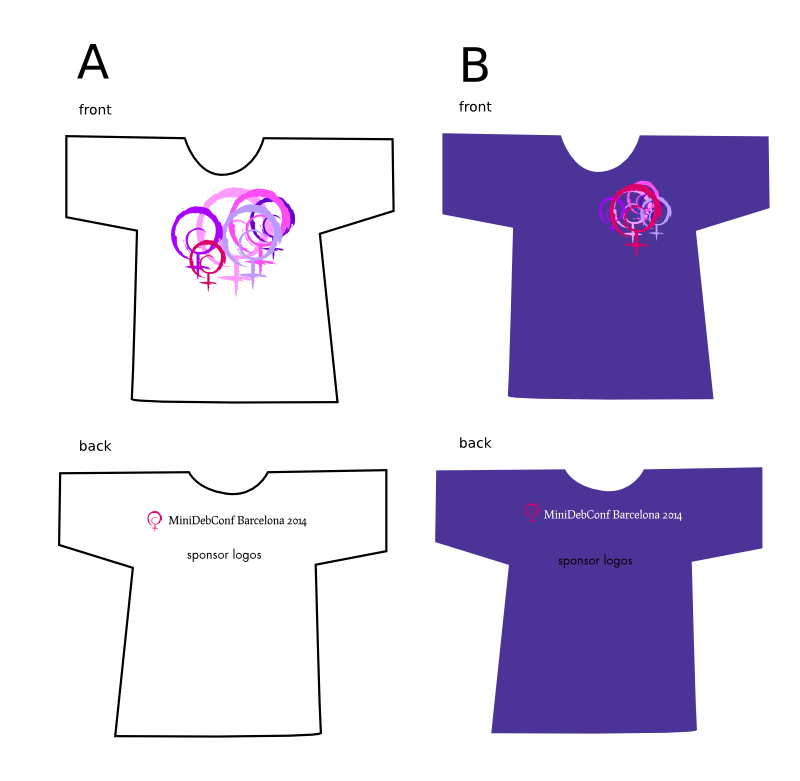
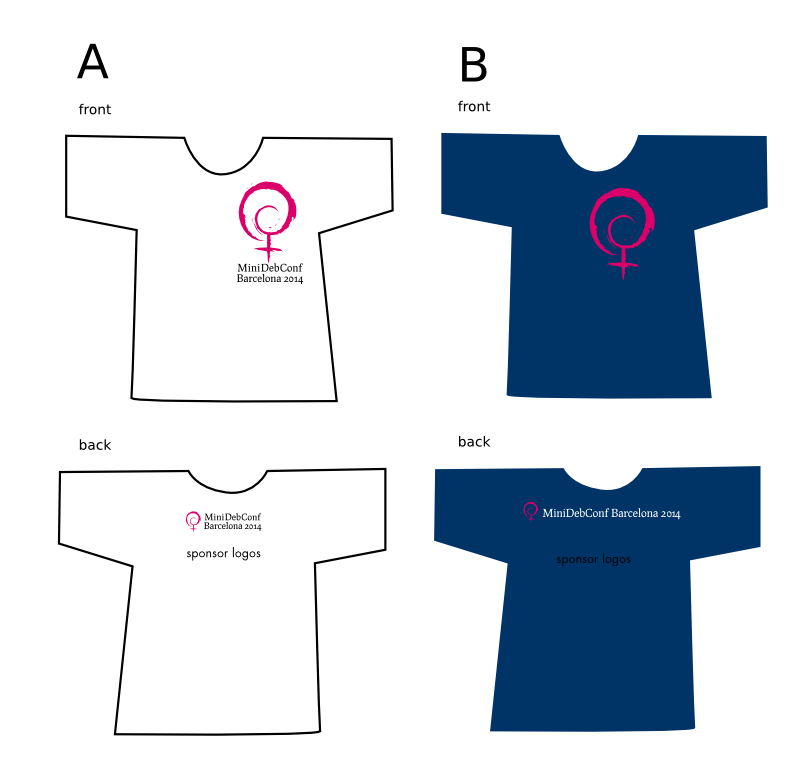

 This morning Zoe woke up again at around 4am and ended up in bed with me. I
don't even remember why she woke up, and neither does she, but she's assuring
me it won't happen tomorrow morning. We'll see.
As a result of the disturbed night's sleep, we had a bit of a slow start to the
day. Zoe was happy to go off and watch some TV after she woke up for the day,
and that let me have a bit more of a doze before I got up, which made things
vaguely better for me.
 Last week, in the spirit of always getting better, I asked Twitter how
to practice saying "um" less while speaking. Here's what I learned.
Most people suggested to practice intentionally inserting pauses instead
of saying "um". Various strategies include voice acting classes, having
a friend aid with a buzzer (presumably to help you notice), and to
record practice sessions as well as the real deal.
