Search Results: "ina"

4 August 2015

Julien Danjou: Ceilometer, Gnocchi & Aodh: Liberty progress

It's been a while since I talked about Ceilometer and its companions, so I thought I'd go ahead and write a bit about what's going on this side of OpenStack. I'm not going to cover new features and fancy stuff today, but rather a shallow overview of the new project processes we initiated. Ceilometer growing Ceilometer has grown a lot since that time when we started it 3 years ago. It has evolved from a system designed to fetch and store measurements, to a more complex system, with agents, alarms, events, databases, APIs, etc. All those features were needed and asked for by users and operators, but let's be honest, some of them should never have ended up in the Ceilometer code repository, especially not all at the same time. The reality is we picked a pragmatic approach due to the rigidity of the OpenStack Technical Committee in regards to new projects to become OpenStack integrated and, therefore, blessed projects. Ceilometer was actually the first project to be incubated and then integrated. We had to go through the very first issues of that process. Fortunately, now that time has passed, and all those constraints have been relaxed. To me, the OpenStack Foundation is turning into something that looks like the Apache Foundation, and there's, therefore, no need to tie technical solutions to political issues. Indeed, the Big Tent now allows much more flexibility to all of that. Back a year ago, we were afraid to bring Gnocchi into Ceilometer. Was the Technical Committee going to review the project? Was the project going to be in the scope of Ceilometer for the Technical Committee? Now we don't have to ask ourselves those questions, now that we have that freedom, it empowers us to actually do what we think is good in term of technical design without worrying too much about political issues.
Ceilometer development activity
Acknowledging Gnocchi The first step in this new process was to continue working on Gnocchi (a timeserie database and resource indexer designed to overcome historical Ceilometer storage issue) and to decide that it was not the right call to merge it into Ceilometer as some REST API v3, but that it was better to keep it standalone. We managed to get traction to Gnocchi, getting a few contributors and users. We're even seeing talks proposed to the next Tokyo Summit where people leverage Gnocchi, such as "Service of predictive analytics on cost and performance in OpenStack", "Suveil" and "Cutting Edge NFV On OpenStack: Healing and Scaling Distributed Applications". We are also doing some progress on pushing Gnocchi outside of the OpenStack community, as it can be a self-sufficient timeserie and resource database that can be used without any OpenStack interaction. Branching Aodh Rather than continuing to grow Ceilometer, during the last summit we all decided that it was time to reorganize and split Ceilometer into the different components it is made of, leveraging a more service-oriented architecture. The alarm subsystem of Ceilometer being mostly untied to the rest of Ceilometer, we decided it was the first and perfect candidate to do that. I personally engaged into doing the work and created a new repository with only the alarm code from Ceilometer, named Aodh.
Aodh is an Irish word meaning fire. A word picked so it also had some relation to Heat, and because we have some Irish influence around the project .
This made sense for a lot of reason. First because Aodh can now work completely standalone, using either Ceilometer or Gnocchi as a backend or any new plugin you'd write. I love the idea that OpenStack projects can work standalone like Swift does for example without implying any other OpenStack component. I think it's a proof of good design. Secondly, because it allows us to resonate on a smaller chunk of software a reason really under-estimated today in OpenStack. I believe that the size of your software should match a certain ratio to the size of your team. Aodh is, therefore, a new project under the OpenStack Telemetry program (or what remains of OpenStack programs now), alongside Ceilometer and Gnocchi, forked from the original Ceilometer alarm feature. We'll deprecate the latter with the Liberty release, and we'll remove it in the Mitaka release. Lessons learned Actually, moving that code out of Ceilometer (in the case of Aodh), or not merging it in (in the case of Gnocchi) had a few side effects that I admit I think we probably under-estimated back then. Indeed, the code size of Gnocchi or Aodh ended up being much smaller than the entire Ceilometer project Gnocchi is 7 smaller and Aodh 5x smaller than Ceilometer and therefore much more easy to manipulate and to hack on. That allowed us to merge dozens of patches in a few weeks, cleaning-up and enhancing a lot of small things in the code. Those tasks are very much harder in Ceilometer, due to the bigger size of the code base and the small size of our team. By having our small team working on smaller chunks of changes even when it meant actually doing more reviews greatly improved our general velocity and the number of bugs fixed and features implemented. On the more sociological side, I think it gave the team the sensation of finally owning the project. Ceilometer was huge, and it was impossible for people to know every side of it. Now, it's getting possible for people inside a team to cover a much larger portion of those smaller project, which gives them a greater sense of ownership and caring. Which ends up being good for the project quality overall. That also means that we technically decided to have different core teams by project (Ceilometer, Gnocchi, and Aodh) as they all serve different purposes and can all be used standalone or with each others. Meaning we could have contributors completely ignoring other projects. All of that reminds me some discussion I heard about projects such as Glance, trying to fit new features in - some that are really orthogonal to the original purpose. It's now clear to me that having different small components interacting together that can be completely owned and taken care of by a (small) team of contributors is the way to go. People that can therefore trust each others and easily bring new people in, makes a project really incredibly more powerful. Having a project covering a too wide set of features make things more difficult if you don't have enough manpower. This is clearly an issue that big projects inside OpenStack are facing now, such as Neutron or Nova.

3 August 2015

Sven Hoexter: Failing with F5: CMP - Clustered Multiprocessing

The last Whiteboard Wednesday tackled a few of the gotchas of the F5 CMP implementation. I take that as an opportunity to finish a blog post I started to write six month ago on this topic. I've run into two scenarios where CMP got in my way: All of this happened on TMOS 11.4.1+HF run on BigIP 2K systems. Since F5 is sometimes moving very quickly you might not experience those issues on other hardware or with a different software release. applying low and strict connection limits Apparently connection limits are counted on a per tmm level and are not shared between the tmm processes running on different CPUs. So if you've two CPU cores with HT you'll see four tmm processes that will all enforce the connection limit. If you have a max connection limit set to two you might still see a maximum of eight connections. That is a very bad thing if you abuse the F5 to limit your outbound connections because your counter part is not able to enforce connection limits, but forces you via a contract to not open more then two connections. Disable CMP and it will all end on the same tmm process and suddenly your connection limits work as expected. If your connection limit is big enough you can cheat, say it's twelve connections, you can configure a limit of three. With four processes that makes a max of twelve connections as required. Though due to the hashing and distribution among the tmm processes it could happen that you reject connections on one process while others are idle. Another option would be to enter the dirty land of iRules and tables to maintain your own connection count table. There are examples given in the F5 devcentral community, but the best resolution you can get, without starting to scan the whole table on every request, is X requests per minute. active health checks Active monitoring checks were added to detect the operational state of our application servers. Now imagine you have some realtime processing with over a hundred requests per minute. So in case you've issues with one instance you'd like to remove it from the pool rather sooner then later, which requires frequent checking. So here is a simple active http check:
defaults-from http-appmon
destination *:*
interval 9
recv "^HTTP/1\\.1 200 OK"
send "GET /mon/state HTTP/1.1\\r\\nHost: MON\\r\\nConnection: Close\\r\\n\\r\\n"
time-until-up 0
timeout 2
up-interval 1
(Configuration options are described here) With an up-interval of 1 second and a timeout of 2 seconds someone naive like me expected that a fatal issue like a crashed application would be detected within three seconds and no more requests should hit the application after second 3. That turned out to be slightly longer, at least 4s for this case, often longer. Also for a regular maintenance we had to instruct our scripts to flip the application monitor to unavailable and wait for interval X tmm process count + timeout + 1s + max allowed request duration. That is not an instant off. If you use tcpdump (on the F5 where it's patched to show you the tmm that received the request) to look at the health check traffic you'll notice that the tmm threads pass around the handle to do a health check. So my guess is the threads do only sync the health check state of the application when they're due to run the health check. Makes sense performance wise but if you operate with longer timeouts and bigger intervals you will definetly loose a notable amount of requests. Even in our low end case we already loose a notable amount of requests in 4s. While you could resent them you never know exactly if a request was already processed or not. So you have to ensure that somewhere else in your stack. One option is to disable CMP but I guess that's not an option for most people that are required to scale out to handle the load and not only for the sake of redundancy. If you're running the balancer only for the sake of redundancy the choice is easy. You find a hint on this kind of issue if you lookup the documentation for the inband monitor: Note: Systems with multiple tmm processes use a per-process number to calculate failures, depending on the specified load balancing method. That case is a bit different due to the nature of the monitor but points in the same direction. The actual check is executed by bigd according to this document, so I'm pretty sure I'm still missing some pieces of the picture. Just be warned that you've to really test your outage scenarios and you should double check it if you run a transaction based service that is sensitive to lost requests.

Lunar: Reproducible builds: week 14 in Stretch cycle

What happened in the reproducible builds effort this week: Toolchain fixes akira submitted a patch to make cdbs export SOURCE_DATE_EPOCH. She uploded a package with the enhancement to the experimental reproducible repository. Packages fixed The following 15 packages became reproducible due to changes in their build dependencies: dracut, editorconfig-core, elasticsearch, fish, libftdi1, liblouisxml, mk-configure, nanoc, octave-bim, octave-data-smoothing, octave-financial, octave-ga, octave-missing-functions, octave-secs1d, octave-splines, valgrind. The following packages became reproducible after getting fixed: Some uploads fixed some reproducibility issues but not all of them: In contrib, Dmitry Smirnov improved libdvd-pkg with 1.3.99-1-1. Patches submitted which have not made their way to the archive yet: reproducible.debian.net Four armhf build hosts were provided by Vagrant Cascadian and have been configured to be used by jenkins.debian.net. Work on including armhf builds in the reproducible.debian.net webpages has begun. So far the repository comparison page just shows us which armhf binary packages are currently missing in our repo. (h01ger) The scheduler has been changed to re-schedule more packages from stretch than sid, as the gcc5 transition has started This mostly affects build log age. (h01ger) A new depwait status has been introduced for packages which can't be built because of missing build dependencies. (Mattia Rizzolo) debbindiff development Finally, on August 31st, Lunar released debbindiff 27 containing a complete overhaul of the code for the comparison stage. The new architecture is more versatile and extensible while minimizing code duplication. libarchive is now used to handle cpio archives and iso9660 images through the newly packaged python-libarchive-c. This should also help support a couple other archive formats in the future. Symlinks and devices are now properly compared. Text files are compared as Unicode after being decoded, and encoding differences are reported. Support for Sqlite3 and Mono/.NET executables has been added. Thanks to Valentin Lorentz, the test suite should now run on more systems. A small defiency in unquashfs has been identified in the process. A long standing optimization is now performed on Debian package: based on the content of the md5sums control file, we skip comparing files with matching hashes. This makes debbindiff usable on packages with many files. Fuzzy-matching is now performed for files in the same container (like a tarball) to handle renames. Also, for Debian .changes, listed files are now compared without looking the embedded version number. This makes debbindiff a lot more useful when comparing different versions of the same package. Based on the rearchitecturing work has been done to allow parallel processing. The branch now seems to work most of the time. More test needs to be done before it can be merged. The current fuzzy-matching algorithm, ssdeep, has showed disappointing results. One important use case is being able to properly compare debug symbols. Their path is made using the Build ID. As this identifier is made with a checksum of the binary content, finding things like CPP macros is much easier when a diff of the debug symbols is available. Good news is that TLSH, another fuzzy-matching algorithm, has been tested with much better results. A package is waiting in NEW and the code is ready for it to become available. A follow-up release 28 was made on August 2nd fixing content label used for gzip2, bzip2 and xz files and an error on text files only differing in their encoding. It also contains a small code improvement on how comments on Difference object are handled. This is the last release name debbindiff. A new name has been chosen to better reflect that it is not a Debian specific tool. Stay tuned! Documentation update Valentin Lorentz updated the patch submission template to suggest to write the kind of issue in the bug subject. Small progress have been made on the Reproducible Builds HOWTO while preparing the related CCCamp15 talk. Package reviews 235 obsolete reviews have been removed, 47 added and 113 updated this week. 42 reports for packages failing to build from source have been made by Chris West (Faux). New issue added this week: haskell_devscripts_locale_substvars. Misc. Valentin Lorentz wrote a script to report packages tested as unreproducible installed on a system. We encourage everyone to run it on their systems and give feedback!

1 August 2015

Steve McIntyre: Justifying 32-bit UEFI on 64-bit Intel hardware, and tracking broken UEFI implementations

You might have seen some of the posts I've written in the last few months about adding support in Debian for so-called Mixed-EFI systems like the Intel Bay Trail: a 64-bit processor shipped with a 32-bit EFI implementation. I've finally seen a public justification from Intel evangelist Brian Richardson as to why these systems are crippled^Wconfigured this way, and it's nice to see our guesses confirmed. The reason is simply cost - like most consumer PCs shipped today, they come with Windows. In terms of system design, it's cheaper to just include the limited memory and storage needed for 32-bit Windows. 64-bit Windows takes a lot more storage in particular. And on modern systems 32-bit Windows can only boot using 32-bit UEFI. Fair enough... However, Brian goes on to state some more things that are simply out of date, saying that "Linux support for UEFI IA32 is still an unanswered question". Ummm, Brian: we've got working 32-bit x86 UEFI support in our standard Jessie (and newer) installation images already, and they work just fine on CD/DVD or USB stick. We've even gone one stage further than anybody else (thus far!) in adding easy support for running a full 64-bit Linux system on top of those 32-bit UEFI implementations. I say "thus far" here because all the work here here is Free Software. Other folks added the support in Linux for making a 64-bit kernel work with a 32-bit UEFI; I added code in Linux to expose some of the details to userspace, and code in Grub to work with it. My changes have gone upstream already, so I'd expect to see other distros like Fedora or Ubuntu also using them soon.

Francois Marier: Setting the wifi regulatory domain on Linux and OpenWRT

The list of available wifi channels is slightly different from country to country. To ensure access to the right channels and transmit power settings, one needs to set the right regulatory domain in the wifi stack.

Linux For most Linux-based computers, you can look and change the current regulatory domain using these commands:
iw reg get
iw reg set CA
where CA is the two-letter country code when the device is located. On Debian and Ubuntu, you can make this setting permanent by putting the country code in /etc/default/crda. Finally, to see the list of channels that are available in the current config, use:
iwlist wlan0 frequency

OpenWRT On OpenWRT-based routers (including derivatives like Gargoyle), looking and setting the regulatory domain temporarily works the same way (i.e. the iw commands above). In order to persist your changes though, you need to use the uci command:
uci set wireless.radio0.country=CA
uci set wireless.radio1.country=CA
uci commit wireless
where wireless.radio0 and wireless.radio1 are the wireless devices specific to your router. You can look them up using:
uci show wireless
To test that it worked, simply reboot the router and then look at the selected regulatory domain:
iw reg get

Scanning the local wifi environment Once your devices are set to the right country, you should scan the local environment to pick the least congested wifi channel. You can use the Kismet spectools (free software) if you have the hardware, otherwise WifiAnalyzer (proprietary) is a good choice on Android (remember to manually set the available channels in the settings).

31 July 2015

Scott Kitterman: Plasma 5 (KDE) In Testing

A few days ago, fellow Qt/KDE team member Lisandro gave an update on the situation with migration to Plasma 5 in Debian Testing (AKA Stretch). It s changed again. All of Plasma 5 is now in Testing. The upgrade probably won t be entirely smooth, which we ll work on that after the gcc5 transition is done, but it will be much better than the half KDE4 SC half Kf5/Plasma 5 situation we ve had for the last several days. The issues with starting kwin should be resolved once users upgrade to Plasma 5. To use the current kwin with KDE SC 4, you will need to add a symlink from /usr/bin/kwin to /usr/bin/kwin_x11. That will be included in the next upload after gcc5. Systemsettings and plasma-nm now work. In my initial testing, I didn t see anything major that was broken. One user reported an issue with sddm starting automatically, but it worked fine for me. During the upgrade you should get a debconf prompt asking if you want to use kdm or sddm. Pick sddm. When I tried to dist-upgrade, apt wanted to remove task-kde-desktop. I let it remove it and some other packages and then in a second step did apt-get install task-kde-desktop. That pulled it back in successfully along with adding and removing a reasonably large stack of packages. Obviously we need to make that work better before Stretch is released, but as long as you don t restart KDE in between those two steps it should be fine. Lastely, I used apt-get autoremove to clear out a lot of no longer needed KDE4 things (when it asks if you want to stop the running kdm, say no). Here are a few notes on terminology and what I understand of the future plans: What used to be called KDE is now three different things (in part because KDE is now the community of people, not the software): KDE Frameworks 5 (Kf5): This is a group of several dozen small libraries that as a group, roughly equate to what used to be kdelibs. Plasma (Workspaces) 5: This is the desktop that we ve just transitioned to. Applications: These are a mix of kdelibs and Kf5 based applications. Currently in Testing there are some of both and this will evolve over time based on upstream development. As an example, the Kf5 based version of konsole is in Unstable and should transition to Testing shortly. Finally, thanks to Maximiliano Curia (maxy on IRC) for doing virtually all of the packaging of Kf5, Plasma 5, and applications. He did the heavy lifting, the rest of us just nibbled around the edges to keep it moving towards testing.

Steve McIntyre: Linaro VLANd v0.3

VLANd is a python program intended to make it easy to manage port-based VLAN setups across multiple switches in a network. It is designed to be vendor-agnostic, with a clean pluggable driver API to allow for a wide range of different switches to be controlled together. There's more information in the README file. I've just released v0.3, with a lot of changes included since the last release: VLANd is Free Software, released under the GPL version 2 (or any later version). For now, grab it from git; tarballs will be coming shortly.

28 July 2015

Jonathan Dowland: Sound effect pitch-shifting in Doom

My previous blog posts about deterministic Doom proved very popular. The reason I was messing around with Doom's RNG was I was studying how early versions of Doom performed random pitch-shifting of sound effects, a feature that was removed early on in Doom's history. By fixing the random number table and replacing the game's sound effects with a sine wave, one second long and tuned to middle-c, I was able to determine the upper and lower bounds of the pitch shift. Once I knew that, I was able to write some patches to re-implement pitch shifting in Chocolate Doom, which I'm pleased to say have been accepted. The patches have also made their way into the related projects Crispy Doom and Doom Retro. I'm pleased with the final result. It's the most significant bit of C code I've ever released publically, as well as my biggest Doom hack and the first time I've ever done any audio manipulation in code. There was a load of other notes and bits of code that I produced in the process. I've put them together on a page here: More than you ever wanted to know about pitch-shifting.

Norbert Preining: ePub editor Sigil landed in Debian

Long long time ago I wanted to have Sigil, an epub editor, to appear in Debian. There was a packaging wishlist bug from back in 2010 with intermittent activities. But thanks to concerted effort, especially by Mattia Rizzolo and Don Armstrong, packaging progressed to a state that I could sponsor the upload to experimental about 4 months ago. And yesterday, after long waiting, finally Sigil passed the watchful eyes of the Debian ftp-masters and has entered Debian/experimental. sigil-debian I have already updated the packaging for the latest version 0.8.7, which will be included in Debian/sid rather soon. Thanks again especially Mattia for his great work.
Email this to someonePrint this pageShare on FacebookShare on Google+Tweet about this on TwitterShare on LinkedInFlattr the author

27 July 2015

Kees Cook: 3D printing Poe

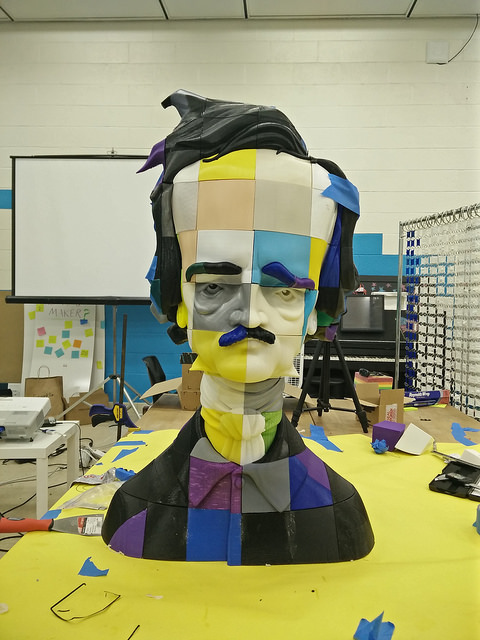
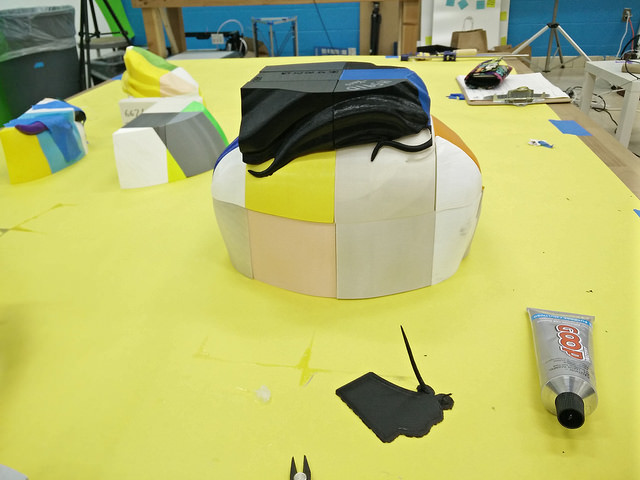
I helped print this statue of Edgar Allan Poe, through We the Builders , who coordinate large-scale crowd-sourced 3D print jobs: Poe's Face You can see one of my parts here on top, with -Kees on the piece with the funky hair strand: Poe's Hair The MakerWare I run on Ubuntu works well. I wish they were correctly signing their repositories. Even if I use non-SSL to fetch their key, as their Ubuntu/Debian instructions recommend, it still doesn t match the packages:
W: GPG error: http://downloads.makerbot.com trusty Release: The following signatures were invalid: BADSIG 3D019B838FB1487F MakerBot Industries dev team <dev@makerbot.com>
And it s not just my APT configuration:
$ wget http://downloads.makerbot.com/makerware/ubuntu/dists/trusty/Release.gpg
$ wget http://downloads.makerbot.com/makerware/ubuntu/dists/trusty/Release
$ gpg --verify Release.gpg Release
gpg: Signature made Wed 11 Mar 2015 12:43:07 PM PDT using RSA key ID 8FB1487F
gpg: requesting key 8FB1487F from hkp server pgp.mit.edu
gpg: key 8FB1487F: public key "MakerBot Industries LLC (Software development team) <dev@makerbot.com>" imported
gpg: Total number processed: 1
gpg:               imported: 1  (RSA: 1)
gpg: BAD signature from "MakerBot Industries LLC (Software development team) <dev@makerbot.com>"
$ grep ^Date Release
Date: Tue, 09 Jun 2015 19:41:02 UTC
Looks like they re updating their Release file without updating the signature file. (The signature is from March, but the Release file is from June. Oops!)

2015, Kees Cook. This work is licensed under a Creative Commons Attribution-ShareAlike 3.0 License.
Creative Commons License

Michael Stapelberg: dh-make-golang: creating Debian packages from Go packages

Recently, the pkg-go team has been quite busy, uploading dozens of Go library packages in order to be able to package gcsfuse (a user-space file system for interacting with Google Cloud Storage) and InfluxDB (an open-source distributed time series database). Packaging Go library packages (!) is a fairly repetitive process, so before starting my work on the dependencies for gcsfuse, I started writing a tool called dh-make-golang. Just like dh-make itself, the goal is to automatically create (almost) an entire Debian package. As I worked my way through the dependencies of gcsfuse, I refined how the tool works, and now I believe it s good enough for a first release. To demonstrate how the tool works, let s assume we want to package the Go library github.com/jacobsa/ratelimit:
midna /tmp $ dh-make-golang github.com/jacobsa/ratelimit
2015/07/25 18:25:39 Downloading "github.com/jacobsa/ratelimit/..."
2015/07/25 18:25:53 Determining upstream version number
2015/07/25 18:25:53 Package version is "0.0~git20150723.0.2ca5e0c"
2015/07/25 18:25:53 Determining dependencies
2015/07/25 18:25:55 
2015/07/25 18:25:55 Packaging successfully created in /tmp/golang-github-jacobsa-ratelimit
2015/07/25 18:25:55 
2015/07/25 18:25:55 Resolve all TODOs in itp-golang-github-jacobsa-ratelimit.txt, then email it out:
2015/07/25 18:25:55     sendmail -t -f < itp-golang-github-jacobsa-ratelimit.txt
2015/07/25 18:25:55 
2015/07/25 18:25:55 Resolve all the TODOs in debian/, find them using:
2015/07/25 18:25:55     grep -r TODO debian
2015/07/25 18:25:55 
2015/07/25 18:25:55 To build the package, commit the packaging and use gbp buildpackage:
2015/07/25 18:25:55     git add debian && git commit -a -m 'Initial packaging'
2015/07/25 18:25:55     gbp buildpackage --git-pbuilder
2015/07/25 18:25:55 
2015/07/25 18:25:55 To create the packaging git repository on alioth, use:
2015/07/25 18:25:55     ssh git.debian.org "/git/pkg-go/setup-repository golang-github-jacobsa-ratelimit 'Packaging for golang-github-jacobsa-ratelimit'"
2015/07/25 18:25:55 
2015/07/25 18:25:55 Once you are happy with your packaging, push it to alioth using:
2015/07/25 18:25:55     git push git+ssh://git.debian.org/git/pkg-go/packages/golang-github-jacobsa-ratelimit.git --tags master pristine-tar upstream
The ITP is often the most labor-intensive part of the packaging process, because any number of auto-detected values might be wrong: the repository owner might not be the Upstream Author , the repository might not have a short description, the long description might need some adjustments or the license might not be auto-detected.
midna /tmp $ cat itp-golang-github-jacobsa-ratelimit.txt
From: "Michael Stapelberg" <stapelberg AT debian.org>
To: submit@bugs.debian.org
Subject: ITP: golang-github-jacobsa-ratelimit -- Go package for rate limiting
Content-Type: text/plain; charset=utf-8
Content-Transfer-Encoding: 8bit
Package: wnpp
Severity: wishlist
Owner: Michael Stapelberg <stapelberg AT debian.org>
* Package name    : golang-github-jacobsa-ratelimit
  Version         : 0.0~git20150723.0.2ca5e0c-1
  Upstream Author : Aaron Jacobs
* URL             : https://github.com/jacobsa/ratelimit
* License         : Apache-2.0
  Programming Lang: Go
  Description     : Go package for rate limiting
 GoDoc (https://godoc.org/github.com/jacobsa/ratelimit)
 .
 This package contains code for dealing with rate limiting. See the
 reference (http://godoc.org/github.com/jacobsa/ratelimit) for more info.
TODO: perhaps reasoning
midna /tmp $
After filling in all the TODOs in the file, let s mail it out and get a sense of what else still needs to be done:
midna /tmp $ sendmail -t -f < itp-golang-github-jacobsa-ratelimit.txt
midna /tmp $ cd golang-github-jacobsa-ratelimit
midna /tmp/golang-github-jacobsa-ratelimit master $ grep -r TODO debian
debian/changelog:  * Initial release (Closes: TODO) 
midna /tmp/golang-github-jacobsa-ratelimit master $
After filling in these TODOs as well, let s have a final look at what we re about to build:
midna /tmp/golang-github-jacobsa-ratelimit master $ head -100 debian/**/*
==> debian/changelog <==                            
golang-github-jacobsa-ratelimit (0.0~git20150723.0.2ca5e0c-1) unstable; urgency=medium
  * Initial release (Closes: #793646)
 -- Michael Stapelberg <stapelberg@debian.org>  Sat, 25 Jul 2015 23:26:34 +0200
==> debian/compat <==
9
==> debian/control <==
Source: golang-github-jacobsa-ratelimit
Section: devel
Priority: extra
Maintainer: pkg-go <pkg-go-maintainers@lists.alioth.debian.org>
Uploaders: Michael Stapelberg <stapelberg@debian.org>
Build-Depends: debhelper (>= 9),
               dh-golang,
               golang-go,
               golang-github-jacobsa-gcloud-dev,
               golang-github-jacobsa-oglematchers-dev,
               golang-github-jacobsa-ogletest-dev,
               golang-github-jacobsa-syncutil-dev,
               golang-golang-x-net-dev
Standards-Version: 3.9.6
Homepage: https://github.com/jacobsa/ratelimit
Vcs-Browser: http://anonscm.debian.org/gitweb/?p=pkg-go/packages/golang-github-jacobsa-ratelimit.git;a=summary
Vcs-Git: git://anonscm.debian.org/pkg-go/packages/golang-github-jacobsa-ratelimit.git
Package: golang-github-jacobsa-ratelimit-dev
Architecture: all
Depends: $ shlibs:Depends ,
         $ misc:Depends ,
         golang-go,
         golang-github-jacobsa-gcloud-dev,
         golang-github-jacobsa-oglematchers-dev,
         golang-github-jacobsa-ogletest-dev,
         golang-github-jacobsa-syncutil-dev,
         golang-golang-x-net-dev
Built-Using: $ misc:Built-Using 
Description: Go package for rate limiting
 This package contains code for dealing with rate limiting. See the
 reference (http://godoc.org/github.com/jacobsa/ratelimit) for more info.
==> debian/copyright <==
Format: http://www.debian.org/doc/packaging-manuals/copyright-format/1.0/
Upstream-Name: ratelimit
Source: https://github.com/jacobsa/ratelimit
Files: *
Copyright: 2015 Aaron Jacobs
License: Apache-2.0
Files: debian/*
Copyright: 2015 Michael Stapelberg <stapelberg@debian.org>
License: Apache-2.0
Comment: Debian packaging is licensed under the same terms as upstream
License: Apache-2.0
 Licensed under the Apache License, Version 2.0 (the "License");
 you may not use this file except in compliance with the License.
 You may obtain a copy of the License at
 .
 http://www.apache.org/licenses/LICENSE-2.0
 .
 Unless required by applicable law or agreed to in writing, software
 distributed under the License is distributed on an "AS IS" BASIS,
 WITHOUT WARRANTIES OR CONDITIONS OF ANY KIND, either express or implied.
 See the License for the specific language governing permissions and
 limitations under the License.
 .
 On Debian systems, the complete text of the Apache version 2.0 license
 can be found in "/usr/share/common-licenses/Apache-2.0".
==> debian/gbp.conf <==
[DEFAULT]
pristine-tar = True
==> debian/rules <==
#!/usr/bin/make -f
export DH_GOPKG := github.com/jacobsa/ratelimit
%:
	dh $@ --buildsystem=golang --with=golang
==> debian/source <==
head: error reading  debian/source : Is a directory
==> debian/source/format <==
3.0 (quilt)
midna /tmp/golang-github-jacobsa-ratelimit master $
Okay, then. Let s give it a shot and see if it builds:
midna /tmp/golang-github-jacobsa-ratelimit master $ git add debian && git commit -a -m 'Initial packaging'
[master 48f4c25] Initial packaging                                                      
 7 files changed, 75 insertions(+)
 create mode 100644 debian/changelog
 create mode 100644 debian/compat
 create mode 100644 debian/control
 create mode 100644 debian/copyright
 create mode 100644 debian/gbp.conf
 create mode 100755 debian/rules
 create mode 100644 debian/source/format
midna /tmp/golang-github-jacobsa-ratelimit master $ gbp buildpackage --git-pbuilder
[ ]
midna /tmp/golang-github-jacobsa-ratelimit master $ lintian ../golang-github-jacobsa-ratelimit_0.0\~git20150723.0.2ca5e0c-1_amd64.changes
I: golang-github-jacobsa-ratelimit source: debian-watch-file-is-missing
P: golang-github-jacobsa-ratelimit-dev: no-upstream-changelog
I: golang-github-jacobsa-ratelimit-dev: extended-description-is-probably-too-short
midna /tmp/golang-github-jacobsa-ratelimit master $
This package just built (as it should!), but occasionally one might need to disable a test and file an upstream bug about it. So, let s push this package to pkg-go and upload it:
midna /tmp/golang-github-jacobsa-ratelimit master $ ssh git.debian.org "/git/pkg-go/setup-repository golang-github-jacobsa-ratelimit 'Packaging for golang-github-jacobsa-ratelimit'"
Initialized empty shared Git repository in /srv/git.debian.org/git/pkg-go/packages/golang-github-jacobsa-ratelimit.git/
HEAD is now at ea6b1c5 add mrconfig for dh-make-golang
[master c5be5a1] add mrconfig for golang-github-jacobsa-ratelimit
 1 file changed, 3 insertions(+)
To /git/pkg-go/meta.git
   ea6b1c5..c5be5a1  master -> master
midna /tmp/golang-github-jacobsa-ratelimit master $ git push git+ssh://git.debian.org/git/pkg-go/packages/golang-github-jacobsa-ratelimit.git --tags master pristine-tar upstream
Counting objects: 31, done.
Delta compression using up to 8 threads.
Compressing objects: 100% (25/25), done.
Writing objects: 100% (31/31), 18.38 KiB   0 bytes/s, done.
Total 31 (delta 2), reused 0 (delta 0)
To git+ssh://git.debian.org/git/pkg-go/packages/golang-github-jacobsa-ratelimit.git
 * [new branch]      master -> master
 * [new branch]      pristine-tar -> pristine-tar
 * [new branch]      upstream -> upstream
 * [new tag]         upstream/0.0_git20150723.0.2ca5e0c -> upstream/0.0_git20150723.0.2ca5e0c
midna /tmp/golang-github-jacobsa-ratelimit master $ cd ..
midna /tmp $ debsign golang-github-jacobsa-ratelimit_0.0\~git20150723.0.2ca5e0c-1_amd64.changes
[ ]
midna /tmp $ dput golang-github-jacobsa-ratelimit_0.0\~git20150723.0.2ca5e0c-1_amd64.changes   
Uploading golang-github-jacobsa-ratelimit using ftp to ftp-master (host: ftp.upload.debian.org; directory: /pub/UploadQueue/)
[ ]
Uploading golang-github-jacobsa-ratelimit_0.0~git20150723.0.2ca5e0c-1.dsc
Uploading golang-github-jacobsa-ratelimit_0.0~git20150723.0.2ca5e0c.orig.tar.bz2
Uploading golang-github-jacobsa-ratelimit_0.0~git20150723.0.2ca5e0c-1.debian.tar.xz
Uploading golang-github-jacobsa-ratelimit-dev_0.0~git20150723.0.2ca5e0c-1_all.deb
Uploading golang-github-jacobsa-ratelimit_0.0~git20150723.0.2ca5e0c-1_amd64.changes
midna /tmp $ cd golang-github-jacobsa-ratelimit 
midna /tmp/golang-github-jacobsa-ratelimit master $ git tag debian/0.0_git20150723.0.2ca5e0c-1
midna /tmp/golang-github-jacobsa-ratelimit master $ git push git+ssh://git.debian.org/git/pkg-go/packages/golang-github-jacobsa-ratelimit.git --tags master pristine-tar upstream
Total 0 (delta 0), reused 0 (delta 0)
To git+ssh://git.debian.org/git/pkg-go/packages/golang-github-jacobsa-ratelimit.git
 * [new tag]         debian/0.0_git20150723.0.2ca5e0c-1 -> debian/0.0_git20150723.0.2ca5e0c-1
midna /tmp/golang-github-jacobsa-ratelimit master $
Thanks for reading this far, and I hope dh-make-golang makes your life a tiny bit easier. As dh-make-golang just entered Debian unstable, you can install it using apt-get install dh-make-golang. If you have any feedback, I m eager to hear it.

Dirk Eddelbuettel: Evading the "Hadley tax": Faster Travis tests for R

Hadley is a popular figure, and rightly so as he successfully introduced many newcomers to the wonders offered by R. His approach strikes some of us old greybeards as wrong---I particularly take exception with some of his writing which frequently portrays a particular approach as both the best and only one. Real programming, I think, is often a little more nuanced and aware of tradeoffs which need to be balanced. As a book on another language once popularized: "There is more than one way to do things." But let us leave this discussion for another time. As the reach of the Hadleyverse keeps spreading, we sometimes find ourselves at the receiving end of a cost/benefit tradeoff. That is what this post is about, and it uses a very concrete case I encountered yesterday. As blogged earlier, the RcppZiggurat package was updated. I had not touched it in a year, but Brian Ripley had sent a brief and detailed note concerning something flagged by the Solaris compiler (correctly suggesting I replace fabs() with abs() on integer types). (Allow me to stray from the main story line here for a second to stress just how insane a work load he is carrying, essentially for all of us. R and the R community are so just so indebted to him for all his work---which makes the usual social media banter about him so unfortunate. But that too shall be left for another time.) Upon making the simple fix, and submitting to GitHub the usual Travis CI was triggered. And here is what I saw: first travis build in a year
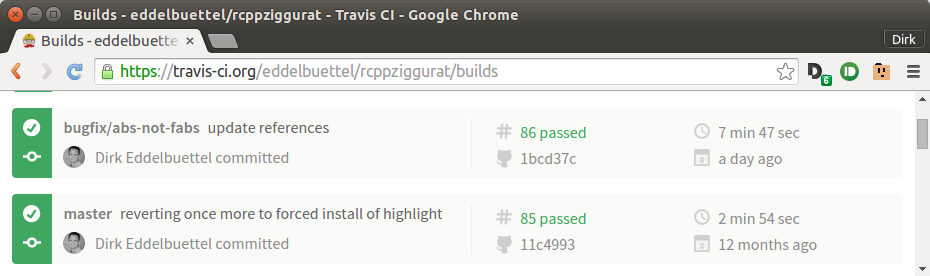
All happy, all green. Previous build a year ago, most recent build yesterday, both passed. But hold on: test time went from 2:54 minutes to 7:47 minutes for an increase of almost five minutes! And I knew that I had not added any new dependencies, or altered any build options. What did happen was that among the dependencies of my package, one had decided to now also depend on ggplot2. Which leads to a chain of sixteen additional packages being loaded besides the four I depend upon---when it used to be just one. And that took five minutes as all those packages are installed from source, and some are big and take a long time to compile. There is however and easy alternative, and for that we have to praise Michael Rutter who looks after a number of things for R on Ubuntu. Among these are the R builds for Ubuntu but also the rrutter PPA as well as the c2d4u PPA. If you have not heard this alphabet soup before, a PPA is a package repository for Ubuntu where anyone (who wants to sign up) can upload (properly setup) source files which are then turned into Ubuntu binaries. With full dependency resolution and all other goodies we have come to expect from the Debian / Ubuntu universe. And Michael uses this facility with great skill and calm to provide us all with Ubuntu binaries for R itself (rebuilding what yours truly uploads into Debian), as well as a number of key packages available via the CRAN mirrors. Less know however is this "c2d4u" which stands for CRAN to Debian for Ubuntu. And this builds on something Charles Blundell once built under my mentorship in a Google Summer of Code. And Michael does a tremdous job covering well over a thousand CRAN source packages---and providing binaries for all. Which we can use for Travis! What all that means is that I could now replace the line
 - ./travis-tool.sh install_r RcppGSL rbenchmark microbenchmark highlight
which implies source builds of the four listed packages and all their dependencies with the following line implying binary installations of already built packages:
 - ./travis-tool.sh install_aptget libgsl0-dev r-cran-rcppgsl r-cran-rbenchmark r-cran-microbenchmark r-cran-highlight
In this particular case I also needed to build a binary package of my RcppGSL package as this one is not (yet) handled by Michael. I happen to have (re-)discovered the beauty of PPAs for Travis earlier this year and revitalized an older and largely dormant launchpad account I had for this PPA of mine. How to build a simple .deb package will also have to left for a future post to keep this more concise. This can be used with the existing r-travis setup---but one needs to use the older, initial variant in order to have the ability to install .deb packages. So in the .travis.yml of RcppZiggurat I just use
before_install:
## PPA for Rcpp and some other packages
- sudo add-apt-repository -y ppa:edd/misc
## r-travis by Craig Citro et al
- curl -OL http://raw.github.com/craigcitro/r-travis/master/scripts/travis-tool.sh
- chmod 755 ./travis-tool.sh
- ./travis-tool.sh bootstrap
to add my own PPA and all is good. If you do not have a PPA, or do not want to create your own packages you can still benefit from the PPAs by Michael and "mix and match" by installing from binary what is available, and from source what is not. Here we were able to use an all-binary approach, so let's see the resulting performance: latest travis build
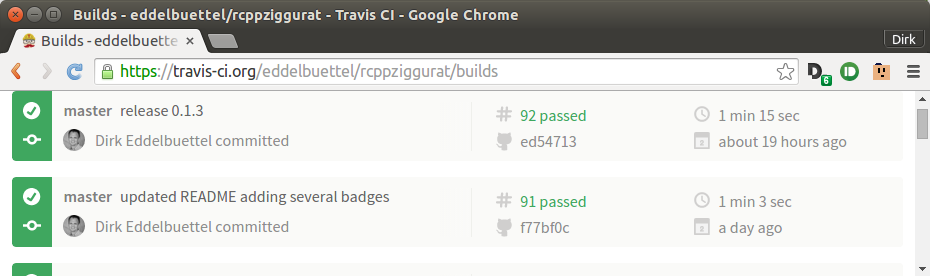
Now we are at 1:03 to 1:15 minutes---much better. So to conclude, while the every expanding universe of R packages is fantastic for us as users, it can be seen to be placing a burden on us as developers when installing and testing. Fortunately, the packaging infrastructure built on top of Debian / Ubuntu packages can help and dramatically reduce build (and hence test) times. Learning about PPAs can be a helpful complement to learning about Travis and continued integration. So maybe now I need a new reason to blame Hadley? Well, there is always snake case ...

Follow-up: The post got some pretty immediate feedback shortly after I posted it. Craig Citro pointed out (quite correctly) that I could use r_binary_install which would also install the Ubuntu binaries based on their R packages names. Having built R/CRAN packages for Debian for so long, I am simply more used to the r-cran-* notations, and I think I was also the one contributing install_aptget to r-travis ... Yihui Xie spoke up for the "new" Travis approach deploying containers, caching of packages and explicit whitelists. It was in that very (GH-based) discussion that I started to really lose faith in the new Travis approach as they want use to whitelist each and every package. With 6900 and counting at CRAN I fear this simply does not scale. But different approaches are certainly welcome. I posted my 1:03 to 1:15 minutes result. If the "New School" can do it faster, I'd be all ears.

This post by Dirk Eddelbuettel originated on his Thinking inside the box blog. Please report excessive re-aggregation in third-party for-profit settings.

26 July 2015

Lunar: Reproducible builds: week 13 in Stretch cycle

What happened in the reproducible builds effort this week: Toolchain fixes akira uploaded a new version of doxygen in the experimental reproducible repository incorporating upstream patch for SOURCE_DATE_EPOCH, and now producing timezone independent timestamps. Dhole updated Peter De Wachter's patch on ghostscript to use SOURCE_DATE_EPOCH and use UTC as a timezone. A modified package is now being experimented. Packages fixed The following 14 packages became reproducible due to changes in their build dependencies: bino, cfengine2, fwknop, gnome-software, jnr-constants, libextractor, libgtop2, maven-compiler-plugin, mk-configure, nanoc, octave-splines, octave-symbolic, riece, vdr-plugin-infosatepg. The following packages became reproducible after getting fixed: Some uploads fixed some reproducibility issues but not all of them: Patches submitted which have not made their way to the archive yet: reproducible.debian.net Packages identified as failing to build from source with no bugs filed and older than 10 days are scheduled more often now (except in experimental). (h01ger) Package reviews 178 obsolete reviews have been removed, 59 added and 122 updated this week. New issue identified this week: random_order_in_ruby_rdoc_indices. 18 new bugs for packages failing to build from sources have been reported by Chris West (Faux), and h01ger.

Lunar: Reproducible builds: week 12 in Stretch cycle

What happened in the reproducible builds effort this week: Toolchain fixes Eric Dorlan uploaded automake-1.15/1:1.15-2 which makes the output of mdate-sh deterministic. Original patch by Reiner Herrmann. Kenneth J. Pronovici uploaded epydoc/3.0.1+dfsg-8 which now honors SOURCE_DATE_EPOCH. Original patch by Reiner Herrmann. Chris Lamb submitted a patch to dh-python to make the order of the generated maintainer scripts deterministic. Chris also offered a fix for a source of non-determinism in dpkg-shlibdeps when packages have alternative dependencies. Dhole provided a patch to add support for SOURCE_DATE_EPOCH to gettext. Packages fixed The following 78 packages became reproducible in our setup due to changes in their build dependencies: chemical-mime-data, clojure-contrib, cobertura-maven-plugin, cpm, davical, debian-security-support, dfc, diction, dvdwizard, galternatives, gentlyweb-utils, gifticlib, gmtkbabel, gnuplot-mode, gplanarity, gpodder, gtg-trace, gyoto, highlight.js, htp, ibus-table, impressive, jags, jansi-native, jnr-constants, jthread, jwm, khronos-api, latex-coffee-stains, latex-make, latex2rtf, latexdiff, libcrcutil, libdc0, libdc1394-22, libidn2-0, libint, libjava-jdbc-clojure, libkryo-java, libphone-ui-shr, libpicocontainer-java, libraw1394, librostlab-blast, librostlab, libshevek, libstxxl, libtools-logging-clojure, libtools-macro-clojure, litl, londonlaw, ltsp, macsyfinder, mapnik, maven-compiler-plugin, mc, microdc2, miniupnpd, monajat, navit, pdmenu, pirl, plm, scikit-learn, snp-sites, sra-sdk, sunpinyin, tilda, vdr-plugin-dvd, vdr-plugin-epgsearch, vdr-plugin-remote, vdr-plugin-spider, vdr-plugin-streamdev, vdr-plugin-sudoku, vdr-plugin-xineliboutput, veromix, voxbo, xaos, xbae. The following packages became reproducible after getting fixed: Some uploads fixed some reproducibility issues but not all of them: Patches submitted which have not made their way to the archive yet: reproducible.debian.net The statistics on the main page of reproducible.debian.net are now updated every five minutes. A random unreviewed package is suggested in the look at a package form on every build. (h01ger) A new package set based new on the Core Internet Infrastructure census has been added. (h01ger) Testing of FreeBSD has started, though no results yet. More details have been posted to the freebsd-hackers mailing list. The build is run on a new virtual machine running FreeBSD 10.1 with 3 cores and 6 GB of RAM, also sponsored by Profitbricks. strip-nondeterminism development Andrew Ayer released version 0.009 of strip-nondeterminism. The new version will strip locales from Javadoc, include the name of files causing errors, and ignore unhandled (but rare) zip64 archives. debbindiff development Lunar continued its major refactoring to enhance code reuse and pave the way to fuzzy-matching and parallel processing. Most file comparators have now been converted to the new class hierarchy. In order to support for archive formats, work has started on packaging Python bindings for libarchive. While getting support for more archive formats with a common interface is very nice, libarchive is a stream oriented library and might have bad performance with how debbindiff currently works. Time will tell if better solutions need to be found. Documentation update Lunar started a Reproducible builds HOWTO intended to explain the different aspects of making software build reproducibly to the different audiences that might have to get involved like software authors, producers of binary packages, and distributors. Package reviews 17 obsolete reviews have been removed, 212 added and 46 updated this week. 15 new bugs for packages failing to build from sources have been reported by Chris West (Faux), and Mattia Rizzolo. Presentations Lunar presented Debian efforts and some recipes on making software build reproducibly at Libre Software Meeting 2015. Slides and a video recording are available. Misc. h01ger, dkg, and Lunar attended a Core Infrastructure Initiative meeting. The progress and tools mode for the Debian efforts were shown. Several discussions also helped getting a better understanding of the needs of other free software projects regarding reproducible builds. The idea of a global append only log, similar to the logs used for Certificate Transparency, came up on multiple occasions. Using such append only logs for keeping records of sources and build results has gotten the name Binary Transparency Logs . They would at least help identifying a compromised software signing key. Whether the benefits in using such logs justify the costs need more research.

Dirk Eddelbuettel: RcppZiggurat 0.1.3: Faster Random Normal Draws

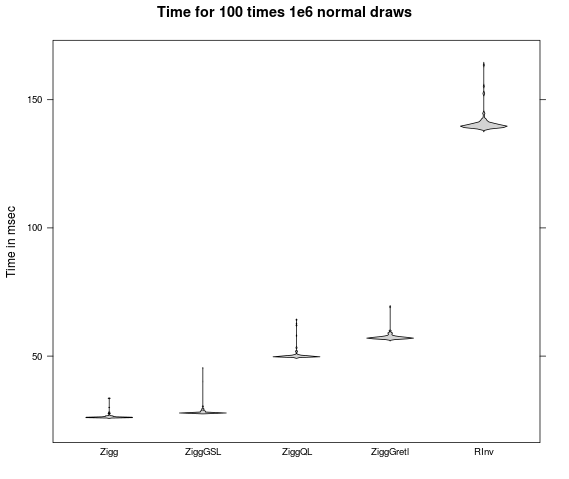
ziggurats After a slight hiatus since the last release in early 2014, we are delighted to announce a new release of RcppZiggurat which is now on the CRAN network for R. The RcppZiggurat package updates the code for the Ziggurat generator which provides very fast draws from a Normal distribution. The package provides a simple C++ wrapper class for the generator improving on the very basic macros, and permits comparison among several existing Ziggurat implementations. This can be seen in the figure where Ziggurat from this package dominates accessing the implementations from the GSL, QuantLib and Gretl---all of which are still way faster than the default Normal generator in R (which is of course of higher code complexity). This release contains a few internal cleanups relative to the last release. It was triggered by a very helpful email from Brian Ripley who notices compiler warnings on the Solaris platform due to my incorrect use of on integer variables. The NEWS file entry below lists all changes.
Changes in version 0.1.3 (2015-07-25)
  • Use the SHR3 generator for the default implementation just like Leong et al do, making our default implementation identical to theirs (but 32- and 64-bit compatible)
  • Switched generators from float to double ensuring that results are identical on 32- and 64-bit platforms
  • Simplified builds with respect to GSL use via the RcppGSL package; added a seed setter for the GSL variant
  • Corrected use of fabs() to abs() on integer variables, with a grateful nod to Brian Ripley for the hint (based on CRAN checks on the beloved Slowlaris machines)
  • Accelerated Travis CI tests by relying exclusively on r-cran-* packages from the PPAs by Michael Rutter and myself
  • Updated DESCRIPTION and NAMESPACE according to current best practices, and R-devel CMD check --as-cran checks
Courtesy of CRANberries, there is also a diffstat report for the most recent release. More information is on the RcppZiggurat page.

This post by Dirk Eddelbuettel originated on his Thinking inside the box blog. Please report excessive re-aggregation in third-party for-profit settings.

25 July 2015

Dirk Eddelbuettel: Rcpp 0.12.0: Now with more Big Data!

big-data image A new release 0.12.0 of Rcpp arrived on the CRAN network for GNU R this morning, and I also pushed a Debian package upload. Rcpp has become the most popular way of enhancing GNU R with C++ code. As of today, 423 packages on CRAN depend on Rcpp for making analyses go faster and further. Note that this is 60 more packages since the last release in May! Also, BioConductor adds another 57 packages, and casual searches on GitHub suggests many more. And according to Andrie De Vries, Rcpp has now page rank of one on CRAN as well! And with this release, Rcpp also becomes ready for Big Data, or, as they call it in Texas, Data. Thanks to a lot of work and several pull requests by Qiang Kou, support for R_xlen_t has been added. That means we can now do stunts like
R> library(Rcpp)
R> big <- 2^31-1
R> bigM <- rep(NA, big)
R> bigM2 <- c(bigM, bigM)
R> cppFunction("double getSz(LogicalVector x)   return x.length();  ")
R> getSz(bigM)
[1] 2147483647
R> getSz(bigM2)
[1] 4294967294
R>
where prior versions of Rcpp would just have said
> getSz(bigM2)
Error in getSz(bigM2) :
  long vectors not supported yet: ../../src/include/Rinlinedfuns.h:137
>
which is clearly not Texas-style. Another wellcome change, also thanks to Qiang Kou, adds encoding support for strings. A lot of other things got polished. We are still improving exception handling as we still get the odd curveballs in a corner cases. Matt Dziubinski corrected the var() computation to use the proper two-pass method and added better support for lambda functions in Sugar expression using sapply(), Qiang Kou added more pull requests mostly for string initialization, and Romain added a pull request which made data frame creation a little more robust, and JJ was his usual self in tirelessly looking after all aspects of Rcpp Attributes. As always, you can follow the development via the GitHub repo and particularly the Issue tickets and Pull Requests. And any discussions, questions, ... regarding Rcpp are always welcome at the rcpp-devel mailing list. Last but not least, we are also extremely pleased to annouce that Qiang Kou has joined us in the Rcpp-Core team. We are looking forward to a lot more awesome! See below for a detailed list of changes extracted from the NEWS file.
Changes in Rcpp version 0.12.0 (2015-07-24)
  • Changes in Rcpp API:
    • Rcpp_eval() no longer uses R_ToplevelExec when evaluating R expressions; this should resolve errors where calling handlers (e.g. through suppressMessages()) were not properly respected.
    • All internal length variables have been changed from R_len_t to R_xlen_t to support vectors longer than 2^31-1 elements (via pull request 303 by Qiang Kou).
    • The sugar function sapply now supports lambda functions (addressing issue 213 thanks to Matt Dziubinski)
    • The var sugar function now uses a more robust two-pass method, supports complex numbers, with new unit tests added (via pull request 320 by Matt Dziubinski)
    • String constructors now allow encodings (via pull request 310 by Qiang Kou)
    • String objects are preserving the underlying SEXP objects better, and are more careful about initializations (via pull requests 322 and 329 by Qiang Kou)
    • DataFrame constructors are now a little more careful (via pull request 301 by Romain Francois)
    • For R 3.2.0 or newer, Rf_installChar() is used instead of Rf_install(CHAR()) (via pull request 332).
  • Changes in Rcpp Attributes:
    • Use more robust method of ensuring unique paths for generated shared libraries.
    • The evalCpp function now also supports the plugins argument.
    • Correctly handle signature termination characters (' ' or ';') contained in quotes.
  • Changes in Rcpp Documentation:
    • The Rcpp-FAQ vignette was once again updated with respect to OS X issues and Fortran libraries needed for e.g. RcppArmadillo.
    • The included Rcpp.bib bibtex file (which is also used by other Rcpp* packages) was updated with respect to its CRAN references.
Thanks to CRANberries, you can also look at a diff to the previous release As always, even fuller details are on the Rcpp Changelog page and the Rcpp page which also leads to the downloads page, the browseable doxygen docs and zip files of doxygen output for the standard formats. A local directory has source and documentation too. Questions, comments etc should go to the rcpp-devel mailing list off the R-Forge page.

This post by Dirk Eddelbuettel originated on his Thinking inside the box blog. Please report excessive re-aggregation in third-party for-profit settings.

24 July 2015

Vincent Sanders: NetSurf developers and the Order of the Phoenix

Once more the NetSurf developers gathered to battle the forces of darkness, or as they are more commonly known web specifications.

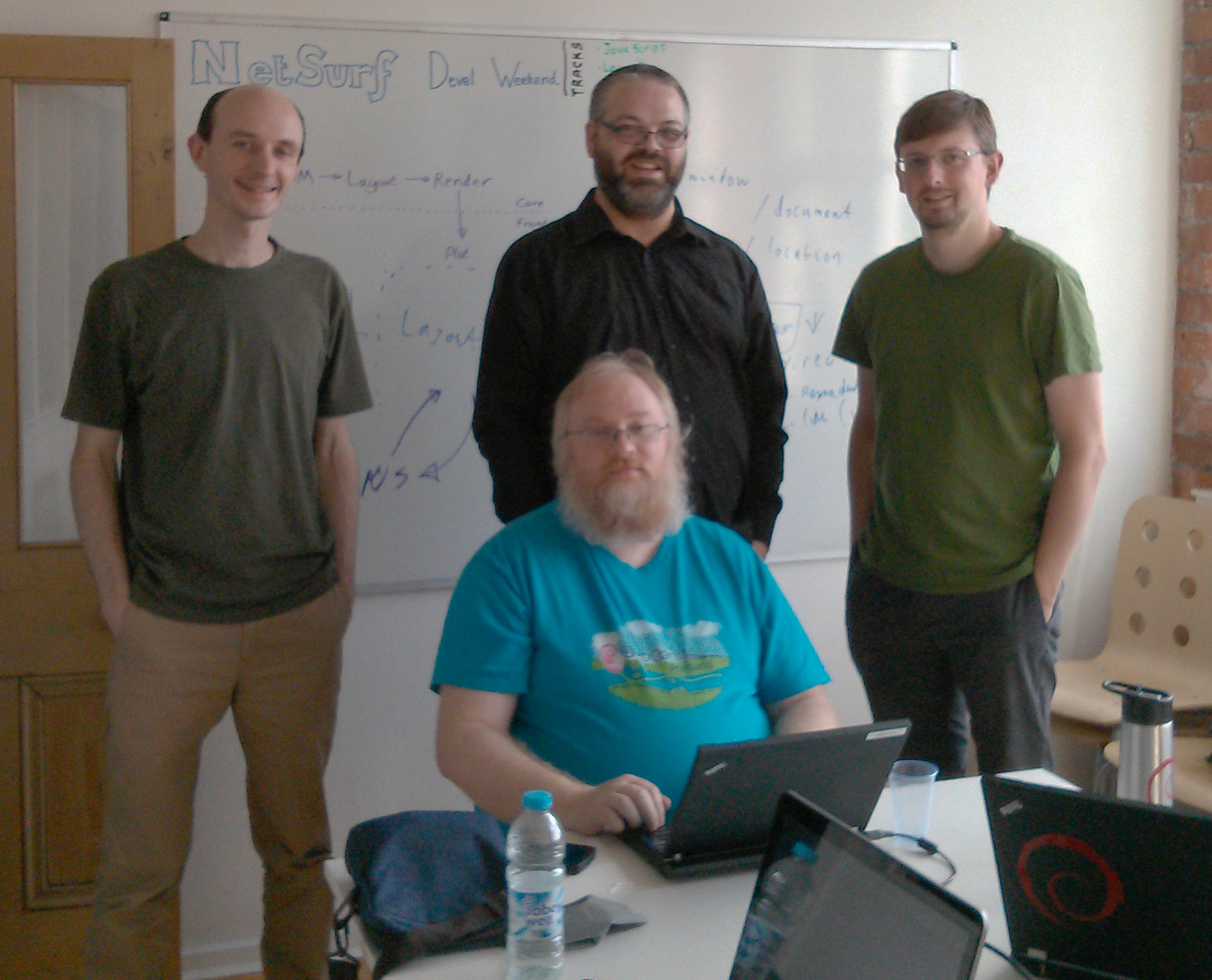
Michael Drake, Vincent Sanders, John-Mark Bell and Daniel Silverstone at the Codethink manchester officesThe fifth developer weekend was an opportunity for us to gather in a pleasant setting and work together in person. We were graciously hosted, once again, by Codethink in their Manchester offices.

Four developers managed to attend in person from around the UK: Michael Drake, John-Mark Bell, Daniel Silverstone and Vincent Sanders.

The main focus of the weekends activities was to address two areas that have become overwhelmingly important: JavaScript and Layout.

Although the browser obviously already has both these features they are somewhat incomplete and incapable of supporting the features of the modern web.
JavaScriptThe discussion started with JavaScript and its implementation. We had previously looked at the feasibility of changing our JavaScript engine from Spidermonkey to DukTape. We had decided this was a change we wanted to make when DukTape was mature enough to support the necessary features.

The main reasons for the change are that Spidermonkey is a poor fit to NetSurf as it is relatively large and does not provide a stable API guarantee. The lack of a stable API requires extensive engineering to update to new releases. Additionally support for compiling on minority platforms is very challenging meaning that most platforms are stuck using version 1.7 or 1.85 (current release is version 31 with 38 due).

We started the move to Duktape by creating a development branch, integrating the Duktape library and open coding a minimal implementation of the core classes as a proof of concept. This work was mostly undertaken by Daniel with input from myself and John-Mark. This resulted in a build that was substantially smaller than using Spidermonkey with all the existing functionality our tests cover.

The next phase of this work is to take the prototype implementation and turn it into something that can be reliably used and covers the entire JavaScript DOM interface. This is no small job as there are at least 200 classes and 1500 methods and properties to implement.
LayoutThe layout library design discussion was an extensive and very involved. The layout engine is a browsers most important component. It takes all the information processed by the CSS and DOM libraries, applies a vast number of involved rules and produces a list of operations that can be rendered.

This reimplementation of our rendering engine has been in planning for many years. The existing engine stems from the browsers earliest days more than a decade ago and has many shortcomings in architecture and implementation we hope to address.

The work has finally started on libnslayout with Michael taking the lead and defining the initial API and starting the laborious work of building the test harness, a feature the previous implementation lacked!
The second war beginsFor a war you need people and it is a little unfortunate that this was our lowest ever turnout for the event. This is true of the project overall with declining numbers of commits and interest outside our core group. If anyone is interested we are always happy to have new contributors and there are opportunities to contribute in many areas from image assets, through translations, to C programming.

We discussed some ways to encourage new developers and try and get committed developers especially for the minority platform frontends. The RISC OS frontend for example has needed a maintainer since the previous one stepped down. There was some initial response from its community, culminating in a total of two patches, when we announced the port was under threat of not being releasable in future. Unfortunately nothing further came from this and it appears our oldest frontend may soon become part of our history.

We also covered some issues from the bug tracker mostly to see if there were any patterns that we needed to address before the forthcoming 3.4 release.

There was discussion about recent improvements to the CI system which generate distribution packages from the development branch and how this could be extended to benefit more users. This also included authorisation to acquire storage and other miscellaneous items necessary to keep the project infrastructure running.

We managed over 20 hours of work in the two days and addressed our current major shortcomings. Now it just requires a great deal of programming to complete the projects started here.

23 July 2015

Daniel Pocock: Unpaid work training Google's spam filters

This week, there has been increased discussion about the pain of spam filtering by large companies, especially Google. It started with Google's announcement that they are offering a service for email senders to know if their messages are wrongly classified as spam. Two particular things caught my attention: the statement that less than 0.05% of genuine email goes to the spam folder by mistake and the statement that this new tool to understand misclassification is only available to "help qualified high-volume senders". From there, discussion has proceeded with Linus Torvalds blogging about his own experience of Google misclassifying patches from Linux contributors as spam and that has been widely reported in places like Slashdot and The Register. Personally, I've observed much the same thing from the other perspective. While Torvalds complains that he isn't receiving email, I've observed that my own emails are not always received when the recipient is a Gmail address. It seems that Google expects their users work a little bit every day going through every message in the spam folder and explicitly clicking the "Not Spam" button: so that Google can improve their proprietary algorithms for classifying mail. If you just read or reply to a message in the folder without clicking the button, or if you don't do this for every message, including mailing list posts and other trivial notifications that are not actually spam, more important messages from the same senders will also continue to be misclassified. If you are not willing to volunteer your time to do this, or if you are simply one of those people who has better things to do, Google's Gmail service is going to have a corrosive effect on your relationships. A few months ago, we visited Australia and I sent emails to many people who I wanted to catch up with, including invitations to a family event. Some people received the emails in their inboxes yet other people didn't see them because the systems at Google (and other companies, notably Hotmail) put them in a spam folder. The rate at which this appeared to happen was definitely higher than the 0.05% quoted in the Google article above. Maybe the Google spam filters noticed that I haven't sent email to some members of the extended family for a long time and this triggered the spam algorithm? Yet it was at that very moment that we were visiting Australia that email needs to work reliably with that type of contact as we don't fly out there every year. A little bit earlier in the year, I was corresponding with a few students who were applying for Google Summer of Code. Some of them also observed the same thing, they sent me an email and didn't receive my response until they were looking in their spam folder a few days later. Last year I know a GSoC mentor who lost track of a student for over a week because of Google silently discarding chat messages, so it appears Google has not just shot themselves in the foot, they managed to shoot their foot twice. What is remarkable is that in both cases, the email problems and the XMPP problems, Google doesn't send any error back to the sender so that they know their message didn't get through. Instead, it is silently discarded or left in a spam folder. This is the most corrosive form of communication problem as more time can pass before anybody realizes that something went wrong. After it happens a few times, people lose a lot of confidence in the technology itself and try other means of communication which may be more expensive, more synchronous and time intensive or less private. When I discussed these issues with friends, some people replied by telling me I should send them things through Facebook or WhatsApp, but each of those services has a higher privacy cost and there are also many other people who don't use either of those services. This tends to fragment communications even more as people who use Facebook end up communicating with other people who use Facebook and excluding all the people who don't have time for Facebook. On top of that, it creates more tedious effort going to three or four different places to check for messages. Despite all of this, the suggestion that Google's only response is to build a service to "help qualified high-volume senders" get their messages through leaves me feeling that things will get worse before they start to get better. There is no mention in the Google announcement about what they will offer to help the average person eliminate these problems, other than to stop using Gmail or spend unpaid time meticulously training the Google spam filter and hoping everybody else does the same thing. Some more observations on the issue Many spam filtering programs used in corporate networks, such as SpamAssassin, add headers to each email to suggest why it was classified as spam. Google's systems don't appear to give any such feedback to their users or message senders though, just a very basic set of recommendations for running a mail server. Many chat protocols work with an explicit opt-in. Before you can exchange messages with somebody, you must add each other to your buddy lists. Once you do this, virtually all messages get through without filtering. Could this concept be adapted to email, maybe giving users a summary of messages from people they don't have in their contact list and asking them to explicitly accept or reject each contact? If a message spends more than a week in the spam folder and Google detects that the user isn't ever looking in the spam folder, should Google send a bounce message back to the sender to indicate that Google refused to deliver it to the inbox? I've personally heard that misclassification occurs with mailing list posts as well as private messages.

22 July 2015

Cyril Brulebois: D-I Stretch Alpha 1

Time for a quick recap of the beginning of the Stretch release cycle as far as the Debian Installer is concerned: (On a related note, I ve started tweeting rather regularly about my actions, wins & fails, using the #DebianInstaller hashtag. I might try and aggregate my tweets as @CyrilBrulebois into more regular blog posts, time permitting.) Executive summary: D-I Stretch Alpha 1 is released, time to stretch a bit! Stretching cat (Credit: rferran on openclipart)

Orestis Ioannou: GSoC Debsources midterm news

Midterm evaluations have already passed and I guess we have also reached a milestone since last week I finished working on the copyright tracker and started the patch tracker. Here's the list of my reports on soc-coordination for those interested Copyright tracker status Copyright tracker Most of the functionalities of the copyright tracker are already merged. Specifically navigating in the tracker, rendering the machine readable licenses, API functionalities such as obtaining the license of a file searching by checksum or by a package / version / path or obtaining the licenses of many files at once and their respective views. Some more functionalities are still under review such as filling the database with copyright related information at update time, using the database to answer the aforementioned requests, license statistics in the spirit of the Debsources ones and exporting a license in SPDX format. Its going to be pretty exciting when those pull requests are going to be merged since the copyright tracker will be full and complete! Meanwhile I started working on the patch tracker. Patch tracker My second task is the implementation of a patch tracker. This feature existed in Debian but unfortunately died recently. I have already started revising the functionalities of the old patch tracker, started identifying target users, creating use stories and cases. Those should help me list the desired functionalities of the tracker, imagine the structure of the blueprint and start writing code to that end. It is going to be a pretty exciting run of 1 month doing this as my knowledge on the Debian packaging system is not that good just yet. I hope that until Debconf some of the functionalities of the patch tracker are going to be ready. Debconf My request for sponsorship for Debconf was accepted and I am pretty excited since this is going to be my first Debconf attendance. I am looking forward meeting my mentors (Zack and Matthieu), the fellow student working on Debsources (Clemux) as well as a lot of other people I happen to chat occasionaly during this summer. I ll arrive on Friday 14th and leave on Sunday 23. Debconf 2015

Next.

Previous.