Search Results: "sto"

17 June 2014

Petter Reinholdtsen: From English wiki to translated PDF and epub via Docbook

The Debian Edu / Skolelinux project provide an instruction manual for teachers, system administrators and other users that contain useful tips for setting up and maintaining a Debian Edu installation. This text is about how the text processing of this manual is handled in the project. One goal of the project is to provide information in the native language of its users, and for this we need to handle translations. But we also want to make sure each language contain the same information, so for this we need a good way to keep the translations in sync. And we want it to be easy for our users to improve the documentation, avoiding the need to learn special formats or tools to contribute, and the obvious way to do this is to make it possible to edit the documentation using a web browser. We also want it to be easy for translators to keep the translation up to date, and give them help in figuring out what need to be translated. Here is the list of tools and the process we have found trying to reach all these goals. We maintain the authoritative source of our manual in the Debian wiki, as several wiki pages written in English. It consist of one front page with references to the different chapters, several pages for each chapter, and finally one "collection page" gluing all the chapters together into one large web page (aka the AllInOne page). The AllInOne page is the one used for further processing and translations. Thanks to the fact that the MoinMoin installation on wiki.debian.org support exporting pages in the Docbook format, we can fetch the list of pages to export using the raw version of the AllInOne page, loop over each of them to generate a Docbook XML version of the manual. This process also download images and transform image references to use the locally downloaded images. The generated Docbook XML files are slightly broken, so some post-processing is done using the documentation/scripts/get_manual program, and the result is a nice Docbook XML file (debian-edu-wheezy-manual.xml) and a handfull of images. The XML file can now be used to generate PDF, HTML and epub versions of the English manual. This is the basic step of our process, making PDF (using dblatex), HTML (using xsltproc) and epub (using dbtoepub) version from Docbook XML, and the resulting files are placed in the debian-edu-doc-en binary package. But English documentation is not enough for us. We want translated documentation too, and we want to make it easy for translators to track the English original. For this we use the poxml package, which allow us to transform the English Docbook XML file into a translation file (a .pot file), usable with the normal gettext based translation tools used by those translating free software. The pot file is used to create and maintain translation files (several .po files), which the translations update with the native language translations of all titles, paragraphs and blocks of text in the original. The next step is combining the original English Docbook XML and the translation file (say debian-edu-wheezy-manual.nb.po), to create a translated Docbook XML file (in this case debian-edu-wheezy-manual.nb.xml). This translated (or partly translated, if the translation is not complete) Docbook XML file can then be used like the original to create a PDF, HTML and epub version of the documentation. The translators use different tools to edit the .po files. We recommend using lokalize, while some use emacs and vi, others can use web based editors like Poodle or Transifex. All we care about is where the .po file end up, in our git repository. Updated translations can either be committed directly to git, or submitted as bug reports against the debian-edu-doc package. One challenge is images, which both might need to be translated (if they show translated user applications), and are needed in different formats when creating PDF and HTML versions (epub is a HTML version in this regard). For this we transform the original PNG images to the needed density and format during build, and have a way to provide translated images by storing translated versions in images/$LANGUAGECODE/. I am a bit unsure about the details here. The package maintainers know more. If you wonder what the result look like, we provide the content of the documentation packages on the web. See for example the Italian PDF version or the German HTML version. We do not yet build the epub version by default, but perhaps it will be done in the future. To learn more, check out the debian-edu-doc package, the manual on the wiki and the translation instructions in the manual.

16 June 2014

Wouter Verhelst: /etc/hosts is mine, dammit

I try to use Debian everywhere. Not because I think it's perfect, but it's close. But if I had to point out one misdesign that I hate, it would be the fact that applications care about the contents of /etc/hosts. If I don't put the FQDN on the line containing 127.0.0.1 in /etc/hosts, then one set of (proprietary) applications stops working. If I do put the FQDN on the line containing 127.0.0.1 in /etc/hosts, then another set of (proprietary) applications stops working. I want to kill people. I've been considering writing a custom NSS module which changes the return value of gethostbyname() and friends depending on who's calling the function. That would be ugly, but I suppose it could work. But I really, really, really don't want to start doing this. Grrr.

Simon Kainz: on using crippled installers

Maybe someone else is using iDataPlex HW, so this might come in helpful... TL, DR: Dear Hardware Vendors! Please don't force people to use specific Linux distributions when a simple unzip command would do the same. At work we run (amongst others) an HPC system consisting of 120 IBM System X iDataPlex dx360 M4 Nodes. Recently, after some MCE logs caused by DIMM errors, the IBM guy refused to send me replacement DIMMs if if didn't update IMM firware and tortue test the machine some days more. Well, ok... IBM uses the so called UpdateXpress tool to update IMM and UEFI firmware. The tool is available for rhel4 to rhel7 (both 32 and 64 bit), SLES10 & SLES11 and Microsoft Windows. I tried all of the available UpdateXpress System Pack Installers, with basically the same result everytime:
WARNING! This package doesn't appear to match your system.
         The following information was determined for your system:
           distribution = Unknown
           release = -1
           processor architecture = Unknown
I tried to set up a fake RHEL environment (customized /usr/local/uname, custom /et/RHel-release, etc...) but after some more tries, the installer (yes, it's still the installer I am trying to run) fails with some strange SEGFAULTS. After some closer inspection, (well, the RHEL4 uxspi binary is about 109MB big!) i tried to unzip it, and voila:
~/firmware$ unzip ibm_utl_uxspi_9.60_rhel4_32-64.bin
Archive:  ibm_utl_uxspi_9.60_rhel4_32-64.bin
   creating: rhel6_64/image/
  inflating: rhel6_64/image/libpegasus.nsp.so  
  inflating: rhel6_64/image/libUxliteImmUsbLan.so  
  inflating: rhel6_64/image/eccConnect.properties  
  inflating: rhel6_64/image/libpegslp_client.so  
   creating: rhel6_64/image/esxi_assoc_templates/
  inflating: rhel6_64/image/esxi_assoc_templates/elxFC.uxt  
  inflating: rhel6_64/image/esxi_assoc_templates/elxCNA.uxt  
  inflating: rhel6_64/image/esxi_assoc_templates/ibmc.uxt  
  inflating: rhel6_64/image/esxi_assoc_templates/FPGA-S.uxt  
  inflating: rhel6_64/image/esxi_assoc_templates/degraded.uxt  
  inflating: rhel6_64/image/esxi_assoc_templates/brocadeFC.uxt  
  inflating: rhel6_64/image/esxi_assoc_templates/qlgcFC.uxt  
  inflating: rhel6_64/image/esxi_assoc_templates/broadcom.uxt  
  inflating: rhel6_64/image/esxi_assoc_templates/LSI.uxt  
  inflating: rhel6_64/image/esxi_assoc_templates/brocadeCNA.uxt  
  inflating: rhel6_64/image/esxi_assoc_templates/uefi.uxt  
  inflating: rhel6_64/image/esxi_assoc_templates/diags.uxt  
  inflating: rhel6_64/image/esxi_assoc_templates/qlgcCNA.uxt  
  inflating: rhel6_64/image/esxi_assoc_templates/VMwareESXi.uxt  
  inflating: rhel6_64/image/esxi_assoc_templates/ibmc2.uxt  
  inflating: rhel6_64/image/esxi_assoc_templates/FPGA.uxt  
  inflating: rhel6_64/image/libipmi_client.so  
  inflating: rhel6_64/image/UXLite_UPDATEID.dat  
  inflating: rhel6_64/image/libacpi.so  
  inflating: rhel6_64/image/libibmsp6_openipmi.so  
  ...
I managed to find a iflash64 binary, and after so trial and error, came up with the following workflow:
./iflash64 --host your_host_imm_IP --user your_username --password your_password --package imm2_1aoo56d-3.73.upd --reboot
IBM Command Line IMM Flash Update Utility v2.02.11
Licensed Materials - Property of IBM
(C) Copyright IBM Corp. 2009 - 2014  All Rights Reserved.
Connected to IMM at IP address x.x.x.x.
Update package firmware type: IMM2
Update package build level:   xxxxxx
Target's current build level: xxxxxx
Would you like to continue with the update? y/n: y
Node 0: The IMM is preparing to receive the update.
Node 0: Transferring image: 98%
Node 0: Transfer complete.
Node 0: Validating image.
Node 0: Updating firmware:  0%
Node 0: Updating firmware:  100%
Node 0: Update complete.
Performing activation of the firmware:
Connected to IMM at IP address 10.8.2.4 successfully.
..........
Waiting up to 360 seconds for the activation to complete:
..
..
And so on... Conclusio: Dear Hardware Vendors! Please don't force people to use specific Linux distributions when a simple unzip command would do the same.

Enrico Zini: never-afraid-of-losing-you

Fear of losing If I am afraid of breaking my laptop, then I may leave it at home, and it will be as if I didn't have a laptop. If I am afraid of losing faith, then I may closely follow the dictates of the church. I will be keeping the church's faith, but not mine. If I am afraid of losing my children, they may have to run away from me to be free to grow into adults. If I am afraid of losing my inner child, then I might not expose it to the world, and so my inner child will never live. I will just be a box, a mask of what the world expects from me, that shelters and cages the Me that would like to live. If I am afraid of losing you, then I may get obsessed with preserving the beautiful image I have of you. I may stop seeing, experiencing you as you live, think, grow. I may become afraid of your depth, of your being different each day, of your being alive. I may end up with cherishing a perfect image of you in my head, while you will have become a stranger to me. I am really asking when I can accept answers. I am really living when I can accept myself. I am really loving when I can accept you.

Keith Packard: Altos1.4

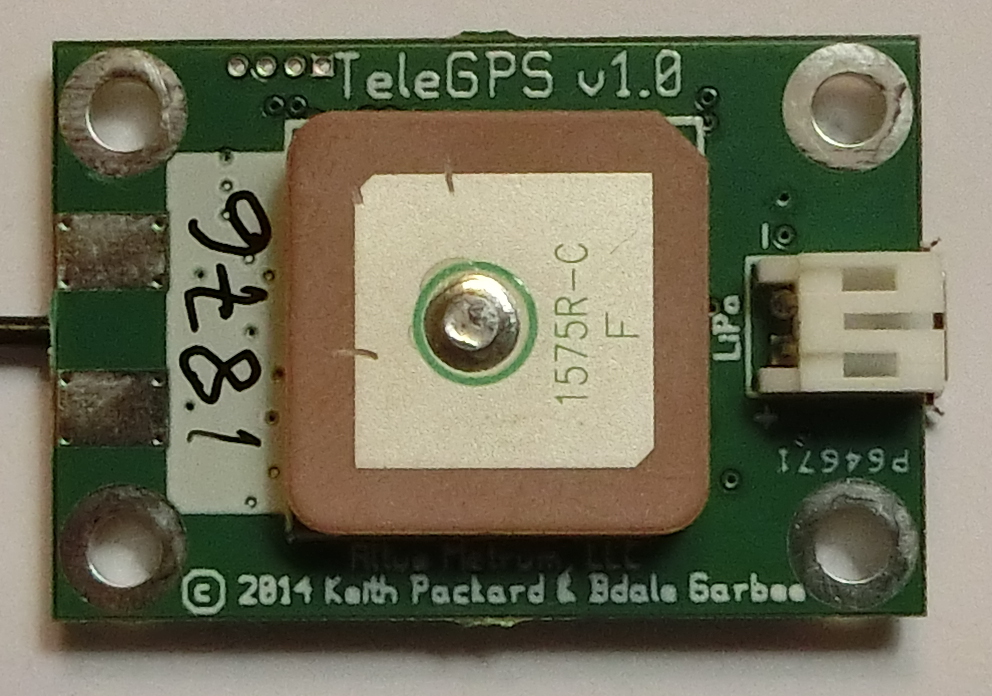
AltOS 1.4 TeleGPS support, features and bug fixes Bdale and I are pleased to announce the release of AltOS version 1.4. AltOS is the core of the software for all of the Altus Metrum products. It consists of firmware for our cc1111, STM32L151, LPC11U14 and ATtiny85 based electronics and Java-based ground station software. This is a major release of AltOS, including support for our new TeleGPS board and a host of new features and bug fixes AltOS Firmware TeleGPS added, new features and fixes Our new tracker, TeleGPS, works quite differently than a flight computer TeleGPS transmits our digital telemetry protocol, APRS and radio direction finding beacons. For TeleMega, we ve made the firing time for the additional pyro channels (A-D) configurable, in case the default (50ms) isn t long enough. AltOS Beeping Changes The three-beep startup tones have been replaced with a report of the current battery voltage. This is nice on all of the board, but particularly useful with EasyMini which doesn t have the benefit of telemetry reporting its state. We also changed the other state tones to Farnsworth spacing. This makes them all faster, and easier to distinguish from the numeric reports of voltage and altitude. Finally, we ve added the ability to change the frequency of the beeper tones. This is nice when you have two Altus Metrum flight computers in the same ebay and want to be able to tell the beeps apart. AltOS Bug Fixes Fixed a bug which prevented you from using TeleMega s extra pyro channel Flight State After configuration value. AltOS 1.3.2 on TeleMetrum v2.0 and TeleMega would reset the flight number to 2 after erasing flights; that s been fixed. AltosUI New Maps, igniter tab and a few fixes With TeleGPS tracks now potentially ranging over a much wider area than a typical rocket flight, the Maps interface has been updated to include zooming and multiple map styles. It also now uses less memory, which should make it work on a wider range of systems. For TeleMega, we ve added an Igniter tab to the flight monitor interface so you can check voltages on the extra pyro channels before pushing the button. We re hoping that the new Maps interface will load and run on machines with limited memory for Java applications; please let us know if this changes anything for you. TeleGPS All new application just for TeleGPS While TeleGPS shares the same telemetry and data logging capabilities as all of the Altus Metrum flight computers, its use as a tracker is expected to be both broader and simpler than the rocketry-specific systems. We ve build a custom TeleGPS application that incorporates the mapping and data visualization aspects of AltosUI, but eliminates all of the rocketry-specific flight state tracking.
15 June 2014

Dominique Dumont: Edit your debian patch header for DEP-3 compliance with cme

While not required by Debian policy, the patch tagging guidelines (aka DEP-3) recommends to add a structured header to source package patches. Long story short, patches should begin with something like :
Description: tweak lcdproc config for debian
patch LCDd.conf to:
* use syslog instead of stderr to show message
* run LCDd as root (to read /dev/lcd* file)
.
The latter could be done better by tweaking udev rule
Author: dod
Applied-Upstream: NA
Making sure that the DEP-3 recommendation is respected may not be fun. Do not despair: once libconfig-model-dpkg-perl is installed on your system, you can check whether your patches respect the DEP3 recommendation with the following command: $ cme check dpkg-patches
loading data
checking data
check done
You can also check individual patches with: cme check dpkg-patch tweak-conf Note that bash auto-completion is provided only from version 2.049 of libconfig-model-dpkg-perl package. If editing the header of your patches with your favorite editor does not strike you as fun, you can also use cme graphical editor provided by libconfig-model-tkui-perl. Once this package is installed, you can run: cme edit dpkg-patches You will get this editor to update your patches: -usr-bin-cme Dpkg::Patches_001 This editor will show you the available parameters and the associated documentation to let you provide relevant information. Last but not least, patch header check is also performed when you check your whole package with cme check dpkg All the best
Tagged: Config::Model, debian, package, patch

13 June 2014

Aigars Mahinovs: Going to Debconf14

It's that time of the year, again, when I lan to go to Debconf, reserve vacation, get visa waiver, book tickets. Let's hope nothing blocks me from attending this time. It has been too long. Now I just need to finish up photoriver before Debconf :) In fact it is quite close to being ready - I just need to finish up the GPS tagging feature, figure out why FLickr stopped working recently and optionally work on burst detection and/or FlashAir IP address autodetection in the network.

11 June 2014

Bits from Debian: Introducing the Debian Continuous Integration project

Debian is a big system. At the time of writing, the unstable distribution has more than 20,000 source packages, building more then 40,000 binary packages on the amd64 architecture. The number of inter-dependencies between binary packages is mind-boggling: the entire dependency graph for the amd64 architecture contains a little more than 375,000 edges. If you want to expand the phrase "package A depends on package B", there are more than 375,000 pairs of packages A and B that can be used. Every one of these dependencies is a potential source of problems. A library changes the semantics of a function call, and then programs using that library that assumed the previous semantics can start to malfunction. A new version of your favorite programming language comes out, and a program written in it no longer works. The number of ways in which things can go wrong goes on and on. With an ecosystem as big as Debian, it is just impossible to stop these problems from happening. What we can do is trying to detect when they happen, and fix them as soon as possible. The Debian Continuous Integration project was created to address exactly this problem. It will continuously run test suites for source packages when any of their dependencies is updated, as well as when a new version of the package itself is uploaded to the unstable distribution. If any problems that can be detected by running an automated test suite arise, package maintainers can be notified in a matter of hours. Antonio Terceiro has posted on his blog an introduction to the project with a more detailed description of the project, its evolution since January 2014 when it was first introduced, an explanation of how the system works, and how maintainers can enable test suites for their packages. You might also want to check the documentation directly.

Daniel Pocock: Protest or Uber marketing stunt?

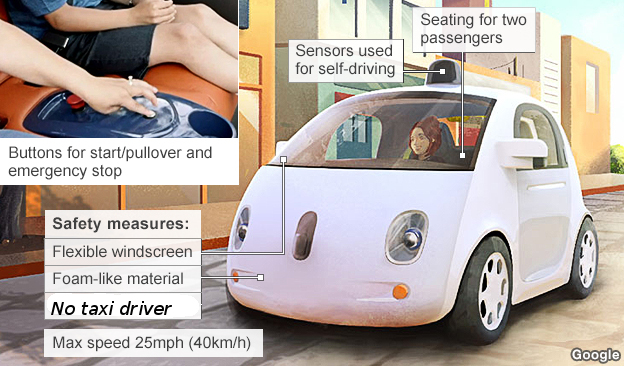
London's taxi "strike" today has been so successful that Uber claims to have had an 850% increase in new customer registrations this week. Well, that is a big success if you believe the strike may have been a guerrilla marketing tactic organised by Uber itself. No sympathy Personally, I have no sympathy for the taxi drivers. There is no city I have ever visited where I haven't encountered at least one taxi driver who tried to overcharge me. Honest drivers who give their customers value for money have less to fear from new technology than those who are unscrupulous. When I broke a leg a few years ago and was getting about on crutches for 6 weeks we decided to go out for dinner one night. This was the first time I went anywhere after having a long stint in hospital followed by a period of time I was confined to the house. The taxi driver deliberately skipped two turns leading directly to the restaurant, went another 1km past it and then followed a small street that winds back and forth and eventually demanded I pay him double what the fare should have been. This is exactly the type of abusive and despicable practice that is being eradicated by Uber's live GPS mapping technology. Although not every driver behaves so shamefully, this type of abuse of the weak or vulnerable is replicated in one way or another the world over. For example, in Melbourne, Australia, wheelchair taxis that have worked out they can make more money collecting families with suitcases at the airport leave genuine wheelchair users without a ride. Will Google be targeted next week? Google has just announced a step-change in plans to build their own self driving cars. Will Google offices around the world, including London be targetted by these crude blockades too? Political protest or anti-competitive mischief? Why were taxi drivers not arrested for their protest today? Given that the roads are the place where taxis and their competitors do business, can this blockade really be considered a political protest or is it an anti-competitive practice in blatant disregard of the law? Weapons of mass destruction Before even having breakfast you could probably find 10,000 cyclists in central London willing to sign a petition declaring taxis are a weapon of mass destruction. Once again, while there are honest drivers, there is a more than trivial number of taxi drivers who are a genuine danger to the lives of cyclists, scooters, motorcycles and occasionally pedestrians. I have personally experienced one of these thugs ramming my bicycle from behind (his hard-nosed insurer eventually paid up but without admitting liability). The police who attended the incident even told me they had seen so many accidents like this they wouldn't dare cycle themselves. The web is full of examples that appear to show malicious and criminal behavior by taxi drivers, thanks to Youtube and helmet cams: Will hotels protest about AirBNB? Now the taxi drivers have had their chance to cause mayhem, will hotel operators be next? What could they do though? Will they seek out AirBNB apartments and try to obstruct them somehow? Making mischief outside somebody's home is not a good way to make a point. Chances are, they would be prosecuted or served with restraining orders. So why do the taxi drivers get to jam up whole cities and get away with it? The Uber taxi meter loophole Will the courts decide that the Uber app is a taxi meter? This is actually a tough question. Even if courts rule against apps that perform live metering, Uber could simply remove all metering functions from the app itself and perform the metering calculations in the cloud. The app would just send start and finish locations to the cloud and the cloud would send a message back to the phone confirming the charge. The phone is then nothing more than a communication and positioning device. Remember the elevator man? When the automobile was first invented, laws were made requiring every car to be accompanied through public streets by a man carrying a flag. That job, like many others, no longer exists. elevator attendant In the good old days, every elevator had a man or woman who would sit on a stool and press buttons to operate the doors and motors. Some up-market department stores and hotels still have an elevator man to add a touch of nostalgia. The vast majority, however, have eliminated these jobs thanks to automatic elevators. Now, even aircraft can land automatically on a ship at sea. Look at all those people manning the deck in the video and contemplate how many of them might potentially be out of a job too in 50 years time as Terminator-style automated battleships patrol the seas. Technology, like the Terminator, is not going to stop.

10 June 2014

Russell Coker: Google Hardware Support

Ironically just 5 days after writing about how I choose Android devices for a long service life [1] my wife s Nexus 5 (with 32G of RAM (sorry Flash storage) to give it a long useful life) totally died. It reported itself as being fully charged and then 15 minutes later it was off and could not be revived. No combination of pushing the power button and connecting the power cable caused the screen to light up or any sound to be emitted. Google has a nice interactive support site for nexus devices that describes more ways of turning a phone on than any reasonable person could imagine. After trying to turn the phone on in various ways (plugged and unplugged etc) it gave me a link to get phone support. Clicking on that put me in the queue to RECEIVE a phone call and a minute later a lady who spoke English really well (which is unusual for telephone support) called me to talk me through the various options. Receiving a phone call is a much better experience than making a call. It meant that if the queue for phone support was long then I could do other things until the phone rings. It s impossible to be productive at other tasks while listening for hold music to stop and a person to start talking. The cost of doing this would be very tiny, while there would be some cost in hardware and software to have a web site that tells me how long I can expect to wait for a call a more basic implementation where I just submit my number and wait for a call would be very cheap to implement. The costs of calls from the US to Australia (and most places where people can afford a high end Android phone) are quite cheap for home users and are probably cheaper if you run a call center. If the average support call cost Google $1 and 3% of phones have support calls then that would be an extra cost of $0.03 per phone. I expect that almost everyone who buys a $450 phone would be happy to pay a lot more than $0.03 to avoid the possibility of listening to hold music! I received the phone call about a minute after requesting it, this was nice but I wonder how long I would have waited if I hadn t requested a call at 1AM Australian time (presumably during the day in a US call center). In any case getting a 1 minute response is great for any time of the day or night, lots of call centers can t do that. While the phone support is much better than most phone support, it would be nice if they added some extra options. I think it would be good to have webchat and SMS as options for support for the benefit of people who don t want to speak to strangers. This would be useful to a lot of people on the Autism Spectrum and probably others too. The phone call wasn t particularly productive, it merely confirmed that I had followed all the steps on the support website. Then I received an email telling me about the web site which was a waste of time as I d covered that in the phone call. I have just replied to their second email which asked for the IMEI of the phone to start the warranty return process. We could have saved more than 24 hours delay if this had been requested in the first email or the phone call. Google could have even requested the IMEI through the web site before starting the phone call. It would have been even easier if Google had included the device IMEI in the email they sent me to confirm the purchase as searching for old email is a lot easier than searching through my house for an old box. Another option for Google would be to just ask me for the Gmail account used for the purchase, as I only bought one Nexus 5 on that account they then have all the purchase details needed for a warranty claim. While the first call was a great experience the email support following that has been a waste of time. I m now wondering if they aim to delay the warranty process for a few days in the hope that the phone will just start working again.

9 June 2014

Floris Stoica-Marcu: GSoC 2014 Muon package and initial apt-listbugs integration [Week3]

Hello, The past week I ve finished the muon package, available @ git.debian.org/?p=pkg-kde/kde-extras/muon.git on the gsoc-floris-2014 branch (use at your own risk!) Also, I ve finished up the KAuth support when adding/removing repos (already pushed to the master of Muon). Most importantly, I ve started integrating apt-listbugs a most important component of Debian. What does this mean and how it will affect the end-user? Well, having apt-listbugs integrated means that the user will be warned when installing packages if the packages have some serious/grave/critical bugs! I am still working on making it async and I hope to be done by tonight. Also, some formatting work on the dialog is still needed. Check it out bellow: Apt-listbugs in action After I finish the apt-listbugs integration, I will get started on writing up some apt unit tests as suggested by Aleix. Also, I will work with Sune on updating the qapt package as well. In a nutshell: This week:
*muon package
*KAuth support implemented
*initial apt-listbugs integration Plans for next week:
*finish apt-listbugs integration (async, with pretty formatting!)
*apt unit tests
*update qapt package Thanks for reading, see you next week!
Floris.

Dirk Eddelbuettel: Rcpp 0.11.2

A new minor release 0.11.2 of Rcpp is now on the CRAN network for GNU R, and binaries for Debian have also been uploaded. The release smoothes a few edges on both the Rcpp side itself, as well as on the interaction between Rcpp and R which since release 3.1.0 offers a few new features related to C++11. Kevin added a couple of neat extensions related to vectors, a new ListOf templated list class, as well as a new option to warn on implicit casts. We decided not to make this option the default as it may be too common in some packages. JJ took care of a few buglets related to the wonderful Rcpp Attributes. See the NEWS file section below for details, or the ChangeLog file in the package and on the Rcpp Changelog page. Note that the diffstat reported by CRANberries is very large as Kevin also committed a whitespace cleanup which touched almost all files. As before, we tested this release by building against all CRAN packages which depend upon Rcpp. In fact we did three such runs leading up to the release. Only one package was blacklisted (as I currently don't have CUDA set-up), two had what may be internal errors or tests which were too restrictive, sixteen suffered from missing packages or RGL devices --- but the remaining 202 packages all built and tested cleanly. Detailed results of those tests (and the scripts for it) are in the rcpp-logs repo GitHub. There are a number of other fixes, upgrades and other extensions detailed in NEWS file extract below, in the ChangeLog file in the package and on the Rcpp Changelog page.
Changes in Rcpp version 0.11.2 (2014-06-06
  • Changes in Rcpp API:
    • Implicit conversions, e.g. between NumericVector and IntegerVector, will now give warnings if you use #define RCPP_WARN_ON_COERCE before including the Rcpp headers.
    • Templated List containers, ListOf<T>, have been introduced. When subsetting such containers, the return is assumed to be of type T, allowing code such as ListOf<NumericVector> x; NumericVector y = x[0] + x[1] + x[2].
    • In a number of instances, returned results are protected and/or cast more carefully.
  • Changes in Rcpp Attributes
    • Trailing line comments are now stripped by the attributes parser. This allows the parser to handle C++ source files containing comments inline with function arguments.
    • The USE_CXX1X environment variable is now defined by the cpp11 plugin when R >= 3.1. Two additional plugins have been added for use with C++0x (eg when using g++ 4.6.* as on Windows) as well as C++1y for compilers beginning to support the next revision of the standard; additional fallback is provided for Windows.
    • compileAttributes() now also considers Imports: which may suppress a warning when running Rcpp.package.skeleton().
Thanks to CRANberries, you can also look at a diff to the previous release. As always, even fuller details are on the Rcpp Changelog page and the Rcpp page which also leads to the downloads, the browseable doxygen docs and zip files of doxygen output for the standard formats. A local directory has source and documentation too. Questions, comments etc should go to the rcpp-devel mailing list off the R-Forge page

This post by Dirk Eddelbuettel originated on his Thinking inside the box blog. Please report excessive re-aggregation in third-party for-profit settings.

8 June 2014

Wouter Verhelst: Is Debian non-free?

According to the Free Software Foundation, the Debian distribution is not a Free System Distribution. While I, as a Debian Developer, disagree with that point of view, it should be obvious that the opinion of an organization that engages in politics (or, at the very least, in political lobbying) and of which I am not a member should not be my concern. However, it has long irked me the wrong way that these claims exist. A few weeks ago, I found the System distribution commitments page on Wikipedia. This does change the situation somewhat; I cannot say that a page explaining an opinion of the FSF is wrong; but if that opinion is copied nearly verbatim to a website which claims neutrality as one of its "Core content policies", then the situation is significantly different. When I originally found that page, it was immediately obvious where the content came from, but there was no reference listed, so I added a "citation needed" tag, the first time I ever did so on Wikipedia. Now, a few weeks later, a reference has been added, and the "citation needed" tag removed. However, as expected, the only reference which has been added is the highly opinionated document on the FSF's website, which is hardly neutral. I've added another tag (this time a "which" tag, asking for more clarification) and added a Talk page listing my concerns with the article. But I can't really explain in Wikipedia why I think the whole premise is wrong; that's what a blog is for. So, here goes. The FSF lists two reasons why they do not endorse Debian:
  1. The non-free and contrib repositories
  2. An unsubstantiated claim that "the installer in some cases recommends [...] non-free firmware files for the peripherals on the machine."
Let's have a look at them, each in turn.

Non-free and contrib It is true that Debian provides non-free software in separate repositories, and that software in these repositories does not comply with either the Debian Free Software Guidelines (DFSG) or the FSF's Free Software Definition. However, the non-free and contrib repositories are fairly small:
wouter@carillon:/var/lib/apt/lists$ awk -F':' 'BEGIN total=0 /^Size/ total+=$2 END print total ' ftp.be.debian.org_debian_dists_sid_non-free_binary-amd64_Packages
4398812934
That is, the non-free repository contains just over 4G of software (after installation). Contrib is even smaller:
wouter@carillon:/var/lib/apt/lists$ awk -F':' 'BEGIN total=0 /^Size/ total+=$2 END print total ' ftp.be.debian.org_debian_dists_sid_contrib_binary-amd64_Packages 
306578636
While, combined, this is approximately the same size as some other distributions, free and non-free together, it pales in comparison with the "main" repository:
wouter@carillon:/var/lib/apt/lists$ awk -F':' 'BEGIN total=0 /^Size/ total+=$2 END print total ' ftp.be.debian.org_debian_dists_sid_main_binary-amd64_Packages
60025033622
i.e., the "main" repository contains just shy of 60G of software. Of course, whether non-free is large or not should not matter at all; the fact that it exists in the first place is a problem for free software advocates. But of those 4 gigabytes, what exactly is the non-free repository used for? For that, the Debian popularity contest has a page specifically for the non-free section. Looking at this page, and ignoring the packages that are listed as "Not in sid" (which either means they were installed from third-party suppliers and therefore cannot be attributed to Debian, or were only available in older distributions so should not be held against the Debian of today anymore), we see three main uses of non-free:
  1. Various implementations of non-free algorithms (unrar, libfaac0, etc)
  2. A lot of packages containing non-free firmware
  3. A number of packages containing non-free documentation
The first package which does not fit any of those descriptions is iozone3, currently on the 64th position of the popularity contest (including packages "Not in sid"). The first item in this list is something which most free software advocates will try to avoid. After all, for all of those algorithms, alternatives exist, and so there is no real reason why one would want to use such software, other than "someone sent me a file encoded according to that algorithm, and I want to decode it". Debian gives you the option to do so, but a valid case could be made for not doing so. The second item in that list is really an alternate version of "the installer recommends non-free software", so I'll come back on that in the next section. The 3rd item in the above list deserves some special attention. Just over 10 years ago, Debian clarified its position where it clearly specified that documentation and programs (as both are interpreted as "software") should follow the same set of guidelines regarding freedom. The FSF disagrees with this position, and chose to release some of its documentation under the GFDL with invariant sections, which Debian decided is a non-free license in 2006. Since then, such GNU documentation would no longer be available were Debian to ditch the non-free repository.

Recommending non-free firmware As I said above, the FSF's page claims that the Debian installer recommends non-free firmware "in some cases", without going into much detail. Special care should be taken in understanding the word "recommend" here; wiktionary defines it as follows:
recommend (third-person singular simple present recommends, present participle recommending, simple past and past participle recommended)
  1. (transitive) To bestow commendation on; to represent favourably; to suggest, endorse or encourage as an appropriate choice.
The board recommends Philips, given his ample experience in similar positions.
  1. (transitive) To make acceptable; to attract favor to.
  2. (transitive) To advise, propose, counsel favorably
The therapist recommends resting the mind and exercising the body.
  1. (transitive, archaic) To commit, confide to another's care, confidence or acceptance, with favoring representations
A medieval oblate's parents recommended the boy for life to God and the monastery
However, according to the FSF, merely showing a firmware filename in unencrypted form counts as a recommendation. I've always found that use of the word "recommendation" to be dubious, at best. Ignoring that part, we can make the following observations: The debian-installer module ("udeb") which is responsible for configuring apt is called apt-mirror-setup (code in the apt-setup git repository). The actual debconf templates which allow the user to enable the non-free or contrib repositories are the apt-setup/non-free and apt-setup/contrib templates, and they look like this:
Template: apt-setup/non-free
Type: boolean
Default: false
# :sl1:
_Description: Use non-free software?
 Some non-free software has been made to work with Debian. Though this
 software is not at all a part of Debian, standard Debian tools can be used
 to install it. This software has varying licenses which may prevent you
 from using, modifying, or sharing it.
 .
 Please choose whether you want to have it available anyway.
Template: apt-setup/contrib
Type: boolean
Default: false
# :sl1:
_Description: Use contrib software?
 Some additional software has been made to work with Debian. Though this
 software is free, it depends on non-free software for its operation. This
 software is not a part of Debian, but standard Debian tools can be
 used to install it.
 .
 Please choose whether you want this software to be made available to you.
Note the lines Default: false, which imply that the default answer to these questions is to disable the non-free and contrib repositories. A question which defaults to false isn't a recommendation, nor do I read the text as any form of recommendation to install these repositories (quite the contrary, in fact). More important than whether the default is to enable or disable these repositories is whether this question is even shown to the user in normal installations. Whether this is the case isn't decided by any template; instead, it is decided by the code that calls the templates. That code currently looks like this:
STATE=1
while true; do
        case "$STATE" in
            1)
                db_input low apt-setup/non-free   true
                ;;
            2)
                # If they chose not to use non-free, ask about
                # contrib, with a default of no. If they chose to
                # use non-free, they get contrib too..
                db_get apt-setup/non-free
                if [ "$RET" = false ]; then
                        db_fget apt-setup/contrib seen
                        if [ "$RET" = false ]; then
                                db_set apt-setup/contrib false
                        fi
                        db_input low apt-setup/contrib   true
                else
                        db_fget apt-setup/contrib seen
                        if [ "$RET" = false ]; then
                                db_set apt-setup/contrib true
                        fi
                fi
                ;;
            *)
                break
                ;;
        esac
        if db_go; then
                STATE=$(($STATE + 1))
        else
                STATE=$(($STATE - 1))
        fi
done
Note the "low" in the db_input lines; it means the question is only shown at low priority, i.e., in "expert" mode. The result is that, unless you enable expert mode, you won't even see the question about the non-free repository, and it will be disabled by default. There won't even be any mention of it in your sources.list file. Of course, the above isn't about firmware files, which is what the FSF website claims. So, there is a second part to this story. If you run a system with hardware for which there is a non-free firmware package in the non-free repository, and you provided firmware for this hardware to the installer through various means, then the hw-detect module comes into play. This has code which currently looks like this:
# install cached firmware debs
if [ -d /var/cache/firmware ]; then
    for deb in /var/cache/firmware/*.deb; do
            if [ -f "$deb" ]; then
                    cp -a "$deb" /target/tmp
                    # TODO debconf passthrough
                    if ! in-target dpkg -i "/tmp/$(basename "$deb")"; then
                            # dpkg failed, force removal of package
                            in-target dpkg --force-depends --remove "$(deb_package "$deb")"   true
                    fi
                    rm -f "/target/tmp/$deb"
                    need_nonfree=1
            fi
    done
fi
if [ "$need_nonfree" ]; then
    db_set apt-setup/non-free true
fi
As can bee seen, if any firmware .deb files exist under /var/cache/firmware in the installer environment, then these will be installed on the target system and default answer to the apt-setup/non-free question will be changed to enable the non-free repository. How do such packages end up there? Well, that's done by the same hw-detect udeb, in a different script. The code there is a bit too long to quote in this already far too long blog post, but it boils down to:
  • If the installer detects missing firmware, the user is asked whether (s)he wants to install firmware, with the following template:
    Template: hw-detect/load_firmware
    Type: boolean
    Default: true
    # :sl2:
    _Description: Load missing firmware from removable media?
     Some of your hardware needs non-free firmware files to operate. The
     firmware can be loaded from removable media, such as a USB stick or
     floppy.
     .
     The missing firmware files are: $ FILES 
     .
     If you have such media available now, insert it, and continue.
    
  • If the user agreed to doing so (and to me, the above template does not read as a recommendation), any firmware .deb files that are provided to the installer are tested for the missing firmware files.
  • If any of those files are found, these .deb files are copied to the /var/cache/firmware directory, and the firmware files are made available to the running kernel.

Conclusion In my opinion, while some of the claims on the FSF website are correct, others are at the very least misleading. Debian does not recommend the use of non-free software; and while providing non-free firmware to the installer isn't too difficult, it isn't documented very well; and as such installing a system with non-free enabled isn't something you can easily do by accident. Debian and the FSF clearly disagree on certain things, and this disagreement, not any policies by the Debian project, is the main reason why the FSF won't encourage Debian as a free distribution. I don't think the Debian project will easily agree to get rid of the non-free repository while the FSF still produces non-free documentation or while non-free firmware is still a fact of life in this world. However, I do think the following should happen:
  1. The FSF should relicense its non-free documentation so it becomes truly free.
  2. Once that has happened, Debian should rename its non-free repository to a "hardware-support" repository (or something along those lines), and remove everything that does not exist solely for the support of proprietary hardware (i.e., non-free drivers, non-free firmware, etc).
  3. The installer could be clearer on the fact that if non-free firmware is found to be in use for the system, the user is using software that cannot be properly supported by the Debian project.
While the above wouldn't necessarily bring the opinions of the FSF and Debian 100% in line, it would at least bring their positions closer to eachother. Unfortunately, however, I doubt that this will happen; and that's a shame, because in the end, both Debian and the FSF want the same thing: a world where Free Software is the norm, not the exception.

Update
  • The first version of this text said that providing firmware is not very easy. As was pointed out to me, it isn't too hard, but it's not very well documented and not part of the 'regular' installer images.
  • Add contrib too, when we compare non-free and main
  • Clarify when GFDL is non-free

7 June 2014

Russ Allbery: Summer haul

More books. More reading is not yet happening, but I have hope. This particular set is quite random, mostly an excuse to pad out an order since My Real Children came out. Philip Ball Bright Earth (non-fiction)
Anthony Doerr All the Light We Cannot See (mainstream)
Leslie Jamison The Empathy Exams (non-fiction)
Dava Sobel Longitude (non-fiction)
Gore Vidal Julian (historical)
Jo Walton My Real Children (sff)
Markus Zusak The Book Thief (sff, sort of) My immediate inclination is to mark any book in which Death appears as a literal character as at least fantasy, but The Book Thief comes out of the mainstream genre, so we'll see what I think about the genre after reading it.

Tim Retout: Day of Action

Today I attended the Don't Spy On Us campaign's Day Of Action at Shoreditch Town Hall in London. I'm not sure how much actual action there was, but the talking was interesting. Retrospective Day of Action drinking game: drink every time you hear the phrase "If you have nothing to hide, you have nothing to fear." The spooks have a really good marketing department. I don't write a lot on the internet any more - something I regret, actually. It can't even be because there are alternative places I am writing, because over the last couple of years I have been closing most of my social media accounts. I just share much less of myself online. On the internet, nothing is ephemeral. Bruce Schneier says so. Choose your words carefully. The thing about blogging is that it's so public. It's often tied to the writer's real-life identity. One of the valuable things about social media services is that they supposedly let you restrict who can read your words - the trade-off being that you must also grant access to advertisers, spies, cybercriminals... Most memorable moments of the day: In general, there were lots of famous people walking around as if they were normal. I was in the same room as Cory Doctorow, Jimmy Wales and Bruce Schneier at the same time. Ahem, action (mostly for UK citizens):

Vasudev Kamath: Exposing function in python module using entry_points, WSME in a Flask webapp

The heading might be ambiguous, but I couldn't figure out better heading so let me start by explaining what I'm trying to solve here.
Problem I have a python module which contains a function which I want to expose as a REST web service in a Flask application. I use WSME for Flask application, which actually needs signature of function in question and problem comes to picture because function to be exposed is foreign to Flask application, it resides in separate python module.
Solution While reading Julien Danjou's Hackers Guide To Python book I came across the setuptools entry_points concept which can be used to extend existing feature of a tool like plug-ins. So here I'm going to use this entry_points feature from setuptools to provide function in the module which can expose the signature of function[s] to be exposed through REST. Of course this means I need to modify module in question to write entry_points and function for giving out signature of function to be exposed. I will explain this with small example. I have a dummy module which provides a add function and a function which exposes the add functions signature.
def add(a, b):
    return a + b
def expose_rest_func():
    return [add, int, int, int]
This is stored in dummy/__init__.py file. I use pbr tool to package my python module. Below is content of setup.cfg file.
[metadata]
name = dummy
author = Vasudev Kamath
author-email = kamathvasudev@gmail.com
summary = Dummy module for testing purpose
version = 0.1
license = MIT
description-file =
  README.rst
requires-python = >= 2.7
[files]
packages =
  dummy
[entry_points] =
myapp.api.rest =
  rest = dummy:expose_rest_func
The special thing in above file is entry_points section, which defines function to be hooked into entry_point. In our case entry_point myapp.api.rest is used by our Flask application to interact with modules which expose them. The function which will be got accessing the entry_point is expose_rest_func which gives the function to be exposed its arg types and return types as a list. If we are looking at only supporting python3 it was sufficient to know function name only and use function annotations in function definition. Since I want to support both python2 and python3 this is out of question. Now, just run the following command in virtualenv to get the module installed.
PBR_VERSION=0.1 python setup.py sdist
pip install dist/dummy_module-0.1.tar.gz
Now if you want to see if the module is exposing entry_point or not just use entry_point_inspector tool after installing you will get a command called epi if you run it as follows you should note the dummy_module in its output
epi group list
+-----------------------------+
  Name                         
+-----------------------------+
  cliff.formatter.completion   
  cliff.formatter.list         
  cliff.formatter.show         
  console_scripts              
  distutils.commands           
  distutils.setup_keywords     
  egg_info.writers             
  epi.commands                 
  flake8.extension             
  setuptools.file_finders      
  setuptools.installation      
  myapp.api.rest               
  stevedore.example.formatter  
  stevedore.test.extension     
  wsme.protocols               
+-----------------------------+
So our entry_point is exposed now, we need to access it in our Flask application and expose the function using WSME. It is done by below code.
from wsmeext.flask import signature
import flask
import pkg_resources
def main():
   app = flask.Flask(__name__)
   app.config['DEBUG'] = True
   for entrypoint in pkg_resources.iter_entry_points('myapp.api.rest'):
       # Ugly but fix is only supporting python3
       func_signature = entrypoint.load()()
       app.route('/' + func_signature[0].__name__, methods=['POST'])(
           signature(func_signature[-1],
               *func_signature[1:-1])(func_signature[0]))
   app.run()
if __name__ == '__main__':
    main()
entry_point myapp.api.rest are iterated using the pkg_resources package provided by setuptools, when I load the entry_point I get back the function to be used which is called in same place to get function signature. Then I'm calling Flask and WSME decorator functions (yeah instead of decorating I'm using them directly over function to be exposed). The code looks bit ugly at the place where I'm accessing list using slices but I can't help it due to limitation of python2 with python3 there is new packing and unpacking stuff which makes code look bit more cooler see below.
from wsmeext.flask import signature
import flask
import pkg_resources
def main():
    app = flask.Flask(__name__)
    app.config['DEBUG'] = True
    for entrypoint in pkg_resources.iter_entry_points('silpa.api.rest'):
        func, *args, rettype = entrypoint.load()()
        app.route('/' + func.__name__, methods=['POST'])(
        signature(rettype, *args)(func_signature[0]))
    app.run()
if __name__ == '__main__':
    main()
You can access the service at http://localhost:5000/add depending on Accept header of HTTP you will get either XML or JSON response. If you access it from browser you will get XML response.
Usecase Now if you are wondering what is the reason behind this experience, this is for SILPA Project. I'm trying to implement REST service for all Indic language computing module. Since all these module are independent of SILPA which is a Flask web app I had to find a way to achieve this, and this is what I came up with.
Conclusion I'm not sure if there is any other approaches to achieve this, if there I would love to hear about them. You can write your comments and suggestion over email

6 June 2014

Stefano Zacchiroli: debsources paper at ESEM2014

Debsources: Live and Historical Views on Macro-Level Software Evolution The paper entitled Debsources: Live and Historical Views on Macro-Level Software Evolution, which I've co-authored with Matthieu Caneill, has been accepted at ESEM 2014: the 8th international symposium on Emprical Software Engineering and Measurement. In the paper we have described Debsources as a software platform for monitoring the evolution of Free Software through the lenses of Debian, and used the main Debsources instance (http://sources.debian.net) to replicate and extend a former study on macro-level software evolution. Now we "just" have to integrate all the nice charts and data we have extracted for the paper into Debsources' stats page... /o\

Gunnar Wolf: What defines an identity?

I must echo John Sullivan's post: GPG keysigning and government identification. John states some very important reasons for people everywhere to verify the identities of those parties they sign GPG keys with in a meaningful way, and that means, not just trusting government-issued IDs. As he says, It's not the Web of Amateur ID Checking. And I'll take the opportunity to expand, based on what some of us saw in Debian, on what this means. I know most people (even most people involved in Free Software development not everybody needs to join a globally-distributed, thousand-people-strong project such as Debian) are not that much into GPG, trust keyrings, or understand the value of a strong set of cross-signatures. I know many people have never been part of a key-signing party. I have been to several. And it was a very interesting experience. Fun, at the beginning at least, but quite tiring at the end. I was part of what could very well constitute the largest KSP ever in DebConf5 (Finland, 2005). Quite awe-inspiring We were over 200 people, all lined up with a printed list on one hand, our passport (or ID card for EU citizens) in the other. Actwally, we stood face to face, in a ribbon-like ring. And, after the basic explanation was given, it was time to check ID documents. And so it began. The rationale of this ring is that every person who signed up for the KSP would verify each of the others' identities. Were anything fishy to happen, somebody would surely raise a voice of alert. Of course, the interaction between every two people had to be quick More like a game than like a real check. "Hi, I'm #142 on the list. I checked, my ID is OK and my fingerprint is OK." "OK, I'm #35, I also printed the document and checked both my ID and my fingerprint are OK." The passport changes hands, the person in front of me takes the unique opportunity to look at a Mexican passport while I look at a Somewhere-y one. And all is fine and dandy. The first interactions do include some chatter while we grab up speed, so maybe a minute is spent Later on, we all get a bit tired, and things speed up a bit. But anyway, we were close to 200 people That means we surely spent over 120 minutes (2 full hours) checking ID documents. Of course, not all of the time under ideal lighting conditions. After two hours, nobody was checking anything anymore. But yes, as a group where we trust each other more than most social groups I have ever met, we did trust on others raising the alarm were anything fishy to happen. And we all finished happy and got home with a bucketload of signatures on. Yay! One year later, DebConf happened in Mexico. My friend Martin Krafft tested the system, perhaps cheerful and playful in his intent but the flaw in key signing parties such as the one I described he unveiled was huge: People join the KSP just because it's a social ritual, without putting any thought or judgement in it. And, by doing so, we ended up dilluting instead of strengthening our web of trust. Martin identified himself using an official-looking ID. According to his recount of the facts, he did start presenting a German ID and later switched to this other document. We could say it was a real ID from a fake country, or that it was a fake ID. It is up to each person to judge. But anyway, Martin brought his Transnational Republic ID document, and many tens of people agreed to sign his key based on it Or rather, based on it plus his outgoing, friendly personality. I did, at least, know perfectly well who he was, after knowing him for three years already. Many among us also did. Until he reached a very dilligent person, Manoj, that got disgusted by this experiment and loudly denounced it. Right, Manoj is known to have strong views, and using fake IDs is (or, at least, was) outside his definition of fair play. Some time after DebConf, a huge thread erupted questioning Martin's actions, as well as questioning what do we trust when we sign an identity document (a GPG key). So... We continued having traditional key signing parties for a couple of years, although more carefully and with more buzz regarding these issues. Until we finally decided to switch the protocol to a better one: One that ensures we do get some more talk and inter-personal recognition. We don't need everybody to cross-sign with everyone else A better trust comes from people chatting with each other and being able to actually pin-point who a person is, what do they do. And yes, at KSPs most people still require ID documents in order to cross-sign. Now... What do I think about this? First of all, if we have not ever talked for at least enough time for me to recognize you, don't be surprised: I won't sign your key or request you to sign mine (and note, I have quite a bad memory when it comes to faces and names). If it's the first conference (or social ocassion) we come together, I will most likely not look for key exchanges either. My personal way of verifying identities is by knowing the other person. So, no, I won't trust a government-issued ID. I know I will be signing some people based on something other than their name, but hey I know many people already who live pseudonymously, and if they choose for whatever reason to forgo their original name, their original name should not mean anything to me either. I know them by their pseudonym, and based on that pseudonym I will sign their identities. But... *sigh*, this post turned out quite long, and I'm not yet getting anywhere ;-) But what this means in the end is: We must stop and think what do we mean when we exchange signatures. We are not validating a person's worth. We are not validating that a government believes who they claim to be. We are validating we trust them to be identified with the (name,mail,affiliation) they are presenting us. And yes, our signature is much more than just a social rite It is a binding document. I don't know if a GPG signature is legally binding anywhere (I'm tempted to believe it is, as most jurisdictions do accept digital signatures, and the procedure is mathematically sound and criptographically strong), but it does have a high value for our project, and for many other projects in the Free Software world. So, wrapping up, I will also invite (just like John did) you to read the E-mail self-defense guide, published by the FSF in honor of today's Reset The Net effort.

5 June 2014

Thorsten Glaser: Dear FSF, stop recommending Enigmail.

Dear FSF, stop recommending Enigmail, please. It is broken, simple as that. Even if you switch everything HTML-related off, it still defaults to the latin9 (ISO-8859-15) encoding instead of UTF-8, and possibly some other nasties. Worse, it s based upon obsolete Thunderbird/Icedove technology, which is dead since the release of Firefox 17 and will only degrate over time. Side note: I was asked recently how much entropy is used while generating a PGP key using GnuPG on Windows , after having done the same for OpenSSL on Debian (and possibly almost all other OSes). I had to try to find out which was the actual code (GnuPG 2 with libgcrypt, it turns out), and it was not pretty. (You are hereby adviced to create a 600-byte file $ GNUPGHOME:-~/.gnupg /random_seed from a good source before even attempting to use GnuPG 2 for the first time. OK, you can run gpg -k once, to create the GNUPGHOME directory from a skeleton.)

Johannes Schauer: botch updates

My last update about ongoing development of botch, the bootstrap/build ordering tool chain, was four months ago and about several incremental updates. This post will be of similar nature. The most interesting news is probably the additional data that bootstrap.debian.net now provides. This is listed in the next section. All subsequent sections then list the changes under the hood that made the additions to bootstrap.debian.net possible.

bootstrap.debian.net The bootstrap.debian.net service used to have botch as a git submodule but now runs botch from its Debian package. This at least proves that the botch Debian package is mature enough to do useful stuff with it. In addition to the bootstrapping results by architecture, bootstrap.debian.net now also hosts the following additional services: Further improvements concern how dependency cycles are now presented in the html overviews. While before, vertices in a cycle where separated by commas as if they were simple package lists, vertices are now connected by unicode arrows. Dashed arrows indicate build dependencies while solid arrows indicate builds-from relationships. For what it's worth, installation set vertices now contain their installation set in their title attribute.

Debian package Botch has long depended on features of an unreleased version of dose3 which in turn depended on an unrelease version of libcudf. Both projects have recently made new releases so that I was now able to drop the dose3 git submodule and rely on the host system's dose3 version instead. This also made it possible to create a Debian package of botch which currently sits at Debian mentors. Writing the package also finally made me create a usable install target in the Makefile as well as adding stubs for the manpages of the 44 applications that botch currently ships. The actual content of these manpages still has to be written. The only documentation botch currently ships in the botch-doc package is an offline version of the wiki on gitorious. The new page ExamplesGraphs even includes pictures.

Cross By default, botch analyzes the native bootstrapping phase. That is, assume that the initial set of Essential:yes and build-essential packages magically exists and find out how to bootstrap the rest from there through native compilation. But part of the bootstrapping problem is also to create the set of Essential:yes and build-essential packages from nothing via cross compilation. Botch is unable to analyze the cross phase because too many packages cannot satisfy their crossbuild dependencies due to multiarch conflicts. This problem is only about the dependency metadata and not about whether a given source package actually crosscompiles fine in practice. Helmut Grohne has done great work with rebootstrap which is regularly run by jenkins.debian.net. He convinced me that we need an overview of what packages are blocking the analysis of the cross case and that it was useful to have a crossbuild order even if that was a fake order just to have a rough overview of the current situation in Debian Sid. I wrote a couple of scripts which would run dose-builddebcheck on a repository, analyze which packages fail to satisfy their crossbuild dependencies and why, fix those cases by adjusting package metadata accordingly and repeat until all relevant source packages satisfy their crossbuild dependencies. The result of this can then be used to identify the packages that need to be modified as well as to generate a crossbuild order. The fixes to the metadata are done in an automatic fashion and do not necessarily reflect the real fix that would solve the problem. Nevertheless, I ended up agreeing that it is better to have a slightly wrong overview than no overview at all.

Minimizing the dependency graph size Installation sets in the dependency graph are calculated independent from each other. If two binary packages provide A, then dependencies on A in different installation sets might choose different binary packages as providers of A. The same holds for disjunctive dependencies. If a package depends on A C and another package depends on C A then there is no coordination to choose C so to minimize the overall amount of vertices in the graph. I implemented two methods to minimize the impact of cases where the dependency solver has multiple options to satisfy a dependency through Provides and dependency disjunctions. The first method is inspired by Helmut Grohne. An algorithm goes through all disjunctive binary dependencies and removes all virtual packages, leaving only real packages. Of the remaining real packages, the first one is selected. For build dependencies, the algorithm drops all but the first package in every disjunction. This is also what sbuild does. Unfortunately this solution produces an unsatisfiable dependency situation in most cases. This is because oftentimes it is necessary to select the virtual disjunctive dependency because of a conflict relationship introduced by another package. The second method involves aspcud, a cudf solver which can optimize a solution by a criteria. This solution is based on an idea by Pietro Abate who implemented the basis for this idea back in 2012. In contrast to a usual cudf problem, binary packages now also depend on the source packages they build from. If we now ask aspcud to find an installation set for one of the base source packages (I chose src:build-essential) then it will return an installation set that includes source packages. As an optimization criteria the number of source packages in the installation set is minimized. This solution would be flawless if there were no conflicts between binary packages. Due to conflicts not all binary packages that must be coinstallable for this strategy to work can be coinstalled. The quick and dirty solution is to remove all conflicts before passing the cudf universe to aspcud. But this also means that the solution does sometimes not work in practice.

Test cases Botch now finally has a test target in its Makefile. The test target tests two code paths of the native.sh script and the cross.sh script. Running these two scripts covers testing most parts of botch. Given that I did lots of refactoring in the past weeks, the test cases greatly helped to assure that I didnt break anything in the process. I also added autopkgtests to the Debian packaging which test the same things as the test target but naturally run the installed version of botch instead. The autopkgtests were a great help in weeding out some lasts bugs which made botch depend on being executed from its source directory.

Python 3 Reading the suggestions in the Debian python policy I evaluated the possibility to use Python 3 for the Python scripts in botch. While I was at it I added transparent decompression for gzip, bz2 and xz based on the file magic, replaced python-apt with python-debian because of bug#748922 and added argparse argument parsing to all scripts. Unfortunately I had to find out that Python 3 support does not yet seem to be possible for botch for the following reasons:
  • no soap module for Python 3 in Debian (needed for bts access)
  • hash randomization is turned on by default in Python 3 and therefore the graph output of networkx is not deterministic anymore (bug#749710)
Thus I settled for changing the code such that it would be compatible with Python 2 as well as with Python 3. Because of the changed string handling and sys.stdout properties in Python 3 this proved to be tricky. On the other hand this showed me bugs in my code where I was wrongly relying on deterministic dictionary key traversal.

Next.

Previous.