Search Results: "nic"

5 February 2013

Antoine Beaupr : Why I don't like Pulseaudio

(This rant was originally part of the live streaming series, but I moved it to a separate article because people got stuck on it instead of responding to the actual subject of the article.) Before I get flamed for attacking Pulseaudio (PA), let's just settle this: I don't like it. I think PA is over-engineered and tries to do too many things at once. I used to (until just now) systematically purge pulseaudio-related packages from my system, mainly because PA has this awful tendency of automatically starting and staying around eternally, which wouldn't be so bad except PA has also the bad habit of hogging the audio device exclusively, which makes regular programs like mplayer, ogg123 fail to simply play audio, unless they go through the PA straight-jacket. (Update: this seems to be a bit better in newer versions of PA, where the audio device is released when sound is not being played. Thanks Philipp Kern for the correction.) In the GNU/Linux audio stack, we already have another system that supports multiple accesses: ALSA itself, so I believe that PA should at least behave nicely to other apps, and it seems I am always having problems with that. (The fact that ALSA itself is over-engineered is also telling of the poor state of the audio stack in GNU/Linux.) The other beef I have with PA is the Not Invented Here syndrome: instead of extending existing tools like ALSA or Jack, people just figured they could do everything better and start from scratch. So now we just have one more "standard" way of playing audio, good job Lennart.

4 February 2013

Raphaël Hertzog: My Free Software Activities in January 2013

This is my monthly summary of my free software related activities. If you re among the people who made a donation to support my work (84.25 , thanks everybody!), then you can learn how I spent your money. Otherwise it s just an interesting status update on my various projects. Debian Packaging In one of my customer projects, I had to use libwebsockets and since it was not packaged for Debian, I filed a Request For Package (RFP #697671). I discovered a fork of this library on github and decided to mail the original author and the author of the fork to learn a bit more about the reason of the fork. It turns out that they miscommunicated and that the original author was interested by most of the improvements. The fork still exists but the important fixes and most of the improvements have been merged (and he released a version 1.0 after that!). Furthermore the original author setup a bug tracker to better organize the project and so that the author of the fork can submit patches and be sure that they won t be forgotten (as it happened in the past). I spend quite some time discussing with both parties but at the end I m pleased to see that good progress has been made (although nobody stepped up to maintain this package in Debian). I packaged zim 0.59 (an important bugfix release) and wordpress 3.5.1 (with several security fixes). I updated the dpkg-dev squeeze backports to version 1.16.9~bpo60+1 on request of Daniel Schepler. This backport led me to file #698133 on kgb-client because the bot literally spammed the #debian-dpkg IRC channel for multiple hours by resending old commit notices that got merged in the squeeze-backports branch. BTW, they need help to get this issue fixed. I updated python-django-registration to fix a compatibility issue with python3-sphinx (see #697721 for details). Misc Debian Stuff Serious bug with salt. I filed a grave bug on salt (#697747 ) and prepared the upload to fix the issue on request of the maintainer. In the mean time, the maintainer orphaned the package. Franklin G. Mendoza already announced its willingness to take over but this package deserves multiple maintainers since this is a good piece of software that is getting more and more popular. net-retriever and alternate keyrings. I filed a wishlist bug (#698618) on net-retriever to request a way for derivatives to use another keyring package (i.e. not debian-archive-keyring-udeb) without having to fork net-retriever. Linux 3.7 on armel/armhf. I helped the kernel maintainers to fix the 3.7 kernel on armel/armhf by reporting on IRC the results of successive failing kernel rebuilds on those architectures (this kernel version is only in experimental). Carl9170 firmware. I also pinged the kernels maintainers about a missing firmware for the carl9170 driver (already reported in #635840) and Ben Hutchings took care of re-activating its inclusion in upstream s linux-firmware.git and then uploaded firmware-free 3.2 to Debian. Thanks Ben! New QA team member. And to finish with the miscellaneous stuff, I helped Holger Levsen to be added to the qa group so that he could integrate his awesome work on automated QA checks with Jenkins. Debian France Preparation for Solutions Linux. The people organizing the village of associations in the Solutions Linux conference have asked all organizations to apply for a booth if they wanted one. Last year Carl Chenet took care of organizing this and this time we had to find someone else. I made multiple call for volunteers (on the mailing list, on my blog) without much success but I finally managed to convince Tanguy Ortolo to take care of this. Thank you Tanguy! Get in touch with treasurer who disappeared. During the transition with the former Debian France officers, it has been said that Aur lien G r me another former treasurer of Debian France had entirely disappeared together with some papers that he never gave to his successor. I didn t want to give up on this without at least trying to get in touch by myself so after multiple tries (over IRC, phone, and snail mail), and some weeks without answers, he got back to me, explaining that he s currently in a foreign country and that he will take care of that next time that he comes in France. \o/ New website in preparation. Replacing the single-page website webpage with a more comprehensive website is an important goal. Alexandre Delano provided a basic ikiwiki setup inspired by dsa.debian.org. I cleaned it and integrated it in a git repository on our machine. There s thus a new test website on http://france.debian.net/test/. Tanguy Ortolo and Fernando Lagrange immeditaly made some small improvements but since then nobody stepped up to further complete the website. I ll try to do this in February and put the new website in production. Paypal and handling of members. We installed a paypal plugin in galette so that members can renew their membership online. I asked Christian Bayle to try it out and we found some issues that I reported upstream and that got fixed. But this is only the first step, we want to go much further and automate all the membership handling, from membership renewal mail reminders up to integration in the accounting system. To this end, I filed some new tickets in the Galette tracker and completed some that were already opened: #490, #368 and #394. We requested a quote for those tickets and Debian France is going to fund the work on those tickets so that we have a 100% free software solution for our needs. Thanks See you next month for a new summary of my activities.

No comment Liked this article? Click here. My blog is Flattr-enabled.

Antoine Beaupr : Live radio streaming with MPD, part 2: multicast RTP

The previous article was introducing basic streaming principles based on Icecast. The issue with this, of course, is lag and overhead of HTTP-based connexions. In this article we introduce RTP-based streaming system, (unfortunately) based on Pulseaudio and multicast. (Update: there was a rant here about Pulseaudio (PA) that I have moved out of this post because it's not what I was aiming to talk about. Those wanting to answer that troll are welcome to join the flamewar here.)

A word on multicast I took the opportunity of trying out Multicast (it's actually IP multicast, to be more precise), since I wanted to have only minimal configuration to perform on the client side. Plus, since the RTP frames are raw 44khz 16 bit audio, the traffic is actually quite heavy, 1.4mbps, to be more precise (punch in 44kHz * 16bit/Hz * 2 in the excellent Qalculate to see why), so I didn't want bandwidth to explode as more listeners joined in. As a comparison, also note that the Icecast Vorbis stream is around 64 or 128kbps depending on quality. Multicast allows packets to be sent only once for multiple listeners on the same network. It's actually quite cool, but doesn't work very well over the wider internet, for reasons that are still unclear to me. I presume that the fact there is virtual monopoly over traditional broadcasting systems (e.g. television and radio) means that multicast hasn't really kicked in yet... I hope this will make sense over the Montreal mesh, although the quality would probably need to be dialed down, or the audio streamed encoded instead of be sent as raw samples.

So why PA? VLC/pipe failures That aside, it seems that to stream through RTP, I have no choice. I have tried to use VLC as a pipe to stream data out of MPD as RTP, but somehow this config snippet just failed:
audio_output  
   type            "pipe"
   name            "RTP"
   command         "cvlc -q - --sout '#rtp dst=239.72.72.144,port=5004 '"
   encoder         "vorbis"                # optional, vorbis or lame
   format          "44100:16:2"
 
I don't know why - the multicast port wouldn't open properly and MPD would even hang when restarting. It seems the pipe plugin is somewhat broken. Note that the vlc command above actually works fine to stream audio content out through multicast, which is a good way to test if multicast works in the first place...

Shoving PA down MPD's throat Instead, I had to go to the clunky PA-way (also know as "my way or the highway"). The first step was to configure the default.pa to enable RTP streaming. I copied over the default /etc/pulse/default.pa file into ~mpd/.pulse/default.pa and uncommented the following lines:
# just to get the PA announced
load-module module-zeroconf-publish
# we need a null sink, no clue why, but without this glue, it fails
load-module module-null-sink sink_name=rtp format=s16be channels=2 rate=44100 sink_properties="device.description='RTP Multicast Sink'"
# port is specified otherwise it is random (?!)
# loop=1 is to broadcast locally too
# other useful setting: destination (defaults to 224.0.0.56)
load-module module-rtp-send source=rtp.monitor port=5004 loop=1
See the rtp-send module documentation for more information here. Then we need MPD to connect to that sink:
audio_output  
    type            "pulse"
    name            "Pulsaudio RTP"
    sink            "rtp"
 
Also, now that we got into the PA kitchen sink, we are kind of forced to use it for the local sound card output too, so we'll add this as a sink to:
audio_output  
    type            "pulse"
    name            "Pulseaudio sound card"
    sink            "alsa_output.pci-0000_00_1b.0.analog-stereo"
 
(Take a moment to admire the nice sink name. Yours may be different, have fun finding it in the output of pacmd list-sinks, but that works only once PA is started!) So now you need to restart MPD for those changes to take effect. Note that if the mpd user has already started PA, you're in luck: it won't restart it by itself, and you need to:
service mpd stop
killall pulseaudio
service mpd start
... yep. Basically because pulseaudio just detaches completely from the parent process when spawned automatically. Lots of fun.

Testing and listening Of course, you can listen to the stream using... Pulseaudio. I assume this would magically show up on the network thanks to avahi, if you run Pulseaudio on (say) your laptop. Since I still want to stay away from it, I would rather use a straight commandline tool to listen to the stream. According to this page, there aren't that many clients that could listen to such a funky stream. I chose VLC, since its commandline options actually make sense. Here's the magic mantra to repeat every night before you go to bed:
cvlc rtp://@224.0.0.56:5004
Yes, that's all. Drop the c if you want a GUI. With mplayer, it's more complicated - you need to specify a bitmask using a hexadecimal string (fun stuff):
mplayer -demuxer rawaudio -rawaudio format=0x20776172 rtp://224.0.0.56:5004
Yes, good old 0x20776172...

Results! We want results! All this work reduced the lag from 15 seconds to around 1 second. It's still present, and confusing to listen to, but maybe more acceptable. It seems most of the lag is in the vlc client buffering, when I enable debugging, I see:
[0x963c7bc] main input debug: Stream buffering done (1001 ms in 976 ms)
I was able to reduce that delay significantly by using the --rtp-caching option of vlc, as such:
cvlc --rtp-caching=48  rtp://@224.0.0.56:5004
The value is in miliseconds. Anything below 48ms introduces audible artifacts (probably buffer underruns). With that setting, there's still a noticeable delay, especially with isolated sounds that are naturally more noticeable. With more harmonious music, it sounds more like an echo. I have also tried to fiddle with similar settings with mplayer and simply failed to get any results. --no-cache simply drops samples like crazy. --cache 64 is the lowest I could push it down to, and it still has noticeable delay, which I couldn't measure, but I would assume would be around 400ms at least. Also note that contrarily to the previous setup I had, based on Icecast, VLC will automatically resume streaming from the RTP stream as it is stopped or started, which is also very nice - as it allows me to disable remote RTP streams easily and harmlessly.

Troubled areas Speaking of insane nonsense, here are a few pitfalls to avoid. Take care to disable the ALSA output, if it's not yet commented out, because MPD will freak out with the following error message:
Feb 03 20:25 : output: "Sound card" [alsa] failed to play: Resource temporarily unavailable
I have not been able to find a way to make PA let go of the audio sound card. I would have prefered MPD to open ALSA directly if PA wasn't needed (I need it only for RTP streaming), but it seems that PA assumes you'll want to play stuff locally. I have tried commenting out the following in default.pa:
load-module module-udev-detect
Seems like it's not enough. Also note that PA is designed with "dumb users" in mind (read: you need a GUI to operate it), so in the context of MPD, it's really annoying to debug things unless you can actually fire up a X11 session as the MPD user (which strikes me as a crazy idea) to configure PA properly with paprefs and all the graphical gizmos. I just gave up and went with PA all the way, and just added the RTP sink through the commandlines. Other guides can show you screenshots to clikety your way through inane graphical interfaces to do the above, if you are into that kind of stuff. With PA, you will want to get familiar with the pacmd and pactl commands. Why there are two different commands to basically do the same thing is completely beyond me.

Reference and more reading I got a lot of information in the Pulseaudio MPD wiki page and the Pulseaudio user documentation. The VLC manual about RTP streaming (server) (client) was also useful for debugging. The Pulseaudio Network documentation has a set of recipes for using pulseaudio for everything. This Ask Ubuntu question explains how to clikety your way through paprefs to essentially do the above.

2 February 2013

Jan Wagner: Search picture(s)

Today we where packing back our holiday decorations into boxes. We also had a music box to put away. Do you see the defect in the picture? ;) No? Okay ... some years ago my oldest daughter broke it into some pieces and a friend of us (Hi muempf! ;) did glue all together. When he showed us the nice music box, it was recovered very well, but one detail was changed from original. One horseman wasn't reassembled as the other onces. If you you didn't found the defect, please have a look here. You had fun with this? Maybe this is another one for you, I took that photo on christmas eve when my youngest daughter had placed her new 'Lisa Plastic': Keep smiling!

1 February 2013

Craig Small: What I learnt from LCA 2013

Well I m back from LCA 2013 and what a great week it was. I learnt plenty of things over the week, including: It was great to actually meet people who I ve known for years (over 10 for some) only as emails or irc chats as well. I ve not been to Mount Stromlo for almost as long and its somewhere I d like to visit again. Argh, the wordpress editor is still not fixed :(

Daniel Kahn Gillmor: proprietary software activation fail

i have a colleague who is forced by work situations to use Windows. Somehow, I'm the idiot^W^W^W^W^Wfriendly guy who gets tapped to fix it when things break. Well, this time, the power supply broke. As in, dead, no lights, no fan, no nothing. No problem, though, the disk is still good, and i've got a spare machine lying around; and the spare is actually superior hardware to the old machine so it'll be an upgrade in addition to a fix. Nice! So i transplant the disk and fire up the new chassis. But WinXP fails to boot with a lovely "0x0000007b" BSOD. The internet tells me that this might mean it can't find its own disk. OK, pop into the new chassis' BIOS, tell it to run the SATA ports in "legacy IDE" mode, and try again. Now we get a "0x0000007e" BSOD. Some digging on the 'net makes me think it's now complaining now about the graphics driver. Hmm. Well, i figure i can probably work around that by installing new drivers from Safe Mode. So i reboot into Safe Mode. Success! It boots to the login screen in Safe Mode. And, mirabile dictu, i happen to know the Administrator password. I put it in, and get a message that this Windows installation isn't "activated" yet -- presumably because the hardware has changed out from under it. And by the way, i'm not allowed to log in via safe mode until it's activated. So please reboot to "normal" Windows and activate it first. Except, of course, the whole reason i'm booting into safe mode was because normal Windows gives a BSOD. Grrrr. Who thought up this particular lovely catch-22? OK, change tactics. Scavenging the scrap bin turns up a machine with a failed mainboard, but a power supply with all the right leads. It's rated for about 80W less than the old machine's failed supply, but i figure if i rip out the DVD-burner and the floppy drive maybe it will hold. Oh, and the replacement power supply doesn't physically fit the old chassis, but it hangs halfway out the back and sort of rattles around a bit. I sacrifice the rest of the scrap machine, rip out its power supply, stuff the power supply into the old chassis, swap the original disk back in, and ... it boots successfully, finally. That was the shorter version of the story :P So now my colleague has a horrible mess of a frankencomputer which is more likely to fail again in the future, instead of a nice shiny upgrade. Why? Because Microsoft's need to control the flow of software takes priority over the needs of their users. This is what you get when you let Marketing and BizDev drive your technical decisions. Do i still need to explain why i prefer free software? Tags: griping, windows

Martin F. Krafft: A botnet for configuration management

Following my last rant about configuration management, I've had a closer look at Salt, both for my personal use, as well as for a client who would like to deploy something that is not Puppet. Salt has some very good ideas, for instance: But there are also a couple of downsides to Salt: Those are the big issues. There are many small issues two, but those won't be around for too long as the project is moving along quickly and the community is vibrant. This is surely an important point that speaks for Salt. However, the above issues seem to hint at design choices that might well turn out to stand in the way later. Following a day of frustration, I now feel the overpowering urge to write my own configuration management system, because of course I feel that I could do it better than everyone else. Does this sound familiar to you? Let's just say hypothetically that I would, then I'd want to reuse as much existing functionality as possible. For instance, I'd want the entire remote execution framework to be independent from any configuration management implemented on top. So what does this mean? What would such a remote execution framework need? Here are some thoughts: Doesn't this sound like a Unix botnet to you? ;) I could imagine whacking this up with a bit of Python, some shell glue, socat and SSH: the server would have an authorized_keys file with forced commands connecting the client to the server process via sockets. Or I could imagine using twisted for that. But I would prefer if something like this already existed. Anyone? Comments are broken on my blog, and I cannot be bothered to work on them. If you have any input, please write to me. I will (eventually) condense all feedback into a new article. NP: Mouse on Mars: Parastrophics

Russell Coker: Speaking Stacks

Brianna Laugher wrote a blog post about the speaking stack used in the free software activism BoF at LCA 2013 [1]. Occupy Wall St uses what they call a progressive speaking stack this means that white men step back in the queue and people from marginalised groups step forward [2]. During the free software activism BoF the speaking queue that was used was that people who hadn t already spoken had priority over those who had spoken before. This was a really good idea and could be used a lot more in LCA and other conferences. It is fairly common that a small number of delegates take up the vast majority of question time. I suggest that all white men watch the questions and observe how many are asked by white men and how many are asked by everyone else. Also note the way that questions are asked, who shouts a question, who wins when two delegates ask at the same time, and who waits until the end of the talk. The Reasons for a Speaking Stack In Occupy Wall St there is a real benefit in giving priority to members of minority groups. The political needs of white men are generally reasonably well publicised due to disparities in media coverage. As the aim of the occupy movement is not to replace one group of white men with another there is an obvious need to get opinions from members of minority groups. Bugs in software generally affect members of all groups equally (with the exception of bugs related to accessibility features). But even so I think it is important to encourage diversity among people who ask questions. When someone is in the audience sees that no-one who is in their minority group is asking questions they will get the impression that they are just watching someone else s conference. We should aim to have a conference for everyone. How to Implement it When taking questions for one of my talks I generally try to give priority to people who find it difficult to be heard. But doing that requires some concentration and I often don t have any to spare when giving a demanding technical talk. I think that this needs to be managed by the moderator/MC/microphone holder. Someone who doesn t need to think much about the content of the talk can concentrate on choosing the best people to ask questions. Also a significant issue is questions that are called out during a talk. Some speakers insist that questions are only asked at the end of their talk. But I prefer some degree of interaction with the audience so my talks often end up being more about having a conversation with the audience than reading from a script. The difficulty with an interactive talk is that it strongly favors those who are prepared to shout a question over those who wait their turn. I think I ll try to make a strict policy of having people raise their hand to ask a question in future to address this issue, but I will need assistance from someone who s not concentrating on the technical issues. For a conference I think it would make sense for the people who hold the microphones to keep a mental list of who s asked questions. If someone asks their share of questions on the first day of the conference then they would deserve a lower priority for questions on later days. This would also encourage delegates to consider whether their question is really worth asking during the lecture or whether they should save their question quota and talk to the speaker afterwards. Also we could ask delegates to exercise restraint. One suggestion I heard was that people should set themselves a quota of 3 questions per conference or 1 per day. In a conference with ~600 delegates and ~33 sessions per day if everyone asked a question each day that would be about 18 questions per session more than is typical. So it seems that anyone who asks a single question per day is still likely to be asking more than 1/600 of all questions. Exceptions There are occasions when multiple questions and comments make sense. One example is where a member of the audience has significant expertise in the topic in question. Another is when a speaker completes significantly before the end of their allotted time and some questions from the MC or an experienced member of the audience can help them spend all their time educating the audience. But I think there needs to be a compelling reason that has a clear benefit for the audience. General Benefits How many of the repeat questions are useful to the audience? It seems to me that there is a correlation between multiple questions and questions that are more about the person asking than about clarifying issues that are likely to matter to the audience. Would such limits improve the quality of the discussion even for people who don t care about diversity? Also I have asked a disproportionate number of questions in the past. I am reducing the number of questions that I ask although I think I asked more than 3 at this conference.

31 January 2013

Kartik Mistry: Mandatory yearly post

* Somehow, I felt that there should be post for atleast to abuse Planet Debian in the new year of 2013. So, what s going on? 1. Finished Full Marathon aka Standard Charted Mumbai Marathon with pathetic timing of 5h55m35s (and felt good at the end). 2. Good thing: Visited family twice in last 2 months. 3. N number of Idlis were consumed. Where, N >= 300. Overall, I m big fan of South Indian food which is more suitable for my stomach. Thanks to running, my junkfood consumption is lesser than I can imagine but you can find me in those places during some weekends to fullfill calories lost in LSD run! 4. Last Sunday, I delivered lecture on Debian Ecosystem , mostly same presentation with additional updates and details, at SVIT, Doddaballapur (technically, some outskirt of BLR) as part of FSMK s 5 days event. It was well received from the applause I got. Photos are still lying in memory card and probably will not come out until next usage of camera. 5. I m very silent on Debian packaging and someone will hit me for pending tasks, but enjoying packaging and fixing tlsdate/torbirdy for Debian lately to get motivation. Other than that, few uploads were done.

Russ Allbery: Consensus failure

As most people reading this have probably seen, xkcd found a particularly entertaining Wikipedia argument. (It is all true. There are at least 40,000 words arguing over whether to capitalize an "i" in a page title. I went and looked last night and spent several hours following the conversation.) This is, of course, funny, and I'm sure lots of people went away smiling at an excellent example of bikeshed painting on the Internet. But I think it's rather more serious than it appears to be. In fact, I would go so far as to say that it is a visible manifestation of a deeply-rooted problem that is the core of why I personally refuse to contribute to Wikipedia in any way that requires me to invest non-trivial time or become a member of that community. To explain that statement requires a bit of background. One of the very first services I found when I joined the Internet in 1993 was Usenet. Originally, I talked about comics collecting and then Magic: The Gathering, but I eventually ended up involved in Usenet governance. I spent more than ten years deeply invested in Usenet hierarchy administration; roughly, the process of agreeing on names for and sometimes moderators for global Usenet discussion groups, as well as all the supporting infrastructure for Usenet news server administrators to agree upon and share articles in those groups. Usenet newsgroup creation was, throughout that period, a consensus-driven process. There was a voting system that was used to measure consensus, but the voting system was largely designed to ensure that rough consensus existed (it was heavily skewed towards not changing anything). We took great pride in that fact. I'm sure that one could find many articles from me proudly championing the concept of a consensus-based decision-making process against many alternatives. That means I was also there when the toxic flaws at the heart of a consensus-based process completely destroyed it and, as a side effect, destroyed the community of people who had formed around it. I will never again invest my time and energy in a community that operates solely via a consensus process unless that community is small enough that consensus can actually work (which means not much more than twenty people). Consensus decision-making in large groups destroys communities and hurts people. These sorts of extended arguments on Wikipedia are not rare anomolies. They happen with some frequency; just by going through the debate xkcd references and looking at pointers, you can easily find others (Sega Genesis, cat ownership vs. companionship, endless notability debates... there are many). They look funny from outside, but from inside they're hugely demoralizing. Even when they don't get heated and spill over into personal animosity (and if they don't do that, you're lucky), they consume astonishingly vast quantities of time exactly not the resource that you want to be squandering in volunteer projects. And they do so without giving back anything emotionally. I know these arguments very well. One of the most contentious and angry arguments in the history of Usenet newsgroup creation was the argument over whether, when breaking up a group into multiple more focused groups, to rename the original group to end in *.misc or leave its existing name. This argument went on for years and led to deep, lingering hatred between the participants. It's the same sort of thing. These arguments happen in the way that they happen because there is toxic waste at the center of Wikipedia's governance process. And that toxic waste hurts people, wastes their time, and destroys their willingness to volunteer. It undermines community, which is sad and ironic because the whole point of consensus decision-making is to create, support, and empower community. But it doesn't work. It doesn't work for two very simple but very closely-related reasons: it's impossible to ever end an argument, and there is no incentive for anyone to shut up. As a result, it is nearly impossible to get the decision-making to cohere into something that is timely, consistent, unambiguous, and final. These are not optional requirements of a decision-making process. Without them, people will lose faith in the decision-making process itself, and some people will learn that, as long as they never stop talking about something, they can prolong the debate indefinitely and possibly eventually get their way. Now, of course, I'm deeply involved and invested in Debian. And on the surface, it may look like Debian also uses a consensus-based decision-making process. But while Debian decision-making has some problems, it's much healthier for a few reasons that are useful to examine:
  1. Individual packages in Debian are not managed by consensus, but rather fall under the authority of the package maintainer, who is either a single person or a small team. (Consensus works in small teams; it's great if the number of people involved is five or less.) This drastically limits the number of decisions that are subject to a large-scale consensus process. Nearly all decisions in Debian are made directly by the person doing the work, and only in exceptional circumstances can some larger process be invoked. This, on the surface, sounds like it could be similar to Wikipedia, but note that appeals to a larger process are much rarer in Debian than they are in Wikipedia. There is a strong bias in favor of letting the person working on the package do their job however they want to do it. This is more social than structural, but it's a core value (and we should be very careful about changing it). As a result, Debian operates less by mass consensus and more as a federation of semi-autonomous fiefdoms. This sounds worse: it sounds authoritarian and non-democratic. But it's significantly more functional, and it doesn't waste people's time.
  2. On appeal, and for broader questions that necessarily cut across multiple packages, there are several people in Debian who are perceived as having clear authority to make timely and relatively final decisions, who are almost never overruled, and who can therefore effectively end arguments. These include core teams like ftp-master or the release team, formal appeal bodies like the Technical Committee, and the Debian Project Leader. Not all of this ability is written in black and white in the governance process, but that's not the important part; the important part is that it works in practice to provide timely, consistent, unambiguous, and final decisions most of the time. (Some parts work better than others, and we do struggle with timely, but I've seen much, much worse.)
  3. There is a well-established ultimate appeal (a General Resolution), the ultimate appeal process is very specific and concrete, there is little or no ambiguity or human interpretation involved in analyzing the results, it is time-limited, and it's almost universally respected. Everyone abides by the result of a GR if matters get to that point, and while it's theoretically possible to propose another GR immediately to overturn the first one, this doesn't happen in practice. There's also substantial pushback against invoking the GR process for anything that isn't really important.
We still occasionally devolve into endless discussion, usually on some technical topic that cuts across the distribution and usually when the options haven't cohered enough for any authority to make a useful decision (often because it's too early for it to be possible to make a final decision). Those cases, such as the recurring systemd vs. upstart discussion, are still quite frustrating. But they're also relatively rare and largely ignorable because they have to be about just the right sort of issue. Wikipedia has these sorts of arguments all the time, and they're much less ignorable, because consensus is invoked for every minor dispute on any page in the entire project. You have to participate in endless consensus process or risk having your work undone, reverted, or removed. We would all like all decisions to be made by consensus, since we don't want anyone in a volunteer project to lose (and because we all love to convince other people we're right). And for small teams, consensus is wonderful. But that's precisely because governance in small teams is very easy; humans are naturally adapted for decision-making in small teams and have a huge variety of natural tools, tendencies, and abilities devoted to making those sorts of decisions. You rarely need any formal decision-making process; most decisions will just happen. You need a decision-making process when enough people are involved that mutual social pressure can't bring a dispute to resolution, and when you're in that situation, consensus is a horrible process. Due to my past experiences, I'm almost certainly at the extreme in dislike of consensus processes. Most people are not going to refuse to participate in communities solely on that basis. But be aware that 40,000 words of discussion about something that an outsider will not consider particularly important is not an accidental phenomenon. It's not something that just happens randomly on the Internet. It's an effect, and symptom, of a governance process, or lack thereof, and it's something that you can do something about if you want to.

30 January 2013

Russell Coker: SE Linux Things To Do

At the end of my talk on Monday about the status of SE Linux [1] I described some of the things that I want to do with SE Linux in Debian (and general SE Linux stuff). Here is a brief summary of some of them: One thing I ve wanted to do for years is to get X Access Controls working in Debian. This means that two X applications could have windows on the same desktop but be unable to communicate with each other by any of the X methods (this includes screen capture and clipboard). It seems that the Fedora people are moving to sandbox processes with Xephyr for X access (see Dan Walsh s blog post about sandbox -X [2]). But XAce will take a lot of work and time is always an issue. An ongoing problem with SE Linux (and most security systems) is the difficulty in running applications with minimum privilege. One example of this is utility programs which can be run by multiple programs, if a utility is usually run by a process that is privileged then we probably won t notice that it requires excess privileges until it s run in a different context. This is a particular problem when trying to restrict programs that may be run as part of a user session. A common example is programs that open files read-write when they only need to read them, if the program then aborts when it can t open the file in question then we will have a problem when it s run from a context that doesn t grant it write access. To deal with such latent problems I am considering ways of analysing the operation of systems to try and determine which programs request more access than they really need. During my talk I discussed the possibility of using a shared object to log file open/read/write to find such latent problems. A member of the audience suggested static code analysis which seems useful for some languages but doesn t seem likely to cover all necessary languages. Of course the benefit of static code analysis is that it will catch operations that the program doesn t perform in a test environment error handling is one particularly important corner case in this regard.

James Morrison: Penance driven development

Recently, I got to try out working in a couple different environments. Working in these environments helped me formalize some of the things that I like and some of the things I don't like. With these new environments I've come to realize my style of development. It's called penance driven development. It's called this because there are two important things:
1) It's better to ask forgiveness than for permissions
2) You need to be deserving of forgiveness.

So the concept is simple, whenever you break something, you first fix the symptom, then you improve the infrastructure so similar breaks should be harder to do. The cost of the penance doesn't have to be huge, but the penance has to be done, otherwise technical debt accumulates and people believe there is no downside to breaking things.

What needs to be improved depends on what is missing. For example, if an engineer broke a feature, but that feature didn't have a test, the penance should be to write a test. Even if the one that broke the feature isn't the owner or the one that wrote the feature. If someone breaks the build and no one noticed because the continuous build didn't email, the fix could be setting up the continuous build to email out build failures, or even better, run each change on a build bot before allowing commits.

I think I'll have to start a penance of the day blog/twitter stream.

I've been practicing this style of development for most of my career, and it's similar if less precise than the 5 whys . As mentioned in the The Lean Startup, the cost of the penance should be proportional to the cost of the break.

Uwe Hermann: libsigrokdecode 0.1.1 released, more protocol decoders supported

sigrok logo Just a quick announce: We released libsigrokdecode 0.1.1 today, a new version of one of the shared libraries part of the open-source sigrok project (for signal acquisition/analysis of various test&measurement gear, like logic analyzers, scopes, multimeters, etc). I will update the Debian package soonish. As you probably know, in addition to the infrastructure for protocol decoding, this library also ships with a bunch of protocol decoders written in Python. Currently we support 29 different ones (in various states of "completeness", improvements are ongoing). This release adds support for the following new protocol decoders:
CAN probing Please check the announce on the sigrok blog and/or the NEWS file for the full list of changes and improvements. Happy hacking and decoding!

29 January 2013

Jonathan Carter: Ubuntu Developer Summit for 13.04 (Raring)

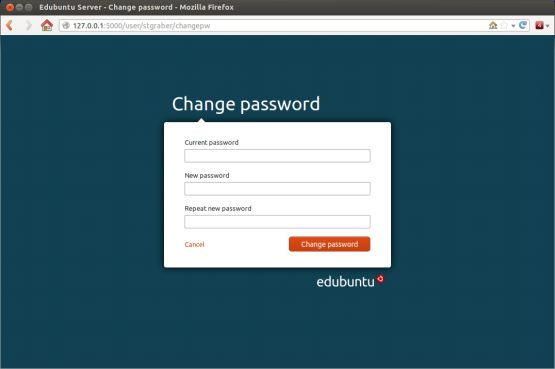
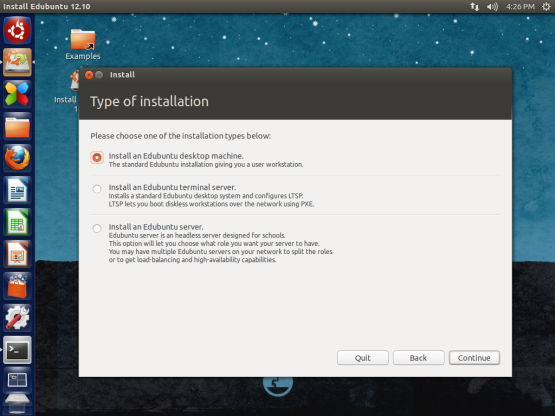
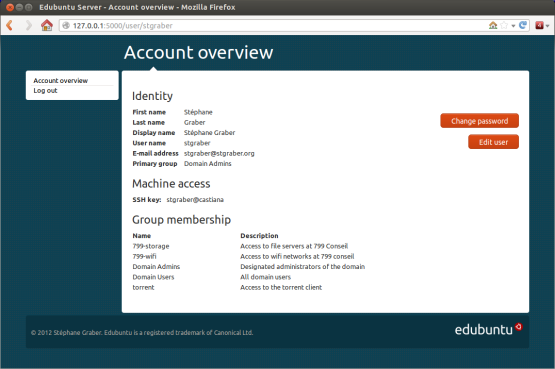
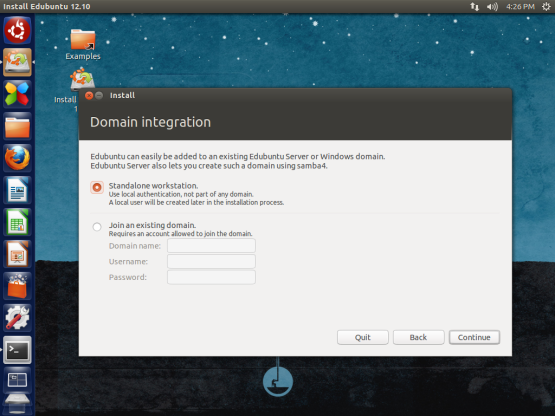
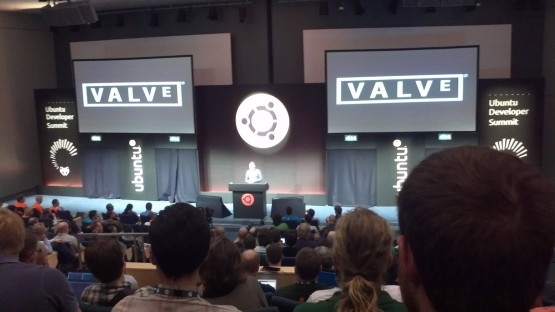
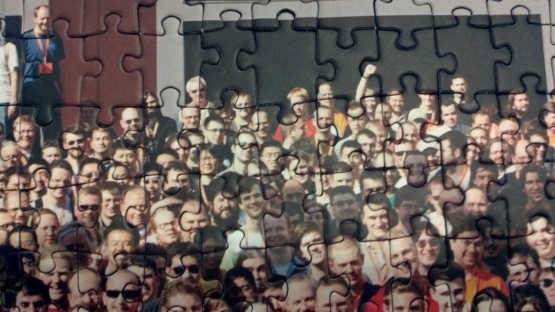
The War on Time Whoosh! I ve been incredibly quiet on my blog for the last 2-3 months. It s been a crazy time but I ll catch up and explain everything over the next few entries. Firstly, I d like to get out a few details about the last Ubuntu Developer Summit that took place in Copenhagen, Denmark in October. I m usually really good at getting my blog post out by the end of UDS or a day or two after, but this time it just flew by so incredibly fast for me that I couldn t keep up. It was a bit shorter than usual at 4 days, as apposed to the usual 5. The reason I heard for that was that people commented in previous post-UDS surveys that 5 days were too long, which is especially understandable for Canonical staff who are often in sprints (away from home) for the week before the UDS as well. I think the shorter period works well, it might need a bit more fine-tuning, I think the summary session at the end wasn t that useful because, like me, there wasn t enough time for people to process the vast amount of data generated during UDS and give nice summaries on it. Overall, it was a great get-together of people who care about Ubuntu and also many areas of interest outside of Ubuntu. Copenhagen, Denmark I didn t take many photos this UDS, my camera is broken and only takes blurry pics (not my fault I swear!). So I just ended up taking a few pictures with my phone. Go tag yourself on Google+ if you were there. One of the first interesting things I saw when arriving in Copenhagen was the hotel we stayed in. The origami-like design reminded me of the design of the Quantal Quetzel logo that is used for the current stable Ubuntu release. 2012-10-28_05-50-14_21 quantal The Road ahead for Edubuntu to 14.04 and beyond St phane previously posted about the vision we share for Edubuntu 14.04 and beyond, this was what was mostly discussed during UDS and how we ll approach those goals for the 13.04 release. This release will mostly focus on the Edubuntu Server aspect. If everything works out, you will be able to use the standard Edubuntu DVD to also install an Edubuntu Server system that will act as a Linux container host as well as an Active Directory compatible directory server using Samba 4. The catch with Samba 4 is that it doesn t have many administration tools for Linux yet. St phane has started work on a web interface for Edubuntu server that looks quite nice already. I m supposed to do some CSS work on it, but I have to say it looks really nice already, it s based on the MAAS service theme and St phane did some colour changes and fixes on it already. edu-server-account edu-server-password From the Edubuntu installer, you ll be able to choose whether this machine should act as a domain server, or whether you would like to join an existing domain. Since Edubuntu Server is highly compatible with Microsoft Active Directory, the installer will connect to it regardless of whether it s a Windows Domain or Edubuntu Domain. This should make it really easy for administrators in schools with mixed environments and where complete infrastructure migrations are planned. Authentication Options Choosing machine role You will be able to connect to the same domain whether you re using Edubuntu on thin clients, desktops or tablets and everything is controllable using the Epoptes administration tool. Many people are asking whether this is planned for Ubuntu / Ubuntu Server as well, since this could be incredibly useful in other organisations who have a domain infrastructure. It s currently meant to be easily rebrandable and the aim is to have it available as a general solution for Ubuntu once all the pieces work together. Empowering Ubuntu Flavours This cycle, Ubuntu is making some changes to the release schedule. One of the biggest changes made this cycle is that the alpha and beta releases are being dropped for the main Ubunut product. This session was about establishing how much divergence and changes the Ubuntu Flavours (Ubuntu Studio, Mythbuntu, Kubuntu, Lubuntu and Edubuntu) could have from the main release cycle. Edubuntu and Kubuntu decided to be a bit more conservative and maintain the snapshot releases. For Edubuntu it has certainly helped so far in identifying and finding some early bugs and I m already glad that we did that. Mythbuntu is also a notable exception since it will now only do LTS releases. We re tempted to change Edubuntu s official policy that the LTS releases are the main releases and treat the releases in between more like technology previews for the next LTS. It s already not such a far stretch from the truth, but we ll need to properly review and communicate that at some point. Valve at UDS and Steam for Linux One of the first plenaries was from Valve where Drew Bliss talked about Steam on Linux. Steam is one of the most popular publishing and distribution systems for games and up until recently it has only been available on Windows and Mac. Valve (the company behind Steam and many popular games such as Half Life and Portal) are actively working on porting games to run natively on Linux as well. Some people have asked me what I think about it, since the system is essentially using a free software platform to promote a lot of non-free software. My views on this is pretty simple, I think it s an overwhelmingly good thing for Linux desktop adoption and it s been proven to be a good thing for people who don t even play games. Since the announcement from Valve, Nvidia has already doubled perfomance in many cases for its Linux drivers. AMD, who have been slacking on Linux support the last few years have beefed up their support drastically with the announcement of new drivers that were released earlier this month. This new collection of AMD drivers also adds support for a range of cards where the drivers were completely discontinued, giving new life to many older laptops and machines which would be destined for the dumpster otherwise. This benefits not only gamers, but everyone from an average office worker who wants snappy office suite performance and fast web browsing to designers who work with graphics, videos and computer aided design. Also, it means that many home users who prefer Linux-based systems would no longer need to dual-boot to Windows or OS X for their games. While Steam will actively be promoting non-free software, it more than makes up for that by the enablement it does for the free software eco-system. I think anyone who disagrees with that is somewhat of a purist and should be more willing to make compromises in order to make progress. Ubuntu Release Changes Last week, there was a lot of media noise stating that Ubuntu will no longer do releases and will become a rolling release except for the LTS releases. This is certainly not the case, at least not any time soon. One meme that I ve noticed increasingly over the last UDSs was that there s an increasing desire to improve the LTS releases and using the usual Ubuntu releases more and more for experimentation purposes. I think there s more and more consensus that the current 6 month cycle isn t really optimal and that there must be a better way to get Ubuntu to the masses, it s just the details of what the better way is that leaves a lot to be figured out. There s a desire between developers to provide better support (better SRUs and backports) for the LTS releases to make it easier for people to stick with it and still have access to new features and hardware support. Having less versions between LTS releases will certainly make that easier. In my opinion it will probably take at least another 2 cycles worth of looking at all the factors from different angles and getting feedback from all the stakeholders before a good plan will have formed for the future of Ubuntu releases. I m glad to see that there is so much enthusiastic discussion around this and I m eager to see how Ubuntu s releases will continue to evolve. Lightning Talks Lightning talks are a lot like punk-rock songs. When it s good, it s really, really amazingly good and fun. When it s bad, at least it will be over soon :) Unfortunately, since it s been a few months since the UDS, I can t remember all the details of the lightning talks, but one thing that I find worth mentioning is that they re not just awesome for the topic they aim to produce (for example, the one lightning talks session I attended was on the topic of Tests in your software ), but since they are more demo-like than presentation-like, you get to learn a lot of neat tricks and cool things that you didn t know before. Every few minutes someone would do something and I d hear someone say something like Awesome! I didn t know you could do that with apt-daemon! . It s fun and educational and I hope lightning talks will continue to be a tradition at future UDSs. Social Stefano Rivera (fellow MOTU, Debianista, Capetonian, Clugger) wins the prize for person I ve seen in the most countries in one year. In 2012, I saw him in Cape Town for Scaleconf, Managua during Debconf, Oakland for a previous UDS and Copenhagen for this UDS. Sometimes when I look at silly little statistics like that I realise what a great adventure the year was! Between the meet n greet, an evening of lightning talks and the closing party (which was viking themed and pretty awesome) there was just one free evening left. I used it to gather with the Debian folk who were at UDS. It was great to see how many Debian people were attending, I think we had around a dozen or so people at the dinner and there were even more who couldn t make it since they work for Canonical or Linaro and had to attend team dinners the same evening. It was as usual, great to put some more faces to names and get to know some people better. It was also great to have a UDS with many strong technical community folk present who is willing to engage in discussion. There were still a few people who felt missing but it was less than at some previous UDSs. I also discovered my face on a few puzzles! They were a *great* idea, I saw a few people come and go to work on them during the week, they seem to have acted as good menial activities for people to fix their brains when they got fried during sessions :) 2012-10-31_14-32-28_374 Overall, this was a good and punchy UDS. I ll probably not make the next one in Oakland due to many changes in my life currently taking place (although I will remotely participate), but will probably make the one later this year, especially if it s in Europe. I ll also make a point of live-blogging a bit more, it s just so hard remembering all the details a few months after the fact. Thanks to everyone who contributed their piece in making it a great week!


Julien Danjou: Going to FOSDEM 2013

For the first time, I'll be at FOSDEM 2013 in Brussels on Sunday 2nd February 2013. You'll find me probably hanging out in the cloud devroom where I'll talk about Ceilometer with my fellow developers Nick Barcet and Eoghan Glynn. I also hope I'll find time to take a peek at some other talks, like PostgreSQL's ones that Dimitri Fontaine will handle. See you there!

Hideki Yamane: upstream and distro has a "same" goal


Tom Marble has a nice blog entry "Crowdsourcing Upstream Refactoring". It's interesting and I agree with most, but I want to say against one thing in "conclusion" in his presentation.

He said "upstreams and distros have different goals" but I don't think so. We distro and upstream has a same goal, "Deliver the value to users", but we distro have much criteria than upstream, like license, non-duplicate library, etc.

If we (distro and upstream) cannot share this view, then we would be failed, IMHO.

Michal Čihař: phpMyAdmin 3.5.6 for Ubuntu and Debian

Finally, phpMyAdmin packages for Debian and Ubuntu do not lag much behind upstream. Today, I've prepared packages for yesterday released bug fix release 3.5.6. For Debian users, the package should be soon available in experimental (sorry no uploads to unstable during freeze). Ubuntu users, can use my phpMyAdmin PPA. After dozens of comments and no help offered, I've still decided to be nice to Ubuntu users and adjusted the package so that it should work on Lucid as well. The downside is that, unlike in Debian, the package includes bundled copy of many PHP and javascript libraries. PS: As soon as Debian is not frozen or 4.0 is officially released, I will start uploading 4.0 to experimental. My current bet is that 4.0 release will come earlier.

Filed under: Debian English Phpmyadmin 0 comments Flattr this!

28 January 2013

Michal Čihař: Winter in Lusatian Mountains

We've spent last weekend in Lusatian Mountains. It was cold and not so nice weather, but still I think some of the pictures are worth publishing. Zlat  vrch Zlat  vrch Zlat  vrch Zlat  vrch Sedlo pod Studencem Kl Kl

Filed under: English Photography 0 comments Flattr this!

Russ Allbery: Management and the problem stream

Well, today was another day of sleeping, zoning, and having no brain for programming (and no willpower for that or exercise, which is even more frustrating), so you all get more musing about missions and work. Tomorrow, I will re-engage my normal schedule and turn the television off again, because seriously, two days of recovery should be enough even for a whole afternoon of meetings. Perhaps the best concept in the scrum methodology for agile project management is the concept of the product backlog and the product owner. For those who aren't familiar, a scrum project has, as one of its inputs, a prioritized list of stories that the team will implement. During each planning session (generally between once a week and once a month), the development team estimates and takes from the front of the product backlog the top-priority stories that can be completed during that period of time. The product owner is responsible for building the list of pending development stories based on business needs and keeping them sorted in priority order so that the work of the team follows the goals of the larger organization. But the product owner does not get to say how difficult the stories are; the development team estimates the stories, and the product owner may change order based on those estimates (to do simpler things earlier, for example). We've been doing scrum to some extent or another for quite some time now, and while there are a variety of things that I like about it, I think this is the best part. And I think it has very useful concepts for management in general. The product backlog is effectively a problem stream of the sort that I talked about in my last couple of posts. It's a set of problems that need to be solved, that matter to other people. And, if the team is doing scrum properly, the problems are presented in a form that describe a complete unit of desired functionality with its requirements and constraints, but without assuming any sort of implementation. The problem is the domain of the product owner; the solution is the domain of the development team. I am increasingly convinced that my quality of life at work, and that of many other people doing similar sorts of development and project work, would be drastically improved if managers considered this role the core of their jobs. (Ironically, at least in our initial experiences with scrum, it was quite rare for regular managers to be product owners; instead, individual line staff or project managers act as product owners. I think this speaks to how confused a lot of managers are about their roles in a technical development organization. This seems to be improving.) The core of the sort of work that I do is a combination of ongoing maintenance and solving new problems. Both of those can be viewed as a sequence of (possibly recurring) stories; I know this because that's largely how I do my own time management. Apart from HR and staffing, the core role of a manager is almost exactly what scrum calls "backlog grooming": communicating with everyone who has input into what their group is doing, finding out what their problems are, translating that into a list of things that the organization needs to have done, prioritizing them, breaking them into manageable chunks, ensuring they are fully specified and actionable (read: well-written stories), and communicating their completion back to other stakeholders (and then possibly iterating). This lept out at me when I started thinking about our larger strategic vision. That strategic vision is a sort of product backlog: a set of development stories (or, in this case, epics that would be broken down into a large number of smaller stories). But most strategic plans have glaring flaws if they're evaluated by the standards of scrum product backlogs. They're normally written as marketing statements and aimed at the clients or customers rather than at the staff. From the staff perspective, they're often hopelessly vague, not concrete, actionable epics. Often, they are almost entirely composed of grand, conceptual epics that any scrum team would immediately reject as too large and nebulous to even discuss. And often they're undefined but still scheduled: statements that the organization will definitely complete some underspecified thing within the next year or two. Scrum rightfully rejects any form of scheduling for unspecified stories and epics. Additional vagueness and sketchiness is tolerated the farther the story is from the current iteration, so they can be put into the future backlog, but scrum makes no guarantees about when they'll get done until they've been sized and you can apply a reasonable velocity estimate. If you want to put a date on something, you have to make it concrete. This is exactly the problem that I have with long-range strategic plans. We already know this about technology development: long-range strategic plans are feel-good guesses, half-truths, and lies that we tell other people because we're expected to do so, but which no one really believes. The chance that we can predict anything about the shape of projects and rate of delivery of those projects three years from now is laughable, and certainly none of the work that would be required to make real estimates has normally been done for those sorts of long-term strategic projects. There are a lot of scrum advocates who would go farther than I in asking for a complete revolution of how technical projects are planned. I'm not sure how realistic that is, or how well the whole scrum process would work when rolling up work across dozens, if not hundreds, of scrum-sized teams. But in the specific area of the role of managers in a development organization, I think we could learn a lot from this product backlog concept. Right now, there is a constant tension between managers who feel like they need to provide some sort of visionary leadership and guidance (the cult of Steve Jobs) and line staff who feel like managers don't understand enough about specific technology to lead or guide anything. But if you ask a technical developer whether, instead, it would be useful for managers to provide a well-structured, priority-ordered, and clean problem stream from the larger organization so that the developer can trust the problem stream (and not have to go talk to everyone themselves) but have control over the choice of implementation within the described constraints, I think you would find a great deal of enthusiasm. As a further bonus, scrum has a lot of advice about what that problem stream should look like. I think some of the story structuring is overblown (for example, I can't stand the story phrasing structures, the "AS A... I WANT TO... SO THAT..." shackles), but one thing it does correctly emphasize is the difference between problem and solution. The purpose of the story is to describe the outcome from the perspective of the person who will use the resulting technology. Describing the constraints on the solution, in terms of cost or integrations, is actively encouraged. Describing the implementation is verboten; it's up to the project team to choose the implementation that satisfies the constraints. If managers in general would pick up even that simple distinction, I think it would greatly improve the engagement, excitement, and joy that developers could take in their work. There's very little that's more frustrating than to be given an interesting problem in the guise of a half-designed solution and be told that one is not permitted to apply any of one's expertise in elegance, robustness, or durability to replacing the half-baked partial solution. Or even be allowed to know the actual motivating problem, instead of the half-digested form that the manager is willing to pass on.

27 January 2013

Russell Coker: LCA 2012

LCA 2013 [1] is starting so it seems like time to finish my write-up of LCA 2012. As usual it was a great conference, although I got sick immediately after getting there which reduced my ability to attend. Android A major unofficial theme of the conference was Android. Most delegates seemed to have Android phones, the Samsung Galaxy S and Galaxy Nexus seemed to be the most popular phones. Many delegates had two or more phones for development purposes. A large portion of the casual conversation at the conference concerned Android. There were a couple of really interesting talks about the Serval mesh networking project [2] which involves Android phones running in ad-hoc Wifi mode for long range communication without any official base station. Serval allows transferring messages, pictures, and voice calls. If you need to get longer range you can mount one phone in a convenient place and other phones will decide to use it as a relay there is no need to have a dedicated relay device (such as a mobile phone tower or Wifi access point). Serval is supposed to work with Wifi access points but due to Java not exposing some networking details to the higher levels of software the code that was available at the time of the conference didn t support networks other than a /24, which meant that the conference Wifi network didn t work with Serval. As an aside most people at the conference who installed Serval were using a development version that was newer than the version on the Android market. I can t remember what the extra features were though. Serval was designed for emergency situations, it can be installed on phones (and pushed to other phones via Wifi) in the field and allow communications when the infrastructure is broken. Also it s designed with some aim of circumventing censorship which among other things means that there are no facilities for tracking use. I think it would be really handy to be able to in some way track viewing of or interest in images that are transported via the mesh (maybe by something similar in concept to Google +1). Then in a crowd sourced environment people who take photos would be encouraged in their work by audience appreciation. One thing that interests me is the possibility of using Serval on a cruise ship. A cruise ship is an environment where mobile phone calls are unreasonably expensive, cabin phones aren t much use (who pays for a cruise and hangs out in their cabin?), and where there is usually a Wifi network installed. If a ship has a single bridged Wifi network that allows connecting to Wifi before authenticating for Internet access (which is probably the common case) then you could transport VOIP over that network without paying and without incurring any expense on the cruise company. One of the Serval developers assured me that this should be possible, of course a cruise ship with 3,000 passengers probably doesn t use a /24 for their Wifi so the current versions of Serval won t work At the geek my dinner event (a party where everyone brought $20 of food/drink which was cooked by volunteers) an artist showed me some art work that she created on her Samsung Galaxy Note (which was the biggest phone on sale at the time), it was very impressive. She recommended Picasso Mirror Draw, Sketch Free, Sketch Book Mobile Express, and Freenote as free graphical programs for Android. Samsung has a Noteworthy Project advertising campaign based on the artistic uses of the Galaxy Note which has some good videos of artists [3]. Chris Neugebauer and Paris Buttfield-Addison gave an informative and amusing talk about Android UI development (this link has the video) [4]. It s a pity that I missed seeing that one live but fortunately the video is of high quality. Accommodation picture of women cleaning As I ve become interested in Sociology I couldn t help but notice the pictures that accompanied the rules about cleaning the dormitory (which were displayed over the kitchen sink), it seems to imply that cleaning is only women s work. I wonder whether the people who created that poster deliberately chose pictures of women or whether they just chose the first available pictures from a collection of stock photos. Someone who was near my dorm room seemed to not realise how their alarm impacts other people. For the first two mornings I was woken repeatedly after 6AM by someone who was pressing the snooze button on their alarm. When sleeping in close proximity to other people the reasonable options involve some combination of having no loud alarm, immediately turning the alarm off and getting up (not pressing snooze to have it go off repeatedly), and setting the alarm for a time when almost everyone wants to get up (EG 1 hour before the first session). Networking Chris Neugebauer organised the Unprofessional Delegates Networking Session which was a great event. It was an event held at the same time as the Professional Delegates Networking Session with the difference being that you had to pay $5 for food and there was no free drink. A lot of great people attended the UPDNS so I m glad I don t pay for the PDNS. It seems that we won t have a UPDNS this year unfortunately. Conclusion LCA is always great fun and very educational. I recommend attending every year.

Next.

Previous.