Search Results: "tb"

15 December 2007

Russell Coker: AISA

When I worked for Red Hat I joined AISA [1] (the Australian Information Security Association - formerly known as ISIG). Red Hat marketting paid for my membership so it was a good deal, I went to meetings (which often had free drinks), said good things about Red Hat security, and it cost me nothing. I was recently asked why I chose not to renew my membership, I didn’t have time to give a full answer so I’ll blog it now. AISA offers discounts on some conferences, books, and training related to computer security, if you plan to purchase such things then they do offer good deals. However I have little time to attend conferences at the moment, not enough time to read all the free Internet resources related to computer security, and feel no need to pay for such training. If at any time I plan to attend a conference where the discount for AISA members is equal or greater than the AISA membership fee then I can easily re-join. AISA membership seems largely to consist of managers and consultants not technical people or people doing R&D type work. This isn’t a bad thing if you are a manager or consultant, but when attending AISA meetings I don’t meet the type of people I meet at events such as SecureCon [2], Linux Conf Au [3], RuxCon [4], and the SE Linux Symposium [5] (which I think is not going to be held again for a while). Meetings of my local LUG [6] typically have more people doing serious technical work related to computer security than the AISA meetings I’ve attended. The AISA code of Ethics has as it’s second criteria “I will comply with all relevant laws“. Some laws can not be obeyed by decent people (study some German or Russian history or what is happening in China right now for examples). Many other laws should not be obeyed. Many countries (including Australia) have enacted many laws which should not be obeyed in the name of the “war on terror“. A final thing that irked me about AISA is their professional membership system (click on this link and download the AISA_Professional_Membership_Requirements_Nov_2006 document for details). It seems that I don’t qualify because I don’t have one of the listed certifications, and a public credit on the NSA web site [7] doesn’t count (yes, I asked about this). I’m not overly worried about this, I figure that any clique that won’t accept me also won’t accept a significant portion of the people that I want to associate with - so we can hang out elsewhere. I don’t recall there being any great benefit to professional membership apart from the possibility of adding it to your business card if you are so inclined (I don’t recall ever putting B.Sc [8] on a business card and don’t plan on adding anything less). There are some real benefits to AISA membership, but not for me.

Jose Luis Rivas Contreras: Waiting my new notebook

I decided that my christmas gift will be a new notebook and as I'm always complaining of the weight of my HP dv6000 then my new notebook will be a ThinkPad x61 with a 8cell battery and extended battery life! :-) That gives up to 12 hours of use!! BTW, this version includes a weird antenna in the right side of the screen, I don't know if it's really useful but seems like if were from some movie and is outside of the borders but anyway, still little and light. Now only rests to wait until it gets to my hand since all the custom houses of Venezuela decided to not admit more packages from outside of the country because they're full, so I will have to wait until january probably because of the inefficiency of my country custom officials. But at least I'm gonna have it :-)!

14 December 2007

Russell Coker: Blogroll - Bad Social Networking

A common feature in blog software is a Blogroll, this is a list of links to blogs which are associated in some way with the blog in question - most commonly it’s a list of blogs run by friends of the blogger in question. Now in the case of friends with very similar interests (IE same religious and political beliefs, sexual preferences, hobbies, etc) this wouldn’t cause a problem. In the case of commercial blogs it also will work well (EG Google runs a large number of blogs which contain links to all the rest - they may not interest all readers but should be expected not to offend any). In the case of personal blogs where people don’t always have the same interests there is scope for problems. A link to the main page of a blog is an unconditional recommendation for the blog. There are not many of my friends who I share that much in common with that I would be prepared to give such a recommendation for a frank personal blog, and for those few I am unwilling to do so as it generates social pressure to include others. Some of my friends who didn’t get listed in my blogroll would probably get offended, even though it’s only the occasional post that I strongly disagree with which would make me refrain from such a listing. I appreciate it when people add me to their blogroll, but don’t have any expectation that the listing will remain (I’m not going to get offended if someone changes their criteria for listing and removes my entry). But I consider it an equal compliment when someone cites one of my blog posts as a reference and recommends that other people read it. Citing an individual post has the advantage (for the person citing the post) they are specifically not recommending my entire blog. For example if you recommend one of my posts about Linux and one of your readers goes further into my site and is offended by my posts about politics then it’s not your issue. Tim Berners-Lee made an interesting point [1] “so readers, when they find something distasteful or unreliable, don’t just hit the back button once, they hit it twice“. I know that some people who would be interested in the technical Linux issues I write about don’t read my blog because they are offended by my political beliefs, I am not concerned about this - but I don’t expect that everyone who chooses to link to me will necessarily want to make the same trade-off. When citing individual posts it’s possible to strongly agree with one post and strongly disagree with another by the same author. Probably the best way of acknowledging your friends via blogging (if you choose to do so) would be to make an occasional links post which contains short positive recommendations to the best posts your friends wrote. If every month or two someone writes a links post (post which has little content, merely recommendations for other posts) which references your posts then you know that they like you (and you get a Technorati.com boost), so a blogroll entry hardly seems necessary. An additional benefit for giving such direct credit is that the person receiving the links will know what you consider to be their best work which will help them in their future writing. I believe that adding this feature to common blogging software was a mistake. The small number of people who actually need this (such as Google) can create it via a HTML widget (IE writing raw HTML for the page - it’s really easy to do) and the rest of the population would be better off without it.

13 December 2007

Kartik Mistry: mv icedove clawsmail

* In my constant carvings about sane email client, I found that claws in lightweight and very well email client. Icedove to claws migration was not so easy, but script did it! And, it was fun to read Planet Claws-mail too! I hope that someday, enigmail will work (againg) with icedove!

11 December 2007

Chris Lamb: So awesome..

I <3 Ellie so much - she made me a cat for my birthday. :)

9 December 2007

Kartik Mistry: At /home..

* Flickr pics says whole story. Foss.in == Fun! I learned a lot while managing Debian/Ubuntu stall. Next year we will have more better stall and representation from community. Debian Tshirts were given to 3 nice people (Thanks - Prasad, Amod and Anivar) who maintain stall during my mysterious gaps. Sorry to Cydork - yeah, size does matter! * Thanks to team at foss.in, You people rocks (always)! * Finally, back /home (as usual, flight was delayed). Kavin is crawling much intelligent way and demands things (he want to chew everything..). So, time to alert!

8 December 2007

Bastian Venthur: Want to get money for nothing and chicks for free, too?

Is anyone out there interested in helping me developing reportbug-ng? I’m currently very busy with my diploma thesis and can’t spend as much time on my pet bug reporting tool as I’d like to spend. The package itself has some small bugs, is not yet feature complete, but in a fairly good shape and quite popular too. If you’re interested you should have experience with python, QT and maybe some SOAP-skills. You don’t have to be a Debian Developer or -Maintainer! I haven’t done this before so I don’t know that the best practice for such a situation is. I’m currently thinking of something like:
  1. First you send me patches, which I’ll review, apply and upload
  2. After a while you get write access to the BZR repo
  3. Finally become co-maintainer of the package if you want
Interested? Then write me a mail to: venthur at debian org. Oh, and please don’t write if you just want to get your pet-bug-which-I-still-refuse-to-fix fixed. PS: If you prefer guys over chicks, you’re welcome too ;)

7 December 2007

Martin Michlmayr: GCC 4.3 related build problems: duplicate function parameters

GCC 4.3 now prints an error message when C++ code contains duplicate function parameter names in function prototypes. You'd think that's a pretty obvious problem, but we still have about 15 packages in the archive that contain such code. Anyway, for code like this:
class foo  
    foo(int w, int w);
 ;
GCC will as of 4.3 show the following error message:
t.cc:2: error: multiple parameters named 'w'

Jose Luis Rivas Contreras: Finally all my perl packages in pkg-perl's SVN

Yesterday, after a lot of time thinking on it, I uploaded all my perl packages to the pkg-perl's SVN, now I can dedicate a lot more of time to xscreensaver, gkrellm and libtorrent/rtorrent :-). I'm pretty sure that in january I will be able (with enough time) to work in some packages of the pkg-perl group.

6 December 2007

Russell Coker: Planet Debian Piracy

The site http://maxfeed.ath.cx/ is copying the entire Planet Debian feed for the purpose of splogging. I’ve sent one DMCA take-down notice for one of my pages (hopefully they will go through and remove all pages that were illegally copied from my feed). Other people who have non-commercial use licenses for their blog feeds may want to do the same. Would it be possible to have the entire Debian feed licensed in such a way such that one person could request that the Planet Debian feed not be used for such things?

Jose Luis Rivas Contreras: New xscreensaver package

There's a new xscreensaver version already in Debian, 5.04-1 is in ftp-master waiting to be mirrored in the rest of the archives, thanks to damog :-). In other things a CVE was fixed and new hacks were added.

5 December 2007

Evan Prodromou: 14 Frimaire CCXVI

One thing that's been interesting me lately is RSS. Yeah, I know, not exactly cutting-edge technology, but the format -- in its three different forms -- has become the default for machine-to-machine transfer of serial information on the Web. So RSS really represents our individual or collective presence on the Web spread across time, space, and theme. I'm particularly interested in RSS because I'm working on themed portals like Keiki. It's one of our goals to pull in the parenting part of a person's personality spread on other parts of the Web, so you don't have to re-enter it in Keiki if you don't want to. It's a fun problem to be solving. But as I was playing with the format, I realized that I'm spread pretty far across the Web, myself. I make most of my contributions to this blog, but I'm also part of other communities and a user of other services. What if I used some software like Planet to pull together the disparate threads of me into one place? So that's what I did. I ended up using a tool called Gregarius instead of Planet, mostly because I originally intended to install it on Godaddy's hosting service, which doesn't support cron jobs, which Planet needs. Once I realized how ad-infested GD's "free" hosting service is, though, I moved all my sites off of it, and back to Antipater. And my personal aggregator is there, too. It was interesting to pull in the accounts I've listed on About Me and see which ones produced RSS feeds. Some I expected (my Flickr feed, my del.icio.us feed) and others I didn't (my Upcoming feed surprised me). I was also surprised by sites that didn't produce a feed. I really expected something from Pownce and Tribe.net), but I couldn't get them to cough up a feed. Most disappointing was Facebook, which has a really nice mini-feed of my activity there that doesn't seem to translate into an RSS feed in any possible way. But otherwise things went very quick. I found Gregarius really easy to work with, although its inability to pull tag (metadata) and categories out of RSS streams. There's an autotagger plugin, but I haven't gotten it to catch any tags yet. Oh, and the OPML output was horrible -- I think it might generate HTML that looks like raw OPML -- totally useless. In any event, if you feel like cyberstalking me or just seeing what I'm doing around the rest of the Web, keep an eye on evanprodromou.info. There's even a handy aggregated RSS feed... just in case you want it. tags:

Russell Coker: The Meaning of Godwin s Law

A widely cited unofficial rule on the Internet is known as Godwin’s Law [1]. In it’s original form this rule states that “As an online discussion grows longer, the probability of a comparison involving Nazis or Hitler approaches one“. Mike Godwin noted that “overuse of Nazi and Hitler comparisons should be avoided, because it robs the valid comparisons of their impact“. The purpose of noting and publicising this is to reduce such false comparisons. It’s often used as a rule for conduct in various fora where it’s regarded that if you compare your opponent in a debate to Hitler or unjustly call them a Nazi then the debate is over and you have lost. In more recent times due to successful application of Godwin’s Rule the frequency of inappropriate comparisons has dramatically decreased. This combined with the small number of people on the net who are interested in discussing historical events that happened ~60 years ago (and the even smaller number of people who are interested in learning about them) means that the possibility of robbing valid comparisons of their impact is small. Now a large part of the use of Godwin’s rule is because it’s regarded as an ad-hominem attack that distracts everyone from serious discussion more than most such attacks. To see examples of this you merely have to do a Google search for “Bill Gates” and “Hitler” (currently 597,000 web pages have both those terms). Note that the original reason for avoiding such false comparisons is given to sustain the impact of legitimate comparisons. It is quite legitimate to use the term Nazi when describing anyone who wants to implement mass-murder and slavery on a national scale (or any of the other awful things that the Nazis did), or the propaganda and other mechanisms that the NSDAP used to gain power. It is also legitimate to make historical comparisons, comparing Stalin to Hitler is historically valid (both were awful tyrants that committed a similar range of crimes) - I’m not going to compare them in this post but I merely note that such a comparison is valid (and is the subject of much debate by people who are interested in history). I’ve just had a religious zealot named Elder Dave accuse me of breaching some new version of Godwin’s Law. I believe that my mention of the fact that his religious group (which wants to deny homosexuals the same legal rights as all other people) has some beliefs in common with the Westboro Baptist Church [2] is valid. The Westboro Baptist Church seems to be the leading organisation in the English-speaking world for demanding legislation to discriminate against homosexuals. Anyone else who demands such legislation IS trying to achieve similar aims and should expect this to be noted by everyone who has any knowledge of what is happening in the world. Religious groups are given a lot of freedom to discriminate internally (EG “Priest” is one of the few jobs that can be denied to a qualified woman without any legal recourse). Also I think that most people will agree that it’s acceptable for them to advocate self-repression (EG the book What Some of You Were [3]). But when they try and get legislation enacted to institutionalise such discrimination I believe that they are going too far. As for why the 95% of us who aren’t gay should be bothered about this issue, there’s the famous poem by Martin Niem ller which is known by the line “First they came for the Jews” [4] (actually there are a few versions of the poem some of which don’t mention Jews - check the link for details). Here’s another Wikipedia link for the same poem [5].

Kartik Mistry: Foss.in: Debian/Ubuntu Project Day

* I was too tired to write this yesterday. Yes, it was very hectic day (but great fun!). Things started very well. Sam and Bubulle did great presentations (specially, this slide from bubulle’s presentation!). Problem with G0SUB’s laptop lead our workshop in very bad situation but Karunakar’s laptop made life easy by some percent! Thanks to him!! Personally, I will not say anything about last two talks, but we have to be very careful next time :( * Congrats to Varun for being 4th Indian Debian Developer! Yeppie!

3 December 2007

Kartik Mistry: Debian Flyer

* Jaldhar started Debian-Intro project sometime back (I saw this as pamphlet in Indic Developer Meet in 2005!). And we wanted this for Foss.in. I created branch for Foss.in and we have it ready (only small changes, really!).

Russell Coker: New Bonnie++ Releases

Today I released new versions of my Bonnie++ [1] benchmark. The main new feature (in both the stable 1.03b version and the experimental 1.93d version) is the ability of zcav to write to devices. The feature in question was originally written at the request of some people who had strange performance results when testing SATA disks [2]. Now I plan to focus entirely on the 1.9x branch. I have uploaded 1.03b to Debian/unstable but shortly I plan to upgrade a 1.9x version and to have Lenny include Bonnie++ 2.0x. One thing to note is that Bonnie++ in the 1.9x branch is multi-threaded which does mean that lower performance will be achieved with some combinations of OS and libc. I think that this is valid as many applications that you will care about (EG MySQL and probably all other modern database servers) will only support a threaded mode of operation (at least for the default configuration) and many other applications (EG Apache) will have a threaded option which can give performance benefits. In any case the purpose of a benchmark is not to give a high number that you can boast about, but to identify areas of performance that need improvement. So doing things that your OS might not be best optimised for is a feature! While on this topic, I will never add support for undocumented APIs to the main Bonnie++ and ZCAV programs. The 1.9x branch of Bonnie++ includes a program named getc_putc which is specifically written to test various ways of writing a byte at a time, among other things it uses getc_unlocked() and putc_unlocked() - both of which were undocumented at the time I started using them. Bonnie++ will continue using the locking versions of those functions, last time I tested it meant that the per-char IO tests in Bonnie++ on Linux gave significantly less performance than on Solaris (to the degree that it obviously wasn’t hardware). I think this is fine, everyone knows that IO one character at a time is not optimal anyway so whether your program sucks a little or a lot because of doing such things probably makes little difference.

2 December 2007

Chris Lamb: Custom Debian-Installer images for DCS

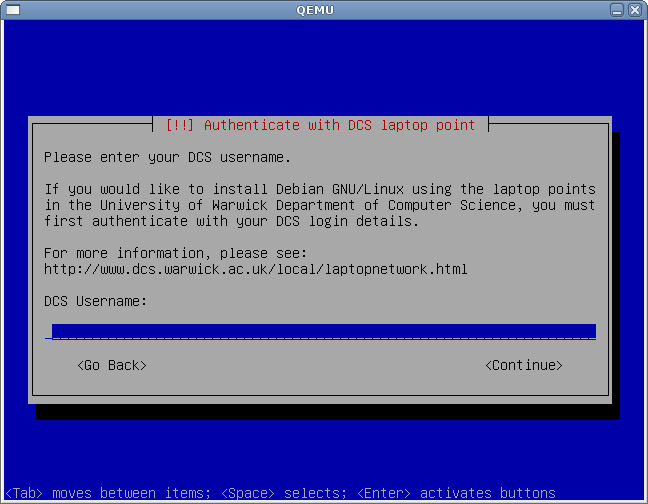
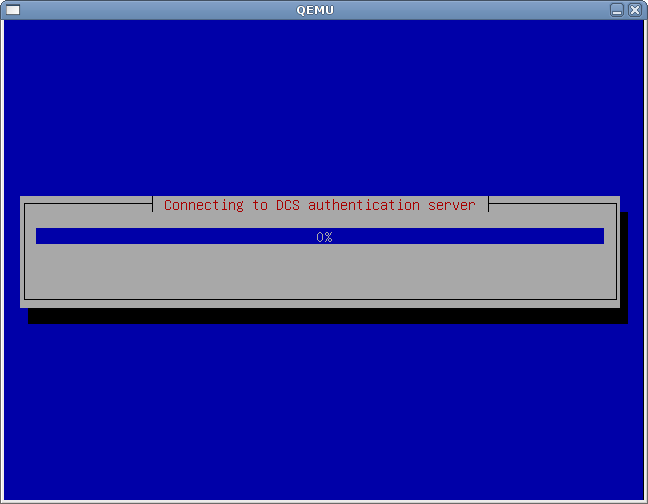
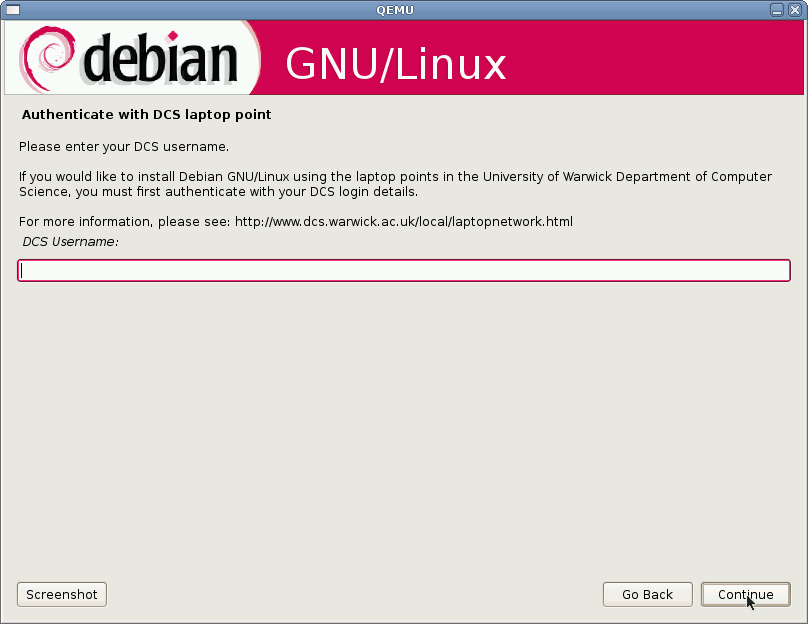
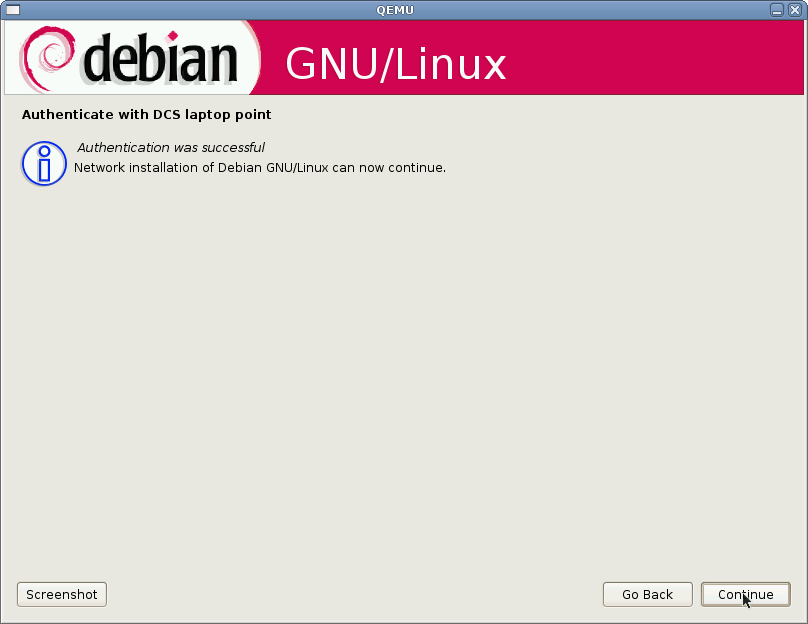
It can be a little awkward installing Debian in my Department’s labs. After obtaining a DHCP lease, you cannot establish any useful connection without first authenticating against a HTTP Basic page. However, as this page uses SSL and D-I’s Wget is not linked against any SSL libraries, you are a little stuck. To solve this (and to avoid resorting to ugly hacks), I created a udeb that prompts the user for their username and password (see screenshots above) and then authenticates using a statically-linked build of Curl. It seems to be fairly robust, and only bloats the ISO by about 200KB. I’ve also preseeded a number of options suitable for DCS, such as using the local mirror and assuming UK locales and keyboard, etc. My modifications are available, along with some documentation on how to recreate my images. I have also uploaded a few images to our mirror. D-I hacking turns out to be quite fun and relatively painless, but I’m now stuck for a useful project to use it again, and I probably don’t know enough yet to tackle some of its Lenny goals either. Any ideas? Oh, if some d-i guru can explain how I can force the display of the “Choose suite” question without patching choose-mirror, that would also be excellent.

30 November 2007

Martin Michlmayr: N2100 network troubles due to r8169 bug

Daniel Smolik reported problems with NFS on a Thecus N2100 a few days ago. I confirmed the bug with 2.6.18 and 2.6.22 but found that the problem didn't occur with 2.6.23. I started a git bisect and a few hours later located a fix that Francois Romieu, the maintainer of the r8169 driver, had put in. Apparently the driver had some confusion regarding hardware and IP header alignment. The good news is that the patch is very small and can easily be backported to our 2.6.18 kernel in stable. Also, packages of 2.6.23 were uploaded today and should be in the archive soon.

Russell Coker: Vista ReadyBoostReady - Good for Linux?

At the moment it seems that about half the USB flash devices on sale are listed as “Vista ReadyBoost Ready“. I recently bought an 8G USB device that I returned because it could only sustain 4MB/s writes (not much fun for backing up 4G+ of data). So I’ve been wondering whether I should get a ReadyBoostReady device. ReadyBoostReady only means that it is faster than other devices in some ways, it has no inherent feature difference. After some searching I found a FAQ about ReadyBoost [1] which explains what it requires. It seems that ReadyBoost needs “2.5MB/sec throughput for 4K random reads and 1.75MB/sec throughput for 512K random writes“, which isn’t really a lot. About 5-6 years ago I was running some machines with 4 disk RAID-5 arrays that could sustain 3MB/s writes for significantly smaller block sizes (maybe 12K), given that random access is something that disks are really bad at (physical movement of the heads is required) and something that flash is good at) it gives an indication of how low the performance bar is for ReadyBoost. I’m sure that a device which meets the minimum specs would do some good if you have a single disk that’s not overly fast. But if you have a decent RAID array for swap then I doubt that the minimum requirements for ReadyBoost would give a benefit. As for doing bulk transfers, it seems that while ReadyBoost Ready devices will have consistent good performance across all their storage (apparently some devices perform better for the first blocks so that people who use FAT based filesystems can get good performance from their FAT) they won’t necessarily have particularly good performance for bulk IO (1.75MB/s is pitiful when you want to copy DVD images). There are some USB flash devices that are marketted as having high performance and which are supposed to sustain >20MB/s, but I’m unlikely to find them going cheap at my local electronics store. I had hoped that ReadyBoost would be demanding enough that the ReadyBoostReady devices (which aren’t the cheapest flash devices on sale but often aren’t too expensive) would satisfy my requirements.

29 November 2007

Russell Coker: Apprentices

Shintaro wrote an interesting post about Rakugo (a form of story-telling) and Mottainai (a particular form of gratitude that is now becoming an English word in reference to environmentalism) [1]. My definitions of the two words are poor, I encourage interested readers to read Shintaro’s post for the links. Recently I had been considering which jobs are most like a senior programmer position in terms of skills and the work environment. It occurred to me that a chess-master has a job that bears some similarities to that of a senior programmer. A chess master might play a Simul [2] which compares to a programmer or sys-admin fixing lots of small bugs at the same time. In a serious chess tournament up to seven hours may be on the time clocks - not an uncommon amount of time taken to find a subtle bug in a program. For quick chess games as little as three minutes may be on the clock for all your moves - similar to the situation where the network goes down and the CEO is watching you fix it. The intellectual abilities for playing chess and programming have many obvious similarities, memorising significant patterns to avoid re-calculation, having a large mental register set to allow considering complex situations or multiple possibilities at the same time, and being able to spend many hours thinking about a problem. With that in mind one thing that particularly interested me in Shintaro’s post was the reference to a Japanese apprentice system where “They are trained at his masters house from early years maybe after junior-high, living and caring his boss every day life, like Go or Shogi players“. I wonder how this could be used in other cultures and career paths (such as English-speaking countries and computer programming). Probably the “every day life” part wouldn’t be well accepted. When comparing with the high-school experiences that seem typical of people in the computer industry an apprentice program has a lot to offer. A small amount of pay (as opposed to school-fees) and an environment where laws apply (IE almost no bullying) are both significant benefits. Anyone who is reasonably intelligent is most likely to find that they can’t learn anything from the teachers in the final years of high-school because most teachers don’t know much about the subjects that they teach and in the instances where the teacher does know more the class environment doesn’t permit teaching more advanced material. Someone of average intelligence who has worked for 5+ years in an industry can always teach a beginner some useful things so there is some obvious potential to learn. There is a meme that apprentice programs only apply to trades not intellectual work. This meme is probably correct when applied to many categories of office work but seems obviously wrong when applied to computer work. My observation is that at most places where I have worked there has been a significant amount of time from the most productive, skilled, and highly paid people spent on tasks that are way below their skill level - and often requiring skills that they don’t have. One example is when I was working for an ISP in a senior sys-admin position, when things really went wrong on the network I was usually the person to fix them - but I spent moderate amounts of time fixing hardware problems with desktop PCs and some time fixing Windows networking issues (of which I know little). Some of the problems I fixed could have been fixed by a 16yo apprentice who would probably have taken less time to fix them while also having a much lower hourly rate - and in some cases may have done a better job). I’m not sure that having an apprentice assigned to an individual programmer would work well, but having one per team should. I have previously written about how to get the benefits of a university education without attending university [3] so I don’t think that the inability of such apprentices to attend university would necessarily be a problem.

Next.

Previous.