Search Results: "zed"

14 June 2023

Jonathan Carter: CLUG Talk: Running Debian on a 100Gbps router

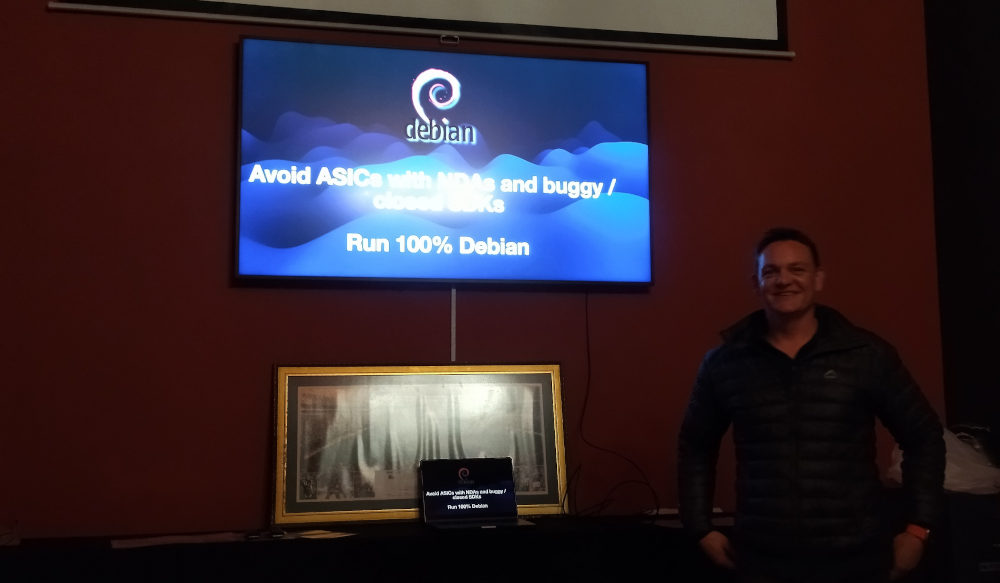
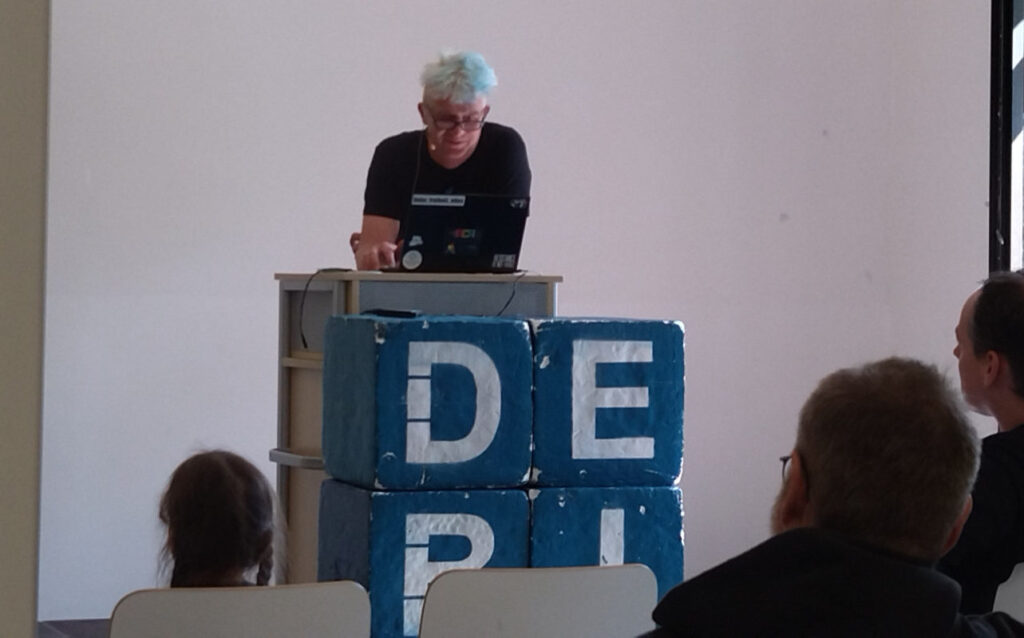
Last night I attended the first local Linux User Group talk since before the pandemic (possibly even long before the pandemic!) Topic: How and why Atomic Access runs Debian on a 100Gbps router Speaker: Joe Botha This is the first time CLUG used Woodstock Brewery as a venue. It s great, because now we can have snacks and beer during the talks :)
Joe has worked in the internet space for quite some time, and co-founded companies like Teraco, Frogfoot, Amobia, Octotel and Atomic Access. Through all of these he s done interesting and noteworthy work, which I ve only seen some glimpses of before in the few moments we ve interacted at CLUG events. It was nice seeing a lot more detail of a project that I wouldn t even know about if he didn t give this talk. It doesn t seem that anyone else is running Debian on big switches for commercial ISPs. He goes through these great lengths to run Debian so that he can have a decent set of tools and familiar commands on the switch, as apposed to the (my word here) crappy tooling that you would get on the brand name switches.
By total coincidence, David Plonka happened to be at the brewery too, he s a network expert who works at Akamai. He didn t know this talk was taking place, so this was a fun happenstance, he had some good inputs during the talk too. He also bought everyone a round of beer, thanks David! I asked Joe for his slides and I ll share them here when I get them. Unfortunately we don t have video for this talk, but I asked Joe to consider coming to DebConf23, I think this topic would be really interesting to the wider Debian crowd. By the way, both registration and the call for proposals are now officially open for DebConf23, it s taking place in September in Kochi, India this year. Updates (2023-06-07): Joe provided slides for his talk, you can get them here. He also provided some links:

11 June 2023

Michael Prokop: What to expect from Debian/bookworm #newinbookworm

Bookworm Banner, Copyright 2022 Juliette Taka Debian v12 with codename bookworm was released as new stable release on 10th of June 2023. Similar to what we had with #newinbullseye and previous releases, now it s time for #newinbookworm! I was the driving force at several of my customers to be well prepared for bookworm. As usual with major upgrades, there are some things to be aware of, and hereby I m starting my public notes on bookworm that might be worth also for other folks. My focus is primarily on server systems and looking at things from a sysadmin perspective. Further readings As usual start at the official Debian release notes, make sure to especially go through What s new in Debian 12 + Issues to be aware of for bookworm. Package versions As a starting point, let s look at some selected packages and their versions in bullseye vs. bookworm as of 2023-02-10 (mainly having amd64 in mind):
Package bullseye/v11 bookworm/v12
ansible 2.10.7 2.14.3
apache 2.4.56 2.4.57
apt 2.2.4 2.6.1
bash 5.1 5.2.15
ceph 14.2.21 16.2.11
docker 20.10.5 20.10.24
dovecot 2.3.13 2.3.19
dpkg 1.20.12 1.21.22
emacs 27.1 28.2
gcc 10.2.1 12.2.0
git 2.30.2 2.39.2
golang 1.15 1.19
libc 2.31 2.36
linux kernel 5.10 6.1
llvm 11.0 14.0
lxc 4.0.6 5.0.2
mariadb 10.5 10.11
nginx 1.18.0 1.22.1
nodejs 12.22 18.13
openjdk 11.0.18 + 17.0.6 17.0.6
openssh 8.4p1 9.2p1
openssl 1.1.1n 3.0.8-1
perl 5.32.1 5.36.0
php 7.4+76 8.2+93
podman 3.0.1 4.3.1
postfix 3.5.18 3.7.5
postgres 13 15
puppet 5.5.22 7.23.0
python2 2.7.18 (gone!)
python3 3.9.2 3.11.2
qemu/kvm 5.2 7.2
ruby 2.7+2 3.1
rust 1.48.0 1.63.0
samba 4.13.13 4.17.8
systemd 247.3 252.6
unattended-upgrades 2.8 2.9.1
util-linux 2.36.1 2.38.1
vagrant 2.2.14 2.3.4
vim 8.2.2434 9.0.1378
zsh 5.8 5.9
Linux Kernel The bookworm release ships a Linux kernel based on version 6.1, whereas bullseye shipped kernel 5.10. As usual there are plenty of changes in the kernel area, including better hardware support, and this might warrant a separate blog entry, but to highlight some changes: See Kernelnewbies.org for further changes between kernel versions. Configuration management puppet s upstream sadly still doesn t provide packages for bookworm (see PA-4995), though Debian provides puppet-agent and puppetserver packages, and even puppetdb is back again, see release notes for further information. ansible is also available and made it with version 2.14 into bookworm. Prometheus stack Prometheus server was updated from v2.24.1 to v2.42.0 and all the exporters that got shipped with bullseye are still around (in more recent versions of course). Virtualization docker (v20.10.24), ganeti (v3.0.2-3), libvirt (v9.0.0-4), lxc (v5.0.2-1), podman (v4.3.1), openstack (Zed), qemu/kvm (v7.2), xen (v4.17.1) are all still around. Vagrant is available in version 2.3.4, also Vagrant upstream provides their packages for bookworm already. If you re relying on VirtualBox, be aware that upstream doesn t provide packages for bookworm yet (see ticket 21524), but thankfully version 7.0.8-dfsg-2 is available from Debian/unstable (as of 2023-06-10) (VirtualBox isn t shipped with stable releases since quite some time due to lack of cooperation from upstream on security support for older releases, see #794466). rsync rsync was updated from v3.2.3 to v3.2.7, and we got a few new options: OpenSSH OpenSSH was updated from v8.4p1 to v9.2p1, so if you re interested in all the changes, check out the release notes between those version (8.5, 8.6, 8.7, 8.8, 8.9, 9.0, 9.1 + 9.2). Let s highlight some notable new features: One important change you might wanna be aware of is that as of OpenSSH v8.8, RSA signatures using the SHA-1 hash algorithm got disabled by default, but RSA/SHA-256/512 AKA RSA-SHA2 gets used instead. OpenSSH has supported RFC8332 RSA/SHA-256/512 signatures since release 7.2 and existing ssh-rsa keys will automatically use the stronger algorithm where possible. A good overview is also available at SSH: Signature Algorithm ssh-rsa Error. Now tools/libraries not supporting RSA-SHA2 fail to connect to OpenSSH as present in bookworm. For example python3-paramiko v2.7.2-1 as present in bullseye doesn t support RSA-SHA2. It tries to connect using the deprecated RSA-SHA-1, which is no longer offered by default with OpenSSH as present in bookworm, and then fails. Support for RSA/SHA-256/512 signatures in Paramiko was requested e.g. at #1734, and eventually got added to Paramiko and in the end the change made it into Paramiko versions >=2.9.0. Paramiko in bookworm works fine, and a backport by rebuilding the python3-paramiko package from bookworm for bullseye solves the problem (BTDT). Misc unsorted Thanks to everyone involved in the release, happy upgrading to bookworm, and let s continue with working towards Debian/trixie. :)

6 June 2023

Shirish Agarwal: Odisha Train Crash and Coverup, Demonetization 2.0 & NHFS-6 Survey

Just a few days back we came to know about the horrific Train Crash that happened in Odisha (Orissa). There are some things that are known and somethings that can be inferred by observance. Sadly, it seems the incident is going to be covered up  . Some of the facts that have not been contested in the public domain are that there were three lines. One loop line on which the Goods Train was standing and there was an up and a down line. So three lines were there. Apparently, the signalling system and the inter-locking system had issues as highlighted by an official about a month back. That letter, thankfully is in the public domain and I have downloaded it as well. It s a letter that goes to 4 pages. The RW is incensed that the letter got leaked and is in public domain. They are blaming everyone and espousing conspiracy theories rather than taking the minister to task. Incidentally, the Minister has three ministries that he currently holds. Ministry of Communication, Ministry of Electronics and Information Technology (MEIT), and Railways Ministry. Each Ministry in itself is important and has revenues of more than 6 lakh crore rupees. How he is able to do justice to all the three ministries is beyond me  The other thing is funds both for safety and relaying of tracks has been either not sanctioned or unutilized. In fact, CAG and the Railway Brass had shared how derailments have increased and unfulfilled vacancies but they were given no importance  In fact, not talking about safety in the recently held Chintan Shivir (brainstorming session) tells you how much the Govt. is serious about safety. In fact, most of the programme was on high speed rail which is a white elephant. I have shared a whitepaper done by RW in the U.S. that tells how high-speed rail doesn t make economic sense. And that is an economy that is 20 times + the Indian Economy. Even the Chinese are stopping with HSR as it doesn t make economic sense. Incidentally, Air Fares again went up 200% yesterday. Somebody shared in the region of 20k + for an Air ticket from their place to Bangalore  Coming back to the story itself. the Goods Train was on the loopline. Some say it was a little bit on the outer, some say otherwise, but it is established that it was on the loopline. This is standard behavior on and around Railway Stations around the world. Whether it was in the Inner or Outer doesn t make much of a difference with what happened next. The first train that collided with the goods train was the 12864 (SMVB-HWH) Yashwantpur Howrah Express and got derailed on to the next track where from the opposite direction 12841 (Shalimar- Bangalore) Coramandel Express was coming. Now they have said that around 300 people have died and that seems to be part of the cover-up. Both the trains are long trains, having between 23 odd coaches each. Even if you have reserved tickets you have 80 odd people in a coach and usually in most of these trains, it is at least double of that. Lot of money goes to TC and then above (Corruption). The Railway fares have gone up enormously but that s a question for perhaps another time  . So at the very least, we could be looking at more than 1000 people having died. The numbers are being under-reported so that nobody has to take responsibility. The Railways itself has told that it is unable to identify 80% of the people who have died. This means that 80% were unreserved ticket holders or a majority of them. There have been disturbing images as how bodies have been flung over on tractors and whatnot to be either buried or cremated without a thought. We are in peak summer season so bodies will start to rot within 24-48 hours  No arrangements made to cool the bodies and take some information and identifying marks or whatever. The whole thing being done in a very callous manner, not giving dignity to even those who have died for no fault of their own. The dissent note also tells that a cover-up is also in the picture. Apparently, India doesn t have nor does it feel to have a need for something like the NTSB that the U.S. used when it hauled both the plane manufacturer (Boeing) and the FAA when the 737 Max went down due to improper data collection and sharing of data with pilots. And with no accountability being fixed to Minister or any of the senior staff, a small junior staff person may be fired. Perhaps the same official that actually told them about the signal failures almost 3 months back  There were and are also some reports that some jugaadu /temporary fixes were applied to signalling and inter-locking just before this incident happened. I do not know nor confirm one way or the other if the above happened. I can however point out that if such a thing happened, then usually a traffic block is announced and all traffic on those lines are stopped. This has been the thing I know for decades. Traveling between Mumbai and Pune multiple times over the years am aware about traffic block. If some repair work was going on and it wasn t able to complete the work within the time-frame then that may well have contributed to the accident. There is also a bit muddying of the waters where it is being said that one of the trains was 4 hours late, which one is conflicting stories. On top of the whole thing, they have put the case to be investigated by CBI and hinting at sabotage. They also tried to paint a religious structure as mosque, later turned out to be a temple. The RW says done by Muslims as it was Friday not taking into account as shared before that most Railway maintenance works are usually done between Friday Monday. This is a practice followed not just in India but world over. There has been also move over a decade to remove wooden sleepers and have concrete sleepers. Unlike the wooden ones they do not expand and contract as much and their life is much more longer than the wooden ones. Funds had been marked (although lower than last few years) but not yet spent. As we know in case of any accident, it is when all the holes in cheese line up it happens. Fukushima is a great example of that, no sea wall even though Japan is no stranger to Tsunamis. External power at the same level as the plant. (10 meters above sea-level), no training for cascading failures scenarios which is what happened. The Days mini-series shares some but not all the faults that happened at Fukushima and the Govt. response to it. There is a difference though, the Japanese Prime Minister resigned on moral grounds. Here, nor the PM, nor the Minister would be resigning on moral grounds or otherwise :(. Zero accountability and that was partly a natural disaster, here it s man-made. In fact, both the Minister and the Prime Minister arrived with their entourages, did a PR blitzkrieg showing how concerned they are. Within 50 hours, the lines were cleared. The part-time Railway Minister shared that he knows the root cause and then few hours later has given the case to CBI. All are saying, wait for the inquiry report. To date, none of the accidents even in this Govt. has produced an investigation report. And even if it did, I am sure it will whitewash as it did in case of Adani as I had shared before in the previous blog post. Incidentally, it is reported that Adani paid off some of its debt, but when questioned as to where they got the money, complete silence on that part :(. As can be seen cover-up after cover-up  FWIW, the Coramandel Express is known as the Migrant train so has a huge number of passengers, the other one which was collided with is known as sick train as huge number of cancer patients use it to travel to Chennai and come back

Demonetization 2.0 Few days back, India announced demonetization 2.0. Surprised, don t be. Apparently, INR 2k/- is being used for corruption and Mr. Modi is unhappy about it. He actually didn t like the INR 2k/- note but was told that it was needed, who told him we are unaware to date. At that time the RBI Governor was Mr. Urjit Patel who didn t say about INR 2k/- he had said that INR 1k/- note redesigned would come in the market. That has yet to happen. What has happened is that just like INR 500/- and INR 1k/- note is concerned, RBI will no longer honor the INR 2k/- note. Obviously, this has made our neighbors angry, namely Nepal, Sri Lanka, Bhutan etc. who do some trading with us. 2 Deccan herald columns share the limelight on it. Apparently, India wants to be the world s currency reserve but doesn t want to play by the rules for everyone else. It was pointed out that both the U.S. and Singapore had retired their currencies but they will honor that promise even today. The Singapore example being a bit closer (as it s in Asia) is perhaps a bit more relevant than the U.S. one. Singapore retired the SGD $10,000 as of 2014 but even in 2022, it remains as legal tender. They also retired the SGD $1,000 in 2020 but still remains legal tender.

So let s have a fictitious example to illustrate what is meant by what Singapore has done. Let s say I go to Singapore, rent a flat, and find a $1000 note in that house somewhere. Both practically and theoretically, I could go down to any of the banks, get the amount transferred to my wallet, bank account etc. and nobody will question. Because they have promised the same. Interestingly, the Singapore Dollar has been pretty resilient against the USD for quite a number of years vis-a-vis other Asian currencies. Most of the INR 2k/- notes were also found and exchanged in Gujarat in just a few days (The PM and HM s state.). I am sure you are looking into the mental gymnastics that the RW indulge in :(. What is sadder that most of the people who try to defend can t make sense one way or the other and start to name-call and get personal as they have nothing else

Disability questions dropped in NHFS-6 Just came to know today that in the upcoming National Family Health Survey-6 disability questions are being dropped. Why is this important. To put it simply, if you don t have numbers, you won t and can t make policies for them. India is one of the worst countries to live if you are disabled. The easiest way to share to draw attention is most Railway platforms are not at level with people. Just as Mick Lynch shares in the UK, the same is pretty much true for India too. Meanwhile in Europe, they do make an effort to be level so even disabled people have some dignity. If your public transport is sorted, then people would want much more and you will be obligated to provide for them as they are citizens. Here, we have had many reports of women being sexually molested when being transferred from platform to coach irrespective of their age or whatnot  The main takeaway is if you do not have their voice, you won t make policies for them. They won t go away but you will make life hell for them. One thing to keep in mind that most people assume that most people are disabled from birth. This may or may not be true. For e.g. in the above triple Railways accidents, there are bound to be disabled people or newly disabled people who were healthy before the accident. The most common accident is road accidents, some involving pedestrians and vehicles or both, the easiest is Ministry of Road Transport data that says 4,00,000 people sustained injuries in 2021 alone in road mishaps. And this is in a country where even accidents are highly under-reported, for more than one reason. The biggest reason especially in 2 and 4 wheeler is the increased premium they would have to pay if in an accident, so they usually compromise with the other and pay off the Traffic Inspector. Sadly, I haven t read a new book, although there are a few books I m looking forward to have. People living in India and neighbors please be careful as more heat waves are expected. Till later.

5 June 2023

Reproducible Builds: Reproducible Builds in May 2023

Welcome to the May 2023 report from the Reproducible Builds project In our reports, we outline the most important things that we have been up to over the past month. As always, if you are interested in contributing to the project, please visit our Contribute page on our website.


Holger Levsen gave a talk at the 2023 edition of the Debian Reunion Hamburg, a semi-informal meetup of Debian-related people in northern Germany. The slides are available online.
In April, Holger Levsen gave a talk at foss-north 2023 titled Reproducible Builds, the first ten years. Last month, however, Holger s talk was covered in a round-up of the conference on the Free Software Foundation Europe (FSFE) blog.
Pronnoy Goswami, Saksham Gupta, Zhiyuan Li, Na Meng and Daphne Yao from Virginia Tech published a paper investigating the Reproducibility of NPM Packages. The abstract includes:
When using open-source NPM packages, most developers download prebuilt packages on npmjs.com instead of building those packages from available source, and implicitly trust the downloaded packages. However, it is unknown whether the blindly trusted prebuilt NPM packages are reproducible (i.e., whether there is always a verifiable path from source code to any published NPM package). [ ] We downloaded versions/releases of 226 most popularly used NPM packages and then built each version with the available source on GitHub. Next, we applied a differencing tool to compare the versions we built against versions downloaded from NPM, and further inspected any reported difference.
The paper reports that among the 3,390 versions of the 226 packages, only 2,087 versions are reproducible, and furthermore that multiple factors contribute to the non-reproducibility including flexible versioning information in package.json file and the divergent behaviors between distinct versions of tools used in the build process. The paper concludes with insights for future verifiable build procedures. Unfortunately, a PDF is not available publically yet, but a Digital Object Identifier (DOI) is available on the paper s IEEE page.
Elsewhere in academia, Betul Gokkaya, Leonardo Aniello and Basel Halak of the School of Electronics and Computer Science at the University of Southampton published a new paper containing a broad overview of attacks and comprehensive risk assessment for software supply chain security. Their paper, titled Software supply chain: review of attacks, risk assessment strategies and security controls, analyses the most common software supply-chain attacks by providing the latest trend of analyzed attack, and identifies the security risks for open-source and third-party software supply chains. Furthermore, their study introduces unique security controls to mitigate analyzed cyber-attacks and risks by linking them with real-life security incidence and attacks . (arXiv.org, PDF)
NixOS is now tracking two new reports at reproducible.nixos.org. Aside from the collection of build-time dependencies of the minimal and Gnome installation ISOs, this page now also contains reports that are restricted to the artifacts that make it into the image. The minimal ISO is currently reproducible except for Python 3.10, which hopefully will be resolved with the coming update to Python version 3.11.
On our rb-general mailing list this month: David A. Wheeler started a thread noting that the OSSGadget project s oss-reproducible tool was measuring something related to but not the same as reproducible builds. Initially they had adopted the term semantically reproducible build term for what it measured, which they defined as being if its build results can be either recreated exactly (a bit for bit reproducible build), or if the differences between the release package and a rebuilt package are not expected to produce functional differences in normal cases. This generated a significant number of replies, and several were concerned that people might confuse what they were measuring with reproducible builds . After discussion, the OSSGadget developers decided to switch to the term semantically equivalent for what they measured in order to reduce the risk of confusion. Vagrant Cascadian (vagrantc) posted an update about GCC, binutils, and Debian s build-essential set with some progress, some hope, and I daresay, some fears . Lastly, kpcyrd asked a question about building a reproducible Linux kernel package for Arch Linux (answered by Arnout Engelen). In the same, thread David A. Wheeler pointed out that the Linux Kernel documentation has a chapter about Reproducible kernel builds now as well.
In Debian this month, nine reviews of Debian packages were added, 20 were updated and 6 were removed this month, all adding to our knowledge about identified issues. In addition, Vagrant Cascadian added a link to the source code causing various ecbuild issues. [ ]
The F-Droid project updated its Inclusion How-To with a new section explaining why it considers reproducible builds to be best practice and hopes developers will support the team s efforts to make as many (new) apps reproducible as it reasonably can.
In diffoscope development this month, version 242 was uploaded to Debian unstable by Chris Lamb who also made the following changes: In addition, Mattia Rizzolo documented how to (re)-produce a binary blob in the code [ ] and Vagrant Cascadian updated the version of diffoscope in GNU Guix to 242 [ ].
reprotest is our tool for building the same source code twice in different environments and then checking the binaries produced by each build for any differences. This month, Holger Levsen uploaded versions 0.7.24 and 0.7.25 to Debian unstable which added support for Tox versions 3 and 4 with help from Vagrant Cascadian [ ][ ][ ]

Upstream patches The Reproducible Builds project detects, dissects and attempts to fix as many currently-unreproducible packages as possible. We endeavour to send all of our patches upstream where appropriate. This month, we wrote a large number of such patches, including: In addition, Jason A. Donenfeld filed a bug (now fixed in the latest alpha version) in the Android issue tracker to report that generateLocaleConfig in Android Gradle Plugin version 8.1.0 generates XML files using non-deterministic ordering, breaking reproducible builds. [ ]

Testing framework The Reproducible Builds project operates a comprehensive testing framework (available at tests.reproducible-builds.org) in order to check packages and other artifacts for reproducibility. In May, a number of changes were made by Holger Levsen:
  • Update the kernel configuration of arm64 nodes only put required modules in the initrd to save space in the /boot partition. [ ]
  • A huge number of changes to a new tool to document/track Jenkins node maintenance, including adding --fetch, --help, --no-future and --verbose options [ ][ ][ ][ ] as well as adding a suite of new actions, such as apt-upgrade, command, deploy-git, rmstamp, etc. [ ][ ][ ][ ] in addition a significant amount of refactoring [ ][ ][ ][ ].
  • Issue warnings if apt has updates to install. [ ]
  • Allow Jenkins to run apt get update in maintenance job. [ ]
  • Installed bind9-dnsutils on some Ubuntu 18.04 nodes. [ ][ ]
  • Fixed the Jenkins shell monitor to correctly deal with little-used directories. [ ]
  • Updated the node health check to warn when apt upgrades are available. [ ]
  • Performed some node maintenance. [ ]
In addition, Vagrant Cascadian added the nocheck, nopgo and nolto when building gcc-* and binutils packages [ ] as well as performed some node maintenance [ ][ ]. In addition, Roland Clobus updated the openQA configuration to specify longer timeouts and access to the developer mode [ ] and updated the URL used for reproducible Debian Live images [ ].

If you are interested in contributing to the Reproducible Builds project, please visit our Contribute page on our website. However, you can get in touch with us via:

1 June 2023

Gunnar Wolf: Cheatable e-voting booths in Coahuila, Mexico, detected at the last minute

It s been a very long time I haven t blogged about e-voting, although some might remember it s been a topic I have long worked with; particularly, it was the topic of my 2018 Masters thesis, plus some five articles I wrote in the 2010-2018 period. After the thesis, I have to admit I got weary of the subject, and haven t pursued it anymore. So, I was saddened and dismayed to read that once again, as it has already happened the electoral authorities would set up a pilot e-voting program in the local elections this year, that would probably lead to a wider deployment next year, in the Federal elections. This year ( this week!), two States will have elections for their Governors and local Legislative branches: Coahuila (North, bordering with Texas) and Mexico (Center, surrounding Mexico City). They are very different states, demographically and in their development level. Pilot programs with e-voting booths have been seen in four states TTBOMK in the last ~15 years: Jalisco (West), Mexico City, State of Mexico and Coahuila. In Coahuila, several universities have teamed up with the Electoral Institute to develop their e-voting booth; a good thing that I can say about how this has been done in my country is that, at least, the Electoral Institute is providing their own implementations, instead of sourcing with e-booth vendors (which have their long, tragic story mostly in the USA, but also in other places). Not only that: They are subjecting the machines to audit processes. Not open audit processes, as demanded by academics in the field, but nevertheless, external, rigorous audit processes. But still, what me and other colleagues with Computer Security background oppose to is not a specific e-voting implementation, but the adoption of e-voting in general. If for nothing else, because of the extra complexity it brings, because of the many more checks that have to be put in place, and Because as programmers, we are aware of the ease with which bugs can creep in any given implementation both honest bugs (mistakes) and, much worse, bugs that are secretly requested and paid for. Anyway, leave this bit aside for a while. I m not implying there was any ill intent in the design or implementation of these e-voting booths. Two days ago, the Electoral Institute announced there was an important bug found in the Coahuila implementation. The bug consists, as far as I can understand from the information reported in newspapers, in: The problem was that the activation codes remained active after voting, so a voter could vote multiple times. This seems like an easy problem to be patched It most likely is. However, given the inability to patch, properly test, and deploy in a timely manner the fix to all of the booths (even though only 74 e-voting booths were to be deployed for this pilot), the whole pilot for Coahuila was scratched; Mexico State is voting with a different implementation that is not affected by this issue. This illustrates very well one of the main issues with e-voting technology: It requires a team of domain-specific experts to perform a highly specialized task (code and physical audits). I am happy and proud to say that part of the auditing experts were the professors of the Information Security Masters program of ESIME Culhuac n (the Masters program I was part of). The reaction by the Electoral Institute was correct. As far as I understand, there is no evidence suggesting this bug could have been purposefully built, but it s not impossible to rule it out. A traditional, paper-and-ink-based process is not only immune to attacks (or mistakes!) based on code such as this one, but can be audited by anybody. And that is, I believe, a fundamental property of democracy: ensuring the process is done right is not limited to a handful of domain experts. Not only that: In Mexico, I am sure there are hundreds of very proficient developers that could perform a code and equipment audit such as this one, but the audits are open by invitation only, so being an expert is not enough to get clearance to do this. In a democracy, the whole process should be observable and verifiable by anybody interested in doing so. Some links about this news:

29 May 2023

John Goerzen: Recommendations for Tools for Backing Up and Archiving to Removable Media

I have several TB worth of family photos, videos, and other data. This needs to be backed up and archived. Backups and archives are often thought of as similar. And indeed, they may be done with the same tools at the same time. But the goals differ somewhat: Backups are designed to recover from a disaster that you can fairly rapidly detect. Archives are designed to survive for many years, protecting against disaster not only impacting the original equipment but also the original person that created them. Reflecting on this, it implies that while a nice ZFS snapshot-based scheme that supports twice-hourly backups may be fantastic for that purpose, if you think about things like family members being able to access it if you are incapacitated, or accessibility in a few decades time, it becomes much less appealing for archives. ZFS doesn t have the wide software support that NTFS, FAT, UDF, ISO-9660, etc. do. This post isn t about the pros and cons of the different storage media, nor is it about the pros and cons of cloud storage for archiving; these conversations can readily be found elsewhere. Let s assume, for the point of conversation, that we are considering BD-R optical discs as well as external HDDs, both of which are too small to hold the entire backup set. What would you use for archiving in these circumstances? Establishing goals The goals I have are: I would welcome your ideas for what to use. Below, I ll highlight different approaches I ve looked into and how they stack up. Basic copies of directories The initial approach might be one of simply copying directories across. This would work well if the data set to be archived is smaller than the archival media. In that case, you could just burn or rsync a new copy with every update and be done. Unfortunately, this is much less convenient with data of the size I m dealing with. rsync is unavailable in that case. With some datasets, you could manually design some rsyncs to store individual directories on individual devices, but that gets unwieldy fast and isn t scalable. You could use something like my datapacker program to split the data across multiple discs/drives efficiently. However, updates will be a problem; you d have to re-burn the entire set to get a consistent copy, or rely on external tools like mtree to reflect deletions. Not very convenient in any case. So I won t be using this. tar or zip While you can split tar and zip files across multiple media, they have a lot of issues. GNU tar s incremental mode is clunky and buggy; zip is even worse. tar files can t be read randomly, making it extremely time-consuming to extract just certain files out of a tar file. The only thing going for these formats (and especially zip) is the wide compatibility for restoration. dar Here we start to get into the more interesting tools. Dar is, in my opinion, one of the best Linux tools that few people know about. Since I first wrote about dar in 2008, it s added some interesting new features; among them, binary deltas and cloud storage support. So, dar has quite a few interesting features that I make use of in other ways, and could also be quite helpful here: Additionally, dar comes with a dar_manager program. dar_manager makes a database out of dar catalogs (or archives). This can then be used to identify the precise archive containing a particular version of a particular file. All this combines to make a useful system for archiving. Isolated catalogs are tiny, and it would be easy enough to include the isolated catalogs for the entire set of archives that came before (or even the dar_manager database file) with each new incremental archive. This would make restoration of a particular subset easy. The main thing to address with dar is that you do need dar to extract the archive. Every dar release comes with source code and a win64 build. dar also supports building a statically-linked Linux binary. It would therefore be easy to include win64 binary, Linux binary, and source with every archive run. dar is also a part of multiple Linux and BSD distributions, which are archived around the Internet. I think this provides a reasonable future-proofing to make sure dar archives will still be readable in the future. The other challenge is user ability. While dar is highly portable, it is fundamentally a CLI tool and will require CLI abilities on the part of users. I suspect, though, that I could write up a few pages of instructions to include and make that a reasonably easy process. Not everyone can use a CLI, but I would expect a person that could follow those instructions could be readily-enough found. One other benefit of dar is that it could easily be used with tapes. The LTO series is liked by various hobbyists, though it could pose formidable obstacles to non-hobbyists trying to aceess data in future decades. Additionally, since the archive is a big file, it lends itself to working with par2 to provide redundancy for certain amounts of data corruption. git-annex git-annex is an interesting program that is designed to facilitate managing large sets of data and moving it between repositories. git-annex has particular support for offline archive drives and tracks which drives contain which files. The idea would be to store the data to be archived in a git-annex repository. Then git-annex commands could generate filesystem trees on the external drives (or trees to br burned to read-only media). In a post about using git-annex for blu-ray backups, an earlier thread about DVD-Rs was mentioned. This has a few interesting properties. For one, with due care, the files can be stored on archival media as regular files. There are some different options for how to generate the archives; some of them would place the entire git-annex metadata on each drive/disc. With that arrangement, one could access the individual files without git-annex. With git-annex, one could reconstruct the final (or any intermediate) state of the archive appropriately, handling deltions, renames, etc. You would also easily be able to know where copies of your files are. The practice is somewhat more challenging. Hundreds of thousands of files what I would consider a medium-sized archive can pose some challenges, running into hours-long execution if used in conjunction with the directory special remote (but only minutes-long with a standard git-annex repo). Ruling out the directory special remote, I had thought I could maybe just work with my files in git-annex directly. However, I ran into some challenges with that approach as well. I am uncomfortable with git-annex mucking about with hard links in my source data. While it does try to preserve timestamps in the source data, these are lost on the clones. I wrote up my best effort to work around all this. In a forum post, the author of git-annex comments that I don t think that CDs/DVDs are a particularly good fit for git-annex, but it seems a couple of users have gotten something working. The page he references is Managing a large number of files archived on many pieces of read-only medium. Some of that discussion is a bit dated (for instance, the directory special remote has the importtree feature that implements what was being asked for there), but has some interesting tips. git-annex supplies win64 binaries, and git-annex is included with many distributions as well. So it should be nearly as accessible as dar in the future. Since git-annex would be required to restore a consistent recovery image, similar caveats as with dar apply; CLI experience would be needed, along with some written instructions. Bacula and BareOS Although primarily tape-based archivers, these do also also nominally support drives and optical media. However, they are much more tailored as backup tools, especially with the ability to pull from multiple machines. They require a database and extensive configuration, making them a poor fit for both the creation and future extractability of this project. Conclusions I m going to spend some more time with dar and git-annex, testing them out, and hope to write some future posts about my experiences.

Jonathan Carter: MiniDebConf Germany 2023

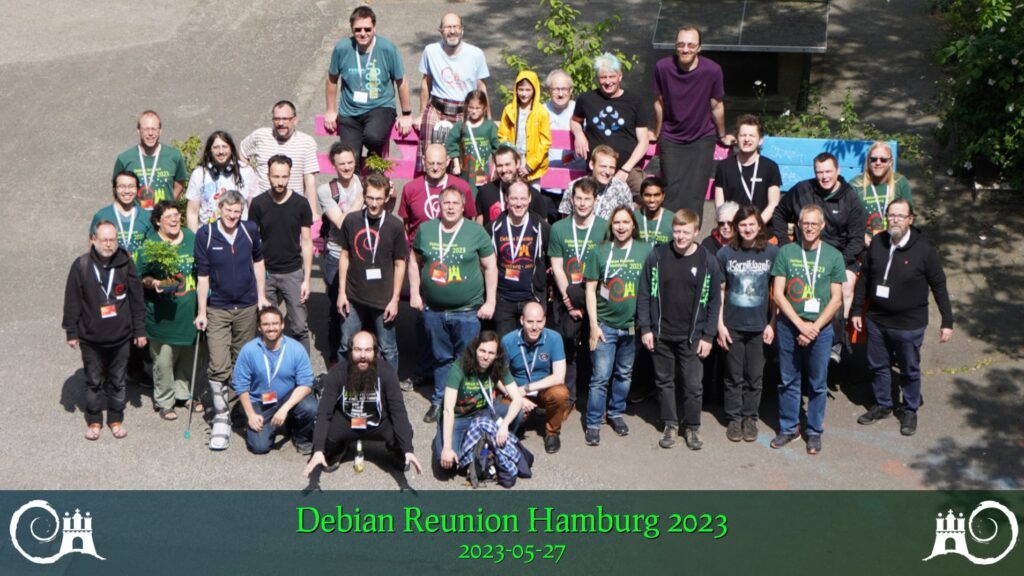
This year I attended Debian Reunion Hamburg (aka MiniDebConf Germany) for the second time. My goal for this MiniDebConf was just to talk to people and make the most of the time I have there. No other specific plans or goals. Despite this simple goal, it was a very productive and successful event for me. Tuesday 23rd:
Wednesday 24th:
Thursday 25th:
Friday 26th:
Saturday 27th: Sunday 28th: Monday 29th:
Das is nicht gut.
Tuesday 30th:

Thank you to Holger for organising this event yet again!

26 May 2023

Valhalla's Things: Correspondence Book

Posted on May 26, 2023
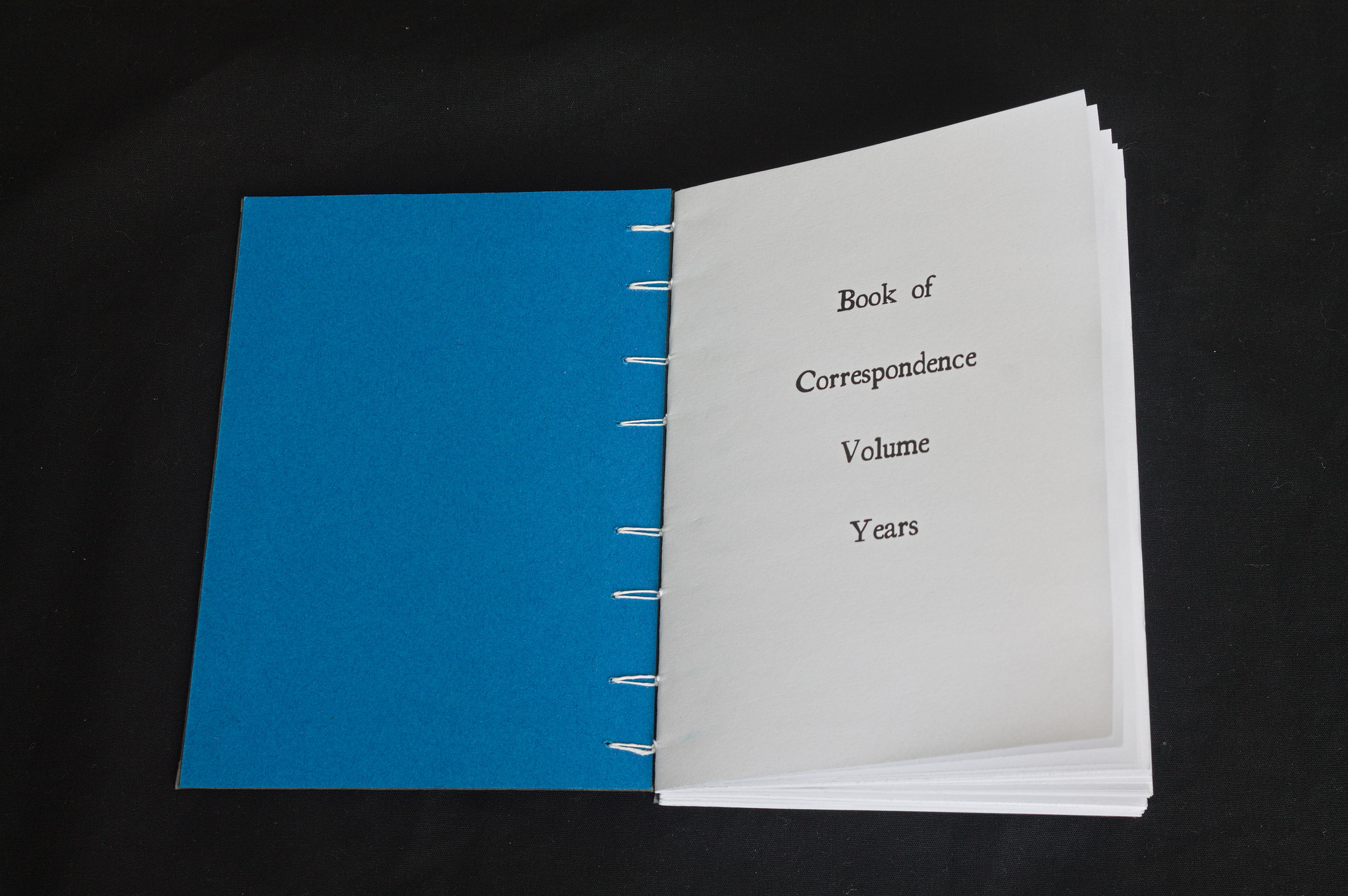
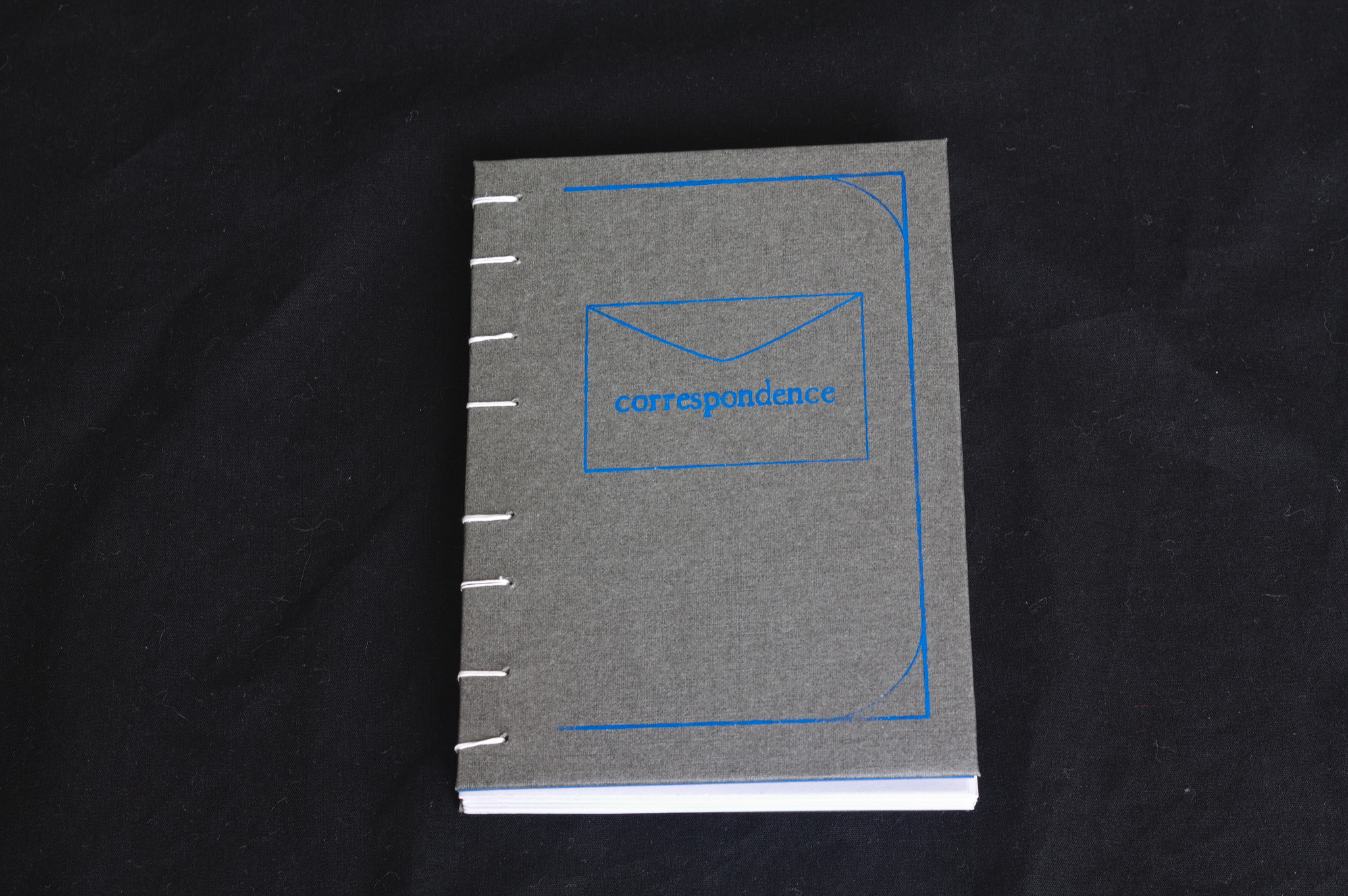
A Coptic bound book open to the first page with the title  Book of <space> Correspondence / Volume <space> Years <space> I write letters. The kind that are written on paper with a dip pen 1 and ink, stamped and sent through the post, spend a few days or weeks maturing like good wine in a depot somewhere2, and then get delivered to the recipient. Some of them (mostly cards) are to people who will receive them and thank me via xmpp (that sounds odd, but actually works out nicely), but others are proper letters with long texts that I exchange with penpals. Most of those are fountain pen frea^Wenthusiasts, so I usually use a different ink each time, and try to vary the paper, and I need to keep track of what I ve used. Some time ago, I ve read a Victorian book3 which recommended keeping a correspondence book to register all mail received and sent, the topics and whether it had been replied or otherwise acted upon. I don t have the mail traffic of a Victorian lady (or even middle class woman), but this looked like something fun to do, and if I added fields for the inks and paper used it would also have useful side effect. A page with writing lines with the title of the field below it: it has a number and then date, sender / recipient (at the ends of the same line, in reply to / replied, ink, paper, pen, topics / notes. So I headed over to the obvious program anybody would use for these things (XeLaTeX, of course) and quickly designed a page with fields for the basic thinks I want to record; it was a bit hurried, and I may improve on it the next time I make one, but I expect this one to last me two or three years, and it is good enough. I ve decided to make it A6 sized, so that it doesn t require a lot of space on my busy desktop, and it could be carried inside a portable desktop, if I ever decide to finish the one for which I ve made a mockup years ago :) Picture of book open to the correspondent pages: the fields are name, letters sent, letters received, address and notes. I ve also added a few pages for the addresses of my correspondents (and an index of the letters I ve exchanged with them), and a few empty pages for other notes. Then I ve used my a6_book.py script to rearrange the A6 pages into signatures and impress them on A4; to reduce later effort I ve added an option to order the pages in such a way that if I then cut four A4 sheet in half at a time (the limit of my rotary cutter) the signatures are ready to be folded. It s not the default because it requires that the pages are a multiple of 32 rather than just 16 (and they are padded up with empty pages if they aren t). If you re also interested in making one, here are the files: the book open to the page of letter two, which is repeated twice. After printing (an older version where some of the pages are repeated. whoops, but it only happened 4 times, and it s not a big deal), it was time for binding this into a book. I ve opted for Coptic stitch, so that the book will open completely flat and writing on it will be easier and the covers are 2 mm cardboard covered in linen-look bookbinding paper (sadly I no longer have a source for bookbinding cloth made from actual cloth). The grey cover of the book with the word correspondence, a stylised envelope and a border in blue. I tried to screenprint a simple design on the cover: the first attempt was unusable (the paper was smaller than the screen, so I couldn t keep it in the right place and moved as I was screenprinting); on the second attempt I used some masking tape to keep the paper in place, and they were a bit better, but I need more practice with the technique. Finally, I decided that for such a Victorian thing I will use an Iron-gall ink, but it s Rohrer & Knlingner Scabiosa, with a purple undertone, because life s too short to use blue-black ink :D And now, I m off to write an actual letter, rather than writing online about things that are related to letter writing.

  1. not a quill! I m a modern person who uses steel nibs!
  2. Milano Roserio, I m looking at you. a month to deliver a postcard from Lombardy to Ticino? not even a letter, which could have hidden contraband, a postcard.
  3. I think. I ve looked at some plausible candidates and couldn t find the source.

Valhalla's Things: Late Victorian Combinations

Posted on May 26, 2023
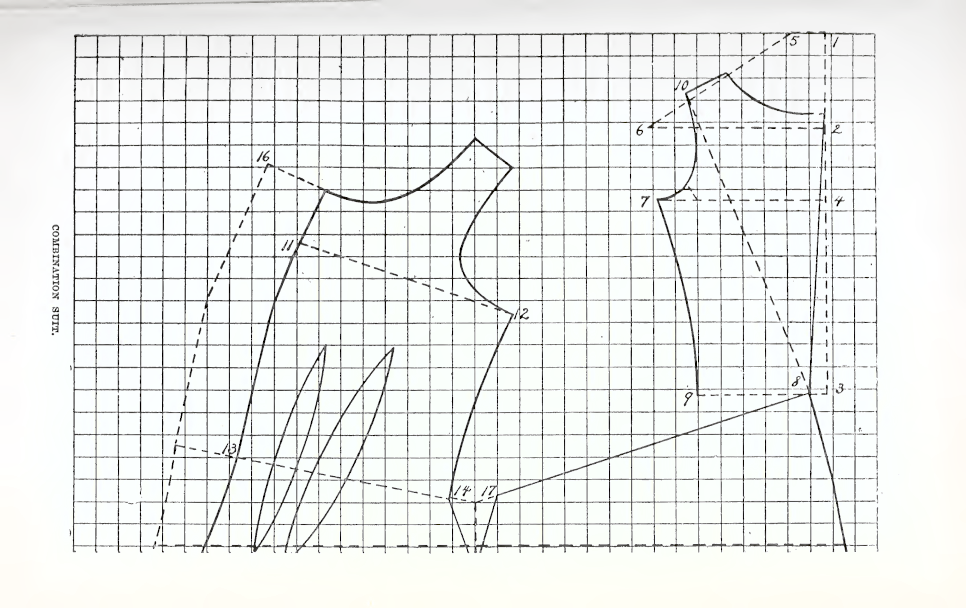
A woman wearing a white linen combination suite, with a very fitted top, small sleevelets that cover the armpits (to protect the next layers from sweat) and split drawers. The suite buttons up along the front (where it is a bit tight around the bust) and has a line of lace at the neckline and two tucks plus some lace at the legs. Some time ago, on an early Friday afternoon our internet connection died. After a reasonable time had passed we called the customer service, they told us that they would look into it and then call us back. On Friday evening we had not heard from them, and I was starting to get worried. At the time in the evening when I would have been relaxing online I grabbed the first Victorian sewing-related book I found on my hard disk and started to read it. For the record, it wasn t actually Victorian, it was Margaret J. Blair. System of Sewing and Garment Drafting. from 1904, but I also had available for comparison the earlier and smaller Margaret Blair. System of Garment Drafting. from 1897. A page from the book showing the top part of a pattern with all construction lines Anyway, this book had a system to draft a pair of combinations (chemise top + drawers); and months ago I had already tried to draft a pair from another system, but they didn t really fit and they were dropped low on the priority list, so on a whim I decided to try and draft them again with this new-to-me system. Around 23:00 in the night the pattern was ready, and I realized that my SO had gone to sleep without waiting for me, as I looked too busy to be interrupted. The next few days were quite stressful (we didn t get our internet back until Wednesday) and while I couldn t work at my day job I didn t sew as much as I could have done, but by the end of the week I had an almost complete mockup from an old sheet, and could see that it wasn t great, but it was a good start. One reason why the mockup took a whole week is that of course I started to sew by machine, but then I wanted flat-felled seams, and felling them by hand is so much neater, isn t it? And let me just say, I m grateful for the fact that I don t depend on streaming services for media, but I have a healthy mix of DVDs and stuff I had already temporary downloaded to watch later, because handsewing and being stressed out without watching something is not really great. Anyway, the mockup was a bit short on the crotch, but by the time I could try it on and be sure I was invested enough in it that I decided to work around the issue by inserting a strip of lace around the waist. And then I went back to the pattern to fix it properly, and found out that I had drafted the back of the drawers completely wrong, making a seam shorter rather than longer as it should have been. ooops. I fixed the pattern, and then decided that YOLO and cut the new version directly on some lightweight linen fabric I had originally planned to use in this project. The result is still not perfect, but good enough, and I finished it with a very restrained amount of lace at the neckline and hems, wore it one day when the weather was warm (loved the linen on the skin) and it s ready to be worn again when the weather will be back to being warm (hopefully not too soon). The last problem was taking pictures of this underwear in a way that preserves the decency (and it even had to be outdoors, for the light!). This was solved by wearing leggings and a matched long sleeved shirt under the combinations, and then promptly forgetting everything about decency and, well, you can see what happened. A woman mooning by keeping the back of split drawers open with her hands, but at least there are black leggings under them. The pattern is, as usual, published on my pattern website as #FreeSoftWear. And then, I started thinking about knits. In the late Victorian and Edwardian eras knit underwear was a thing, also thanks to the influence of various aspects of the rational dress movement; reformers such as Gustav J ger advocated for wool underwear, but mail order catalogues from the era such as https://archive.org/details/cataloguefallwin00macy (starting from page 67) have listings for both cotton and wool ones. From what I could find, back then they would have been either handknit at home or made to shape on industrial knitting machines; patterns for the former are available online, but the latter would probably require a knitting machine that I don t currently1 have. However, this is underwear that is not going to be seen by anybody2, and I believe that by using flat knit fabric one can get a decent functional approximation. In The Stash I have a few meters of a worked cotton jersey with a pretty comfy feel, and to make a long story short: this happened. a woman wearing a black cotton jersey combination suite; the front is sewn shut, but the neck is wide and finished with elastic.  The top part is pretty fitted, but becomes baggier around the crotch area and the legs are a comfortable width. I suspect that the linen one will get worn a lot this summer (linen on the skin. nothing else need to be said), while the cotton one will be stored away for winter. And then maybe I may make a couple more, if I find out that I m using it enough.

  1. cue ominous music. But first I would need space to actually keep and use it :)
  2. other than me, my SO, any costuming friend I may happen to change in the presence of, and everybody on the internet in these pictures.

22 May 2023

Russ Allbery: Review: Tsalmoth

Review: Tsalmoth, by Steven Brust
Series: Vlad Taltos #16
Publisher: Tor
Copyright: 2023
ISBN: 1-4668-8970-5
Format: Kindle
Pages: 277
Tsalmoth is the sixteenth book in the Vlad Taltos series and (some fans of the series groan) yet another flashback novel to earlier in Vlad's life. It takes place between Yendi and the interludes in Dragon (or, perhaps more straightforwardly, between Yendi and Jhereg. Most of the books of this series stand alone to some extent, so you could read this book out of order and probably not be horribly confused, but I suspect it would also feel weirdly pointless outside of the context of the larger series. We're back to Vlad running a fairly small operation as a Jhereg, who are the Dragaeran version of organized crime. A Tsalmoth who owes Vlad eight hundred imperials has rudely gotten himself murdered, thoroughly enough that he can't be revived. That's a considerable amount of money, and Vlad would like it back, so he starts poking around. As you might expect if you've read any other book in this series, things then get a bit complicated. This time, they involve Jhereg politics, Tsalmoth house politics, and necromancy (which in this universe is more about dimensional travel than it is about resurrecting the dead). The main story is... fine. Kragar is around being unnoticeable as always, Vlad is being cocky and stubborn and bantering with everyone, and what appears to be a straightforward illegal business relationship turns out to involve Dragaeran magic and thus Vlad's highly-placed friends. As usual, they're intellectually curious about the magic and largely ambivalent to the rest of Vlad's endeavors. The most enjoyable part of the story is Vlad's insistence on getting his money back while everyone else in the story cannot believe he would be this persistent over eight hundred imperials and is certain he has some other motive. It's otherwise a fairly forgettable little adventure. The implications for the broader series, though, are significant, although essentially none of the payoff is here. Brust has been keeping a major secret about Vlad that's finally revealed here, one that has little impact on the plot of this book (although it causes Vlad a lot of angst) but which I suspect will become very important later in the series. That was intriguing but rather unsatisfying, since it stays only a future hook with an attached justification for why we're only finding out about it now. If one has read the rest of the series, it's also nice to see Vlad and Cawti working together, bantering with each other and playing off of each other's strengths. It's reminiscent of the best parts of Yendi. As with many of the books of this series, the chapter introductions tell a parallel story; this time, it's Vlad and Cawti's wedding. I think previous books already mentioned that Vlad is narrating this series into some sort of recording device, and a bit about why he's doing that, but this is made quite explicit here. We get as much of the surrounding frame as we've ever seen before. There are no obvious plot consequences from this it's still all hints and guesswork but I suspect this will also become important by the end of the series. If you've read this much of the series, you'll obviously want to read this one as well, but unfortunately don't get your hopes up for significant plot advancement. This is another station-keeping book, which is a bit of a disappointment. We haven't gotten major plot advancement since Hawk in 2014, and I'm getting impatient. Thankfully, Lyorn has a release date already (April 9, 2024), and assuming all goes according to the grand plan, there are only two books left after Lyorn (Chreotha and The Last Contract). I'm getting hopeful that we're going to get to see the entire series. Meanwhile, I am very tempted to do a complete re-read of the series to date, probably in series chronological order rather than in publication order (as much as that's possible given the fractured timelines of Dragon and Tiassa) so that I can see how the pieces fit together. The constant jumping back and forth and allusions to events that have already happened but that we haven't seen yet is hard to keep track of. I'm very glad the Lyorn Records exists. Followed by Lyorn. Rating: 7 out of 10

11 May 2023

Simon Josefsson: Streamlined NTRU Prime sntrup761 goes to IETF

The OpenSSH project added support for a hybrid Streamlined NTRU Prime post-quantum key encapsulation method sntrup761 to strengthen their X25519-based default in their version 8.5 released on 2021-03-03. While there has been a lot of talk about post-quantum crypto generally, my impression has been that there has been a slowdown in implementing and deploying them in the past two years. Why is that? Regardless of the answer, we can try to collaboratively change things, and one effort that appears strangely missing are IETF documents for these algorithms. Building on some earlier work that added X25519/X448 to SSH, writing a similar document was relatively straight-forward once I had spent a day reading OpenSSH and TinySSH source code to understand how it worked. While I am not perfectly happy with how the final key is derived from the sntrup761/X25519 secrets it is a SHA512 call on the concatenated secrets I think the construct deserves to be better documented, to pave the road for increased confidence or better designs. Also, reusing the RFC5656 4 structs makes for a worse specification (one unnecessary normative reference), but probably a simpler implementation. I have published draft-josefsson-ntruprime-ssh-00 here. Credit here goes to Jan Moj of TinySSH that designed the earlier sntrup4591761x25519-sha512@tinyssh.org in 2018, Markus Friedl who added it to OpenSSH in 2019, and Damien Miller that changed it to sntrup761 in 2020. Does anyone have more to add to the history of this work? Once I had sharpened my xml2rfc skills, preparing a document describing the hybrid construct between the sntrup761 key-encapsulation mechanism and the X25519 key agreement method in a non-SSH fashion was easy. I do not know if this work is useful, but it may serve as a reference for further study. I published draft-josefsson-ntruprime-hybrid-00 here. Finally, how about a IETF document on the base Streamlined NTRU Prime? Explaining all the details, and especially the math behind it would be a significant effort. I started doing that, but realized it is a subjective call when to stop explaining things. If we can t assume that the reader knows about lattice math, is a document like this the best place to teach it? I settled for the most minimal approach instead, merely giving an introduction to the algorithm, included SageMath and C reference implementations together with test vectors. The IETF audience rarely understands math, so I think it is better to focus on the bits on the wire and the algorithm interfaces. Everything here was created by the Streamlined NTRU Prime team, I merely modified it a bit hoping I didn t break too much. I have now published draft-josefsson-ntruprime-streamlined-00 here. I maintain the IETF documents on my ietf-ntruprime GitLab page, feel free to open merge requests or raise issues to help improve them. To have confidence in the code was working properly, I ended up preparing a branch with sntrup761 for the GNU-project Nettle and have submitted it upstream for review. I had the misfortune of having to understand and implement NIST s DRBG-CTR to compute the sntrup761 known-answer tests, and what a mess it is. Why does a deterministic random generator support re-seeding? Why does it support non-full entropy derivation? What s with the key size vs block size confusion? What s with the optional parameters? What s with having multiple algorithm descriptions? Luckily I was able to extract a minimal but working implementation that is easy to read. I can t locate DRBG-CTR test vectors, anyone? Does anyone have sntrup761 test vectors that doesn t use DRBG-CTR? One final reflection on publishing known-answer tests for an algorithm that uses random data: are the test vectors stable over different ways to implement the algorithm? Just consider of some optimization moved one randomness-extraction call before another, then wouldn t the output be different? Are there other ways to verify correctness of implementations? As always, happy hacking!

1 May 2023

Gunnar Wolf: Scanning heaps of 8mm movies

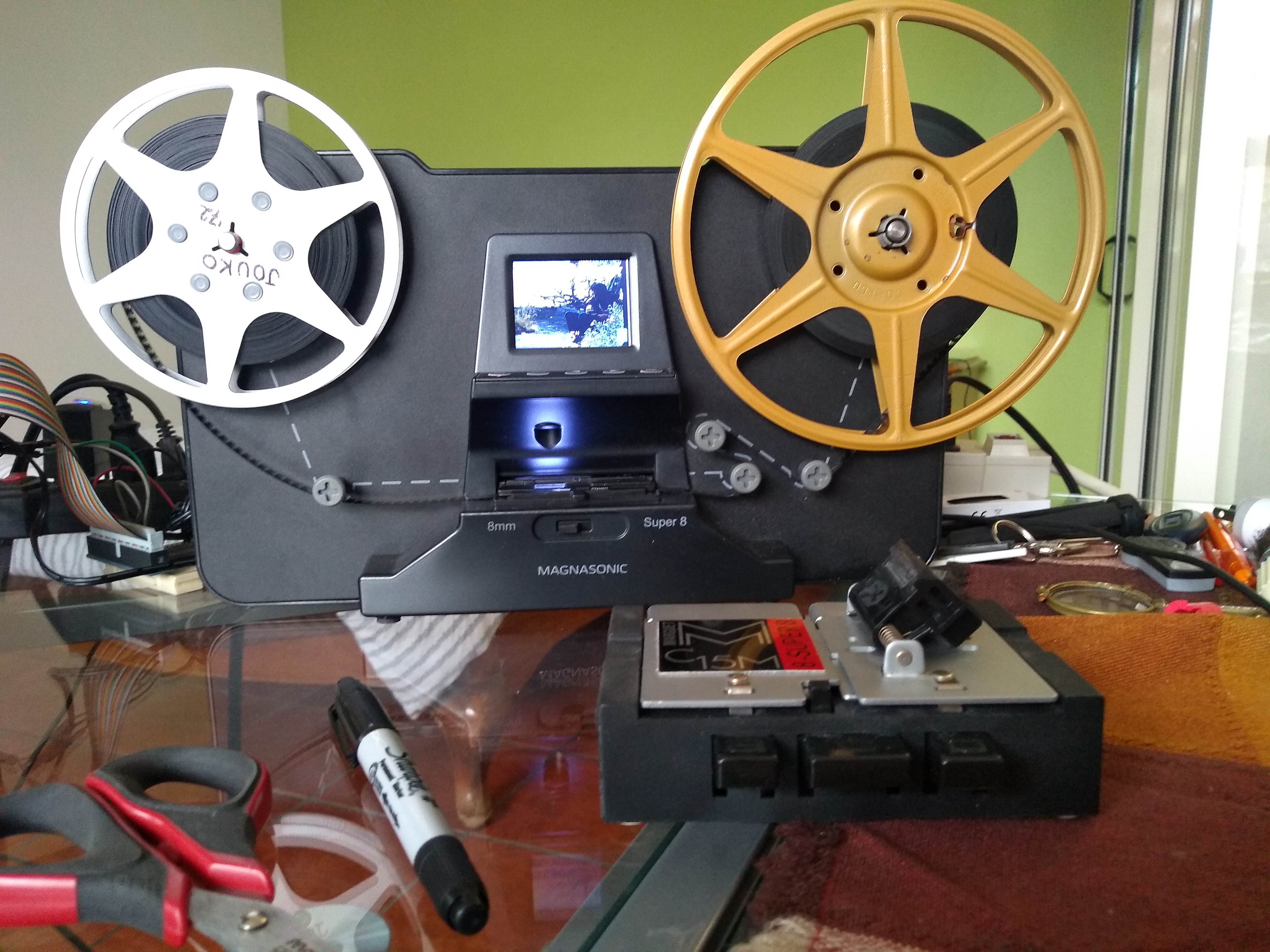
After my father passed away, I brought home most of the personal items he had, both at home and at his office. Among many, many (many, many, many) other things, I brought two of his personal treasures: His photo collection and a box with the 8mm movies he shot approximately between 1956 and 1989, when he was forced into modernity and got a portable videocassette recorder. I have talked with several friends, as I really want to get it all in a digital format, and while I ve been making slow but steady advances scanning the photo reels, I was particularly dismayed (even though it was most expected most personal electronic devices aren t meant to last over 50 years) to find out the 8mm projector was no longer in working conditions; the lamp and the fans work, but the spindles won t spin. Of course, it is quite likely it is easy to fix, but it is beyond my tinkering abilities and finding photographic equipment repair shops is no longer easy. Anyway, even if I got it fixed, filming a movie from a screen, even with a decent camera, is a lousy way to get it digitized. But almost by mere chance, I got in contact with my cousin Daniel, ho came to Mexico to visit his parents, and had precisely brought with him a 8mm/Super8 movie scanner! It is a much simpler piece of equipment than I had expected, and while it does present some minor glitches (i.e. the vertical framing slightly loses alignment over the course of a medium-length film scanning session, and no adjustment is possible while the scan is ongoing), this is something that can be decently fixed in post-processing, and a scanning session can be split with no ill effects. Anyway, it is quite uncommon a mid-length (5min) film can be done without interrupting i.e. to join a splice, mostly given my father didn t just film, but also edited a lot (this is, it s not just family pictures, but all different kinds of fiction and documentary work he did). So, Daniel lent me a great, brand new, entry-level film scanner; I rushed to scan as many movies as possible before his return to the USA this week, but he insisted he bought it to help preserve our family s memory, and given we are still several cousins living in Mexico, I could keep hold of it so any other of the cousins will find it more easily. Of course, I am thankful and delighted! So, this equipment is a Magnasonic FS81. It is entry-level, as it lacks some adjustment abilities a professional one would surely have, and I m sure a better scanner will make the job faster but it s infinitely superior to not having it! The scanner processes roughly two frames per second (while the nominal 8mm/Super8 speed is 24 frames per second), so a 3 minute film reel takes a bit over 35 minutes And a long, ~20 minute film reel takes Close to 4hr, if nothing gets in your way :- And yes, with longer reels, the probability of a splice breaking are way higher than with a short one not only because there is simply a longer film to process, but also because, both at the unwinding and at the receiving reels, mechanics play their roles. The films don t advance smoothly, but jump to position each frame in the scanner s screen, so every bit of film gets its fair share of gentle tugs. My professional consultant on how and what to do is my good friend Chema Serralde, who has stopped me from doing several things I would regret later otherwise (such as joining spliced tapes with acidic chemical adhesives such as Kola Loka, a.k.a. Krazy Glue even if it s a bit trickier to do it, he insisted me on best using simple transparent tape if I m not buying fancy things such as film-adhesive). Chema also explained me the importance of the loopers (las Lupes in his technical Spanish translation), which I feared increased the likelihood of breaking a bit of old glue due to the angle in which the film gets pulled but if skipped, result in films with too much jumping. Not all of the movies I have are for public sharing Some of them are just family movies, with high personal value, but probably of very little interest to others. But some are! I have been uploading some of the movies, after minor post-processing, to the Internet Archive. Among them: Anyway, I have a long way forward for scanning. I have 20 3min reels, 19 5min reels, and 8 20min reels. I want to check the scanning quality, but I think my 20min reels are mostly processed (we paid for scanning them some years ago). I mostly finished the 3min reels, but might have to go over some of them again due to the learning process. And Well, I m having quite a bit of fun in the process!

28 April 2023

Scarlett Gately Moore: KDE Snaps, Gear 23.04.0 available in snap store

KDE Digikam 8.0.0 SnapKDE Digikam 8.0.0 Snap
It has been another crazy busy couple of weeks. There are too many snaps released to list here, but you can track my progress here: https://invent.kde.org/packaging/snapcraft-kde-applications/-/issues/30 Some notable releases are: I updated our Frameworks/QT5 content pack to kf5 105 and qt5 5.15.9. I have added more documentation at: https://invent.kde.org/teams/neon/-/wikis/Snaps I am finishing up the last of 23.04.0 snaps and will tackle KDE PIM suite next week. I will also work on more apps that have their own release cycle. Several snap bugs have been resolved and closed! Please remember if you have issues, to file them at bugs.kde.org as I have a hard time finding them at <insert random forum / social network here> On the Debian front, I successfully closed two CVE s for ruby-rack in Buster! I will be doing more ELTS/LTS security updates next month! Thanks for stopping by! If you enjoy my work, consider a dontation. https://gofund.me/2c7b1808

27 April 2023

Thomas Lange: New feature for FAI.me build service

After the initial installation of a new machine, you often want to login as root via ssh. Therefore it's convenient to provide a ssh public key for a passwordless login. This can now be done by just adding your user name from salsa.debian.org, gitlab.com or github.com. You can also give a customized URL from where to download the keys. Before it was only possible to use a github account name. The FAI.me build service then creates a customized installation ISO for you, which will automatically install the ssh public key into the root account. Also the ready-to-boot cloud images support this feature. The build service is available on the FAI project website at https://fai-project.org/FAIme

Arturo Borrero Gonz lez: Kubecon and CloudNativeCon 2023 Europe summary

Post logo This post serves as a report from my attendance to Kubecon and CloudNativeCon 2023 Europe that took place in Amsterdam in April 2023. It was my second time physically attending this conference, the first one was in Austin, Texas (USA) in 2017. I also attended once in a virtual fashion. The content here is mostly generated for the sake of my own recollection and learnings, and is written from the notes I took during the event. The very first session was the opening keynote, which reunited the whole crowd to bootstrap the event and share the excitement about the days ahead. Some astonishing numbers were announced: there were more than 10.000 people attending, and apparently it could confidently be said that it was the largest open source technology conference taking place in Europe in recent times. It was also communicated that the next couple iteration of the event will be run in China in September 2023 and Paris in March 2024. More numbers, the CNCF was hosting about 159 projects, involving 1300 maintainers and about 200.000 contributors. The cloud-native community is ever-increasing, and there seems to be a strong trend in the industry for cloud-native technology adoption and all-things related to PaaS and IaaS. The event program had different tracks, and in each one there was an interesting mix of low-level and higher level talks for a variety of audience. On many occasions I found that reading the talk title alone was not enough to know in advance if a talk was a 101 kind of thing or for experienced engineers. But unlike in previous editions, I didn t have the feeling that the purpose of the conference was to try selling me anything. Obviously, speakers would make sure to mention, or highlight in a subtle way, the involvement of a given company in a given solution or piece of the ecosystem. But it was non-invasive and fair enough for me. On a different note, I found the breakout rooms to be often small. I think there were only a couple of rooms that could accommodate more than 500 people, which is a fairly small allowance for 10k attendees. I realized with frustration that the more interesting talks were immediately fully booked, with people waiting in line some 45 minutes before the session time. Because of this, I missed a few important sessions that I ll hopefully watch online later. Finally, on a more technical side, I ve learned many things, that instead of grouping by session I ll group by topic, given how some subjects were mentioned in several talks. On gitops and CI/CD pipelines Most of the mentions went to FluxCD and ArgoCD. At that point there were no doubts that gitops was a mature approach and both flux and argoCD could do an excellent job. ArgoCD seemed a bit more over-engineered to be a more general purpose CD pipeline, and flux felt a bit more tailored for simpler gitops setups. I discovered that both have nice web user interfaces that I wasn t previously familiar with. However, in two different talks I got the impression that the initial setup of them was simple, but migrating your current workflow to gitops could result in a bumpy ride. This is, the challenge is not deploying flux/argo itself, but moving everything into a state that both humans and flux/argo can understand. I also saw some curious mentions to the config drifts that can happen in some cases, even if the goal of gitops is precisely for that to never happen. Such mentions were usually accompanied by some hints on how to operate the situation by hand. Worth mentioning, I missed any practical information about one of the key pieces to this whole gitops story: building container images. Most of the showcased scenarios were using pre-built container images, so in that sense they were simple. Building and pushing to an image registry is one of the two key points we would need to solve in Toolforge Kubernetes if adopting gitops. In general, even if gitops were already in our radar for Toolforge Kubernetes, I think it climbed a few steps in my priority list after the conference. Another learning was this site: https://opengitops.dev/. Group On etcd, performance and resource management I attended a talk focused on etcd performance tuning that was very encouraging. They were basically talking about the exact same problems we have had in Toolforge Kubernetes, like api-server and etcd failure modes, and how sensitive etcd is to disk latency, IO pressure and network throughput. Even though Toolforge Kubernetes scale is small compared to other Kubernetes deployments out there, I found it very interesting to see other s approaches to the same set of challenges. I learned how most Kubernetes components and apps can overload the api-server. Because even the api-server talks to itself. Simple things like kubectl may have a completely different impact on the API depending on usage, for example when listing the whole list of objects (very expensive) vs a single object. The conclusion was to try avoiding hitting the api-server with LIST calls, and use ResourceVersion which avoids full-dumps from etcd (which, by the way, is the default when using bare kubectl get calls). I already knew some of this, and for example the jobs-framework-emailer was already making use of this ResourceVersion functionality. There have been a lot of improvements in the performance side of Kubernetes in recent times, or more specifically, in how resources are managed and used by the system. I saw a review of resource management from the perspective of the container runtime and kubelet, and plans to support fancy things like topology-aware scheduling decisions and dynamic resource claims (changing the pod resource claims without re-defining/re-starting the pods). On cluster management, bootstrapping and multi-tenancy I attended a couple of talks that mentioned kubeadm, and one in particular was from the maintainers themselves. This was of interest to me because as of today we use it for Toolforge. They shared all the latest developments and improvements, and the plans and roadmap for the future, with a special mention to something they called kubeadm operator , apparently capable of auto-upgrading the cluster, auto-renewing certificates and such. I also saw a comparison between the different cluster bootstrappers, which to me confirmed that kubeadm was the best, from the point of view of being a well established and well-known workflow, plus having a very active contributor base. The kubeadm developers invited the audience to submit feature requests, so I did. The different talks confirmed that the basic unit for multi-tenancy in kubernetes is the namespace. Any serious multi-tenant usage should leverage this. There were some ongoing conversations, in official sessions and in the hallway, about the right tool to implement K8s-whitin-K8s, and vcluster was mentioned enough times for me to be convinced it was the right candidate. This was despite of my impression that multiclusters / multicloud are regarded as hard topics in the general community. I definitely would like to play with it sometime down the road. On networking I attended a couple of basic sessions that served really well to understand how Kubernetes instrumented the network to achieve its goal. The conference program had sessions to cover topics ranging from network debugging recommendations, CNI implementations, to IPv6 support. Also, one of the keynote sessions had a reference to how kube-proxy is not able to perform NAT for SIP connections, which is interesting because I believe Netfilter Conntrack could do it if properly configured. One of the conclusions on the CNI front was that Calico has a massive community adoption (in Netfilter mode), which is reassuring, especially considering it is the one we use for Toolforge Kubernetes. Slide On jobs I attended a couple of talks that were related to HPC/grid-like usages of Kubernetes. I was truly impressed by some folks out there who were using Kubernetes Jobs on massive scales, such as to train machine learning models and other fancy AI projects. It is acknowledged in the community that the early implementation of things like Jobs and CronJobs had some limitations that are now gone, or at least greatly improved. Some new functionalities have been added as well. Indexed Jobs, for example, enables each Job to have a number (index) and process a chunk of a larger batch of data based on that index. It would allow for full grid-like features like sequential (or again, indexed) processing, coordination between Job and more graceful Job restarts. My first reaction was: Is that something we would like to enable in Toolforge Jobs Framework? On policy and security A surprisingly good amount of sessions covered interesting topics related to policy and security. It was nice to learn two realities:
  1. kubernetes is capable of doing pretty much anything security-wise and create greatly secured environments.
  2. it does not by default. The defaults are not security-strict on purpose.
It kind of made sense to me: Kubernetes was used for a wide range of use cases, and developers didn t know beforehand to which particular setup they should accommodate the default security levels. One session in particular covered the most basic security features that should be enabled for any Kubernetes system that would get exposed to random end users. In my opinion, the Toolforge Kubernetes setup was already doing a good job in that regard. To my joy, some sessions referred to the Pod Security Admission mechanism, which is one of the key security features we re about to adopt (when migrating away from Pod Security Policy). I also learned a bit more about Secret resources, their current implementation and how to leverage a combo of CSI and RBAC for a more secure usage of external secrets. Finally, one of the major takeaways from the conference was learning about kyverno and kubeaudit. I was previously aware of the OPA Gatekeeper. From the several demos I saw, it was to me that kyverno should help us make Toolforge Kubernetes more sustainable by replacing all of our custom admission controllers with it. I already opened a ticket to track this idea, which I ll be proposing to my team soon. Final notes In general, I believe I learned many things, and perhaps even more importantly I re-learned some stuff I had forgotten because of lack of daily exposure. I m really happy that the cloud native way of thinking was reinforced in me, which I still need because most of my muscle memory to approach systems architecture and engineering is from the old pre-cloud days. List of sessions I attended on the first day: List of sessions I attended on the second day: List of sessions I attended on third day: The videos have been published on Youtube.

25 April 2023

B lint R czey: Improve build time of Rust, Java and Intel Fortran projects with Firebuild s new release!

Rust is a hugely popular compiled programming language and accelerating it was an important goal for Firebuild for some time. Firebuild s v0.8.0 release finally added Rust support in addition to numerous other improvements including support for Doxygen, Intel s Fortran compiler and restored javac and javadoc acceleration.

Firebuild s Rust + Cargo support Firebuild treats programs as black boxes intercepting C standard library calls and system calls. It shortcuts the program invocations that predictably generate the same outputs because the program itself is known to be deterministic and all inputs are known in advance. Rust s compiler, rustc is deterministic in itself and simple rustc invocations were already accelerated, but parallel builds driven by Cargo needed a few enhancements in Firebuild.

Cargo s jobserver Cargo uses the Rust variant of the GNU Make s jobserver to control the parallelism in a build. The jobserver creates a file descriptor from which descendant processes can read tokens and are allowed to run one extra thread or parallel process per token received. After the extra threads or processes are finished the tokens must be returned by writing to the other file descriptor the jobserver created. The jobserver s file descriptors are shared with the descendant processes via environment variables:
# rustc's environment variables
...
CARGO_MAKEFLAGS="-j --jobserver-fds=4,5 --jobserver-auth=4,5"
...
Since getting tokens from the jobserver involves reading them as nondeterministic bytes from an inherited file descriptor this is clearly an operation that would depend on input not known in advance. Firebuild needs to make an exception and ignore jobserver usage related reads and writes since they are not meant to change the build results. However, there are programs not caring at all about jobservers and their file descriptors. They happily close the inherited file descriptors and open new ones with the same id, to use them for entirely different purposes. One such program is the widely used ./configure script, thus the case is far from being theoretical. To stay on the safe side firebuild ignores jobserver fd usage only in programs which are known to use the jobserver properly. The list of the programs is now configurable in /etc/firebuild.conf and since rustc is on the list by default parallel Rust builds are accelerated out of the box!

Writable dependency dir The other issue that prevented highly accelerated Rust builds was rustc s -L dependency=<dir> parameter. This directory is populated in a not fully deterministic order in parallel builds. Firebuild on the other hand hashes directory listings of open()-ed directories treating them as inputs assuming that the directory content will influence the intercepted programs outputs. As rustc programs started in parallel scanned the dependency directory in different states depending on what other Rust compilations finished already Firebuild had to store the full directory content as an input for each rustc cache entry resulting low hit rate when rustc was started again with otherwise identical inputs. The solution here is ignoring rustc scanning the dependency directory, because the dependencies actually used are still treated as input and are checked when shortcutting rustc. With that implemented in firebuild, too, librsvg s build that uses Rust and Cargo can be accelerated by more than 90%, even on a system having 12 cores/24 threads!:
Firebuild accelerating librsvg s Rust + Cargo build from 38s to 2.8s on a Ryzen 5900X (12C/24T) system

On the way to accelerate anything Firebuild s latest release incorporated more than 100 changes just from the last two months. They unlocked acceleration of Rust builds with Cargo, fixed Firebuild to work with the latest Java update that slightly changed its behavior, started accelerating Intel s Fortran compiler in addition to accelerating gfortran that was already supported and included many smaller changes improving the acceleration of other compilers and tools. If your favorite toolchain is not mentioned, there is still a good chance that it is already supported. Give Firebuild a try and tell us about your experience! Update 1: Comparison to sccache came up in the reddit topic about Firebuild s Rust acceleration , thus by popular demand this is how sccache performs on the same project:
Firebuild 0.8.0 vs. sccache 0.4.2 accelerating librsvg s Rust + Cargo build
All builds took place on the same Ryzen 5900X system with 12 cores / 24 threads in LXC containers limited to using 1-12 virtual CPUs. A warm-up build took place before the vanilla (without any instrumentation) build to download and compile the dependency crates to measure only the project s build time. A git clean command cleared all the build artifacts from the project directory before each build and ./autogen.sh was run to measure only clean rebuilds (without autotools). See test configuration in the Firebuild performance test repository for more details and easy reproduction. Firebuild had lower overhead than sccache (2.83% vs. 6.10% on 1 CPU and 7.71% vs. 22.05% on 12 CPUs) and made the accelerated build finish much faster (2.26% vs. 19.41% of vanilla build s time on 1 CPU and 7.5% vs. 27.4% of vanilla build s time on 12 CPUs).

20 April 2023

Dirk Eddelbuettel: qlcal 0.0.5 on CRAN: Updates from QuantLib 1.3.0

The fifth release of the still new-ish qlcal package arrivied at CRAN just now. qlcal delivers the calendaring parts of QuantLib. It is provided (for the R package) as a set of included files, so the package is self-contained and does not depend on an external QuantLib library (which can be demanding to build). qlcal covers over sixty country / market calendars and can compute holiday lists, its complement (i.e. business day lists) and much more. This release brings updates to five calendars from the QuantLib 1.30 release from this week.

Changes in version 0.0.5 (2023-04-19)
  • Calendars routines for Australia, Denmark, New Zealand, Turkey and the US have been updated from QuantLib 1.30.
  • Support for 'Australia/ASX' has been added.
  • Added demo showing all US holidays in current year

We also added a quick little demo using xts to column-bind calendars produced from each of the different US sub-calendars. This is a slightly updated version of the sketch we tooted a few days ago. The output now is
> print(Reduce(cbind, Map(makeHol, cals)))
           LiborImpact NYSE GovernmentBond NERC FederalReserve
2023-01-02        TRUE TRUE           TRUE TRUE           TRUE
2023-01-16        TRUE TRUE           TRUE   NA           TRUE
2023-02-20        TRUE TRUE           TRUE   NA           TRUE
2023-04-07          NA TRUE             NA   NA             NA
2023-05-29        TRUE TRUE           TRUE TRUE           TRUE
2023-06-19        TRUE TRUE           TRUE   NA           TRUE
2023-07-04        TRUE TRUE           TRUE TRUE           TRUE
2023-09-04        TRUE TRUE           TRUE TRUE           TRUE
2023-10-09        TRUE   NA           TRUE   NA           TRUE
2023-11-10        TRUE   NA             NA   NA             NA
2023-11-23        TRUE TRUE           TRUE TRUE           TRUE
2023-12-25        TRUE TRUE           TRUE TRUE           TRUE
> 
(and we just discovered a tiny h -> hols bug in the demo so see the git repo sorry!). The release was finalized uploaded yesterday morning. But because we have to set CXX_STD=CXX14 as satisfy requirements of some of the Boost headers, we get ourselves a NOTE and with that a manual inspection and a delay of 1 1/2 days. Not really all that meaningful in the grand scheme of things but still suboptimal relative to the fully automated passage this release should have gotten. Oh well. Courtesy of my CRANberries, there is a diffstat report for this release. See the project page and package documentation for more details, and more examples. If you like this or other open-source work I do, you can now sponsor me at GitHub.

This post by Dirk Eddelbuettel originated on his Thinking inside the box blog. Please report excessive re-aggregation in third-party for-profit settings.

18 April 2023

Shirish Agarwal: Philips LCD Monitor 22 , 1984, Reaper Man, The Firm.

PHILIPS PHL 221S8L Those who have been reading this blog for a long time would perhaps know that I had bought a Viewsonic 19 almost 12 years ago. The Monitor was functioning well till last week. I had thought to change it to a 24 monitor almost 3-4 years ago when 24 LCD Monitors were going for around 4k/- or thereabouts. But the monitor kept on functioning and I didn t have space (nor do) to have a dual-monitor setup. It just didn t make sense. Apart from higher electricity charges it would have also have made more demands on my old system which somehow is still functioning even after all those years. Then last week, it started to dim and after couple of days completely conked out. I had wanted to buy a new monitor in front of mum so she could watch movies or whatever but this was not to be. Sp I had to buy an LCD Monitor as Government raised taxes enormously after pandemic. Same/similar monitor that used to cost INR 4k/- today costed me almost INR 7k/- almost double the price. Hooking it to Debian I got the following

$ sudo hwinfo --monitor grep Model Model: "PHILIPS PHL 221S8L" FWIW hwinfo is the latest version

~$ sudo hwinfo --version21.82
I did see couple of movies before starting to write this blog post. Not an exceptional monitor but better than before. I had option from three brands, Dell (most expensive), Philips (middle) and & LG (lowest in prices). Interestingly, Viewsonic disappeared from the market about 5 years back and made a comeback just couple of years ago. Even Philips which had exited the PC Monitor almost a decade back re-entered the market. Apart from the branding, it doesn t make much of a difference as almost all the products including the above monitors are produced in China. I did remember her a lot while buying the monitor as I m sure she would have enjoyed it far more than me but that was not to be

1984 During last week when I didn t have the monitor I re-read 1984. To be completely honest, I had read the above book when I was in the 20 s and I had no context. The protagonist seemed like a whiner and for the life of me I couldn t understand why he didn t try to escape. Re-reading after almost 2 decades and a bit more I shat a number of times because now the context is pretty near and pretty real. I can see why the Republicans in the U.S. banned it. I also realized why the protagnist didn t attempt to run away because wherever he would run away it would be the same thing. It probably is one of the most depressing books I have ever read. To willfully accept what is false after all that torture. What was also interesting to me is to find that George Orwell was also a soldier just like Tolkien was. Both took part and wrote such different stories. While Mr. Tolkien writes and shares the pendulum between hope and despair, Mr. Orwell is decidedly dark. Not grey but dark. I am not sure if I would like to read Animal Farm anytime soon.

The Reaper Man Terry Pratchett It is by sheer coincidence or perhaps I needed something to fill me up when I got The Reaper Man from Terry Pratchett. It was practically like a breath of fresh air. And I love Mr. Pratchett for the inclusivity he brings in. We think about skin color, and what not and here Mr. Pratchett writes about an undead gentleman who s extremely polite as he was a wizard. I won t talk more as I don t really want to spoil the surprise but rest assured everybody is gonna love it. I also read Long Utopia but this is for those who believe and think of multiverses long before it became a buzzword that it is today.

The Firm John Grisham Now I don t know what I should write about this book as there aren t many John Grisham books where a rookie wins against more than one party opposite him. I wouldn t go much into depth but simply say it was worth a read. I am currently reading Gray Mountain. It very much shows how the coal Industry is corrupt and what all it does. It also brings to mind the amount of mining that is done in which Iron is the mostly sought after and done. Now if we are mining 94% Iron then wouldn t it make sense to ask to have a circular economy around Iron but we don t even hear a word about it. Even with all the imagined projections of lithium mining, it would hardly be 10% . I could go on but will finish for now, till later.

Matthew Garrett: PSA: upgrade your LUKS key derivation function

Here's an article from a French anarchist describing how his (encrypted) laptop was seized after he was arrested, and material from the encrypted partition has since been entered as evidence against him. His encryption password was supposedly greater than 20 characters and included a mixture of cases, numbers, and punctuation, so in the absence of any sort of opsec failures this implies that even relatively complex passwords can now be brute forced, and we should be transitioning to even more secure passphrases.

Or does it? Let's go into what LUKS is doing in the first place. The actual data is typically encrypted with AES, an extremely popular and well-tested encryption algorithm. AES has no known major weaknesses and is not considered to be practically brute-forceable - at least, assuming you have a random key. Unfortunately it's not really practical to ask a user to type in 128 bits of binary every time they want to unlock their drive, so another approach has to be taken.

This is handled using something called a "key derivation function", or KDF. A KDF is a function that takes some input (in this case the user's password) and generates a key. As an extremely simple example, think of MD5 - it takes an input and generates a 128-bit output, so we could simply MD5 the user's password and use the output as an AES key. While this could technically be considered a KDF, it would be an extremely bad one! MD5s can be calculated extremely quickly, so someone attempting to brute-force a disk encryption key could simply generate the MD5 of every plausible password (probably on a lot of machines in parallel, likely using GPUs) and test each of them to see whether it decrypts the drive.

(things are actually slightly more complicated than this - your password is used to generate a key that is then used to encrypt and decrypt the actual encryption key. This is necessary in order to allow you to change your password without having to re-encrypt the entire drive - instead you simply re-encrypt the encryption key with the new password-derived key. This also allows you to have multiple passwords or unlock mechanisms per drive)

Good KDFs reduce this risk by being what's technically referred to as "expensive". Rather than performing one simple calculation to turn a password into a key, they perform a lot of calculations. The number of calculations performed is generally configurable, in order to let you trade off between the amount of security (the number of calculations you'll force an attacker to perform when attempting to generate a key from a potential password) and performance (the amount of time you're willing to wait for your laptop to generate the key after you type in your password so it can actually boot). But, obviously, this tradeoff changes over time - defaults that made sense 10 years ago are not necessarily good defaults now. If you set up your encrypted partition some time ago, the number of calculations required may no longer be considered up to scratch.

And, well, some of these assumptions are kind of bad in the first place! Just making things computationally expensive doesn't help a lot if your adversary has the ability to test a large number of passwords in parallel. GPUs are extremely good at performing the sort of calculations that KDFs generally use, so an attacker can "just" get a whole pile of GPUs and throw them at the problem. KDFs that are computationally expensive don't do a great deal to protect against this. However, there's another axis of expense that can be considered - memory. If the KDF algorithm requires a significant amount of RAM, the degree to which it can be performed in parallel on a GPU is massively reduced. A Geforce 4090 may have 16,384 execution units, but if each password attempt requires 1GB of RAM and the card only has 24GB on board, the attacker is restricted to running 24 attempts in parallel.

So, in these days of attackers with access to a pile of GPUs, a purely computationally expensive KDF is just not a good choice. And, unfortunately, the subject of this story was almost certainly using one of those. Ubuntu 18.04 used the LUKS1 header format, and the only KDF supported in this format is PBKDF2. This is not a memory expensive KDF, and so is vulnerable to GPU-based attacks. But even so, systems using the LUKS2 header format used to default to argon2i, again not a memory expensive KDFwhich is memory strong, but not designed to be resistant to GPU attack (thanks to the comments pointing out my misunderstanding here). New versions default to argon2id, which is. You want to be using argon2id.

What makes this worse is that distributions generally don't update this in any way. If you installed your system and it gave you pbkdf2 as your KDF, you're probably still using pbkdf2 even if you've upgraded to a system that would use argon2id on a fresh install. Thankfully, this can all be fixed-up in place. But note that if anything goes wrong here you could lose access to all your encrypted data, so before doing anything make sure it's all backed up (and figure out how to keep said backup secure so you don't just have your data seized that way).

First, make sure you're running as up-to-date a version of your distribution as possible. Having tools that support the LUKS2 format doesn't mean that your distribution has all of that integrated, and old distribution versions may allow you to update your LUKS setup without actually supporting booting from it. Also, if you're using an encrypted /boot, stop now - very recent versions of grub2 support LUKS2, but they don't support argon2id, and this will render your system unbootable.

Next, figure out which device under /dev corresponds to your encrypted partition. Run

lsblk

and look for entries that have a type of "crypt". The device above that in the tree is the actual encrypted device. Record that name, and run

sudo cryptsetup luksHeaderBackup /dev/whatever --header-backup-file /tmp/luksheader

and copy that to a USB stick or something. If something goes wrong here you'll be able to boot a live image and run

sudo cryptsetup luksHeaderRestore /dev/whatever --header-backup-file luksheader

to restore it.

(Edit to add: Once everything is working, delete this backup! It contains the old weak key, and someone with it can potentially use that to brute force your disk encryption key using the old KDF even if you've updated the on-disk KDF.)

Next, run

sudo cryptsetup luksDump /dev/whatever

and look for the Version: line. If it's version 1, you need to update the header to LUKS2. Run

sudo cryptsetup convert /dev/whatever --type luks2

and follow the prompts. Make sure your system still boots, and if not go back and restore the backup of your header. Assuming everything is ok at this point, run

sudo cryptsetup luksDump /dev/whatever

again and look for the PBKDF: line in each keyslot (pay attention only to the keyslots, ignore any references to pbkdf2 that come after the Digests: line). If the PBKDF is either "pbkdf2" or "argon2i" you should convert to argon2id. Run the following:

sudo cryptsetup luksConvertKey /dev/whatever --pbkdf argon2id

and follow the prompts. If you have multiple passwords associated with your drive you'll have multiple keyslots, and you'll need to repeat this for each password.

Distributions! You should really be handling this sort of thing on upgrade. People who installed their systems with your encryption defaults several years ago are now much less secure than people who perform a fresh install today. Please please please do something about this.

comment count unavailable comments

17 April 2023

Simon Josefsson: More on Differential Reproducible Builds: Devuan is 46% reproducible!

Building on my work to rebuild Trisquel GNU/Linux 11.0 aramo, it felt simple to generalize the tooling to any two apt-repository pairs and I ve created debdistreproduce as a template-project for doing this through the infrastructure of GitLab CI/CD and meanwhile even set up my own gitlab-runner on spare hardware. I ve brought over reproduce/trisquel to using debdistreproduce as well, and archived the old reproduce-trisquel project. After fixing some quirks, building Devuan GNU+Linux 4.0 Chimaera was fairly quick since they do not modify that many packages, and I m now able to reproduce 46% of the packages that Devuan Chimaera add/modify on amd64. I have more work in progress here (hint: reproduce/pureos), but PureOS is considerably larger than both Trisquel and Devuan together. I m not sure how interested Devuan or PureOS are in reproducible builds though. Reflecting on this work made me realize that while the natural thing to do here was to differentiate two different apt-based distributions, I have realized the same way I did for debdistdiff that it would also be interesting to compare, say, Debian bookworm from Debian unstable, especially now that they should be fairly close together. My tooling should support that too. However, to really provide any benefit from the more complete existing reproducible testing of Debian, some further benefit from doing that would be useful and I can t articulate one right now. One ultimate goal with my effort is to improve trust in apt-repositories, and combining transparency-style protection a la apt-sigstore with third-party validated reproducible builds may indeed be one such use-case that would benefit the wider community of apt-repositories. Imagine having your system not install any package unless it can verify it against a third-party reproducible build organization that commits their results in a tamper-proof transparency ledger. But I m now on repeat here, so will stop.

Next.

Previous.