Review: The Outskirter's Secret, by Rosemary Kirstein
Series:
Steerswomen #2
Publisher:
Del Rey
Copyright:
1992, 2001
Printing:
2001
ISBN:
0-345-46105-3
Format:
Trade paperback
Pages:
389
This is a direct sequel to The
Steerswoman, and I don't recommend starting here. I read this novel as
part of The Steerswoman's Road omnibus, which is the edition
reflected in the metadata (except for the page count, which is just this
novel).
There are a few plot constructs that occur depressingly often in SFF and
almost always annoy me. One is books where nearly all of the book is just
a journey from one place to another, without much interesting landscape
along the way. Subtract additional points if the land is hostile and
there are constant worries about food. Another is illness, or being
unable to trust one's senses, or, worse, both.
Somehow, this book manages to do both of those things and was still
thoroughly enjoyable. This is exceptionally rare.
After the conclusions reached in the previous book, Rowan and Bel are even
more determined to reach the origin of the jewels on Bel's belt and gather
more information. This means travel into the Outskirts, where Rowan has
never been (and where people from the Inner Land almost never go). It
also means close contact with Bel's people, who have an entirely different
set of social rituals and who are notoriously prickly.
Nearly all of The Outskirter's Secret is travel through the
Outskirts while navigating Outskirter society, politics, and customs.
It's anthropological fiction of a sort, particularly given the inquisitive
and analytical mindset that Rowan brings to anything new. Anthropological
SFF is another one of those things that normally leaves me cold, but which
totally worked for me in this book. I rarely remember being this engaged
in, or caring this much about, the customs and traditions of an invented
and relatively primitive culture.
Partly this is because Rowan's mindset continues to be fascinating and
contagious. I kind of want to compare this series to Neal Stephenson's
Anathem, but where Stephenson's novel
was about the practice of organized science, the Steerswomen series is
about the individual scholar and scientist. This could go badly in the
hands of a lesser author, but Kirstein brilliantly balances analysis and
theories with Rowan's child-like wonder in learning, peculiar and
determined ethics, and emotional growth. She isn't a disinterested
observer or an engineer with a wrench. She lets the world change her,
works hard at finding her place and her own strength, and engages with it
emotionally as much as she does intellectually. She's a wonderfully
compelling character.
Another significant factor to this book's success is the slow and
deliberate way Kirstein mixes world-building revelations with the
day-to-day struggles of the characters. There's much more to that than
just the target of Rowan's investigations, and far more complexity and
significance to the Outskirters than showed in first appearances. The
world is also set up in a way that lets the readers guess various details
before the characters, with their more limited knowledge, can work out:
another tricky technique that Kirstein gets almost perfect. I never
wanted to shake the characters for being dumb; usually, both Rowan and Bel
leap to correct conclusions just shortly after the reader, and long before
the reader is tired of following their thought processes. There was only
one bit of world-building that took Rowan most of the book to figure out
despite being obvious to me early in this novel, and I think that one was
fair. She didn't have anywhere near enough information to work it out.
Bel continues to be wonderful in numerous ways. But even better, Kirstein
introduces us to Bel's people and highlights both similarities and
differences. It's an excellent job of building a complex culture that
feels human: varied, tradition-laden, practical, but also well-adapted to
their environment and situation, and far more sophisticated than they
might appear. I'm normally a hard sell for this sort of thing, but
Kirstein got me thoroughly invested. One scene late in this novel where a
tribe welcomes a newcomer is masterful and probably my favorite single
moment of the series so far.
Once again, unfortunately, the conclusion is a bit less than satisfying.
The characters come away knowing more, planning more, but still with
numerous unanswered questions. This is not a series that's in a hurry to
get to major plot payoffs. Instead, it's a series that takes a close look
at the cultures, relationships, emotions, and lives that it touches, and
describes them in deft and engaging ways.
The Outskirter's Secret is even better than The Steerswoman.
Recommended. I bought the third and fourth books while only a little ways
into this one and am eager to read them.
Followed by The Lost Steersman.
Rating: 9 out of 10
APT s performance in applying the Pdiffs files, which are the diff format used for Packages, Sources, and other files in the archive has been slow.
Improving performance for uncompressed files
The reason for this is that our I/O is unbuffered, and we were reading one byte at a time in order to read lines. This changed on December 24, by adding read buffering for reading lines, vastly improving the performance of rred.
But it was still slow, so today I profiled using gperftools the rred method running on a 430MB uncompressed Contents file with a 75 KB large patch. I noticed that our ReadLine() method was calling some method which took a long time (google-pprof told me it was some _nss method, but that was wrong [thank you, addr2line]).
After some further look into the code, I noticed that we set the length of the buffer using the length of the line. And whenever we moved some data out of the buffer, we called memmove() to move the remaining data to the front of the buffer.
So, I tried to use a fixed buffer size of 4096 (commit). Now memmove() would spend less time moving memory around inside the buffer. This helped a lot, bringing the run time on my example file down from 46 seconds to about 2 seconds.
Later on, I rewrote the code to not use memmove() at all opting for start and end variables instead; and increasing the start variable when reading from the buffer (commit).
This in turn further improved things, bringing it down to about 1.6 seconds. We could now increase the buffer size again, without any negative effect.
Effects on apt-get update
I measured the run-time of apt-get update, excluding appstream and apt-file files, for the update from todays 07:52 to the 13:52 dinstall run. Configured sources are unstable and experimental with amd64 and i386 architectures. appstream and apt-file indexes are disabled for testing, so only Packages and Sources indexes are fetched.
The results are impressive:
For APT 1.1.6, updating with PDiffs enabled took 41 seconds.
For APT 1.1.7, updating with PDiffs enabled took 4 seconds.
That s a tenfold increase in performance. By the way, running without PDiffs took 20 seconds, so there s no reason not to use them.
Future work
Writes are still unbuffered, and account for about 75% to 80% of our runtime. That s an obvious area for improvements.
Performance for patching compressed files
Contents files are usually compressed with gzip, and kept compressed locally because they are about 500 MB uncompressed and only 30MB compressed. I profiled this, and it turns out there is not much we can do about it: The majority of the time is spent inside zlib, mostly combining CRC checksums:
Going forward, I think a reasonable option might be to recompress Contents files using lzo they will be a bit bigger (50MB instead of 30MB), but lzo is about 6 times as fast (compressing a 430MB Contents file took 1 second instead of 6). Filed under: Debian, Uncategorized
I read this novel as part of The Steerswoman's Road omnibus, which
is the edition reflected in the metadata (except for the page count, which
is just this novel).
Rowan is a steerswoman, a member of an order of traveling scholars in a
world of generally medieval customs. This is a world of small villages
and town blacksmiths, of swords, sailing ships, and lots of walking.
Steerswomen (the order does include some men, but only rarely; the gender
balance is left delightfully unexplained and unremarked) mostly travel
routes through the Inner Lands until they decide to retire and do research
and study. Sometimes, though, they get on the trail of something
unexplained, and are driven to explain it. That's the case for Rowan at
the start of this book: she's run across several peculiar flat jewels. No
one seems to know what they are, their pattern of distribution is odd, and
they're discovered in some decidedly strange places, such as embedded deep
in a tree. It's a puzzle, and Rowan is determined to understand it.
The Steerswoman opens with Rowan investigating a jewel owned by an
innkeeper, and a chance meeting in his inn with an Outskirter who wears a
whole belt of the same jewels. The Outskirters are nomadic tribes from
the far west known for their prickly attitude, their ability in warfare,
and their occasional raids. Those who live in the Inner Lands consider
them barbarians. But Bel is curious, thoughtful, and happy to tell Rowan
of the origin of her belt: her father found a huge number of the jewels
embedded in the side of a cliff, far into the Outskirts. Rowan is
immediately tempted to go there, but she has to report to the Archives
first. Much to her surprise, Bel asks to accompany her. And then wizards
start trying to kill them.
The steerswomen are Kirstein's best bit of world-building and the anchor
around which the rest of the story is told. Steerswomen have to answer
all questions they're asked, truthfully. In return, they can ask a
question of anyone and have to be answered truthfully. If anyone refuses
to answer, or tells a deliberate lie, they're placed under the
steerswomen's ban, and no steerswoman will answer their questions. This
is woven deep into the culture of the Inner Lands... except for the
wizards, who refuse to explain what they're doing or how to anyone, are
under the ban, and don't care. They protect cities from dragons, build
magical lighting, and occasionally start wars with other wizards in which
numerous people die. They're effectively the rulers of this world insofar
as it has rulers, and they're apparently quite interested in Rowan's
search for these unexplained jewels.
Rowan is a wonderful character. At the start of the book, she's the only
steerswoman that the reader knows, so much of her early behavior is also
world-building, showing us steerswomen. But as the story develops, we
meet other steerswomen and Rowan develops into her own character: innocent
in a way, but determined, ethical, and with a very deep store of
self-knowledge and inner contemplation. I found the middle part of the
book somewhat frustrating for the same reasons Rowan did. The ending lets
her shine, in her own way, and it's deeply satisfying.
The Steerswoman does pick up a third character along the way, a
young boy named Will who hopes to become a wizard's apprentice, and to
whom I never warmed. Part of the problem was structural: he's very
suspicious of characters that the reader knows are entirely honorable.
This is a difficult tone to pull off without irritating me, and Kirstein
doesn't quite manage. She also shifts the story to the Will's perspective
from time to time, and I never found his viewpoint very interesting. I
warmed to him a bit by the climax, but I still don't think he added much
to the story.
Bel, though... Bel competes with Rowan as best character of this book.
The other characters all have roles to play: Rowan is the steerswoman,
integral to the world-building, and Will exemplifies another corner of the
analytical process so central to this book and represents the appeal of
the wizards. But Bel is just herself: irreverent, curious, loyal,
dangerous, decisive, and adventurous. Rowan is the heart of the book and
the primary protagonist, but I think Bel is its soul.
I haven't said too much about the themes of this book, intentionally.
Kirstein is doing something very interesting and subtle with the reader's
expectations of a medieval world with wizards, and I think it's better
experienced without spoilers. But it's also a character-driven story, a
story of unlikely friendship between two very different women, and a story
about the value of being true to yourself even when it's exceptionally
dangerous. Rowan delighted me immediately, Bel grew on me over the course
of the story, and the rough patches in the middle of the book faded in
comparison to an excellent ending.
Unfortunately, this is only part of a story. There is a climax, and we do
know what the jewels are by the end of the book. But the journey has
raised many more questions, most of which are not solved. The world has
become far more complicated. Rowan has a lot left to learn and
investigate. I recommend the omnibus, or getting the ebooks from Amazon
where you can quickly get more, because you'll probably want to
immediately start the second book.
Followed by The Outskirter's Secret.
Rating: 8 out of 10
travis.debian.net is my new hosted utility to make it easier and cleaner to test your Debian packages on the Travis CI continuous integration platform, without duplicating configuration or scripts across mulitiple repositories.
You can read more about how it works, as well as follow the quick setup instructions.
As ever, patches welcome.
Back in 2011, when the AppStream meeting in N rnberg had just happened, I published the DEP-11 (Debian Extension Project 11) draft together with Michael Vogt and Julian Andres Klode, as an approach to implement AppStream in Debian.
Back then, the FTPMasters team rejected the suggestion to use the official XML specification, and so the DEP-11 specification was adapted to be based on YAML instead of XML. This wasn t much of a big deal, since the initial design of DEP-11 was to be a superset of the AppStream specification, so it wasn t meant to be exactly like AppStream anyway. AppStream back then was only designed for applications (as in stuff that provides a .desktop file ), but with DEP-11 we aimed for much more: DEP-11 should also describe fonts, drivers, pkg-config files and other metadata, so in the end one would be able to ask the package manager meaningful questions like is the firmware of device X installed? or request actions such as please install me the GIMP , making it unnecessary to know package names at all, and making packages a mere implementation detail.
Then, GNOME-Software happened and demanded all these features. Back then, I was the de-facto maintainer of the AppStream upstream project already, but didn t feel like being the maintainer yet, so I only curated the existing specification, without extending it much. The big push forward GNOME-Software created changed that dramatically, and with me taking control of the specification and documenting it properly, the very essence of DEP-11 became AppStream (that was around the AppStream 0.6 release). So today, DEP-11 is mainly a YAML-based version of the AppStream XML specification.
AppStream XML and DEP-11 YAML are implemented by two projects, GLib and Qt libraries exist to access the metadata and AppStream is used by the software centers of GNOME, KDE and Elementary.
Today there are two things to celebrate for me: First of all, there is the release of AppStream 0.9 (that happened last Saturday already), which brings some nice improvements to the API for developers and some micro-optimizations to speed up Xapian database queries. Yay!
The second thing is full DEP-11 support in Debian! This means that you don t need to copy metadata around manually, or install extra packages: All you need to do is to install the appstream package, everything else is done for you, and the data is kept up to date automatically.
This is made possible by APT 1.1 (thanks to the whole APT team!), some dedicated support for it in AppStream directly, the work of our Sysadmin team at Debian, which set up infrastructure to build the metadata automatically, as well as our FTPMasters team where Joerg helped with the final steps of getting the metadata into the archive.
That AppStream data is now in the archive doesn t mean we live in a perfect utopia yet there are still issues to be handled, but all the major work is done now and we can now gradually improve the data generator and tools and squash the remaining bugs.
And another item from the good news department: It s highly likely that Ubuntu will follow Debian in AppStream/DEP-11 support with the upcoming Xenial release!
But how can I make use of the new metadata?
Just install the appstream package everything is done for you! Another easy way is to install GNOME-Software, which makes use of the new metadata already. KDE Discover in Debian does not enable support for AppStream yet, this will likely come later.
If you prefer to use the command-line, you can now use commands like
sudo appsteamcli install org.kde.kate.desktop
This will simply install the Kate text editor.
Who wants some statistics?
At time the Debian Sid/Unstable suite contains 1714 valid software components. It could be even more if the errors generated during metadata extraction would be resolved. For that, the metadata generator has a nice statistics page, showing the amount of each hint type in the suite and the development of the available software components in Debian and the hint types count over time (this plot feature was just added recently, so we are still a bit low on data). For packagers and interested upstreams, the data extractor creates detailed reports for each package, explaining why data was not included and how to fix the issue (in case something is unclear, please file a bug report and/or get in contact with me).
In summary
Thanks to everyone who helped to make this happen! For me this project means a lot, when writing this blog post I realized that I am basically working on it for almost 5 years (!) now (and the idea is even older). Seeing it to grow to such a huge success in other distributions was a joy, but now Debian can join the game with first-class AppStream support as well, which makes me even happier. Afterall Debian is the distribution I feel most at home.
There is still lots of work to do (and already a few bugs known), but the hardest part of the journey is done let s walk into a bright future with AppStream!
WebRTC continues to gather momentum around the world. Over the next week, Paris will host a TADHack event on WebRTC (12-13 December) followed by Europe's most well known meeting of the WebRTC community, the annual WebRTC Conference and Expo, 16-18 December.
2015 has been a busy year for WebRTC developers, in the browser, on the server-side and even in documentation, with the online publication of The RTC Quick Start Guide. These efforts have all come together to create a stable foundation for many implementations in 2016.
Demo
The JSCommunicator demo video shows just how convenient WebRTC can be, looking at the first customer-facing WebRTC deployment on Wall Street, a project I put together back in 2014:
This solution was implemented entirely with free, open source software integrated with a traditional corporate PBX. The project involved significant innovation to bring together a new technology like WebRTC with a very established corporate telephony infrastructure. For example, the solution makes use of the reSIProcate Python scripting to add the Avaya UUI headers to the SIP signaling, so it can integrate seamlessly with all existing Avaya customizations and desktop CRM software.
Is this something you can imagine on your organization's web site or as part of your web-based product or service?
DruCall module for Drupal - WebRTC without coding
If you run a Drupal CMS or if you would like to, the DruCall module provides a very quick way to get started with WebRTC.
On a Debian or Ubuntu server, you can automatically deploy the entire Drupal stack, Apache, MySQL and all module dependencies with
$ sudo apt-get install -t jessie-backports drupal7-mod-drucall
JSCommunicator, the generic SIP phone for web pages
If you don't want to do any JavaScript development, JSCommunicator may be the way to go.
JSCommunicator is a completely generic solution that can be completely re-branded just by tweaking the HTML and CSS. All phone features can be enabled and disabled using the configuration file.
WebRTC plugins for CRM solutions
As part of Google Summer of Code 2014, Juliana Louback created a WebRTC plugin for the xTuple enterprise CRM and ERP suite.
The source code of the DruCall and xTuple plugins provide an excellent point of reference for developing similar plugins for other web applications. Both of them are based on JSCommunicator which is designed to embed easily into any existing HTML page or templating system.
Get involved
To find out more and discuss RTC using free software and open standards, please join us on the Free-RTC mailing list.
My monthly report covers a large part of what I have been doing in the free software world. I write it for my donators (thanks to them!) but also for the wider Debian community because it can give ideas to newcomers and it s one of the best ways to find volunteers to work with me on projects that matter to me.
Debian LTS
This month I have been paid to work 21.25 hours on Debian LTS. During this time I worked on the following things:
From November 2nd to November 8th, I was handling the LTS frontdesk, triaging new CVE, filing bugs, and ensuring timely answers on the mailing list. I pushed 26 commits to the security tracker. While investigating CVE-2015-7183 I discovered more embedded copies of nspr (which resulted in #804058). I also commented on the upstream fix for CVE-2015-5602 which looked like insufficient.
Prepared and released DLA-339-1 on libhtml-scrubber-perl fixing one CVE.
Prepared and released DLA-350-1 on eglibc with a non-trivial backport fixing one CVE.
Prepared and released DLA-353-1 on imagemagick fixing two security issues without CVE yet (and marking one as not-affecting squeeze).
Added a third patch after review by the upstream author on my still pending bouncycastle update. The upstream author asked me to further defer the update as they have some related fixes coming up.
I did preparatory work for DLA-352-1 by identifying the upstream commits that fixed the security issue.
I spent some time checking issues that have been assigned for a long time without any visible progress being made in the hope to unblock them (libvncserver, pound, quassel).
The Debian Administrator s Handbook
Now that the English version has been finalized for Debian 8 Jessie (I uploaded the package to Debian Unstable), I concentrated my efforts on the French version. The book has been fully translated and we re now finalizing the print version that Eyrolles will again edit.
Paris Open Source Summit
On November 18th and 19th, I was in Paris for the Paris Open Source Summit. I helped to hold a booth for Debian France during two days (with the help of Fran ois-R gis and several others).
Fran ois-R gis Vuillemin, Juliette Belin and Rapha l Hertzog
On the booth, we had the visit of Juliette Belin who created the theme and the artwork of Debian 8 Jessie. We lacked goodies but we organized a lottery to win 12copies of my French book.
Debian packaging work
Django. After two weeks of preparation for revers dependencies, I uploaded Django 1.8 to unstable and raised the severity of remaining bugs. Later I uploaded a new upstream point release (1.8.6). I also handled a release critical bug first by opening a ticket upstream and then by writing a patch and submitting it upstream. I uploaded 1.8.7-2 to Debian with my patch.
I also submittted another small fix which has been rejected because the manual page is generated via Sphinx and I thus had to file a bug against Sphinx (which I did). A work-around has been found in the mean time.
apt-xapian-index NMU. A long time ago, I filed a release critical bug against that package (#793681) but the maintainer did not handle it. Fortunately Sven Joachim prepared an NMU and I just uploaded his work. This resulted in another problem due bash-completion changes that Sven promptly fixed and I uploaded a second NMU a few days later.
Gnome-shell-timer. I forwarded #805347 to gnome-shell-timer issue #29 but gnome-shell-timer is abandoned upstream. On a suggestion of Paul Wise, I tried to get this nice extension integrated into gnome-shell-extensions but the request has been turned down. Is there anyone with javascript skills who would like to adopt this project as an upstream developer? It s a low maintenance project with a decent and loyal user base.
Misc. I fixed bug #804763 in zim which was the result of a bad Debian-specific patch.
I sponsored pylint-plugin-utils_0.2.3-2.dsc for Joseph Herlant to fix a release critical bug. I filed 806237 against lintian. I filed more tickets upstream, related to my Kali packaging work: one against sddm, one against john
Other Debian-related work
Distro-Tracker. I finally merged the work of Orestis Ioannou on bug #756766 which added the possibility to browse old news of each package.
Debian Installer. I implemented two small features that we wanted in Kali: I fixed #647405 to have a way to disable deb-src lines in generated sources.list files. I also filed #805291 to see how to allow kernel command line preseeding to override initrd preseeding the fix is trivial and it works in Kali. I just have to commit it in Debian, I was hoping to get an ack from someone in charge before doing it.
Thanks
See you next month for a new summary of my activities.
After 1.5 years of work we released APT 1.1 this week! I m very excited about this milestone.
The new 1.1 has some nice new features but it also improves a lot of stuff under the hood. With APT 1.0 we did add a lot of UI improvements, this time the focus is on the reliability of the acquire system and the library.
Some of the UI highlights include:
apt install local-file.deb works
apt build-dep foo.dsc works
apt supports most of the common apt-get/apt-cache commands so you save some typing :)
apt update progress reporting much more accurate
apt-cache showsrc --only-source srcpkgname does the right thing
The --force-yes option is split into the more fine grained --allow- downgrades, remove-essential, change-held options
Documentation and help output improvements
apt-mark supports more states
Support for deb822 style sources.list.d files
Under the hood:
No more guessing when fetching files (we did this to support old repository formats) only download stuff that is listed in the ,In release file).
support for by-hash index downloads (once the servers support that no more hashsum-mismatch errors because of proxies or transparent proxies)
we support downloading additional files that are opaque for apt itself (like apt-file or appstream data)
the acquire system is more atomic and more robust, no more issues with captive portals
protection about a class of endless-data attacks from hostile MITM
disallow signed repositories from ever becoming unsigned
privilege dropping in the acquire methods
if ,In Release did not change, do not bother checking the other indexes (lot less HITs on the mirrors on not-modified resources)
Writing programs is fun, but making them fast can be a pain. Python programs
are no exception to that, but the basic profiling toolchain is actually not
that complicated to use. Here, I would like to show you how you can quickly
profile and analyze your Python code to find what part of the code you should
optimize.
What's profiling?
Profiling a Python program is doing a dynamic analysis that measures the
execution time of the program and everything that compose it. That means
measuring the time spent in each of its functions. This will give you data
about where your program is spending time, and what area might be worth
optimizing.
It's a very interesting exercise. Many people focus on local optimizations,
such as determining e.g. which of the Python functions range or xrange is
going to be faster. It turns out that knowing which one is faster may never be
an issue in your program, and that the time gained by one of the functions
above might not be worth the time you spend researching that, or arguing about
it with your colleague.
Trying to blindly optimize a program without measuring where it is actually
spending its time is a useless exercise. Following your guts alone is not
always sufficient.
There are many types of profiling, as there are many things you can measure. In
this exercise, we'll focus on CPU utilization profiling, meaning the time spent
by each function executing instructions. Obviously, we could do many more kind
of profiling and optimizations, such as memory profiling which would measure
the memory used by each piece of code something I talk about in
The Hacker's Guide to Python.
cProfile
Since Python 2.5, Python provides a C module called
cProfile which has a
reasonable overhead and offers a good enough feature set. The basic usage goes
down to:
This prints out all the function called, with the time spend in each and the
number of times they have been called.
Advanced visualization with KCacheGrind
While being useful, the output format is very basic and does not make easy to
grab knowledge for complete programs.
For more advanced visualization, I leverage
KCacheGrind. If you did any C
programming and profiling these last years, you may have used it as it is
primarily designed as front-end for Valgrind generated
call-graphs.
In order to use, you need to generate a cProfile result file, then convert it
to KCacheGrind format. To do that, I use
pyprof2calltree.
And the KCacheGrind window magically appears!
Concrete case: Carbonara optimization
I was curious about the performances of
Carbonara,
the small timeserie library I wrote for
Gnocchi. I decided to do some basic profiling
to see if there was any obvious optimization to do.
In order to profile a program, you need to run it. But running the whole
program in profiling mode can generate a lot of data that you don't care
about, and adds noise to what you're trying to understand. Since Gnocchi has
thousands of unit tests and a few for Carbonara itself, I decided to profile
the code used by these unit tests, as it's a good reflection of basic features
of the library.
Note that this is a good strategy for a curious and naive first-pass profiling.
There's no way that you can make sure that the hotspots you will see in the
unit tests are the actual hotspots you will encounter in production. Therefore,
a profiling in conditions and with a scenario that mimics what's seen in
production is often a necessity if you need to push your program optimization
further and want to achieve perceivable and valuable gain.
I activated cProfile using the method described above, creating a
cProfile.Profile object around my tests (I actually
started to implement that in testtools).
I then run KCacheGrind as described above. Using KCacheGrind, I generated
the following figures.
The test I profiled here is called test_fetch and is pretty easy to
understand: it puts data in a timeserie object, and then fetch the aggregated
result. The above list shows that 88 % of the ticks are spent in set_values
(44 ticks over 50). This function is used to insert values into the timeserie,
not to fetch the values. That means that it's really slow to insert data, and
pretty fast to actually retrieve them.
Reading the rest of the list indicates that several functions share the rest of
the ticks, update, _first_block_timestamp, _truncate, _resample, etc.
Some of the functions in the list are not part of Carbonara, so there's no
point in looking to optimize them. The only thing that can be optimized is,
sometimes, the number of times they're called.
The call graph gives me a bit more insight about what's going on here. Using my
knowledge about how Carbonara works, I don't think that the whole stack on the
left for _first_block_timestamp makes much sense. This function is supposed
to find the first timestamp for an aggregate, e.g. with a timestamp of 13:34:45
and a period of 5 minutes, the function should return 13:30:00. The way it
works currently is by calling the resample function from Pandas on a
timeserie with only one element, but that seems to be very slow. Indeed,
currently this function represents 25 % of the time spent by set_values (11
ticks on 44).
Fortunately, I recently added a small function called _round_timestamp that
does exactly what _first_block_timestamp needs that without calling any
Pandas function, so no resample. So I ended up rewriting that function this
way:
And then I re-run the exact same test to compare the output of cProfile.
The list of function seems quite different this time. The number of time spend
used by set_values dropped from 88 % to 71 %.
The call stack for set_values shows that pretty well: we can't even see the
_first_block_timestamp function as it is so fast that it totally disappeared
from the display. It's now being considered insignificant by the profiler.
So we just speed up the whole insertion process of values into Carbonara by a
nice 25 % in a few minutes. Not that bad for a first naive pass, right?
Patches submitted which have not made their way to the archive yet:
#804729 on pbuilder by Reiner Herrmann: tell dblatex to build in a deterministic path.
reproducible.debian.net
The fifth and sixth armhf build nodes have been set up, resulting in five more builder jobs for armhf. More than 10,000 packages have now been identified as reproducible with the reproducible toolchain on armhf. (Vagrant Cascadian, h01ger)
Helmut Grohne and Mattia Rizzolo now have root access on all 12 build nodes used by reproducible.debian.net and jenkins.debian.net. (h01ger)
reproducible-builds.org is now linked from all package pages and the reproducible.debian.net dashboard. (h01ger)
profitbricks-build5-amd64 and profitbricks-build6-amd64, responsible for running amd64 tests now run 398.26 days in the future. This means that one of the two builds that are being compared will be run on a different minute, hour, day, month, and year. This is not yet the case for armhf. FreeBSD tests are also done with 398.26 days difference. (h01ger)
The design of the Arch Linux test page has been greatly improved. (Levente Polyak)
diffoscope development
Three releases of diffoscope happened this week numbered 39 to 41. It includes support for EPUB files (Reiner Herrmann) and Free Pascal unit files, usually having .ppu as extension (Paul Gevers).
The rest of the changes were mostly targetting at making it easier to run diffoscope on other systems. The tlsh, rpm, and debian modules are now all optional. The test suite will properly skip tests that need optional tools or modules when they are not available. As a result, diffosope is now available on PyPI and thanks to the work of Levente Polyak in Arch Linux.
Getting these versions in Debian was a bit cumbersome. Version 39 was uploaded with an expired key (according to the keyring on ftp.debian.org which will hopefully be updated soon) which is currently handled by keeping the files in the queue without REJECTing them. This prevented any other Debian Developpers to upload the same version. Version 40 was uploaded as a source-only upload but failed to build from source which had the undesirable side effect of removing the previous version from unstable. The package faild to build from source because it was built passing -I to debbuild. This excluded the ELF object files and static archives used by the test suite from the archive, preventing the test suite to work correctly. Hopefully, in a nearby future it will be possible to implement a sanity check to prevent such mistakes in the future.
It has also been identified that ppudump outputs time in the system timezone without considering the TZ environment variable. Zachary Vance and Paul Gevers raised the issue on the appropriatechannels.
strip-nondeterminism development
Chris Lamb released strip-nondeterminism version 0.014-1 which disables stripping Mono binaries as it is too aggressive and the source of the problem is being worked on by Mono upstream.
Package reviews
133 reviews have been removed, 115 added and 103 updated this week.
Chris West and Chris Lamb reported 57 new FTBFS bugs.
Misc.
The video of h01ger and Chris Lamb's talk at MiniDebConf Cambridge is now available.
h01ger gave a talk at CCC Hamburg on November 13th, which was well received and sparked some interest among Gentoo folks. Slides and video should be available shortly.
Frederick Kautz has started to revive Dhiru Kholia's work on testing Fedora packages.
Your editor wish to once again thank #debian-reproducible regulars for reviewing these reports weeks after weeks.
On the final semester of my MSc program at Columbia SEAS, I was lucky enough to be able to attend a seminar course taught by Alfio Gliozzo entitled Q&A with IBM Watson. A significant part of the course is dedicated to learning how to leverage the services and resources available on the Watson Developer Cloud. This post describes the course project my team developed, the PaperTrail application.
Project Proposal
Create an application to assist in the development of future academic papers. Based on a paper s initial proposal, Paper Trail predicts publications to be used as references or acknowledgement of prior art and provides a trend analysis of major topics and methods.
The objective is to speed the discovery of relevant papers early in the research process, and allow for early assessment of the depth of prior research concerning the initial proposal.
Meet the Team
Wesley Bruning, Software Engineer, MSc. in Computer Science
Xavier Gonzalez, Industrial Engineer, MSc. in Data Science
Juliana Louback, Software Engineer, MSc. in Computer Science
Aaron Zakem, Patent Attorney, MSc. in Computer Science
Prior Art
A significant amount of attention has been given to this topic over the past few decades. The table below shows the work the team deemed most relevant due to recency, accuracy and similarity of functionality.
The variation in accuracy displayed is a result of experimentation with different dataset sizes and algorithm variations. More information and details can be found in the prior art report.
The main differential of PaperTrail is providing a form of access to the citation prediciton and trend analysis algorithm. With the exception of the project by McNee et al., these algorithmns aren t currently available for general use. The application on researchindex.net is open to use but its objective is to rank publications and authors for given topics.
Algorithm
Citation Prediction: PaperTrail builds on the work done by Wolski s team in Fall 2014. This algorithmn builds a reference graph used to define research communities, with an associated vector of topic scores generated by an LDA model. The papers in each research community are then ranked by importance within the community with a custom ranking algorithm. When a target document is given to algorithm as input, the LDA model is used to generate a vector of topics that are present in the document. The communities with the most similar topic vectors are selected and the publications within these communities with highest rank and greatest similarity to the input document are recommended as references. A more detailed description can be found here.
Trend Analysis: Initially, the idea was to use the AlchemyData News API to obtain statistics pertaining to the amount of publications on a given topic over time. However, with the exception of buzz-words (i.e. big data ), many more specialized topics appeared very infrequently in news articles, if at all. This isn t entirely surprising given the target audience of PaperTrail. As a work around, we use the Alchemy Language API to extract keywords from the abstracts in the dataset, in addition to relevance scores. The PaperTrail database could then be queried for entry counts for a given year and keyword to provide an indication of publication trends in academia. Note that the Alchemy Language API extracts multiple-word keywords as well as single words.
Data
To maintain consistency with Wolski s project, we are using the DBLP data as made available on aminer.org. The DBLP-Citation-network V5 dataset contains 1,572,277 entries; we are limited to the use of entries that contain both abstracts and citations, bringing the dataset size down to 265,865 entries.
Architecture
A high-level visualization of the project architecture is displayed below. Before launching PaperTrail, it s necessary to train Wolski s algorithm offline. Currently any documentation with regard to the performance of said algorithm is unavailable; the PaperTrail project will include an evaluation phase and report the findings made.
The PaperTrail app and database will be hosted on the Bluemix Platform.
Status Report
Phases completed:
Project design
Prior art research
Data cleansing
Development and deployment of an alpha version of the PaperTrail app
Phases under development:
Algorithm training and evaluation
Keyword extraction
MapReduce of publication frequency by year and topic
Ok, I have been an iPhone user since I moved to Japan and got my first smart-phone ever. First a 3s, then a 4s, then a 5s that I dropped into the toilet, so I switched the SIM back into the 4s to have a working phone. Furthermore, I am a heavy music listener and used iTunes Radio for 3 months. Since I am planning to change phones to an Android phone (being fed up with Apple s super-closed environment), I tried out Google Music Plus for about 3 months, too. Here is my verict Google Music is a big pain, far from iTunes in comfort and user friendliness.
My move to Android is not very much in danger.
General description of the service
In principle, iTunes Radio and Google Music Subscription do the same things:
allow you to have your own music in the cloud
stream any music from the respective market place to your device
provide radio stations, pre-curated or based on artist/genre/etc
There are slight differences, that often create confusion, especially with Apple s services: If you are only signed in, you can listen to music stations and can skip some music (limited), but you cannot listen to arbitrary songs from the whole Apple Music library. Then there is another service from Apple, called iTunes Match, that only allows you to upload your music library to the cloud, but other than that again only listening to normal radio stations.
Google Music is much simpler, there are only two options: By default it is free to have your music (up to 25000 songs) in the cloud, but if you want to listen to radio stations or any other music in the Google music store, you need a subscription.
Prizes and features overview:
Apple
Google
No subscription
iTunes Match
iTunes Radio
No subscription
With subscription
Prize
0
25$/year
10$/month
0
10$/month (early access 8$)
Cloud space
0
100000
25000
Extra service
Radio stations
Radio stations
Radio/all music
Nothing
Radio/all music
Music on the go the application
Let us first consider the applications provided to listen to music on your smart phone:
Apple Music can of course only be used on Apple devices, and uses the built-in Music application. Start up time is about a few seconds after a cold boot (all on my 4s), and music streaming starts with hardly any delay. Responsiveness is good, and the user interface is clear and easy.
Google s application is available on iOS and Android. I have tested the latest version on iOS, but it is a pain in the butt:
Starting the application, even after cold boot, is successful at a rate of 1/10. Most of the time the application crashes right away. This might be a problem due to my low end device (iPhone 4s with 64Gb), but not due to space problems (half empty) nor internet connectivity (wlan).
Responsiveness is abysmal
Access to additional content (radio, songs) and your own library is well done, similar to iMusic.
Managing your library
Here iTunes is the way to go, bit of a pain when using Linux, but there are other reasons I have a Windows installation in parallel, so I don t mind to boot now and then into Windows. iTunes gives you very powerful tools to change all kind of data.
Google gives you a few options: Use your iTunes library in this case all your playlists and ratings (but see later) are also uploaded. I am not sure what happens if I retag a song in iTunes, or change anything else in there. I guess the song will not be re-uploaded, but who knows for sure. Furthermore, you can edit your library via the web interface, but this is rather poor.
Searching your library
Over times your library grows and there are hundreds if not thousands of artists. So you want to search them. The natural way would be to scroll to the first letter of the artist you are searching, and then look it up. Well, that works perfectly in both Apple s and Google s application unless you are having artists written in some strange script like Japanese or Korean.
iTunes allows you to set a field called something like Artist name for sorting , which allows me to put for example or into the artist field, and into the sort field Tomokawa Kazuki and Kim Doo Soo . This way I find the artists in the correct place.
Google on the other hand uses simple Unicode order sorting how could you do that? This is simply plain wrong, and everyone should know that by now. Japanese people will never be able to find anything in their list. And in contrast to Goole Contacts Google Music does not support phonetic name fields (similar to the order sort artist) for artists.
What I had to do now is to rename all the artists to include first the phonetic name, followed by the proper name, like in Tomokawa Kazuki ( ) . Something I strongly detest!
Radio stations
I might have a slightly peculiar music taste, but the radio stations mixed by Google are simply a pain. The reason is easy to explain: I live in Japan, and so what Google does is mixing about 80% of J-Pop into the radio, all those happy yodeling girlies I really dislike (see my Anti J-Pop campaign for alternatives yes, they do exist also in Japan!). iTunes radio is here more relaxed it seems.
I appreciate Google s trial to cater to local (dis)taste, but besides voting down each and every song I hear I don t see any other option. And honestly, I cannot go through all this voting down without dying from pain inflicted by J-Pop.
Other than this, the two radio stations are probably more or less the same but as I said, due to the local colorit it is hard to compare.
Rating
Ohhh, what a dire point. So there you have you well curated iTunes library with 5-star ratings. I used the ratings in a way that those songs I like get 1 star, those I even like more get 2 stars, and my absolute favorites got 5 stars. I didn t do any negative ratings.
iTunes/iOS Music app allows you to easily adjust rating, and they are synced between devices. All as you would expect.
Now for Google they did have a 5-star rating system at some time, but:
Thank you for your feedback. We ve decided to remove the 5-star Rating lab. This decision wasn t made lightly, but Thumbs Up/Down is integral for the future vision for Play Music and will be a central design point for our future releases. Please note that we ll continue to store your ratings that you ve set via the star lab or via iTunes, and we ll translate them to thumbs up/down (1-2 stars = thumbs down, 4-5 stars = thumbs up).
Here we go with the move to a new design they threw away the 5-star system, without any reason but integral for future vision rubbish sales speak. Besides being a very very poor rating system to have only an up and down (good-bad-don t care), the translation from my rating system to the thumbs up-down is just plain wrong.
<rant>
Why on earth is the current movement to reduce functionality and rob users of control? Gnome 3 is the prime example of how we stupiditize users by taken any freedom from them in the name of simple design. Google now does the same. I am so sick of getting patronized this way, so Gnome3 was completely banished from my computer and replaced by Cinnamon, which uses the same (good) underlying technique, but takes users seriously!
</rant>
Overall verdict
As much as I would like to see Google Music a valid alternative to iTunes, by now it makes the impression of a quickly hacked together rotten piece of code that tries to get a share of the market without providing equivalent service. Google is using its market presence and convenience to convert people, not features and quality. I can only hope that this changes in the future.
That still leaves me with the question move to Android or remain with iOS
Colin Watson uploaded halibut/1.1-2 which implements support for SOURCE_DATE_EPOCH.
Chris Lamb filled a bug on python-setuptools with a patch to make the generated requires.txt files reproducible. The patch has been forwarded upstream.
Chris also understood why the she-bang in some Python scripts kept being undeterministic: setuptools as called by dh-python could skip re-installing the scripts if the build had been too fast (under one second). #804339 offers a patch fixing the issue by passing --force to setup.py install.
#804141 reported on gettext asks for support of SOURCE_DATE_EPOCH in gettextize. Santiago Vila pointed out that it doesn't felt appropriate as gettextize is supposed to be an interactive tool. The problem reported seems to be in avahi build system instead.
Packages fixed
The following packages became reproducible due to changes in their
build dependencies:
celestia,
dsdo,
fonts-taml-tscu,
fte,
hkgerman,
ifrench-gut,
ispell-czech,
maven-assembly-plugin,
maven-project-info-reports-plugin,
python-avro,
ruby-compass,
signond,
thepeg,
wagon2,
xjdic.
The following packages became reproducible after getting fixed:
4ti2/1.6.6+ds-1 uploaded by Jerome Benoit, fixed upstream.
Chris Lamb closed a wrongly reopened bug against haskell-devscripts that was actually a problem in haddock.
reproducible.debian.net
FreeBSD tests are now run for three branches: master, stable/10, release/10.2.0. (h01ger)
diffoscope development
Support has been added for Free Pascal unit files (.ppc). (Paul Gevers)
The homepage is now available using HTTPS, thanks to Let's Encrypt!.
Work has been done to be able to publish diffoscope on the Python Package Index (also known as PyPI): the tlsh module is now optional, compatibility with python-magic has been added, and the fallback code to handle RPM has been fixed.
Documentation update
Reiner Herrmann, Paul Gevers, Niko Tyni, opi, and Dhole offered various fixes and wording improvements to the reproducible-builds.org. A mailing-list is now available to receive change notifications.
NixOS, Guix, and Baserock are featured as projects working on reproducible builds.
Package reviews
70 reviews have been removed, 74 added and 17 updated this week.
Chris Lamb opened 22 new fail to build from source bugs.
New issues this week:
randomness_in_ocaml_provides,
randomness_in_qdoc_page_id,
randomness_in_python_setuptools_requires_txt,
gettext_creates_ChangeLog_files_and_entries_with_current_date.
Misc.
h01ger and Chris Lamb presented Beyond reproducible builds at the MiniDebConf in Cambridge on November 8th. They gave an overview of where we stand and the changes in user tools, infrastructure, and development practices that we might want to see happening. Feedback on these thoughts are welcome. Slides are already available, and the video should be online soon.
At the same event, a meeting happened with some members of the release team to discuss the best strategy regarding releases and reproducibility. Minutes have been posted on the Debian reproducible-builds mailing-list.
Announced 7 November 2015 on the debian-devel-announce mailing list.
The Debian Project now has an XMPP service available to all Debian Developers. Your Debian.org email identity can be used as your XMPP address.
The SIP service has also been upgraded and now supports presence. SIP and XMPP presence, rosters and messaging are not currently integrated.
The Lumicall app has been improved to enable rapid setup for Debian.org SIP users.
This announcement concludes the maintenance window on the RTC services. All services are now running on jessie (using packages from jessie-backports).
XMPP and SIP enable a whole new world of real-time multimedia communications possibilities: video/webcam, VoIP, chat messaging, desktop sharing and distributed, federated communication are the most common use cases.
Details about how to get started and get support are explained in the User Guide in the Debian wiki. As it is a wiki, you are completely welcome to help it evolve.
Several of the people involved in the RTC team were also at the Cambridge mini-DebConf (7-8 November).
The password for all these real time communication services can be set via the LDAP control panel. Please note that this password needs to be different to any of your other existing debian.org passwords. Please use a strong password and please keep it secure.
Some of the infrastructure, like the TURN server, is shared by clients of both SIP and XMPP. Please configure your XMPP and SIP clients to use the TURN server for audio or video streaming to work most reliably through NAT.
A key feature of both our XMPP and SIP services is that they support federated inter-connectivity with other domains. Please try it. The FedRTC service for Fedora developers is one example of another SIP service that supports federation. For details of how it works and how we establish trust between domains, please see the RTC Quick Start Guide. Please reach out to other communities you are involved with and help them consider enabling SIP and XMPP federation of their own communities/domains: as Metcalfe's law suggests, each extra person or community who embraces open standards like SIP and XMPP has far more than just an incremental impact on the value of these standards and makes them more pervasive.
If you are keen to support and collaborate on the wider use of Free RTC technology, please consider joining the Free RTC mailing list sponsored by FSF Europe. There will also be a dedicated debian-rtc list for discussion of these technologies within Debian and derivatives.
This service has been made possible by the efforts of the DSA team in the original SIP+WebRTC project and the more recent jessie upgrades and XMPP project. Real-time communications systems have specific expectations for network latency, connectivity, authentication schemes and various other things. Therefore, it is a great endorsement of the caliber of the team and the quality of the systems they have in place that they have been able to host this largely within their existing framework for Debian services. Feedback from the DSA team has also been helpful in improving the upstream software and packaging to make them convenient for system administrators everywhere.
Special thanks to Peter Palfrader and Luca Filipozzi from the DSA team, Matthew Wild from the Prosody XMPP server project, Scott Godin from the reSIProcate project, Juliana Louback for her contributions to JSCommunicator during GSoC 2014, Iain Learmonth for helping get the RTC team up and running, Enrico Tassi, Sergei Golovan and Victor Seva for the Prosody and prosody-modules packaging and also the Debian backports team, especially Alexander Wirt, helping us ensure that rapidly evolving packages like those used in RTC are available on a stable Debian system.
A few problems were observed during the demo of RTC services at the Cambridge mini-DebConf yesterday. As it turns out, many of them are already documented and solutions are available for some of them.
Multiple concurrent SIP registrations
I had made some test calls on Friday using rtc.debian.org and I still had the site open in another tab in another browser window. When people tried to call me during the demo, both tabs were actually ringing but only one was visible.
When a SIP client registers, the SIP registration server sends it a list of all other concurrent registrations in the response message. We simply need to extend JSCommunicator to inspect the response message and give some visual feedback about other concurrent registrations. Issue #69. SIP also provides a mechanism to clear concurrent registrations and that could be made available with a button or configuration option too (Issue #9).
Callee hears ringing before connectivity checks completed
The second issue during the WebRTC demo was that the callee (myself) was alerted about the call before the ICE checks had been performed. The optimal procedure to provide a slick user experience is to run the connectivity checks before alerting the callee. If the connectivity checks fail, the callee should never be alerted with a ringing sound and would never know somebody had tried to call. The caller would be told that the call was unable to be attempted and encouraged to consider trying again on another wifi network.
RFC 5245 recommends that connectivity checks should be done first but it is not mandatory. One reason this is problematic with WebRTC is the need to display the pop-up asking the user for permission to share their microphone and webcam: the popup must appear before connectivity checks can commence. This has been discussed in the JsSIP issue tracker.
Non-WebRTC softphones, such as Lumicall, do the connectivity checks before alerting the callee.
Dealing with UDP blocking
It appears the corporate wifi network in the venue was blocking the UDP packets so the connectivity checks could never complete, not even using a TURN server to relay the packets.
People trying to use the service on home wifi networks, in small offices and mobile tethering should not have this problem as these services generally permit UDP by default.
Some corporate networks, student accommodation and wifi networks in some larger hotels have blocked UDP and in these cases, additional effort must be made to get through the firewall.
The TURN server we are running for rtc.debian.org also supports a TLS transport but it simply isn't configured yet. At the time we originally launched the WebRTC service in 2013, the browsers didn't support TURN over TLS at all but now they do. This is probably the biggest problem encountered during the demo but it does not require any code change to resolve this, just configuration, so a solution is well within reach.
During the demo, we worked around the issue by turning off the wifi on my laptop and using tethering with a 4G mobile network. All the calls made successfully during the demo used the tethering solution.
Add a connectivity check timeout
The ICE connectivity checks appeared to keep running for a long time. Usually, if UDP is not blocked, the ICE checks would complete in less than two seconds. Therefore, the JavaScript needs to set a timeout between two and five seconds when it starts the checks and give the user a helpful warning about their network problems if the timeout is exceeded. Issue #73 in JSCommunicator.
While these lengthy connectivity checks appear disappointing, it is worth remembering that this is an improvement over the first generation of softphones: none of them made these checks at all, they would simply tell the user the call had been answered but audio and video would only be working in one direction or not at all.
Microphone issues
One of the users calling into the demo, Juliana, was visible on the screen but we couldn't hear her. This was a local audio hardware issue with her laptop or headset. It would be useful if the JavaScript could provide visual feedback when it detects a voice (issue #74) and even better, integrating with the sound settings so that the user can see if the microphone is muted or the gain is very low (issue #75).
Thanks to participants in the demo
I'd like to thank all the participants in the demo, including Juliana Louback who called us from New York, Laura Arjona who called us from Madrid, Daniel Silverstone who called from about three meters away in the front row and Iain Learmonth who helped co-ordinate the test calls over IRC.
Thanks are also due to Steve McIntyre, the local Debian community, ARM and the other sponsors for making another mini-DebConf in the UK this year.
Finally, Gnocchi 1.3.0 is out.
This is our final release, more or less matching the OpenStack 6 months
schedule, that concludes the Liberty development cycle.
This release was supposed to be released a few weeks earlier, but our
integration test got completely blocked for several days just the week before
the OpenStack Mitaka summit.
New website
We build a new dedicated website for Gnocchi at
gnocchi.xyz. We want to promote Gnocchi outside of the
OpenStack bubble, as it a useful timeseries database on
its own that can work without the rest of the stack. We'll try to improve the
documentation. If you're curious, feel free to check it out and report anything
you miss!
The speed bump
Obviously, if it was a bug in Gnocchi that we have hit, it would have been
quick to fix. However, we found
a nasty bug in
Swift caused by the evil monkey-patching of Eventlet (once again) blended with
a mixed usage of native threads and Eventlet threads in Swift. Shake all of
that, and you got yourself pretty race conditions when using the Keystone
middleware authentication.
In the meantime, we disabled Swift multi-threading by using mod_wsgi instead of
Eventlet in devstack.
New features
So what's new in this new shiny release? A few interesting things:
Metric deletion is now asynchronous. That's not the most used feature in the
REST API weirdly people do not often delete metrics but it's now way
faster and reliable by being asynchronous. Metricd is now in charge of
cleaning up things up.
Speed improvement. We are now confident to be even more faster than in the
latest benchmarks I run (around 1.5-2 faster), which
makes Gnocchi really fast with its native storage back-ends. We profiled
and optimized Carbonara and the REST API data validation.
Improve metricd status report. It now reports the size of the backlog of
the whole cluster both in its log and via the REST API. Easy monitoring!
Ceph drivers enhancement. We had people testing the Ceph drivers in
production, so we made a few changes and fixes to it to make it more solid.
And that's all we did in the last couple of months. We have a lot of things on
the roadmap that are pretty exciting, and I'll sure talk about them in the next
weeks.
Last week I was in Tokyo, Japan for the
OpenStack Summit, discussing
the new Mitaka version that will be released in 6 months.
I've attended the summit mainly to discuss and follow-up new developments on
Ceilometer,
Gnocchi, Aodh and
Oslo. It has been a pretty good week and we were able to discuss and plan a few
interesting things. Below are what I found remarkable during this summit
concerning those projects.
Distributed lock manager
I did not attend this session, but I need to write something about it.
See, when working in a distributed environment like OpenStack, it's almost
obvious that sooner or later you end up needing a distributed lock mechanism.
It started to be pretty obvious and a serious problem for us 2 years ago in
Ceilometer. Back then, we proposed the
service-sync
blueprint and talked about it during the OpenStack Icehouse Design Summit in
Hong-Kong. The session at that time was a success, and in 20 minutes I
convinced everyone it was the good thing to do. The night following the
session, we picked a named, Tooz, to name this new library. It was the first
time I met Joshua Harlow, which became one of the biggest Tooz contributor
since then.
For the following months, we tried to move the lines in OpenStack. It was very
hard to convince people that it was the solution to their problem. Most of the
time, they did not seem to grasp the entirety of what was at stake.
This time, it seems that we managed to convince everyone that a DLM is indeed
needed. Joshua wrote an extensive specification called
Chronicle of a DLM, which ended up
being discussed and somehow adopted during that session in Tokyo.
So yes, Tooz will be the weapon of choice for OpenStack. It will avoid a hard
requirement on any DLM solution directly. The best driver right now is the
ZooKeeper one, but it'll still be possible for
operators to use e.g. Redis.
This is a great achievement for us, after spending years trying to fix features
such as the
Nova service group subsystem
and seeing our proposals postponed forever.
(If you want to know more, LWN.net has
a great article about that session.)
Telemetry team name
With the new projects launched this last year, Aodh & Gnocchi, in parallel of
the old Ceilometer, plus the change from programs to Big Tent in OpenSack, the
team is having an identity issue. Being referred to as the "Ceilometer team" is
not really accurate, as some of us only work on Aodh or on Gnocchi. So after
discussing that, I
proposed to rename the team to Telemetry
instead. We'll see how it goes.
Alarms
The first session was about alarms and the Aodh project. It turns out that the
project is in pretty good shape, but probably need some more love, which I hope
I'll be able to provide in the next months.
The need for a new aodhclient based on the technologies we recently used
building gnocchiclient has been reasserted, so we might end up working on
that pretty soon. The Tempest support also needs some improvement, and we have
a plan to enhance that.
Data visualisation
We got David Lyle in this session, the Project Technical Leader for
Horizon. It was an interesting discussion. It used
to be technically challenging to draw charts from the data Ceilometer collects,
but it's now very easy with Gnocchi and its API.
While the technical side is resolved, the more political and user experience
side of was to draw and how was discussed at length. We don't want to make
people think that Ceilometer and Gnocchi are a full monitoring solution, so
there's some precaution to take. Other than that, it would be pretty cool to
have view of the data in Horizon.
Rolling upgrade
It turns out that Ceilometer has an architecture that makes it easy to have
rolling upgrade. We just need to write a proper documentation explaining how to
do it and in which order the services should be upgraded.
Ceilometer splitting
The split of the alarm feature of Ceilometer in its own project Aodh in the
last cycle was a great success for the whole team. We want to split other
pieces of Ceilometer, as they make sense on their own, makes it easier to
manage. They are also some projects that want to use them without the whole
stack, so that's a good idea to make it happen.
CloudKitty & Gnocchi
I attended the 2 sessions that were allocated to
CloudKitty. It was pretty
interesting as they want to simplify their architecture and leverage what
Gnocchi provides. I proposed my view of the project architecture and how they
could leverage the more of Gnocchi to retrieve and store data. They want to go
in that direction though it's a large amount of work and refactoring on their
side, so it'll take time.
We also need to enhance the support of extension for new resources in Gnocchi,
and that's something I hope I'll work on in the next months.
Overall, this summit was pretty good and I got a tremendous amount of good
feedback on Gnocchi. I again managed to get enough ideas and tasks to tackle
for the next 6 months. It really looks interesting to see where the whole team
will go from that. Stay tuned!
DLA 326-1 for zendframework fixing an SQL injection vulnerability.
DLA 332-1 for optipng correcting a use-after-free issue.
DLA 333-1 for cakephp preventing a remote Denial of Service attack.
DLA 337-1 for busybox fixing a vulnerability when unzipping a specially crafted zip file/
DLA 338-1 for xscreensaver preventing a crash when hot-swapping monitors.
Uploads
redis New upstream release as well as changing the default UNIX socket location and correctly supporting "cluster" mode config file hardening and redis-sentinel's runtime directory handling under systemd. An update for jessie was also uploaded.
Scott Kitterman uploaded python3-defaults/3.4.3-7 which changes py3versions to list versions in a consistent order. Issue reported by Santiago Vila with a tentative patch by Chris Lamb. Sadly, it appears the problem is not entirely solved.
Martin Pitt uploaded init-system-helpers/1.24 which makes the order of unit files in maintainer scripts stable. Original patch by Reiner Herrmann.
#801864 on ncurses by Esa Peuha: use C locale when sorting the list of keys.
#802042 on libchado-perl by Niko Tyni: sort keys in installed configuration file.
Lunar reported that test strings depend on default character encoding of the build system in ongl.
reproducible.debian.net
The 189 packages composing the Arch Linux core repository are now being tested. No packages are currently reproducible, but most of the time the difference is limited to metadata. This has already gained some interest in the Arch Linux community.
An explicit log message is now visible when a build has been killed due to the 12 hours timeout. (h01ger)
Remote build setup has been made more robust and self maintenance has been further improved. (h01ger)
The minimum age for rescheduling of already tested amd64 packages has been lowered from 14 to 7 days, thanks to the increase of hardware resources sponsored by ProfitBricks last week. (h01ger)
diffoscope development
diffoscope version 37 has been released on October 15th. It adds support for two new file formats (CBFS images and Debian .dsc files). After proposing the required changes to TLSH, fuzzy hashes are now computed incrementally. This will avoid reading entire files in memory which caused problems for large packages.
New tests have been added for the command-line interface. More character encoding issues have been fixed. Malformed md5sums will now be compared as binary files instead of making diffoscope crash amongst several other minor fixes.
Version 38 was released two days later to fix the versioned dependency on python3-tlsh.
strip-nondeterminism development
strip-nondeterminism version 0.013-1 has been uploaded to the archive. It fixes an issue with nonconformant PNG files with trailing garbage reported by Roland Rosenfeld.
disorderfs development
disorderfs version 0.4.1-1 is a stop-gap release that will disable lock propagation, unless --share-locks=yes is specified, as it still is affected by unidentified issues.
Documentation update
Lunar has been busy creating a proper website for reproducible-builds.org that would be a common location for news, documentation, and tools for all free software projects working on reproducible builds. It's not yet ready to be published, but it's surely getting there.
Package reviews
103 reviews have been removed, 394 added and 29 updated this week.
72 FTBFS issues were reported by Chris West and Niko Tyni.
New issues: random_order_in_static_libraries, random_order_in_md5sums.
There are some things that I didn't mention in my sort-of quickly written entry about DebConf15. So first things first. When I received the mail about the room allocation I was at first confused. I was put into a room with other ladies, which I didn't expect. Granted, two of the other three names were people that knew me since a while, but it still felt like a mistake might have happened. But after a while I realized what has happened: It wasn't a mistake, it was intentional, I was finally recognized as woman for the room allocation too, which made me extremely happy. I was just just concerned about the third person who would be in our room who doesn't know me yet and whether it would make them feel uncomfortable. In the end, that was no trouble at all.
I felt so empowered and more accepted than ever in this community. And when finally being on-site there another thing happened with me. I started to use the women's restroom. Up to now I usually had the feeling of "it's fine for me to use the male one, and I don't want other women to feel uncomfortable", but somehow, with a skirt on, it in the end made me feeling uncomfortable. Additionally, there were only three times in total when I used the male toilet (and one was on the boat for the daytrip), and every single time of it I felt extremely uncomfortable with it, like others might think I'm just faking it. It at least in my mind doesn't help with accepting me as female when I go to the male restroom. And it's not a Good choice! as a woman did put it during the conference dinner when there was a longer queue infront of the male restroom. It's not so much of a choice over here. But I give her the doubt of not knowing how important these little steps became to me over time.
Totally unrelated to the restroom question but interestingly featuring it a fair bit I was made aware of the Assigned Male cartoon. I instantly fell in love with it, and in case you want to enlighten yourself a bit more about how some things you might say or do get received by trans people, be very much invited to read it. Sophie is currently on European tour with her book, unfortunately Vienna/Austria doesn't seem to be part of europe in that respect so I hope someone will be able to visit one of her stations to pick up a book for me ...
And then there was also a small inofficial Nail Polish BoF going on at DebConf. I left it on my fingers for the next two weeks, totally in love with it. Unfortunately the nail polish I got for myself after DebConf had a rather big brush so I wasn't able to work on it, I failed miserably.
... which brings me to the empowerment that DebConf meant for me this year, and the time since. Given that I left the nail polish on I even took the comfort in being myself to go to work in my skirt on a more regular basis. Also, a very nice friend did visit me and we went lipstick shopping. I loved the color she chose, even though in the meantime it isn't visible enough for me and I guess I'll get another one rather sooner than later.
Also, about what I mentioned in my last blog post was that my name change within the Debian project was granted. A quick update on that is that also now my GPG key got replaced. I guess it's finally time for me to write a gpg transition statement, even though I don't follow those myself. I still prefer meeting up with people face-to-face for signing their new keys. But given that it's called a transition statement makes it more appealing to me on that grounds. :)
And I got invited to a local podcast show. Actually I know the person who does the podcast since several years already, he's also part of the local free software community who attends various events, and he does a podcast since several years now called Biertaucher (named after cooling the beer in a fountain). It is held in German language, so if you don't understand German you might want to skip these links.
In the first episode that I joined in I talked about DebConf. Afterwards we were sitting together and talking about that they would like to have more social topics too, not just technical things. So we took that chance and talked in Biertaucher #221 about Polyamory, which was a quite interesting experience. The host intentionally asked questions coming from a quite ignorant point of view, but it went nice. We were three poly people sharing our views and insight how it works for us.
Then there was Biertaucher #223 where it was just me and one of the hosts. We didn't had much to talk about from the past week, so we agreed to talk about Transgender in the end. Granted, it's mostly my personal story, but I guess I got some important topics addressed in a useful way.
And, after getting my name changed in Debian, I thought about what it might take to get my name changed officially, too (as if it could get more official than using it throughout my work environment, both payed and voluntary, but ...). I covered that in the podcast, but mostly it is either quite expensive or requires me to change my gender in the register of births, which require a lot of other hassles that include psychiatry. Or, settle for a so-called "gender neutral" name as first name, which both doesn't sound very convincing somehow ... Only time can tell I guess.
Guess that's enough for now, if I forgot something I might come back to it. :)
One last note: I consider the Debian project a very welcoming one, and that can only work for a fair amount of people if the tone is right. So yes, I wholeheartly agree with the Code of Conduct. And I'm very disappointed to see that there are still people in the project that are advocating for a freedom of expression, so to say. Respectful communication with each other is a must in a bigger community to make it work, not something that might be a nice to have, and calling someone names and ridiculing them for stating that is absolutely not acceptable. I encourage those people to watch How to Throughly Offend and Insult People in Open Source presentation (or at least read the slides) that Gina Likins gave earlier this year. It might give them an idea why it's important to communicate respectful with each other, and that includes banning degrading terms like "SJW" from your vocabulary because it actually speaks a lot more about your own attitude than about the one of the person you use it for.
 Performance for patching compressed files
Contents files are usually compressed with gzip, and kept compressed locally because they are about 500 MB uncompressed and only 30MB compressed. I profiled this, and it turns out there is not much we can do about it: The majority of the time is spent inside zlib, mostly combining CRC checksums:
 Going forward, I think a reasonable option might be to recompress Contents files using lzo they will be a bit bigger (50MB instead of 30MB), but lzo is about 6 times as fast (compressing a 430MB Contents file took 1 second instead of 6).





 My monthly report covers a large part of what I have been doing in the free software world. I write it for
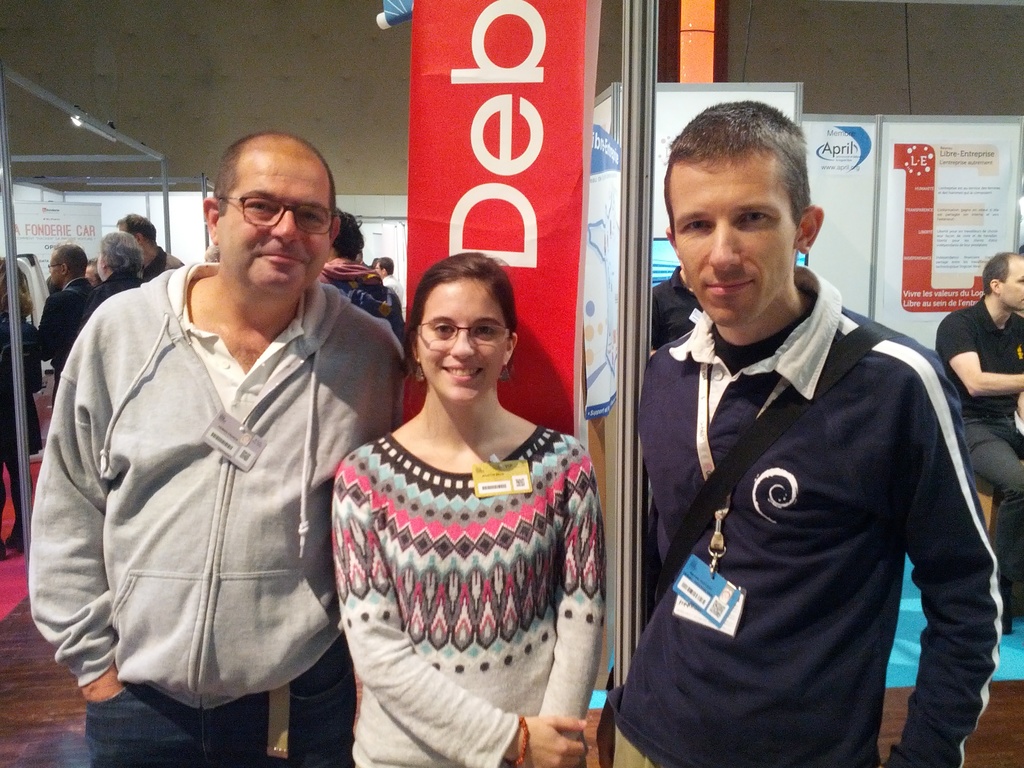

 Writing programs is fun, but making them fast can be a pain. Python programs
are no exception to that, but the basic profiling toolchain is actually not
that complicated to use. Here, I would like to show you how you can quickly
profile and analyze your Python code to find what part of the code you should
optimize.
What's profiling?
Profiling a Python program is doing a dynamic analysis that measures the
execution time of the program and everything that compose it. That means
measuring the time spent in each of its functions. This will give you data
about where your program is spending time, and what area might be worth
optimizing.
It's a very interesting exercise. Many people focus on local optimizations,
such as determining e.g. which of the Python functions


 What happened in the
 The variation in accuracy displayed is a result of experimentation with different dataset sizes and algorithm variations. More information and details can be found in the

 Ok, I have been an iPhone user since I moved to Japan and got my first smart-phone ever. First a 3s, then a 4s, then a 5s that I dropped into the toilet, so I switched the SIM back into the 4s to have a working phone. Furthermore, I am a heavy music listener and used


 Package reviews
103
 There are some things that I didn't mention in my sort-of quickly written entry about