Search Results: "nion"

8 May 2016

John Goerzen: The Simple Joys of the Plains

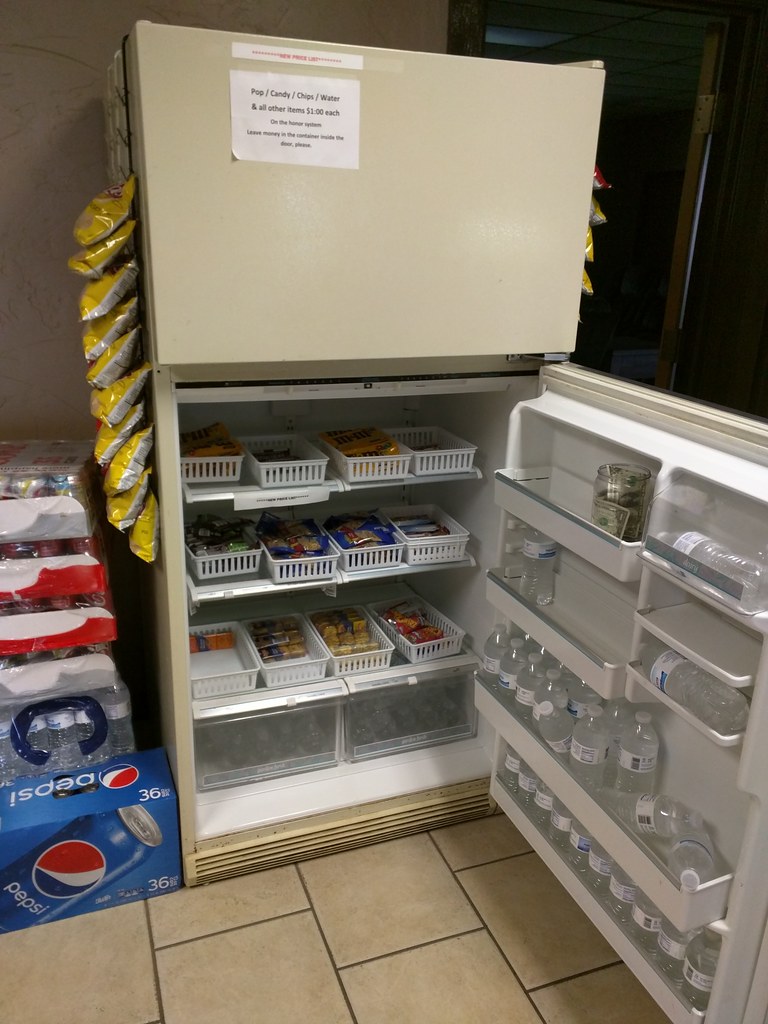
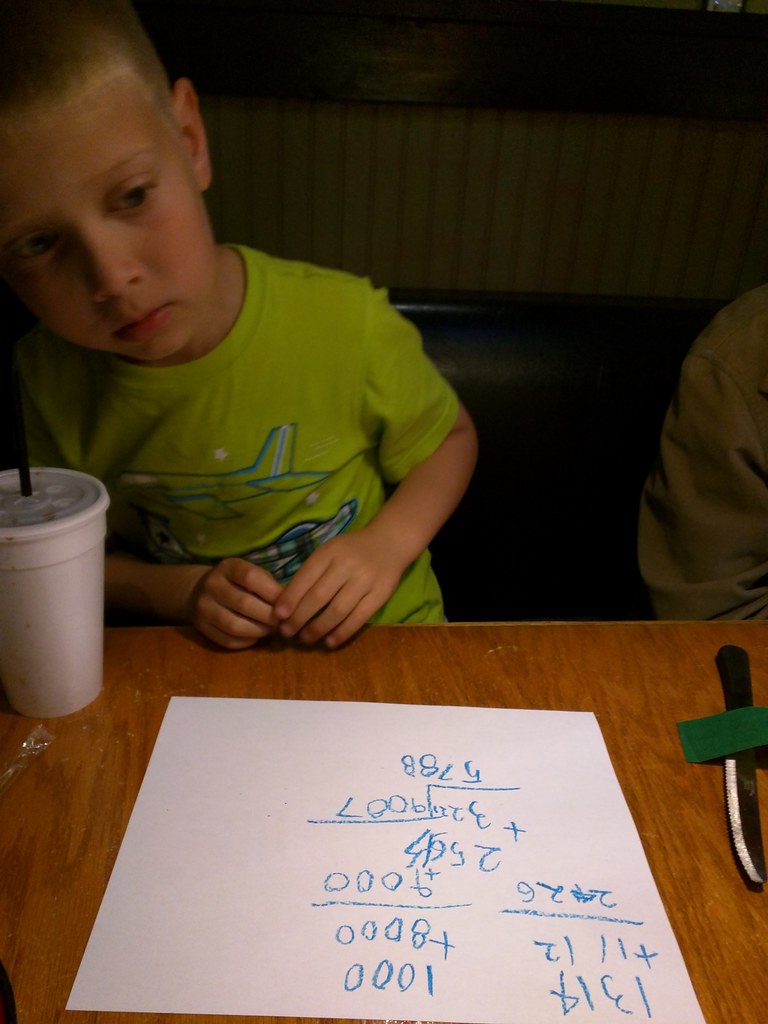
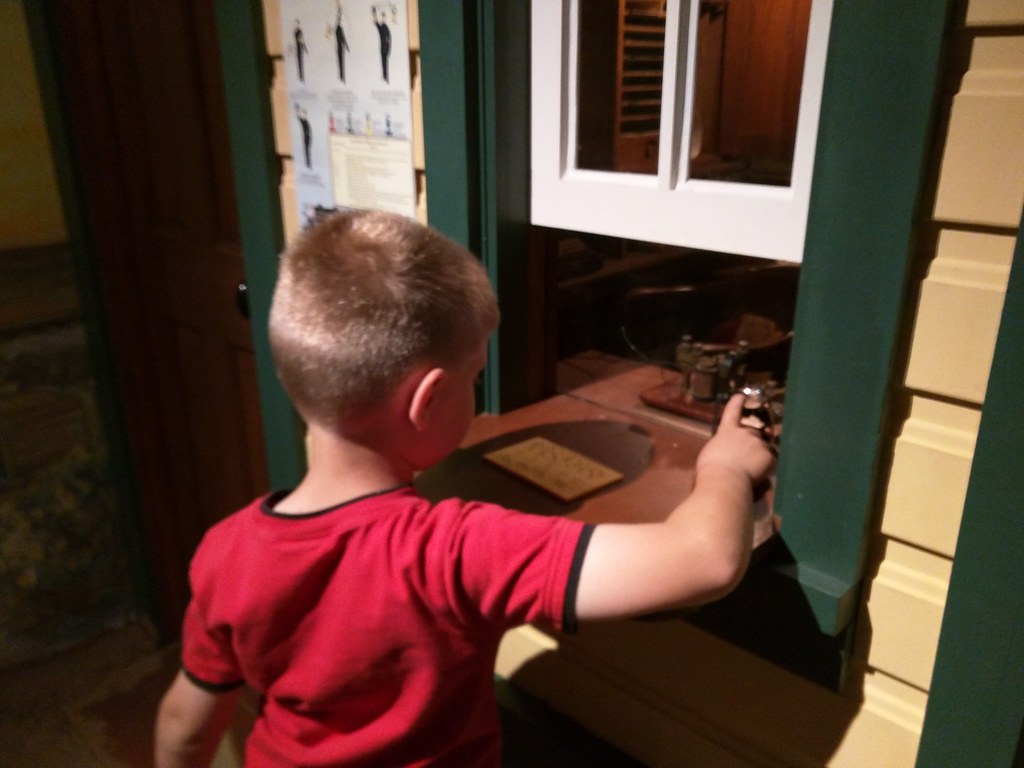
We love to go exploring as a family. Last year, we gave Jacob and Oliver a theme: find places older than Grandpa. They got creative really quick, realizing that any state park counts ( dirt is older than grandpa! ) as did pretty much any museum. Probably our hit from last year was the visit to the tunnels under Ellinwood, KS. Beatrice, NE This year, our theme is places we can fly to . A couple of weeks ago, Laura had a conference in the beautiful small town of Beatrice, NE. So all four of us flew up, and Jacob, Oliver, and I found fun activities while Laura was at her conference. IMG_20160423_125238 We walked around Beatrice a bit, and I noticed this rails-to-trails area. Jacob and Oliver were immediately interested (since it was railroad-related). They quickly turned it into a game of kick-the-dandelion, trying to kick dandelions off their stems and see how high in the air they could get them. The answer: pretty high. IMG_20160423_082343 Of course, you can t go wrong with swimming. Here s Oliver getting ready for some swimming. IMG_20160423_132125 Right near Beatrice is the Homestead National Monument. Of course, the bales decorated like a minion got their attention. IMG_20160423_135141 Like the other national parks, this one has a junior ranger program. You complete a few things in an activity book and take a pledge to protect the park, and then you get a badge and some stickers. Here s Oliver proudly taking his pledge, holding the new raccoon he bought in their gift shop. Canyon, TX Laura and I have been to Canyon, TX, twice the first was for our honeymoon. Yes, we did get some strange looks when we told people we were going to Amarillo for our honeymoon. But it was absolutely perfect for us. We both enjoy the simple gifts of nature. We kept thinking we ve got to take the boys here . So this weekend, we did. We flew a Cessna out there. IMG_20160505_180409 Almost every little general aviation airport seems to have a bowl of candy, a plate of cookies, or some such thing for people that are flying through. I often let Jacob and Oliver choose ONE item. They hit the jackpot when we stopped at West Woodward, Oklahoma for fuel and a break. Two whole fridges stocked with stuff: cans of pop in one, and all sorts of snacks in the other. In typical GA fashion, there was a jar in the fridge asking for $1 if you took something. And it clearly hadn t been emptied in awhile. They also had a nice lounge and a patio. Perfect for munching while watching the activities on the ramp. IMG_20160505_211110 After landing at the beautiful little Tradewind Airport in Amarillo, we ate dinner at Feldman s Wrong-Way Diner in Canyon, TX. Oh my, was that ever popular with the boys. The eagerly looked around to find anything that was wrong a plane hanging upside down from the ceiling, a direction sign saying Tattoine 30 parsecs , movie posters hung upside down, whatever it might be. The fact that model trains were whirring past overhead certainly didn t hurt either. IMG_20160505_214127 They had a giant bin of crayons by the entrance. Jacob and Oliver each grabbed a fistful, and decided it would be fun to do some math problems while we wait. Oliver particularly got into that, and was quite accurate on his large addition problems. Impressive for a first-grader! IMG_20160506_163801 Of course, the big highlight of the area is Palo Duro Canyon. Jacob and Oliver were so eager to explore the canyon that they were just about bubbling over with excitement the night before. They decided that we should explore one of the most difficult trails in the canyon one that would take us from the bottom of the canyon all the way to the top and back, about 2.5 miles each way. P5060008 And they LOVED it. We d stop every few minutes to climb on some rocks, smash up some pieces of sandstone, munch on a snack, or even watch a lizard scurry past. P5060003 IMG_20160506_203218 At the trading post in the canyon, both boys explored the gift shop. Jacob happily purchased a Texas magnet and Palo Duro Canyon keychain, which he carried around the rest of the weekend. Oliver loves stuffed animals, and he bought a cuddly little (but long) snake. When we got back to the hotel, he tied a couple of knots in it, and it became snake airlines . Here is the snake airline taking off. He named it Rattletail the friendly snake , which I thought was a pretty nifty name. IMG_20160507_075730 The hotel s waffle maker made Texas-shaped waffles, clearly a hit! IMG_20160507_101653 Saturday, we explored the absolutely massive Panhandle-Plains Historical Museum. (How does something that huge wind up in Canyon, TX?) Both boys enjoyed spending hours there. Here s Oliver in Pioneer Town (an indoor recreation of a 1900s town) sending a telegraph message. Oliver wanted to help with the plane. He helped me tie it down in Amarillo, helped check it over during preflight, basically got involved in every part of it. Jacob studied aviation maps (sectionals) with me, planning our flight, figuring out how fast we d go. I loaded Avare (an Android app) on an old tablet for him, so he had aviation maps in the cockpit just like me. He would be telling us how fast we were going every so often, pointing out landmarks, etc. When it was time to head back home, both boys wanted to stay longer a sure sign of a good trip. They wanted to hike another trail in the canyon, go back to the museum, and eat at Feldman s 18 more times. (We got there twice, which was plenty for Laura and me!) On our drive home, Oliver said, Dad-o, will you teach me to be a pilot? You should be my flight instructor. Then I could fly everywhere with you. Now that just makes a dad s day.








6 May 2016

Matthias Klumpp: Adventures in D programming

I recently wrote a bigger project in the D programming language, the appstream-generator (asgen). Since I rarely leave the C/C++/Python realm, and came to like many aspects of D, I thought blogging about my experience could be useful for people considering to use D. Disclaimer: I am not an expert on programming language design, and this is not universally valid criticism of D just my personal opinion from building one project with it. Why choose D in the first place? The previous AppStream generator was written in Python, which wasn t ideal for the task for multiple reasons, most notably multiprocessing and LMDB not working well together (and in general, multiprocessing being terrible to work with) and the need to reimplement some already existing C code in Python again. So, I wanted a compiled language which would work well together with the existing C code in libappstream. Using C was an option, but my least favourite one (writing this in C would have been much more cumbersome). I looked at Go and Rust and wrote some small programs performing basic operations that I needed for asgen, to get a feeling for the language. Interfacing C code with Go was relatively hard since libappstream is a GObject-based C library, I expected to be able to auto-generate Go bindings from the GIR, but there were only few outdated projects available which did that. Rust on the other hand required the most time in learning it, and since I only briefly looked into it, I still can t write Rust code without having the coding reference open. I started to implement the same examples in D just for fun, as I didn t plan to use D (I was aiming at Go back then), but the language looked interesting. The D language had the huge advantage of being very familiar to me as a C/C++ programmer, while also having a rich standard library, which included great stuff like std.concurrency.Generator, std.parallelism, etc. Translating Python code into D was incredibly easy, additionally a gir-d-generator which is actively maintained exists (I created a small fork anyway, to be able to directly link against the libappstream library, instead of dynamically loading it). What is great about D? This list is just a huge braindump of things I had on my mind at the time of writing  Interfacing with C There are multiple things which make D awesome, for example interfacing with C code and to a limited degree with C++ code is really easy. Also, working with functions from C in D feels natural. Take these C functions imported into D:
extern(C):
nothrow:
struct _mystruct  
alias mystruct_p = _mystruct*;
mystruct_p = mystruct_create ();
mystruct_load_file (mystruct_p my, const(char) *filename);
mystruct_free (mystruct_p my);
You can call them from D code in two ways:
auto test = mystruct_create ();
// treating "test" as function parameter
mystruct_load_file (test, "/tmp/example");
// treating the function as member of "test"
test.mystruct_load_file ("/tmp/example");
test.mystruct_free ();
This allows writing logically sane code, in case the C functions can really be considered member functions of the struct they are acting on. This property of the language is a general concept, so a function which takes a string as first parameter, can also be called like a member function of string. Writing D bindings to existing C code is also really simple, and can even be automatized using tools like dstep. Since D can also easily export C functions, calling D code from C is also possible. Getting rid of C++ cruft There are many things which are bad in C++, some of which are inherited from C. D kills pretty much all of the stuff I found annoying. Some cool stuff from D is now in C++ as well, which makes this point a bit less strong, but it s still valid. E.g. getting rid of the #include preprocessor dance by using symbolic import statements makes sense, and there have IMHO been huge improvements over C++ when it comes to metaprogramming. Incredibly powerful metaprogramming Getting into detail about that would take way too long, but the metaprogramming abilities of D must be mentioned. You can do pretty much anything at compiletime, for example compiling regular expressions to make them run faster at runtime, or mixing in additional code from string constants. The template system is also very well thought out, and never caused me headaches as much as C++ sometimes manages to do. Built-in unit-test support Unittesting with D is really easy: You just add one or more unittest blocks to your code, in which you write your tests. When running the tests, the D compiler will collect the unittest blocks and build a test application out of them. The unittest scope is useful, because you can keep the actual code and the tests close together, and it encourages writing tests and keep them up-to-date. Additionally, D has built-in support for contract programming, which helps to further reduce bugs by validating input/output. Safe D While D gives you the whole power of a low-level system programming language, it also allows you to write safer code and have the compiler check for that, while still being able to use unsafe functions when needed. Unfortunately, @safe is not the default for functions though. Separate operators for addition and concatenation D exclusively uses the + operator for addition, while the ~ operator is used for concatenation. This is likely a personal quirk, but I love it very much that this distinction exists. It s nice for things like addition of two vectors vs. concatenation of vectors, and makes the whole language much more precise in its meaning. Optional garbage collector D has an optional garbage collector. Developing in D without GC is currently a bit cumbersome, but these issues are being addressed. If you can live with a GC though, having it active makes programming much easier. Built-in documentation generator This is almost granted for most new languages, but still something I want to mention: Ddoc is a standard tool to generate code documentation for D code, with a defined syntax for describing function parameters, classes, etc. It will even take the contents of a unittest scope to generate automatic examples for the usage of a function, which is pretty cool. Scope blocks The scope statement allows one to execute a bit of code before the function exists, when it failed or was successful. This is incredibly useful when working with C code, where a free statement needs to be issued when the function is exited, or some arbitrary cleanup needs to be performed on error. Yes, we do have smart pointers in C++ and with some GCC/Clang extensions a similar feature in C too. But the scopes concept in D is much more powerful. See Scope Guard Statement for details. Built-in syntax for parallel programming Working with threads is so much more fun in D compared to C! I recommend taking a look at the parallelism chapter of the Programming in D book. Pure functions D allows to mark functions as purely-functional, which allows the compiler to do optimizations on them, e.g. cache their return value. See pure-functions. D is fast! D matches the speed of C++ in almost all occasions, so you won t lose performance when writing D code that is, unless you have the GC run often in a threaded environment. Very active and friendly community The D community is very active and friendly so far I only had good experience, and I basically came into the community asking some tough questions regarding distro-integration and ABI stability of D. The D community is very enthusiastic about pushing D and especially the metaprogramming features of D to its limits, and consists of very knowledgeable people. Most discussion happens at the forums/newsgroups at forum.dlang.org. What is bad about D? Half-proprietary reference compiler This is probably the biggest issue. Not because the proprietary compiler is bad per se, but because of the implications this has for the D ecosystem. For the reference D compiler, Digital Mars D (DMD), only the frontend is distributed under a free license (Boost), while the backend is proprietary. The FLOSS frontend is what the free compilers, LLVM D Compiler (LDC) and GNU D Compiler (GDC) are based on. But since DMD is the reference compiler, most features land there first, and the Phobos standard library and druntime is tuned to work with DMD first. Since major Linux distributions can t ship with DMD, and the free compilers GDC and LDC lack behind DMD in terms of language, runtime and standard-library compatibility, this creates a split world of code that compiles with LDC, GDC or DMD, but never with all D compilers due to it relying on features not yet in e.g. GDCs Phobos. Especially for Linux distributions, there is no way to say use this compiler to get the best and latest D compatibility . Additionally, if people can t simply apt install latest-d, they are less likely to try the language. This is probably mainly an issue on Linux, but since Linux is the place where web applications are usually written and people are likely to try out new languages, it s really bad that the proprietary reference compiler is hurting D adoption in that way. That being said, I want to make clear DMD is a great compiler, which is very fast and build efficient code. I only criticise the fact that it is the language reference compiler. UPDATE: To clarify the half-proprietary nature of the compiler, let me quote the D FAQ:
The front end for the dmd D compiler is open source. The back end for dmd is licensed from Symantec, and is not compatible with open-source licenses such as the GPL. Nonetheless, the complete source comes with the compiler, and all development takes place publically on github. Compilers using the DMD front end and the GCC and LLVM open source backends are also available. The runtime library is completely open source using the Boost License 1.0. The gdc and ldc D compilers are completely open sourced.
Phobos (standard library) is deprecating features too quickly This basically goes hand in hand with the compiler issue mentioned above. Each D compiler ships its own version of Phobos, which it was tested against. For GDC, which I used to compile my code due to LDC having bugs at that time, this means that it is shipping with a very outdated copy of Phobos. Due to the rapid evolution of Phobos, this meant that the documentation of Phobos and the actual code I was working with were not always in sync, leading to many frustrating experiences. Furthermore, Phobos is sometimes removing deprecated bits about a year after they have been deprecated. Together with the older-Phobos situation, you might find yourself in a place where a feature was dropped, but the cool replacement is not yet available. Or you are unable to import some 3rd-party code because it uses some deprecated-and-removed feature internally. Or you are unable to use other code, because it was developed with a D compiler shipping with a newer Phobos. This is really annoying, and probably the biggest source of unhappiness I had while working with D especially the documentation not matching the actual code is a bad experience for someone new to the language. Incomplete free compilers with varying degrees of maturity LDC and GDC have bugs, and for someone new to the language it s not clear which one to choose. Both LDC and GDC have their own issues at time, but they are rapidly getting better, and I only encountered some actual compiler bugs in LDC (GDC worked fine, but with an incredibly out-of-date Phobos). All issues are fixed meanwhile, but this was a frustrating experience. Some clear advice or explanation which of the free compilers is to prefer when you are new to D would be neat. For GDC in particular, being developed outside of the main GCC project is likely a problem, because distributors need to manually add it to their GCC packaging, instead of having it readily available. I assume this is due to the DRuntime/Phobos not being subjected to the FSF CLA, but I can t actually say anything substantial about this issue. Debian adds GDC to its GCC packaging, but e.g. Fedora does not do that. No ABI compatibility D has a defined ABI too bad that in reality, the compilers are not interoperable. A binary compiled with GDC can t call a library compiled with LDC or DMD. GDC actually doesn t even support building shared libraries yet. For distributions, this is quite terrible, because it means that there must be one default D compiler, without any exception, and that users also need to use that specific compiler to link against distribution-provided D libraries. The different runtimes per compiler complicate that problem further. The D package manager, dub, does not yet play well with distro packaging This is an issue that is important to me, since I want my software to be easily packageable by Linux distributions. The issues causing packaging to be hard are reported as dub issue #838 and issue #839, with quite positive feedback so far, so this might soon be solved. The GC is sometimes an issue The garbage collector in D is quite dated (according to their own docs) and is currently being reworked. While working with asgen, which is a program creating a large amount of interconnected data structures in a threaded environment, I realized that the GC is significantly slowing down the application when threads are used (it also seems to use UNIX signals SIGUSR1 and SIGUSR2 to stop/resume threads, which I still find odd). Also, the GC performed poorly on memory pressure, which did get asgen killed by the OOM killer on some more memory-constrained machines. Triggering a manual collection run after a large amount of these interconnected data structures wasn t needed anymore solved this problem for most systems, but it would of course have been better to not needing to give the GC any hints. The stop-the-world behavior isn t a problem for asgen, but it might be for other applications. These issues are at time being worked on, with a GSoC project laying the foundation for further GC improvements. version is a reserved word Okay, that is admittedly a very tiny nitpick, but when developing an app which works with packages and versions, it s slightly annoying. The version keyword is used for conditional compilation, and needing to abbreviate it to ver in all parts of the code sucks a little (e.g. the Package interface can t have a property version , but now has ver instead). The ecosystem is not (yet) mature In general it can be said that the D ecosystem, while existing for almost 9 years, is not yet that mature. There are various quirks you have to deal with when working with D code on Linux. It s always nothing major, usually you can easily solve these issues and go on, but it s annoying to have these papercuts. This is not something which can be resolved by D itself, this point will solve itself as more people start to use D and D support in Linux distributions gets more polished. Conclusion I like to work with D, and I consider it to be a great language the quirks it has in its toolchain are not that bad to prevent writing great things with it. At time, if I am not writing a shared library or something which uses much existing C++ code, I would prefer D for that task. If a garbage collector is a problem (e.g. for some real-time applications, or when the target architecture can t run a GC), I would not recommend to use D. Rust seems to be the much better choice then. In any case, D s flat learning curve (for C/C++ people) paired with the smart choices taken in language design, the powerful metaprogramming, the rich standard library and helpful community makes it great to try out and to develop software for scenarios where you would otherwise choose C++ or Java. Quite honestly, I think D could be a great language for tasks where you would usually choose Python, Java or C++, and I am seriously considering to replace quite some Python code with D code. For very low-level stuff, C is IMHO still the better choice. As always, choosing the right programming language is only 50% technical aspects, and 50% personal taste  UPDATE: To get some idea of D, check out the D tour on the new website tour.dlang.org.

Russ Allbery: Review: The Language of Power

Review: The Language of Power, by Rosemary Kirstein
Series: Steerswomen #4
Publisher: Rosemary Kirstein
Copyright: 2004, 2014
Printing: April 2014
ISBN: 0-9913546-3-X
Format: Kindle
Pages: 400
This is the fourth book in the Steerswomen series and definitely not the place to start. It's also a difficult series to review without spoilers, so I won't be able to provide too many details about the plot. I will say that this is a reunion and a return of sorts to themes from earlier in the series, rather than a direct follow-up to the revelations at the end of The Lost Steersman. Rowan is back in the Inner Lands, continuing to investigate the affairs of wizards. In particular, she's digging into the past of the town of Donner, following up on the report of an earlier steerswoman and investigating a now-dead wizard who seemed to act far different from a typical wizard. And Bel is back at her side again, watching her back. The first half of The Language of Power goes over somewhat familiar ground. Similar to both The Steerswoman and The Lost Steersman, Rowan is poking around in a city, getting to know unfamiliar people, being a steerswoman, and winning people over with her unique charm. But that's a theme I don't mind seeing repeated, since Rowan is one of my favorite protagonists from any series I've read. She's both ethical and respectful in a way that doesn't feel artificial or constructed. She thinks oddly and dives into sudden fascinations, and she does rely on the conventions for interacting with steerswomen, but the more time one spends with her, the better one likes her. This is true of both the reader and the town inhabitants, and Kirstein is brilliant at writing the gradual getting-to-know and growing-respect process. Events in The Language of Power slowly build up to another confrontation with wizards, and this one is full of major revelations about the world. Some of the ambiguity of earlier books is firmly resolved, we find out a lot more about how wizards view themselves and their abilities, and tons of new questions are raised. It's not a conclusion in any way, which is a bit unfortunate given that the next book is still being written (twelve years later, although thankfully it's being actively worked on as I write this). But we get the first clear look at the substratum of the world that Kirstein is building in this series. This sounds satisfying, and to some extent it is, but any regular SFF reader will have guessed at many of the revelations here. I was pretty sure the world was following one of two possible patterns partway through the second book, certain which it was during the third book, and was nodding right along with the revelations in this book. I'm trying to avoid spoilers, but if you read a lot of SFF, chances are you've read about something akin to this background before. That takes a bit of the thrill out of the revelations, unfortunately. What adds the excitement and thrill back in are Rowan's reactions. It's very difficult to write a character who comes from an entirely different perspective than either the author or the reader, and Kirstein does an amazing job. Not perfect, quite, at least for me: there were a few points where I thought Rowan was more baffled or more upset than it felt like she should have been. But they are few and far between, and it's quite possible my expectations are the ones that wouldn't ring true if written into the story. It's just such a delight to see Rowan analyzing the world, incorporating new revelations into her growing world model, and figuring out how to take the most moral action at any point. I would happily read another dozen books of this (but I wish they were all already written). If you've read the previous three books, definitely pick up this one as well. For me, it narrowly misses being the best book of the series (I think that's still The Outskirter's Secret because of the difficulty of the perspective change Kirstein pulls off), but it's a close competition. And the final reveal at the very end of this book points to upcoming adventures that I can hardly wait to read. Rating: 8 out of 10

26 April 2016

Pau Garcia i Quiles: Is KDE the right place for Thunderbird?

For years, Mozilla has been saying they are no longer focused on Thunderbird and its place is outside of Mozilla. Now it seems they are going to act on what they said: Mozilla seeks new home for e-mail client Thunderbird. The candidates they are exploring are the Software Freedom Conservancy, The Document Foundation, and I expect at least the Apache Software Foundation to be a serious candidate, and Gnome to propose. Some voices in KDE say we should also propose the KDE eV as a candidate hosting organization. What follows is my opinion, not the official opinion of the eV or the board s, or the KDE Community s opinion. Take it with a grain (or more) of salt. I am not so sure. I am trying to think what the KDE eV can offer to Mozilla to be appealing to them and if my analysis is correct, we are too far and Thunderbird would pose many risks to the other projects in KDE. (I am blurring the lines between KDE eV , KDE community , KDE Frameworks , etc as it has no relevance for the discussion) Thunderbird is an open source project/product with a lot of commercial users and has (still has?) many paid contributors. IMHO what Mozilla is looking for is an organization with a well-oiled funding machine, able to campaign for money (even if in a tight circle, something like ours Patron program), and accept and process funds in a way that directly benefits Thunderbird. I e. hiring developers to implement X or Y, or work on some area full-time, or at least, half-time. KDE does not work like that. KDE has few commercial users (other than distros, if you want to count them as commercial users). Other than Blue Systems, I don t think we have any developer working for KDE. Also, the eV is not exactly a well-oiled funding machine. We have been talking about that for years. And we do not hire developers directly to work on X or Y (at most, we pay for part of the expenses of sprints). All of that makes me think we are not the right host for Thunderbird. But it does not stop there! Let s say Thunderbird comes to KDE and suddenly we are offered USD 1 M from several organizations who want to be Patrons of Thunderbird , or influence Thunderbird, or whatever. First problem: do we allow funds to go to a specific project rather than the eV deciding how to distribute them? AFAIK we do not allow that and at least one KDE sub-project has had trouble with that in the past. Then there is the thing about Patrons of Thunderbird : no such thing. Either you are a Patron of KDE, including Plasma Mobile, OwnCloud, and whatnot, or you are nothing. You cannot be a Patron of Partial KDE, namely Thunderbird . Influencing, did I say? The eV is by its own rules not an influencer on KDE s direction, just an entity to provide legal and economic support. Quite the opposite from what Mozilla does today for Thunderbird. Even if funders would not mind all that, there is the huge risk this poses for all the other projects. With as little as USD 200K donated towards Thunderbird (and USD 200K is not much for a product with so many commercial users, which means a healthy ecosystem of companies making money on support, development, etc, and thus donating to somehow influence or be perceived as important players), Thunderbird becomes the most important project in KDE. How would we manage this? In any sensible organization, Thunderbird would become the main focus and all the other KDE projects would be relegated. Even if we decide not to, external PR would make that look like it happened. For all those reasons, I think KDE is not the right place for Thunderbird at the moment. It would require a big change in what the eV can do and how it operates. And that change may be for good but it s not there now and it will not be by the time Mozilla has to decide if KDE is the right place. All that, and I have not even talked about technology and what any sensible Thunderbird customer would think today: what is the medium and long-term roadmap? Migrate Thunderbird users to Kontact/KDE PIM? Port Thunderbird to Qt + KF5, maybe including moving to QtWebEngine? Will Windows support be deteriorated by that change? Or maybe the plan is to cancel KMail and Akregator? Those are second-thoughts, unimportant right now. Update If you want to contribute to the discussion, please join the KDE-Community mailing list.

25 April 2016

Antoine Beaupr : My free software activities, April 2016

Debian Long Term Support (LTS) This is my 5th month working on Debian LTS, started by Raphael Hertzog at Freexian. This is my largest month so far, in which I worked on completing the Xen and NSS packages updates from last month, but also spent a significant amount of time working on phpMyAdmin and libidn.

Updates to NSS and Xen completed This basically consisted on following up on the reviews from other security people. I basically continued building up on Brian's work and tested the package on a test server at Koumbit, which seems to have survived well the upgrade. The details are in this post to the debian-lts mailing list. As for NSS, the package was mostly complete, but I forgot to ship the tests for some reason, so I added them back. I also wrote the release team to see if it was possible to update NSS to the same version in all suites. Unfortunately, this issue is still pending, but I still hope we can find better ways of managing that package in the long term.

IDN and phpMyAdmin Most of my time this month was spent working on IDN and phpMyAdmin. Unfortunately, it turns out that someone else had worked on the libidn package. This is partly my fault: I forgot to check in the dsa-needed.txt file for assignment before working on the package. But considering how in flux the workflow currently is with the switch between the main security team and the LTS team for the wheezy maintenance, I don't feel too bad. Still, I prepared a package which was a bit more painful than it should have been because of GNUlib. I didn't even know about GNUlib before, oddly enough, and after that experience, I feel that it should just not exist at all anymore. I have filed a bug to remove that dependency at the very least, but I do not clearly see how such a tool is necessary on Debian at this point in time. But phpMyAdmin, no one had worked on that. And I understand why: even though it's a very popular package, there were quite a few outstanding issues (8!) in Wheezy, with 10-15 patches to be ported. Plus, it's ... well, PHP. And old PHP at that, with parts of it with modern autoloader classes, and other with mixed HTML and PHP content, require (and not require_once) and all sorts of nasty things you still find in the PHP universe. I nevertheless managed to produce a new Debian package for wheezy and test it on Koumbit's test servers. Hopefully, that can land into Wheezy soon.

Long term software support I am a little worried that we are, both in Jessie and Wheezy sitting in between stable releases for phpMyAdmin, something that is a recurring issue for a lot of packages in Debian stable or LTS. Sometimes, it just happens that the version that happens to be in Debian testing when it is released as stable is just not a supported release upstream. It's the case for phpMyAdmin in Jessie (4.3, whereas 4.0 and 4.4 are supported) and Wheezy (3.4, although it's unclear how long that was supported upstream). But even if the next Debian stable (Stretch), would pick a stable release upstream, there is actually no phpMyAdmin release that has a support window as long as Debian stable (roughly 3 years), let alone as long as Debian LTS (5 years). This is a similar problem with NSS: upstream is simply not supporting their product in the long term, or at least not in the terms we are used to in the Debian community (ie. only security fixes or regressions). This is, in my opinion, a real concern for the reliability and sustainability of the computing infrastructure we are creating. While some developers are of the opinion that software older than 18 months is too old, here we are shipping hardware and software in space or we have Solaris, which is supported for 16 years! Now that is a serious commitment and something we can rely on. 18 months is really, really, a tiny short time in the history of our civilization. I know computer programmers and engineers like to think of themselves in elitist terms, that they are changing the world every other year. But the truth is that things have not changed much in the last 4 decades where computing has existed, both in terms of security or functionality. Two quotes from my little quotes collection come to mind here:
Software gets slower faster than hardware gets faster. - Wirth's law The future is already here it's just not very evenly distributed. - William Gibson
Because of course, the response to my claims that computing is not really advancing is "but look! we have supercomputers in our pockets now!" Yes, of course, we do have those fancy phones and they are super-connected, but they are a threat to our fundamental rights and freedom. And those glittering advances always pale in comparison to what could be done if we wouldn't be wasting our time rewriting the same software over and over again on different, often proprietary, platforms, simply because of the megalomaniac fantasies of egoistic programmers. It would be great to build something that lasts, for a while. Software that does not need to be updated every 16 months. You'd think that something as basic as a screensaver release could survive what is basically the range of human infancy. Yet it seems we like to run mindlessly in the minefield of software development, one generation following the other without questioning the underlying assumption of infinite growth that permeates our dying civilization. I have talked about this before of course, but working with the LTS project just unnerves me so bad that I just needed to let out another rant. (For the record, I really have a lot of respect for JWZ and all the work he has done in the free software world. I frequently refer to his "no-bullshit" backup guide and use Xscreensaver daily. But I do think he was wrong in this case: asking Debian to remove Xscreensaver is just too much. The response from the maintainer was exemplary of how to handle such issues in the future. I restarted Xscreensaver after the stable update, and the message is gone, and things are still all fine. Thanks JWZ and Tormod for keeping things rolling.)

Other free software work With that in mind, I obviously didn't stop doing other computing work this month. In fact, I did a lot of work to try to generally fix the internet, that endless and not-quite-gratifying hobby so many of us are destroying our bodies to accomplish.

Build tools I have experimented a bit more with different build tools. I got worried because at some point cowbuilder got orphaned and I figured I could refresh the way I build packages for LTS. I looked into sbuild, but that ended up not bringing much improvements over my current cowbuilder setup (which I really need to document better). I was asked by the new maintainer to open a bug report to make such setups easier by guessing the basepath better, so we'll see how that goes. I did enjoy the simplicity of gitpkg and discovered cowpoke which made it about 2 times faster to build packages because I could use another server to build larger packages. I also found that gitpkg doesn't use -n by default when calling gzip, which makes it harder to reproduce tarballs when they are themselves built reproducibly, which is the case for Github tarballs (really nice of them). So I filed bug #820842 about that. It would be pretty awesome if such buildds would be available for Debian Developers to do their daily tasks. It could simply be a machine that would spin up a chroot with cowbuilder or it could even be a full, temporary VM although that would take way more resources than a simple VM with a cowbuilder setup. In the meantime, I should probably look at whalebuilder as an alternative to cowbuilder. It is a tool that supports building packages within a Docker chroot, which means that packages are built from a clean environment like pbuilder, and using COW optimisations but also without privileges or network access, which is a huge plus especially when you build untrusted packages.

Ikiwiki admonitions I have done some work to implement Moinmoin-like admonitions in Ikiwiki, something I am quite happy about since it's something I was really missing about Moinmoin. Admonitions bring a really nice way to outline certain blocks with varying severity levels and distinct styles. For example:
Admonitions are great!
This was done with a macro, but basically, since Markdown allows more or less arbitrary HTML, this can also be done with the <div> tag. I like that we don't have a new weird markup here. Yet, I still liked the sub-parser feature of MoinMoin, something that can be implemented in Ikiwiki, but it's a little more clunky. Normally, you'd probably do this with the inline macro and subpages, but it's certainly less intuitive that directly inlined content.

Ereader I got a new e-reader! I was hesitant between the Kobo Aura H20 and the Kobo Glo HD, which were the ones available at Bestbuy. So I bought both and figured I would return the other. That was a painful decision! In the end, both machines are pretty nice:
  • Aura H2O
    • Pros:
      • waterproof
      • larger screen (makes it easier to see web pages and better for the eyes)
      • naturally drawn to it
    • Cons:
      • heavier
      • larger (fits in outside pocket though)
      • port cover finicky
      • more expensive (180$) - prices may go down in future
  • Aura Glo HD
    • Pros
      • smaller (fits in inside pocket of both coats)
      • better resolution in theory (can't notice in practice)
      • cheaper (100$)
      • may be less common on the future (larger models more common? just a guess)
    • Cons
      • no SD card
      • smaller screen
      • power button in the middle
... but in the end, I ended up settling down on the Glo, mostly for the price. Heck, I saved around 100$, so for that amount, I could have gotten two machines so that if one breaks I would still have the other. I have ordered a cover for it on Deal Extreme about two weeks ago, and it still hasn't arrived. I suspect it's going to take a few more months to get there, by which point I may have changed e-reader again. Note that both e-readers needed an update to calibre, so I started working on a calibre backport (#818309) which I will complete soon. So anyways, I looked into better ways of transferring articles from the web to the e-reader, something which I do quite a bit to avoid spending too much time on the computer. Since the bookmark manager I use (Bookie) is pretty much dead, I started looking at other alternatives. And partly inspired by Framasoft's choice of Wallabag for their bookmarking service (Framabag), I started to look into that software, especially since my friend who currently runs the Bookie instance is thinking of switching to Wallabag as well. It seems the simplest way to browse articles remotely through a standard protocol is by implementing OPDS support in Wallabag. OPDS is a standard developed in part by the Internet Archive and it allows for browsing book collections and downloading them. Articles and bookmarks would then be presented as individual books that would be accessible from any OPDS-compatible device. Unfortunately, the Kobo e-readers don't support OPDS out of the box: you need to setup some OPDS-compatible reader like Koreader. And that I found nearly impossible to do: I was able to setup KSM (the "start menu", not to be confused with that KSM), but not Koreader in KSM. Besides, I do not want a separate OS running here on the tablet: I just want to start Koreader every once in a while. KSM just starts another system when you reboot the e-reader, something which is not really convenient on the Kobo. Basically, I just want to add Koreader as a tile in the home screen on the e-reader. I found the documentation on that topic to be sparse and hard to follow. It is often dispersed across multiple forum threads and involves uploading random binaries, often proprietary, to the e-reader. It had been a long time since I was asked to "register my software" frenetically, and I hadn't missed that one bit. So I decided to stay away from this until that solution and its documentation matures a bit.

Streaming re-established I have worked a bit on my home radio stream. I simply turned the Liquidsoap stream back online, and did a few tweaks to the documentation that I had built back then. All that experimenting led me to do two NMUs. One was for gmpc-plugins to fix a FTBFS (bug #807735) and to properly kill the shout streamer when completing the playback (bug #820908). The other was to fix the ezstream manpage (bug #573928), a patch that had been sitting there for 5 years! This was to try to find an easy way to stream random audio (say from a microphone) to the Icecast server, something which is surprisingly difficult, consider how basic that functionality is. I was surprised to see that Darkice just completely fails to start (bug #821040) and I had to fallback to the simplest ices2 software to stream the audio. I am still having issues with Liquidsoap: it's really unstable! As a server, I would expect it to keep running for days if not years. Unfortunately, there's always something that makes it crash. I had assertion failed (bug #821112) and I keep seeing it crash after 2-3 days fairly reliably, a bug I reported 3 years ago and that is still not fixed (bug #727307). Switching back the stream to Vorbis (because I was having problems with the commandline mp3 players and ogg123 is much more lightweight) created another set of problems too, this time with the phone. It seems that Android cannot stream Vorbis at all, something that is even worse in Cyanogenmod... I also had to tweak my MPD config to make the Android client be able to load the larger playlists (see dmix buffer is full).

Android apps So I have also done quite a bit of work again on my phone. I finally was told how to access from Termux from adb shell which is pretty cool because now I can start a screen on my phone and then, when I'm tired of tapping to type, I can just reconnect to it when I plug in a USB cable on my laptop. I sent a pull request to fix the documentation regarding that. I also tried to see how my SMS and Signal situation could be improved. Right now, I have two different apps to do SMS on my phone: I use both Signal and the VoIP.ms SMS client, because I do not have a contract or SIM card in my phone. Both work well independently, but it's somewhat annoying to have to switch between the two. (In fact, I feel that Signal itself has an issue with how it depends on the network to send encrypted messages: I often have to "ping" people in clear text (and therefore in the other app) so that they connect to their data plan to fetch my "secure" signal messages...) Anyways, I figured it would be nice if at least there would be a SMS fallback in Signal that would allow me to send regular text messages from signal through Voip.MS. That was dismissed really fast. Moxie even closed the conversation completely, something I had never experienced before, and doesn't feel exactly pleasant. The Voip.MS side was of course not impressed and basically shrugged it off because Signal was not receptive. I also tried to clear up the Libresignal confusion: there are 3 different projects named "Libresignal", and I am not sure I figured out the right thing, even though the issue is now closed and there's a FAQ that is supposed to make all that clear. Nevertheless, I opened two distinct feature requests to try to steer the conversation into a more productive direction: GCM-less calls and GCM support. But I'm not sure neither will go anywhere. In the meantime, I am using the official signal client, which I downloaded using gplaycli and which I keep up to date with Aptoide. Even though the reliability of that site is definitely questionable, it seems that once you have a trusted version, it is safe to upgrade, regardless of the source because there is a trust path between you and the developer. I also filed a few issues with varying levels of success/response from the community:

Random background radiation And then there's of course the monthly background noise of all the projects I happened to not only stumble on, but also file bugs or patches against:

16 April 2016

Scott Kitterman: Future of secure systems in the US

As a rule, I avoid writing publicly on political topics, but I m making an exception. In case you haven t been following it, the senior Republican and the senior Democrat on the Senate Intelligence Committee recently announced a legislative proposal misleadingly called the Compliance with Court Orders Act of 2016. The full text of the draft can be found here. It would effectively ban devices and software in the United States that the manufacturer cannot retrieve data from. Here is a good analysis of the breadth of the proposal and a good analysis of the bill itself. While complying with court orders might sound great in theory, in practice this means these devices and software will be insecure by design. While that s probably reasonably obvious to most normal readers here, don t just take my word for it, take Bruce Schneier s. In my opinion, policy makers (and it s not just in the United States) are suffering from a perception gap about security and how technically hard it is to get right. It seems to me that they are convinced that technologists could just do security right while still allowing some level of extraordinary access for law enforcement if they only wanted to. We ve tried this before and the story never seems to end well. This isn t a complaint from wide eyed radicals that such extraordinary access is morally wrong or inappropriate. It s hard core technologists saying it can t be done. I don t know how to get the message across. Here s President Obama, in my opinion, completely missing the point when he equates a desire for security with fetishizing our phones above every other value. Here are some very smart people trying very hard to be reasonable about some mythical middle ground. As Riana Pfefferkorn s analysis that I linked in the first paragraph discusses, this middle ground doesn t exist and all the arm waving in the world by policy makers won t create it. Coincidentally, this same week, the White House announced a new Commission on Enhancing National Cybersecurity . Cybersecurity is certainly something we could use more of, unfortunately Congress seems to be heading off in the opposite direction and no one from the executive branch has spoken out against it. Security and privacy are important to many people. Given the personal and financial importance of data stored in computers (traditional or mobile), users don t want criminals to get a hold of it. Companies know this, which is why both Apple IOS and Google Android both encrypt their local file systems by default now. If a bill anything like what s been proposed becomes law, users that care about security are going to go elsewhere. That may end up being non-US companies products or US companies may shift operations to localities more friendly to secure design. Either way, the US tech sector loses. A more accurate title would have been Technology Jobs Off-Shoring Act of 2016. EDIT: Fixed a typo.

13 April 2016

Mehdi Dogguy: 2016 DPL election

It is time of the year where Debian project members should elect a new project leader. This year, only one candidate has stepped up, yours truly. As a reminder, my platform is published here. The campaign has been quite calm, comparing to past editions, which is not surprising given the number of candidates. There have been some interesting questions though as detailed below:

There are not many questions. It will take little time to read, if you haven't already.

Last but not least, please do vote! You have until 2016-04-16 23:59:59 UTC to vote (as announced here). It is very important to share your opinion and take part in the reflection around the future of the project. That every project member takes part in the evolutions that should be implemented to stay relevant and innovative in what we do.

12 April 2016

Reproducible builds folks: Reproducible builds: week 49 in Stretch cycle

What happened in the reproducible builds effort between March 27th and April 2nd: Toolchain fixes Packages fixed The following packages have become reproducible due to changes in their build dependencies: ctioga2, erlang-bitcask, libcommons-collections3-java, libjgoodies-animation-java, libjide-oss-java, octave-gsl, octave-interval, octave-io, octave-quaternion, octave-signal, octave-stk, segment, service-wrapper-java, sqlline, svnkit, uddi4j, velocity-tools. The following packages became reproducible after getting fixed: Some uploads fixed some reproducibility issues, but not all of them: Patches submitted which have not made their way to the archive yet: tests.reproducible-builds.org The i386 builders are now testing packages on i386 for reproducibility. It will probably take 4 weeks until everything has been build twice, on this arch. (h01ger) Package reviews 52 reviews have been removed, 24 added and 4 updated in the previous week. Chris Lamb reported 13 new FTBFS. New issue: copyright_year_in_comments_generated_by_ckbuilder. Misc. This week's edition was mostly written by Lunar, with some help by Reiner Herrmann and h01ger.

2 April 2016

Alessio Treglia: Fuzzy: a many-valued logic

The paths of life to guide us towards the knowledge are many and a straight; well-defined line does not always represent them. Among these, the theory of Fuzzy Logic can help us to better understand some of the methods that maybe for too long we have lost the habit to use, if not even forgotten, because of the residuals of the positivist scientism.

Brief mathematical introduction

blur2All the elements making up the majority of the categories of everyday life (feelings, emotions, opinions, values, quality, etc.) cannot be defined in a unique or exact way. Let s try to define an event that causes severe pain: a hammer blow on the finger? The loss of a loved one? Tooth extraction? It is evident that the answer can vary in a very consistent way, based on the subjectivity of the individual, the environment, boundary conditions and the general context. This is because the Strong Pain is a fuzzy set (which we will call SP), characterized by a function of degree of membership which maps the elements of a universe in a real continuous interval between 0 and 1. In practical terms

<Read More [by Fabio Marzocca]>

28 March 2016

Rhonda D'Vine: Ich bin was ich bin

As my readers probably are well aware, I wrote my transgender coming out poem Mermaids over 10 years ago, to make it clear to people how I define, what I am and how I would hope they could accept me. I did put it publicly into my blog so I could point people to it. And I still do so regularly. It still comes from the bottom of my heart. And I am very happy that I got the chance to present it in a Poetry Slam last year, it was even recorded and uploaded to YouTube. There is just one thing that I was also told over the time every now and then by some people that I would have liked to understand what's going on: Why is it in English, my English isn't that good. My usual response was along the lines of that the events that triggered me writing it were in an international context and I wanted to make sure that they understood what I wrote. At that time I didn't realize that I am cutting out a different group of people from being able to understand what's going on inside me. So this year there was a similar event: the Flawless Poetry Slam which touched the topics of Feminist? Queer? Gender? Rolemodels? - Let's talk about it. I took that as motivation to finally write another text on the topic, and this time in German. Unfortunately though I wasn't able to present it that evening, I wasn't drawn for the lineup. But, I was told that there was another slam going on just last wednesday, so I went there ... and made it onto the stage! And this is the text that I presented there. I am uncertain how well online translators work for you, but I hope you get the core points if you don't understand German:
Ich bin was ich bin
F nf Worte mit wahrem Sinn:
Ich bin was ich bin Du denkst: "Mann im Rock?
Das ist ja wohl l cherlich,
der ist sicher schwul." "Fingernagellack?
Na da schau ich nicht mehr hin,
wer will das schon seh'n." Jedoch liegst du falsch,
Mit all deinen Punkten, denn:
Ich bin was ich bin. Ich bin Transgender
Und erlebe mich selber,
ich bin eine Frau. "Haha, eine Frau?
Wem willst du das weismachen?
Heb mal den Rock hoch!" Und wie ist's bei dir?
Was ist zwischen den Beinen?
Geht mich das nichts an? Warum fragst du mich?
Da ist's dann in Ordnung?
Oder vielleicht nicht? Ich bin was ich bin
F nf Worte mit ernstem Sinn:
Ich bin was ich bin Ich steh weiblich hier
Und das hier ist mein K rper
Mein Geschlecht ist's auch Oberfl chlichkeit
Das ist mein gr tes Problem
Schl gt mir entgegen Wenn ich mich ffne
Verst ndnis fast berall
Es wird akzeptiert Doch gelegentlich
und das schmerzt mich am meisten
sagt doch mal wer "er" Von Fremden? Egal
Doch hab ich mich ge ffnet
Ist es eine Qual "Ich seh dich als Mann"
Da ist, was es transportiert
Akzeptanz? Dahin Meine Pronomen
Wenn ihr ber mich redet
sind sie, ihr, ihres Ich leb was ich leb
F nf Worte mit tiefem Sinn:
Ich bin was ich bin "Doch, wie der erst spricht!
Ich meinte, wie sie denn spricht!
Das ist nicht normal." Ich schreib hier Haikus:
Japanische Gedichtsform
Mit fixem Versmars Sind f nf, sieben, f nf
Silben in jeder Zeile
Haikus sind simpel Probier es mal aus
Transportier eine Message
Es macht auch viel Spa Wortwahl ist wichtig
Ein guter Thesaurus hilft
Sei kurz und pr gnant Ich sag was ich sag
F nf Worte mit klugem Sinn:
Ich bin was ich bin Doch ich schweife ab
Verst ndnis fast berall?
Wird es akzeptiert? Erstaunlicherweise
Doch ich bin auch was and'res
Und hier geht's bergab Eine Sache gibt's
Die erw h'n ich besser nicht
f r die steck ich ein "Deshalb bin ich hier"
So der Titel eines Lieds
verfasst von Thomas D "Wenn ich erkl re
warum ich mich wie ern hr"
So weit komm ich nicht Man erw hnt Vegan
Die Intoleranz ist da
Man ist unten durch "Mangelerscheinung!"
"Das Essen meines Essens!"
Akzeptanz ade Hab 'ne Theorie:
Vegan sein: 'ne Entscheidung
Transgender sein nicht Mensch f hlt sich dann schlecht
dass bei sich selbst die Kraft fehlt
und greift damit an "Ich k nnte das nicht"
Ich verurteile dich nicht
Iss doch was du willst Ich zwing es nicht auf
Aber R cksicht w r schon fein
Statt nur Hohn und Schm h Ich ess was ich ess
F nf Worte zum nachdenken:
Ich bin was ich bin
Hope you get the idea. The audience definitely liked it, the jury wasn't so much on board but that's fine, it's five random people and it's mostly for fun anyway. Later that night though some things happened that didn't make me feel so comfortable anymore. I went to the loo, waiting in line with the other ladies, a bit later the waitress came along telling me "the men's room is over there". I told her that I'm aware of that and thanked her, which got her confused and said something along the lines of "so you are both, or what?" but went away after that. Her tone and response wasn't really giving me much comfort, though none of the other ladies in the line did look strangely.
But the most disturbing event after that was to find out about North Carolina signed the bathroom bill making it illegal for trans people to use the bathroom for their gender and insisting on using the one for the gender they were assigned at birth. So men like James Sheffield are now forced to go to the lady's restroom, or face getting arrested. Brave new world. :/ So, enjoy the text and don't get too wound up by stupid laws and hope for time to fix people's discriminatory minds for fixing issues that already are regulated: Assaults are assaults and are already banned. Arguing with people might get assaulted and thus discriminating trans people is totally missing the point, by miles.

/personal permanent link Comments: 2 Flattr this

Lucy Wayland: Stuffed Butternut Squash

This is a fusion recipe from a rather bland just stuff it with ricotta recipe I saw, David Scott s The Peniless Vegetarian , and my own mutations on those themes. I can t give you exact quantities, just make a little more than you will make the hollowed mound (grin), and the rest will make an excellent pasta sauce. Ingredients For an average sized butternut squash, you will need:
1 onion (I prefer red)
3 cloves of garlic
1 capsicum pepper (I prefer green, my ex- preferred red)
Some red lentils
Optional green or brown lentils for texture and flavour. I used some puy
The lentil quantity is hard to estimate, but I ratio 4 red to 1 optional.
Roughly one handful of chopped mushrooms i.e. when chopped, it is one handful
1 tin tinned tomatoes
Some tomato puree
A generous amout of garam masala garam masala is what brings out the flavout in lentils
Some paprike
Optional chilli if using chilli, I recommend fresh of course.
Optional Balsamic vinegar
Optional Marmite Preperation of the Squash
1. Cut the butternut squash in half, length ways. This is very hard, you will need a good large knife, and may require you jumping up and down into the air. This is the second most hard of the procedure. 2. For each half, scoop out the seeds, and pare back the bowl till it is no longer overly fibrous. Discard this, or find a use for the seeds. 3. For each half, scoop a channel of the softer flesh up from the baisin up near the top. This has to be done by feel, is hard and thankless work. Also experimentation required. Reserve this flesh. Preperation of the Filling This is just basically a nice lentil sauce that can be used with pasta, rice, toast etc. Important: this is not a stir fry, but a largish, heavy bottom pan is recommended. 1. Finely peel then chopp the onions and the garlic. Chopp the chillis if used (I am a chilli gal). Please observe Chilli Protocol[0] 2. Wash and chop the pepper and mushrooms. Not finely diced, but not crudite-sized slices. Remember that peppers shrivel down a little, mushrooms a lot. 3. Start frying the onions for a while in some oil (I prefer olive, but others are acceptible), until they just about to go translucent. Then add the garlic and optional chillis until the garlic is just cooking nicely. 4. Add the spices, turn over until all the containts of the pan are covered, and cook for another 30 seconds or so. Then add the tinned tomato, and then add half a can of cold water water which rinsed the tin out with. Stir this around, and make sure it is now at just at a simmer or pre-simmer. 5. Add the lentils. You want 0.5-1 cm of water above the lentils when you have added and stirred. Let these cook and expand for about 5 mins, stirring all the while, all the lentils will stick to the bottom. 6. Add the pepper, mushroom, reserved squash flesh, and optional dash of balsamic vinegar, and half a tea spoon of marmite. Cook and stir until the pepper goes soft. This is the hard part. Add boiling water if really too thick, or some tomato puree if too thin. There is no hard science to this, you want at the end of 10 minutes or so something resembling the thickness in texture of a stiff bolognaise sauce. Assembly
1. Have a baking tray. Whether you prefer to grease, line with foil, or line with baking parchment is up to you. I prefer baking parchment. 2. Stuff those two halves of butternut squash with that sauce you made. It should make a mound of about 1cm about the level. If you feel extravagent, and are not vegan, sprinkle a little grated cheese on top. 3. Place in a pre-heated oven of 200oC. Cooking time should be about 20 mins, but larger ones take longer. The acid test is to briefly take them out, and prod the lower side with a fork. It should go through the skin with little resistance. When ready, serve. It s really a dish in itself, but some people might like a bit of salad, or maybe a light green risotto.

Joey Hess: type safe multi-OS Propellor

Propellor was recently ported to FreeBSD, by Evan Cofsky. This new feature led me down a two week long rabbit hole to make it type safe. In particular, Propellor needed to be taught that some properties work on Debian, others on FreeBSD, and others on both. The user shouldn't need to worry about making a mistake like this; the type checker should tell them they're asking for something that can't fly.

-- Is this a Debian or a FreeBSD host? I can't remember, let's use both package managers!
host "example.com" $ props
    & aptUpgraded
    & pkgUpgraded
As of propellor 3.0.0 (in git now; to be released soon), the type checker will catch such mistakes. Also, it's really easy to combine two OS-specific properties into a property that supports both OS's:
upgraded = aptUpgraded  pickOS  pkgUpgraded
type level lists and functions The magick making this work is type-level lists. A property has a metatypes list as part of its type. (So called because it's additional types describing the type, and I couldn't find a better name.) This list can contain one or more OS's targeted by the property:
aptUpgraded :: Property (MetaTypes '[ 'Targeting 'OSDebian, 'Targeting 'OSBuntish ])
pkgUpgraded :: Property (MetaTypes '[ 'Targeting 'OSFreeBSD ])
In Haskell type-level lists and other DataKinds are indicated by the ' if you have not seen that before. There are some convenience aliases and type operators, which let the same types be expressed more cleanly:
aptUpgraded :: Property (Debian + Buntish)
pkgUpgraded :: Property FreeBSD
Whenever two properties are combined, their metatypes are combined using a type-level function. Combining aptUpgraded and pkgUpgraded will yield a metatypes that targets no OS's, since they have none in common. So will fail to type check. My implementation of the metatypes lists is hundreds of lines of code, consisting entirely of types and type families. It includes a basic implementation of singletons, and is portable back to ghc 7.6 to support Debian stable. While it takes some contortions to support such an old version of ghc, it's pretty awesome that the ghc in Debian stable supports this stuff. extending beyond targeted OS's Before this change, Propellor's Property type had already been slightly refined, tagging them with HasInfo or NoInfo, as described in making propellor safer with GADTs and type families. I needed to keep that HasInfo in the type of properties. But, it seemed unnecessary verbose to have types like Property NoInfo Debian. Especially if I want to add even more information to Property types later. Property NoInfo Debian NoPortsOpen would be a real mouthful to need to write for every property. Luckily I now have this handy type-level list. So, I can shove more types into it, so Property (HasInfo + Debian) is used where necessary, and Property Debian can be used everywhere else. Since I can add more types to the type-level list, without affecting other properties, I expect to be able to implement type-level port conflict detection next. Should be fairly easy to do without changing the API except for properties that use ports. singletons As shown here, pickOS makes a property that decides which of two properties to use based on the host's OS.
aptUpgraded :: Property DebianLike
aptUpgraded = property "apt upgraded" (apt "upgrade"  requires  apt "update")
pkgUpgraded :: Property FreeBSD
pkgUpgraded = property "pkg upgraded" (pkg "upgrade")
    
upgraded :: Property UnixLike
upgraded = (aptUpgraded  pickOS  pkgUpgraded)
     describe  "OS upgraded"
Any number of OS's can be chained this way, to build a property that is super-portable out of simple little non-portable properties. This is a sweet combinator! Singletons are types that are inhabited by a single value. This lets the value be inferred from the type, which came in handy in building the pickOS property combinator. Its implementation needs to be able to look at each of the properties at runtime, to compare the OS's they target with the actial OS of the host. That's done by stashing a target list value inside a property. The target list value is inferred from the type of the property, thanks to singletons, and so does not need to be passed in to property. That saves keyboard time and avoids mistakes. is it worth it? It's important to consider whether more complicated types are a net benefit. Of course, opinions vary widely on that question in general! But let's consider it in light of my main goals for Propellor:
  1. Help save the user from pushing a broken configuration to their machines at a time when they're down in the trenches dealing with some urgent problem at 3 am.
  2. Advance the state of the art in configuration management by taking advantage of the state of the art in strongly typed haskell.
This change definitely meets both criteria. But there is a tradeoff; it got a little bit harder to write new propellor properties. Not only do new properties need to have their type set to target appropriate systems, but the more polymorphic code is, the more likely the type checker can't figure out all the types without some help. A simple example of this problem is as follows.
foo :: Property UnixLike
foo = p  requires  bar
  where
    p = property "foo" $ do
        ...
The type checker will complain that "The type variable metatypes1 is ambiguous". Problem is that it can't infer the type of p because many different types could be combined with the bar property and all would yield a Property UnixLike. The solution is simply to add a type signature like p :: Property UnixLike Since this only affects creating new properties, and not combining existing properties (which have known types), it seems like a reasonable tradeoff. things to improve later There are a few warts that I'm willing to live with for now... Currently, Property (HasInfo + Debian) is different than Property (Debian + HasInfo), but they should really be considered to be the same type. That is, I need type-level sets, not lists. While there's a type level sets library for hackage, it still seems to require a specific order of the set items when writing down a type signature. Also, using ensureProperty, which runs one property inside the action of another property, got complicated by the need to pass it a type witness.
foo = Property Debian
foo = property' $ \witness -> do
    ensureProperty witness (aptInstall "foo")
That witness is used to type check that the inner property targets every OS that the outer property targets. I think it might be possible to store the witness in the monad, and have ensureProperty read it, but it might complicate the type of the monad too much, since it would have to be parameterized on the type of the witness. Oh no, I mentioned monads. While type level lists and type functions and generally bending the type checker to my will is all well and good, I know most readers stop reading at "monad". So, I'll stop writing. ;) thanks Thanks to David Miani who answered my first tentative question with a big hunk of example code that got me on the right track. Also to many other people who answered increasingly esoteric Haskell type system questions. Also thanks to the Shuttleworth foundation, which funded this work by way of a Flash Grant.

23 March 2016

John Goerzen: Free cars, sunsets, and Kansas

Will you have a car I can borrow? I asked. Sure. No charge. There s a sign telling you where to find the key. It is pretty common for small airports to have a car for a pilot to borrow when flying in. This lets a person go into town for lunch, or visit friends. And it s usually free, with a can to donate a few bucks or a polite request to fill up the tank when you re done. Still, when I had called ahead to ask about flying into the airport in a small town in north-central Kansas, I hadn t expected to be told to just waltz into the place and take the key. But they had no staff at the airport most of the time. So, to me another person from a small town it made perfect sense. Somehow, because of that phone call, this town I had visited once, maybe 25 years ago, seemed instantly familiar. My mom grew up in a small town near there. She wanted me to see where she grew up, to meet some people that meant a lot to her. As it s quite a distance from home, I offered to fly her there. So, Laura, mom, and I climbed into a Cessna one morning for the flight northwest. We touched down at the airport, and I pulled the plane up to the little terminal building. Smith Center, KS airport terminal After I took care of parking the plane, I went to find the car. Except the car was missing. Some other pilot had flown in the same day and was using it, according to the logbook on the desk. I called the number on a sign which rang to the sheriff s office and they confirmed it. According to the logbook, this was only the third time that car had been driven since Thanksgiving. Were we stuck at the airport a few miles out of down? Nope. Mom called the people we were going to meet, a wonderful couple in their upper 80s. They drove out to pick us up. I m rather glad the car was gone, because I had such a great time visiting with them. Norris told me about the days when the state highways were gravel how they d have to re-blade them every few days due to all the traffic. I heard about what happened when the people in that community heard of some folks in Africa in need of car equipment they modified a tractor to fit in a shipping container and shipped it to Africa, along with a lot of books, blankets, supplies, and anything else needed to fill up a huge shipping container. Sounds like something people around here would do. We drove around a couple of the small towns. The town my mom grew up in has seen better days. Its schools closed years ago, the old hotel whose owner gave her piano lessons is condemned, and many houses have been lost. But the town lives on. A new community center was built a few years ago. The grain elevator is expanding. Every time a business on Main Street closes, the grocery store expands a little bit: it s now a grocery store with a little hardware store and a little restaurant mixed in. The mall , as the locals jokingly call it. And, of course, two beautiful small churches still meet every Sunday. Here s the one my mom attended as a child. IMG_7085 We drove past the marker at the geographic center of the contiguous United States. Norris saw some other visitors, rolled down his windows, and treated them and us to an unexpected story of the time thousands of people banded together to completely build a house in a single day, just down the road. Smiles all around. So here I was, nearly 200 miles from home, in an unfamiliar town but one where I could just feel the goodness. After spending a few hours with these people, I felt like they were old friends. As I flew us home, I spotted one of my favorite Kansas sights: a beautiful sunset. From the plane, it almost looks like the land at the horizon turns blue like the ocean, and above it the last hint of sun paints the canvas-sky. In this week of controversy, politics, and reports of violence, it reminds me that we all get the privilege of sharing this beautiful Earth. I didn t ask anybody on that trip about their politics, religion, or opinions on any of the divisive issues of the day. Whether they agree with me on those things or not is irrelevant. I got to spend a day with good-hearted and delightful people, so I flew back with a smile. IMG_7099

22 March 2016

Michal &#268;iha&#345;: Weekly phpMyAdmin contributions 2016-W11

Last week was a bit less working for me as I had few days off. The 4.6.0 is about to be released in the time as this blog post will be published, so the focus was obviously on fixing bugs. Most of annoying issues I've fixed were caused by our SQL Parser which we need to generate some export statements and which didn't properly understand some more complex syntax. Most of the export issues are now fixed, but there are still situations where it doesn't parse the query right, usually this is true for nested SELECT statements or some more complex constructs (CASE). Anyway it's being improved and works better with every release. Handled issues:

Filed under: English phpMyAdmin 0 comments

10 March 2016

Antoine Beaupr : Trying out Keybase

I was privileged enough to get access to the alpha preview of Keybase.io. Last year, the project raised 11M$ in venture capital and they seem to be attacking the hard problems, so it is a serious project, worth considering for any cryptography hacker like me. This was obviously discussed elsewhere previously but since Keybase has evolved a bit since then, I figured it would be worth adding my grain of salt.

The elite alpha problem My first problem with Keybase was of course that I wasn't in the elite club of invited people. Somehow, I finally got in but the problem remains for the everyone else. In my case, it was the Keybase filesystem announcement that brought my attention back to the project, although I have yet to test that itself - yet another invite-only problem (need to email chris@keybase.io to get access, I guess). Still, 10GB of storage might be interesting for some people, but considering the number of hurdles or "friction", as they say, that needs to be jumped over to get access, I am not sure how much traction this will get for now. The project has been in alpha for a while now (more than a year) with no announced public beta just yet, which is way slower than similarly challenging projects with less capital. Let's encrypt, as a comparison, was publicly announced in 2014 and by the end of 2015, the public beta was opened.

Private key leakage My second major concern is that Keybase does worrisome things to private key material. If you tell it to import your regular GPG keys, it will copy them into the keybase keyring, which is already a problem: now you have two places where you store sensitive secrets. But worse, Keybase offers you to upload your private key material on the server, without clearly and explicitely exposing the potential risks that means to the user. The key, presumably, is encrypted (at least that is what I can parse from the Keybase privacy policy). Yet this is still a concern: a determined attacker (e.g. the government or another malicious entity) could force Keybase to give up the encrypted private key material and install sniffers that would reveal the passphrase that would allow decryption and impersonation of the related identity. That is a huge deal. This is what caused Hushmail's demise in 2007: they had similar promises about how they had a "secure" email (in this case) service based on OpenPGP, but since they key was stored on the server, they only had to serve a malicious applet to victims and were able to give cleartext data to the US government (12 CDs!) under a Mutual Legal Assistance Treaty with Canada. In Keybase, When I generate a new key, it asks me if I want to upload the key to their servers, and "Yes" is chosen as a default, so it is clearly a policy that is encouraged. This is presumably to enable browser-based crypto, yet this could be done by storing keys within the browser, not on the server. The mere possibility that the client can meddle with secret key material in such a way is a problem. Even if uploading secret keys to the server is optional, the fact that it is a possibility widens the attack surface on the client significantly. GPG has been working on isolating private key operations to a different process (gpg-agent) or smart cards, SSH has privilege seperation. The idea of uploading secret key material online is so beyond current practices that it should bring the project to a full stop already. My private key material is pretty sensitive. I am a Debian developer: if someone gets access to that key, they can upload arbitrary code for thousands of packages, affecting thousands if not millions of users. That is a huge deal, and I am not ready to give that power to an arbitrary third party that I know little about.

Privacy policy issues Furthermore, the Keybase privacy policy explicitely states that "Logs of this information may persist for an indefinite period", which include, and I quote:
  • Your computer s IP address
  • Your preferences and settings (time zone, language, privacy preferences, application preferences, etc.)
  • The URL of the site that referred you to the Service
  • The buttons and controls you clicked on (if any) within the Service
  • How long you used the Service and which parts and features you used
  • Session times and lengths
For a company working to improve user's privacy, this is a pretty bad policy. It exposes Keybase users to undue surveillance, on a lot of private information that is not necessary to operate the service. I haven't actually read the remaining of the policy, as I was already scared as hell and figure I would just log off for now and try not to add any extra personal information in that already growing pile. Let's mention, while I'm here, that the keybase commandline client has this odd way of working that it forks a daemon in the background all the time, even to run just keybase status. One has to wonder if this thing is included in the surveillance data above, which would make the keybase client an amazing surveillance device in itself. To stop all this, you need:
keybase logout
keybase ctl stop
Not quite obvious...

Usability issues Which brings me to a series of usability issues I have found while working with Keybase. Having worked on usability myself in the Monkeysphere project, I understand how hard those problems can be. But right now, the fact is that keybase is only a commandline client, with some web-based sugar sprinkled on top. I recognize the huge efforts that have been done to make the user experience (UX) as easy as possible through the commandline, but this is definitely not "grand public" material yet. Even as a OpenPGP hacker, Keybase can get confusing. Since it has its own separate keyring from GPG, things that used to be obvious before are suddenly new things to learn. For example, I originally generated a key for anarcat@debian.org in keybase, thinking it would be a separate thing from my current GPG identity. Well, that ended up creating a new key in my GPG keyring, duplicating my existing identity, with no way for me to tell this was a Keybase copy. This could have ended up on the keyservers and confuse anyone looking for my PGP key.

Revoking keys So I revoked that key, which, in itself, is not such an obvious process either. I first had to "drop" the key:
keybase pgp drop '010143572d4e438f457a7447c9758804cc7be44c1ee2b7915c3904567d0a3fb5cf590a'
To find that magic number, I had to go on the website and click through the PGP key to end up on the revoke link which told me which magic string to put. The web UI was telling me I could use keybase status to get that information, but I couldn't find that in the output here:
$ keybase status
Username:      anarcat
Logged in:     no
Device:
    name:      angela
    ID:        070f6a13f2a66afbb463f49dadfd4518
    status:    active
Keybase keys:  unlocked
Session:       anarcat [salt only]
KBFS:
    status:    not running
    version:
    log:       /home/anarcat/.cache/keybase/keybase.kbfs.log
Service:
    status:    running
    version:   1.0.14-1
    log:       /home/anarcat/.cache/keybase/keybase.service.log
Platform Information:
    OS:        linux
    Runtime:   go1.5.3
    Arch:      amd64
Client:
    version:   1.0.14-1
Desktop app:
    status:    not running
    version:
    log:       /home/anarcat/.cache/keybase/Keybase.app.log
Config path:   /home/anarcat/.config/keybase/config.json
Default user:  anarcat
Other users:
command-line client:
    keybase status [pid: 14562, version: 1.0.14-1]
So keybase drop "deletes" the key from the keybase client (and presumably the server). One problem here is that we have three different verbs to mean the same thing: in some places, the website says "deleted" (in the web graph), the commandline client uses "drop" and everyone else using PGP in the world uses "revoke". So what is it? Also note that just dropping that key is not enough to eradicate that key: you still need to generate and import a revocation certificate on GPG's side as well, for that key. This makes sense, because you may have imported that key and you may not want to destroy it when you remove it from keybase, but there could be a little better guessing and UX here as well.

Password usage Then another problem is that, when you signup on the commandline, it asks you to choose a passphrase. It's not clear at all from the UI what that passphrase is for. Is it to protect the private key material? To login the website? Both? It turns out it is actually to login to the website and the Keybase API. It could also be the key to the private key material, but I haven't quite figured that out yet. Similarly, the "paper devices" are a little confusing to me as well. The registration process is fairly insistent that I need to write a series of secret words down on a piece of paper and put it my wallet. This is based on the idea that you can use that key to recover your account and setup new devices. However, it is not made clear at all how those credentials should be protected or used. What if I lose my wallet? What do I do then? Is it okay if i write it on the back of my laptop instead? I know it sounds like stupid questions to crypto geek, but it's definitely stuff people will do, and education, at all levels, is necessary here.

The existing web of trust Finally, I found it surprisingly counter-intuitive to sign keys with keybase. I was assuming the whole point of the thing was to expand the web of trust, but it seems their mission lies somewhere else: there is no facility to sign keys directly in keybase. You sign statements on various social sites (Github, Twitter, Reddit...) but doing traditional key exchanges seems to be off limits. My obvious use case was to sign my existing key material with my newly generated anarcat@keybase.io key, so that keybase would become another way of verifying my identity. Well, this is not possible with keybase directly - you still have to go through the regular:
gpg --sign-key DEADBEEF
Which is really unfortunate, because some craaaazy people like me insist on doing in person, actually secure key exchanges sometimes, and the tools to do this right now (mainly gpg, caff and monkeysign) really need a lot of love and help. Keybase could have helped a lot in pushing those initiatives forward and bring new ways of doing secure key exchanges, instead of only lowering the standards on cryptographic identity.

Usual proprietary startup rant I can't help but finish by noticing that the whole basic problem with Keybase is more fundamental than a few usability issues, which can all be fixed fairly easily. Keybase.IO is a web-based service that is entirely proprietary. The client is freely downloadable and free software - but the server side is not. This makes us rely on a central point of failure and the goodwill of those operators to not only keep the service running (for free?) indefinitely, but to protect us against all attackers, state-run or otherwise. This is definitely against basic free software principles and the open architecture of the internet federation, well embodied in the Franklin street statement. Online services should be decentralized and open like the OpenPGP keyservers have always been, period.

Conclusion I am curious to see where Keybase brings us, as a community. So far, I am concerned about centralization and devaluation of the web of trust as cryptographic system. I do not believe that trusting multiple corporate social networking sites bring much benefit to our security, although it does improve usability significantly and is certainly better than TOFU, so that part of the project is definitely interesting, especially since it allows leveraging classical internet protocols like DNS and HTTPS. Key exchange is a critical problem that still hasn't properly been resolved in the cryptographic community. Most efforts at building communication tools (say like Signal or Telegram) mostly ignore the problem and expect people to read up strings of numbers or rely on synchronous communications (see the Axolotl rachet for Signal's take on it). Keybase's attempts at fixing this are great, but needs much more work to actually resolve the PKI issues in a significant way. More fundamentally, the practice of storing keys on the servers should just stop: it is a definite no go for me, and a classic crypto mistake that has bitten way too many people. In my mind, it discredits the whole project. The point of OpenPGP is end to end encryption across devices: storing the keys on a server breaks that apart, and doesn't improve much on the existing HTTPS security systems already in place on the web. It is especially a problem given the new waves of attacks on cryptography from western governments, from the UK to California... Until those issues are resolved, I can't get myself to recommend Keybase to anyone just yet.

Post-scriptum Note to Keybase developers: I have considered filing issues regarding the above, but unfortunately, I was unable to filter through the gigantic github issues list for duplicates, and didn't have time to file detailed reports for everything. I apologize for bypassing those usual conventions. If you want to try out Keybase to make your own opinion, I do have 4 invites I can give away, but I will do so only if you need to test specific issues. Otherwise, I note that there is a Request For Package for the Debian package to become official, that Debian developers (or Keybase developers!) may be interested in completing.

7 March 2016

Laura Arjona Reina: More involved in the Debian Publicity team

More than 6months since I am Debian Developer and I m learning new things every day and trying to organize my time better to accomplish all the things I would like to do.
In September I became publicity delegate (and we joined Press+Publicity into the Publicity team). We continued discussing how the team works, and hopefully revitalizing it.
I became more active in the IRC channel, installed quassel in my home server and then I could read all the backlog too.
I ve tried to contribute more to Debian Project News (less than I d like), to bits.debian.org and to the social networks (Pump.io and GNU Social).
Since November I ve been failing to call for meeting but finally on 2016/02/29 we had it. I hope to resume semi-regular meetings each 1-2 months.
At the beginning of the year I helped to handle all the news and announcements about the loss of Ian Murdock. It has been hard work but I feel that I could turn some of the sadness into something useful for others. There is still work to be done: parse the condolence emails and setup a website to publish them.
About bits.debian.org, DPN and announcements, I ve learned how to perform the parts of the work that require membership permissions (building the blog, actually publishing the announcement, sending the DPN/announcement mail to the corresponding lists). Not without mistakes, but I guess no matter how much you care, sometimes things happen, and then you learn and then things get better and you too.
Some things I discovered Some clarifications
  • I ve written hard word 4 times in this post (well, 5 now!) but that does not mean I don t want to do those tasks. I feel going out of my comfort zone and that s ok, needed to learn and experience. I m having a good time in Debian in the last months, as always!
  • We re 4 people delegated and more team members and contributors, so anybody could think: Publicity is well covered, let s go to do other things in Debian . It s perfectly ok if you want to do other things in Debian, but please consider combining your contributions with some minutes for the publicity team. Aiming to be the universal operating system, our community and target audience is big and diverse and we d like to show that diversity to the world. The more we are, the merrier!
Comments?
You can comment about this blog post in this pump.io thread.

Filed under: My experiences and opinion Tagged: Communities, Contributing to libre software, Debian, Developer motivations, English, Free Software

1 March 2016

Vincent Sanders: Hope is tomorrow's veneer over today's disappointment.

Recently I have been very hopeful about the 96boards Hikey SBC and as Evan Esar predicted I have therefore been very disappointed. I was given a Hikey after a Linaro connect event some time ago by another developer who could not get the system working usefully and this is the tale of what followed.
The Standard Design
This board design was presented as Linaro creating a standard for the 64bit Single Board Computer (SBC) market. So I had expected that a project with such lofty goals would have considered many factors and provided at least as good a solution as the existing 32bit boards.

The lamentable hubris of creating a completely new form factor unfortunately sets a pattern for the whole enterprise. Given the aim towards "makers" I would have accepted that the system would not be a ATX PC size motherboard, but mini/micro/nano and pico ITX have been available for several years.

If opting for a smaller "credit card" form factor why not use one of the common ones that have already been defined by systems such as the Raspberry Pi B+? Instead now every 96Board requires special cases and different expansion boards.

Not content with defining their own form factor the design also uses a 8-18V supply, this is the only SBC I own that is not fed from a 5V supply. I understand that a system might require more current than a micro USB connector can provide, but for example the Banana Pi manages with a DC barrel jack readily capable of delivering 25W which would seem more than enough

The new form factor forced the I/O connectors to be placed differently to other SBC, given the opportunity to concentrate all connectors on one edge (like ATX designs) and avoid the issues where two or three sides are used. The 96board design instead puts connectors on two edges removing any possible benefit this might have given.

The actual I/O connectors specified are rather strange. There is a mandate for HDMI removing the possibility of future display technology changes. The odd USB arrangement of two single sockets instead of a stacked seems to be an attempt to keep height down but the expansion headers and CPU heatsink mean this is largely moot.

The biggest issue though is mandating WIFI but not Ethernet (even as an option), everything else in the design I could logically understand but this makes no sense. It means the design is not useful for many applications without adding USB devices.

Expansion is presented as a 2mm pitch DIL socket for "low speed" signals and a high density connector for "high speed" signals. The positioning and arrangement of these connectors proffered an opportunity to improve upon previous SBC designs which was not taken. The use of 2mm pitch and low voltage signals instead of the more traditional 2.54mm pitch 3.3v signals means that most maker type applications will need adapting from the popular Raspberry Pi and Arduino style designs.

In summary the design appears to have been a Linaro project to favour one of their members which took a Hisilicon Android phone reference design and put it onto a board with no actual thought beyond getting it done. Then afterwards attempted to turn that into a specification, this has simply not worked as an approach.

My personal opinion is that this specification is fatally flawed and, is a direct cause of, the bizarre situation where the "consumer" specification exists alongside the "enterprise" edition which itself has an option of microATX form factor anyhow!
The ImplementationIf we ignore the specification appearing to be nothing more than a codification of the original HiKey design we can look at the HiKey as an implementation.

Initially the board required modifying to add headers to attach a USB to 1.8V LVTTL serial adaptor on the UART0 serial port. Once Andy Simpkins had made this change for me I was able to work through the instructions and attempt to install a bootloader and OS image.

The initial software was essentially HiSilicon vendor code using the Android fastboot system to configure booting. There was no source and the Ubuntu OS images were an obvious afterthought to the Android images. Just getting these images installed required a great deal of effort, repetition and debugging. It was such a dreadful experience this signalled the commencement one of the repeated hiatuses throughout this project, the allure of 64 bit ARM computing has its limits even for me.

When I returned to the project I attempted to use the system from the on-board eMMC but the pre-built binary only kernel and OS image were very limited. Building a replacement kernel , or even modules for the existing one proved fruitless and the system was dreadfully unstable.

I wanted to use the system as a builder for some Open Source projects but the system instability ruled this out. I considered attempting to use virtualisation which would also give better system isolation for builder systems. By using KVM running a modern host kernel and OS as a guest this would also avoid issues with the host systems limitations. At which point I discovered the system had no virtualisation enabled apparently because the bootloader lacked support.

In addition to these software issues there were hardware problems, despite forcing the use of USB for all additional connectivity the USB implementation was dreadful. For a start all USB peripherals have to run at the same speed! One cannot mix full (12Mbit) and high speed (480Mbit) devices which makes adding a USB Ethernet and SATA device challenging when you cannot use a keyboard.

And because I needed more challenges only one of the USB root hubs was functional. In effect this made the console serial port critical as it was the only reliable way to reconfigure the system without a keyboard or network link (and WIFI was not reliable either)

After another long pause in proceedings I decided that I should house all the components together and that perhaps being out on my bench might be the cause of some instability. I purchased a powered Amazon basics USB 2 hub, an Ethernet adaptor and a USB 2 SATA interface in the hope of accessing some larger mass storage.

The USB hub power supply was 12V DC which matched the Hikey requirements so I worked out I could use a single 4A capable supply and run a 3.5inch SATA hard drive too. I designed a laser cut enclosure and mounted all the components. As it turned out I only had a 2.5inch hard drive handy so the enclosure is a little over size. If I were redoing this design I would attempt to make it fit in 1U of height and be mountable in a 19inch rack instead it is an 83mm high (under 2U) box.

A new software release had also become available which purported to use an UEFI bootloader after struggling to install this version unsuccessfully, made somewhat more problematic by the undocumented change from UART0 (unpopulated header) to UART3 on the low speed 2mm pitch header. The system seemed to start the kernel which panicked and hung either booting from eMMC or SD card. Once again the project went on hold after spending tens of hours trying to make progress.
Third time's a charmAs the year rolled to a close I once again was persuaded to look at the hikey, I followed the much improved instructions and installed the shiny new November software release which appears to have been made for the re-release of the Hikey through LeMaker. This time I obtained a Debian "jessie" system that booted from the eMMC.

Having a booted system meant I could finally try and use it. I had decided to try and use the system to host virtual machines used as builders within the NetSurf CI system.

The basic OS uses a mixture of normal Debian packages with some replacements from Linaro repositories. I would have prefered to see more use of Debain packages even if they were from the backports repositories but on the positive side it is good to see the use of Debian instead of Ubuntu.

The kernel is a heavily patched 3.18 built in a predominantly monolithic (without modules) manner with the usual exceptions such as the mali and wifi drivers (both of which appear to be binary blobs). The use of a non-mainline capable SoC means the standard generic distribution kernels cannot be used and unless Linaro choose to distribute a kernel with the feature built in it is necessary to compile your own from sources.

The default install has a linaro user which I renamed to my user and ensured all the ssh keys and passwords on the system were changed. This is an important step when using this pre-supplied images as often a booted system is identical to every other copy.

To access mass storage my only option was via USB, indeed to add any additional expansion that is the only choice. The first issue here is that the USB host support is compiled in so when the host ports are initialised it is not possible to select a speed other than 12MBit. The speed is changed to 480Mbit by using a user space application found in the users home directory (why this is not a tool provided by a package and held in sbin I do not know).

When the usb_speed tool is run there is a chance that the previously enumerated devices will be rescanned and what was /dev/sda has become /dev/sdb if this happens there is a high probability that the system must be rebooted to prevent random crashes due to the "zombie" device.

Because the speed change operation is unreliable it cannot be reliably placed in the boot sequence so this must be executed by hand on each boot to get access to the mass storage.

NetSurf project already uses a x86_64 virtual host system which runs an LLVM physical volume from which we allocate logical volumes for each VM. I initially hoped to do this with the hikey but as soon as I tried to use the logical volume with a VM the system locked up with nothing shown on console. I did not really try very hard to discover why and instead simply used files on disc for virtual drives which seemed to work.

To provide reliable network access I used a USB attached Ethernet device, this like the mass storage suffered from unreliable enumeration and for similar reasons could not be automated requiring manually using the serial console to start the system.

Once the system was started I needed to install the guest VM. I had hoped I might be able to install locally from Debian install media as I do for x86 using the libvirt tools. After a great deal of trial and error I finally was forced to abandon this approach when I discovered the Linaro kernel is lacking iso9660 support so installing from standard media was not possible.

Instead I used the instructions provided by Leif Lindholm to create a virtual machine image on my PC and copied the result across. These instructions are great except I used version 2.5 of Qemu instead of 2.2 which had no negative effect. I also installed the Debian backports for Jessie to get an up to date 4.3 kernel.

After copying the image to the Hikey I started it by hand from the command line as a four core virtual machine and was successfully able to log in. The guest would operate for up to a day before stopping with output such as

$
Message from syslogd@ciworker13 at Jan 29 07:45:28 ...
kernel:[68903.702501] BUG: soft lockup - CPU#0 stuck for 27s! [mv:24089]

Message from syslogd@ciworker13 at Jan 29 07:45:28 ...

kernel:[68976.958028] BUG: soft lockup - CPU#2 stuck for 74s! [swapper/2:0]

Message from syslogd@ciworker13 at Jan 29 07:47:39 ...
kernel:[69103.199724] BUG: soft lockup - CPU#3 stuck for 99s! [swapper/3:0]

Message from syslogd@ciworker13 at Jan 29 07:53:21 ...
kernel:[69140.321145] BUG: soft lockup - CPU#3 stuck for 30s! [rs:main Q:Reg:505]

Message from syslogd@ciworker13 at Jan 29 07:53:21 ...
kernel:[69192.880804] BUG: soft lockup - CPU#0 stuck for 21s! [jbd2/vda3-8:107]

Message from syslogd@ciworker13 at Jan 29 07:53:21 ...
kernel:[69444.805235] BUG: soft lockup - CPU#3 stuck for 22s! [swapper/3:0]

Message from syslogd@ciworker13 at Jan 29 07:55:21 ...
kernel:[69570.177600] BUG: soft lockup - CPU#1 stuck for 112s! [systemd:1]

Timeout, server 192.168.7.211 not responding.

After this output the host system would not respond and had to be power cycled never mind the guest!

Once I changed to single core operation the system would run for some time until the host suffered from the dreaded kernel OOM killer. I was at a loss as to why the oom killer was running as the VM was only allocated half the physical memory (512MB) allowing the host what I presumed to be an adequate amount.

By adding a 512MB swapfile the system was able to push the few hundred kilobytes it wanted to swap and the system was now stable! The swapfile of course has to be started by hand as the external storage is unreliable and unavailable at boot.

I converted the qemu command line to a libvirt config using the virsh tool
virsh domxml-from-native qemu-argv cmdln.args
The converted configuration required manual editing to get a working system but now I have a libvirt based VM guest I can control along with all my other VM using the virt-manager tool.

This system is now stable and has been in production use for a month at time of writing. The one guest VM is a single core 512MB aarch64 system which takes over 1100 seconds (19 minutes) to do what a Banana Pi 2 dual core 1GB memory 32bit native ARM system manages in 300 seconds.

It seems the single core limited memory system with USB SATA attached storage is very, very slow.

I briefly attempted to run the CI system job natively within the host system but within minutes it crashed hard and required a power cycle to retrieve, it had also broken the UEFI boot. I must thank Leif for walking me through recovering the system otherwise I would have needed to start over.
ConclusionsI must stress these conclusions and observations are my own and do not represent anyone else.

My main conclusions are:

This project has taken almost a year to get to the final state and has been one of the least enjoyable within that time. The only reason I have a running system at the end of it is sheer bloody mindedness because after spending hundreds of hours of my free time I was not prepared to see it all go to waste.

To be fair, the road I travelled is now much smoother and if the application is suited to having a mobile phone without a screen then the Hikey probably works as a solution. For me, however, the Hikey product with the current hardware and software limitations is not something I would recommend in preference to other options.

Russ Allbery: Review: The Lost Steersman

Review: The Lost Steersman, by Rosemary Kirstein
Series: Steerswomen #3
Publisher: Rosemary Kirstein
Copyright: 2003, 2014
Printing: 2014
ISBN: 0-9913546-2-1
Format: Kindle
Pages: 432
This is the third book in the Steerswomen series and a direct follow-up to the events of The Outskirter's Secret. It does, marvel of marvels, feature an in-character summary of the events of the series to date! I do love when authors do this; it helps immensely if you come back to a series after a bit of a break between books. But this whole series is so good, and the emotional tone and development of Rowan as a character is so strong, that I recommend against starting here. After the events of the last book, Rowan has returned to the Inner Lands. She's sent her report back to the Archives, but stopped at the Annex in Alemeth. This is an auxiliary library that should have copies of the journals and other research that Rowan wants to search, and stopping there saves substantial travel time. However, she finds the steerswoman who was custodian of the Annex is deceased and the Annex is, from Rowan's perspective, a mess. Nothing is organized, the books aren't properly cared-for, and Mira's interactions with the townsfolk were far different than Rowan's natural attitude. The start of this book was a surprising shift. After the large-scale revelations at the end of The Outskirter's Secret, and the sense of escalating danger, Rowan's return to small-town life in the Inner Lands comes as a shock. That's true for both the reader and for Rowan, and the parallels make it a remarkably effective bit of writing. At the beginning of the story, the reader is already familiar with Rowan (at least if you've read the previous books) and how she thinks of being a steerswoman. Rowan is very much on edge and in a hurry given what's going on in the broader world. But the town is used to Mira: a gregarious socializer who cared far more about town gossip and her role as coordinator of it than she cared about most of her steerswoman duties. (At least as seen from Rowan's perspective. By the end of the book, we have a few hints that something else might be going on, but the damage to the books at least feels unforgivable.) Rowan is resented and even disliked at first, particularly by Steffie and Gwen who did most of the chores at the Annex and were closest to Mira. One of the reasons why I love this series so much is that Kirstein has a gift for characterization. Rowan (and Bel, who largely doesn't appear in this book) are brilliant characters, but it's not just them. At the start of this book, the reader tends to share Rowan's opinion of the town: a sort of half-bemused, half-exasperated indifference. Even as the characters start to grow on one, it seems like a backwater and a diversion from the larger story. But it becomes clear that Rowan is very on-edge from her experience in the Outskirts, that she's underestimated the relevance of Mira to at least the town's happiness, and she's greatly underestimated the ability of the townsfolk to help her. Steffie, in particular, is a wonderful character; by the end of the book, he had become one of my favorite people in the series so far. He doesn't think he's particularly smart, and his life before Rowan is very simple, but there are depths to him that no one, including him, expected. There is a plot here, apart from small town politics and Rowan's slow relaxation. (Although those were so compelling that I'm not sure I would have minded if that were the entire book.) The lost steersman of the title is an old student friend of Rowan that she unexpectedly meets in town, a former steersman who quit the order and refused to explain why. Rowan, of course, cannot resist trying to fix this situation. The second plot driver is a dangerous invasion of Outskirts monsters into the town. Those who have read the previous books will have some immediate guesses as to why this might be, and Rowan does as well. But there's more going on than it might first appear. This book is not entirely a diversion. It returns to the main plot of the series by the end of the book, and we learn much more about Rowan's world. But, somewhat surprisingly, that was my least favorite part of the book. It has some nice bits of exploration and puzzle-solving, and Rowan is always a delight to spend time with. But the last section of the book is similar to many other genre books I've read before well-written, to be sure, but not as unique. It also features a rather long section following a character who is severely physically ill, which is something I always find very hard to read (a personal quirk). But there's a lot of meat here for the broader plot, and I have no idea what will happen in the next book. The part of The Lost Steersman that I'm going to remember, though, are the town bits, up through the arrival of Zenna (another delightful character who adds even more variety to Kirstein's presentation of steerswomen). Kirstein is remarkably good at mixing small-town characters with the scientific investigation of the steerswomen and letting them bounce off of each other to reveal more about the character of both. If it weren't for the end of the book, which bothered me for partly idiosyncratic reasons, I think this would have been my favorite book of the series. Followed by The Language of Power, and be warned that this book ends on something close to a cliffhanger. Rating: 8 out of 10

29 February 2016

Daniel Silverstone: Kicad hacking - Intra-sheet links and ERC

This is a bit of an odd posting since it's about something I've done but is also here to help me explain why I did it and thus perhaps encourage some discussion around the topic within the Kicad community...
Recently (as you will know if you follow this blog anywhere it is syndicated) I have started playing with Kicad for the development of some hardware projects I've had a desire for. In addition, some of you may be aware that I used to work for a hardware/software consultancy called Simtec, and there I got to play for a while with an EDA tool called Mentor Designview. Mentor was an expensive, slow, clunky, old-school EDA tool, but I grew to understand and like the workflow. I spent time looking at gEDA and Eagle when I wanted to get back into hardware hacking for my own ends; but neither did I really click with. On the other hand, a mere 10 minutes with Kicad and I knew I had found the tool I wanted to work with long-term. I designed the beer'o'meter project (a flow meter for the pub we are somehow intimately involved with) and then started on my first personal surface-mount project -- SamDAC which is a DAC designed to work with our HiFi in our study at home. As I worked on the SamDAC project, I realised that I was missing a very particular thing from Mentor, something which I had low-level been annoyed by while looking at other EDA tools -- Kicad lacks a mechanism to mark a wire as being linked to somewhere else on the same sheet. Almost all of the EDA tools I've looked at seem to lack this nicety, and honestly I miss it greatly, so I figured it was time to see if I could successfully hack on Kicad. Kicad is written in C++, and it has been mumble mumble years since I last did any C++, either for personal hacking or professionally, so it took a little while for that part of my brain to kick back in enough for me to grok the codebase. Kicad is not a small project, taking around ten minutes to build on my not-inconsiderable computer. And while it beavered away building, I spent time looking around the source code, particularly the schematic editor eeschema. To skip ahead a bit, after a couple of days of hacking around, I had a proof-of-concept for the intra-sheet links which I had been missing from my days with Mentor, and some ERC (electrical rules checking) to go alongside that to help produce schematics without unwanted "sharp corners". In total, I added: I forked the Kicad mirror on Github and pushed my own branch with this work to my Kicad fork. All of this is meant to allow schematic capture engineers to more clearly state their intentions regarding what they are drawing. The intra-sheet link could be thought of like a no-connect element, except instead of saying "this explicitly goes nowhere" we're saying "this explicitly goes somewhere else on this sheet, you can go look for it". Obviously, people who dislike (or simply don't want to use) such intra-sheet link elements can just disable that ERC tickybox and not be bothered by them in the least (well except for the toolbar button and menu item I suppose). Whether this work gets accepted into Kicad, or festers and dies on the vine, it was good fun developing it and I'd like to illustrate how it could help you, and why I wrote it in the first place:

A contrived story
Note, while this story is meant to be taken seriously, it is somewhat contrived, the examples are likely electrical madness, but please just think about the purpose of the checks etc.
To help to illustrate the feature and why it exists, I'd like to tell you a somewhat contrived story about Fred. Fred is a schematic capture engineer and his main job is to review schematics generated by his colleagues. Fred and his colleagues work with Kicad (hurrah) but of late they've been having a few issues with being able to cleanly review schematics. Fred's colleagues are not the neatest of engineers. In particular they tend to be quite lazy when it comes to running busses, which are not (for example) address and data busses, around their designs and they tend to simply have wires which end in mid-space and pick up somewhere else on the sheet. All this is perfectly reasonable of course, and Kicad handles it with aplomb. Sadly it seems quite error prone for Fred's workplace. As an example, Fred's colleague Ben has been designing the power supply for a particular board. As with most power supplies, plenty of capacitors are needed to stabilise the regulators and smooth the output. In the example below, the intent is that all of the capacitors are on the FOO net. Contrived problem example 1 Sadly there's a missing junction and/or slightly misplaced label in the upper section which means that C2 and C3 simply don't join to the FOO net. This could easily be missed, but the ERC can't spot it at all since there's more than one thing on each net, so the pins of the capacitors are connected to something. Fred is very sad that this kind of problem can sometimes escape notice by the schematic designer Ben, Fred himself, and the layout engineer, resulting in boards which simply do not work. Fred takes it upon himself to request that the strict wiring checks ERC is made mandatory for all designs, and that the design engineers be required to use intra-sheet link symbols when they have signals which wander off to other parts of the sheet like FOO does in the example. Without any further schematic changes, strict wiring checks enabled gives the following points of ERC concern for Ben to think about: Contrived problem example 2 As you can see, the ERC is pointing at the wire ends and the warnings are simply that the wires are dangling and that this is not acceptable. This warning is very like the pin-not-connected warnings which can be silenced with an explicit no-connect schematic element. Ben, being a well behaved and gentle soul, obeys the design edicts from Fred and seeks out the intra-sheet link symbols, clearing off the ERC markers and then adding intra-sheet links to his design: Contrived problem example 3 This silences the dangling end ERC check, which is good, however it results in another ERC warning: Contrived problem example 4 This time, the warning for Ben to deal with is that the intra-sheet links are pointless. Each exists without a companion to link to because of the net name hiccough in the top section. It takes Ben a moment to realise that the mistake which has been made is that a junction is missing in the top section. He adds the junction and bingo the ERC is clean once more: Contrived problem example 5 Now, this might not seem like much gain for so much effort, but Ben can now be more confident that the FOO net is properly linked across his design and Fred can know, when he looks at the top part of the design, that Ben intended for the FOO net to go somewhere else on the sheet and he can look for it.

Why do this at all? Okay, dropping out of our story now, let's discuss why these ERC checks are worthwhile and why the intra-sheet link schematic element is needed.
Note: This bit is here to remind me of why I did the work, and to hopefully explain a little more about why I think it's worth adding to Kicad...
Designers are (one assumes) human beings. As humans we (and I count myself here too) are prone to mistakes. Sadly mistakes are often subtle and could easily be thought of as deliberate if the right thought processes are not followed carefully when reviewing. Anyone who has ever done code review, proofread a document, or performed any such activity, will be quite familiar with the problems which can be introduced by a syntactically and semantically valid construct which simply turns out to be wrong in the greater context. When drawing designs, I often end up with bits of wire sticking out of schematic sections which are not yet complete. Sadly if I sleep between design sessions, I often lose track of whether such a dangling wire is meant to be attached to more stuff, or is simply left because the net is picked up elsewhere on the sheet. With intra-sheet link elements available, if I had intended the latter, I'd have just dropped such an element on the end of the wire before I stopped for the day. Also, when drawing designs, I sometimes forget to label a wire, especially if it has just passed through a filter or current-limiting resistor or similar. As such, even with intra-sheet link elements to show me when I mean for a net to go bimbling off across the sheet, I can sometimes end up with unnamed nets whose capacitors end up not used for anything useful. This is where the ERC comes in. By having the ERC complain if a wire dangles -- the design engineer won't forget to add links (or check more explicitly if the wire is meant to be attached to something else). By having junctions which don't actually link anything warned about, the engineer can't just slap a junction blob down on the end of a wire to silence that warning, since that doesn't mean anything to a reviewer later down the line. By having the ERC warn if a net has exactly one intra-sheet link attached to it, missing net names and errors such as that shown in my contrived example above can be spotted and corrected. Ultimately this entire piece of work is about ensuring that the intent of the design engineer is captured clearly in the schematic. If the design engineer meant to leave that wire dangling because it's joining to another bit of wire elsewhere on the sheet, they can put the intra-sheet links in to show this. The associated ERC checks are there purely to ensure that the validation of this intent is not bypassed accidentally, or deliberately, in order to make the use of this more worthwhile and to increase the usefulness of the ERC on designs where signals jump around on sheets where wiring them up directly would just create a mess.

6 February 2016

Dimitri John Ledkov: Blogging about Let's encrypt over HTTP

So let's encrypt thing started. And it can do challenges over http (serving text files) and over dns (serving .txt records).

My "infrastructure" is fairly modest. I've seen too many of my email accounts getting swamped with spam, and or companies going bust. So I got my own domain name surgut.co.uk. However, I don't have money or time to run my own services. So I've signed up for the Google Apps account for my domain to do email, blogging, etc.

Then later i got the libnih.la domain to host API docs for the mentioned library. In the world of .io startups, I thought it's an incredibly funny domain name.

But I also have a VPS to host static files on ad-hoc basis, run VPN, and an irc bouncer. My irc bouncer is ZNC and I used a self-signed certificate there, thus i had "ignore" ssl errors in all of my irc clients... which kind of defeats the purposes somewhat.

I run my VPS on i386 (to save on memory usage) and on Ubuntu 14.04 LTS managed with Landscape. And my little services are just configured by hand there (not using juju).

My first attempt at getting on the let's encrypt bandwagon was to use the official client. By fetching debs from xenial, and installing that on LTS. But the package/script there is huge, has support for things I don't need, and wants dependencies I don't have on 14.04 LTS.

However I found a minimalist implementation letsencrypt.sh implemented in shell, with openssl and curl. It was trivial to get dependencies for and configure. Specified a domains text file, and that was it. And well, added sym links in my NGINX config to serve the challenges directory & a hook to deploy certificate to znc and restart that. I've added a cronjob to renew the certs too. Thinking about it, it's not complete as I'm not sure if NGINX will pick up certificate change and/or if it will need to be reloaded. I shall test that, once my cert expires.

Tweaking config for NGINX was easy. And I was like, let's see how good it is. I pointed https://www.ssllabs.com/ssltest/ at my https://x4d.surgut.co.uk/ and I got a "C" rating. No forward secrecy, vulnerable to down grade attacks, BEAST, POODLE and stuff like that. I went googling for all types of NGINX configs and eventually found website with "best known practices" https://cipherli.st/ However, even that only got me to "B" rating, as it still has Diffie-Hellman things that ssltest caps at "B" rating. So I disabled those too. I've ended up with this gibberish:

ssl_protocols TLSv1 TLSv1.1 TLSv1.2;
ssl_prefer_server_ciphers on;
ssl_ciphers "EECDH+AESGCM:AES256+EECDH";
ssl_ecdh_curve secp384r1; # Requires nginx >= 1.1.0
ssl_session_cache shared:SSL:10m;
#ssl_session_tickets off; # Requires nginx >= 1.5.9
ssl_stapling on; # Requires nginx >= 1.3.7
ssl_stapling_verify on; # Requires nginx => 1.3.7
#resolver $DNS-IP-1 $DNS-IP-2 valid=300s;
#resolver_timeout 5s;
add_header Strict-Transport-Security "max-age=63072000; includeSubdomains; preload";
add_header X-Frame-Options DENY;
add_header X-Content-Type-Options nosniff;

I call it gibberish, because IMHO, I shouldn't need to specify any of the above... Anyway I got my A+ rating.

However, security is as best as the weakest link. I'm still serving things over HTTP, maybe I should disable that. And I'm yet to check how "good" the TLS is on my znc. Or if I need to further harden my sshd configuration.

This has filled a big gap in my infrastructure. However a few things remain served over HTTP only.

http://blog.surgut.co.uk is hosted by an Alphabet's / Google's Blogger service. Which I would want to be served over HTTPS.

http://libnih.la is hosted by GitHub Inc service. Which I would want to be served over HTTPS.

I do not want to manage those services, experience load / spammers / DDoS attacks etc. But I am happy to sign CSRs with let's encrypt and deploy certs over to those companies. Or allow them to self-obtain certificates from let's encrypt on my behalf. I used gandi.net as my domain names provider, which offers an RPC API to manage domains and their zones files, thus e.g. I can also generate an API token for those companies to respond with a dns-01 challenge from let's encrypt.

One step at a time I guess.

The postings on this site are my own and don't necessarily represent any past/present/future employers' positions, strategies, or opinions.

Next.

Previous.