Search Results: "mats"

13 October 2009

David Pashley: Tarballs explained

This entry was originally posted in slightly different form to Server Fault If you're coming from a Windows world, you're used to using tools like zip or rar, which compress collections of files. In the typical Unix tradition of doing one thing and doing one thing well, you tend to have two different utilities; a compression tool and a archive format. People then use these two tools together to give the same functionality that zip or rar provide. There are numerous different compression formats; the common ones used on Linux these days are gzip (sometimes known as zlib) and the newer, higher performing bzip2. Unfortunately bzip2 uses more CPU and memory to provide the higher rates of compression. You can use these tools to compress any file and by convention files compressed by either of these formats is .gz and .bz2. You can use gzip and bzip2 to compress and gunzip and bunzip2 to decompress these formats. There are also several different types of archive formats available, including cpio, ar and tar, but people tend to only use tar. These allow you to take a number of files and pack them into a single file. They can also include path and permission information. You can create and unpack a tar file using the tar command. You might hear these operations referred to as "tarring" and "untarring". (The name of the command comes from a shortening of Tape ARchive. Tar was an improvement on the ar format in that you could use it to span multiple physical tapes for backups).
# tar -cf archive.tar list of files to include
This will create (-c) and archive into a file -f called archive.tar. (.tar is the convention extention for tar archives). You should now have a single file that contains five files ("list", "of", "files", "to" and "include"). If you give tar a directory, it will recurse into that directory and store everything inside it.
# tar -xf archive.tar
# tar -xf archive.tar list of files
This will extract (-x) the previously created archive.tar. You can extract just the files you want from the archive by listing them on the end of the command line. In our example, the second line would extract "list", "of", "file", but not "to" and "include". You can also use
# tar -tf archive.tar
to get a list of the contents before you extract them. So now you can combine these two tools to replication the functionality of zip:
# tar -cf archive.tar directory
# gzip archive.tar
You'll now have an archive.tar.gz file. You can extract it using:
# gunzip archive.tar.gz
# tar -xf archive.tar
We can use pipes to save us having an intermediate archive.tar:
# tar -cf - directory   gzip > archive.tar.gz
# gunzip < archive.tar.gz   tar -xf -
You can use - with the -f option to specify stdin or stdout (tar knows which one based on context). We can do slightly better, because, in a slight apparent breaking of the "one job well" idea, tar has the ability to compress its output and decompress its input by using the -z argument (I say apparent, because it still uses the gzip and gunzip commandline behind the scenes)
# tar -czf archive.tar.gz directory
# tar -xzf archive.tar.gz
To use bzip2 instead of gzip, use bzip2, bunzip2 and -j instead of gzip, gunzip and -z respectively (tar -cjf archive.tar.bz2). Some versions of tar can detect a bzip2 file archive with you use -z and do the right thing, but it is probably worth getting in the habit of being explicit. More info:
Read Comments (8)

27 September 2009

John Goerzen: How To Record High-Definition MythTV Files to DVD or Blu-Ray

I ve long had a problem. Back on January 20, I took the day off work to watch the inauguration of Barack Obama. I saved the HD video recordings MythTV made of the day (off the ATSC broadcast), intending to eventually save them somehow. I hadn t quite figured out how until recently, so there they sat: 9 hours of video taking up about 60GB of space on my disk. MythTV includes a program called mytharchive that will helpfully transcode your files and burn a DVD from them. But it helpfully will transcode the beautiful 1920 1080i down to DVD resolution of on a good day 720 480. I couldn t have that. Background My playback devices might be a PC, the MythTV, or the PlayStation 3. Of these, I figured the PS3 was going to be hardest to accommodate. ATSC (HD) broadcasts in the United States are an MPEG Transport Stream (TS). Things are a bit complicated, because there may be errors in the TS due to reception problems, the resolution and aspect ratio may change multiple times (for instance, down to SD for certain commercials). And, I learned that some ATSC broadcasts are actually 1920 1088 because the vertical resolution has to be a multiple of a certain number, and those bottom 8 pixels shouldn t be displayed. Adding to the complexity, one file was 7 hours of video and about 50GB itself. I was going to have to do quite some splitting to get it onto 4.7GB DVD+Rs. I also didn t want to re-encode any video, both for quality and for time reasons. Attempts So, I set out to try and figure out how to do this. My first approach was the sledgehammer one: split(1). split takes a large file and splits it on byte or line boundaries. It has no knowledge of MPEG files, so it may split them in the middle of frames. I figured that, worst case, I could always use cat to reassemble the file later. Surprisingly, both mplayer and xine could play back any of these files, but the PS3 would only play back the first part. I remembered this as an option if all else failed. Next, I tried avidemux. Quite the capable program and I thought I could use it to cut my file into DVD-sized bits. But I couldn t get it to let me copy the valid MPEG TS into another MPEG TS it kept complaining of incompatible formats, but wouldn t tell me in what way they were incompatible. I could get it to transcode to MPEG4, and produce a result that worked on the PS3, but that wasn t really what I was after. Then, I tried mpgsplit. Didn t recognize the MPEG TS as a valid file, and even when I used a different tool to convert to MPEG PS, acted all suspicious as if it bought the MPEG from a shady character on a grungy street corner. dvbcut I eventually wound up using dvbcut to split up the ATSC (DVB) recordings. It understood the files natively and did exactly what I wanted. Well, *almost* exactly what I wanted. It has no command-line interface and didn t have a way to split by filesize, but I calculated that about 35 minutes of the NBC broadcast and 56 minutes of the PBS broadcast could fit on a single DVD+R. It worked very, very nicely. The resulting files tested out well on both the PS3 and the Linux box. So after that, I wrote up an index.txt file to add to each disc and a little shell scripting later and I had a directory for each disc. I started burning them with growisofs. Discs 1 and 2 burned well, but then I got an error like this:
File disc06/VIDEO/0930-inaug-ksnw-06.mpg is larger than 4GiB-1.
-allow-limited-size was not specified. There is no way do represent this file size. Aborting.
Eeeeepp. So apparently the ISO 9660 filesystem can t represent files bigger than 4GB. My files on disc 1 had represented multiple different programs, and stayed under that limit; and disc 2 s file was surprisingly just a few KB short. But the rest of them weren t. I didn t want to have to go back and re-split the data to be under 4GB. I also didn t want to waste 700MB per disc, or to have to make someone change video files every 15 minutes. So I decided to investigate UDF, the filesystem behind Blu-Ray discs. mkisofs couldn t make a pure UDF, only a hybrid 9660/UDF disc that risked compatibility issues with big files. There is a mkudffs, but it doesn t take a directory of its own. So I wrote a script to do it. Note that this script may fail with dotfiles or files with spaces in them:
#!/bin/bash
set -e
if [ ! -d "$1" -o -e "$2" -o -z "$2" ]; then
   echo "Syntax: $0 srcdir destimage [volid]"
   echo "destimage must not exist"
   exit 5
fi
if [ " id -u " != "0" ]; then
   echo "This program must run as root."
fi
EXTRAARGS=""
if [ ! -z "$3" ]; then
   EXTRAARGS="--vid=$3"
fi
# Get capacities at http://en.wikipedia.org/wiki/DVD+R as of 9/27/2009
SECSIZE=2048
# I'm going to set it a few lower, than capacity 2295104 just in case.
# Must be at least one lower than the actual size for dd to do its thing.
# SECTORS=2295103
SECTORS=2295000
echo "Allocating image..."
dd if=/dev/zero "of=$2" bs=2048 "seek=$SECTORS" count=1
echo "Creating filesystem..."
mkudffs --blocksize=2048 $EXTRAARGS "$2"
mkdir "$2.mnt"
echo "Populating..."
mount -o rw,loop -t udf "$2" "$2.mnt"
cp -rvi "$1/"* "$2.mnt/"
echo "Unounting..."
umount "$2.mnt"
rmdir "$2.mnt"
echo "Done."
That was loosely based on a script I found on the Arch Linux site. But I didn t like the original script, because it tried to do too much, wasted tons of time writing out 4.7GB of NULLs when it could have created a sparse file in an instant, and was interactive. So there you have it. HD broadcast to playable on PS3, losslessly. Note that this info will also work equally well if you have a Bluray drive.

25 September 2009

Julian Andres Klode: cupt and how to write package managers


cupt is a new package manager written in Perl by Eugene V. Lyubimkin, who previously contributed to APT. And more than all, the project makes no sense at all. First of all, there is a language issue. Implementing a package manager in Perl has some major drawbacks. One of the features of APT was it being written in a lower-level language (i.e. C++ which really is below Perl), making it possible to write applications like synaptic and python bindings which in turn lead to applications like gnome-app-install or Ubuntu s new Software Store. Furthermore, writing a package manager in Perl means that Distributions such as Emdebian might not be able to use it since they have excluded Perl due to its space requirements. This becomes even more important considering that cupt depends on even more perl libraries. This means that cupt will never be able to replace APT. Secondly, a package manager should not be designed specifically for one distribution. This is another major drawback of cupt and other package managers such as yum or zypper. The smart package manager, written in Python and funded by Canonical Ltd. is an example for a distribution-neutral package manager. Now let s take a look at package management in modern distributions. Usually we have two levels of package managers, the first being tools like dpkg and rpm which take care of installing and removing the packages and level-2 package managers implementing dependency resolvers and package retrieval from remote locations. Recently, distributions started to add a third layer named PackageKit, which shall provide distribution-independent package management user interfaces. The project was well-received by RPM-based distributions, but failed in Debian-based distributions due to not supporting debconf. Furthermore, adding a third layer just increases the possibility of problems. The right way to do package management is a distribution-independent level-2 package manager written in C. The smart project shows us that this is possible although itself fails to meet the lower-level language (C) requirement. That s why I decided to write a package manager in Vala, a GObject-based language which gets converted to C and then compiled. If successful, this project will be able to replace most of the current level-2 package managers and will also provide the same distribution-independence as provided by a level-3 package manager such as PackageKit. It is also easy to create binding for other programming language such as Python or Perl thus enabling application developers to choose the language they like most. The core of this project is a vendor-neutral library, temporarily called libapt (as the project is called APT2 for now). This library contains all the code which is not specific to a vendor i.e. file retrieval, dependency resolver, caches, etc and is then enhanced by several vendor-specific plugins, each implementing a PackageManager (interface to the distribution s level-1 package manager) and a Repository (well, repositories from which you can download packages) interface. We could even enhance the vendor-independent interface to include more details of a repository. Most repositories nowadays consist of 4 components: A meta index (Release files for Debian, repomd.xml for Fedora/openSUSE/etc.), a package index (e.g. Packages files for Debian, *primary.xml.gz on Fedora, etc. ), a source index (e.g Sources files in Debian) and a files index (e.g. Contents-*.gz for Debian). I took a look at the repository formats of Slackware, openSUSE and Fedora and it seems that this concept can be applied to all of them. So maybe all we need are distribution dependent parsers for those files. One of the most important issues with APT is its use of mmap() for the cache. Using mmap() makes it hard to grow the cache, which is sometimes needed. We see a lot of bug reports from people with too small cache sizes. We can circumvent this problem by utilizing an embedded database like SQLite for this, but we would probably loose some speed and it may be harder to maintain a flexible API. We should see what the best option is here, both ways are possible since Vala 0.7.6 includes my patches for adding mmap(), ftruncate(), mremap() and some other functions. An idea to circumvent the mmap() issue is gathering statistics about the relation between the number of repositories and the size of the cache and then using a value which is slightly above the average statistical value. The project is not very mature yet, it only includes basic library functions for downloading files and parsing configuration files, etc. You can find the (MIT licensed) code at http://git.debian.org/?p=users/jak/apt2.git. I also have some local code for repository management and multi-threaded file fetching, but it s just not ready to be merged yet. Posted in APT2, Debian

16 September 2009

Isaac Jones: Three Wiki Uses

Over the last few years, I've been pretty immersed in the world of wikis. A wiki is like a collaborative web site; it lets several people view and edit a web page and link to other pages, maybe new pages that they themselves create. Wikis let tech-savvy people all over the world collaborate on a single web page, a single document. That's a pretty powerful idea, really. The obvious thing to do once an idea like wikis appears is to attempt to cram all of humanity's knowledge into it. Well that's just crazy enough to work. Wikipedia is the gold standard of wikis. It's a collaborative encyclopedia with lots and lots of articles. As the gold standard, it influences people's thinking about wikis in ways that might not be quite true. If Wikipedia were the only wiki you'd ever heard of, you might think that wikis are used to create encyclopedias. If that were true, you'd really only need one of them. If Wikipedia were the only wiki you'd ever heard of, you might be under the false impression that all wikis everywhere are editable by anyone. So if you create a wiki page, it's no longer yours. Other people can scribble on it. Well, some kinds of documents perhaps just aren't suitable for being edited by anyone, and the good news is that you can build a wiki for you and your classmates, or you and your coworkers, and you can decide who gets to edit what. I want to think about a few distinct uses for wikis in different contexts. The most common use is of course to create a knowledge repository; a collection of information written by people who know what they're talking about. That's what Wikipedia is, mostly. That's what the Haskell Prime wiki (which I run) is. And the excellent wiki about the game of Go, Sensei's Library, is also a knowledge repository. But there are other uses for wikis that are pretty cool. I often have to work on proposals with my coworkers. One (horrible) way to do this is to write the first draft in MS Word, email it to everyone, who might edit it and email it back. Of course, only one person can actually edit it at a time, otherwise I have to figure out what everyone did and merge their changes by hand. That's what we, in the computer industry, call teh suck. A better way to do this is to use a version control system, which lets multiple people work on a document at one time. Of course, if you're editing evil document formats like Word, still only one person can edit it at a time, but at least you cut out email, so things are a bit better organized. But wikis are actually a really great way to work on a document with another person. Two or more people can each collaborate on the document using the wiki software over the web. What becomes of the document at that point depends on its ultimate use. Maybe you have to convert it to MS Word or PDF at the end. That's a bit of a bummer. So there are two uses of wikis that I've mentioned: building a knowledge repository, and collaborative writing. Google started a service for collaborating on documents called Google Docs & Spreadsheets, which is probably useful for collaborative writing, but not knowledge repositories. They also acquired a wiki startup a few days ago, so they are clearly trying to get all over this space. There's another very interesting use of wikis that I'll call situation awareness. You can get a really vivid picture of this use of wikis if you take a look at the wikipedia article on the July 2005 London bombings. By the way, I didn't discover this excellent example of situation awareness using wikis. I saw it in the slides for a talk, but I don't know the original source at this point. If you go to that link, you'll see an excellent and up-to-date encyclopedia article about the London bombings. It's not a news article. Go to Google News and try to find a news article from a major news source which is this detailed, up-to-date, and well organized. Most articles you'll find are a snapshot, taken at a particular point in time (when the article was published) that most likely contains an account of the latest developments, and usually brief background in case you missed previous stories. The wikipedia article isn't a snapshot, it's an article that explains things in a logical order, which isn't necessarily chronological. Each wikipedia article contains a link to its own history. You can look back over time and see the article evolve. If you look at the early edit history of that London bombing article, you'll notice something fascinating. The article was created shortly after the bombing, with an account of the information that was known at that time. Within an hour, many people had edited the article, adding information they know about. If you were refreshing that wikipedia entry over & over (or if you were subscribed to it using RSS), you'd see not an account of just the latest developments, but an evolving, logical understanding of the attacks. The article started evolving right away, and it continues to evolve to this moment. That's what I'm calling situation awareness. Don't get me wrong, the mainstream news media is quite good at situation awareness. They do it a bit differently, and their articles or TV stories don't become integrated into a knowledge repository like wikipedia. I've enumerated three somewhat overlapping uses for wikis that I think are pretty interesting to examine:
  • Knowledge Repositories, which are a lot like encyclopedias,
  • Collaborative writing, which is a bit like a more elegant version of emailing word documents, and
  • Situation awareness, which isn't so different from the news; it draws from the news as a source, it can also be authored by the eye-witnesses themselves, and each story becomes an integral part of a knowledge repository. I don't claim that these are an exhaustive, nor are they a partition: Wikis are also used for bug tracking and as web discussion forums, for instance. What other categories can you think of? Email me if you have ideas.
  • 13 September 2009

    Jelmer Vernooij: CtrlProxy: Looking for a new maintainer

    After over 7 years of working on it off and on, I'm looking for somebody to help maintain (and eventually take over) CtrlProxy. I started working on CtrlProxy somewhere in 2002, only a short while after Wilmer started hacking on BitlBee. If I remember correctly I started working on it because I didn't want to run a separate dircproxy (the only real competitor at the time) instance (with configuration) for each IRC network that I connected to. It was also just a good excuse to play with the IRC protocol a bit. Over the years, CtrlProxy has served as a playground for me to try out new and interesting things. It's been rewritten or severely refactored several times in its early history, the latest time being the 3.0 release (from 2005). I've tried different build systems, I've tried different implementation languages, I've tried different configuration file formats, I've tried different support libraries, I've tried different version control systems, I've tried different documentation formats. So while it's definitely been a very educational project for me personally, I haven't really had the time or the interest to dedicate to the project that it deserved during the last few years. This was mostly because there were other more interesting FOSS projects I spent my spare cycles on. These days there are plenty of other good IRC proxies out there, including BIP, ZNC and ShroudBNC so I doubt CtrlProxy will be missed if it were to disappear. Despite that, if anybody is interested in taking over, please send me an email (jelmer@samba.org) or contact me on IRC (jelmer on the OFTC and Freenode networks). cp: Anathema - Shroud of False1

    2 June 2009

    Holger Levsen: motivational mails for debian-edu-doc

    This weekend I implemented an idea I had some weeks ago: sending regular mails with the translation status and the contents status of debian-edu-doc to the Debian Edu mailinglist, in the hope this would motivate people to finish the documentation and its translations. Currently the package contains four different manuals, translated in up to 6 languages: the old Debian Edu etch manual, the new Debian Edu lenny manual and manuals for teachers using Rosegarden and Audicity. All four are being written on wiki.debian.org, then exported to Docbook, then .po files are created with the great po4a tool suite. Those .po files are kept in svn of the the debian-edu-doc package, for translators to edit. Detecting missing or half finished content is done by putting the string "FIXME" plus a description what to fix in the wiki text. Then a small script is run by cron every 2nd and 4th sunday of the month, which outputs the translation status and greps for FIXME and formats this nicely. The result looks like this:

    The (translated) debian-edu-lenny manual as PDF or HTML is available at http://maintainer.skolelinux.org/debian-edu-doc/

    To understand this mail better, please read /usr/share/doc/debian-edu-doc/README.
    This mail is automatically send by a cronjob run by Holger Levsen every two weeks. Please send feedback, suggestions, flames and cookies via this list.


    debian-edu-lenny-manual.de.po: 545 translated messages, 193 fuzzy translations, 220 untranslated messages.
    debian-edu-lenny-manual.es.po: 85 translated messages, 204 fuzzy translations, 669 untranslated messages.
    debian-edu-lenny-manual.fr.po: 447 translated messages, 279 fuzzy translations, 232 untranslated messages.
    debian-edu-lenny-manual.it.po: debian-edu-lenny-manual.it.po:7683: end-of-line within string
    debian-edu-lenny-manual.nb.po: 711 translated messages, 159 fuzzy translations, 88 untranslated messages.
    ----------------------------------
    http://wiki.debian.org/DebianEdu/Documentation/Lenny//Features
    FIXME: describe new features in 5.0.1+edu0 here.
    ----------------------------------
    http://wiki.debian.org/DebianEdu/Documentation/Lenny//Requirements
    FIXME: a description of main-server and thinclient-server is missing.
    ----------------------------------
    http://wiki.debian.org/DebianEdu/Documentation/Lenny//Installation
    FIXME: probably each paragraph on this page needs to be (slightly) rewritten for lenny.
    FIXME: describe PXE installation here, if its only two sentences, then they should be here.
    FIXME: path to preseed file location missing
    ----------------------------------
    [...]
    ====================
    24 FIXMEs left to fix
    ====================


    I'm quite happy with the result, now we we just need to fix those FIXMEs :-)

    The same tools will probably be used for the illustrated Lenny installation guide and maybe others. I've described the requiered structure for such a manual on wiki.d.o in an email to debian-boot (as the discussion about that guide happened there), in case you are interested.

    In mostly unrelated news, I've started running everyday again six days ago (slowly running a bit further each day) and yesterday I've also started with doing gymnastics. It was high time to realize and to change some stuff in my life, and it looks like I finally heard the call. And doing sports is by far not the only thing I want to do very differently again, it's just the most visible atm and it's also quite easy to do. Also I can feel it in my legs today :-) Now I "just" need to keep going forward, change is a continuous process, and nothing to be done with. Ever. The day I stop changing myself, the day I stop learning, I consider myself to be dead. I'm glad I woke up, thanks for contributing to making me wake up and for bearing with me sometimes.

    30 May 2009

    Stefano Zacchiroli: kick-starting turbogears 2 packaging

    TurboGears 2 in debian ... soon ! After a long incubation, a few days ago TurboGears 2 has been released. Historically, I've been preferring TurboGears over Django for being closer to the open source philosophy of reusing existing components. Since the long 2.0 release was marking a gap with Django, I was eager to test the 2.0, and I was delighted to find it in Debian. Unfortunately, it doesn't seem to be in good shape yet. In particular it lacks several dependencies before it can even be used to quickstart a project, in spite of its presence in unstable. To give an idea of the needed work, after having installed it manually (via easy_install), my virgin /usr/local/lib/python2.5/site-packages/ has been polluted by 26 egg-thingies. I decided to spend some week-end time to start closing the gap, because we cannot lack such an important web framework in Debian (and ... erm, yes, also because I need it :-) ). Here is the current status of what has been ITP-ed / packaged already (by yours truly): Where to Considering, foolishly, the last package as being already done, the way to go is still long:
        zack@usha:~$ ls /usr/local/lib/python2.5/site-packages/ grep -v repoze.what
        AddOns-0.6-py2.5.egg
        BytecodeAssembler-0.3-py2.5.egg
        Catwalk-2.0.2-py2.5.egg
        easy-install.pth
        Extremes-1.1-py2.5.egg
        PEAK_Rules-0.5a1.dev_r2582-py2.5.egg
        prioritized_methods-0.2.1-py2.5.egg
        sprox-0.5.5-py2.5.egg
        sqlalchemy_migrate-0.5.2-py2.5.egg
        SymbolType-1.0-py2.5.egg
        tg.devtools-2.0-py2.5.egg
        tgext.admin-0.2.4-py2.5.egg
        tgext.crud-0.2.4-py2.5.egg
        TurboGears2-2.0-py2.5.egg
        tw.forms-0.9.3-py2.5.egg
        WebFlash-0.1a9-py2.5.egg
        zope.sqlalchemy-0.4-py2.5.egg
    
    
    Possibly, some of them are already in Debian hidden somewhere, but sure there is still work to be done. If you want to help, you are more then welcome. The rules are simple: all packages will be maintained under the umbrella of the Python Modules Team, but you should be willing to take responsibility as the primary maintainer. Please get in touch with if you are interested, as I'm in turn already in touch with some other very kind volunteers (thanks Enrico and Federico2!) to coordinate who-is-doing-what. Preview packages available What has already been packaged, including a temporary workaround for python-transaction, will be available in experimental after NEW processing. The idea is that nothing will go to unstable until TurboGears 2 will be (proven to be) fully functional. In the meantime, packages are available from my personal APT repository (signed by my key), here are the friendly /etc/apt/sources.list :
        deb http://people.debian.org/~zack/debian zack-unstable/
        deb-src http://people.debian.org/~zack/debian zack-unstable/
    
    
    Versions are tilde-friendly and shouldn't get in your way when the official packages will hit unstable. Packaging multiple-egg / multiple-upstream packages In all this, I've faced an interesting problem with the python-repoze. who,what -plugins packages. They correspond to a handful of plugins, each of which is about 20/30 Kb. I didn't consider appropriate to prepare 5 different packages, due to archive bloat potential. Hence, you get the usual problems of multiple-upstream packages. To counter some of them, as well as some egg-specific packaging annoyances with multiple upstream, I wrote a couple of very simple helpers: I'm no Python-packaging-guru so, lazyweb, if you spot in this choice something I utterly overlooked, or if you have improvements to suggest, please let me know. Repacking eggs An interesting problem will be faced in trying to integrate the above approach with Python modules that are shipped only as .egg files (i.e., no tarballs, ... yes there are such horrifying things out there). To preserve uniformity, we would need uscan to support --repack ing of .egg files as they were simple .zip archives. Since eggs are .zip archives ... why not?

    27 May 2009

    Michal &#268;iha&#345;: Gammu test version 1.24.91

    I finally find time to make another release of Gammu. This time there are major changes in SMS decoding, especially for recent Nokia phones, what should fix several problems seen with previous code. Besides this there is usual bunch of bug fixes. Full list of changes follows: You can download from usual place: http://cihar.com/gammu/, Debian users will find packages in experimental soon, SUSE, Fedora and Mandriva users can check experimental repository in OpenSuse Build Service.

    23 May 2009

    Joey Hess: website backup RFC

    So, I'm considering a backup system that has as its goal to let you backup all your data from third party websites, easily. The idea I have for its UI is you enter in the urls for all the sites you use, or feed it a bookmark file. By examining the URLs, it determines if it knows how to export data from each site, and prompts for any necessary login info. The result would be a list of sites, and their backup status. I think it's important that you be able to enter websites that the system doesn't know how to handle yet; backup of such sites will show as failed, which is accurate. It seems to almost be appropriate to have a web interface, although command-line setup and cron should also be supported. For the actual data collection, there would be a plugin system. Some plugins could handle fairly generic things, like any site with an RSS feed. Other plugins would have site-specific logic, or would run third-party programs that already exist for specific sites. There are some subtle issues: Just because a plugin manages to suck an RSS feed or FOAF file off a site does not mean all the relevant info for that site is being backed up. More than one plugin might be able to back up parts of a site using different methods. Some methods will be much too expensive to run often. As far as storing the backup, dumping it to a directory as files in whatever formats are provided might seem cheap, but then you can check it into git, or let your regular backup system (which you have, right?) handle it.
    Thoughts, comments, prior art, cute program idea names (my idea is "?unsilo"), or am I wasting my time thinking about this?

    19 May 2009

    Neil Williams: libqof2

    It's taken a lot longer than I expected (mostly due to getting other things done in Emdebian etc.) but now that Lenny is out, QOF can finally drop all the previously deprecated code and move to libqof2, so the upstream code has now been released via Alioth (0.8.0) and the binaries have been uploaded to Debian and are waiting in NEW.

    QOF provides a set of C language utilities for performing generic structured complex queries on a set of data held by a set of C/C++ objects. This framework allows programmers to add query support to their applications without having to hook into a SQL Database. QOF is a large part of my attempts to get some degree of data freedom to complement the source code freedom. This remains a problem with certain applications, especially financial ones, so I've tried to make it easier to both import and export data between programs using QOF and to convert the default QOF data storage formats into other common formats using simple tools and scripts based on XSL or perl. Having a SQL-type query interface accessible via the command line is a huge bonus when dealing with large data sets.

    There is a patch for gnotime that makes the final adjustments to handling the removed code. pilot-qof and gpe-expenses already build cleanly without the deprecated code but each of these is also pending a new upstream release, so rather than need a binNMU, I'm simply going to make those releases when QOF clears NEW.

    Having said that, pilot-qof and gpe-expenses introduce new binary packages themselves so they will spend time in NEW too. pilot-qof will be the last of the set to be released because the new upstream version can use symbols from the new gpe-expenses release to make it easier to move data between applications. However, that support is optional at build time and could be done via a Debian revision, so I might do it that way.

    This also marks the completion of the migration of QOF from SourceForge to Alioth - principally for easier bug tracking and a usable mailing list archive. The QOF VCS is in svn.debian.org.

    The mailing list for QOF development is therefore at alioth:
    QOF-devel and archives also.

    I'm still working on two other QOF-based utilities - one that can handle simple accounts and one to handle simple invoices. The invoice handling is already partially implemented in pilot-qof but I'm looking at a GTK+ frontend with a robust command line interface so that scripts can update the invoice data behind-the-scenes. Hopefully, some form of arbitrary-format parser can be arranged that can handle extracting data from whatever form the client happens to send - typically PDF. It'll need tweaking for each client, but it could work. The objects used by gpe-expenses and pilot-qof (including invoices) are exposed via QOF and can be mixed together in any new QOF application, easily able to read data from multiple sources, merge data sets, query data sets and export into other formats. The core currency and expense types come from pilot-link but are then enhanced to support GnuCash conventions.

    For information on another QOF application called "estron" - an idea for a data-driven query interface - see http://estron.alioth.debian.org/. Problem 1 with estron: the examples all rely on postgres and I just can't get that to setup properly as either a test system or as a Debian package. Problem 2: estron was intended to be an interpreter that could be written "in itself" but whilst this is possible for the simpler examples, doing more complicated stuff like calculating values from other values makes the estron XML very obtuse. The current codebase uses GOB2 to

    QOF is now stable and I don't expect to need another SONAME bump for quite a while. If anyone is interested in taking on estron or helping with the Cash and/or Invoice frontends, let me know. The problem with estron currently is bitrot - the GTK+ frontend has too many gtk1.2 hangovers which now fail to build.

    7 May 2009

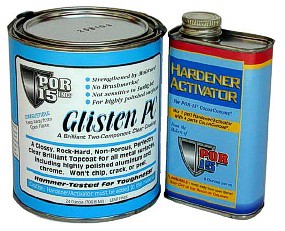
    Biella Coleman: Make our words glisten


    glisten vs hardened words, originally uploaded by the biella.
    Now that I am (thankfully) done teaching until September, I have time to devour two small mountains of readings that I need to finish before I return to my manuscript, which I will be working on, I hope uber-productively, all summer long. One pile of readings deals with coding, open source, and the commons, such as Scott Rosenberg s Dreaming in Code and David Bollier s Viral Spiral. Another pile of reading edges toward the theoretical side of things, having to do with craft, pleasure, and humor, since it is pleasure in its many many many guises from from the calm feeling of self-satisfaction that underlies pride in one s craft, to the more sublime feeling of ecstatic bliss that powers many creative sprints. If one entertains pleasure, one must also entertain its darker side, for all of this feel good stuff is nonetheless often springs forth from a deep sea of passionate frustration. This seems to be the driving theme of Dreaming in Code and it is also what animates Ellen Ullman s fictional account of pure frustration, The Bug. I am quite fond of native expressions of geek frustration and recently was provided with an exquisite example a rant against the Adobe PSD format. The author of Xee, A light-weight, fast and convenient image viewer for Mac OS X explained his utter contempt for the Adobe PSD in the following way:
    At this point, I d like to take a moment to speak to you about the Adobe PSD format. PSD is not a good format. PSD is not even a bad format. Calling it such would be an insult to other bad formats, such as PCX or JPEG. No, PSD is an abysmal format. Having worked on this code for several weeks now, my hate for PSD has grown to a raging fire that burns with the fierce passion of a million suns. If there are two different ways of doing something, PSD will do both, in different places. It will then make up three more ways no sane human would think of, and do those too. PSD makes inconsistency an art form. Why, for instance, did it suddenly decide that *these* particular chunks should be aligned to four bytes, and that this alignement should *not* be included in the size? Other chunks in other places are either unaligned, or aligned with the alignment included in the size. Here, though, it is not included. Were it within my power, I would gather every single copy of those specs, and launch them on a spaceship directly into the sun.
    Even if this account represents unadulterated irritation, he leaves us, the reader, with nothing of the irritation, only pleasure. This aftermath of frustration is delivered through the vehicle of humor, which within the hacker context, is the cultural container that best captures the spirit of hacker pleasure or so I will be arguing. Like many humorous rants from the world of hacking (and please send me any others you know of), this text dances with liveliness; it exudes its own rhythm; it glistens to use Ronald Barthes apt phrasing from his short book The Pleasure of Text, which I just finished as part of my theoretical escape into the pleasure-dome. Although there are parts of his book which are to be frank, *really* *not* *pleasurable*, partly due to obscure references to High French Theory, which elide even an academic pair of eyes, the book generally pleases. And one of the most pleasing chunks is his definition of a stereotype:
    The stereotype is the word repeated without any magic, any enthusiasm, as though it were natural, as though by some miracle this recurring words were adequate on each occasion for different reasons, as though to imitate could no longer be sensed as an imitation: an unconstrained word that claims consistency and is unaware of its own insistence
    In contrast to the stereotype, a string of words that enchants does so by slipping off the page to hit you squarely in the heart or the gut. Unfortunately, while academic writing steers clear of stereotypes, often trying to present the detailed singularity of a phenomena (even when conditioned by social forces), it does not exactly glisten, though there are a handful of exceptions. I think we need more texts that glisten, even if only during sections or parts of our books and articles (much like the rant helped enliven the more staid technical document). In recent years, in large part due to the influence of free software, there has been an explosion, a move toward going open access. All of this is laudable and I fully embrace it (and have gotten into some small battles over it). But without an aesthetic politics that values pleasure in reading and writing we are doomed to obscurity anyway. A move toward making our knowledge public also required a move toward thinking about the literary aesthetics of pleasure.

    29 April 2009

    Biella Coleman: The Politics of Open Source

    Call for papers: JITP-2010
    The Politics of Open Source
    May 6-7, 2010 - Amherst, Massachusetts Full Paper Submission Due Date: January 10, 2010 Approach
    Free/Libre and Open Source Software (FOSS) has made significant advances, both technically and organizationally, since its emergence in the mid-1980s. Over the last decade, it has moved from a software development approach involving mostly volunteers to a more complex ecology where firms, nonprofit organizations, government agencies and volunteers may be involved. Moreover, the production paradigm continues to expand to other areas of digital content (e.g., Creative Commons, Wikipedia, Connexions, etc.). In this conference we use the phrase open source to capture this broader phenomenon. The Program Committee encourages disciplinary and interdisciplinary approaches to the study of open source, broadly defined. Politics in the conference title, can have many interpretations. Political issues closely tied to the free and open source software movement(s) include: national government policies related to the adoption of open source technologies or questions related to interoperability and open standards, software patents, vendor lock-in, and copyright. These are central themes we expect may be discussed in this forum. In this context, we welcome international submissions since differences in the political perspective appear in international contexts. However, topics related to how the concept of openness has led to various interpretations, adaptations, and applications of open source in other domains, and political issues that surround these broader innovations, are also welcome. Specific topics might include, but are not limited to: General topics related to the politics of open source:
    + How open source software or its principles are changing politics
    + Emerging transparencies in software, systems and society
    + Open source in the developing world and other international contexts
    + The political economy of open source
    + Digital divides and open source Open source and the public sector:
    + Open source software and transparency in government
    + Government policies toward open source and open standards
    + Regulation and open source Open source and democracy:
    + Open source and democratic engagement
    + Open source voting systems
    + Activism, political mobilization and open source The expansion of open source into other domains:
    + Understanding how open source collaboration works and how it can be extended into other areas of collective action
    + Policy areas, such as the effects of free textbooks on education policy or the politics of One Laptop Per Child
    + The political implications of open source in other cultural domains Keynote Speakers
    We are pleased to confirm Eric von Hippel (MIT) and Clay Johnson (Sunlight Labs) as the daily keynote speakers for JITP-2010. Paper Submissions
    Authors are invited to prepare and submit to JITP a manuscript following one of the six submission formats by January 10, 2010. These formats include research papers, policy viewpoints, workbench notes, review essays, book reviews, and papers on teaching innovation. The goal is to produce a special issue, or double issue, of JITP with a wide variety of approaches to the broad theme of The Politics of Open Source.

    How to Submit
    Everything you need to know about how to prepare and submit a strong JITP paper is documented at http://www.jitp.net/. Papers will be put through an expedited blind peer review process by the Program Committee, and authors will be notified about a decision by March 10, 2010. A small number of papers will be accepted for presentation at the conference. Other paper authors will be invited to present a poster during the Friday evening reception. All posters must include a YouTube version of their research findings. Best Paper and Poster Cash Prizes
    The author (or authors) of the best research paper will receive a single $1,000 prize. The creator (or creators) of the best poster/research presentation will also receive a single prize of $1,000. Program Committee
    M.V. Lee Badgett, University of Massachusetts Amherst
    Paul M.A. Baker, Georgia Institute of Technology
    Deborah Bryant, Oregon State University Open Source Lab
    Andrea Calderaro, European University Institute
    Mark Cassell, Kent State University
    Edward Cherlin, Earth Treasury
    Gabriella Coleman, New York University
    Doug Downham, University of Massachusetts Amherst
    Robert English, Daystar Computing & University of Massachusetts Amherst
    Joseph Feller, University College Cork
    Jelena Karanovic, Rutgers University
    Dave Karpf, University of Pennsylvania/Miller Center for Public Affairs
    Jeremy Hunsinger, Virginia Tech
    Andrea Kavanaugh, Virginia Tech
    Jose Marichal, California Lutheran University
    Jens Hardings Perl, Pontificia Universidad Cat lica de Chile
    Charlie Schweik, University of Massachusetts Amherst, co-chair
    Stuart Shulman, University of Massachusetts Amherst, co-chair
    Megan Squire, Elon University
    Krishna Ravi Srinivas, Research Information System For Developing Nations
    Louis Suarez-Potts, Sun Microsystems, Inc. & OpenOffice.org
    Anas Tawileh, Cardiff University & Meedan.net

    21 April 2009

    Romain Beauxis: Liquidsoap now supports AAC+ encoding.

    The plot Following many user requests , we were considering adding this format to the list of supported encoders. As for mp3 encoding, this support was subject to some legal issues. These issues were indeed the initial motivation for implementing icecast2 using the patent-free ogg codecs and container for streaming data. However, it seems that many users and net-radios are still asking for these formats. There can be several motivations for that, among which I can list the following major ones:
    • These formats are supported by more players and, in particular, embedded devices, which are the main target for net-radios
    • For the case of AAC+, the codec supports a very good audio quality for low bandwidths, such as 64 and 32kb/s.

    The philosophy There is a constant complain from the open source communities about the use of patent-encumbered formats. In particular, those formats are not allowed in the Wikimedia commons and the corresponding encoders, in particular mp3 encoders, are not supported by for instance the Debian distribution. In a similar intent to push for a wider usage of patent-free codecs, the icecast project reimplemented its streaming server in order to use the ogg container and codecs. All these actions are very important. In particular, the support for ogg/theora video files in firefox, and hopefully the major HTML 5 browser is mainly the result of wikipedia refusing other video formats. Indeed, wikipedia is now a major website, and it would be insane to not support the videos there. However, I for myself do not like when these actions become too restrictive to the user. For this matter, I personally prefer freedom of choice among other considerations. Also, as a matter of fact, when trying to change the situation about these issues, one has to take into account the relative importance of each actor. It is because wikipedia is already huge that it has managed to change the things. Hence, in the case of net-radios, a majority of potential users are asking for AAC+ and other patent-encumbered formats. Although this is not the ideal situation we would like to see, there comes a point were either the free-software projects have something to propose, or the users will just go for a proprietary software, which is even worse to the situation. For this purpose, I believed it was important to add such support into our software. However, as you will see later, we do not implement ourself the encoding algorithm, but only added support for external encoders. That way, we simply let the user choose what he wants to use, but remain a patent-free and open-source software.

    The implementation Since mp3 was, and still is, the major target for net-radios, icecast2 still has the possibility to stream this format. In fact, this format, as well as AAC+, does not have headers, such that it is possible to decode a stream at any point in it. Hence, in this case, icecast only acts as a proxy, and the only constraint is to send it the encoded data at real rate. Hence, the main library for streaming to icecast, libshout, parses the audio data that it receives, and schedules the streaming according to real rate. Additionally, it also supports a raw mechanism, for which there would be not such mangling. In the case of liquidsoap, we did not need this feature of the libshout since the software is already working in real time. Furthermore, the source connection protocol provides a content-type header field, which allows icecast to display the correct mime for the data format that is streamed. All in all, in order to send AAC+ data to icecast, one needs to send the correct mime-type in the source connection headers, and then send audio data at the correct rate. However, the libshout did not allow to set an arbitrary content-type header. Hence, I proposed a patch. It was proposed for an inclusion into main code, since I believe it is interesting not only for our specific need, but also for any other generic data format support. Although the patch was accepted, it was never committed. So, we decided to go on: since liquidsoap need not the real rate mangling feature of the libhsout, and since the source protocol is mainly a basic HTTP, we decided it was worth a custom implementation. This implementation was quite easy, thanks to the powerful capabilities of the OCaml language, and resulted in a custom implementation, ocaml-cry, that does the same as libshout, except that it does not control the rate of the data flow sent to the icecast server. Then, we also needed to support encoding data to the AAC format. After looking at the only available open-source encoder, aacplusenc, I tried to propose some changes in order to export a library and be able to use it in liquidsoap. However, these propositions did not make it into upstream's code, so I decided to also move on and use directly the encoder binary. Hence, using only the good old unix standard input/output mechanism, it is possible to start an encoder as a child process, send it the raw PCM data to its standard input and read the encoded data from its standard output. This lead to the development of the external output operators, which include output.icecast.external. Although this implementation was not easy, it now appears to work quite well in the current SVN version. In particular, the encoder process exits correctly for the FLAC encoder, which is needed in order to stream correctly, since the ogg container needs a restart for every track. Hence, we also gained support for encoding to the FLAC audio format, which was not binded for OCaml (yet ?) because its callback-driven API makes it tricky to do. Additionally, the support for external processes as encoders allows to use the lame binary for encoding mp3 data. Hence, liquidsoap can now encode mp3 data without the need of a built-in support for it. And, as always, the idea of using external processes spread over several other operators, including the support for external file and stream decoders, enabling support for many audio format (in fact almost all supported in linux, using mplayer). In conclusion, liquidsoap now has a fairly good support for AAC+ audio streaming, as well as a many new formats for decoding files and streams. It also support arbitrary formats and encoders using a custom variant of the output.icecast.external. Hence, provided your format can be decoded from any point in the stream, you should be able to use liquidsoap to stream data to icecast as soon as you have a binary which is able to receive RAW or WAV PCM data to its standard input and send encoded data to its standard output. As an illustration, here is an implementation of the output.icecast.aacplusenc:
    def output.icecast.aacplusenc(
    ~id="output.icecast.aacplusenc",
    ~start=true,
    ~restart=true,
    ~restart_delay=3,
    ~host="localhost",
    ~port=8000,
    ~user="source",
    ~password="hackme",
    ~genre="Misc",
    ~url="http://savonet.sf.net/",
    ~description="OCaml Radio!",
    ~public=true,
    ~dumpfile="",
    ~mount="Use [name]",
    ~name="Use [mount]",
    ~protocol="http",
    ~aacplusenc="aacplusenc",
    ~bitrate=64,
    ~restart_on_crash=false,
    ~restart_on_new_track=false,
    ~restart_encoder_delay=3600,
    ~headers=[],
    s)
    # Metadata update is set by ICY with icecast
    def aacplusenc_p(m)
    "# aacplusenc - - # bitrate "
    end
    output.icecast.external(id=id,
    process=aacplusenc_p,
    bitrate=bitrate,
    start=start,
    restart=restart,
    restart_delay=restart_delay,
    host=host,
    port=port,
    user=user,
    password=password,
    genre=genre,
    url=url,
    description=description,
    public=public,
    dumpfile=dumpfile,
    name=name,
    mount=mount,
    protocol=protocol,
    header=true,
    restart_on_crash=restart_on_crash,
    restart_on_new_track=restart_on_new_track,
    headers=headers,
    restart_encoder_delay=restart_encoder_delay,
    format="audio/aacp",
    s)
    end

    19 April 2009

    Biella Coleman: Paris in June (and better with hackers)

    /tmp/lab announces the second Hacker Space Festival
    (Paris, 26-30 June 2009) Hacker Space Festival 2009 Call For Proposals HSF2009 In 2008, we organized HSF[1] on the spot, as an ad-hoc meeting for
    hackerspaces-related networks, technical and artistic research emerging
    from them and social questionning arising from them. This sudden
    experiment proved to be a huge success, as much as on the
    self-organizing level as on the participants and meetings quality, as
    well as the emotionally-charged ambient, the kind of which you make
    fond memories. The 2008 edition generated a strong emulation in France, from its
    historical role as the first official hack meeting there, and in Europe
    with the subsequent creation of the Hacker Space Brussels[2], the
    rapprochement with The Fiber in Amsterdam and the hackerspaces.org[3]
    network. Initiatives of hackerspace openings in Grenoble or Lille, or
    the upcoming FrHack[4] conference show an actual enthusiasm in the
    French hackers community that was doomed to the underground not so
    long ago. We salute these initiatives and their diversity! Soon enough, we wanted to reiterate the HSF experience : however, it
    was out of the question to institutionalize this temporary autonomous
    zone, nor make it an ersatz of the previous edition, nor even to wrap
    it into an elite or underground aura. On the opposite, we ardently
    desire; and especially to explore further, in all directions some
    lesser known domains (see below) et foster meeting and sharing around
    experiences at the confluence of art, technology and politics. The world financial crisis, the decay of democracy in Europe, the
    obscurantism, paranoia and lack of culture presiding over legislation
    (Internet and Reaction Err Creation Law[5][6]) seem a fertile
    environment for the sensible development of new (social ) life forms.
    Quick! Let s rest for a few days in jubilation and ecstasy to take a
    deep breathe of freedom under the indelicate smells of the medicine
    factory nearby! For if the public space is shrinking to oblivion, where any side-step
    becomes suspect, and that, from an early age (deviant behavior
    detection in nursery school), where moving without a mobile phone
    becomes suspect (hello you Julien Coupat[7], a French political
    prisoner in France!), there s a domain that the Leviathan would have a
    lot of trouble to contain, and for a reason: that of sensitivity. Even
    the desperate attempts of the State to block the free and premonitory
    expression of sense (hello you Demeure du Chaos![8]) cannot do anything
    against a loud laughter or a knowing glance, a sensual kiss or an
    explosion of colors. Sensitivity, we could say, is what is left to a human being when she
    has nothing anymore, and differenciates her from the body corporate or
    the institution, that are, in essence, devoid of it. Therefore, Art
    definitely remains the public space to share between humans, and only
    between us. And if it the last one to share, we propose to explore it
    and take it over during the upcoming edition of the Hacker Space
    Festival, from the 26th to 30th of June, 2009 at Vitry sur Seine[9]. ========================================================================
    Keynote Speakers: Sergey Grim and Larry Fake with Eric Schmoudt
    Groogle Summer of Crode, Survivor style
    VLC, I vote against you because you really fucked up when ========================================================================
    == W A N T E D ========================================================= Focus on solutions rather than problems. * The Final (Hardware) Frontier: Open FPGA Cores, Reverse Engineering
    * Designer Religions and Creative Beliefs Systems
    * WiFiDoors & WiFi System-on-Chip controllers firmware hacking,
    infection & backdooring
    * Telecom Core Network Equipment Reverse Engineering: MSC, STP,
    Switches,
    * Algebraic Attacks and Modern Cryptography Attacks
    * Autonomous, Parasitic and Viral Drones
    * Enhanced or Infected Reality Swarms
    * Auto-Builders / Self-Fabrication
    * Embedded OS breakins stories & recipes
    * Actualization rather than mere concepts
    * FPGA & ASIC hacking / backdooring
    * Cloud+Privacy+Open Source: O Brave New World?
    * Explosion-Proof clothing
    * Radio Appz & Hackz: Mesh @ RF Layer 1-3
    * Database & Privacy
    * Problematic & Ethical Open Source/Content Licenses
    * Institutional Relationships: Lobbying or Licking?
    * Non Lethal Protection (anti-taser vests?)
    * Survival in the Age of the Ministry of Immigration and National
    Identity
    * Mental asylum improvised visit
    * Open Source Legacy Media(TM) Production Solutions (TV, Radio, Press,
    DRM)
    * Gas Sensors & Environmental Benchmarking
    * Building Hackerspaces Without Money
    * Milsatcomm hacking: Military satellites shots, broken birds in the
    sky
    * Other research topics on security and insecurity
    * Academics and Hackers
    * Organics and Fermentation
    * Clean Food in Tainted Environment
    * Low Impact Energy & Recycling
    * Media Sandwich: layers of crap makes good food?
    * Deconstructing Carla Sarkozy
    * Knitting DIY Factory (jazzy, eh?)
    * Signs of life among industrial wasteland
    * Hallucinogenic & Computing: Can you Code on Acid?
    * Mesh Networking (Wireless BattleMesh Royal!)
    * Legal Sabotage: When Democracy Needs You And anything that does not fit. ========================================================================
    == P R O P O S E ======================================================= Send you contributions to HSF2009-CFP@lists.tmplab.org + Type of the proposal: 1. conference (45min. presentation + 10min. for questions)
    2. workshop / demo (30min. 2 heures)
    3. installation / performance (music, plastic, sound, video) Lightning talks can be proposed and organized until the last moment,
    according to available space and schedule, in the form of BarCamps or
    Blitz Conferences. + Required Information: * Title of the presentation
    * Type (see above)
    * Language : French or English
    * Name of speaker(s)
    * Affiliation (organization / company)
    * Short biography
    * Abstract (5 to 10 lines)
    * Topics / Keywords
    * Includes a demo? YES NO
    * Release during the festival? YES NO
    * Internet connection required? YES NO + Acceptable Formats * Open Document
    * PDF
    * Plain Text
    * RTF + Agenda * beginning of proposals : now
    * end of proposals : 01 May 2009
    * selection notification : 07 May 2009
    * publication of program : 15 May 2009 + Evaluation criteria for proposals: 1. Innovating Topic
    2. Open Technology
    3. Demonstration / Live Act
    4. DIY Reproducibility
    5. Fun Potential The Programming Committee resembles that of last year
    See : http://hackerspace.net/committee ========================================================================
    == V E N U E =========================================================== /tmp/lab
    6 Bis rue Leon Geffroy
    94400 Vitry sur Seine
    France http://hackerspace.net/directions ========================================================================
    == P A R T I C I P A T E =============================================== Email : http://lists.tmplab.org/listinfo.cgi/hsf2009-talk-tmplab.org
    CFPmail: HSF2009-CFP@lists.tmplab.org
    IRC : irc://irc.freenode.net/frlab
    Jabber : xmpp:hsf2009@space.cepheide.org?join
    Wiki : http://hackerspace.net/hsf2009 ========================================================================
    == L I N K S =========================================================== The CFP is available online at http://hackerspace.net/cfp [1] http://hackerspace.net/hsf2008
    [2] http://hsb.wikidot.com/
    [3] http://hackerspaces.org/
    [4] http://www.frhack.org/
    [5] http://jaimelesautistes.fr/
    [6] http://laquadrature.net/
    [7] http://fr.wikipedia.org/wiki/Julien_Coupat
    [8] http://www.demeureduchaos.org/
    [9] http://hackerspace.net/
    Philippe Langlois
    Email: philippelanglois@free.fr
    PGP Key: 8DAEE244

    15 April 2009

    Michael Banck: 15 Apr 2009

    Over the Easter holidays, I finally did a bit of real programming again, adding some quantum chemistry related C++ code to OpenBabel and Avogadro. I added support for molecular vibrations to the NWChem and Molden file formats, as well as writing support for the MOLPRO input and output formats mostly from scratch. The latter was something I wanted to do for a long time, as I have been almost exclusively using MOLPRO for my Ph.D. over the last couple of years. The event which sparked my interest was the addition of animated vibrations in the Avogadro 0.9.3 release on April 1st, something I considered one of the last missing features in Avogadro in order for it to be useful as a general purpose quantum chemistry visualization app. Once I had started coding, I decided to also do contribute to the visualization of molecular orbitals in Avogadro. So far, it was required to have formatted Gaussian or Q-Chem checkpoint files (both seem to use the same format, but you do not usually have those around) or Mopac2000 logfiles (Mopac2000 is non-free, unlike Mopac7, which is in Debian). My patch adds support for reading orbitals from MOLPRO logfiles on top of that. It has to be said that rendering molecular orbitals (while a bit unintuitive from a GUI perspective) is really impressive in Avogadro, thanks to the work done by Marcus Hanwell. See for exampe this picture for a Povray rendered molecular orbital exported by Avogadro. If I manage to find some more time, I would like to (i) move the basis set and molecular orbital parsing code to OpenBabel, where it rightfully belongs and (ii) enhance and unify the OpenBabel quantum chemistry input file export code, so that they can be used by Avogadro directly. Right now, Avogadro reimplements a GUI and code for exporting an input file for each supported quantum chemistry package (Gaussian, Q-Chem, GAMESS and Mopac2000, currently).

    14 April 2009

    Biella Coleman: Paris in June (and better with hackers)

    ========================================================================
    /tmp/lab announces the second Hacker Space Festival
    (Paris, 26-30 June 2009)
    ======================================================================== Hacker Space Festival 2009 Call For Proposals HSF2009 In 2008, we organized HSF[1] on the spot, as an ad-hoc meeting for
    hackerspaces-related networks, technical and artistic research emerging
    from them and social questionning arising from them. This sudden
    experiment proved to be a huge success, as much as on the
    self-organizing level as on the participants and meetings quality, as
    well as the emotionally-charged ambient, the kind of which you make
    fond memories. The 2008 edition generated a strong emulation in France, from its
    historical role as the first official hack meeting there, and in Europe
    with the subsequent creation of the Hacker Space Brussels[2], the
    rapprochement with The Fiber in Amsterdam and the hackerspaces.org[3]
    network. Initiatives of hackerspace openings in Grenoble or Lille, or
    the upcoming FrHack[4] conference show an actual enthusiasm in the
    French hackers community that was doomed to the underground not so
    long ago. We salute these initiatives and their diversity! Soon enough, we wanted to reiterate the HSF experience : however, it
    was out of the question to institutionalize this temporary autonomous
    zone, nor make it an ersatz of the previous edition, nor even to wrap
    it into an elite or underground aura. On the opposite, we ardently
    desire; and especially to explore further, in all directions some
    lesser known domains (see below) et foster meeting and sharing around
    experiences at the confluence of art, technology and politics. The world financial crisis, the decay of democracy in Europe, the
    obscurantism, paranoia and lack of culture presiding over legislation
    (Internet and Reaction Err Creation Law[5][6]) seem a fertile
    environment for the sensible development of new (social ) life forms.
    Quick! Let s rest for a few days in jubilation and ecstasy to take a
    deep breathe of freedom under the indelicate smells of the medicine
    factory nearby! For if the public space is shrinking to oblivion, where any side-step
    becomes suspect, and that, from an early age (deviant behavior
    detection in nursery school), where moving without a mobile phone
    becomes suspect (hello you Julien Coupat[7], a French political
    prisoner in France!), there s a domain that the Leviathan would have a
    lot of trouble to contain, and for a reason: that of sensitivity. Even
    the desperate attempts of the State to block the free and premonitory
    expression of sense (hello you Demeure du Chaos![8]) cannot do anything
    against a loud laughter or a knowing glance, a sensual kiss or an
    explosion of colors. Sensitivity, we could say, is what is left to a human being when she
    has nothing anymore, and differenciates her from the body corporate or
    the institution, that are, in essence, devoid of it. Therefore, Art
    definitely remains the public space to share between humans, and only
    between us. And if it the last one to share, we propose to explore it
    and take it over during the upcoming edition of the Hacker Space
    Festival, from the 26th to 30th of June, 2009 at Vitry sur Seine[9]. ========================================================================
    Keynote Speakers: Sergey Grim and Larry Fake with Eric Schmoudt
    Groogle Summer of Crode, Survivor style
    VLC, I vote against you because you really fucked up when ========================================================================
    == W A N T E D ========================================================= Focus on solutions rather than problems. * The Final (Hardware) Frontier: Open FPGA Cores, Reverse Engineering
    * Designer Religions and Creative Beliefs Systems
    * WiFiDoors & WiFi System-on-Chip controllers firmware hacking,
    infection & backdooring
    * Telecom Core Network Equipment Reverse Engineering: MSC, STP,
    Switches,
    * Algebraic Attacks and Modern Cryptography Attacks
    * Autonomous, Parasitic and Viral Drones
    * Enhanced or Infected Reality Swarms
    * Auto-Builders / Self-Fabrication
    * Embedded OS breakins stories & recipes
    * Actualization rather than mere concepts
    * FPGA & ASIC hacking / backdooring
    * Cloud+Privacy+Open Source: O Brave New World?
    * Explosion-Proof clothing
    * Radio Appz & Hackz: Mesh @ RF Layer 1-3
    * Database & Privacy
    * Problematic & Ethical Open Source/Content Licenses
    * Institutional Relationships: Lobbying or Licking?
    * Non Lethal Protection (anti-taser vests?)
    * Survival in the Age of the Ministry of Immigration and National
    Identity
    * Mental asylum improvised visit
    * Open Source Legacy Media(TM) Production Solutions (TV, Radio, Press,
    DRM)
    * Gas Sensors & Environmental Benchmarking
    * Building Hackerspaces Without Money
    * Milsatcomm hacking: Military satellites shots, broken birds in the
    sky
    * Other research topics on security and insecurity
    * Academics and Hackers
    * Organics and Fermentation
    * Clean Food in Tainted Environment
    * Low Impact Energy & Recycling
    * Media Sandwich: layers of crap makes good food?
    * Deconstructing Carla Sarkozy
    * Knitting DIY Factory (jazzy, eh?)
    * Signs of life among industrial wasteland
    * Hallucinogenic & Computing: Can you Code on Acid?
    * Mesh Networking (Wireless BattleMesh Royal!)
    * Legal Sabotage: When Democracy Needs You And anything that does not fit. ========================================================================
    == P R O P O S E ======================================================= Send you contributions to HSF2009-CFP@lists.tmplab.org + Type of the proposal: 1. conference (45min. presentation + 10min. for questions)
    2. workshop / demo (30min. 2 heures)
    3. installation / performance (music, plastic, sound, video) Lightning talks can be proposed and organized until the last moment,
    according to available space and schedule, in the form of BarCamps or
    Blitz Conferences. + Required Information: * Title of the presentation
    * Type (see above)
    * Language : French or English
    * Name of speaker(s)
    * Affiliation (organization / company)
    * Short biography
    * Abstract (5 to 10 lines)
    * Topics / Keywords
    * Includes a demo? YES NO
    * Release during the festival? YES NO
    * Internet connection required? YES NO + Acceptable Formats * Open Document
    * PDF
    * Plain Text
    * RTF + Agenda * beginning of proposals : now
    * end of proposals : 01 May 2009
    * selection notification : 07 May 2009
    * publication of program : 15 May 2009 + Evaluation criteria for proposals: 1. Innovating Topic
    2. Open Technology
    3. Demonstration / Live Act
    4. DIY Reproducibility
    5. Fun Potential The Programming Committee resembles that of last year
    See : http://hackerspace.net/committee ========================================================================
    == V E N U E =========================================================== /tmp/lab
    6 Bis rue Leon Geffroy
    94400 Vitry sur Seine
    France http://hackerspace.net/directions ========================================================================
    == P A R T I C I P A T E =============================================== Email : http://lists.tmplab.org/listinfo.cgi/hsf2009-talk-tmplab.org
    CFPmail: HSF2009-CFP@lists.tmplab.org
    IRC : irc://irc.freenode.net/frlab
    Jabber : xmpp:hsf2009@space.cepheide.org?join
    Wiki : http://hackerspace.net/hsf2009 ========================================================================
    == L I N K S =========================================================== The CFP is available online at http://hackerspace.net/cfp [1] http://hackerspace.net/hsf2008
    [2] http://hsb.wikidot.com/
    [3] http://hackerspaces.org/
    [4] http://www.frhack.org/
    [5] http://jaimelesautistes.fr/
    [6] http://laquadrature.net/
    [7] http://fr.wikipedia.org/wiki/Julien_Coupat
    [8] http://www.demeureduchaos.org/
    [9] http://hackerspace.net/
    Philippe Langlois
    Email: philippelanglois@free.fr
    PGP Key: 8DAEE244

    12 April 2009

    Kenshi Muto: Opensource technology study meeting at GREE

    Hideki Yamane and Nobuhiro Iwamatsu talked about Debian Project last Friday at GREE was one of famous SNS providers in Japan. GREE uses Debian GNU/Linux on large scale for its services. Hideki, is active Debian Maintainer, talked that using Debian was pretty easy and welcomed every contributors. He also described how Debian Project was managing release, QA, and buildd for a large audience. Nobuhiro, just passed NM tests and is awaiting final DAM's check, spoke about NM process with his personal experience. He is one of Linux kernel upstream developers and has good knowledges about embedded system programmings and device drivers. I hope he passes DAM's check early to improve Debian more. I met and talked with some people who were interesting in Debian after the meeting. Yes, I enjoyed that time.

    11 April 2009

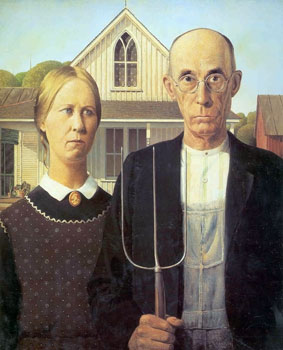
    Benjamin Mako Hill: American Gothic and the Free Culture Imperative

    About a year ago, I read American Gothic by Steven Biel and the book has left a surprising lasting impression on me. The book describes the background, history, and life of "American Gothic: America's most famous painting" by Grant Wood. Even if you don't recognize the name "American Gothic", you are likely to recognize the picture or the scene. The book is a serious and -- as far as I can tell -- reasonably comprehensive treatment of the subject that is interesting, insightful at points, and a breeze to read. Thumbnail of the American Gothic Painting Of course, the book is not actually about the painting that hangs in the Art Institute of Chicago -- although it will certainly teach you more than you probably ever wanted to know about that painting, its subjects, its settings, etc. The book is really the story of how that paining has been received, understood, and used. Nearly half of the book focuses on examples of people who have remixed, reworked, reimagined, and reproduced the painting in myriad forms, formats, settings, and ways. The book contains scores of photographs of celebrities posing in American Gothic style settings, dozens of political cartoons based on the paintings, images of talk shows, magazine covers, Broadway plays, product advertisements, toys, gifts, kitch, and more, done up in recognizeable representations of the basic American Gothic form. There is a very incomplete of references to American Gothic in popular culture at Wikipedia that can give a tiny taste of what is out there. The last chapter of the book is devoted to these "parodies" and there's some brief talk of issues around copyright and control of the image. Wood's sister Nan was the owner of the copyright for much of the second half of the twentieth century and is also the woman in the painting. She famously charged several makers of more lurid take-offs with defamation and successfully blocked a number of remixes. In 1988, Nan transferred ownership to the Visual Artists and Galleries Association (VAGA) which will hold the copyright until 2025. VAGA also claims "rights of publicity" in Nan's image which will last until 2060. VAGA takes a very expansive view of its copyright claims and argues that it has both veto power and royalty rights to any recognizably similar work. For example, VAGA does not want the American Gothic image used in alcohol advertisements and has successfully had such ads pulled. Biel's book contains no reference to the amount of money made from licensing the work but one can only conclude that it must be massive. VAGA blocked a plan by Iowa to use the picture on the back of the Iowa state quarter due to licensing disagreements; instead Iowa used a different Wood painting that was clearly in the public domain. What struck me most about Biel's book is related to just how deeply ingrained in American culture the American Gothic image has become. The book cites simple surveys that show that almost every American recognizes the painting (although only a small fraction know the painting's name or who painted it). The thousands of parodies that the book documents are testament to the fact that the painting has become a way of representing something essential about American culture and its values. But in a strange way, the painting's popularity and incessant reuse has also made it part of the culture that it so effectively captured. We can think of culture as a set of shared values and references that help us related to each other and to communicate. Just like idioms in language, culture helps us communicate more effectively, certainly, but also lets us communicate messages that would not be communicable otherwise. When Out Magazine, Coors, or any of several dozen others replace the figures in American Gothic with a gay or lesbian couple, they are succinctly sending a message about homosexual relationships and American traditional values that could not be made any other way. In this way, American Gothic -- both the painting and Biel's book -- represent a strong argument for free culture. If American Society has infused American Gothic with so much value, how can it be fair to let one person or organization own it? Are they not owning an essential mode through which a society can relate, experience, and communicate? I can't help but conclude that it shouldn't matter if VAGA does not like alcohol, advertisements, homosexuality, or wants to make a some money every time someone makes a cartoon parody. These are trivial concerns next to the importance of our society's need to communicate about these issues. If doing so requires the use of a shared cultural reference in VAGA's painting, I find it hard to justify VAGA's position of control. We need to be able to reproduce and reimagine American Gothic because it has become part of us. It's a striking example of the way that art becomes culture and the reason that truly free culture is the only appropriate response. We can't afford to let our experience of the world and each other -- to let ourselves at a very fundamental level -- be owned and controlled.

    Next.

    Previous.