Search Results: "joey"

28 May 2009

Colin Watson: code_swarm video of Ubuntu uploads

Joey Hess posted a draft of a code_swarm video for d-i a couple of weeks ago, which reminded me that I've been meaning to do something similar for Ubuntu for a while now as it's just about our archive's fifth birthday. I have a more or less complete archive of all our -changes mailing lists locally (I think I'm missing some of the very early ones, before the end of July 2004; let me know if you were one of the very early Canonical employees and have a record of these), and with the aid of launchpadlib it's fairly easy to map all the e-mail addresses into Launchpad user names, massage out some of the more obvious duplicates, and then treat the stream of uploads as if it were a stream of commits. If you haven't seen code_swarm before, each dot represents an upload, and the dots "swarm" around their corresponding committers' names; more active committers have larger swarms of dots and brighter names. I assigned a colour to each of our archive components (uploads aren't really at the C code vs. Python code vs. translations vs. whatever kind of granularity that you see in other code_swarm videos), which mostly means that people who predominantly upload to main are in roughly an Ubuntu tan colour, people who predominantly upload to universe are coloured bluish, and people with a good mixture tend to come out coloured green. If I get a bit more time I may try to figure out enough about video editing software to add some captions. Here's the video (194 MB).

23 May 2009

Joey Hess: website backup RFC

So, I'm considering a backup system that has as its goal to let you backup all your data from third party websites, easily. The idea I have for its UI is you enter in the urls for all the sites you use, or feed it a bookmark file. By examining the URLs, it determines if it knows how to export data from each site, and prompts for any necessary login info. The result would be a list of sites, and their backup status. I think it's important that you be able to enter websites that the system doesn't know how to handle yet; backup of such sites will show as failed, which is accurate. It seems to almost be appropriate to have a web interface, although command-line setup and cron should also be supported. For the actual data collection, there would be a plugin system. Some plugins could handle fairly generic things, like any site with an RSS feed. Other plugins would have site-specific logic, or would run third-party programs that already exist for specific sites. There are some subtle issues: Just because a plugin manages to suck an RSS feed or FOAF file off a site does not mean all the relevant info for that site is being backed up. More than one plugin might be able to back up parts of a site using different methods. Some methods will be much too expensive to run often. As far as storing the backup, dumping it to a directory as files in whatever formats are provided might seem cheap, but then you can check it into git, or let your regular backup system (which you have, right?) handle it.
Thoughts, comments, prior art, cute program idea names (my idea is "?unsilo"), or am I wasting my time thinking about this?

19 May 2009

Joey Hess: "whatcha reading?"

I used to hate that question, particularly in high school, when showing my interlocutor the cover of whatever book I was tearing through was almost certain to end that conversation cold. Maybe that's part of why I switched to reading ebooks as soon as it was practical? Anyway, these days I'm happy to let you know what I'm reading; I just added my 1000th book on GoodReads. The easiest way to explain GoodReads is that it's like Netflix's movie rating and recommendation system, except it can't automatically know what you've got checked out, and it doesn't really do many recommendations, sadly. But it's good about showing you what friends are reading. In other words, it's a social networking site around books. One of several, though the others I've tried seemed clunkier, or too flashy. Goodreads is fairly easy to use, though the UI could use some work in a few places. It's not been especially burdensome to note when I start and finish each book. The best part is that it can keep track of books I want to read. Rating things on a five star system is not something I'm particularly good or consistant at, nor something I want to spend much time on, but I have painlessly rated about 500 books so far, as well as importing 500 more, unrated, from a list of books I read a decade ago. (500 others from that list failed to import.) I'd like to get a high percent of the books I've read recorded there, so I can a) get a grip on just how many books that is (guessing in the 3 thousand range?) and b) avoid accidental rereads and maybe remember some good books I've not read in a while. Of course, as when using any service that silos my data these days, I have to worry about getting it back out. For at least the most important bit -- the list of books, dates, and ratings, GoodReads has a good data export capability, though it's a bit hard to find (hidden here) and not ameanable to automated backups. (Aside: Is anyone working on a one-stop utility that can automatically back up your data from all web silos? Needed.) For the past six months or so, I've been in a bit of a dry spell for finding good new fiction; reading formal book review sites wasn't working for me (most reviews spoil books for me, or just turn me off to them); and ebooks cut down on that library serendipity. I think using this site is helping to break the drought for me, and I'm curious: Whatcha reading? PS: Thanks to whoever sent me the The Design of Everyday Things (your name wasn't listed). I especially like that it's a used copy. Had that on my wishlist and been wanting to read that forever!

16 May 2009

Joey Hess: one of those days

Some spring days just seem full to bursting with unusual experiences. I spent the night at the yurt and in just four hours today: big red axe Thanks to Iain M from Melbourne who writes, "We have never met. I have used your software and gained insight from your blog, over the years. So thanks. Also, I have never bought someone an axe before. This is cool." I forgot I had that in my wishlist, but now I can split wood with ease, when I run out of Amazon packaging material to burn.

11 May 2009

Joey Hess: old photos

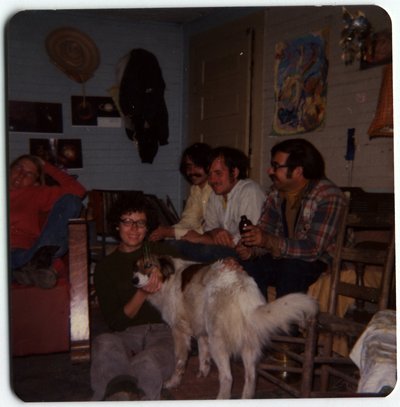
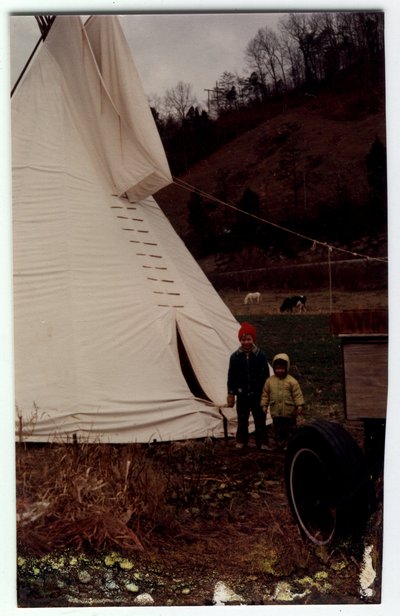
I was given a lot of old photos and scanned them in. The most interesting are from my grandparents' time in Panama, and old family photos from as far back as 1918. For me though, the gold mine are these pictures of our wacky life at the store and the farm. Follow the links to many more..

Martin F. Krafft: GPG-key mania

Would all the paranoid crypto-users please stop flooding Planet Debian with GPG output? And if you just cannot avoid it, please tag those posts meme, because that s what they are. If you really think there s a need for a new key, you re one step ahead of me, because so far, there s only a theoretical attack and the valid question of whether this is actually something to worry about in the context of GPG (or in the context of Git, for that matter). There is no practical exploit out there, and I don t expect one that would endanger your use of GPG any time soon. Of course, we ought to replace the current crypto infrastructure with a new one before the current one is compromised, but that should really be motivated by careful consideration and planning, not by lemming-like behaviour and the infamous tipping point. I ve long been meaning to clean up my key and may also switch to using a new one in the near future. However, I don t think there is an immediate need and I ll take time first to investigate the options RSA is hardly free from problems or an optimal choice. For instance, why would I want to use an RSA key, which is limited in GPG to 4096 bit keys? Do we really want to deal with signatures that are 4-10 times longer than their DSA counterparts? When RSA is broken, will we see a replay of this whole key-replacing frenzy? Wouldn t it make more sense to leverage the current situation and work on pushing/improving the DSA algorithm with larger keys, and to strive towards better algorithms in general, e.g. through SHA-3. If you still need to replace your key, revoke the old one, point at the new one in the revocation reason, and please refrain from abusing feed aggregators from letting the world know. If gpg cannot follow the trust chain after the revocation, please fix it. In the mean time, it is a good idea to use RIPEMD160 instead of SHA-1 for signing, with the following lines in ~/.gnupg/gpg.conf:
personal-digest-preferences SHA512 SHA384 SHA256 SHA224 RIPEMD160
default-preference-list [ ] H10 H9 H8 H11 H3 [ ]

and to set the preferences on your key accordingly:
% gpg --edit-key $KEYID
> setpref [ ] H10 H9 H8 H11 H3 [ ]
> save
% gpg --send-key

Then, make sure RIPEMD160 is being used:
% gpg --clearsign -a </dev/null   grep '^Hash:'

I ll end with a link to a decent write-up on the cryptographic basics of GPG.

10 May 2009

Joey Hess: editing code_swarms with kino

Last time I created a code_swarm video, I forgot to document the whole video editing process. Let's try to record the key stuff this time.
  1. Run code_swarm (see its docs). Note that its output is best if run on a display without subpixel rendering -- so desktop, not laptop.
  2. Now to convert the frames into a dv video. (There is a small quality loss here.) ffmpeg -f image2 -r 24 -i ./frames/code_swarm-%05d.png -s ntsc out.dv
  3. Import video into kino.
  4. Edit video in kino.
  5. Sound.
  6. Final encoding.

7 May 2009

Joey Hess: passing mp3s from firefox to mpd

I have finally figured out how to make clicking on a mp3 link in firefox cause the url to be instantly passed to mpd and played. If this seems like it should be easy, think again.. Firefox makes it hard, because while it lets you configure an program to run for a mp3, if the mp3 is not streamed, it will first download the whole mp3, and then run your program, passing it the local file. That's not what we want: It's slow, and it's much easier to queue an url in mpd than a new file. The trick to making it work is an addon called MediaPlayerConnectivity. Confusingly, this addon sometimes refers to itself as "MPC" -- not to be confused with "mpc(1)". Warning: This addon is a ugly mess that wants to do a lot of other stuff than play mp3s, so make sure to disable all that. MediaPlayerConnectivity's preferences allows you to specify a command to run for mp3 files (but annoyingly, not ogg vorbis). This command will be passed the url to the mp3. So you need to write a little script that runs mpc add and starts the queued url playing. My take on that is mpqueue, which uses the mpinsert command from mpdtoys to add the url just after the currently playing song in the playlist. Then it uses mpc next to skip to it. This way, after whatever you clicked on finishes playing, mpd continues with whatever was next in your playlist, and the music never stops. BTW, since I use a mpd proxy this is all done on whatever remote mpd the proxy is currently set to use, rather than my laptop. Clicking on a link and having the sound system in the next room switch to playing it is pretty nice. :) Previously: My mpd setup

Joey Hess: sha-1

So, sha-1 is looking increasingly insecure in applications where birthday attacks are possible. ("Birthday attacks" ... what a phrase ... I hope my non-technical readers stopped at "sha-1".) Two things about that:
First, I wanted to mention that I've today released jetring 0.15, which adds support for arbitrary hashes in the index file, and deprecates use of sha-1, going to sha-256 by default. There is a jetring-checksum -u utility that can be used to upgrade sha-1 hashes in existing jetring index files. If you're using jetring in an application where changesets are provided by third paries, then a birthday attack could be possible (though not easy?), and you should upgrade your index. debian-maintainer is a good example of such a jetring user.
Secondly, our beloved git uses sha-1, and this seems unlikely to change soon or without significant pain. So, what kinds of collision attacks would you need to watch out for when using git? Here is a real-world example I've been pondering. Is it accurate? Here's a different scenario.. This seems more plausible. This sort of attack is easy to accomplish with a subversion repository, and was one of the reasons I was glad to switch to git, since its checksums and signed tags seemed to prevent this kind of mischief. So, worrying, especially if your project uses such a build server. Update: Thanks to the commenters for helping me correct my example. (I hope!)

2 May 2009

Joey Hess: "I didn't know it went down so far!"

Sinking Creek passes by my sister's place and then does something strange: It disappears under ground, passes beneath both a hill and the Clinch River, to emerge on the other side as a spring and finally flow into the river. I've always wanted to find where it does this, and today we set out to do that. So for an hour or so we waded and scrambled down the soft-bottomed creek, through water that was often waist deep, with sometimes deeper suprises, past stands of cane, watching the banks rise up higher and higher, until we were in a 50+ foot deep gully. There were many signs of flooding and erosion from when the underground outlet gets plugged. Lots of interesting trees suspended on their roots. The sinkhole itself was not very impressive, and is less so here, but the landscape around it was breathtaking. These photos can't really show the scale of the place.
the sinkhole
On the way back we got to play hide-n-seek from a farmer on his tractor, which added a nice adrenalin rush. He was scarier than this creek doll. (Photos courtesy Anna Hess; her blog about it.)

23 April 2009

Joey Hess: AT blogs

Finding power and internet to post to a blog while hiking for half a year up the Appalachian Trail doesn't seem like a very likely combination, but nowadays some people manage it in various ways. I've read and enjoyed three or four books about AT thru-hikes, but blogs are a more immediate, interactive medium. I've been following with interest a group who came down with food poisoning as they hiked along the Holston Mtn. ridge in my "backyard" and look forward to reading about others as they pass by. So, I'm aggregating all such blogs I can find for the 2009 season on a page I call Planet A.T.. It's a nice way to read these contrasting accounts juxtaposed together in real time. One includes cell phone photos and fairly frequent updates of a hiker who's already reached Damascus; another is frequently updated by Blackberry by a guy I could well have crossed paths with on Roan this week; another has more infrequent, interesting long essays by a hiker who has just reached Tennesee; another is a teacher sending educational videos home to his school. There's even an 86 year old who I understand is the oldest person to hike the whole trail -- and is doing it again. I thought I'd only find a few blogs, but I've now added over a hundred! So maybe one in ten of all thru-hikers this year have a blog. And the number of bloggers will presumably dwindle toward twenty-five before they reach the end in Maine.

18 April 2009

Joey Hess: roan balds

This week I've been feeling wound up and constrained. Thought I was going to be sick and miss this, but it cleared up overnight and me and some tamales made it to Roan Mountain in time for lunch and a long afternoon hike.
typical gorgeous view from round Bald
Roan highlands
from the rocks across Engine Gap to Round Bald and Roan High Knob
Roan highlands
more There was snow here just five days ago, so no sign of spring yet on top of the Mountain, but still a warm gorgeous day. Sunburn!

15 April 2009

Joey Hess: pristine tar 1.00 for 100%

I've spent the last few days working on pristine-tar and running successive tests of it against every tarball in the Debian source archive. Took some going (and for a few very unusual .gz files, sorta some cheating) but I've finally reached 100% coverage. It works for every file I have available to throw at it. 1.00 time.

10 April 2009

Joey Hess: microblogging

I think I've never mentioned here that I've been microblogging for some time on identi.ca (also sent to twitter). That has been preventing me from writing some of the more banal sorts of blog posts, for good or ill. I've just added a sidebar to my blog that holds my most recent dents. With ikiwiki, doing so was very quick and easy!

Joey Hess: Racing the Beam

I devoured Racing the Beam last night. It does a great job at getting inside the Atari 3600 platform and explaining how it affected the early games that ran on it. Full of great examples, like Yars Revenge displaying its own code onscreen as a visual effect, to avoid needing a random number generator. Teaches how to analyse screenshots of 3600 games and see how the crazily limited hardware was coaxed into drawing them. Highly recommended, just wish it were twice as long. (I also enjoyed that the book itself is a nice recursive hack. Its (fairly cheap) printing process didn't allow reproducing the detailed color photos of the games needed for reference. So they printed them on the inside of the dust jacket instead.)
While I just missed out on the heyday of the Atari 3600, I was writing similar games on my 130XE a bit later, mostly limited by having to use slow BASIC. This was probably the first video game I ever wrote, judging by its filename ("VIDIO").
You're the green dot, zipping across the screen. Each time it reaches the right side, it wraps back to the left, leaving a wall behind. Crash into the wall and you lose a life.
As I've mentioned before, I still enjoy VIDIO, both its simplicity and gameplay. And the key to its gameplay is that the dot moves fast and the controls are not very precise, making it hard to go thru a given hole in the wall. And the controls are not very precise because of a limitation of the platform. The BASIC program can only sample the joystick position occasionally, and so there's little fine control. So, Racing the Beam has helped me realize that the platform made this game what it is.
BTW, here's the code to VIDIO. (more)

26 March 2009

Stefano Zacchiroli: enabling comments with style

Enabling ikiwiki comment with a bit of CSS I've finally spent some time to understand why the amazing comments ikiwiki plugin was not working for me. Obviously the reason were page templates which I had customized and hence were missing the needed template variables that expand to comments links and content. That made me wonder about keeping my ~/.ikiwiki/templates directory as a Git repository (which actually already is, even though for different reasons) which tracks Joey's ikiwiki repo for better merging future changes to upstream templates. Looks like a good idea, but I didn't have the time to testdrive it yet. Still, I've updated my ikiwiki CSS (also available from ikiwiki's CSS market) for fancier rendering of comments and I'm quite happy about the result. So, to the nice guy who once wrote the following in the discussion page of an old blog post of mine: p.s. this is the dumbest comment method I've ever used You were totally right!, the issue is fixed now, big up to Simon McVittie for the plugin. /me now only dreams of an automatic conversions of old discussion pages to comment series, knowing that it is impossible in the general case due to the lack of structure :-( ...

23 March 2009

Joey Hess: personal wishlist #304211

I wish that gnome-terminal was able to support multi-line URLs, or that mutt was able to render long urls on a single logical line. If you use mutt in gnome-terminal, you may have noticed that urls that wrap to another line cannot be opened using gnome-terminal's context menu. Of course, resizing the terminal to be wide enough works around the problem, but is not always practical. Another workaround is to pipe the message to less. While the url will still be displayed split across multiple lines, gnome-terminal will then recognize the whole url as one thing. Why does less work where mutt fails? Well, it seems that mutt and less print the url differently. less simply prints the whole url, and lets gnome-terminal wrap it to the next line. mutt prints the first line of the url, then moves the cursor to the start of the next line, and prints the remainder. This could be fixed either by making gnome-terminal smarter about finding the end of urls that are sent to it in multiple pieces, or by making mutt (or likely really ncurses) change how it outputs long lines.

21 March 2009

Steve Kemp: I may have kept you chained up in that room but it was for your own good.

Last week I resigned from my position as member of the Debian Security Team. Historically several Debian teams have had members inactive for months and years at a time, and I'd rather be removed of my own volition than end up listed but inactive like that. It's been a pleasure working with all members of the team, past and current (especially Joey), and who knows I might return in the future. If you're interested in security work then getting involved isn't difficult. It just takes time, patience, and practise. ObFilm: The Goonies

14 March 2009

Mark Brown: etckeeping git

Working with multiple upstream kernel trees and keeping an eye on more my git repositories tend to end up with large numbers of remotes (this laptop has 22, for example). It s getting to the point where I need something like etckeeper to keep track of them all.

11 March 2009

Joey Hess: unstable

Things are feeling unstable around here. That's mostly a good thing, but ... Switching to ext4 seemed like a good idea since I was resizing my file server's filesystem anyway. And I'd used ext4 on my laptop for a while, with no problems. But, I ran into a bug that causes ext4 to hang. So I'm left with my main server at home piling up hundreds of processes in uninterruptible sleep when this breaks. And, eventually running out of memory and dying. There's a fix, in newer -pre kernels, but so far I have not had luck getting those kernels to work with my Thecus. There's a regression in those kernels that breaks the NIC, and my attempt at backing that changeset out still left it unable to get on the net. Did I mention that I don't even have a serial console on this machine? That natively building a kernel on armel takes about 12 hours? Makes this sort of thing much fun. Need to find the right header and spend some time with a soldering iron one day. Converting back to ext3 would mean resizing a 2 TB array, which ran resize2fs out of memory when I tried it. It looks like I will have to leave /home unmounted while I'm on my trip, to keep the rest of the server up. When I get back, I've ordered a third terabyte drive, and will use it to switch back to ext3. Having these silly amounts of storage is fun, until you have to admin it. The other fun I've run into is that a new version of mpd has horrible performance on arm. Max Kellermann was very helpful in tracking down the issues involved, and helping me get a version that has at least reasonable performance again. Oh, and if someone could tell me why gnome terminal 2.24.3 can't open links anymore, I'd appreaciate it.

Next.

Previous.