Search Results: "jam"

19 October 2013

Dirk Eddelbuettel: Yes another Herbie Hancock concert

Hadn't mentioned yet that I saw Herbie Hancock last Friday at the CSO / Symphony Center. That's about the fourth time I have him according to this blog (September 2007,March 2005, April 2004) and I think I saw him two more times when I lived in France, and maybe once while I was in Canada. This time, the format was a horn-free quintet with Lionel Loueke on guitar, James Genus on bass, Vinnie Colaiuta on drums and Zakir Hussain on tabla. Hancock himself played mostly keyboards / synthesizer, even when he used the full piano as input. Overall the concert was little uneven--Hancock himself alluded to the fact that the five hadn't really practised together. At times they were rolling: the opening was a very rhythmic version of his very old standard Watermelon Man; the encore was a very rocking version of his best-selling pop-fusion hit Rockit. In between, it was sometimes wanting. Still, all five are tremendous artists and I also had a fabulous seat as shown in this Google+ post with a picture of Hancock's setup, including multiple screens. But they did not really connect with audience as a whole, and by the time the encore rolled around, the house was pretty empty.

27 September 2013

Petter Reinholdtsen: Videos about the Freedombox project - for inspiration and learning

The Freedombox project have been going on for a while, and have presented the vision, ideas and solution several places. Here is a little collection of videos of talks and presentation of the project. A larger list is available from the Freedombox Wiki. On other news, I am happy to report that Freedombox based on Debian Jessie is coming along quite well, and soon both Owncloud and using Tor should be available for testers of the Freedombox solution. :) In a few weeks I hope everything needed to test it is included in Debian. The withsqlite package is already in Debian, and the plinth package is pending in NEW. The third and vital part of that puzzle is the metapackage/setup framework, which is still pending an upload. Join us on IRC (#freedombox on irc.debian.org) and the mailing list if you want to help make this vision come true.

20 September 2013

James Morrison: Penances

I wrote up some potential penances a long time ago, here is what I thought of (or what I've had to do :):

First merge conflict from whitespace: Use a code review tool like gerrit that shows trailing whitespac

First merge conflict from whitespace: Add pre-commit hooks that remove whitespace

First time a feature is broken: Add a test for the feature, including the infrastructure for the test.

First time the client and server releases get out of sync: Run client tests against the released server and server code at top of tree.


James Morrison: Legacy code

I once attended a talk where the main point was that legacy code is any code that wasn't written with tests. Well, I think now legacy code is any code written without both tests and without code review. If you have only one the code is still legacy, it has a bus factor of one.

14 September 2013

Niels Thykier: autodie 2.21

A couple of days ago, the upstream maintainer of autodie, Paul Jamieson Fenwick (PJF), released autodie 2.21. It includes all of the performance improvements I had proposed in Optimizing autodie (plus a few extra ones authored after I wrote the post) and a small fix to one of the tests (due to changes in Carp). As mentioned in my earlier post, these improvements gives about a factor 4 load time improvement in most cases. For the sake of it, I have decided to use Lintian as an example of how good this improvement is. First off, Lintian loads uses autodie in about 75 unique files in the current git master branch.
$ grep -lr 'use autodie' lib/ checks/ collection/ frontend/lintian   wc -l
75
As a simple benchmark, lets consider the following Perl one-liner:
$ /usr/bin/time -f "%es %Us %Ss" perl -Mautodie \
  -e 'print $autodie::VERSION, " => ";' \
  -e 'eval join("\n", map  "package X$_; use autodie;"  (1..74));'
A quick-n-dirty comparison gives:
2.20 => 0.91s 0.90s 0.01s
2.21 => 0.15s 0.15s 0.00s
# NB: the times are "wall, user and sys" in that order, in case you
# are too lazy to read time(1).  :) 
So, 2.21 is now closer to a factor 6 rather than the original factor 4. I have to admit that the timings seem to be very machine dependent as my laptop shows a factor 7 improvement (from ~1.39 to ~0.22s). With at least 370 tests cases running in the Lintian testsuite, I can look forward to a reduction in user time on about 4 minutes.

1 September 2013

Jamie McClelland: If you don't know what a quine is, consider yourself lucky

rhatto just asked me to approve a change in keygringer's license from AGPLv3+ to GPLv3+ citing a discussion about a Berkeley DB's switch to AGPLv3. For some reason, a reference to a quine caught my eye. If you don't know what a quine is, I suggest you remain ignorant. I won't even provide the Wikipedia link. A quick web search suggests that it's quite possible to write one in bash. I hope to be productive again some day.

Raphaël Hertzog: My Free Software Activities in August 2013

This is my monthly summary of my free software related activities. If you re among the people who made a donation to support my work (47.50 , thanks everybody!), then you can learn how I spent your money. Otherwise it s just an interesting status update on my various projects. Package Tracking System There are only 2-3 weeks left in the summer of code project dedicated to rewrite the package tracking system. We have come a long way during August check it out yourself in pts.debian.net. The rewrite doesn t have all the features of the old PTS yet, but I opted to keep some of the easy and less interesting features for others to re-implement. Instead I asked Marko to work in the coming weeks on new features that will bring more value, like the possibility to have user accounts with the possibility to easily review and tweak all your subscriptions on the web, and like the possibility to subscribe to groups of packages (i.e. those managed by a team). Our main problem right now is that exim has a pretty poor default behavior of forking hundreds of processes if you get hundreds of mails (in a batch) to an address that delivers via a pipe (postfix is saner, it serializes the deliveries on pipes). The new PTS is much more modular and its memory footprint is bigger (about 3 times more for the process that delivers mails, 30Mb instead of 10Mb), and in such a situation we managed to run out of memory for now we worked around the situation with an exim setting that queues mails once the load gets too high but it s a poor workaround IMO. We could obviously implement our own queue and a daemon but I d like to avoid this. So who knows how to tell exim to behave? :-) On the positive side, Marko has gotten some feedback from people who like the new PTS and are using it daily already. And several persons have expressed their interest to work on the new codebase already. On my side, I created a package so that it s easy to deploy for derivatives. In this process, I revamped the way we manage the Django settings (for development and for production). The package is not finished yet, but it s mostly usable already. But I still want to do some cleanup/refactoring in the models before others start deploying it. We must also enable South to make it possible to upgrade easily afterwards. DebConf 13 in Vaumarcus From August 10th to 17th, I was attending DebConf 13. It matched the only week of vacation that my wife had this summer so we went there with the whole family (that is with a 3 years old son, and 6 months old one). Thus I could not immerse myself in Debconf and missed all the nice things that happen outside of the talk rooms. I picked 3-4 interesting talks per day and I spent the rest with my family. On the positive side, I was pleased that my wife could meet (or at least see) some other Debian people. She knows quite a few (of you) by name because I have been telling her Debian stories for years now Debian France Debian France sold quite some merchandise during Debconf but I didn t take care of that. It was supervised by Sylvestre Ledru but fortunately he got the help of multiple persons, both to bring everything there, to sell it, and to bring back the rest. The good news of the month is that the upstream author of galette published a new version with all the features that we ordered him a few months ago. We send now automatic reminders to members who must renew their subscription, we have automatic update of our accounting books (in a ledger file in a git repository) when we people donate or pay their subscription via the paypal form on our website. I was so pleased to finally have this that I took some hours to finalize the packaging of galette, so that it could be uploaded to Debian. It s now waiting in the NEW queue. I also spent multiple hours to write the python script that is executed by galette and that updates the accounting files. Misc Debian stuff Debian Packaging. I did two uploads of logidee-tools to fix bugs #718671 and #718836. I created a package for Dolibarr a PHP-based CRM and ERP software (it doesn t do accounting however), it s sitting in the NEW queue for almost a month already. I forwarded #719000 to the upstream Publican developers. I filed #720393 to request a new upstream version of libphp-mailer. git-multimail. After its deployment on Alioth last month, Niels Thykier reported me a case where it lead to bounces, I filed this as a new upstream ticket and in fact I fixed it myself a few days after. I got the fixed version installed on Alioth. dpkg. I investigated why the the automatic builds of dpkg were no longer happening and asked Michael Prokop if he could install a newer version of gettext in the build chroot. He told me that he would need a backport for that so I asked Santiago Vila if he was willing to provide it and he kindly accepted. A few days after, the package was in backports and I m now again running the latest dpkg out of git thanks to the nice service provided by Michael. Misc discussions. The thread about user planets drifted into a discussion of how to avoid promotional posts on such planets and in that context someone again brought up the Debian Machine Usage Policy as a way to shut down any kind of (self-)promotional content on planet if there s money involved. This always irritates me and this time I opted to ask James Troup about the origin of that clause in the DMUP. So who is willing to work with DSA to fix the DMUP so that people stop abusing it in contexts where it doesn t make sense? I also participated in some discussions concerning dgit. I like the ideas behind the tool, but I m saddened by the behavior of Ian Jackson. I helped him to fill his gap of knowledge about new sources formats but he keeps on bashing about the 3.0 (quilt) source format both in the manual page and in the output of the program. He believes that dgit is no longer an experiment but the truth is that it s still a poorly commented Perl script doing lots of hackish things. Kali Linux Between Debconf and all, I haven t done much for Kali except a couple of fixes. There s a nice story of how I tracked a bug in live-installer on the Kali blog. That fix has been committed to Debian. I also improved live-build to include xfsprogs/jfsutils on the ISO image when you include the debian-installer (so that you don t end up in problems when you pick JFS or XFS as file systems for your installation). Thanks See you next month for a new summary of my activities.

One comment Liked this article? Click here. My blog is Flattr-enabled.

3 August 2013

Benjamin Mako Hill: Doctor of Philosophy

On Wednesday, I successfully defended my PhD dissertation in front of a ridiculously packed house at the MIT Media Lab. I am humbled by the support shown by the MIT Sloan, Media Lab, and Harvard communities. Earlier today, I finished up paperwork and submitted my archival copies. I m done. Although I ve often heard PhDs described as emotional roller coasters, I feel enormously blessed in that I honestly can t relate. My eight years at MIT and Harvard have been almost universally positive and I have learned and grown indescribably. As excited as I am about my next chapter at the University of Washington, I m going to miss my life here. Deeply. My dissertation was three essays on volunteer mobilization in peer production. Once I have a chance to catch up and recover, I ll be posting the previously unpublished pieces. The Remixing Dilemma was included in the dissertation and is already online. The Media Lab AV team shot professional video of the talk. When I get a copy of the video, I ll post that too. But because I think it s important, I ve formatted and published the acknowledgments section of the dissertation today. Although there are too many folks to thank, I ve highlighted the contributions of my co-authors, and friends, Aaron Shaw and Andr s Monroy Hern ndez and my almost unbelievably incredible group of advisors: Eric von Hippel, Yochai Benkler, Mitch Resnick, and Tom Malone.
22 July 2013

Jamie McClelland: Sharing screen with remote Linux user behind a firewall

Intentionally helping someone poke a hole through their firewall to allow any users on a remote machine access to their computer is generally a bad idea... unless they want you to help them with their computer. In that case, I find it really useful. Toward this end, I've setup a dedicated user account (jamie-share@chavez.mayfirst.org in this example). I granted myself shell access to this user and generated an ssh key pair:
ssh-keygen -t rsa
Then, as a convenience I move my public key into the home directory:
cp ~/.ssh/id_rsa.pub ~/
Next, I give the user I want to help ssh access to this shell account on an Internet connected computer (in this example: jamie-share@chavez.mayfirst.org). Either I share the password with them or if they have an ssh key or monkeysphere identity I use that. Then, I ask them to grant teh jamie-share user access to their user account by running (which downloads the key I just created):
mkdir -p ~/.ssh
ssh jamie-share@chavez.mayfirst.org "cat id_rsa.pub" >> ~/.ssh/authorized_keys
Next, ask them to install openssh-server on their local computer:
sudo apt-get install openssh-server screen
Next, they run the following command on their local computer:
ssh -R 2222:localhost:22 jamie-share@chavez.mayfirst.org
This command says: forward port 2222 on chavez.mayfirst.org to port 22 on your local computer. Lastly, I log in to jamie-share@chavez.mayfirst.org and run, replacing with their local username.
ssh <their-username>localhost -p 2222
You can do whatever you want now, but running screen is a good way to share a session so the person you are working with can see what you are doing as you do it. p.s. Thanks Ross for the tips!

21 July 2013

Benjamin Mako Hill: The Wikipedia Gender Gap Revisited

In a new paper, recently published in the open access journal PLOSONE, Aaron Shaw and I build on new research in survey methodology to describe a method for estimating bias in opt-in surveys of contributors to online communities. We use the technique to reevaluate the most widely cited estimate of the gender gap in Wikipedia. A series of studies have shown that Wikipedia s editor-base is overwhelmingly male. This extreme gender imbalance threatens to undermine Wikipedia s capacity to produce high quality information from a full range of perspectives. For example, many articles on topics of particular interest to women tend to be under-produced or of poor quality. Given the open and often anonymous nature of online communities, measuring contributor demographics is a challenge. Most demographic data on Wikipedia editors come from opt-in surveys where people respond to open, public invitations. Unfortunately, very few people answer these invitations. Results from opt-in surveys are unreliable because respondents are rarely representative of the community as a whole. The most widely-cited estimate from a large 2008 survey by the Wikimedia Foundation (WMF) and UN University in Maastrict (UNU-MERIT) suggested that only 13% of contributors were female. However, the very same survey suggested that less than 40% of Wikipedia s readers were female. We know, from several reliable sources, that Wikipedia s readership is evenly split by gender a sign of bias in the WMF/UNU-MERIT survey. In our paper, we combine data from a nationally representative survey of the US by the Pew Internet and American Life Project with the opt-in data from the 2008 WMF/UNU-MERIT survey to come up with revised estimates of the Wikipedia gender gap. The details of the estimation technique are in the paper, but the core steps are:
  1. We use the Pew dataset to provide baseline information about Wikipedia readers.
  2. We apply a statistical technique called propensity scoring to estimate the likelihood that a US adult Wikipedia reader would have volunteered to participate in the WMF/UNU-MERIT survey.
  3. We follow a process originally developed by Valliant and Dever to weight the WMF/UNU-MERIT survey to correct for estimated bias.
  4. We extend this weighting technique to Wikipedia editors in the WMF/UNU data to produce adjusted estimates of the demographics of their sample.
Using this method, we estimate that the proportion of female US adult editors was 27.5% higher than the original study reported (22.7%, versus 17.8%), and that the total proportion of female editors was 26.8% higher (16.1%, versus 12.7%). These findings are consistent with other work showing that opt-in surveys tend to undercount women. Overall, these results reinforce the basic substantive finding that women are vastly under-represented among Wikipedia editors. Beyond Wikipedia, our paper describes a method online communities can adopt to estimate contributor demographics using opt-in surveys, but that is more credible than relying entirely on opt-in data. Advertising-intelligence firms like ComScore and Quantcast provide demographic data on the readership of an enormous proportion of websites. With these sources, almost any community can use our method (and source code) to replicate a similar analysis by: (1) surveying a community s readers (or a random subset) with the same instrument used to survey contributors; (2) combining results for readers with reliable demographic data about the readership population from a credible source; (3) reweighting survey results using the method we describe. Although our new estimates will not help us us close the gender gap in Wikipedia or address its troubling implications, they give us a better picture of the problem. Additionally, our method offers an improved tool to build a clearer demographic picture of other online communities in general.

2 July 2013

Ond&#345;ej &#268;ert&iacute;k: My impressions from the SciPy 2013 conference

I have attended the SciPy 2013 conference in Austin, Texas. Here are my impressions.

Number one is the fact that the IPython notebook was used by pretty much everyone. I use it a lot myself, but I didn't realize how ubiquitous it has become. It is quickly becoming the standard now. The IPython notebook is using Markdown and in fact it is better than Rest. The way to remember the "[]()" syntax for links is that in regular text you put links into () parentheses, so you do the same in Markdown, and append [] for the text of the link. The other way to remember is that [] feel more serious and thus are used for the text of the link. I stressed several times to +Fernando Perez and +Brian Granger how awesome it would be to have interactive widgets in the notebook. Fortunately that was pretty much preaching to the choir, as that's one of the first things they plan to implement good foundations for and I just can't wait to use that.

It is now clear, that the IPython notebook is the way to store computations that I want to share with other people, or to use it as a "lab notebook" for myself, so that I can remember what exactly I did to obtain the results (for example how exactly I obtained some figures from raw data). In other words --- instead of having sets of scripts and manual bash commands that have to be executed in particular order to do what I want, just use IPython notebook and put everything in there.

Number two is that how big the conference has become since the last time I attended (couple years ago), yet it still has the friendly feeling. Unfortunately, I had to miss a lot of talks, due to scheduling conflicts (there were three parallel sessions), so I look forward to seeing them on video.

+Aaron Meurer and I have done the SymPy tutorial (see the link for videos and other tutorial materials). It's been nice to finally meet +Matthew Rocklin (very active SymPy contributor) in person. He also had an interesting presentation
about symbolic matrices + Lapack code generation. +Jason Moore presented PyDy.
It's been a great pleasure for us to invite +David Li (still a high school student) to attend the conference and give a presentation about his work on sympygamma.com and live.sympy.org.

It was nice to meet the Julia guys, +Jeff Bezanson and +Stefan Karpinski. I contributed the Fortran benchmarks on the Julia's website some time ago, but I had the feeling that a lot of them are quite artificial and not very meaningful. I think Jeff and Stefan confirmed my feeling. Julia seems to have quite interesting type system and multiple dispatch, that SymPy should learn from.

I met the VTK guys +Matthew McCormick and +Pat Marion. One of the keynotes was given by +Will Schroeder from Kitware about publishing. I remember him stressing to manage dependencies well as well as to use BSD like license (as opposed to viral licenses like GPL or LGPL). That opensource has pretty much won (i.e. it is now clear that that is the way to go).

I had great discussions with +Francesc Alted, +Andy Terrel, +Brett Murphy, +Jonathan Rocher, +Eric Jones, +Travis Oliphant, +Mark Wiebe, +Ilan Schnell, +St fan van der Walt, +David Cournapeau, +Anthony Scopatz, +Paul Ivanov, +Michael Droettboom, +Wes McKinney, +Jake Vanderplas, +Kurt Smith, +Aron Ahmadia, +Kyle Mandli, +Benjamin Root and others.


It's also been nice to have a chat with +Jason Vertrees and other guys from Schr dinger.

One other thing that I realized last week at the conference is that pretty much everyone agreed on the fact that NumPy should act as the default way to represent memory (no matter if the array was created in Fortran or other code) and allow manipulations on it. Faster libraries like Blaze or ODIN should then hook themselves up into NumPy using multiple dispatch. Also SymPy would then hook itself up so that it can be used with array operations natively. Currently SymPy does work with NumPy (see our tests for some examples what works), but the solution is a bit fragile (it is not possible to override NumPy behavior, but because NumPy supports general objects, we simply give it SymPy objects and things mostly work).

Similar to this, I would like to create multiple dispatch in SymPy core itself, so that other (faster) libraries for symbolic manipulation can hook themselves up, so that their own (faster) multiplication, expansion or series expansion would get called instead of the SymPy default one implemented in pure Python.

Other blog posts from the conference:

28 June 2013

Russ Allbery: Review: This Alien Shore

Review: This Alien Shore, by C.S. Friedman
Publisher: DAW
Copyright: 1998
Printing: July 1999
ISBN: 0-88677-799-2
Format: Mass market
Pages: 564
Jamisia is an orphan taken in by the Shido corporation, but she has a fairly comfortable and happy life in Shido Station. She lives in the care of her tutor, has friends, has something that feels like a relatively normal life. Then the station is attacked and destroyed by a rival corporation and she barely escapes in a one-person lifeboat, sent inexplicably by her tutor with a fake identity to rendezvous with a spaceship heading for the up-and-out. That begins a long and quite confusing flight away from everything she's known, and a discovery that her life is far more complicated than she thought. Meanwhile, far from the backwater of corporate tyranny that Earth has become, a new computer virus is wreaking havoc on Guild outpilots. The Guild navigate the ainniq: a sort of subspace that allows ships to slip between nodes without regard to distance. This is the only acceptable method of interstellar travel now that humans know that the more conventional Hausman Drive causes massive genetic mutations, and only Guerans have the secret of navigating it safely. But a virus of a sophistication no one has seen before appears to be targeting outpilot brains through their implants. This Alien Shore is told in two threads but multiple characters and viewpoints. Jamisia (yes, I stumbled over that name the entire book) spends nearly the whole book running while discovering that her head is a very complicated place for very bad reasons. Meanwhile, various other people (most notably the careful and meticulous Kio Masada) are analyzing and tracing the virus, which is of deep concern to the powers that be in the Guaran-controlled network of human colonies. The threads do come together eventually, helped by a young and much more impulsive hacker named Phoenix who is also on the trail of the virus, but it takes much longer than I expected. The book is a bit of cyberpunk, a bit of space opera, and is stuffed to the brim with world-building ideas. There's always something that feels slightly emotionally off about C.S. Friedman novels. Her characters are a bit too intense, a bit too full of primary colors and inherent natures. They don't do a lot of changing; they're just a little too much purely themselves to feel quite accurate. Sometimes it matters and sometimes it doesn't. This is one of the books where it mostly doesn't, partly because it's full of such an amazing variety of characters, and partly because Friedman does a great job adding situational complexity by playing them off of each other and showing them through each other's eyes. Pyschological realism, though, this isn't, nor would I look to Friedman for that. That's somewhat unfortunate given how central psychology is to this book. The focus that slowly emerges from this novel is the whole-hearted embrace of psychological difference as a force for creativity, power, and perspective. Acceptance, respect for, and integration of difference borders on a religious belief for Guerans, which makes this book one of the most wholeheartedly inclusive stories (at least for psychology) I've read. I loved that message enough to overlook the fact that those psychological differences are not treated with much subtlety. The most central of the differences (a very mild spoiler, but one that's essentially given away on the back cover and that is easy to guess early in the book) is multiple personalities. Sadly, I thought that was also the least successful. Friedman treats the topic respectfully and as a difficult asset, which I liked, but it's bog-standard fictional multiple personalities. The presentation owes much more to popular fiction than to the reality of disassociative identity, and the notes that Friedman hits (and the characteristics that the multiples embody) are predictable. However, her second major psychological idea is simply brilliant. The Guerans have developed a coding system for people to communicate their psychological profile to anyone who sees them, and all of the Gueran characters in the novel actively engage with that system and make extensive use of it. Friedman hints at a great deal of subtlety: a wealth of primary patterns (many of which are described in quite enjoyable animal metaphors as chapter epigraphs), secondary patterns that can be layered underneath, and a complex interaction of base patterns and patterns for daily mood. Here, I think Friedman's mild tendency towards archetypal characters helps, since it makes the psychological coding system clearer for the reader. I wish it had been more central to the story and explained further, although I can see the risk of turning the novel into an RPG sourcebook. (Although, now that I mention it, I would love to read an RPG sourcebook for this universe.) The other point for which I have to give Friedman huge credit is that at least half of the book is about a computer virus, the analysis of that virus, and the hacking culture of her future universe, and at no point during the story did I want to start throwing things. There are no completely unbelievable magic computer programs, the sense of movement of data and virtual presence through computer networks seemed vaguely plausible and less steeped in unrealistic VR metaphors, the sense of aesthetics of code is captured remarkably well for a story of this sort, and Friedman even brings some variety to her computer-savvy characters. There are a few mildly stereotyped young hackers (although even those have a tendency to have more depth than the stereotype), but Friedman also populates her electronic world with the other types you rarely see in these novels: thoughtful, brilliant, but meticulous researchers, competent technicians who don't engage as much on the aesthetic aspects, and even moderately-intelligent users who pay attention to the computers their lives are built around. I could actually believe in both these people and the software they use with only the suspension of disbelief required for any future SF. That's not to say there are no flaws, quibbles, or places where computers probably won't ever work that way. But that's part of what makes me so impressed. Friedman is still using computers and hacking in the direct service of a fairly typical SF plot to achieve specific dramatic ends and to create a mystery. She's not building the story around actual technology; she's staying fairly close to the sort of technology and plots that a lot of cyberpunk and hacking novels have. And yet she manages not to make the computing entirely stupid or unbelievable. It's existence proof that an SF author can pay attention to experts and research without compromising the story they want to tell. I want to take this book and smack Robert Sawyer upside the head with it. This is a great idea book with a heavily computer-driven plot strand that I quite enjoyed. It is, however, not without its flaws. The virus-hunting part of the plot is significantly more interesting than Jamisia's flight, particularly given that she keeps running, and running, and running, encountering various people who seem important and end up not being important at all. It takes more than half the book before anything particularly interesting happens to her; up until then, I was dragging myself through her segments so that I could get back to Masada and the other Guerans. She's also annoyingly dim about some things. I figured out what the deep secret in her brain was within the first four or five chapters (it's entirely obvious from the political structure of Friedman's universe), and I have no idea why it took everyone else so long to figure it out. There is also, as mentioned, the slightly off feeling of the characters that I find typical of Friedman, and a cut-throat power struggle at the heart of the book that just didn't have enough psychological believability to fully engage me. But the ideas are wonderful: technology-driven political structures, corporate-controlled states, ideological clashes, lots of believable cultural interactions, and a neat two-option interstellar travel system (even if the nature of the Hausman Drive damage bears no resemblence to any genetic science known to our reality). And that's on top of a wonderful visual language of psychology and discussions of computer security that I actually enjoyed reading. Friedman's the sort of author who won't be to everyone's tastes. You have to have some tolerance for her tendency to write grand clashes of power between highly flawed, aggressively emotional people. Sometimes you have to put up with rather a lot of setup. But I really liked this novel. I suspect I'm editing out a lot of the boring bits in my memory, but I fondly remember that edited version as a ton of fun. Rating: 8 out of 10

26 June 2013

Benjamin Mako Hill: Lookalikes

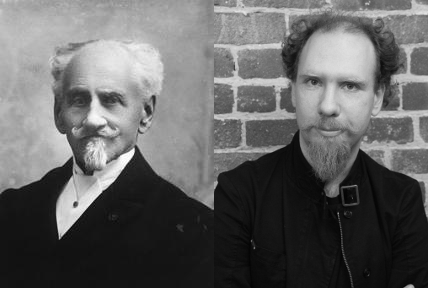
sacher_pde Is Franz Sacher, the Inventor of the famous sachertorte, still alive and and working at the at the Electronic Frontier Foundation? Might this help explain why EFF Technology Project Director Peter Eckersley is so concerned about protecting privacy and pseudonymity?

22 June 2013

Benjamin Mako Hill: Iceowl s Awesome New Icon

If you re a Debian user, you are probably already familiar with some of the awesome icons for IceWeasel (rebranded Mozilla Firefox), IceDove (rebranded Mozilla Thunderbird) and IceApe (rebranded Mozilla SeaMonkey).

iceweasel_icon-200pxicedove_icon-200px iceape_icon-200px I was pretty ambivalent about the decision to rebrand Firefox until I saw some of proposed the IceWeasel icons which in my humble opinion were just too cute, and awesome, to pass up.

iceweasel-old Until very recently however, IceOwl (rebranded Mozilla Sundbird) had no such awesome icon. Quite a while ago, I filed bug #658664 in Debian complaining that iceowl does not include awesome icy owl icons. I wrote:

I was extremely disappointed when I installed Iceowl and discovered that it does not ship with an awesome logo or icons showing a picture of an IceOwl. Instead, it seems to be represented by picture of a (boring) paper calendar which is very generic and not awesome at all. IceWeasel, IceDove, and IceApe each include extremely awesome logos/icons that have really cool looking white illustrations of icy weasels, doves, and apes. IceOwl needs a similarly awesome logo to use as its icon. This bug seems particularly egregious because owls actually live in icy climates and come in white versions! For example: https://commons.wikimedia.org/wiki/File:Snowy_Owl_-_Schnee-Eule.jpg While illustrators need to imagine what an ice ape or ice weasel might look like, there is no such need for imagination in the case of an ice owl! As far as I m concerned, this bug should be release critical. Hopefully, someone will upload a patch quickly!
Finally, after many months of all of us suffering in silence, Nick Morrott came along and fixed the bug with the creation of this new, incredibly awesome, icy owl logo!

iceowl_icon-350px

19 June 2013

Benjamin Mako Hill: Job Market Materials

Last year, I applied for academic, tenure track, jobs at several communication departments, information schools, and in HCI-focused computer science programs with a tradition of hiring social scientists. Being on the market as it is called is both scary and time consuming. Like me, many candidates have never been on the market before. Candidates are asked to produce documents in genres e.g., cover letters, research statements, teaching statements, diversity statements that most candidates have never written, read, or even heard of. Candidates often rely on their supervisors for advice. I did so and my advisors were extremely helpful. The reality, however, is that although candidates advisors may sit on hiring committees, most have not been on candidates side of job market themselves for years or even decades. The Internet is full of websites, like the academic jobs wiki, Academia StackExchange, and the Chronicle of Higher Education forums for people on the market. Confused and insecure candidates ask questions of the form, Does blank matter? and the answer is usually, Doing/having blank may help/hurt, but it is only one factor of many. The result is that candidates worry about everything. Then they worry about what they should be worrying about, but are not. The most helpful thing, for me, was to read and synthesize the material submitted by recent successful job market candidates. For example, Michael Bernstein a friend from MIT, now at Stanford published his research and teaching statements on his website and I found both useful as I prepared mine. That said, I was surprised by how little material like this I could find on the web. For example, I could not find any examples of recent job market cover letters from successful candidates in fields close to mine. So to help fill this gap, I am publishing all of my job market material. I ve posted both the PDFs of the material I submitted as well as the LaTeX templates I used to generate the documents in my packet. My packet included: I hope people going on the market will find these materials useful. Obviously, you should not copy or reuse the text of any of my material. It is your application, after all. That said, please do help yourself to the formatting and structure. Finally, I would encourage anyone who builds on my material to republish their own material to help other candidates. If you do, I d appreciate a link back or comment on this blog post so that my readers can find your improvements.

15 June 2013

Daniel Pocock: Girls Around Me and the NSA

When the Girls Around Me app was released in 2012, it received massive criticism on the basis that it could enable stalking and undermine privacy. Nonetheless, the existence of this app may well be an even bigger problem for the NSA right now than it is for single women. US Government officials in damage control mode over the NSA surveillance leaks have sought to deny that it is even possible to monitor people in the way that The Guardian reported the matter. Leaders of Internet giants such as Google and Facebook have also tried to deny and downplay the possibilities of PRISM. In my view, a company like Google is no more likely to admit hiving off customer data than a bank is likely to admit a liquidity crisis, for fear of starting a self-fulfulling bank run. User trust is as existential with data as it is with bank deposits. So my question is, if the NSA with an $8 billion annual budget can't track people in real-time, how come a small team of app developers could do much the same thing so easily in Girls Around Me? One possibility is that some companies may be accurate in what they have reported: they are not letting data out the back door. The scary thing is, they are letting it out the front door and it is just as possible for third-party commercial operators and foreign powers to harvest a lot of this data in the same way as Girls Around Me In one of the most remarkable cases, the chief of British MI6 (the team that James Bond plays for) may have been compromised by his wife's Facebook posts - if Facebook really is an outsourced NSA operation, then that is a remarkable case of friendly fire Both the scandals around Girls Around Me and the NSA spying leaks only serve to confirm one thing: that people need to think twice every time they fill in some form or submit some data that could be used to identify or track them.

Benjamin Mako Hill: Indian Veg

Recently, I ate at the somewhat famous London vegetarian restaurant Indian Veg Bhelpoori House in Islington (often referred to simply as Indian Veg ).

I couldn t help but imagine that the restaurant had hired Emanuel Bronner as their interior decorator.Indian Veg Signage (2)

Signs on the wall at Indian Veg

12 June 2013

Daniel Pocock: When conspiracy theories come true

In a blog attempting to join the dots between Australia's intelligence services and the US PRISM program, I speculated that Australia has had extensive access to data harvested by PRISM. My hunch has just been exposed rather dramatically today: Top secret data center under construction to house all our secrets. "There has been no discussion of the project in Senate estimates committee hearings, and the public reports of Parliament's joint committee on intelligence and security make no reference to it." The news story also suggests that the relationship is bi-directional, with data harvested from Australian ISPs cross referenced against US databases from Facebook and Google. From a human rights perspective, the implications of this data sharing are much more dramatic than the NSA just snooping on US citizens within the US. While Australia often tries to portray the image that it is a safe and happy country, it has a dark side. Police are kept busy investigating politicians and Government officials: Prime Minister and her associates connected to a union slush fund, the central bank's banknote printing agency's chief executive and 8 colleagues on conspiracy charges and even a senator on good old fashioned shoplifting and assault charges Exporting PRISM data to a human rights backwater As an Australian, my own rights and those of my family are more heavily protected and respected living in Europe than if I lived in my country of birth. Australia does not have a bill of rights like the US (where PRISM data is harvested) or the European Convention of Human Rights. Once US data is exported to Australia, it can be used to support sinister programs like the indefinite detention of coloured people in sinister desert camps. Just this week, the Government left over 50 bodies of poor refugees for the sharks to eat. For someone with such a lack of a conscience, can you imagine them thinking twice about using PRISM data for unscrupulous purposes? Is US PRISM data at greater risk? Despite the stench of corruption and lip service to human rights, is there any hard evidence that PRISM data will be at greater risk if allowed into the hands of Australians? Death by SMS One former Australian official (having dual-citizenship with Sri Lanka) is accused of facilitating war crimes in the Sri Lankan civil war. At present he is Sri Lanka's ambassador at the UN, giving him the benefit of diplomatic immunity. When he was working for Australia, how much data did he have access to? Isn't it ludicrous that in the name of stopping terrorism, data may have been collected and handed to war criminals on a silver platter? Behind enemy lines Like James Bond in reverse, an Australian official was exposed unofficially engaging in a relationship with a Vietnamese spy colonel. In addition to the $20 million in bribery to win a bank note printing contract, is data being used as a tool to leverage trade negotiations, officially or otherwise? If an Australian official with top-secret clearance ends up under the control of a foreign agent, what is the risk that they would be exploited to obtain PRISM data? Defence minister resignation in Chinese spy scandal In 2009 Australia's defence minister was identified having close links to a Chinese-Australian business woman including all the usual little luxuries: first class flights, apartment rental and joint business deals with family members. He subsequently resigned. Little details were made public. How much PRISM data was directly available to political officials like the defence minister? Disappearing Prime Ministers The disappearance of a serving Prime Minister, Harold Holt, during the cold war remains an unsolved mystery to this day. People continue to ask was he swept out to sea or voluntarily whisked away in a Chinese or Soviet nuclear submarine. While Australia has traditionally had strong ties to Britain and the US, there have been exceptions to the rule. Fortunately this all happened before PRISM and Harold Holt red submarine rumours are no more well-founded than the UFO theories of his abduction. Where did all the data go? As the music industry has found out the hard way, digital data can be copied at will with the originator having no control. The revelations that Britain and Australia are in on the PRISM shenanigans only confirms that this data is seen as a new form of currency for exchange in geo-political posturing. While used weapons take decades to work their way down the chain, data can spread at the speed of light.


Benjamin Mako Hill: Resurrecting Debian Seattle

seattle_skyline_night debian_logo When I last lived in Seattle, nearly a decade ago, I hosted the Debian Seattle Social email list. When I left the city, the mailing list eventually fell victim to bitrot. When Allison Randall asked me about the list a couple months ago, I decided that moving back to Seattle was a good excuse to work with Allison and some others to revive the community. Toward that end, I ve put up a little website and created a new mailing list. It s hosted on Alioth this time which will be reliable than me. Since it has been years, we have not moved over the old subscriber list so you ll have to sign up again if you were on it before. If you re a Debian developer or user and you d like to hear about infrequent Debian social gatherings in the Seattle area, you should sign up on the list!

8 June 2013

Benjamin Mako Hill: London and Michigan

I ll be spending the week after next (June 17-23) in London for the annual meeting of the International Communication Association where I ll be presenting a paper. This will be my first ICA and I m looking forward to connecting with many new colleagues in the discipline. If you re one of them, reading this, and would like to meet up in London, please let me know! Starting June 24th, I ll be in Ann Arbor, Michigan for four weeks of the ICPSR summer program in applied statistics at the Institute for Social Research. I have been wanting to sign up for some of their advanced methods classes for years and am planning to take the opportunity this summer before I start at UW. I ll be living with my friends and fellow Berkman Cooperation Group members Aaron Shaw and Dennis Tennen. I would love to make connections and meet people in both places so, if you would like to meet up, please get in contact.

Next.

Previous.