Search Results: "hug"

26 April 2017

Dirk Eddelbuettel: RcppTOML 0.1.3

A bug fix release of RcppTOML arrived on CRAN today. Table arrays were (wrongly) not allowing for nesting; a simply recursion fix addresses this. RcppTOML brings TOML to R. TOML is a file format that is most suitable for configurations, as it is meant to be edited by humans but read by computers. It emphasizes strong readability for humans while at the same time supporting strong typing as well as immediate and clear error reports. On small typos you get parse errors, rather than silently corrupted garbage. Much preferable to any and all of XML, JSON or YAML -- though sadly these may be too ubiquitous now. TOML is making good inroads with newer and more flexible projects such as the Hugo static blog compiler, or the Cargo system of Crates (aka "packages") for the Rust language.

Changes in version 0.1.3 (2017-04-25)
  • Nested TableArray types are now correctly handled (#16)

Courtesy of CRANberries, there is a diffstat report for this release. More information is on the RcppTOML page page. Issues and bugreports should go to the GitHub issue tracker.

This post by Dirk Eddelbuettel originated on his Thinking inside the box blog. Please report excessive re-aggregation in third-party for-profit settings.

16 April 2017

Shirish Agarwal: single person cult-based political parties

Summer heat

Summer heat

I would like to start with sharing is the mercury has been shot in recent times to record temperatures. For instance, Pune has been recording temperatures between 41 and 43 degrees consistently. The result of that has been a massive reduction in volunteer activity on my part as well as some reduction in work activity. The body wants and needs to conserve energy. Even my mobile phone s lithium-ion battery becomes too hot and I have to turn it off in the crucial time from 12 17:00 hrs after which the weather cools down a bit. I am curious to know if I m the only one or there are others like me. I have seen quite a few construction, re-construction and renovation projects taking quite a hit by this incredible heat wave. If it isn t climate change then I don t know what is. And this is not limited to Pune but the whole of Western Maharashtra, Gujarat, Madhya Pradesh and quite a few parts of North India too. In Pune we are expecting it to hit 45 degrees pretty soon. And I don t see this ending anytime soon, at least till July when the rains comes and we have some relief from this weather. Balasaheb Thackeray, Founder Shiv Sena Balasaheb Thakre/Thackeray founded the Shiv Sena in/around 1966. While he was cartoonist by trade, most of his cartoons were anti-migrant in nature. The target was the urban, unemployed Marathi youth based mostly in Mumbai and the suburbs. The Shiv Sena vandalized properties run by South Indian businessman, Gujaratis. The Shiv Sena and Balasaheb Thackeray were also responsible in part due to the massive closure of cloth mills in South Mumbai. While the workers struggled to make ends meet, some whose wife and children died, fell into prostitution, drugs or whatever they could to make ends meet while the party and more important Mr. Balasahab Thackeray prospered. In spite of the many threats, there are and were many South Indians who prospered inspite of Shiv Sena s threats. Gujaratis on the other hand went back to Gujarat and now Surat rivals Mumbai. Another decade or so and Surat and not Mumbai would be the financial capital of India, the way Gujaratis are working towards it. Then in the 90 s people from U.P. and Bihar came in search of livelihood, again the same rhetoric and even attacks were done against people from U.P. and Bihar. The only thing that was missing for all these people is a domicile certificate which you can get only after living 15 years in Mumbai. The only thing that they and other political parties have been successful is murdering journalists. I m sad to report that Maharashtra, my home state has a very bad report card in preventing such murders. And it s both the State and the Centre who have to share the blame equally. Come to 2017 and Shiv Sena doesn t have a leg to stand on. Balasaheb Thackeray is no more, his son didn t inherit Balasaheb s fiery character and the nephew has now another outfit called Maha Navnirman Sena. Also, all those who were one-time outsiders are now residents of Mumbai (with the domicile certificate) and hence registered voters. There is another angle to it as well, Marathas for far too long thought that people they will elect from their community will do something from their community just like auto rickshaw drivers thought that educated unemployed youth from their community would be better than the agents who rip them off whenever they have some work in the local R.T.O. (Road Transport Office) . Similar to auto rickshaw drivers, the Marathas realized that none of the leaders whom they elected would ever do the work. This is why when last year there were huge Maratha rallies all over the state (peaceful demonstrations all around though). I just shared Pune as am most concerned with my city although similar rallies were held in Mumbai (Khargar), Nagpur, Solapur among other places that I know of. But as shown on youtube there was no central leadership (a.k.a. leaders) and still they were the most disciplined lot. While the Marathas may say one thing, in part they are also culprits of their own past. My interactions with few Marathas was that they are still smitten by what happened in the second and the third Anglo-Maratha War . It is sad because I do see them adding lot of value provided they keep a cool head as I have seen some do. Business or service is the game only for cooler heads. Things came to a head though about couple of weeks back when Mr. Ravindra Gaikwad, a Shiv Sena M.P. assaulted some elderly Air India Staff. While things have cooled down since then, it only belittles both the person and the party. If anything, Air India can be accused of being to gentleman like in the whole case. The only crime of its own making is it has been looted since the beginning by Indian MP s and their relatives with over-staffing and old age of the planes and being over-priced in an extremely price sensitive market. It doesn t have any low-cost options but all of that is another story altogether. Converse to this, the current Prime Minister, Mr. Narendra Modi and Malcolm Turnbull enjoyed the ride of the Delhi Metro. In Politics as well as in life, symbolism scores big. That showed where Mr. Modi s priorities lie and where Mr. Gaikwad s. In the end, the writing seems to be on the wall for not just the Shiv Sena but I would say all single-personality based parties. They need to widen both their political scope and activities and have prominent personalities with strong leadership taking the country along rather than being petty-minded.
Filed under: Miscellenous Tagged: #17th century, #Air India, #anti-migrant policy, #Indian Summer, #Maratha, #Maratha History, #Me Maratha, #Me Maratha rallies, #planet-debian

13 April 2017

Raphaël Hertzog: Freexian s report about Debian Long Term Support, March 2017

A Debian LTS logoLike each month, here comes a report about the work of paid contributors to Debian LTS. Individual reports In March, about 190 work hours have been dispatched among 14 paid contributors. Their reports are available: Evolution of the situation The number of sponsored hours has been unchanged but will likely decrease slightly next month as one sponsor will not renew his support (because they have switched to CentOS). The security tracker currently lists 52 packages with a known CVE and the dla-needed.txt file 40. The number of open issues continued its slight increase not worrisome yet but we need to keep an eye on this situation. Thanks to our sponsors New sponsors are in bold.

No comment Liked this article? Click here. My blog is Flattr-enabled.

11 April 2017

Matthew Garrett: Disabling SSL validation in binary apps

Reverse engineering protocols is a great deal easier when they're not encrypted. Thankfully most apps I've dealt with have been doing something convenient like using AES with a key embedded in the app, but others use remote protocols over HTTPS and that makes things much less straightforward. MITMProxy will solve this, as long as you're able to get the app to trust its certificate, but if there's a built-in pinned certificate that's going to be a pain. So, given an app written in C running on an embedded device, and without an easy way to inject new certificates into that device, what do you do?

First: The app is probably using libcurl, because it's free, works and is under a license that allows you to link it into proprietary apps. This is also bad news, because libcurl defaults to having sensible security settings. In the worst case we've got a statically linked binary with all the symbols stripped out, so we're left with the problem of (a) finding the relevant code and (b) replacing it with modified code. Fortuntely, this is much less difficult than you might imagine.

First, let's find where curl sets up its defaults. Curl_init_userdefined() in curl/lib/url.c has the following code:
set->ssl.primary.verifypeer = TRUE;
set->ssl.primary.verifyhost = TRUE;
#ifdef USE_TLS_SRP
set->ssl.authtype = CURL_TLSAUTH_NONE;
#endif
set->ssh_auth_types = CURLSSH_AUTH_DEFAULT; /* defaults to any auth
type */
set->general_ssl.sessionid = TRUE; /* session ID caching enabled by
default */
set->proxy_ssl = set->ssl;

set->new_file_perms = 0644; /* Default permissions */
set->new_directory_perms = 0755; /* Default permissions */

TRUE is defined as 1, so we want to change the code that currently sets verifypeer and verifyhost to 1 to instead set them to 0. How to find it? Look further down - new_file_perms is set to 0644 and new_directory_perms is set to 0755. The leading 0 indicates octal, so these correspond to decimal 420 and 493. Passing the file to objdump -d (assuming a build of objdump that supports this architecture) will give us a disassembled version of the code, so time to fix our problems with grep:
objdump -d target grep --after=20 ,420 grep ,493

This gives us the disassembly of target, searches for any occurrence of ",420" (indicating that 420 is being used as an argument in an instruction), prints the following 20 lines and then searches for a reference to 493. It spits out a single hit:
43e864: 240301ed li v1,493
Which is promising. Looking at the surrounding code gives:
43e820: 24030001 li v1,1
43e824: a0430138 sb v1,312(v0)
43e828: 8fc20018 lw v0,24(s8)
43e82c: 24030001 li v1,1
43e830: a0430139 sb v1,313(v0)
43e834: 8fc20018 lw v0,24(s8)
43e838: ac400170 sw zero,368(v0)
43e83c: 8fc20018 lw v0,24(s8)
43e840: 2403ffff li v1,-1
43e844: ac4301dc sw v1,476(v0)
43e848: 8fc20018 lw v0,24(s8)
43e84c: 24030001 li v1,1
43e850: a0430164 sb v1,356(v0)
43e854: 8fc20018 lw v0,24(s8)
43e858: 240301a4 li v1,420
43e85c: ac4301e4 sw v1,484(v0)
43e860: 8fc20018 lw v0,24(s8)
43e864: 240301ed li v1,493
43e868: ac4301e8 sw v1,488(v0)

Towards the end we can see 493 being loaded into v1, and v1 then being copied into an offset from v0. This looks like a structure member being set to 493, which is what we expected. Above that we see the same thing being done to 420. Further up we have some more stuff being set, including a -1 - that corresponds to CURLSSH_AUTH_DEFAULT, so we seem to be in the right place. There's a zero above that, which corresponds to CURL_TLSAUTH_NONE. That means that the two 1 operations above the -1 are the code we want, and simply changing 43e820 and 43e82c to 24030000 instead of 24030001 means that our targets will be set to 0 (ie, FALSE) rather than 1 (ie, TRUE). Copy the modified binary back to the device, run it and now it happily talks to MITMProxy. Huge success.

(If the app calls Curl_setopt() to reconfigure the state of these values, you'll need to stub those out as well - thankfully, recent versions of curl include a convenient string "CURLOPT_SSL_VERIFYHOST no longer supports 1 as value!" in this function, so if the code in question is using semi-recent curl it's easy to find. Then it's just a matter of looking for the constants that CURLOPT_SSL_VERIFYHOST and CURLOPT_SSL_VERIFYPEER are set to, following the jumps and hacking the code to always set them to 0 regardless of the argument)

comment count unavailable comments

Antoine Beaupr : A report from Netconf: Day 2

This article covers the second day of the informal Netconf discussions, held on on April 4, 2017. Topics discussed this day included the binding of sockets in VRF, identification of eBPF programs, inconsistencies between IPv4 and IPv6, changes to data-center hardware, and more. (See this article for coverage from the first day of discussions).

How to bind to specific sockets in VRF One of the first presentations was from David Ahern of Cumulus, who presented a few interesting questions for the audience. His first was the problem of binding sockets to a given interface. Right now, there are four different ways this can be done:
  • the old SO_BINDTODEVICE generic socket option (see socket(7))
  • the IP_PKTINFO, IP-specific socket option (see ip(7)), introduced in Linux 2.2
  • the IP_UNICAST_IF flag, introduced in Linux 3.3 for WINE
  • the IPv6 scope ID suffix, part of the IPv6 addressing standard
So there's a problem of having too many ways of doing the same thing, something that cannot really be fixed without breaking ABI compatibility. But even worse, conflicts between those options are not reported by the kernel so it's possible for a user to set up socket flags in a way that certain flags override others and there are no checks made or errors reported. It was agreed that the user should get some notification of conflicting changes here, at least. Furthermore, binding sockets to a specific VRF (Virtual Routing and Forwarding) device is not currently possible, so Ahern asked what the best way to do this would be, considering the many options available. A use case example is a UDP multicast socket that could be bound to a specific interface within a VRF. This is an old problem: Tom Herbert explained that there were previous discussions about making the bind() system call more programmable so that, for example, you could bind() a UDP socket to a discrete list of IP addresses or a subnet. So he identified this issue as a broader problem that should be addressed by making the interfaces more generic. Ahern explained that it is currently possible to bind sockets to the slave device of a VRF even though that should not be allowed. He also raised the question of how the kernel should tell which socket should be selected for incoming packets. Right now, there is a scoring mechanism for UDP sockets, but that cannot be used directly in this more general case. David Miller said that there are already different ways of specifying scope: there is the VRF layer and the namespace ("netns") layer. A long time ago, Miller reluctantly accepted the addition of netns keys everywhere, swallowing the performance cost to gain flexibility. He argued that a new key should not be added and instead existing infrastructure should be reused. Herbert argued this was exactly the reason why this should be simplified: "if we don't answer the question, people will keep on trying this". For example, one can use a VRF to limit listening addresses, but it gets complicated if we need a device for every address. It seems the consensus evolved towards using, IP_UNICAST_IF, added back in 2012, which is accessible for non-root users. It is currently limited to UDP and RAW sockets, but it could be extended for TCP.

XDP and eBPF program identification Ahern then turned to the problem of extracting BPF programs from the kernel. He gave the example of a simple cBPF (classic BPF) filter that checks for ARP packets. If the filter is read back from the kernel, the user gets a blob of binary data, which is hard to interpret. There is an kernel verifier that can show C-like output, but that is also difficult to interpret. Ahern then added annotations to his slide that showed what the original program actually does, which was a good demonstration of why such a feature is needed. Ahern explained that, at least for cBPF, it should be possible to recover the original plaintext, or at least something close to the original program. A first step would be to replace known constants (like 0x806 for ARP). Even with eBPF, it should be possible to improve the output. Alexei Starovoitov, the BPF maintainer, explained that it might make sense to start by returning information about the maps used by an eBPF program. Then more complex data structures could be inspected once we know their type. The first priority is to get simple debugging tools working but, in the long term, the goal is a full decompiler that can reconstruct instructions into a human-readable program. The question that remains is how to return this data. Ahern explained that right now the bpf() system call copies the data to a different file descriptor, but it could just fill in a buffer. Starovoitov argued for a file descriptor; that would allow the kernel to stream everything through the same descriptor instead of having many attach points. Netlink cannot be used for this because of its asynchronous nature. A similar issue regarding the way we identify express data path (XDP) programs (which are also written in BPF) was raised by Daniel Borkmann from Covalent. Miller explained that users will want ways to figure out which XDP program was installed, so XDP needs an introspection mechanism. We currently have SHA-1 identifiers that can be internally used to tell which binary is currently loaded but those are not exposed to user space. Starovoitov mentioned it is now just a boolean that shows if a program is loaded or not. A use case for this, on top of just trying to figure out which BPF program is loaded, is to actually fetch the source code of a BPF program that was deployed in the field for which the source was lost. It is still uncertain that it will be possible to extract an exact copy that could then be recompiled into the same program. Starovoitov added that he needed this in production to do proper reporting.

IPv4/IPv6 equivalency The last issue or set of issues that Ahern brought up was the question of inconsistencies between IPv4 and IPv6. It turns out that, because both protocols were (naturally) implemented separately, there are inconsistencies in how they are handled in the Linux kernel, which affect, among other things, the VRF framework. The first example he gave was the fact that IPv6 addresses added on the loopback interface generate unreachable routes in the main routing table, yet this doesn't happen with IPv4 addresses. Hannes Frederic Sowa explained this was part of the IPv6 specification: there are stronger restrictions on loopback interfaces in IPv6 than IPv4. Ahern explained that VRF loopback interfaces do not implement these restrictions and wanted to know if this was a problem. Another issue is that anycast routes are added to the wrong interface. This is apparently not specific to VRF: this was done "just because Java", and has been there from day one. It seems that the Java Virtual Machine builds its own routing table and assumes this behavior, so changing this would break every JVM out there, which is obviously not acceptable. Finally, Martin Kafai Lau asked if work should be done to merge the IPv4 and IPv6 FIB (forwarding information base) trees. The FIB tree is the data structure that represents routing tables in the Linux kernel. Miller explained that the two trees are not semantically equivalent: while IPv6 does source-address lookup and routing, IPv4 does not. We can't remove the source lookups from IPv6, because "people probably use that". According to Alexander Duyck, adding source tables to IPv4 would degrade performance to the level of IPv6 performance, which was jokingly referred to as an incentive to switch to IPv6. More seriously, Sowa argued that using the same compressed tree IPv4 uses in IPv6 could make sense. People may want to have source routing in IPv4 as well. Miller argued that the kernel is optimized for 32-bit addresses in IPv4, and conceded that it could be scaled to 64-bit subnets, but 128-bit addresses would be much harder. Sowa suggested that they could be limited to 64 bits, as global routes that are announced over BGP usually have such a limit, and more specific routes are usually at discrete prefixes like /65, /127 (for interconnect links) or /128 for (for point-to-point links). He expressed concerns over the reliability of such an implementation so, at this point, it is unlikely that the data structures could be merged. What is more likely is that the code path could be merged and simplified, while keeping the data structures separate.

Modules options substitutions The next issue that was raised was from Ji P rko, who asked how to pass configuration options to a driver before the driver is initialized. Some chips require that some settings be sent before the firmware is loaded, which leads to a weird situation where there is a need to address a device before it's actually recognized by the kernel. The question then can be summarized as to how to pass information to a device that doesn't exist yet. The answer seems to be that devlink could do this, as it has access to the full device tree and, therefore, to devices that can be addressed by (say) PCI identifiers. Then a possible devlink command could look something like:
    devlink dev pci/0000:03:00.0 option set foo bar
This idea raised a bunch of extra questions: some devices don't have a one-to-one mapping with the PCI bridge identifiers, for example, meaning that those identifiers cannot be used to access such devices. Another issue is that you may want to send multiple settings in a single transaction, which doesn't fit well in the devlink model. Miller then proposed to let the driver initialize itself to some state and wait for configuration to be sent when necessary. Another way would be to unregister the driver and re-register with the given configuration. Shrijeet Mukherjee explained that right now, Cumulus is doing this using horrible startup script magic by retrying and re-registering, but it would be nice to have a more standard way to do this.

Control over UAPI patches Another issue that came up was the problem of changes in the user-space API (UAPI) which break backward compatibility. P rko said that "we have to be more careful about those changes". The problem is that reviewers are not always available to make detailed reviews of such changes and may not notice API-breaking changes. P rko proposed creating a bot to check if a given patch introduces UAPI changes, changes in structs, or in netlink enums. Miller said he could block merges until discussions happen and that patchwork, which Miller uses to process patches from the mailing list, does some of this. He also pointed out there aren't enough test cases in the first place. Starovoitov argued UAPI isn't special, there are other ways of breaking backward compatibility. He expressed concerns that such a bot could create a false sense that everything is fine while a patch could break compatibility and not be detected. Miller countered that UAPI is special in that "we're stuck with it forever". He then went on to propose that, since there's a maintainer (or more) for each module, he can make sure that each maintainer explicitly approves changes to those modules.

Data-center hardware changes Starovoitov brought up the issue of a new type of hardware that is currently being deployed in data centers called a "multi-host NIC" (network interface card). It's a single NIC that is connected to multiple servers. Facebook, for example, uses this in its Yosemite platform that shoves twelve servers into a 2U rack mount, in three modules. Each module is made of four servers connected to the traditional switch fabric with a single NIC through PCI-Express. Mellanox and and Broadcom also have similar devices. One question is how to manage those devices. Since they are connected through a PCI-Express bus, Linux will see them as a NIC, yet they are also a little like switches, in that they interconnect multiple servers. Furthermore, the kernel security model assumes that a NIC is trusted, and gladly opens its own memory to NICs through DMA; this can become a huge security issue when the NIC is under the control of another server. This can especially become problematic if we consider that there could be TLS hardware offloading in the future with the introduction of in-kernel TLS stacks. The other problem is the question of reliability: since those devices are currently "dumb", they need to be managed just like a regular NIC. If the host managing the card crashes, it could disable a whole set of servers that rely on the same NIC. There could be an election process among the servers, but that complicates significantly what used to be a simple PCI connection. Mukherjee pointed out that the model Cisco uses for this is that the "smart NIC" is a "slave" of the main switch fabric. It's a daughter card, which makes it easier to manage from a network perspective. It is clear that Linux will need a way to represent those devices, probably through the newly introduced switchdev or DSA (distributed switch architecture), but it will be something to keep an eye on as density increases in the data center. There were many more discussions during Netconf, too many to cover here, but in the end, Miller thanked everyone for all the interesting topics as the participants dispersed for a day off to travel to Montreal to attend the following Netdev conference.
The author would like to thank the Netconf and Netdev organizers for travel to, and hosting assistance in, Toronto. Many thanks to Alexei Starovoitov for his time taken for a technical review of this article. Note: this article first appeared in the Linux Weekly News.

10 April 2017

Daniel Pocock: If Alan Turing was born today, would he be a Muslim?

Alan Turing's name and his work are well known to anybody with a theoretical grounding in computer science. Turing developed his theories well before anybody invented file sharing, overclocking or mass surveillance. In fact, Turing was largely working in the absence of any computers at all: the transistor was only invented in 1947 and the microchip, the critical innovation that has made computing both affordable and portable, only came in 1960, four years after Turing's death. To this day, the Turing Test remains a well known challenge in the field of Artificial Intelligence. The most prestigious prize in computing, the A.M. Turing Award from the ACM, equivalent to the Nobel Prize in other fields of endeavour, is named in Turing's honour. (This year's award is another British scientist, Sir Tim Berners-Lee, inventor of the World Wide Web).
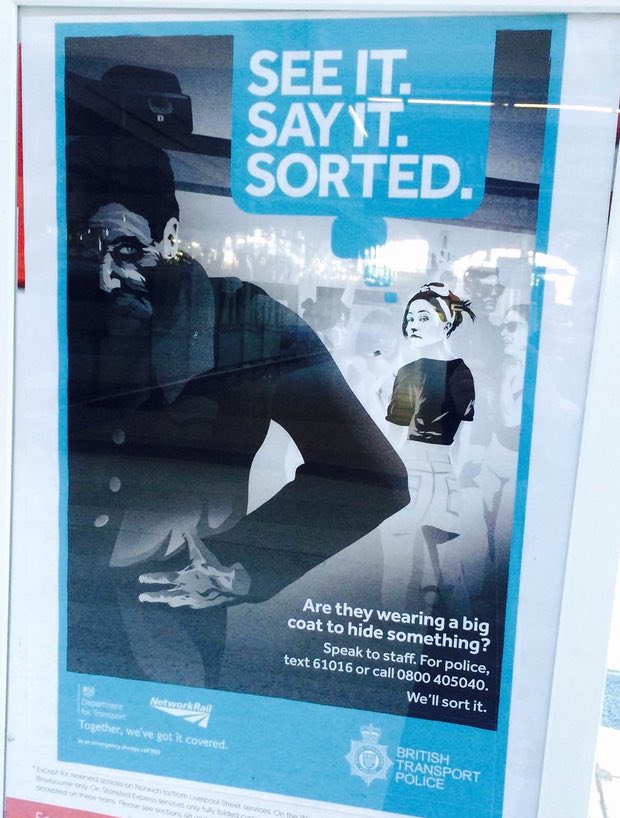
Potentially far more people know of Alan Turing for his groundbreaking work at Bletchley Park and the impact it had on cracking the Nazi's Enigma machines during World War 2, giving the allies an advantage against Hitler. While in his lifetime, Turing exposed the secret communications of the Nazis, in his death, he exposed something manifestly repugnant about his own society. Turing's challenges with his sexuality (or Britain's challenge with it) are just as well documented as his greatest scientific achievements. The 2014 movie The Imitation Game tells Turing's story, bringing together the themes from his professional and personal life. Had Turing chosen to flee British persecution by going abroad, he would be a refugee in the same sense as any person who crossed the seas to reach Europe today to avoid persecution elsewhere. Please prove me wrong In March, I blogged about the problem of racism that plagues Britain today. While some may have felt the tone of the blog was quite strong, I was in no way pleased to find my position affirmed by the events that occurred in the two days after the blog appeared. Two days and two more human beings (both immigrants and both refugees) subjected to abhorrent and unnecessary acts of abuse in Great Britain. Both cases appear to be fuelled directly by the evil that has been oozing out of number 10 Downing Street since they decided to have a referendum on "Brexit". What stands out about these latest crimes is not that they occurred (this type of thing has been going on for months now) but certain contrasts between their circumstances and to a lesser extent, the fact they occurred immediately after Theresa May formalized Britain's departure from the EU. One of the victims was almost beaten to death by a street gang, while the other was abused by men wearing uniforms. One was only a child, while the other is a mature adult who has been in the UK almost three decades, completely assimilated into British life, working and paying taxes. Both were doing nothing out of the ordinary at the time the abuse occurred: one had engaged in a conversation at a bus stop, the other was on a routine visit to a Government office. There is no evidence that either of them had done anything to provoke or invite the abhorrent treatment meted out to them by the followers of Theresa May and Nigel Farage. The first victim, on 30 March, was Stojan Jankovic, a refugee from Yugoslavia who has been in the UK for 26 years. He had a routine meeting at an immigration department office where he was ambushed, thrown in the back of a van and sent to rot in a prison cell by Theresa May's gestapo. On Friday, 31 March, it was Reker Ahmed, a 17 year old Kurdish-Iranian beaten to the brink of death by a crowd in south London. One of the more remarkable facts to emerge about these two cases is that while Stojan Jankovic was basically locked up for no reason at all, the street thugs who the police apprehended for the assault on Ahmed were kept in a cell for less than 48 hours and released again on bail. While the harmless and innocent Jankovic was eventually released after a massive public outcry, he spent more time locked up than that gang of violent criminals who beat Reker Ahmed. In other words, Theresa May and Nigel Farage's Britain has more concern for the liberty of violent criminals than somebody like Jankovic who has been working and paying taxes in the UK since before any of those street thugs were born. A deeper insight into Turing's fate With gay marriage having been legal in the UK for a number of years now, the rainbow flag flying at the Tate and Sir Elton John achieving a knighthood, it becomes difficult for people to relate to the world in which Turing and many other victims were collectively classified by their sexuality, systematically persecuted by the state and ultimately died far sooner than they should have. (Turing was only 41 when he died). In fact, the cruel and brutal forces that ripped Turing apart (and countless other victims too) haven't dissipated at all, they have simply shifted their target. The slanderous comments insinuating that immigrants "steal" jobs or that Islam is about terrorism are eerily reminiscent of suggestions that gay men abduct young boys or work as Soviet spies. None of these lies has any basis in fact, but repeat them often enough in certain types of newspaper and these ideas spread like weeds. In an ironic twist, Turing's groundbreaking work at Bletchley Park was founded on the contributions of Polish mathematicians, their own country having been the first casualty to Hitler, they were also both immigrants and refugees in Britain. Today, under the Theresa May/Nigel Farage leadership, Polish citizens have been subjected to regular vilification by the media and some have even been killed in the street. It is said that a picture is worth a thousand words. When you compare these two pieces of propaganda: a 1963 article in the Sunday Mirror advising people "How to spot a possible homo" and a UK Government billboard encouraging people to be on the lookout for people who look different, could you imagine the same type of small-minded and power-hungry tyrants crafting them, singling out a minority so as to keep the public's attention in the wrong place?
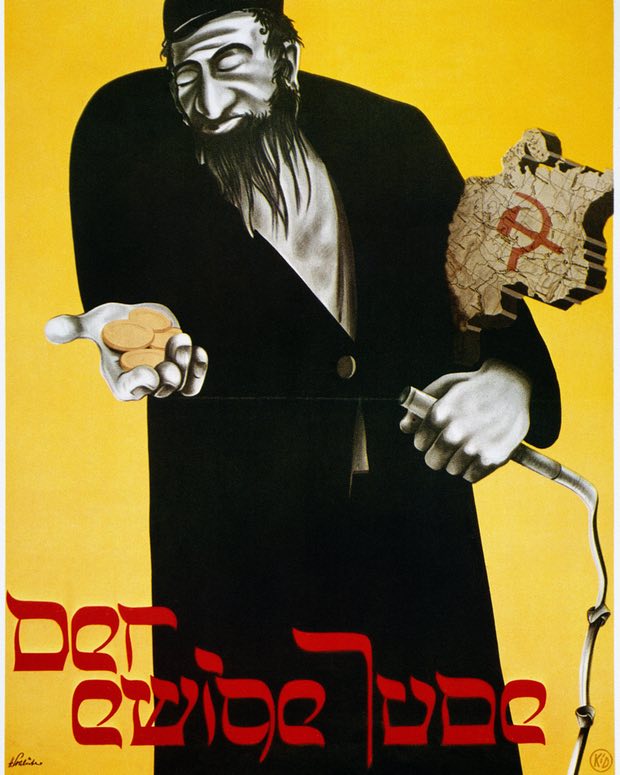
Many people have noticed that these latest UK Government posters portray foreigners, Muslims and basically anybody who is not white using a range of characteristics found in anti-semetic propaganda from the Third Reich: Do the people who create such propaganda appear to have any concern whatsoever for the people they hurt? How would Alan Turing have felt when he encountered propaganda like that from the Sunday Mirror? Do posters like these encourage us to judge people by their gifts in science, the arts or sporting prowess or do they encourage us to lump them all together based on their physical appearance? It is a basic expectation of scientific methodology that when you repeat the same experiment, you should get the same result. What type of experiment are Theresa May and Nigel Farage conducting and what type of result would you expect? Playing ping-pong with children If anybody has any doubt that this evil comes from the top, take a moment to contemplate the 3,000 children who were baited with the promise of resettlement from the Calais "jungle" camp into the UK under the Dubs amendment. When French authorities closed the "jungle" in 2016, the children were lured out of the camp and left with nowhere to go as Theresa May and French authorities played ping-pong with them. Given that the UK parliament had already agreed they should be accepted, was there any reason for Theresa May to dig her heels in and make these children suffer? Or was she just trying to prove her credentials as somebody who can bastardize migrants just the way Nigel Farage would do it? How do British politicians really view migrants? Parliamentarian Keith Vaz, former chair of the Home Affairs Select Committee (responsible for security, crime, prostitution and similar things) was exposed with young men from eastern Europe, encouraging them to take drugs before he ordered them "Take your shirt off. I'm going to attack you.". How many British MP's see foreigners this way? Next time you are groped at an airport security checkpoint, remember it was people like Keith Vaz and his committee who oversee those abuses, writing among other things that "The wider introduction of full-body scanners is a welcome development". No need to "take your shirt off" when these machines can look through it as easily as they can look through your children's underwear. According to the World Health Organization, HIV/AIDS kills as many people as the September 11 attacks every single day. Keith Vaz apparently had no concern for the possibility he might spread this disease any further: the media reported he doesn't use any protection in his extra-marital relationships. While Britain's new management continue to round up foreigners like Stojan Jankovic who have done nothing wrong, they chose not to prosecute Keith Vaz for his antics with drugs and prostitution. Who is Britain's next Alan Turing? Britain's next Alan Turing may not be a homosexual. He or she may have been a child turned away by Theresa May's spat with the French at Calais, a migrant bundled into a deportation van by the gestapo (who are just following orders) or perhaps somebody of Muslim appearance who is set upon by thugs in the street who have been energized by Nigel Farage. If you still have any uncertainty about what Brexit really means, this is it. A country that denies itself the opportunity to be great by subjecting itself to be ruled under the "divide and conquer" mantra of the colonial era. Throughout the centuries, Britain has produced some of the most brilliant scientists of their time. Newton, Darwin and Hawking are just some of those who are even more prominent than Turing, household names around the world. One can only wonder what the history books will have to say about Theresa May and Nigel Farage however. Next time you see a British policeman accosting a Muslim, whether it is at an airport, in a shopping centre, keeping Manchester United souvenirs or simply taking a photograph, spare a thought for Alan Turing and the era when homosexuals were their target of choice.

7 April 2017

Dirk Eddelbuettel: #3: Follow R-devel

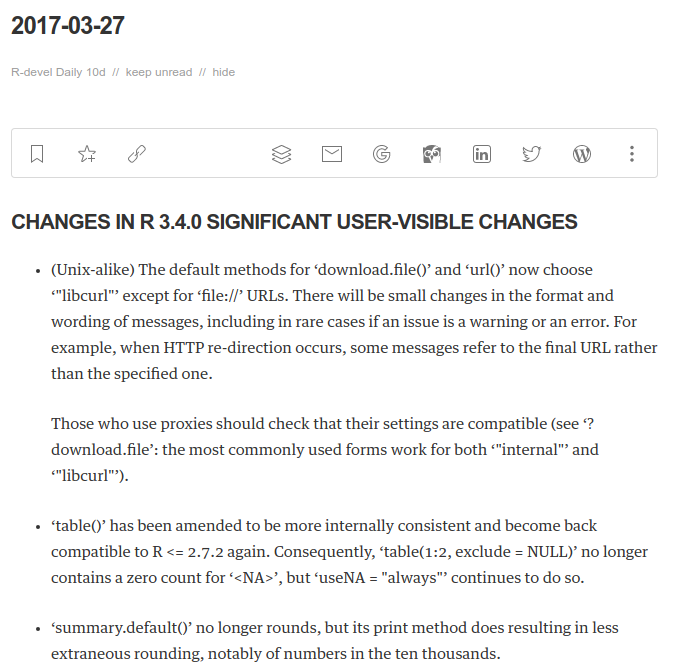
Welcome to the third post in the rarely relevant R recommendation series, or R4 for short. Today will be brief, but of some importance. In order to know where R is going next, few places provide a better vantage point than the actual ongoing development. A few years ago, I mentioned to Duncan Murdoch how straightforward the setup of my CRANberries feed (and site) was. After all, static blog compilers converting textual input to html, rss feed and whatnot have been around for fifteen years (though they keep getting reinvented). He took this to heart and built the (not too pretty) R-devel daily site (which also uses a fancy diff tool as it shows changes in NEWS) as well as a more general description of all available sub-feeds. I follow this mostly through blog aggregations -- Google Reader in its day, now Feedly. A screenshot is below just to show that it doesn't have to be ugly just because it is on them intertubes:
This shows a particularly useful day when R-devel folded into the new branch for what will be the R 3.4.0 release come April 21. The list of upcoming changes is truly impressive and quite comprehensive -- and the package registration helper, focus of posts #1 and #2 here, is but one of these many changes. One function I learned about that day is tools::CRAN_package_db(), a helper to get a single (large) data.frame with all package DESCRIPTION information. Very handy. Others may have noticed that CRAN repos now have a new top-level file PACKAGES.rds and this function does indeed just fetch it--which you could do with a similar one-liner in R-release as well. Still very handy. But do read about changes in R-devel and hence upcoming changes in R 3.4.0. Lots of good things coming our way.

This post by Dirk Eddelbuettel originated on his Thinking inside the box blog. Please report excessive re-aggregation in third-party for-profit settings.

5 April 2017

Norbert Preining: Gaming: Quern Undying Thoughts

I have been an addict of Myst like games since the very beginning. Solving mind boggling riddles by logical means (instead of weapons) was always my preferred gaming. And it seems 2016 had a great share of games fitting to my taste: Obduction, The Eyes of Ara, The Witness, and last but not least Quern Undying Thoughts. Due to work, research, online courses, diapers, and some real life (these are also the excuses for my long silence on this blog) it took me ages to complete this games, but with a bit of help I finally manged it. Those who have ever played any game from the Myst series (Myst, Riven etc) know what you get: Several worlds/areas to explore, finding clues, solving riddles, lots of reading, leading to a finish where you have to decide between two fates. The game leads you through a variety of surrounding, from open air with gorgeous views and lovely crafted details, caves with dark corners and hidden chambers, even diving excursions are included, till you reach the final showdown at a huge underground facility. The graphics of the game are extremely beautifully crafted which makes you want to book a trip to this island. Click to view slideshow. I have to admit that due to the long time over which I had to play the game, as well as my missing Sherlock Holmes traits, some of the riddles were really hard for me. Sometimes the clues are so insidiously hidden or inconspicuously placed that one just easily misses them. But that makes the game a real challenge. For me Quern manages a great balance between a riddle game and an exploration game. I don t like games where you just have to go around and click each and every nook to make sure you find all pieces (typical example, the room series), but on the other hand games that only consists of solving riddles without searching for them are half the fun. Myst, Riven, and Quern, too, all of them strike a delicate balance between these two poles and deliver an absolute astonishing experience. Fully recommended, 100/100 for me!

1 April 2017

Antoine Beaupr : My free software activities, February and March 2017

Looking into self-financing Before I begin, I should mention that I started tracking my time working on free software more systematically. I spend a lot of time on the computer, as regular readers of this blog might remember so I wanted to know exactly how much time was paid vs free work. I was already using org-mode's time clock system to keep track of my work hours, so I just extended this to my regular free software contributions, which also helps in writing those reports. It turns out that over 60% of my computer time is spent working on free software. That's huge! I was expecting something more along the range of 20 to 40% of my time. So I started thinking about ways of financing this work. I created a Patreon page but I'm hesitant into launching such a campaign: the only thing worse than "no patreon page" is "a patreon page with failed goals and no one financing it". So before starting such an effort, I'd like to get a feeling of what other people's experience with it are. I know that joeyh is close to achieving his goals, but I can't compare with the guy that invented git-annex or debhelper, so I'm concerned I wouldn't be able to raise the same level of funding. So any advice you have, feel free to contact me in private or in the comments. If you would be ready to fund my work, I'd love to know about it, obviously, but I guess I wouldn't get real numbers until I actually open up such a page... Now, onto the regular report.

Wallabako I spent a good chunk of time completing most of the things I had in mind for Wallabako, which I mentioned quickly in the previous report. Wallabako is now much easier to installed, with clearer instructions, an easier to use configuration file, more reliable synchronization and read status propagation. As usual the Wallabako README file has all the details. I've also looked at better integration with Koreader, the free software e-reader that forms the basis of the okreader free software distribution which has been able to port Debian to the Kobo e-readers, a project I am really excited about. This project has the potential of supporting Kobo readers beyond the lifetime that upstream grants it and removes a lot of proprietary software and spyware that ships with the Kobo readers. So I have made a few contributions to okreader and also on koreader, the ebook reader okreader is based on.

Stressant I rewrote stressant, my simple burn-in and stress-testing tool. After struggling in turn with Debirf, live-build, vmdebootstrap and even FAI, I just figured maybe it wasn't the best idea to try and reinvent that particular wheel: instead of reinventing how to build yet another Debian system build tool, maybe I should just reuse what's already there. It turns out there's a well known, succesful and fairly complete recovery system called Grml. It is a Debian Derivative, so all I needed to do was to stop procrastinating and actually write the actual stressant tool instead of just creating a distribution with a bunch of random tools shipped in. This allowed me to focus on which tools were the best to stress test different components. This selection ended up being: fio can also be used to overwrite disk drives with the proper options (--overwrite and --size=100%), although grml also ships with nwipe for wiping old spinning disks and hdparm to do a secure erase of SSD disks (whatever that's worth). Stressant still needs to be shipped with grml for this transition to be complete. In the meantime, I was able to configure the excellent public Gitlab CI service to provide ISO images with Stressant built-in as a stopgap measure. I also need to figure out a way to automate starting stressant from a boot menu to automate deployments on a larger scale, although because I have little need for the feature at this moment in time, this will likely wait for a sponsor to show up for this to be implemented. Still, stressant has useful features like the capability of sending logs by email using a fresh new implementation of the Python SMTPHandler (BufferedSMTPHandler) which waits for logging to complete before sending a single email. Another interesting piece of code in there is the NegateAction argparse handler that enables the use of "toggle flags" (e.g. --flag / --no-flag). I'm so happy with the code that I figure I could just share it here directly:
class NegateAction(argparse.Action):
    '''add a toggle flag to argparse

    this is similar to 'store_true' or 'store_false', but allows
    arguments prefixed with --no to disable the default. the default
    is set depending on the first argument - if it starts with the
    negative form (define by default as '--no'), the default is False,
    otherwise True.
    '''
    negative = '--no'
    def __init__(self, option_strings, *args, **kwargs):
        '''set default depending on the first argument'''
        default = not option_strings[0].startswith(self.negative)
        super(NegateAction, self).__init__(option_strings, *args,
                                           default=default, nargs=0, **kwargs)
    def __call__(self, parser, ns, values, option):
        '''set the truth value depending on whether
        it starts with the negative form'''
        setattr(ns, self.dest, not option.startswith(self.negative))
Short and sweet. I wonder why stuff like this is not in the standard library yet - maybe just because no one bothered yet? It'd be great to get feedback of more experienced Pythonistas on this one. I hope that my work on Stressant is complete. I get zero funding for this work, and have little use for it myself: I manage only a few machines and such a tool really shines when you regularly put new hardware online, which is (fortunately?) not my case anymore. I'd be happy, of course, to accompany organisations and people that wish to further develop and use such a tool. A short demo of stressant as well as detailed description of how it works is of course available in its README file.

Standard third party repositories After looking at improvements for the grml repository instructions, I realized there was no real "best practices" document on how to configure an Apt repository. Sure, there are tools like reprepro and others, but those hardly qualify as policy: they are very flexible and there are lots of ways to create insecure repositories or curl sh style instructions, which we of course generally want to avoid. While the larger problem of Unstrusted Debian packages remain generally unsolved (e.g. when you install any .deb file, it can get root on your system), it seemed to me one critical part of this problem was how to add a random third-party repository to your machine while limiting, as much as possible, what possible attackers could do with such a repository. In other words, to solve the more general problem of insecure .deb files, we also need to solve the distribution problem, otherwise fixing the .deb files themselves will be useless. This lead to the creation of standardized repository instructions that define:
  1. how to distribute the repository's public signing key (ie. over HTTPS)
  2. how to name suites and components (e.g. use stable and main unless you have a good reason, and explain yourself)
  3. recommend a healthy does of apt preferences pinning
  4. how to distribute keys (e.g. with a derive-archive-keyring package)
I've seen so many third party repositories get this wrong. For example, a lot of repositories recommend this type of command to intialize the OpenPGP trust path:
curl http://example.com/key.asc   apt-key add -
This has the following problems:
  • the key is transfered in plaintext and can easily be manipulated by an active attacker (e.g. a router on your path to the server or a neighbor in a Wifi cafe)
  • the key is added to the main trust root, which allows the key to authentify as the real Debian archive, therefore giving it all rights over all packages
  • since it's part of the global archive, it's difficult for a package to remove/add the key when a key rollover is necessary (and repositories generally don't provide a deriv-archive-keyring to do that process anyways)
An example of this are the Docker install instructions that, at least, manage to do this over HTTPS. Some other repositories don't even bother teaching people about the proper way of adding those keys. We settled for:
wget -O /usr/share/keyrings/deriv-archive-keyring.gpg https://deriv.example.net/debian/deriv-archive-keyring.gpg
That location was explicitly chosen to be out of the main trust directory, so that it needs to be explicitly added to the sources.list as well:
deb [signed-by=/usr/share/keyrings/deriv-archive-keyring.gpg] https://deriv.example.net/debian/ stable main
Similarly, we highly recommend users setup "apt pinning" to restrict what a given repository can do. Since pinning is so confusing, most people don't actually bother even configuring it and I have yet to see a single repo advise its users to configure those preferences, which are essential to limit what a repository can do. To keep configuration simple, we recommend this:
Package: *
Pin: origin deriv.example.net
Pin-Priority: 100
Obviously, for a single-package repository, the actual package name should be listed, e.g.:
Package: foo
Pin: origin deriv.example.net
Pin-Priority: 100
And the priority should probably be set to 1 unless you want to allow automatic upgrades. It is my hope that this design will get more traction in the years to come and become a de-facto standard that will be a key part in safely adding third party repositories. There is obviously much more work to be done to improve security when installing untrusted .deb files, and I encourage Debian developers to consider contributing to the UntrustedDebs discussions and particularly to the Teams/Dpkg/Spec/DeclarativePackaging work.

Signal R&D I spent a significant amount of time this month struggling with the Signal project on my phone. I'm still ambivalent on Signal: it's a centralized designed, too dependent on phone numbers, but I must admit they get a lot of things right and it's the only free-software platform that allows for easy-to-use, multi-platform videoconferencing that my family can use. I've been following Signal for a while: up until now, I had been using the LibreSignal rebuild of the official client, as it is distributed on a F-Droid repository. Because I try to avoid Google (proprietary) software on my phone, it's basically the only way I could even install Signal. Unfortunately, the repository is out of date and introduces another point of trust in the distribution model: now you not only need to trust the Signal authors to do the right thing, you also need to trust that F-Droid repo not to inject nasty code on your phone. I've therefore started a discussion about how Signal could be distributed outside of the Google Play Store. I'd like to think it's one of the things that led the Signal people to distribute an official copy of Signal outside of the playstore. After much struggling, I was able to upgrade to this official client and will be able to upgrade easily by just downloading the APK. (Do note that I ended up reinstalling and re-registering Signal, which unfortunately changed my secret keys.) I do hope Signal enters F-Droid one day, but it could take a while because it still doesn't work without Google services and barely works with MicroG, the free software alternative to the Google services clients. Moxie also set a list of requirements like crash reporting and statistics that need to be implemented on F-Droid's side before he agrees to the deployment, so this could take a while. I've also participated in the, ahem, discussion on the JWZ blog regarding a supposed vulnerability in Signal where it would leak previously unknown phone numbers to third parties. I reviewed the way the phone number is uploaded and, while it's possible to create a rainbow table of phone numbers (which are hashed with a truncated SHA-1 checksum), I couldn't verify the claims of other participants in the thread. For me, Signal still does the right thing with contacts, although I do question the way "read status" notifications get transmitted, but that belong in another bug report / blog post.

Debian Long Term Support (LTS) It's been more than a year working on Debian LTS, started by Raphael Hertzog at Freexian. I didn't work much in February so I had a lot of hours to catchup with, and was unfortunately unable to do so, partly because I was busy with other projects, and partly because my colleagues are doing a great job at resolving the most important issues. So one my concerns this month was finding work. It seemed that all the hard packages were either taken (e.g. my usual favorites, tiff and imagemagick, we done by others) or just too challenging (e.g. I don't feel quite comfortable tackling the LTS branch of the Linux kernel yet). I spent quite a bit of time trying to figure out what was wrong with pcre3, only to realise the "32" in the report was not about the architecture, but about the character width. Because of thise, I marked 4 CVEs (CVE-2017-7186, CVE-2017-7244, CVE-2017-7245, CVE-2017-7246) as "not-affected", since the 32-bith character support wasn't enabled in wheezy (or jessie, for that matter). I still spent some time trying to reproduce the issues, which require a compiler with an AddressSanitizer, something that was introduced in both Clang and GCC after Wheezy was released, which makes reproducing this fairly complicated... This allowed me to experiment more with Vagrant, however, and I have provided the Debian cloud team with a 32-bit Vagrant box that was merged in shortly after, although it doesn't show up yet in the official list of Debian images. Then I looked at the apparmor situation (CVE-2017-6507), Debian bug #858768). That was one tricky bug as well, since it's not a security issue in apparmor per se, but more an issue with things that assume a certain behavior from apparmor. I have concluded that Wheezy was not affected because there are no assumptions of proper isolation there - which are provided only starting from LXC 1.0 - and Docker is not in Wheezy. I also couldn't reproduce the issue on Jessie, but, as it turns out, the issue was sysvinit-specific, which is why I couldn't reproduce it under the default systemd configuration shipped with Jessie. I also looked at the various binutils security issues: as I reported on the mailing list, I didn't see anything serious enough in there to warrant a a security release and followed the lead of both the stable and Red Hat security teams by marking this "no-dsa". I similiarly reviewed the mp3splt security issues (specifically CVE-2017-5666) and was fairly puzzled by that issue, which seems to be triggered only the same address sanitization extensions than PCRE, although there was some pretty wild interplay with debugging flags in there. All in all, it seems we can't reproduce that issue in wheezy, but I do not feel confident enough in the results to push that issue aside for now. I finally uploaded the pending graphicsmagick issue (DLA-547-2), a regression update to fix a crash that was introduced in the previous release (DLA-547-1, mistakenly named DLA-574-1). Hopefully that release should clear up some of the confusion and fix the regression. I also released DLA-879-1 for the CVE-2017-6369 in firebird2.5 which was an interesting experiment: I couldn't reproduce the issue in a local VM. After following the Ubuntu setup tutorial, as I wasn't too familiar with the Firebird database until now (hint: the default username and password is sysdba/masterkey), I ended up assuming we were vulnerable and just backporting the patch after seeing the jessie folks push out a release just in case. I also looked at updating the ca-certificates package to deal with the pending WoSign/Startcom removal: I made an explicit list of the CAs that need to be removed after reviewing the Mozilla list. I also sent a patch for an unrelated issue where ca-certificates is writing to /usr/local (!!) in Debian bug #843722. I have also done some "meta" work in starting a discussion about fixing the missing DLA links in the tracker, as you will notice all of the above links lead to nowhere. Thanks to pabs, there are now some links but unfortunately there are about 500 DLAs missing from the website. We also discussed ways to Debian bug #859123, something which is currently a manual process. This is now in the hands of the excellent webmaster team. I have also filed a few missing security bugs (Debian bug #859135, Debian bug #859136), partly because I wanted to help the security team. But it turned out that I felt the script needed some improvements, so I submitted a patch to improve the script so it is easier to run.

Other projects As usual, there's the usual mixed bags of chaos: More stuff on Github...

31 March 2017

Holger Levsen: 20170331-pillow-fight

Pillow fight For some time I struggled how to tell this short story so it started with some trolls (clever, but still despiteful, or maybe just with too much energy) who made a pillow with a picture of the initial systemd author, Lennart Poettering, and put it on the sofas of the CCC Hamburg hackerspace Which I perceived as clever trolling, as it really was a harmless pillow, which one could use to innocently punch Lennart in the face, or rather not, as denial of this was easy and included, eg of course this pillow was also suitable for hugging! For some time, I didn't know how to react. Some clever person just turned the pillow cover upsidedown, so at least we had a white pillow instead. But still, I wanted a better reaction And then I met Lennart at devconf.cz in Brno and realized, that I would meet him again the following weekend in Brussels so on Saturday morning of FOSDEM 2017 I embarrassed Lennart (and myself) a little, but it was very much worth it! And so he signed it: To put this into perspective or why I think the original pillow was a bad idea: some people hate systemd, fine (though I do think systemd is a fine piece of software, but you can surely disagree about this), just, please keep in mind: "hate/fight the game, not the players".

30 March 2017

Shirish Agarwal: The tale of the dancing girl #nsfw

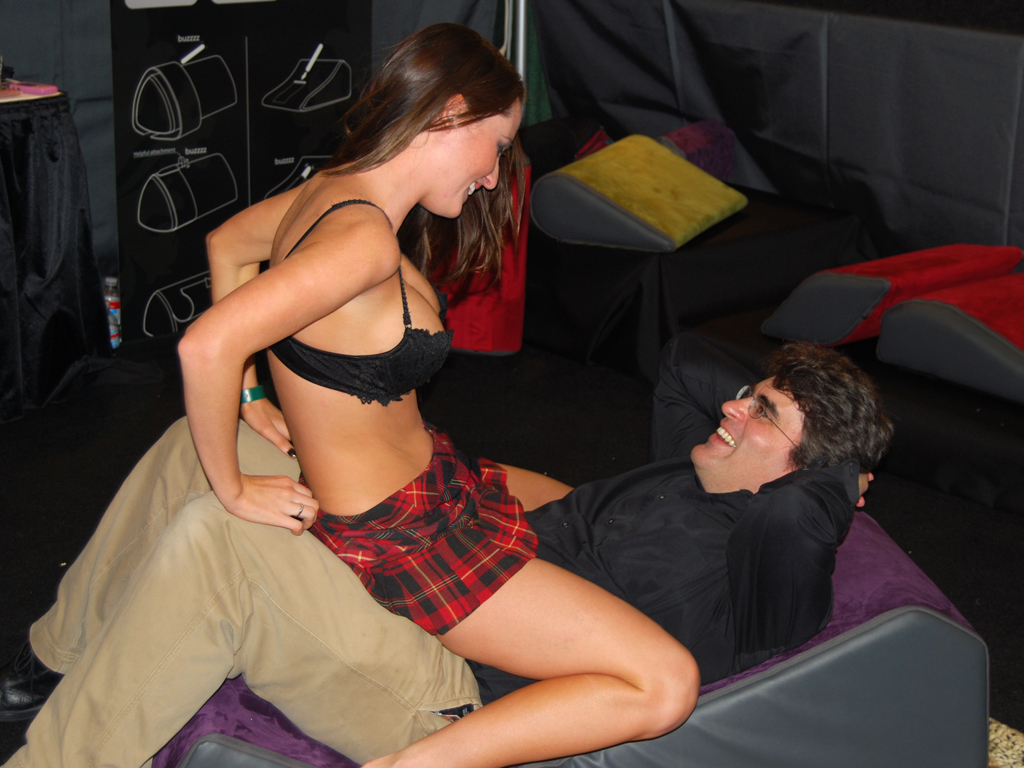
Demonstration of a Lapdance - Wikipedia

Demonstration of a Lapdance Wikipedia

The post will be adult/mature in nature. So those below 18 please excuse. The post is about an anecdote almost 20 years to date, The result its being posted is I had a dinner with a friend to whom I shared this and he thought it would be nice if I shared this hence sharing it. The conversation was about being young and foolish in which I shared the anecdote. The blog post was supposed to be about Aadhar which shocked me both in the way no political discourse happened and the way the public as well as public policy was gamed but that would have to wait for another day. History I left college in 1995. The anecdote/incident probably happened couple of years earlier so probably 1992-1993. At that time, I was in my teens and as a typical teenager I made few friends. One of those friends, who would remain nameless as since we drifted apart, and as I have not take permission from him, taking his name would not be a good idea. Anyway, this gentleman, let s call him Mr. X as an example. Couple of months before, he had bought an open jeep, similar but very different from the jeep being shown below. Open Jeep had become a fashion statement few months back (in those days) as a Salman khan starred movie had that and anybody who had money wanted one just like that.
Illustration of an open jeep, sadly its a military one - wikipedia

Illustration of an open jeep, sadly its a military one wikipedia

Those days we didn t have cell-phones and I had given my land-line phone number to very few friends as in those days, as the land-lines were a finicky instrument. One fine morning, I get a call from my friend telling he is going to come near my place and I should meet him at some xyz place and we would go for a picnic for the whole day and it is possible that we might return next day. As it was holidays and only a fool would throw away a chance to have a ride in open air jeep, I immediately agreed. I shared that my friends had organized a picnic and giving another friend s number (who didn t know anything) got permission and went to meet Mr. X. This was very early morning, around 0600 hrs. . After meeting him, he told that we would be going to Mumbai, take some more friends from there and then move on. In those days, a railway ticket from Shivaji Nagar to V.T. (now C.S.T.) costed INR 30/- . I had been to Mumbai few times before for various technical conferences and knew few cheap places to eat, I knew that going via train, we could go and come back spending at the most INR 150/- and still have some change left-over (today s meal at a roadside/street vendor easily passes that mark). The Journey I shared with him that it will be costly and I don t have any money to cover the fuel expenses and he said he would shoulder the expenses, he just wanted my company for the road. Those days, it was the scenic Old Mumbai-Pune highway and we took plenty of stops to admire that ghats (hills and valleys together). That journey must have taken around 7-8 hours while today by new Expressway, you could do the same thing by 2.5/3 hours. Anyhow, we reached to some swanky hotel in South Mumbai. South Mumbai was not the financial powerhouse that it today is, there was mix of very old buildings and new buildings like the swanky hotel that we had checked in. I have no memory nor any idea whether it was 1 class, 3 class or 5 class and could have cared less as had been tired from the journey. We checked in, I had a long warm water bath and then slept in the king-size bed with curtains drawn. Evening came and we took the jeep and picked up 2-3 of his friends who were from my age or a year or two older and we went to Nariman Point. Seeing the Queen s necklace from Nariman Point at night is a sight in itself. Keeping with the innocence, I was under the impression that we had arrived at our destination, at this our host, Mr. X and his Bombaiya friends had a quiet laugh saying its a young night still. We must have whiled away couple of hours, having chai and throwing rocks in the sea. The Meeting After a while, Mr. X took us to another swanky place. My eyes were out of my sockets as this seemed to be as elitist a place as could be. I saw many White European women in various stages of undress pole-dancing and lap-dancing. I had recently (in those days) come to know the term but was under the impression that it was something that happened in Europe and States only. I had no idea that lap-dancing was older than my birth as according to Wikipedia. So looking back now, I am not surprised that in two decades the concept crossed the oceans. Again, Mr. X being the host, agreed to bear all the costs and all of us had food, drink and a lap-dance from any of the dancers on the floor. As I was young and probably shy (still am) I asked Mr. X s help to pick a girl/woman for me. The woman whom he picked was auburn-aired, was either my age or a year or two older/younger to me. What proceeded next was about 20-30 minutes of totally sexualized erotic experience. While he and all his friends picked girls to go all the way, I was hesitant to let loose. Maybe it was due to my lack of courage or inexperience, maybe it was not in my city so couldn t predict the outcome, maybe was just afraid that reality might mar fantasy, I dunno till date. Although we kissed and necked a lot, I guess that should count for something. The conversation After all my friends had gone to the various rooms, sometime after I excused myself, went to the loo myself, peed a bit, splashed cold water on self, came out and had couple of glasses of water and came back to my seat. The lady came back and I shared that I was not interested in going further and while she was beautiful, I just didn t have the guts. I did ask her if she would give me company though for sometime as I didn t know anyone else at that place. Our conversation was more about her than me as I had more or less an average life upto that moment. There were only three unorthodox things that I had done before meeting her. I had drunk wines of different types, smoked weed and had a Magic Mushrooms experience the year before with another group of friends I had made there. Goa in those days was simply magical in those days but that probably would need its story/own blog post. When I enquired about her, she shared she was from Russia and she rattled off more than half a dozen places around the world where she had been to and this was her second or third stint in Mumbai and she wasn t at all unhappy about the lifestyle and choices she was leading. I had no answer for her as a young penniless college-going student. Her self-confidence and the way she carried herself was impressive, with or without clothes. During course of the conversation she shared a couple of contacts from whom I could get better weed at slightly higher price if I were in Goa. Few months later, those contacts turned out to be true. After sometime, we took all the women and ourselves, around 8-9 people in his jeep (how he negotiated that is beyond me) went to a hygienic Pani puri and Bhel (puffed rice mixed with variety of spices typically tomato, potato, coriander chutney as well as Tamarind Chutney among other things) place and moved them to tears (the spices in bhel and Pani puri did it for them) and this was when we had explicitly asked the bhel-wala guy to make it extremely mild with just a hint of spice in it. Anyways, sometime later, we dropped them at the same place, dropped his friends and came back to the hotel we booked and got drunk again. After-effects Few years later, it came in the newspapers/media that while India had broken out of financial isolation just few years back (1991) and were profiting from it, many countries of the former USSR were going the other way around and hence there was huge human trafficking and immigration that had taken place. This was in-line with what the lady/woman/Miss X had shared with me. The latest trigger The latest trigger happened couple of months back where I learnt of a hero flight attendant saving a girl from human-trafficking. Till date, I am unsure whether she was doing it willingly or putting a brave smile in front of me, because even if she had confided me in any way, I probably would have been too powerless to help her in any-way. I just don t know. Foolishness thy name While my friend took advantage of my innocence and introduced me to a world which otherwise I would probably not know exists, it could have easily have gone some other way as well. While I m still unsure of the choices I made, I was and am happy that I was able to strike a conversation with her and attempt to reach the person therein. Was it the truth or an elaborate fabricated lie to protect myself and herself, this I will never know. Oppression I understand the fact that as a customer or somebody who is taking part in either of those performances or experiences it isn t easy in any way to know/say that whether the performer is doing it wilfully or not as the experiences are in tightly controlled settings.
Filed under: Miscellenous Tagged: #anecdote, #confusion, #elitist, #growing up, #lap dance, #NSFW, #Open Jeep, Mumbai

26 March 2017

Dirk Eddelbuettel: RcppTOML 0.1.2

A new release of RcppTOML is now on CRAN. This release fixes a few parsing issues for less frequently-used inputs: vectors of boolean or date(time) types, as well as table array input. RcppTOML brings TOML to R. TOML is a file format that is most suitable for configurations, as it is meant to be edited by humans but read by computers. It emphasizes strong readability for humans while at the same time supporting strong typing as well as immediate and clear error reports. On small typos you get parse errors, rather than silently corrupted garbage. Much preferable to any and all of XML, JSON or YAML -- though sadly these may be too ubiquitous now. TOML is making good inroads with newer and more flexible projects such as the Hugo static blog compiler, or the Cargo system of Crates (aka "packages") for the Rust language.

Changes in version 0.1.2 (2017-03-26)
  • Dates and Datetimes in arrays in the input now preserve their types instead of converting to numeric vectors (#13)
  • Boolean vectors are also correctly handled (#14)
  • TableArray types are now stored as lists in a single named list (#15)
  • The README.md file was expanded with an example and screenshot.
  • Added file init.c with calls to R_registerRoutines() and R_useDynamicSymbols(); also use .registration=TRUE in useDynLib in NAMESPACE
  • Two example files were updated.

Courtesy of CRANberries, there is a diffstat report for this release. More information is on the RcppTOML page page. Issues and bugreports should go to the GitHub issue tracker.

This post by Dirk Eddelbuettel originated on his Thinking inside the box blog. Please report excessive re-aggregation in third-party for-profit settings.

25 March 2017

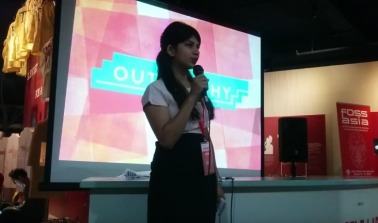
Urvika Gola: Speaking at FOSSASIA 17 Seasons of Debian : Summer of Code & Winter of Outreachy

I got an amazing chance to speak at FOSSASIA 2017 held at Singapore on Seasons of Debian Summer of Code and Winter of Outreachy . I gave a combined talk with my co-speaker Pranav Jain, who contributed to Debian through GSoC. We talked about two major open source initiatives Outreachy and Google Summer of Code and the work we did on a common project Lumicall under Debian. WhatsApp Image 2017-03-23 at 11.32.33 PM The excitement started even before the first day! On 16th March, there was a speakers meetup at Microsoft office in Singapore. There, I got the chance to connect with other speakers and learn about their work The meetup was concluded by Microsoft Office tour! As a student it was very exciting to see first hand the office of a company that I had only dreamt of being at. On 17th March, i.e the first day of the three days long conference, I met Hong Phuc Dang, Founder of FOSSASIA. She is very kind and just talking to her just made me cheerful!
Meeting so many great developers from different organizations was exciting. On 18th March, was the day of our talk! I was a bit nervous to speak in front of amazing developers but, that s how you grow  Our talk was preceded by a lovely introduction by Mario Behling. WhatsApp Image 2017-03-25 at 2.32.01 PM.jpeg I talked about how Outreachy Programme has made a significant impact in increasing the participation of women in Open Source, with one such woman being me I also talked about Android Programming concepts which I used in while adding new features into Lumicall. Pranav talked about Debian Organization and how to get started with GSoC by sharing his journey! After our talk, students approached us asking questions about how to participate in Outreachy and GsOC. I felt that a lot more students were receptive to knowing about this new opportunity. Our own talk was part of the mini DebConf track. Under this track, there were two other amazing sessions namely, Debian The best Linux distribution and Open Build Service in Debian . The variety of experiences I gained from FOSSASIA was very diverse. I learned how to speak at a huge platform, learned from other interesting talks, share ideas with smart developers and saw an exciting venue and wonderful city! I would not be able to experience this without the continuous support of Debian and Outreachy !

21 March 2017

Matthew Garrett: Announcing the Shim review process

Shim has been hugely successful, to the point of being used by the majority of significant Linux distributions and many other third party products (even, apparently, Solaris). The aim was to ensure that it would remain possible to install free operating systems on UEFI Secure Boot platforms while still allowing machine owners to replace their bootloaders and kernels, and it's achieved this goal.

However, a legitimate criticism has been that there's very little transparency in Microsoft's signing process. Some people have waited for significant periods of time before being receiving a response. A large part of this is simply that demand has been greater than expected, and Microsoft aren't in the best position to review code that they didn't write in the first place.

To that end, we're adopting a new model. A mailing list has been created at shim-review@lists.freedesktop.org, and members of this list will review submissions and provide a recommendation to Microsoft on whether these should be signed or not. The current set of expectations around binaries to be signed documented here and the current process here - it is expected that this will evolve slightly as we get used to the process, and we'll provide a more formal set of documentation once things have settled down.

This is a new initiative and one that will probably take a little while to get working smoothly, but we hope it'll make it much easier to get signed releases of Shim out without compromising security in the process.

comment count unavailable comments

20 March 2017

Shirish Agarwal: Tale of two countries, India and Canada

Apologies the first blog post got sent out by mistake. Weather comparisons between the two countries Last year, I had come to know that this year s debconf is happening in Canada, a cold country. Hence, few weeks/month back, I started trying to find information online when I stumbled across few discussion boards where people were discussing about Innerwear and Outerwear and I couldn t understand what that was all about. Then somehow stumbled across this Video, which is of a game called the Long Dark and just seeing couple of episodes it became pretty clear to me why the people there were obsessing with getting the right clothes and everything about it. Couple of Debconf people were talking about the weather in Montreal, and surprise, surprise it was snowing there, in fact supposed to be near the storm of the century. Was amazed to see that they have a website to track how much snow has been lifted. If we compare that to Pune, India weather-wise we are polar opposites. There used to be a time, when I was very young, maybe 5 yrs. old that once the weather went above 30 degree celsius, rains would fall, but now its gonna touch 40 degrees soon. And April and May, the two hottest months are yet to come. China Gate Before I venture further, I was gifted the book China Gate written by an author named William Arnold. When I read the cover and the back cover, it seemed the story was set between China and Taiwan, later when I started reading it, it shares history of Taiwan going back 200 or so odd years. This became relevant as next year s Debconf, Debconf 2018 will be in Taiwan, yes in Asia very much near to India. I am ashamed to say that except for the Tiananmen Square Massacre and the Chinese High-Speed Rail there wasn t much that I knew. According to the book, and I m paraphrasing here the gist I got was that for a long time, the Americans promised Taiwan it will be an Independent country forever, but due to budgetary and other political constraints, the United States took the same stand as China from 1979. Interestingly, now it seems Mr. Trump wants to again recognize Taiwan as a separate entity from China itself but as is with Mr. Trump you can t be sure of why he does, what he does. Is it just a manoeuvrer designed to out-smart the chinese and have a trade war or something else, only time will tell. One thing which hasn t been shared in the book but came to know via web is that Taiwan calls itself Republic of China . If Taiwan wants to be independent then why the name Republic of China ? Doesn t that strengthen China s claim that Taiwan is an integral part of China. I don t understand it. The book does seduce you into thinking that the events are happening in real-time, as in happening now. That s enough OT for now. null Population Density As well in the game and whatever I could find on the web, Canada seems to be on the lower side as far as population is concerned. IIRC, few years back, Canadians invited Indian farmers and gave them large land-holdings for over 100 years on some small pittance. While the link I have shared is from 2006, I read it online and in newspapers even as late as in 2013/2014. The point being there seems to be lot of open spaces in Canada, whereas in India we fight for even one inch literally, due to overpopulation. This sharing reminded me of Mark of Gideon . While I was young, I didn t understand the political meaning of it and still struggle to understand about whom the show was talking about. Was it India, Africa or some other continent they were talking about ? This also becomes obvious when you figure out the surface area of the two countries. When I had started to learn about Canada, I had no idea, nor a clue that Canada is three times the size of India. And this is when I know India is a large country. but seeing that Canada is thrice larger just boggled my mind. As a typical urbanite, would probably become mad if in a rural area in Canada. Montreal, however seems to be something like Gwalior or Bangalore before IT stormed in, seems to be a place where people can work, play and have quite a few gardens as well. Rail This is one thing that is similar in both the great countries. India has Indian Railways and while the Canadians have their own mountain railway called viarail. India chugs on its 68k kilometre network, Canada is at fourth position with 52k network. With thrice the land size, it should have been somewhere where Russia is or even better than them. It would be interesting if a Canadian/s comment about their railway network and why it is so bad in terms of reach. As far as food is concerned, somebody shared this Also, have no idea if Canadian trains are as entertaining as Indian ones, in terms of diverse group of people as well as variety of food to eat as also shared a bit in the video. I am not aware whether Via Rail is the only network operator and there are other network operators unlike Indian Railways which has monopoly on most of the operations. Countries which have first past the post system - Wikipedia Business houses, Political Families This is again something that is similar in both the countries, it seems (from afar) that its only few business houses and more importantly political families which have governed for years. From what little I could understand, both India and Canada have first past the post system which as shared by its critics is unfair to new and small parties. It would be interesting to see if Canada does a re-think. For India, it would need a massive public education outreach policy and implementation. We just had elections in 5 states of India with U.P. (with respect to area-size and population density) and from the last several years, the EVM s (Electronic Voting Machines) tries to make sure that nobody could know which area which party got the most votes. This is to make sure the winning party is not able to take revenge on people or areas which did not vote for them. Instead you have general region counting of votes with probably even the Election Commission not knowing which EVM went to what area and what results are there in sort of double-blind methodology. As far as Business houses are concerned, I am guessing it s the same world-over, only certain people hold the wealth while majority of us are in hard-working, non-wealthy status. Northern Lights - Aurora Borealis Northern Lights, Aurora Borealis Apart from all the social activities that Montreal is famous for, somebody told/shared with me that it is possible to see the Northern Lights, Aurora Borealis can be seen in Canada. I dunno how true or not it is, while probably in Montreal it isn t possible to see due to light pollution, but maybe around 40-50 kms. from the city ? Can people see it from Canada ? IF yes, how far would you have to go ? Are there any companies or people who take people to see the Northern Lights. While I still have to apply for bursary, and if that gets ok, then try getting the visa, but if that goes through, apart from debconf and social activities happening in and around Montreal, Museums, Music etc. , this would be something I would like to experience if it s possible. While I certainly would have to be prepared for the cold that would be, if it s possible, no offence to debconf or anybody else but it probably would be the highlight of the entire trip if its possible. This should be called/labelled as the greatest show on earth TM.
Filed under: Miscellenous Tagged: # Population Density, #Area size, #Aurora Borealis, #Canada, #Trains, DebConf, India, politics

Shirish Agarwal: Canada and India, similarities and differences.

Weather comparisons between the two countries Few days/weeks back, I had come to know that Canada, where this year s debconf is happening is cold country. I started trying to find information online when I stumbled across few boards where people were discussing about innerwear and outerwear and I couldn t understand what that was all about. Then somehow stumbled across this game, it s called the Long Dark and just seeing couple of episodes it became pretty clear to me why the people there were obsessing with getting the right clothes and everything about it. Couple of Debconf people were talking about weather in Montreal, and surprise, surprise it was snowing there, in fact supposed to be near the storm of the century. Was amazed to see that they have a website to track how much snow has been lifted. If we compare that to Pune, India weather-wise we are polar opposites. There used to be a time, when I was very young, maybe 5 yrs. old that once the weather went above 30 degree celcius, rains would fall, but now its gonna touch 40 degrees soon. And April and May, the two hottest months are yet to come. China Gate Before I venture further, I was gifted the book China Gate written by an author named William Arnold. When I read the cover and the backcover, it seemed the story was set between China and Taiwan, later when I started reading it, it shares history of Taiwan going back 200 or so odd years. This became relevant as next year s Debconf, Debconf 2018 will be in Taiwan, yes in Asia very much near to India. I am ashamed to say that except for the Tiananmen Square Massacre and the Chinese High-Speed Rail there wasn t much that I knew. According to the book, and I m paraphrasing here the gist I got was that for a long time, the Americans promised Taiwan it will be an Independent country forever, but due to budgetary and other political constraints, the United States took the same stand as China from 1979 and now it seems Mr. Trump wants to again recognize Taiwan as a separate entity from China itself. One thing which hasn t been shared in the book but came to know via web is that Taiwan calls itself Republic of China . If Taiwan wants to be independent then why the name Republic of China ? Doesn t that strengthen China s claim that Taiwan is an integral part of China. I don t understand it. The book does seduce you into thinking that the events are happening in real-time, as in happening now. That s enough OT for now. null Population Density As well in the game and whatever I could find on the web, Canada seems to be on the lower side as far as population is concerned. IIRC, few years back, Canadians invited Indian farmers and gave them large land-holdings for over 100 years on some small pittance. While the link I have shared is from 2006, I read it online and in newspapers even as late as in 2013/2014. The point being there seems to be lot of open spaces in Canada, whereas in India we fight for even one inch literally, due to overpopulation. This sharing reminded me of Mark of Gideon . While I was young, I didn t understand the political meaning of it and still struggle to understand about whom the show was talking about. Was it India, Africa or some other continent they were talking about ? This also becomes obvious when you figure out the surface area of the two countries. When I had started to learn about Canada, I had no idea, nor a clue that Canada is three times the size of India. And this is when I know India is a large country. but seeing that Canada is thrice larger just boggled my mind. As a typical urbanite, would probably become mad if in a rural area in Canada. Montreal, however seems to be something like Gwalior or Bangalore before IT stormed in, seems to be a place where people can work, play and have quite a few gardens as well. Rail This is one thing that is similar in both the great countries. India has Indian Railways and while the Canadians have their own mountain railway called viarail. India chugs on its 68k kilometre network, Canada is at fourth position with 52k network. With thrice the land size, it should have been somewhere where Russia is or even better than them. It would be interesting if Canadians comment about their railway network and why it is so bad in terms of reach. Business houses, Political Families This is again something that is similar in both the countries, it seems (from afar) that its only few business houses and more importantly political families which have governed for years.
Filed under: Miscellenous

18 March 2017

Vincent Sanders: A rose by any other name would smell as sweet

Often I end up dealing with code that works but might not be of the highest quality. While quality is subjective I like to use the idea of "code smell" to convey what I mean, these are a list of indicators that, in total, help to identify code that might benefit from some improvement.

Such smells may include:
I am most certainly not alone in using this approach and Fowler et al have covered this subject in the literature much better than I can here. One point I will raise though is some programmers dismiss code that exhibits these traits as "legacy" and immediately suggest a fresh implementation. There are varying opinions on when a rewrite is the appropriate solution from never to always but in my experience making the old working code smell nice is almost always less effort and risk than a re-write.
TestsWhen I come across smelly code, and I decide it is worthwhile improving it, I often discover the biggest smell is lack of test coverage. Now do remember this is just one code smell and on its own might not be indicative, my experience is smelly code seldom has effective test coverage while fresh code often does.

Test coverage is generally understood to be the percentage of source code lines and decision paths used when instrumented code is exercised by a set of tests. Like many metrics developer tools produce, "coverage percentage" is often misused by managers as a proxy for code quality. Both Fowler and Marick have written about this but sufficient to say that for a developer test coverage is a useful tool but should not be misapplied.

Although refactoring without tests is possible the chances for unintended consequences are proportionally higher. I often approach such a refactor by enumerating all the callers and constructing a description of the used interface beforehand and check that that interface is not broken by the refactor. At which point is is probably worth writing a unit test to automate the checks.

Because of this I have changed my approach to such refactoring to start by ensuring there is at least basic API code coverage. This may not yield the fashionable 85% coverage target but is useful and may be extended later if desired.

It is widely known and equally widely ignored that for maximum effectiveness unit tests must be run frequently and developers take action to rectify failures promptly. A test that is not being run or acted upon is a waste of resources both to implement and maintain which might be better spent elsewhere.

For projects I contribute to frequently I try to ensure that the CI system is running the coverage target, and hence the unit tests, which automatically ensures any test breaking changes will be highlighted promptly. I believe the slight extra overhead of executing the instrumented tests is repaid by having the coverage metrics available to the developers to aid in spotting areas with inadequate tests.
ExampleA short example will help illustrate my point. When a web browser receives an object over HTTP the server can supply a MIME type in a content-type header that helps the browser interpret the resource. However this meta-data is often problematic (sorry that should read "a misleading lie") so the actual content must be examined to get a better answer for the user. This is known as mime sniffing and of course there is a living specification.

The source code that provides this API (Linked to it rather than included for brevity) has a few smells:
While some of these are obvious the non-use of the global string table and the API complexity needed detailed knowledge of the codebase, just to highlight how subjective the sniff test can be. There is also one huge air freshener in all of this which definitely comes from experience and that is the modules author. Their name at the top of this would ordinarily be cause for me to move on, but I needed an example!

First thing to check is the API use

$ git grep -i -e mimesniff_compute_effective_type --or -e mimesniff_init --or -e mimesniff_fini
content/hlcache.c: error = mimesniff_compute_effective_type(handle, NULL, 0,
content/hlcache.c: error = mimesniff_compute_effective_type(handle,
content/mimesniff.c:nserror mimesniff_init(void)
content/mimesniff.c:void mimesniff_fini(void)
content/mimesniff.c:nserror mimesniff_compute_effective_type(llcache_handle *handle,
content/mimesniff.h:nserror mimesniff_compute_effective_type(struct llcache_handle *handle,
content/mimesniff.h:nserror mimesniff_init(void);
content/mimesniff.h:void mimesniff_fini(void);
desktop/netsurf.c: ret = mimesniff_init();
desktop/netsurf.c: mimesniff_fini();

This immediately shows me that this API is used in only a very small area, this is often not the case but the general approach still applies.

After a little investigation the usage is effectively that the mimesniff_init API must be called before the mimesniff_compute_effective_type API and the mimesniff_fini releases the initialised resources.

A simple test case was added to cover the API, this exercised the behaviour both when the init was called before the computation and not. Also some simple tests for a limited number of well behaved inputs.

By changing to using the global string table the initialisation and finalisation API can be removed altogether along with a large amount of global context and pre-processor macros. This single change removes a lot of smell from the module and raises test coverage both because the global string table already has good coverage and because there are now many fewer lines and conditionals to check in the mimesniff module.

I stopped the refactor at this point but were this more than an example I probably would have:
ConclusionThe approach examined here reduce the smell of code in an incremental, testable way to improve the codebase going forward. This is mainly necessary on larger complex codebases where technical debt and bit-rot are real issues that can quickly overwhelm a codebase if not kept in check.

This technique is subjective but helps a programmer to quantify and examine a piece of code in a structured fashion. However it is only a tool and should not be over applied nor used as a metric to proxy for code quality.

16 March 2017

Raphaël Hertzog: Freexian s report about Debian Long Term Support, February 2017

A Debian LTS logoLike each month, here comes a report about the work of paid contributors to Debian LTS. Individual reports In January, about 154 work hours have been dispatched among 13 paid contributors. Their reports are available: Evolution of the situation The number of sponsored hours increased slightly thanks to Bearstech and LiHAS joining us. The security tracker currently lists 45 packages with a known CVE and the dla-needed.txt file 39. The number of open issues continued its slight increase, this time it could be explained by the fact that many contributors did not spend all the hours allocated (for various reasons). There s nothing worrisome at this point. Thanks to our sponsors New sponsors are in bold.

No comment Liked this article? Click here. My blog is Flattr-enabled.

10 March 2017

Mart n Ferrari: SunCamp happening again this May!

As I announced in mailing lists a few days ago, the Debian SunCamp (DSC2017) is happening again this May. SunCamp different to most other Debian events. Instead of a busy schedule of talks, SunCamp focuses on the hacking and socialising aspect, without making it just a Debian party/vacation.
DSC2016 - Hacking and discussing
The idea is to have 4 very productive days, staying in a relaxing and comfy environment, working on your own projects, meeting with your team, or presenting to fellow Debianites your most recent pet project.
DSC2016 - Tincho talking about Prometheus
We have tried to make this event the simplest event possible, both for organisers and attendees. There will be no schedule, except for the meal times at the hotel. But these can be ignored too, there is a lovely bar that serves snacks all day long, and plenty of restaurants and caf s around the village. DSC2016 - Hacking and discussing The SunCamp is an event to get work done, but there will be time for relaxing and socialising too.
DSC2016 - Well deserved siesta
DSC2016 - Playing P tanque
Do you fancy a hack-camp in a place like this? Swimming pool Caf Caf  terrace One of the things that makes the event simple, is that we have negotiated a flat price for accommodation that includes usage of all the facilities in the hotel, and optionally food. We will give you a booking code, and then you arrange your accommodation as you please, you can even stay longer if you feel like it! The rooms are simple but pretty, and everything has been renovated very recently. Room Room view We are not preparing a talks programme, but we will provide the space and resources for talks if you feel inclined to prepare one. You will have a huge meeting room, divided in 4 areas to reduce noise, where you can hack, have team discussions, or present talks. Hacklab Hacklab Do you want to see more pictures? Check the full gallery
Debian SunCamp 2017 Hotel Anabel, LLoret de Mar, Province of Girona, Catalonia, Spain May 18-21, 2017

Tempted already? Head to the wikipage and register now, it is only 2 months away! Please try to reserve your room before the end of March. The hotel has reserved a number of rooms for us until that time. You can reserve a room after March, but we can't guarantee the hotel will still have free rooms. Comment

8 March 2017

Neil McGovern: GNOME ED update Week 10

Conferences After quite a bit of work, we finally have the sponsorship brochure produced for GUADEC and GNOME.Asia. Huge thanks to everyone who helped, I m really pleased with the result. Again, if you or your company are interested in sponsoring us, please drop a mail to sponsors@guadec.org! Food and Games I like food, and I like games. So this week there was a couple of awesome sneak previews on the upcoming GNOME 3.24 release. Matthias Clasen posted about GNOME Recipes the 1.0 release tasty snacks are now available directly on the desktop, which means I can also view them when I m at the back of the house in the kitchen, where the wifi connection is somewhat spotty. Adrien Plazas also posted about GNOME Games now I can get my retro gaming fix easily. Signing thingswpid-file1488981981482.jpg I was sent a package in the post, with lots of blank stickers and a couple of pens. I ve now signed a load of stickers, and my hand hurts. More details about exactly what this is about soon :)

Next.

Previous.