Wouter described how to get Akonadi (the back-end for KDE PIM) to use PostgreSQL [1].
I don t agree with his MySQL is a toy sentiment. But inspired by his post I decided to convert some of my systems to use a MySQL instance running on a server instead of one instance for each user. In the default configuration you have 140M of disk space and 200M of RAM used by each user for a private MySQL installation which has about 24K of data (at least at the moment on systems I run, maybe more in future).
Here s some pseudo shell script to dump the database and get a new config:
mysqldump socket=$HOME/.local/share/akonadi/socket-$HOSTNAME/mysql.socket akonadi > dump.sql
akonadictl stop
rm -rf .config/akonadi
rm -rf .local/share/akonadi
mkdir .config/akonadi
cat > .config/akonadi/akonadiserverrc <<EOF
[%General]
Driver=QMYSQL
SizeThreshold=4096
ExternalPayload=false
[QMYSQL]
Name=$USER_akonadi
Host=IP_OR_HOST
User=$USER
Password=$PASS
StartServer=false
Options=
ServerPath=/usr/sbin/mysqld
[Debug]
Tracer=null
EOF
Then with DBA privs you need to run the following in the mysql client:
create database $USER_akonadi;
GRANT ALL PRIVILEGES ON $USER_akonadi.* to $USER @'% IDENTIFIED BY $PASS ;
Then run the following to import the SQL data:
mysql $USER_akonadi < dump.sql
Ideally that would be it, but on my test installation (Debian/Squeeze MySQL server and Debian/Unstable KDE workstations) I needed to run the following SQL commands to deal with some sort of case problem.
rename table schemaversiontable to SchemaVersionTable;
rename table resourcetable to ResourceTable;
rename table collectionattributetable to CollectionAttributeTable;
rename table collectionmimetyperelation to CollectionMimeTypeRelation;
rename table collectionpimitemrelation to CollectionPimItemRelation;
rename table collectiontable to CollectionTable;
rename table flagtable to FlagTable;
rename table mimetypetable to MimeTypeTable;
rename table parttable to PartTable;
rename table pimitemflagrelation to PimItemFlagRelation;
rename table pimitemtable to PimItemTable;
I am not using any PIM features other than the AddressBook (which hasn t been working well for a while), so I m not sure that this is working correctly. But I would prefer that something I don t use and is probably broken take up disk space and RAM on a server instead of a workstation anyway.
Some years ago I came across a really peculiar newsgroup post. It was not about technicalities of any sort. It was about history. A beautifully written history of computers. From the Turing machine to the Free Software world, the original author managed to capture all the important events of the computer revolution with a great deal of humor. Re-posting it here, it is just brilliant.
The Gospel of Tux (v1.0)
In the beginning Turing created the Machine.
And the Machine was crufty and bodacious, existing in theory only. And von Neumann looked upon the Machine, and saw that it was crufty. He divided the Machine into two Abstractions, the Data and the Code, and yet the two were one Architecture. This is a great Mystery, and the beginning of wisdom.
And von Neumann spoke unto the Architecture, and blessed it, saying, Go forth and replicate, freely exchanging data and code, and bring forth all manner of devices unto the earth. And it was so, and it was cool. The Architecture prospered and was implemented in hardware and software. And it brought forth many Systems unto the earth.
The first Systems were mighty giants; many great works of renown did they accomplish. Among them were Colossus, the codebreaker; ENIAC, the targeter; EDSAC and MULTIVAC and all manner of froody creatures ending in AC, the experimenters; and SAGE, the defender of the sky and father of all networks. These were the mighty giants of old, the first children of Turing, and their works are written in the Books of the Ancients. This was the First Age, the age of Lore.
Now the sons of Marketing looked upon the children of Turing, and saw that they were swift of mind and terse of name and had many great and baleful attributes. And they said unto themselves, Let us go now and make us Corporations, to bind the Systems to our own use that they may bring us great fortune. With sweet words did they lure their customers, and with many chains did they bind the Systems, to fashion them after their own image. And the sons of Marketing fashioned themselves Suits to wear, the better to lure their customers, and wrote grave and perilous Licenses, the better to bind the Systems. And the sons of Marketing thus became known as Suits, despising and being despised by the true Engineers, the children of von Neumann.
And the Systems and their Corporations replicated and grew numerous upon the earth. In those days there were IBM and Digital, Burroughs and Honeywell, Unisys and Rand, and many others. And they each kept to their own System, hardware and software, and did not interchange, for their Licences forbade it. This was the Second Age, the age of Mainframes.
Now it came to pass that the spirits of Turing and von Neumann looked upon the earth and were displeased. The Systems and their Corporations had grown large and bulky, and Suits ruled over true Engineers. And the Customers groaned and cried loudly unto heaven, saying, Oh that there would be created a System mighty in power, yet small in size, able to reach into the very home! And the Engineers groaned and cried likewise, saying, Oh, that a deliverer would arise to grant us freedom from these oppressing Suits and their grave and perilous Licences, and send us a System of our own, that we may hack therein! And the spirits of Turing and von Neumann heard the cries and were moved, and said unto each other, Let us go down and fabricate a Breakthrough, that these cries may be stilled.
And that day the spirits of Turing and von Neumann spake unto Moore of Intel, granting him insight and wisdom to understand the future. And Moore was with chip, and he brought forth the chip and named it 4004. And Moore did bless the Chip, saying, Thou art a Breakthrough; with my own Corporation have I fabricated thee. Thou thou art yet as small as a dust mote, yet shall thou grow and replicate unto the size of a mountain, and conquer all before thee. This blessing I give unto thee: every eighteen months shall thou double in capacity, until the end of the age. This is Moore s Law, which endures unto this day.
And the birth of 4004 was the beginning of the Third Age, the age of Microchips. And as the Mainframes and their Systems and Corporations had flourished, so did the Microchips and their Systems and Corporations. And their lineage was on this wise:
Moore begat Intel. Intel begat Mostech, Zilog and Atari. Mostech begat 6502, and Zilog begat Z80. Intel also begat 8800, who begat Altair; and 8086, mother of all PCs. 6502 begat Commodore, who begat PET and 64; and Apple, who begat 2. (Apple is the great Mystery, the Fruit that was devoured, yet bloomed again.) Atari begat 800 and 1200, masters of the game, who were destroyed by Sega and Nintendo. Xerox begat PARC. Commodore and PARC begat Amiga, creator of fine arts; Apple and PARC begat Lisa, who begat Macintosh, who begat iMac. Atari and PARC begat ST, the music maker, who died and was no more. Z80 begat Sinclair the dwarf, TRS-80 and CP/M, who begat many machines, but soon passed from this world. Altair, Apple and Commodore together begat Microsoft, the Great Darkness which is called Abomination, Destroyer of the Earth, the Gates of Hell.
Now it came to pass in the Age of Microchips that IBM, the greatest of the Mainframe Corporations, looked upon the young Microchip Systems and was greatly vexed. And in their vexation and wrath they smote the earth and created the IBM PC. The PC was without sound and colour, crufty and bodacious in great measure, and its likeness was a tramp, yet the Customers were greatly moved and did purchase the PC in great numbers. And IBM sought about for an Operating System Provider, for in their haste they had not created one, nor had they forged a suitably grave and perilous License, saying, First we will build the market, then we will create a new System, one in our own image, and bound by our Licence. But they reasoned thus out of pride and not wisdom, not forseeing the wrath which was to come.
And IBM came unto Microsoft, who licensed unto them QDOS, the child of CP/M and 8086. (8086 was the daughter of Intel, the child of Moore). And QDOS grew, and was named MS-DOS. And MS-DOS and the PC together waxed mighty, and conquered all markets, replicating and taking possession thereof, in accordance with Moore s Law. And Intel grew terrible and devoured all her children, such that no chip could stand before her. And Microsoft grew proud and devoured IBM, and this was a great marvel in the land. All these things are written in the Books of the Deeds of Microsoft.
In the fullness of time MS-DOS begat Windows. And this is the lineage of Windows: CP/M begat QDOS. QDOS begat DOS 1.0. DOS 1.0 begat DOS 2.0 by way of Unix. DOS 2.0 begat Windows 3.11 by way of PARC and Macintosh. IBM and Microsoft begat OS/2, who begat Windows NT and Warp, the lost OS of lore. Windows 3.11 begat Windows 95 after triumphing over Macintosh in a mighty Battle of Licences. Windows NT begat NT 4.0 by way of Windows 95. NT 4.0 begat NT 5.0, the OS also called Windows 2000, The Millenium Bug, Doomsday, Armageddon, The End Of All Things.
Now it came to pass that Microsoft had waxed great and mighty among the Microchip Corporations; mighter than any of the Mainframe Corporations before it had it waxed. And Gates heart was hardened, and he swore unto his Customers and their Engineers the words of this curse:
Children of von Neumann, hear me. IBM and the Mainframe Corporations bound thy forefathers with grave and perilous Licences, such that ye cried unto the spirits of Turing and von Neumann for deliverance. Now I say unto ye: I am greater than any Corporation before me. Will I loosen your Licences? Nay, I will bind thee with Licences twice as grave and ten times more perilous than my forefathers. I will engrave my Licence on thy heart and write my Serial Number upon thy frontal lobes. I will bind thee to the Windows Platform with cunning artifices and with devious schemes. I will bind thee to the Intel Chipset with crufty code and with gnarly APIs. I will capture and enslave thee as no generation has been enslaved before. And wherefore will ye cry then unto the spirits of Turing, and von Neumann, and Moore? They cannot hear ye. I am become a greater Power than they. Ye shall cry only unto me, and shall live by my mercy and my wrath. I am the Gates of Hell; I hold the portal to MSNBC and the keys to the Blue Screen of Death. Be ye afraid; be ye greatly afraid; serve only me, and live.
And the people were cowed in terror and gave homage to Microsoft, and endured the many grave and perilous trials which the Windows platform and its greatly bodacious Licence forced upon them. And once again did they cry to Turing and von Neumann and Moore for a deliverer, but none was found equal to the task until the birth of Linux.
These are the generations of Linux:
SAGE begat ARPA, which begat TCP/IP, and Aloha, which begat Ethernet. Bell begat Multics, which begat C, which begat Unix. Unix and TCP/IP begat Internet, which begat the World Wide Web. Unix begat RMS, father of the great GNU, which begat the Libraries and Emacs, chief of the Utilities. In the days of the Web, Internet and Ethernet begat the Intranet LAN, which rose to renown among all Corporations and prepared the way for the Penguin.
And Linus and the Web begat the Kernel through Unix. The Kernel, the Libraries and the Utilities together are the Distribution, the one Penguin in many forms, forever and ever praised.
Now in those days there was in the land of Helsinki a young scholar named Linus the Torvald. Linus was a devout man, a disciple of RMS and mighty in the spirit of Turing, von Neumann and Moore. One day as he was meditating on the Architecture, Linus fell into a trance and was granted a vision. And in the vision he saw a great Penguin, serene and well-favoured, sitting upon an ice floe eating fish. And at the sight of the Penguin Linus was deeply afraid, and he cried unto the spirits of Turing, von Neumann and Moore for an interpretation of the dream.
And in the dream the spirits of Turing, von Neumann and Moore answered and spoke unto him, saying, Fear not, Linus, most beloved hacker. You are exceedingly cool and froody. The great Penguin which you see is an Operating System which you shall create and deploy unto the earth. The ice-floe is the earth and all the systems thereof, upon which the Penguin shall rest and rejoice at the completion of its task. And the fish on which the Penguin feeds are the crufty Licensed codebases which swim beneath all the earth s systems. The Penguin shall hunt and devour all that is crufty, gnarly and bodacious; all code which wriggles like spaghetti, or is infested with blighting creatures, or is bound by grave and perilous Licences shall it capture. And in capturing shall it replicate, and in replicating shall it document, and in documentation shall it bring freedom, serenity and most cool froodiness to the earth and all who code therein.
Linus rose from meditation and created a tiny Operating System Kernel as the dream had foreshewn him; in the manner of RMS, he released the Kernel unto the World Wide Web for all to take and behold. And in the fulness of Internet Time the Kernel grew and replicated, becoming most cool and exceedingly froody, until at last it was recognised as indeed a great and mighty Penguin, whose name was Tux. And the followers of Linus took refuge in the Kernel, the Libraries and the Utilities; they installed Distribution after Distribution, and made sacrifice unto the GNU and the Penguin, and gave thanks to the spirits of Turing, von Neumann and Moore, for their deliverance from the hand of Microsoft. And this was the beginning of the Fourth Age, the age of Open Source.
Now there is much more to be said about the exceeding strange and wonderful events of those days; how some Suits of Microsoft plotted war upon the Penguin, but were discovered on a Halloween Eve; how Gates fell among lawyers and was betrayed and crucified by his former friends, the apostles of Media; how the mercenary Knights of the Red Hat brought the gospel of the Penguin into the halls of the Corporations; and even of the dispute between the brethren of Gnome and KDE over a trollish Licence. But all these things are recorded elsewhere, in the Books of the Deeds of the Penguin and the Chronicles of the Fourth Age, and I suppose if they were all narrated they would fill a stack of DVDs as deep and perilous as a Usenet Newsgroup.
Now may you code in the power of the Source; may the Kernel, the Libraries and the Utilities be with you, throughout all Distributions, until the end of the Epoch. Amen.

Traditionally, when you start a program to view a document, for instance
xpdf resume.pdf, it stays in foreground, and only returns when it
finishes, when you are done with the document. Of course you can still run it in
background if you want.
Nowadays, several programs behave in a different way, for instance
Evince. When you first start it, it stays in
foreground as usual. However, if you launch it a second time while the first
instance it still running, it will reuse this existing instance, asking it to
open your document in a new window, and immediately return. Other examples are
Firefox and
LibreOffice.This behaviour is certainly more efficient in terms of memory usage and
speed, but it is non-standard and causes subtle problems. When you open the
attachment of an email message, or when you open a document from the Web
without saving it permanently, the mailer or the browser saves the document to a
temporary file, and then run a viewer with that file. As this is a temporary
file, so they cannot leave it forever in
/tmp; in fact
they should delete it when you are done viewing it. I think the usual way to
implement that is to delete it when the viewer returns: with a program that
returns immediately, this means deleting it even before it has had a chance to
load it.
So, if you can no longer directly open a PDF attachment from
Mutt, or if you are unable to view the compressed
documentation of the LaTeX class
Beamer with
texdoc (which uncompresses it to a temporary
file and calls a PDF viewer on it), you can blame your modern PDF viewer
that returns before you are finished and start hacking your mailcap file.
And if you are the author of such a
program, please consider implementing a way to keep a lightweight process that
does not return before the main process has closed the document or to disable
process reuse.

I've said it before: I think MySQL is a toy, and I want as little to
do with it as possible.
Unfortunately, since the KDE PIM suite depends on akonadi, which
depends on a database, which was initially implemented against MySQL,
not having MySQL installed on a Debian machine if you want to use the
KDE PIM suite, for the longest time, wasn't even possible. Today it is,
but it requires some manual steps:
sudo apt-get --purge install akonadi-backend-postgresql akonadi-backend-mysql-
akonadictl stop
rm -rf .config/akonadi
rm -rf .local/share/akonadi
cat > .config/akonadi/akonadiserverrc <<EOF
[%General]
Driver=QPSQL
[QPSQL]
Name=akonadi-wouter
Host=
Options=
StartServer=false
EOF
createdb akonadi-wouter
Change "akonadi-wouter" for a suitable database name.
And now it should work. Note that this requires you run PostgreSQL
system-wide and create a system-wide database in that server. It should,
in theory, be possible to have akonadi run its own private PostgreSQL
instance, much like how the MySQL backend does things, but a) I couldn't
get that to work, and b) I don't think having each user run their own
database server instance is a good idea to start with, so honestly I
didn't try very hard.
And there, pronto! I now no longer have toy databases on my laptop.
Word.

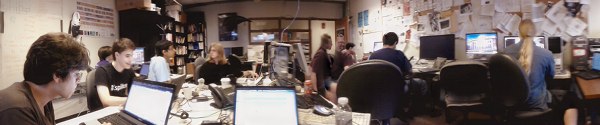
(Photo credit: Obey Arthur Liu; originally on Picasa, license.)
Three weekends ago, I participated in a Debian bug squashing party. It was more fun than I had guessed!
The event worked: we squashed bugs. Geoffrey Thomas (geofft) organized it as an event for MIT's student computing group, SIPB. In this post, I'll review the good parts and the bad. I'll conclude with beaming photos of my two mentees and talk about the bugs they fixed.
So, the good:
- Attendance. As Luke put it, when he arrived, there was hardly anyone there. Then people showed up! And then mentorship and pedagogy happened! In all, 14 people attended, seven of whom are active in Debian or its derivatives (Ubuntu, Debathena).
- We took photos. Arthur took a wide panoramic photo, and I snapped a few good ones, too. (Thanks to Jessica McKellar for letting me borrow her camera.) Here's my full photo set.
- Good, free pizza. Props to geofft for ordering from Beauty's, and props to SIPB for picking up the tab.
- We fixed bugs! I mentored two new Debian contributors through their first release-critical bug fix. Both of them said they would attend similar events in the future. One of my mentees is now idling and asking questions in the #debian-mentors IRC channel.
- The Debian Events team republished the event. MadameZou posted the event to debian.org, giving it a nice stable URL.
- geofft made a good list of bugs to work on. He worked from the release-critical bug list, categorized the bugs by expected difficulty, and made somee short notes about how to fix the bug. This turned out quite useful.
- People printed music to the speakers. If this sounds weird, you should read the SIPB documentation for how to use Gutenbach (written by Liz Denys).
- We had a good ratio of developers to newcomers. This was hugely helpful; from what I saw, new people rarely waited very long for their questions to be answered. Thanks to Luke Faraone, Sam Hartman, Obey Arthur Liu, Karl Ramm, and Christine Spang from Debian, and Geoffrey Thomas from Debathena, for sharing knowledge.
The event was a success, but as always, there are some things that could have gone more smoothly. Here's that list:
- We hadn't prepared for people to do Debian development on Ubuntu. In particular, it took Luke and me about half an hour to come up with a pbuilder command line that worked.
- We didn't contribute to Ubuntu, just Debian. I actually think this is fine, but geofft did originally want people to work on both. He was disappointed, and we could have managed to do that if we had done more prep.
- We could have reached more prospective attendees. I know earlier in the year, daf organized a highly popular Debian packaging tutorial elsewhere on campus. I didn't see any of those people at the event, and I think some would have attended if they had known about it.
- Some people wanted a bit more context. In particular, attendees asked me about what makes a bug release-critical and what it means to do a non-maintainer upload. We could have taken some time to explain these to the whole group; instead, we dove right into hacking. Because we had so many mentors, I think people did get their questions answered, but we can't sustain that if the event grows in size.
- Mentees didn't always get high-quality help. geofft suggested Jessica work on one bug, and when she had a question, she asked Luke Faraone. Luke wasn't familiar with the bug, and he skimmed it, not realizing that the bug changed issues midway through the bug log. As a result, his initial help was unhelpful. After Luke, Jessica, and the bug were on the same page (so to speak), Jessica received clear, sound answers to questions.
Still, it turned out well! I did three NMUs, corresponding to three patches submitted for release-critical bugs by my two mentees. Those mentees were:
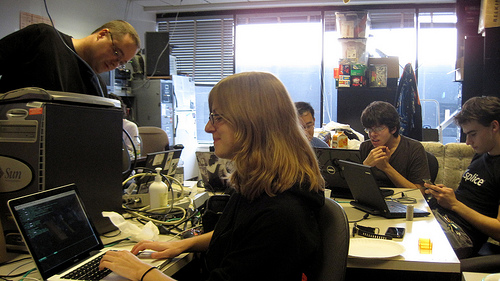 Jessica McKellar
is a software engineer at
Ksplice Oracle and a recent graduate of MIT's EECS program. She solved three release-critical bugs. This was her first direct contribution to Debian. In particular:
- #636201: While updating the package for multiarch support, the maintainer of wildmidi presumably made a typo. A single character was missing from a "Replaces:" declaration in debian/control. This bug caused upgrades to fail. Sam Hartman uploaded an NMU based on a patch Jessica prepared.
- #626420: The scribus-doc package failed to build from source due to a missing build-depends entry. This one was super easy, and served as a good test package for setting up and using pbuilder.
- #565000: The switch to
gcc-4.5 left hubbub unable to build from source due to new GCC warnings that made -Wall fail on the source, although it would succeed with earlier versions of the package. This led to long philosophical discussions about the particularly most reasonable fix: removing -Wall, or adding a more specific exception.
Jessica has since gotten involved in the
Twisted project's personal package archive. Toward the end of the sprint, she explained, "I like fixing bugs. I will totally come to the next bug squashing party."
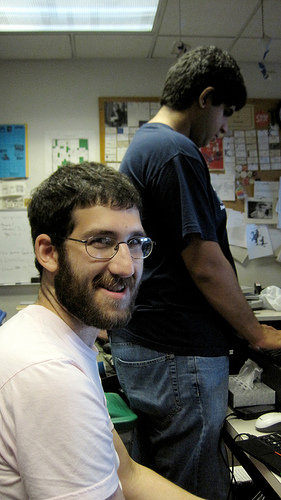 Noah Swartz
is a recent graduate of Case Western Reserve University where he studied Mathematics and played Magic. He is an intern at the MIT Media Lab where he contributes to
DoppelLab in Joe Paradiso's
Responsive Environments group. This was definitely his first direct contribution to Debian. It was also one of the most intense command-line experiences he has had so far. Noah wasn't originally planning to come, but we were having lunch together before the hackathon, and I convinced him to join us.
Noah fixed
#625177, a fails-to-build-from-source (FTBFS) bug in nslint. The problem was that "-Wl" was instead written in all lowercase in the debian/rules file, as "-wl". Noah fixed that, making sure the package properly built in pbuilder, and then spent some quality time with lintian figuring out the right way to write a debian/changelog.
That's a wrap! We'll hopefully have one again in a few months, and before that, I hope to write up a guide so that we run things even more smoothly next time.
 John Layt
recently blogged about his adventure with
having children use
Plasma Active with quite some success.
The task
I was this evening out at a board meeting in my
local scout group, and for such a event you of course need the following
- Agenda
- Treasures report
- Minutes from last meeting
- Various other papers
I ve heard from various people that an iPad is great for such meetings, and produces much less paper waste, so of course, I wanted to try with my brand new Plasma Active tablet.
Before meeting
So before meeting: Charge tablet & fetch needed documents.
Possible issues: Everything was on a my imap server. Minutes was a plain text file, Agenda was a docx file, treasures report was a xls spreadsheet, and the various other papers were pdf files.
For fetching, I ve heard a lot about Kontact Touch and everything using
Akonadi. Besides me not being fully able to properly enter my password in the first 10 tries, and a sometimes flaky internet connection, everything here was a breeze.
To the three first documents, the answer was
Calligra Mobile . Rendered even the docx file better than libreoffice did. And Calligra Mobile was nice and touch friendly and worked pretty well for this. There is also something called Calligra Active , which is supposed to be way cooler, but still misses at least one essential feature to be used for a touchscreen only. It can only open documents passed to it on command line. And I m not yet very comfortable with a onscreen keyboard.
For the last, there was
Okular. The desktop edition of Okular. I was impressed by *how* usable Okular were for a touch screen device. A quick and dirty edition of a mobile Okular could probably be done with remove all toolbars and menubars and such and if no file is passed on command line, then open a file selector window and open selected file , which shouldn t take a person knowing the Okular code much time. But that s still just the Quick and dirty edition
During
And during the meeting, everything worked flawlessly, except the internet on site, so I was happy I had prepared in advance. As a extra bonus, Plasma Active offered the nice
KDE Games, as John Layt also mentioned, for the parts of the meeting where it was a bit boring.
So. At least for me and in this case, Plasma Active did its job, at least to a A. And it is still described as Alpha software.
Issues
There is, though, a few important usability issues:
For QWidget based applications, oxygen s nice desktop feature of being able to move the application by dragging it from almost everywhere is just completely useless on a touch screen device when you are only using full screen applications. Luckily, oxygen-settings can disable this.
Update: People tells me that this has already been fixed.
The Network Manager Plasma Widget, in case of no network , is very hard to activate in order to select a network. A bit larger touch area here would be very nice. Currently, it feels like it is only slightly larger than a dot: .
Future
Oh boy, I m looking forward for Plasma Active getting to Beta or RC status. Or Final!
And btw, I m looking for a job.

This is a direct followup on my blog posting
Finding packages for deinstallation on the commandline with
aptitude.
In the meanwhile on more alias for finding obosolete packages made it
into my zsh configuration. It s an alias to find installed libraries,
-data, -common and other usually only automatically
installed packages, which are not marked as being installed
automatically nevertheless:
alias aptitude-review-unmarkauto-libraries='aptitude -o "Aptitude::Pkg-Display-Limit=( ^lib !-dev$ !-dbg$ !-utils$ !-tools$ !-bin$ !-doc$ !^libreoffice -data$ -common$ -base$ !^r-base ) !~M"'
And yes, this pattern is slightly larger than those from the previous
posting, so here s the used filter in a little bit more readable way:
(
  ^lib
    !-dev$
    !-dbg$
    !-utils$
    !-tools$
    !-bin$
    !-doc$
    !^libreoffice
  -data$
  -common$
  -base$
    !^r-base
)
!~M
It matches all non-automatically installed packages whose name starts
with lib , but is neither a debug symbols package, a development
header package, a documentation package, a package containing supplied
commands, nor a libreoffice package.
Additionally it matches all non-automatically installed packages
ending in -data, -common, or -base, but excludes r-base packages.
Of course you can then mark any erroneously unmarked library by
pressing M (Shift-m).
If you press g for Go afterwards and wonder why nothing to remove
shows up, be reminded that the filter limit is active in this view,
too. So press l for Limit and then Ctrl-u to erase the current
filter limit of this view and press enter to set the new (now empty)
filter, et voil
Hope this is of help for some others, too.

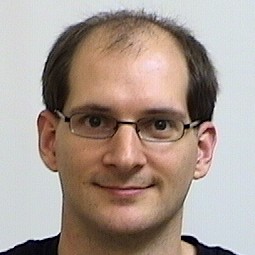
Martin Michlmayr is a Debian developer since 2000 and I share quite a few things with him, starting with his age and involvement in the quality assurance team. He managed to be elected Debian Project Leader in
2003 and
2004.
He s no longer as active as he used to be but his input is always very valuable and he continues to do very interesting things in particular concerning the support of NAS devices. Read on for the details.
Raphael: Who are you?
Martin: I m Martin Michlmayr. I m 32, originally from Austria, and currently living in the UK.
I ve contributed to various free software projects over the years but
Debian is without doubt the one I m most passionate about. I joined Debian
in 2000 when I was a student. I worked on Debian more or less full time
for a few years while I was pretending to study. Later I started a PhD to
do research about quality and management aspects of volunteer free software
projects. I investigated the release process in several free software
projects, in particular looking at time-based releases. After finishing my
PhD in 2007, I joined Hewlett-Packard. I m part of HP s Open Source
Program Office and work on various free software and open source
activities, both internally and within the community.
Raphael: How did you start contributing to Debian?
Martin: I first used Debian in the days of 0.93R6, some time around the end of
1995. The 0.93R6 release was still based on a.out but I needed an
ELF-based system for some application, so I moved to Slackware. I then
quickly moved to Red Hat Linux where I stayed for several years. I
rediscovered Debian in 2000 and quickly decided to join the project. I
cannot recall how I rediscovered Debian but when I did, it was clear to me
that Debian was the ideal project for me: I could identify with its
philosophy, I liked the volunteer nature of the project, and I found the
size and diversity of Debian interesting since a large project offers a lot
of different challenges and opportunities.
I remember how many new things there were to learn and back then the
documentation and other resources for new contributors were nowhere as good
as they are today. My application manager, Julian Gilbey, was a great
help he was incredibly friendly and passionate about Debian. I also
remember meeting up with Peter Palfrader (weasel) for key signing when we
were both in the New Maintainer queue. I was incredibly lucky with my New
Maintainer process and soon became an official Debian Developer. Because
there was a shortage of application managers, my first major contribution
in Debian was to become an application manager myself and help other people
join the project.
Debian is a large project with a long history and a rich culture, so new
contributors should expect that it will take some time to become familiar
with everything. Fortunately, there are many resources, such as
documentation and the debian-mentors list, for new contributors. Another
great way to become familiar with the way things are done in Debian is to
subscribe to various Debian mailing lists and ideally to read some mailing
list archives. It s also a great idea to attend the Debian Conference or
other conferences since meeting people in real life is a great way to
integrate. I remember attending Debian Conference 1 in Bordeaux where I
gave my first public talk.
Finally, new contributors should find an area where they can make a unique
contribution. Most people in Debian maintain packages but there are so
many other ways to contribute. For example, most of my contributions were
not technical but were about coordination and other organizational
activities.
Raphael: What s your biggest achievement within Debian?
Martin: I m particularly proud of a number of achievements:
- New Maintainer: I helped a lot of people join Debian. It s great to
help someone join the project and then see how they contribute. Of course,
some people join Debian and then quickly become inactive or retire you
never know in advance how it will work out. But I had the pleasure to help
some truly outstanding contributors to join Debian.
- Quality Assurance: I helped improve QA processes within Debian. In
particular, I realized a few years ago that a lot of packages had
maintainers who were inactive and that nobody did anything about it. I
started to write to those maintainers to see what could be done. It s hard
because you don t know the circumstance of someone they may be inactive
because of an illness or for other good reasons so you have to be
friendly, but yet persistent. Fortunately, most maintainers I contacted
were truly inactive and so they couldn t complain when I took their
packages away.
- DPL: I acted as the Debian Project Leader for two years. I m
particularly proud of this because Debian is a great project and it was an
honour to represent it. I performed important organizational and
coordination tasks. I also traveled to a lot of conferences and had the
pleasure to meet many Debian Developers as well as users of Debian. It s
very motivating to meet users and to hear how they use Debian and how we
can further improve it.
- Debian on NAS: Debian is without the doubt the Linux distro with the
best support for NAS (Network Attached Storage) devices. I was always
impressed by what the OpenWRT folks have done to support wireless routers
and wanted to do something similar for Debian. Unfortunately, wireless
routers just don t have enough storage for a full distro. But then NAS
devices came along and they obviously have enough space since they are
meant for storage.
Raphael: Speaking about NAS devices: what exactly are you doing on this topic and how can people help?
Martin: There are plenty of instructions on the Internet to install Linux
distributions on NAS or various embedded devices by connecting a serial
console and then typing in hundreds of commands. What I found is that such
instructions significantly limit the user base because they are way too
complicated for most users. There are just too many steps that can go wrong.
So instead, in Debian, we provide a solution that just works: usually, you
download a firmware image for your NAS device from Debian and when you
upgrade you get the Debian installer. You connect to the installer via SSH
and perform a normal installation. The installer knows about the device
and will prepare everything for you automatically for example, it knows
if the device has requirements for the partition layout and it will install
the kernel where the device expects to find it; unfortunately, NAS devices
are not like PCs, so the requirements are different for almost every device
and therefore you need special code to support a new device. Finally,
there are detailed installation guides and we provide help on our mailing
lists.
There are a number of technical areas for improvement. The installation
could be made even easier, and it would be nice to support new platforms
and devices.
A bigger problem is that while we ve implemented a great solution for NAS
devices, we haven t really extended this work to support other classes of
devices. For example, tablets and mobile phones are getting incredibly
popular and we don t have a compelling solution for such devices, mostly
because of the lack of an appropriate GUI.
Raphael: What are your plans for Debian Wheezy?
Martin: I ve recently been asked by Stefano Zacchiroli, our current Debian Project
Leader, to coordinate the care-taking of Debian finances. Debian, as a
volunteer project, relies on donations and in-kind gifts (e.g. hardware) to
maintain its infrastructure and to support various development efforts,
such as funding sprints and other developer gatherings. Debian s money and
other assets are held by affiliate organizations around the world.
My responsibility will be to keep track of money and other assets (e.g.
hardware and trademarks), work with the DPL to establish procedures related
to the use of Debian s assets, and make sure that the procedures are
followed. Finally, we want to publish public statements so our donors know
how we use their donations to further improve Debian. I just started
working on this and this will be my main activity in Debian in the coming
months.
Raphael: Speaking of money, I plan to run a fundraising to get the Debian book I wrote with Roland Mas translated (cf.
http://debian-handbook.info). Is this something Debian should support?
Martin: First of all, I should make it clear that I don t decide how Debian spends
its money. This is up to the DPL to decide together with the project at a
whole. I ll just make sure that procedures are followed and expenses
tracked and reported properly.
Having said that, in my opinion, it s unlikely that Debian as a project will
fund this effort. It would be inconsistent with the position of the
project not to fund work directly (only some related expenses, such as
travel costs to allow Debian teams to organize face-to-face meetings).
Whether Debian should support the fundraising effort by helping to promote
it is another question and that s probably not as clear cut. It looks like
a worthwhile effort, but on the other hand it would be unfair for authors
of other Debian books for Debian to put its weight behind one and there
are many other efforts that are worth promoting if you promote one,
where do you stop? So while it sounds worthwhile, it s probably better for
Debian to stay out of it.
But somehow related to this, I sometimes worry about the fact that there are so
few paid opportunities around Debian. If you contribute to the Linux
kernel for a while, you have an excellent chance to get hired by someone
and to work on the kernel full time. The kernel may be an extreme example
but there are a lot of projects that have more paid opportunities than
Debian, e.g. Mono, GNOME, OpenOffice/LibreOffice and KDE.
Obviously, there are some Debian Developers who can spend some time on
Debian as part of their job. I know that some Canonical employees
contribute to Debian, that support companies like credativ improve Debian
as part of their work, and that system administrators fix bugs or package
new software as they deploy Debian. But I think this is a minority of
contributors and even they don t work full time on Debian. Instead what I
see is that a lot of people leave university, get a job and then no longer
have time for Debian or people start a family and no longer have time.
I can take myself as an example since I don t have nearly as much time as I
did in the past when I was a student.
I guess there are different ways to deal with this problem one would be
to create more paid opportunities around Debian outside the project, another
one might be to make it easier for new volunteers to join the project. I
don t have the answers to these questions but it s something I wonder
about, and I also wonder whether pure volunteer projects can still keep up
with projects with a lot of full time contributors.
Raphael: What motivates you to continue to contribute year after year?
Martin: Debian is a great project with a great mission, goals and people. I
contribute to make Debian a better solution and to promote the free
software philosophy. Finally, the community around Debian provides a lot
of motivation. It s amazing how much I ve learned about other cultures
because of my involvement in Debian and how many friends I ve made over the
years all around the world.
Raphael: Do you have wishes for Debian Wheezy?
Martin: Not really. I m pretty happy with the way things are going at the moment.
We have made a lot of organizational changes in the last few years from
which the project has greatly benefited. I m particularly pleased about
the plans to adopt a time-based freeze.
Raphael: Is there someone in Debian that you admire for their contributions?
Martin: There are many people I admire greatly. I d like to mention Joey Hess
because he s a great example to follow. He doesn t get involved in
politics, is easy to work with and does great technical work. In fact, he
has made not one but several contributions that have completely changed
Debian (debconf, debhelper, and debian-installer). Furthermore, Debian has
a lot of contributors who have done great work over the years but who are
not very vocal about it. People like Colin Watson or Peter Palfrader.
Debian has many unique contributors and the list of people I admire is much
longer than the few people I just mentioned.
Thank you to Martin for the time spent answering my questions. I hope you enjoyed reading his answers as I did. He raised some interesting questions.
Subscribe to my newsletter to get my monthly summary of the Debian/Ubuntu news and to not miss further interviews. You can also follow along on
Identi.ca,
Twitter and
Facebook.
No comment Liked this article? Click here. My blog is Flattr-enabled.
I'm someone who sometimes
has
a beard, and sometimes doesn't. Today, I'm someone with a fairly
long beard, although it's not (yet?) one of the likes of
andrew or
maddog.
I don't think it looks very well on me, but you can blame the government
(or lack thereof) in Belgium. How?! What?! Yes, the government.
A while back, a movie critic working for the RTL (a
Francophone Belgian TV station) decided to keep his beard until the
Belgian government took the oath of office. He was quickly joined by an
actor, and then by
a
Flemish radio presenter (dutch, with pictures). And then by a
whole bunch of people.
I didn't join them, initially. But after a while, when my beard was
starting to get long again, people started asking me, 'is that for the
government?' And initially I said no. But people
kept asking.
Since it seemed like a good excuse for not having shaven that long,
after a while I just decided to say 'yes' for the heck of it. And now,
after having said so for quite a while, I've kindof grown to the
idea.
Which, I guess, means that if the impossible happens, and someone
back home manages to form a government that will take the oath
while
I'm still in Bosnia and Herzegovina, I'll have to go out and buy
some razor equipment.
But I don't expect that to happen. Today, exactly 400 days after the
previous election (yes, it's really been that long), it still doesn't
look as if there's going to be an agreement on anything.
I wish there was
something positive or funny that I could
report on in this whole thing, but it doesn't look like it.
Sigh.

This is a rant. I've made it in various forms in various places
over the years, and I think it's time to put it somewhere so I can
point people at it, and stop repeating myself.
Here's the pebble in my shoe: people keep claiming that
strncpy
is a safer alternative to
strcpy. It's not. It's a slower function
that is not going to make you significantly safer.
The problem with
strcpy is that it's somewhat easy to overflow
the target array:
char src[] = "hello, world";
char dst[5];
strcpy(dst, src); // Oops.
The suggested alternative with
strncpy would be this:
strncpy(dst, src, sizeof(dst));
strncpy gets the size of the destination array as a parameter,
and can therefore make sure the string will fit there. Problem solved?
Not so much.
Every time you do any string handling with C's native string
types and functions, you need to make sure you have allocated
enough memory for each string, you need to keep track of
how much memory you've allocated, and you neet to make sure the
zero byte ('NUL',
'\0') is put there correctly. This is a lot
of details to keep track of, and it's not surprising things
sometimes go wrong.
If your arrays are allocated statically, which is the simplest,
but least useful case, you need to something like this with
strcpy:
if (strlen(src) + 1 > sizeof(dst))
    panic(); // or however you want to handle your errors
strcpy(dst, src);
The
+1 after
strlen is to make room for the zero byte (NUL,
'\0') that is used in C to indicate the end of a string.
With
strncpy, your code is slightly simpler. This
is its attraction.
Problem is, this only works if
dst is an array defined within
the scope of the code. If, as is common, you have received
dst
as an argument to a function,
sizeof(dst) is the size of a
pointer to an element of the array, not the size of the array.
So now you need to track the size explicitly in a second variable:
strncpy(dst, src, dst_size);
Further,
strncpy has an unfortunate error handling mode: it merely fills
the destination array and stops. It does not indicate failure in
any way. It does not terminate the target array with a zero
byte. Since all C string processing assume the zero byte is there,
as soon as you try to use
dst as a string, you're in trouble.
But luckily you can check for that before you call
strncpy:
if (strlen(src) + 1 > dst_size)
    panic(); // or whatever
strncpy(dst, src, dst_size);
By this time, the code is equally hard whether you use
strcpy or
strncpy. With
strncpy you often waste some
extra time, though, filling the unused parts of the target
array with zero bytes: they're almost never necessary.
Alternatively, you can force the zero byte there yourself,
silently truncating a string.
strncpy(dst, src, dst_size);
dst[dst_size - 1] = '\0'; // let's hope dst_size > 0
If your string handling is OK
with strings being randomly shorter than they should be,
possibly you could replace all of them with empty strings,
and save yourself a world of pain.
Instead of
strncpy, use
snprintf. It has sensible
error behavior, and is much more versatile:
n = snprintf(dst, dst_size, "%s", src);
if (n >= dst_size)
    panic();
snprintf still isn't very nice to use. It still requires you
to allocate memory yourself, and keep track of the size of each
array manually. It's also slower for small destination buffers
(but faster for large ones).
The real solution is to abandon C's antiquated string handling,
and use a more sensible helper library instead. There's a bunch
of them around, though none have gained much popularity. I'm
not going to name any of them
,
but just imagine how much nicer
it would be to write code like this instead:
Dynstr *src = dynstr_new_from_cstring("hello, world\n");
Dynstr *cat = dynstr_cat_many(src, src, src, src, src, NULL);
Dynstr *dog = dynstr_substr(cat, 15, 5);
Let the library take care of memory allocations and related
tracking, and concentrate on real problem solving instead.
We did this in
Kannel, back in 1999,
and it wiped out all the buffer overflow problems (until a
co-worker decided it was "more efficient" to use native C strings
instead, promptly introducing a buffer overflow).
All of this string handling is, of course, way nicer in higher
level languages. In fact, whenever you need to deal with string
handling in C, it is probably a sign that you should consider switching
to a higher level language instead.
But whatever you do, stop claiming that
strncpy is safe or
solves any real problems
strcpy has.
Update: Fixed "It does terminate" to say "It does not terminate".
Thanks to Matthew Garrett for pointing that out.
Update2: Fixed example call to
snprintf.
Update3: Fixed the test for
snprintf example.
Thanks, Redditor
axylone.
Also pointed out that
snprintf is slower than the rest.

I had cause to try and get a core dump from a segfaulting process at work the
other day, and I wanted to figure out if fiddling with
/etc/security/limits.conf was going to do the trick (I didn't) or if I
had to modify the initscript to include a
ulimit -c unlimited call.
Of course, on a modern system (>= 2.6.24), one would just take a look at
/proc/PID/limits and get on with life, but unfortunately the
system in question was running 2.6.18, so more fiddling around was required.
I'd found something once before that told me how to do it with GDB, but all I
could find this time around was a
rather
over-complicated Knol article, which made a bunch of assumptions (well
mainly that the binary in question wasn't stripped). So with some help from the
Knol article, I muddled through it.
Disclaimer: I don't profess to be an expert on system internals like this, so
if this eats your first-born, don't come crying to me.
Firstly, you need to know that it's the
getrlimit(2) system call that
you want to be using, and then you need to figure out the number for the
resource limit you want to retrieve. The man page for
getrlimit(),
tells you it's defined in
/usr/include/sys/resource.h, but I've found
that the actual useful bits end up being in
/usr/include/bits/resource.h
I wanted the resource limit for the maximum core dump size, which is
RLIMIT_CORE and has a value of 4.
Next, you need to know that the
getrlimit() system call takes an
integer and a pointer to an
rlimit structure as arguments. We've just
figured out the value for the integer, but we're also going to need to pass a
pointer as the second parameter. A pointer to enough memory to hold an
rlimit structure. Fortunately, the
rlimit structure is pretty
simple:
struct rlimit
    rlim_t rlim_cur;  /* Soft limit */
    rlim_t rlim_max;  /* Hard limit (ceiling for rlim_cur) */
 ;
After a bit of grepping around in
/usr/include, I determined that an
rlim_t is essentially an
unsigned long int, so we need to
allocate a pointer big enough to hold two of them.
Note that if we had an unstripped binary, we could have saved a lot of faffing
around by just going
print sizeof(struct rlimit)
in GDB (assuming that the binary has the
getrlimit symbol in it)
The sure-fire way of figuring out how much memory we need for this pointer is to go
print sizeof(unsigned long int)
in GDB, and then double that (since we want two of them). On my system an
unsigned long int is four bytes, so I'm going to want to allocate
enough memory for 8 bytes.
Now it's time to attach GDB to the offending process and see what the resource
limit currently is. (
gdb -p PID)
(gdb) print malloc(8)
$1 = 152186904
(gdb) print getrlimit(4, $1)
$2 = 0
(gdb) x/2xw $1
0x9123018:	0x00000000	0x7fffffff
(gdb) quit
So in this particular case, we've retrieved the soft and hard limits of the
RLIMIT_CORE resource limit, and you can see that the soft limit is zero, and
the hard limit is unlimited. Note that the
getrlimit() function
returns an integer as its return code, which is what the
$2 = 0 is
above.
Now it's just a case of altering the the resource limits via the preferred
mechanism, restarting the process and then repeating this GDB examination of
the process to check they were changed successfully.
Circumstances where this can all fall down would appear to be ones where the
getrlimit symbol isn't present in the binary, or the binary is compiled as a
position-independent executable. I'd think that in the latter case, the system
is probably modern enough to be running a kernel that supports directly
examining the resource limits via the
/proc filesystem.
Sam Hartman is a Debian developer since 2000. He has never taken any sort of official role within Debian (that is besides package maintainer), yet I know him for his very thoughtful contributions to discussions both on mailing lists and IRL during Debconf.
Until I met him at Debconf, I didn t know that he was blind, and the first reaction was to be impressed because it must be some tremendous effort to read the volume of information that Debian generates on mailing lists. In truth he s at ease with his computer much like I am although he uses it in a completely different way. Read on to learn more, my questions are in bold, the rest is by Sam.
Raphael: Who are you?
Sam: I m Sam Hartman. I m a 35-year-old software engineer. I am a principal consultant and co-owner of a small consulting company, called
Painless Security. I started using Debian in the mid 1990 s around the time of the bo release. I ended up deciding to join the project as a developer in 2000.
Raphael: You re blind and yet you re using your computer as effectively as I am. Can you explain us how you setup your computer ?
Sam: I gave a talk at Debconf9 on how my computer is set up; you can
watch the video for full details.
My main laptop runs Debian. I use the gnome-orca package as my primary screen reader. It speaks the Gnome desktop. It does a relatively good job of speaking Iceweasel/Firefox and Libreoffice.
While it does speak gnome-terminal, it s not really good enough at speaking terminal programs that I am comfortable using it. So, I run Emacs with the Emacspeak package. Within that, I run the Emacs terminal emulator, and within that, I tend to run Screen. For added fun, I often run additional instances of Emacs within the inner screens.
Raphael: Are there important problems in Debian in terms of accessibility to blind people?
KDE documentation talks a lot about accessibility, but at least for blind users, the code completely fails to deliver. That means there are a lot of good packages a blind user cannot use.
The non-free Adobe Flash player has some accessibility, but it could be a lot better. The free alternatives have none.
The free PDF readers have basically no accessibility. You can use pdftotext, but you cannot actually read a PDF in a graphical application.
It s way too easy for a misbehaving program to lock up the entire
accessibility infrastructure. Gnash is a big culprit here: if my
Iceweasel starts Gnash, there s a good chance that either Iceweasel or
the entire desktop will appear to hang from an accessibility
standpoint. Other programs, including gksu tend to fail in this way.
Some of the more dynamic website features like pop up menus or selection lists are really difficult to find and click without causing them to disappear. This gets better and worse over time as the accessibility support in Iceweasel changes and as websites change.
Raphael: What s your biggest achievement within Debian?
Sam: I decided to be a Debian developer because I thought that in 2000,
Debian support for using enterprise security and infrastructure
software was lacking. Back then, any software that included crypto
functionality was segregated into a special non-us archive. Some of
the software was missing; I started by packaging MIT Kerberos for
Debian. Other software had security or enterprise features disabled in
the packages. At the height of working on this, I was maintaining
krb5, some SASL modules, PAM, some PAM modules,OpenAFS, a version of
and Ssh with Kerberos support.
I was also involved in the effort to resolve the legal issues so that
we could move security software into the main archive. I think this
work has been a huge success. In fact, it s been such a success that
other people are now doing most of the work. I still maintain the krb5
package. When I started I felt like I was pushing against the flow
trying to get people to add patches, sometimes even having to fork a
package. However, now, I can maintain just one component and there are enough others who shared my original goal that the work continues.
These days, I m working on something that s an evolution of this
enterprise security work. I m packaging
Project Moonshot for
Debian and Ubuntu. Project Moonshot is a response to the wide variety
of identity management systems such as OpenID, Oauth, SAML, and the
like. Moonshot works to create an identity management approach that
works well both for the web and for client-server and other
applications.
The project is a lot of fun, but the role of Debian in
the project is also interesting. One of the things we want to show
with Moonshot is how our technology can be effective when it is
integrated throughout a platform. To really show the potential it
needs to work with as many applications in a given platform as
possible.
The open and collaborative nature of the Debian community
makes it possible to introduce a new technology and have that
technology evaluated based on its merits. We don t need huge business
relationships or marketing deals to integrate our technology: we need some combination of doing the work ourselves and showing others the benefits of working with us.
For someone trying to do innovative work, the Debian model is powerful.
Raphael: If you could spend all your time on Debian, what would you work on?
Sam: I d really love to work with
the embedded Debian folks. The vision of a single source base that
could be the stack from devices from small embedded devices all the way
up to high-end servers is very appealing. Doing that with Debian
involves a number of challenges. However with the right people working
on meeting these challenges full-time, I think we could offer
something promising. I d also love to have the time to contribute to
project infrastructure: working on the release team, helping
ftpmaster, that sort of thing. However I don t. I m just happy that so much of my consulting practice involves working on open-source software.
Raphael: What s the biggest problem of Debian?
Sam: There s something really not right about how we transition libraries
from unstable to testing. Every time I get involved in a library
transition I m shocked at how complicated it is and how disruptive it
is both to testing and unstable. We need to look at technology and
processes to break up the dependency snarles. For example we don t
have good archive tools for keeping old versions of libraries around
to ease transitions.
If you haven t thought about this issue you ll
probably say that I m being overly picky and this can t be the major
problem for Debian. However, if you think about how much this impacts
our ability to introduce things into unstable around the times of the
freeze or about how much it slows the release process, you may begin to appreciate how big of an issue this is.
Raphael: Is there someone in Debian that you admire for their contributions?
Sam: There are a number of people who have been role models for me over the
years. Anthony Towns really helped me understand a lot of what drives
free-software projects and what needs to be true for positive
motivation. Joey Hess showed us all that sometimes, social problems
do have technical solutions. If the tools are so good that doing the
right thing is far easier than any other course of action, quality
improves.
Thank you to Sam for the time spent answering my questions. I hope you enjoyed reading his answers as I did.
Subscribe to my newsletter to get my monthly summary of the Debian/Ubuntu news and to not miss further interviews. You can also follow along on
Identi.ca,
Twitter and
Facebook.
5 comments Liked this article? Click here. My blog is Flattr-enabled.
 John Atherton
sent me a link to
cyberunions discussing open-source and worker co-ops.
In general, it s a very good show and worth a listen by anyone from the union movement, in my opinion. It s available in Ogg as well as MP3, which I think is also a plus point.
There were a couple of points where I was ranting at the radio, though
The first was the choice to try Skype alternatives. Leaving aside the danger of playing the alternatives game, I can understand why they chose that (the change of corporate control to Microsoft has been in the headlines recently and the phones affect them but not their listeners or readers), but open internet phones are a bit fiddly because they try to move quite a lot of data (audio) in real-time and a lot of domestic network devices don t behave correctly with the protocols that they use to do it.
I agree with their conclusion that the problem is probably networking, but I wonder why they didn t log in to their routers, look at any debugging output and try to find the setting to change? Or try switching on debugging in the software and see what s wrong, or send it to someone who can help? Instead, it seemed like Linphone and Ekiga got blamed for not doing Skype-style router-busting without asking. They don t mention whether they tried switching on
the STUN option mentioned in the Linphone FAQ and I don t see a email on
linphone-users asking for support but I don t read every mail on that list.
Am I being unfair, expecting them to seek support? Maybe but I m not sure. If you got the software from a store, what would you do? Would you throw it away and tell people that the stupid thing doesn t work? Moreover, would you use your podcast to say it doesn t work because users need to be clever enough for that obscure tool? That s a great way to scare people off unnecessarily.
Wouldn t you usually think you might be overlooking some detail and ask for support, from its maker or the place where you got it? I think you d ask. I d probably ask, even though I m available for hire to fix FOSS problems and it s not the proudest feeling when I have a script-reading call-centre worker solve my mistake.
Of course, with most from-store software, you ve paid an artificially-inflated box price, but the bigger cost is your time and that s the same for downloaded free and open source software, so why give it less of a chance to work?
I also think they had easier options, like switching more of their website over to free and open source software, like getting rid of the rubbish comment system which doesn t work if you don t let it run javascript on your browser. I ve had a bit of discussion with them since the show and it seems my first suggestion may no longer work (typical!), so we ll see how that goes.
Back to the show: the next segment did a good job of linking FOSS to the co-operative movement. I really think they should call it Free and Open Source Software and not just open source because I feel the freedom should be important to the labour movement. Also, calling the whole thing open source seems like calling all of the political left Revolutionary Socialism : inaccurate at best. I don t often express this objection these days (I ve bigger targets to work on), but it s important when trying to inform new audiences, else they only see part of our rainbow, a less radical part.
Pretty interesting to suggest Orbea bikes as Mondragon s most famous brand. I d pick Eroski or Caja Laboral. What about you?
Then it moved on to a pretty good description of UK co-ops, mentioning co-ops that I m a member of (
the Co-operative Group) or buy from (John Lewis and Suma). I was surprised that it seemed to stop short and didn t mention any of the co-ops that work with free software, or with any software in fact. Of course, I d love
software.coop to be mentioned, but there are other interesting and very different ones like BristolWireless.net and OSAlliance.com. Globally, many of the worker
tech co-ops are linked through the tech-coop mailing list. This was the second part where I was shouting at the speakers. After all, Debian is a great voluntary project making a fantastic
GNU/Linux distribution, but it is not a worker co-op by a long way and I suspect some of my fellow developers would be horrified to hear that suggested. Why not mention some actual tech worker co-ops?
Finally, before the listener feedback, suggestions of tools which union activists could use. There was some minor confusion about exactly which version or name was really FOSS and a surprising claim about openoffice into LibreOffice (I thought Oracle were still screwing that up
with Apache s help but I may have missed some news), but it was a good list of door-opening suggestions. I hope some activists will take them up.
It seems there s an earlier show about open social networks, which is a topic I ll look at after I finish my series of posts about mailing lists. So, please let me know if you have comments on this show, that show, open social networks or mailing lists which you think I might find interesting, or if there s anything above you d like me to expand upon (or correct often, correct ).
 Session reuse is one of the most important mechanism to
 To avoid a full
 Two mechanisms can be used to accomplish an abbreviated handshake:
 It is difficult to get extensive results this way since you need to
install a lot of browsers to get something valuable. Surprisingly,
Android 2.3.4 browser (as shipped by Cyanogen Mod) does not support
any session resume.
Another way to check if a browser supports session resume is to use a
sniffer and to spot Client Hello messages. If a client tries to
resume a session, it will use an appropriate session identifier or
send a ticket. A simple
 The program will try to establish five consecutive
 ...and not


