Search Results: "angel"

10 May 2016

Reproducible builds folks: Reproducible builds: week 54 in Stretch cycle

What happened in the Reproducible Builds effort between May 1st and May 7th 2016: Media coverage There has been a surprising tweet last week: "Props to @FiloSottile for his nifty gvt golang tool. We're using it to get reproducible builds for a Zika & West Nile monitoring project." and to our surprise Kenn confirmed privately that he indeed meant "reproducible builds" as in "bit by bit identical builds". Wow. We're looking forward to learn more details about this; for now we just know that they are doing this for software quality reasons basically. Two of the four GSoC and Outreachy participants for Reproducible builds posted their introductions to Planet Debian: Toolchain fixes and other upstream developments dpkg 1.18.5 was uploaded fixing two bugs relevant to us: This upload made it necessary to rebase our dpkg on the version on sid again, which Niko Tyni and Lunar promptly did. Then a few days later 1.18.6 was released to fix a regression in the previous upload, and Niko promptly updated our patched version again. Following this Niko Tyni found #823428: "dpkg: many packages affected by dpkg-source: error: source package uses only weak checksums". Alexis Bienven e worked on tex related packages and SOURCE_DATE_EPOCH: Emmanuel Bourg uploaded jflex/1.4.3+dfsg-2, which removes timestamps from generated files. Packages fixed The following 285 packages have become reproducible due to changes in their build dependencies (mostly from GCC honouring SOURCE_DATE_EPOCH, see the previous week report): 0ad abiword abcm2ps acedb acpica-unix actiona alliance amarok amideco amsynth anjuta aolserver4-nsmysql aolserver4-nsopenssl aolserver4-nssqlite3 apbs aqsis aria2 ascd ascii2binary atheme-services audacity autodocksuite avis awardeco bacula ballerburg bb berusky berusky2 bindechexascii binkd boinc boost1.58 boost1.60 bwctl cairo-dock cd-hit cenon.app chipw ckermit clp clustalo cmatrix coinor-cbc commons-pool cppformat crashmail crrcsim csvimp cyphesis-cpp dact dar darcs darkradiant dcap dia distcc dolphin-emu drumkv1 dtach dune-localfunctions dvbsnoop dvbstreamer eclib ed2k-hash edfbrowser efax-gtk efax exonerate f-irc fakepop fbb filezilla fityk flasm flightgear fluxbox fmit fossil freedink-dfarc freehdl freemedforms-project freeplayer freeradius fxload gdb-arm-none-eabi geany-plugins geany geda-gaf gfm gif2png giflib gifticlib glaurung glusterfs gnokii gnubiff gnugk goaccess gocr goldencheetah gom gopchop gosmore gpsim gputils grcompiler grisbi gtkpod gvpe hardlink haskell-github hashrat hatari herculesstudio hpcc hypre i2util incron infiniband-diags infon ips iptotal ipv6calc iqtree jabber-muc jama jamnntpd janino jcharts joy2key jpilot jumpnbump jvim kanatest kbuild kchmviewer konclude krename kscope kvpnc latexdiff lcrack leocad libace-perl libcaca libcgicc libdap libdbi-drivers libewf libjlayer-java libkcompactdisc liblscp libmp3spi-java libpwiz librecad libspin-java libuninum libzypp lightdm-gtk-greeter lighttpd linpac lookup lz4 lzop maitreya meshlab mgetty mhwaveedit minbif minc-tools moc mrtrix mscompress msort mudlet multiwatch mysecureshell nifticlib nkf noblenote nqc numactl numad octave-optim omega-rpg open-cobol openmama openmprtl openrpt opensm openvpn openvswitch owx pads parsinsert pcb pd-hcs pd-hexloader pd-hid pd-libdir pear-channels pgn-extract phnxdeco php-amqp php-apcu-bc php-apcu php-solr pidgin-librvp plan plymouth pnscan pocketsphinx polygraph portaudio19 postbooks-updater postbooks powertop previsat progressivemauve puredata-import pycurl qjackctl qmidinet qsampler qsopt-ex qsynth qtractor quassel quelcom quickplot qxgedit ratpoison rlpr robojournal samplv1 sanlock saods9 schism scorched3d scummvm-tools sdlbasic sgrep simh sinfo sip-tester sludge sniffit sox spd speex stimfit swarm-cluster synfig synthv1 syslog-ng tart tessa theseus thunar-vcs-plugin ticcutils tickr tilp2 timbl timblserver tkgate transtermhp tstools tvoe ucarp ultracopier undbx uni2ascii uniutils universalindentgui util-vserver uudeview vfu virtualjaguar vmpk voms voxbo vpcs wipe x264 xcfa xfrisk xmorph xmount xyscan yacas yasm z88dk zeal zsync zynaddsubfx Last week the 1000th bug usertagged "reproducible" was fixed! This means roughly 2 bugs per day since 2015-01-01. Kudos and huge thanks to everyone involved! Please also note: FTBFS packages have not been counted here and there are still 600 open bugs with reproducible patches provided. Please help bringing that number down to 0! The following packages have become reproducible after being fixed: Some uploads have fixed some reproducibility issues, but not all of them: Uploads which fix reproducibility issues, but currently FTBFS: Patches submitted that have not made their way to the archive yet: Package reviews 54 reviews have been added, 6 have been updated and 44 have been removed in this week. 18 FTBFS bugs have been reported by Chris Lamb, James Cowgill and Niko Tyni. diffoscope development Thanks to Mattia, diffoscope 52~bpo8+1 is available in jessie-backports now. tests.reproducible-builds.org Misc. This week's edition was written by Reiner Herrmann, Holger Levsen and Mattia Rizzolo and reviewed by a bunch of Reproducible builds folks on IRC. Mattia also wrote a small ikiwiki macro for this blog to ease linking reproducible issues, packages in the package tracker and bugs in the Debian BTS.

Lars Wirzenius: Qvarn Platform announcement

In March we started a new company, to develop and support the software whose development I led at my previous job. The software is Qvarn, and it's fully free software, licensed under AGPL3+. The company is QvarnLabs (no website yet). Our plan is to earn a living from this, and our hope is to provide software that is actually useful for helping various organisations handle data securely. The first press release about Qvarn was sent out today. We're still setting up the company and getting operational, but a little publicity never hurts. (Even if it is more marketing-speak and self-promotion than I would normally put on my blog.) So this is what I do for a living now.

The development of the open source Qvarn Platform was led by QvarnLabs CEO Kaius H ggblom (left) and CTO Lars Wirzenius. Helsinki, Finland 10.05.2016 With Privacy by Design, integrated Gluu access management and comprehensive support for regulatory data compliance, Qvarn is set to become the Europe-wide platform of choice for managing workforce identities and providing associated value-added services. Construction industry federations in Sweden, Finland and the Baltic States have been using the Qvarn Platform (http://www.qvarn.org) since October 2015 to securely manage the professional digital identities of close to one million construction workers. Developed on behalf of these same federations, Qvarn is now free and open source software; making it a compelling solution for any organization that needs to manage a secure register of workers data. "There is something universal and fundamental at the core of the Qvarn platform. And that s trust," said Qvarn evangelist Kaius H ggblom. "We decided to make it free, open source and include Gluu access management because we wanted all those using Qvarn or contributing to its continued development to have the freedom to work with the platform in whatever way is best for them." Qvarn has been designed to meet the requirements of the European Union s new General Data Protection Regulation (GDPR), enabling organizations that use the platform to ensure their compliance with the new law. Qvarn has also incorporated the principles of Privacy by Design to minimize the disclosure of non-essential personal information and to give people more control over their data. "Today, Qvarn is used by the construction industry as a way to manage the data of employees, many of whom frequently move across borders. In this way the platform helps to combat the grey economy in the building sector, thereby improving quality and safety, while simultaneously protecting the professional identity data of almost a million individuals," said H ggblom. "Qvarn is so flexible and secure that we envision it becoming the preferred platform for the provision of any value-added services with an identity management component, eventually even supporting monetary transactions." Qvarn is a cloud based solution supported to run on both Amazon Web Services (AWS) and OpenStack. In partnership with Gluu, the platform delivers an out-of-the-box solution that uses open and standard protocols to provide powerful yet flexible identity and access management, including mechanisms for appropriate authentication and authorization. "Qvarn's identity management and governance capabilities perfectly compliment the Gluu Server's access management features," said Founder and CEO of Gluu, Michael Schwartz. "Free open source software (FOSS) is essential to the future of identity and access management. And the FOSS development methodology provides the transparency that is needed to foster the strong sense of community upon which a vibrant ecosystem thrives." Qvarn s development team continues to be led by recognized open source developer and platform architect Lars Wirzenius. He has been developing free and open source software for 30 years and is a renowned expert in the Linux environment, with a particular focus on the Debian distribution. Lars works at all levels of software development from writing code to designing system architecture. About the Qvarn Platform: The Qvarn Platform is free and open source software for managing workforce identities. Qvarn is integrated with the Gluu Server s access management features out of the box, using open and standard protocols to provide the platform with a single common digital identity and mechanisms for appropriate authentication and authorization. A cloud based solution, Qvarn is supported to run on both Amazon Web Services (AWS) and OpenStack. Privacy by Design is central to the architecture of Qvarn and the platform has been third party audited to a security level of HIGH. http://www.qvarn.org For more information, please contact:
Andrew Flowers
andrew.flowers@ellisnichol.com
+358 40 161 5668

8 May 2016

John Goerzen: The Simple Joys of the Plains

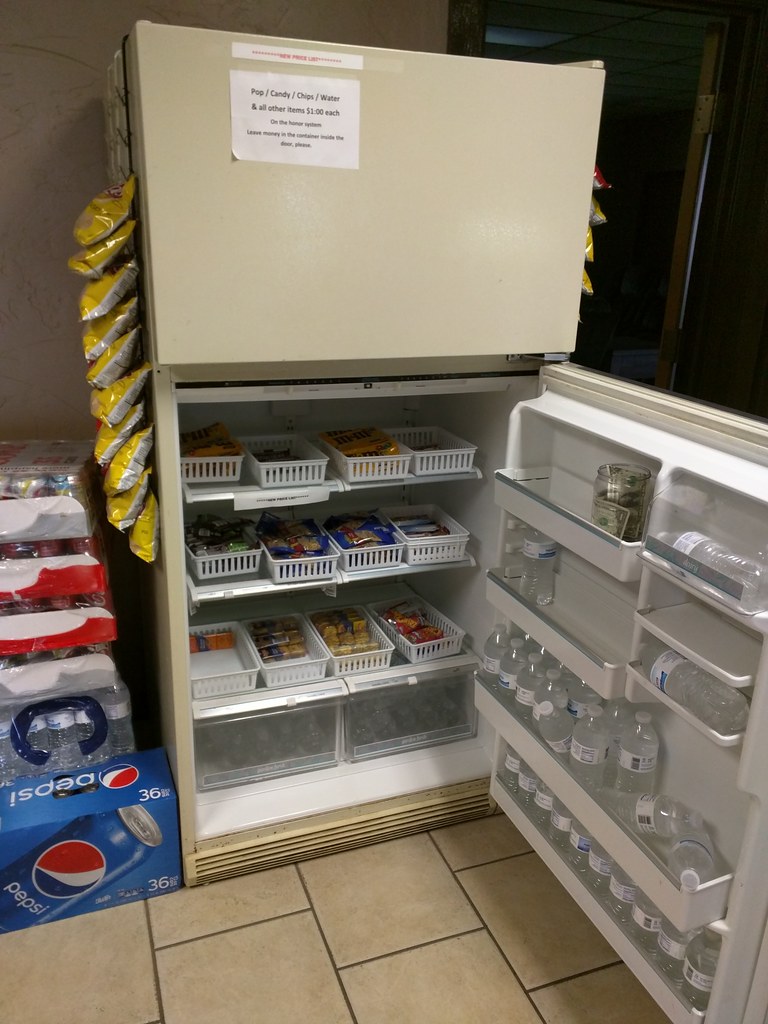
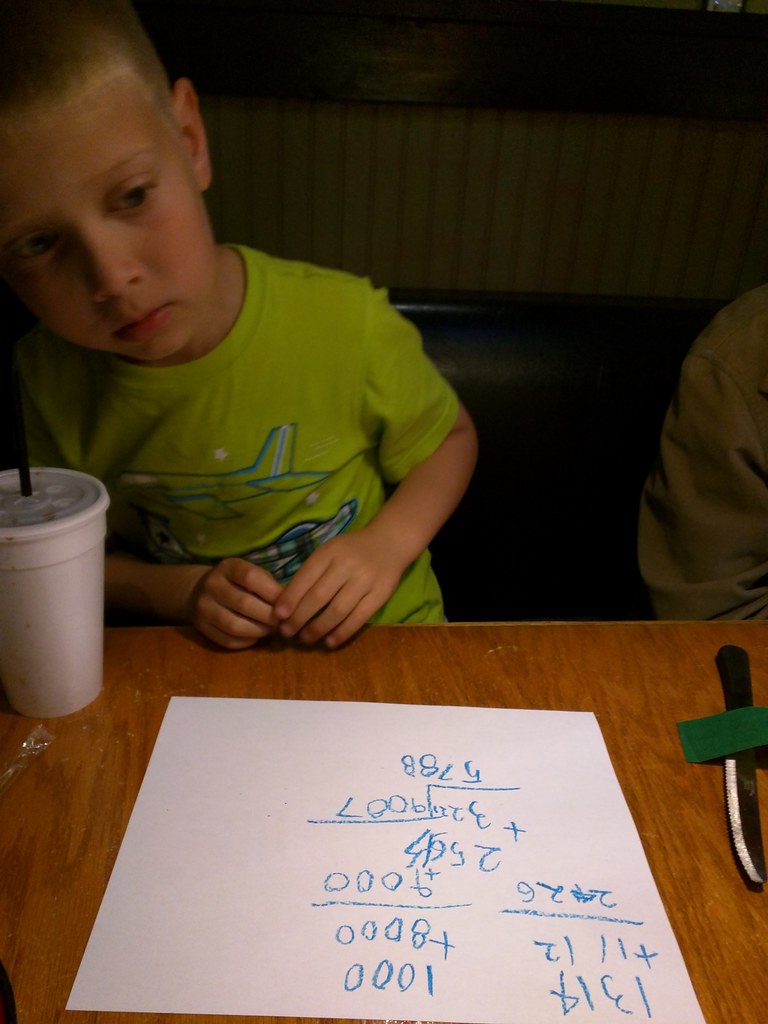
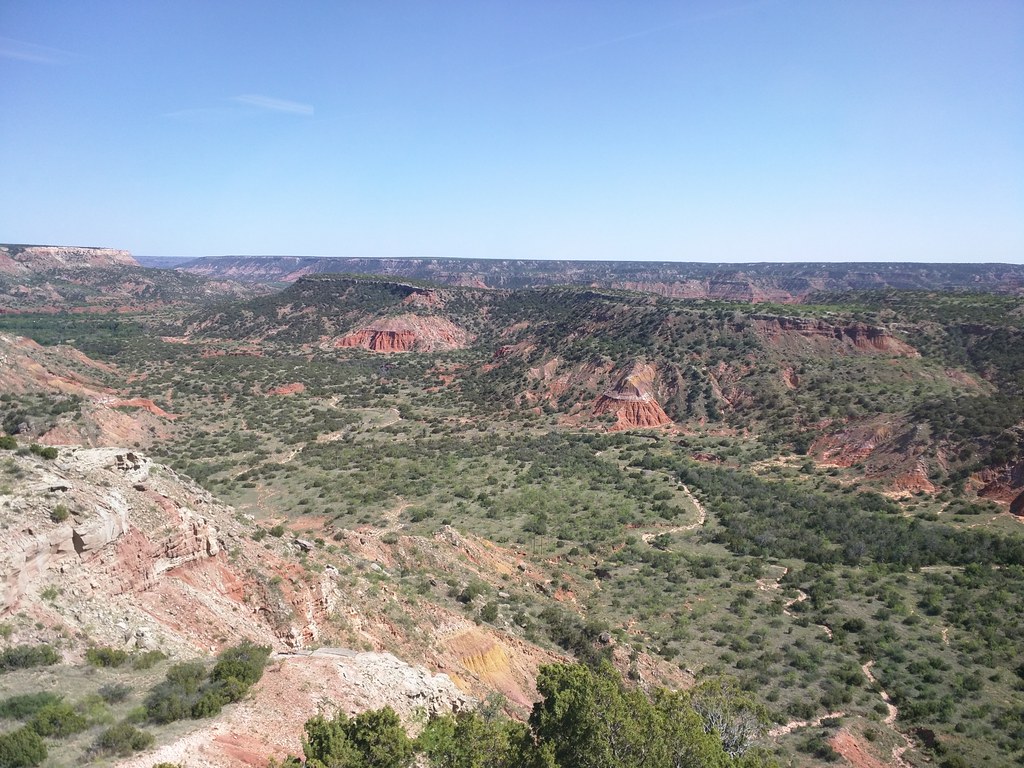
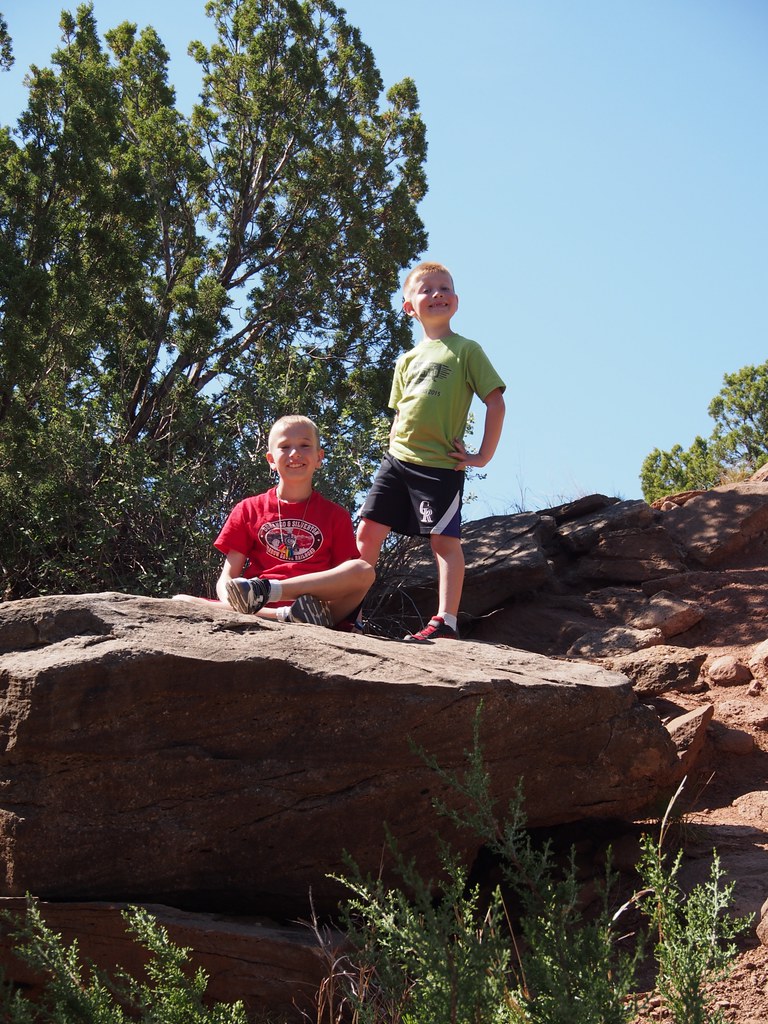
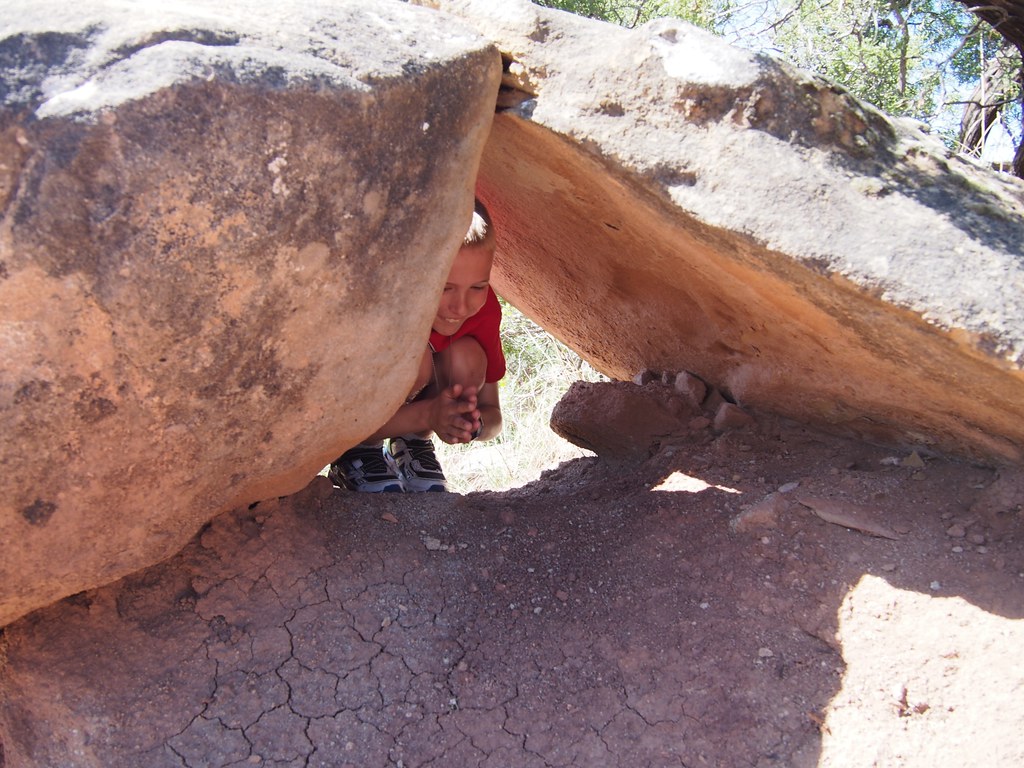
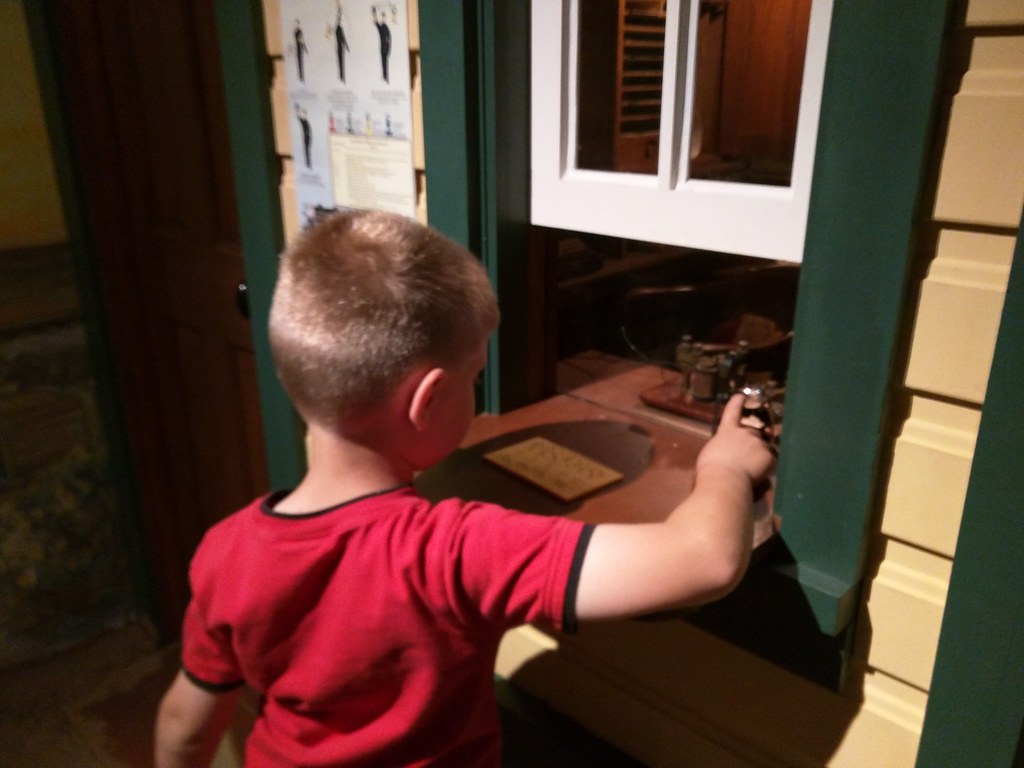
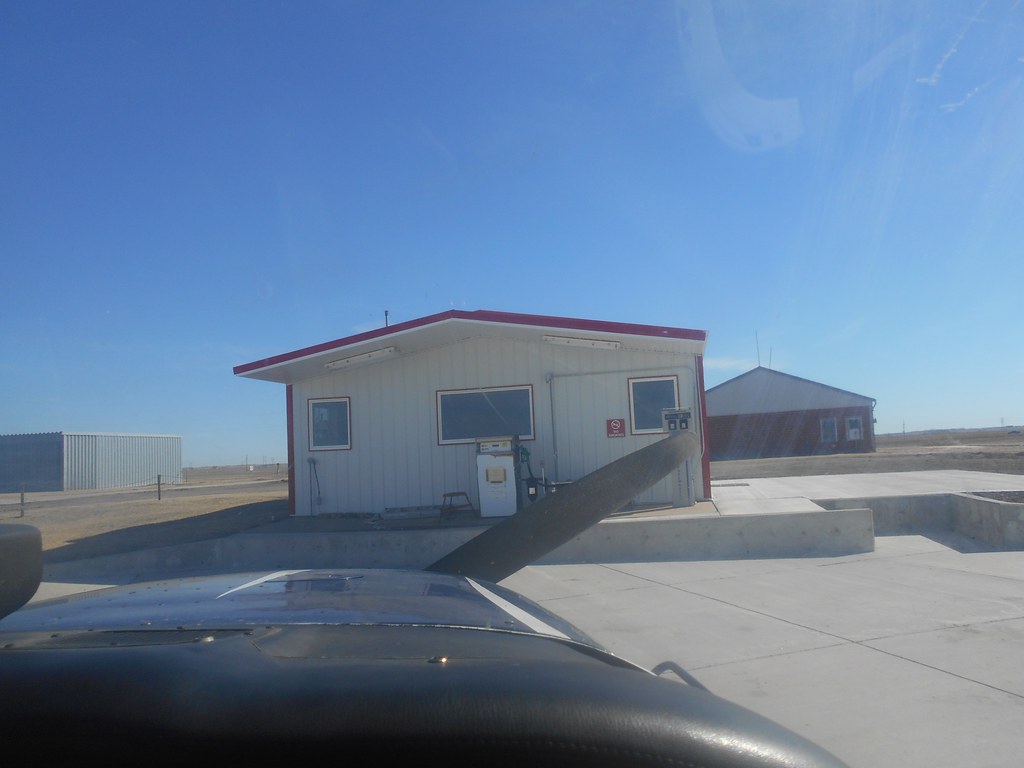
We love to go exploring as a family. Last year, we gave Jacob and Oliver a theme: find places older than Grandpa. They got creative really quick, realizing that any state park counts ( dirt is older than grandpa! ) as did pretty much any museum. Probably our hit from last year was the visit to the tunnels under Ellinwood, KS. Beatrice, NE This year, our theme is places we can fly to . A couple of weeks ago, Laura had a conference in the beautiful small town of Beatrice, NE. So all four of us flew up, and Jacob, Oliver, and I found fun activities while Laura was at her conference. IMG_20160423_125238 We walked around Beatrice a bit, and I noticed this rails-to-trails area. Jacob and Oliver were immediately interested (since it was railroad-related). They quickly turned it into a game of kick-the-dandelion, trying to kick dandelions off their stems and see how high in the air they could get them. The answer: pretty high. IMG_20160423_082343 Of course, you can t go wrong with swimming. Here s Oliver getting ready for some swimming. IMG_20160423_132125 Right near Beatrice is the Homestead National Monument. Of course, the bales decorated like a minion got their attention. IMG_20160423_135141 Like the other national parks, this one has a junior ranger program. You complete a few things in an activity book and take a pledge to protect the park, and then you get a badge and some stickers. Here s Oliver proudly taking his pledge, holding the new raccoon he bought in their gift shop. Canyon, TX Laura and I have been to Canyon, TX, twice the first was for our honeymoon. Yes, we did get some strange looks when we told people we were going to Amarillo for our honeymoon. But it was absolutely perfect for us. We both enjoy the simple gifts of nature. We kept thinking we ve got to take the boys here . So this weekend, we did. We flew a Cessna out there. IMG_20160505_180409 Almost every little general aviation airport seems to have a bowl of candy, a plate of cookies, or some such thing for people that are flying through. I often let Jacob and Oliver choose ONE item. They hit the jackpot when we stopped at West Woodward, Oklahoma for fuel and a break. Two whole fridges stocked with stuff: cans of pop in one, and all sorts of snacks in the other. In typical GA fashion, there was a jar in the fridge asking for $1 if you took something. And it clearly hadn t been emptied in awhile. They also had a nice lounge and a patio. Perfect for munching while watching the activities on the ramp. IMG_20160505_211110 After landing at the beautiful little Tradewind Airport in Amarillo, we ate dinner at Feldman s Wrong-Way Diner in Canyon, TX. Oh my, was that ever popular with the boys. The eagerly looked around to find anything that was wrong a plane hanging upside down from the ceiling, a direction sign saying Tattoine 30 parsecs , movie posters hung upside down, whatever it might be. The fact that model trains were whirring past overhead certainly didn t hurt either. IMG_20160505_214127 They had a giant bin of crayons by the entrance. Jacob and Oliver each grabbed a fistful, and decided it would be fun to do some math problems while we wait. Oliver particularly got into that, and was quite accurate on his large addition problems. Impressive for a first-grader! IMG_20160506_163801 Of course, the big highlight of the area is Palo Duro Canyon. Jacob and Oliver were so eager to explore the canyon that they were just about bubbling over with excitement the night before. They decided that we should explore one of the most difficult trails in the canyon one that would take us from the bottom of the canyon all the way to the top and back, about 2.5 miles each way. P5060008 And they LOVED it. We d stop every few minutes to climb on some rocks, smash up some pieces of sandstone, munch on a snack, or even watch a lizard scurry past. P5060003 IMG_20160506_203218 At the trading post in the canyon, both boys explored the gift shop. Jacob happily purchased a Texas magnet and Palo Duro Canyon keychain, which he carried around the rest of the weekend. Oliver loves stuffed animals, and he bought a cuddly little (but long) snake. When we got back to the hotel, he tied a couple of knots in it, and it became snake airlines . Here is the snake airline taking off. He named it Rattletail the friendly snake , which I thought was a pretty nifty name. IMG_20160507_075730 The hotel s waffle maker made Texas-shaped waffles, clearly a hit! IMG_20160507_101653 Saturday, we explored the absolutely massive Panhandle-Plains Historical Museum. (How does something that huge wind up in Canyon, TX?) Both boys enjoyed spending hours there. Here s Oliver in Pioneer Town (an indoor recreation of a 1900s town) sending a telegraph message. Oliver wanted to help with the plane. He helped me tie it down in Amarillo, helped check it over during preflight, basically got involved in every part of it. Jacob studied aviation maps (sectionals) with me, planning our flight, figuring out how fast we d go. I loaded Avare (an Android app) on an old tablet for him, so he had aviation maps in the cockpit just like me. He would be telling us how fast we were going every so often, pointing out landmarks, etc. When it was time to head back home, both boys wanted to stay longer a sure sign of a good trip. They wanted to hike another trail in the canyon, go back to the museum, and eat at Feldman s 18 more times. (We got there twice, which was plenty for Laura and me!) On our drive home, Oliver said, Dad-o, will you teach me to be a pilot? You should be my flight instructor. Then I could fly everywhere with you. Now that just makes a dad s day.

3 May 2016

Carl Chenet: Feed2tweet, your RSS feed to Twitter Python self-hosted app

Feed2tweet is a self-hosted Python app to send you RSS feed to Twitter. Feed2tweet is in production for Le Journal du hacker, a French Hacker News-style FOSS website and LinuxJobs.fr, the job board of the French-speaking FOSS community. linuxjobs-horizontale Feed2tweet 0.3 now only runs with Python 3. It also fixes a nasty bug with RSS feeds modifying the RSS entry orders. Have a look at the Feed2tweet 0.3 changelog: Using Feed2tweet? Send us bug reports/feature requests/push requests/comments about it!

2 May 2016

Vincent Bernat: Pragmatic Debian packaging

While the creation of Debian packages is abundantly documented, most tutorials are targeted to packages implementing the Debian policy. Moreover, Debian packaging has a reputation of being unnecessarily difficult1 and many people prefer to use less constrained tools2 like fpm or CheckInstall. However, I would like to show how building Debian packages with the official tools can become straightforward if you bend some rules:
  1. No source package will be generated. Packages will be built directly from a checkout of a VCS repository.
  2. Additional dependencies can be downloaded during build. Packaging individually each dependency is a painstaking work, notably when you have to deal with some fast-paced ecosystems like Java, Javascript and Go.
  3. The produced packages may bundle dependencies. This is likely to raise some concerns about security and long-term maintenance, but this is a common trade-off in many ecosystems, notably Java, Javascript and Go.

Pragmatic packages 101 In the Debian archive, you have two kinds of packages: the source packages and the binary packages. Each binary package is built from a source package. You need a name for each package. As stated in the introduction, we won t generate a source package but we will work with its unpacked form which is any source tree containing a debian/ directory. In our examples, we will start with a source tree containing only a debian/ directory but you are free to include this debian/ directory into an existing project. As an example, we will package memcached, a distributed memory cache. There are four files to create:
  • debian/compat,
  • debian/changelog,
  • debian/control, and
  • debian/rules.
The first one is easy. Just put 9 in it:
echo 9 > debian/compat
The second one has the following content:
memcached (0-0) UNRELEASED; urgency=medium
  * Fake entry
 -- Happy Packager <happy@example.com>  Tue, 19 Apr 2016 22:27:05 +0200
The only important information is the name of the source package, memcached, on the first line. Everything else can be left as is as it won t influence the generated binary packages.

The control file debian/control describes the metadata of both the source package and the generated binary packages. We have to write a block for each of them.
Source: memcached
Maintainer: Vincent Bernat <bernat@debian.org>
Package: memcached
Architecture: any
Description: high-performance memory object caching system
The source package is called memcached. We have to use the same name as in debian/changelog. We generate only one binary package: memcached. In the remaining of the example, when you see memcached, this is the name of a binary package. The Architecture field should be set to either any or all. Use all exclusively if the package contains only arch-independent files. In doubt, just stick to any. The Description field contains a short description of the binary package.

The build recipe The last mandatory file is debian/rules. It s the recipe of the package. We need to retrieve memcached, build it and install its file tree in debian/memcached/. It looks like this:
#!/usr/bin/make -f
DISTRIBUTION = $(shell lsb_release -sr)
VERSION = 1.4.25
PACKAGEVERSION = $(VERSION)-0~$(DISTRIBUTION)0
TARBALL = memcached-$(VERSION).tar.gz
URL = http://www.memcached.org/files/$(TARBALL)
%:
    dh $@
override_dh_auto_clean:
override_dh_auto_test:
override_dh_auto_build:
override_dh_auto_install:
    wget -N --progress=dot:mega $(URL)
    tar --strip-components=1 -xf $(TARBALL)
    ./configure --prefix=/usr
    make
    make install DESTDIR=debian/memcached
override_dh_gencontrol:
    dh_gencontrol -- -v$(PACKAGEVERSION)
The empty targets override_dh_auto_clean, override_dh_auto_test and override_dh_auto_build keep debhelper from being too smart. The override_dh_gencontrol target sets the package version3 without updating debian/changelog. If you ignore the slight boilerplate, the recipe is quite similar to what you would have done with fpm:
DISTRIBUTION=$(lsb_release -sr)
VERSION=1.4.25
PACKAGEVERSION=$ VERSION -0~$ DISTRIBUTION 0
TARBALL=memcached-$ VERSION .tar.gz
URL=http://www.memcached.org/files/$ TARBALL 
wget -N --progress=dot:mega $ URL 
tar --strip-components=1 -xf $ TARBALL 
./configure --prefix=/usr
make
make install DESTDIR=/tmp/installdir
# Build the final package
fpm -s dir -t deb \
    -n memcached \
    -v $ PACKAGEVERSION  \
    -C /tmp/installdir \
    --description "high-performance memory object caching system"
You can review the whole package tree on GitHub and build it with dpkg-buildpackage -us -uc -b.

Pragmatic packages 102 At this point, we can iterate and add several improvements to our memcached package. None of those are mandatory but they are usually worth the additional effort.

Build dependencies Our initial build recipe only work when several packages are installed, like wget and libevent-dev. They are not present on all Debian systems. You can easily express that you need them by adding a Build-Depends section for the source package in debian/control:
Source: memcached
Build-Depends: debhelper (>= 9),
               wget, ca-certificates, lsb-release,
               libevent-dev
Always specify the debhelper (>= 9) dependency as we heavily rely on it. We don t require make or a C compiler because it is assumed that the build-essential meta-package is installed and it pulls those. dpkg-buildpackage will complain if the dependencies are not met. If you want to install those packages from your CI system, you can use the following command4:
mk-build-deps \
    -t 'apt-get -o Debug::pkgProblemResolver=yes --no-install-recommends -qqy' \
    -i -r debian/control
You may also want to investigate pbuilder or sbuild, two tools to build Debian packages in a clean isolated environment.

Runtime dependencies If the resulting package is installed on a freshly installed machine, it won t work because it will be missing libevent, a required library for memcached. You can express the dependencies needed by each binary package by adding a Depends field. Moreover, for dynamic libraries, you can automatically get the right dependencies by using some substitution variables:
Package: memcached
Depends: $ misc:Depends , $ shlibs:Depends 
The resulting package will contain the following information:
$ dpkg -I ../memcached_1.4.25-0\~unstable0_amd64.deb   grep Depends
 Depends: libc6 (>= 2.17), libevent-2.0-5 (>= 2.0.10-stable)

Integration with init system Most packaged daemons come with some integration with the init system. This integration ensures the daemon will be started on boot and restarted on upgrade. For Debian-based distributions, there are several init systems available. The most prominent ones are:
  • System-V init is the historical init system. More modern inits are able to reuse scripts written for this init, so this is a safe common denominator for packaged daemons.
  • Upstart is the less-historical init system for Ubuntu (used in Ubuntu 14.10 and previous releases).
  • systemd is the default init system for Debian since Jessie and for Ubuntu since 15.04.
Writing a correct script for the System-V init is error-prone. Therefore, I usually prefer to provide a native configuration file for the default init system of the targeted distribution (Upstart and systemd).

System-V If you want to provide a System-V init script, have a look at /etc/init.d/skeleton on the most ancient distribution you want to target and adapt it5. Put the result in debian/memcached.init. It will be installed at the right place, invoked on install, upgrade and removal. On Debian-based systems, many init scripts allow user customizations by providing a /etc/default/memcached file. You can ship one by putting its content in debian/memcached.default.

Upstart Providing an Upstart job is similar: put it in debian/memcached.upstart. For example:
description "memcached daemon"
start on runlevel [2345]
stop on runlevel [!2345]
respawn
respawn limit 5 60
expect daemon
script
  . /etc/default/memcached
  exec memcached -d -u $USER -p $PORT -m $CACHESIZE -c $MAXCONN $OPTIONS
end script
When writing an Upstart job, the most important directive is expect. Be sure to get it right. Here, we use expect daemon and memcached is started with the -d flag.

systemd Providing a systemd unit is a bit more complex. The content of the file should go in debian/memcached.service. For example:
[Unit]
Description=memcached daemon
After=network.target
[Service]
Type=forking
EnvironmentFile=/etc/default/memcached
ExecStart=/usr/bin/memcached -d -u $USER -p $PORT -m $CACHESIZE -c $MAXCONN $OPTIONS
Restart=on-failure
[Install]
WantedBy=multi-user.target
We reuse /etc/default/memcached even if it is not considered a good practice with systemd6. Like for Upstart, the directive Type is quite important. We used forking as memcached is started with the -d flag. You also need to add a build-dependency to dh-systemd in debian/control:
Source: memcached
Build-Depends: debhelper (>= 9),
               wget, ca-certificates, lsb-release,
               libevent-dev,
               dh-systemd
And you need to modify the default rule in debian/rules:
%:
    dh $@ --with systemd
The extra complexity is a bit unfortunate but systemd integration is not part of debhelper7. Without those additional modifications, the unit will get installed but you won t get a proper integration and the service won t be enabled on install or boot.

Dedicated user Many daemons don t need to run as root and it is a good practice to ship a dedicated user. In the case of memcached, we can provide a _memcached user8. Add a debian/memcached.postinst file with the following content:
#!/bin/sh
set -e
case "$1" in
    configure)
        adduser --system --disabled-password --disabled-login --home /var/empty \
                --no-create-home --quiet --force-badname --group _memcached
        ;;
esac
#DEBHELPER#
exit 0
There is no cleanup of the user when the package is removed for two reasons:
  1. Less stuff to write.
  2. The user could still own some files.
The utility adduser will do the right thing whatever the requested user already exists or not. You need to add it as a dependency in debian/control:
Package: memcached
Depends: $ misc:Depends , $ shlibs:Depends , adduser
The #DEBHELPER# marker is important as it will be replaced by some code to handle the service configuration files (or some other stuff). You can review the whole package tree on GitHub and build it with dpkg-buildpackage -us -uc -b.

Pragmatic packages 103 It is possible to leverage debhelper to reduce the recipe size and to make it more declarative. This section is quite optional and it requires understanding a bit more how a Debian package is built. Feel free to skip it.

The big picture There are four steps to build a regular Debian package:
  1. debian/rules clean should clean the source tree to make it pristine.
  2. debian/rules build should trigger the build. For an autoconf-based software, like memcached, this step should execute something like ./configure && make.
  3. debian/rules install should install the file tree of each binary package. For an autoconf-based software, this step should execute make install DESTDIR=debian/memcached.
  4. debian/rules binary will pack the different file trees into binary packages.
You don t directly write each of those targets. Instead, you let dh, a component of debhelper, do most of the work. The following debian/rules file should do almost everything correctly with many source packages:
#!/usr/bin/make -f
%:
    dh $@
For each of the four targets described above, you can run dh with --no-act to see what it would do. For example:
$ dh build --no-act
   dh_testdir
   dh_update_autotools_config
   dh_auto_configure
   dh_auto_build
   dh_auto_test
Each of those helpers has a manual page. Helpers starting with dh_auto_ are a bit magic . For example, dh_auto_configure will try to automatically configure a package prior to building: it will detect the build system and invoke ./configure, cmake or Makefile.PL. If one of the helpers do not do the right thing, you can replace it by using an override target:
override_dh_auto_configure:
    ./configure --with-some-grog
Those helpers are also configurable, so you can just alter a bit their behaviour by invoking them with additional options:
override_dh_auto_configure:
    dh_auto_configure -- --with-some-grog
This way, ./configure will be called with your custom flag but also with a lot of default flags like --prefix=/usr for better integration. In the initial memcached example, we overrode all those magic targets. dh_auto_clean, dh_auto_configure and dh_auto_build are converted to no-ops to avoid any unexpected behaviour. dh_auto_install is hijacked to do all the build process. Additionally, we modified the behavior of the dh_gencontrol helper by forcing the version number instead of using the one from debian/changelog.

Automatic builds As memcached is an autoconf-enabled package, dh knows how to build it: ./configure && make && make install. Therefore, we can let it handle most of the work with this debian/rules file:
#!/usr/bin/make -f
DISTRIBUTION = $(shell lsb_release -sr)
VERSION = 1.4.25
PACKAGEVERSION = $(VERSION)-0~$(DISTRIBUTION)0
TARBALL = memcached-$(VERSION).tar.gz
URL = http://www.memcached.org/files/$(TARBALL)
%:
    dh $@ --with systemd
override_dh_auto_clean:
    wget -N --progress=dot:mega $(URL)
    tar --strip-components=1 -xf $(TARBALL)
override_dh_auto_test:
    # Don't run the whitespace test
    rm t/whitespace.t
    dh_auto_test
override_dh_gencontrol:
    dh_gencontrol -- -v$(PACKAGEVERSION)
The dh_auto_clean target is hijacked to download and setup the source tree9. We don t override the dh_auto_configure step, so dh will execute the ./configure script with the appropriate options. We don t override the dh_auto_build step either: dh will execute make. dh_auto_test is invoked after the build and it will run the memcached test suite. We need to override it because one of the test is complaining about odd whitespaces in the debian/ directory. We suppress this rogue test and let dh_auto_test executes the test suite. dh_auto_install is not overriden either, so dh will execute some variant of make install. To get a better sense of the difference, here is a diff:
--- memcached-intermediate/debian/rules 2016-04-30 14:02:37.425593362 +0200
+++ memcached/debian/rules  2016-05-01 14:55:15.815063835 +0200
@@ -12,10 +12,9 @@
 override_dh_auto_clean:
-override_dh_auto_test:
-override_dh_auto_build:
-override_dh_auto_install:
    wget -N --progress=dot:mega $(URL)
    tar --strip-components=1 -xf $(TARBALL)
-   ./configure --prefix=/usr
-   make
-   make install DESTDIR=debian/memcached
+
+override_dh_auto_test:
+   # Don't run the whitespace test
+   rm t/whitespace.t
+   dh_auto_test
It is up to you to decide if dh can do some work for you, but you could try to start from a minimal debian/rules and only override some targets.

Install additional files While make install installed the essential files for memcached, you may want to put additional files in the binary package. You could use cp in your build recipe, but you can also declare them:
  • files listed in debian/memcached.docs will be copied to /usr/share/doc/memcached by dh_installdocs,
  • files listed in debian/memcached.examples will be copied to /usr/share/doc/memcached/examples by dh_installexamples,
  • files listed in debian/memcached.manpages will be copied to the appropriate subdirectory of /usr/share/man by dh_installman,
Here is an example using wildcards for debian/memcached.docs:
doc/*.txt
If you need to copy some files to an arbitrary location, you can list them along with their destination directories in debian/memcached.install and dh_install will take care of the copy. Here is an example:
scripts/memcached-tool usr/bin
Using those files make the build process more declarative. It is a matter of taste and you are free to use cp in debian/rules instead. You can review the whole package tree on GitHub.

Other examples The GitHub repository contains some additional examples. They all follow the same scheme:
  • dh_auto_clean is hijacked to download and setup the source tree
  • dh_gencontrol is modified to use a computed version
Notably, you ll find daemons in Java, Go, Python and Node.js. The goal of those examples is to demonstrate that using Debian tools to build Debian packages can be straightforward. Hope this helps.

  1. People may remember the time before debhelper 7.0.50 (circa 2009) where debian/rules was a daunting beast. However, nowaday, the boilerplate is quite reduced.
  2. The complexity is not the only reason. Those alternative tools enable the creation of RPM packages, something that Debian tools obviously don t.
  3. There are many ways to version a package. Again, if you want to be pragmatic, the proposed solution should be good enough for Ubuntu. On Debian, it doesn t cover upgrade from one distribution version to another, but we assume that nowadays, systems get reinstalled instead of being upgraded.
  4. You also need to install devscripts and equivs package.
  5. It s also possible to use a script provided by upstream. However, there is no such thing as an init script that works on all distributions. Compare the proposed with the skeleton, check if it is using start-stop-daemon and if it sources /lib/lsb/init-functions before considering it. If it seems to fit, you can install it yourself in debian/memcached/etc/init.d/. debhelper will ensure its proper integration.
  6. Instead, a user wanting to customize the options is expected to edit the unit with systemctl edit.
  7. See #822670
  8. The Debian Policy doesn t provide any hint for the naming convention of those system users. A common usage is to prefix the daemon name with an underscore (like _memcached). Another common usage is to use Debian- as a prefix. The main drawback of the latest solution is that the name is likely to be replaced by the UID in ps and top because of its length.
  9. We could call dh_auto_clean at the end of the target to let it invoke make clean. However, it is assumed that a fresh checkout is used before each build.

1 May 2016

Lior Kaplan: Backporting of PHP security fixes

4 months ago I wrote my thoughts about PHP support during the PHP 5 support timeline vote:
I think we should limit what we guarantee (meaning keeping only one year of security support till end of 2017), and encourage project members and the eco-system (e.g. Linux distributions) to maintain further security based on best effort. This is already the case for out of official support releases like the 5.3 and 5.4 branches (examples for backports done by Debian: 5.3 and 5.4). And of course, we also have companies that make their money out of long term support (e.g. RedHat). On the other hand, we should help the eco system in doing such extended support, and hosting backported fixes in the project s git repo instead of having each Linux disto do the same patch work on its own.
But suggesting to others what they should do is easy, so I decided to finally find the time to also implement this myself. I ve started with back porting PHP 5.5 fixes to PHP 5.4, resulting in a GitHub repository with all the fixes, including CVE info NEWS file entries and references to the original commits. See https://github.com/kaplanlior/php-src/commits/PHP-5.4-security-backports . I hope this would later on find it s way into PHP LTS packages for Debian Wheezy. Next step would be to start doing the same for PHP 5.3 (back porting from PHP 5.4, and later on also from PHP 5.5). This can be in use for RHEL 6.x (as LTS support for Debian Squeeze was recently finished). The main idea of this repo, is to have a more central location for such work, hoping people would review and contribute fixes that should be taken into consideration. During the process of digging into the CVE information and the commits, I m also filling up a info such as CVE IDs to the NEWS file (e.g. https://github.com/php/php-src/pull/1892/files) and the web changelog (e.g. https://github.com/php/web-php/commits?author=kaplanlior), so users and researchers would find this info where it should be instead of digging themselves.
Filed under: Debian GNU/Linux, PHP

26 April 2016

Niels Thykier: Putting Debian packages in labelled boxes

Lintian 2.5.44 was released the other day and (to most) the most significant bug fix was probably that Lintian learned about Policy 3.9.8. I would like to thank Axel Beckert for doing that. Notably it also made me update the test suite so to make future policy releases less painful. For others, it might be the fact that Lintian now accepts (valid) versioned provides (which seemed prudent now that Britney accepts them as well). Newcomers might appreciate that we are giving a much more sensible warning when they have extra spaces in their changelog sign off line (rather than pretending it is an improper NMU). But I digress What I am here to talk about is that Lintian 2.5.44 started classifying packages based on various facts or properties , we can determine. Therefore: Here are some of the labelled boxes your packages will be put into[0]: The tags themselves are (as mentioned) mere classifications and their primary purpose is to classify or measure certain properties. With them any body can download the data set and come with some bold statement about Debian packages (hopefully without relying too much on lies, damned lies and statistics ). Lets try that immediately! In the next release, we will also add tracking of auto-generated snippets from dh_*-tools. Currently unversioned, but I hope to add versioning to that so we can find and rebuild packages that have been built with buggy autoscripts (like #788098) If you want to see the classification tags for your package, please run lintian with like this:
# Add classification tags
$ lintian -L +classification <pkg-or-changes>
# Or if you want only classification tags$ lintian -L =classification <pkg-or-changes>
Please keep in mind that classification tags ( C ) are not issues in themselves. Lintian is simply attempting to add a visible indicator about a given fact or property in the package nothing more, nothing less. Future work help (read: patches) welcome: [0] Mind you, the reporting framework s handling of these tags could certainly be improved. [1] Please note how it distinguishes 1.0 into native and non-native based on whether the package has a diff.gz. Presumably that can be exploited somehow [2] Disclaimer: At the time of writing, only ~80% of the archive have been processed. This is computed as: NS / (NS + WS), where NS and WS are the number of unique packages with the tags no-ctrl-scripts and ctrl-script respectively. [3] or maybe not, but we got two packages classified as using both CDBS and the dh-sequencer. I have not looked at it in detail. For the curious: libmecab-java and ctioga2.
Filed under: Debian, Lintian

25 April 2016

Antoine Beaupr : My free software activities, April 2016

Debian Long Term Support (LTS) This is my 5th month working on Debian LTS, started by Raphael Hertzog at Freexian. This is my largest month so far, in which I worked on completing the Xen and NSS packages updates from last month, but also spent a significant amount of time working on phpMyAdmin and libidn.

Updates to NSS and Xen completed This basically consisted on following up on the reviews from other security people. I basically continued building up on Brian's work and tested the package on a test server at Koumbit, which seems to have survived well the upgrade. The details are in this post to the debian-lts mailing list. As for NSS, the package was mostly complete, but I forgot to ship the tests for some reason, so I added them back. I also wrote the release team to see if it was possible to update NSS to the same version in all suites. Unfortunately, this issue is still pending, but I still hope we can find better ways of managing that package in the long term.

IDN and phpMyAdmin Most of my time this month was spent working on IDN and phpMyAdmin. Unfortunately, it turns out that someone else had worked on the libidn package. This is partly my fault: I forgot to check in the dsa-needed.txt file for assignment before working on the package. But considering how in flux the workflow currently is with the switch between the main security team and the LTS team for the wheezy maintenance, I don't feel too bad. Still, I prepared a package which was a bit more painful than it should have been because of GNUlib. I didn't even know about GNUlib before, oddly enough, and after that experience, I feel that it should just not exist at all anymore. I have filed a bug to remove that dependency at the very least, but I do not clearly see how such a tool is necessary on Debian at this point in time. But phpMyAdmin, no one had worked on that. And I understand why: even though it's a very popular package, there were quite a few outstanding issues (8!) in Wheezy, with 10-15 patches to be ported. Plus, it's ... well, PHP. And old PHP at that, with parts of it with modern autoloader classes, and other with mixed HTML and PHP content, require (and not require_once) and all sorts of nasty things you still find in the PHP universe. I nevertheless managed to produce a new Debian package for wheezy and test it on Koumbit's test servers. Hopefully, that can land into Wheezy soon.

Long term software support I am a little worried that we are, both in Jessie and Wheezy sitting in between stable releases for phpMyAdmin, something that is a recurring issue for a lot of packages in Debian stable or LTS. Sometimes, it just happens that the version that happens to be in Debian testing when it is released as stable is just not a supported release upstream. It's the case for phpMyAdmin in Jessie (4.3, whereas 4.0 and 4.4 are supported) and Wheezy (3.4, although it's unclear how long that was supported upstream). But even if the next Debian stable (Stretch), would pick a stable release upstream, there is actually no phpMyAdmin release that has a support window as long as Debian stable (roughly 3 years), let alone as long as Debian LTS (5 years). This is a similar problem with NSS: upstream is simply not supporting their product in the long term, or at least not in the terms we are used to in the Debian community (ie. only security fixes or regressions). This is, in my opinion, a real concern for the reliability and sustainability of the computing infrastructure we are creating. While some developers are of the opinion that software older than 18 months is too old, here we are shipping hardware and software in space or we have Solaris, which is supported for 16 years! Now that is a serious commitment and something we can rely on. 18 months is really, really, a tiny short time in the history of our civilization. I know computer programmers and engineers like to think of themselves in elitist terms, that they are changing the world every other year. But the truth is that things have not changed much in the last 4 decades where computing has existed, both in terms of security or functionality. Two quotes from my little quotes collection come to mind here:
Software gets slower faster than hardware gets faster. - Wirth's law The future is already here it's just not very evenly distributed. - William Gibson
Because of course, the response to my claims that computing is not really advancing is "but look! we have supercomputers in our pockets now!" Yes, of course, we do have those fancy phones and they are super-connected, but they are a threat to our fundamental rights and freedom. And those glittering advances always pale in comparison to what could be done if we wouldn't be wasting our time rewriting the same software over and over again on different, often proprietary, platforms, simply because of the megalomaniac fantasies of egoistic programmers. It would be great to build something that lasts, for a while. Software that does not need to be updated every 16 months. You'd think that something as basic as a screensaver release could survive what is basically the range of human infancy. Yet it seems we like to run mindlessly in the minefield of software development, one generation following the other without questioning the underlying assumption of infinite growth that permeates our dying civilization. I have talked about this before of course, but working with the LTS project just unnerves me so bad that I just needed to let out another rant. (For the record, I really have a lot of respect for JWZ and all the work he has done in the free software world. I frequently refer to his "no-bullshit" backup guide and use Xscreensaver daily. But I do think he was wrong in this case: asking Debian to remove Xscreensaver is just too much. The response from the maintainer was exemplary of how to handle such issues in the future. I restarted Xscreensaver after the stable update, and the message is gone, and things are still all fine. Thanks JWZ and Tormod for keeping things rolling.)

Other free software work With that in mind, I obviously didn't stop doing other computing work this month. In fact, I did a lot of work to try to generally fix the internet, that endless and not-quite-gratifying hobby so many of us are destroying our bodies to accomplish.

Build tools I have experimented a bit more with different build tools. I got worried because at some point cowbuilder got orphaned and I figured I could refresh the way I build packages for LTS. I looked into sbuild, but that ended up not bringing much improvements over my current cowbuilder setup (which I really need to document better). I was asked by the new maintainer to open a bug report to make such setups easier by guessing the basepath better, so we'll see how that goes. I did enjoy the simplicity of gitpkg and discovered cowpoke which made it about 2 times faster to build packages because I could use another server to build larger packages. I also found that gitpkg doesn't use -n by default when calling gzip, which makes it harder to reproduce tarballs when they are themselves built reproducibly, which is the case for Github tarballs (really nice of them). So I filed bug #820842 about that. It would be pretty awesome if such buildds would be available for Debian Developers to do their daily tasks. It could simply be a machine that would spin up a chroot with cowbuilder or it could even be a full, temporary VM although that would take way more resources than a simple VM with a cowbuilder setup. In the meantime, I should probably look at whalebuilder as an alternative to cowbuilder. It is a tool that supports building packages within a Docker chroot, which means that packages are built from a clean environment like pbuilder, and using COW optimisations but also without privileges or network access, which is a huge plus especially when you build untrusted packages.

Ikiwiki admonitions I have done some work to implement Moinmoin-like admonitions in Ikiwiki, something I am quite happy about since it's something I was really missing about Moinmoin. Admonitions bring a really nice way to outline certain blocks with varying severity levels and distinct styles. For example:
Admonitions are great!
This was done with a macro, but basically, since Markdown allows more or less arbitrary HTML, this can also be done with the <div> tag. I like that we don't have a new weird markup here. Yet, I still liked the sub-parser feature of MoinMoin, something that can be implemented in Ikiwiki, but it's a little more clunky. Normally, you'd probably do this with the inline macro and subpages, but it's certainly less intuitive that directly inlined content.

Ereader I got a new e-reader! I was hesitant between the Kobo Aura H20 and the Kobo Glo HD, which were the ones available at Bestbuy. So I bought both and figured I would return the other. That was a painful decision! In the end, both machines are pretty nice:
  • Aura H2O
    • Pros:
      • waterproof
      • larger screen (makes it easier to see web pages and better for the eyes)
      • naturally drawn to it
    • Cons:
      • heavier
      • larger (fits in outside pocket though)
      • port cover finicky
      • more expensive (180$) - prices may go down in future
  • Aura Glo HD
    • Pros
      • smaller (fits in inside pocket of both coats)
      • better resolution in theory (can't notice in practice)
      • cheaper (100$)
      • may be less common on the future (larger models more common? just a guess)
    • Cons
      • no SD card
      • smaller screen
      • power button in the middle
... but in the end, I ended up settling down on the Glo, mostly for the price. Heck, I saved around 100$, so for that amount, I could have gotten two machines so that if one breaks I would still have the other. I have ordered a cover for it on Deal Extreme about two weeks ago, and it still hasn't arrived. I suspect it's going to take a few more months to get there, by which point I may have changed e-reader again. Note that both e-readers needed an update to calibre, so I started working on a calibre backport (#818309) which I will complete soon. So anyways, I looked into better ways of transferring articles from the web to the e-reader, something which I do quite a bit to avoid spending too much time on the computer. Since the bookmark manager I use (Bookie) is pretty much dead, I started looking at other alternatives. And partly inspired by Framasoft's choice of Wallabag for their bookmarking service (Framabag), I started to look into that software, especially since my friend who currently runs the Bookie instance is thinking of switching to Wallabag as well. It seems the simplest way to browse articles remotely through a standard protocol is by implementing OPDS support in Wallabag. OPDS is a standard developed in part by the Internet Archive and it allows for browsing book collections and downloading them. Articles and bookmarks would then be presented as individual books that would be accessible from any OPDS-compatible device. Unfortunately, the Kobo e-readers don't support OPDS out of the box: you need to setup some OPDS-compatible reader like Koreader. And that I found nearly impossible to do: I was able to setup KSM (the "start menu", not to be confused with that KSM), but not Koreader in KSM. Besides, I do not want a separate OS running here on the tablet: I just want to start Koreader every once in a while. KSM just starts another system when you reboot the e-reader, something which is not really convenient on the Kobo. Basically, I just want to add Koreader as a tile in the home screen on the e-reader. I found the documentation on that topic to be sparse and hard to follow. It is often dispersed across multiple forum threads and involves uploading random binaries, often proprietary, to the e-reader. It had been a long time since I was asked to "register my software" frenetically, and I hadn't missed that one bit. So I decided to stay away from this until that solution and its documentation matures a bit.

Streaming re-established I have worked a bit on my home radio stream. I simply turned the Liquidsoap stream back online, and did a few tweaks to the documentation that I had built back then. All that experimenting led me to do two NMUs. One was for gmpc-plugins to fix a FTBFS (bug #807735) and to properly kill the shout streamer when completing the playback (bug #820908). The other was to fix the ezstream manpage (bug #573928), a patch that had been sitting there for 5 years! This was to try to find an easy way to stream random audio (say from a microphone) to the Icecast server, something which is surprisingly difficult, consider how basic that functionality is. I was surprised to see that Darkice just completely fails to start (bug #821040) and I had to fallback to the simplest ices2 software to stream the audio. I am still having issues with Liquidsoap: it's really unstable! As a server, I would expect it to keep running for days if not years. Unfortunately, there's always something that makes it crash. I had assertion failed (bug #821112) and I keep seeing it crash after 2-3 days fairly reliably, a bug I reported 3 years ago and that is still not fixed (bug #727307). Switching back the stream to Vorbis (because I was having problems with the commandline mp3 players and ogg123 is much more lightweight) created another set of problems too, this time with the phone. It seems that Android cannot stream Vorbis at all, something that is even worse in Cyanogenmod... I also had to tweak my MPD config to make the Android client be able to load the larger playlists (see dmix buffer is full).

Android apps So I have also done quite a bit of work again on my phone. I finally was told how to access from Termux from adb shell which is pretty cool because now I can start a screen on my phone and then, when I'm tired of tapping to type, I can just reconnect to it when I plug in a USB cable on my laptop. I sent a pull request to fix the documentation regarding that. I also tried to see how my SMS and Signal situation could be improved. Right now, I have two different apps to do SMS on my phone: I use both Signal and the VoIP.ms SMS client, because I do not have a contract or SIM card in my phone. Both work well independently, but it's somewhat annoying to have to switch between the two. (In fact, I feel that Signal itself has an issue with how it depends on the network to send encrypted messages: I often have to "ping" people in clear text (and therefore in the other app) so that they connect to their data plan to fetch my "secure" signal messages...) Anyways, I figured it would be nice if at least there would be a SMS fallback in Signal that would allow me to send regular text messages from signal through Voip.MS. That was dismissed really fast. Moxie even closed the conversation completely, something I had never experienced before, and doesn't feel exactly pleasant. The Voip.MS side was of course not impressed and basically shrugged it off because Signal was not receptive. I also tried to clear up the Libresignal confusion: there are 3 different projects named "Libresignal", and I am not sure I figured out the right thing, even though the issue is now closed and there's a FAQ that is supposed to make all that clear. Nevertheless, I opened two distinct feature requests to try to steer the conversation into a more productive direction: GCM-less calls and GCM support. But I'm not sure neither will go anywhere. In the meantime, I am using the official signal client, which I downloaded using gplaycli and which I keep up to date with Aptoide. Even though the reliability of that site is definitely questionable, it seems that once you have a trusted version, it is safe to upgrade, regardless of the source because there is a trust path between you and the developer. I also filed a few issues with varying levels of success/response from the community:

Random background radiation And then there's of course the monthly background noise of all the projects I happened to not only stumble on, but also file bugs or patches against:

Gunnar Wolf: Passover / Pesaj, a secular viewpoint, a different viewpoint... And slowly becoming history!

As many of you know (where "you" is "people reading this who actually know who I am), I come from a secular Jewish family. Although we have some religious (even very religious) relatives, neither my parents nor my grandparents were religious ever. Not that spirituality wasn't important to them My grandparents both went deep into understanding by and for themselves the different spiritual issues that came to their mind, and that's one of the traits I most remember about them while I was growing up. But formal, organized religion was never much welcome in the family; again, each of us had their own ways to concile our needs and fears with what we thought, read and understood. This week is the Jewish celebration of Passover, or Pesaj as we call it (for which Passover is a direct translation, as Pesaj refers to the act of the angel of death passing over the houses of the sons of Israel during the tenth plague in Egypt; in Spanish, the name would be Pascua, which rather refers to the ritual sacrifice of a lamb that was done in the days of the great temple)... Anyway, I like giving context to what I write, but it always takes me off the main topic I want to share. Back to my family. I am a third-generation member of the Hashomer Hatzair zionist socialist youth movement; my grandmother was among the early Hashomer Hatzair members in Poland in the 1920s, both my parents were active in the Mexico ken in the 1950s-1960s (in fact, they met and first interacted there), and I was a member from 1984 until 1996. It was also thanks to Hashomer that my wife and I met, and if my children get to have any kind of Jewish contact in their lifes, I hope it will be through Hashomer as well. Hashomer is a secular, nationalist movement. A youth movement with over a century of history might seem like a contradiction. Over the years, of course, it has changed many details, but as far as I know, the essence is still there, and I hope it will continue to be so for good: Helping shape integral people, with identification with Judaism as a nation and not as a religion; keeping our cultural traits, but interpreting them liberally, and aligned with a view towards the common good Socialism, no matter how the concept seems pass nowadays. Colectivism. Inclusion. Peaceful coexistence with our neighbours. Acceptance of the different. I could write pages on how I learnt about each of them during my years in Hashomer, how such concepts striked me as completely different as what the broader Jewish community I grew up in understood and related to them... But again, I am steering off the topic I want to pursue. Every year, we used to have a third Seder (that is, a third Passover ceremony) at Hashomer. A third one, because as tradition mandates two ceremonies to be held outside Israel, and a movement comprised of people aged between 7 and 21, having a seder competing with the familiar one would not be too successful, we held a celebration on a following day. But it would never be the same as the "formal" Pesaj: For the Seder, the Jewish tradition mandates following the Hagada The Seder always follows a predetermined order (literally, Seder means order), and the Hagad (which means both legend and a story that is spoken; you can find full Hagadot online if you want to see what rites are followed; I found a seemingly well done, modern, Hebrew and English version, a more traditional one, in Hebrew and Spanish, and Wikipedia has a description including its parts and rites) is, quite understandably, full with religious words, praises for God, and... Well, many things that are not in line with Hashomer's values. How could we be a secular movement and have a big celebration full with praises for God? How could we yearn for life in the kibbutz distance from the true agricultural meaning of the celebration? The members of Hashomer Hatzair repeatedly took on the task (or, as many would see it, the heresy) of adapting the Hagada to follow their worldview, updated it for the twentieth century, had it more palatable for our peculiarities. Yesterday, when we had our Seder, I saw my father still has together with the other, more traditional Hagadot we use two copies of the Hagad he used at Hashomer Hatzair's third Seder. And they are not only beautiful works showing what they, as very young activists thought and made solemn, but over time, they are becoming historic items by themselves (one when my parents were still young janijim, in 1956, and one when they were starting to have responsabilities and were non-formal teachers or path-showers, madrijim, in 1959). He also had a copy of the Hagad we used in the 1980s when I was at Hashomer; this last one was (sadly?) not done by us as members of Hashomer, but prepared by a larger group between Hashomer Hatzair and the Mexican friends of Israeli's associated left wing party, Mapam. This last one, I don't know which year it was prepared and published on, but I remember following it in our ceremony. So, I asked him to borrow me the three little books, almost leaflets, and scanned them to be put online. Of course, there is no formal licensing information in them, much less explicit authorship information, but they are meant to be shared So I took the liberty of uploading them to the Internet Archive, tagging them as CC-0 licensed. And if you are interested in them, flowing over and back between Spanish and Hebrew, with many beautiful texts adapted for them from various sources, illustrated by our own with the usual heroic, socialist-inspired style, and lovingly hand-reproduced using the adequate technology for their day... Here they are: I really enjoyed the time I took scanning and forming them, reading some passages, imagining ourselves and my parents as youngsters, remembering the beautiful work we did at such a great organization. I hope this brings this joy to others like it did to me. , . Once shomer, always shomer.

21 April 2016

John Goerzen: Count me as a systemd convert

Back in 2014, I wrote about some negative first impressions of systemd. I also had a plea to debian-project to end all the flaming, pointing out that jessie will still boot , noting that my preference was for sysvinit but things are what they are and it wasn t that big of a deal. Although I still have serious misgivings about the systemd upstream s attitude, I ve got to say I find the system rather refreshing and useful in practice. Here s an example. I was debugging the boot on a server recently. It mounts a bunch of NFS filesystems and runs a third-party daemon that is started from an old-style /etc/init.d script. We had a situation where the NFS filesystems the daemon required didn t mount on boot. The daemon then was started, and unfortunately it basically does a mkdir -p on startup. So it started running and processing requests with negative results. So there were two questions: why did the NFS filesystems fail to start, and how could we make sure the daemon wouldn t start without them mounted? For the first, journalctl -xb was immensely helpful. It logged the status of each individual mount, and it turned out that it looked like a modprobe or kernel race condition when a bunch of NFS mounts were kicked off in parallel and all tried to load the nfsv4 module at the same time. That was easy enough to work around by adding nfsv4 to /etc/modules. Now for the other question: refusing to start the daemon if the filesystems weren t there. With systemd, this was actually trivial. I created /etc/systemd/system/mydaemon.service.requires (I ll call the service mydaemon here), and in it I created a symlink to /lib/systemd/system/remote-fs.target. Then systemctl daemon-reload, and boom, done. systemctl list-dependencies mydaemon will even show the the dependency tree, color-coded status of each item on it, and will actually show every single filesystem that remote-fs requires and the status of it in one command. Super handy. In a non-systemd environment, I d probably be modifying the init script and doing a bunch of manual scripting to check the filesystems. Here, one symlink and one command did it, and I get tools to inspect the status of the mydaemon prerequisites for free. I ve got to say, as someone that has occasionally had to troubleshoot boot ordering and update-rc.d symlink hell, troubleshooting this stuff in systemd is considerably easier and the toolset is more powerful. Yes, it has its set of poorly-documented complexity, but then so did sysvinit. I never thought the world is falling folks were right, but by now I can be counted among those that feels like systemd has matured to the point where it truly is superior to sysvinit. Yes, in 2014 it had some bugs, but by here in 2016 it looks pretty darn good and I feel like Debian s decision has been validated through my actual experience with it.

Mario Lang: Scraping the web with Python and XQuery

During a JAWS for Windows training, I was introduced to the Research It feature of that screen reader. Research It is a quick way to utilize web scraping to make working with complex web pages easier. It is about extracting specific information from a website that does not offer an API. For instance, look up a word in an online dictionary, or quickly check the status of a delivery. Strictly speaking, this feature does not belong in a screen reader, but it is a very helpful tool to have at your fingertips. Research It uses XQuery (actually, XQilla) to do all the heavy lifting. This also means that the Research It Rulesets are theoretically also useable on other platforms. I was immediately hooked, because I always had a love for XPath. Looking at XQuery code is totally self-explanatory for me. I just like the syntax and semantics. So I immediately checked out XQilla on Debian, and found #821329 and #821330, which were promptly fixed by Tommi Vainikainen, thanks to him for the really quick response! Unfortunately, making xqilla:parse-html available and upgrading to the latest upstream version is not enough to use XQilla on Linux with the typical webpages out there. Xerces-C++, which is what XQilla uses to fetch web resources, does not support HTTPS URLs at the moment. I filed #821380 to ask for HTTPS support in Xerces-C to be enabled by default. And even with HTTPS support enabled in Xerces-C, the xqilla:parse-html function (which is based on HTML Tidy) fails for a lot of real-world webpages I tried. Manually upgrading the six year old version of HTML Tidy in Debian to the latest from GitHub (tidy-html5, #810951) did not help a lot either.
Python to the rescue XQuery is still a very nice language for extracting information from markup documents. XQilla just has a bit of a hard time dealing with the typical HTML documents out there. After all, it was designed to deal with well-formed XML documents. So I decided to build myself a little wrapper around XQilla which fetches the web resources with the Python Requests package, and cleans the HTML document with BeautifulSoup (which uses lxml to do HTML parsing). The output of BeautifulSoup can apparently be passed to XQilla as the context document. This is a fairly crazy hack, but it works quite reliably so far. Here is how one of my web scraping rules looks like:
from click import argument, group
@group()
def xq():
  """Web scraping for command-line users."""
  pass
@xq.group('github.com')
def github():
  """Quick access to github.com."""
  pass
@github.command('code_search')
@argument('language')
@argument('query')
def github_code_search(language, query):
  """Search for source code."""
  scrape(get='https://github.com/search',
         params= 'l': language, 'q': query, 'type': 'code' )
The function scrape automatically determines the XQuery filename according to the callers function name. Here is how github_code_search.xq looks like:
declare function local:source-lines($table as node()*) as xs:string*
 
  for $tr in $table/tr return normalize-space(data($tr))
 ;
let $results := html//div[@id="code_search_results"]/div[@class="code-list"]
for $div in $results/div
let $repo := data($div/p/a[1])
let $file := data($div/p/a[2])
let $link := resolve-uri(data($div/p/a[2]/@href))
return (concat($repo, ": ", $file), $link, local:source-lines($div//table),
        "---------------------------------------------------------------")
That is all I need to implement a custom web scraping rule. A few lines of Python to specify how and where to fetch the website from. And a XQuery file that specifies how to mangle the document content. And thanks to the Python click package, the various entry points of my web scraping script can easily be called from the command-line. Here is a sample invokation:
fx:~/xq% ./xq.py github.com
Usage: xq.py github.com [OPTIONS] COMMAND [ARGS]...
  Quick access to github.com.
Options:
  --help  Show this message and exit.
Commands:
  code_search  Search for source code.
fx:~/xq% ./xq.py github.com code_search Pascal '"debian/rules"'
prof7bit/LazPackager: frmlazpackageroptionsdeb.pas
https://github.com/prof7bit/LazPackager/blob/cc3e35e9bae0c5a582b0b301dcbb38047fba2ad9/frmlazpackageroptionsdeb.pas
230 procedure TFDebianOptions.BtnPreviewRulesClick(Sender: TObject);
231 begin
232 ShowPreview('debian/rules', EdRules.Text);
233 end;
234
235 procedure TFDebianOptions.BtnPreviewChangelogClick(Sender: TObject);
---------------------------------------------------------------
prof7bit/LazPackager: lazpackagerdebian.pas
https://github.com/prof7bit/LazPackager/blob/cc3e35e9bae0c5a582b0b301dcbb38047fba2ad9/lazpackagerdebian.pas
205 + 'mv ../rules debian/' + LF
206 + 'chmod +x debian/rules' + LF
207 + 'mv ../changelog debian/' + LF
208 + 'mv ../copyright debian/' + LF
---------------------------------------------------------------
For the impatient, here is the implementation of scrape:
from bs4 import BeautifulSoup
from bs4.element import Doctype, ResultSet
from inspect import currentframe
from itertools import chain
from os import path
from os.path import abspath, dirname
from subprocess import PIPE, run
from tempfile import NamedTemporaryFile
import requests
def scrape(get=None, post=None, find_all=None,
           xquery_name=None, xquery_vars= , **kwargs):
  """Execute a XQuery file.
  When either get or post is specified, fetch the resource and run it through
  BeautifulSoup, passing it as context to the XQuery.
  If find_all is given, wrap the result of executing find_all on
  the BeautifulSoup in an artificial HTML body.
  If xquery_name is not specified, the callers function name is used.
  xquery_name combined with extension ".xq" is searched in the directory
  where this Python script resides and executed with XQilla.
  kwargs are passed to get or post calls.  Typical extra keywords would be:
  params -- To pass extra parameters to the URL.
  data -- For HTTP POST.
  """
  response = None
  url = None
  context = None
  if get is not None:
    response = requests.get(get, **kwargs)
  elif post is not None:
    response = requests.post(post, **kwargs)
  if response is not None:
    response.raise_for_status()
    context = BeautifulSoup(response.text, 'lxml')
    dtd = next(context.descendants)
    if type(dtd) is Doctype:
      dtd.extract()
    if find_all is not None:
      context = context.find_all(find_all)
    url = response.url
  if xquery_name is None:
    xquery_name = currentframe().f_back.f_code.co_name
  cmd = ['xqilla']
  if context is not None:
    if type(context) is BeautifulSoup:
      soup = context
      context = NamedTemporaryFile(mode='w')
      print(soup, file=context)
      cmd.extend(['-i', context.name])
    elif isinstance(context, list) or isinstance(context, ResultSet):
      tags = context
      context = NamedTemporaryFile(mode='w')
      print('<html><body>', file=context)
      for item in tags: print(item, file=context)
      print('</body></html>', file=context)
      context.flush()
      cmd.extend(['-i', context.name])
  cmd.extend(chain.from_iterable(['-v', k, v] for k, v in xquery_vars.items()))
  if url is not None:
    cmd.extend(['-b', url])
  cmd.append(abspath(path.join(dirname(__file__), xquery_name + ".xq")))
  output = run(cmd, stdout=PIPE).stdout.decode('utf-8')
  if type(context) is NamedTemporaryFile: context.close()
  print(output, end='')
The full source for xq can be found on GitHub. The project is just two days old, so I have only implemented three scraping rules as of now. However, adding new rules has been made deliberately easy, so that I can just write up a few lines of code whenever I find something on the web which I'd like to scrape on the command-line. If you find this "framework" useful, make sure to share your insights with me. And if you impelement your own scraping rules for a public service, consider sharing that as well. If you have an comments or questions, send me mail. Oh, and by the way, I am now also on Twitter as @blindbird23.

18 April 2016

Reproducible builds folks: Reproducible builds: week 50 in Stretch cycle

What happened in the reproducible builds effort between April 3rd and April 9th 2016: Media coverage Emily Ratliff wrote an article for SecurityWeek called Establishing Correspondence Between an Application and its Source Code - How Combining Two Completely Separate Open Source Projects Can Make Us All More Secure. Tails have started work on a design for freezable APT repositories to make it easier and practical to perform reproductions of an entire distribution at a given point in time, which will be needed to create reproducible installation- or live-media. Toolchain fixes Alexis Bienven e submitted patches adding support for SOURCE_DATE_EPOCH in several tools: transfig, imagemagick, rdtool, and asciidoctor. boyska submitted one for python-reportlab. Packages fixed The following packages have become reproducible due to changes in their build dependencies: atinject-jsr330 brailleutils cglib3 gnugo libcobra-java libgnumail-java libjchart2d-java libjcommon-java libjfreechart-java libjide-oss-java liblaf-widget-java liblastfm-java liboptions-java octave-control octave-mpi octave-nan octave-parallel octave-stk octave-struct octave-tsa oar The following packages became reproducible after getting fixed: Several uploads fixed some reproducibility issues, but not all of them: Patches submitted which have not made their way to the archive yet: Other upstream fixes Alexander Batischev made a commit to make newsbeuter reproducible. tests.reproducible-builds.org Package reviews 93 reviews have been removed, 66 added and 21 updated in the previous week. 12 new FTBFS bugs have been reported by Chris Lamb and Niko Tyni. Misc. This week's edition was written by Lunar, Holger Levsen, Reiner Herrmann, Mattia Rizzolo and Ximin Luo. With the departure of Lunar as a full-time contributor, Reproducible Builds Weekly News (this thing you're reading) has moved from his personal Debian blog on Debian People to the Reproducible Builds team web site on Debian Alioth. You may want to update your RSS or Atom feeds. Very many thanks to Lunar for writing and publishing this weekly news for so long, well & continously!

16 April 2016

John Goerzen: A Year of Flight

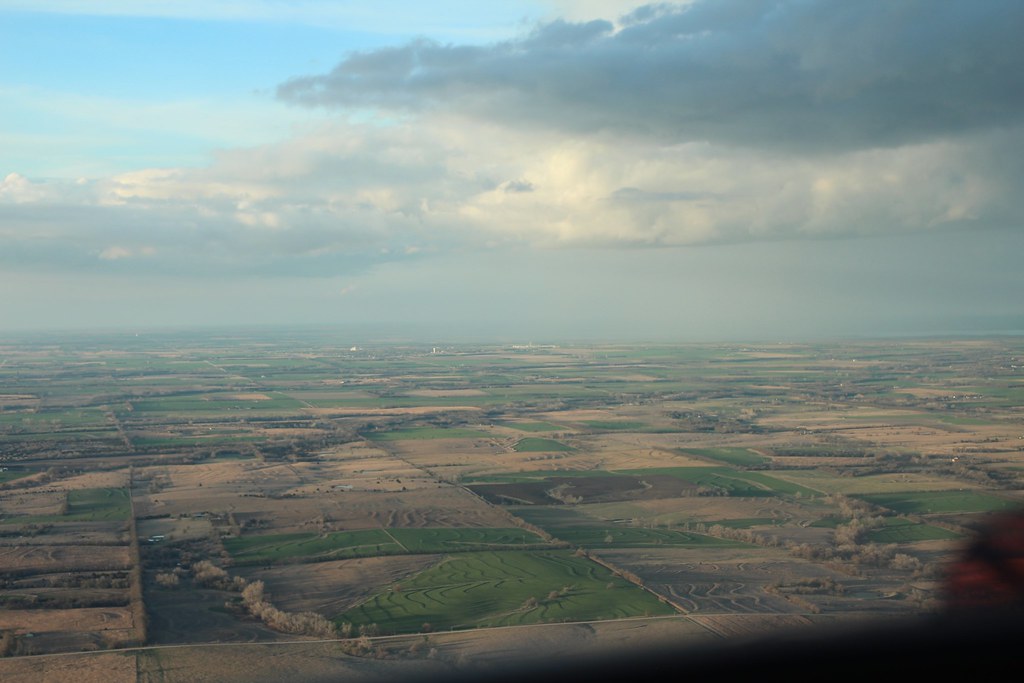
Dad-o, I m so glad you re a pilot! My 9-year-old son Jacob has been saying that, always with a big hug and his fond nickname for me ( dad-o ). It has now been a year since the first time I sat in the pilot s seat of a plane, taking my first step towards exploring the world from the sky. And now, one year after I first sat in the pilot s seat of an airborne plane, it s prompted me to think back to my own memories. vlcsnap-2015-07-24-20h35m16s96_1

Flying over the airport at Moundridge, KS Memories Back when I was a child, maybe about the age my children are now, I d be outside in the evening and see this orange plane flying overhead. Our neighbor Don had a small ultralight plane and a grass landing strip next to his house. I remember longing to be up in the sky with Don, exploring the world from up there. At that age, I didn t know all the details of why that wouldn t work I just knew I wanted to ride in it. It wasn t until I was about 11 that I flew for the first time. I still remember that TWA flight with my grandma, taking off early in the morning and flying just a little ways above the puffy clouds lit up all yellow and orange by the sunrise. Even 25 years later, that memory still holds as one of the most beautiful scenes I have ever seen. Exploring I have always been an explorer. When I go past something interesting, I love to go see what it looks like inside. I enjoy driving around Kansas with Laura, finding hidden waterfalls, old county courthouses, ghost towns, beautiful old churches, even small-town restaurants. I explore things around me, too once taking apart a lawnmower engine as a child, nowadays building HF antennas in my treetops or writing code for Linux. If there is little to learn about something, it becomes less interesting to me. I see this starting to build in my children, too. Since before they could walk, if we were waiting for something in a large building, we d go exploring. IMG_7231

A patch of rain over Hillsboro, KS The New World A pilot once told me, Nobody can become a pilot without it changing the way they see the world and then, changing their life. I doubted that. But it was true. One of the most poetic sights I know is flying a couple thousand feet above an interstate highway at night, following it to my destination. All those red and white lights, those metal capsules of thousands of lives and thousands of stories, stretching out as far as the eye can see in either direction. IMG_7099

Kansas sunset from the plane When you re in a plane, that small town nowhere near a freeway that always seemed so far away suddenly is only a 15-minute flight away, not even enough time to climb up to a high cruise altitude. Two minutes after takeoff, any number of cities that are an hour s drive away are visible simultaneously, their unique features already recognizable: a grain elevator, oil refinery, college campus, lake, whatever. And all the houses you fly over each with people in them. Some pretty similar to you, some apparently not. But pretty soon you realize that we all are humans, and we aren t all that different. You can t tell a liberal from a conservative from the sky, nor a person s race or religion, nor even see the border between states. Towns and cities are often nameless from the sky, unless you re really low; only your navigation will tell you where you are. I ve had the privilege to fly to small out-of-the-way airports, the kind that have a car that pilots can use for free to go into town and get lunch, and leave the key out for them. There I ve met many friendly people. I ve also landed my little Cessna at a big commercial airport where I probably used only 1/10th of the runway, on a grass runway that was barely maintained at all. I ve flown to towns I d driven to or through many times, discovering the friendly folks at the small airport out of town. I ve flown to parts of Kansas I ve never been to before, discovered charming old downtowns and rolling hills, little bursts of rain and beautiful sunsets that seem to turn into a sea. Smith Center, KS airport terminal

Parked at the Smith Center, KS airport terminal, about to meet some wonderful people For a guy that loves exploring the nooks and crannies of the world that everyone else drives by on their way to a major destination, being a pilot has meant many soul-filling moments. Hard Work I knew becoming a pilot would be a lot of hard work, and thankfully I remembered stories like that when I finally concluded it would be worth it. I found that I had an aptitude for a lot of things that many find difficult about being a pilot: my experience with amateur radio made me a natural at talking to ATC, my fascination with maps and navigation meant I already knew how to read aviation sectional maps before I even started my training and knew how to process that information in the cockpit, my years as a system administrator and programmer trained me with a careful and methodical decision-making process. And, much to the surprise of my flight instructor, I couldn t wait to begin the part of training about navigating using VORs (VHF radio beacons). I guess he, like many student pilots, had struggled with that, but I was fascinated by this pre-GPS technology (which I still routinely use in my flight planning, as a backup in case the GPS constellation or a GPS receiver fails). So that left the reflexes of flight, the art of it, as the parts I had to work on the hardest. The exam with the FAA is not like getting your driver s license. It s a multi-stage and difficult process. So when the FAA Designated Pilot Examiner said congratulations, pilot! and later told my flight instructor that you did a really good job with this one, I felt a true sense of accomplishment. IMG_20151021_193137

Some of my prep materials Worth It Passengers in a small plane can usually hear all the radio conversations going on. My family has heard me talking to air traffic control, to small and big planes. My 6-year-old son Oliver was playing yesterday, and I saw him pick up a plane and say this: Two-four-niner-golf requesting to land on runway one-seven . Two-four-niner-golf back-taxi on one-seven Two-four-niner-golf ready to takeoff on runway one-seven! That was a surprisingly accurate representation of some communication a pilot might have (right down to the made-up tailnumber with the spelling alphabet!) 20160408_203110

It just got more involved from there! Jacob and Oliver love model train shows. I couldn t take them to one near us, but there was one in Joplin, MO. So the day before Easter, while Laura was working on her Easter sermon, two excited boys and I (frankly also excited) climbed into a plane and flew to Joplin. We had a great time at the train show, discovered a restaurant specializing in various kinds of hot dogs (of course they both wanted to eat there), played in a park, explored the city, and they enjoyed the free cookies at the general aviation terminal building while I traded tips on fun places to fly with other pilots. When it comes right down to it, the smiles of the people I fly with are the most beautiful thing in the air. IMG_20151205_183440

Jacob after his first father-son flight with me

12 April 2016

Reproducible builds folks: Reproducible builds: week 48 in Stretch cycle

What happened in the reproducible builds effort between March 20th and March 26th: Toolchain fixes Daniel Kahn Gillmor worked on removing build path from build symbols submitting a patch adding -fdebug-prefix-map to clang to match GCC, another patch against gcc-5 to backport the removal of -fdebug-prefix-map from DW_AT_producer, and finally by proposing the addition of a normalizedebugpath to the reproducible feature set of dpkg-buildflags that would use -fdebug-prefix-map to replace the current directory with . using -fdebug-prefix-map. Sergey Poznyakoff merged the --clamp-mtime option so that it will be featured in the next Tar release. This option is likely to be used by dpkg-deb to implement deterministic mtimes for packaged files. Packages fixed The following packages have become reproducible due to changes in their build dependencies: augeas, gmtkbabel, ktikz, octave-control, octave-general, octave-image, octave-ltfat, octave-miscellaneous, octave-mpi, octave-nurbs, octave-octcdf, octave-sockets, octave-strings, openlayers, python-structlog, signond. The following packages became reproducible after getting fixed: Some uploads fixed some reproducibility issues, but not all of them: Patches submitted which have not made their way to the archive yet: tests.reproducible-builds.org i386 build nodes have been setup by converting 2 of the 4 amd64 nodes to i386. (h01ger) Package reviews 92 reviews have been removed, 66 added and 31 updated in the previous week. New issues: timestamps_generated_by_xbean_spring, timestamps_generated_by_mangosdk_spiprocessor. Chris Lamb filed 7 FTBFS bugs. Misc. On March 20th, Chris Lamb gave a talk at FOSSASIA 2016 in Singapore. The very same day, but a few timezones apart, h01ger did a presentation at LibrePlanet 2016 in Cambridge, Massachusetts. Seven GSoC/Outreachy applications were made by potential interns to work on various aspects of the reproducible builds effort. On top of interacting with several applicants, prospective mentors gathered to review the applications.

10 April 2016

Russ Allbery: Largish haul

Let's see if I can scrounge through all of my now-organized directories of ebooks and figure out what I haven't recorded here yet. At least the paper books make that relatively easy, since I don't shelve them until I post them. (Yeah, yeah, I should actually make a database.) Hugh Aldersey-Williams Periodic Tales (nonfiction)
Sandra Ulbrich Almazan SF Women A-Z (nonfiction)
Radley Balko Rise of the Warrior Cop (nonfiction)
Peter V. Brett The Warded Man (sff)
Lois McMaster Bujold Gentleman Jole and the Red Queen (sff)
Fred Clark The Anti-Christ Handbook Vol. 2 (nonfiction)
Dave Duncan West of January (sff)
Karl Fogel Producing Open Source Software (nonfiction)
Philip Gourevitch We Wish to Inform You That Tomorrow We Will Be Killed With Our Families (nonfiction)
Andrew Groen Empires of EVE (nonfiction)
John Harris @ Play (nonfiction)
David Hellman & Tevis Thompson Second Quest (graphic novel)
M.C.A. Hogarth Earthrise (sff)
S.L. Huang An Examination of Collegial Dynamics... (sff)
S.L. Huang & Kurt Hunt Up and Coming (sff anthology)
Kameron Hurley Infidel (sff)
Kevin Jackson-Mead & J. Robinson Wheeler IF Theory Reader (nonfiction)
Rosemary Kirstein The Lost Steersman (sff)
Rosemary Kirstein The Language of Power (sff)
Merritt Kopas Videogames for Humans (nonfiction)
Alisa Krasnostein & Alexandra Pierce (ed.) Letters to Tiptree (nonfiction)
Mathew Kumar Exp. Negatives (nonfiction)
Ken Liu The Grace of Kings (sff)
Susan MacGregor The Tattooed Witch (sff)
Helen Marshall Gifts for the One Who Comes After (sff collection)
Jack McDevitt Coming Home (sff)
Seanan McGuire A Red-Rose Chain (sff)
Seanan McGuire Velveteen vs. The Multiverse (sff)
Seanan McGuire The Winter Long (sff)
Marc Miller Agent of the Imperium (sff)
Randal Munroe Thing Explainer (graphic nonfiction)
Marguerite Reed Archangel (sff)
J.K. Rowling Harry Potter: The Complete Collection (sff)
K.J. Russell Tides of Possibility (sff anthology)
Robert J. Sawyer Starplex (sff)
Bruce Schneier Secrets & Lies (nonfiction)
Mike Selinker (ed.) The Kobold Game to Board Game Design (nonfiction)
Douglas Smith Chimerascope (sff collection)
Jonathan Strahan Fearsome Journeys (sff anthology)
Nick Suttner Shadow of the Colossus (nonfiction)
Aaron Swartz The Boy Who Could Change the World (essays)
Caitlin Sweet The Pattern Scars (sff)
John Szczepaniak The Untold History of Japanese Game Developers I (nonfiction)
John Szczepaniak The Untold History of Japanese Game Developers II (nonfiction)
Jeffrey Toobin The Run of His Life (nonfiction)
Hayden Trenholm Blood and Water (sff anthology)
Coen Teulings & Richard Baldwin (ed.) Secular Stagnation (nonfiction)
Ursula Vernon Book of the Wombat 2015 (graphic nonfiction)
Ursula Vernon Digger (graphic novel) Phew, that was a ton of stuff. A bunch of these were from two large StoryBundle bundles, which is a great source of cheap DRM-free ebooks, although still rather hit and miss. There's a lot of just fairly random stuff that's been accumulating for a while, even though I've not had a chance to read very much. Vacation upcoming, which will be a nice time to catch up on reading.

5 April 2016

Matthew Garrett: There's more than one way to exploit the commons

There's a piece of software called XScreenSaver. It attempts to fill two somewhat disparate roles: XScreenSaver does an excellent job of the second of these[2] and is pretty good at the first, which is to say that it only suffers from a disastrous security flaw once very few years and as such is certainly not appreciably worse than any other piece of software.

Debian ships an operating system that prides itself on stability. The Debian definition of stability is a very specific one - rather than referring to how often the software crashes or misbehaves, it refers to how often the software changes behaviour. Debian is very reluctant to upgrade software that is part of a stable release, to the extent that developers will attempt to backport individual security fixes to the version they shipped rather than upgrading to a release that contains all those security fixes but also adds a new feature. The argument here is that the new release may also introduce new bugs, and Debian's users desire stability (in the "things don't change" sense) more than new features. Backporting security fixes keeps them safe without compromising the reason they're running Debian in the first place.

This all makes plenty of sense at a theoretical level, but reality is sometimes less convenient. The first problem is that security bugs are typically also, well, bugs. They may make your software crash or misbehave in annoying but apparently harmless ways. And when you fix that bug you've also fixed a security bug, but the ability to determine whether a bug is a security bug or not is one that involves deep magic and a fanatical devotion to the cause so given the choice between maybe asking for a CVE and dealing with embargoes and all that crap when perhaps you've actually only fixed a bug that makes the letter "E" appear in places it shouldn't and not one that allows the complete destruction of your intergalactic invasion fleet means people will tend to err on the side of "Eh fuckit" and go drinking instead. So new versions of software will often fix security vulnerabilities without there being any indication that they do so[3], and running old versions probably means you have a bunch of security issues that nobody will ever do anything about.

But that's broadly a technical problem and one we can apply various metrics to, and if somebody wanted to spend enough time performing careful analysis of software we could have actual numbers to figure out whether the better security approach is to upgrade or to backport fixes. Conversations become boring once we introduce too many numbers, so let's ignore that problem and go onto the second, which is far more handwavy and social and so significantly more interesting.

The second problem is that upstream developers remain associated with the software shipped by Debian. Even though Debian includes a tool for reporting bugs against packages included in Debian, some users will ignore that and go straight to the upstream developers. Those upstream developers then have to spend at least 15 or so seconds telling the user that the bug they're seeing has been fixed for some time, and then figure out how to explain that no sorry they can't make Debian include a fixed version because that's not how things work. Worst case, the stable release of Debian ends up including a bug that makes software just basically not work at all and everybody who uses it assumes that the upstream author is brutally incompetent, and they end up quitting the software industry and I don't know running a nightclub or something.

From the Debian side of things, the straightforward solution is to make it more obvious that users should file bugs with Debian and not bother the upstream authors. This doesn't solve the problem of damaged reputation, and nor does it entirely solve the problem of users contacting upstream developers. If a bug is filed with Debian and doesn't get fixed in a timely manner, it's hardly surprising that users will end up going upstream. The Debian bugs list for XScreenSaver does not make terribly attractive reading.

So, coming back to the title for this entry. The most obvious failure of the commons is where a basically malicious actor consumes while giving nothing back, but if an actor with good intentions ends up consuming more than they contribute that may still be a problem. An upstream author releases a piece of software under a free license. Debian distributes this to users. Debian's policies result in the upstream author having to do more work. What does the upstream author get out of this exchange? In an ideal world, plenty. The author's software is made available to more people. A larger set of developers is willing to work on making improvements to the software. In a less ideal world, rather less. The author has to deal with bug mail about already fixed bugs. The author's reputation may be harmed by user exposure to said fixed bugs. The author may get less in the way of useful bug fixes or features because people are running old versions rather than fixing new ones. If the balance tips towards the latter, the author's decision to release their software under a free license has made their life more difficult.

Most discussions about Debian's policies entirely ignore the latter scenario, focusing more on the fact that the author chose to release their software under a free license to begin with. If the author is unwilling to handle the consequences of that, goes the argument, why did they do it in the first place? The unfortunate logical conclusion to that argument is that the author realises that they made a huge mistake and never does so again, and woo uh oops.

The irony here is that one of Debian's foundational documents, the Debian Free Software Guidelines, makes allowances for this. Section 4 allows for distribution of software in Debian even if the author insists that modified versions[4] are renamed. This allows for an author to make a choice - allow themselves to be associated with the Debian version of their work and increase (a) their userbase and (b) their support load, or try to distinguish what Debian ship from their identity. But that document was ratified in 1997 and people haven't really spent much time since then thinking about why it says what it does, and so this tradeoff is rarely considered.

Free software doesn't benefit from distributions antagonising their upstreams, even if said upstream is a cranky nightclub owner. Debian's users are Debian's highest priority, but those users are going to suffer if developers decide that not using free licenses improves their quality of life. Kneejerk reactions around specific instances aren't helpful, but now is probably a good time to start thinking about what value Debian bring to its upstream authors and how that can be increased. Failing to do so doesn't serve users, Debian itself or the free software community as a whole.

[1] The X server has no fundamental concept of a screen lock. This is implemented by an application asking that the X server send all keyboard and mouse input to it rather than to any other application, and then that application creating a window that fills the screen. Due to some hilarious design decisions, opening a pop-up menu in an application prevents any other application from being able to grab input and so it is impossible for the screensaver to activate if you open a menu and then walk away from your computer. This is merely the most obvious problem - there are others that are more subtle and more infuriating. The only fix in this case is to nuke the site from orbit.

[2] There's screenshots here. My favourites are the one that emulate the electrical characteristics of an old CRT in order to present a more realistic depiction of the output of an Apple 2 and the one that includes a complete 6502 emulator.

[3] And obviously new versions of software will often also introduce new security vulnerabilities without there being any indication that they do so, because who would ever put that in their changelog. But the less ethically challenged members of the security community are more likely to be looking at new versions of software than ones released three years ago, so you're probably still tending towards winning overall

[4] There's a perfectly reasonable argument that all packages distributed by Debian are modified in some way

comment count unavailable comments

31 March 2016

Antoine Beaupr : My free software activities, march 2016

Debian Long Term Support (LTS) This is my 4th month working on Debian LTS, started by Raphael Hertzog at Freexian. I spent half of the month away on a vacation so little work was done, especially since I tried to tackle rather large uploads like NSS and Xen. I also worked on the frontdesk shift last week.

Frontdesk That work mainly consisted of figuring out how to best help the security team with the last uploads to the Wheezy release. For those who don't know, Debian 7 Wheezy, or "oldstable", is going to be unsupported by the security team starting end of april, and the Debian 6 Squeeze (the previous LTS) is now unsupported. The PGP signatures on the archived release have started yielding expiration errors which can be ignored but that are really a strong reminder that it is really time to upgrade. So the LTS team is now working towards backporting a few security issues from squeeze to wheezy, and this is what I focused on during triage work. I have identified the following high priority packages I will work on after I complete my work on the Xen and NSS packages (detailed below):
  • libidn
  • icu
  • phpmyadmin
  • tomcat6
  • optipng
  • srtp
  • dhcpcd
  • python-tornado

Updates to NSS and Xen I have spent a lot of time testing and building packages for NSS and Xen. To be fair, Brian May did most of the work on the Xen packages, and I merely did some work to test the packages on Koumbit's infrastructure, something which I will continue doing in the next month. For NSS, wheezy and jessie are in this weird state where patches were provided to the security team all the way back in November yet were never tested. Since then, yet more issues came up and I worked hard to review and port patches for those new security issues to wheezy. I'll followup on both packages in the following month.

Other free software work

Android TL;DR: there's an even longer version of this with the step-by-step procedures and that I will update as time goes on in my wiki. I somehow inherited an Android phone recently, on a loan from a friend because the phone broke one too many times and she got a new one from her provider. This phone is a HTC One S "Ville", which is fairly old, but good enough to play with and give me a mobile computing platform to listen to podcasts, play music, access maps and create GPS traces. I was previously doing this with my N900, but that device is really showing its age: very little development is happening on it, the SDK is closed source and the device itself is fairly big, compared to the "Ville". Plus, the SIM card actually works on the Ville so, even though I do not have an actual contract with a cell phone provider (too expensive, too invasive on my privacy), I can still make emergency phone calls (911)! Plus, since there is good wifi on the machine, I can use it to connect to the phone system with the built-in SIP client, send text messages through SMS (thanks to VoIP.ms SMS support) or Jabber. I have also played around with LibreSignal, the free software replacement for Signal, which uses proprietary google services. Yes, the VoIP.ms SMS app also uses GCM, but hopefully that can be fixed. (While I was writing this, another Debian Developer wrote a good review of Signal so I am happy to skip that step. Go read that.)
See also my apps list for a more complete list of the apps I have installed on the phone. I welcome recommendations on cool free software apps I should use!
I have replaced the stock firmware on the phone with Cyanogenmod 12.1, which was a fairly painful experience, partly because of the difficult ambiance on the #cyanogenmod channel on Freenode, where I had extreme experiences: a brave soul helped me through the first flashing process for around 2 hours, nicely holding my hand at every step. Other times, I have seen flames and obtuse comments from people being vulgar, brutal, obnoxious, if not sometimes downright homophobic and sexist from other users. It is clearly a community that needs to fix their attitude. I have documented everything I could in details in this wiki page, in case others want to resuscitate their old phones, but also because I ended up reinstalling the freaking phone about 4 times, and was getting tired of forgetting how to do it every time. I am somewhat fascinated by Android: here is the Linux-based device that should save us all from the proprietary Apple nightmares of fenced in gardens and censorship. Yet, public Android downloads are hidden behind license agreements, even though the code itself is free, which has led fellow Debian developers to work on making libre rebuilds of Androids to workaround this insanity. But worse: all phones are basically proprietary devices down to the core. You need custom firmware to be loaded on the machine for it to boot at all, from the bootloader all the way down to the GSM baseband and Wifi drivers. It is a minefield of closed source software, and trying to run free software on there is a bit of a delusion, especially since the baseband has so much power over the phone. Still, I think it is really interesting to run free software on those machines, and help people that are stuck with cell phones get familiar with software freedom. It seems especially important to me to make Android developers aware of software freedom considering how many apps are available for free yet on which it is not possible to contribute significantly because the source code is not published at all, or published only on the Google Store, instead of the more open and public F-Droid repository which publishes only free software. So I did contribute. This month, I am happy to announce that I contributed to the following free software projects on Android: I have also reviewed the literature surrounding Telegram, a popular messaging app rival to Signal and Whatsapp. Oddly enough, my contributions to Wikipedia on that subject were promptly reverted which made me bring up the subject on the page's Talk page. This lead to an interesting response from the article's main editors which at least added that the "its security features have been contested by security researchers and cryptography experts". Considering the history of Telegram, I would keep people away from it and direct people to use Signal instead, even though Signal has similar metadata issues, mostly because Telegram's lack of response to the security issues that were outlined by fellow security researchers. Both systems suffer from a lack of federation as well, which is a shame in this era of increasing centralization. I am not sure I will put much more work in developing for Android for now. It seems like a fairly hostile platform to work on, and unless I have specific pain points I want to fix, it feels so much better to work on my own stuff in Debian. Which brings me to my usual plethora of free software projects I got stuck in this month.

IRC projects irssi-plugin-otr had a bunch of idiotic bugs lying around, and I had a patch that I hadn't submitted upstream from the Debian package, which needed a rebuild because the irssi version changed, which is a major annoyance. The version in sid is now a snapshot because upstream needs to make a new release but at least it should fix things for my friends running unstable and testing. Hopefully those silly uploads won't be necessary in the future. That's for the client side. On the server side, I have worked on updating the Atheme-services package to the latest version, which actually failed because the upstream libmowgli is missing release tags, which means the Debian package for it is not up-to-date either. Still, it is nice to have a somewhat newer version, even though it is not the latest and some bugs were fixed. I have also looked at making atheme reproducible but was surprised at the hostility of the upstream. In the end, it looks like they are still interested in patches, but they will be a little harder to deploy than for Charybdis, so this could take some time. Hopefully I will find time in the coming weeks to test the new atheme services daemon on the IRC network I operate.

Syncthing I have also re-discovered Syncthing, a file synchronization software. Amazingly, I was having trouble transferring a single file between two phones. I couldn't use Bluetooth (not sure why), the "Wifi sharing" app was available only on one phone (and is proprietary, and has a limit of 4MB files), and everything else requires an account, the cloud, or cabling. So. Just heading to f-droid, install syncthing, flash a few qr-codes around and voil : files are copied over! Pretty amazing: the files were actually copied over the local network, using IPv6 link-local addresses, encryption and the DHT. Which is a real geeky way of saying it's completely fast, secure and fast. Now, I found a few usability issues, so much that I wrote a whole usability story for the developers, which were really appreciative of my review. Some of the issues were already fixed, others were pretty minor. Syncthing has a great community, and it seems like a great project I encourage everyone to get familiar with.

Battery stats The battery-status project I mentionned previously has been merged with the battery-stats project (yes, the names are almost the same, which is confusing) and so I had to do some work to fix my Python graph script, which was accepted upstream and will be part of Debian officially from now on, which is cool. The previous package was unofficial. I have also noticed that my battery has a significantly than when I wrote the script. Whereas it was basically full back then, it seems now it has lost almost 15% of its capacity in about 6 months. According to the calculations of the script:
this battery will reach end of life (5%) in 935 days, 19:07:58.336480, on 2018-10-23 12:06:07.270290
Which is, to be fair, a good life: it will somewhat work for about three more years.

Playlist, git-annex and MPD in Python On top of my previously mentioned photos-import script, I have worked on two more small programs. One is called get-playlist and is an extension to git-annex to easily copy to the local git-annex repository all files present in a given M3U playlist. This is useful for me because my phone cannot possibly fit my whole MP3 collection, and I use playlists in GMPC to tag certain files, particularly the Favorites list which is populated by the "star" button in the UI. I had a lot of fun writing this script. I started using elpy as an IDE in Emacs. (Notice how Emacs got a new webpage, which is a huge improvement was had been basically unchanged since the original version, now almost 20 years old, and probably written by RMS himself.) I wonder how I managed to stay away from Elpy for so long, as it glues together key components of Emacs in an elegant and functional bundle:
  • Company: the "vim-like" completion mode i had been waiting for forever
  • Jedi: context-sensitive autocompletion for Python
  • Flymake: to outline style and syntax errors (unfortunately not the more modern Flycheck)
  • inline documentation...
In short, it's amazing and makes everything so much easier to work with that I wrote another script. The first program wouldn't work very well because some songs in the playlists had been moved, so I made another program, this time to repair playlists which refer to missing files. The script is simply called fix-playlists, and can operate transparently on multiple playlists. It has a bunch of heuristics to find files and uses a MPD server as a directory to search into. It can edit files in place or just act as a filter.

Useful snippets Writing so many scripts, so often, I figured I needed to stop wasting time always writing the same boilerplate stuff on top of every file, so I started publishing Yasnippet-compatible file snippets, in my snippets repository. For example, this report is based on the humble lts snippet. I also have a base license snippet which slaps the AGPLv3 license on top of a Python file. But the most interesting snippet, for me, is this simple script snippet which is a basic scaffolding for a commandline script that includes argument processing, logging and filtering of files, something which I was always copy-pasting around.

Other projects And finally, a list of interesting issues en vrac:
  • there's a new Bootstrap 4 theme for Ikiwiki. It was delivering content over CDNs, which is bad for privacy issues, so I filed an issue which was almost immediately fixed by the author!
  • I found out about BitHub, a tool to make payments with Bitcoins for patches submitted on OWS projects. It wasn't clear to me where to find the demo, but when I did, I quickly filed a PR to fix the documentation. Given the number of open PRs there and the lack of activity, I wonder if the model is working at all...
  • a fellow Debian Developer shared his photos workflow, which was interesting to me because I have my own peculiar script, which I never mentionned here, but which I ended up sharing with the author

28 March 2016

Rhonda D'Vine: Ich bin was ich bin

As my readers probably are well aware, I wrote my transgender coming out poem Mermaids over 10 years ago, to make it clear to people how I define, what I am and how I would hope they could accept me. I did put it publicly into my blog so I could point people to it. And I still do so regularly. It still comes from the bottom of my heart. And I am very happy that I got the chance to present it in a Poetry Slam last year, it was even recorded and uploaded to YouTube. There is just one thing that I was also told over the time every now and then by some people that I would have liked to understand what's going on: Why is it in English, my English isn't that good. My usual response was along the lines of that the events that triggered me writing it were in an international context and I wanted to make sure that they understood what I wrote. At that time I didn't realize that I am cutting out a different group of people from being able to understand what's going on inside me. So this year there was a similar event: the Flawless Poetry Slam which touched the topics of Feminist? Queer? Gender? Rolemodels? - Let's talk about it. I took that as motivation to finally write another text on the topic, and this time in German. Unfortunately though I wasn't able to present it that evening, I wasn't drawn for the lineup. But, I was told that there was another slam going on just last wednesday, so I went there ... and made it onto the stage! And this is the text that I presented there. I am uncertain how well online translators work for you, but I hope you get the core points if you don't understand German:

Ich bin was ich bin
F nf Worte mit wahrem Sinn:
Ich bin was ich bin Du denkst: "Mann im Rock?
Das ist ja wohl l cherlich,
der ist sicher schwul." "Fingernagellack?
Na da schau ich nicht mehr hin,
wer will das schon seh'n." Jedoch liegst du falsch,
Mit all deinen Punkten, denn:
Ich bin was ich bin. Ich bin Transgender
Und erlebe mich selber,
ich bin eine Frau. "Haha, eine Frau?
Wem willst du das weismachen?
Heb mal den Rock hoch!" Und wie ist's bei dir?
Was ist zwischen den Beinen?
Geht mich das nichts an? Warum fragst du mich?
Da ist's dann in Ordnung?
Oder vielleicht nicht? Ich bin was ich bin
F nf Worte mit ernstem Sinn:
Ich bin was ich bin Ich steh weiblich hier
Und das hier ist mein K rper
Mein Geschlecht ist's auch Oberfl chlichkeit
Das ist mein gr tes Problem
Schl gt mir entgegen Wenn ich mich ffne
Verst ndnis fast berall
Es wird akzeptiert Doch gelegentlich
und das schmerzt mich am meisten
sagt doch mal wer "er" Von Fremden? Egal
Doch hab ich mich ge ffnet
Ist es eine Qual "Ich seh dich als Mann"
Da ist, was es transportiert
Akzeptanz? Dahin Meine Pronomen
Wenn ihr ber mich redet
sind sie, ihr, ihres Ich leb was ich leb
F nf Worte mit tiefem Sinn:
Ich bin was ich bin "Doch, wie der erst spricht!
Ich meinte, wie sie denn spricht!
Das ist nicht normal." Ich schreib hier Haikus:
Japanische Gedichtsform
Mit fixem Versmars Sind f nf, sieben, f nf
Silben in jeder Zeile
Haikus sind simpel Probier es mal aus
Transportier eine Message
Es macht auch viel Spa Wortwahl ist wichtig
Ein guter Thesaurus hilft
Sei kurz und pr gnant Ich sag was ich sag
F nf Worte mit klugem Sinn:
Ich bin was ich bin Doch ich schweife ab
Verst ndnis fast berall?
Wird es akzeptiert? Erstaunlicherweise
Doch ich bin auch was and'res
Und hier geht's bergab Eine Sache gibt's
Die erw h'n ich besser nicht
f r die steck ich ein "Deshalb bin ich hier"
So der Titel eines Lieds
verfasst von Thomas D "Wenn ich erkl re
warum ich mich wie ern hr"
So weit komm ich nicht Man erw hnt Vegan
Die Intoleranz ist da
Man ist unten durch "Mangelerscheinung!"
"Das Essen meines Essens!"
Akzeptanz ade Hab 'ne Theorie:
Vegan sein: 'ne Entscheidung
Transgender sein nicht Mensch f hlt sich dann schlecht
dass bei sich selbst die Kraft fehlt
und greift damit an "Ich k nnte das nicht"
Ich verurteile dich nicht
Iss doch was du willst Ich zwing es nicht auf
Aber R cksicht w r schon fein
Statt nur Hohn und Schm h Ich ess was ich ess
F nf Worte zum nachdenken:
Ich bin was ich bin
Hope you get the idea. The audience definitely liked it, the jury wasn't so much on board but that's fine, it's five random people and it's mostly for fun anyway. Later that night though some things happened that didn't make me feel so comfortable anymore. I went to the loo, waiting in line with the other ladies, a bit later the waitress came along telling me "the men's room is over there". I told her that I'm aware of that and thanked her, which got her confused and said something along the lines of "so you are both, or what?" but went away after that. Her tone and response wasn't really giving me much comfort, though none of the other ladies in the line did look strangely.
But the most disturbing event after that was to find out about North Carolina signed the bathroom bill making it illegal for trans people to use the bathroom for their gender and insisting on using the one for the gender they were assigned at birth. So men like James Sheffield are now forced to go to the lady's restroom, or face getting arrested. Brave new world. :/ So, enjoy the text and don't get too wound up by stupid laws and hope for time to fix people's discriminatory minds for fixing issues that already are regulated: Assaults are assaults and are already banned. Arguing with people might get assaulted and thus discriminating trans people is totally missing the point, by miles.

/personal permanent link Comments: 2 Flattr this

27 March 2016

Lunar: Reproducible builds: week 48 in Stretch cycle

What happened in the reproducible builds effort between March 20th and March 26th:

Toolchain fixes
  • Sebastian Ramacher uploaded breathe/4.2.0-1 which makes its output deterministic. Original patch by Chris Lamb, merged uptream.
  • Rafael Laboissiere uploaded octave/4.0.1-1 which allows packages to be built in place and avoid unreproducible builds due to temporary build directories appearing in the .oct files.
Daniel Kahn Gillmor worked on removing build path from build symbols submitting a patch adding -fdebug-prefix-map to clang to match GCC, another patch against gcc-5 to backport the removal of -fdebug-prefix-map from DW_AT_producer, and finally by proposing the addition of a normalizedebugpath to the reproducible feature set of dpkg-buildflags that would use -fdebug-prefix-map to replace the current directory with . using -fdebug-prefix-map. As succesful result of lobbying at LibrePlanet 2016, the --clamp-mtime option will be featured in the next Tar release. This option is likely to be used by dpkg-deb to implement deterministic mtimes for packaged files.

Packages fixed The following packages have become reproducible due to changes in their build dependencies: augeas, gmtkbabel, ktikz, octave-control, octave-general, octave-image, octave-ltfat, octave-miscellaneous, octave-mpi, octave-nurbs, octave-octcdf, octave-sockets, octave-strings, openlayers, python-structlog, signond. The following packages became reproducible after getting fixed: Some uploads fixed some reproducibility issues, but not all of them: Patches submitted which have not made their way to the archive yet:
  • #818742 on milkytracker by Reiner Herrmann: sorts the list of source files.
  • #818752 on tcl8.4 by Reiner Herrmann: sort source files using C locale.
  • #818753 on tk8.6 by Reiner Herrmann: sort source files using C locale.
  • #818754 on tk8.5 by Reiner Herrmann: sort source files using C locale.
  • #818755 on tk8.4 by Reiner Herrmann: sort source files using C locale.
  • #818952 on marionnet by ceridwen: dummy out build date and uname to make build reproducible.
  • #819334 on avahi by Reiner Herrmann: ship upstream changelog instead of the one generated by gettextize (although duplicate of #804141 by Santiago Vila).

tests.reproducible-builds.org i386 build nodes have been setup by converting 2 of the 4 amd64 nodes to i386. (h01ger)

Package reviews 92 reviews have been removed, 66 added and 31 updated in the previous week. New issues: timestamps_generated_by_xbean_spring, timestamps_generated_by_mangosdk_spiprocessor. Chris Lamb filed 7 FTBFS bugs.

Misc. On March 20th, Chris Lamb gave a talk at FOSSASIA 2016 in Singapore. The very same day, but a few timezones apart, h01ger did a presentation at LibrePlanet 2016 in Cambridge, Massachusetts. Seven GSoC/Outreachy applications were made by potential interns to work on various aspects of the reproducible builds effort. On top of interacting with several applicants, prospective mentors gathered to review the applications. Huge thanks to Linda Naeun Lee for the new hackergotchi visible on Planet Debian.

Next.

Previous.