in order to create a version 3 onion
service without
actually running a Tor relay.
Note that since I am making a public website available over Tor, I do not
need the location of the website to be hidden and so I used the same
settings as
Cloudflare in their
public Tor proxy.
Also, I explicitly used the external IPv6 address of my server in the
configuration in order to prevent localhost
bypasses.
After restarting the Tor daemon to reload the configuration file:
Apache configuration
Next, I enabled a few required Apache modules:
a2enmod mpm_event
a2enmod http2
a2enmod headers
and configured my Apache vhosts in /etc/apache2/sites-enabled/www.conf:
<VirtualHost *:443>
    ServerName fmarier.org
    ServerAlias ixrdj3iwwhkuau5tby5jh3a536a2rdhpbdbu6ldhng43r47kim7a3lid.onion
    Protocols h2, http/1.1
    Header set Onion-Location "http://ixrdj3iwwhkuau5tby5jh3a536a2rdhpbdbu6ldhng43r47kim7a3lid.onion% REQUEST_URI s"
    Header set alt-svc 'h2="ixrdj3iwwhkuau5tby5jh3a536a2rdhpbdbu6ldhng43r47kim7a3lid.onion:443"; ma=315360000; persist=1'
    Header add Strict-Transport-Security: "max-age=63072000"
    Include /etc/fmarier-org/www-common.include
    SSLEngine On
    SSLCertificateFile /etc/letsencrypt/live/fmarier.org/fullchain.pem
    SSLCertificateKeyFile /etc/letsencrypt/live/fmarier.org/privkey.pem
</VirtualHost>
<VirtualHost *:80>
    ServerName fmarier.org
    Redirect permanent / https://fmarier.org/
</VirtualHost>
<VirtualHost *:80>
    ServerName ixrdj3iwwhkuau5tby5jh3a536a2rdhpbdbu6ldhng43r47kim7a3lid.onion
    Include /etc/fmarier-org/www-common.include
</VirtualHost>
Note that /etc/fmarier-org/www-common.include contains all of the
configuration options that are common to both the HTTP and the HTTPS sites
(e.g. document root, caching headers, aliases, etc.).
Finally, I restarted Apache:
$ whois 2a0b:f4c2:2::1
...
inet6num:       2a0b:f4c2::/40
netname:        MK-TOR-EXIT
remarks:        -----------------------------------
remarks:        This network is used for Tor Exits.
remarks:        We do not have any logs at all.
remarks:        For more information please visit:
remarks:        https://www.torproject.org
which indicates that the first request was not using the .onion
address.
The second IP address is the one for my server:
A new package arrived on CRAN a few days ago. It offers a few headers files which wrap (parts) of the C API for R, but in a form that may be a little easier to use for C++ programmers. I have always liked how in Rcpp we offer good parts of the standalone R Math library in a namespace R::. While working recently with a particular C routine (for checking non-ASCII characters that will be part of the next version of the dang package which collecting various goodies in one place), I realized there may be value in collecting a few more such wrappers. So I started a few simple ones starting from simple examples.
Currently we have five headers defines.h, globals.h, internals.h, math.h, and shield.h. The first four each correpond to an R header file of the same or similar name, and the last one brings a simple yet effective alternative to PROTECT and UNPROTECT from Rcpp (in a slightly simplified way). None of the headers are complete , for internals.h in particular a lot more could be added (as I noticed today when experimenting with another source file that may be converted). All of the headers can be accessed with a simple #include <tidyCpp> (which, following another C++ convention, does not have a .h or .hpp suffix). And a the package ships these headers, packages desiring to use them only need LinkingTo: tidyCpp.
As usage examples, we (right now) have four files in the snippets/ directory of the package. Two of these, convolveExample.cpp and dimnamesExample.cpp both illustrate how one could change example code from Writing R Extensions. Then there are also a very simple defineExample.cpp and a shieldExample.cpp illustrating how much easier Shield() is compared to PROTECT and UNPROTECT.
Finally, there is a nice vignette discussing the package motivation with two detailed side-by-side before and after examples that are the aforementioned convolution and dimnames examples.
Over time, I expect to add more definitions and wrappers. Feedback would be welcome it seems to hit a nerve already as it currently has more stars than commits even though (prior to this post) I had yet to tweet or blog about it. Please post comments and suggestions at the GitHub repo.
If you like this or other open-source work I do, you can now sponsor me at GitHub. For the first year, GitHub will match your contributions.
Last weekend, Tim Burgess s twitter listening party covered The Cure s short, dark 1982 album Pornography . I realised I d never actually played the record, which I picked up a couple of years ago from a shop in the Grainger Market which is sadly no longer there. It was quite a wallet-threatening shop so perhaps it s a good thing it s gone.
Monday was a dreary, rainy day which seemed the perfect excuse to put it on. It s been long enough since I last listened to my CD copy of the album that there were a few nice surprises to rediscover. The closing title track sounded quite different to how I remembered it, with Robert Smith s vocals buried deeper in the mix, but my memory might be mixing up a different session take.
Truly a fitting closing lyric for our current times: I must fight this sickness /
Find a cure
I ve been investigating the options for tracking system statistics to diagnose performance problems. The idea is to track all sorts of data about the system (network use, disk IO, CPU, etc) and look for correlations at times of performance problems. DataDog is pretty good for this but expensive, it s apparently based on or inspired by the Etsy Statsd. It s claimed that the gnocchi-statsd is the best implementation of the protoco used by the Etsy Statsd, so I decided to install that.
I use Debian/Buster for this as that s what I m using for the hardware that runs KVM VMs. Here is what I did:
# it depends on a local MySQL database
apt -y install mariadb-server mariadb-client
# install the basic packages for gnocchi
apt -y install gnocchi-common python3-gnocchiclient gnocchi-statsd uuid
In the Debconf prompts I told it to setup a database and not to manage keystone_authtoken with debconf (because I m not doing a full OpenStack installation).
This gave a non-working configuration as it didn t configure the MySQL database for the [indexer] section and the sqlite database that was configured didn t work for unknown reasons. I filed Debian bug #971996 about this [1]. To get this working you need to edit /etc/gnocchi/gnocchi.conf and change the url line in the [indexer] section to something like the following (where the password is taken from the [database] section).
To communicate with Gnocchi you need the gnocchi-api program running, which uses the uwsgi program to provide the web interface by default. It seems that this was written for a version of uwsgi different than the one in Buster. I filed Debian bug #972087 with a patch to make it work with uwsgi [4]. Note that I didn t get to the stage of an end to end test, I just got it to basically run without error.
After getting gnocchi-api running (in a terminal not as a daemon as Debian doesn t seem to have a service file for it), I ran the client program gnocchi and then gave it the status command which failed (presumably due to the metrics daemon not running), but at least indicated that the client and the API could communicate.
Then I ran the gnocchi-metricd and got the following error:
2020-10-12 14:59:30,491 [9037] ERROR    gnocchi.cli.metricd: Unexpected error during processing job
Traceback (most recent call last):
  File "/usr/lib/python3/dist-packages/gnocchi/cli/metricd.py", line 87, in run
    self._run_job()
  File "/usr/lib/python3/dist-packages/gnocchi/cli/metricd.py", line 248, in _run_job
    self.coord.update_capabilities(self.GROUP_ID, self.store.statistics)
  File "/usr/lib/python3/dist-packages/tooz/coordination.py", line 592, in update_capabilities
    raise tooz.NotImplemented
tooz.NotImplemented
At this stage I ve had enough of gnocchi. I ll give the Etsy Statsd a go next.
Update
Thomas has responded to this post [5]. At this stage I m not really interested in giving Gnocchi another go. There s still the issue of the indexer database which should be different from the main database somehow and sqlite (the config file default) doesn t work.
I expect that if I was to persist with Gnocchi I would encounter more poorly described error messages from the code which either don t have Google hits when I search for them or have Google hits to unanswered questions from 5+ years ago.
The Gnocchi systemd config files are in different packages to the programs, this confused me and I thought that there weren t any systemd service files. I had expected that installing a package with a daemon binary would also get the systemd unit file to match.
The cluster features of Gnocchi are probably really good if you need that sort of thing. But if you have a small instance (EG a single VM server) then it s not needed. Also one of the original design ideas of the Etsy Statsd was that UDP was used because data could just be dropped if there was a problem. I think for many situations the same concept could apply to the entire stats service.
If the other statsd programs don t do what I need then I may give Gnocchi another go.
Welcome to gambaru.de. Here is my monthly report (+ the first week in October) that covers what I have been doing for Debian. If you re interested in Java, Games and LTS topics, this might be interesting for you.
Debian Games
I spent most of the time this month to tackle remaining GCC 10 bugs in packages like nettoe, pcsxr, slimevolley (patch by Reiner Herrmann), openal-soft, slashem and alien-arena. I also investigated a build failure in gfpoken (#957271) and springlobby and finally uploaded a new revision of warzone2100 to address another FTBFS while building the PDF documentation.
and sponsored a new release of mgba for Ryan Tandy.
Debian Java
The focus was on two major packages this month, PDFsam, a tool to manipulate PDF files and Netbeans, one of the three well known Java IDEs. I basically updated every PDFsam related sejda dependency and packaged a new library libsejda-common-java, which is currently waiting in the NEW queue. As soon as this one has been approved, we should be able to see the latest release in Debian soon.
Unfortunately I came to the conclusion that maintaining Netbeans in Debian is no longer a viable solution. I have been the sole maintainer for the past five years and managed to package the basic Java IDE in Stretch. I also had a 98% ready package for Buster but there were some bugs that made it unfit for a stable release in my opinion. The truth is, it takes a lot of time to patch Netbeans, just to make the build system DFSG compliant and to build the IDE from source. We have never managed to provide more functionality than the basic Java IDE features too. Still, we had to maintain dozens of build-dependencies and there was a constant struggle to make everything work with just a single version of a library. While the Debian way works great for most common projects, it doesn t scale very well for very complex ones like Java IDEs. Neither Eclipse nor Netbeans are really fully maintainable in Debian since they consist of hundreds of different jar files, even if the toolchain was perfect, it would require too much time to maintain all those Debian packages.
I voiced that sentiment on our debian-java mailinglist while also discussing the situation of complex server packages like Apache Solr. Similar to Netbeans it requires hundreds of jar files to get running. I believe our users are better served in those cases by using tools like flatpak for desktop packages or jdeb for server packages. The idea is to provide a Debian toolchain which would download a source package from upstream and then use jdeb to create a Debian package. Thus we could provide packages for very complex Java software again, although only via the Debian contrib distribution. The pros are: software is available as Debian packages and integrates well with your system and considerably less time is needed to maintain such packages: Cons: not available in Debian main, no security support, not checked for DFSG compliance.
Should we do that for all of our packages? No. This should really be limited to packages that otherwise would not be in Debian at all and are too complex to maintain, when even a whole team of normal contributors would struggle.
Finally the consequences were: the Netbeans IDE has been removed from Debian main but the Netbeans platform package, libnb-platform18-java, is up-to-date again just like visualvm, which depends on it.
I eventually filed a RFA for privacybadger. As I mentioned in my last post, the upstream maintainer would like to see regular updates in Debian stable but I don t want to regularly contribute time for this task. If someone is ready for the job, let me know.
Debian LTS
This was my 55. month as a paid contributor and I have been paid to work 31,75 hours on Debian LTS, a project started by Rapha l Hertzog. In that time I did the following:
Investigated and fixed a regression in squid3 when using the icap server. (#965012)
DLA-2394-1. Issued a security update for squid3 fixing 4 CVE.
DLA-2400-1. Issued a security update for activemq fixing 1 CVE.
DLA-2403-1. Issued a security update for rails fixing 1 CVE.
DLA-2404-1. Issued a security update for eclipse-wtp fixing 1 CVE.
DLA-2405-1. Issued a security update for httpcomponents-client fixing 1 CVE.
Triaged open CVE for guacamole-server and guacamole-client and prepared patches for CVE-2020-9498 and CVE-2020-9497.
Prepared patches for 7 CVE in libonig.
ELTS
Extended Long Term Support (ELTS) is a project led by Freexian to further extend the lifetime of Debian releases. It is not an official Debian project but all Debian users benefit from it without cost. The current ELTS release is Debian 8 Jessie . This was my 28. month and I have been paid to work 15 hours on ELTS.
ELA-291-1. Issued a security update for libproxy fixing 1 CVE.
ELA-294-1. Issued a security update for squid3 fixing 4 CVE.
ELA-295-1. Issued a security update for rails fixing 2 CVE.
ELA-296-1. Issued a security update for httpcomponents-client fixing 1 CVE.
I wanted to share Type design issue I hit recently with Striot.
Within StrIoT you define a stream-processing program, which is a series of
inter-connected operators, in terms of a trio of graph types:
The outer-most type is a higher-order type provided by the Graph library we
use: Graph a. This layer deals with all the topology concerns: what is
connected to what.
The next type we define in StrIoT: StreamVertex, which is used to replace
a in the above and make the concrete type Graph StreamVertex. Here we
define all the properties of the operators. For example: the parameters supplied
to the operator, and a unique vertexID integer that is unfortunately necessary.
We also define which operator type each node represents, with an
instance of the third type,
StreamOperator, a simple enumeration-style type:
StreamOperator = Map Filter Scan
For some recent work I needed to define some additional properties for the
operators: properties that would be used in a M/M/1 model (Jackson network) to
represent the program do some cost modelling with. Initially we supplied this
additional information in completely separate instances of types: e.g. lists
of tuples, the first of a pair representing a vertexID, etc. This was mostly
fine for totally novel code, but where I had existing code paths that operated
in terms of Graph StreamVertex and now needed access to these parameters, it
would have meant refactoring a lot of code. So instead, I added these properties
directly to the types above.
Some properties are appropriate for all node types, e.g. mean average service time.
In that case, I added the parameter to the StreamVertex type:
data StreamVertex = StreamVertex
      vertexId   :: Int

    , serviceTime:: Double
Other parameters were only applicable to certain node types. Mean average
arrival rate, for example., is only valid for Source node types;
selectivity is appropriate only for filter types. So, I added these to the
StreamOperator type:
This works pretty well, and most of the code paths that already exist did not
need to be updated in order for the model parameters to pass through to where
they are needed. But it was not a perfect solution, because I now had to modify
some other, unrelated code to account for the type changes.
Mostly this was test code: where I'd defined instances of Graph StreamVertex
to test something unrelated to the modelling work, I now had to add filter
selectivities and source arrival rates. This was tedious but mostly solved with
automatically with some editor macros.
One area though, that was a problem, was equality checks and pattern matching.
Before this change, I had a few areas of code like this
if Source == operator (head (vertexList sg))

if a /= b then  -- where a and b are instances of StreamOperator
I had to replace them with little helper routines like
cmpOps :: StreamOperator -> StreamOperator -> Bool
cmpOps (Filter _) (Filter _) = True
cmpOps (FilterAcc _) (FilterAcc _) = True
cmpOps x y = x == y
A similar problem was where I needed to synthesize a Filter, and I didn't care
about the selectivity, indeed, it was meaningless for the way I was using the type.
I have a higher-level function that handles "hoisting" an Operator through a Merge:
So, before, you have some operator occurring after a merge operation, and afterwards,
you have several instances of the operator on all of the input streams prior to the
Merge. Invoking it now looks like this
filterMerge = pushOp (Filter 0)
It works, the "0" is completely ignored, but the fact I have to provide it, and it's
unneeded, and there is no sensible value for it, is a bit annoying.
I think there's some interesting things to consider here about Type design, especially
when you have some aspects of a "thing" which are relevant only in some contexts and
not others.
The Reproducible Builds project intends to resume meeting regularly on IRC, starting today, Monday October 12th, at 18:00 UTC.
Sadly, due to the unprecedented events in 2020, there will be no in-person Reproducible Builds event this year, but please join us on the #reproducible-builds channel on irc.oftc.net. An editable agenda is available. The cadence of these meetings will probably be every two weeks, although this will be discussed and decided on at the first meeting.
The first time Linda Tirado came to the viral attention of the Internet
was in 2013 when she responded to a forum question: "Why do poor people do
things that seem so self-destructive?" Here are some excerpts from her
virally popular five-page response, which is included in the first
chapter:
I know how to cook. I had to take Home Ec. to graduate high school.
Most people on my level didn't. Broccoli is intimidating. You have
to have a working stove, and pots, and spices, and you'll have to do
the dishes no matter how tired you are or they'll attract bugs. It is
a huge new skill for a lot of people. That's not great, but it's
true. And if you fuck it up, you could make your family sick. We
have learned not to try too hard to be middle class. It never works
out well and always makes you feel worse for having tried and failed
yet again. Better not to try. It makes more sense to get food that
you know will be palatable and cheap and that keeps well. Junk food
is a pleasure that we are allowed to have; why would we give that up?
We have very few of them.
and
I smoke. It's expensive. It's also the best option. You see, I am
always, always exhausted. It's a stimulant. When I am too tired to
walk one more step, I can smoke and go for another hour. When I am
enraged and beaten down and incapable of accomplishing one more thing,
I can smoke and I feel a little better, just for a minute. It is the
only relaxation I am allowed. It is not a good decision, but it is
the only one that I have access to. It is the only thing I have found
that keeps me from collapsing or exploding.
This book is an expansion on that essay. It's an entry in a growing genre
of examinations of what it means to be poor in the United States in the
21st century. Unlike most of those examinations, it isn't written by an
outsider performing essentially anthropological field work. It's one of
the rare books written by someone who is herself poor and had the
combination of skill and viral fame required to get an opportunity to talk
about it in her own words.
I haven't had it worse than anyone else, and actually, that's kind of
the point. This is just what life is for roughly a third of the
country. We all handle it in our own ways, but we all work in the
same jobs, live in the same places, feel the same sense of never quite
catching up. We're not any happier about the exploding welfare rolls
than anyone else is, believe me. It's not like everyone grows up and
dreams of working two essentially meaningless part-time jobs while
collecting food stamps. It's just that there aren't many other
options for a lot of people.
I didn't find this book back in 2014 when it was published. I found it in
2020 during Tirado's second round of Internet fame: when the police shot
out her eye with "non-lethal" rounds while she was covering the George
Floyd protests as a photojournalist. In characteristic fashion, she
subsequently reached out to the other people who had been blinded by the
police, used her temporary fame to organize crowdfunded support for
others, and is planning on having "try again" tattooed over the scar.
That will give you a feel for the style of this book. Tirado is blunt,
opinionated, honest, and full speed ahead. It feels weird to call this
book delightful since it's fundamentally about the degree to which the
United States is failing a huge group of its citizens and making their
lives miserable, but there is something so refreshing and clear-headed
about Tirado's willingness to tell you the straight truth about her life.
It's empathy delivered with the subtlety of a brick, but also with about
as much self-pity as a brick. Tirado is not interested in making you feel
sorry for her; she's interested in you paying attention.
I don't get much of my own time, and I am vicious about protecting
it. For the most part, I am paid to pretend that I am inhuman, paid
to cater to both the reasonable and unreasonable demands of the
general public. So when I'm off work, feel free to go fuck yourself.
The times that I am off work, awake, and not taking care of life's
details are few and far between. It's the only time I have any
autonomy. I do not choose to waste that precious time worrying about
how you feel. Worrying about you is something they pay me for; I
don't work for free.
If you've read other books on this topic (Emily Guendelsberger's
On the Clock is still the best of those
I've read), you probably won't get many new facts from Hand to
Mouth. I think this book is less important for the policy specifics than
it is for who is writing it (someone who is living that life and can be
honest about it) and the depth of emotional specifics that Tirado brings
to the description. If you have never been poor, you will learn the
details of what life is like, but more significantly you'll get a feel for
how Tirado feels about it, and while this is one individual perspective
(as Tirado stresses, including the fact that, as a white person, there are
other aspects of poverty she's not experienced), I think that perspective
is incredibly valuable.
That said, Hand to Mouth provides even more reinforcement of the
importance of universal medical care, the absurdity of not including
dental care in even some of the more progressive policy proposals, and the
difficulties in the way of universal medical care even if we solve the
basic coverage problem. Tirado has significant dental problems due to
unrepaired damage from a car accident, and her account reinforces my
belief that we woefully underestimate how important good dental care is to
quality of life. But providing universal insurance or access is only the
start of the problem.
There is a price point for good health in America, and I have rarely
been able to meet it. I choose not to pursue treatment if it will
cost me more than it will gain me, and my cost-benefit is done in more
than dollars. I have to think of whether I can afford any potential
treatment emotionally, financially, and timewise. I have to sort out
whether I can afford to change my life enough to make any treatment
worth it I've been told by more than one therapist that I'd be fine
if I simply reduced the amount of stress in my life. It's true,
albeit unhelpful. Doctors are fans of telling you to sleep and eat
properly, as though that were a thing one can simply do.
That excerpt also illustrates one of the best qualities of this book. So
much writing about "the poor" treats them as an abstract problem that the
implicitly not-poor audience needs to solve, and this leads rather
directly to the endless moralizing as "we" attempt to solve that problem
by telling poor people what they need to do. Tirado is unremitting in
fighting for her own agency. She has a shitty set of options, but within
those options she makes her own decisions. She wants better options and
more space in which to choose them, which I think is a much more
productive way to frame the moral argument than the endless hand-wringing
over how to help "those poor people."
This is so much of why I support universal basic income. Just give people
money. It's not all of the solution UBI doesn't solve the problem of
universal medical care, and we desperately need to find a way to make work
less awful but it's the most effective thing we can do immediately.
Poor people are, if anything, much better at making consequential
financial decisions than rich people because they have so much more
practice. Bad decisions are less often due to bad decision-making than
bad options and the balancing of objectives that those of us who are not
poor don't understand.
Hand to Mouth is short, clear, refreshing, bracing, and, as you
might have noticed, very quotable. I think there are other books in this
genre that offer more breadth or policy insight, but none that have the
same feel of someone cutting through the bullshit of lazy beliefs and
laying down some truth. If any of the above excerpts sound like the sort
of book you would enjoy reading, pick this one up.
Rating: 8 out of 10
Update 2020-10-19: All packages are now available in Debian/experimental!
More than a month has passed since my last KDE/Plasma for Debian update, but things are progressing nicely.
OBS packages
On the OBS side, I have updated the KDE Apps to 20.08.2, and the KDE Frameworks to 5.75. Especially the update of apps brings in at least a critical security fix.
Concerning the soon to be released Plasma 5.20, packages are more or less ready, but as reported here we have to wait for Qt 5.15 to be uploaded to unstable, which is also planned in the near future.
Debian main packages
Uploads of Plasma 5.19.4 to Debian/experimental are processing nicely, more than half the packages are already done, and the rest is ready to go. What holds us back is the NEW queue, as usual.
We (Scarlett, Patrick, me) hope to have everything through NEW and in experimental as soon as possible, followed by an upload of probably Plasma 5.19.5 to Debian/unstable.
Thanks also to Lisandro for accepting me into the Salsa Qt/KDE team.
This month for our book club Daniel, Lars, Vince and I read Hardcoded secrets, unverified tokens, and other common JWT mistakes which wasn t quite what we d thought when it was picked. We had been expecting an analysis of JSON web tokens themselves as several us had been working in the area and had noticed various talk about problems with the standard but instead the article is more a discussion of the use of semgrep to find and fix common issues, using issues with JWT as examples.
We therefore started off with a bit of a discussion of JWT, concluding that the underlying specification was basically fine given the problem to be solved but that as with any security related technology there were plenty of potential pitfalls in implementation and that sadly many of the libraries implementing the specification make it far too easy to make mistakes such as those covered by the article through their interface design and defaults. For example interfaces that allow interchangable use of public keys and shared keys are error prone, as is is making it easy to access unauthenticated data from tokens without clearly flagging that it is unauthenticated. We agreed that the wide range of JWT implementations available and successfully interoperating with each other is a sign that JWT is getting something right in providing a specification that is clear and implementable.
Moving on to semgrep we were all very enthusiastic about the technology, language independent semantic matching with a good set of rules for a range of languages available. Those of us who work on the Linux kernel were familiar with semantic matching and patching as implemented by Coccinelle which has been used quite successfully for years to both avoiding bad patterns in code and making tree wide changes, as demonstrated by the article it is a powerful technique. We were impressed by the multi-language support and approachability of semgrep, with tools like their web editor seeming particularly helpful for people getting started with the tool, especially in conjunction with the wide range of examples available.
This was a good discussion (including the tangential discussions of quality problems we had all faced dealing with software over the years, depressing though those can be) and semgrep was a great tool to learn about, I know I m going to be using it for some of my projects.
Benjy: The best-laid plans of mice...
Arthur: And men.
Frankie: What?
Arthur: Best-laid plans of mice and men.
Benjy: What have men got to do with it?
-- The Hitchhiker's Guide to the Galaxy TV series
Last year, my intent had been to post monthy updates with details of the F/LOSS
contributions I had made during the previous month. I wanted to do this as a
way to summarize and reflect on what I had done, and also to hopefully
motivate me to do more.
Fast forward, and it's been over a year since my last blog post. So much for
those plans.
I won't go into specific detail about the F/LOSS contributions I've made in the
past year. This isn't meant to be a "catch-up" post, per se. It's more of an
acknowledgement that I didn't do what I set out to do, as well as something
of a reset to enable me to continue blogging (or not) as I see fit.
So, to summarize those contributions:
As expected, most of my contributions were to projects that I regularly
contribute to, like Debian, Apache Axis2/C, or PasswordSafe.
There were also some one-off contributions to projects that I use but am not
actively involved in, such as log4cxx or PyKAN.
There was also a third category of contributions that are a bit of a special
case. I made some pseudonymous contributions to a F/LOSS project that I did
not want to tie to my public identity. I hope to write more about that
situation in a future post.
All in all, I'm pretty happy with the contributions I've made in the
past year. Historically, my F/LOSS activity had been somewhat sporadic,
sometimes with months passing in between contributions. But looking through
my notes from the past year, it appears that I made contributions every single
month, with no skipped months. Of course, I would have liked to have done more,
but I consider the improvement in consistency to be a solid win.
As for the blog, well... Judging by the most recent year-long gap (as well as
the gaps before that), I'm not likely to start regularly writing posts anytime
soon. But then again, if sporadic F/LOSS contribtutions can turn into
regular F/LOSS contributions, then maybe sporadic blog posts can turn into
regular blog posts, too. Time will tell.
Salsa CI aims at improving the Debian packaging lifecycle by delivering
Continuous Integration fully compatible with Debian packaging.
The main Salsa CI's project is the
pipeline, that builds
packages and run different tests after every git push to Salsa.
The pipeline makes it possible to have a quick and early feedback about any
issues the new changes may have created or solved, without the need to upload
to the archive.
All of the pipeline jobs run on amd64 architecture, but the Salsa CI Team has
recently added support to build packages also on i386 architecture.
This work started during the Salsa CI Sprint at DebConf20 after the
"Where is Salsa CI right now" talk,
and required different changes at the core of pipeline to make it possible.
For more details, this is the related merge request:
https://salsa.debian.org/salsa-ci-team/pipeline/-/merge_requests/256
If you have any questions, you can contact the Salsa CI Team at the #salsaci
channel on irc.oftc.net
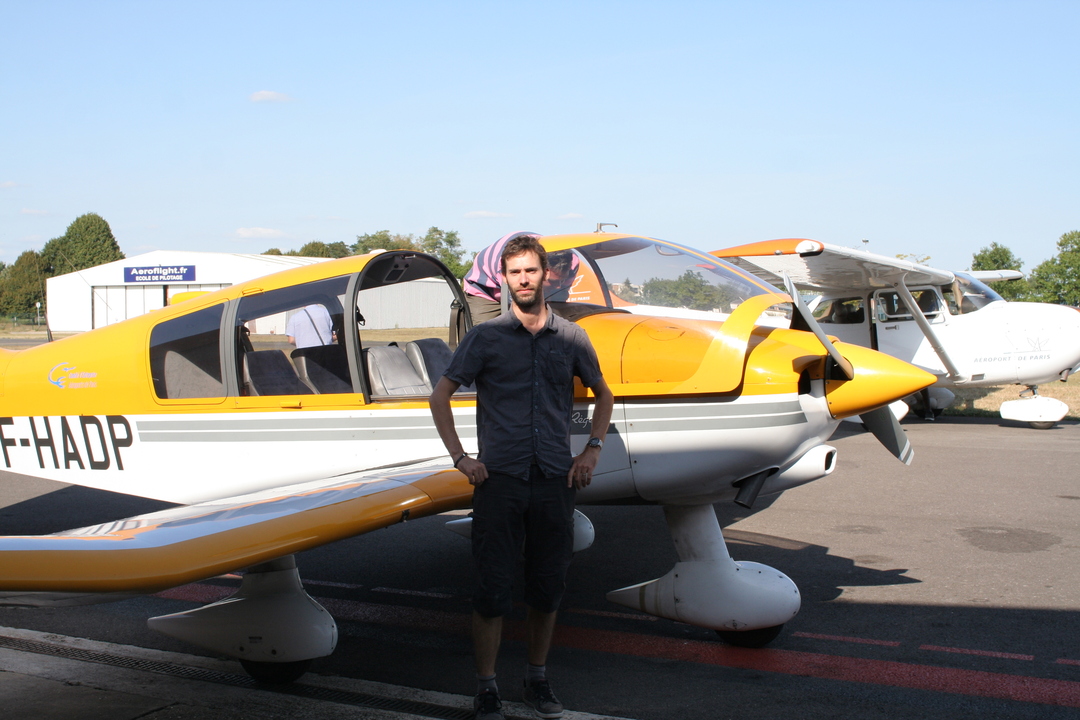
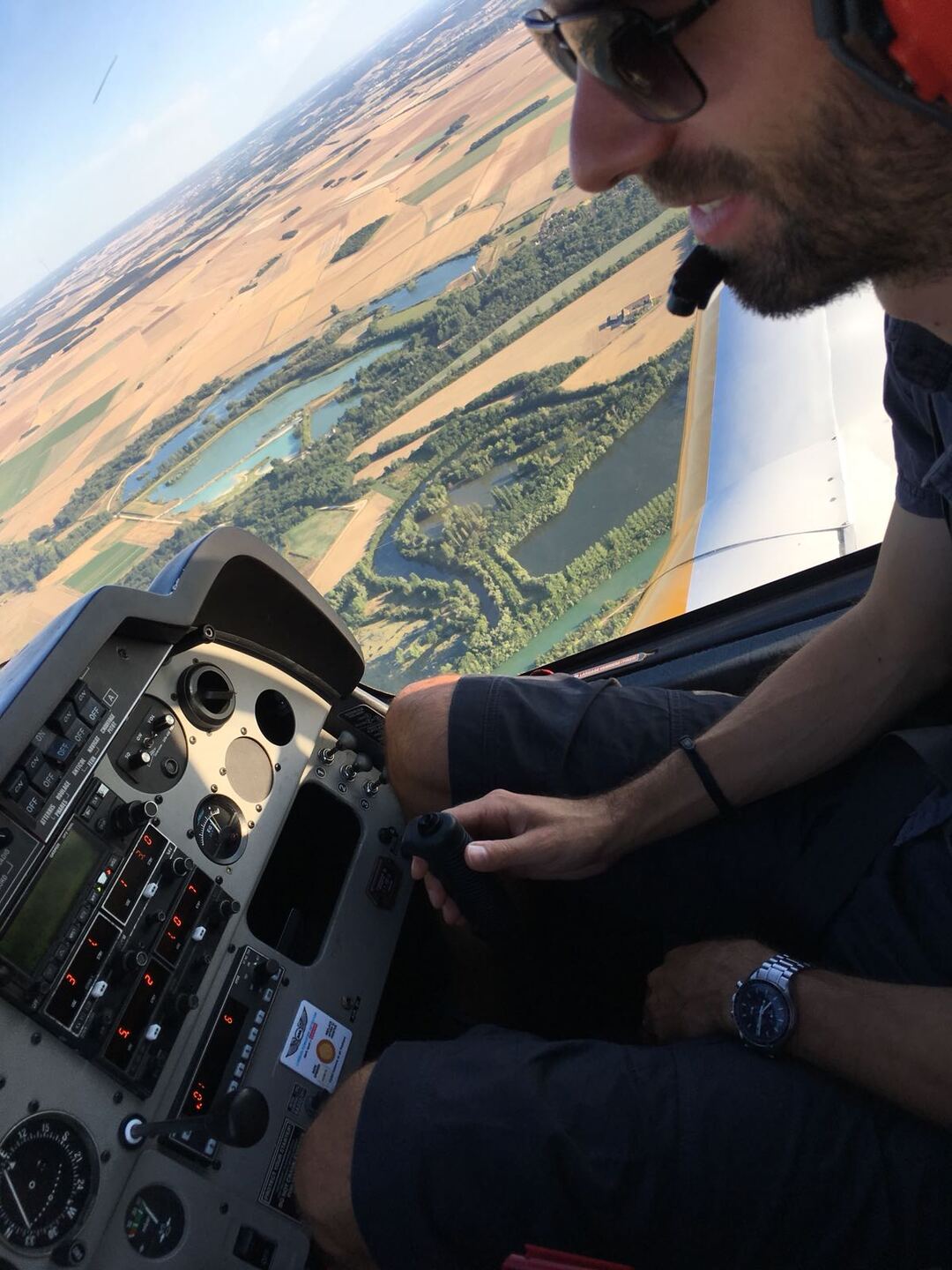
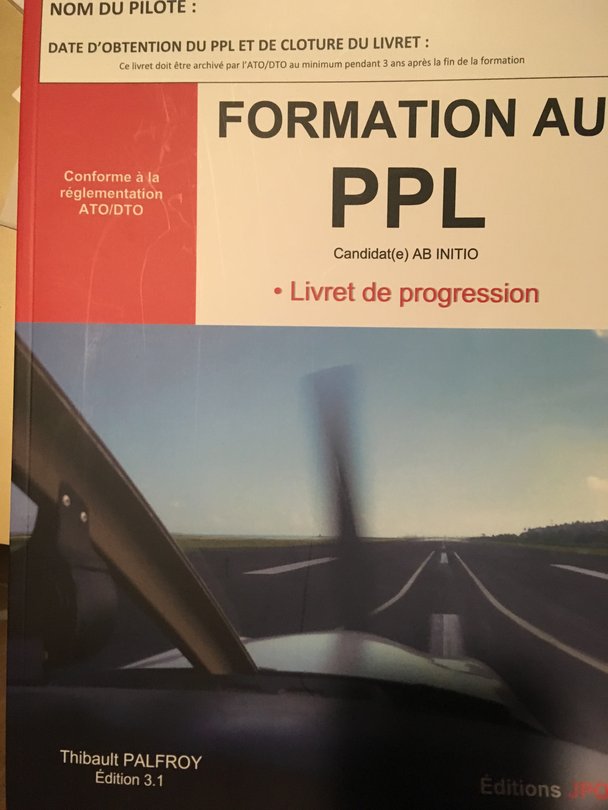
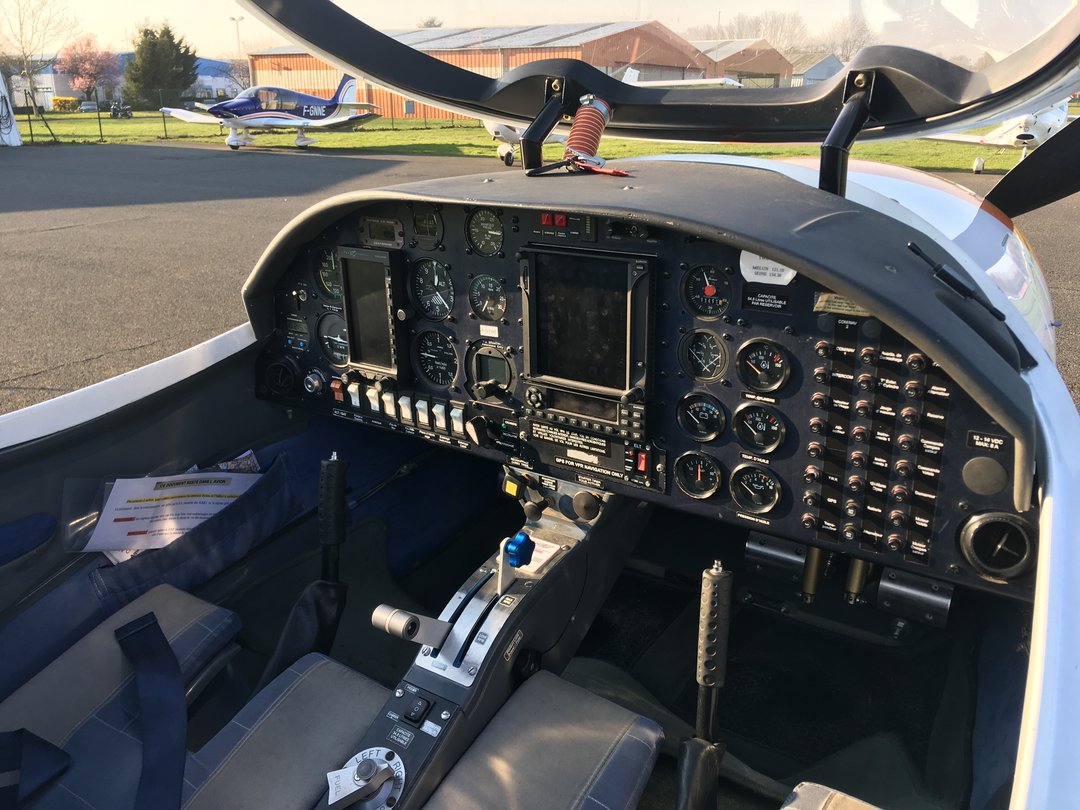
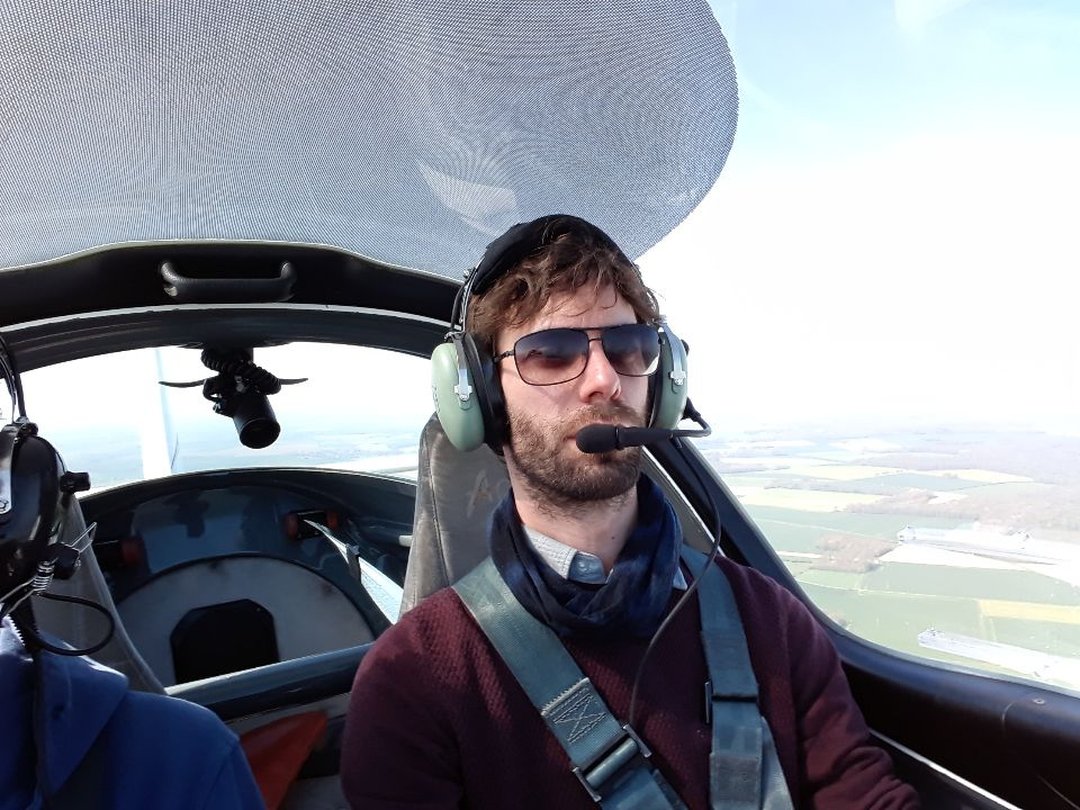
So, a bit more thank 18 months ago, I started a new adventure.
After a few flights with a friend of mine in a Robin DR400 and
Jodel aircrafts, I enlisted in a local flight club at the Lognes
airfield (LFPL), and started a Pilot Private License training. A
PPL is an international flight license for non commercial
operations. Associated with a qualification like the SEP (Single
Engine Piston), it enables you to fly basically anywhere in the
world (or at least anywhere where French is spoken by the air
traffic controllers) with passengers, under Visual Flight Rules
(VFR).
A bit like with cars, training has two parts, theoretical and
practical, both validated in a test. You don't have to pass the
theoretical test before starting the practical training, and it's
actually recommended to do both in parallel, especially since
nowadays most of the theoretical training is done online (you still
have to do 10h of in-person courses before taking the test).
So in March 2019 I started both trainings. Theoretical training is
divided in various domains, like regulations, flight mechanics,
meteorology, human factors etc. and you can obviously train in
parallel. Practical is more sequential and starts with basic flight
training (turns, climbs, descents), then take-off, then landing
configuration, then landing itself. All of that obviously with a
flight instructor sitting next to you (you're on the left seat but
the FI is the pilot in command ). You then start doing circuit
patterns, meaning you take off, do a circuit around the airfield,
then land on the runway you just took off. Usually you actually
don't do a complete landing but rather touch and go, and do it
again in order to have more and more landing training.
Once you know how to take-off, do a pattern and land when
everything is OK, you start practicing (still with your flight
instructor aboard) various failures: especially engine failures at
take off, but also flaps failure and stuff like that, all that
while still doing patterns and practicing landings. At one point,
the flight instructor deems you ready: he exits the plane, and you
start your first solo flight: engine tests, take off, one pattern,
landing.
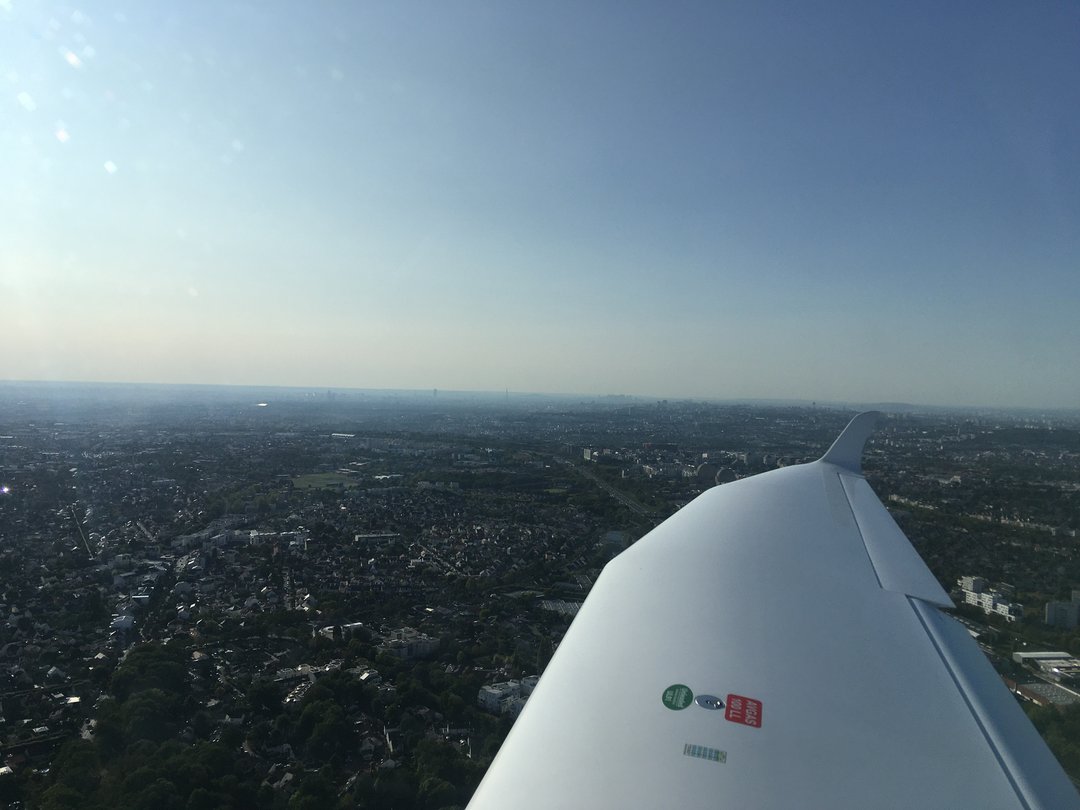
For me practical training was done in an Aquila AT-01/A210, which
is a small 2-seater. It's really light (it can actually be used as
an ultralight), empty weight is a bit above 500kg and max weight is
750. It doesn't go really fast (it cruises at around 100 knots, 185
km/h) but it's nice to fly. As it's really lightweight the wind
really shakes it though and it can be a bit hard to land because it
really glides very well (with a lift-to-drag ratio at 14). I tried
to fly a lot in the beginning, so the basic flight training was
done in about 6 months and 23 flight hours. At that point my
instructor stepped out of the plane and I did my first solo flight.
Everything actually went just fine, because we did repeat a lot
before that, so it wasn't even that scary. I guess I will remember
my whole life, as people said, but it was pretty uneventful,
although the controller did scold me a little because when taxiing
back to the parking I misunderstood the instructions and didn't
stop where asked (no runway incursion though).
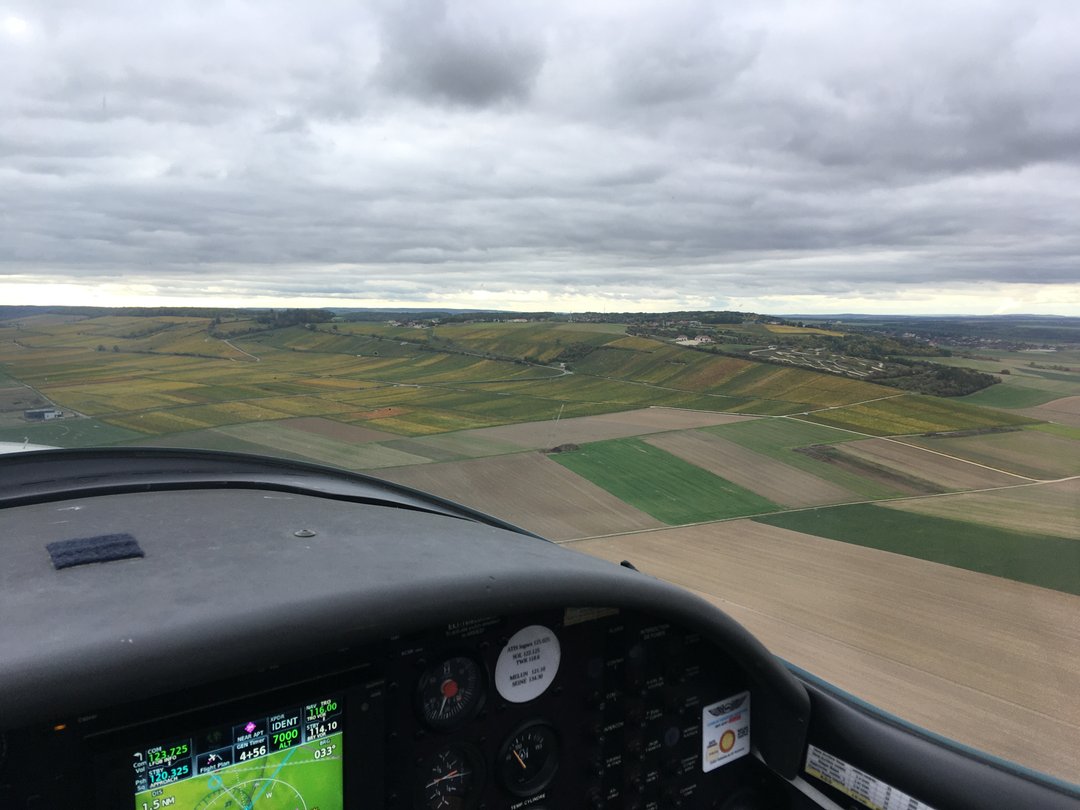
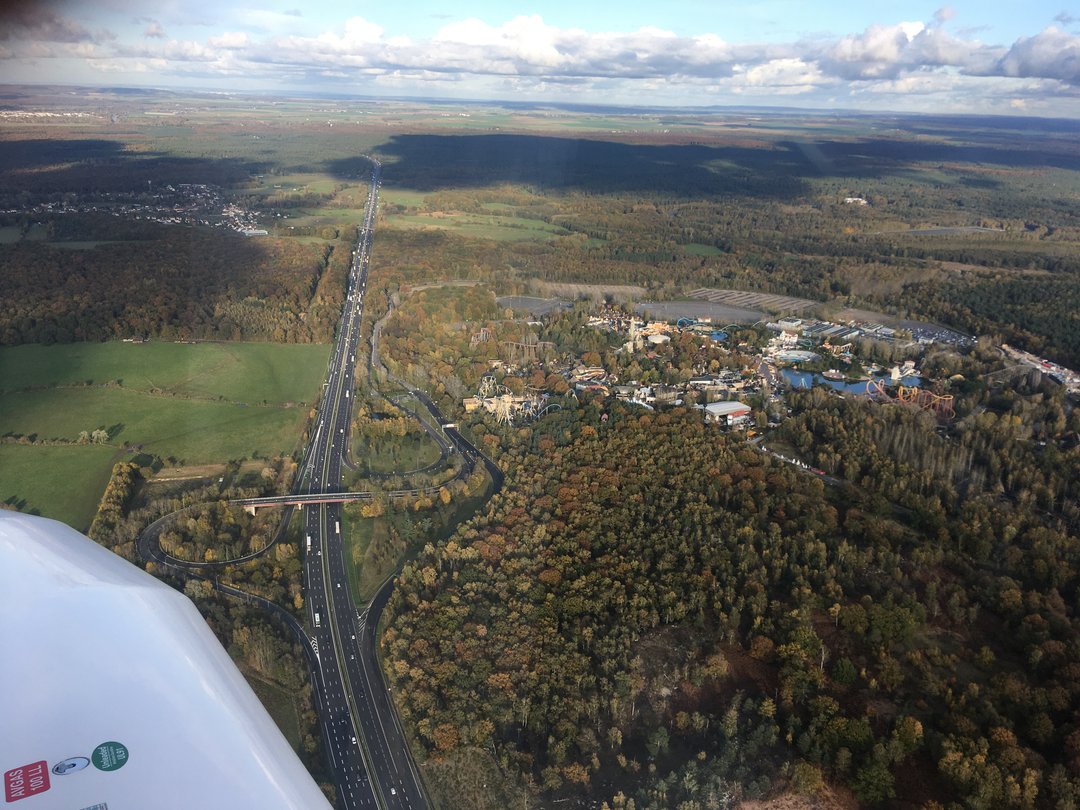
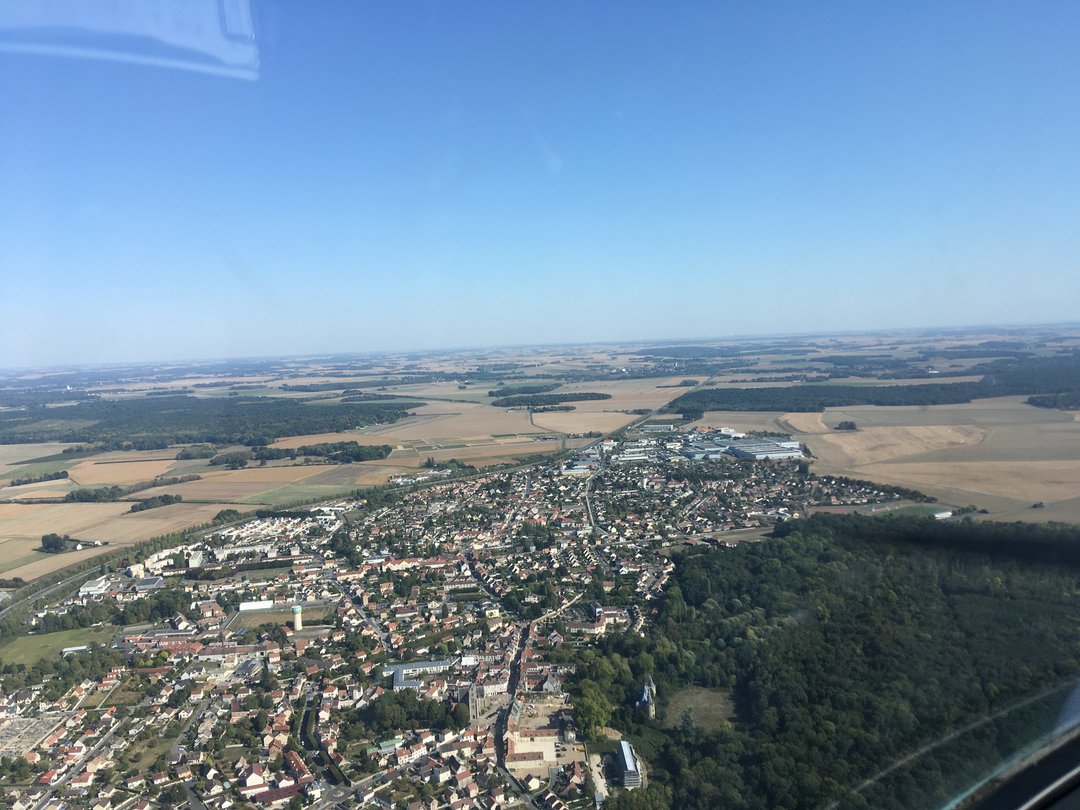
After the first solo flight, you keep practicing patterns and solo
flights every once in a while, and start doing cross-country
flights: you're not restricted to the local airfields (LFPL, LFAI,
LFPK) but start planning trips to more remote airports, about 30-40
minutes away (for me it was Moret/LFPU, Troyes/LFQB,
Pontoise/LFPT). Cross country flights requires you to plan the
route (draw it on the map, and write a navigation log so you know
what to do when in flight), but also check the weather, relevant
information, especially NOTAMs - Notice To Air Men (I hope someone
rename those Notice to Air Crews at one point), estimate the fuel
needed etc. For me, flight preparation time was between once and
twice the flight time. Early flight preparation is completed on the
day by last-minute checks, especially for weather. During the
briefing (with the flight instructor at first, but for the test
with the flight examiner and later with yourself) you check in turn
every bit of information to decide if you're GO or not for the
flight. As a lot of things in aviation, safety is really paramount
here.
Once you've practiced cross country flight a bit, you start
learning what to do in case of failures during a non-local flights,
for example an engine failure in a middle of nowhere, when you have
to chose a proper field to land, or a radio failure. And again when
you're ready for it (and in case of my local club, once you pass
your theoretical exam) you go for cross-country solo flights (of
the 10h of solo flight required for taking the test, 5h should be
done in cross-country flights). I went again to Troyes (LFQB), then
Dijon-Darois (LFGI) and did a three-legs flight to Chalons-Ecury
(LFQK) and Pont sur Yonne (LFGO).
And just after that, when I was starting to feel ready for the
test, COVID-19 lockdown happened, grounding everyone for a few
months. Even after it was over, I felt a bit rusty and had to take
some more training. I finally took the test in the beginning of
summer, but the first attempt wasn't good enough: I was really
stressed, and maybe not completely ready actually. So a bit more
training during summer, and finally in September I took the final
test part, which was successful this time.
After some paperwork, a new, shiny, Pilot Private License arrived
at my door.
And now that I can fly basically when I want, the autumn is finally
here with bad weather all day long, so actually planning real
flights is a bit tricky. For now I'm still flying solo on familiar
trips, but at some point I should be able to bring a passenger with
me (on the Aquila) and at some point migrate to a four-seaters like
the DR400, ubiquitous in France.
I grew up riding bikes with my friends, but I didn't keep it up once I went to
University. A couple of my friends persevered and are really good riders, even
building careers on their love of riding.
I bought a mountain bike in 2006 (a sort of "first pay cheque" treat after
changing roles) but didn't really ride it all that often until this year. Once
Lockdown began, I started going for early morning rides in order to get some
fresh air and exercise.
Once I'd got into doing that I decided it was finally time to buy a new bike.
I knew I wanted something more like a "hybrid" than a mountain bike but apart
from that I was clueless. I couldn't even name the top manufacturers.
Ross Burton a friend from the Debian
community suggested I take a look at Cotic, a small
UK-based manufacturer based in the peak district. Specifically their
Escapade
gravel bike. (A gravel bike, it turns out, is kind-of like a hybrid.)
My new Cotic Escapade
I did some due diligence, looked at some other options, put together a
spreadsheet etc but the Escapade was the clear winner. During the project I
arranged to have a socially distant cup of tea with my childhood friend Dan,
now a professional bike mechanic, who by coincidence arrived on his own Cotic
Escapade. It definitely seemed to tick all the boxes. I just needed to agonise
over the colour choices: Metallic Orange (a Cotic staple) or a Grey with some
subtle purple undertones. I was leaning towards the Grey, but ended up plumping
for the Orange.
I could just cover it under Red Hat UK s cycle to work scheme. I m very pleased
our HR dept is continuing to support the scheme, in these times when they also
forbid me from travelling to the office.
And so here we are. I m very pleased with it! Perhaps I'll write more about
riding, or post some pictures, going forward.
One of the points Flanigan makes in her piece Seat Belt Mandates and Paternalism is that we re conditioned to use seat belts from a very early age. It s a thing we internalize and build into our understanding of the world. People feel bad when they don t wear a seat belt.(1) They re unsettled. They feel unsafe. They feel like they re doing something wrong.
Masks have started to fit into this model as well. Not wearing a mask feels wrong. An acquaintance shared a story of crying after realizing they had left the house without a mask. For some people, mask wearing has been deeply internalized.
We have regular COVID tests at NYU. Every other week I spit into a tube and then am told whether I am safe or sick. This allows me to hang out with my friends more confident than I would feel otherwise. This allows me to be closer to people than I would be otherwise. It also means that if I got sick, I would know, even if I was asymptomatic. If this happened, I would need to tell my friends. I would trace the places I ve been, the people I ve seen, and admit to them that I got sick. I would feel shame because something I did put me in that position.
There were (are?) calls to market mask wearing and COVID protection with the same techniques we use around sex: wear protection, get tested, think before you act, ask consent before touching, be honest and open with the people around you about your risk factors.
This is effective, at least among a swath of the population, but COVID has effectively become another STD. It s a socially transmitted disease that we have tabooified into creating shame in people who have it.
The problem with this is, of course, that COVID isn t treatable in the same way syphilis and chlamydia are. Still, I would ask whether people don t report, or get tested, or even wear masks, because of shame? In some communities, wearing a mask is a sign that you re sick. It s stigmatizing.(2)
I think talking about COVID the way we talk about sex is not the right approach because, in my experience, the ways I learned about sex were everything from factually wrong to deeply harmful. If what we re doing doesn t work, what does?
(1) Yes, I know not everyone.
(2) Many men who don t wear masks cite it as feeling emasculating, rather than stigmatizing.
A new RcppSimdJson release arrived on CRAN yesterday bringing along the simdjson 0.5.0 release that happened a few weeks.
RcppSimdJson wraps the fantastic and genuinely impressive simdjson library by Daniel Lemire and collaborators. Via very clever algorithmic engineering to obtain largely branch-free code, coupled with modern C++ and newer compiler instructions, it results in parsing gigabytes of JSON parsed per second which is quite mindboggling. The best-case performance is faster than CPU speed as use of parallel SIMD instructions and careful branch avoidance can lead to less than one cpu cycle per byte parsed; see the video of the talk by Daniel Lemire at QCon (also voted best talk).
Beside the upstream update, not too much happened to our package itself since 0.1.1 though Brandon did help one user to seriously speed up his JSON processing. The (this time very short) NEWS entry follows.
The thirteenth release of littler as a CRAN package became available today (after a three day rest at CRAN for no real reason), following in the fourteen-ish year history as a package started by Jeff in 2006, and joined by me a few weeks later.
littler is the first command-line interface for R as it predates Rscript. It allows for piping as well for shebang scripting via #!, uses command-line arguments more consistently and still starts faster. It also always loaded the methods package which Rscript only started to do in recent years.
littler lives on Linux and Unix, has its difficulties on macOS due to yet-another-braindeadedness there (who ever thought case-insensitive filesystems as a default where a good idea?) and simply does not exist on Windows (yet the build system could be extended see RInside for an existence proof, and volunteers are welcome!). See the FAQ vignette on how to add it to your PATH.
A few examples are highlighted at the Github repo, as well as in the examples vignette.
This release brings five new example scripts and command wrappers:
installDeps.r installs all dependencies of package (directory or tarball)
installRSPM.r relies on RSPM to install binary packages
installBSPM.r relies on BSPM to install binary packages (esp. on Linux)
cranIncomimg.r checks the incoming queue for one or more packages
urlUpdates.r checks and/or updates stale URLs leading to redirects
A number of commands were also extended or updated (see below for more). We have a new and very slick documentation website once again utilising Material for MkDocs. Last but not least the two included vignettes now use minidown and the fabulous water css theme which reduced the file sizes of the two vignettes from, respectively, 884kb and 873kb to 47kb and 15kb. Yes, that is correct. That alone brought the package file size down from 641kb to 116kb. Incredible.
The NEWS file entry is below.
Changes in littler version 0.3.12 (2020-10-04)
Changes in examples
Updates to scripts tt.r, cos.r, cow.r, c4r.r, com.r
New script installDeps.r to install dependencies
Several updates tp script check.r
New script installBSPM.r and installRSPM.r for binary package installation (Dirk and I aki in #81)
New script cranIncoming.r to check in Incoming
New script urlUpdate.r validates URLs as R does
Changes in package
Travis CI now uses BSPM
A package documentation website was added
Vignettes now use minidown resulting in much reduced filesizes: from over 800kb to under 50kb (Dirk in #83)
 I am planning on talking about Rust programming in Debian environment.
Tried taking a video of me setting up the environment.
 Testing that the
 A new package arrived on CRAN a few days ago. It offers a few headers files which wrap (parts) of the C API for R, but in a form that may be a little easier to use for C++ programmers. I have always liked how in Rcpp we offer good parts of the standalone R Math library in a namespace


github activity october 2013 to october 2014
github activity october 2014 to october 2015
github activity october 2015 to october 2016
github activity october 2016 to october 2017
github activity october 2017 to october 2018
github activity october 2018 to october 2019
github activity october 2018 to october 2019
 Welcome to gambaru.de. Here is my monthly report (+ the first week in October) that covers what I have been doing for Debian. If you re interested in Java, Games and LTS topics, this might be interesting for you.
Debian Games


 The Reproducible Builds project intends to resume meeting regularly on IRC, starting today, Monday October 12th, at 18:00 UTC.
Sadly, due to the unprecedented events in 2020, there will be no in-person Reproducible Builds event this year, but please join us on the
 Update 2020-10-19: All packages are now available in Debian/experimental!
More than a month has passed since my last KDE/Plasma for Debian update, but things are progressing nicely.
OBS packages
On the OBS side, I have updated the KDE Apps to 20.08.2, and the KDE Frameworks to 5.75. Especially the update of apps brings in at least a critical security fix.
Concerning the soon to be released Plasma 5.20, packages are more or less ready, but as reported here we have to wait for Qt 5.15 to be uploaded to unstable, which is also planned in the near future.
Debian main packages
Uploads of Plasma 5.19.4 to Debian/experimental are processing nicely, more than half the packages are already done, and the rest is ready to go. What holds us back is the NEW queue, as usual.
We (Scarlett, Patrick, me) hope to have everything through NEW and in experimental as soon as possible, followed by an upload of probably Plasma 5.19.5 to Debian/unstable.
Thanks also to Lisandro for accepting me into the Salsa Qt/KDE team.

 Salsa CI aims at improving the Debian packaging lifecycle by delivering
Continuous Integration fully compatible with Debian packaging.
The main Salsa CI's project is the
pipeline, that builds
packages and run different tests after every
 So, a bit more thank 18 months ago, I started a new adventure.
After a few flights with a friend of mine in a Robin DR400 and
Jodel aircrafts, I enlisted in a local flight club at the Lognes
airfield (LFPL), and started a Pilot Private License training. A
PPL is an international flight license for non commercial
operations. Associated with a qualification like the SEP (Single
Engine Piston), it enables you to fly basically anywhere in the
world (or at least anywhere where French is spoken by the air
traffic controllers) with passengers, under Visual Flight Rules
(VFR).



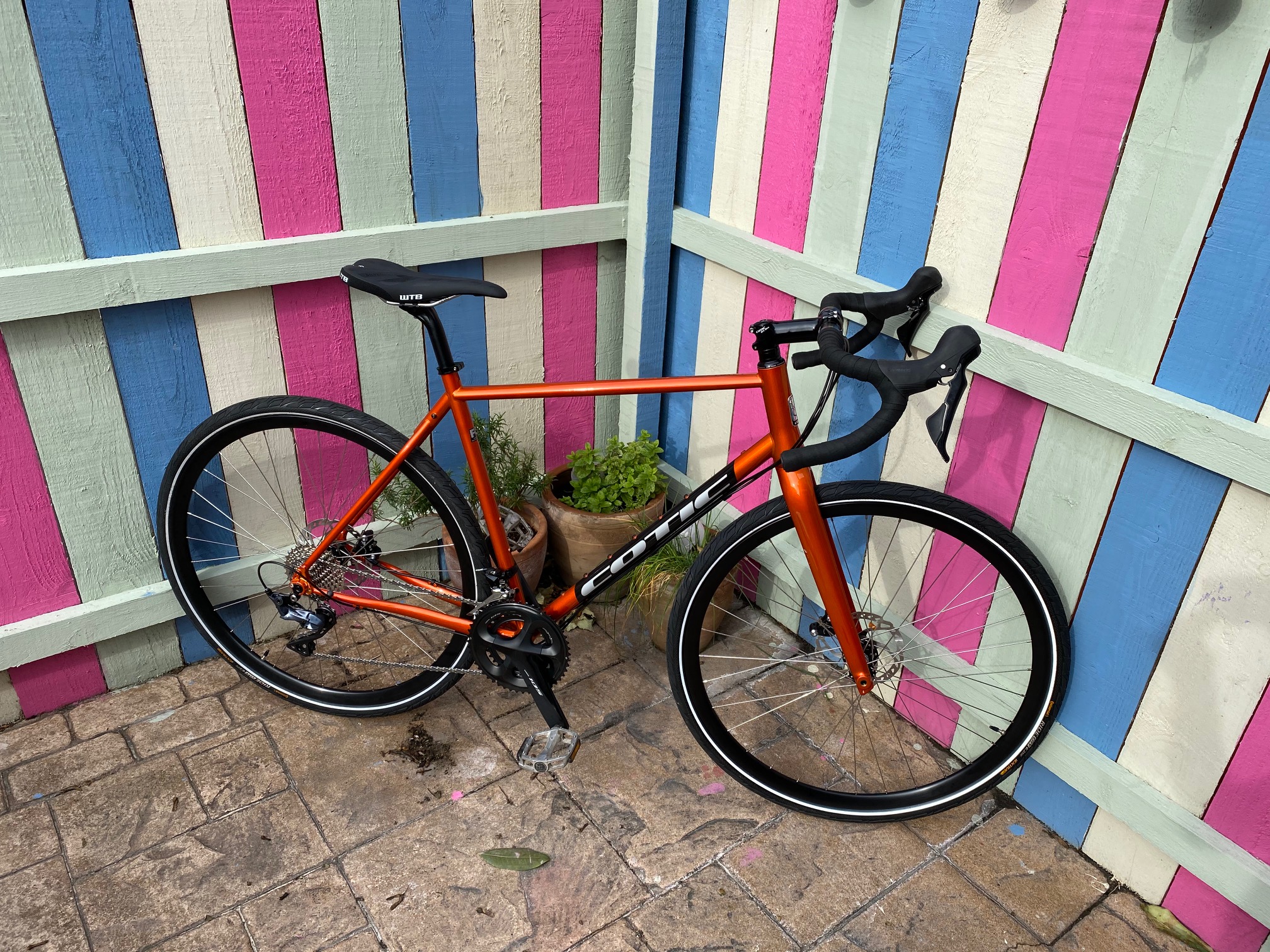 My new Cotic Escapade
 The thirteenth release of littler as a CRAN package became available today (after a three day rest at CRAN for no real reason), following in the fourteen-ish year history as a package started by Jeff in 2006, and joined by me a few weeks later.
littler is the first command-line interface for R as it predates
