Search Results: "sto"

10 July 2014

Steve Kemp: Blogspam moved, redis alternatives being examined

As my previous post suggested I'd been running a service for a few years, using Redis as a key-value store. Redis is lovely. If your dataset will fit in RAM. Otherwise it dies hard. Inspired by Memcached, which is a simple key=value store, redis allows for more operations: using sets, using hashes, etc, etc. As it transpires I mostly set keys to values, so it crossed my mind last night an alternative to rewriting the service to use a non-RAM-constrained service might be to juggle redis out and replace it with something else. If it were possible to have a redis-compatible API which secretly stored the data in leveldb, sqlite, or even Berkley DB, then that would solve my problem of RAM-constraints, and also be useful. Looking around there are a few projects in this area nds fork of redis, ssdb, etc. I was hoping to find a Perl Redis::Server module, but sadly nothing exists. I should look at the various node.js stub-servers which exist as they might be easy to hack too. Anyway the short version is that this might be a way forward, the real solution might be to use sqlite or postgres, but that would take a few days work. For the moment the service has been moved to a donated guest and has 2Gb of RAM instead of the paltry 512Mb it was running on previously. Happily the server is installed/maintained by my slaughter tool so reinstalling took about ten minutes - the only hard part was migrating the Redis-contents, and that's trivial thanks to the integrated "slave of" support. (I should write that up regardless though.)

Russell Coker: A Linux Conference as a Ritual

Sociological Images has an interesting post by Jay Livingston PhD about a tennis final as a ritual [1]. The main point is that you can get a much better view of the match on your TV at home with more comfort and less inconvenience, so what you get for the price of the ticket (and all the effort of getting there) is participating in the event as a spectator. It seems to me that the same idea applies to community Linux conferences (such as LCA) and some Linux users group meetings. In terms of watching a lecture there are real benefits to downloading it after the conference so that you can pause it and study related web sites or repeat sections that you didn t understand. Also wherever you might sit at home to watch a video of a conference lecture you will be a lot more comfortable than a university lecture hall. Some people don t attend conferences and users group meetings because they would rather watch a video at home. Benefits of Attending (Apart from a Ritual) One of the benefits of attending a lecture is the ability to ask questions. But that seems to mostly apply to the high status people who ask most questions. I ve previously written about speaking stacks and my observations about who asks questions vs the number that can reasonably be asked [2]. I expect that most delegates ask no questions for the entire conference. I created a SurveyMonkey survey to discover how many questions people ask [3]. I count LCA as a 3 day conference because I am only counting the days where there are presentations that have been directly approved by the papers committee, approving a mini-conf (and thus delegating the ability to approve speeches) is different. Another benefit of attending is the so-called hallway track where people talk to random other people. But that seems to be of most benefit to people who have some combination of high status in the community and good social skills. In the past I ve attended the Professional Delegates Networking Session which is an event for speakers and people who pay the Professional registration fee. Sometimes at such events there has seemed to be a great divide between speakers (who mostly knew each other before the conference) and Professional Delegates which diminishes the value of the event to anyone who couldn t achieve similar benefits without it. How to Optimise a Conference as a Ritual To get involvement of people who have the ritualistic approach one could emphasise the issue of being part of the event. For example to get people to attend the morning keynote speeches (which are sometimes poorly attended due to partying the night before) one could emphasise that anyone who doesn t attend the keynote isn t really attending the conference. Conference shirts seem to be strongly correlated with the ritual aspect of conferences, the more corporate conferences don t seem to offer branded clothing to delegates. If an item of branded schwag was given out before each keynote then that would increase the attendance by everyone who follows the ritual aspect (as well as everyone who just likes free stuff). Note that I m not suggesting that organisers of LCA or other conferences go to the effort of giving everyone schwag before the morning keynote, that would be a lot of work. Just telling people that anyone who misses the keynote isn t really attending the conference would probably do. I ve always wondered why conference organisers want people to attend the keynotes and award prizes to random delegates who attend them. Is a keynote lecture a ritual that is incomplete if the attendance isn t good enough?

Russell Coker: Taxing Inferior Products

I recently had a medical appointment cancelled due to a computer crash . Apparently the reception computer crashed and lost all bookings for a day and they just made new bookings for whoever called and anyone who had a previous booking just missed out. I ll probably never know whether they really had a computer problem or just used computer problems as an excuse when they made a mistake. But even if it wasn t a real computer problem the fact that computers are so unreliable overall that computer crash is an acceptable excuse indicates a problem with the industry. The problem of unreliable computers is a cost to everyone, it s effectively a tax on all business and social interactions that involve computers. While I spent the extra money on a server with ECC RAM for my home file storage I have no control over the computers purchased by all the companies I deal with which are mostly the cheapest available computers. I also have no option to buy a laptop with ECC RAM because companies like Lenovo have decided not to manufacture them. It seems to me that the easiest way of increasing overall reliability of computers would be to use ECC RAM everywhere. In the early 90 s all IBM compatible PCs had parity RAM, that meant that for each byte there was one extra bit which would report 100% of single-bit errors and 50% of errors that involved random memory corruption. Then manufacturers decided to save a tiny amount of money on memory by using 8/9 the number of chips for desktop/laptop systems and probably make more money on selling servers with ECC RAM. If the government was to impose a 20% tax on computers that lack ECC RAM then manufacturers would immediately start using it everywhere and the end result would be no price increase overall as it s cheaper to design desktop systems and servers with the same motherboards apparently some desktop systems have motherboard support for ECC RAM but don t ship with suitable RAM or advertise the support for such RAM. This principle applies to many other products too. One obvious example is cars, a car manufacturer can sell cheap cars with few safety features and then when occupants of those cars and other road users are injured the government ends up paying for medical expenses and disability pensions. If there was a tax for every car that has a poor crash test rating and a tax for every car company that performs badly in real world use then it would give car companies some incentive to manufacture safer vehicles. Now there are situations where design considerations preclude such features. For example implementing ECC RAM in mobile phones might involve technical difficulties (particularly for 32bit phones) and making some trucks and farm equipment safer might be difficult. But when a company produces multiple similar products that differ significantly in quality such as PCs with and without ECC RAM or cars with and without air-bags there would be no difficulty in making them all of them higher quality. I don t think that we will have a government that implements such ideas any time soon, it seems that our government is more interested in giving money to corporations than taxing them. But one thing that could be done is to adopt a policy of only giving money to companies if they produce high quality products. If a car company is to be given hundreds of millions of dollars for not closing a factory then that factory should produce cars with all possible safety features. If a computer company is going to be given significant tax breaks for doing R&D then they should be developing products that won t crash.

9 July 2014

Christoph Berg: New urxvt tab in current directory

Following Enrico's terminal-emulators comparison, I wanted to implement "start a new terminal tab in my current working directory" for rxvt-unicode aka urxvt. As Enrico notes, this functionality is something between "rather fragile" and non-existing, so I went to implement it myself. Martin Pohlack had the right hint, so here's the patch:
--- /usr/lib/urxvt/perl/tabbed  2014-05-03 21:37:37.000000000 +0200
+++ ./tabbed    2014-07-09 18:50:26.000000000 +0200
@@ -97,6 +97,16 @@
       $term->resource (perl_ext_2 => $term->resource ("perl_ext_2") . ",-tabbed");
     ;
 
+   if (@  $self-> tabs   )  
+      # Get the working directory of the current tab and append a -cd to the command line
+      my $pid = $self-> cur pid ;
+      my $pwd = readlink "/proc/$pid/cwd";
+      #print "pid $pid pwd $pwd\n";
+      if ($pwd)  
+         push @argv, "-cd", $pwd;
+       
+    
+
    push @urxvt::TERM_EXT, urxvt::ext::tabbed::tab::;
 
    my $term = new urxvt::term
@@ -312,6 +322,12 @@
    1
  
 
+sub tab_child_start  
+   my ($self, $term, $pid) = @_;
+   $term-> pid  = $pid;
+   1;
+ 
+
 sub tab_start  
    my ($self, $tab) = @_;
 
@@ -402,7 +418,7 @@
 # simply proxies all interesting calls back to the tabbed class.
 
  
-   for my $hook (qw(start destroy key_press property_notify))  
+   for my $hook (qw(start destroy key_press property_notify child_start))  
       eval qq 
          sub on_$hook  
             my \$parent = \$_[0] term parent 

8 July 2014

Steve Kemp: What do you do when your free service is too popular?

Once upon a time I setup a centralized service for spam-testing blog/forum-comments in real time, that service is BlogSpam.net. This was created because the Debian Administration site was getting hammered with bogus comments, as was my personal blog. Today the unfortunate thing happened, the virtual machine this service was running on ran out of RAM and died - The redis-store that holds all the state has now exceeded the paltry 512Mb allocated to the guest, so OOM killed it. So I'm at an impasse - I either recode it to use MySQL instead of Redis, or something similar to allow the backing store to exceed the RAM-size, or I shut the thing down. There seems to be virtually no liklihood somebody would sponsor a host to run the service, because people just don't pay for this kind of service. I've temporarily given the guest 1Gb of RAM, but that comes at a cost. I've had to shut down my "builder" host - which is used to build Debian packages via pbuilder. Offering an API, for free, which has become increasingly popular and yet equally gets almost zero feedback or "thanks" is a bit of a double-edged sword. Because it has so many users it provides a better service - but equally costs more to run in terms of time, effort, and attention. (And I just realized over the weekend that my Flattr account is full of money (~50 euro) that I can't withdraw - since I deleted my paypal account last year. Ooops.) Meh. Happy news? I'm avoiding the issue of free service indefinitely with the git-based DNS product which was covering costs and now is .. doing better. (20% off your first months bill with coupon "20PERCENT".)

Joey Hess: laptop death

So I was at Ocracoke island, camping with family, and I brought my laptop along as I've done probably half a dozen times before. An enormous thuderstorm came up. It rained for 8 hours and thundered for 3 of those. Some lightning cracks quite close by as we crouched in the food tent, our feet up off the increasingly wet ground "just in case". The campground flooded. Luckily we were camped in the dunes and tents mostly avoided being flooded with 2-3 inches of water. (That was just the warmup; a hurricane hit a week after we left.) My laptop was in my tent when this started, and I got soaked to the skin just running over there and throwing it up on the thermarest to keep it out of any flooding and away from any drips. It seemed ok, so best not to try to move it to the car in that downpour. Next time I checked, it turned out the top vent of the tent was slightly open and dripping. The laptop bag was damp. But inside it seemed ok. Rain had slackened to just heavy, so I ran it down to the car. Laptop appeared barely damp, but it was hard to tell as I had quite forgotten what "dry" was. Turned it on for 10 seconds to check the time. It was 7:30 and we still had to cook dinner in this mess. Transferred it to a dry bag. (By the way, in some situations, discovering you have a single dry towel you didn't know you had is the best gift in the world!) Next morning, the laptop was dead. When powered on, the fan came on full, the screen stayed black, and after a few seconds it turned itself back off. I need this for work, so it was a crash priority to get it fixed or a replacement. Before I even got home, I had logged onto Lenovo's website to check warantee status and found 2 things:
  1. They needed some number from a sticker on the bottom of my laptop. Which was no longer there.
  2. The process required some stange login on an entirely different IBM website.
At this point, I had a premonition of how the beuracracy would go. Reading Sesse's Blehnovo, I see I was right. I didn't even try. I ordered a replacement with priority shipping. When I got home, I pulled the laptop apart to try to debug it. I still don't know what's wrong with it. The SSD may be damaged; it seems to cause anything I put it into to fail to work. New laptop arrived in 2 days. Since this model is now a year old, it was a few hundred dollars cheaper this time around. And now I have an extra power supply, and a replacment keyboard, and a replacement fan etc. And I've escaped the dead USB port and broken rocker switch of the old laptop too. The only weird thing is that, while my old laptop had no problem with my Toshiba passport USB drive, this new one refuses to recognize it unless I plug it into a USB 1.0 hub. Oh well..
Update: Ocracode for this trip: OBX1.1 P6 L7 SA3d+++b+c++ U2(rearended,laptop death) T4f2b1 R2T Bb+m++++n++
F+++u++ SC+s-g6 H+f0i3 V+++s++m0 E++r+

7 July 2014

Jan Wagner: Monitoring Plugins release ahead

It seems to be a great time for monitoring solutions. Some of you may have noticed that Icinga has released it's first stable version of the completely redeveloped Icinga 2. After several changes in the recent past, where the Team maintaining the Plugins used for several Monitoring solutions was busy moving everything to new infrastructure, they are now back on track. The recent development milestone is reached and a call for testing was also sent out. In the meanwhile I prepared the packaging for this bigger move. The packages are now moved to the source package monitoring-plugins, the whole packaging changes can be observed in the changelog. With this new release we have also some NEWS, which might be useful to check. Same counts for upstream NEWS. You can give the packages a go and grab them from my 'unstable' and 'wheezy-backports' repositories at http://ftp.cyconet.org/debian/. Right after the stable release, the packages will be uploaded into debian unstable, but might get delayed by the NEW queue due the new package names.

6 July 2014

Dominique Dumont: Status and next step on lcdproc automatic configuration upgrade with Perl and Config::Model

Back in March, I uploaded a Debian s version of lcdproc with a unique feature: user and maintainer configurations are merged during package upgrade: user customizations and developers enhancements are both preserved in the new configuration file. (See this blog for more details). This avoids tedious edition of the configuration LCDd.conf file after every upgrade of lcdproc package. At the beginning of June, a new version of lcdproc (0.5.7-1) was uploaded. This triggered another round of automatic upgrades on user s systems. According to the popcon rise of libconfig-model-lcdproc-perl, about 100 people have upgraded lcdproc on their system. Since automatic upgrade has an opt-out feature, one cannot say for sure that 100 people are actually using automatic upgrade, but I bet a fair portion are them are. So far, only one people has complained: a bug report was filed about the many dependencies brought by libconfig-model-lcdproc-perl. The next challenge for lcdproc configuration upgrade is brought by a bug reported on Ubuntu: the device file provided by imon kernel module is a moving target: The device file created by the kernel can be /dev/lcd0 or /dev/lcd1 or even /dev/lcd2. Static configuration files and moving target don t mix well. The obvious solution is to provide a udev rule so that a symbolic link is created from a fixed location (/dev/lcd-imon) to the moving target. Once the udev rule is installed, the user only has to update LCDd.conf file to use the symlink as imon device file and we re done. But, wait The whole point of automatic configuration upgrade is to spare the user this kind of trouble: the upgrade must be completely automatic. Moreover, the upgrade must work in all cases: whether udev is available (Linux) or not. If udev is not available, the value present in the configuration file must be preserved. To know whether udev is available, the upgrade tool (aka cme) will check whether the file provided by udev (/dev/lcd-imon) is present or not. This will be done by lcdproc postinst script (which is run automatically at the end of lcdproc upgrade). Which means that the new udev rule must also be
activated in the postinst script before the upgrade is done. In other words, the next version of lcdproc (0.5.7-2) will: In the lcdproc configuration model installed by libconfig-model-lcdproc-perl, the imon device parameter is enhanced so that running cme check lcdproc or cme migrate lcdproc issues a warning if /dev/lcd-imon exists and if imon driver is not configured to use it. This way, the next installation of lcdproc will deliver a fix for imon and cme will fix user s configuration file without requiring user input. The last point is admittedly bad marketing as users will not be aware of the magic performed by Config::Model Oh well In the previous section, I ve briefly mentioned that imon_device parameter is enhanced in lcdproc configuration model. If you re not already bored, let s lift the hood and see what kind of enhancements was added. Let s peek in lcdproc configuration file, LCDd.conf file which is used to generate lcdproc configuration model. You may remember that the formal description of all LCDd.conf parameters and their properties is generated from LCDd.conf to provide lcdproc configuration model. The comments in LCDd.conf follow a convention so that most properties of the parameters can be extracted from the comments. In the example below, the comments show that NewFirmware is a boolean value expressed as yes or no, the latter being the default :
# Set the firmware version (New means >= 2.0) [default: no; legal: yes, no]
NewFirmware=no
Back to the moving target. In LCDd.conf, imon device file parameter is declared this way:
# Select the output device to use
Device=/dev/lcd0
This means that device is a string where the default value is /dev/lcd0. Which is wrong once the special udev rule provided with Debian packages is activated. With this rule, the default value must be /dev/lcd-imon. To fix this problem, a special comment is added in the Debian version of LCDd.conf to tune further the properties of the device parameter:
# select the device to use
#  %
#   default~
#   compute
#     use_eval=1
#     formula="my $l = '/dev/lcd-imon'; -e $l ? $l : '/dev/lcd0';"
#     allow_override=1 -
#   warn_if:not_lcd_imon
#     code="my $l = '/dev/lcd-imon';defined $_ and -e $l and $_ ne $l ;"
#     msg="imon device does not use /dev/lcd-imon link."
#     fix="$_ = undef;"
#   warn_unless:found_device_file
#     code="defined $_ ? -e : 1"
#     msg="missing imon device file"
#     fix="$_ = undef;"
#   - % 
Device=/dev/lcd0
This special comment between % and % follows the syntax of Config::Model::Loader. A small configuration model is declared there to enhance the model generated from LCDd.conf file. Here are the main parts: In both warn_unless and warn_if parts, the fix code snippet is run when by the command cme fix lcdproc and is used to repair the warning condition. In this case, the fix consists in resetting the device configuration value so the computed value above can be used. cme fix lcdproc is triggered during package post install script installed by dh_cme_upgrade. Come to think of it, generating a configuration model from a configuration file can probably be applied to other projects: for instance, php.ini and kdmrc are also shipped with detailed comments. May be I should make a more generic model generator from the example used to generate lcdproc model Well, I will do it if people show interest. Not in the form yeah, that would be cool , but in the form, yes, I will use your work to generate a configuration model for project [...] . I ll let you fill the blank ;-)
Tagged: Config::Model, configuration, debian, lcdproc, Perl, upgrade

Ian Campbell: Setting absolute date based Amazon S3 bucket lifecycles with curl

For my local backup regimen I use flexbackup to create a full backup twice a year and differential/incremental backups on a weekly/monthly basis. I then upload these to a new amazon S3 bucket for each half year (so each bucket corresponds to the a full backup plus the associated differentials and incrementals). I then set the bucket's lifecycle to archive to glacier (cheaper offline storage) from the month after that half year has ended (reducing costs) and to delete it a year after the half ends. It used to be possible to do this via the S3 web interface but the absolute date based options seem to have been removed in favour of time since last update, which is not what I want. However the UI will still display such lifecycles if they are configured and directs you to the REST API to set them up. I had a look around but couldn't any existing CLI tools to do this directly but I figured it must be possible with curl. A little bit of reading later I found that it was possible but it involved some faff calculating signatures etc. Luckily EricW has written Amazon S3 Authentication Tool for Curl (AKA s3curl) which automates the majority of that faff. The tool is "New BSD" licensed according to that page or Apache 2.0 license according to the included LICENSE file and code comments. Setup Following the included README setup ~/.s3curl containing your id and secret key (I called mine personal which I then use below). Getting the existing lifecycle Retrieving an existing lifecycle is pretty easy. For the bucket which I used for the first half of 2014:
$ s3curl --id=personal -- --silent http://$bucket.s3.amazonaws.com/?lifecycle   xmllint --format -
<?xml version="1.0" encoding="UTF-8"?>
<LifecycleConfiguration xmlns="http://s3.amazonaws.com/doc/2006-03-01/">
  <Rule>
    <ID>Archive and Expire</ID>
    <Prefix/>
    <Status>Enabled</Status>
    <Transition>
      <Date>2014-07-31T00:00:00.000Z</Date>
      <StorageClass>GLACIER</StorageClass>
    </Transition>
    <Expiration>
      <Date>2015-01-31T00:00:00.000Z</Date>
    </Expiration>
  </Rule>
</LifecycleConfiguration>
See GET Bucket Lifecycle for details of the XML. Setting a new lifecycle The desired configuration needs to be written to a file. For example to set the lifecycle for the bucket I'm going to use for the second half of 2014:
$ cat s3.lifecycle
<LifecycleConfiguration>
  <Rule>
    <ID>Archive and Expire</ID>
    <Prefix/>
    <Status>Enabled</Status>
    <Transition>
      <Date>2015-01-31T00:00:00.000Z</Date>
      <StorageClass>GLACIER</StorageClass>
    </Transition>
    <Expiration>
      <Date>2015-07-31T00:00:00.000Z</Date>
    </Expiration>
  </Rule>
</LifecycleConfiguration>
$ s3curl --id=personal --put s3.lifecycle --calculateContentMd5 -- http://$bucket.s3.amazonaws.com/?lifecycle
See PUT Bucket Lifecycle for details of the XML.

Matthew Palmer: Witness the security of this fully DNSSEC-enabled zone!

After dealing with the client side of the DNSSEC puzzle last week, I thought it behooved me to also go about getting DNSSEC going on the domains I run DNS for. Like the resolver configuration, the server side work is straightforward enough once you know how, but boy howdy are there some landmines to be aware of. One thing that made my job a little less ordinary is that I use and love tinydns. It s an amazingly small and simple authoritative DNS server, strong in the Unix tradition of do one thing and do it well . Unfortunately, DNSSEC is anything but small and simple and so tinydns doesn t support DNSSEC out of the box. However, Peter Conrad has produced a patch for tinydns to do DNSSEC, and that does the trick very nicely. A brief aside about tinydns and DNSSEC, if I may Poor key security is probably the single biggest compromise vector for crypto. So you want to keep your keys secure. A great way to keep keys secure is to not put them on machines that run public-facing network services (like DNS servers). So, you want to keep your keys away from your public DNS servers. A really great way of doing that would be to have all of your DNS records somewhere out of the way, and when they change regenerate the zone file, re-sign it, and push it out to all your DNS servers. That happens to be exactly how tinydns works. I happen to think that tinydns fits very nicely into a DNSSEC-enabled world. Anyway, back to the story. Once I d patched the tinydns source and built updated packages, it was time to start DNSSEC-enabling zones. This breaks down into a few simple steps:
  1. Generate a key for each zone. This will produce a private key (which, as the name suggests, you should keep to yourself), a public key in a DNSKEY DNS record, and a DS DNS record. More on those in a minute. One thing to be wary of, if you re like me and don t want or need separate Key Signing and Zone Signing keys. You must generate a Key Signing key this is a key with a flags value of 257. Doing this wrong will result in all sorts of odd-ball problems. I wanted to just sign zones, so I generated a Zone Signing key, which has a flags value of 256. Big mistake. Also, the DS record is a hash of everything in the DNSKEY record, so don t just think you can change the 256 to a 257 and everything will still work. It won t.
  2. Add the key records to the zone data. For tinydns, this is just a matter of copying the zone records from the generated key into the zone file itself, and adding an extra pseudo record (it s all covered in the tinydnssec howto).
  3. Publish the zone data. Reload your BIND config, run tinydns-sign and tinydns-data then rsync, or do whatever it is PowerDNS people do (kick the database until replication starts working again?).
  4. Test everything. I found the Verisign Labs DNSSEC Debugger to be very helpful. You want ticks everywhere except for where it s looking for DS records for your zone in the higher-level zone. If there are any other freak-outs, you ll want to fix those because broken DNSSEC will take your domain off the Internet in no time.
  5. Tell the world about your DNSSEC keys. This is simply a matter of giving your DS record to your domain registrar, for them to add it to the zone data for your domain s parent. Wherever you d normally go to edit the nameservers or contact details for your domain, you probably want to do to the same place and look for something about DS or Domain Signer records. Copy and paste the details from the DS record in your zone into there, submit, and wait a minute or two for the records to get published.
  6. Test again. Before you pat yourself on the back, make sure you ve got a full board of green ticks in the DNSSEC Debugger. if anything s wrong, you want to rollback immediately, because broken DNSSEC means that anyone using a DNSSEC-enabled resolver just lost the ability to see your domain.
That s it! There s a lot of complicated crypto going on behind the scenes, and DNSSEC seems to revel in the number of acronyms and concepts that it introduces, but the actual execution of DNSSEC-enabling your domains is quite straightforward.

5 July 2014

John Goerzen: The Heights of Coronado

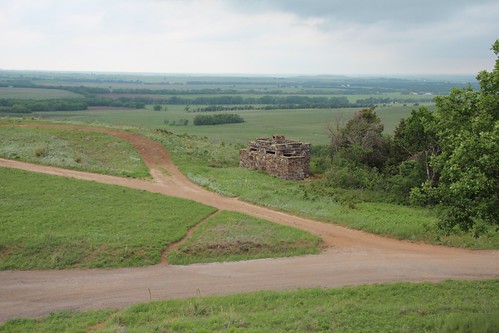
Near the beautiful Swedish town of Lindsborg, Kansas, there stands a hill known as Coronado Heights. It lies in the midst of the Smoky Hills, named for the smoke-like mist that sometimes hangs in them. We Kansans smile our usual smile when we tell the story of how Francisco V squez de Coronado famously gave up his search for gold after reaching this point in Kansas. Anyhow, it was just over a year ago that Laura, Jacob, Oliver, and I went to Coronado Heights at the start of summer, 2013 our first full day together as a family. Atop Coronado Heights sits a castle , an old WPA project from the 1930s: IMG_9803 IMG_9824 The view from up there is pretty nice: IMG_9806 And, of course, Jacob and Oliver wanted to explore the grounds. IMG_9813 As exciting as the castle was, simple rocks and sand seemed to be just as entertaining. IMG_9835 After Coronado Heights, we went to a nearby lake for a picnic. After that, Jacob and Oliver wanted to play at the edge of the water. They loved to throw rocks in and observe the splash. Of course, it pretty soon descended (or, if you are a boy, ascended ) into a game of splash your brother. And then to splash Dad and Laura . 2013-05-27 15 Fun was had by all. What a wonderful day! Writing the story reminds me of a little while before that the first time all four of us enjoyed dinner and smores at a fire by our creek. IMG_9756 Jacob and Oliver insisted on sitting or, well, flopping on Laura s lap to eat. It made me smile. (And yes, she is wearing a Debian hat.)

4 July 2014

Matthew Garrett: Self-signing custom Android ROMs

The security model on the Google Nexus devices is pretty straightforward. The OS is (nominally) secure and prevents anything from accessing the raw MTD devices. The bootloader will only allow the user to write to partitions if it's unlocked. The recovery image will only permit you to install images that are signed with a trusted key. In combination, these facts mean that it's impossible for an attacker to modify the OS image without unlocking the bootloader[1], and unlocking the bootloader wipes all your data. You'll probably notice that.


The problem comes when you want to run something other than the stock Google images. Step number one for basically all of these is "Unlock your bootloader", which is fair enough. Step number two is "Install a new recovery image", which is also reasonable in that the key database is stored in the recovery image and so there's no way to update it without doing so. Except, unfortunately, basically every third party Android image is either unsigned or is signed with the (publicly available) Android test keys, so this new recovery image will flash anything. Feel free to relock your bootloader - the recovery image will still happily overwrite your OS.

This is unfortunate. Even if you've encrypted your phone, anyone with physical access can simply reboot into recovery and reflash /system with something that'll stash your encryption key and mail your data to the NSA. Surely there's a better way of doing this?

Thankfully, there is. Kind of. It's annoying and involves a bunch of manual processes and you'll need to re-sign every update yourself. But it is possible to configure Nexus devices in such a way that you retain the same level of security you had when you were using the Google keys without losing the freedom to run whatever you want. Here's how.

Note: This is not straightforward. If you're not an experienced developer, you shouldn't attempt this. I'm documenting this so people can create more user-friendly approaches.

First: Unlock your bootloader. /data will be wiped.
Second: Get a copy of the stock recovery.img for your device. You can get it from the factory images available here
Third: Grab mkbootimg from here and build it. Run unpackbootimg against recovery.img.
Fourth: Generate some keys. Get this script and run it.
Fifth: zcat recovery.img-ramdisk.gz cpio -id to extract your recovery image ramdisk. Do this in an otherwise empty directory.
Sixth: Get DumpPublicKey.java from here and run it against the .x509.pem file generated in step 4. Replace /res/keys from the recover image ramdisk with the output. Include the "v2" bit at the beginning.
Seventh: Repack the ramdisk image (find . cpio -o -H newc gzip > ../recovery.img-ramdisk.gz) and rebuild recovery.img with mkbootimg.
Eighth: Write the new recovery image to your device
Ninth: Get signapk from here and build it. Run it against the ROM you want to sign, using the keys you generated earlier. Make sure you use the -w option to sign the whole zip rather than signing individual files.
Tenth: Relock your bootloader
Eleventh: Boot into recovery mode and sideload your newly signed image.

At this point you'll want to set a reasonable security policy on the image (eg, if it grants root access, ensure that it requires a PIN or something), but otherwise you're set - the recovery image can't be overwritten without unlocking the bootloader and wiping all your data, and the recovery image will only write images that are signed with your key. For obvious reasons, keep the key safe.

This, well. It's obviously an excessively convoluted workflow. A *lot* of it could be avoided by providing a standardised mechanism for key management. One approach would be to add a new fastboot command for modifying the key database, and only permit this to be run when the bootloader is unlocked. The workflow would then be something like which seems more straightforward. Long term, individual projects could do the signing themselves and distribute their public keys, resulting in the install process becoming as easy as which is actually easier than the current requirement to install an entirely new recovery image.

I'd actually previously criticised Google on the grounds that using custom keys wasn't possible on Android devices. I was wrong. It is, it's just that (as far as I can tell) nobody's actually documented it before. It's important that users not be forced into treating security and freedom as mutually exclusive, and it's great that Google have made that possible.

[1] This model fails if it's possible to gain root on the device. Thankfully this would never hold on what's that over there is that a distraction?

comment count unavailable comments

Rapha&#235;l Hertzog: My Free Software Activity in June 2014

This is my monthly summary of my free software related activities. If you re among the people who made a donation to support my work (168.17 , thanks everybody!), then you can learn how I spent your money. Otherwise it s just an interesting status update on my various projects. Debian LTS After having put in place the infrastructure to allow companies to contribute financially to Debian LTS, I spent quite some time to draft the announce of the launch of Debian LTS (on a suggestion of Moritz M hlenhoff who pointed out to me that there was no such announce yet). I m pretty happy about the result because we managed to mention a commercial offer without generating any pushback from the community. The offer is (in my necessarily biased opinion) clearly in the interest of Debian but still the money doesn t go to Debian so we took extra precautions. When I got in touch with the press officers, I included the Debian leader in the discussion and his feedback has been very helpful to improve the announce. He also officially acked the press release to give some confidence to the press officers that they were doing the right thing. Lucas also pushed me to seek public review of the draft press release, which I did. The discussion was constructive and the draft got further improved. The news got widely relayed, but on the flip side, the part with the call for help got almost no attention from the press. Even Linux Weekly News skipped it! On the Freexian side, we just crossed 10% of a full-time position (funded by 6 companies) and we are in contact with a few other companies in discussion. But we re far from our goal yet so we will have to actively reach out to more companies. Do you know companies who are still running Debian 6 servers ? If yes, please send me the details (name + url + contact info if possible) to deblts@freexian.com so that I can get in touch and invite them to contribute to the project. Distro Tracker In the continuation of the Debian France game, I continued to work together with Joseph Herlant and Christophe Siraut on multiple improvements to distro tracker in order to prepare for its deployment on tracker.debian.org (which I just announced \o/). Debian France Since the Debian France game was over, I shipped the rewards. 5 books have been shipped to: Misc Debian work I orphaned sql-ledger and made a last upload to change the maintainer to Debian QA (with a new upstream version). After having been annoyed a few times by dch breaking my name in the changelog, I filed #750855 which got quickly fixed. I disabled a broken patch in quilt to fix RC bug #751109. I filed #751771 when I discovered an incorrect dependency on ruby-uglifier (while doing packaging work for Kali Linux). I tested newer versions of ruby-libv8 on armel/armhf on request of the upstream author. I had reported him those build failures (github ticket here). Thanks See you next month for a new summary of my activities.

One comment Liked this article? Click here. My blog is Flattr-enabled.

Rapha&#235;l Hertzog: Tracker.debian.org is live

Maybe do you remember, last year I mentored a Google Summer of code whose aim was to replace our well known Package Tracking System with something more modern, usable by derivatives and more easily hackable. The result of this project is a new Django-based software called Distro Tracker. Warning, some internals aheadWith the help of the Debian System Administrators, it s now setup on tracker.debian.org! This service is also managed by the Debian QA team, it s deployed in /srv/tracker.debian.org/ (on ticharich.debian.org, a VM) if you want to verify something on the live installation. It runs under the qa user (so members of the qa-core group can administer it). That said you can reproduce the setup on your workstation quite easily, just by checking out the git repository and applying this change:
--- a/distro_tracker/project/settings/local.py
+++ b/distro_tracker/project/settings/local.py
@@ -10,6 +10,7 @@ overrides on top of those type-of-installation-specific settings.
 
 from .defaults import INSTALLED_APPS
 from .selected import *
+from .debian import *
 
 ## Add your custom settings here
Speaking of contributing, the documentation includes a Contributing section to get you up and running, ready to do your first contribution! Now go use this new service and report any issue against the new tracker.debian.org pseudo-package (BTW tracker.debian.org knows about pseudo-packages, example here). There are many small things that need to be fixed/improved, if you know Python/Django and would like to start contributing to Debian, here s your chance! :-)

10 comments Liked this article? Click here. My blog is Flattr-enabled.

3 July 2014

Hideki Yamane: Open Source Conference 2014 Hokkaido

Oh, time flies... (= I'm lazy)

14th June, I've participated to OSC (Open Source Conference) 2014 Hokkaido in Sapporo, Hokkaido (sorry openSUSE folks, OSC does not mean openSUSE Conference ;) OSC has 10 years history in Japan, so don't blame me...)

Hokkaido is northan island of Japan (it has 4 major islands - Hokkaido, Honshu, Shikoku and Kyushu), takes 1.5 hours from Tokyo (HND-CTS) and debian-mirror.sakura.ne.jp is also there.

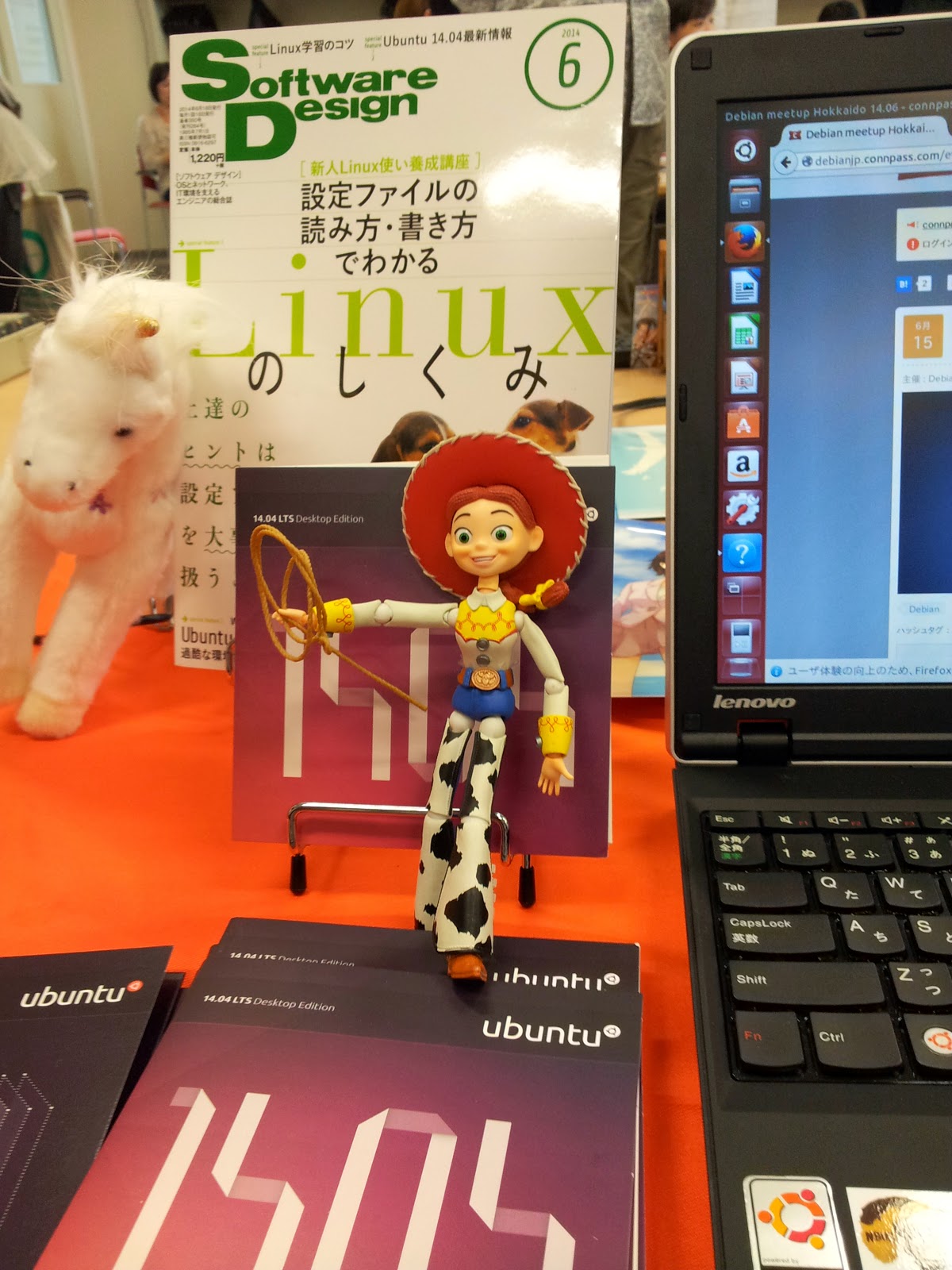
As always, we show the Debian booth with Debian lovers, Squeeze, Woody and Jessie.


And I gave talk about Debian a little,
mostly how it is developed and distribute, and shapes in Jessie at that time (PDF/odf is my page on Debian Wiki as usual).

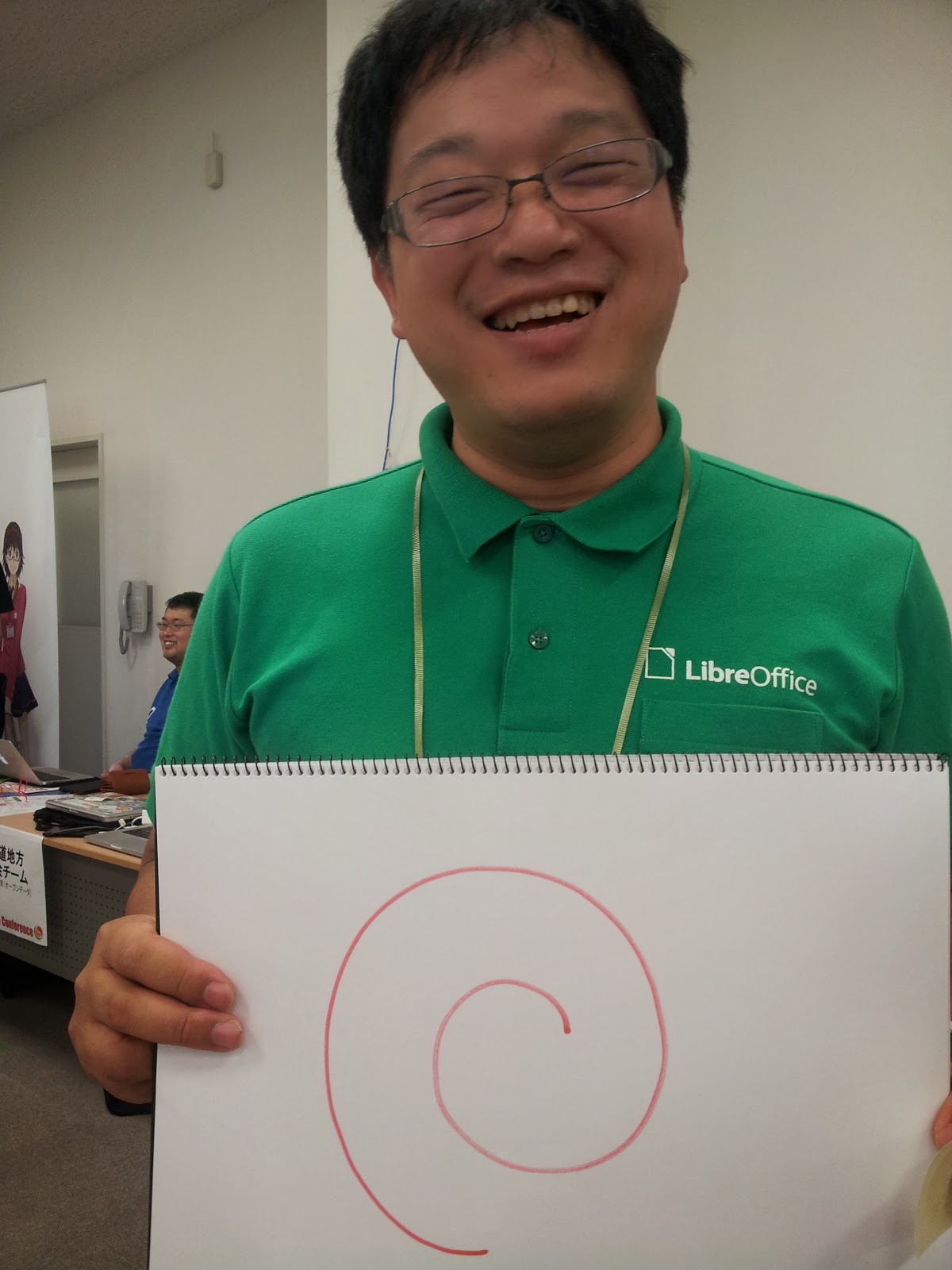
Does Cowgirl Dream of Red Swirl? from Hideki Yamane


After that, Enjoyed food, beer (sure! :) and chatting in party.


Folks, see you in #osc15do again!

Wouter Verhelst: Docking and Undocking with LVM

I have a number of USB hard disks. Like, I suppose, mostly everyone who reads this blog. Unlike many people who do, however, for whatever reason I decided to create LVM volumes on most of my USB hard disks. The unfortunate result is that these now contain a lot of data with a somewhat less than efficient partitioning system. I don't really care much, but it's somewhat annoying, not in the least because disconnecting an LVM device isn't as easy as it used to be; originally you could just run the lvm2 init script with the stop argument, but that isn't the case anymore today. That is, you can run that, but it won't help you because all that does, effectively, is exit 0. So what do you do instead? This: Voila, your LVM volume group is no longer available, and you've not suffered data loss. Kewl. Note: I don't know what the lvm2 init script used to do. I suspect there's another way which doesn't require the --refresh step. I don't think it matters all that much, though. This works, and is safe. That being said, comments are welcome...

Ian Donnelly: Hello Planet Debian!

Hi Planet Debian! My name is Ian Donnelly. I am going into my Senior Year at Florida State University this fall but for the summer I am working on a Google Summer of Code project with Debian. My mentor is Markus Raab and I am working with the Elektra team to implement a great new feature for Debian! I am spending this summer working on a system to allow automatic conffile merging by utilizing the Elektra Framework. Elektra is designed to provide a universal and secure framework to store configuration parameters in a global, hierarchical key database. For this project, conffiles will be mounted to the Elektra framework as KeySets. I have written code that performs a three-way merge on these KeySets which is much more robust than merging individual lines. A conffile can easily be mounted to the Key database using the kdb mount command, which I detailed in a previous blog post. Elektra has many included plugins which allow all types of conffiles to be mounted to the Key database. With our newest release, we even added an augeas plugin which will provide compatibility for most of the major conffiles. Once a conffile is mounted, any changes to the Elektra KeySet it is contained in will be updated in the actual conffile and visa-versa. So far this summer, I have written code for a three-way merge of Elektra KeySets and we have begun to look at the next step of implementing a automatic merge into dpkg. We are currently working on identifying exactly how the merge should take place and where we need to modify dpkg. The basic idea of what will change is that: Once dpkg has been patched, we will modify some packages and thoroughly test the new merge operation. It is designed to be non-destructive and to not infringe with any of the advantages of the current system. Package maintainers would need to opt in to using this feature to insure that all packages get tested before using it. However, we have designed this system to require minimal modification in order for maintainers to utilize it. This project will benefit Debian by removing a large pain-point with users. For experienced uses, merging changes in conffiles can be a tedious process. For newer users, the current system can be downright confusing. The goal of our project is to make Debian easier to use for everybody while not loosing the features that make it such a powerful platform. Please let us know what you think of the project or if you have any questions. Sincerely,
Ian S. Donnelly

2 July 2014

Tanguy Ortolo: PayPal cut a secure email project's funds

It should be no news that PayPal have made an habit of opposing to projects that fight for the respect of freedom and democracy by cutting their funds. Anyway, they have just provided us another example of such an abuse, against the ProtonMail project.ProtonMail is a secure email service project, similar to the defunct Lavabit service, with characteristics that should allow it a greater resistance to external pressure: it is based in Switzerland (which has specific privacy laws and with a strong democratic control) and developed by CERN and MIT researchers. Well, it seems that this project was not appreciated by some organization, for which PayPal is just a puppet. Long story short, PayPal cut ProtonMail's funds without prior warning nor real explanation. When pressed to explain themselves, they eventually asked them if their email encryption project was approved by the government (which one, by the way?)! As I said in introduction, this is not really a surprise, but it remind us that PayPal's major position is a threat to freedom and democracy as they still behave as enemies of these values (or as collaborator to known harmful organization, which is close enough) and that no project should rely on them. Fortunately, ProtonMail does not.,

Osamu Aoki: debmake -- checking source against DEP-5 copyright

It has been already more than a year after my initial uploading of the debmake package which offers semi-automatic generation of the DEP-5 copyright file.

One recent feature addition is the "debmake -k" command which audits debian/copyright contents against the latest source. If, for example, the upstream changed the license from GPL-2.0+ to 3,0+, this command will tell you this change. (In the debian/copyright, the more specific entry should be listed after the generic entry since parser uses the last definition as the valid one.)

I admit that this package had some regressions in some previous versions. It is now a stable tool to help making multiarch aware Debian packages of any types. If you had negative experiences, please try this again.

Let me quote from its documentation for the features. (Also available in the package.)
The debmake command is intended to replace functions offered historically by deb-make and dh_make commands. Its features include:
  • use of dh syntax under the new debhelper (> 9.0) package
    • extensive check of copyright for DEP-5 (debian/copyright)
    • substvar supports for binary packages (debian/control)
    • support of compiler hardening options (debian/rules)
  • keep pre-existing Debian package configuration files untouched
    • automatic generation of the missing template packaging files
    • easy verification of the debian/copyright file against the current source. (-k option)
  • easy packaging command line UI supporting
    • non-stop execution with clean results
    • direct operation on the tarball archive
    • direct operation on the source tree from VCS
    • the multiarch Debian package
    • the multi binary Debian package
    • the non-native Debian packages from the VCS snapshot
    • seamless work with debuild, pdebuild, etc.
Note
I wrote this debmake command because there was no easy command like "python setup.py bdist_deb" to create the Debian binary package. Now "debmake -d -s -b":python" -i debuild" does the job for me.
This documentation comes with detailed packaging examples, too.

Mike Hommey: Firefox and Gtk+ 3

Folks from Collabora and Red Hat have been working on making Firefox on Gtk+ 3 a thing. See Emilio s blog post for some recent update. But getting Firefox to build and run locally is unfortunately not the whole story. I ve been working on getting Gtk+ 3 Firefox builds going on Mozilla build infrastructure, and I m proud to announce today that those builds are now going through Mozilla continuous integration on a project branch: Elm, and receive the same automated testing as mozilla-central. And when I said getting Firefox to build and run was unfortunately not the whole story, I meant it: if you click on the Elm link above, you ll notice that there s a lot of orange, when it should be all green. So, yes, Firefox on Gtk+ 3 is a thing, and it now has continuous integration. But there s still a whole bunch of things to fix. So if you re interested in making those builds work better, you can hop in, there are many things you can do:
  • check the Gtk+ 3 tracking bug and its dependencies for a list of known issues or improvements to be made.
  • download one of the builds from the elm branch, test it, and file bugs if you find some that aren t currently tracked. There aren t nightlies, but you can get the latest builds for 32-bits and 64-bits systems.
  • and if you have level 1 commit access, you can test patches on the Try server, provided you pull from the elm branch or apply this patch on top of the tree you push there.

Next.

Previous.