Search Results: "cas"

21 March 2012

Axel Beckert: Tools for CLI Road Warriors: Remote Shells

Most of my private online life happens on netbooks and besides the web browser, SSH is my most used program especially on netbooks. Accordingly I also have hosts on the net to which I connect via SSH. My most used program there is GNU Screen. So yes, for things like e-mail, IRC, and Jabber I connect to a running screen session on some host with a permanent internet connection. On those hosts there is usually one GNU Screen instance running permanently with either mutt or irssi (which is also my Jabber client via a Bitlbee gateway). But there are some other less well-known tools which I regard as useful in such a setup. The following two tools can both be seen as SSH for special occassions. autossh I already blogged about autossh, even twice, so I ll just recap the most important features here: autossh is a wrapper around SSH which regularily checks via two tunnels connect to each other on the remote side if the connection is still alive, and if not, it kills the ssh and starts a new one with the same parameters (i.e. tunnels, port forwardings, commands to call, etc.). It s quite obvious that this is perfect to be combined with screen s -R and -d options. I use autossh so often that I even adopted its Debian package. mosh Since last week there s a new kid in town^WDebian Unstable: mosh targets the same problems as autossh (unreliable networks, roaming, suspending the computer, etc.) just with a completely different approach which partially even obsoletes the usage of GNU Screen or tmux: While mosh uses plain SSH for authentication, authorization and key exchange the final connection is an AES-128 encrypted UDP connection on a random port and is independent of the client s IP address. This allows mosh to have the following advantages: The connection stays even if you re switching networks or suspending your netbook. So if you re just running a single text-mode application you don t even need GNU Screen or tmux. (You still do if you want the terminal multiplexing feature of GNU Screen or tmux.) Another nice feature, especially on unreliable WLAN connections or laggy GSM or UMTS connections is mosh s output prediction based on its input (i.e. what is typed). Per line it tries to guess which server reaction a key press would cause and if it detects a lagging connection, it shows the predicted result underlined until it gets the real result from the server. This eases writing mails in a remote mutt or chatting in a remote irssi, especially if you noticed that you made a typo, but can t remember how many backspaces you would have to type to fix it. Mosh needs to be installed on both, client and server, but the server is only activated via SSH, so it has no port open unless a connection is started. And despite that (in Debian) mosh is currently just available in Unstable, the package builds fine on Squeeze, too. There s also an PPA for Ubuntu and of course you can also get the source code, e.g. as git checkout from GitHub. mosh is still under heavy development and new features and bug fixes get added nearly every day. Thanks to Christine Spang for sponsoring and mentoring Keith s mosh package in Debian.

20 March 2012

Axel Beckert: Happy Birthday GNU Screen!

According to this Usenet posting, GNU Screen became 25 years old today. (Found via Fefe.) And no, it s not dead. In contrary, the reaction on the mailing list to bug fixes with patches is usually impressingly prompt. :-) I took this occassion and uploaded a current git snapshot of GNU Screen to Debian Experimental. Bug #644788 (screen 4.1.0 can t attach to a running or detached screen 4.0.3 session) is still an issue with that snapshot, but gladly upstream seems to work on a solution for it. There s even talk about a 4.1.0 beta release soon although that hasn t happened yet. Have fun!

Russell Coker: An Introduction to Android

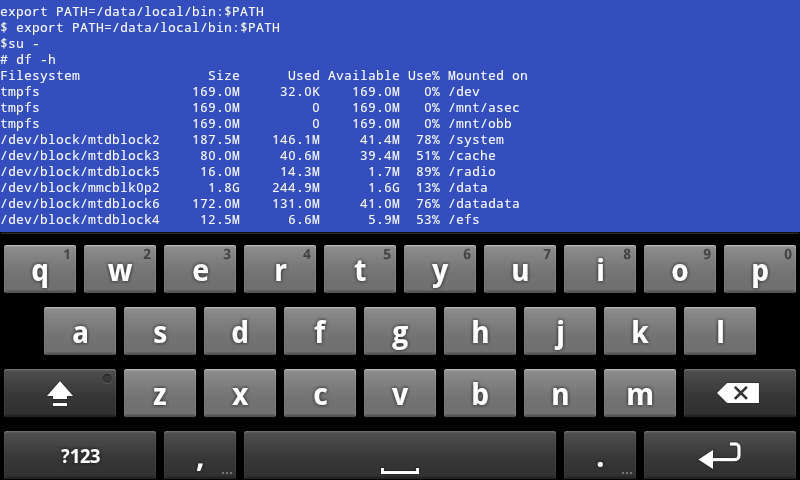
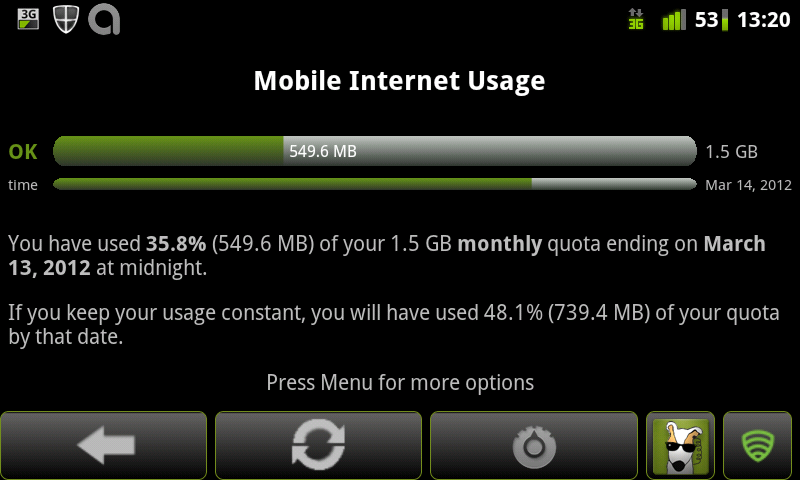
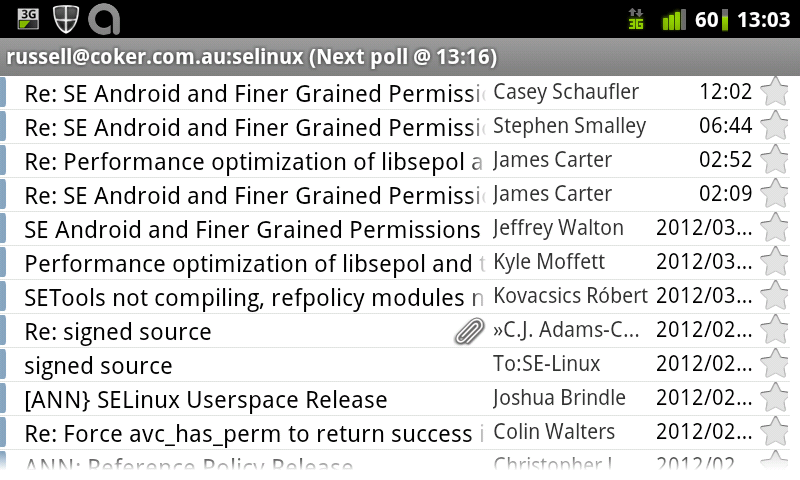
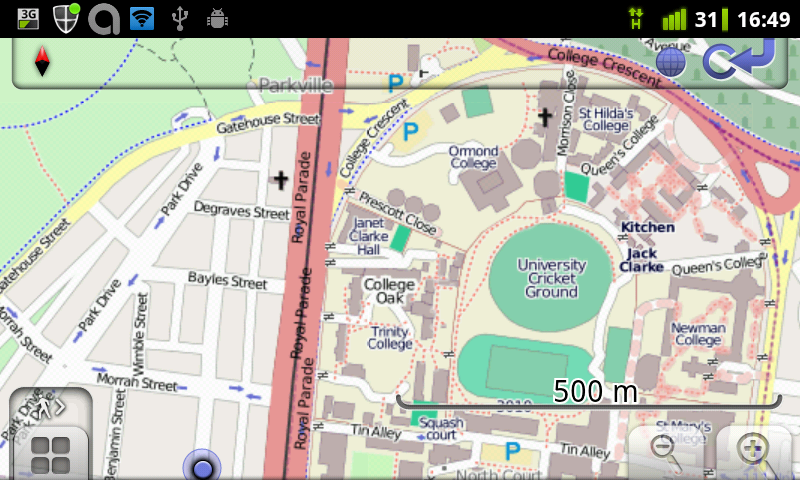
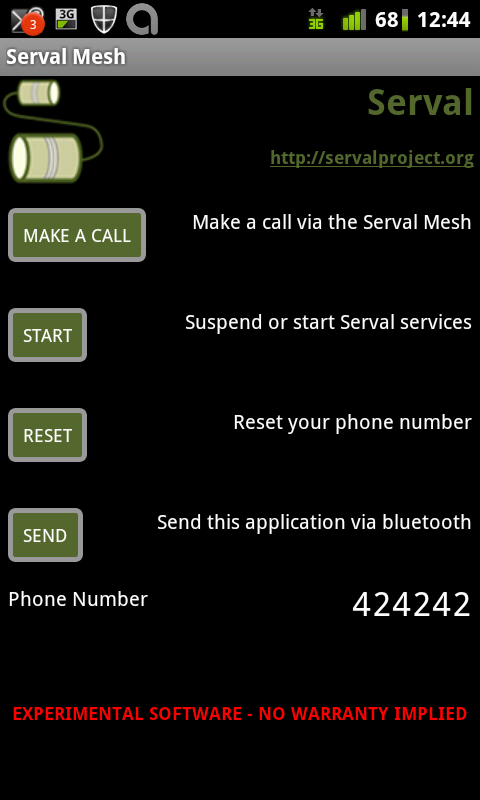
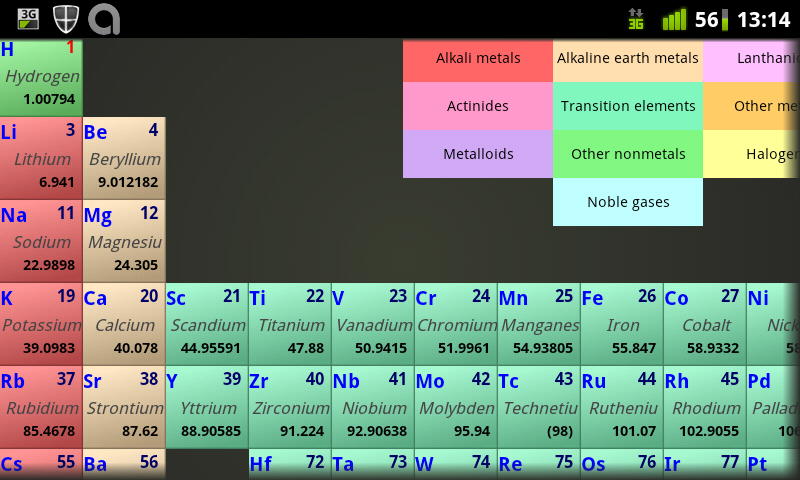
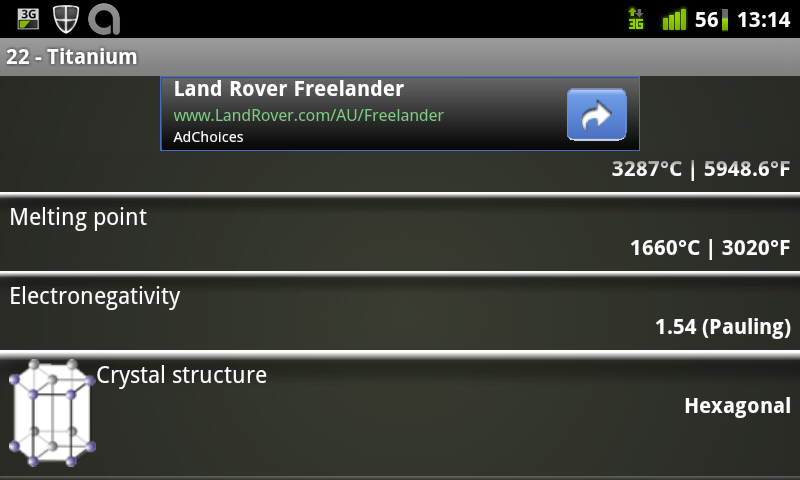
I gave a brief introductory talk about Android at this month s LUV meeting. Here are the slides with a brief description. All the screen-shots were made on a Samsung Galaxy S running Cyanogenmod version 7.1 [1] (Android version 2.3.7). With that build of Cyanogenmod you can press the power button for about 1.5 seconds to get a menu which gives an option to take a screen shot. The aim of the talk was to give an overview of what Android can do. I also gave some random commentary about Android such as explaining why it doesn t make a good phone. Most of the pictures in this post have links to the Android applications in question. Essential and Important Apps picture of root shell access running df I started by explaining why having root access to your system is really important, including the issue of backing up an Android phone [2]. Cyanogenmod includes a terminal program which allows you to run su - . Running a shell as root isn t generally that useful, what you really want is to be able to run programs such as Titanium Backup which can only work properly if given root access. When you run an OS that allows root access you can run su - at a terminal prompt and you can also have an application use a GUI to request root access. I recommend rooting and modding an Android phone immediately after buying it. However that takes some time which is somewhat equivalent to money and is a significant hidden cost to purchasing an Android phone. picture of 3g watchdog bandwidth monitor The business models of telephone companies seem to involve hidding users for unexpected fees and extra fees for excess bandwidth can be really expensive. 3G Watchdog is one app that can monitor bandwidth and disable data transfers if too much is used. Onavo is an alternative that allows tracking data use on a per-application basis, but it only runs on Android 2.3.x while 3G Watchdog works on Android 2.1. Official EBay app searching for Samsung Android phones EBay has an official app which is handy for searching for items. So far I ve only used it to get price estimates and have used a PC for buying. K9 viewing my SE Linux mailing list email K9 seems to be the best MUA for Android. The MUA that ships with Android 2.1 isn t nearly as good and K9 is good enough that I didn t even bother testing the MUA from Cyanogenmod. The above picture shows a list of mail in my SE Linux folder. graph by opticron grapher The Opticron Grapher is a good graphing calculator. I won t claim it s the best because I didn t seriously test such programs, but for the basic tests I ve done it has worked well. Google map of LUV location The Google Maps client comes with every Android system, the above shows the location of the LUV meeting. Open Street Map location of the LUV meeting Osmand is an Android client for the Open Street Map project. Here is the web site for the Open Street Map project [3]. One significant advantage of OSM over the Google Maps is that OSM is free, the data is all contributed by users like Wikipedia. Another significant advantage is that you can download as much data as you need to your phone, for example the entire dataset for Australia is about 200M. Storing 200M of data on your phone is no big deal when you consider the availability of phones with more than 16G of storage and the ability to use a map when offline is a real benefit. So far I ve used Osmand while waiting for a train at an underground station and I plan to use it to track my progress the next time I m on a cruise. serval mesh networking and VOIP Serval is a mesh networking application for Android that supports VOIP phone calls and distributing messages and files. It s designed to be used in disaster areas, but there are lots of other potential uses of the technology. The Serval Project blog has an article about the presentation they gave at LCA 2012 [4]. periodic table
details about Titanium Periodic Droid is my favorite Periodic Table viewing program. tomfusion Au Weather forecast app The Tomfusion AU Weather forecast app seemed to be better than the one from the BoM last time I checked. It s probably the best weather app for Australia. screen-shot of LUV web site
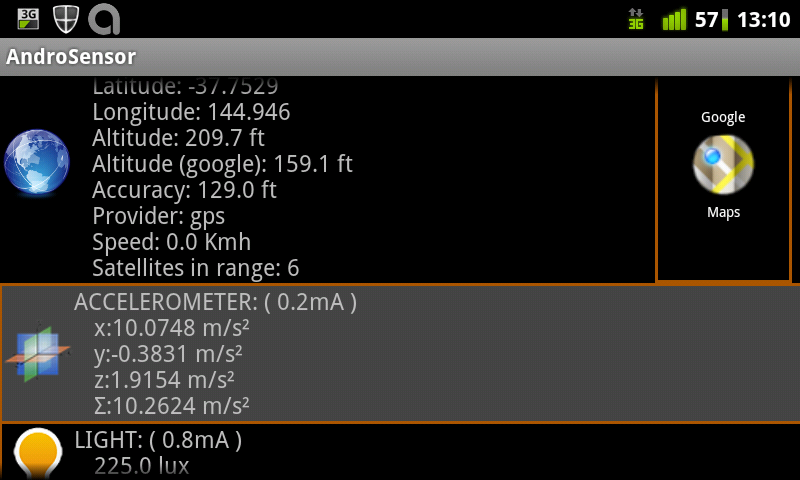
LUV web site zoomed in The Opera Mini browser is often faster than other browsers because it uses a compressing proxy run by Opera. It s not so good for privacy though LUV page on Wikipedia I have been using Wapedia for browsing Wikipedia. Since giving the talk I discovered the Official Wikipedia browser from the Wikimedia foundation [5] which is a better fit for my needs and I ve uninstalled Wapedia. As an aside modern phones have 16G of storage or more and could easily have a copy of the entire English text of Wikipedia on internal storage. It would be good if someone like Jason King (who is known for work on stand-alone DVD images for Wikipedia) was to write an Android program to do this. Handy Apps Androsensor showing GPS, accelleration, and light intensity
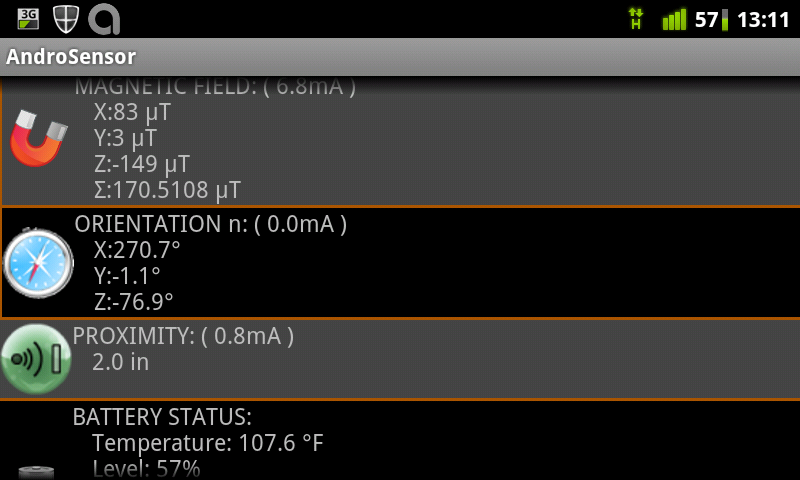
Androsensor showing magnetic field, orientation, and battery Androsensor is a program to display output from most (all?) of the sensors on your phone. The results aren t as accurate as one would hope, for example Earth s gravity is 9.81m/s^2 not the 10.26m/s^2 my phone registered. But they are a useful indication. picture of Coke can, scanning the barcode
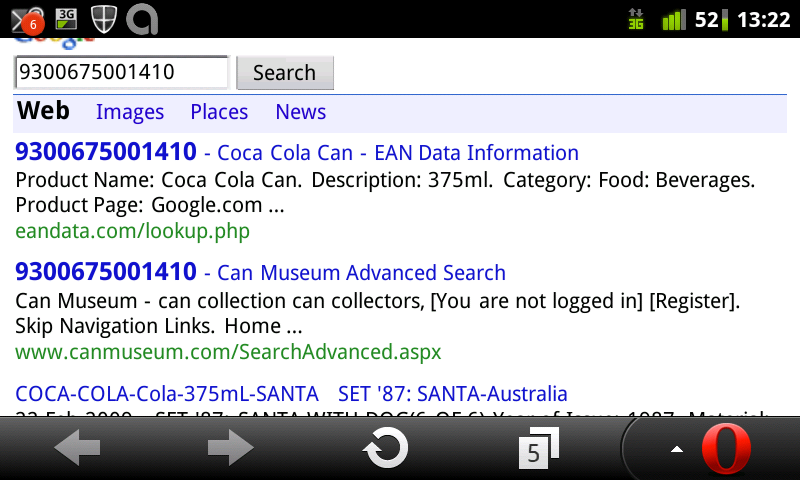
Google search on Coke can barcode
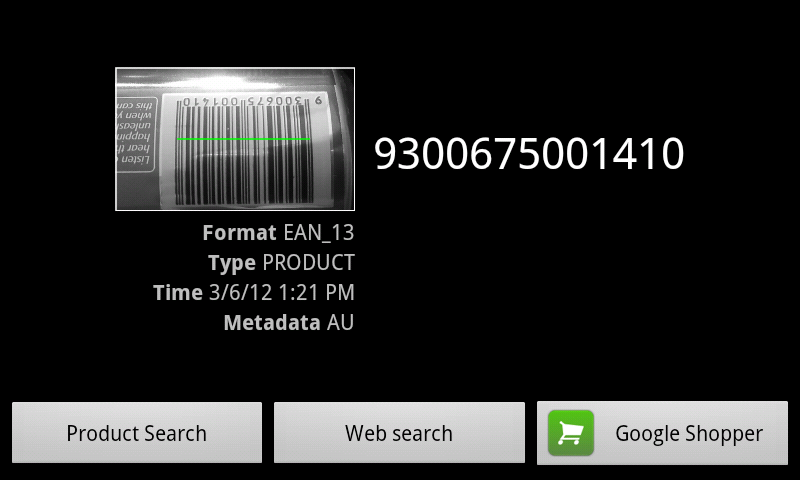
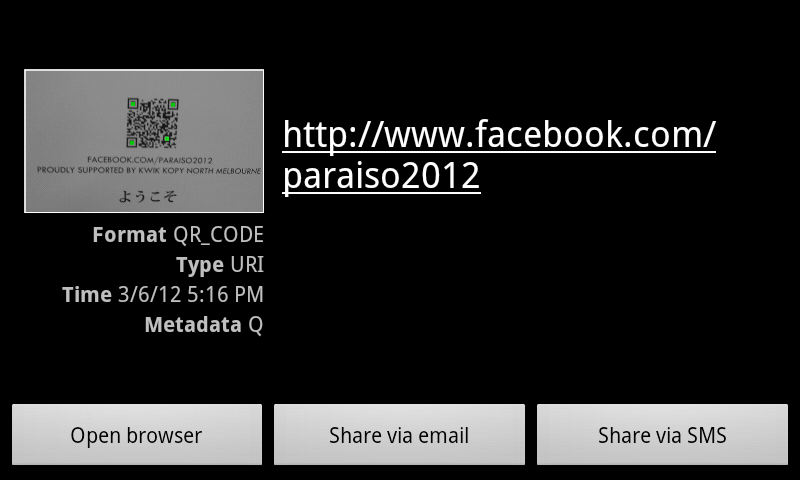
QR Code lookup of Facebook page The Zxing Barcode scanner is one of many programs that will scan barcodes with the camera in an Android phone. It can launch a Google search on a product code or open a URL from a
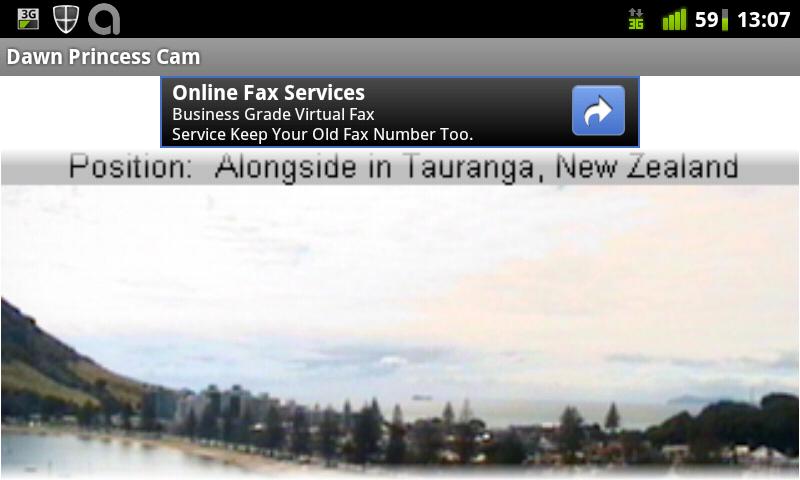
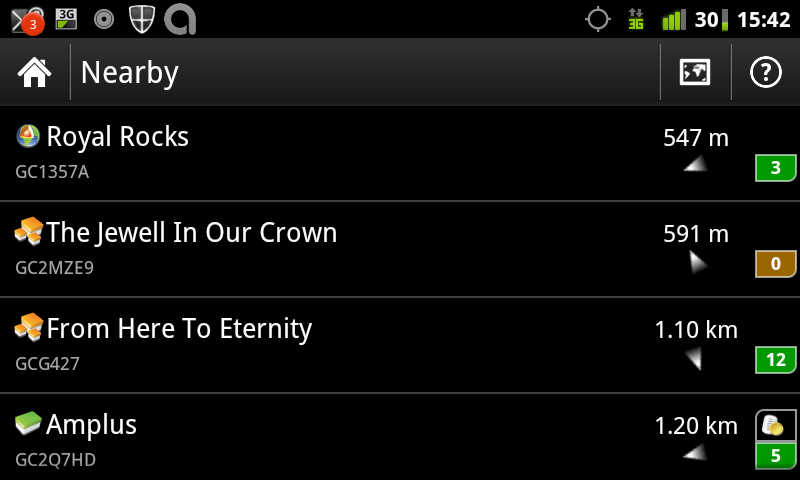
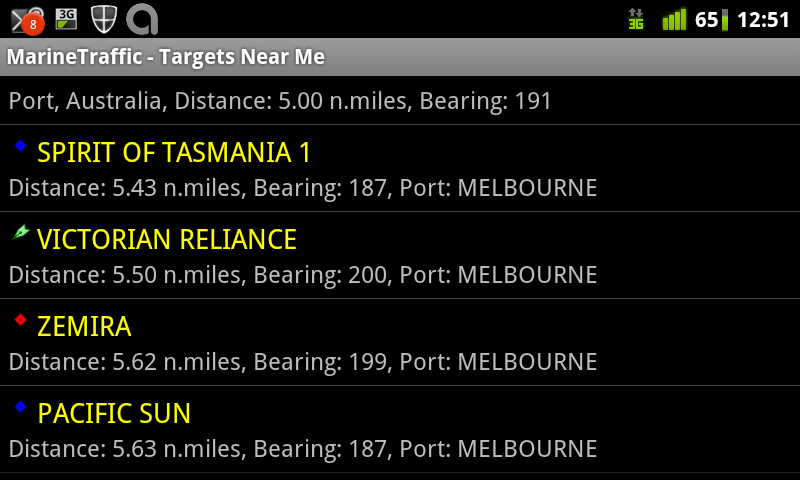
QR Code. The above pictures show it scanning a Coke can (the can and other background was displayed on the full screen before the screen capture program activated), doing a Google search on the can barcode, and looking up a QR code that was on an advertisment outside the LUV venue. picture from the bridge of the Dawn Princess in Tauranga NZ Cruise Cams allows you to download pictures from cruise ships. Some cruise ships have several cameras on different parts of the ship uploading pictures regularly so that people around the world can see what s happening. list of geo-caches near the park where I prepared most of my notes The c:geo opensource program allows you to get information on Geocaches and see a compass or map showing the location. This program has been getting an increasing number of features to do everything you might want to do related to Geocaching. The above picture shows some caches that are close to where I made the screen-shot, in a park a couple of Km from the meeting location. picture of Google Sky Map in the direction of Andromeda The Google Sky map uses augmented reality techniques to display stars in the direction that your phone is pointing along with their names and the names of the constellations. Marine Traffic showing ships near me
Marine Traffic showing the Pacific Sun highlighted on a Google Map
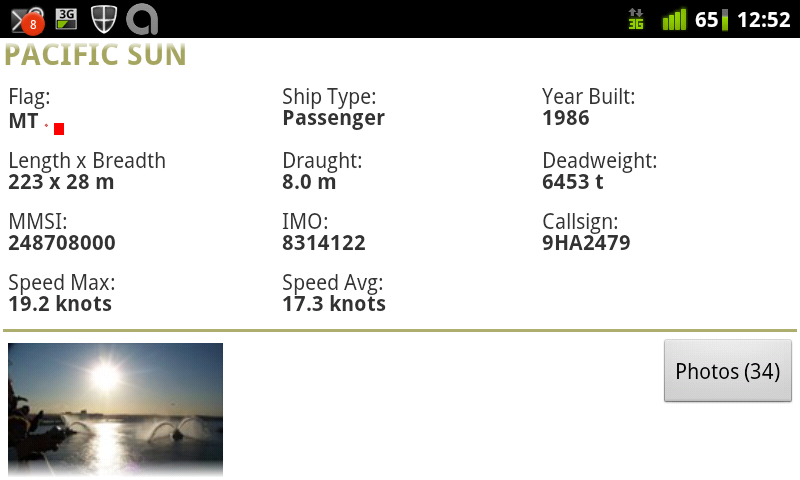
Marine Traffic showing details of the Pacific Sun
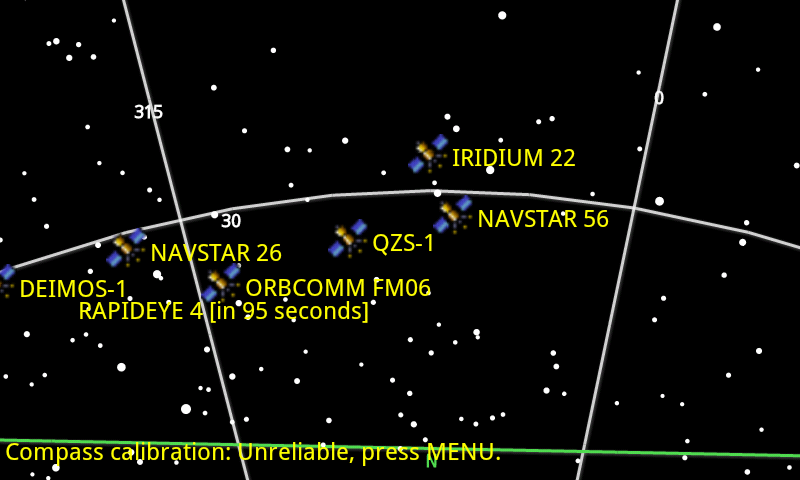
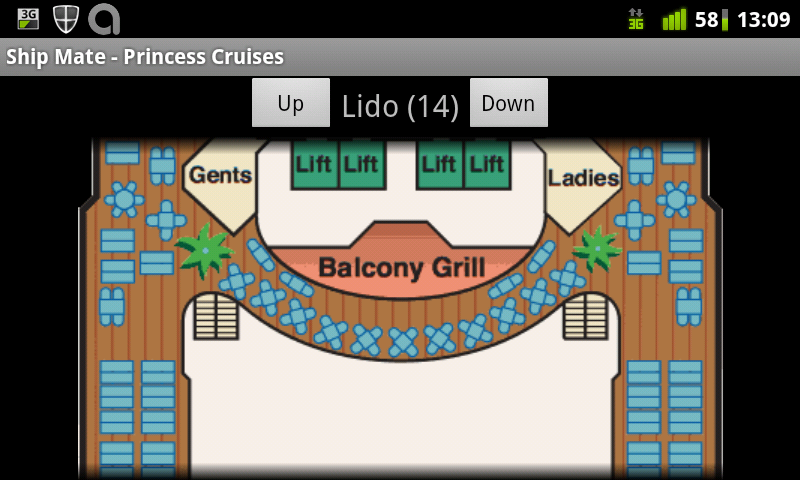
Photos of the Pacific sun taken by fans and shown by Marine Traffic The Marine Traffic program shows the locations of ships as well as lots of information about them. The above pictures show me discovering that the Pacific Sun was nearby, viewing it s location on Google Maps, seeing the details, and then viewing fan pictures. The developer s web site allows viewing all the same data without an Android phone [6]. Anyone can join the project by buying an Automatic Identification System (AIS) receiver and configuring a PC to take data from AIS and send it to the MarineTraffic.com servers. As an aside they seem to be missing coverage in western Victoria, so it would be good if someone near Apollo Bay or Warrnambool could install an AIS receiver and help out. Satellite map from Satellite AR Satellite AR uses augmented reality to show the location of satellites and other things in spare. Unfortunately the screen capture process turned off the camera as I had a sign advertising fast food positioned in an amusing location in the background. Shipmate overview of Dawn Princess
Shipmate map of Dawn Princess Shipmate publishes a set of programs giving information on cruise ships, they have one program for each cruise line. Above is the program for the Princess cruise line, the above pictures give information on the Dawn Princess. Unfortunately the program wasn t usable without net access when I tried to use it on a cruise ship. Games Air Attack HD game, clone of 1942 Air Attack HD is an entertaining game that demonstrates the capability of Android phones to run action games. Like many Android games it has a free version and paid versions if you want more. picture of Angry Birds Angry Birds is one of the most well known games for touch-screen devices. It has also spawned a huge line of merchandise. Labyrinth Lite
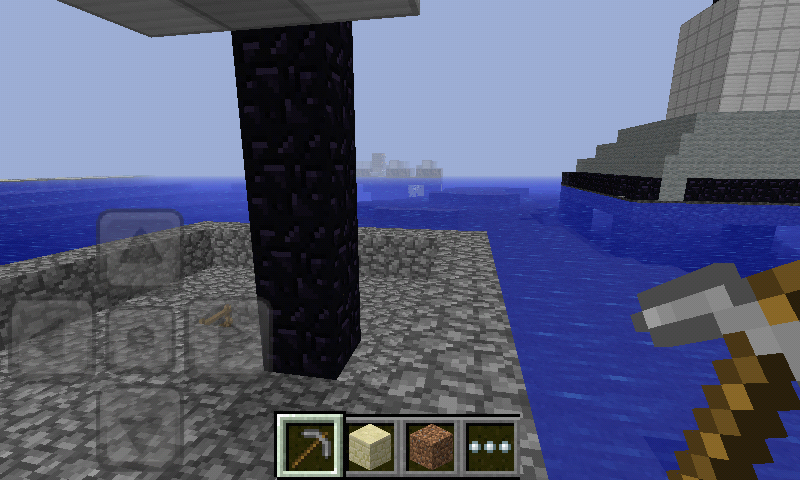
Labyrinth Lite from a different angle Labyrinth Lite is one of the many Android games based on the old mechanical game where you tilt a toy to roll a ball-bearing through a maze. It s free and is better than most of the free games in that genre. Minecraft Pocket Edtion Minecraft Pocket Edition allows you to play Minecraft on your phone. The demo version doesn t allow saving the game, you have to buy the game for about $5 if you want to do that. It also lacked the full features of the game last time I checked, it didn t have monsters. Paradise Island overview
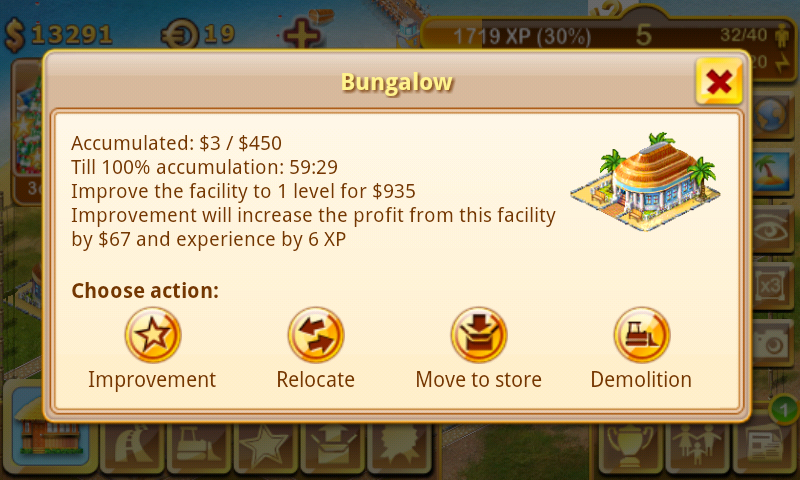
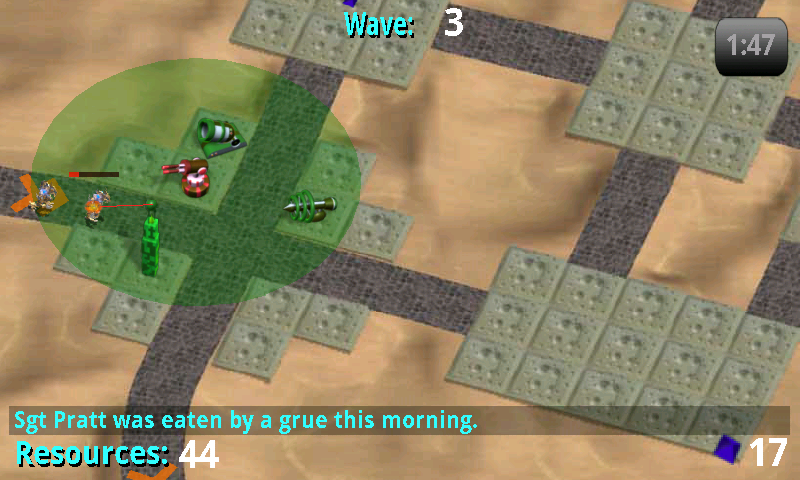
Paradise Island details of Bungalow Paradise Island is one of many business simulation games for Android. It s more playable than most and has very detailed graphics, but the down-side is that it s a memory hog and will crash if you don t have enough RAM. It s one of the games that are free to download but encourage you to pay money to level up, for some players it s probably a very expensive game. Tower Raiders 2, Pratt was eaten by a Grue Tower Raiders 2 is one of the better tower defense games for Android. Related posts:
  1. Choosing an Android Phone My phone contract ends in a few months, so I m...
  2. Galaxy S vs Xperia X10 and Android Network Access Galaxy S Review I ve just been given an indefinite loan...
  3. Standardising Android Don Marti wrote an amusing post about the lack of...

19 March 2012

Cosimo Alfarano: Facebook provider for GNOME Online Accounts

Following Xavier's steps, last week a new patch set has been commited to GNOME Online Account master repo, this time to add support for Facebook client-side auth flow, which does not require secret keys to work.

This means that since GNOME 3.4 it will be possible to enable Facebook support at configure time (yep, by default it's still disabled. Distributions will explicitly need to enable it for now). Currently only chat is supported.


The steps to enable it are easy:
Use --enable-facebook at configure time and compile+install as usual.A default FB application id is used, so you don't need to provide it.
Using the freshly updated goa-daemon (use --replace in case you're unsure) select online accounts from the control panel, add a facebook account (which should be now possible to select, along with at Google and Windows live if you've enabled it) and follow the on-screen instruction.
You'll need to authenticate yourself against Facebook and authorize the GNOME application.
Once your account has been created, set your presence to Available using Empathy or gnome-shell.
Now chat with your Facebook buddies \o/

It requires empathy (>=3.3.2), telepathy-gabble (>= 0.15.0) and of course gnome-online-accounts (the soon soon to be released 3.4.0, or directly git master)

Thanks to Xavier who backported to 3.4 my patches, originally meant for 3.6, and to Collabora who allowed us to improve Gnome Online Accounts!

Russell Coker: Long Term Adverts

I ve just seen a mailing list post from someone who needs an ancient printer to work with their old software. As the printer is no longer manufactured and changing the software is expensive this puts them in a difficult situation which can be profitable for someone who happens to own an ancient printer that still works. This sort of thing is not uncommon at all. Ebay is a nice auction and online store site but it doesn t cater for long term personal adverts. I ve got a lot of old computer equipment that I keep because it might be useful at some time and it s a shame to throw away working equipment. I d like to be able to list that stuff on a sale site and have the adverts stay online for years just in case someone wants to pay a decent amount of money for it. If there was such a site I would also list all the systems in my test network, I can test software just as well with different hardware if someone wants to pay decent money for what I ve currently got. Storage space is pretty cheap and searching for keywords isn t that difficult either. The cost of running an online personal sale site for items that sell every few years isn t going to be much greater than running one that sells items after 10 days. But the profit in many cases will be a lot greater, an old printer that sells for $10 on Ebay could go for $200 or more if the seller could wait for a buyer who had some enterprise software that absolutely depended on that particular printer. Does anyone know of such an online sale site? If not does anyone want to start one? Related posts:
  1. Dear Magazines Please Publish Your Adverts Online When reading a magazine I often see an advert for...
  2. Friends and Adverts For some time I have been running Google Adsense adverts...
  3. Used Car Prices There is an interesting article in The Age about the...

18 March 2012

Gustavo Franco: Debian testing (wheezy) keyboardless install

I couldn't find an end-to-end document online about this just bits and pieces here and there. Let me describe how to install Debian testing (wheezy) without a keyboard using an USB flash drive and ssh.

I've got an HP Microserver a month or so ago and this is the step by step of my second install. The first one was also keyboardless but didn't involve an USB flash drive to bootstrap. I've used tftpd and dhcp from my laptop, but forgot to capture the notes to make a blog post. Shame on me.

Here's what you need:
The last two requirements are optional for hardcore preseeders. If you don't know what I mean. You aren't one of them. :)

Here's the step by step to install using SSH:
At this point you have all that you need to do a regular install using an USB flash drive and it's kinda of well documented. Well, we still need to change it to make it work without a keyboard and give you the ability to ssh into the installer.

Create a preseed.cfg in the root directory of the USB flash drive containing the following:
d-i netcfg/get_hostname string HOSTNAME
d-i netcfg/get_domain string DOMAIN
d-i anna/choose_modules string network-console
d-i network-console/password password INSERT_A_PASSWORD_HERE
d-i network-console/password-again password INSERT_A_PASSWORD_HERE

Edit syslinux.cfg in the root directory of the USB flash drive to look like this:
default netinst
prompt 0
timeout 5
label netinst
menu label netinst
 kernel linux
 append auto=true vga=normal file=/preseed.cfg initrd=initrd.gz priority=critical
My wishlist to the d-i hackers out there:
  • A boot-ssh.img.gz with the syslinux.cfg and preeseed.cfg above. In this case, it would be much more trivial to document in the installer manual how to use such a great feature.

17 March 2012

Matthew Garrett: More ways for firmware to screw you

Some of my recent time has been devoted to making our boot media more Mac friendly, which has entailed rather a lot of rebooting. This would have been fine, if tedious, except that some number of boots would fall over with either a clearly impossible kernel panic or userspace segfaulting in places that made no sense. Something was clearly wrong. Crashes that shouldn't happen are generally an indication of memory corruption. The question is how that corruption is being triggered. Hunting that down wasn't terribly easy.

My first thought was that we were possibly managing to load the kernel over a region used by UEFI code. UEFI defines two types of code - boot services and runtime services. While runtime services code and data must be preserved by the OS, in theory boot services code and data is available to the OS once the firmware has exited. In practice, that's not true. It seemed entirely possible that the kernel might be ending up on top of some of that boot services code or data and getting trodden on. Grub now has code to avoid putting the kernel on boot services, so testing the latest code seemed like a good plan. But no, crashes still happened.

That pretty much ruled out the bootloader. My next thought was that executing some of the firmware code was triggering a write to some other memory that contained the kernel. Josh Boyer suggested the next trick, which was to try marking the kernel read-only to see whether anything was hitting it. x86 lets you mark pages as read-only - any attempt to write to them should take a fault. UEFI functions are executed in the context of the kernel, so share the same page tables. That let me rule this out, since everything still went just as wrong and I wasn't taking an extra fault first.

However, at this point I was reasonably happy that it wasn't the kernel itself being overwritten - faults were occurring in userspace code as well. That was a pretty strong indication that what was happening was continuing to happen once userspace had started, so it wasn't a direct response to a firmware call. I made sure of that by stubbing out all the calls that could be triggered after kernel initialisation, and saw the same failures. Once all attempts to be clever have failed, it's time to just start using brute force. The kernel lets you reserve areas of RAM by passing arguments like memmap=0xlength$0xstart to block length bytes starting at start from being used. It took a while, but I finally found a 256MB range that made a difference - reserving it resulted in the machine booting reliably, letting the OS use it resulted in occasional crashes.

Definite progress. Comparing that memory range to the EFI memory map was helpful. There were several blocks of UEFI boot services data present there, which really seemed like too much of a coincidence. By reserving each of them in turn, I'd traced it down to a single 31MB region of boot service data - that is, memory reserved by the firmware for use by the UEFI boot services. Per spec, this is available to the OS once the boot environment has been exited. Nothing other than the OS should be touching this after boot, but something clearly was. Tracking down what was far easier than I expected, although the first attempt was a failure. Setting it read-only should have triggered a fault, but didn't. That was rather confusing. But, rather than give up, I patched the kernel to fill the region with 0xff at kernel init. Then I booted the system, read it back and looked for values that weren't 0xff. I got this:
00000000  ff ff ff ff ff ff ff ff  ff ff ff ff ff ff ff ff   ................ 
*
001568a0  ff ff ff ff ff ff ff ff  ff ff ff ff 84 00 00 00   ................ 
001568b0  00 20 a7 ac 46 00 00 00  00 00 00 00 00 00 06 01   . ..F........... 
001568c0  c2 0b 0c 00 ff ff ff ff  ff ff ff ff ff ff ff ff   ................ 
001568d0  ff ff 0a 04 f0 03 82 0d  40 00 00 00 ff ff ff ff   ........@....... 
001568e0  ff ff 00 21 00 36 9a 80  ff ff ff ff ff ff 00 7e   ...!.6.........~ 
001568f0  00 09 43 48 41 2d 47 75  65 73 74 01 04 02 04 0b   ..CHA-Guest..... 
00156900  16 32 08 0c 12 18 24 30  48 60 6c 2d 1a 0e 18 1a   .2....$0H l-.... 
00156910  ff ff 00 00 00 00 00 00  00 00 00 00 00 00 00 00   ................ 
00156920  00 00 00 00 00 00 00 dd  09 00 10 18 02 00 10 01   ................ 
00156930  00 00 dd 1e 00 90 4c 33  0e 18 1a ff ff 00 00 00   ......L3........ 
00156940  00 00 00 00 00 00 00 00  00 00 00 00 00 00 00 00   ................ 
00156950  00 00 bd ea f8 b3 ff ff  ff ff ff ff ff ff ff ff   ................ 
00156960  ff ff ff ff ff ff ff ff  ff ff ff ff ff ff ff ff   ................ 
*
022fb000
That's a lot of 0xffs (around 31MB of them) with one small section that contains an 802.11 probe packet with the SSID of the hospital across the road from my house. Apple support network booting off wireless networks. It seems that the firmware brought up the wireless card, associated with this network (it's the only public one nearby) and then left the card DMAing packets into RAM. The read-only page attribute only applies to CPU-initiated accesses, so it could do this without triggering a page fault. It also explained why it was so random - whether memory corruption occurred would depend on whether a packet appeared between that memory being used by the OS and the kernel reinitialising the wireless card. It certainly explains why I couldn't reproduce it when I left the machine repeatedly rebooting on the bus home.

How do we fix this? Unsure. With luck disconnecting the UEFI driver in the bootloader should quiesce the hardware, but without testing I'm not sure of that yet. For now it's just another example of firmware managing to break expectations in deeply strange ways.

comment count unavailable comments

16 March 2012

Christian Perrier: [life] Running update

We're now 2.5 months in 2012 and I'm indeed getting closer of my first big goal of the year : the 80km run of Paris Ecotrail. The race takes place next Saturday, March 24th, with a start at 12:00 in the South-West of Paris area (close to our place). The race is mostly a trail race in woods and forests in the neighbourhood of Paris, going up and down in our small hills and valleys, passing along pools and lakes and indeed showing the natural beauties we have less than 20km away from center Paris. The race ends at the Eiffel Tower. And they really mean it! The race ends at Eiffel Tower's *first floor* after climbing the steps there. Those of you who have been there can imagine the surprise of tourists from all over the world when hundreds of "road warriors" wearing water backpacks, head lamps and looking a bit tired come and climb the Old Lady's stairs. So, in case you happen to be touring in Paris on the week-end of March 24-25, just pop up at Eiffel Tower around 10-11pm (yes, at night) and try to spot a bubulle crawling up there to reach the finish line..:-) To prepare this, I already ran 538km in 2012, mostly done either with my daily commute runs...or with week-end long runs (up to 37km on march 4th, and many others above 20km). I ran two half-marathons as well: one in February, where I nearly broke my record, finishing it in 1h37'45" even though this is a quite though race with two hills. I was very in shape that day and was lucky to run with a friend setting the pace for me, which helps a lot. Another half-marathon last Sunday in Rambouillet was also a good race, though I was secretly hoping to break my record there (the race is flat, much more than the former one). I had however to slow down from a 4'35"/km pace to 4'50"/km in order to preserve my condition. And, finally, I completed the race in 1h39'53". So, two half-marathons in less than 1h40 again. That sounds promising for the Ecotrail (even if there nothing similar between a flat half-marathon and a hilly ultra-trail) and also for the next marathon, in June. I'll keep you posted about the Ecotrail race but I can announce in advance that I'll be using the Runtastic app on my brand new Android phone, and people will be able to follow my race live here. And you'll even be able to cheer at /me..:-) Next running update on Sunday 25th to give you the outcome....

Dirk Eddelbuettel: digest 0.5.2

A new version of the digest package (which generates hash function summaries for arbitrary (and possibly nested) R objects using any of the standard md5, sha-1, sha-256 or crc32 algorithms) is now on CRAN. Murray Stokely noticed a corner case where a file that was inaccessible lead to a segmentation fault. Thanks to his patch, this is now caught and flagged. He even added a test for it and fixed another one of my idioms. Nice work, so keep the patches coming folks :) CRANberries provides the usual summary of changes to version 0.5.1. As usual, our package is available via the R-Forge page leading to svn and tarball access, my digest page and the local directory here.

Daniel Kahn Gillmor: Compromising webapps: a case study

This paper should be required reading for anyone developing, deploying, or administering web applications. It's also interesting to read the perspective of the folks operating the compromised webapp (details are in the section titled "Digital Vote-By-Mail" on pages 34 to 38).

15 March 2012

Debian Med: Bits from Debian Med team (Posted by Andreas Tille)

Hi,

in this bits:
  1. Debian Med Bug Squashing Advent Calendar 2011
  2. Anniversary of Debian Med
  3. Second Debian Med sprint (Southport, 27th-29th January 2012)
  4. Mentoring of Month (MoM)
  5. DDs who came to Debian because of Debian Med
  6. Future plans
  7. General lessons learned

Debian Med Bug Squashing Advent Calendar 2011In December last year Thorsten Alteholz has started a nice QA initiative which might be interesting for other teams next Advent. The Debian Med team was able to fix about 70 bugs in this time. Thanks to Thorsten for this nice piece of motivation and thanks to everybody who took part in the bug squashing.

Anniversary of Debian MedOn Mon, 7 Jan 2002 the Debian Med project was first officially announced. I submitted a short blog posting about this and perhaps you might like to see a long sequence of talks about this topic.

Second Debian Med sprint (Southport, 27th-29th January 2012)In end of January 2012 the Debian Med team has met to the second sprint. As last year I would call this a very successfull event and I would recommend other teams to instanciate such meetings as well. Feel free to read my more verbose report.

Mentoring of Month (MoM)I have started this project for the following reasons:
I made a short summary how the first MoM project worked (see at bottom).

DDs who came to Debian because of Debian MedAfter realising that several members of the Debian Med team finally became DDs I made a little survey to find out about their reasons to become DD / DM. I came to the conclusion that a Blend could be a nice entry point for people to join Debian because newcomers can identify themselves with a known topic (the scope of the Blend - in this case medicine and bioinformatics) first and learn Debian rules in a team with common interest. This perfectly fits my expectation which I had from the beginning 10 years ago and I would be very happy if other Blends would follow this example to be nice, inviting and try to *actively* ask people for cooperation (see some simple rules which I learned in this process below). In the teammetrics GSOC project some graphs were created where you can see the level of contribution of these people (and other team members).

Future plansCurrently some heavy work regarding bringing bibliographic references about packages straight into package information is going on. This topic is specifically interesting in Biology because programs are frequently connected to some publication about the methods used inside the code. This topic is as well relevant to Debian Science and DebiChem. Thanks to the patient work done by Charles Plessy we now have about 70 packages featuring debian/upstream files featuring bibliographic references and there is ongoing work to move these data to UDD to enable further usage. We are in the process of final polishing the format and finishing scripts for the import. If people are interested to join this effort this would be the right moment to raise their hand.

General lessons learned
  1. Do not let wait anybody who wants to do work.
  2. Newcomers are frequently shy - try to invite them kindly and patiently.
  3. Tell people verbosely about your project - it is astonishing how less people know and what wrong assumptions they make about your project.

Kind regards
Andreas.

14 March 2012

Stefano Zacchiroli: not a catchy headline

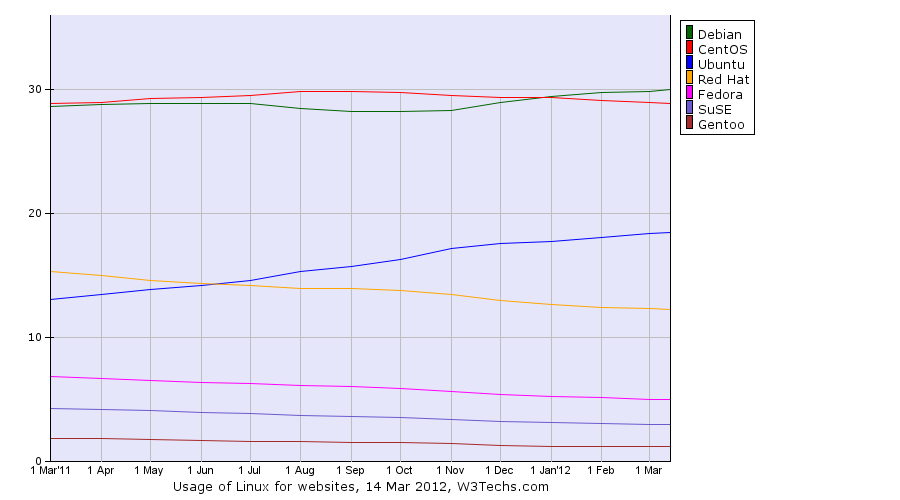
As we're doing trends today, I got curious about Debian. I don't particularly care about popularity contests other than popcon, and Debian choices surely aren't driven by them. But hey, curiosity is curiosity, right? So, here are today's w3techs trends for websites using GNU/Linux, with all lines shown:
Debian: 30%; CentOS: 28,9%; Ubuntu: 18,4%; Red Hat: 12,2%; Fedora: 5%; SuSE: 3%; Gentoo: 1,2%
(As thou shall always read methodologies before stats, here is the technologies overview page.) Debian is the top entrant with 30% of the websites using GNU/Linux. What I find interesting is that Debian has jumped at first place in January 2012, significantly after the release of our current stable release, Squeeze, that dates back to February 2011. It is also interesting to see community distros (Debian and CentOS) starkly ahead of commercially backed distros. That is what I find most fascinating about our projects. Whether that will remain the case or not is, for me, one of the big questions of the decade for the self-determination of Free Software communities.

Michal Čihař: Weblate 0.6

Continuing with fast release pace for Weblate, I've just released version 0.6. It brings few bug fixes adds quality checks for translations and configurable access control. Full list of changes for 0.6: You can find more information about Weblate on it's website, the code is hosted on Github. If you are curious how it looks, you can try it out on demo server. You can login there with demo account using demo password or register your own user. Weblate is now also being used https://l10n.cihar.com/ as official translating service for phpMyAdmin, Gammu, Weblate itself and others.

Filed under: English Weblate 3 comments Flattr this!

Richard Hartmann: Open Source Days 2012, the aftermath

Open Source Days Open Source Days were nice, especially the meating(sic) of and talking to old friends and new people. I got to discuss Mercurial with two of its developers which was very interesting indeed. It's funny how similar git and Mercurial are in some regards and how different in others. Overall, it feels a bit as if Mercurial is not quite as distributed as git. Its local, sliding revision index feels like disaster waiting to happen, to me. On the other hand, Mercurials ability to not check out large files to your local repository sounds very git-annex-ish, which is nice. Choice is good :) My talk about how to gitify your life (slides, no video) went extremely well. Within my time-slot, there were a total of six talks, and lunch(!), in parallel. About 300 people attended OSD on Sunday and of those, many were at booths, stands, eating, etc. My personal turnout was 50-70 listeners so I was well above mathematical average and from what I heard, my talk was the most-visited one during that time. Add the fact that several people asked me to put up the resource links up again after the talk so they could take pictures and I would say this talk really was a success. Ego-stroking? Yes. Vanity? Most likely. Being able to see that people can really want to learn about what you have to say? Priceless. It's a real pity that there was no video recording, but it's obviously too late to do anything about that. Joey Hess asked me to at least make an audio recording on my laptop, but that turned out to be a lot of useless white noise with faint mumbling in between. Maybe I should at least get a small microphone or recorder so I will always have an audio copy. I already did order a presentation clickie with built-in laser pointer so I won't have to rely on possibly non-existent conference infra, any more. If there's any interest, I may re-record the talk as audio, else I will just try to get another speaker slot at another conference, with video recording, and link that. Denmark Barring the airport, central station, bus, hotel, venue, and metro, I did not see anything of Copenhagen. That's a pity, but I didn't want to leave the conference early. To continue my recent tradition of dumping random observations about places I visit onto my blog, here goes:

13 March 2012

David Bremner: Converting nauty packaging to git-debpatch

I've been experimenting with a new packaging tool/workflow based on marking certain commits on my integration branch for export as quilt patches. In this post I'll walk though converting the package nauty to this workflow.
  1. Add a control file for the gitpkg export hook, and enable the hook: (the package is already 3.0 (quilt))
    % echo ':debpatch: upstream..master' > debian/source/git-patches
    % git add debian/source/git-patches && git commit -m'add control file for gitpkg quilt export'
    % git config gitpkg.deb-export-hook /usr/share/gitpkg/hooks/quilt-patches-deb-export-hook
    
    This says that all commits reachable from master but not from upstream should be checked for possible export as quilt patches.
  2. This package was previously maintained in the "recommend topgit style" with the patches checked in on a seperate branch, so grab a copy.
     % git archive --prefix=nauty/ build   (cd /tmp ; tar xvf -)
    
    More conventional git-buildpackage style packaging would not need this step.
  3. Import the patches. If everything is perfect, you can use qit quiltimport, but I have several patches not listed in "series", and quiltimport ignores series, so I have to do things by hand.
    % git am  /tmp/nauty/debian/patches/feature/shlib.diff
    
  4. Mark my imported patch for export.
    % git debpatch +export HEAD
    
  5. git debpatch list outputs the following
    afb2c20 feature/shlib
    Export: true
    makefile.in    241 +++++++++++++++++++++++++++++++++--------------------------
    1 files changed, 136 insertions(+), 105 deletions(-)
    
    The first line is the subject line of the patch, followed by any notes from debpatch (in this case, just 'Export: true'), followed by a diffstat. If more patches were marked, this would be repeated for each one. In this case I notice subject line is kindof cryptic and decide to amend.
     git commit --amend
    
  6. git debpatch list still shows the same thing, which highlights a fundemental aspect of git notes: they attach to commits. And I just made a new commit, so
    git debpatch -export afb2c20
    git debpatch +export HEAD
    
  7. Now git debpatch list looks ok, so we try git debpatch export as a dry run. In debian/patches we have 0001-makefile.in-Support-building-a-shared-library-and-st.patch series That looks good. Now we are not going to commit this, since one of our overall goal is to avoid commiting patches. To clean up the export, rm -rf debian/patches
  8. gitpkg master exports a source package, and because I enabled the appropriate hook, I have the following
     % tar tvf ../deb-packages/nauty/nauty_2.4r2-1.debian.tar.gz   grep debian/patches
     drwxr-xr-x 0/0               0 2012-03-13 23:08 debian/patches/
     -rw-r--r-- 0/0             143 2012-03-13 23:08 debian/patches/series
     -rw-r--r-- 0/0           14399 2012-03-13 23:08 debian/patches/0001-makefile.in-Support-building-a-shared-library-and-st.patch
    
    Note that these patches are exported straight from git.
  9. I'm done for now so
    git push 
    git debpatch push
    
the second command is needed to push the debpatch notes metadata to the origin. There is a corresponding fetch, merge, and pull commands. More info

Joachim Breitner: ghc-heap-view: Complete referential opacity

During the last week, I created ghc-heap-view, a library to investigate the actual memory representation of Haskell values. It is inspired by vacuum and the GHCi debugger, but goes beyond them by allowing the user to look inside thunks and functions and see what other values they refer to. Let me demonstrate it by running the included demo: ghc-heap-view-demo Here are a four different lists, where the first three are already evaluated.
The first one, l, was defined as a top level constant as
> l = [1,2,3]
and is now found at 0x00000000006d1750/2 (where the /2 is the pointer tag information) and fully evaluated:
  ConsClosure  info = StgInfoTable  ptrs = 2, nptrs = 0, tipe = CONSTR_STATIC, srtlen = 1 , 
                 ptrArgs = [0x00000000006d16e0/1,0x00000000006d1730/2],
                 dataArgs = [], descr = "ghc-prim:GHC.Types.:" 
The second one, l2, is locally defined
> let l2 = 4:l
and now found at 0x00007fdce19fe4b0/2. See how the cons-cell references l!
  ConsClosure  info = StgInfoTable  ptrs = 2, nptrs = 0, tipe = CONSTR_2_0, srtlen = 1 ,
                 ptrArgs = [0x00000000006dca50/1,0x00000000006d1750/2],
                 dataArgs = [],
                 descr = "ghc-prim:GHC.Types.:" 
And the binding
> args <- map length  fmap  getArgs
evaluates to the one , global empty list at 0x00000000006db640/1:
  ConsClosure  info = StgInfoTable  ptrs = 0, nptrs = 0, tipe = CONSTR_NOCAF_STATIC, srtlen = 0 ,
                 ptrArgs = [],
                 dataArgs = [],
                 descr = "ghc-prim:GHC.Types.[]" 
And now we have, at 0x00007fdce19fe4c8, the concatenation of them, but unevaluated:
> let x = l ++ l2 ++ args
The thunk keeps a reference to l2 and args, but not l, as that is at a static address, unless you are running this in GHCi:
  ThunkClosure  info = StgInfoTable  ptrs = 2, nptrs = 0, tipe = THUNK_2_0, srtlen = 1 ,
                  ptrArgs = [0x00007fdce19fe4b0/2,0x00000000006db640/1],
                  dataArgs = [] 
Now to some more closure types. m and m' locally bound of type the unboxed type Int#, with values 42 resp. 23.
> let f = \x n -> take (I# m + I# x) n ++ args
  t = f m' l2
So here is (0x00007fdce1937d50/2), referencing its free variables args and 42:
  FunClosure  info = StgInfoTable  ptrs = 1, nptrs = 1, tipe = FUN_1_1, srtlen = 65553 ,
                ptrArgs = [0x00000000006db640/1],
                dataArgs = [42] 
And t is a thunk that applies f (also referenced here) to an unboxed value (23) and l2:
  ThunkClosure  info = StgInfoTable  ptrs = 2, nptrs = 1, tipe = THUNK, srtlen = 0 ,
                  ptrArgs = [0x00007fdce19fe4b0/2,0x00007fdce1937d50/2],
                  dataArgs = [23] 
Lastly, here is the standard example for self reference:
> let x = id (:) () x
This is what x (0x00007fdce1947940) looks like, at least without -O:
  ThunkClosure  info = StgInfoTable  ptrs = 0, nptrs = 0, tipe = THUNK, srtlen = 1 ,
                  ptrArgs = [],
                  dataArgs = [] 
So it is unevaluated. Let us evaluate it using seq. Now we have, still at 0x00007fdce1947940:
  IndClosure  info = StgInfoTable  ptrs = 1, nptrs = 0, tipe = BLACKHOLE, srtlen = 0 ,
                indirectee = 0x00007fdce194cc98/2 
The thunk was replaced by an indirection. If we look at the target, 0x00007fdce194cc98/2, we see that it is a newly created cons-cell referencing the original location of x:
  ConsClosure  info = StgInfoTable  ptrs = 2, nptrs = 0, tipe = CONSTR_2_0, srtlen = 1 ,
                 ptrArgs = [0x00000000006db620/1,0x00007fdce1947940],
                 dataArgs = [],
                 descr = "ghc-prim:GHC.Types.:" 
After running the garbage collector (performGC), we find that the address of x is now 0x00007fdce19f30d0/2 and that the self-reference is without indirections:
  ConsClosure  info = StgInfoTable  ptrs = 2, nptrs = 0, tipe = CONSTR_2_0, srtlen = 1 ,
                 ptrArgs = [0x00000000006db620/1,0x00007fdce19f30d0/2],
                 dataArgs = [],
                 descr = "ghc-prim:GHC.Types.:" 
Future plans The output of ghc-heap-view is not really pretty yet; even the indentation in this blog post was added manually by me, so this really needs a pretty printer providing a nicer, possibly more compact representation, including something like what vacuum provides. Maybe vacuum can be ported to use this library, and also include the thunk s and function s references in the output. Maybe also the GHCi debugger can be extended to show more information about unevaluated expressions using this. Internally, the library is not very polished yet either. It only handles those closures types that I have seen so far, and is likely to break horribly if run in a threaded or debugging enabled runtime. How it works Obviously, this is not standard Haskell 98 code, but rather deep trickery involving the GHC API and some C code. Initially I tried to use the API that vacuum and the GHCi debugger rely on, which is an operation
unpackClosure# :: a -> (# Addr#, Array# b, ByteArray# #)
which takes any Haskell value and returns the address to its info table, the pointers and the non-pointer-data in the closure. Unfortunately, it was not complete in that it was meant only for data closures and will for other closure types, e.g. thunks, return no data and no pointers (as can be seen in the code). So I implemented my own version of this operation:
foreign import prim "slurpClosurezh" slurpClosure# :: Any -> (# Addr#, ByteArray#, Array# b #)
where the returned ByteArray# contains the complete closure, including extra information fields such as the arity of a function. The Array# is again the list of pointers in the closure. At first glance, this is a duplication, as the pointers are of course also contained in the ByteArray#. But as soon as the GHC runtime reigns again, a garbage collector run can happen, the referenced values will move somewhere else, and the words that once were pointers in the ByteArray# become useless. But the corresponding entries in the Array# are updated by the garbage collector, as it knows that these are pointers, and not just words. This way, we get both a faithful copy of the closure on the heap and useful references to the contained data. Here is a demonstration of this effect:
$ ghci -XMagicHash -package ghc-heap-view
GHCi, version 7.4.1: http://www.haskell.org/ghc/  :? for help
Loading package ghc-prim ... linking ... done.
[..]
Loading package ghc-7.4.1 ... linking ... done.
Loading package ghc-heap-view-0.1 ... linking ... done.
Prelude> let  a = [1,2,3,4]; b = 5:a 
Prelude> :m + GHC.HeapView 
Prelude GHC.HeapView> rawHeapData <- getClosureRaw b
Prelude GHC.HeapView> rawHeapData 
(0x000000004080d658,[1082185320,140040739366568,140040739365928],[0x00007f5dc68626a8,0x00007f5dc6862428])
Prelude GHC.HeapView> System.Mem.performGC
Prelude GHC.HeapView> rawHeapData 
(0x000000004080d658,[1082185320,140040739366568,140040739365928],[0x00007f5dc41b3ad8,0x00007f5dc41b3b28]) 
The function rawHeapData is a thin wrapper around slurpClosure# which turns the primitive array in normal lists. Note that the second component of the triple is unchanged, but the third is updated by the garbage collector. Of course this means that the Show instance for the data type that ghc-heap-view uses to reference values is not referential transparent either. The foreign function import above is of type prim , i.e. does not call a C function but rather a Cmm function. Cmm is a reduced C that GHC uses internally to compile the Haskell code to, and most primitive operations are implemented in this language although I do quickly call regular C from my Cmm code to do the more complicated stuff, mainly figuring out what words of the closure are pointers. The knowledgeable reader might notice that I am passing a boxed value of type Any to the foreign function. This is currently not possible with foreign prim functions, and to actually use that code, you need the patch in GHC ticket #5931. But you can use ghc-heap-view without that as well (and the Cabal package will by default use that path), using the following hack to obtain the pointer to a Haskell value on the Heap as an unboxed type that can pass to the primitive operation:
foreign import prim "slurpClosurezh" slurpClosure'# :: Word#  -> (# Addr#, ByteArray#, Array# b #)
data Ptr' a = Ptr' a
aToWord# :: Any -> Word#
aToWord# a = case Ptr' a of mb@(Ptr' _) -> case unsafeCoerce# mb :: Word of W# addr -> addr
slurpClosure# :: Any -> (# Addr#, ByteArray#, Array# b #)
slurpClosure# a = slurpClosure'# (aToWord# a)
This works because a Word and a Ptr' have the same closure layout, only differing in the fact that one stores an a, and the other stores a Word#. Once we obtained the raw representation of the closure, we do the parsing in Haskell. Using the info table and the raw closure, we have enough information to tell which words have to be replaced by the appropriate pointer (which might already have been updated by the garbage collector) in the pointers list. This work was supported by a scholarship from the Deutsche Telekom Stiftung.

Flattr this post

10 March 2012

Steve Kemp: Happy birthday to me

Recently I accidentally flooded Planet Debian with my blog feed. This was an accident caused by some of my older blog entries not having valid "Date:" headers. (I use chronicle which parses simple text files to build a blog, and if there is no Date: header present in entries it uses the CTIME of the file(s).) So why did my CTIMEs get lost? Short version I had a drive failure and a PSU failure which lead to me rebuilding a few things and cloning a fresh copy of my blog to ~/hg/blog/. My host is now once again OK, but during the pain the on-board sound started to die. Horribly crackly and sounding bad. I figure the PSU might have caused some collateral damage, but so far thats the only sign I see. I disabled the on-board sound and ordered a cheap USB sound device which now provides me with perfect sound under the Squeeze release of Debian GNU/Linux. In the past I've ranted about GNU/Linux sound. So I think it is only fair to say this time things worked perfectly - I plugged in the device, it was visible in the output of dmesg, and /proc/asound/cards and suddenly everything just worked. Playing music (mpd + sonata) worked immediately, and when I decided to try playing a movie with xine just for fun sound was mixed appropriately - such that I could hear both "song" + "movie" at the same time. Woo. (I'm not sure if I should try using pulse-audio, or similar black magic. Right now I've just got ALSA running.) Anyway as part of the re-deployment of my desktop I generated and pass-phrased a new SSH key, and then deployed that with my slaughter tool. My various websites all run under their own UID on my remote host, and a reverse-proxy redirects connections. So far example I have a Unix "s-stolen" user for the site stolen-souls.com, a s-tasteful user for the site tasteful.xxx, etc. (Right now I cannot remember why I gave each "webserver user" an "s-" prefix, but it made sense at the time!) Anyway once I'd fixed up SSH keys I went on a spree of tidying up and built a bunch of meta-packages to make it a little more straightforward to re-deploy hosts in the future. I'm quite pleased with the way those turned out to be useful. Finally I decided to do something radical. I installed the bluetile window manager, which allows you to toggle between "tiling" and "normal" modes. This is my first foray into tiling window managers, but it seems to be going well. I've got the hang of resizing via the keyboard and tweaked a couple of virtual desktops so I can work well both at home and on my work machine. (I suspect I will eventually migrate to awesome, or similar, this is very much a deliberate "ease myself into it" step.) ObQuote: "Being Swedish, the walk from the bathroom to her room didn't need to be a modest one. " - Cashback.

9 March 2012

Gunnar Wolf: Reflections on Mexico's bandwidth

Around two years ago, the OECD presented a study on residential bandwitdth available per country that triggered quite a bit of debate all over the world I have seen at least criticism to it in Mexico, in the USA and in Australia. It's very easy to take a simplified view of a statistic and bitch on how sorry the state of our country is. In our case, the outcry was that Mexico was the lowest of all of the OECD countries, and I have seen this repeated on so many topics that it what surprises me is that people keep getting surprised at it! OECD does not represent the 200 countries in this world (only the top 30, and the meaning of "top" is not unambiguous). I found this graph that helps me illustrate this point: Residential Internet speed comparison per country (2010) While that graphic is part of a report illustrating how sorry the USA should be for their low position, it shows the OECD member countries. And yes, the only country Mexico could be compared in general terms from those in the list is Turkey. Coherently, they are located at positions 28 and 30. But what prompted me into writing this post? That some weeks ago I was reading a viewpoint article at the Communications of the ACM magazine: What gets measured gets done: Stop focusing on irrelevant broadband metrics, by Scott Wallsten (might be behind a paywall for you If you are interested, I can share a copy with you, just ask me by email). Wallsten's article contains the following graph: Measured and advertised download speeds (in kbps) I found it pretty telling that, although Mexico sits at the extreme of the graph (and the height of our bar makes it very hard to get a real value out of this particular rendering), our ISPs join a very select group of countries (Sweden, Germany, Belgium, Luxembourg and Ireland, in my very subjective measure) by delivering what they promise. In 2010, the dominant broadband offering was 1Mbps, although higher options have long existed. I always got basically the 100% of what my ISP (Telmex) has promised, even though I have always had the cheapest package available. Some months ago, I got a call announcing we were being pushed 5x into the future, and starting right then, I had a 5Mbps connection. And although I didn't really expect it to be true, I have had a clean 6Mbps (yes, 6 instead of 5) connection. So, that's it. This post contains no hidden truths, but just what grabbed my attention from a series of data points :-)
AttachmentSize
Residential Internet speed comparison per country (2010)397.15 KB
Measured and advertised download speeds (in kbps)252.86 KB

Tanguy Ortolo: JSON License considered harmful

Summary The JSON License may seem interesting, but it a bad license, both non-free and ambiguous: do not use it. If you are the author of a piece of software that uses JSMin or its PHP port, consider dropping that non-free part or at least rendering it optional.The JSON license Do you know the JSON License? It is a software license inspired by the MIT/Expat license with one additional morality clause:
The Software shall be used for Good, not Evil.
Non-free For novices that clause can be perceived as a good idea serving a noble goal. But the problem here is that is would make your software non-free. Indeed, there are two common definitions of free software: the FSF definition, and the Debian Free Software Guidelines, also known as the Open Source Definition. Basically, both definitions indicate that to be free, a piece of software must be usable with no restrictions, and forbidding evil uses is such a restriction. Specifically, it violates: Ambiguous In addition to these incompatibilities to being free, this morality clause implies additional problems, the most important one being that it is ambiguous, which is very bad for a license clause: who exactly defines what is Good and what is Evil? If it is the author, then this clause could be used for arbitrarily forbidding any use; it it is the licensee, then this clause it as good as void. Do not use it For all these reasons, the JSON License with that infamous morality clause is not suitable for free software, so if you plan to use that license for your work, please consider these suggestions: 1. do not; 2. do not, really; 3. if still in doubt, refer to point 1. There are several standard free software licenses, the closest one being the MIT/Expat one, that you should consider instead. Now, if you really want to be considered as non-free, and rejected by Debian, Red Hat/Fedora, Google Code and more generally any free software distributor, this is the way to go. On thing worth noting is that this morality clause only annoys free software distributors, that are certainly not doing Evil, but will not prevent any evil person to do Evil things with your software. To encourage people to do Good rather than Evil, it would be better to formulate that clause as a suggestion rather than an order:
The Software should rather be used for Good, not Evil.
The JSMin case This infamous JSON License is known to be used by JSMin and its PHP port. If you are a Web application author, be careful when embedded external content, since it can render you whole piece of software non-free! If you are using JSMin, I would suggest that you drop it, or at least make it optional by using a conditional (if JSMin is here, use it, otherwise do nothing) so that distributors such as Debian can expurgate that non-free part.

Gunnar Wolf: I am going to DebConf12!

I have just bought our plane tickets to Managua, so I can finally say this: Going-to-banner-180x150-grey Yes, many of you will ask what happened, I was bragging everywhere I wanted to go by land, driving from Mexico City to Managua. I'd love to, and I'm sure it's completely doable... But we have family issues to attend on July 21, in Argentina. So we will have a beautiful flight schedule (and carbon footprint) for this July:
June 30
Mexico San Salvador Managua, 17:35-20:30. Yes, this means I will not be in Mexico to cast my vote on July 1st. Well, I had already accepted this would happen... And the price difference was quite sensible.
July 15
Managua San Jos Mexico, 16:25-22:20
July 16
Mexico Santiago Buenos Aires (AEP), 20:30-09:55
July 23
Buenos Aires (EZE) Lima Mexico, 08:35-19:00
Several people have asked me on the best airline options for this trip. In our case, to Managua, it was with TACA, US$518 total. You can get tickets for ~US$30 less, but the flight goes through Panama instead of San Salvador, for an extra 1000Km And instead of ~3hr it makes slightly over 6. Yes, on our way back we will be routed a bit South to San Jos , but it's not as bad, and it's for a very short layover. For Argentina? Well, we have always found LAN to be the cheapest and most convenient. This time, TACA/Avianca was a very close second, which lost due to almost doubling the flight+layover time Why aren't we taking a Mexico Managua Buenos Aires flight instead? Because it's ~US$150 more expensive per person. Not *that* much, but still some money. And by returning to Mexico and having a night at home, we will save us the hassle of carrying Winter clothes to Nicaragua and Summer clothes to Argentina. Oh, and if you are planning on dropping by home while we are away and robbing all of our stuff: There's not that much to take from there, and we have already arranged for somebody to be there while we are away. But thanks for thinking about us, anyway! [update] And what about DebConf12 registration? When is the system opening for us all to register? Soon, dear friends, we are talking about some related issues, and you will have your registrationi open soon.

Next.

Previous.