Search Results: "sto"

8 August 2014

Ian Wienand: Bash arithmetic evaluation and errexit trap

In the "traps for new players" category:
count=0
things="0 1 0 0 1"
for i in $things;
do
   if [ $i == "1" ]; then
       (( count++ ))
   fi
done
echo "Count is $ count "
Looks fine? I've probably written this many times. There's a small gotcha:
((expression))
The expression is evaluated according to the rules described below under ARITHMETIC EVALUATION. If the value of the expression is non-zero, the return status is 0; otherwise the return status is 1. This is exactly equivalent to let "expression".
When you run this script with -e or enable errexit -- probably because the script has become too big to be reliable without it -- count++ is going to return 0 (post-increment) and per above stop the script. A definite trap to watch out for!

Ian Donnelly: The Line Plug-In

Hi Everybody, As you may have noticed I wrote a new plug-in for Elektra called line . I used it for a lot of examples in my tutorial, How-To: Write a Plug-In. The line plug-in is a very simple storage plug-in for Elektra. This plug-in stores files into the Elektra Key Database creating a new Key for each line and setting the string value of the Key to the string value of the line of that file. So if we have a file called hello.txt :

Hello
World!

And we mount it to kdb like so: kdb mount ~/line.txt system/hello_line line. The output of kdb ls system/hello_line the output would be:

system/hello_line/#1
system/hello_line/#
2

With the getString values of #1 and #2 being Hello and World! respectively. If this seems like a very simple plug-in, that s because it is. Obviously, this plug-in isn t a great showcase for the robustness of Elektra, any data structure could store a file line by line relatively easy, so why did we add a line plug-in at all? The answer is that we included a line plug-in to allow any line-based file to use functions of Elektra, particularly the new Merge function. My Google Summer of Code project is to allow for automatic three-way merge of Debian conffiles during package upgrades as opposed to the current prompt and manual merging a user must do if a conffile is edited. Using Elektra and the new mergecode we can mount a conffile with the best plug-in for it, (the ini plug-in for Samba s smb.conf for instance) and that allows for a very powerful merging ability with a lot more success than a simple diff merge. However, there are a lot of conffiles that don t use any particular standard (such as ini, xml, or JSON) to store data. That is where the line plug-in comes in. We can still mount these files using the line plug-in and attempt a merge. Of course it is much more likely to have conflicts, and this type of merge is still susceptible to many of the same flaws as regular file merges (such as not being able to detect when a line has been moved), but it simple cases, the merge may succeed which would reduce the overall number of times a user would be prompted during an upgrade. Basically, I wrote a line plug-in for Elektra as a fallback for conffile merges when we can t mount the conffile in any more meaningful way. While merges using KeySets that were mounted using line are more likely to fail than other, more specialized plug-ins, there are cases that these merges will succeed and the user will not have to deal with a confusing prompt. The whole point of my Google Summer of Code project is to make upgrading packages and dealing with conffiles much smoother and easier than it is now by including a three-way mere and this line plug-in will help with this goal. Sincerely,
Ian S. Donnelly

Sune Vuorela: Fun and joy with .bat files

Occasionally, one gets in touch with kind of foreign technologies and needs to get stuff working anyways. Recently, I had to do some various hacking with and around .bat files. Bat files are a kind of script files for Microsoft Windows. Calling external commands Imagine need to call some other command, let s say git diff. So from a cmd thing, you would write
git diff
similar to writing shell scripts on unixes. But there is a catch. If the thing you want to call is another bat-script, just calling it ensures it replaces the current script and never returns. So you need
call git diff
if the command you want to run is a bat file and you want to return to your script. Calling an external helper next to your script
If you for some reason needs to call some external helper placed next to your script, there is a helpful thing to do that as well. Imagine your helper is called helper.bat
call %~dp0helper.bat
is the very self-explanatory way of doing that. Stopping execution of your script If you somehow encounter some condition in your script that requires you to stop your script, there is a command exit handy. It even takes a argument for what error code there is.
exit 2
stops your script with return code 2. But it also have the nice added feature that if you do it in a script you run by hand in a terminal, it also exits the terminal. Luckily there is also a fix for that:
exit /b 2
and it doesn t exit your interactive terminal, and it sets the %ERRORLEVEL% variable to the exit code. Fortunately, the fun doesn t stop here. If the script is run non-interactively, exit /b doesn t set the exit code for for example perl s system() call. You need to use exit without /b for that. So now you need two scripts. one for interactive use that calls exit /b and a similar one using exit for use by other apps/scripts. Or, we can combine some of our knowledge and add a extra layer of indirection. and then success. Oh. and on a unrelated note. Windows can t schedule tasks for users that aren t logged in and don t have a password set. The response Access Denied is the only clue given.

Ian Donnelly: How-To: Write a Plug-In (Part 3, Coding)

Hi Everybody! Hope you have been enjoying my tutorial on writing plug-ins so far. In Part 1 we covered the basic overview of a plug-in. Part 2 covered a plug-in s contract and the best way to write one. Now, for Part 3 we are going to cover the meat of a plug-in, the actual coding. As you should know from reading Part 1, there are five main functions used for plug-ins, elektraPluginOpen, elektraPluginGet, elektraPluginSet, ELEKTRA_PLUGIN_EXPORT(Plugin), where Plugin should be replaced with the name of your plug-in. We are going to start this tutorial by focusing on the elektraPluginGet because it usually is the most critical function. As we discussed before, elektraPluginGet is the function responsible for turning information from a file into a usable KeySet. This function usually differs pretty greatly between each plug-in. This function should be of type int, it returns 0 on success or another number on an error. The function will take in a Key, usually called parentKey which contains a string containing the path to the file that is mounted. For instance, if you run the command kdb mount /etc/linetest system/linetest line then keyString(parentKey) should be equal to /etc/linetest . At this point, you generally want to open the file so you can begin saving it into keys. Here is the trickier part to explain. Basically, at this point you will want to iterate through the file and create keys and store string values inside of them according to what your plug-in is supposed to do. I will give a few examples of different plug-ins to better explain. My line plug-in was written to read files into a KeySet line by line using the newline character as a delimiter and naming the keys by their line number such as (#1, #2, .. #_22) for a file with 22 lines. So once I open the file given by parentKey, every time a I read a line I create a new key, let s call it new_key using dupKey(parentKey). Then I set new_keys s name to lineNN (where NN is the line number) using keyAddBaseName and store the string value of the line into the key using keySetString. Once the key is initialized, I append it to the KeySet that was passed into the elektraPluginGet function, let s call it returned for now, using ksAppendKey(return, new_key). Now the KeySet will contain new_key with the name lineNN properly saved where it should be according to the kdb mount command (in this case, system/linetest/lineNN), and a string value equal to the contents of that line in the file. MY plug-in repeats these steps as long as it hasn t reached end of file, thus saving the whole file into a KeySet line by line. The simpleini plug-in works similarly, but it parses for ini files instead of just line-by-line. At their most simple level, ini files are in the format of name=value with each pair taking one line. So for this plug-in, it makes a lot of sense to name each Key in the KeySet by the string to the left of the = sign and store the value into each key as a string. For instance, the name of the key would be name and keyGetString(name) would return value .
As you may have noticed, simpleini and line plug-ins work very similarly. However, they just parse the files differently. The simpleini plug-in parses the file in a way that is more natural to ini file (setting the key s name to the left side of the equals sign and the value to the right side of the equals sign.) The elektraPluginGet function is the heart of a storage plug-in, its what allows Elektra to store configurations in it s database. This function isn t just run when a file is first mounted, but whenever a file gets updated, this function is run to update the Elektra Key Database to match. We also gave a brief overview of elektraPluginSet function. This function is basically the opposite of elektraPluginGet. Where elektraPluginGet reads information from a file into the Elektra Key Database, elektraPluginSet writes information from the database back into the mounted file. First have a look at the signature of elektraLineSet: elektraLineSet(Plugin *handle ELEKTRA_UNUSED, KeySet *toWrite, Key *parentKey) Lets start with the most important parameters, the KeySet and the parentKey. The KeySet supplied is the KeySet that is going to be persisted in the file. In our case it would contain the Keys representing the lines. The parentKey is the topmost Key of the KeySet at serves several purposes. First, it contains the filename of the destination file as its value. Second, errors and warnings can be emitted via the parentKey. We will discuss error handling in more detail later. The Plugin handle can be used to persist state information in a threadsafe way with elektraPluginSetData. As our plugin is not stateful and therefore does not use the handle, it is marked as unused in order to supress compiler warnings. Basically the implementation of elektraLineSet can be described with the following pseudocode:

open the file
if (error)

ELEKTRA_SET_ERROR(74, parentKey, keyString(parentKey));

for each key

write the key value together with a newline

close the file
The fullblown code can be found at https://github.com/ElektraInitiative/libelektra/blob/master/src/plugins/line/line.c As you can see, all elektraLineSet does is open a file, take each Key from the KeySet (remember they are named #1, #2 #_22) in order, and write each key as it s own line in the file. Since we don t care about the name of the Key in this case (other than for order), we just write the value of keyString for each Key as a new line in the file. That s it. Now, each time the mounted KeySet is modified, elektraPluginSet will be called and the mounted file will be updated. We haven t discussed ELEKTRA_SET_ERROR yet. Because Elektra is a library, printing errors to stderr wouldn t be a good idea. Instead, errors and warnings can be appended to a key in the form of metadata. This is what ELEKTRA_SET_ERROR does. Because the parentKey always exists even if a critical error occurres, we append the error to the parentKey. The first parameter is an id specifying the general error that occurred. A listing of existing errors together with a short description and a categorization can be found at https://github.com/ElektraInitiative/libelektra/blob/master/src/liberror/specification. The third parameter can be used to provide additional information about the error. In our case we simply supply the filename of the file that caused the error. The kdb tools will interprete this error and print it in a pretty way. Notice that this can be used in any plugin function where the parentKey is available. The elektraPluginOpen and elektraPluginClose functions are not commonly used for storage plug-ins, but they can be useful and are worth reviewing. elektraPluginOpen function runs before elektraPluginGet and is useful to do initialization if necessary for the plug-in. On the other hand elektraPluginClose is run after other functions of the plug-in and can be useful for freeing up resources. The last function, one that is always needed in a plug-in, is ELEKTRA_PLUGIN_EXPORT. This functions is responsible for letting Elektra know that the plug-in exists and which methods it implements. The code from my line function is a good example and pretty self-explanatory:

Plugin *ELEKTRA_PLUGIN_EXPORT(line)

return elektraPluginExport("line",
ELEKTRA_PLUGIN_GET, &elektraLineGet,
ELEKTRA_PLUGIN_SET, &elektraLineSet,
ELEKTRA_PLUGIN_END);

There you have it! This is the last part of my tutorial on writing a storage plug-in for Elektra. Hopefully you now have a good understanding of how Elektra plug-ins work and you ll be able to add some great functionality into Elektra through development of new plug-ins. I hope you enjoyed this tutorial and if you have any questions just leave a comment! Happy coding!
Ian S. Donnelly

7 August 2014

Jordi Mallach: A pile of reasons why GNOME should be Debian jessie s default desktop environment

GNOME has, for some reason or another, always been the default desktop environment in Debian since the installer is able to install a full desktop environment by default. Release after release, Debian has been shipping different versions of GNOME, first based on the venerable 1.2/1.4 series, then moving to the time-based GNOME 2.x series, and finally to the newly designed 3.4 series for the last stable release, Debian 7 wheezy . During the final stages of wheezy s development, it was pointed out that the first install CD image would not longer hold all of the required packages to install a full GNOME desktop environment. There was lots of discussion surrounding this bug or fact, and there were two major reactions to it. The Debian GNOME team rebuilt some key packages so they would be compressed using xz instead of gzip, saving the few megabytes that were needed to squeeze everything in the first CD. In parallel, the tasksel maintainer decided switching to Xfce as default desktop was another obvious fix. This change, unannounced and two days before the freeze, was very contested and spurred the usual massive debian-devel threads. In the end, and after a few default desktop flip flops, it was agreed that GNOME would remain as the default for the already frozen wheezy release, and this issue would be revisited later on during jessie s development. And indeed, some months ago, Xfce was again reinstated as Debian s default desktop for jessie as announced:
Change default desktop to xfce.
This will be re-evaluated before jessie is frozen. The evaluation will
start around the point of DebConf (August 2014). If at that point gnome
looks like a better choice, it ll go back as the default.
Some criteria for that choice will include:
* Popcon numbers for gnome on jessie. If gnome installations continue to
  rise fast enough despite xfce being the default (compared with, say
  kde installations), then we ll know that users prefer gnome.
  Currently we have no data about how many users would choose gnome when
  it s not the default. Part of the reason for switching to xfce now
  is to get such data.
* The state of accessability support, particularly for the blind.
* How well the UI works for both new and existing users. Gnome 3
  seems to be adding back many gnome 2 features that existing users
  expect, as well as making some available via addons. If it feels
  comfortable to gnome 2 (and xfce) users, that would go a long way
  toward switching back to it as the default. Meanwhile, Gnome 3 is also
  breaking new ground in its interface; if the interface seems more
  welcoming to new users, or works better on mobile devices, etc, that
  would again point toward switching back.
* Whatever size constraints exist for CD or other images at the time.
--
Hello to all the tech journalists out there. This is pretty boring.
Why don t you write a story about monads instead?
Joey Hess in dfca406eb694e0ac00ea04b12fc912237e01c9b5.
Suffice to say that the Debian GNOME team participants have never been thrilled about how the whole issue is being handled, and we ve been wondering if we should be doing anything about it, or just move along and enjoy the smaller amount of bug reports against GNOME packages that this change would bring us, if it finally made it through to the final release. During our real life meet-ups in FOSDEM and the systemd+GNOME sprint in Antwerp, most members of the team did feel Debian would not be delivering a graphical environment with the polish we think our users deserve, and decided we at least should try to convince the rest of the Debian project and our users that Debian will be best suited by shipping GNOME 3.12 by default. Power users, of course, can and know how to get around this default and install KDE, Xfce, Cinnamon, MATE or whatever other choice they have. For the average user, though, we think we should be shipping GNOME by default, and tasksel should revert the above commit again. Some of our reasons are: In short, we think defaulting to GNOME is the best option for the Debian release, and in contrast, shipping Xfce as the default desktop could mean delivering a desktop experience that has some incomplete or rough edges, and not on par with Debian quality standards for a stable release. We believe tasksel should again revert the change and be uploaded as soon as possible, in order to get people testing images with GNOME the sooner the better, with the freeze only two months away. We would also like that in the future, changes of this nature will not be announced in a git commit log, but widely discussed in debian-project and the other usual development/decision channels, like the change of init system happened recently. We will, whichever the final decision is, continue to package GNOME with great care to ensure our users get the best possible desktop experience Debian can offer.

Dirk Eddelbuettel: Rcpp now used by 250 CRAN packages

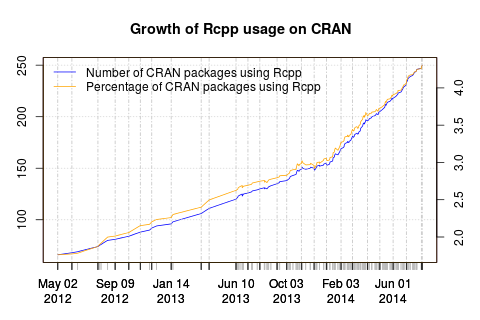
Rcpp growth
Rcpp reached a nice round milestone yesterday: 250 packages on CRAN now depend on it (as measured by Depends, Imports and LinkingTo declarations). The graph is on the left depicts the growth of Rcpp over time. Or at least since I started to write down some usage numbers: first informally, then via a script. Also displayed is the relative proportion of CRAN packages using it. Rcpp cleared the four per-cent hurdle just before useR! 2014 where I showed a similar graph (as two distinct graphs) in my invited talk. 250 is a pretty impressive, and rather humbling, number. From everybody behind Rcpp, I would like to say a heartfelt Thank You! to all the users and of course contributors.

This post by Dirk Eddelbuettel originated on his Thinking inside the box blog. Please report excessive re-aggregation in third-party for-profit settings.

Ian Donnelly: How-To: Write a Plug-In (Part 2, The Contract)

Hi Everybody! This is the second installment of my tutorial, How-To: Write a Plug-In. Previously, in Part 1, I went over the basic interface of an Elektra Storage Plug-In. For this installment, I will be focusing on one of the most important aspects of a plug-in, its contract. The contract describes how a plug-in may behave. The main part of the contract describes to Elektra how it will modify the KeySet returned. This is what allows Elektra to work with various types of plug-ins. This guide will focus on one type of plug-in: the storage plug-in. We already have a published specification for plug-ins on our repository but I will reiterate the details here. The first part of the contract you will need is the system/elektra/modules/plugin (where plugin represents the name of your plug-in). All this key does is let elektra know that your plug-in exists. The next key is system/elektra/modules/plugin/exports. This key lets Elektra know that your plug-in exports symbols to Elektra. Below this key you need to create keys for each function you want to export, in my line plug-in I implemented functions for get and set so I will create two keys as follows:
keyNew ("system/elektra/modules/line/exports/get",
KEY_FUNC, elektraLineGet, KEY_END),
keyNew ("system/elektra/modules/line/exports/set",
KEY_FUNC, elektraLineSet, KEY_END),
So far we have told Elektra that our plugin exists and will be exporting functions for getting and setting keys. The next set of keys are the system/elektra/Plugin/infos keys. These are pretty self-explanatory. The first three children of this key, author, license, and description are pretty self explanatory. The infos/provides key tells Elektra the type of plug-in that is being used, this will be storage for any storage plug-in (which is what this tutorial focuses on). To be precise, it tells Elektra which abstract functionality is provided. This allows other plugins to reference abstract functionality instead of declaring a hard dependency to one specific plugin. For example plugins could state that they want to be placed before any other plugin doing the abstract functionality conversion instead of referencing for example the keytometa plugin directly. The info/placements key tells Elektra which functions of the plug-in it should call. Since I implemented get and set in the line plug-in, I would set this key to getstorage setstorage . Next is infos/needs and infos/recommends, infos/needs should contain a list of plug-ins or providers that your plug-in needs to work (see the info/provides key above). Otherwise this key needs to be set to be blank . infos/recommends works exactly like needs except that a plug-in that needs another plug-in won t form a valid backend if the other plug-in doesn t exist but if it only recommends having the other plug-in, it will still work in the others absence. Since Elektra 0.8.7, the best practice for creating a plug-in involves storing the info keys at the very top of a file named REAMDE.md in the same directory as the plugin source. For instance, in my line plugin, the first few lines of README.md are as follows:
- infos = Information about LINE plugin is in keys below
- infos/author = Ian Donnelly <ian.s.donnelly@gmail.com>
- infos/licence = BSD
- infos/needs =
- infos/provides = storage
- infos/placements = getstorage setstorage
- infos/description = Very simple storage plug-in which stores each line from a file as a key
The rest of the README.md file should contain an English description of the plug-in. You can include an introduction to the plug-in, its purpose, any shortcomings it may have, and examples of how to use it. This README.md file is standard for GitHub which will automatically be displayed when a user is browsing your plug-in s directory in the repo. It is written in Markdown. In order to generate the contract from this file you must edit the CMakeLists.txt file in your plug-in source directory to include the following lines:
generate_readme (plugin)
add_includes (elektra-full $ CMAKE_CURRENT_BINARY_DIR )
include_directories ($ CMAKE_CURRENT_BINARY_DIR )

where you substitute plugin with the name of you plugin. This will generate a file called readme_plugin.c (once again, substitute plugin), in your plugin s build directory when you run the make command. The best way to declare the contract is within it s own function, elektraPluginContract. This makes it easier to manage the contract and is much more readable. This is the contract declaration for my line plug-in:

static inline KeySet *elektraLineContract()

return ksNew (30,
keyNew ("system/elektra/modules/line",
KEY_VALUE, "line plugin waits for your orders", KEY_END),
keyNew ("system/elektra/modules/line/exports", KEY_END),
keyNew ("system/elektra/modules/line/exports/get",
KEY_FUNC, elektraLineGet, KEY_END),
keyNew ("system/elektra/modules/line/exports/set",
KEY_FUNC, elektraLineSet, KEY_END),
#include "readme_line.c"
keyNew ("system/elektra/modules/line/infos/version",
KEY_VALUE, PLUGINVERSION, KEY_END),
KS_END);

Next, you will need to make sure to actually set the contract. This is always done in the elektraPluginGet function since this is technically the only REQUIRED function in a plug-in. We just create a new KeySet, set it to our contract, and append it to the returned KeySet. You can see how this is done for line (note that this code is at the very beginning of elektraLineGet):

if (!strcmp (keyName(parentKey), "system/elektra/modules/line"))

KeySet *moduleConfig = elektraLineContract();
ksAppend(returned, moduleConfig);
ksDel(moduleConfig);
return 1;


Note that the plugin contract is nothing special, but just a KeySet interpreted by the resolver forming an Elektra backend. Elektra will request the keys below system/elektra/modules/plugin (where plugin is the pluginname) as soon as it wants to know something about that plugin. Notice also the line #include "readme_line.c". This line, pulls in the contents of readme_line.c in my plug-in s build directory, which due to the lines we added in CMakeLists.txt will contain the contract as defined at the top of README.md. Any changes to the keys in README.md will be reflected in the plug-in next time it is built. Part 2 of this tutorial focuses on the plug-in contract by explaining what each element does and explaining how to implement a contract. For more information about plug-ins and more detailed examples I highly suggest reading Markus Thesis for Elektra. Chapter 4, which starts on page 61 goes into much more detail on Plug-Ins and explains the various features of the contracts. Look for Part 3 soon!

6 August 2014

Chris Lamb: Strava Enhancement Suite update

https://chris-lamb.co.uk/wp-content/2014/strava/chrome_web_store.png I've been told I don't blog about my projects often enough, so here's a feature update on my Chrome Extension that adds various improvements to the Strava.com fitness tracker. All the features are optional and can be individually enabled in the options panel.

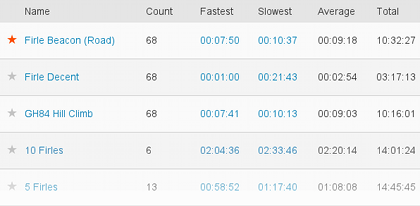
Repeated segments This adds aggregate data (fastest, slowest, average, etc.) when segments are repeated within an activity. It's particularly useful for laps or like this Everesting attempt hill repeats: https://chris-lamb.co.uk/wp-content/2014/strava/repeated_segments3.png

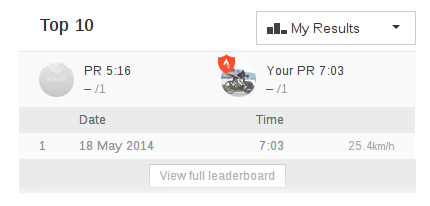
Leaderboard default Changes the default leaderboard away from "Overall" when viewing a segment effort. The most rewarding training often comes from comparing your own past performances rather than those of others, so viewing your own results by default can make more sense. You can select any of Men, Women, I'm Following or My Results: https://chris-lamb.co.uk/wp-content/2014/strava/leaderboard_default.png

Hide feed entries Hides various entry types in the activity feed that can get annoying. You currently have the option of hiding challenges, route creations, goals created or club memberships: https://chris-lamb.co.uk/wp-content/2014/strava/hide_challenge_feed_entries.png

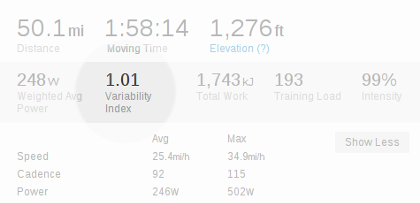
Variability Index Calculates a Variability Index (VI) from the weighted average power and the average power, an indication of how "smooth" a ride was. Required a power meter. A VI of 1.0 would mean a ride was paced "perfectly", with very few surges of effort: https://chris-lamb.co.uk/wp-content/2014/strava/variability_index.png

Infinite scroll Automatically loads more dashboard entries when reaching the bottom, saving a tedious click on the "More" button: https://chris-lamb.co.uk/wp-content/2014/strava/infinite_scroll.png

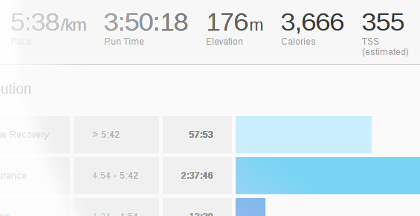
Running TSS Estimates a run's Training Stress Score (TSS) from its Grade Adjusted Pace distribution, a measure of that workout's duration and intensity relative to the athletes's capability, providing an insight into correct recovery time and overall training load over time: https://chris-lamb.co.uk/wp-content/2014/strava/running_tss.png

Hide "find friends" Hides social networking buttons, including invitations to invite or find further friends: https://chris-lamb.co.uk/wp-content/2014/strava/hide_invite_friends.png

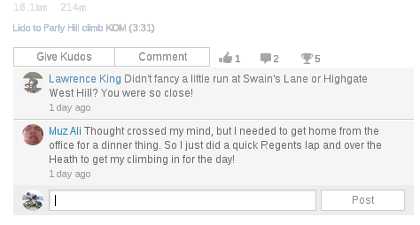
"Enter" posts comment Immediately posts comment when pressing Enter/Return key in the edit box rather than adding a newline: https://chris-lamb.co.uk/wp-content/2014/strava/comment_post_on_enter.png

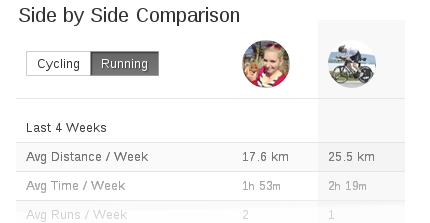
Compare running Changes the default sport for the "Side by Side comparison" module to running when viewing athlete profiles: https://chris-lamb.co.uk/wp-content/2014/strava/side_by_side_running.png

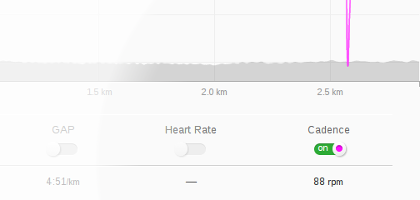
Running cadence Shows running cadence by default in the elevation profile: https://chris-lamb.co.uk/wp-content/2014/strava/running_cadence.png

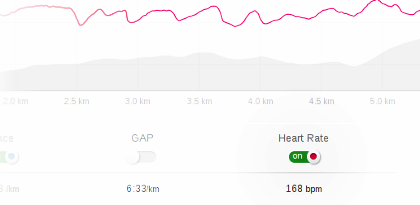
Running heart rate Shows running heart rate by default in elevation profile: https://chris-lamb.co.uk/wp-content/2014/strava/running_heart_rate.png

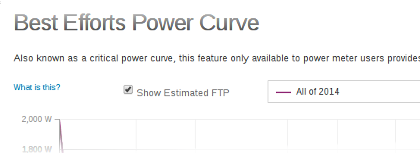
Estimated FTP Selects "Show Estimated FTP" by default on the Power Curve page: https://chris-lamb.co.uk/wp-content/2014/strava/estimated_ftp.png

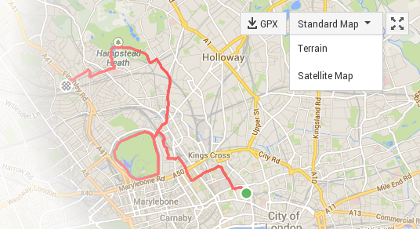
Standard Google map Prefer the "Standard" Google map over the "Terrain" view: https://chris-lamb.co.uk/wp-content/2014/strava/standard_google_map.png

Let me know if you have any comments, suggestions or if you have any other feedback. If you find this software useful, please consider donating via Paypal to support further development. You can also view the source and contribute directly on GitHub. https://chris-lamb.co.uk/wp-content/2014/strava/chrome_web_store.png

5 August 2014

Hideki Yamane: one init system rules all...

At a linuxfoundation blog "A Haiku Poem Dedicated to Systemd" says...
List-units, start, stop
enable and disable
goodbye to init
But I prefer is
Systemd: All your process are belong to us
or

WE ARE THE SYSTEMD:
You will be assimilated - logging/dhcp/ntp... Resistance is futile


Francesca Ciceri: Just Rockin' and Rollin'!

[Warning: quite a bit of pics in this post] [Edit: changed the post title, while I love the music, the actual lyrics of "Shake Rattle and Roll" made me facepalm. Ronnie Dawson's song is better :)] Last weekend I've been in Senigallia for the 15th edition of Summer Jamboree.
It was my first time there, and it was epic. Really.
If you are into roots music and early rock'n'roll and/or into vintage 40s and 50s clothes, go there.
You won't regret it! (You have time until August 10th, hurry up!) If you follow my identi.ca account (whooo! shameless plug!), you may know that I love music in general and Blues, Jazz and Rockabilly in particular.
If you read my blog, you may know that I make clothes - particularly reproductions of 50s and retro clothes.
So, it's not much of a surprise that going to the Summer Jamboree has been a mindblowing experience to me.
What surprised me it's that I've felt the very same wonder of my first Debconf: the amazing feeling that you are not alone, there are other people like you out there, who love the same things you love, who are silly about the same little details (yes, I equally despise historically innacurate pin up shoes and non free software), who dance - metaphorically and not - at your same beat.
Same wonder I felt when I first read some authors - Orwell and David Foster Wallace, just to mention a couple - or when I first delved in anarchist thinkers.
By nature I'm not much of a social person, and I tend to live and love alone. But that sense of being part of something, to find like-minded people always blows me away. I'm not much of a blog writer, so I won't probably be able to give you a good impression of the awesomness of it.
But hey, watch me trying. The Vintage Market I spent most of the morning travelling by train to reach Senigallia (and met the most beautiful French girl ever in the process, who sketched me in her notebook because, hey!, I was already in full Rockabilly gear).
The hotel was pretty close to the station, and to the part of the city where the festival was taking place, so I spent a couple of hours sleeping, then started the adventure.
The festival takes place mostly near the Rocca Roveresca, a beautiful fifteenth century castle, and on its gardens, but the all the other venues are in walking distance.
All around the Rocca there is a market with vintage clothes, records, shoes, retro jewelry. A special mention for two fantastic dressmakers: Laura of Bloody Edith Atelier from Rome and Debora of The Black Pinafore from Sarzana. I bought just a piece from each of them, but I was able to do that only with a huge amount of self restraint. Guitars! Tattoos! Yes, I may have spent a bit drooling on the Gibson Cherry Red, and I tried (without amp, though) that beautiful orange Gretsch Electromatic. guitars! And Greg Gregory of the Travel Ink Tattoo Studio from UK was there, with his shiny Airstream. The airstream of Travel Ink Tattoo I also spent a while among the records in the Bear Family Records booth. They are a Germany based independent record label specialised in reissues of country and 50s rock'n'roll. Couldn't resist, and I bought a beautiful Sun Records' tshirt. Just Rockin' and Rollin'. Aka: dance time After that, it was time to dance. I missed the dance camp of the afternoon, but the DJ sets were fantastic, all 40s and 50s stuff, and I fell in love with Lindy Hop and Boogie Woogie, and well, obviously, Jive. I could have spent hours watching the people dancing, and clumsily trying the most basic moves myself. people dancing more dancers People And the people, did I mention the people?
They were cosplaying the 40s and 50s so wonderfully I couldn't help but take some photos (and find a new fetish of mine: men in 40s clothes. Sexy as hell). For instance, Angelo Di Liberto, artistic director of the festival with the beautiful burlesque artist Grace Hall. Angelo Di Liberto and Grace Hall Or the amazingly dressed German couple I met in via Carducci. A beautifully dressed couple And this couple too, was pretty cool. And another very in-character couple The Prettiest Smile award goes to these lovely ladies! Smiling lovely ladies Cars Who knows me, can tell that I don't love cars.
They stink, they are noisy, they are big.
But these ones where shiny and looked beautiful. Oldtimer cars Also, the black Cadillac had the terrible effect on me of putting "Santa Claus is Back in Town" in my head (or, more precisely, Elvis tomcatting his way through the song, singing "Got no sleigh with reindeer / No sack on my back / You're gonna see me comin' in a big black Cadillac"). the big black cadillac cadillac detail Music! Sadly, I missed Stray Cat's Slim Jim Phantom but I was just in time for Ben E. King.
It was lovely: backed by the house band (The Good Fellas), he sang a lot of old Drifters hits, from On Broadway to Save the Last Dance for Me to - obviously - the great Stand By Me. Then a bit of hillbilly country, with Shorty Tom and the Longshots, a French combo consisting of a double bass, a rhythm guitar and a steel guitar. Shorty Tom and the Longshots And, well, more dancing: the dj sets on the three stages went on until 3 am. Day 2 The next morning I took advantage of the early opening of Rocca Roveresca to visit it. The Rocca itself is beautiful and very well maintained, and hosts various exhibitions.
"Marilyn In White" shows the incredible photos taken by George Barris on the set of "The Seven Year Itch" as well as some taken in 1962. Beautiful, really, especially the series on the beach. photos from the exhibition But the ones moving me were the pics from "Buddy Holly, The Day The Music Dies": a collection of photos taken by Bill Francis during the (sadly brief) career of Buddy Holly from the very beginnings to his death. After that, it was time to come back to year 2014, but really I felt like I've walked for a while in another decade and planet. And the cool thing is that I could enjoy the great 40s and 50s music and dances (and clothes!) without the horrible stereotypes and cultural norms of the time period. A total win. :) So, ehm, that's it. I'm a bit sad to be back, and to cheer myself up I'm already planning to attend Wanda Jackson gig in Aarburg (CH) next month.
And take Lindy Hop and Boogie lessons, obviously.

Andrew Pollock: [geek] Lifehacking with NFC, Tasker and HabitRPG

Oh man, I'm such a geek... Being a single parent has required a considerable amount of self-discipline on my behalf. I find I do best in an environment with routine to make sure stuff gets done. One of the things I did to try and make sure stuff got done was to form positive habits. To help and make this a bit more "fun", I started using HabitRPG, an online role-playing game based on habits. I've only ever used it in a half-arsed manner, and as a result, I die a lot. Often I'll do my dailies, but then forget to mark them off. Sometimes I just fall off the habit wagon altogether. And die. One of my dailies is to scoop my cat's litterboxes. For whatever reason, I find this a tad onerous, and had found myself falling out of the habit of doing it on a daily basis. My cat deserves better than this, so I wanted to get back on the habit wagon, but make it a bit more "fun" as well. I love NFC, I've been a big NFC weenie for a long time. It's a solution looking for a problem. I have a huge collection of NFC tags, and I've finally found a problem I could use them with. I wanted to make it more frictionless to mark a task as completed in HabitRPG. I didn't want to have to take out my phone, unlock it, open the HabitRPG app and check off the daily task. I just wanted to wave my phone at an NFC tag. Here's how I did it. The inimitable Paul Fenwick, who first inspired me to use HabitRPG, has a way more complicated set up to achieve something similar. The Site Reliability Engineer in me wanted the least number of moving parts and third-parties to have to get from my phone to HabitRPG. After some hunting around, I found this wiki page on integrating Tasker with HabitRPG's API, so based on that breadcrumb, I got hacking. I'd not used Tasker before. I was already using AutomateIt to do some other, reasonably dumb automation on my phone, though. Tasker is a little bit obtuse, and it took me a couple of days of casual fiddling with it to wrap my head around it's usage model. The fact that it can run arbitrary JavaScript, and that NFC Tools integrates with it is where the real awesome lies. So based off the wiki, I crafted a couple of bits of JavaScript, one to mark daily tasks as complete on HabitRPG, and one to query HabitRPG to see if they have been marked as complete. For the former, it was trivial, using NFC Tools, to write an NFC tag that then runs the Tasker task to call the HabitRPG API to mark a daily task as complete. That goal was now complete. The equally satisfying part was also having Tasker do a time-based conditional nag based on the state of the daily task in HabitRPG. So now if it gets to 4:45pm and I haven't scooped the litterboxes, my phone literally tells me I'd better go do it. I've also done the same thing with putting the dishwasher on. I've stuck an NFC tag on the dishwashing powder bottle lid, and I get a conditional reminder before bed time. It used to be an unconditional reminder with AutomateIt, and it was dumb, because I rarely forget to put the dishwasher on. Now, I can use HabitRPG to keep state on it instead. The hunk of JavaScript to update HabitRPG is very simple:
function mark_completed()   
  var http = new XMLHttpRequest();
  http.open("POST", http_post_url, false);
  http.setRequestHeader("x-api-user", global('HabitrpgUserid'));
  http.setRequestHeader("x-api-key", global('HabitrpgApiToken'));
  http.send();
  return(http.responseText); 
 
try   
  var result = mark_completed(); 
  catch(e)   
  var error = e.message; 
 
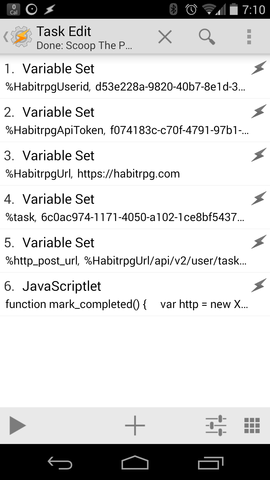
All of the interesting stuff is defined in variables preceding the JavaScript in the task definition. Here's a screenshot of the Task in Tasker that tells a thousand words: Screenshot of Tasker task that uses HabitRPG API to mark a task complete Similarly, to query HabitRPG, I'm using:
function query_task()   
  var http = new XMLHttpRequest();
  http.open("GET",http_get_url,false);
  http.setRequestHeader("x-api-user", global('HabitrpgUserid'));
  http.setRequestHeader("x-api-key", global('HabitrpgApiToken'));
  http.send();
  var p = JSON.parse(http.responseText);
  return p['completed'];
 
try   
  var task_completed = query_task(); 
  catch(e)   
  var error = e.message; 
 
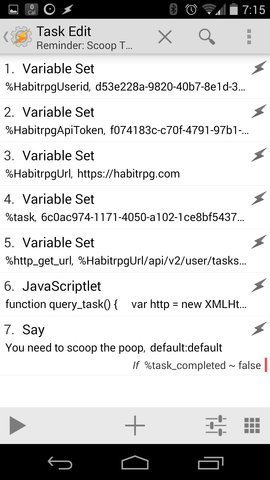
It's only slightly trickier because you have to parse the JSON blob that comes back. Again, a screenshot. Screenshot of Tasker task that uses HabitRPG API to query task state Now maybe I'll stop dying so much in HabitRPG, my cat will have the clean toilet she deserves, and I'll stop getting reminded about putting the dishwasher on when I already have. Better living through automation, that's my motto.

Simon Josefsson: Replicant 4.2 0002 and NFC on I9300

I m using Replicant on my Samsung SIII (i9300) phone (see my earlier posts). During my vacation the Replicant project released version 4.2-0002 as a minor update to their initial 4.2 release. I didn t anticipate any significant differences, so I followed the installation instructions but instead of wipe data/factory reset I chose wipe cache partition and rebooted. Everything appeared to work fine, but I soon discovered that NFC was not working. Using adb logcat I could get some error messages:
E/NFC-HCI ( 7022): HCI Timeout - Exception raised - Force restart of NFC service
F/libc    ( 7022): Fatal signal 11 (SIGSEGV) at 0xdeadbaad (code=1), thread 7046 (message)
I/DEBUG   ( 1900): *** *** *** *** *** *** *** *** *** *** *** *** *** *** *** ***
I/DEBUG   ( 1900): Build fingerprint: 'samsung/m0xx/m0:4.1.1/JRO03C/I9300XXDLIB:user/release-keys'
I/DEBUG   ( 1900): Revision: '12'
I/DEBUG   ( 1900): pid: 7022, tid: 7046, name: message  >>> com.android.nfc <<<
The phone would loop trying to start NFC and having the NFC sub-system die over and over. Talking on #replicant channel, paulk quickly realized and fixed the bug. I had to rebuild the images to get things to work, so I took the time to create a new virtual machine based on Debian 7.5 for building Replicant on. As a side note, the only thing not covered by Replicant build dependency documentation was that I needed the Debian xmllint package to avoid a build failure and the Debian xsltproc package to avoid a error message being printed in the beginning of every build. Soon I had my own fresh images and installed them and NFC was working again, after installing the non-free libpn544_fw.so file. During this, I noticed that there are multiple libpn544_fw.so files floating around. I have the following files:
version string source
libpn544_fw_C3_1_26_SP.so internet
libpn544_fw_C3_1_34_SP.so stock ROM on S3 bought in Sweden during 2013 and 2014 (two phones)
libpn544_fw_C3_1_39_SP.so internet
(For reference the md5sum's of these files are 682e50666effa919d557688c276edc48, b9364ba59de1947d4588f588229bae20 and 18b4e634d357849edbe139b04c939593 respectively.) If you do not have any of these files available as /vendor/firmware/libpn544_fw.so you will get the following error message:
I/NfcService( 2488): Enabling NFC
D/NFCJNI  ( 2488): Start Initialization
E/NFC-HCI ( 2488): Could not open /system/vendor/firmware/libpn544_fw.so or /system/lib/libpn544_fw.so
E/NFCJNI  ( 2488): phLibNfc_Mgt_Initialize() returned 0x00ff[NFCSTATUS_FAILED]
E/NFC-HCI ( 2488): Could not open /system/vendor/firmware/libpn544_fw.so or /system/lib/libpn544_fw.so
W/NFCJNI  ( 2488): Firmware update FAILED
E/NFC-HCI ( 2488): Could not open /system/vendor/firmware/libpn544_fw.so or /system/lib/libpn544_fw.so
W/NFCJNI  ( 2488): Firmware update FAILED
E/NFC-HCI ( 2488): Could not open /system/vendor/firmware/libpn544_fw.so or /system/lib/libpn544_fw.so
W/NFCJNI  ( 2488): Firmware update FAILED
E/NFCJNI  ( 2488): Unable to update firmware, giving up
D/NFCJNI  ( 2488): phLibNfc_Mgt_UnConfigureDriver() returned 0x0000[NFCSTATUS_SUCCESS]
D/NFCJNI  ( 2488): Terminating client thread...
W/NfcService( 2488): Error enabling NFC
Using the first (26) file or the last (39) file does not appear to be working on my phone, I get the following error messages. Note that the line starting with 'NFC capabilities' has 'Rev = 34' in it, possibly indicating that I need the version 34 file.
I/NfcService( 5735): Enabling NFC
D/NFCJNI  ( 5735): Start Initialization
D/NFCJNI  ( 5735): NFC capabilities: HAL = 8150100, FW = b10122, HW = 620003, Model = 12, HCI = 1, Full_FW = 1, Rev = 34, FW Update Info = 8
D/NFCJNI  ( 5735): Download new Firmware
W/NFCJNI  ( 5735): Firmware update FAILED
D/NFCJNI  ( 5735): Download new Firmware
W/NFCJNI  ( 5735): Firmware update FAILED
D/NFCJNI  ( 5735): Download new Firmware
W/NFCJNI  ( 5735): Firmware update FAILED
E/NFCJNI  ( 5735): Unable to update firmware, giving up
D/NFCJNI  ( 5735): phLibNfc_Mgt_UnConfigureDriver() returned 0x0000[NFCSTATUS_SUCCESS]
D/NFCJNI  ( 5735): Terminating client thread...
W/NfcService( 5735): Error enabling NFC
Loading the 34 works fine.
I/NfcService( 2501): Enabling NFC
D/NFCJNI  ( 2501): Start Initialization
D/NFCJNI  ( 2501): NFC capabilities: HAL = 8150100, FW = b10122, HW = 620003, Model = 12, HCI = 1, Full_FW = 1, Rev = 34, FW Update Info = 0
D/NFCJNI  ( 2501): phLibNfc_SE_GetSecureElementList()
D/NFCJNI  ( 2501): 
D/NFCJNI  ( 2501): > Number of Secure Element(s) : 1
D/NFCJNI  ( 2501): phLibNfc_SE_GetSecureElementList(): SMX detected, handle=0xabcdef
D/NFCJNI  ( 2501): phLibNfc_SE_SetMode() returned 0x000d[NFCSTATUS_PENDING]
I/NFCJNI  ( 2501): NFC Initialized
D/NdefPushServer( 2501): start, thread = null
D/NdefPushServer( 2501): starting new server thread
D/NdefPushServer( 2501): about create LLCP service socket
D/NdefPushServer( 2501): created LLCP service socket
D/NdefPushServer( 2501): about to accept
D/NfcService( 2501): NFC-EE OFF
D/NfcService( 2501): NFC-C ON
What is interesting is, that my other S3 running CyanogenMod does not have the libpn544_fw.so file but still NFC works. The messages are:
I/NfcService( 2619): Enabling NFC
D/NFCJNI  ( 2619): Start Initialization
E/NFC-HCI ( 2619): Could not open /system/vendor/firmware/libpn544_fw.so or /system/lib/libpn544_fw.so
W/NFC     ( 2619): Firmware image not available: this device might be running old NFC firmware!
D/NFCJNI  ( 2619): NFC capabilities: HAL = 8150100, FW = b10122, HW = 620003, Model = 12, HCI = 1, Full_FW = 1, Rev = 34, FW Update Info = 0
D/NFCJNI  ( 2619): phLibNfc_SE_GetSecureElementList()
D/NFCJNI  ( 2619): 
D/NFCJNI  ( 2619): > Number of Secure Element(s) : 1
D/NFCJNI  ( 2619): phLibNfc_SE_GetSecureElementList(): SMX detected, handle=0xabcdef
D/NFCJNI  ( 2619): phLibNfc_SE_SetMode() returned 0x000d[NFCSTATUS_PENDING]
I/NFCJNI  ( 2619): NFC Initialized
D/NdefPushServer( 2619): start, thread = null
D/NdefPushServer( 2619): starting new server thread
D/NdefPushServer( 2619): about create LLCP service socket
D/NdefPushServer( 2619): created LLCP service socket
D/NdefPushServer( 2619): about to accept
D/NfcService( 2619): NFC-EE OFF
D/NfcService( 2619): NFC-C ON
Diffing the two NFC-relevant repositories between Replicant (external_libnfc-nxp and packages_apps_nfc) and CyanogenMod (android_external_libnfc-nxp and android_packages_apps_Nfc) I found a commit in Replicant that changes a soft-fail on missing firmware to a hard-fail. I manually reverted that patch in my build tree, and rebuilt and booted a new image. Enabling NFC now prints this on my Replicant phone:
I/NfcService( 2508): Enabling NFC
D/NFCJNI  ( 2508): Start Initialization
E/NFC-HCI ( 2508): Could not open /system/vendor/firmware/libpn544_fw.so or /system/lib/libpn544_fw.so
W/NFC     ( 2508): Firmware image not available: this device might be running old NFC firmware!
D/NFCJNI  ( 2508): NFC capabilities: HAL = 8150100, FW = b10122, HW = 620003, Model = 12, HCI = 1, Full_FW = 1, Rev = 34, FW Update Info = 0
D/NFCJNI  ( 2508): phLibNfc_SE_GetSecureElementList()
D/NFCJNI  ( 2508): 
D/NFCJNI  ( 2508): > Number of Secure Element(s) : 1
D/NFCJNI  ( 2508): phLibNfc_SE_GetSecureElementList(): SMX detected, handle=0xabcdef
D/NFCJNI  ( 2508): phLibNfc_SE_SetMode() returned 0x000d[NFCSTATUS_PENDING]
I/NFCJNI  ( 2508): NFC Initialized
D/NdefPushServer( 2508): start, thread = null
D/NdefPushServer( 2508): starting new server thread
D/NdefPushServer( 2508): about create LLCP service socket
D/NdefPushServer( 2508): created LLCP service socket
D/NdefPushServer( 2508): about to accept
D/NfcService( 2508): NFC-EE OFF
D/NfcService( 2508): NFC-C ON
And NFC works! At least YubiKey NEO with the Yubico Authenticator app. One less non-free blob on my phone. I have double-checked that power-cycling the phone (even removing battery for a while) does not affect anything, so it seems the NFC chip has firmware loaded from the factory. Question remains why that commit was added. Is it necessary on some other phone? I have no idea, other than if the patch is reverted, S3 owners will have NFC working with Replicant without non-free software added. Alternatively, make the patch apply only on the platform where it was needed, or even to all non-S3 builds. flattr this!

4 August 2014

Ian Donnelly: New Release: Elektra 0.8.7

Hi Everybody! I am very proud to inform you all that Elektra has just shipped a new release, version 0.8.7, with many great features and fixes! First of all, I want to let you all know that a lot of work from my Google Summer of Code Project has made its way into this release. Elektra now includes support for a three way merge of KeySets! A special and sincere thanks goes out to Felix Berlakovich for helping me test this new merge feature and adding some great features to allow for different merge strategies and dealing with meta keys. You can try out the new merge features using the kdb merge command or by using the Elektra API. There is still work to be done with Merging and improving documentation (also look for some posts on this blog soon about the feature). Additionally, thanks to Felix, we have technical previews for some new plug-ins. The new plug-ins are keytometa and ini. In short the keytometa plugin allows to convert normal keys to meta keys during the get operation and reverting this conversion during the set operation. The ini plugin is basically a rewrite of the simpleini plugin and makes use of the inih library. Also there have been many improvements made to the glob plug-in. He even found some time to add a new script for bash tab completion which is located under scripts/kdb-bash-completion. To use it on debian just copy it to /etc/bash_completion.d/ and make sure it is executable. Moreover, we fixed a lot of things with this newest release. Pino Toscano has been working on fixing up the Debian packages for Elektra but he has also fixed many other things along the way including fixing a lot of spelling errors, simplifying the RPATH setting, improvements to respecting $HOME and $TMPDIR, and improvements to some test cases. The kdb tool now does a better job of checking for subfolders that aren t allow and it now makes sure to output warnings before errors so errors can more easily be seen. We have also improved some tests for kdb tool and some plugins as well as fixed compiler warnings on clang and gcc 4.9. We also made some fixes to kdb import and export for some storage plugins and fixed some bugs so that kdb run_all now works flawlessly. There have also been a few tweaks to the API for this release, specifically in the C++ bindings. There is now a delMeta() function for C++. The reason for this is that contrary to the C API, calling

key.setMeta("metaname", NULL)

does not delete the metadata, but stores the value 0 . Additionally, we changed the arguments for isBelow, isDirectBelow, and isBelowSame for the C++ binding to be easier to understand and be more natural to use. Before this change, the C++ binding closely mirrored the C API which lead to an unintuitive behaviour. Before the change the API did the following:

Key ( user/config/key/below ).isBelow (Key ( user/config )) == false
Key ( user/config/key/below ).isBelow (Key ( user/config/key/below/deeper )) == true

That is because the first argument in the C API is the object itself in the C++ API.
The attribute of being below the key in question (the object) refers to the second key in the C API.
While this makes some sense for the C API, it definitely does not for the C++ API. Now the API behaves as follows (as intuitively expected):

Key ( user/config/key/below ).isBelow (Key ( user/config )) == true
Key ( user/config/key/below ).isBelow (Key ( user/config/key/below/deeper )) == false

We even had time for a bunch of documentation changes. We now have a tutorial for contextual values to GitHub so developers can start using contextual values with Elektra. We also included a specification for metadata and a better specification for contracts. There is even a little bit of extra news to share. We now use GitHub for active development of Elektra. We have adopted its issue tracker for issues. Also, now pull requests automatically get built by the server to see if the merge would brake the build and whether it passes all the tests. We are also in the process of updating a lot of our documentation and READMEs to use Markdown so they can be viewed easily on GitHub. Also, Raffael Pancheri has been making really great progress on a qt-gui for Elektra. There is still work to be done but it looks great and is coming along nicely. You can download the release now from Markus site: http://www.markus-raab.org/ftp/elektra/releases/elektra-0.8.7.tar.gz size: 1566800
md5sum: 4996df62942791373b192c793d912b4c
sha1: 00887cc8edb3dea1bc110f69ea64f6b700c29402
sha256: 698ebd41d540eb0c6427c17c13a6a0f03eef94655fbd40655c9b42d612ea1c9b Also there are packages already ready for some distributions: There is a lot of ongoing work to fix the Debian packages and I will post about it on this blog when they are good to go! Enjoy the new release!
-Ian S. Donnelly

Russ Allbery: Review: Parasite

Review: Parasite, by Mira Grant
Series: Parasitology #1
Publisher: Orbit
Copyright: October 2013
ISBN: 0-316-21893-6
Format: Kindle
Pages: 504
It's 2027, and a company named Symbogen has revolutionized medicine and health. They manufacture a genetically-engineered parasite based on a tapeworm that can stabilize and protect the health of just about anyone. It can synthesize medication, fix chronic medical problems, and be adapted to different conditions. (Yes, I know biological systems don't work this way. That's not going to be the only suspension of disbelief problem.) This has made Symbogen one of the most powerful corporations in the country, aided by the skill at marketing and self-promotion shown by one of the founders. Sal, the protagonist of the novel, is one of Symbogen's most famous success stories. Sally was the victim of a horrible car crash that put her into an apparently irreversible coma. But as her family was debating whether to turn off life support, she woke up. She had no memory of her previous life at all, and had to relearn fine motor control, reading, and many other skills. She was essentially a new person. But she was alive; her symbiont had saved her. When the story proper starts, Sal is still a ward of her parents. She has generally adult skills despite still struggling with reading, but she still has occasional attacks and is under intensive monitoring by Symbogen. That means periodic mandatory appointments with Symbogen, which she hates, but she's otherwise started building a life for herself: a job in an animal shelter, an interest in exotic predatory plants, and, most notably, a boyfriend. There are things about her life she doesn't like, and she wants to be free of Symbogen, but she doesn't have a bad life. But then a mysterious illness begins sweeping through the population, causing people to go blank, apparently lose their minds, and then start attacking those near them. Some of you have doubtless already figured out the key plot revelation. It's not hard; even if you didn't from the summary, you will probably figure it out shortly into the book. And therein lies a large problem with this novel: it's hopelessly predictable. Creepy evil corporation that supposedly has your best interests at heart, check. Plucky mad scientist opposition who understands exactly what's going on, check. Well-meaning but heavy-handed government agents who try to get involved but mostly make everything worse, check. (Although it's unusual to have those agents as part of the protagonist's family, and I thought that added some additional depth.) Mostly clueless protagonist sucked into the plot and becoming critical to its resolution, check. Very few readers are going to be surprised by this story. This is not, by itself, a fatal flaw. Predictable story structures can carry satisfying variations, or introduce the reader to enjoyable characters. And I think Grant manages both here. Seanan McGuire, both as herself and under her Mira Grant pseudonym, tends to write damaged and struggling characters. Both her Newsflesh and October Daye series feature protagonists that have been hurt badly, but are coping and muddling through in their own ways. In Parasite, I think she takes a more daring and intriguing approach: a protagonist that other people in the story perceive as damaged and struggling, but who actually isn't. Sal is not a badly injured Sally, and she's quite a bit healthier than those around her think she is. Her thought processes don't work quite the same as those around her, but that's not because she's hurt. That's because she's a different person. This makes Parasite partly a novel about identity, about Sal claiming ownership of her own life. Grant drags this out longer than I wish she had, but I liked the idea. In Sal, she strikes a good balance between gratitude and genuine affection for her family and the need to become her own person unconstrained by other people's expectations. As with the Newsflesh series, Grant uses quotes and excerpts from interviews to fill in the world background: a few at the start of each chapter, and more around each part boundary. I like this technique, and Grant uses it well. By the end of the book, the Rolling Stone interview with the head of Symbogen has added a lot of insight into how Symbogen manages its public relations. Grant also throws in a few of her trademark dangerously off-beat characters: hyper-competent, wise-cracking, but eerily skewed. I loved those in Blackout and I loved Tansy and Dr. Cale here. (Adam was much less successful.) A whole book from Tansy's perspective wouldn't work, since she needs Sal as a straight woman, but I thought she stole every scene she was in. However, I agree wholeheartedly with Tansy on another point: Sal is remarkably, irritatingly dim about what is apparently intended to be the critical revelation of the book. I won't state it outright; given its significant presence in the final scene, apparently it is intended to be a spoiler. But I figured it out about 50 pages into the book. Grant telegraphs this revelation heavily, and Tansy considers it painfully obvious (with quite a bit of justification). But Sal doesn't figure it out for the entire book, ignores all the signs, and is apparently willfully blind. In a book written from the first-person perspective by an otherwise-reliable narrator, this is highly annoying. It significantly undermined my enjoyment of the book. I spent much of the novel ahead of the narrator in my understanding of the plot and waiting, in vain, for her to get on with it already. That unfortunately makes Parasite a mixed bag. I really liked many of the characters, and I think Grant did some interesting things with family dynamics and with claiming one's own identity. But this is undermined by a very predictable plot, the protagonist deciding to be dumber than a sack of hammers about a critical plot point, and some rather dubious world logic. (For example, why is Sal terrified of bad driving? It makes sense as a post-traumatic stress reaction... except it's a critical point to her characterization that she never went through that stress.) Sometimes I wanted to like this book and sometimes I wanted to shake it, and sometimes I felt both reactions at the same time. I like Grant's writing and characterization well enough that I will probably read the sequel, but this is more like the later books in the Newsflesh series than it is like the spectacular Feed. Worth reading, at least for me, but it could have been better. Rating: 7 out of 10

3 August 2014

Dimitri John Ledkov: What is net neutrality?

Sorry, the web page you have requested is not available through your internet connection.

We have received an order from the Courts requiring us to prevent access to this site in order to help protect against Lex Julia Majestatis infridgement.

If you are a home broadband customer, for more information on why certain web pages are blocked, please click here.
If you are a business customer, or are trying to view this page through your company's internet connection, please click here.

2 August 2014

Don Armstrong: ErgoDox keyboard assembly

I routinely use a Kinesis Advantage Pro keyboard, which is a split, ergonomic keyboard with thumb clusters that uses brown cherryMX switches. Over the thirteen years that I've been using it, I've become a huge fan of this style of keyboard. However, I have two major annoyances with the Kinesis. First, while the firmware is good, remapping the keys is complicated and producing more complicated keyboard layouts with layers and keycodes that are not present in the original layout is not possible. Secondly, the interconnect between the main key wells and the controller board in the middle occasionally fails, and requires disassembly and occasional re-tinning of the circuit board interconnect connector. 1 About a year ago, I became aware of the ErgoDox keyboard, which is a keyboard design which mimics the kinesis to some degree, but with completely separated key halves (useful, because I'm substantially bigger than the average human), programmable firmware (so I can finally have the layers and missing keys) and with slightly more elegant interconnects (TRRS cables). Unfortunately, at the time I first heard about it (and other custom keyboards), making it required sourcing circuit boards, parts, and finding someone to cut a case for the keyboard. Then, a few months ago, I learned about MassDrop, a company who puts together groups of people to do buys of products at near-wholesale level prices, and their offer of all of the parts to build an ErgoDox. After waiting for a group buy of the keyboard to become available, I put in an order, and received the parts two months later. Over a few hours yesterday, I learned how to do surface mount soldering of the 78 diodes (one for each key), and finished assembling and flashing the firmware. This morning, I fixed up the few key bindings that I needed to be productive, and viola, my laptop at home now has a brand new ergonomic keyboard.

1 August 2014

Rapha&#235;l Hertzog: My Free Software Activities in July 2014

This is my monthly summary of my free software related activities. If you re among the people who made a donation to support my work (548.59 , thanks everybody!), then you can learn how I spent your money. Otherwise it s just an interesting status update on my various projects. Distro Tracker Now that tracker.debian.org is live, people reported bugs (on the new tracker.debian.org pseudo-package that I requested) faster than I could fix them. Still I spent many, many hours on this project, reviewing submitted patches (thanks to Christophe Siraut, Joseph Herlant, Dimitri John Ledkov, Vincent Bernat, James McCoy, Andrew Starr-Bochicchio who all submitted some patches!), fixing bugs, making sure the code works with Django 1.7, and started the same with Python 3. I added a tox.ini so that I can easily run the test suite in all 4 supported environments (created by tox as virtualenv with the combinations of Django 1.6/1.7 and Python 2.7/3.4). Over the month, the git repository has seen 73 commits, we fixed 16 bugs and other issues that were only reported over IRC in #debian-qa. With the help of Enrico Zini and Martin Zobel, we enabled the possibility to login via sso.debian.org (Debian s official SSO) so that Debian developers don t even have to explicitly create their account. As usual more help is needed and I ll gladly answer your questions and review your patches. Misc packaging work Publican. I pushed a new upstream release of publican and dropped a useless build-dependency that was plagued by a difficult to fix RC bug (#749357 for the curious, I tried to investigate but it needs major work for make 4.x compatibility). GNOME 3.12. With gnome-shell 3.12 hitting unstable, I had to update gnome-shell-timer (and filed an upstream ticket at the same time), a GNOME Shell extension to start some run-down counters. Django 1.7. I packaged python-django 1.7 release candidate 1 in experimental (found a small bug, submitted a ticket with a patch that got quickly merged) and filed 85 bugs against all the reverse dependencies to ask their maintainers to test their package with Django 1.7 (that we want to upload before the freeze obviously). We identified a pain point in upgrade for packages using South and tried to discuss it with upstream, but after closer investigation, none of the packages are really affected. But the problem can hit administrators of non-packaged Django applications. Misc stuff. I filed a few bugs (#754282 against git-import-orig uscan, #756319 against wnpp to see if someone would be willing to package loomio), reviewed an updated package for django-ratelimit in #755611, made a non-maintainer upload of mairix (without prior notice) to update the package to a new upstream release and bring it to modern packaging norms (Mako failed to make an upload in 4 years so I just went ahead and did what I would have done if it were mine). Kali work resulting in Debian contributions Kali wants to switch from being based on stable to being based on testing so I did try to setup britney to manage a new kali-rolling repository and encountered some problems that I reported to debian-release. Niels Thykier has been very helpful and even managed to improve britney thanks to the very specific problem that the kali setup triggered. Since we use reprepro, I did write some Python wrapper to transform the HeidiResult file in a set of reprepro commands but at the same time I filed #756399 to request proper support of heidi files in reprepro. While analyzing britney s excuses file, I also noticed that the Kali mirrors contains many source packages that are useless because they only concern architectures that we don t host (and I filed #756523 against reprepro). While trying to build a live image of kali-rolling, I noticed that libdb5.1 and db5.1-util were still marked as priority standard when in fact Debian already switched to db5.3 and thus should only be optional (I filed #756623 against ftp.debian.org). When doing some upgrade tests from kali (wheezy based) to kali-rolling (jessie based) I noticed some problems that were also affecting Debian Jessie. I filed #756629 against libfile-fcntllock-perl (with a patch), and also #756618 against texlive-base (missing Replaces header). I also pinged Colin Watson on #734946 because I got a spurious base-passwd prompt during upgrade (that was triggered because schroot copied my unstable s /etc/passwd file in the kali chroot and the package noticed a difference on the shell of all system users). Thanks See you next month for a new summary of my activities.

One comment Liked this article? Click here. My blog is Flattr-enabled.

Ian Donnelly: How-To: Write a Plug-In (Part 1, The Basics)

Hi Everybody! For the first part of my Plug-In tutorial, I am going to cover the basic overview of an elektra plug-in. This post just explains the basic format and functions of an Elektra plug-in, specifically a storage plug-in (this will be the focus of my tutorial). All plug-ins use the same basic interface. This interface consists of five basic functions, elektraPluginOpen, elektraPluginGet, elektraPluginSet, elektraPluginError, and elektraPluginClose. The developer replaces Plugin with the name of their plugin. So in the case of my plugin, the names of these functions would be elektraLineOpen(), elektraLineGet(), elektraLineSet(), elektraLineError(), and elektraLineClose(). Additionally, there is one more function called ELEKTRA_PLUGIN_EXPORT(plugin), where once again Plugin should be replaced with the name of the plug-in, this time in lower-case. So for my line plugin this function would be ELEKTRA_PLUGIN_EXPORT(line). The KDB relies on the first five functions for interacting with configuration files stored in the key database. Calls for kdbGet() and kdbClose() will call the functions elektraPluginGet() and elektraPluginClose() respectively for the plugin that was used to mount the configuration data. kdbSet() calls elektraPluginSet() but also elektraPluginError() when an error occurs. elektraPluginOpen() is called before the first call to elektraPluginGet() or elektraPluginSet(). These functions serve different purposes that allow the plug-in to work: Most simply put: most plug-ins consist of five major functions, elektraPluginOpen(), elektraPluginClose(), elektraPluginGet(), elektraPluginSet(), and ELEKTRA_EXPORT_PLUGIN(Plugin). Because remembering all these functions can be cumbersome, we provide a skeleton plugin in order to easily create a new plugin. The skeleton plugin is called template and a new plugin can be created by calling the copy-template script. For example for my plugin I called

../../scripts/copy-template line

from within the plugins directory. Afterwards two important things are left to be done:
  1. remove all functions (and their exports) from the plugin that are not needed. For example not every plugin actually makes use of the elektraPluginOpen() function.
  2. provide a basic contract as described above
After these two steps your plugin is ready to be compiled, installed and mounted for the first time. Have a look at the mount tutorial for details on howto do this. So Part 1 of the tutorial covers the implementation details for a plug-in. Next up will be Part 2, which will cover the theory behind contracts in Elektra as well as how to implement them. Sincerely,
Ian S. Donnelly

Gunnar Wolf: Wow. Just rejected an editorial offer...

Yes, I've been bragging about the Operating Systems book all over... Today, a colleague handed me a phone call from somebody at Editorial Patria, a well known educational editorial in Mexico. They are looking for material similar to what I wrote, but need the material to be enfocado a competencias Focused on skills, a pedagogic fashion. I was more than interested, of course. As it currently stands, I am very happy that our book is being used already at three universities in three countries (by the different authors) and have heard other people saying they would recommend it, and of course I'm interested in making our work have as big an impact as possible. Of course, we'd have to modify several aspects of the book to cater to the skills focus... But it would be great to have the book available at commercial bookstores. After all, university editions are never as widely circulated as commercial ones. I had just one hard request to accept this: Our work must be distributed under a free licensing. Explicitly allow book photocopies and electronic distribution (didn't get into the "and modification" part, but I would eventually get there ;-) ) And... Of course, the negotiation immediately fell down. Editorials, this person says, live from selling individual books. She says she was turned down by another university professor and for another subject this same week. So, yes, I took the opportunity to explain things as I (and the people that think as I do Fortunately, not so few) see them. Yes, of course, editorials have to make a living. But text books are often photocopied as it is. Who buys a book? Whoever needs it. On one hand, if somebody will be using a book throughout a semester and it's reasonably priced (say, up to 3 cost of photocopies), they will probably buy it because it just works better (it is more comfortable to use and nicer to read). If a teacher likes the explanation for a particular topic, it should be completely legal for him to distribute photocopies (or digital copies) of the specific material And quite probably, among the students, more than one will end up appreciating the material enough to go look for the book in the library. And, as I have done throughout my life, if I read (in copies, electronically or in a library) a book I like... Quite probably I will go buy it. So... Of course, she insisted it was against their corporate policy. I insisted on my explanation. I hope they meet many stubborn teachers refusing to distribute books under a non-free licensing. I hope I contributed to making a dent in an industry that must change. Yes, a very very small dent, but one that helps them break free from their obsolete mindset ;-) (But yes, I don't know how long I will regret not being part of their very nice catalog of science and engineering books) ;-) )

Russell Coker: More BTRFS Fun

I wrote a BTRFS status report yesterday commenting on the uneventful use of BTRFS recently [1]. Early this morning the server that stores my email (which had 93 days uptime) had a filesystem related problem. The root filesystem became read-only and then the kernel message log filled with unrelated messages so there was no record of the problem. I m now considering setting up rsyslogd to log the kernel messages to a tmpfs filesystem to cover such problems in future. As RAM is so cheap it wouldn t matter if a few megs of RAM were wasted by that in normal operation if it allowed me to extract useful data when something goes really wrong. It s really annoying to have a system in a state where I can login as root but not find out what went wrong. After that I tried 2 kernels in the 3.14 series, both of which had kernel BUG assertions related to Xen networking and failed to network correctly, I filed Debian Bug #756714. Fortunately they at least had enough uptime for me to run a filesystem scrub which reported no errors. Then I reverted to kernel 3.13.10 but the reboot to apply that kernel change failed. Systemd was unable to umount the root filesystem (maybe because of a problem with Xen) and then hung the system instead of rebooting, I filed Debian Bug #756725. I believe that if asked to reboot a system there is no benefit in hanging the system with no user space processes accessible. Here are some useful things that systemd could have done:
  1. Just reboot without umounting (like reboot -nf does).
  2. Pause for some reasonable amount of time to give the sysadmin a possibility of seeing the error and then rebooting.
  3. Go back to a regular runlevel, starting daemons like sshd.
  4. Offer a login prompt to allow the sysadmin to login as root and diagnose the problem.
Options 1, 2, and 3 would have saved me a bit of driving. Option 4 would have allowed me to at least diagnose the problem (which might be worth the drive). Having a system on the other side of the city which has no remote console access just hang after a reboot command is not useful, it would be near the top of the list of things I don t want to happen in that situation. The best thing I can say about systemd s operation in this regard is that it didn t make the server catch fire. Now all I really know is that 3.14 kernels won t work for my server, 3.13 will cause problems that no-one can diagnose due to lack of data, and I m now going to wait for it to fail again. As an aside the server has ECC RAM and it s hardware is known to be good, so I m sure that BTRFS is at fault.

Next.

Previous.