Search Results: "tim"

19 July 2016

Joey Hess: Re: Debugging over email

Lars wrote about the remote debugging problem.
I write free software and I have some users. My primary support channels are over email and IRC, which means I do not have direct access to the system where my software runs. When one of my users has a problem, we go through one or more cycles of them reporting what they see and me asking them for more information, or asking them to try this thing or that thing and report results. This can be quite frustrating. I want, nay, need to improve this.
This is also something I've thought about on and off, that affects me most every day. I've found that building the test suite into the program, such that users can run it at any time, is a great way to smoke out problems. If a user thinks they have problem A but the test suite explodes, or also turns up problems B C D, then I have much more than the user's problem report to go on. git annex test is a good example of this. Asking users to provide a recipe to reproduce the bug is very helpful; I do it in the git-annex bug report template, and while not all users do, and users often provide a reproducion recipe that doesn't quite work, it's great in triage to be able to try a set of steps without thinking much and see if you can reproduce the bug. So I tend to look at such bug reports first, and solve them more quickly, which tends towards a virtuous cycle. I've noticed that reams of debugging output, logs, test suite failures, etc can be useful once I'm well into tracking a problem down. But during triage, they make it harder to understand what the problem actually is. Information overload. Being able to reproduce the problem myself is far more valuable than this stuff. I've noticed that once I am in a position to run some commands in the environment that has the problem, it seems to be much easier to solve it than when I'm trying to get the user to debug it remotely. This must be partly psychological? Partly, I think that the feeling of being at a remove from the system, makes it harder to think of what to do. And then there are the times where the user pastes some output of running some commands and I mentally skip right over an important part of it. Because I didn't think to run one of the commands myself. I wonder if it would be helpful to have a kind of ssh equivilant, where all commands get vetted by the remote user before being run on their system. (And the user can also see command output before it gets sent back, to NACK sending of personal information.) So, it looks and feels a lot like you're in a mosh session to the user's computer (which need not have a public IP or have an open ssh port at all), although one with a lot of lag and where rm -rf / doesn't go through.

Dirk Eddelbuettel: Rcpp 0.12.6: Rolling on

The sixth update in the 0.12.* series of Rcpp has arrived on the CRAN network for GNU R a few hours ago, and was just pushed to Debian. This 0.12.6 release follows the 0.12.0 release from late July, the 0.12.1 release in September, the 0.12.2 release in November, the 0.12.3 release in January, the 0.12.4 release in March, and the 0.12.5 release in May --- making it the tenth release at the steady bi-montly release frequency. Just like the previous release, this one is once again more of a refining maintenance release which addresses small bugs, nuisances or documentation issues without adding any major new features. That said, some nice features (such as caching support for sourceCpp() and friends) were added. Rcpp has become the most popular way of enhancing GNU R with C or C++ code. As of today, 703 packages on CRAN depend on Rcpp for making analytical code go faster and further. That is up by about fourty packages from the last release in May! Similar to the previous releases, we have contributions from first-time committers. Artem Klevtsov made na_omit run faster on vectors without NA values. Otherwise, we had many contributions from "regulars" like Kirill Mueller, James "coatless" Balamuta and Dan Dillon as well as from fellow Rcpp Core contributors. Some noteworthy highlights are encoding and string fixes, generally more robust builds, a new iterator-based approach for vectorized programming, the aforementioned caching for sourceCpp(), and several documentation enhancements. More details are below.

Changes in Rcpp version 0.12.6 (2016-07-18)
  • Changes in Rcpp API:
    • The long long data type is used only if it is available, to avoid compiler warnings (Kirill M ller in #488).
    • The compiler is made aware that stop() never returns, to improve code path analysis (Kirill M ller in #487 addressing issue #486).
    • String replacement was corrected (Qiang in #479 following mailing list bug report by Masaki Tsuda)
    • Allow for UTF-8 encoding in error messages via RCPP_USING_UTF8_ERROR_STRING macro (Qin Wenfeng in #493)
    • The R function Rf_warningcall is now provided as well (as usual without leading Rf_) (#497 fixing #495)
  • Changes in Rcpp Sugar:
    • Const-ness of min and max functions has been corrected. (Dan Dillon in PR #478 fixing issue #477).
    • Ambiguities for matrix/vector and scalar operations have been fixed (Dan Dillon in PR #476 fixing issue #475).
    • New algorithm header using iterator-based approach for vectorized functions (Dan in PR #481 revisiting PR #428 and addressing issue #426, with futher work by Kirill in PR #488 and Nathan in #503 fixing issue #502).
    • The na_omit() function is now faster for vectors without NA values (Artem Klevtsov in PR #492)
  • Changes in Rcpp Attributes:
    • Add cacheDir argument to sourceCpp() to enable caching of shared libraries across R sessions (JJ in #504).
    • Code generation now deals correctly which packages containing a dot in their name (Qiang in #501 fixing #500).
  • Changes in Rcpp Documentation:
    • A section on default parameters was added to the Rcpp FAQ vignette (James Balamuta in #505 fixing #418).
    • The Rcpp-attributes vignette is now mentioned more prominently in question one of the Rcpp FAQ vignette.
    • The Rcpp Quick Reference vignette received a facelift with new sections on Rcpp attributes and plugins begin added. (James Balamuta in #509 fixing #484).
    • The bib file was updated with respect to the recent JSS publication for RProtoBuf.
Thanks to CRANberries, you can also look at a diff to the previous release. As always, even fuller details are on the Rcpp Changelog page and the Rcpp page which also leads to the downloads page, the browseable doxygen docs and zip files of doxygen output for the standard formats. A local directory has source and documentation too. Questions, comments etc should go to the rcpp-devel mailing list off the R-Forge page.

This post by Dirk Eddelbuettel originated on his Thinking inside the box blog. Please report excessive re-aggregation in third-party for-profit settings.

Chris Lamb: Python quirk: os.stat's return type

import os
import stat
st = os.stat('/etc/fstab')
# __getitem__
x = st[stat.ST_MTIME]
print((x, type(x)))
# __getattr__
x = st.st_mtime
print((x, type(x)))
(1441565864, <class 'int'>)
(1441565864.3485234, <class 'float'>)

18 July 2016

John Goerzen: Building a home firewall: review of pfsense

For some time now, I ve been running OpenWRT on an RT-N66U device. I initially set that because I had previously been using my Debian-based file/VM server as a firewall, and this had some downsides: every time I wanted to reboot that, Internet for the whole house was down; shorewall took a fair bit of care and feeding; etc. I ve been having indications that all is not well with OpenWRT or the N66U in the last few days, and some long-term annoyances prompted me to search out a different solution. I figured I could buy an embedded x86 device, slap Debian on it, and be set. The device I wound up purchasing happened to have pfsense preinstalled, so I thought I d give it a try. As expected, with hardware like that to work with, it was a lot more capable than OpenWRT and had more features. However, I encountered a number of surprising issues. The biggest annoyance was that the system wouldn t allow me to set up a static DHCP entry with the same IP for multiple MAC addresses. This is a very simple configuration in the underlying DHCP server, and OpenWRT permitted it without issue. It is quite useful so my laptop has the same IP whether connected by wifi or Ethernet, and I have used it for years with no issue. Googling it a bit turned up some rather arrogant pfsense people saying that this is broken and poor design, and that your wired and wireless networks should be on different VLANs anyhow. They also said just give it the same hostname for the different IPs but it rejects this too. Sigh. I discovered, however, that downloading the pfsense backup XML file, editing the IP within, and re-uploading it gets me what I want with no ill effects! So then I went to set up DNS. I tried to enable the DNS Forwarder , but it wouldn t let me do that while the DNS Resolver was still active. Digging in just a bit, it appears that the DNS Forwarder and DNS Resolver both provide forwarding and resolution features; they just have different underlying implementations. This is not clear at all in the interface. Next stop: traffic shaping. Since I use VOIP for work, this is vitally important for me. I dove in, and found a list of XML filenames for wizards: one for Dedicated Links and another for Multiple Lan/Wan . Hmmm. Some Googling again turned up that everyone suggests using the Multiple Lan/Wan wizard. Fine. I set it up, and notice that when I start an upload, my download performance absolutely tanks. Some investigation shows that outbound ACKs aren t being handled properly. The wizard had created a qACK queue, but neglected to create a packet match rule for it, so ACKs were not being dealt with appropriately. Fixed that with a rule of my own design, and now downloads are working better again. I also needed to boost the bandwidth allocated to qACK (setting it to 25% seemed to do the trick). Then there was the firewall rules. The interface section is first-match-wins, whereas the floating section is last-match-wins. This is rather non-obvious. Getting past all the interface glitches, however, the system looks powerful, solid, and well-engineered under the hood, and fairly easy to manage.

Reproducible builds folks: Preparing for the second release of reprotest

Author: ceridwen I now have working test environments set up for null (no container, build on the host system), schroot, and qemu. After fixing some bugs, null and qemu now pass all their tests! schroot still has a permission error related to disorderfs. Since the same code works for null and qemu and for schroot when disorderfs is disabled, it's something specific to disorderfs and/or its combination with schroot. The following is debug output that shows ls for the build directory on the testbed before and after the mock build, and stat for both the build directory and the mock build artifact itself. The first control run, without disorderfs, succeeds:
test.py: DBG: testbed command ['ls', '-l', '/tmp/autopkgtest.5oMipL/control/'], kind short, sout raw, serr raw, env []
total 20
drwxr-xr-x 2 user user 4096 Jul 15 23:43 __pycache__
-rwxr--r-- 1 user user 2340 Jun 28 18:43 mock_build.py
-rwxr--r-- 1 user user  175 Jun  3 15:42 mock_failure.py
-rw-r--r-- 1 user user  252 Jun 14 16:06 template.ini
-rwxr-xr-x 1 user user 1600 Jul 15 23:18 tests.py
test.py: DBG: testbed command exited with code 0
test.py: DBG: testbed command ['sh', '-ec', 'cd /tmp/autopkgtest.5oMipL/control/ ;\n python3 mock_build.py ;\n'], kind short, sout raw, serr pipe, env ['LANG=en_US.UTF-8', 'HOME=/nonexistent/first-build', 'VIRTUAL_ENV=~/code/reprotest/.tox/py35', 'PATH=~/code/reprotest/.tox/py35/bin:/usr/local/sbin:/usr/local/bin:/usr/sbin:/usr/bin:/sbin:/bin:/usr/games:/usr/local/games:/snap/bin', 'PYTHONHASHSEED=559200286', 'TZ=GMT+12']
test.py: DBG: testbed command exited with code 0
test.py: DBG: testbed command ['ls', '-l', '/tmp/autopkgtest.5oMipL/control/'], kind short, sout raw, serr raw, env []
total 20
drwxr-xr-x 2 user user 4096 Jul 15 23:43 __pycache__
-rw-r--r-- 1 root root    0 Jul 18 15:06 artifact
-rwxr--r-- 1 user user 2340 Jun 28 18:43 mock_build.py
-rwxr--r-- 1 user user  175 Jun  3 15:42 mock_failure.py
-rw-r--r-- 1 user user  252 Jun 14 16:06 template.ini
-rwxr-xr-x 1 user user 1600 Jul 15 23:18 tests.py
test.py: DBG: testbed command exited with code 0
test.py: DBG: testbed command ['stat', '/tmp/autopkgtest.5oMipL/control/'], kind short, sout raw, serr raw, env []
  File: '/tmp/autopkgtest.5oMipL/control/'
  Size: 4096        Blocks: 8          IO Block: 4096   directory
Device: 56h/86d Inode: 1351634     Links: 3
Access: (0755/drwxr-xr-x)  Uid: ( 1000/    user)   Gid: ( 1000/    user)
Access: 2016-07-18 15:06:31.105915342 -0400
Modify: 2016-07-18 15:06:31.089915352 -0400
Change: 2016-07-18 15:06:31.089915352 -0400
 Birth: -
test.py: DBG: testbed command exited with code 0
test.py: DBG: testbed command ['stat', '/tmp/autopkgtest.5oMipL/control/artifact'], kind short, sout raw, serr raw, env []
  File: '/tmp/autopkgtest.5oMipL/control/artifact'
  Size: 0           Blocks: 0          IO Block: 4096   regular empty file
Device: fc01h/64513d    Inode: 40767795    Links: 1
Access: (0644/-rw-r--r--)  Uid: (    0/    root)   Gid: (    0/    root)
Access: 2016-07-18 15:06:31.089915352 -0400
Modify: 2016-07-18 15:06:31.089915352 -0400
Change: 2016-07-18 15:06:31.089915352 -0400
 Birth: -
test.py: DBG: testbed command exited with code 0
test.py: DBG: sending command to testbed: copyup /tmp/autopkgtest.5oMipL/control/artifact /tmp/tmpw_mwks82/control_artifact
schroot: DBG: executing copyup /tmp/autopkgtest.5oMipL/control/artifact /tmp/tmpw_mwks82/control_artifact
schroot: DBG: copyup_shareddir: tb /tmp/autopkgtest.5oMipL/control/artifact host /tmp/tmpw_mwks82/control_artifact is_dir False downtmp_host /var/lib/schroot/mount/jessie-amd64-ac94881d-ae71-4f24-a004-1847889d5d52//tmp/autopkgtest.5oMipL
schroot: DBG: copyup_shareddir: tb(host) /var/lib/schroot/mount/jessie-amd64-ac94881d-ae71-4f24-a004-1847889d5d52/tmp/autopkgtest.5oMipL/control/artifact is not already at destination /tmp/tmpw_mwks82/control_artifact, copying
test.py: DBG: got reply from testbed: ok
That last bit indicates that copy command for the build artifact from the testbed to a temporary directory on the host succeeded. This is the debug output from the second run, with disorderfs enabled:
test.py: DBG: testbed command ['ls', '-l', '/tmp/autopkgtest.5oMipL/disorderfs/'], kind short, sout raw, serr raw, env []
total 20
drwxr-xr-x 2 user user 4096 Jul 15 23:43 __pycache__
-rwxr--r-- 1 user user 2340 Jun 28 18:43 mock_build.py
-rwxr--r-- 1 user user  175 Jun  3 15:42 mock_failure.py
-rw-r--r-- 1 user user  252 Jun 14 16:06 template.ini
-rwxr-xr-x 1 user user 1600 Jul 15 23:18 tests.py
test.py: DBG: testbed command exited with code 0
test.py: DBG: testbed command ['sh', '-ec', 'cd /tmp/autopkgtest.5oMipL/disorderfs/ ;\n umask 0002 ;\n linux64 --uname-2.6 python3 mock_build.py ;\n'], kind short, sout raw, serr pipe, env ['LC_ALL=fr_CH.UTF-8', 'CAPTURE_ENVIRONMENT=i_capture_the_environment', 'HOME=/nonexistent/second-build', 'VIRTUAL_ENV=~/code/reprotest/.tox/py35', 'PATH=~/code/reprotest/.tox/py35/bin:/usr/local/sbin:/usr/local/bin:/usr/sbin:/usr/bin:/sbin:/bin:/usr/games:/usr/local/games:/snap/bin/i_capture_the_path', 'LANG=fr_CH.UTF-8', 'PYTHONHASHSEED=559200286', 'TZ=GMT-14']
test.py: DBG: testbed command exited with code 0
test.py: DBG: testbed command ['ls', '-l', '/tmp/autopkgtest.5oMipL/disorderfs/'], kind short, sout raw, serr raw, env []
total 20
drwxr-xr-x 2 user user 4096 Jul 15 23:43 __pycache__
-rw-r--r-- 1 root root    0 Jul 18 15:06 artifact
-rwxr--r-- 1 user user 2340 Jun 28 18:43 mock_build.py
-rwxr--r-- 1 user user  175 Jun  3 15:42 mock_failure.py
-rw-r--r-- 1 user user  252 Jun 14 16:06 template.ini
-rwxr-xr-x 1 user user 1600 Jul 15 23:18 tests.py
test.py: DBG: testbed command exited with code 0
test.py: DBG: testbed command ['stat', '/tmp/autopkgtest.5oMipL/disorderfs/'], kind short, sout raw, serr raw, env []
  File: '/tmp/autopkgtest.5oMipL/disorderfs/'
  Size: 4096        Blocks: 8          IO Block: 4096   directory
Device: 58h/88d Inode: 1           Links: 3
Access: (0755/drwxr-xr-x)  Uid: ( 1000/    user)   Gid: ( 1000/    user)
Access: 2016-07-18 15:06:31.201915291 -0400
Modify: 2016-07-18 15:06:31.185915299 -0400
Change: 2016-07-18 15:06:31.185915299 -0400
 Birth: -
test.py: DBG: testbed command exited with code 0
test.py: DBG: testbed command ['stat', '/tmp/autopkgtest.5oMipL/disorderfs/artifact'], kind short, sout raw, serr raw, env []
  File: '/tmp/autopkgtest.5oMipL/disorderfs/artifact'
  Size: 0           Blocks: 0          IO Block: 4096   regular empty file
Device: 58h/88d Inode: 7           Links: 1
Access: (0644/-rw-r--r--)  Uid: (    0/    root)   Gid: (    0/    root)
Access: 2016-07-18 15:06:31.185915299 -0400
Modify: 2016-07-18 15:06:31.185915299 -0400
Change: 2016-07-18 15:06:31.185915299 -0400
 Birth: -
test.py: DBG: testbed command exited with code 0
test.py: DBG: sending command to testbed: copyup /tmp/autopkgtest.5oMipL/disorderfs/artifact /tmp/tmpw_mwks82/experiment_artifact
schroot: DBG: executing copyup /tmp/autopkgtest.5oMipL/disorderfs/artifact /tmp/tmpw_mwks82/experiment_artifact
schroot: DBG: copyup_shareddir: tb /tmp/autopkgtest.5oMipL/disorderfs/artifact host /tmp/tmpw_mwks82/experiment_artifact is_dir False downtmp_host /var/lib/schroot/mount/jessie-amd64-ac94881d-ae71-4f24-a004-1847889d5d52//tmp/autopkgtest.5oMipL
schroot: DBG: copyup_shareddir: tb(host) /var/lib/schroot/mount/jessie-amd64-ac94881d-ae71-4f24-a004-1847889d5d52/tmp/autopkgtest.5oMipL/disorderfs/artifact is not already at destination /tmp/tmpw_mwks82/experiment_artifact, copying
schroot: DBG: cleanup...
schroot: DBG: execute-timeout: schroot --run-session --quiet --directory=/ --chroot jessie-amd64-ac94881d-ae71-4f24-a004-1847889d5d52 --user=root -- rm -rf -- /tmp/autopkgtest.5oMipL
rm: cannot remove '/tmp/autopkgtest.5oMipL/disorderfs': Device or resource busy
schroot: DBG: execute-timeout: schroot --quiet --end-session --chroot jessie-amd64-ac94881d-ae71-4f24-a004-1847889d5d52
Unexpected error:
Traceback (most recent call last):
  File "~/code/reprotest/reprotest/lib/VirtSubproc.py", line 708, in mainloop
    command()
  File "~/code/reprotest/reprotest/lib/VirtSubproc.py", line 646, in command
    r = f(c, ce)
  File "~/code/reprotest/reprotest/lib/VirtSubproc.py", line 584, in cmd_copyup
    copyupdown(c, ce, True)
  File "~/code/reprotest/reprotest/lib/VirtSubproc.py", line 469, in copyupdown
    copyupdown_internal(ce[0], c[1:], upp)
  File "~/code/reprotest/reprotest/lib/VirtSubproc.py", line 494, in copyupdown_internal
    copyup_shareddir(sd[0], sd[1], dirsp, downtmp_host)
  File "~/code/reprotest/reprotest/lib/VirtSubproc.py", line 408, in copyup_shareddir
    shutil.copy(tb, host)
  File "/usr/lib/python3.5/shutil.py", line 235, in copy
    copyfile(src, dst, follow_symlinks=follow_symlinks)
  File "/usr/lib/python3.5/shutil.py", line 114, in copyfile
    with open(src, 'rb') as fsrc:
PermissionError: [Errno 13] Permission denied: '/var/lib/schroot/mount/jessie-amd64-ac94881d-ae71-4f24-a004-1847889d5d52/tmp/autopkgtest.5oMipL/disorderfs/artifact'
ls shows that the artifact is created in the right place. However, when reprotest tries to copy it from the testbed to the host, it gets a permission error. The traceback is coming from virt/schroot, and it's a Python open() call that's failing. Note that the permissions are wrong for the second run, but that's expected because my schroot is stable so the umask bug isn't fixed yet; and that the rm error from disorderfs not being unmounted early enough (see below). I expect to see the umask test fail, though, not a crash in every test where the build succeeds. After a great deal of effort, I isolated the bug that was causing the process to hang not to my code or autopkgtest's code, but to CPython and contextlib. It's supposed to be fixed in CPython 3.5.3, but for now I've worked around the problem by monkey-patching the patch provided in the latter issue onto contextlib. Here is my current to-do list: And here are the questions I'd like to resolve before the second release:

17 July 2016

Iustin Pop: Energy bar restored!

So, I've been sick. Quite sick, as for the past ~2 weeks I wasn't able to bike, run, work or do much beside watch movies, look at photos and play some light games (ARPGs rule in this case, all you need to do is keep the left mouse button pressed). It was supposed to be only a light viral infection, but it took longer to clear out than I expected, probably due to it happening right after my dental procedure (and possibly me wanting to restart exercise too soon, to fast). Not fun, it felt like the thing that refills your energy/mana bar in games broke. I simply didn't feel restored, despite sleeping a lot; 2-3 naps per day sound good as long as they are restorative, if they're not, sleeping is just a chore. The funny thing is that recovery happened so slow, that when I finally had energy it took me by surprise. It was like oh, wait, I can actually stand and walk without feeling dizzy! Wohoo! As such, yesterday was a glorious Saturday I was therefore able to walk a bit outside the house this weekend and feel like having a normal cold, not like being under a cursed: -4 vitality spell. I expect the final symptoms to clear out soon, and that I can very slowly start doing some light exercise again. Not tomorrow, though In the meantime, I'm sharing a picture from earlier this year that I found while looking through my stash. Was walking in the forest in Pontresina on a beatiful sunny day, when a sudden gust of wind caused a lot of the snow on the trees to fly around and make it look a bit magical (photo is unprocessed beside conversion from raw to jpeg, this is how it was straight out of the camera): Winter in the forest Why a winter photo? Because that's exactly how cold I felt the previous weekend: 30 C outside, but I was going to the doctor in jeans and hoodie and cap, shivering

Michael Stapelberg: mergebot: easily merging contributions

Recently, I was wondering why I was pushing off accepting contributions in Debian for longer than in other projects. It occurred to me that the effort to accept a contribution in Debian is way higher than in other FOSS projects. My remaining FOSS projects are on GitHub, where I can just click the Merge button after deciding a contribution looks good. In Debian, merging is actually a lot of work: I need to clone the repository, configure it, merge the patch, update the changelog, build and upload. I wondered how close we can bring Debian to a model where accepting a contribution is just a single click as well. In principle, I think it can be done. To demonstrate the feasibility and collect some feedback, I wrote a program called mergebot. The first stage is done: mergebot can be used on your local machine as a command-line tool. You provide it with the source package and bug number which contains the patch in question, and it will do the rest:
midna ~ $ mergebot -source_package=wit -bug=#831331
2016/07/17 12:06:06 will work on package "wit", bug "831331"
2016/07/17 12:06:07 Skipping MIME part with invalid Content-Disposition header (mime: no media type)
2016/07/17 12:06:07 gbp clone --pristine-tar git+ssh://git.debian.org/git/collab-maint/wit.git /tmp/mergebot-743062986/repo
2016/07/17 12:06:09 git config push.default matching
2016/07/17 12:06:09 git config --add remote.origin.push +refs/heads/*:refs/heads/*
2016/07/17 12:06:09 git config --add remote.origin.push +refs/tags/*:refs/tags/*
2016/07/17 12:06:09 git config user.email stapelberg AT debian DOT org
2016/07/17 12:06:09 patch -p1 -i ../latest.patch
2016/07/17 12:06:09 git add .
2016/07/17 12:06:09 git commit -a --author Chris Lamb <lamby AT debian DOT org> --message Fix for  wit: please make the build reproducible  (Closes: #831331)
2016/07/17 12:06:09 gbp dch --release --git-author --commit
2016/07/17 12:06:09 gbp buildpackage --git-tag --git-export-dir=../export --git-builder=sbuild -v -As --dist=unstable
2016/07/17 12:07:16 Merge and build successful!
2016/07/17 12:07:16 Please introspect the resulting Debian package and git repository, then push and upload:
2016/07/17 12:07:16 cd "/tmp/mergebot-743062986"
2016/07/17 12:07:16 (cd repo && git push)
2016/07/17 12:07:16 (cd export && debsign *.changes && dput *.changes)
midna ~ $ cd /tmp/mergebot-743062986/repo
midna /tmp/mergebot-743062986/repo $ git log HEAD~2..
commit d983d242ee546b2249a866afe664bac002a06859
Author: Michael Stapelberg <stapelberg AT debian DOT org>
Date:   Sun Jul 17 13:32:41 2016 +0200
    Update changelog for 2.31a-3 release
commit 5a327f5d66e924afc656ad71d3bfb242a9bd6ddc
Author: Chris Lamb <lamby AT debian DOT org>
Date:   Sun Jul 17 13:32:41 2016 +0200
    Fix for  wit: please make the build reproducible  (Closes: #831331)
midna /tmp/mergebot-743062986/repo $ git push
Counting objects: 11, done.
Delta compression using up to 8 threads.
Compressing objects: 100% (11/11), done.
Writing objects: 100% (11/11), 1.59 KiB   0 bytes/s, done.
Total 11 (delta 6), reused 0 (delta 0)
remote: Sending notification emails to: dispatch+wit_vcs@tracker.debian.org
To git+ssh://git.debian.org/git/collab-maint/wit.git
   650ee05..d983d24  master -> master
 * [new tag]         debian/2.31a-3 -> debian/2.31a-3
midna /tmp/mergebot-743062986/repo $ cd ../export
midna /tmp/mergebot-743062986/export $ debsign *.changes && dput *.changes
[ ]
Uploading wit_2.31a-3.dsc
Uploading wit_2.31a-3.debian.tar.xz
Uploading wit_2.31a-3_amd64.deb
Uploading wit_2.31a-3_amd64.changes
Of course, this is not quite as convenient as clicking a Merge button yet. I have some ideas on how to make that happen, but I need to know whether people are interested before I spend more time on this. Please see github.com/Debian/mergebot for more details, and please get in touch if you think this is worthwhile or would even like to help. Feedback is accepted in the GitHub issue tracker for mergebot or the project mailing list mergebot-discuss. Thanks!

Vasudev Kamath: Switching from approx to apt-cacher-ng

After a long ~5 years (from 2011) journey with approx I finally wanted to switch to something new like apt-cacher-ng. And after a bit of changes I finally managed to get apt-cacher-ng into my work flow.
Bit of History I should first give you a brief on how I started using approx. It all started in MiniDebconf 2011 which I organized at my Alma-mater. I met Jonas Smedegaard here and from him I learned about approx. Jonas has a bunch of machines at his home and he was active user of approx and he showed it to me while explaining the Boxer project. I was quite impressed with approx. Back then I was using a 230kbps slow INTERNET connection and I was also maintaining a couple of packages in Debian. Updating the pbuilder chroots was time consuming task for me as I had to download multiple times over slow net. And approx largely solved this problem and I started using it. 5 years fast forward I now have quite fast INTERNET with good FUP. (About 50GB a month), but I still tend to use approx which makes building packages quite faster. I also use couple of containers on my laptop which all use my laptop as approx cache.
Why switch? So why change to apt-cacher-ng?. Approx is a simple tool, it runs mainly with inetd and sits between apt and the repository on INTERNET. Where as apt-cacher-ng provides a lot of features. Below are some listed from the apt-cacher-ng manual.
  • use of TLS/SSL repositories (may be possible with approx but I'm notsure how to do it)
  • Access control of who can access caching server
  • Integration with debdelta (I've not tried, approx also supports debdelta)
  • Avoiding use of apt-cacher-ng for some hosts
  • Avoiding caching of some file types
  • Partial mirroring for offline usage.
  • Selection of ipv4 or ipv6 for connections.
The biggest change I see is the speed difference between approx and apt-cacher-ng. I think this is mainly because apt-cacher-ng is threaded where as approx runs using inetd. I do not want all features of apt-cacher-ng at the moment, but who knows in future I might need some features and hence I decided to switch to apt-cacher-ng over approx.
Transition Transition from approx to apt-cacher-ng was smoother than I expected. There are 2 approaches you can use one is explicit routing another is transparent routing. I prefer transparent routing and I only had to change my /etc/apt/sources.list to use the actual repository URL.
deb http://deb.debian.org/debian unstable main contrib non-free
deb-src http://deb.debian.org/debian unstable main
deb http://deb.debian.org/debian experimental main contrib non-free
deb-src http://deb.debian.org/debian experimental main
After above change I had to add a 01proxy configuration file to /etc/apt/apt.conf.d/ with following content.
Acquire::http::Proxy "http://localhost:3142/"
I use explicit routing only when using apt-cacher-ng with pbuilder and debootstrap. Following snippet shows explicit routing through /etc/apt/sources.list.
deb http://localhost:3142/deb.debian.org/debian unstable main
Usage with pbuilder and friends To use apt-cacher-ng with pbuilder you need to modify /etc/pbuilderrc to contain following line
MIRRORSITE=http://localhost:3142/deb.debian.org/debian
Usage with debootstrap To use apt-cacher-ng with debootstrap, pass MIRROR argument of debootstrap as http://localhost:3142/deb.debian.org/debian.
Conclusion I've now completed full transition of my work flow to apt-cacher-ng and purged approx and its cache.
Though it works fine I feel that there will be 2 caches created when you use transparent and explicit proxy using localhost:3142 URL. I'm sure it is possible to configure this to avoid duplication, but I've not yet figured it. If you know how to fix this do let me know.
Update Jonas told me that its not 2 caches but 2 routing paths, one for transparent routing and another for explicit routing. So I guess there is nothing here to fix :-).

Neil Williams: Deprecating dpkg-cross

Deprecating the dpkg-cross binary After a discussion in the cross-toolchain BoF at DebConf16, the gross hack which is packaged as the dpkg-cross binary package and supporting perl module have finally been deprecated, long after multiarch was actually delivered. Various reasons have complicated the final steps for dpkg-cross and there remains one use for some of the files within the package although not the dpkg-cross binary itself. 2.6.14 has now been uploaded to unstable and introduces a new binary package cross-config, so will spend a time in NEW. The changes are summarised in the NEWS entry for 2.6.14.
The cross architecture configuration files have moved to the new cross-config package and the older dpkg-cross binary with supporting perl module are now deprecated. Future uploads will only include the cross-config package. Use cross-config to retain support for autotools and CMake cross-building configuration. If you use the deprecated dpkg-cross binary, now is the time to migrate away from these path changes. The dpkg-cross binary and the supporting perl module should NOT be expected to be part of Debian by the time of the Stretch release.
2.6.14 also marks the end of my involvement with dpkg-cross. The Uploaders list has been shortened but I'm still listed to be able to get 2.6.14 into NEW. A future release will drop the perl module and the dpkg-cross binary, retaining just the new cross-config package.

16 July 2016

Paul Tagliamonte: The Open Source License API

Around a year ago, I started hacking together a machine readable version of the OSI approved licenses list, and casually picking parts up until it was ready to launch. A few weeks ago, we officially announced the osi license api, which is now live at api.opensource.org. I also took a whack at writing a few API bindings, in Python, Ruby, and using the models from the API implementation itself in Go. In the following few weeks, Clint wrote one in Haskell, Eriol wrote one in Rust, and Oliver wrote one in R. The data is sourced from a repo on GitHub, the licenses repo under OpenSourceOrg. Pull Requests against that repo are wildly encouraged! Additional data ideas, cleanup or more hand collected data would be wonderful! In the meantime, use-cases for using this API range from language package managers pulling OSI approval of a licence programatically to using a license identifier as defined in one dataset (SPDX, for exampele), and using that to find the identifer as it exists in another system (DEP5, Wikipedia, TL;DR Legal). Patches are hugly welcome, as are bug reports or ideas! I'd also love more API wrappers for other languages!

15 July 2016

Lars Wirzenius: Two-factor auth for local logins in Debian using U2F keys

Warning: This blog post includes instructions for a procedure that can lead you to lock yourself out of your computer. Even if everything goes well, you'll be hunted by dragons. Keep backups, have a rescue system on a USB stick, and wear flameproof clothing. Also, have fun, and tell your loved ones you love them. I've recently gotten two U2F keys. U2F is a open standard for authentication using hardware tokens. It's probably mostly meant for website logins, but I wanted to have it for local logins on my laptop running Debian. (I also offer a line of stylish aluminium foil hats.) Having two-factor authentication (2FA) for local logins improves security if you need to log in (or unlock a screen lock) in a public or potentially hostile place, such as a cafe, a train, or a meeting room at a client. If they have video cameras, they can film you typing your password, and get the password that way. If you set up 2FA using a hardware token, your enemies will also need to lure you into a cave, where a dragon will use a precision flame to incinerate you in a way that leaves the U2F key intact, after which your enemies steal the key, log into your laptop and leak your cat GIF collection. Looking up information for how to set this up, I found a blog post by Sean Brewer, for Ubuntu 14.04. That got me started. Here's what I understand: Here are the detailed steps for Debian stretch, with minute differences from those for Ubuntu 14.04. If you follow these, and lock yourself out of your system, it wasn't my fault, you can't blame me, and look, squirrels! Also not my fault if you don't wear sufficient protection against dragons.

  1. Install pamu2fcfg and libpam-u2f.
  2. As your normal user, mkdir ~/.config/Yubico. The list of allowed U2F keys will be put there.
  3. Insert your U2F key and run pamu2fcfg -u$USER > ~/.config/Yubico/u2f_keys, and press the button on your U2F key when the key is blinking.
  4. Edit /etc/pam.d/common-auth and append the line auth required pam_u2f.so cue.
  5. Reboot (or at least log out and back in again).
  6. Log in, type in your password, and when prompted and the U2F key is blinking, press its button to complete the login.
pamu2fcfg reads the hardware token and writes out its identifying data in a form that the PAM module understands; see the pam-u2f documentation for details. The data can be stored in the user's home directory (my preference) or in /etc/u2f_mappings. Once this is set up, anything that uses PAM for local authentication (console login, GUI login, sudo, desktop screen lock) will need to use the U2F key as well. ssh logins won't. Next, add a second key to your u2f_keys. This is important, because if you lose your first key, or it's damaged, you'll otherwise have no way to log in.
  1. Insert your second U2F key and run pamu2fcfg -n > second, and press the second key's button when prompted.
  2. Edit ~/.config/Yubico/u2f_keys and append the output of second to the line with your username.
  3. Verify that you can log in using your second key as well as the first key. Note that you should have only one of the keys plugged in at the same time when logging in: the PAM module wants the first key it finds so you can't test both keys plugged in at once.
This is not too difficult, but rather fiddly, and it'd be nice if someone wrote at least a way to manage the list of U2F keys in a nicer way.

Clint Adams: Election time

13 for 6. https://modelviewculture.com/pieces/you-saved-my-life-now-you-re-destroying-it

14 July 2016

Andrew Cater: Who wrote Hello world

Who wrote "Hello, world" ?
Rereading Kernighan and Ritchie's classic book on C - https://en.wikipedia.org/wiki/The_C_Programming_Language - almost the first thing you find is the listing for hello world. The comments make it clear that this is a commonplace - the sort of program that every programmer writes as a first test - the new computer works, the compiler / interpreter produces useful output and so on. It' s the classic, canonical thing to do.

A long time back, I got asked whether programming was an art or a science: it's both, but most of all it's only good insofar as it's shared and built on. I used hello world as an example: you can write hello world. You decide to add different text - a greeting (Hej! / ni hao / Bonjour tout le monde! )for friends.

You discover at / cron / anacron - now you can schedule reminders "It's midnight - do you know where your code is?" "Go to bed, you have school tomorrow"

You can discover how to code for a graphical environment: how to build a test framework around it to check that it _only_ prints hello world and doesn't corrupt other memory ... the uses are endless if it sparks creativity.

If you feel like it, you can share your version - and learn from others. Write it in different languages - there's the analogous 99 bottles of beer site showing how to count and use different languages at www.99-bottles-of-beer.net

Not everyone will get it: not everyone will see it but everyone needs the opportunity

Everyone needs the chance to share and make use of the commons, needs to be able to feel part of this

Needs to be included: needs to feel that this is part of common heritage.
If you work for an employer: get them to contribute code / money / resources - even if it's as a charitable donation or to offset against taxes

If you work for a government: get them to use Free/Libre/Open Source products

If you work for a hosting company / ISP - get them to donate bandwidth for schools/coding clubs.

Give your time, effort, expertise to help: you gained from others, help others gain

If you work for an IT manufacturer - get them to think of FLOSS as the norm, not the exception


Norbert Preining: Osamu Dazai No Longer Human

Japanese authors have a tendency to commit suicide, it seems. I have read Ryunosuke Akutagawa ( , at 35), Yukio Mishima ( , at 45), and also Osamu Dazai ( , at 39). Their end often reflects in their writings, and one of these examples is the book I just finished, No Longer Human. Dazai_Osamu-No_Longer_Human Considered as Dazai s master piece, and with Soseki s Kokoro the best selling novels in Japan. The book recounts the life of Oba Yozo, from childhood to the end in a mental hospital. The early years, described in the first chapter ( Memorandum ), are filled with the feeling of differentness, alienation from the rest, and Oba starts his way of living by playing the clown, permanently making jokes. The Second Memorandom spans the time to university, where he drops out, tries to become a painter, indulges in alcohol, smoking and prostitutes, leading to a suicide attempt together with a married woman, but he survived. The first part of the Third Memorandom sees a short recovering due to his relationship with a woman. He stops drinking and works as cartoonist, but in the last part his drinking pal from university times shows up again and they return into an ever increasing vicious drinking. Eventually he is separated from his wife, and confined to a mental hospital. Very depressing to read, but written in a way that one cannot stop reading. The disturbing thing about this book is that, although the main actor conceives many bad actions, we feel somehow attached to him and feel pity for him. It is somehow a exercise how circumstances and small predispositions can make a huge change in our lives. And it warns us that each one of us can easily come to this brink.


13 July 2016

Reproducible builds folks: Reprotest containers are (probably) working, finally

Author: ceridwen After testing and looking at the code for Plumbum, I decided that it wouldn't work for my purposes. When a command is created by something like remote['ls'], it actually looks up which ls executable will be run and uses in the command object an internal representation of a path like /bin/ls. To make it work with autopkgtest's code would have required writing some kind of middle layer that would take all of the Plumbum code that makes subprocess calls, does path lookups, or uses the Python standard library to access OS functions and convert them into shell scripts. Another similar library, sh, has the same problems. I think there's a strong argument that something like Plumbum's or sh's API would be much easier to work with than adt_testbed, and I may take steps to improve it at some point, but for the moment I've focused on getting reprotest working with the existing autopkgtest/adt_testbed API. To do this, I created a minimalistic shell AST library in _shell_ast.py using the POSIX shell grammar. I omitted a lot of functionality that wasn't immediately relevant for reprotest and simplified the AST in some places to make it easier to work. Using this, it generates a shell script and runs it with adt_testbed.Testbed.execute(). With these pieces in place, the tests succeed for both null and schroot! I haven't tested the rest of the containers, but barring further issues with autopkgtest, I expect they should work. At this point, my goal is to push the next release out by next week, though as usual it will depend on how many snags I hit in the process. I see the following as the remaining blockers:

12 July 2016

Olivier Gr goire: Seventh week: create a new architecture and send a lot of information

At the begin of this week, I thought my architecture needed to be closer to the call . The goal was to create one class per call to save the different information. With this method, I only need to call the instance who I am interested and I can easly pull the information.
So, I began to rewrite my architecture on the daemon to create an instance of my class link directly with the callID.
After implementing it, I was really disappointed. This class was hardly to call from the upper software layers. Indeed, I didn t know what is the current call display on my client.
I change my mind and I rewrite the architecture again. I observed the information I want to pull (frame rate, bandwidth, resolution ) and they are all generating in my daemon. Therefore, it will update every time something change in the client. So, I just need to catch it and send it to the upper software layers. My new architecture is simply a singleton because I just need one instance and I need to pull it from everywhere in my program.

Beyond that, I wanted to pull some information about the video (frame rate, resolution, codec for the local and remote computer). So, I looked to understand how the frame generate work. Now I can pull:
-Local and remote video codec
-Local and remote frame rate
-Remote audio codec
-Remote resolution
-CallID

Next week, I will begin with working on creating an API on the client library. After that, I will continue to retrieve other information.

Norbert Preining: Michael K hlmeier: Zwei Herren am Strand

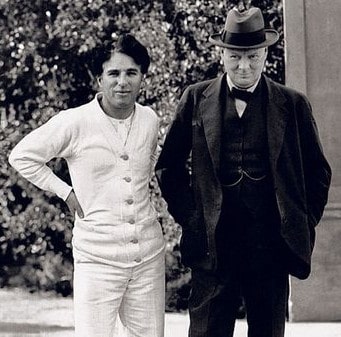
This recent book of the Austrian author Michael K hlmeier, Zwei Herren am Strand (Hanser Verlag), spins a story about an imaginative friendship between Charlie Chaplin and Winston Churchill. While there might not as be more different people than these two, in the book they are connected by a common fight the fight against their own depression, explicitly as well as implicitly by fighting Nazi Germany. Zwei Herren am Strand_ Roman - Michael Koehlmeier Michael K hlmeier s recently released book Zwei Herren am Strand tells the fictive story of Charlie Chaplin and Winston Churchill meeting and becoming friends, helping each other fighting depression and suicide thoughts. Based on a bunch of (fictive) letters of a (fictive) private secretary of Churchill, as well as (fictive) book on Chaplin, the first person narrator dives into the interesting time of the mid-20ies to about the Second World War. churchill-chaplinChaplin is having a hard time after the divorce from his wife Rita, paired with the difficulties at the production of The Circus, and is contemplating suicide. He is conveying this fact to Churchill during a walk on the beach. Churchill is reminded of his own depressions he suffers from early age on. The two of them agree to make a pact fighting the Black Dog inside. Later Churchill asks Chaplin about his method to overcome the phases of depression, and Chaplin explains him the Method of the Clown : Put a huge page of paper on the floor, lie yourself facing down onto the paper and start writing a letter to yourself while rotating clockwise and creating a spiral inward. According to Chaplin, he took this method from Buster Keaton and Harold Lloyd (hard to verify), and it works by making oneself ridiculous, so that one part of oneself can laugh about the other part. The story continues into the early stages of the world war, with both sides fighting Hitler, one politically, one by comedy. The story finishes somewhere in the middle when the two meet while Chaplin is in a deep depression during cutting his movie
The great dictator, and together to manage once more to overcome the black dog .
The book is pure fiction, and K hlmeier dives into a debaucherous story telling, jumping back and forth between several strands of narration lines. An entertaining and very enjoyable book if you are the type of reader that enjoys story telling. For me this book is in best tradition of Michael K hlmeier, whom I consider an excellent story teller. I loved his (unfinished trilogy of) books on Greek mythology (Telemach and Calypso), but found that after these books he got lost too much in radio programs of story telling. While in itself good, I preferred his novels. Thus, I have to admit that I have forgotten about K hlmeier for some years, until recently I found this little book, which reminded me of him and his excellent stories. A book that is if you are versed in German well worth enjoying, especially if one likes funny and a bit queer stories.

Joey Hess: twenty years of free software -- part 13 past and future

This series has focused on new projects. I could have said more about significant work that didn't involve starting new projects. A big example was when I added dh to debhelper, which led to changes in a large percentage of debian/rules files. And I've contributed to many other free software projects. I guess I've focused on new projects becuase it's easier to remember things I've started myself. And because a new project is more wide open, with more scope for interesting ideas, especially when it's free software being created just because I want to, with no expectations of success. But starting lots of your own projects also makes you responsible for maintaining a lot of stuff. Ten years ago I had dozens of projects that I'd started and was still maintaining. Over time I started pulling away from Debian, with active projects increasingly not connected with it. By the end, I'd left and stopped working on the old projects. Nearly everything from my first decade in free software was passed on to new maintainers. It's good to get out from under old projects and concentrate on new things. I saved propellor for last in this series, because I think it may point toward the future of my software. While git-annex was the project that taught me Haskell, propellor's design is much more deeply influenced by the Haskell viewpoint. Absorbing that viewpoint has itself been a big undertaking for me this decade. It's like I was coasting along feeling at the top of my game and wham got hit by the type theory bus. And now I see that I was stuck in a rut before, and begin to get a feeling of many new possibilities. That's a good feeling to have, twenty years in.

11 July 2016

Niels Thykier: mips64el added to Debian testing

Today, we have completed our first Britney run with mips64el enabled in testing. :) At the current time, the set of packages in mips64el are not very connected (and you probably cannot even install build-essential yet[1]). Hopefully this will change over the next few days. For now, Britney does not enforce installability of packages on mips64el in general, so do not expect the architecture to be stable at the moment. Cheat sheet for package maintainers: We will slowly remove these special cases for mips64el as it matures in testing. [1] Update on this: mips64el currently does not have a libc library yet, so build-essential is definitely not installable at the moment. It will hopefully migrate very soon.
Filed under: Debian, Release-Team

Jonathan Dowland: iPod

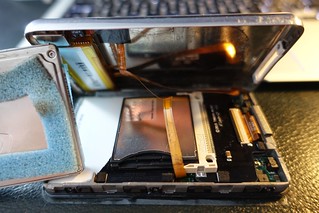
iPod iPod with rockbox
opened up open iPod with iFlash
It's been four years since I last wrote about music players. In the meantime of my Sansa Fuzes broke, and the third does not have great rockbox support. I've also been using a Sansa Clip+ (a leaving present from my last job, thanks again!) and a Sansa Clip Zip. Unfortunately Sandisk's newer Sansa devices (Sport, Jam - the only ones still in production) are not supported by Rockbox. The Clips have been very reliable and sturdy players, but I have missed the larger display of the Fuze. Since I've been exploring HD audio I've also been interested in something with an A/D converter that can handle it. I also still wish to carry my entire music library around with me, which limits my options. I decided to try an iPod. The older iPods had a Wolfson-manufacturered ADC which had a good reputation and supported (in headline terms at least) 24/48. The iPod colour (aka "4th gen") and subsequent models have a large colour display. The click-wheel interface is also very nice. Apple have now discontinued the "classic" iPod and their second hand value has greatly increased, but I managed to get an older 5th generation model ("video", with a base capacity of 30G) whilst trading in some unwanted DVDs. The case was scratched to heck but a replacement was readily and cheaply available from auction sites. Rockbox support in these iPods is pretty good, and you can mod the hardware to support CF or SD cards with kits such as the iFlash kits by Tarkan Akdam, which I picked up, along with a new 128G SD card. Unfortunately I have found writing to the iPod to be very poor with Rockbox, but it's fine for playback, and booting the iPod in OF or DFU mode is very easy and works reliably. Whilst Rockbox on the iPod works pretty well, installing it is far harder than on the Sandisk Sansa devices. The difficulty in my case is because rockbox requires a PC-formatted iPod to install, and I had a Mac-formatted one. I couldn't find a way to convert the iPod to PC format using a Mac. I tried doing so on a PC but for some reason the PC wasn't playing ball so I gave up after a few hours. In the end I assembled the filesystem by hand using dd(1) and dumps of partition tables from other people's iPods, via a Linux machine. This was enough to convince iTunes on Mac to restore it's hidden partition and boot software without reverting back to a Mac disklabel format.

Next.

Previous.