Search Results: "mak"

20 January 2015

Raphael Geissert: Edit Debian, with iceweasel

Soon after publishing the chromium/chrome extension that allows you to edit Debian online, Moez Bouhlel sent a pull request to the extension's git repository: all the changes needed to make a firefox extension!

After another session of browser extensions discovery, I merged the commits and generated the xpi. So now you can go download the Debian online editing firefox extension and hack the world, the Debian world.

Install it and start contributing to Debian from your browser. There's no excuse now.

19 January 2015

Daniel Pocock: Storage controllers for small Linux NFS networks

While contemplating the disk capacity upgrade for my Microserver at home, I've also been thinking about adding a proper storage controller. Currently I just use the built-in controller in the Microserver. It is an AMD SB820M SATA controller. It is a bottleneck for the SSD IOPS. On the disks, I prefer to use software RAID (such as md or BtrFs) and not become dependent on the metadata format of any specific RAID controller. The RAID controllers don't offer the checksumming feature that is available in BtrFs and ZFS. The use case is NFS for a small number of workstations. NFS synchronous writes block the client while the server ensures data really goes onto the disk. This creates a performance bottleneck. It is actually slower than if clients are writing directly to their local disks through the local OS caches. SSDs on an NFS server offer some benefit because they can complete write operations more quickly and the NFS server can then tell the client the operation is complete. The more performant solution (albeit with a slight risk of data corruption) is to use a storage controller with a non-volatile (battery-backed or flash-protected) write cache. Many RAID controllers have non-volatile write caches. Some online discussions of BtrFs and ZFS have suggested staying away from full RAID controllers though, amongst other things, to avoid the complexities of RAID controllers adding their metadata to the drives. This brings me to the first challenge though: are there suitable storage controllers that have a non-volatile write cache but without having other RAID features? Or a second possibility: out of the various RAID controllers that are available, do any provide first-class JBOD support? Observations I looked at specs and documentation for various RAID controllers and identified some of the following challenges: Next steps Are there other options to look at, for example, alternatives to NFS? If I just add in a non-RAID HBA to enable faster IO to the SSDs will this be enough to make a noticeable difference on the small number of NFS clients I'm using? Or is it inevitable that I will have to go with one of the solutions that involves putting a vendor's volume metadata onto JBOD volumes? If I do go that way, which of the vendors' metadata formats are most likely to be recognized by free software utilities in the future if I ever connect the disk to a generic non-RAID HBA? Thanks to all those people who provided comments about choosing drives for this type of NAS usage. Related reading

18 January 2015

Mark Brown: Heating the Internet of Things

Internet of Things seems to be trendy these days, people like the shiny apps for controlling things and typically there are claims that the devices will perform better than their predecessors by offloading things to the cloud but this makes some people worry that there are potential security issues and it s not always clear that internet usage is actually delivering benefits over something local. One of the more widely deployed applications is smart thermostats for central heating which is something I ve been playing with. I m using Tado, there s also at least Nest and Hive who do similar things, all relying on being connected to the internet for operation. The main thing I ve noticed has been that the temperature regulation in my flat is better, my previous thermostat allowed the temperature to vary by a couple of degrees around the target temperature in winter which got noticeable, with this the temperature generally seems to vary by a fraction of a degree at most. That does use the internet connection to get the temperature outside, though I m fairly sure that most of this is just a better algorithm (the thermostat monitors how quickly the flat heats up when heating and uses this when to turn off rather than waiting for the temperature to hit the target then seeing it rise further as the radiators cool down) and performance would still be substantially improved without it. The other thing that these systems deliver which does benefit much more from the internet connection is that it s easy to control them remotely. This in turn makes it a lot easier to do things like turn the heating off when it s not needed you can do it remotely, and you can turn the heating back on without being in the flat so that you don t need to remember to turn it off before you leave or come home to a cold building. The smarter ones do this automatically based on location detection from smartphones so you don t need to think about it. For example, when I started this post this I was sitting in a coffee shop so the heating had been turned off based on me taking my phone with me and as a result the temperature gone had down a bit. By the time I got home the flat was back up to normal temperature all without any meaningful intervention or visible difference on my part. This is particularly attractive for me given that I work from home I can t easily set a schedule to turn the heating off during the day like someone who works in an office so the heating would be on a lot of the time. Tado and Nest will to varying extents try to do this automatically, I don t know about Hive. The Tado one at least works very well, I can t speak to the others. I ve not had a bill for a full winter yet but I m fairly sure looking at the meter that between the two features I m saving a substantial amount of energy (and hence money and/or the environment depending on what you care about) and I m also seeing a more constant temperature within the flat, my guess would be that most of the saving is coming from the heating being turned off when I leave the flat. For me at least this means that having the thermostat internet connected is worthwhile.

Dirk Eddelbuettel: Running UBSAN tests via clang with Rocker

Every now and then we get reports from CRAN about our packages failing a test there. A challenging one concerns UBSAN, or Undefined Behaviour Sanitizer. For background on UBSAN, see this RedHat blog post for gcc and this one from LLVM about clang. I had written briefly about this before in a blog post introducing the sanitizers package for tests, as well as the corresponding package page for sanitizers, which clearly predates our follow-up Rocker.org repo / project described in this initial announcement and when we became the official R container for Docker. Rocker had support for SAN testing, but UBSAN was not working yet. So following a recent CRAN report against our RcppAnnoy package, I was unable to replicate the error and asked for help on r-devel in this thread. Martyn Plummer and Jan van der Laan kindly sent their configurations in the same thread and off-list; Jeff Horner did so too following an initial tweet offering help. None of these worked for me, but further trials eventually lead me to the (already mentioned above) RedHat blog post with its mention of -fno-sanitize-recover to actually have an error abort a test. Which, coupled with the settings used by Martyn, were what worked for me: clang-3.5 -fsanitize=undefined -fno-sanitize=float-divide-by-zero,vptr,function -fno-sanitize-recover. This is now part of the updated Dockerfile of the R-devel-SAN-Clang repo behind the r-devel-ubsan-clang. It contains these settings, as well a new support script check.r for littler---which enables testing right out the box. Here is a complete example:
docker                              # run Docker (any recent version, I use 1.2.0)
  run                               # launch a container 
    --rm                            # remove Docker temporary objects when dome
    -ti                             # use a terminal and interactive mode 
    -v $(pwd):/mnt                  # mount the current directory as /mnt in the container
    rocker/r-devel-ubsan-clang      # using the rocker/r-devel-ubsan-clang container
  check.r                           # launch the check.r command from littler (in the container)
    --setwd /mnt                    # with a setwd() to the /mnt directory
    --install-deps                  # installing all package dependencies before the test
    RcppAnnoy_0.0.5.tar.gz          # and test this tarball
I know. It is a mouthful. But it really is merely the standard practice of running Docker to launch a single command. And while I frequently make this the /bin/bash command (hence the -ti options I always use) to work and explore interactively, here we do one better thanks to the (pretty useful so far) check.r script I wrote over the last two days. check.r does about the same as R CMD check. If you look inside check you will see a call to a (non-exported) function from the (R base-internal) tools package. We call the same function here. But to make things more interesting we also first install the package we test to really ensure we have all build-dependencies from CRAN met. (And we plan to extend check.r to support additional apt-get calls in case other libraries etc are needed.) We use the dependencies=TRUE option to have R smartly install Suggests: as well, but only one level (see help(install.packages) for details. With that prerequisite out of the way, the test can proceed as if we had done R CMD check (and additional R CMD INSTALL as well). The result for this (known-bad) package:
edd@max:~/git$ docker run --rm -ti -v $(pwd):/mnt rocker/r-devel-ubsan-clang check.r --setwd /mnt --install-deps RcppAnnoy_0.0.5.tar.gz 
also installing the dependencies  Rcpp ,  BH ,  RUnit 
trying URL 'http://cran.rstudio.com/src/contrib/Rcpp_0.11.3.tar.gz'
Content type 'application/x-gzip' length 2169583 bytes (2.1 MB)
opened URL
==================================================
downloaded 2.1 MB
trying URL 'http://cran.rstudio.com/src/contrib/BH_1.55.0-3.tar.gz'
Content type 'application/x-gzip' length 7860141 bytes (7.5 MB)
opened URL
==================================================
downloaded 7.5 MB
trying URL 'http://cran.rstudio.com/src/contrib/RUnit_0.4.28.tar.gz'
Content type 'application/x-gzip' length 322486 bytes (314 KB)
opened URL
==================================================
downloaded 314 KB
trying URL 'http://cran.rstudio.com/src/contrib/RcppAnnoy_0.0.4.tar.gz'
Content type 'application/x-gzip' length 25777 bytes (25 KB)
opened URL
==================================================
downloaded 25 KB
* installing *source* package  Rcpp  ...
** package  Rcpp  successfully unpacked and MD5 sums checked
** libs
clang++-3.5 -fsanitize=undefined -fno-sanitize=float-divide-by-zero,vptr,function -fno-sanitize-recover -I/usr/local/lib/R/include -DNDEBUG -I../inst/include/ -I/usr/local/include    -fpic  -pipe -Wall -pedantic -
g  -c Date.cpp -o Date.o
[...]
* checking examples ... OK
* checking for unstated dependencies in  tests  ... OK
* checking tests ...
  Running  runUnitTests.R 
 ERROR
Running the tests in  tests/runUnitTests.R  failed.
Last 13 lines of output:
  +     if (getErrors(tests)$nFail > 0)  
  +         stop("TEST FAILED!")
  +      
  +     if (getErrors(tests)$nErr > 0)  
  +         stop("TEST HAD ERRORS!")
  +      
  +     if (getErrors(tests)$nTestFunc < 1)  
  +         stop("NO TEST FUNCTIONS RUN!")
  +      
  +  
  
  
  Executing test function test01getNNsByVector  ... ../inst/include/annoylib.h:532:40: runtime error: index 3 out of bounds for type 'int const[2]'
* checking PDF version of manual ... OK
* DONE
Status: 1 ERROR, 2 WARNINGs, 1 NOTE
See
   /tmp/RcppAnnoy/..Rcheck/00check.log 
for details.
root@a7687c014e55:/tmp/RcppAnnoy# 
The log shows that thanks to check.r, we first download and the install the required packages Rcpp, BH, RUnit and RcppAnnoy itself (in the CRAN release). Rcpp is installed first, we then cut out the middle until we get to ... the failure we set out to confirm. Now having a tool to confirm the error, we can work on improved code. One such fix currently under inspection in a non-release version 0.0.5.1 then passes with the exact same invocation (but pointing at RcppAnnoy_0.0.5.1.tar.gz):
edd@max:~/git$ docker run --rm -ti -v $(pwd):/mnt rocker/r-devel-ubsan-clang check.r --setwd /mnt --install-deps RcppAnnoy_0.0.5.1.tar.gz
also installing the dependencies  Rcpp ,  BH ,  RUnit 
[...]
* checking examples ... OK
* checking for unstated dependencies in  tests  ... OK
* checking tests ...
  Running  runUnitTests.R 
 OK
* checking PDF version of manual ... OK
* DONE
Status: 1 WARNING
See
   /mnt/RcppAnnoy.Rcheck/00check.log 
for details.
edd@max:~/git$
This proceeds the same way from the same pristine, clean container for testing. It first installs the four required packages, and the proceeds to test the new and improved tarball. Which passes the test which failed above with no issues. Good. So we now have an "appliance" container anybody can download from free from the Docker hub, and deploy as we did here in order to have fully automated, one-command setup for testing for UBSAN errors. UBSAN is a very powerful tool. We are only beginning to deploy it. There are many more useful configuration settings. I would love to hear from anyone who would like to work on building this out via the R-devel-SAN-Clang GitHub repo. Improvements to the littler scripts are similarly welcome (and I plan on releasing an updated littler package "soon").

This post by Dirk Eddelbuettel originated on his Thinking inside the box blog. Please report excessive re-aggregation in third-party for-profit settings.

Andreas Metzler: Another new toy

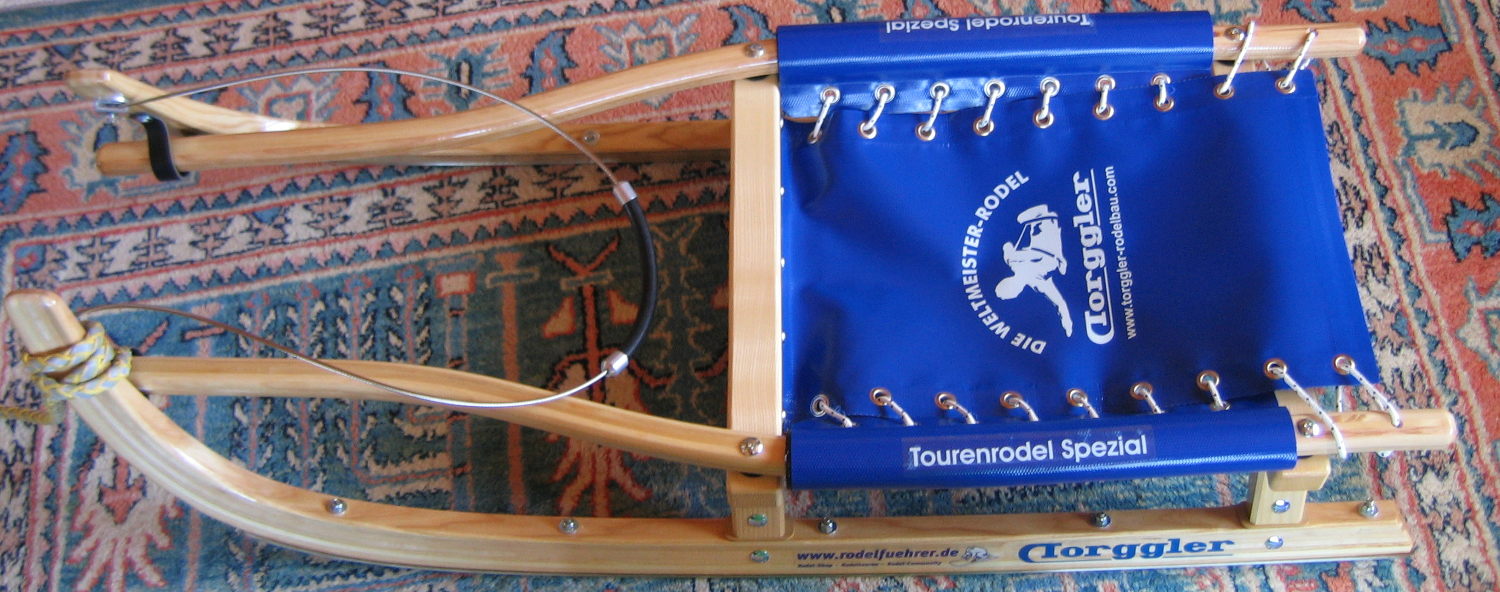
Given that snow is yet a little bit sparse for snowboarding and the weather could be improved on I have made myself a late christmas present: Torggler TS 120 Tourenrodel Spezial It is a rather sporty rodel (Torggler TS 120 Tourenrodel Spezial 2014/15, 9kg weight, with fast (non stainless) "racing rails" and 22 angle of the runners) but not a competition model. I wish I had bought this years ago. It is a lot more comfortable than a classic sled ("Davoser Schlitten"), since one is sitting in instead of on top of the sled somehow like in a hammock. Being able to steer without putting a foot into the snow has the nice side effect that the snow stays on the ground instead of ending up in my face. Obviously it is also faster which is a huge improvement even for recreational riding, since it makes the difference between riding the sledge or pulling it on flattish stretches. Strongly recommended. FWIW I ordered this via rodelfuehrer.de (they started with a guidebook of luge tracks, which translates to "Rodelf hrer"), where I would happily order again.

Guido G nther: whatmaps 0.0.9

I have released whatmaps 0.0.9 a tool to check which processes map shared objects of a certain package. It can integrate into apt to automatically restart services after a security upgrade. This release fixes the integration with recent systemd (as in Debian Jessie), makes logging more consistent and eases integration into downstream distributions. It's available in Debian Sid and Jessie and will show up in Wheezy-backports soon. This blog is flattr enabled.

17 January 2015

Jonathan Wiltshire: Alcester BSP, day two

Neil has abandoned his reputation as an RM machine, and instead concentrated on making the delayed queue as long as he can. I m reliably informed that it s now at a 3-year high. Steve is delighted that his reigning-in work is finally having an effect.
Alcester BSP, day two is a post from: jwiltshire.org.uk Flattr

Guido G nther: krb5-auth-dialog 3.15.4

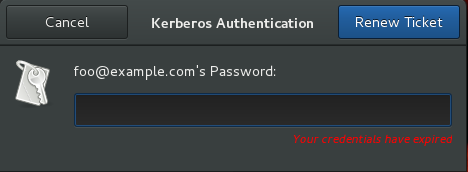
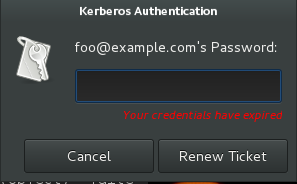
To keep up with GNOMEs schedule I've released krb5-auth-dialog 3.15.4. The changes of 3.15.1 and 3.15.4 include among updated translations, the replacement of deprecated GTK+ widgets, minor UI cleanups and bug fixes a header bar fix that makes us only use header bar buttons iff the desktop environment has them enabled: krb5-auth-dialog with header bar krb5-auth-dialog without header bar This makes krb5-auth-dialog better ingtegrated into other desktops again thanks to mclasen's awesome work. This blog is flattr enabled.

16 January 2015

Richard Hartmann: Release Critical Bug report for Week 03

The UDD bugs interface currently knows about the following release critical bugs: How do we compare to the Squeeze release cycle?
Week Squeeze Wheezy Jessie
43 284 (213+71) 468 (332+136) 319 (240+79)
44 261 (201+60) 408 (265+143) 274 (224+50)
45 261 (205+56) 425 (291+134) 295 (229+66)
46 271 (200+71) 401 (258+143) 427 (313+114)
47 283 (209+74) 366 (221+145) 342 (260+82)
48 256 (177+79) 378 (230+148) 274 (189+85)
49 256 (180+76) 360 (216+155) 226 (147+79)
50 204 (148+56) 339 (195+144) ???
51 178 (124+54) 323 (190+133) 189 (134+55)
52 115 (78+37) 289 (190+99) 147 (112+35)
1 93 (60+33) 287 (171+116) 140 (104+36)
2 82 (46+36) 271 (162+109) 157 (124+33)
3 25 (15+10) 249 (165+84) 172 (128+44)
4 14 (8+6) 244 (176+68)
5 2 (0+2) 224 (132+92)
6 release! 212 (129+83)
7 release+1 194 (128+66)
8 release+2 206 (144+62)
9 release+3 174 (105+69)
10 release+4 120 (72+48)
11 release+5 115 (74+41)
12 release+6 93 (47+46)
13 release+7 50 (24+26)
14 release+8 51 (32+19)
15 release+9 39 (32+7)
16 release+10 20 (12+8)
17 release+11 24 (19+5)
18 release+12 2 (2+0)
Graphical overview of bug stats thanks to azhag:

Rhonda D'Vine: Polygons

I stumbled upon this site thanks to Helga: Parable of the Polygons. On the site you can interactively find out how harmless choices can make a harmful world. I found it quite eye opening. And what most catched me but isn't part of the site is that only unhappy polygons are willing to move. Those who are just ok with their neighbourhood but not really happy about it aren't willing to move. Which made me try it out in my own way: Trying to create the most diverse possible environment by temporarily making as many polygons unhappy to find out if it's possible to make as many polygons happy in the long run as possible. ... which is actually part of the way I see my own life. I always sort-of tried to confront people to think. I mean, it's not that common that you see a by-the-looks male person wearing a skirt. And ... since I moved out in July into a small intermediate flat and thus a new neighbourhood, I found the confidence (in parts also to be attributed to the confidence built up at these fine feministic conferences) to walk my hometown in a skirt. Only on some few occations, when meeting up with friends, mostly at evening/night, but it was always a nice experience. And I only felt once uncomfortable to be honest, when there was a probably right-winged skinhead at the subway station. Too many other people around, so I tried to avoid eye contact, but it didn't feel good. Diversity is something that society needs. In all aspects. Also within the Debian project. I believe strongly in that there can't be much of innovation and moving forward if all people do think the same direction. That only means that potential alternative paths won't even get considered, and potentially get lost. That's one of the core parts of what makes the Free Software community lively and useful. People try different approaches, and in the end there will be adopters of what they believe is the better project. Projects pop up every now and then, others starve because of loss of interest, users not picking it up, developers spending their time on other stuff, and that's absolutely fine too. There is always something to be learned even from those situations. Speaking of diversity, there is this protest going on later today because the boss of a cafe here in Vienna considered it a good idea to kick out a lesbian couple because they kissed each other for greeting and told them that they don't have a place for their "otherness" in her traditional viennese cafe and they rather should take it to a brothel. She excused yesterday for her tone that she used, she said she should have been more relaxed as the CEO of that cafe. Which literally means that she only exused for the tone she used in her role, but not at all for the message she transported. So meh, hope there will be many people at the protest. Yes, there is some anti discrimination law around, but that only covers the workplace, and not service areas. Welcome to Austria.
On the upside, court striked down ban on same-sex couple adoption just the other day. Hopefully there is still hope for this country. :)

/personal permanent link Comments: 2 Flattr this

15 January 2015

Lunar: 80%

Unfortunately I could not go on stage at the 31st Chaos Communication Congress to present reproducible builds in Debian alongside Mike Perry from the Tor Project and Seth Schoen from the Electronic Frontier Foundation. I've tried to make it up for it, though and we have made amazing progress. Wiki reorganization What was a massive and frightening wiki page now looks really more welcoming: Screenshot of ReproducibleBuilds on Debian wiki Depending on what one is looking for, it should be much easier to find. There's now a high-level status overview given on the landing page, maintainers can learn how to make their packages reproducible, enthusiasts can more easily find what can help the project, and we have even started writing some history. .buildinfo for all packages New year's eve saw me hacking Perl to write dpkg-genbuildinfo. Similar to dpkg-genchanges, it's run by dpkg-buildpackage to produce .buildinfo control files. This is where the build environment, and hash of source and binary packages are recorded. This script, integrated with dpkg, replace the previous debhelper interim solution written by Niko Tyni. We used to fix mtimes in control.tar and data.tar using a specific addition to debhelper named dh_fixmtimes. To better support the ALWAYS_EXCLUDE environment variable and for pragramtic reasons, we moved the process in dh_builddeb. Both changes were quickly pushed to our continuous integration platform. Before, only packages using dh would create a .buildinfo and thus eventually be considered reproducible. With these modifications, many more packages had their chance and this shows: Growing amount of packages considered reproducible Yes, with our experimental toolchain we are now at more than eighty percent! That's more than 17200 source packages! srebuild Another big item on the todo-list was crossed over by Johannes Schauer. srebuild is a wrapper around sbuild:
Given a .buildinfo file, it first finds a timestamp of Debian Sid from snapshot.debian.org which contains the requested packages in their exact versions. It then runs sbuild with the right architecture as given by the .buildinfo file and the right base system to upgrade from, as given by the version of the base-files package version in the .buildinfo file. Using two hooks it will install the right package versions and verify that the installed packages are in the right version before the build starts.
Understanding problems Over 1700 packages have now been reviewed to understand why build results could not be reproduced on our experimental platform. The variations between the two builds are currently limited to time and file ordering, but this still has uncovered many problems. There are still toolchain fixes to be made (more than 180 packages for the PHP registry) which can make many packages reproducible at once, but others like C pre-processor macros will require many individual changes. debbindiff, the main tool used to understand differences, has gained support for .udeb, TrueType and OpenType fonts, PNG and PDF files. It's less likely to crash on problems with encoding or external tool. But most importantly for large package, it has been made a lot faster, thanks to Reiner Herrmann and Helmut Grohne. Helmut has also been able to spot cross-compilation issues by using debbindiff! Targeting our efforts It gives warm fuzzy feelings to hit the 80% mark, but it would be a bit irrelevant if this would not concern packages that matter. Thankfully, Holger worked on producing statistics for more specific package sets. Mattia Rizzolo has also done great work to improve the scripts generating the various pages visible on reproducible.debian.net. All essential and build-esential packages, except gcc and bash, are considered reproducible or have patches ready. After some lengthy builds, I also managed to come up with a patch to make linux build reproducibly. Miscellaneous After my initial attempt to modify r-base to remove a timestamp in R packages, Dirk Eddelbuettel discussed the issue with upstream and came up with a better patch. The latter has already been merged upstream! Dirk's solution is to allow timestamps to be set using an external environment variable. This is also how I modified FontForge to make it possible to reproduce fonts. Identifiers generated by xsltproc have also been an issue. After reviewing my initial patch, Andrew Awyer came up with a much nicer solution. Its potential performance implications need to be evaluated before submission, though. Chris West has been working on packages built with Maven amongst other things. PDF generated by GhostScript, another painful source of troubles, is being worked on by Peter De Wachter. Holger got X.509 certificates signed by the CA cartel for jenkins.debian.net and reproducible.debian.net. No more scary security messages now. Let's hope next year we will be able to get certificates through Let's Encrypt! Let's make a difference together As you can imagine with all that happened in the past weeks, the #debian-reproducible IRC channel has been a cool place to hang out. It's very energizing to get together and share contributions, exchange tips and discuss hardest points. Mandatory quote:
* h01ger is very happy to see again and again how this is a nice
         learning circle...! i've learned a whole lot here too... in
         just 3 months... and its going on...!
Reproducible builds are not going to change anything for most of our users. They simply don't care how they get software on their computer. But they care to get the right software without having to worry about it. That's our responsibility, as developers. Enabling users to trust their software is important and a major contribution, we as Debian, can make to the wider free software movement. Once Jessie is released, we should make a collective effort to make reproducible builds an highlight of our next release.

Tim Retout: Docker London Meetup - January 2015

Last week, I visited London for the January Docker meetup, which was the first time I'd attended this group. It was a talk-oriented format, with around 200 attendees packed into Shoreditch Village Hall; free pizza and beer was provided thanks to the sponsors, which was awesome (and makes logistics easier when you're travelling there from work). There were three talks. First, Andrew Martin from British Gas spoke about how they use Docker for testing and continuous deployment of their Node.js microservices - buzzword bingo! But it's helpful to see how companies approach these things. Second, Johan Euphrosine from Google gave a short demo of Google Cloud Platform for running Docker containers (mostly around Container Engine, but also briefly App Engine). This was relevant to my interests, but I'd already seen this sort of talk online. Third, Dan Williams presented his holiday photos featuring a journey on a container ship, which wins points from me for liberal interpretation of the meetup topic, and was genuinely very entertaining/interesting - I just regret having to leave to catch a train halfway through. In summary, this was worth attending, but as someone just getting started with containers I'd love some sort of smaller meetings with opportunities for interaction/activity. There's such a variety of people/use cases for Docker that I'm not sure how much everyone had in common with each other; it would be interesting to find out.

14 January 2015

Ritesh Raj Sarraf: apt-offline 1.6

I am pleased to announce the release of apt-offline - 1.6 This release is mostly a bug fix release, which every user should upgrade to. It also fixes a major bug in the way we limited the validation of GPG integrity, for the APT repository lists (Thank you Paul Wise). Also, In the last release, we migrated from custom magic library to the python shipped ctype python-magic library. That allowed some bugs to creep, and hopefully now, all those bugs should be fixed. A big thanks to Roland Summers for his bug reports and continuous feedback. What is apt-offline ?
Description-en: offline APT package manager
 apt-offline is an Offline APT Package Manager.
 .
 apt-offline can fully update and upgrade an APT based distribution without
 connecting to the network, all of it transparent to APT.
 .
 apt-offline can be used to generate a signature on a machine (with no network).
 This signature contains all download information required for the APT database
 system. This signature file can be used on another machine connected to the
 internet (which need not be a Debian box and can even be running windows) to
 download the updates.
 The downloaded data will contain all updates in a format understood by APT and
 this data can be used by apt-offline to update the non-networked machine.
 .
 apt-offline can also fetch bug reports and make them available offline.
Debian changelog for the 1.6 release.
apt-offline (1.6) experimental; urgency=medium
  * [2a4a7f1] Don't abuse exception handlers.
    Thanks to R-Sommer
  * [afc51b3] MIME type for a deb package.
    Thanks to R-Sommer
  * [ec2d539] Also include debian-archive-keyring.
    Thanks to Hans-Christoph Steiner (Closes: #748082)
  * [dc602ac] Update MIME type for .gpg
  * [c4f9b71] Cycle through possible apt keyrings.
    Thanks to Paul Wise (Closes: #747163)
  * [de0fe4d] Clarify manpage for install
  * [b5e1075] Update manpage with some doc about argparse positional
    values to arguments
  * [c22d64d] Port is data type integer.
    Thanks to Roland Sommer
  * [67edebe] autodetect release name
  * [5803141] Disable python-apt support
 -- Ritesh Raj Sarraf <rrs@debian.org>  Wed, 14 Jan 2015 15:34:45 +0530
[1] https://alioth.debian.org/projects/apt-offline/

Categories:

Keywords:

13 January 2015

Simon Josefsson: Replicant 4.2 0003 on I9300

The Replicant project released version 4.2 0003 recently. I have been using Replicant on a Samsung SIII (I9300) for around 14 months now. Since I have blogged about issues with NFC and Wifi earlier, I wanted to give a status update after upgrading to 0003. I m happy to report that my NFC issue has been resolved in 0003 (the way I suggested; reverting the patch). My issues with Wifi has been improved in 0003, with my merge request being accepted. What follows below is a standalone explanation of what works and what doesn t, as a superset of similar things discussed in my earlier blog posts. What works out of the box: Audio, Telephony, SMS, Data (GSM/3G), Back Camera, NFC. 2D Graphics is somewhat slow compared to stock ROM, but I m using it daily and can live with that so it isn t too onerus. Stability is fine, similar to other Android device I m used to. Video playback does not work (due to non-free media decoders?), which is not a serious problem for me but still likely the biggest outstanding issue except for freedom concerns. 3D graphics apparently doesn t work, and I believe it is what prevents Firefox from working properly (it crashes). I m having one annoying but strange problem with telephony: when calling one person I get scrambled audio around 75% of the time. I can still hear what the other person is saying, but can barely make anything out of it. This only happens over 3G, so my workaround when calling that person is to switch to 2G before and switch back after. I talk with plenty other people, and have never had this problem with anyone else, and it has never happened when she talks with anyone else but me. If anyone has suggestion on how to debug this, I m all ears. Important apps to get through daily life for me includes K9Mail (email), DAVDroid (for ownCloud CalDav/CardDAV), CalDav Sync Adapter (for Google Calendars), Conversations (XMPP/Jabber chat), FDroid (for apps), ownCloud (auto-uploading my photos), SMS Backup+, Xabber (different XMPP/Jabber accounts), Yubico Authenticator, MuPDF and oandbackup. A couple of other apps I find useful are AdAway (remove web ads), AndStatus, Calendar Widget, NewsBlur and ownCloud News Reader (RSS readers), Tinfoil for Facebook, Twidere (I find its UI somewhat nicer than AndStatus s), and c:geo. A number of things requires non-free components. As I discussed in my initial writeup from when I started using Replicant I don t like this, but I m accepting it temporarily. The list of issues that can be fixed by adding non-free components include the front camera, Bluetooth, GPS, and Wifi. After flashing the Replicant ROM image that I built (using the fine build instructions), I m using the following script to add the missing non-free files from Cyanogenmod.

# Download Cyanogenmod 10.1.3 (Android 4.2-based) binaries:
# wget http://download.cyanogenmod.org/get/jenkins/42508/cm-10.1.3-i9300.zip
# echo "073a464a9f5129c490502c77374495c38a25ba790c10e27f51b43845baeba6bf  cm-10.1.3-i9300.zip"   sha256sum -c 
# unzip cm-10.1.3-i9300.zip
adb root
adb remount
adb shell mkdir /system/vendor/firmware
adb shell chmod 755 /system/vendor/firmware
# Front Camera
adb push cm-10.1.3-i9300/system/vendor/firmware/fimc_is_fw.bin /system/vendor/firmware/fimc_is_fw.bin
adb push cm-10.1.3-i9300/system/vendor/firmware/setfile.bin /system/vendor/firmware/setfile.bin
adb shell chmod 644 /system/vendor/firmware/fimc_is_fw.bin /system/vendor/firmware/setfile.bin
# Bluetooth
adb push cm-10.1.3-i9300/system/bin/bcm4334.hcd /system/vendor/firmware/
adb shell chmod 644 /system/vendor/firmware/bcm4334*.hcd
# GPS
adb push cm-10.1.3-i9300/system/bin/gpsd /system/bin/gpsd
adb shell chmod 755 /system/bin/gpsd
adb push cm-10.1.3-i9300/system/lib/hw/gps.exynos4.so /system/lib/hw/gps.exynos4.so
adb push cm-10.1.3-i9300/system/lib/libsecril-client.so /system/lib/libsecril-client.so
adb shell chmod 644 /system/lib/hw/gps.exynos4.so /system/lib/libsecril-client.so
# Wifi
adb push cm-10.1.3-i9300/system/etc/wifi/bcmdhd_apsta.bin_b1 /system/vendor/firmware/
adb push cm-10.1.3-i9300/system/etc/wifi/bcmdhd_apsta.bin_b2 /system/vendor/firmware/
adb push cm-10.1.3-i9300/system/etc/wifi/bcmdhd_mfg.bin_b0 /system/vendor/firmware/
adb push cm-10.1.3-i9300/system/etc/wifi/bcmdhd_mfg.bin_b1 /system/vendor/firmware/
adb push cm-10.1.3-i9300/system/etc/wifi/bcmdhd_mfg.bin_b2 /system/vendor/firmware/
adb push cm-10.1.3-i9300/system/etc/wifi/bcmdhd_p2p.bin_b0 /system/vendor/firmware/
adb push cm-10.1.3-i9300/system/etc/wifi/bcmdhd_p2p.bin_b1 /system/vendor/firmware/
adb push cm-10.1.3-i9300/system/etc/wifi/bcmdhd_p2p.bin_b2 /system/vendor/firmware/
adb push cm-10.1.3-i9300/system/etc/wifi/bcmdhd_sta.bin_b0 /system/vendor/firmware/
adb push cm-10.1.3-i9300/system/etc/wifi/bcmdhd_sta.bin_b1 /system/vendor/firmware/
adb push cm-10.1.3-i9300/system/etc/wifi/bcmdhd_sta.bin_b2 /system/vendor/firmware/
adb push cm-10.1.3-i9300/system/etc/wifi/nvram_mfg.txt /system/vendor/firmware/
adb push cm-10.1.3-i9300/system/etc/wifi/nvram_mfg.txt_murata /system/vendor/firmware/
adb push cm-10.1.3-i9300/system/etc/wifi/nvram_mfg.txt_murata_b2 /system/vendor/firmware/
adb push cm-10.1.3-i9300/system/etc/wifi/nvram_mfg.txt_semcosh /system/vendor/firmware/
adb push cm-10.1.3-i9300/system/etc/wifi/nvram_net.txt /system/vendor/firmware/
adb push cm-10.1.3-i9300/system/etc/wifi/nvram_net.txt_murata /system/vendor/firmware/
adb push cm-10.1.3-i9300/system/etc/wifi/nvram_net.txt_murata_b2 /system/vendor/firmware/
adb push cm-10.1.3-i9300/system/etc/wifi/nvram_net.txt_semcosh /system/vendor/firmware/
I hope this helps others switch to a better phone environment!

Jonathan McDowell: Tracking a ship around the world

I moved back from the California Bay Area to Belfast a while back and for various reasons it looks like I m going to be here a while, so it made sense to have my belongings shipped over here. They haven t quite arrived yet, and I ll do another post about that process once they have, but I ve been doing various tweets prefixed with [shipping] during the process. Various people I ve spoken to (some who should know me better) thought this was happening manually. It wasn t. If you care about how it was done, read on. I d been given details of the ship carrying my container, and searching for that turned up the excellent MarineTraffic which let me see the current location of the ship. Turns out ships broadcast their location using AIS and anyone with a receiver can see the info. Very cool, and I spent some time having a look at various bits of shipping around the UK out of interest. I also found the ship s itinerary which give me some idea of where it would be calling and when. Step one was to start recording this data; it was time sensitive and I wanted to be able to see historical data. I took the easy route and set up a cron job to poll the location and itinerary on an hourly basis, and store the results. That meant I had the data over time, if my parsing turned out to miss something I could easily correct it, and that I wasn t hammering Marine Traffic while writing the parsing code. Next I wanted to parse the results, store them in a more manageable format than the HTML, and alert me when the ship docked somewhere or set off again. I ve been trying to learn more Python rather than doing my default action of turning to Perl for these things, and this seemed like a simple enough project to try out. Beautiful Soup seemed to turn up top for HTML parsing in Python, so that formed the basis. Throwing the info into a database so I could do queries felt like the right move so I used SQLite - if this had been more than a one off I d have considered looking at PostgreSQL and its GIS support. Finally Tweepy made it very easy to tweet from Python in about 4 lines of code. The whole thing weighed in at only 175 lines of code, mostly around pulling the info out of the HTML and then a little to deal with checking for state changes against the current status and the last piece of info in the database. The pieces of information I chose to store were the time of the update (i.e. when the ship sent it, not when my script ran), reported area, reported state, the position + course, reported origin, reported destination and eta. The fact this is all in a database makes it very easy to do a few queries on the data. How fast did the ship go?

sqlite> SELECT MAX(speed) FROM status;
MAX(speed)
21.9
What areas did it report?
sqlite> SELECT area FROM status GROUP BY area;
area
-
Atlantic North
California
Caribbean Sea
Celtic Sea
English Channel
Hudson River
Pacific North
Panama Canal
What statuses did we see?
sqlite> SELECT status FROM status GROUP BY status;
status
At Anchor
Moored
Stopped
Underway
Underway using Engine
Finally having hourly data lets me draw a map of where the ship went. The data isn t complete, because the free AIS info depends on the ship being close enough to a receiving station. That means there were a few days in the North Atlantic without updates, for example. However there s enough to give a good idea of just how well traveled my belongings are, and it gave me an excuse to play with OpenLayers.
(Apologies if the zoom buttons aren t working for you here; I think I need to kick the CSS in some manner I haven t quite figured out yet.)

Erich Schubert: Big data predictions for 2015

My big data predictions for 2015:
  1. Big data will continue to fail to deliver for most companies.
    This has several reasons, including in particular: 1: lack of data to analyze that actually benefits from big data tools and approaches (and which is not better analyzed with traditional tools). 2: lack of talent, and failure to attract analytics talent. 3: stuck in old IT, and too inflexible to allow using modern tools (if you want to use big data, you will need a flexible "in-house development" type of IT that can install tools, try them, abandon them, without going up and down the management chains) 4: too much marketing. As long as big data is being run by the marketing department, not by developers, it will fail.
  2. Project consolidation: we have seen hundreds of big data software projects the last years. Plenty of them on Apache, too. But the current state is a mess, there is massive redundancy, and lots and lots of projects are more-or-less abandoned. Cloudera ML, for example, is dead: superseded by Oryx and Oryx 2. More projects will be abandoned, because we have way too many (including much too many NoSQL databases, that fail to outperform SQL solutions like PostgreSQL). As is, we have dozens of competing NoSQL databases, dozens of competing ML tools, dozens of everything.
  3. Hype: the hype will continue, but eventually (when there is too much negative press on the term "big data" due to failed projects and inflated expectations) move on to other terms. The same is also happening to "data science", so I guess the next will be "big analytics", "big intelligence" or something like that.
  4. Less openness: we have seen lots of open-source projects. However, many decided to go with Apache-style licensing - always ready to close down their sharing, and no longer share their development. In 2015, we'll see this happen more often, as companies try to make money off their reputation. At some point, copyleft licenses like GPL may return to popularity due to this.

Dirk Eddelbuettel: RcppGSL 0.2.3

A new version of RcppGSL is now on CRAN today. This package provides an interface from R to the GNU GSL using our Rcpp. Similar to the recent RcppClassic release, this update was triggered by the CRAN maintainers desire to keep the Makefile free of GNU make extensions. At the same time we simplified the configure file a little, and refreshed the look and feel of the vignette. No user-facing changes were made. The NEWS file entries follows below:
Changes in version 0.2.3 (2015-01-10)
  • The src/Makevars.in was pruned of GNU make features at the request of the CRAN Maintainers
  • configure.ac and configure were updated, and shortened
  • The RcppGSL-intro.Rnw vignette was updated for its look and feel.
Courtesy of CRANberries, a summary of changes to the most recent release is available. More information is on the RcppGSL page. Questions, comments etc should go to the rcpp-devel mailing list off the R-Forge page.

This post by Dirk Eddelbuettel originated on his Thinking inside the box blog. Please report excessive re-aggregation in third-party for-profit settings.

12 January 2015

Daniel Pocock: Lumicall: big steps forward, help needed

I've recently made more updates to Lumicall, the free, open source and secure alternative to Viber and Skype. Here are some of the highlights:
  • The dialing popup is now optional, so if you want to call your friends with Lumicall / SIP but they don't want to see the popup when making calls themselves, you can disable the popup on their phone.
  • The dialer popup now shows results asynchronously so you can dial more quickly
  • SIP SIMPLE messaging is now supported, Lumicall is now taking on WhatsApp
  • Various bugs in the preferences/settings have been fixed and adding SIP accounts is now easier
  • Dialing with a TURN relay is now much more reliable
  • It is now possible to redial SIP calls in the call history without seeing the nasty Android bug / popup telling you that you don't have Internet calling configured
F-Droid not updated yet F-Droid is not yet carrying the latest version. The F-Droid team may need assistance as they appear to be reviewing a lot of the third-party dependencies used by apps they distribute to make sure the full stack is 100% free software. If people want to continue having the option to get Lumicall and other free software through F-Droid instead of Google Play then helping the F-Droid community is the number one way you can help Lumicall. Other ways you can help, even without coding You don't have to be a developer to help with Lumicall. Taking on Viber, Skype and now WhatsApp as well may not sound easy. It isn't. Your help could make the difference though. Here are some of the things that need assistance:
  • Helping to get it on Wikipedia, they keep deleting the page while happily hosting pages about similar products like Sipdroid and CSipSimple
  • Helping get the latest dependencies and Lumicall version into F-Droid
  • UI design ideas
  • Web site assistance
  • Documentation and screenshots, e.g. for use with Asterisk and FreeSWITCH and various SIP proxies
  • Translation
  • Messaging: to be the default SMS app on an Android device, Lumicall would need a full messaging UI and the ability to replace all functions of the default SMS app. Can anybody identify any other free software that does this and is modular enough to share the relevant code with Lumicall?
  • ZRTP: can you help improve the ZRTP stack used by Lumicall?
Try SIP SIMPLE messaging When composing a message to a Lumicall user, the SIP address is written sip:number @sip5060.net. E.g. if the number is +442071234567 then the SIP address to use when calling or composing a message is sip:+442071234567 @sip5060.net Debian Developers should be able to interact with Lumicall users from rtc.debian.org using the SIP over WebSocket messaging. Getting the latest Lumicall It is available from:

Petter Reinholdtsen: Norwegian Bokm l subtitles for the FSF video User Liberation

A few days ago, the Free Software Foundation announced a new video explaining Free software in simple terms. The video named User Liberation is 3 minutes long, and I recommend showing it to everyone you know as a way to explain what Free Software is all about. Unfortunately several of the people I know do not understand English and Spanish, so it did not make sense to show it to them. But today I was told that English subtitles were available and set out to provide Norwegian Bokm l subtitles based on these. The result has been sent to FSF and made available in a git repository provided by Github. Please let me know if you find errors or have improvements to the subtitles.

11 January 2015

Enrico Zini: halmerweg

<3 Bremen Greedy people exploit our cultural differences to justify fighting wars to seize wealth for themselves, when sharing and enjoying cultural diversity makes us far richer than if we possess material wealth
Greedy people exploit our cultural differences to justify fighting wars to seize wealth for themselves, when sharing and enjoying cultural diversity makes us far richer than if we possess material wealth!
From a recursive murales in Bremen Halmerweg.

Next.

Previous.