Search Results: "ed"

1 December 2020

Ben Hutchings: Debian LTS work, November 2020

I was assigned 16 hours of work by Freexian's Debian LTS initiative and carried over 4.5 hours from earlier months. I worked 11.5 hours this month, so I will carry over 9 hours to December. I continued working on backporting fixes for some less urgent security issues in Linux 4.9. I had to give up on some filesystem fixes as they caused regressions. The others have now been applied to the 4.9 stable branch at kernel.org. I updated the linux packaging branch for stretch to Linux 4.9.246, but haven't made a new package upload yet.

Utkarsh Gupta: FOSS Activites in November 2020

Here s my (fourteenth) monthly update about the activities I ve done in the F/L/OSS world.

Debian
This was my 23rd month of contributing to Debian. I became a DM in late March last year and a DD last Christmas! \o/ Apart from doing a bunch of activities like attending KubeCon + RubyConf (blog to follow!), et al and simultaneously giving my undergrad exams, I did (relatively) more work than I had really anticipated! Here are the following things I did in Debian this month:

Uploads and bug fixes:

Other $things:
  • Attended the Debian Ruby team meeting.
  • Mentoring for newcomers.
  • FTP Trainee reviewing.
  • Moderation of -project mailing list.
  • Sponsored phpmyadmin for William and libexif for Hugh.

Debian (E)LTS
Debian Long Term Support (LTS) is a project to extend the lifetime of all Debian stable releases to (at least) 5 years. Debian LTS is not handled by the Debian security team, but by a separate group of volunteers and companies interested in making it a success. And Debian Extended LTS (ELTS) is its sister project, extending support to the Jessie release (+2 years after LTS support). This was my fourteenth month as a Debian LTS and fourth month as a Debian ELTS paid contributor.
I was assigned 22.75 hours for LTS and 45.00 hours for ELTS and worked on the following things:
(for ELTS, I worked for 5.25 hours last month, so I had to work for 39.75 (+1 extra) hours this month)
(also, I did over-work by 5.00 hours for LTS this month, but I ll re-compensate it later to avoid so much fuss!)

LTS CVE Fixes and Announcements:

ELTS CVE Fixes and Announcements:
  • Issued ELA 306-1, fixing CVE-2020-25692, for openldap.
    For Debian 8 Jessie, these problems have been fixed in version 2.4.40+dfsg-1+deb8u7.
  • Issued ELA 310-1, fixing CVE-2020-0452, for libexif.
    For Debian 8 Jessie, these problems have been fixed in version 0.6.21-2+deb8u5.
  • Issued ELA 311-1, fixing CVE-2020-8037, for tcpdump.
    For Debian 8 Jessie, these problems have been fixed in version 4.9.3-1~deb8u2.
  • Issued ELA 312-1, backporting a new upstream release, 2020d, for tzdata.
    For Debian 8 Jessie, these problems have been fixed in version 2020d-0+deb8u1.
  • Issued ELA 313-1, fixing CVE-2020-15166, for zeromq3.
    For Debian 8 Jessie, these problems have been fixed in version 4.0.5+dfsg-2+deb8u3.
  • Prepared a debdiff for lxml (3.4.0-1+deb8u2) upload, which Emilio completed and rolled out later.

Other (E)LTS Work:
  • Front-desk duty from 26-10 until 01-10 and from 23-11 until 29-11 for both LTS and ELTS.
  • Triaged openldap, python-cryptography, motion, nvidia-cuda-toolkit, samba, lxml, highlight.js, imagemagick, mongodb, poppler, wordpress, raptor2, and blueman.
  • Marked CVE-2020-25659/python-cryptography as no-dsa for Stretch and Jessie.
  • Marked CVE-2020-25713/raptor2 as postponed for Stretch and Jessie.
  • Marked CVE-2020-27778/poppler as postponed for Stretch and Jessie.
  • Marked CVE-2020-5991/nvidia-cuda-toolkit as ignored for Stretch.
  • Marked CVE-2020-26566/motion as not-affected for Stretch.
  • Marked CVE-2020-26237/highlight.js as postponed for Jessie.
  • Auto EOL ed libpam-tacplus, motion, blueman, openrc, webcit, wordpress, linux, nvidia-cuda-toolkit, spip, and wireshark for Jessie.
  • Attended the sevent LTS meeting. Logs here.
  • General discussion on LTS private and public mailing list.

Until next time.
:wq for today.

Jonathan Carter: Free Software Activities for 2020-11

This month just went past way too fast, didn t get to all the stuff I wanted to, but managed to cover many essentials (not even listed here) that I ll cover in follow-up posts. In particular, highlights that I m thankful for are that we ve selected the final artwork for Bullseye. We ve also successfully hosted another two MiniDebConfs. One that was gaming themed, and a Brazilian event all in Portuguese! Videos are up on Debian s PeerTube instance (Gaming Edition Brazil) and on the DebConf video archive for direct download. Remember to take care of yourself out there! Physical safety is high on everyone s mind in these times, but remember to pay attention to your mental health too. It s ok if you won t hit all your usual targets and goals in these times, don t be too hard on yourself and burn out! 2020-11-01: Upload package gtetrinet (0.7.11+git20200916.46e7ade-2~bpo10+1) to Debian buster-backports. 2020-11-01: Upload package gnome-shell-extension-disconnect-wifi (26-1) to Debian unstable. 2020-11-02: Merge MR!2, MR!4 and MR!5 for zram-tools, follow 3-way merge closing MR!1 and MR!3. 2020-11-02: Upload package zram-swap (0.3.3-1) to Debian unstable (Closes: #917643, #928439, #928443). 2020-11-02: Close live-installer bugs #646704 (fix released a few years ago already), #700642 (nothing left to fix), #835391 (unproducible on latest images), #847446 (graphical d-i installer no longer provided). #714710 (problem not present on latest installation media) 2020-11-02: File ROM for calcoo (#973638) no longer maintained upstream, GTK-2 only. 2020-11-03: Upload package bundlewrap (4.2.2-1) to Debian unstable. 2020-11-03: Upload package feed2toot (0.14-1) to Debian unstable. 2020-11-03: Upload package feed2toot (0.14-2) to Debian unstable. 2020-11-03: Upload package flask-autoindex (0.6.6-2) to Debian unstable. 2020-11-03: Upload package flask-caching (1.9.0-1) to Debian unstable. 2020-11-03: Upload package flask-restful (0.3.8-5) to Debian unstable. 2020-11-08: Upload package s-tui (1.0.2-2) to Debian unstable (Closes: #961534). 2020-11-09: Merge MR!1 for bluefish (remove old icon). 2020-11-10: Upload package bluefish (2.2.12-1) to Debian unstable. 2020-11-10: Upload package calamares (3.2.33-1) to Debian unstable. 2020-11-11: Upload package calamares-settings-debian (11.0.4-1) to Debian unstable. 2020-11-17: Upload package gnome-shell-extension-multiple-workspaces (22-1) to Debian-unstable. 2020-11-24: Sponsor package xmodem (0.4.6+dfsg-2) for Debian unstable (Python Team request). 2020-11-24: Sponsor package python-opentracing (2.4.0-1) for Debian unstable (Python Team request). 2020-11-24: Sponsor package python-css-parser (1.0.6-1) for Debian unstable (Python Team request). 2020-11-24: Review package buildbot (2.8.4-1) (Needs some more work) (Python Team request). 2020-11-24: Review package gbsplay (0.0.94-1) (Needs some more work) (Games Team request). 2020-11-24: Sponsor package goverlay (0.4.2-1) for Debian unstable (Games Team request). 2020-11-24: Sponsor package lutris (0.5.8-1) for Debian unstable (Games Team request). 2020-11-24: Review package mangohud (0.5.1-1) for Debian unstable (Needs some more work) (Games Team request). 2020-11-24: Sponsor package vkbasalt (0.3.2.3-1) for Debian unstable (Games Team request). 2020-11-25: Sponsor package starfighter (2.3.3-1) for Debian unstable (Games Team request). 2020-11-25: Sponsor package pentobi (18.3-1) for Debian unstable (Games Team request). 2020-11-30: Sponsor package lutris (0.5.8-1) for Debian unstable (Games Team request) (New upload).

C.J. Adams-Collier: Rack coming together

I now have four six-port Qotom systems and one four-port Qotom system in my rack. I have successfully verified that the newest of these is capable of pulling about 745Mbit/s of 1500-byte frames through the switch from six other hosts. I bet it will push data at the same rate. but I can t get iperf to distribute it over the LAG evenly. That s another problem for another day. I know it can handle six large streams at the same time, which is great.

Paul Wise: FLOSS Activities November 2020

Focus This month I didn't have any particular focus. I just worked on issues in my info bubble.

Changes

Issues

Review

Administration
  • Debian wiki: disable attachments due to security issue, approve accounts

Communication
  • Respond to queries from Debian users and contributors on the mailing lists and IRC

Sponsors The visdom, apt-listchanges work and lintian-brush bug report were sponsored by my employer. All other work was done on a volunteer basis.

Dirk Eddelbuettel: inline 0.3.17: Refactored and New Tests

A new release of the inline package arrived on CRAN this evening and has already been shipped to Debian as well. inline facilitates writing code in-line in simple string expressions or short files. The package was used quite extensively by Rcpp in the days before Rcpp Attributes arrived on the scene proving an even better alternative for its use cases. inline is still use by rstan and a number of other packages. One of those other packages is mkin, and its author Johannes Ranke overhauled the saving and re-loading of C functions part with a really well-done set of contributions. In the process we also added unit testing via the lovely tinytest, and changed to continuous integration setup to r-ci. See below for a detailed list of changes extracted from the NEWS file.

Changes in inline version 0.3.17 (2020-11-30)
  • Unit testing is now supported via tinytest (Johannes in #15 addressing #14).
  • CI was updated to use focal and run.sh from r-ci on Travis and GitHub Actions (Dirk)
  • The writing and reading of compiled code was refactored and extended (Johannes in #16 fixing #13).
  • Some minor problems related to CRAN checks and tests were corrected (Johannes and Dirk in #17, Johannes in #18, #19, #20).
  • Small stylistic updates have been applied to some R and Rd files (Dirk).

Courtesy of my CRANberries, there is a comparison to the previous release. If you like this or other open-source work I do, you can now sponsor me at GitHub. For the first year, GitHub will match your contributions.

This post by Dirk Eddelbuettel originated on his Thinking inside the box blog. Please report excessive re-aggregation in third-party for-profit settings.

30 November 2020

Chris Lamb: Free software activities in November 2020

Here is my monthly update covering what I have been doing in the free software world during November 2020 (previous month):

Reproducible Builds One of the original promises of open source software is that distributed peer review and transparency of process results in enhanced end-user security. However, whilst anyone may inspect the source code of free and open source software for malicious flaws, almost all software today is distributed as pre-compiled binaries. This allows nefarious third-parties to compromise systems by injecting malicious code into ostensibly secure software during the various compilation and distribution processes. The motivation behind the Reproducible Builds effort is to ensure no flaws have been introduced during this compilation process by promising identical results are always generated from a given source, thus allowing multiple third-parties to come to a consensus on whether a build was compromised. The project is proud to be a member project of the Software Freedom Conservancy. Conservancy acts as a corporate umbrella allowing projects to operate as non-profit initiatives without managing their own corporate structure. If you like the work of the Conservancy or the Reproducible Builds project, please consider becoming an official supporter.
This month, I:
I also made the following changes to diffoscope:

Debian I performed the following uploads to the Debian Linux distribution this month: I also filed a release-critical bug against the minidlna package which could not be successfully purged from the system without reporting a cannot remove '/var/log/minidlna' error. (#975372)

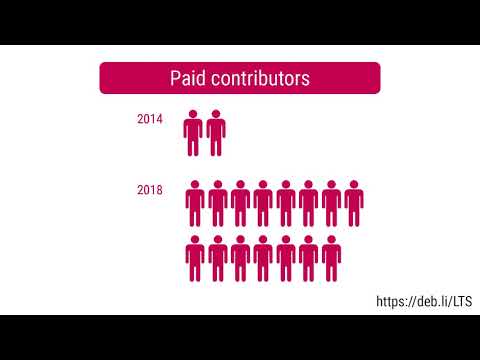
Debian LTS This month I have worked 18 hours on Debian Long Term Support (LTS) and 12 hours on its sister Extended LTS project, including: You can find out more about the Debian LTS project via the following video:

John Goerzen: Thanksgiving in 2020

With COVID-19, Thanksgiving is a little different this year. The kids enjoyed doing a little sightseeing by air in our own plane (all socially-distanced of course!). We built a Prusa 3D printer from a kit (the boys and I, though Martha checked in periodically too). It arrived earlier than expected so that kept us busy for several days. And, of course, there was the Christmas decorating and Zoom church (where only our family is in the building, hosting the service for everyone). What, so Thanksgiving doesn t normally involve assembling printers, sightseeing from the sky, and printing tiny cups and dishes for miniature houses on a 3D printer? I ll be glad when COVID is over. Meantime, we have some memories to treasure too.

28 November 2020

Mark Brown: Book club: Rust after the honeymoon

Earlier this month Daniel, Lars and myself got together to discuss Bryan Cantrill s article Rust after the honeymoon. This is an overview of what keeps him enjoying working with Rust after having used it for an extended period of time for low level systems work at Oxide, we were particularly interested to read a perspective from someone who was both very experienced in general and had been working with the language for a while. While I have no experience with Rust both Lars and Daniel have been using it for a while and greatly enjoy it. One of the first areas we discussed was data bearing enums these have been very important to Bryan. In keeping with a pattern we all noted these take a construct that s relatively commonly implemented by hand in C (or skipped as too much effort, as Lars found) and provides direct support in the language for it. For both Daniel and Lars this has been key to their enjoyment of Rust, it makes things that are good practice or common idioms in C and C++ into first class language features which makes them more robust and allows them to fade into the background in a way they can t when done by hand. Daniel was also surprised by some omissions, some small such as the ? operator but others much more substantial the standout one being editions. These aim to address the problems seen with version transitions in other languages like Python, allowing individual parts of a Rust program to adopt potentially incompatible language features while remaining interoperability with older editions of the language rather than requiring the entire program to be upgraded en masse. This helps Rust move forwards with less need to maintain strict source level compatibility, allowing much more rapid evolution and helping deal with any issues that are found. Lars expressed the results of this very clearly, saying that while lots of languages offer a 20%/80% solution which does very well in specific problem domains but has issues for some applications Rust is much more able to move towards a much more general applicability by addressing problems and omissions as they are understood. This distracted us a bit from the actual content of the article and we had an interesting discussion of the issues with handling OS differences in filenames portably. Rather than mapping filenames onto a standard type within the language and then have to map back out into whatever representation the system actually uses Rust has an explicit type for filenames which must be explicitly converted on those occasions when it s required, meaning that a lot of file handling never needs to worry about anything except the OS native format and doesn t run into surprises. This is in keeping with Rust s general approach to interfacing with things that can t be represented in its abstractions, rather than hide things it keeps track of where things that might break the assumptions it makes are and requires the programmer to acknowledge and handle them explicitly. Both Lars and Daniel said that this made them feel a lot more confident in the code that they were writing and that they had a good handle on where complexity might lie, Lars noted that Rust is the first languages he s felt comfortable writing multi threaded code in. We all agreed that the effect here was more about having idioms which tend to be robust and both encourage writing things well and gives readers tools to help know where particular attention is required no tooling can avoid problems entirely. This was definitely an interesting discussion for me with my limited familiarity with Rust, hopefully Daniel and Lars also got a lot out of it!

Russ Allbery: Review: Nine Goblins

Review: Nine Goblins, by T. Kingfisher
Publisher: Red Wombat Tea Company
Copyright: 2013
ASIN: B00G9GSEXO
Format: Kindle
Pages: 140
The goblins are at war, a messy multi-sided war also involving humans, elves, and orcs. The war was not exactly their idea, although the humans would claim otherwise. Goblins kept moving farther and farther into the wilderness to avoid human settlements, and then they ran out of wilderness, and it wasn't clear what else to do. For the Nineteenth Infantry, the war is a confusing business, full of boredom and screaming and being miserable and following inexplicable orders. And then they run into a wizard. Wizards in this world are not right in the head, and by not right I mean completely psychotic. That's the only way that you get magical powers. Wizards are therefore incredibly dangerous and scarily unpredictable, so when the Whinin' Nineteenth run into a human wizard who shoots blue out of his mouth, making him stop shooting blue out of his mouth becomes a high priority. Goblins have only one effective way of stopping things: charge at them and hit them with something until they stop. Wizards have things like emergency escape portals. And that's how the entire troop of nine goblins ended up far, far behind enemy lines. Sings-to-Trees's problems, in contrast, are rather more domestic. At the start of the book, they involve, well:
Sings-to-Trees had hair the color of sunlight and ashes, delicately pointed ears, and eyes the translucent green of new leaves. His shirt was off, he had the sort of tanned muscle acquired from years of healthy outdoor living, and you could have sharpened a sword on his cheekbones. He was saved from being a young maiden's fantasy unless she was a very peculiar young maiden by the fact that he was buried up to the shoulder in the unpleasant end of a heavily pregnant unicorn.
Sings-to-Trees is the sort of elf who lives by himself, has a healthy appreciation for what nursing wild animals involves, and does it anyway because he truly loves animals. Despite that, he was not entirely prepared to deal with a skeleton deer with a broken limb, or at least with the implications of injured skeleton deer who are attracted by magical disturbances showing up in his yard. As one might expect, Sings-to-Trees and the goblins run into each other while having to sort out some problems that are even more dangerous than the war the goblins were unexpectedly removed from. But the point of this novella is not a deep or complex plot. It pushes together a bunch of delightfully weird and occasionally grumpy characters, throws a challenge at them, and gives them space to act like fundamentally decent people working within their constraints and preconceptions. It is, in other words, an excellent vehicle for Ursula Vernon (writing as T. Kingfisher) to describe exasperated good-heartedness and stubbornly determined decency.
Sings-to-Trees gazed off in the middle distance with a vague, pleasant expression, the way that most people do when present at other people's minor domestic disputes, and after a moment, the stag had stopped rattling, and the doe had turned back and rested her chin trustingly on Sings-to-Trees' shoulder. This would have been a touching gesture, if her chin hadn't been made of painfully pointy blades of bone. It was like being snuggled by an affectionate plow.
It's not a book you read for the twists and revelations (the resolution is a bit of an anti-climax). It's strength is in the side moments of characterization, in the author's light-hearted style, and in descriptions like the above. Sings-to-Trees is among my favorite characters in all of Vernon's books, surpassed only by gnoles and a few characters in Digger. The Kingfisher books I've read recently have involved humans and magic and romance and more standard fantasy plots. This book is from seven years ago and reminds me more of Digger. There is less expected plot machinery, more random asides, more narrator presence, inhuman characters, no romance, and a lot more focus on characters deciding moment to moment how to tackle the problem directly in front of them. I wouldn't call it a children's book (all of the characters are adults), but it has a bit of that simplicity and descriptive focus. If you like Kingfisher in descriptive mode, or enjoy Vernon's descriptions of D&D campaigns on Twitter, you are probably going to like this. If you don't, you may not. I thought it was slight but perfect for my mood at the time. Rating: 7 out of 10

27 November 2020

Shirish Agarwal: Farmer Protests and RCEP

Farmer Protests While I was hoping to write about RCEP exclusively, just today farmer protests have happened against three farm laws which had been passed by our Govt. about a month ago without consulting anybody. The bills benefit only big business houses at the cost of farmers. This has been amply shared by an open letter to one of the biggest business house which will benefit the most. Now while that is a national experience and what it tells, let me share, some experience from the State I come from, Maharashtra. About 4-5 years back Maharashtra delisted fruit and vegetables from the APMC market. But till date, the APMC market is working, why, the reasons are many. However, what it did was it forced the change to sugarcane, a water guzzling crop much more than previously. This has resulted in lowering the water table in Maharashtra and put them more into debt trap and later they had to commit suicide. Now let us see why the Punjab farmers have been so agitated that they are walking all the way to Delhi. They are right now, somewhere between Haryana-Delhi border. The reason is that because even their experiments with contract farming have not been good. This is why they are struggling to go to Delhi to make their collective voices heard and get the farm bills rolled back. Even the farmers from Gujarat were sued, but because of elections were put back, the intentions though are clear. This has also happened in Uttar Pradesh and for sugarcane and that too by Bajaj Company. At the end of the day, the laws made by the Govt. leaves our farmer at the mercy of big corporations. It is preposterous to believe that the farmer, with their small land holdings will be able to stand up to the Corporation. Add to that, they cannot go to Court. It is the SDM (Sub-Divisonal Magistrate) who will decide on the matters and has the last word. If this is allowed, in a couple of years there will be only few farmers or corporations who would have large hand-holdings, and they would be easily co-opted by the Government in power. Just in A gentleman who turned off water cannon being shot at farmers has been charged for murder  Currently, the Government procures rice in vast quantities and the farmers are assured at least some basic income, in the states of Punjab and Haryana
Procurement of Rice by Various States
Recently there was also an article in Indian Express which shares the farmer s apprehensions and does share that it s a complex problem with no easy solutions. The solution can only be dialogue between the two parties. This was also shared by Vivek Kaul, who is far more knowledgable than me on the subject and made a long read on the subject.

The Canada Way Recently, while sparring on the Internet, came to know of the Canada way. Here, the Government makes the farmer a corporation and the Government helps them. But the Canada way seems to largely work as the Canadian Government owns the majority of the lands in question. And yes, Indians have benefited from it but that is also due to a. the currency differential between Canadian dollar and Indian Rupee and the 99-year land lease. There may be other advantages that the Canadian Government bestows and that is the reason possibly that most Punjabi farmers go to Canada and UK to farm. While looking at it, I also came across the situation in the United States and it seems the situation there seems to be becoming even more grim.

RCEP RCEP stands for Regional Comprehensive Economic Partnership. We were supposed to be part of this partnership. Now why didn t we join, for two reasons, our judicial infrastructure is the worst. It took 8 years to decide on a tax retrospective case (Vodafone) and that too finally outside India. And that decision, by no means an end. The other thing is all those who have joined RCEP have lesser duties, tariffs then India. What this means is that they are much more competitive than India. While there is fear that perhaps that China may take over its assets as it has done with few countries around the world, the opportunity for those countries was too good to pass up even with the dangers. But, then even India has taken loans from the Asian Infrastructure Investment (AIIB) Bank where China is the biggest shareholder. So it doesn t make sense to be insecure on that front. And again, it is up to India or any other sovereign country to decide to take loans from some country, some multilateral organization or any other way and on what terms.

What China has done and doing is similar to what IMF (being used primarily by the United States) had done in its past. The only difference is that time it was the United States, now it is China. America co-opted Governments, and got assets, China doing the same, no difference in tactics, more or less the same. There has also been a somewhat interesting paper which discusses how the RCEP may unfold in different circumstances. In short, it tells that the partners will benefit, some more than others. It also does compare the RCEP to CPTPP (The Comprehensive and Progressive Agreement for Trans-Pacific Partnership). While the study is a bit academic in nature as the United States has walked out and the new president-elect Joe Biden hasn t made any moves and is unlikely to make any moves as there is deep divide and resentment about multilateral trade partnerships domestically within the United States. This news and understanding was quite shocking to me as it shows that unlike the United States of the past, which was supposed to be a beacon of capitalism and seemed to enjoy capitalism, it seems to be an opportunist only. There is also this truth that under Biden, there is only so many things on which he would need and can spend his political capital on.
Statistica Chart of differences between Republicans and Democrats
As can be seen, economy at least for the democrats, this time around is pretty far round the corner. He has a host of battles and would have to choose which to fight and which to ignore. In the end, we are left to our own devices. At the moment, India does not know when it s economy will recover
PTI News, Nov 27, 2020
There has been another worrying bit of news, now all newspapers will need to get some sort of permission, certification from Govt. of India about any news of the world. This is harking back on the 1970 s, 1980 s era

Arturo Borrero Gonz lez: Netfilter virtual workshop 2020 summary

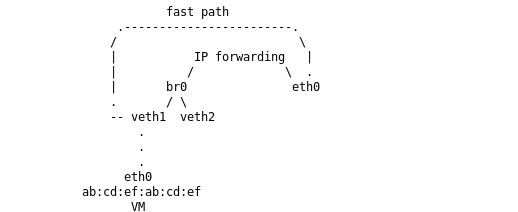
Netfilter logo Once a year folks interested in Netfilter technologies gather together to discuss past, ongoing and future works. The Netfilter Workshop is an opportunity to share and discuss new ideas, the state of the project, bring people together to work & hack and to put faces to people who otherwise are just email names. This is an event that has been happening since at least 2001, so we are talking about a genuine community thing here. It was decided there would be an online format, split in 3 short meetings, once per week on Fridays. I was unable to attend the first session on 2020-11-06 due to scheduling conflict, but I made it to the sessions on 2020-11-13 and 2020-11-20. I would say the sessions were joined by about 8 to 10 people, depending on the day. This post is a summary with some notes on what happened in this edition, with no special order. Pablo did the classical review of all the changes and updates that happened in all the Netfilter project software components since last workshop. I was unable to watch this presentation, so I have nothing special to comment. However, I ve been following the development of the project very closely, and there are several interesting things going on, some of them commented below. Florian Westphal brought to the table status on some open/pending work for mptcp option matching, systemd integration and finally interfacing from nft with cgroupv2. I was unable to participate in the talk for the first two items, so I cannot comment a lot more. On the cgroupv2 side, several options were evaluated to how to match them, identification methods, the hierarchical tree that cgroups present, etc. We will have to wait a bit more to see how the final implementation looks like. Also, Florian presented his concerns on conntrack hash collisions. There are no real-world known issues at the moment, but there is an old paper that suggests we should keep and eye on this and introduce improvements to prevent future DoS attack vectors. Florian mentioned these attacks are not practical at the moment, but who knows in a few years. He wants to explore introducing RB trees for conntrack. It will probably be a rbtree structure of hash tables in order to keep supporting parallel insertions. He was encouraged by others to go ahead and play/explore with this. Phil Sutter shared his past and future iptables development efforts. He highlighted fixed bugs and his short/midterm TODO list. I know Phil has been busy lately fixing iptables-legacy/iptables-nft incompatibilities. Basically addressing annoying bugs discovered by all ruleset managers out there (kubernetes, docker, openstack neutron, etc). Lots of work has been done to improve the situation; moreover I myself reported, or forwarded from the Debian bug tracker, several bugs. Anyway I was unable to attend this talk, only learnt a few bits in the following sessions, so I don t have a lot to comment here. But when I was fully present, I was asked by Phil about the status of netfilter components in Debian, and future plans. I shared my information. The idea for the next Debian stable release is to don t include iptables in the installer, and include nftables instead. Since Debian Buster, nftables is the default firewalling tool anyway. He shared the plans for the RedHat-related ecosystem, and we were able to confirm that we are basically in sync. Pablo commented on the latest Netfilter flowtable enhancements happening. Using the flowtable infrastructure, one can create kernel network bypasses to speed up packet throughput. The latest changes are aimed for bridge and VLAN enabled setups. The flowtable component will now know how to bypass in these 2 network architectures as well as the previously supported ingress hook. This is basically aimed for virtual machines and containers scenarios. There was some debate on use cases and supported setups. I commented that a bunch of virtual machines connected to a classic linux bridge and then doing NAT is basically what Openstack Neutron does, specifically in DVR setups. Same can be found in some container-based environments. Early/simple benchmarks done by Pablo suggest there could be huge performance improvements for those use cases. There was some inevitable comparison of this approach to what others, like DPDK/XDP can do. A point was raised about this being a more generic and operating system-integrated solution, which should make it more extensible and easier to use. flowtable for bridges Stefano Bravio commented on several open topics for nftables that he is interested on working on. One of them, issues related to concatenations + vmap issues. He also addressed concerns with people s expectations when migrating from ipset to nftables. There are several corner features in ipset that aren t currently supported in nftables, and we should document them. Stefano is also wondering about some tools to help in the migration. A translation layer like there is in place for iptables. Eric Gaver commented there are a couple of semantics that will not be suitable for translation, such as global sets, or sets of sets. But ipset is way simpler than iptables, so a translation mechanism should probably be created. In any case, there was agreement that anything that helps people migrate is more than welcome, even if it doesn t support 100% of the use cases. Stefano is planning to write documentation in the nftables wiki on how the pipapo algorithm works and the supported use cases. Other plans by Stefano include to work on some optimisations for faster matches. He mentioned using architecture specific instruction to speed up sets operations, like lookups. Finally, he commented that some folks working with eBPF have showed interest in reusing some parts of the nftables sets infrastructure (pipapo) because they have detected performance issues in their own data structures in some cases. It is not clear how to best achieve it, how to better bridge the two things together. Probably the ideal is to generalize the pipapo data structures and integrate it into the generic bitmap library or something which can be used by anyone. Anyway, he hopes to get some more time to focus on Netfilter stuff begining with the next year, in a couple of months. Moving a bit away from the pure software development topics, Pablo commented on the netfilter.org infrastructure. Right now the servers are running on gandi.net, on virtual machines that are being basically donated to us. He pointed that the plan is to simplify the infrastructure. For that reason, for example, FTP services has been shut down. Rsync services have been shut down as well, so basically we no longer have a mirrors infrastructure. The bugzilla and wikis we have need some attention, given they are old software pieces, and we need to migrate them to be more modern. Finally, the new logo that was created was presented. Later on, we spent a good chunk of the meeting discussing options on how to address the inevitable iptables deprecation situation. There are some open questions, and we discussed several approaches. From doing nothing at all, which means keeping the current status-quo, to setting a deadline date for the deprecation like the python community did with python2. I personally like this deadline idea, but it is perceived like a negative push by other. We all agree that the current do nothing approach is not sustainable either. Probably the way to go is basically to be more informative. We need to clearly communicate that choosing iptables for anything in 2020 is a bad idea. There are additional initiatives to help on this topic, without being too aggressive. A FAQ will probably be introduced. Eric Garver suggested we should bring nftables front and center. Given the website still mentions iptables everywhere, we will probably refresh the web content, introduce additional informative banners and similar things. There was an interesting talk on the topic of nft table ownership. The idea is to attach a table, and all the child objects, to a process. Then, we prevent any modifications to the table or the child objects by external entities. Basically, allocating and locking a table for a certain netlink socket. This is a nice way for ruleset managers, like firewalld, to ensure they have full control of what s happening to their ruleset, reducing the chances for ending with an inconsistent configuration. There is a proof-of-concept patch by Pablo to support this, and Eric mentioned he is pretty much interested in any improvements to support this use case. The final time block in the final session day was dedicated to talk about the next workshop. We are all very happy we could meet. Meeting virtually is way easier (and cheaper) than in person. Perhaps we can make it online every 3 or 6 months instead of, or in addition to, one big annual physical event. We will see what happens next year. That s all on my side!

Reproducible Builds (diffoscope): diffoscope 162 released

The diffoscope maintainers are pleased to announce the release of diffoscope version 162. This version includes the following changes:
[ Chris Lamb ]
* Don't depends on radare2 in the Debian autopkgtests as it will not be in
  bullseye due to security considerations (#950372). (Closes: #975313)
* Avoid "Command  s p a c e d o u t  failed" messages when creating an
  artificial CalledProcessError instance in our generic from_operation
  feeder creator.
* Overhaul long and short descriptions.
* Use the operation's full name so that "command failed" messages include
  its arguments.
* Add a missing comma in a comment.
[ Jelmer Vernoo  ]
* Add missing space to the error message when only one argument is passed to
  diffoscope.
[ Holger Levsen ]
* Update Standards-Version to 4.5.1.
[ Mattia Rizzolo ]
* Split the diffoscope package into a diffoscope-minimal package that
  excludes the larger packages from Recommends. (Closes: #975261)
* Drop support for Python 3.6.
You find out more by visiting the project homepage.

26 November 2020

Jonathan Dowland: Touched by the Hand of God

picture of a vinyl record
In honour of Diego Maradona (RIP), this morning's cobweb-shifter is New Order's "Touched by the Hand of God"

25 November 2020

Shirish Agarwal: Women state in India and proposal for corporates in Indian banking

Gradle and Kotlin in Debian Few months back, I was looking at where Gradle and Kotlin were in Debian. They still seem to be a work in progress. I found the Android-tools salsa repo which tells me the state of things. While there has been movement on both, a bit more on Kotlin, it still seems it would take a while. For kotlin, the wiki page is most helpful as well as the android-tool salsa kotlin board page . Ironically, some of the more important info. is shared in a blog post which ideally should also have been reflected in kotlin board page . I did see some of the bugs so know it s pretty much dependency hell. I can only congratulate and encourage Samyak Jain and Raman Sarda. I also played a bit with the google-android-emulator-installer which is basically a hook which downloads the binary from google. I do not know what the plans are, but perhaps in the future they also might be build locally, who knows. Just sharing/stating here so it s part of my notes whenever I wanna see what s happening

Women in India I am sure some of you might remember my blog post from last year. It is almost close to a year 2020 now and the question to be asked is, has much changed ? After a lot or hue and cry the Government of India shared the NCRB data of crimes against women and caste crimes. The report shared that crimes against women had risen by 7.3% in a year, similarly crimes against lower castes also went by similar percentage . With the 2020 pandemic, I am sure the number has gone up more. And there is a possibility that just like last year, next year the Government would cite the pandemic and say no data. This year they have done it for migrant deaths during lockdown , for job losses due to the pandemic and so on and so forth. So, it will be no surprise if the Govt. says about NCRB data next year as well. Although media has been showing some in spite of the regular threats to the journalists as shared in the last blog post. There is also data that shows that women participation in labor force has fallen sharply especially in the last few years and the Government seems to have no neither idea nor do they seem to care for the same. There aren t any concrete plans to bring back the balance even a little bit.

Few Court judgements But all hope is not lost. There have been a couple of good judgements, one from the CIC (Chief Information Commissioner) wherein in specific cases a wife can know salary details of her husband, especially if there is some kind of maintenance due from the husband. There was so much of hue and cry against this order that it was taken down from the livelaw RTI corner. Luckily, I had downloaded it, hence could upload and share it. Another one was a case/suit about a legally matured women who had decided to marry without parental consent. In this case, the Delhi High Court had taken women s side and stated she can marry whom she wants. Interestingly, about a week back Uttar Pradesh (most notorious about crime against women) had made laws called Love Jihad and 2 -3 states have followed them. The idea being to create an atmosphere of hate against Muslims and women have no autonomy about what they want. This is when in a separate suit/case against Sudharshan TV (a far-right leaning channel promoting hate against Muslims) , the Government of India itself put an affidavit stating that Tablighis (a sect of Muslims who came from Malaysia to India for religious discourse and assembly) were not responsible for dissemination of the virus and some media has correctly portrayed the same. Of course, those who are on the side of the Govt. on this topic think a traitor has written. They also thought that the Govt. had taken a wrong approach but couldn t tell of a better approach to the matter. There are too many matters in the Supreme Court of women asking for justice to tell all here but two instances share how the SC has been buckling under the stress of late, one is a webinar which was chaired by Justice Subramaniam where he shared how the executive is using judicial appointments to do what it wants. The gulf between the executive and the SC has been since Indira Gandhi days, especially the judicial orders which declared that the Emergency is valid by large, it has fallen much more recently and the executive has been muscling in which have resulted in more regressive decisions than progressive.

This observation is also in tune with another study which came to the same result although using data. The raw data from the study could give so much more than what has been shared. For e.g. as an idea for the study, of the ones cited, how many have been in civil law, personal law, criminal or constitutional law. This would give a better understanding of things. Also what is shocking is none of our court orders have been cited in the west in the recent past, when there used to be a time when the west used to take guidance from Indian jurisprudence sometimes and cite the orders to reach similar conclusion or if not conclusion at least be used as a precedent. I guess those days are over.

Government giving Corporate ownership to Private Sector Banks There was an Internal Working Group report to review extant ownership guidelines and Corporate Structure for Indian Private Sector Banks. This is the actual title of the report. Now there were and are concerns about the move which were put forth by Dr. Raghuram Rajan and Viral Acharya. While Dr. Rajan had been the 23rd Governor of RBI from 4th September 2013 to 4th September 2016. His most commendable work which largely is unknown to most people was the report A hundred small steps which you buy from sage publications. Viral Acharya was the deputy governor from 23rd January 2017 23rd July 2019. Mr. Acharya just recently published his book Quest for Restoring Financial Stability in India which can be bought from the same publication house as well. They also wrote a three page article stating that does India need corporates in banking? More interestingly, he shares two points from history both world war 1 and world war 2. In both cases, the allies had to cut down the businesses who had owned banks. In Germany, it was the same and in Japan, the zaibatsu s dissolution, both of which were needed to make the world safe again. Now, if we don t learn lessons from history it is our fault, not history s. What was also shared that this idea was taken up in 2013 but was put into cold-storage. He also commented on the pressure on RBI as all co-operative banks have come under its ambit in the last few months. RBI has had a patchy record, especially in the last couple of years, with big scams like ILFS, Yes Bank, PMC Bank, Laxmi Vilas Bank among others. The LVB Bank being the most recent one. If new banking licenses have to be given they can be given to good NBFC s who have been in the market for a long time and have shown maturity while dealing with public money. What is the hurry for giving it to Corporate/business houses ? There are many other good points in the report with which both Mr. Rajan and Mr. Acharya are in agreement and do hope the other points/suggestions/proposals are implemented. There was and is an interesting report by Reserve Bank of India called financial sector legislative reforms commission report volume 1 . If and when it gets deleted from RBI, I have put up a copy at my WordPress account, so we shall always have one. Interestingly, while looking through the people who were part of the committee was a somewhat familiar name Murmu . This is perhaps the first time you see people from a sort of political background being in what should be a cut and dry review which have people normally from careers in finance or Accounts. It also turns out that only one person was in favor of banks going to corporates, all the rest were against. It seems that the specific person hadn t heard the terms self-lending , connected-lending and conflict of interest. One of the more interesting comments in the report is if a corporate has a bank, then why would he go to Switzerland, he would just wash the money in his own bank. And if banks were to become to big to fail like it happened in the United States, it would be again private gains, public losses. There was also a Washington Post article which shares some of the reasons that Indian banks fail. I think we need to remind ourselves once again, how things can become
https://www.youtube.com/watch?v=2gK3s5j7PgA

Positive News at end At the end I do not want to end on a sour notes, hence sharing a YouTube channel of Films Division India where you can see of the very classic works and interviews of some of the greats in Indian art cinema.

https://www.youtube.com/user/FilmsDivision/videos Also sharing a bit of funny story I came to know about youtube-dl, apparently it was taken off from github but thanks to efforts from EFF, Hackernews and others, it is now back in action.

Junichi Uekawa: Grabbing screenshot.

Grabbing screenshot. I wanted to know the size of screenshot generated by canvas.toDataURL so I wrote a web app that just measures the size at 60fps because I could. From output I can see webp: 19087 png: 115818 jpg: 115818, so I figured webp is really good at this, or maybe chrome is really good at using webp. and png and jpg look like they are the same size... hmm.. why? UPDATE: image/jpg generated png and image/jpeg generated jpeg.

23 November 2020

Shirish Agarwal: White Hat Senior and Education

I had been thinking of doing a blog post on RCEP which China signed with 14 countries a week and a day back but this new story has broken and is being viraled a bit on the interwebs, especially twitter and is pretty much in our domain so thought would be better to do a blog post about it. Also, there is quite a lot packed so quite a bit of unpacking to do.

Whitehat, Greyhat and Blackhat For those of you who may not, there are actually three terms especially in computer science that one comes across. Those are white hats, grey hats and black hats. Now clinically white hats are like the fiery angels or the good guys who basically take permissions to try and find out weakness in an application, program, website, organization and so on and so forth. A somewhat dated reference to hacker could be Sandra Bullock (The Net 1995) , Sneakers (1992), Live Free or Die Hard (2007) . Of the three one could argue that Sandra was actually into viruses which are part of computer security but still she showed some bad-ass skills, but then that is what actors are paid to do  Sneakers was much more interesting for me because in that you got the best key which can unlock any lock, something like quantum computing is supposed to do. One could equate both the first movies in either as a White hat or a Grey hat . A Grey hat is more flexible in his/her moral values, and they are plenty of such people. For e.g. Julius Assange could be described as a Grey hat, but as you can see and understand those are moral issues.

A black hat on the other hand is one who does things for profit even if it harms the others. The easiest fictitious examples are all Die Hard series, all of them except the 4th one, all had bad guys or black hats. The 4th also had but is the odd one out as it had Matthew Farell (Justin Long) as a Grey hat hacker. In real life Kevin Mitnick, Kevin Poulsen, Robert Tappan Morris, George Hotz, Gary McKinnon are some examples of hackers, most of whom were black hats, most of them reformed into white hats and security specialists. There are many other groups and names but that perhaps is best for another day altogether. Now why am I sharing this. Because in all of the above, the people who are using and working with the systems have better than average understanding of systems and they arguably would be better than most people at securing their networks, systems etc. but as we shall see in this case there has been lots of issues in the company.

WhiteHat Jr. and 300 Million Dollars Before I start this, I would like to share that for me this suit in many ways seems to be similar to the suit filed against Krishnaraj Rao . Although the difference is that Krishnaraj Rao s case/suit is that it was in real estate while this one is in education although many things are similar to those cases but also differ in some obvious ways. For e.g. in the suit against Krishnaraj Rao, the plaintiff s first approached the High Court and then the Supreme Court. Of course Krishnaraj Rao won in the High Court and then in the SC plaintiff s agreed to Krishnaraj Rao s demands as they knew they could not win in SC. In that case, a compromise was reached by the plaintiff just before judgement was to be delivered. In this case, the plaintiff have directly approached the Delhi High Court. The charges against Mr. Poonia (the defendant in this case) are very much similar to those which were made in Krishnaraj Rao s suit hence won t be going into those details. They have claimed defamation and filed a 20 crore suit. The idea is basically to silence any whistle-blowers.

Fictional Character Wolf Gupta The first issue in this case or perhaps one of the most famous or infamous character is an unknown. While he has been reportedly hired by Google India, BJYU, Chandigarh. This has been reported by Yahoo News. I did a cursory search on LinkedIn to see if there indeed is a wolf gupta but wasn t able to find any person with such a name. I am not even talking the amount of money/salary the fictitious gentleman is supposed to have got and the various variations on the salary figures at different times and the different ads.

If I wanted to, I could have asked few of the kind souls whom I know are working in Google to see if they can find such a person using their own credentials but it probably would have been a waste of time. When you show a LinkedIn profile in your social media, it should come up in the results, in this case it doesn t. I also tried to find out if somehow BJYU was a partner to Google and came up empty there as well. There is another story done by Kan India but as I m not a subscriber, I don t know what they have written but the beginning of the story itself does not bode well. While I can understand marketing, there is a line between marketing something and being misleading. At least to me, all of the references shared seems misleading at least to me.

Taking down dissent One of the big no-nos at least from what I perceive, you cannot and should not take down dissent or critique. Indians, like most people elsewhere around the world, critique and criticize day and night. Social media like twitter, mastodon and many others would not exist in the place if criticisms are not there. In fact, one could argue that Twitter and most social media is used to drive engagements to a person, brand etc. It is even an official policy in Twitter. Now you can t drive engagements without also being open to critique and this is true of all the web, including of WordPress and me  . What has been happening is that whitehatjr with help of bjyu have been taking out content of people citing copyright violation which seems laughable. When citizens critique anything, we are obviously going to take the name of the product otherwise people would have to start using new names similar to how Tom Riddle was known as Dark Lord , Voldemort and He who shall not be named . There have been quite a few takedowns, I just provide one for reference, the rest of the takedowns would probably come in the ongoing suit/case.
Whitehat Jr. ad showing investors fighting

Now a brief synopsis of what the ad. is about. The ad is about a kid named Chintu who makes an app. The app. Is so good that investors come to his house and right in the lawn and start fighting each other. The parents are enjoying looking at the fight and to add to the whole thing there is also a nosy neighbor who has his own observations. Simply speaking, it is a juvenile ad but it works as most parents in India, as elsewhere are insecure.
Jihan critiquing the whitehatjr ad
Before starting, let me assure that I asked Jihan s parents if it s ok to share his ad on my blog and they agreed. What he has done is broken down the ad and showed how juvenile the ad is and using logic and humor as a template for the same. He does make sure to state that he does not know how the product is as he hasn t used it. His critique was about the ad and not the product as he hasn t used that.

The Website If you look at the website, sadly, most of the site only talks about itself rather than giving examples that people can look in detail. For e.g. they say they have few apps. on Google play-store but no link to confirm the same. The same is true of quite a few other things. In another ad a Paralympic star says don t get into sports and get into coding. Which athlete in their right mind would say that? And it isn t that we (India) are brimming with athletes at the international level. In the last outing which was had in 2016, India sent a stunning 117 athletes but that was an exception as we had the women s hockey squad which was of 16 women, and even then they were overshadowed in numbers by the bureaucratic and support staff. There was criticism about the staff bit but that is probably a story for another date. Most of the site doesn t really give much value and the point seems to be driving sales to their courses. This is pressurizing small kids as well as teenagers and better who are in the second and third year science-engineering whose parents don t get that it is advertising and it is fake and think that their kids are incompetent. So this pressurizes both small kids as well as those who are learning, doing in whatever college or educational institution . The teenagers more often than not are unable to tell/share with them that this is advertising and fake. Also most of us have been on a a good diet of ads. Fair and lovely still sells even though we know it doesn t work. This does remind me of a similar fake academy which used very much similar symptoms and now nobody remembers them today. There used to be an academy called Wings Academy or some similar name. They used to advertise that you come to us and we will make you into a pilot or an airhostess and it was only much later that it was found out that most kids were doing laundry work in hotels and other such work. Many had taken loans, went bankrupt and even committed suicide because they were unable to pay off the loans due to the dreams given by the company and the harsh realities that awaited them. They were sued in court but dunno what happened but soon they were off the radar so we never came to know what happened to those million of kids whose life dreams were shattered.

Security Now comes the security part. They have alleged that Mr. Poonia broke into their systems. While this may be true, what I find funny is that with the name Whitehat, how can they justify it? If you are saying you are white hat you are supposed to be much better than this. And while I have not tried to penetrate their systems, I did find it laughable that the site is using an expired https:// certificate. I could have tried further to figure out the systems but I chose not to. How they could not have an automated script to get the certificate fixed is beyond me, this is known as certificate outage and is very well understood in the industry. There are tools like Let s Encrypt and Certbot (both EFF) and many others. But that is their concern, not mine.

Comparison A similar offering would be unacademy but as can be seen they neither try to push you in any way and nor do they make any ridiculous claims. In fact how genuine unacademy is can be gauged from the fact that many of its learning resources are available to people to see on YT and if they have tools they can also download it. Now, does this mean that every educational website should have their content for free, of course not. But when a channel has 80% 90% of it YT content as ads and testimonials then they surely should give a reason to pause both for parents and students alike. But if parents had done that much research, then things would not be where they are now.

Allegations Just to complete, there are allegations by Mr. Poonia with some screenshots which show the company has been doing a lot of bad things. For e.g. they were harassing an employee at night 2 a.m. who was frustrated and working in the company at the time. Many of the company staff routinely made sexist and offensive, sexual abusive remarks privately between themselves for prospective women who came to interview via webcam (due to the pandemic). There also seems to be a bit of porn on the web/mobile server of the company as well. There also have been allegations that while the company says refund is done next day, many parents who have demanded those refunds have not got it. Now while Mr. Poonia has shared some quotations of the staff while hiding the identities of both the victims and the perpetrators, the language being used in itself tells a lot. I am in two minds whether to share those photos or not hence atm choosing not to. Poonia has also contended that all teachers do not know programming, and they are given scripts to share. There have been some people who did share that experience with him
Suruchi Sethi
From the company s side they are alleging he has hacked the company servers and would probably be using the Fruit of the poisonous tree argument which we have seen have been used in many arguments.

Conclusion Now that lies in the eyes of the Court whether the single bench chooses the literal meaning or use the spirit of the law or the genuine concerns of the people concerned. While in today s hearing while the company asked for a complete sweeping injunction they were unable to get it. Whatever may happen, we may hope to see some fireworks in the second hearing which is slated to be on 6.01.2021 where all of this plays out. Till later.

Vincent Fourmond: QSoas tips and tricks: using meta-data, first level

By essence, QSoas works with \(y = f(x)\) datasets. However, in practice, when working with experimental data (or data generated from simulations), one has often more than one experimental parameter (\(x\)). For instance, one could record series of spectra (\(A = f(\lambda)\)) for different pH values, so that the absorbance is in fact a function of both the pH and \(\lambda\). QSoas has different ways to deal with such situations, and we'll describe one today, using meta-data. Setting meta-data Meta-data are simply series of name/values attached to a dataset. It can be numbers, dates or just text. Some of these are automatically detected from certain type of data files (but that is the topic for another day). The simplest way to set meta-data is to use the set-meta command:
QSoas> set-meta pH 7.5
This command sets the meta-data pH to the value 7.5. Keep in mind that QSoas does not know anything about the meaning of the meta-data[1]. It can keep track of the meta-data you give, and manipulate them, but it will not interpret them for you. You can set several meta-data by repeating calls to set-meta, and you can display the meta-data attached to a dataset using the command show. Here is an example:
QSoas> generate-buffer 0 10
QSoas> set-meta pH 7.5
QSoas> set-meta sample "My sample"
QSoas> show 0
Dataset generated.dat: 2 cols, 1000 rows, 1 segments, #0
Flags: 
Meta-data:	pH =	 7.5	sample =	 My sample
Note here the use of quotes around My sample since there is a space inside the value. Using meta-data There are many ways to use meta-data in QSoas. In this post, we will discuss just one: using meta-data in the output file. The output file can collect data from several commands, like peak data, statistics and so on. For instance, each time the command 1 is run, a line with the information about the largest peak of the current dataset is written to the output file. It is possible to automatically add meta-data to those lines by using the /meta= option of the output command. Just listing the names of the meta-data will add them to each line of the output file. As a full example, we'll see how one can take advantage of meta-data to determine the position of the peak of the function \(x^2 \exp (-a\,x)\) depends on \(a\). For that, we first create a script that generates the function for a certain value of \(a\), sets the meta-data a to the corresponding value, and find the peak. Let's call this file do-one.cmds (all the script files can be found in the GitHub repository):
generate-buffer 0 20 x**2*exp(-x*$ 1 )
set-meta a $ 1 
1 
This script takes a single argument, the value of \(a\), generates the appropriate dataset, sets the meta-data a and writes the data about the largest (and only in this case) peak to the output file. Let's now run this script with 1 as an argument:
QSoas> @ do-one.cmds 1
This command generates a file out.dat containing the following data:
## buffer       what    x       y       index   width   left_width      right_width     area
generated.dat   max     2.002002002     0.541340590883  100     3.4034034034    1.24124124124   2.162162162161.99999908761
This gives various information about the peak found: the name of the dataset it was found in, whether it's a maximum or minimum, the x and y positions of the peak, the index in the file, the widths of the peak and its area. We are interested here mainly in the x position. Then, we just run this script for several values of \(a\) using run-for-each, and in particular the option /range-type=lin that makes it interpret values like 0.5..5:80 as 80 values evenly spread between 0.5 and 5. The script is called run-all.cmds:
output peaks.dat /overwrite=true /meta=a
run-for-each do-one.cmds /range-type=lin 0.5..5:80
V all /style=red-to-blue
The first line sets up the output to the output file peaks.dat. The option /meta=a makes sure the meta a is added to each line of the output file, and /overwrite=true make sure the file is overwritten just before the first data is written to it, in order to avoid accumulating the results of different runs of the script. The last line just displays all the curves with a color gradient. It looks like this:
Running this script (with @ run-all.cmds) creates a new file peaks.dat, whose first line looks like this:
## buffer       what    x       y       index   width   left_width      right_width     area    a
The column x (the 3rd) contains the position of the peaks, and the column a (the 10th) contains the meta a (this column wasn't present in the output we described above, because we had not used yet the output /meta=a command). Therefore, to load the peak position as a function of a, one has just to run:
QSoas> load peaks.dat /columns=10,3
This looks like this:
Et voil ! To train further, you can:

[1] this is not exactly true. For instance, some commands like unwrap interpret the sr meta-data as a voltammetric scan rate if it is present. But this is the exception. About QSoasQSoas is a powerful open source data analysis program that focuses on flexibility and powerful fitting capacities. It is released under the GNU General Public License. It is described in Fourmond, Anal. Chem., 2016, 88 (10), pp 5050 5052. Current version is 2.2. You can download its source code there (or clone from the GitHub repository) and compile it yourself, or buy precompiled versions for MacOS and Windows there.

22 November 2020

Fran ois Marier: Removing a corrupted data pack in a Restic backup

I recently ran into a corrupted data pack in a Restic backup on my GnuBee. It led to consistent failures during the prune operation:
incomplete pack file (will be removed): b45afb51749c0778de6a54942d62d361acf87b513c02c27fd2d32b730e174f2e
incomplete pack file (will be removed): c71452fa91413b49ea67e228c1afdc8d9343164d3c989ab48f3dd868641db113
incomplete pack file (will be removed): 10bf128be565a5dc4a46fc2fc5c18b12ed2e77899e7043b28ce6604e575d1463
incomplete pack file (will be removed): df282c9e64b225c2664dc6d89d1859af94f35936e87e5941cee99b8fbefd7620
incomplete pack file (will be removed): 1de20e74aac7ac239489e6767ec29822ffe52e1f2d7f61c3ec86e64e31984919
hash does not match id: want 8fac6efe99f2a103b0c9c57293a245f25aeac4146d0e07c2ab540d91f23d3bb5, got 2818331716e8a5dd64a610d1a4f85c970fd8ae92f891d64625beaaa6072e1b84
github.com/restic/restic/internal/repository.Repack
        github.com/restic/restic/internal/repository/repack.go:37
main.pruneRepository
        github.com/restic/restic/cmd/restic/cmd_prune.go:242
main.runPrune
        github.com/restic/restic/cmd/restic/cmd_prune.go:62
main.glob..func19
        github.com/restic/restic/cmd/restic/cmd_prune.go:27
github.com/spf13/cobra.(*Command).execute
        github.com/spf13/cobra/command.go:838
github.com/spf13/cobra.(*Command).ExecuteC
        github.com/spf13/cobra/command.go:943
github.com/spf13/cobra.(*Command).Execute
        github.com/spf13/cobra/command.go:883
main.main
        github.com/restic/restic/cmd/restic/main.go:86
runtime.main
        runtime/proc.go:204
runtime.goexit
        runtime/asm_amd64.s:1374
Thanks to the excellent support forum, I was able to resolve this issue by dropping a single snapshot. First, I identified the snapshot which contained the offending pack:
$ restic -r sftp:hostname.local: find --pack 8fac6efe99f2a103b0c9c57293a245f25aeac4146d0e07c2ab540d91f23d3bb5
repository b0b0516c opened successfully, password is correct
Found blob 2beffa460d4e8ca4ee6bf56df279d1a858824f5cf6edc41a394499510aa5af9e
 ... in file /home/francois/.local/share/akregator/Archive/http___udd.debian.org_dmd_feed_
     (tree 602b373abedca01f0b007fea17aa5ad2c8f4d11f1786dd06574068bf41e32020)
 ... in snapshot 5535dc9d (2020-06-30 08:34:41)
Then, I could simply drop that snapshot:
$ restic -r sftp:hostname.local: forget 5535dc9d
repository b0b0516c opened successfully, password is correct
[0:00] 100.00%  1 / 1 files deleted
and run the prune command to remove the snapshot, as well as the incomplete packs that were also mentioned in the above output but could never be removed due to the other error:
$ restic -r sftp:hostname.local: prune
repository b0b0516c opened successfully, password is correct
counting files in repo
building new index for repo
[20:11] 100.00%  77439 / 77439 packs
incomplete pack file (will be removed): b45afb51749c0778de6a54942d62d361acf87b513c02c27fd2d32b730e174f2e
incomplete pack file (will be removed): c71452fa91413b49ea67e228c1afdc8d9343164d3c989ab48f3dd868641db113
incomplete pack file (will be removed): 10bf128be565a5dc4a46fc2fc5c18b12ed2e77899e7043b28ce6604e575d1463
incomplete pack file (will be removed): df282c9e64b225c2664dc6d89d1859af94f35936e87e5941cee99b8fbefd7620
incomplete pack file (will be removed): 1de20e74aac7ac239489e6767ec29822ffe52e1f2d7f61c3ec86e64e31984919
repository contains 77434 packs (2384522 blobs) with 367.648 GiB
processed 2384522 blobs: 1165510 duplicate blobs, 47.331 GiB duplicate
load all snapshots
find data that is still in use for 15 snapshots
[1:11] 100.00%  15 / 15 snapshots
found 1006062 of 2384522 data blobs still in use, removing 1378460 blobs
will remove 5 invalid files
will delete 13728 packs and rewrite 15140 packs, this frees 142.285 GiB
[4:58:20] 100.00%  15140 / 15140 packs rewritten
counting files in repo
[18:58] 100.00%  50164 / 50164 packs
finding old index files
saved new indexes as [340cb68f 91ff77ef ee21a086 3e5fa853 084b5d4b 3b8d5b7a d5c385b4 5eff0be3 2cebb212 5e0d9244 29a36849 8251dcee 85db6fa2 29ed23f6 fb306aba 6ee289eb 0a74829d]
remove 190 old index files
[0:00] 100.00%  190 / 190 files deleted
remove 28868 old packs
[1:23] 100.00%  28868 / 28868 files deleted
done

Molly de Blanc: Why should you work on free software (or other technology issues)?

Twice this week I was asked how it can be okay to work on free software when there are issues like climate change and racial injustice. I have a few answers for that. You can work on injustice while working on free software. A world in which all technology is just cannot exist under capitalism. It cannot exist under racism or sexism or ableism. It cannot exist in a world that does not exist if we are ravaged by the effects of climate change. At the same time, free software is part of the story of each of these. The modern technology state fuels capitalism, and capitalism fuels it. It cannot exist without transparency at all levels of the creation process. Proprietary software and algorithms reinforce racial and gender injustice. Technology is very guilty of its contributions to the climate crisis. By working on making technology more just, by making it more free, we are working to address these issues. Software makes the world work, and oppressive software creates an oppressive world. You can work on free software while working on injustice. Let s say you do want to devote your time to working on climate justice full time. Activism doesn t have to only happen in the streets or in legislative buildings. Being a body in a protest is activism, and so is running servers for your community s federated social network, providing wiki support, developing custom software, and otherwise bringing your free software skills into new environments. As long as your work is being accomplished under an ethos of free software, with free software, and under free software licenses, you re working on free software issues while saving the world in other ways too! Not everyone needs to work on everything all the time. When your house in on fire, you need to put out the fire. However, maybe you can t help put out the first. Maybe You don t have the skills or knowledge or physical ability. Maybe your house is on fire, but there s also an earthquake and a meteor and a airborn toxic event all coming at once. When that happens, we have to split up our efforts and that s okay.

Next.

Previous.