Search Results: "nic"

29 April 2013

Lisandro Damián Nicanor Pérez Meyer: On the road to Qt5: declarative, graphicaleffects and svg in experimental.

Some more Qt 5 packages have entered Debian experimental:
Enjoy :-)

Wouter Verhelst: Linux 3.9

... has been released yesterday, apparently. This wouldn't be very special, except that it carries a 'patch' by yours truly. It isn't earthshattering, but hey, I can run 'git log' and find myself, now, in a released kernel. If that isn't nice.

Wouter Verhelst: New in wheezy: NBD named exports and installer support

Just after the release of squeeze, I released nbd 2.9.17, which had a new feature that required some backwards-incompatible change: the ability to specify an export by name, rather than by port number. Obviously, that means that wheezy will be the first release to ship with support for such named exports (although a backport was uploaded to squeeze-backports with support for such a named export). After all, names are that more obvious a way to specify an export than is a meaningless number. The init scripts and root-on-NBD support was updated, although a bugfix was denied for r0 (it will hopefully get into r1). In addition, during the wheezy cycle I finally finished the partman-nbd support in the installer. With this, it is possible to install Debian to an NBD device on diskless systems, which is nice.

Guido G nther: Bits from the 6th Debian groupware meeting

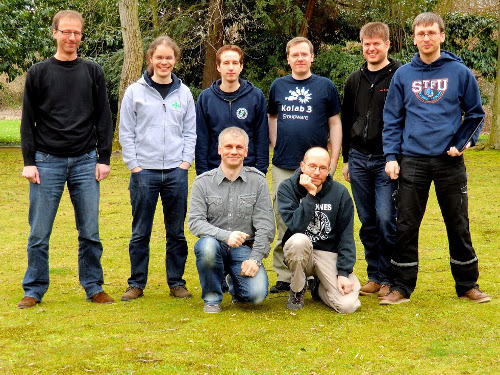
The sixth Debian Groupware Meeting was held in the LinuxHotel, Essen, Germany. We had one remote hacker from NYC which brings the number of attendants up to nine - an all time high! This is a short summary of what happened during the weekend: Groupphoto by Carsten Sch nert

Thomas Goirand: Jenkins: building debian packages after a git push (my 2cents of a howto)

The below is written in the hope it will be helpful for my fellow DDs. Why using build after push ? Simple answer: to save time, to always use a clean build environment, to automate more tests. Real answer: because you are lazy, and tired of always having to type these build commands, and that watching the IRC channel is more fun than watching the build process. Other less important answers: building takes some CPU time, and makes your computer run slower for other tasks. It is really nice that building doesn t consume CPU cycles on your workstation/laptop, and that a server does the work, not disturbing you while you are working. It is also super nice that it can maintain a Debian repository for you after a successful build, available for everyone to use and test, which would be harder to achieve on your work machine (which may be behind a router doing NAT, or even sometimes turned off, etc.). It s also kind of fun to have an IRC robot telling everyone when a build is successful, so that you don t have to tell them, they can see it and start testing your work. Install a SID box that can build with cowbuilder
Install Jenkins WARNING: Probably, before really installing, you should read what s bellow (eg: Securing Jenkins). Simply apt-get install jenkins from experimental (the SID version has some security issues, and has been removed from Wheezy, on a request of the maintainer). Normally, after installing jenkins, you can access it through:
http://<ip-of-your-server>:8080/
There is no auth by default, so anyone will be able to access your jenkins web GUI and start any script under the jenkins user (sic!). Jenkins auth
Before doing anything else, you have to enable Jenkins auth, otherwise, you have everything accessible from the outside, meaning that more or less, anyone browsing your jenkins server could be allowed to run any command. It might sound simple, but in fact, Jenkins auth is tricky to activate, and it is very easy to get yourself locked out, with no working web access. So here s the steps: 1. Click on Manage Jenkins then on Configure system 2. Check the enable security checkbox 3. Under security realm select Jenkins s own user database and leave allow users to sign up . Important: leave Anyone can do anything for the moment (otherwise, you will lock yourself out). 5. At the bottom of the screen, click on the SAVE button. 6. On the top right, click to login / create an account. Create yourself an account, and stay logged in. 7. Once logged-in, go back again in the Manage Jenkins -> Configure system , under security. 8. Switch to Project based matrix authentication strategy . Under User/group to add , enter the new login you ve just created, and click on Add . 9. Select absolutely all checkboxes for that user, so that you make yourself an administrator. 10. For the Anonymous user, for Job, check Read, Build and Workspace. For Overall select Read. 11. At the bottom of the screen, hit save again. Now, anonymous (eg: not logged-in) users should be able to see all projects, and be able to click on the build now button. Note that if you lock yourself out, the way to fix is to turn off Jenkins, edit config.xml, remove the useSecurity thing, and all what is in authorizationStragegy and securityRealm , then restart Jenkins. I had to do that multiple times until I had it right (as it isn t really obvious you got to leave Jenkins completely insecure when creating a new user). Securing Jenkins: Proxy Jenkins through apache to use it over SSL
When doing a quick $search-engine search, you will see lots of tutorials to use apache as a proxy, which seems to be the standard way to run Jenkins. Add the following to /etc/apache2/sites-available/default-ssl:
ProxyPass / http://localhost:8080/
ProxyPassReverse / http://localhost:8080/
ProxyRequests Off
Then perform the following commands on the shell:
htpasswd -c /etc/apache2/jenkins_htpasswd <your-jenkins-username>
a2enmod proxy
a2enmod proxy_http
a2enmod ssl
a2ensite default-ssl
a2dissite default
apache2ctl restart
Then disable access to the port 8080 of jenkins from outside:
iptables -I INPUT -d <ip-of-your-server> -p tcp --dport 8080 -j REJECT
Of course, this doesn t mean you shouldn t take the steps to activate Jenkins own authentication, which is disabled by default (sic!). Build a script to build packages in a cowbuilder I thought it was hard. In fact it was not. All together, this was kind of fun to hack. Yes hack. What I did yet another kind of 10km ugly shell script. The way to use it is simply: build-openstack-pkg <package-name>. On my build server, I have put that script in /usr/bin, so that it is accessible from the default path.Ugly, but it does the job! Jenkins build script for openstack At the end of the script, scan_repo() generates the necessary files for a Debian repository to work under /home/ftp. I use pure-ftpd to serve it. /home/ftp must be owned by jenkins:jenkins so that the build script can copy packages in it. This build script is by no mean state of the art, and in fact, it s quite hack-ish (so I m not particularly proud of it, but it does its job ). If I am showing it in this blog post, it is just to show an example of what can be done. It is left as an exercise to the reader to create another build script adapted to its own needs, and write something cleaner and more modular. Dependency building Let s say that you are using the Built-Using: field, and that package B needs to be built if package A changes. Well, Jenkins can be configured to do that. Simply edit the configuration of project B (you will find it, it s easy ). My use case: In my case, for building Glance, Heat, Keystone, Nova, Quantum, Cinder and Ceilometer, which are all components of Openstack, I have written a small (about 500 lines) library of shell functions, and an also small (90 lines) Makefile, which are packaged in openstack-pkg-tools (so Nova, Glance, etc. all build-depends on openstack-pkg-tools). The shell functions are included in each maintainer scripts (debian/*.config and debian/*.postinst mainly) to avoid having some pre-depends that would break debconf flow. The Makefile of openstack-pkg-tools is included in debian/rules of each packages. In such a case, trying to manage the build process by hand is boring and time consuming (spending your time watching the build process of package A, so that you can manually start the build of package B, then wait again ). But it is also error prone: it is easy to do a mistakes in the build order, you can forget to dpkg -i the new version of package A, etc. But that s not it. Probably at some point, you will want Jenkins to rebuild everything. Well, that s easy to do. Simply create a dummy project, and have other project to build after that one. The build steps could simply be: echo Dummy project as a shell script (I m not even sure that s needed ). Configuring git to start a build on each push In Jenkins, pass your mouse over the Build now URL. Well, we just need to wget that URL in your Alioth repository. A small drawing is better than long explanation:
for i in  ls /git/openstack  ; do
    echo "wget -q --no-check-certificate \
    https://<ip-of-your-server>/job/$ PROJ_NAME /build?delay=0sec \
    -O /dev/null" >/git/openstack/$ i /hooks/post-receive \
        && chmod 0770 /git/openstack/$ i /hooks/post-receive;
done
The chmod 0770 is necessary if you don t want every Alioth users to have access to your Jenkins server web interface and see an eventual htpassword protection that you can add to your jenkins box (I m not covering that, but it is fairly easy to add such protection). Note that all of the members of your Alioth group will then have access to this post-receive hook, containing the password of your htaccess, so you must trust everyone in your Alioth group to not do nasty things with your Jenkins. Bonus point: IRC robot If you would like to see the result of your build published on IRC, Jenkins can do that. Click on Manage Jenkins , then on Manage Plugins . Then click on available and check the box in front of IRC plugin . Go at the bottom of the screen and click on Add . Then check the box to restart Jenkins automatically. Once it is restarted, go again under Manage jenkins then Configure system . Select the IRC Notification and configure it to join the network and the channel you want. Click on Advanced to select the IRC nick name of your bot, and make sure you change the port (by default jenkins has 194, when IRC normally uses 6667). Be patient when waiting for the IRC robot to connect / disconnect, this can take some time. Now, for each jenkins Job, you can tick the IRC Notification option. Doing piuparts after build One nice thing with automated builds, is that most of the time, you don t need to wait starring at them. So you can add as many tests as you want, the Jenkins IRC robot will anyway let you know sooner or later the result of your build. So adding piuparts tests in the build script seems the correct thing to do. Though that is still on my todo, so maybe that will be for my next blog post.

28 April 2013

Vagrant Cascadian: intro

For many years, I've been meaning to write about various things in some sort of online journal. I'd like to tie together various parts of my life, such as my technical work in Debian, LTSP and other Free Software, Software Libre, and Open Source Software projects, but also my passion for Aikido, and other ideas that inspire me, such as pleaching. As with many new things, I struggled to name this journal. I even struggled with calling it a journal as opposed to a Blog, though blog always sounded a bit... brief and kind of blunt for my liking. So journal it is. But I still didn't even really have a name for it. Recently introduced to the concept of pleaching, essentially weaving living, growing branches togther, I was drawn to the concept, but admittedly, the sound of "pleach" or "pleaching" also carried some hint of harshness in it. Looking into synonyms, weaving, plait, braid... braid, yes, I typically wear my hair in a pair of braids... It has enough meaning to get by on... But that's too plain... so I borrowed from Spanish to come up with "trenza". So, thankfully to all involved, most of these posts will probably not be about picking names for things. I have a bit of backlog about some technical projects I've worked on that I'd like to write about, so I'll start with a few of those...

27 April 2013

Mike Gabriel: Unity Greeter with X2Go Remote Login Support

For the Danish company Fleten.net [1] (with my X2Go [2] developer hat on) I have recently developed X2Go integration into the Unity Greeter [3] theme of LightDM [4] in Ubuntu. Fleten.net--as a Canonical Partner--is providing FOSS based IT-services to schools and municipalities in Denmark and Norway, based on Ubuntu and X2Go. read more

26 April 2013

Russ Allbery: WebAuth 4.5.0

Time to finally release three months of work! This is a very large feature release for the multifactor support in WebAuth and for the integration with the user information service, which is the way that WebAuth interacts with local site policy. (Currently, you still have to write your own to a well-defined protocol, although we do hope to provide Perl modules to help with this in the future.) The major driving motivation for this release is to add the infrastructure required to set long-lived persistent cookies in a browser that contribute factors to authentications, which allows WebAuth to support "remember this device" functionality and to only require multifactor from devices from which a user has not previously authenticated. This includes a new token type, new attributes the user information service can send (including a way to invalidate such tokens), and new data that's sent back to the user information service. The user information service also now has the ability to add arbitrary additional factors to the current authentication, something that is intended to provide a hook for a local help desk to bypass multifactor for a user for some time if required. This release also contains substantial contributions by Benjamin Coddington at UVM to improve multifactor interactions, including sending the OTP type back to the user information service if WebLogin knows it, a mechanism for the user information service to communicate a message to the user that's displayed on the multifactor login page, opaque state that can be sent back and forth between WebLogin and the user information service, and the ability for the user information service to add specific authentication factors to the required set for a particular authentication. Other improvements in multifactor handling include the ability to set a lifetime on factors obtained via OTP login, a fix for a long-standing bug where an initial multifactor factor would satisfy a session requirement for random multifactor, and logging of even ignored errors when contacting the user information service. There are other changes too. This release touches almost every part of WebAuth. The change to WebAuthForceLogin in 4.4.0 was reverted since, on further consideration, the original semantics seemed more useful. Password change handling in WebLogin was fixed (it's been broken for some time). Apache 2.4 error logging for all modules is much improved, and mod_webauth and mod_webkdc now produce better error logs for all versions of Apache. And WebLogin now communicates password expiration times to its templates in seconds since epoch in addition to a pre-formatted English time for better localization support. William Orr contributed a new WebAuthLdapOperationalAttribute directive for mod_webauthldap that allows it to query operational attributes and include them in the environemnt. There are two backward-incompatible changes for WebLogin. First, WebAuth now supports a user checkbox indicating either to remember their login on that device or to not remember their login (local site templates can present it either way). However, proper implementation of this matching the normal expected wording of "remember me on this device" required changing the default, so a straight upgrade from an earlier version will result in no single sign-on. To preserve behavior, either a template change to add the checkbox (checked by default) or a configuration change are required. Second, support for getting password expiration times directly with remctl to a kadmin-remctl backend has been removed in favor of using data from the user information service by way of the WebKDC. Finally, I got to do a lot of cleanup of the API, fix diagosis of undef passed to Perl XS functions, and fixed a compilation error with Heimdal. You can get the latest release from the official WebAuth distribution site or from my WebAuth distribution pages.

Vincent Sanders: When you make something, cleaning it out of structural debris is one of the most vital things you do.

Collabora recently had a problem with a project's ARM build farm. In a nice change of pace it was not that the kernel was crashing, nor indeed any of the software or hardware.
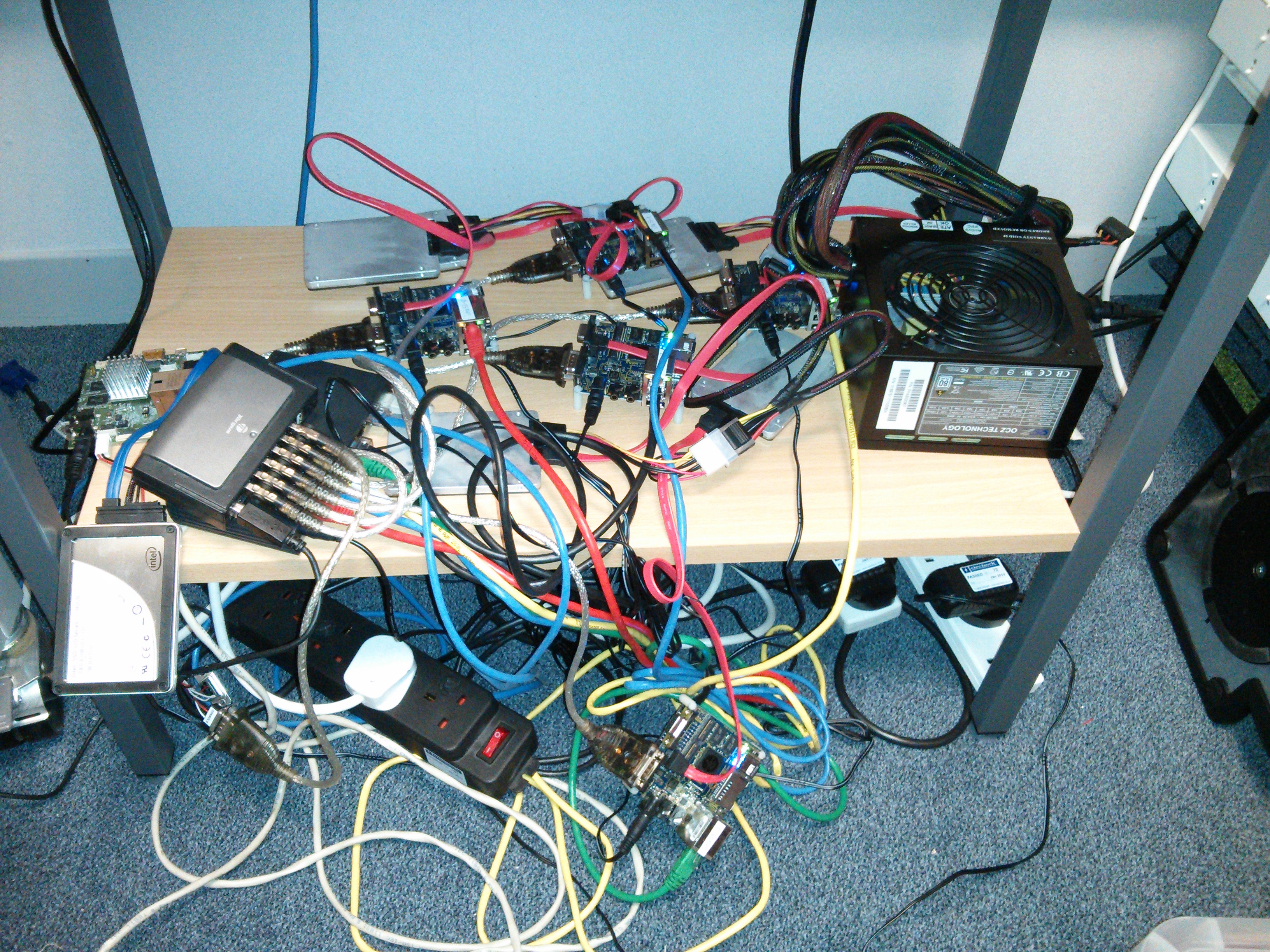
The ProblemInstead our problem was our build farm could best be described as "a pile of stuff" and we wanted to add more systems to it and have switched power control for automated testing.

Which is kinda where the Christopher Alexander quote comes into this. I suggested that I might be able to come up with a better, or at least cleaner, solution.
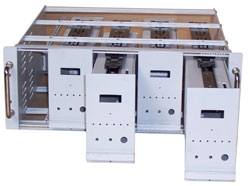
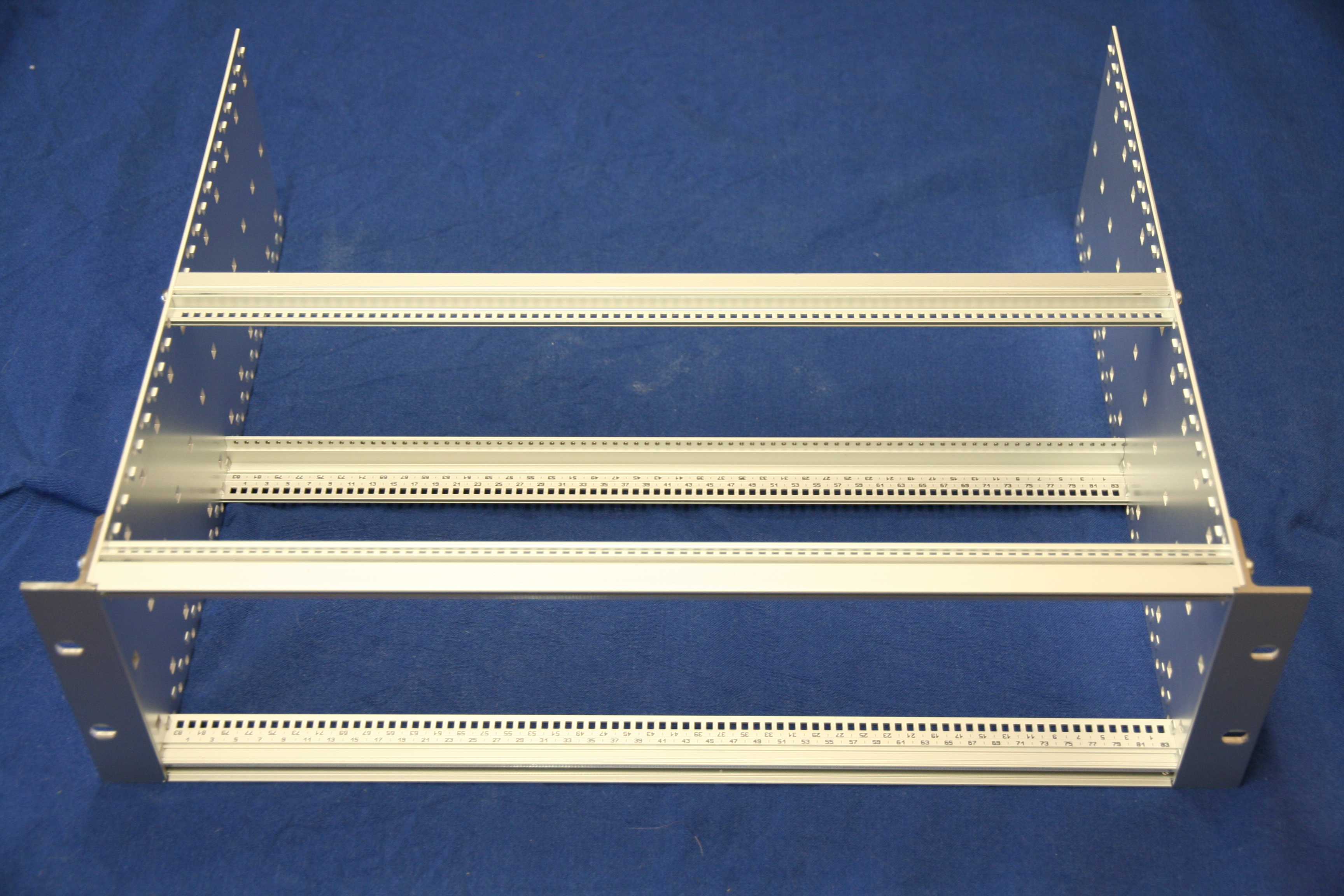
The IdeaA subrack with sub modulesPrevious experience had exposed me to the idea of using 19 inch subracks for mounting circuits inside submodules.

I originally envisaged the dev boards individually mounted inside these boxes. However preliminary investigation revealed that the enclosures were both expensive and used a lot of space which would greatly increase the rack space required to house these systems.

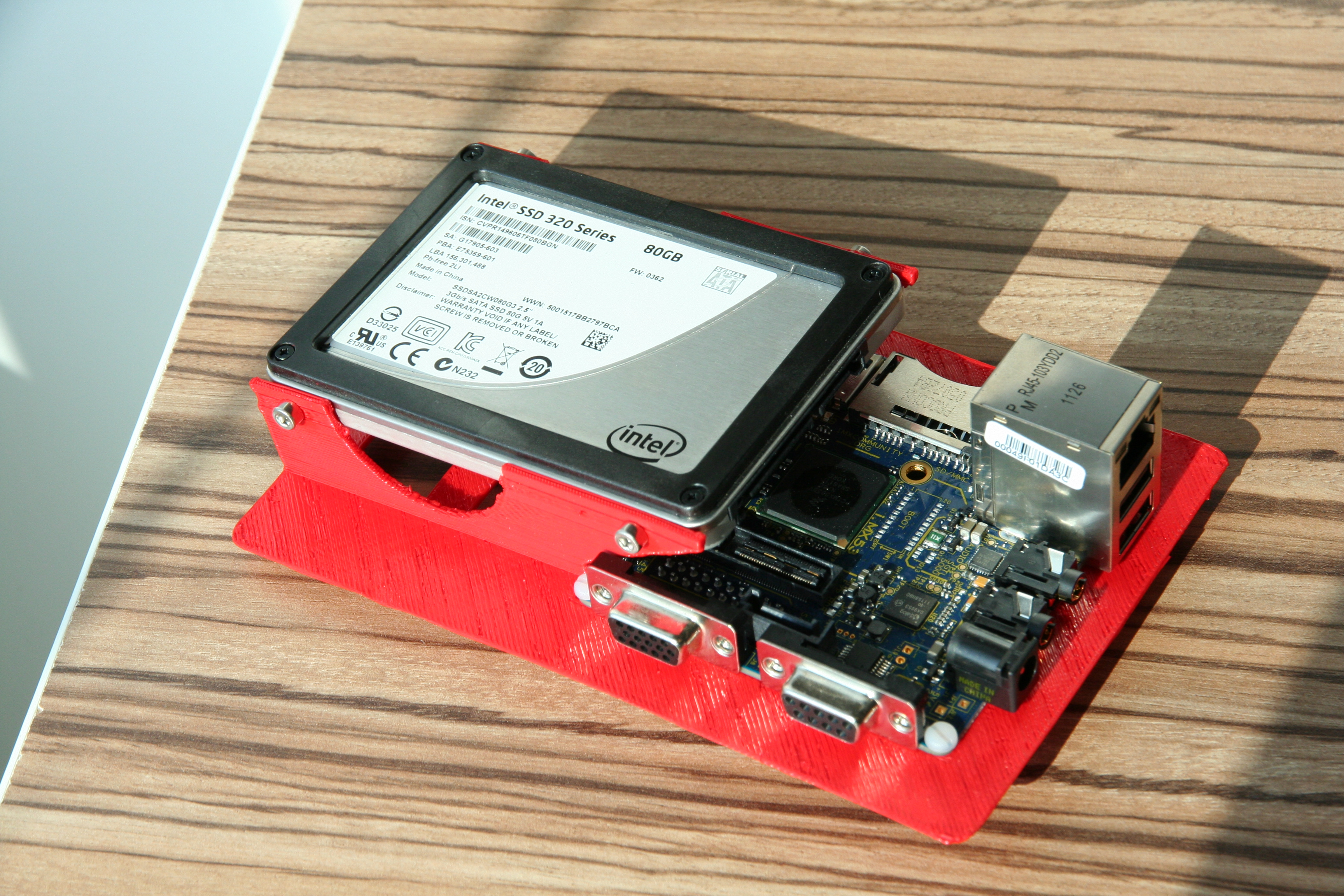
imx53 QSB eurocard carrier
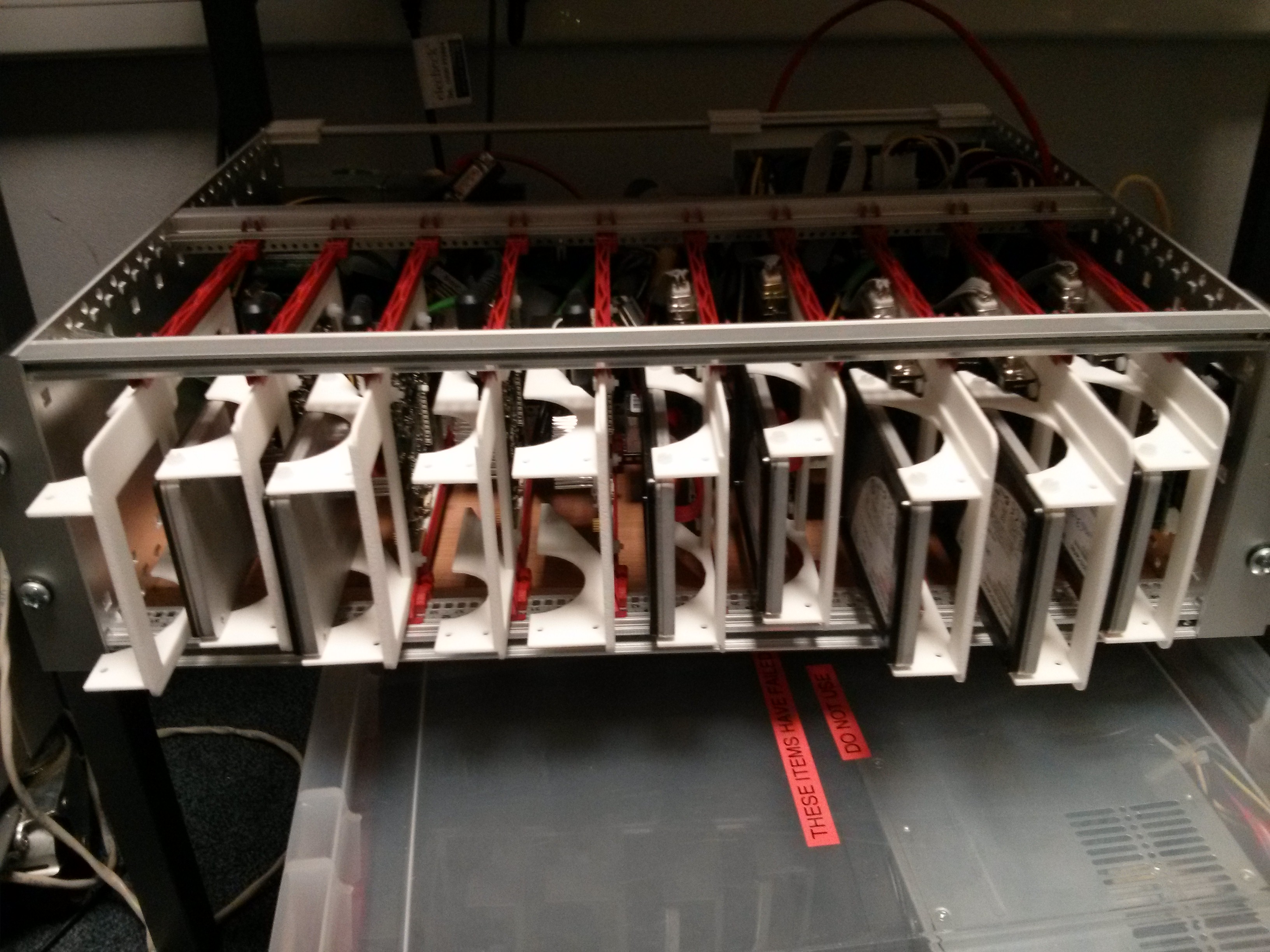
I decided to instead look at eurocard type subracks with carriers for the systems. Using my 3D printer I came up with a carrier design for the imx53 QSB and printed it. I used the basic eurocard size of 100mm x 160mm which would allow the cards to be used within a 3U subrack.

Once assembled it became apparent that each carrier would be able to share resources like power supply, ethernet port and serial console via USB just as the existing setup did and that these would need to be housed within the subrack.
The Prototype
The carrier prototype was enough to get enough interest to allow me to move on to the next phase of the project. I purchased a Schroff 24563-194 subrack kit and three packs of guide rails from Farnell and assembled it.

Initially I had envisaged acquiring additional horizontal rails from Schroff which would enable constructing an area suitable for mounting the shared components behind the card area.

Rear profile for Schroff subrackUnfortunately Schroff have no suitable horizontal profiles in their catalog and are another of those companies who seem to not want to actually sell products to end users but rather deal with wholesalers who do not have their entire product range!

Printed rear profile for Schroff subrack
Undaunted by this I created my own horizontal rail profile and 3D printed some lengths. The profile is designed to allow a 3mm thick rear cover sheet attached with M2.5 mounting bolts and fit rack sides in the same way the other profiles do.

At this point I should introduce some information on how these subracks are dimensioned. A standard 19 inch rack (as defined in IEC 60297) has a width of 17.75 inches(450.85mm) between the vertical posts. The height is measured in U (1.75 inches)

A subrack must obviously fit in the horizontal gap while providing as much internal space as possible. A subrack is generally either 3 or 6 U high. The width within a subrack is defined in units called HP (Horizontal Pitch) which are 0.2 inches(5.08 mm) and subracks like the Schroff generally list 84 usable HP.

However we must be careful (or actually just learn from me stuffing this up ;-) as the usable HP is not the same thing as the actual length of the horizontal rails! The enclosures actually leave and additional 0.1 inch at either end giving a total internal width of 85HP (17 inches, 431.8 mm) which leaves 0.75 inches for the subrack sides and some clearance.

The Schroff subrack allows eurocards to be slotted into rails where the card centre line is on HP boundaries, hence we describe the width of a card in the slot in terms of HP
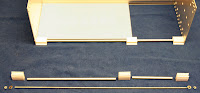
I cannot manufacture aluminium extrusions (I know it is a personal failing) nor produce more than 100 mm long length of the plastic profile on my printer.

Even if full lengths are purchased from a commercial service (120 euros for a pair including tax and shipping) the plastic does not have sufficient mechanical strength.

The solution I came up with was somewhat innovative, as an alternative a M5 bolt into a thread in the aluminium extrusion I used a 444mm long length of 4mm threaded rod with nuts at either end. This arrangement puts the extrusion under compression and gives it a great deal of additional mechanical strength as the steel threaded rod is very strong.

Additionally to avoid having to print enough extrusion for the entire length I used some 6mm aluminium tube as a spacer between 6HP(30.48mm) wide sections of the printed extrusion.

It was intended to use a standard modular PC power supply which is 150mm wide which is pretty close to 30HP (6 inches) so it was decided to have a 6HP section of rail at that point to allow a rear mounting plate for the PSU to be attached.

This gives 6HP of profile, 21HP(106.68mm) of tube spacer, 6HP of profile, 46HP(233.68 mm) of tube spacer and a final 6HP profile summing to our total of 85HP. Of course this would be unnecessary if a full continuous 85HP rail had been purchased, but 6 of 6 HP long profile is only 51 euro a saving of 70 euro.

To provide a flat area on which to mount the power switching, Ethernet switch and USB hubs I ordered a 170 x 431 mm sheet of 3mm thick aluminium from inspiredsteel who, while being an ebay company, were fast, cheap and the cutting was accurate.

Do be sure to mention you would prefer it if any error made the sheet smaller rather than larger or it might not fit, for me though they were accurate to the tenth of a mm! If you would prefer the rear section of the rack to be enclosed when you are finished, buy a second sheet for the top. For my prototype I only purchased a 170 x 280mm sheet as I was unsure if I wanted a surface under the PSU (you do, buy the longer sheet)
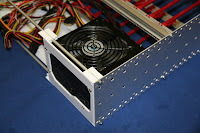
PC power supply mounted to back plateMounting the PSU was a simple case of constructing a 3 mm thick plate with the correct cutouts and mounting holes for an ATX supply. Although the images show the PSU mounted on the left hand side of the rack this was later reversed to improve cable management.

The subrack needed to provide Ethernet switch ports to all the systems. A TP-Link TL-SF1016DS 16-Port 10/100Mbps Switch was acquired and the switch board removed from its enclosure. The switch selected has an easily removed board and is powered by a single 3.3V input which is readily available from the ATX PSU.

Attention now returned to the eurocard carriers for the systems, the boards to be housed were iMX53 QSB and iMX6 SABRE Lite and a Raspberry Pi control system to act as USB serial console etc.

The carriers for both main boards needed to be 8HP wide, comprised of:
Although only 38 mm this is 7.5HP and fractions of an HP are not possible with the selected subrack.

With 8HP wide modules this would allow for ten slots, within the 84 usable HP, and an eleventh 4HP wide in which the Raspberry Pi system fits.
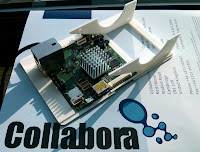
iMX6 SABRE Lite eurocard carrierCarrier designs for both the i.MX53 QSB and the i.MX6 SABRE Lite boards were created and fabricated at a professional 3D print shop which gave a high quality finish product and removed the perceived risk of relying on a personal 3D printer for a quantity of parts.

This resulted in changes in the design to remove as much material as possible as commercial 3D services charge by the cubic cm. This Design For Manufacture (DFM) step removed almost 50% from the price of the initial design.

i.MX53 QSB carriers with wiring loom
The i.MX6 design underwent a second iteration to allow for the heatsink to be mounted and not mechanically interfere with the hard drive (although the prototype carrier has been used successfully for a system that does not require a hard drive). The lesson learned here is to be aware that an design iteration or two is likely and that it is not without cost.

The initial installation was to have six i.MX53 and two i.MX6 this later changed to a five/four split, however the carrier solution allows for almost any combination, the only caveat (discovered later) is the imx53 carriers should be to the right hand side with the small 4HP gap at that end as they have a JTAG connector underneath the board which otherwise foul the hard drive of the next carrier.

Racked cards showing unwanted cable tails
A wiring loom was constructed for each board giving them a connector tail long enough to allow them to be removed. This was the wrong approach! if you implement this design (or when I do it again) the connector tails on the wiring loom should present all the connections to the rear at the same depth as the Ethernet connection.

The rack cables themselves should be long enough to allow the slides to be removed but importantly it is not desirable to have the trailing cable on the cards. I guess the original eurocard designers figured this out as they designed the cards around the standard fixed DIN connectors at the back of the card slots.

USB relay board with wiring loom attached
We will now briefly examine a misjudgement that caused the initially deployed solution to be reimplemented. As the design was going to use USB serial converters to access the serial console a USB connected relay board was selected to switch the power to each slot. I had previously used serial controlled relay boards with a USB serial convertor however these were no longer available.

Initial deployment with USB controlled relay board
All the available USB relay boards were HID controlled, this did not initially seem to be an issue and Linux software was written to provide a reasonable interface. However it soon became apparent that the firmware on the purchased board was very buggy and crashed the host computer's USB stack multiple times.

Deployed solutionOnce it became apparent that the USB controlled power board was not viable a new design was conceived. As the Ethernet switch had ports available Ethernet controlled relay boards were acquired.

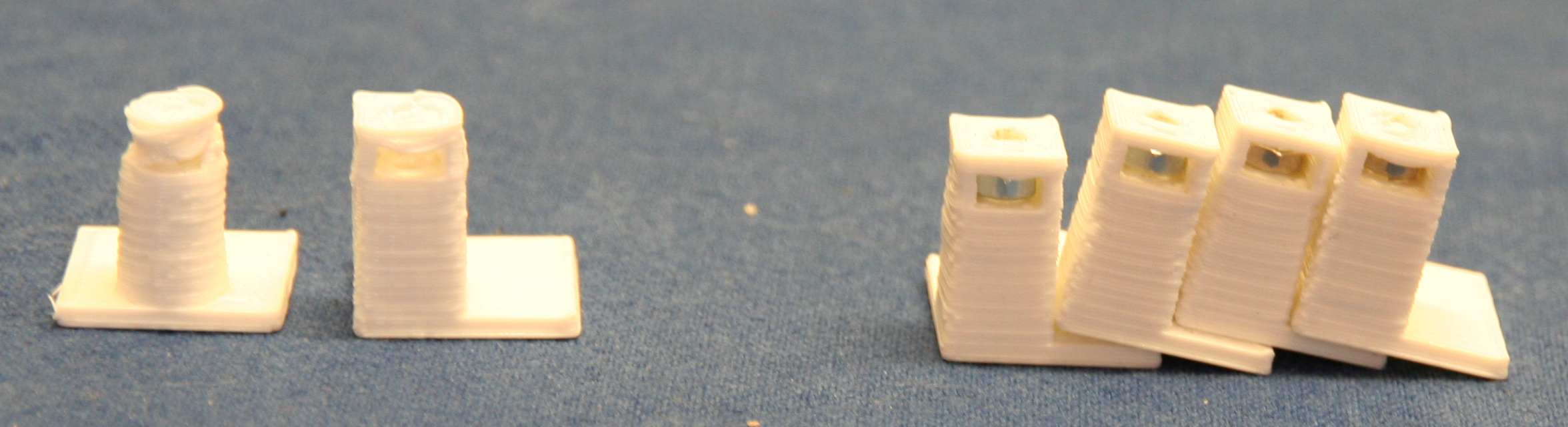
Evolution of 3mm PCB pillars
It did prove necessary to design and print some PCB support posts with M3 nut traps to allow the relay boards to be easily mounted using double sided adhesive pads.

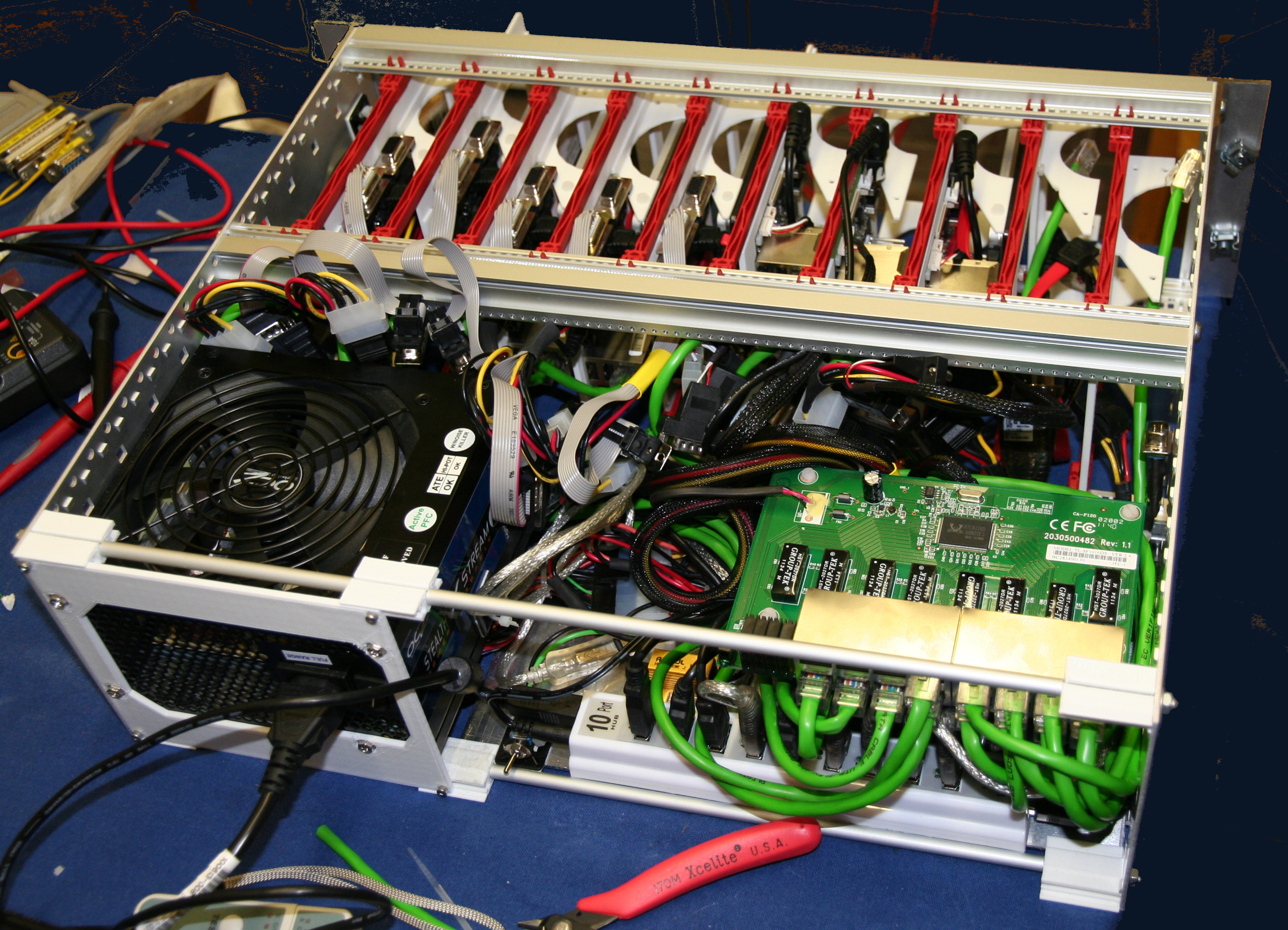
By stacking the relay boards face to face and the Ethernet switch on top separated using nylon spacers it was possible to reduce the cable clutter and provide adequate cable routing space.

A busbar for Ground (black) and unswitched 12V (yellow) was constructed from two lengths of 5A chock block.

An issue with power supply stability was noted so a load resistor was added to the 12V supply and an adhesive thermal pad used to attach it to the aluminium base plate.

Completed redesign
It was most fortunate that the ethernet switch mounting holes lined up very well with the relay board mounting holes allowing for a neat stack.

This second edition is the one currently in use, it has proved reliable in operation and has been successfully updated with additional carriers.

The outstanding issues are mainly centered around the Raspberry Pi control board:
  • Needs its carrier fitting. It is currently just stuck to the subrack end plate.
  • Needs its Ethernet cable replacing. The existing one has developed a fault post installation.
  • Needs the USB hub supply separating from the device cable. The current arrangement lets the hub power the Pi which means you cannot power cycle it.
  • Connect its switched supply separately to the USB hub/devices.
Shopping listThe final bill of materials (excluding labour and workshop costs) which might be useful to anyone hoping to build their own version.

Prices are in GBP currency converted where appropriate and include tax at 20% and delivery to Cambridge UK and were correct as of April 2013.

The purchasing was not optimised and for example around 20GBP could be saved just by ordering all the shapeways parts in one order.
Base subrack
ItemSupplierQuantityLine Price
Schroff 24563-194 subrack kitFarnell141.28
Schroff 24560-351 guide railsFarnell313.65
Schroff rack rear horizontal railShapeways2100.00
1000mm length of 4mm threaded rodB and Q11.48
170mm x 431mm x 3mm Aluminium sheetinspired steel240.00
PSU mounting plateShapeways135.42
PCB standoffShapeways422.30
160mm Deep Modular PC supplyCCL155.76
TP-Link TL-SF1016DS 16-Port 10/100Mbps-SwitchCCL123.77
8 Channel 16A Relay Board Controlled Via EthernetRapid2126.00
Raspberry PiFarnell126.48
USB Serial convertersCCL1037.40
10 port strip style USB HUBEbay17.00
Parts for custom Ethernet cablesRS1326.00
Parts for custom molex power cables (salvaged from scrap ATX PSU)Workshop1111.00
33R 10W wirewound resistor for dummy loadRS11.26
24pin ATX female connector pre-wiredMaplin12.99
Akasa double sided thermal padMaplin15.00
Small cable tie basesMaplin16.49
Miscellaneous cable, connectors, nylon standoffs, solder, heatshrink, zip ties, nuts, washers etc. Workshop120.00
Total for subrack603.28

The carriers are similarly not optimally priced as over five GBP each can be saved by combining shipping on orders alone. Also the SSD drive selection was made some time ago and a newer model may be more suitable.
i.MX53 QSB carrier
ItemSupplierQuantityLine Price
i.MX53 QSBFarnell1105.52
Intel 320 SSD 80GCCL1111.83
Carrier boardShapeways130.00
combined sata data and power (15 to 20cm version)EBay15.00
Low profile right angle 5.5mm x 2.1mm barrel jackEBay10.25
Parts for 9pin serial cable extensionRS15.00
Miscellaneous solder, heatshrink, nylon nuts, bolts and washersWorkshop15.00
Total for carrier262.60

i.MX6 SABRE Lite carrier
ItemSupplierQuantityLine Price
i.MX6 SABRE LiteFarnell1128.06
Intel 320 SSD 80GCCL1111.83
Carrier boardShapeways135.00
combined sata data and power (15 to 20cm version)EBay15.00
Low profile right angle 5.5mm x 2.1mm barrel jackEBay10.25
Parts for 9pin serial cable modificationRS12.00
Miscellaneous solder, heatshrink, nylon nuts, bolts and washersWorkshop15.00
Total for carrier287.14
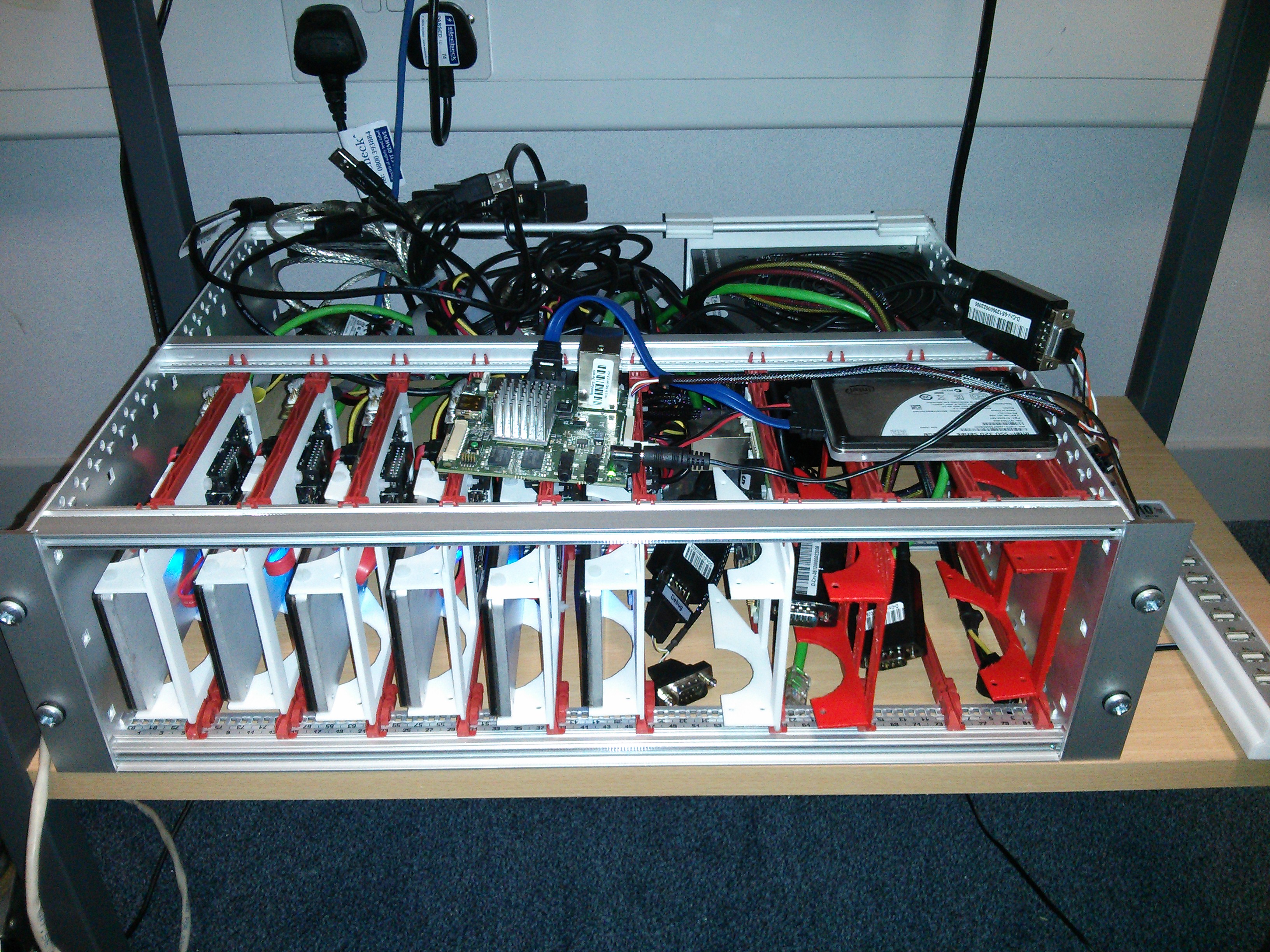
ConclusionThe solution works and in a 3U high 355mm deep subrack ten ARM development boards can be racked complete with local ethernet switching, power control and serial consoles.

Deployed system in situ configured as a build and test farm
The solution is neat and provides flexibility, density and reproducibility the "pile of stuff" solution failed to do.

For current prototype with nine filled slots the total cost was around 3000GBP or around 330GBP per slot which indicates a 100GBP per slot overhead over the "pile of stuff" solution. These figures omit the costs of the engineer and workshop time, which are estimated at an additional 1500GBP. Therefore a completed rack, fully filled with i.MX6 carriers costs around 5000GBP

Density could be increased if boards with lower height requirements were used however above twelve units there issues with Ethernet switch, power switch and USB port availability become a factor. For Example the 16 port Ethernet switch requires a port for uplink, one for each relay board and one for the console server which leaves only 12 ports for systems.

Addressing the outstanding issues would result in a much more user friendly solution. As the existing unit is in full time use and downtime is not easily scheduled for all ten systems, the issues are not likely to be fixed on the prototype and would have to be solved on a new build.

The solution is probably not suitable for turning into a product but that was not really the original aim. A commercial ARM blade server using this format would almost certainly use standard DIN connectors and a custom PCB design rather than adapting existing boards.

Francesca Ciceri: And the winner is...

I totally forgot it, but as the DPL elections are now done, we have a winner for the #DPL game. Of the (more or less) fifteen persons who participated to the game (thank you!), only four received points for having at least one of their Fantastic Four running for DPL: As Lucas is now the new DPL, our one and only winner of the DPL game is... ... Mehdi Dogguy! Congrats!

Daniel Pocock: An RTC infrastructure for debian.org

A number of potential Summer of Code students are now looking at the question of how to improve RTC in Debian. Making RTC available as a service to the Debian community may be part of the solution, as this would give the community a foundation to test things against and a useful tool for communication. One core component would be a TURN server to help people traverse NAT. There are two free TURN servers already packaged in Debian, and a third one that will potentially be packaged in the near future. Challenge for SoC students: how to make the TURN authentication mechanism work with the existing passwords of people with Debian accounts or alioth accounts? All of the TURN servers would require some code changes or development of new administration tools to link the authentication systems and support LDAP. Another component would be a SIP or XMPP proxy. A very basic implementation would need to allow anybody with a debian.org account to register, make and receive calls, send and receive chat messages. Most SIP proxies and XMPP servers can do this. Challenges for SoC students: how to link up the authentication systems for user passwords? How/where can Debian/alioth users set preferences for call forwarding (adapting the code for the web interface)? How can these tools be integrated with other infrastructure such as the bug tracking system or IRC? There are many additional services that are possible with RTC. A common example is conference calling. Challenge for students: how to set up one of the free conferencing solutions so that Debian Developers can quickly set up conferences using SIP, XMPP or WebRTC? Would it be administered by a web interface? Would it generate emails inviting people to join a conference with a WebRTC link to click? Having RTC services always available on debian.org would enable RTC/VoIP packages to be automatically tested against the central infrastructure using the Jenkins continuous integration system. This would ensure that packages are always interoperable. Challenges for students: pick some of the packages and develop unit testing code for them that allows end-to-end tests against any other VoIP client software. Make it all run under Jenkins.

Lior Kaplan: The commit police: learning for recent reference mistakes

Continuing the previous post about commits and bugs, I d like to review some mistakes I saw recently. Mistakes do happen, but mentioning them here is meant to teach others and hopefully to reduce similar ones in the future. This post isn t about shaming the authors/commiters. Also, the points I highlight are what I consider as a mistakes or problems, other people might think differently.
  1. Mentioning two bugs in one commit message, which our system doesn t support right now. So the second bug doesn t get the commit notification, and that should be done manually (example: commit 2933935 and fdo#53278).
  2. Referencing gerrit changes as part of the commit message (example: commit 87f185d). Giving references as part of the commit is great and helpful, but I would prefer to see the reference to the actual commit and not to its review process. This is meaningful when you search the log. If the followup change is suggested when the first change is still in review it should be combined, otherwise it already have a commit to reference.
  3. Following up a commit, and not mentioning the bug it references (example: commit 87f185d). In this specific case, the we re talking about a meta bug for translating comments from German to English (fdo#39468), so no harm done. But this important when you want to cherry pick a fix for a bug to other branches and might forget the follow up commits. It s also relevant to more technical meta bugs (example: fdo#62096).
  4. Referencing a mailing list which reference a commit and a bug instead of referencing them directly (commit 21fea27, fdo#60534). This bug shows very well why correct referencing is important, a commit was made to fix the bug, a follow up commit was done without proper reference, and than the first commit was reverted. No one involved in trying to fix that specific bug knew about the follow up commit as it wasn t documented anywhere.
  5. Referencing bugs though full bug URL instead of the right format (example: commit e1f6dac). Also the bug is referenced in the commit in the body of the message instead of the first line (header) which is more visible.
  6. Referencing non existing bugs (example: commit 3a4534b). Which got a manual notification in the bug by the comitter (fdo#33091).
  7. Using shortening services URL as part of commit messages (example: commit 86f8fba). There s no way to know to what the reference is without using the service, which in this case was leading to a post on one of the projects mailing list. There isn t any problem giving the direct URL to the list s archive. It s interesting whether we should link to our URL and is it OK to use other external services who also archive our mailing lists (example: commit e83990a).
To conclude, having references in commit message is really helpful, but please reference the right resource to help people find it easily and to let our automated services parse it.
Filed under: LibreOffice

25 April 2013

David Bremner: Exporting Debian packaging patches from git, (redux)*

(Debian) packaging and Git. The big picture is as follows. In my view, the most natural way to work on a packaging project in version control [1] is to have an upstream branch which either tracks upstream Git/Hg/Svn, or imports of tarballs (or some combination thereof, and a Debian branch where both modifications to upstream source and commits to stuff in ./debian are added [2]. Deviations from this are mainly motivated by a desire to export source packages, a version control neutral interchange format that still preserves the distinction between upstream source and distro modifications. Of course, if you're happy with the distro modifications as one big diff, then you can stop reading now gitpkg $debian_branch $upstream_branch and you're done. The other easy case is if your changes don't touch upstream; then 3.0 (quilt) packages work nicely with ./debian in a separate tarball. So the tension is between my preferred integration style, and making source packages with changes to upstream source organized in some nice way, preferably in logical patches like, uh, commits in a version control system. At some point we may be able use some form of version control repo as a source package, but the issues with that are for another blog post. At the moment then we are stuck with trying bridge the gap between a git repository and a 3.0 (quilt) source package. If you don't know the details of Debian packaging, just imagine a patch series like you would generate with git format-patch or apply with (surprise) quilt. From Git to Quilt. The most obvious (and the most common) way to bridge the gap between git and quilt is to export patches manually (or using a helper like gbp-pq) and commit them to the packaging repository. This has the advantage of not forcing anyone to use git or specialized helpers to collaborate on the package. On the other hand it's quite far from the vision of using git (or your favourite VCS) to do the integration that I started with. The next level of sophistication is to maintain a branch of upstream-modifying commits. Roughly speaking, this is the approach taken by git-dpm, by gitpkg, and with some additional friction from manually importing and exporting the patches, by gbp-pq. There are some issues with rebasing a branch of patches, mainly it seems to rely on one person at a time working on the patch branch, and it forces the use of specialized tools or workflows. Nonetheless, both git-dpm and gitpkg support this mode of working reasonably well [3]. Lately I've been working on exporting patches from (an immutable) git history. My initial experiments with marking commits with git notes more or less worked [4]. I put this on the back-burner for two reasons, first sharing git notes is still not very well supported by git itself [5], and second Gitpkg maintainer Ron Lee convinced me to automagically pick out what patches to export. Ron's motivation (as I understand it) is to have tools which work on any git repository without extra metadata in the form of notes. Linearizing History on the fly. After a few iterations, I arrived at the following specification. Condition (4) suggests we want something roughly like git format-patch upstream..head, removing those patches which are only about Debian packaging. Because of (3), we have to be a bit careful about commits that touch upstream and ./debian. We also want to avoid outputting patches that have been applied (or worse partially applied) upstream. git patch-id can help identify cherry-picked patches, but not partial application. Eventually I arrived at the following strategy.
  1. Use git-filter-branch to construct a copy of the history upstream..head with ./debian (and for technical reasons .pc) excised.
  2. Filter these commits to remove e.g. those that are present exactly upstream, or those that introduces no changes, or changes unrepresentable in a patch.
  3. Try to revert the remaining commits, in reverse order. The idea here is twofold. First, a patch that occurs twice in history because of merging will only revert the most recent one, allowing earlier copies to be skipped. Second, the state of the temporary branch after all successful reverts represents the difference from upstream not accounted for by any patch.
  4. Generate a "fixup patch" accounting for any remaining differences, to be applied before any if the "nice" patches.
  5. Cherry-pick each "nice" patch on top of the fixup patch, to ensure we have a linear history that can be exported to quilt. If any of these cherry-picks fail, abort the export.
Yep, it seems over-complicated to me too. TL;DR: Show me the code. You can clone my current version from
git://pivot.cs.unb.ca/gitpkg.git
This provides a script "git-debcherry" which does the history linearization discussed above. In order to test out how/if this works in your repository, you could run
git-debcherry --stat $UPSTREAM
For actual use, you probably want to use something like
git-debcherry -o debian/patches
There is a hook in hooks/debcherry-deb-export-hook that does this at source package export time. I'm aware this is not that fast; it does several expensive operations. On the other hand, you know what Don Knuth says about premature optimization, so I'm more interested in reports of when it does and doesn't work. In addition to crashing, generating multi-megabyte "fixup patch" probably counts as failure. Notes
  1. This first part doesn't seem too Debian or git specific to me, but I don't know much concrete about other packaging workflows or other version control systems.
  2. Another variation is to have a patched upstream branch and merge that into the Debian packaging branch. The trade-off here that you can simplify the patch export process a bit, but the repo needs to have taken this disciplined approach from the beginning.
  3. git-dpm merges the patched upstream into the Debian branch. This makes the history a bit messier, but seems to be more robust. I've been thinking about trying this out (semi-manually) for gitpkg.
  4. See e.g. exporting. Although I did not then know the many surprising and horrible things people do in packaging histories, so it probably didn't work as well as I thought it did.
  5. It's doable, but one ends up spending about a bunch lines of code on duplicating basic git functionality; e.g. there is no real support for tags of notes.
  6. Since as far as I know quilt has no way of deleting files except to list the content, this means in particular exporting upstream should yield a DFSG Free source tree.

Julien Danjou: OpenStack Design Summit Havana, from a Ceilometer point of view

Last week was the OpenStack Design Summit in Portland, OR where we, developers, discussed and designed the new OpenStack release (Havana) coming up. The summit has been wonderful. It was my first OpenStack design summit -- even more as a PTL -- and bumping into various people I've never met so far and worked with online only was a real pleasure! <figure> <figcaption>Me and Nick ready to talk about Ceilometer new features.</figcaption> </figure> Nick Barcet from eNovance, our dear previous Ceilometer PTL, and myself, talked about Ceilometer and presented the work that bas been done for Grizzly, with some previews of what we'll like to see done for its Havana release. You can take a look at the slides if you're curious. Design sessions Ceilometer had his design sessions during the last days of the summit. We noted a lot of things and commented during the sessions in our Etherpads instances. The first session was a description of Ceilometer core architecture for interested people, and was a wonderful success considering that the room was packed. Our Doug Hellmann did a wonderful job introducing people to Ceilometer and answering question. <figure> <figcaption>Doug explaining Ceilometer architecture.</figcaption> </figure> The next session was about getting feedbacks from our users. We had a lot of surprise to discover wonderful real use-cases and deployments, like the CERN using Ceilometer and generating 2 GB of data per day! The following sessions ran on Thursday and were much more about new features discussion. A lot ot already existing blueprints were discussed and quickly validated during the first morning session. Then, Sandy Walsh introduced the architecture they use inside StackTach, so we can start thinking about getting things from it into Ceilometer. API improvements were discussed without surprises and with a good consensus on what needs to be done. The four following sessions that occupied a lot of the days were related to alarming. All were lead by Eoghan Glynn, from RedHat, who did an amazing job presenting the possible architectures with theirs pros and cons. Actually, all we had to do was to nod to his designs and acknowledge the plan on how to build this. That last two sessions were about discussing advanced models for billing where we got some interesting feedback from Daniel Dyer from HP, and then were a quick follow-up of the StackTach presentation from the morning session. Havana roadmap The list of blueprints targetting Havana is available and should be finished by next week. If you want to propose blueprints, you're free to do so and inform us about it so we can validate it. The same applies if you wish to implement one of them! API extension I do think the API version 2 is going to be heavily extended during this release cycle. We need more feature, like the group-by functionnality. Healthnmon In parallel of the design sessions, discussions took place in the unconference room with the Healthnmon developers to figure out a plan in order to merge some of their efforts into Ceilometer. They should provide a component to help Ceilometer supports more hypervisors than it currently does. Alarming Alarming is definitely going to be the next big project for Ceilometer. Today, Eoghan and I started building blueprints on alarming, centralized in a general blueprint. We know this is going to happen for real and very soon, thanks to the engagements of eNovance and RedHat who are commiting resources to this amazing project!
Jeff Licquia: Linux Is Hard, Except When It Isn t

Online tech news site Ars Technica (which I recommend, by the way) recently reviewed the Dell XPS 13 Developer Edition. Its unique feature: it ships with Ubuntu Linux as the default operating system. This preload deal had a few unique properties: That last point deserves some explanation. A few vendors have grabbed a Windows computer they sell and allowed the option to preload Linux on it, but without support; you re on your own if it doesn t work in some way, which is likely. Essentially, they save you the time of wiping Windows off the box and doing a fresh install, but not much more. But this laptop comes out of Dell s Project Sputnik, a project to put out Linux machines for developers with a DevOps flavor, and they felt the machine had to work as well as their regular products. So they actually put effort and testing into getting the laptop to run Ubuntu well, with all the drivers configured properly and tweaked to support the machine s quirks, just like they do for Windows. And so, the review is surprised to learn that Ubuntu on the XPS 13, well, just works! It s even in the title of the review. Here s reviewer Lee Hutchinson s observations:
I ve struggled before with using Linux as my full-time operating environment both at work and at home. I did it for years at work, but it was never quite as easy as I wanted it to be on an older Dell laptop, keeping dual monitor support working correctly across updates required endless fiddling with xorg.conf, and whether or not it was Nvidia s fault was totally irrelevant to swearing, cursing Past Lee, trying desperately to get his monitors to display images so he could make his 10am conference call without having to resort to running the meeting on the small laptop screen.
And thence comes the astonishment: on this Linux laptop, everything just works. Most of the review is spent on the kinds of hardware features that distinguish this from other laptops: the keyboard is like this, the screen is that resolution, it has this CPU and this much RAM and so on. Some space is devoted to impressions of the default Ubuntu 12.04 install, and some space is given to the special DevOps software, which helps the developer reproduce the software environment on the laptop when deploying apps. But before all that, Hutchinson has to put in a dig:
It s an impressive achievement, and it s also a sad comment on the overall viability of Linux as a consumer-facing operating system for normal people. I don t think anyone is arguing that Linux hasn t earned its place in the data center it most certainly has but there s no way I d feel comfy installing even newbie-friendly Ubuntu or Mint on my parents computers. The XPS 13 DE shows the level of functionality and polish possible with extra effort, and that effort and polish together means this kind of Linux integration is something we won t see very often outside of boutique OEMs.
Of course, Windows is actually worse than Linux on the hardware front when you don t get it pre-installed. Imagine if more vendors put as much effort into preinstalled Linux as they did into preinstalled Windows. In that alternate reality, I imagine people would react more like this:
Isn t that what you re looking for in a mainstream product? Rick chided. In 1996 it was: Wow look at this, I got Linux running on xxxxxxxx. Even in 2006 that was at times an accomplishment When was the last time you turned on an Apple or Windows machine and marveled that it just worked? It should be boring.
Which was, of course, the reaction Hutchinson got when discussing the review with a Linux-using friend. With Microsoft being less of a friend to the hardware vendors every day, here s a case study more of them should be paying attention to.

23 April 2013

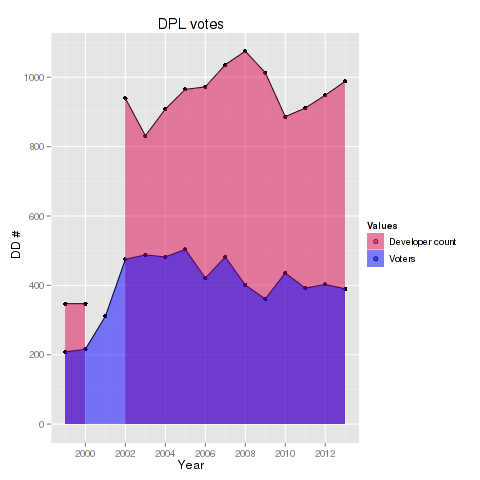
Ulrich Dangel: Visualizing DPL votes

Axel XTaran Beckert recently asked in #debian-devel for a visualization of the Debian Project Leader Election results. Unfortunately there seems to be none, except the table in the mail. As I am currently trying to use ggplot2 for more things, I thought I would give it a try and convert the data into a csv file and process the data via R. For converting the original data i used vim to do a little text processing and created a csv file. By running the following code we can create a nice looking simple graphic:
library("ggplot2")
votes <- read.csv("dpl-2013.csv")
votes2 <- melt(subset(votes, select=c("Year", "DDs", "unique")), id="Year")
p <- ggplot(votes2, aes(Year, value, group=variable, fill=variable)) + ylab('DD #')
p <- p + geom_point() + geom_line() + geom_area(position='identity')
p <- p + scale_fill_manual("Values", values=c(alpha('#d70a53', 0.5),
alpha("blue", 0.5)), breaks=c("DDs", "unique"), labels=c("Developer count", "Voters"))
print(p)
DPL Votes 2013 I also created a little script for automatically processing the csv file and creating a similar plot. Feel free to fork/clone extend this script.

22 April 2013

Daniel Pocock: Action week for Google Summer of Code students

This week (22 - 28 April) is the week that really matters most for those students who want to participate in Google Summer of Code. The deadline for student applications is next Friday (3 May), but if you don't spend time exploring project ideas this week, you won't be able to make a strong enough application. Here are the key things I need to see for potential students for the project areas I have offered to co-mentor in:
  1. Register on the Google site, Click here to register yourself (registration opens 22 April and closes 3 May).
  2. Create a page about yourself on the Debian wiki, you must copy the template used by the other students. Make sure you create a link from the student list to your own page. Think carefully about your project: what will be the final result of your work this summer? Describe what it will look like, how Debian people will use it, and explain these things on your wiki page, this will be critical to having Debian accept you.
Those are the essential things you must do before the deadline on 3 May. There are other things you should do as well:
  • Join the Summer of Code co-ordination mailing list
  • Join the mailing lists for whichever open source project and/or Debian packaging team is relevant to your proposed GSoC project
  • On the mailing list, send an email introducing yourself, giving us the link to your wiki page.
To maximize the chance that the Debian project will accept you, it is very important that you interact with us and show us that you understand software development. I am going to try and make this easier: for each of my projects, I've put some wishlist items in the Debian bug tracker. These are all easy tasks that a student can potentially complete. Just do the following:
  • Pick a task from the bug tracker
  • Send an email to the bug tracker (e.g. <bug-number>@bugs.debian.org>) explaining that you will work on the task (and make sure nobody else is already working on it, just look to see if any other emails are attached to the bug report)
  • Write the patch, test it and email the patch to the bug report
Here are the links to the bug lists for each of the packages. You can also pick any other wishlist bug in any related package, but if you are not sure, just pick one of these: If you already have a history of contributing to free software, it is essential that you tell us about it. This will increase the chances that your application is successful. Specifically, on your Debian wiki page, you should include links to any of the following:
  • Emails you sent to open source communities contributing patches or analysis of bugs (give a link to your message in the email archive for the list)
  • Your github account profile page, if you have one
  • Your Sourceforge account profile page, if you have one
  • Any other similar links
Debian receives many applications every year. To help you succeed, you need to think about how Debian will benefit from your work. Use Google to search the Debian site for previous discussions about your idea. Find out the names of Debian Developers who are interested in the same subjects, and email us or email the public mailing lists of the Debian project, for example, debian-devel. Make sure your email includes links to previous discussions or wiki pages about the idea, explain how you can help and ask the community for suggestions and guidance to refine your project proposal. Debian is an open community and we are all very keen to discuss your ideas and help you get involved. DebConf For all students, attending free software events is a great opportunity to meet the community. Of particular relevance for those in Europe, attending DebConf13 in Switzerland is a great way to meet GSoC mentors and other developers. Switzerland's central location is extremely convenient for anybody in Western Europe and it is also Debian's 20th birthday, so it is anticipated DebConf could be more special than usual this year. Please put it in your calendar and subscribe to the debconf-discuss mailing list so you will know when registration opens and other practical details are announced.

Dmitrijs Ledkovs: abi-compliance-checker & dh / cdbs integration

dh-autoreconf is an amazing addon for running autoreconf, I just love it.
abi-compliance-checker is an amazing tool for tracking API/ABI.
Wouldn't it be great to glue abi-compliance-checker into dh / cdbs packaging?!
abi-compliance-checker (1.98.8-1~exp1) experimental; urgency=low
.
* New upstream release
* Add dh_acc to generate and compare library dumps at build time,
together with addons for dh(7) and cdbs.
* Bump standards version, bump debhelper to 9, use 3.0 (quilt) format,
update Vcs-Svn field to canonical form, remove obsolete
DM-Upload-Allowed.
* Apply a patch to allow suffixes on a-c-c abi dumps.
Horay! So how does one use it?

  • build-depend on dh-acc
  • In your debian/rules
    • call dh_acc somewhere appropriate
    • dh $@ --with acc
    • include /usr/share/cdbs/1/rules/acc.mk
  • In your debian/libpackage-dev.acc
    • Write a abi-compliance-checker descriptor (no need to include version)
  • Build your package
  • Copy the generated /usr/lib/$(multiarch)/dh-acc/*.abi.tar.gz as ./debian/lib-package-dev.abi.tar.gz.ARCH
  • Now at each build ABI/API checks will be executed and compat reports will be generated
An example xml descriptor for libapt-pkg-dev is:
<?xml version="1.0" encoding="utf-8"?>
<descriptor>
<headers>
./build/include/apt-pkg/
</headers>
<libs>
./build/bin/
</libs>
<skip_types>
SubstVar
</skip_types>
</descriptor>
I wonder if things can be improved, for example:
  • For trivial packages, don't require .acc at all & simply point abi-compiance-checker at ./debian/tmp/
  • I think logs currently pollute the unpacked source package
  • Multiple "base" ABI need checking. E.g. given versions A, B, C one can introduce a new symbol in B and drop it in C. Both B & C are compatible with A, but C is not compatible with B, thus an API/ABI break got introduced into the distribution if all A,B,C were ever published in the archive.
  • Maybe run these as DEP-8 autopkgtests as well?
On a wider scope of things abi-compliance-checker allows to create "system" abi dumps & also check applications for ABI/API compliance. For example, one could scan deb packages to see if they are still compatible between major Debian Releases for some known install type (e.g. a default full Gnome Desktop), or we could scan proprietary packages to see if they are compatible (e.g. games delivered via Steam by Valve to multiple Ubuntu releases), and we can continuously monitor OS ABI to make sure we don't unknowingly break it with security and bugfix updates.

Please, play around with dh-acc and let me know what you think =)

21 April 2013

Lisandro Dami&aacute;n Nicanor P&eacute;rez Meyer: On the road to Qt 5: Qt 5 base, tools, jsbackend and xmlpatterns in experimental

The first Qt 5 packages have been accepted in Debian experimental.

What's there
To start building Qt 5 apps you will need to export QT_SELECT=qt5, install the package qt5-defaults or read qtchooser's man page. Note that exporting QT_SELECT has precedence over installing qt5-defaults.

What's not there
ArchitecturesAMD64 is already there because it's the arch used by maintainers to build the packages. i386 should be following as soon as buildds catch up. Most surely ARM-based archs will be there at some point too.

Other archs will need some love. Not strange, the Qt project supports amd64, i386 and ARM, but we Debian have normally prepared patches to make it build in other archs. And yes, we try to push them upstream for everyone's benefit. So, if you are missing it in your arch, take a look. You may be the one who enables Qt 5 in it :-)

GLES2 and WaylandWe don't have GLES2 or Wayland support yet. Building it will most probably break the desktop for people using proprietary video drivers (or at least I was told so). I'll surely provide non-official packages with GLES2/Wayland enabled to allow people testing it, but not soon.

This also means that we are not currently able to split X11 and framebuffer support. But we have time to work on it :-)

Non DFSGs compliant files
If you get the original source code tarball from Debian you will notice that it has dfsg in it's name. That means that we had to remove some non DFSG compliant stuff from the original tarball, namely:

  • Every RFC.
  • Three files used for testing the build, which are made of RFCs.
  • Some fonts.

What's following
Other parts of Qt 5 are on the way. And remember, this packages would not have been possible if it weren't for the great Debian's pkg-kde team. My kudos to them.

20 April 2013

Dmitrijs Ledkovs: FTBFS fixes and other patches available for your package!

Wheeze is planned to release very soon! There is still a fair amount of work to push the release out, but it does mean that a lot of fun can begin for jessie.

Over the past cycle in Ubuntu, many packages where synced from experimental, many fixes were applied and many packages were upgraded ahead of debian version strings.

If one goes to your package PTS page at:

packages.qa.debian.org/$SCRPACKAGENAME

One can find the following box titled "ubuntu" in it:


Please click on "patches for VERSION STRING" to find:
  • Useless irrelevant changes =) oh well, it happens
  • FTBFS fixes due to GCC 4.8 (*)
  • FTBFS fixes due to new GlibC
  • FTBFS fixes due to multiarched Python2.7 and Python3.3
  • FTBFS fixes due to multiarched Tcl/Tk
  • FTBFS fixes due to Python hash randomisation enabled
  • FTBFS fixes due to Boost 1.53 (*)
  • Fixes to minimise dependencies when bootstrapping packages
  • Fixes to multiarch more and more libraries
  • Fixes to enable package cross-building
  • Updates to new upstream releases
  • Usage of pybuild
  • Completed migration away from guile1.6
(*) more of those will be available after S-series opens in ubuntu, from April the 29th onwards

Some of the above patches were submitted to debian, with majority of submitted patches have not been applied, simply because none of them were appropriate during freeze and could have been disruptive to Wheezy release.

Please check useful patches available on your PTS!

Please take those patches!

Not taking Ubuntu patches results in more duplicate work in Ubuntu (i.e. rebasing those patches), thus reducing total dev-time available to work to fix other issues.

I myself uploaded a few of those patches into Ubuntu. And in the beginning I was filing BTS bugs with a patch against relevant packages in Debian. Very quickly I realised that since Debian is frozen a lot of those patches would just bitrot in BTS. I of course wished that they would all be instantly applied and uploaded into Experimental, but that did not happen. At the moment there are still 8 bugs open with patches I submitted, with oldest one opened on 6th of July 2012. So that's the reason why I stopped pushing patches to BTS, because well they are not reviewed nor applied in a timely manner =) where my expectation of timely manner is less than 6 months to be uploaded into Experimental or reviewed/rejected/commented on. Not uploading patches because they don't apply to Debian yet, is silly as they will apply to Debian eventually. Unapplied patches continue to generate more work on a more universal scope (e.g. requiring those patches to be rebased in ubuntu, thus many developers spending their time doing that, instead of writting fixes for new issues).

Next.

Previous.