Search Results: "spa"

27 August 2012

Rog rio Brito: American accent meme

This is the result of an old meme, but it is still quite interesting:
What American accent do you have?
Your Result: The Northeast

Judging by how you talk you are probably from north Jersey, New York City, Connecticut or Rhode Island. Chances are, if you are from New York City (and not those other places) people would probably be able to tell if they actually heard you speak.

Philadelphia
Boston
The Inland North
North Central
The South
The West
The Midland
What American accent do you have?
Quiz Created on GoToQuiz

26 August 2012

Andrew Cater: Helios - Ken Starks - appeal for (time-critical) help

For anybody that doesn't know - Ken Starks is the man behind the Helios Project - recycling computers, putting Linux on them, donating them to youngsters and the needy in Austin Texas.

He has a cancer diagnosis but his disability pension is enough to defeat his state provided insurance. Now he himself needs the help of the community.

More details here: http://linuxlock.blogspot.co.uk/2012/08/something-ive-been-putting-off-all-day.html and his partner's post above.

and here: Thomas A. Knight, who is setting up donations.

http://thomasaknight.com/blog.php?id=71

UPDATE:

There is now also a donate button at the Blog of Helios (linuxlock.blogspot.com).

Enough has been raised so far to buy Ken an appropriate monitor - because of the effects of radiotherapy, he's been unable to tolerate using a monitor with backlighting.

One donor has also stepped in to buy a month's drug treatment.

The initial target -US $5000 - has been met but The cost of an operating theatre session is at least US $50,000. All donations continue to be gratefully received.

Should efforts for raising funds for Ken himself be unsuccessful, all surplus funds raised will be ploughed back into the Helios Project (now known as Reglue following a recent merger with another local computer charity).

The Helios Project has been associated with Software in the Public Interest [SPI - also the umbrella organisation supporting Debian] for some years.

UPDATE2 - From Thomas A. Knight's blog referenced above:

By Thomas A. Knight on Sun 19 Aug 2012 07:33:49 am $11,000 so far, and still going strong. The outpouring of support for this is amazing. My most humble thanks to all contributors.

Even though we are still far from our goal, this has been far more successful than I ever thought possible. Thank you.

UPDATE3 - From Ken Starks, Sunday 26 August 2012

The amount of money needed has been raised. Donations to Helios Project/Reglue are welcome, as ever - but Ken's immediate needs are satisfactorily met and he himself doesn't wish to profit further from the community's goodwill. As he says, he can't thank us enough
More news at http://linuxlock.blogspot.com is due on 27/08/2012

24 August 2012

Eddy Petrișor: HOWTO: Things to remember about cowbuilder

Here are a few things to remember about cowbuilder:

If you run cowbuilder through sudo, and you want to build a source package whose result should be available to the user who initiated the build, then

  • you should have "BUILDRESULTUID=the_user's_id" in ~/.pbuilderrc, and
  • you might want to invoke cowbuilder with

'sudo cowbuilder --build the_pack_to_build.dsc --buildresult destination_dir_for_build_results'

If you want to login into a chroot environment in which you'd like to see part of your directory alongside the unpacked source tree of your package, then invoke cowbuilder with

sudo cowbuilder --login --bindmounts /path/to/the/dir/you/want

Your base.cow directory can be updated/changed manually with

sudo cowbuilder --login --save-after-login

You can update the base.cow directory with

sudo cowbuilder --update

That's about it.

Also, noteworthy tip: ccache might not work correctly in the cowbuilder chroot.

Olivier Berger: Generating RDF description of Debian package sources with ADMS.SW

Edit : I ve now managed to roll out my contribution which is now in production on packages.qa.debian.org. See a later post I ve made on the subject, and beware that the generated RDF has changed a bit also. ADMS.SW proposes specifications for description of software present in software catalogues. I ve tried and apply it to the contents of the Debian Package Tracking System (PTS), using transformation of the information known by the PTS to RDF+XML. The result is not yet in production, but here s an example of what can be done, using the Turtle syntax (more readable) :
<style type="text/css"> .T1 color:#000000; font-size:14pt; font-weight:bold; .T2 color:#000000; font-size:12pt; .T3 color:#000000; font-size:8.5pt; .T4 color:#0000ff; font-size:8.5pt; .T5 color:#a020f0; font-size:8.5pt; .T6 color:#228b22; font-size:8.5pt; .T7 color:#b22222; font-size:8.5pt; .T8 color:#008b8b; font-size:8.5pt; .T9 color:#8b2252; font-size:8.5pt; .dp1 .dp2 </style> @base <http://packages.qa.debian.org/> .
@prefix rdf: <http://www.w3.org/1999/02/22 rdf syntax ns#> .
@prefix admssw: <http://purl.org/adms/sw/> .
@prefix doap: <http://usefulinc.com/ns/doap#> .
@prefix dcterms: <http://purl.org/dc/terms/> .
@prefix rdfs: <http://www.w3.org/2000/01/rdf schema#> .
@prefix foaf: <http://xmlns.com/foaf/0.1/> .
@prefix schema: <http://schema.org/> .
@prefix spdx: <http://www.spdx.org/rdf/terms#> .
@prefix : <http://www.w3.org/1999/xhtml> .
@prefix str: <http://exslt.org/strings> . #
# First the packaging project for apache2 in Debian
#
# <http://packages.qa.debian.org/apache2> resource :
<apache2>
a admssw:SoftwareProject ;
doap:name "apache2" ;
doap:description "Debian apache2 source packaging" ;
doap:homepage "http://packages.debian.org/src:apache2" ;
schema:contributor [
a foaf:OnlineAccount ;
foaf:accountName "Debian Apache Maintainers" ;
foaf:accountServiceHomepage <http://qa.debian.org/developer.php?login=debian apache@lists.debian.org>
], [
a foaf:OnlineAccount ;
foaf:accountName "Stefan Fritsch" ;
foaf:accountServiceHomepage <http://qa.debian.org/developer.php?login=sf@debian.org>
], [
a foaf:OnlineAccount ;
foaf:accountName "Steinar H. Gunderson" ;
foaf:accountServiceHomepage <http://qa.debian.org/developer.php?login=sesse@debian.org>
], [
a foaf:OnlineAccount ;
foaf:accountName "Arno T ll" ;
foaf:accountServiceHomepage <http://qa.debian.org/developer.php?login=arno@debian.org>
] ;
# pointer to the release in the different suites :
doap:release <apache2_2.2.16 6+squeeze7>, <apache2_2.2.22 11>, <apache2_2.4.2 2>. #
# Now the different debian package source releases
#
# <http://packages.qa.debian.org/apache2_2.2.16 6+squeeze7> resource
<apache2_2.2.16 6+squeeze7>
a admssw:SoftwareRelease ;
rdfs:label "apache2 2.2.16 6+squeeze7" ;
admssw:project <apache2> ;
dcterms:description "Debian apache2 source package version 2.2.16 6+squeeze7" ;
doap:revision "2.2.16 6+squeeze7" . # This one is the reference version for the PTS as in unstable, so
# contains more details than the others
<apache2_2.2.22 11>
a admssw:SoftwareRelease ;
rdfs:label "apache2 2.2.22 11" ;
admssw:project <apache2> ;
dcterms:description "Debian apache2 source package version 2.2.22 11" ;
doap:revision "2.2.22 11" ;
# this release contains two components
admssw:includedAsset <apache2/apache2_2.2.22 11_debian>, <apache2/apache2_2.2.22_orig>
;
# this release can be downloaded as one package (with dget)
admssw:package <apache2/apache2_2.2.22 11.dsc> ;
# it also has a related release somewhere else
dcterms:relation <https://launchpad.net/ubuntu/+source/apache2/2.2.22 6ubuntu2> .
<apache2_2.4.2 2>
a admssw:SoftwareRelease ;
rdfs:label "apache2 2.4.2 2" ;
dcterms:description "Debian apache2 source package version 2.4.2 2" ; admssw:project <apache2> ;
doap:revision "2.4.2 2" . # Then the .dsc file for the current unstable version
<apache2/apache2_2.2.22 11.dsc>
a admssw:SoftwarePackage ;
dcterms:description "Debian source package descriptor file for apache2 version 2.2.22 11";
schema:downloadUrl "http://cdn.debian.net/debian/pool/main/a/apache2/apache2_2.2.22 11.dsc";
schema:fileSize "2885" ;
spdx:checksum [
a spdx:Checksum ;
spdx:algorithm <apache2#checksumAlgorithm_md5sum> ;
spdx:checksumValue "d7d03719b9f6432beeecd3aa04f7b22c"
] . #
# Then the upstream project
#
<apache2/apache2_orig>
a admssw:SoftwareProject ;
doap:description "The apache2 upstream project" ;
# either its name or homepage can be matched against other ADMS.SW
# or DOAP descriptors
doap:name "apache2" ;
doap:homepage "http://httpd.apache.org/" . # And a upstream release 2.2.22
<apache2/apache2_2.2.22_orig>
a admssw:SoftwareRelease ;
rdfs:label "Upstream apache2 release 2.2.22" ;
dcterms:description "Upstream source release for apache2 version 2.2.22" ;
doap:revision "2.2.22" ;
admssw:project <apache2/apache2_orig> ;
# and a link to the upstream source tarball s description
admssw:package <apache2/apache2_2.2.22.orig.tar.gz> . # now the (potentially re archived) upstream source archive for that release
<apache2/apache2_2.2.22.orig.tar.gz>
a admssw:SoftwarePackage ;
dcterms:description "Upstream source archive for apache2 version 2.2.22 11 (potentially re archived by Debian)";
schema:downloadUrl "http://cdn.debian.net/debian/pool/main/a/apache2/apache2_2.2.22.orig.tar.gz";
# Those 2 bits should help match packagings of the same tarball if needed
schema:fileSize "7200529" ;
spdx:checksum [
a spdx:Checksum ;
spdx:algorithm <apache2#checksumAlgorithm_md5sum> ;
spdx:checksumValue "d77fa5af23df96a8af68ea8114fa6ce1"
] . #
# Now, document specific details of the second component : Debian
# packaging files archive
#
<apache2/apache2_2.2.22 11_debian>
a admssw:SoftwareRelease ;
rdfs:label "Package sources apache2_2.2.22 11" ;
dcterms:description "Debian packaging sources for apache2 version 2.2.22 11" ;
doap:revision "2.2.22 11" ;
admssw:package <apache2/apache2_2.2.22 11.debian.tar.gz> . <apache2/apache2_2.2.22 11.debian.tar.gz>
a admssw:SoftwarePackage ;
dcterms:description "Debian source package files archive for apache2 version 2.2.22 11" ;
schema:downloadUrl "http://cdn.debian.net/debian/pool/main/a/apache2/apache2_2.2.22 11.debian.tar.gz";
schema:fileSize "195980" ;
spdx:checksum [
a spdx:Checksum ;
spdx:algorithm <apache2#checksumAlgorithm_md5sum> ;
spdx:checksumValue "d3d4146ccad51129636b7dbff284a110"
] . #
# Now, we also weave links with the Ubuntu counterparts
#
<https://launchpad.net/ubuntu/+source/apache2>
a admssw:SoftwareProject ;
doap:description "\"apache2\" source package in Ubuntu" ;
# this one promises some trolls and flames
admssw:forkOf <apache2> ;
doap:homepage "https://launchpad.net/ubuntu/+source/apache2" ;
doap:release <https://launchpad.net/ubuntu/+source/apache2/2.2.22 6ubuntu2> . # and its release known by the PTS
<https://launchpad.net/ubuntu/+source/apache2/2.2.22 6ubuntu2>
a admssw:SoftwareRelease ;
rdfs:label "apache2 2.2.22 6ubuntu2" ;
dcterms:description "\"apache2\" 2.2.22 6ubuntu2 source package in Ubuntu" ;
doap:revision "2.2.22 6ubuntu2" ;
admssw:project <https://launchpad.net/ubuntu/+source/apache2> .

Jonathan Carter: Wheezy Theme Updates


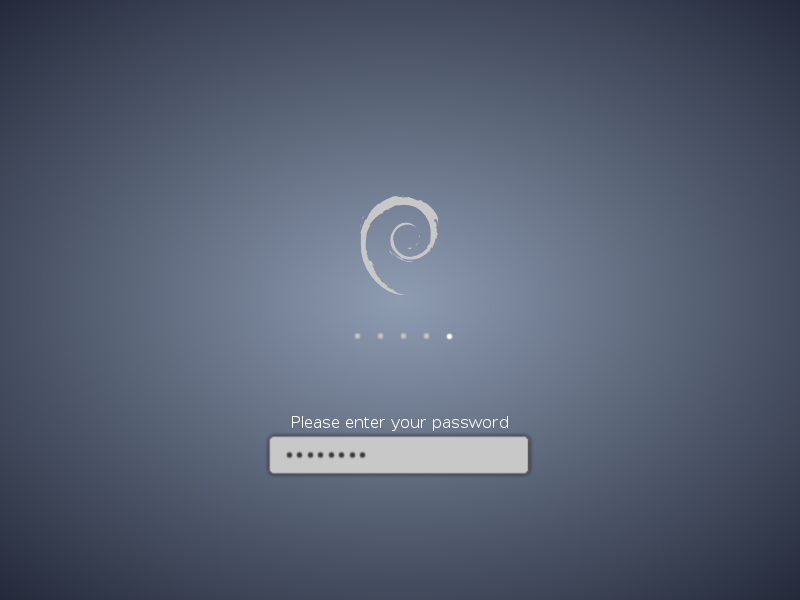
Joy Theme When the Joy theme was picked as the chosen theme for Debian 7.0 (Wheezy), I wanted to do what I could to get as much of it in the archive as possible before the freeze that occurred in June. I ve been working with Paul Tagliamonte and Vagrant Cascadian and I m glad that it resulted in some nice things! The Joy theme is modest and beautiful and I think Debian 7.0 is going to be one of the best looking Debian releases so far. Joy Plymouth Theme Plymouth is the part that provides the boot splash. It also takes care of a few other things, like showing prompts and progress indicators for filesystem checks, password prompts for encrypted devices and more so that the splash doesn t need to exit to show those. It s very scriptable, The installers for the Genesi Efika range of devices even use it for it s front-end. I needed to start with a Plymouth theme where I knew the prompts for all the things that happen during boot was at least more or less implemented, so I started off with one that I know works well, the Edubuntu one. So, fun fact: Debian 7.0 s Plymouth theme is actually based on the Edubuntu one. I had to play with the colours a bit to get it right, Edubuntu has a light background so I had to invert contrast for things like the input box, but I think it came out nicely. Splashy isn t in the archives anymore and it s not widely used anymore, so I cleaned it up from the desktop-base package so that there s less clutter shipped with it. Joy LTSP/LDM Theme This screenshot actually looks a bit uglier than it should because I took it on a VM that doesn t have 24bit colour, but we re looking into what we can do to make it look better on 16bit colour as well. During Debconf in Nigaragua, Vagrant and I worked on getting the LDM theme in shape. I have already done what I thought was most of the work by the time Debconf started, but it turns out there was a lot more to it to do it properly. We managed to get rid of the gtk2-engines-murrine dependency, which in itself is quite tiny, but it s a bit backwards in that it depends on the whole rest of the murrine-themes which brings in too much. We took the time to get the dependencies/recommends/etc right and to make it the default theme in Debian without messing it up for any Debian derivatives. It all came together and now when you install LTSP on Debian, you get the Joy theme by default! I m really glad about that because I didn t get the Spacefun LDM theme done in time for the Squeeze release. Enjoy!

23 August 2012

Gunnar Wolf: Historic airplane found, cash spammed!

Sometimes, very rarely, I am happy that the spam filters in my personal mail server are so far from perfect. Many of us were amazed, some days ago, news broke that Amelia Earhart's plane was found in the Southwestern Pacific. The news is amazing and worthy in itself. But today, I got this mail, proof that Amelia lived through all those years: (all addresses obscured, of course)
Date: Wed, 22 Aug 2012 23:38:59 -0700
From: Amelia Earhart <some-mail@gmail.com>
To: undisclosed-recipients: ;
Subject: Hello
Reply-To: some-other-mail@live.com Hello friend, With due respect to humanity, i am compelled to write to you on a humanitarian ground, however, it has been my wish to execute in life. Please, I am contacting you based on my desire to create a charitable fund in your country with this sum of EURO 3.5 Million which I inherited from my late husband (Dr. Ahrens Earhart). It is my desire to see that this money is invested in any organization of your choice in your country and distributed each year among the charity organizations, the house mother of the child, mosques, churches, schools, support for disadvantaged older men and women or in whatever way you intend helping the less privileged. I took this decision because I was raised out of the house of mother and baby at the moment, i am admitted in a hospital in London were i am taking severe treatment to my cancer illness. Please answer as soon as possible to confirm your agreement with this proposal, so I ll give you all the necessary information that will enable you to have access to this funds my personal accountant will be aware of my arrangements with you. Thank you for your attention and I hope to hear from you soon. Please contact me through my this email- some-other-mail@live.com the nurse helping me will attend to you i have been restricted from touching the computer due to my illness i will direct you through her she is a nice person. Sincerely,
Ms. Amelia Earhart.

22 August 2012

Gunnar Wolf: An industry commits suicide and blames us

[ once again, I am translating somebody else's material In this case, my good Costa Rican friend Carolina Flores. Please excuse my stylistic mistakes My English is far from native as you well know. But this material is worth sharing, and worth investing some tens of minutes doing a quick translation. If you can read Spanish, go read Caro's original entry ] Have you been to a music record store lately? I did so last Saturday, as a mere excercise. I was not planning on buying anything but I wanted to monitor things and confirm my suspicions. What was I suspicious of? First, that I would only find old records. And so it was: The only recent record I found was ...little broken hearts by Norah Jones. the second, that I would only find music for over 50 year old people. so it was: Were I there to look for a present for my father, I would have walked out with 10 good records. Third, that in the store nothing worth commenting would happen. About that last point, I should point out it was around 10 AM and the store had just opened its doors. Lets concede the benefit of doubt. I don't think many of you will remember, but in Barrio La California (where there is now a beauty parlour, almost in front of AM.PM) there was Auco Disco. In Auco Disco there was a guy specialized in rock (Mauricio Alice) and another one specialized in jazz (I don't remember his name). In that record you could always find rare records, but if they were not there, at least you were sure to find somebody to say: "No, we don't have that, but that's an excellent record, it's the best that [insert group here] have ever recorded because just afterwards they switched their guitar player, they had gone a bit south but with that record they are flying. But no, we don't have it; I can recommend you this record by [insert another group] because it has a guitar solo in track six that is amazing". It would happen more or less like that, which means, one would arrive to Auco Disco at 10 AM and leave around 5 PM with three new records, after having listened to a spectacular music selection. What happened to those stores? Were they killed by The Pirate Bay? That's the simplistic answer from the recording industry! The answer is that those stores never got anything from the industry but an invoice. The industry specially in prescindible markets such as ours was limited to hiring artists, taking care of them recording a sellable product, producing the object called record, and that's it. The more commercial radio stations were paid to program those songs as it cannot be casual that "Mosa, mosa" is the summer hit in all of Latin America, can it? but, record stores? Nothing. Lets carry on with that idea: Radio stations are paid to program said music. This idea should not lead us to believe that recording companies are to blame for bad taste. I won't reveal my sources, but I know the success of the "Locura autom tica" song by La Secta was a real example. Nobody paid for it. That song got to the number one because of its own merits(?) (you don't know the effort it took to find that thing, I cannot recommend it to you). Same thing happens with other stations that don't program reggaet n, that try to save the species, and where they play what we do like. But the thing is, everything we like is not available in any record store in this country. Then, even if we wanted to buy a record or give it as a gift to somebody, it is plain impossible. And don't tell me it's the same to present as a gift a link or a CD full of downloaded MP3 as it is to give a record with cover and booklet, wrapped in gift paper. I might be old-school, but the fetish object record still exists, not only because of its cover, but because of its sound. A 3MB MP3 is akin to drinking coffee dripping from a bag that has been used eight times with the same coffee beans. That format is the worst that has ever happened to music, and if we had any bit dignity we would never purchase digital files in Amazon or iTunes safe for MP3 with an acceptable compression level. That, if we could buy them, because not only that is allowed to us. As the musical industry has no interest in resolving ITS problem (that is not our problem, it is those companies') it has not even been resolved how to charge for a MP3 download that includes import fees (well, if downloading from here a MP3 from a USA-based file server can be considered importing goods into Costa Rica!!!) so we don't have to get dizzy entering into the nineties to Titi Online to discover there is nothing by Muse, Andrew Bird, The Killers, Death Cab for Cutie, Paramore, Bj rk... (believe me, I looked them all up, even Norah jones and La Secta. They also were not there). This all leads me to the question, which I present with all due respect (NOT): What the fuck do they expect us to do??? It is outrageous; above all because in the best case they will sell us a watery coffee download that won't allow us to get all the details a vinyl or less compression would give us. In the worst case, post-MP3 groups will end up recording music with no harmonics or hidden sounds, because, what for? Nobody will hear it. They even admit it: "Some musicians and audio engineers say the MP3 format is changing the way studios mix their recordings. They say the MP3 format "flattens" dynamics differences in tone and volume in a song. As a result, a great deal of new music sounds very much alike, and there is nothing as focusing to create a dynamic listening experience. Why working so hard in creating complex sound if nobody can detect it?" (Rolling Stone, The Death of High fidelity, December 26 2007, taken from here). That's why I am not surprised by Adri n's post regarding the sales of old records. The price has nothing to do with it. The causes are related to the fetish object record and what it means or does not mean for people that have never purchased one. Adri n also asks if somebody here keeps buying records. I answered that I would if the stores sold anything I like. I do it even after the nausea I feel while reading "This phonogram is an intellectual work protected in favor of its producer COPYING IT IN WHOLE OR PARTIALLY IS FORBIDDEN " (like that, uppercased, yelling to whoever is only guilty of having bought a record and defending the producer, not the artist). But I am sure that almost nobody buys records because doing so is no longer a gratifying experience; because if buying a record is clicking to wait 15 days for it to reach the mailbox, we prefer clicking on the download link. But there is another reason for people not to buy records anymore. In one of my talks regarding the dictatorship of the all rights reserved, I asked the 30 twenty-something-year-old students if any of them had ever bought a record. One answered he had, because he is an author and performer (cantautor in Spanish) and understands the effort that producing a record entails. The rest of them had never done so. Is it possible that said young people have never listened to real music? Is it possible that, were it not for concerts, what they consider music is a set of washed-out MP3 that are about to fill up 1TB of their computer? Does people no longer buy records because they cannot differentiate one sound from the other? It is not very clear for me where do I want to get to. The recording industry is despicable. An industry that instead of innovating sets its energy on suing adolescents for downloading songs, trying to pass laws restricting our freedoms in Internet, putting up DRMs making us hostages to our devices* and forcing us to listen just the aroma of music, deserves my whole contempt. If we add ot this that said industry won't allow us to legally download their breadcrumbs because it has not understood that Internet does not need a van crossing borders, besides my contempt they deserve my pity and my heartfelt condolence. But the condolence is also for music, real music, that which is not compressed under the shoe using a terrible format. It is also for independent musicians that have not realized that begging for a bit of space to that industry they just add to themselves the "despicable" tag, given they deserve the fruits of their work to enter their bank account. However, there are good things that have come out of this absurdity. Be it for those that have joined projects such as Aut mata (even if it is in MP3) and for dreams come true such as Musopen (that have achieved that the music that's in theory Public Domain becomes so in practice as well). Good for the Electronic Frontier Foundation and the list of lawyers willing to defend people accused of ilegally downloading music in the USA. Good for the Creative Commons licenses that allow free sharing. All those are growing solutions, although none of them allows me to buy the Panamanian Carlos M ndez's record. Thankfully, a friend of mine who knows I will never give a dime to Apple, bought the files for me in iTunes. I thank him deeply, although I would have prefered to go to Auco Disco and have Mauricio tell me that the 2007 EP I have from Carlos is better than the record he did on 2009. * My devices don't have DRM because I use free software. I also use the ogg file format. Image by verbeeldingskr8

21 August 2012

Gunnar Wolf: Impromptu session on information freedom, network neutrality, etc. COSIT 2011, Mexico

TitleImpromptu session on information freedom, network neutrality, etc. COSIT 2011, Mexico
Publication TypeFilm
Year Released2011
AuthorsWolf G, Romo F, Miranda A, M ndez O, Hern ndez C, Araico S
Refereed DesignationNon-Refereed
Running Time0:56:00
Date Released2011-03-30
PublisherCongreso Mexicano de la Sociedad de la Informaci n y Conocimiento Libre (COSIT)
CountryMexico
Full TextDuring the COSIT 2011 conference, we held a very celebrated and fun impromptu talk. This was a very interesting session where many of the long-time Free Software activists in Mexico took the stage (we were waiting for a speaker who was late, so the audience was bored and waiting) and started talking in a completely irreverent, disorganized way about the status of network neutrality, ACTA, Free Software, Free Culture, legal issues regarding copyright and many other similar points.
At some point or another, we had on stage: Fernando Romo "el Pop", Alejandro Miranda "Pooka", Sandino Araico, Claudia Hern ndez, Octavio M ndez... Anybody else?
Regarding the quality of the recording: Regina just found this file in her cheap, aging hand-held, photo camera. Again, this was not a planned session, so don't expect a high quality recording. It is hard to follow the audio at points, and the video is not steady. Anyway, it's worth following!
Great thanks to Regina, and to her quick sense of opportunity, for reaching for her camera and filming this, as it would otherwise just get lost and stay only in our memory!
AttachmentSize
Full video (Ogg Vorbis+Theora encoded)81.19 MB

Mirco Bauer: Smuxi 0.8.10 "Tracy" Release

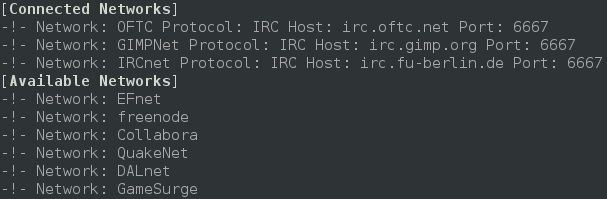
As longingly awaited I am very happy to announce Smuxi 0.8.10 codenamed "Tracy". During the development 8 bug reports and 15 feature requests in 136 commits were worked on making this release a major feature and minor bugfix release. Screenshot of Smuxi 0.8.10 in action Notable highlights in this release are: Integrated Spell Checking Everyone knows the "how do you spell that word again?" situation and either you don't care and send a possible typo or you go checking a dictionary which is kind of annoying. The good news is: with this release you no longer need to do that, as Smuxi includes automatic spell checking while you type messages. The bad news is that this feature is currently limited to Linux builds, and thus OSX and Windows build do not ship with it. The installers need to be extended and I haven't found pre-compiled OSX nor Windows binaries for the GTK+ spell checking library. Screenshot of Smuxi 0.8.10 showing spell checking in action Favicons for Server Tabs Distinguishing server tabs can be difficult, especially if you have plenty of them. All server tabs have the same icon so you need to search for the right name. I wondered why this issue doesn't happen so easily with a web browser which usually also has lots of tabs open. Besides the page name there is the favicon right in front. So why can't Smuxi make use of that simple but effective technology? Well, now it does! You connect to a known network, and Smuxi will download and show the favicon of the website. It just works and does everything in the background for you. Screenshot of Smuxi 0.8.10 showing favicons in action Quick Join Bar One thing that makes IRC really difficult for new comers is the important IRC concept that channels are network specific. So what happens is people try to find / join the channel they are looking for but on the wrong network. They have to connect to the right server/network and then switch to the right tab, before they can join the channel (using the /join command or join dialog). The developers of Smuxi had a brainstorming session and came up with something that should be easy enough for anyone to use and finally solves the issue: the quick join bar. You know which channel you want to join and which network, you enter the channel name, select the network from the list and hit the "Join Chat" button and you are done. Now Smuxi will do just the right thing for you and connects to that network if needed, joins the channel if needed, or switches to the channel if you are already there! Click here for a screencast of the Quick Join Bar in action Indention of multi-line messages Messages on IRC and also Twitter are often longer than a single line in Smuxi can show, thus it has to be split into a second line or more. The issue here is that the continuation line looks cluttered because it doesn't align with the first line. Here you can see an example for this issue: Screenshot of Smuxi 0.8.9 showing line breaks Ewww, that looks ugly, doesn't it? I will make this one short, here is the cure with indented multi-line messages: Screenshot of Smuxi 0.8.10 showing line breaks Enhanced Text Frontend The text frontend which is still in alpha state has received the following enhancements: new /exit command, new /help command, regular and xterm window title, and, several fixed crashes. Screenshot of Smuxi 0.8.10's text frontend Enhanced Commands The /network command by default shows now all connected and also available networks: Screenshot of Smuxi 0.8.10 showing network command The /connect command now allows you to connect by network name like this:



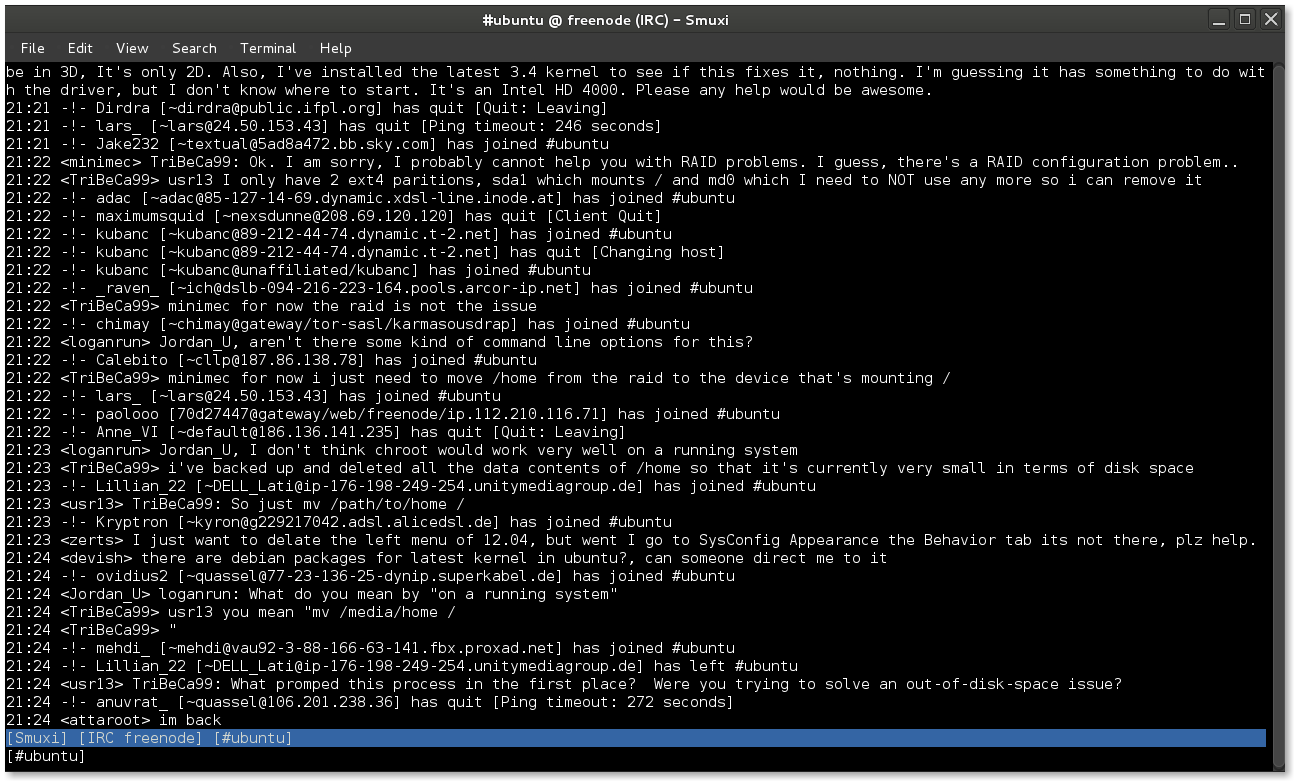
/connect freenode
Updated Translations
  • Portuguese (Pedro Ribeiro)
  • Chinese Simp (Dean Lee)
  • Danish (Joe Hansen)
  • Swedish (Martin Bagge)
  • Russian (Yuri Myasoedov)
New Translations
  • Croatian (Matias M)
  • partially Polish (lukasznaw)
Contributors Contributors to this release are the following people:
  • Mirco Bauer (126 commits)
  • Bianca Mix (translations)
  • Dean Lee (translations)
  • Joe Hansen (translations)
  • Yuri Myasoedov (translations)
  • Pedro Ribeiro (translations)
  • Matias M (translations)
  • Martin Bagge (translations)
  • lukasznaw (translations)
Thank you very much for your contributions to Smuxi! Already horny? Go here and get some! Update: Smuxi 0.8.10.1 About 2 months after the 0.8.10 release, Smuxi 0.8.10.1 with only important bugfixes and translation updates was released. This release includes the following 6 bugfixes: smuxi-server now honors the timezone of tweets, fixed a connection crash with InspIRCd-2.0 servers, quick join no longer opens another network tab, closing chats no longer crashes Smuxi sometimes, /connect irc.some-server.com works again and focusing the message area moves the focus back to the entry again.
Posted Tue Aug 21 23:16:05 2012

20 August 2012

Martin Pitt: PyGObject 3.3.90 released

I just released PyGObject 3.3.90, for GNOME 3.5.90. This is now working correctly on big-endian 64 bit machines such as powerpc64, and fixes marshalling for GParamSpec attributes and return values, as well as a few small bug fixes. Thanks to all contributors! Complete list of changes:
  • Implement marshalling for GParamSpec (Mathieu Duponchelle) (#681565)
  • Fix erronous import statements for Python 3.3 (Simon Feltman) (#682051)
  • Do not fail tests if pyflakes or pep8 are not installed (Martin Pitt)
  • Fix PEP-8 whitespace checking and issues in the code (Martin Pitt)
  • Fix unmarshalling of gssize (David Malcolm) (#680693)
  • Fix various endianess errors (David Malcolm) (#680692)
  • Gtk overrides: Add TreeModelSort.__init__(self, model) (Simon Feltman) (#681477)
  • Convert Gtk.CellRendererState in the pygi-convert script (Manuel Qui ones) (#681596)

19 August 2012

John Goerzen: Crazy Enough?

So far this year, I ve read somewhere in the neighborhood of 5000 pages. As I ve started to read more, I ve started to watch TV, movies, and Youtube less, because they are simply boring and shallow in comparison. War and Peace, in particular, deeply touched me. Lately I have been reading the Wheel of Time series, which has its own unique characteristics. Whether an epic (or super-epic, such as Wheel of Time) novel, or the Sherlock Holmes series, or nonfiction works, there is something magical about reading a book. We often see characters, real or fictional, that rise from obscurity to do great things for the world. We are transported in time and place to a time or place we will never be able to experience, perhaps because it is long past, or perhaps because it never was. But in any case, we can be inspired. I am reminded of this quote: The people crazy enough to think they can change the world are the ones that do. If someone told me that a street vendor in Tunisia would, in less than a year, cause the overthrow of 4 dictatorships and reform in a handful more, I would have, yes, thought that was crazy. And while Mohamed Bouazizi isn t a household name in much of the world, he managed exactly that. But not just him. It took crazy unarmed people to occupy Tahrir Square, some to die, for progress to be made in Egypt. This story is written all over history. People have done the impossible, have defied all odds, through sheer belief that they could. Civil rights have been granted due to the leaders we all know, but also due to the millions of marchers we don t. Changing the world doesn t have to mean that the world knows you. It just has to mean that you love the world, as Tolstoy pointed out:
Love hinders death. Love is life. All, everything that I understand, I understand only because I love. Everything is, everything exists, only because I love. Everything is united by it alone. Love is God, and to die means that I, a particle of love, shall return to the general and eternal source.
Whatever your stance on religion, this is a powerful quote. Sometimes particles of love might look crazy. But isn t it then that they are the most alive? Isn t it then that they are the greatest hindrance to death and despair?

17 August 2012

Petter Reinholdtsen: Half way there with translated docbook version of Free Culture

In my spare time, I currently work on a Norwegian docbook version of the 2004 book Free Culture by Lawrence Lessig, to get a Norwegian text explaining the problems with the copyright law I can give to my parents and others that are reluctant to read an English book. It is a marvellous set of examples on how the ever expanding copyright regulations hurt culture and society. When the translation is done, I hope to find funding to print and ship a copy to all the members of the Norwegian parliament, before they sit down to debate the latest revisions to the Norwegian copyright law. This summer I called for volunteers to help me, and I have been able to secure the valuable contribution from at least one other Norwegian. Two days ago, we finally broke the 50% mark. Then more than 50% of the number of strings to translate (normally paragraphs, but also titles and index entries are also counted). All parts from the beginning up to and including chapter four is translated. So is chapters six, seven and the conclusion. I created a graph to show the progress: The number of strings to translate increase as I insert the index entries into the docbook. They were missing with the docbook version I initially started with. There are still quite a few index entries missing, but everyone starting with A, B, O, Z and Y are done. I currently focus on completing the index entries, to get a complete english version of the docbook source. There is still need for translators and people with docbook knowledge, to be able to get a good looking book (I still struggle with dblatex, xmlto and docbook-xsl) as well as to do the draft translation and proof reading. And I would like the figures to be redrawn as SVGs to make it easy to translate them. Any SVG master around? I am sure there are some legal terms that are unfamiliar to me. If you want to help, please get in touch, and check out the project files currently available from github. If you are curious what the translated book currently look like, the updated PDF and EPUB are published on github. The HTML version is published as well, but github hand it out with MIME type text/plain, confusing browsers, so I saw no point in linking to that version.

Dirk Eddelbuettel: Follow-up to Counting CRAN Package Depends, Imports and LinkingTo

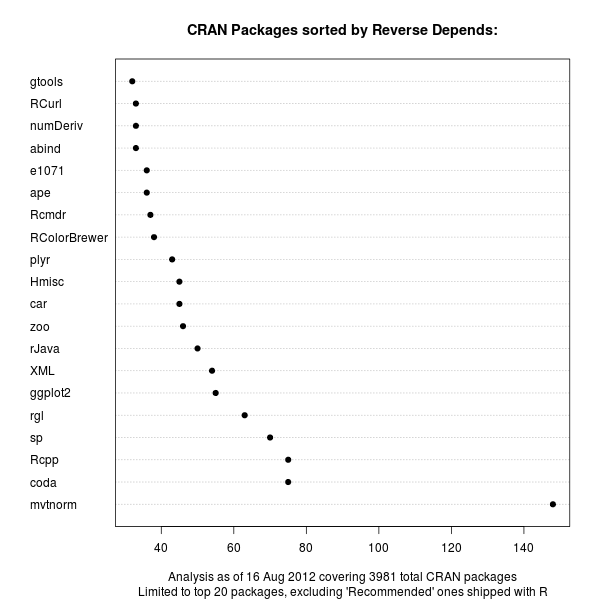
A few days ago, I blogged about visualizing CRAN dependency ranks which turned out to be a somewhat popular post. David Smith followed-up at the REvo blog suggesting to exclude packages already shipping with R (which is indicated by their 'Recommended' priority). Good idea! So here is an updated version, where we limit the display to the top twenty packages counted by reverse 'Depends:', and excluding those already shipping with R such as MASS, lattice, survival, Matrix, or nlme. CRAN package chart of Reverse Depends relations excluding Recommended packages The mvtnorm package is still out by a wide margin, but we can note that (cough, cough) our Rcpp package for seamless R and C++ is now tied for second with the coda package for MCMC analysis. Also of note is the fact that CRAN keeps growing relentlessly and moved from 3969 packages to 3981 packages in the space of these few days... Lastly, I have been asked about the code and/or data behind this. It is really pretty simply as the main data.frame can be had from CRAN (where I also found the initial few lines to load it). After that, one only needs a little bit of subsetting as shown below. I look forward to seeing other people riff on this data set.
#!/usr/bin/r
##
## Initial db downloand from http://developer.r-project.org/CRAN/Scripts/depends.R and adapted
require("tools")
## this function is essentially the same as R Core's from the URL
## http://developer.r-project.org/CRAN/Scripts/depends.R
getDB <- function()  
    contrib.url(getOption("repos")["CRAN"], "source") # trigger chooseCRANmirror() if required
    description <- sprintf("%s/web/packages/packages.rds", getOption("repos")["CRAN"])
    con <- if(substring(description, 1L, 7L) == "file://")  
        file(description, "rb")
      else  
        url(description, "rb")
     
    on.exit(close(con))
    db <- readRDS(gzcon(con))
    rownames(db) <- db[,"Package"]
    db
 
db <- getDB()
## count packages
getCounts <- function(db, col)  
    foo <- sapply(db[,col],
                  function(s)   if (is.na(s)) NA else length(strsplit(s, ",")[[1]])   )
 
## build a data.frame with the number of entries for reverse depends, reverse imports,
## reverse linkingto and reverse suggests; also keep Recommended status
ddall <- data.frame(pkg=db[,1],
                    RDepends=getCounts(db, "Reverse depends"),
                    RImports=getCounts(db, "Reverse imports"),
                    RLinkingTo=getCounts(db, "Reverse linking to"),
                    RSuggests=getCounts(db, "Reverse suggests"),
                    Recommended=db[,"Priority"]=="recommended"
                    )
## Subset to non-Recommended packages as in David Smith's follow-up post
dd <- subset(ddall, is.na(ddall[,"Recommended"])   ddall[,"Recommended"] != TRUE)
labeltxt <- paste("Analysis as of", format(Sys.Date(), "%d %b %Y"),
                  "covering", nrow(db), "total CRAN packages")
cutOff <- 20
doPNG <- TRUE
if (doPNG) png("/tmp/CRAN_ReverseDepends.png", width=600, heigh=600)
z <- dd[head(order(dd[,2], decreasing=TRUE), cutOff),c(1,2)]
dotchart(z[,2], labels=z[,1], cex=1, pch=19,
         main="CRAN Packages sorted by Reverse Depends:",
         sub=paste("Limited to top", cutOff, "packages, excluding 'Recommended' ones shipped with R"),
         xlab=labeltxt)
if (doPNG) dev.off()
if (doPNG) png("/tmp/CRAN_ReverseImports.png", width=600, heigh=600)
z <- dd[head(order(dd[,3], decreasing=TRUE), cutOff),c(1,3)]
dotchart(z[,2], labels=z[,1], cex=1, pch=19,
         main="CRAN Packages sorted by Reverse Imports:",
         sub=paste("Limited to top", cutOff, "packages, excluding 'Recommended' ones shipped with R"),
         xlab=labeltxt)
if (doPNG) dev.off()
# no cutOff but rather a na.omit
if (doPNG) png("/tmp/CRAN_ReverseLinkingTo.png", width=600, heigh=600)
z <- na.omit(dd[head(order(dd[,4], decreasing=TRUE), 30),c(1,4)])
dotchart(z[,2], labels=z[,1], pch=19,
         main="CRAN Packages sorted by Reverse LinkingTo:",
         xlab=labeltxt)
if (doPNG) dev.off()

16 August 2012

Gunnar Wolf: 19 years of Debian

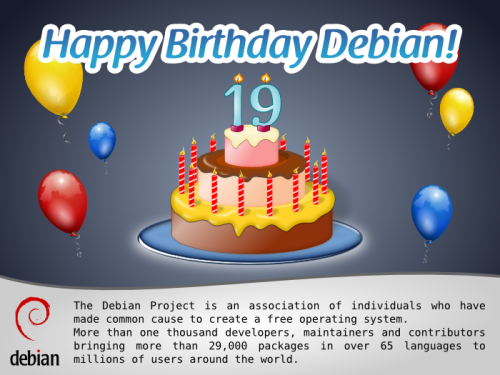
Happy 19th birthday, Debian! The Debian project is 19 years old now. Following Francesca's invitation (and Rapha l's lead, and using Leandro's image, collaboratively as it always happens here), I will tell a bit of my memories: How I got to Debian. I am a Debian user since ~2000, and a Debian Developer since April 2003. But, just as Rapha l's, my history must go somewhat further back in time. In 1992, I got my first 1200bps modem, and almost immediately became an avid BBS user (what's that? Javier Matuk talks [in Spanish] about BBSes in his newspaper column back in 1994). By mid 1993 I started operating my own BBS, CatarSYS. One of the key points that defined CatarSYS is that my focus was large-scale communication. I started connecting to several BBS networks, allowing messages to be relayed to distant people, mainly in the USA and Spain, and getting some feeds that could be seen as the poor man's Usenet. At some point during the year I kept CatarSYS going, I got connected through a strange set of gateways to pure gold: A UUCP feed! This means, during some months, I operated the first (free, hobbyist) service that offered its users a free Internet mail address in Mexico. Yes, it was completely different to what we are used to today. I tried to connect to my provider at least three times a week, but this meant less than one week turnover time for messages sent to people anywhere in the world! But, back to Debian: Via this UUCP feed, I also got some real Usenet newsgroups Including several on the comp.os category. I remember reading about Linux back then, and learning some commands, but didn't really get hooked into it. I was in Israel from July 1994 to June 1995, doing completely non-computer-related tasks. Came back in 1995, and due to my father being an academic, got dialup internet access at home. WOW, *real* Internet! It didn't take me long to start downloading Linux information and floppy images. One failed after another. But before the end of the year, I found in a bookshop a book (that included a CD-ROM) called "Build your own web server with Linux". WOW again Remember this was still 1995! I bought it, and shortly afterwards, I had a Slackware system (Linux kernel 1.0.9) running. That meant many sleepless nights full of joy and frustration (as getting hardware to work was cloe to impossible). By 1996, I got (within one week) my two first real jobs: A systems administrator at a small ISP and a highschool teacher. At the ISP, I got a spare computer to play with Linux, as of course the Big Server was running with Windows NT 3.51. Poor little machine... By then I was already a part of the Mexican Linux User Group. This group had just printed a batch of Linux CDs RedHat 4.0. This was the first release that really made me happy and allowed me to do good work. Together with a friend I took to work with us, Juan Pablo Romero, we installed over a weekend a full replacement for our buggy NT machine, in much cheaper hardware. Of course, Linux was nowhere near corporate-recognition, and our project remained a project, not touching the Windows machine. Anyway... Several years passed, and I was happy with my RedHat choice. I won't mention the milestones and job changes, as it would get boring and leave the point completely aside. By the year 2000, I was quite more involved with the LUG, as well as with the computer security group in DGSCA-UNAM. I became also an OpenBSD user, and had got so hooked up in free software that I felt the need to collaborate: To be a little part of one of those Big Projects that had given me so much. But which one? I have never been much of a programmer Yes, I can solve my everyday needs and have fun with it, and sometimes a bit beyond that. I enjoy programming. But all of my projects have begun little and stayed little. I wanted to join OpenBSD, as it was a community I really believed in, but given my skillset (and given a flame-prone, aggressive developer community), I lost motivation to do so. By 2000, I had also lost faith in RedHat. I don't have the exact dates, so I might be some months off But after RedHat's IPO, I felt a sharp change. Version 7.0 was really demotivating It tried to offer a polished desktop experience, but was really buggy, unstable, and full of bad decisions. In Mexico, Pepe Neif had taken up the job of making a derivative distribution of RedHat (called LinuxPPP), pressing hundreds of CDs and making a teaching program I was part of several times. Talking with Pepe (who continued to release based on RedHat 6), he told me he was interested in switching over to become a Debian-based distribution, but the job of migrating his installed base made the project stall LinuxPPP reached only version 6.4. But I installed Debian in early 2000, and loved it. I started getting familiar with its social philosophy and foundation documents at the same time I started migrating my servers from RedHat to Debian This must have been by Spring 2000, as I installed Potato while it was frozen but not yet stable. By January 2002 I applied for NM. My process took a long time, as my AM got MIA when he had already approved me (but before sending the AM report), so basically I had to go through AM twice And by April 16, 2003, I got accepted as a DD. Contrary to what is acceptable today, I requested the full process to be done before starting to maintain any packages, as I didn't want to bother people with package sponsorship requests, so my whole process was done evaluating packages I would eventually upload. Since becoming a DD, my main involvement in the project has been in packaging groups (I was a pkg-perl founder and member for many years, and am currently working in the pkg-ruby-extras group). But, as I said, my main strength is not programming So my main involvement in Debian has been more social than technical: I have been a DebConf organizer since 2005, a very interesting, stressing, rewarding and (for some months) time-demanding role, and since 2009 I am part of the keyring maintainence team, which is much easier workload, although carries important ramifications. So, after 19 years of Debian, and after nine years of me being part of it, Debian is clearly my strongest link to the Free Software community, a project I have grown to love and whose way of being I share and enjoy studying and explaining. And it is a technically excellent product, and a great place to start and keep learning both about how every aspect and layer of an operating system works, and how human-to-human interaction works in such a diverse, almost impossible environment happens. Congratulations, Debian!
AttachmentSize
debian-19_500.png149.81 KB

Russ Allbery: Review: Getting Started with Dwarf Fortress

Review: Getting Started with Dwarf Fortress, by Peter Tyson
Publisher: O'Reilly
Copyright: May 2012
ISBN: 1-4493-1494-5
Format: Trade paperback
Pages: 219
If you're unfamiliar with Dwarf Fortress, you're in good company. Most people are, even people who play video games regularly. It was heavily inspired by roguelike games: games such as Hack and Rogue and their more recent variations, which have been around since the 1970s and are still frequently played with simple character graphics on 2D maps. Dwarf Fortress even has a roguelike gameplay mode, but the core of the game (and the only part of the game covered in this book) is the fortress mode, where the player controls a band of dwarfs in an attempt to construct and maintain a fortress. All of this is done (by default, at least) in a simulated-text interface filled with a barrage of strange characters and symbols. A Dwarf Fortress game in progress is almost incomprehensible to the uninitiated. (There are graphical tile sets available, but all the illustrations in this book assume the default display mode.) Dwarf Fortress gains its cult popularity (sufficient to support the primary developer solely through voluntary donations; the game is free) from the incredible depth and richness of the world. Almost everything is modeled in startling detail, down to the individual items of clothing that each dwarf wears, their personalities and history, and a considerable part of the industrial lifecycle of any goods that the fortress needs to produce (such as food and all-important alcohol). That's where this book comes in. The game is so massive and involves so many variables, industries, needs, requirements, and perils that the first-time player is likely to see their first games collapse due to resource problems they have no idea how to address. Getting Started with Dwarf Fortress walks the player through the initial fortress setup, the resource cycles, and the fundamentals of the various parts of the game one has to monitor. The fact that this discussion takes over 200 pages should give you an idea of the depth of the game. I should stop here and warn that, similar to my RPG sourcebook reviews, I read this book somewhat against its intended purpose. I haven't played Dwarf Fortress and don't currently intend to. It's not quite my game type: I don't like open world construction games in which it's possible to lose (and thereby lose all the things that one has built). But the idea of the game, the way it's developed, and the fact that O'Reilly would publish a book about it is so delightfully strange that I wanted to get a feel for the game without investing the time required to learn it. Thankfully, while the book is designed to be a tutorial, it also does an excellent job at conveying the feel of a game. Getting Started with Dwarf Fortress is divided into eleven chapters. After a chapter of introduction, it goes over site selection, some of the options for your initial party, and recommended settings for both. It then provides some advice for the initial rooms and initial fortress layout to get started. Subsequent chapters are more topic-oriented, covering food, merchants, resource management (including Strange Moods), digging, and the various chains of industry. The final chapters cover some of the more intricate details of dwarven life, such as justice, vampires, and hospitals, and then provide an introduction to the military and to dwarven engineering. The engineering chapter, in particular, makes it clear that vast complexity and possibility is left unexamined. One drawback of the printed version of the book (I don't know if this also applies to the ebook) is that all of the screen shots here are black and white. This makes Dwarf Fortress's already-forbidding presentation even more difficult to understand. At times, I had a hard time picking out features that were described in the text. A look at on-line screenshots quickly shows that color is massively helpful in making sense of all the little glyphs. I'm sure color printing would have made the printed version prohibitively expensive, but it is a loss. The text, though, is excellent. Not only is it clear and helpful (although with the caveat that I've not personally tested it), it captures much of the humor and feel of the game. Dwarf Fortress incorporates computer-generated storytelling that narrates the events of the game (and the backstory of the world), which has sparked a tradition of delightfully wry commentary on games, game mechanics, and events in the game (particularly the ones that cause the cascading destruction of the whole fortress). Tyson captures that tone brilliantly, weaving it throughout his descriptions. This is a tutorial that's genuinely fun to read. (Although the Tim Denee comics ending chapters sadly didn't work for me.) It's certainly possible to get started with Dwarf Fortress without this book. There are other tutorials on-line, as well as an impressively huge wiki. But this is a great introduction and is entertainment in its own right. If you've thought about playing the game, or if, like me, you want a good feel for what it's like without investing the time in actually playing it, I recommend it. I should probably note that this book covers Dwarf Fortress up to 0.34.07, and the dead tree version that I have obviously won't be further updated. O'Reilly does note on the back cover that if you purchase the ebook edition, it will receive free updates for the "life of the edition" (however long that is). If you're worried about subsequent changes in the game making the book obsolete (given the ongoing active development, this is something of a worry, although this book mostly covers fundamentals), you may want to grab the electronic version. Rating: 8 out of 10

14 August 2012

Philipp Kern: Debian s390x installation now working

With a current daily build of debian-installer you should now be able to install a VM with Debian s390x. I'm told that even installation within hercules works again. d-i's beta 1 for wheezy has a broken busybox and is hence unusable. But there were more issues:
  • zipl-installer was blacklisted from building on s390x by Packages-arch-specific which caused nobootloader to be selected during installation.
  • base-installer was unable to pick the correct kernel image due to it not having any rules for this architecture.
  • A netcfg fix was needed that removes a 50s timeout while d-i tries to arping the configured gateway. This check seems to be pretty new and if it fails the link is still considered up and the installation continues. The network driver commonly used on s390(x) (qeth) uses layer 3 configuration by default, which means that ARP is meaningless. The IPv4 and IPv6 addresses are configured in the network adapter which then does all the ARP if necessary (i.e. not within the same machine).
The resulting installation even boots. But it shares some problems with squeeze's s390 port:
  • udev's persistent network device naming is broken. It includes a volatile device ID that is incremented with each reboot. This is now tracked in Debian bug #684766.
  • The TERM variable is set to linux during boot-up instead of dumb (the s390(x) terminals are either line- or form-based, except for one HMC ASCII terminal). Together with the new fancy coloured LSB init output in wheezy the screen gets even more noisy with all those escape sequences. It's yet unclear where this should be fixed. The kernel provides the init system with a TERM=linux default and it's not yet fixed up afterwards (either in initramfs-tools, or busybox, or sysvinit).
Tip of the day: If you see funny characters in x3270, then you maybe selected the wrong EBCDIC code page. If you use Linux you want to select CP1047 instead of the default CP037 in Options Character Set ( Euro). That's the target of the in-kernel ASCII to EBCDIC converter.

Michal &#268;iha&#345;: Weblate 1.2

Quite on schedule, Weblate 1.2 has been released today. It comes with lot of improvements, especially for project admins, handling of po files and improved performance. Full list of changes for 1.2:
  • Weblate now uses South for database migration, please check upgrade instructions if you are upgrading.
  • Fixed minor issues with linked git repos.
  • New introduction page for engaging people with translating using Weblate.
  • Added widgets which can be used for promoting translation projects.
  • Added option to reset repository to origin (for privileged users).
  • Project or subproject can now be locked for translations.
  • Possibility to disable some translations.
  • Configurable options for adding new translations.
  • Configuration of git commits per project.
  • Simple antispam protection.
  • Better layout of main page.
  • Support for automatically pushing changes on every commit.
  • Support for email notifications of translators.
  • List only used languages in preferences.
  • Improved handling of not known languages when importing project.
  • Support for locking translation by translator.
  • Optionally maintain Language-Team header in po file.
  • Include some statistics in about page.
  • Supports (and requires) django-registration 0.8.
  • Caching of counted units with failing checks.
  • Checking of requirements during setup.
  • Documentation improvements.
You can find more information about Weblate on it's website, the code is hosted on Github. If you are curious how it looks, you can try it out on demo server. You can login there with demo account using demo password or register your own user. Ready to run appliances can be found in SUSE Studio Gallery. Weblate is also being used https://l10n.cihar.com/ as official translating service for phpMyAdmin, Gammu, Weblate itself and others. If you are free software project which would like to use Weblate, I'm happy to help you with set up or even host Weblate for you (this will be decided case by case as my hosting space is limited). Update: Weblate appliace has been updated to 1.2 as well.

Filed under: English Weblate 0 comments Flattr this!

Matthew Garrett: Playing with Thunderbolt under Linux on Apple hardware

I've temporarily got hold of a Retina Macbook Pro. Fedora 17 boots fine on it with the following kernel arguments: nointremap drm_kms_helper.poll=0 video=eDP-1:2880x1800@45e, although you'll want an updated install image. The nointremap requirement is fixed by this patch, and the others are being tracked here. The gmux chip that controls the multiple graphics chipsets has changed - patches here. That just leaves Thunderbolt.

Thunderbolt is, to a first approximation, PCIe tunnelled over a Displayport connector. It's a high-bandwidth protocol for connecting external devices. Things are complicated by it also supporting Displayport over the same connection, which I'm sure will be hilarious when we get yet another incompatible display protocol. But anyway. I picked up a Thunderbolt ethernet adapter and started poking.

Booting with the device connected looked promising - an ethernet device appeared. Pulling it out resulted in the pcie hotplug driver noticing that it was missing and cleaning up, although the b44 ethernet driver sat around looking puzzled for a while. So far so good. Unfortunately plugging it in again didn't work, and rebooting without any Thunderbolt devices connected not only did nothing on hotplug, it also meant that the Thunderbolt controller didn't show up in lspci at all.

It turns out that there's several problems at play here. The first is the missing Thunderbolt controller. The problem here is the following code in Apple's ACPI tables:
        Method (RMCR, 0, Serialized)
         
            If (LNot (OSDW))
             
                If (LAnd (LEqual (\_SB.PCI0.PEG1.UPSB.DSB1.UPS0.AVND, 0xFFFF), 
                    LEqual (\_SB.PCI0.PEG1.UPSB.DSB2.UPS0.AVND, 0xFFFF)))
                 
                    Store ("RMCR: Disable Link and Power Off Cactus Ridge Chip",
                           Debug)
                    Store (0x01, \_SB.PCI0.PEG1.LDIS)
                    Sleep (0x07D0)
                    Store (0x00, GP23)


This checks if the system claims to be Darwin (the core of OS X). If not, it checks whether two PCIe bridges have been configured. If both are still in an unconfigured state, it cuts the PCIe link to the upstream PCIe link and then sets GP23 to 0. Looking further, GP23 turns out to be a GPIO line. Setting it to 0 appears to cut power to the Thunderbolt controller. In summary, unless your OS claims to be OS X, booting without an attached Thunderbolt device will result in the chipset being powered down so hard that it's entirely invisible to the OS.

Fixing that is as easy as adding Darwin to the list of operating systems Linux claims to be. So, now I could boot without a connected device and still see the controller. Since ACPI seemed to be important here, I started looking at the other ACPI methods associated with the device. The first one that drew attention was Name(_GPE, 0x14). The _GPE method (not to be confused with the _GPE object at the top of the global ACPI namespace) is defined as providing the ACPI general purpose event associated with the device. Unfortunately, it's only defined as doing this for embedded controllers - Apple's use of it on a PCI device is massively non-standard. But, still, easy enough to handle. Intel chipsets map GPE 0x10 to 0x1f to GPIO lines 0-15, so this GPE is associated with GPIO 4. Looking through the ACPI code showed a bunch of other references to GP04, and it turns out that if the chip is powered down (via setting GP23 to 0) then plugging a device in to the port will generate a GPE. This makes sense - a powered down controller isn't going to notice hotplug events itself, so you need some kind of out of band notification mechanism. There's also another ACPI method that flips the polarity of the GPIO line so it doesn't keep generating events for the entire time a device is connected. It didn't take long to come up with a stub driver that would power down the controller if nothing was connected at boot, and then wake it up again on a hotplug event.

Unfortunately that's as far as I've got. I'd been hoping that everything beyond this was just PCIe hotplug, but it seems not. Apple's Thunderbolt driver is rather too large to just be handling ACPI events, and this document on Apple's website makes it pretty clear that there's OS involvement in events and device configuration. Booting with a device connected means that the firmware does the setup, but if you want to support hotplug then the OS needs to know how to do that - and Linux doesn't.

Getting this far involved rather a lot of irritation at Apple for conspiring to do things in a range of non-standard ways, but it turns out that the real villains of the piece are Intel. The Thunderbolt controller in the Apples is an Intel part - the 82524EF, according to Apple. Given Intel's enthusiasm for Linux and their generally high levels of engagement with the Linux development community, it's disappointing[1] to discover that this controller has been shipping for over a year with (a) no Linux driver and (b) no documentation that would let anyone write such a driver. It's not even mentioned on Intel's website. So, thanks Intel. You're awful.

Anyway. This was my attempt to spend a few days doing something more relaxing than secure boot, and all I ended up with was eczema and liver pain. Lesson learned, hardware vendors hate you even more than firmware vendors do.

[1] By which I mean grotesquely infuriating

comment count unavailable comments

Dirk Eddelbuettel: RInside 0.2.7

A new version 0.2.7 of RInside is now available via CRAN. RInside provides a set of convenience classes which facilitate embedding of R inside of C++ applications and programs, using the classes and functions provided by the Rcpp R and C++ integration package. This release adds two new examples subdirectories demonstrating use of RInside with, respectively, RcppArmadillo and RcppEigen. We extended the 'web application' example using the Wt toolkit by adding CSS and XML support, and added another new example motivated by a StackOverflow question. CMake support has been added for Windows as well thanks to Peter Aberline---he also contributed CMake code for the two new example directories but that contribution made it only into SVN and not this release. All changes since the last release are summarized below in the NEWS file entry:
Changes in RInside version 0.2.7 (2012-08-12)
  • New fifth examples subdirectory 'armadillo' with two new examples showing how to combine RInside with RcppArmadillo
  • New sixth examples subdirectory 'eigen' with two new examples showing how to combine RInside with RcppEigen
  • Prettified the Wt example 'web application' with CSS use, also added and XML file with simple headers and description text
  • New example rinside_sample12 motivated by StackOverflow question on using sample() from C
  • Added CMake build support on Windows for the examples
CRANberries also provides a short report with changes from the previous release. More information is on the RInside page. Questions, comments etc should go to the rcpp-devel mailing list off the Rcpp R-Forge page.

13 August 2012

Patrick Matth i: Logging packets with iptables and ULOG

Imagine you have got the following iptables rule set:
*filter
:INPUT ACCEPT [2:130]
:FORWARD ACCEPT [0:0]
:OUTPUT ACCEPT [119:14185]
-A INPUT -s 127.0.0.0/8 -j ACCEPT
-A INPUT -p tcp -m tcp dport 22 -j ACCEPT
-A INPUT -p tcp -m tcp dport 80 -j ACCEPT
-A INPUT -p tcp -m tcp tcp-flags FIN,SYN,RST,ACK SYN -j DROP
COMMIT
This would allow all traffic from 127.0.0.0/8, on port 22 and 80. Other (TCP/IP) SYN packages (so on all the other connections) would be dropped.
Now you see, that your counter for the SYN DROP rule is increasing and you want to know what is rejected, but how? The simple answer is ULOG the netfilter userspace logging daemon.
In Debian you have got various implementations/variants of it, the local logging one (which I will use here, just called ulogd) and the -postgres, -mysql and -sqlite3 one (that are not the exact package names), with that you also can log everything to a (remote) database.
An special variant is the -pcap one, it will write the logs in the .pcap format, so you can analyze the full traffic. So for our example it is enough to install the package:
apt-get install ulogd
And then add another rule BEFORE our SYN DROP:
-A INPUT -p tcp -m tcp tcp-flags FIN,SYN,RST,ACK SYN -j ULOG
-A INPUT -p tcp -m tcp tcp-flags FIN,SYN,RST,ACK SYN -j DROP
Now you will find in /var/log/ulog/syslogemu.log a log of all connections, which would be dropped, the log looks like this:
Aug 13 14:42:07 srv1 IN=eth0 OUT= MAC=00:0c:29:8c:2b:6c:00:d0:02:eb:e8:0a:08:00 SRC=75.125.70.194 DST=XXX.XXX.XXX.XXX LEN=40 TOS=00 PREC=0 00 TTL=54 ID=9566 PROTO=TCP SPT=57144 DPT=445 SEQ=2770468863 ACK=0 WINDOW=512 SYN URGP=0
Aug 13 14:45:29 srv1 IN=eth0 OUT= MAC=00:0c:29:8c:2b:6c:00:d0:02:eb:e8:0a:08:00 SRC=75.125.70.194 DST=XXX.XXX.XXX.XXX LEN=40 TOS=00 PREC=0 00 TTL=55 ID=13702 PROTO=TCP SPT=58528 DPT=445 SEQ=1217789951 ACK=0 WINDOW=512 SYN URGP=0
So you have got now the information about the full date, mac address (mostly it will be the one of your gateway), source and destination IP, source and destination port, length, protocol, etc. You also could use it to log outgoing connections to port 80 and the IRC ports:
-A OUTPUT -p tcp -m tcp dport 80 -j ULOG -A OUTPUT -p tcp -m tcp dport 6666:6669 -j ULOG
Whatever you want.

Next.

Previous.