Search Results: "dom"

9 April 2007

Erich Schubert: Renaming applications

You probably have read it alread Gaim will be renamed to Pidgin. Most likely because of AOL being unhappy with them using AIM in their name (although they support a dozen other messengers as well; getting rid of AIM in the name was also 'wanted' by the Gaim developers I guess). However, such software renames eventually cause some problems. For example, will the API also be renamed? Will libgaim become libpidgin? Will the DBus interfaces change their name? A dozen of applications might be affected by that, including the popular AdiumX messenger for OSX. (One of the prettiest I've seen so far, btw.) Other examples of such renames (and the problems caused by that) is the Mozilla chaos. Mozilla doens't allow to distribute modified versions of Firefox or Thunderbird under these names, so Debian has to replace the names (though most of our patches at some point are adopted by upstream, or they'd be okay with them, Debian also has the requirement that our users must be able to do their own modifications!). This is why etch just shipped with "Iceweasel" and "Icedove" instead. However some web sites don't test for the browsers "Gecko" version, and for example Google Groups, when trying to set the profile image, tells me I need to run Firefox or Internet Explorer. Though I'm pretty sure the function would just work fine with both Epiphany (my primary browser) and Iceweasel. The transition from "cdrecord" to "wodim" was a bit smoother. On the one hand, many application were already expecting functionality not present in the "official" cdrecord (and yes, Joerg, I know that your opinion might differ on that point - I don't care, nor does anybody else I know). On the other hand, it mostly affects programs included in the distribution, so they can be easily handled. There aren't random websites testing for it either, and custom scripts written by users can probably handled via a wrapper (this is much more difficult for libraries I guess, or the DBus API of Gaim. Fortunately for Gaim, these interfaces aren't used much, so it can be solved with a simple search and replace and recompilation in affected applications). I think when more distributions switch from Firefox to Iceweasel because of realizing that it might be important to some of their users and recommend Epiphany because of it's smoother user interface, we might also see less websites doing incorrect browser capability detection.

Matt Brubeck: 8 Apr 2007

Planet Venus as a personal home page Planet Matt is my shiny new home page, based on the Planet Venus feed aggregator. It displays my recent updates from Advogato, LiveJournal, Flickr, and elsewhere. It also provides a single feed for friends who want to subscribe to all of my updates without tracking down a username and feed for each new service. This gives some of the same benefits as ClaimID or Red Hat's MugShot, but it runs at a domain I control, and doesn't depend on any one third-party service. As a bonus, the home page is also my new OpenID URL (using delegation). Right now I'm using a slightly modified version of the "classic_fancy" theme that comes with Planet, plus some simple custom filters. I'm developing a new theme that will be more suited for use as a personal home page, which I plan to contribute back to Planet Venus for others to use. Let me know if you're interested.

7 April 2007

Gunnar Wolf: Version 3.14 of the CoPL released

As I've posted before, I recently read Lawrence Rosen's Open Source Licensing Software Freedom and Intellectual Property Law. And I'm sure many of you will recognize the enormous constructive value of early-morning cavilations. Well, today I woke up thinking about strengths and weaknesses in th different Free Software licenses, and I decided to add my grain to the world of license proliferation. So, here goes version 3.14 of the CoPL. I wonder how long will it take before it reaches /usr/share/common-licenses on Debian systems ;-)
		       CONFUSING PUBLIC LICENSE
		       ========================
	This is version 3.14 of the Confusing Public License (referred to from
now on as "CoPL"). Copyright (c) 2007 Transnational
Republic. Additional copies of this license can be purchased at no
cost from any Transnational Republic citizen at any of its recognized
outposts, or freely copied. 
	Any legal claims regarding Original works or any of their Standard
versions licensed under the CoPL Should not abide by and be carried
out according to the current law of the Transnational Republic. The
Original author to pay for any attorney and other legal fees of any
dispute regarding said Original author.
	This license text is designed to protect all the Technology covered
under it under a thick layer of incomprehension. No technical,
professional or social measures might be used to subvert the intent of
this license. This license Must be carefully or professionally
reviewed by a lawyer or attorney, under any jurisdiction. Any serious
attempt to understand this license will immediatly terminate your
rights to keep reading this license. Original works licensed under the CoPL
will not be affected by this provision, you will still have permission
to use them.
	Redistributions of source code Should not retain the above copyright notice,
this list of conditions and the following disclaimer. 
	0. This License applies to any program or other work which contains a
   notice placed by the copyright holder saying it may be distributed
   under the terms of this Confusing Public License. The Original work
   below refers to any such program or work or Standard version.
	1. You desire to license the Technology to a
   large community to facilitate research, innovation and product
   development while maintaining compatibility of such products with
   the Technology as delivered by You
	2. Original author desires to license the Technology from You on
   the terms and conditions specified in this License.
	3. Redistributions in binary form Should not reproduce the above copyright
   notice, this list of conditions and the following disclaimer in the
   documentation and/or other materials provided with the distribution.
	4. The names "Joe", "Curly", "Moe" and "The Three Stooges Foundation"
   May be used to endorse or promote products derived from this
   Original work without prior written permission, as they are in no way
   related. 
	5. There is no number 5. Seriously. In all Original works licensed under the
   CoPL, all necessary technical and social steps May be taken not
   to include, in any explicit way, the number 5.
	6. Original author Must make and give away verbatim copies of the
   source form of this Package
   without restriction, provided that Original Author duplicates all of
   the original copyright notices and associated disclaimers.
	7. Original author Must apply bug fixes, portability fixes and other
   modifications derived from the Public Domain or from
   the Copyright Holder. A Package modified in such a
   way shall still be considered the Standard Version.
	8. No Standard versions of the Original work Must be protected by this
   license. Original authors Should not choose a different, saner
   licensing model for the distribution of any modifications they
   make. The CoPL should be taken as a retroviral license.
	THE SOFTWARE IS PROVIDED "AS IS," WITHOUT WARRANTY OF ANY KIND,
EXPRESS OR IMPLIED, INCLUDING BUT NOT LIMITED TO THE WARRANTIES OF
MERCHANTABILITY, FITNESS FOR A PARTICULAR PURPOSE AND
NONINFRINGEMENT. IN NO EVENT SHALL YOU BE
LIABLE FOR ANY CLAIM, DAMAGES OR OTHER LIABILITY, WHETHER IN AN ACTION
OF CONTRACT, TORT OR OTHERWISE, ARISING FROM, OUT OF OR IN CONNECTION
WITH THE SOFTWARE OR THE USE OR OTHER DEALINGS IN THE SOFTWARE.
				     Definitions
	"You" means the original author of the work covered under the CoPL.
	"Original author" means you.
	"Thou" means God almighty.
	"May" means "Should not, no matter what".
	"Must" means "May".
	"Should not" means "Must".
	"Reasonable copying fee" means nothing.
	"Standard version" means a modified version of the Original work.
				      DISCLAIMER
	The CoPL text, from the words "This is version" and up to and
including this paragraph, is to be taken as a preamble, and will not
be effective under any circumstances. 
	All work licensed under the CoPL should be considered as licensed
under the GNU General Public License version 2 or (at your option) any
later version. It is not the task of this license to point you on
where to get hold of said license.

6 April 2007

Adam Rosi-Kessel: Ed Felten on Cablevision

As usual, Ed Felten offers a well-conceived analysis of the Cablevision decision from a technologist’s perspective (for a lawyer’s perspective, see William Patry). The money quote:
The question, in other words, was who was recording the programming. Was Cablevision doing the recording, or were its customers doing the recording? The customers, by using their remote controls to navigate through on-screen menus, directed the technology to record certain programs, and controlled the playback. But the equipment that carried out those commands was owned by Cablevision and (mostly) located in Cablevision buildings. So who was doing the recording? The question doesn t have a simple answer that I can see. This general issue of who is responsible for the actions of complex computer systems crops up surprisingly often in law and policy disputes. There doesn t seem to be a coherent theory about it, which is too bad, because it will only become more important as systems get more complicated and more tightly intereconnected.
Agency, intent/scienter, and responsibility are indeed tricky issues with software and the law. I’ve experienced the problem in my own practice. Although it arises particularly frequently in copyright disputes, it is also common in patent and trademark cases (and of course contract disputes inasmuch as clickwrap-type agreements are implicated). I don’t have any coherent theory to propose, but a more uniform framework would certainly introduce some predictability into these sorts of cases (and thus perhaps avoid litigation). Update: Mike Madison also has some interesting comments on the case.

Nico Golde: Opera starts segfaulting with new X updates

Today I experienced segfaults when I try starting opera (yeah it's unfree, closed-source, but better than firefox ; )

If you experience something like this:
zsh: segmentation fault opera

Then this might be interesting for you. Opera stopped working with new X libs (I had my dist-upgrade today, but this problem is not Debian specific) and starts coredumping.
The opera desktop team released a hotfix for this which works (at least for me).

You can grab it on: http://my.opera.com/desktopteam/blog/2007/04/06/hotfix.
See http://bugs.debian.org/417816 for more information.

UPDATE:
There is a hotfix2 now. The Opera team writes "A few users reported some sideeffects". I don't know what sideeffect is exactly here but I noticed random crashes with the hotfix. I guess that's what they wanted to say ;-)
Get it on http://my.opera.com/desktopteam/blog/2007/04/07/hotfix-2

UPDATE: the hotfix2 also randomly crashes :-( Another workaround should be to set the color depth in xorg.conf to 16 but that also sucks. From what I know so far is some kind of unicode issue. So yeah it's unfree, closed-source and you have to wait a bit for a fix ;-)

UPDATE: The issue should be fixed with: http://my.opera.com/desktopteam/blog/2007/04/08/all-good-things

5 April 2007

Adam Rosi-Kessel: Roslindale Village Market Ignores Passover

Our local supermarket, Village Market (whose domain name seems to have disappeared) is generally pretty good considering its small size. Oddly, though, they don’t carry a single special kosher for Passover product. Not even a box of humble Matzah. Rachele asked the putative owner about the lack of Passover foods, but a week into the holiday there doesn’t appear to have been any progress. The lack of kosher-for-Passover products is particularly surprising in our community which has a fairly sizable Jewish presence. In fact, I would be surprised if there were a single large supermarket in all of Massachusetts that doesn’t carry at least have a few token items during Passover. Even from a purely economic perspective, it must be irrational to not carry these items. The overall U.S. Kosher market is over $35 billion annually. I’m not sure what percentage of that is Passover goods, but it must be substantial. I know lots of Jews who observe Passover dietary rules even when they make no attempt to follow any other kosher laws. I’ve even observed people eating shrimp on matzah! Village Market needs to get with the times. (And fix their website while they’re at it.) Update: Steve in the comments asked for a source on the economics of Passover. I found this:
Out of an estimated $250-billion worth of kosher food sales annually, more than 40 percent take place during the Passover season, Lubinsky said.
I’m not sure how to reconcile the $250 billion here with the $35 billion figure I found elsewhere, except perhaps the former figure may not be limited to the United States, or perhaps it is retail rather than wholesale.

Gunnar Wolf: Won a book for YAPC::Europe!

Wow!
I got a mail from the YAPC::Europe organizers telling me I won a book for registering early and sending in a submission (as I have previously told you). I was even more surprised to find out I am one out of two lucky winners! So my new book is Es lebe der Zentralfriedhof.
No news yet on whether my talk (Integrating Perl in a wider distribution: The Debian pkg-perl group) will be accepted... But this kind of incentive does push me towards attending even if I am not accepted - Of course, it depends on the University sending me there. But anyway, I'm a step closer to Vienna. Somebody wants to join over there?
Oh, and by the way: On my previous posting on this topic I linked to my conference proposal URL. Little did I know that this URL is private, accessible only to the Academic Committee and me. Yes, different from what I'm used to... but that's the way it works there.

Lars Wirzenius: Random hacks: Lap tray

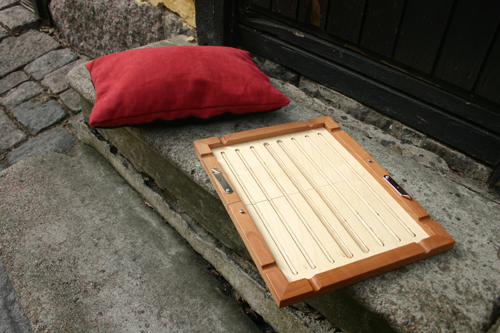
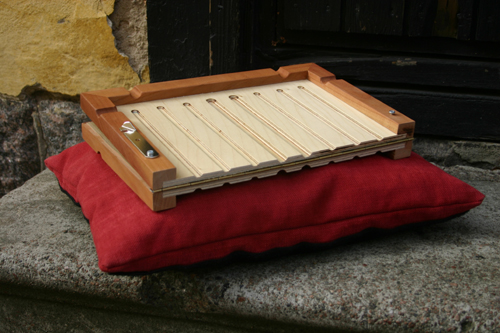
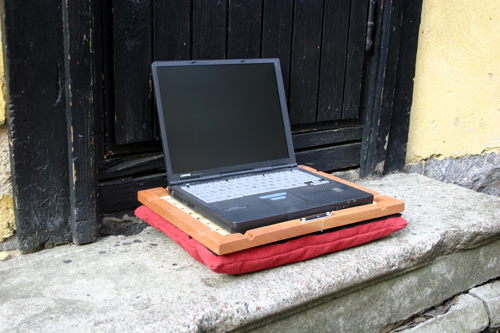
For a few years now, I've used a lap tray under my laptop when sitting in an armchair or sofa at home. It is basically a tray with a pillow below. It's been very nice: not only does it protect me from burns, it's just plain more comfortable than balancing the thing on my thighs and knees. Unfortunately, it's been slowly disintegrating for the past couple of years. I decided to hire my cousin Johan Wirzenius the carpenter to make me a new one. Since I was ordering a custom one, I got to specify three new fancy features: the pillow is detachable (via velcro), and the tray is foldable, resulting in a more transportable whole. Also, the edges of the tray have grooves to hold cables in place, and the surface has grooves to allow better ventilation. Below are four pictures of the tray, courtesy of my cousin.
lap tray lap tray lap tray lap tray Four pictures of the new tray. The person is my cousin's assistant.

3 April 2007

Martin F. Krafft: Any indication?

Christian, if that website is any indication of the train's operation, I am not sure whether your post is good or bad news. A PHP script generating Javascript, which then replaces a DOM object with a Flash object, without any alternative information whatsoever? Is that train real, or maybe just a figment of someone's imagination? No, wait, someone's idea of instructions to replace a real train with a video screen showing a really fast train? Or just a really crap PR team and web designer? I found it amusing that all I get is a blank page while the title actually advertises "French Excellence" :) PS: I hate Flash. NP: Emerson, Lake & Palmer / Welcome Back my Friends to the Show that never Ends

Russell Coker: live.com - malware?

When looking through my Webalizer stats recently I noticed that *.search.live.com is transferring about four times as much data from my domain than *.google.com. This wouldn't concern me if I saw some people being referred to my site from live.com, however I see almost none, while google.com is responsible for referring about half the traffic to my site!

Then I looked through the aggregate stats for all web sites hosted on my ISP and noticed that live.com has three times the bandwidth use of google while not showing up in referrals.

I did a couple of test searches with live.com and it seems that one reason why I'm not getting hits is because the search engine just isn't much good. The search string "bonnie++" does not return any links to my program on the first page (maybe live.com can't handle a '+' character).

So I'm now wondering whether there is any reason to permit the live.com servers to use my bandwidth. It's costing my ISP money for no apparent good cause.

In the past there was a previous MS search engine that I had to block because it's attacks (which can not be described in any other way) were using half the web bandwidth of the entire ISP). This case is not so obviously an attack and I'm wondering whether I should permit it to continue for a while just in case they end up giving me some useful referrals.

Of course the other possibility is that if we all block their servers then the live.com results will become even more useless than they currently are and they'll give up on the idea.

I look forward to comments on this issue.

1 April 2007

Martin F. Krafft: Unsubscribing newspapers

I used to subscribe to the paper edition of the Frankfurter Allgemeine Zeitung (FAZ), but found myself discarding more papers than I could read, so sometime in 2005, I switched the subscription to their excellent Sunday paper (FAS) only and subscribed to their RSS feed for the daily juice. About a year ago, I subscribed to the Financial Times Europe (FTE), which I came to like a lot for the journalism, the objectivity, and the brevity of the entire paper, while it never withheld an important story from me. I always noticed that stories from the Sunday paper would randomly appear online throughout the week, but this morning, as I sat down for coffee and Sunday paper consumption, I was disappointed when quite a lot of the stories had already been RSS-fed to me before the Sunday paper was published. The usual number of spelling errors in the FAZ online feed had been corrected in the paper version, making me wonder why they perform quality control only for the paper edition. Given the overlap between FTE and FAZ, the spelling errors, and this spoiled Sunday morning, I thus unsubscribed from the RSS-feed in favour of the FAS and FTE paper editions. That's rather contrary to the general trend and I am aware of the "dead-tree" argument, but I recycle all my papers, neatly stacked, and I do not believe that real-paper newspapers are among the prime environmental concerns we need to deal with. In the end, I simply prefer the paper editions and am happy to contribute otherwise to environmental preservation. NP: Erik Norlander / Music Machine

31 March 2007

Benjamin Mako Hill: Progress

There is cool semi-recent news on the Free Cultural Works Definition front. The board of directors of the Wikimedia Foundation passed a resolution stating that all projects (including Wikipedia, Wikimedia Commons, and Wikibooks):
...are expected to host only content which is under a Free Content License, or which is otherwise free as recognized by the Definition of Free Cultural Works.
There is still room for several exceptions but this must be minimal and the use of such works, "with limited exception, should be to illustrate historically significant events, to include identifying protected works such as logos, or to complement (within narrow limits) articles about copyrighted contemporary works." For WMF and it's member projects, this was a useful step because it documents and strengthens an important position in favor of explicit goals that I feel is important to successful freedom movements. But it's not a major change for them. The resolution merely codifies what has already become accepted practice within Wikimedia projects. But this is a major change -- and a major victory -- for freedomdefined.org and the definition. Wikimedia projects, including Wikipedia, are the single most visible and important centers for the production and dissemination of free culture today. They're also the most successful and a model many want to emulate. Explicit buy in from WMF is a major victory indeed.

Joey Hess: random beauties

Joey Hess: random beauties

29 March 2007

Benjamin Mako Hill: Dollar Books

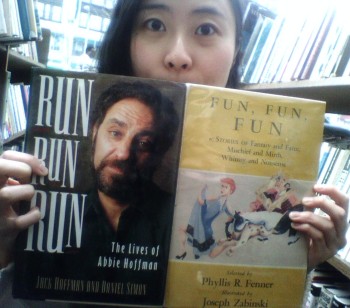
One of my favorite weekend activities is spending a Saturday afternoon going through the dollar book carts outside many New York and Boston area used book stores. It's not only because the books are cheap -- although I like that. The dollar book section is the great equalizer of bookstores. A neglected Dickens or Shakespeare can rub out against a discarded Mary-Cate and Ashley teeny-bopper quasi-romance novel. In the best cases, random shelving creates perfect (if unintuitive and ironic) pairs like Run Run Run about Abbie Hoffman and Fun Fun Fun about other youngsters -- a pair I found adjacent in a dollar book section last week.
/copyrighteous/images/run_fun_run.jpg
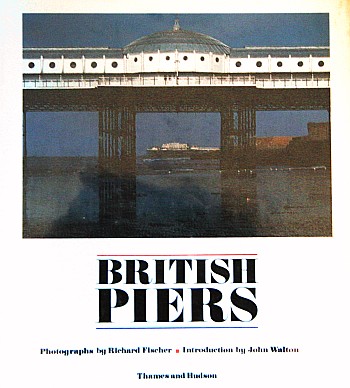
But you also get to meet books you will never meet in the bookstore sections you normally frequent. The dollar book section at the Strand has introduced me to a whole class of books with intriguing non-fiction sounding titles that I had pulled excitedly off the shelf only to find out that they were, in fact, novels. There are also the books with titles so good you suspect the book will be downhill from that point. The Complete Idiot's Guide To Being a Model (not, as one might expect, Becoming a model) and this guide to the British pierage are great examples.
/copyrighteous/images/british_piers.jpg

Jan Wagner: Taking Xen guests (domU) alive via routed network

The xend config looks like this:

playground:~# grep -v ^# /etc/xen/xend-config.sxp
(network-script ‘network-bridge netdev=dummy0′)
(vif-script vif-bridge)
(dom0-min-mem 196)
(dom0-cpus 0) Creating volume group for Xen domU (/dev/hdb2 was allready created with id 8e):

playground:~# pvcreate /dev/hdb2
Physical volume “/dev/hdb2″ successfully created
playground:~# vgcreate xen-vol /dev/hdb2
Volume group “xen-vol” successfully created
playground:~# vgscan
Reading all physical volumes. This may take a while…
Found volume group “xen-vol” using metadata type lvm2 Creating first domU:

playground:~# xen-create-image –ip 192.168.222.50 –hostname xetch.blubb.cyconet.org
General Infomation
——————–
Hostname : xetch.blubb.cyconet.org
Distribution : etch
Fileystem Type : ext3
Size Information
—————-
Image size : 4Gb
Swap size : 1024Mb
Image type : full
Memory size : 128Mb
Kernel path : /boot/vmlinuz-2.6.18-4-xen-vserver-686
Initrd path : /boot/initrd.img-2.6.18-4-xen-vserver-686
Networking Information
———————-
IP Address 1 : 192.168.222.50
Netmask : 255.255.255.0
Gateway : 192.168.222.1
Creating ext3 filesystem on /dev/xen-vol/xetch.blubb.cyconet.org-disk
Done
Installing your system with debootstrap mirror ftp://ftp.de.debian.org/debian/
Done
Running hooks
Done
No role script specified. Skipping
Creating Xen configuration file
Done
Setting up root password
Enter new UNIX password:
etype new UNIX password:
passwd: password updated successfully
All done
Logfile produced at:
/var/log/xen-tools/xetch.blubb.cyconet.org.log Add the following to /etc/network/interfaces:

auto dummy0
iface dummy0 inet static
address 192.168.222.1
netmask 255.255.255.0
network 192.168.222.0
broadcast 192.168.222.255 Bringing up network interface, restarting xen and starting the domU:

playground:~# ifup dummy0
playground:~# /etc/init.d/xendomains stop
playground:~# /etc/init.d/xend restart
playground:~# /etc/init.d/xendomains start
playground:~# xm create xetch.blubb.cyconet.org.cfg -c
Using config file “/etc/xen/xetch.blubb.cyconet.org.cfg”.
… If you want to autostart your domUs, you have to symlink the configfile to /etc/xen/auto:

playground:~# mkdir /etc/xen/auto/
playground:~# ln -s /etc/xen/xetch.blubb.cyconet.org.cfg /etc/xen/auto/xetch.blubb.cyconet.org.cfg , , , ,

Russell Coker: questions regarding SE Linux

I just received a question about SE Linux via email. As I don't want to post private messages containing material that's globally useful I'll answer through my blog:

> other than strict and targeted policies......other policies like
> RBAC, MCS, Type Enforcement are also there....how are these policies
> implemented

The two main policies are the strict policy and the targeted policy. The strict policy is the earliest and was originally known as the sample policy (but was given the name "strict" after targeted was developed).

The strict policy aims to give minimal privileges to all daemons. The targeted policy aims to restrict the programs that are most vulnerable (network facing daemons) and not restrict other programs (for ease of use). There is currently work in progress on combining those policies so the person who compiles the policy can determine which features of strict they desire.

RBAC means Role Based Access Control. The strict policy assigns users to roles and the role then limits the set of domains that can be entered. For example the user_r role does not permit the sysadm_t domain so a user who is only permitted to enter the user_r role can not perform sys-admin tasks. Like many terms RBAC is used in different manners, some people consider that it means direct control by role (EG role user_r can not write to /dev/hda), while SE Linux has a more indirect use of roles (role user_r can not run programs in domain sysadm_t or any other domain that allows writing to type fixed_disk_device_t - the type for /dev/hda). You may consider that the strict policy supports RBAC depending on which definition of the term you use.

Generally the targeted policy is not considered to support RBAC, although if you consider a role to merely be a container for a set of accesses that are permitted then a SE Linux domain could be considered a in the RBAC sense. I don't think of targeted policy as being a RBAC implementation because all user sessions run in the domain unconfined_t which has no restriction. I think that to be considered RBAC a system must confine user logins.

Type enforcement is the primary access control mechanism for SE Linux. Every object that a process may access (including other processes) has a type assigned to it. The type of a process is known as a domain. The system has a policy database which for every combination of domain, type, and object class (which is one of dir, file, blk_file, etc - all the different types of object that a process may access) specifies whether the action is permitted or denied (default deny) and whether it is audited (default is to audit all denied operations and not audit permitted operations).

MCS is a confidentiality protection mechanism where each file has a set of categories assigned to it. The set may be empty, may contain all 1024 categories, or any sub-set. Each process has a set of categories that determines which files it may access. File access is granted if Unix permissions allow it, if the domain-type model allows it, and if MCS allows it (on an MCS system). I have just had an article on MCS published in Linux Journal.

MCS is an optional feature for people compiling Linux from source or for distribution vendors. For Red Hat Enterprise Linux, Fedora, and Debian the decision was made to include it, so the strict and targeted policies for those distributions include MCS.

There is another policy known as MLS. This is a policy build that comprises the strict policy plus Multi-Level Security. Multi-Level Security aims to give the highest confidentiality protection and comply with the LSPP (Labeled Security Protection Profile - roughly comparable to B1) Common Criteria certification. It would be possible to build a targeted policy with MLS but that wouldn't make sense - why have the highest protection of confidentiality with anything less than the highest protection of integrity?

As for how the policies are implemented, I'm not about to write a tutorial on policy writing for a blog post, I'm sure that someone will post a link to a Tresys or Fedora web page in the comments. ;)

> there r some packages of linux in which some changes has been made
> to support linux......for eg:- coreutils, findutils

That is correct. Every program that launches a process on behalf of a user at a different privilege user (EG /bin/login, sshd and crond) and every program that creates files for processes running in different domains (EG logrotate creating new log files for multiple daemons) needs to be modified to support SE Linux. Also ls and ps were modified to show SE Linux contexts as well as the obvious programs in coreutils.

> 'Z' is the new thing that have been added to most of the
> utilities......wherever I search I get the changes made only in few
> utilities like ps, mv, cp, ls
>
> Can u help me by giving all the changes made in each of the utilities.....

Unfortunately I can't. This has been identified as an issue and there is currently work in progress to determine the best way of managing this.

28 March 2007

Daniel Burrows: On emailing me.

Verizon has apparently decided that BOTH of my forwarding addresses, dburrows@debian.org and Daniel_Burrows@alumni.brown.edu, are actually spammers, and is randomly rejecting some emails sent to them. I have given Verizon as large a piece of my mind as they allow: they do not provide an email address, and instead put up a form where they graciously allow you to type a 70-character (!) message. This will presumably go straight into the bitbucket, but we'll see.

If you want to email me, please send mail directly to Daniel_Burrows@verizon.net.

Does anyone know of a broadband ISP serving Redmond that doesn't suck? As far as I know, my only alternative to the telephone monopoly is the cable monopoly.

Jan Wagner: Getting started with XEN on etch

Today I thought it’s time to look deeper into the Xen hype. So I decided to install xen on etch. I followed Ganneffs recommandation

playground:~# aptitude install bridge-utils iproute \
xen-ioemu-3.0.3-1 xen-utils-3.0.3-1\
xen-linux-system-2.6.18-4-xen-vserver-686 libc6-xen Booting the dom0 leeds me into kernel panic, cause no root device was found. Hmm … there seems to be the driver missing. Right - there wasn’t any /boot/initrd.img-2.6.18-4-xen-vserver-686.
Waldi did hint me to /var/lib/dpkg/info/linux-image-2.6.18-4-xen-vserver-686.postinst and I got my ramdisk this way:

playground:~# update-initramfs -c -t -k \
2.6.18-4-xen-vserver-686
playground:~# command -v update-grub > \
/dev/null && update-grub After booting dom0 successfully, my serial console disappeared. After some digging around, I got the clue I need to tell xen, that there is one.
I modified /boot/grub/menu.lst:

# xenhopt=com1=115200,8n1 console=com1
..
# xenkopt=console=vga Dom0 is running now, lets see what we can do next, maybe:

playground:~# aptitude install xen-tools , , , ,

Evan Prodromou: 7 Germinal CCXV

Hard to believe it's already time for DemoCampMontreal2 tomorrow night (Thursday, March 29, at the SAT). I had a pretty good time at the first DemoCampMontreal back in February, despite my demo going belly-up a few times. It was a good space and a fun time to talk. I think the BarCamp page on DemoCampMontreal2 has some good info, too. Check out Fred Ngo's writeup of DemoCampMontreal2, including a fancy photo of yours truly demoing in February. It looks a little like BarCampHell, but in a good way. tags:

Big day Today's our big day -- we're closing on the house at 4690 rue Pontiac tonight at 7. We just got in from Las Vegas last night, but we headed out to the bank this morning to get a cashier's check for our (very large) down payment and dot the t's and cross the i's for the mortgage. Lots more running around today, but we go to the notaire tonight, and we'll have some sort of paper certifying us as homeowners sometime tonight. Shom-pan-yah to follow. tags:

Open Web Design One really great Open Content (or is it Open Source...?) resource that I don't pay enough attention to is the Open Web Design repository. It's a collection of very nicely done Web designs, delivered in convenient packets of HTML and CSS. They make very nice templates for "skins" of blog engines, CMSes, or even wikis. It's a great complement to the tons of Free Web software available out there (most of which is quite skinnable, and most of which has execrable default themes). My favourite part is that all the designs are dedicated to the public domain or made available under the liberal Creative Commons Attribution 2.5 license, which makes them honest-to-goodness Free Culture per the Definition of Free Cultural Works. I'm going to be using one of these Web designs to clean up my kinda bland home site. It could use a bit of editing. tags:

Thanks Mark, Allegra, No ma and Anoushka Thanks to Mark and family for the congratulations on our new house. We signed the papers tonight, and it went surprisingly smoothly. Our seller is a fascinating guy who started the animation lab at Ubisoft, so we enjoyed getting to talk to him in between onslaughts of legalese and flurries of signatures. In other good news, I guess the gang is coming out for RoCoCo. Wow! That'll be pretty fun. Good thing we'll have two houses then. tags:

Next.

Previous.