Search Results: "pm"

18 February 2024

Iustin Pop: New skis , new fun!

As I wrote a bit back, I had a really, really bad fourth quarter in 2023. As new years approached, and we were getting ready to go on a ski trip, I wasn t even sure if and how much I ll be able to ski. And I felt so out of it that I didn t even buy a ski pass for the whole week, just bought one day to see if a) I still like, and b) my knee can deal with it. And, of course, it was good. It was good enough that I ended up skiing the entire week, and my knee got better during the week. WTH?! I don t understand this anymore, but it was good. Good enough that this early year trip put me back on track and I started doing sports again. But the main point is, that during this ski week, and talking to the teacher, I realised that my ski equipment is getting a bit old. I bought everything roughly ten years ago, and while they still hold up OK, my ski skills have improved since then. I said to myself, 10 years is a good run, I ll replace this year the skis, next year the boot & helmet, etc. I didn t expect much from new skis - I mean, yes, better skis, but what does better mean? Well, once I ve read enough forum posts, apparently the skis I selected are that good , which to me meant they re not bad. Oh my, how wrong I was! Double, triple wrong! Rather than fighting with the skis, it s enough to think what I wand to do, and the skis do it. I felt OK-ish, maybe 10% limited by my previous skis, but the new skis are really good and also I know that I m just at 30% or so of the new skis - so room to grow. For now, I am able to ski faster, longer, and I feel less tired than before. I ve actually compared and I can do twice the distance in a day and feel slightly less tired at the end. I ve moved from this black is cool but a bit difficult, I ll do another run later in the day when I ve recovered to how cool, this blacks is quite empty of people, let s stay here for 2-3 more rounds . The skis are new, and I haven t used them on all the places I m familiar with - but the upgrade is huge. The people on the ski forum were actually not exaggerating, I realise now. St ckli++, and they re also made in Switzerland. Can t wait to get back to Saas Fee and to the couple of slopes that were killing me before, to see how they feel now. So, very happy with this choice. I d be even happier if my legs were less damaged, but well, you can t win them all. And not last, the skis are also very cool looking

Russell Coker: Release Years

In 2008 I wrote about the idea of having a scheduled release for Debian and other distributions as Mark Shuttleworth had proposed [1]. I still believe that Mark s original idea for synchronised release dates of Linux distributions (or at least synchronised feature sets) is a good one but unfortunately it didn t take off. Having been using Ubuntu a bit recently I ve found the version numbering system to be really good. Ubuntu version 16.04 was release in April 2016, it s support ended 5 years later in about April 2021, so any commonly available computers from 2020 should run it well and versions of applications released in about 2017 should run on it. If I have to support a Debian 10 (Buster) system I need to start with a web search to discover when it was released (July 2019). That suggests that applications packaged for Ubuntu 18.04 are likely to run on it. If we had the same numbering system for Debian and Ubuntu then it would be easier to compare versions. Debian 19.06 would be obviously similar to Ubuntu 18.04, or we could plan for the future and call it Debian 2019. Then it would be ideal if hardware vendors did the same thing (as car manufacturers have been doing for a long time). Which versions of Ubuntu and Debian would run well on a Dell PowerEdge R750? It takes a little searching to discover that the R750 was released in 2021, but if they called it a PowerEdge 2021R70 then it would be quite obvious that Ubuntu 2022.04 would run well on it and that Ubuntu 2020.04 probably has a kernel update with all the hardware supported. One of the benefits for the car industry in naming model years is that it drives the purchase of a new car. A 2015 car probably isn t going to impress anyone and you will know that it is missing some of the features in more recent models. It would be easier to get management to sign off on replacing old computers if they had 2015 on the front, trying to estimate hidden costs of support and lost productivity of using old computers is hard but saying it s a 2015 model and way out of date is easy. There is a history of using dates as software versions. The Reference Policy for SE Linux [2] (which is used for Debian) has releases based on date. During the Debian development process I upload policy to Debian based on the upstream Git and use the same version numbering scheme which is more convenient than the append git date to last full release system that some maintainers are forced to use. The users can get an idea of how much the Debian/Unstable policy has diverged from the last full release by looking at the dates. Also an observer might see the short difference between release dates of SE Linux policy and Debian release freeze dates as an indication that I beg the upstream maintainers to make a new release just before each Debian freeze which is expactly what I do. When I took over the Portslave [3] program I made releases based on date because there were several forks with different version numbering schemes so my options were to just choose a higher number (which is OK initially but doesn t scale if there are more forks) or use a date and have people know that the recent date is the most recent version. The fact that the latest release of Portslave is version 2010.04.19 shows that I have not been maintaining it in recent years (due to lack of hardware as well as lack of interest), so if someone wants to take over the project I would be happy to help them do so! I don t expect people at Dell and other hardware vendors to take much notice of my ideas (I have tweeted them photographic evidence of a problem with no good response). But hopefully this will start a discussion in the free software community.

10 February 2024

Andrew Cater: Debian point releases - updated media for Bullseye (11.9) and Bookworm (12.5) - 2024-02-10

It's been a LONG day: two point releases in a day takes of the order of twelve or thirteen hours of fairly solid work on behalf of those doing the releases and testing.Thanks firstly to the main Debian release team for all the initial work.Thanks to Isy, RattusRattus, Sledge and egw in Cottenham, smcv and Helen closer to the centre of Cambridge, cacin and others who have dropped in and out of IRC and helped testing.

I've been at home but active on IRC - missing the team (and the food) and drinking far too much coffee/eating too many biscuits.

We've found relatively few bugs that we haven't previously noted: it's been a good day. Back again, at some point a couple of months from now to do this all over again.With luck, I can embed a picture of the Cottenham folk below: it's fun to know _exactly_ where people are because you've been there yourself.


8 February 2024

Dirk Eddelbuettel: RcppArmadillo 0.12.8.0.0 on CRAN: New Upstream, Interface Polish

armadillo image Armadillo is a powerful and expressive C++ template library for linear algebra and scientific computing. It aims towards a good balance between speed and ease of use, has a syntax deliberately close to Matlab, and is useful for algorithm development directly in C++, or quick conversion of research code into production environments. RcppArmadillo integrates this library with the R environment and language and is widely used by (currently) 1119 other packages on CRAN, downloaded 32.5 million times (per the partial logs from the cloud mirrors of CRAN), and the CSDA paper (preprint / vignette) by Conrad and myself has been cited 575 times according to Google Scholar. This release brings a new (stable) upstream (minor) release Armadillo 12.8.0 prepared by Conrad two days ago. We, as usual, prepared a release candidate which we tested against the over 1100 CRAN packages using RcppArmadillo. This found no issues, which was confirmed by CRAN once we uploaded and so it arrived as a new release today in a fully automated fashion. We also made a small change that had been prepared by GitHub issue #400: a few internal header files that were cluttering the top-level of the include directory have been moved to internal directories. The standard header is of course unaffected, and the set of full / light / lighter / lightest headers (matching we did a while back in Rcpp) also continue to work as one expects. This change was also tested in a full reverse-dependency check in January but had not been released to CRAN yet. The set of changes since the last CRAN release follows.

Changes in RcppArmadillo version 0.12.8.0.0 (2024-02-06)
  • Upgraded to Armadillo release 12.8.0 (Cortisol Injector)
    • Faster detection of symmetric expressions by pinv() and rank()
    • Expanded shift() to handle sparse matrices
    • Expanded conv_to for more flexible conversions between sparse and dense matrices
    • Added cbrt()
    • More compact representation of integers when saving matrices in CSV format
  • Five non-user facing top-level include files have been removed (#432 closing #400 and building on #395 and #396)

Courtesy of my CRANberries, there is a diffstat report relative to previous release. More detailed information is on the RcppArmadillo page. Questions, comments etc should go to the rcpp-devel mailing list off the Rcpp R-Forge page. If you like this or other open-source work I do, you can sponsor me at GitHub.

This post by Dirk Eddelbuettel originated on his Thinking inside the box blog. Please report excessive re-aggregation in third-party for-profit settings.

2 February 2024

Ian Jackson: UPS, the Useless Parcel Service; VAT and fees

I recently had the most astonishingly bad experience with UPS, the courier company. They severely damaged my parcels, and were very bad about UK import VAT, ultimately ending up harassing me on autopilot. The only thing that got their attention was my draft Particulars of Claim for intended legal action. Surprisingly, I got them to admit in writing that the disbursement fee they charge recipients alongside the actual VAT, is just something they made up with no legal basis. What happened Autumn last year I ordered some furniture from a company in Germany. This was to be shipped by them to me by courier. The supplier chose UPS. UPS misrouted one of the three parcels to Denmark. When everything arrived, it had been sat on by elephants. The supplier had to replace most of it, with considerable inconvenience and delay to me, and of course a loss to the supplier. But this post isn t mostly about that. This post is about VAT. You see, import VAT was due, because of fucking Brexit. UPS made a complete hash of collecting that VAT. Their computers can t issue coherent documents, their email helpdesk is completely useless, and their automated debt collection systems run along uninfluenced by any external input. The crazy, including legal threats and escalating late payment fees, continued even after I paid the VAT discrepancy (which I did despite them not yet having provided any coherent calculation for it). This kind of behaviour is a very small and mild version of the kind of things British Gas did to Lisa Ferguson, who eventually won substantial damages for harassment, plus 10K of costs. Having tried asking nicely, and sending stiff letters, I too threatened litigation. I would have actually started a court claim, but it would have included a claim under the Protection from Harassment Act. Those have to be filed under the Part 8 procedure , which involves sending all of the written evidence you re going to use along with the claim form. Collating all that would be a good deal of work, especially since UPS and ControlAccount didn t engage with me at all, so I had no idea which things they might actually dispute. So I decided that before issuing proceedings, I d send them a copy of my draft Particulars of Claim, along with an offer to settle if they would pay me a modest sum and stop being evil robots at me. Rather than me typing the whole tale in again, you can read the full gory details in the PDF of my draft Particulars of Claim. (I ve redacted the reference numbers). Outcome The draft Particulars finally got their attention. UPS sent me an offer: they agreed to pay me 50, in full and final settlement. That was close enough to my offer that I accepted it. I mostly wanted them to stop, and they do seem to have done so. And I ve received the 50. VAT calculation They also finally included an actual explanation of the VAT calculation. It s absurd, but it s not UPS s absurd:
The clearance was entered initially with estimated import charges of 400.03, consisting of 387.83 VAT, and 12.20 disbursement fee. This original entry regrettably did not include the freight cost for calculating the VAT, and as such when submitted for final entry the VAT value was adjusted to include this and an amended invoice was issued for an additional 39.84. HMRC calculate the amount against which VAT is raised using the value of goods, insurance and freight, however they also may apply a VAT adjustment figure. The VAT Adjustment is based on many factors (Incidental costs in regards to a shipment), which includes charge for currency conversion if the invoice does not list values in Sterling, but the main is due to the inland freight from airport of destination to the final delivery point, as this charge varies, for example, from EMA to Edinburgh would be 150, from EMA to Derby would be 1, so each year UPS must supply HMRC with all values incurred for entry build up and they give an average which UPS have to use on the entry build up as the VAT Adjustment. The correct calculation for the import charges is therefore as follows: Goods value divided by exchange rate 2,489.53 EUR / 1.1683 = 2,130.89 GBP Duty: Goods value plus freight (%) 2,130.89 GBP + 5% = 2,237.43 GBP. That total times the duty rate. X 0 % = 0 GBP VAT: Goods value plus freight (100%) 2,130.89 GBP + 0 = 2,130.89 GBP That total plus duty and VAT adjustment 2,130.89 GBP + 0 GBP + 7.49 GBP = 2,348.08 GBP. That total times 20% VAT = 427.67 GBP As detailed above we must confirm that the final VAT charges applied to the shipment were correct, and that no refund of this is therefore due.
This looks very like HMRC-originated nonsense. If only they had put it on the original bills! It s completely ridiculous that it took four months and near-litigation to obtain it. Disbursement fee One more thing. UPS billed me a 12 disbursement fee . When you import something, there s often tax to pay. The courier company pays that to the government, and the consignee pays it to the courier. Usually the courier demands it before final delivery, since otherwise they end up having to chase it as a debt. It is common for parcel companies to add a random fee of their own. As I note in my Particulars, there isn t any legal basis for this. In my own offer of settlement I proposed that UPS should:
State under what principle of English law (such as, what enactment or principle of Common Law), you levy the disbursement fee (or refund it).
To my surprise they actually responded to this in their own settlement letter. (They didn t, for example, mention the harassment at all.) They said (emphasis mine):
A disbursement fee is a fee for amounts paid or processed on behalf of a client. It is an established category of charge used by legal firms, amongst other companies, for billing of various ancillary costs which may be incurred in completion of service. Disbursement fees are not covered by a specific law, nor are they legally prohibited. Regarding UPS disbursement fee this is an administrative charge levied for the use of UPS deferment account to prepay import charges for clearance through CDS. This charge would therefore be billed to the party that is responsible for the import charges, normally the consignee or receiver of the shipment in question. The disbursement fee as applied is legitimate, and as you have stated is a commonly used and recognised charge throughout the courier industry, and I can confirm that this was charged correctly in this instance.
On UPS s analysis, they can just make up whatever fee they like. That is clearly not right (and I don t even need to refer to consumer protection law, which would also make it obviously unlawful). And, that everyone does it doesn t make it lawful. There are so many things that are ubiquitous but unlawful, especially nowadays when much of the legal system - especially consumer protection regulators - has been underfunded to beyond the point of collapse. Next time this comes up I might have a go at getting the fee back. (Obviously I ll have to pay it first, to get my parcel.) ParcelForce and Royal Mail I think this analysis doesn t apply to ParcelForce and (probably) Royal Mail. I looked into this in 2009, and I found that Parcelforce had been given the ability to write their own private laws: Schemes made under section 89 of the Postal Services Act 2000. This is obviously ridiculous but I think it was the law in 2009. I doubt the intervening governments have fixed it. Furniture Oh, yes, the actual furniture. The replacements arrived intact and are great :-).

comment count unavailable comments

30 January 2024

Antoine Beaupr : router archeology: the Soekris net5001

Roadkiller was a Soekris net5501 router I used as my main gateway between 2010 and 2016 (for r seau and t l phone). It was upgraded to FreeBSD 8.4-p12 (2014-06-06) and pkgng. It was retired in favor of octavia around 2016. Roughly 10 years later (2024-01-24), I found it in a drawer and, to my surprised, it booted. After wrangling with a RS-232 USB adapter, a null modem cable, and bit rates, I even logged in:
comBIOS ver. 1.33  20070103  Copyright (C) 2000-2007 Soekris Engineering.
net5501
0512 Mbyte Memory                        CPU Geode LX 500 Mhz 
Pri Mas  WDC WD800VE-00HDT0              LBA Xlt 1024-255-63  78 Gbyte
Slot   Vend Dev  ClassRev Cmd  Stat CL LT HT  Base1    Base2   Int 
-------------------------------------------------------------------
0:01:2 1022 2082 10100000 0006 0220 08 00 00 A0000000 00000000 10
0:06:0 1106 3053 02000096 0117 0210 08 40 00 0000E101 A0004000 11
0:07:0 1106 3053 02000096 0117 0210 08 40 00 0000E201 A0004100 05
0:08:0 1106 3053 02000096 0117 0210 08 40 00 0000E301 A0004200 09
0:09:0 1106 3053 02000096 0117 0210 08 40 00 0000E401 A0004300 12
0:20:0 1022 2090 06010003 0009 02A0 08 40 80 00006001 00006101 
0:20:2 1022 209A 01018001 0005 02A0 08 00 00 00000000 00000000 
0:21:0 1022 2094 0C031002 0006 0230 08 00 80 A0005000 00000000 15
0:21:1 1022 2095 0C032002 0006 0230 08 00 00 A0006000 00000000 15
 4 Seconds to automatic boot.   Press Ctrl-P for entering Monitor.
 
                                            
                                                  ______
                                                    ____  __ ___  ___ 
            Welcome to FreeBSD!                     __   '__/ _ \/ _ \
                                                    __       __/  __/
                                                                      
    1. Boot FreeBSD [default]                     _     _   \___ \___ 
    2. Boot FreeBSD with ACPI enabled             ____   _____ _____
    3. Boot FreeBSD in Safe Mode                    _ \ / ____   __ \
    4. Boot FreeBSD in single user mode             _)   (___         
    5. Boot FreeBSD with verbose logging            _ < \___ \        
    6. Escape to loader prompt                      _)  ____)    __   
    7. Reboot                                                         
                                                  ____/ _____/ _____/


    Select option, [Enter] for default      
    or [Space] to pause timer  5            
  
Copyright (c) 1992-2013 The FreeBSD Project.
Copyright (c) 1979, 1980, 1983, 1986, 1988, 1989, 1991, 1992, 1993, 1994
        The Regents of the University of California. All rights reserved.
FreeBSD is a registered trademark of The FreeBSD Foundation.
FreeBSD 8.4-RELEASE-p12 #5: Fri Jun  6 02:43:23 EDT 2014
    root@roadkiller.anarc.at:/usr/obj/usr/src/sys/ROADKILL i386
gcc version 4.2.2 20070831 prerelease [FreeBSD]
Timecounter "i8254" frequency 1193182 Hz quality 0
CPU: Geode(TM) Integrated Processor by AMD PCS (499.90-MHz 586-class CPU)
  Origin = "AuthenticAMD"  Id = 0x5a2  Family = 5  Model = a  Stepping = 2
  Features=0x88a93d<FPU,DE,PSE,TSC,MSR,CX8,SEP,PGE,CMOV,CLFLUSH,MMX>
  AMD Features=0xc0400000<MMX+,3DNow!+,3DNow!>
real memory  = 536870912 (512 MB)
avail memory = 506445824 (482 MB)
kbd1 at kbdmux0
K6-family MTRR support enabled (2 registers)
ACPI Error: A valid RSDP was not found (20101013/tbxfroot-309)
ACPI: Table initialisation failed: AE_NOT_FOUND
ACPI: Try disabling either ACPI or apic support.
cryptosoft0: <software crypto> on motherboard
pcib0 pcibus 0 on motherboard
pci0: <PCI bus> on pcib0
Geode LX: Soekris net5501 comBIOS ver. 1.33 20070103 Copyright (C) 2000-2007
pci0: <encrypt/decrypt, entertainment crypto> at device 1.2 (no driver attached)
vr0: <VIA VT6105M Rhine III 10/100BaseTX> port 0xe100-0xe1ff mem 0xa0004000-0xa00040ff irq 11 at device 6.0 on pci0
vr0: Quirks: 0x2
vr0: Revision: 0x96
miibus0: <MII bus> on vr0
ukphy0: <Generic IEEE 802.3u media interface> PHY 1 on miibus0
ukphy0:  none, 10baseT, 10baseT-FDX, 100baseTX, 100baseTX-FDX, auto, auto-flow
vr0: Ethernet address: 00:00:24:cc:93:44
vr0: [ITHREAD]
vr1: <VIA VT6105M Rhine III 10/100BaseTX> port 0xe200-0xe2ff mem 0xa0004100-0xa00041ff irq 5 at device 7.0 on pci0
vr1: Quirks: 0x2
vr1: Revision: 0x96
miibus1: <MII bus> on vr1
ukphy1: <Generic IEEE 802.3u media interface> PHY 1 on miibus1
ukphy1:  none, 10baseT, 10baseT-FDX, 100baseTX, 100baseTX-FDX, auto, auto-flow
vr1: Ethernet address: 00:00:24:cc:93:45
vr1: [ITHREAD]
vr2: <VIA VT6105M Rhine III 10/100BaseTX> port 0xe300-0xe3ff mem 0xa0004200-0xa00042ff irq 9 at device 8.0 on pci0
vr2: Quirks: 0x2
vr2: Revision: 0x96
miibus2: <MII bus> on vr2
ukphy2: <Generic IEEE 802.3u media interface> PHY 1 on miibus2
ukphy2:  none, 10baseT, 10baseT-FDX, 100baseTX, 100baseTX-FDX, auto, auto-flow
vr2: Ethernet address: 00:00:24:cc:93:46
vr2: [ITHREAD]
vr3: <VIA VT6105M Rhine III 10/100BaseTX> port 0xe400-0xe4ff mem 0xa0004300-0xa00043ff irq 12 at device 9.0 on pci0
vr3: Quirks: 0x2
vr3: Revision: 0x96
miibus3: <MII bus> on vr3
ukphy3: <Generic IEEE 802.3u media interface> PHY 1 on miibus3
ukphy3:  none, 10baseT, 10baseT-FDX, 100baseTX, 100baseTX-FDX, auto, auto-flow
vr3: Ethernet address: 00:00:24:cc:93:47
vr3: [ITHREAD]
isab0: <PCI-ISA bridge> at device 20.0 on pci0
isa0: <ISA bus> on isab0
atapci0: <AMD CS5536 UDMA100 controller> port 0x1f0-0x1f7,0x3f6,0x170-0x177,0x376,0xe000-0xe00f at device 20.2 on pci0
ata0: <ATA channel> at channel 0 on atapci0
ata0: [ITHREAD]
ata1: <ATA channel> at channel 1 on atapci0
ata1: [ITHREAD]
ohci0: <OHCI (generic) USB controller> mem 0xa0005000-0xa0005fff irq 15 at device 21.0 on pci0
ohci0: [ITHREAD]
usbus0 on ohci0
ehci0: <AMD CS5536 (Geode) USB 2.0 controller> mem 0xa0006000-0xa0006fff irq 15 at device 21.1 on pci0
ehci0: [ITHREAD]
usbus1: EHCI version 1.0
usbus1 on ehci0
cpu0 on motherboard
pmtimer0 on isa0
orm0: <ISA Option ROM> at iomem 0xc8000-0xd27ff pnpid ORM0000 on isa0
atkbdc0: <Keyboard controller (i8042)> at port 0x60,0x64 on isa0
atkbd0: <AT Keyboard> irq 1 on atkbdc0
kbd0 at atkbd0
atkbd0: [GIANT-LOCKED]
atkbd0: [ITHREAD]
atrtc0: <AT Real Time Clock> at port 0x70 irq 8 on isa0
ppc0: parallel port not found.
uart0: <16550 or compatible> at port 0x3f8-0x3ff irq 4 flags 0x10 on isa0
uart0: [FILTER]
uart0: console (19200,n,8,1)
uart1: <16550 or compatible> at port 0x2f8-0x2ff irq 3 on isa0
uart1: [FILTER]
Timecounter "TSC" frequency 499903982 Hz quality 800
Timecounters tick every 1.000 msec
IPsec: Initialized Security Association Processing.
usbus0: 12Mbps Full Speed USB v1.0
usbus1: 480Mbps High Speed USB v2.0
ad0: 76319MB <WDC WD800VE-00HDT0 09.07D09> at ata0-master UDMA100 
ugen0.1: <AMD> at usbus0
uhub0: <AMD OHCI root HUB, class 9/0, rev 1.00/1.00, addr 1> on usbus0
ugen1.1: <AMD> at usbus1
uhub1: <AMD EHCI root HUB, class 9/0, rev 2.00/1.00, addr 1> on usbus1
GEOM: ad0s1: geometry does not match label (255h,63s != 16h,63s).
uhub0: 4 ports with 4 removable, self powered
Root mount waiting for: usbus1
uhub1: 4 ports with 4 removable, self powered
Trying to mount root from ufs:/dev/ad0s1a
The last log rotation is from 2016:
[root@roadkiller /var/log]# stat /var/log/wtmp      
65 61783 -rw-r--r-- 1 root wheel 208219 1056 "Nov  1 05:00:01 2016" "Jan 18 22:29:16 2017" "Jan 18 22:29:16 2017" "Nov  1 05:00:01 2016" 16384 4 0 /var/log/wtmp
Interestingly, I switched between eicat and teksavvy on December 11th. Which year? Who knows!
Dec 11 16:38:40 roadkiller mpd: [eicatL0] LCP: authorization successful
Dec 11 16:41:15 roadkiller mpd: [teksavvyL0] LCP: authorization successful
Never realized those good old logs had a "oh dear forgot the year" issue (that's something like Y2K except just "Y", I guess). That was probably 2015, because the log dates from 2017, and the last entry is from November of the year after the above:
[root@roadkiller /var/log]# stat mpd.log 
65 47113 -rw-r--r-- 1 root wheel 193008 71939195 "Jan 18 22:39:18 2017" "Jan 18 22:39:59 2017" "Jan 18 22:39:59 2017" "Apr  2 10:41:37 2013" 16384 140640 0 mpd.log
It looks like the system was installed in 2010:
[root@roadkiller /var/log]# stat /
63 2 drwxr-xr-x 21 root wheel 2120 512 "Jan 18 22:34:43 2017" "Jan 18 22:28:12 2017" "Jan 18 22:28:12 2017" "Jul 18 22:25:00 2010" 16384 4 0 /
... so it lived for about 6 years, but still works after almost 14 years, which I find utterly amazing. Another amazing thing is that there's tuptime installed on that server! That is a software I thought I discovered later and then sponsored in Debian, but turns out I was already using it then!
[root@roadkiller /var]# tuptime 
System startups:        19   since   21:20:16 11/07/15
System shutdowns:       0 ok   -   18 bad
System uptime:          85.93 %   -   1 year, 11 days, 10 hours, 3 minutes and 36 seconds
System downtime:        14.07 %   -   61 days, 15 hours, 22 minutes and 45 seconds
System life:            1 year, 73 days, 1 hour, 26 minutes and 20 seconds
Largest uptime:         122 days, 9 hours, 17 minutes and 6 seconds   from   08:17:56 02/02/16
Shortest uptime:        5 minutes and 4 seconds   from   21:55:00 01/18/17
Average uptime:         19 days, 19 hours, 28 minutes and 37 seconds
Largest downtime:       57 days, 1 hour, 9 minutes and 59 seconds   from   20:45:01 11/22/16
Shortest downtime:      -1 years, 364 days, 23 hours, 58 minutes and 12 seconds   from   22:30:01 01/18/17
Average downtime:       3 days, 5 hours, 51 minutes and 43 seconds
Current uptime:         18 minutes and 23 seconds   since   22:28:13 01/18/17
Actual up/down times:
[root@roadkiller /var]# tuptime -t
No.        Startup Date                                         Uptime       Shutdown Date   End                                                  Downtime
1     21:20:16 11/07/15      1 day, 0 hours, 40 minutes and 12 seconds   22:00:28 11/08/15   BAD                                  2 minutes and 37 seconds
2     22:03:05 11/08/15      1 day, 9 hours, 41 minutes and 57 seconds   07:45:02 11/10/15   BAD                                  3 minutes and 24 seconds
3     07:48:26 11/10/15    20 days, 2 hours, 41 minutes and 34 seconds   10:30:00 11/30/15   BAD                        4 hours, 50 minutes and 21 seconds
4     15:20:21 11/30/15                      19 minutes and 40 seconds   15:40:01 11/30/15   BAD                                   6 minutes and 5 seconds
5     15:46:06 11/30/15                      53 minutes and 55 seconds   16:40:01 11/30/15   BAD                           1 hour, 1 minute and 38 seconds
6     17:41:39 11/30/15     6 days, 16 hours, 3 minutes and 22 seconds   09:45:01 12/07/15   BAD                4 days, 6 hours, 53 minutes and 11 seconds
7     16:38:12 12/11/15   50 days, 17 hours, 56 minutes and 49 seconds   10:35:01 01/31/16   BAD                                 10 minutes and 52 seconds
8     10:45:53 01/31/16     1 day, 21 hours, 28 minutes and 16 seconds   08:14:09 02/02/16   BAD                                  3 minutes and 48 seconds
9     08:17:56 02/02/16    122 days, 9 hours, 17 minutes and 6 seconds   18:35:02 06/03/16   BAD                                 10 minutes and 16 seconds
10    18:45:18 06/03/16   29 days, 17 hours, 14 minutes and 43 seconds   12:00:01 07/03/16   BAD                                 12 minutes and 34 seconds
11    12:12:35 07/03/16   31 days, 17 hours, 17 minutes and 26 seconds   05:30:01 08/04/16   BAD                                 14 minutes and 25 seconds
12    05:44:26 08/04/16     15 days, 1 hour, 55 minutes and 35 seconds   07:40:01 08/19/16   BAD                                  6 minutes and 51 seconds
13    07:46:52 08/19/16     7 days, 5 hours, 23 minutes and 10 seconds   13:10:02 08/26/16   BAD                                  3 minutes and 45 seconds
14    13:13:47 08/26/16   27 days, 21 hours, 36 minutes and 14 seconds   10:50:01 09/23/16   BAD                                  2 minutes and 14 seconds
15    10:52:15 09/23/16   60 days, 10 hours, 52 minutes and 46 seconds   20:45:01 11/22/16   BAD                 57 days, 1 hour, 9 minutes and 59 seconds
16    21:55:00 01/18/17                        5 minutes and 4 seconds   22:00:04 01/18/17   BAD                                 11 minutes and 15 seconds
17    22:11:19 01/18/17                       8 minutes and 42 seconds   22:20:01 01/18/17   BAD                                   1 minute and 20 seconds
18    22:21:21 01/18/17                       8 minutes and 40 seconds   22:30:01 01/18/17   BAD   -1 years, 364 days, 23 hours, 58 minutes and 12 seconds
19    22:28:13 01/18/17                      20 minutes and 17 seconds
The last few entries are actually the tests I'm running now, it seems this machine thinks we're now on 2017-01-18 at ~22:00, while we're actually 2024-01-24 at ~12:00 local:
Wed Jan 18 23:05:38 EST 2017
FreeBSD/i386 (roadkiller.anarc.at) (ttyu0)
login: root
Password:
Jan 18 23:07:10 roadkiller login: ROOT LOGIN (root) ON ttyu0
Last login: Wed Jan 18 22:29:16 on ttyu0
Copyright (c) 1992-2013 The FreeBSD Project.
Copyright (c) 1979, 1980, 1983, 1986, 1988, 1989, 1991, 1992, 1993, 1994
        The Regents of the University of California. All rights reserved.
FreeBSD 8.4-RELEASE-p12 (ROADKILL) #5: Fri Jun  6 02:43:23 EDT 2014
Reminders:
 * commit stuff in /etc
 * reload firewall (in screen!):
    pfctl -f /etc/pf.conf ; sleep 1
 * vim + syn on makes pf.conf more readable
 * monitoring the PPPoE uplink:
   tail -f /var/log/mpd.log
Current problems:
 * sometimes pf doesn't start properly on boot, if pppoe failed to come up, use
   this to resume:
     /etc/rc.d/pf start
   it will kill your shell, but fix NAT (2012-08-10)
 * babel fails to start on boot (2013-06-15):
     babeld -D -g 33123 tap0 vr3
 * DNS often fails, tried messing with unbound.conf (2014-10-05) and updating
   named.root (2016-01-28) and performance tweaks (ee63689)
 * asterisk and mpd4 are deprecated and should be uninstalled when we're sure
   their replacements (voipms + ata and mpd5) are working (2015-01-13)
 * if IPv6 fails, it's because netblocks are not being routed upstream. DHCPcd
   should do this, but doesn't start properly, use this to resume (2015-12-21):
     /usr/local/sbin/dhcpcd -6 --persistent --background --timeout 0 -C resolv.conf ng0
This machine is doomed to be replaced with the new omnia router, Indiegogo
campaign should ship in april 2016: http://igg.me/at/turris-omnia/x
(I really like the motd I left myself there. In theory, I guess this could just start connecting to the internet again if I still had the same PPPoE/ADSL link I had almost a decade ago; obviously, I do not.) Not sure how the system figured the 2017 time: the onboard clock itself believes we're in 1980, so clearly the CMOS battery has (understandably) failed:
> ?
comBIOS Monitor Commands
boot [drive][:partition] INT19 Boot
reboot                   cold boot
download                 download a file using XMODEM/CRC
flashupdate              update flash BIOS with downloaded file
time [HH:MM:SS]          show or set time
date [YYYY/MM/DD]        show or set date
d[b w d] [adr]           dump memory bytes/words/dwords
e[b w d] adr value [...] enter bytes/words/dwords
i[b w d] port            input from 8/16/32-bit port
o[b w d] port value      output to 8/16/32-bit port
run adr                  execute code at adr
cmosread [adr]           read CMOS RAM data
cmoswrite adr byte [...] write CMOS RAM data
cmoschecksum             update CMOS RAM Checksum
set parameter=value      set system parameter to value
show [parameter]         show one or all system parameters
?/help                   show this help
> show
ConSpeed = 19200
ConLock = Enabled
ConMute = Disabled
BIOSentry = Enabled
PCIROMS = Enabled
PXEBoot = Enabled
FLASH = Primary
BootDelay = 5
FastBoot = Disabled
BootPartition = Disabled
BootDrive = 80 81 F0 FF 
ShowPCI = Enabled
Reset = Hard
CpuSpeed = Default
> time
Current Date and Time is: 1980/01/01 00:56:47
Another bit of archeology: I had documented various outages with my ISP... back in 2003!
[root@roadkiller ~/bin]# cat ppp_stats/downtimes.txt
11/03/2003 18:24:49 218
12/03/2003 09:10:49 118
12/03/2003 10:05:57 680
12/03/2003 10:14:50 106
12/03/2003 10:16:53 6
12/03/2003 10:35:28 146
12/03/2003 10:57:26 393
12/03/2003 11:16:35 5
12/03/2003 11:16:54 11
13/03/2003 06:15:57 18928
13/03/2003 09:43:36 9730
13/03/2003 10:47:10 23
13/03/2003 10:58:35 5
16/03/2003 01:32:36 338
16/03/2003 02:00:33 120
16/03/2003 11:14:31 14007
19/03/2003 00:56:27 11179
19/03/2003 00:56:43 5
19/03/2003 00:56:53 0
19/03/2003 00:56:55 1
19/03/2003 00:57:09 1
19/03/2003 00:57:10 1
19/03/2003 00:57:24 1
19/03/2003 00:57:25 1
19/03/2003 00:57:39 1
19/03/2003 00:57:40 1
19/03/2003 00:57:44 3
19/03/2003 00:57:53 0
19/03/2003 00:57:55 0
19/03/2003 00:58:08 0
19/03/2003 00:58:10 0
19/03/2003 00:58:23 0
19/03/2003 00:58:25 0
19/03/2003 00:58:39 1
19/03/2003 00:58:42 2
19/03/2003 00:58:58 5
19/03/2003 00:59:35 2
19/03/2003 00:59:47 3
19/03/2003 01:00:34 3
19/03/2003 01:00:39 0
19/03/2003 01:00:54 0
19/03/2003 01:01:11 2
19/03/2003 01:01:25 1
19/03/2003 01:01:48 1
19/03/2003 01:02:03 1
19/03/2003 01:02:10 2
19/03/2003 01:02:20 3
19/03/2003 01:02:44 3
19/03/2003 01:03:45 3
19/03/2003 01:04:39 2
19/03/2003 01:05:40 2
19/03/2003 01:06:35 2
19/03/2003 01:07:36 2
19/03/2003 01:08:31 2
19/03/2003 01:08:38 2
19/03/2003 01:10:07 3
19/03/2003 01:11:05 2
19/03/2003 01:12:03 3
19/03/2003 01:13:01 3
19/03/2003 01:13:58 2
19/03/2003 01:14:59 5
19/03/2003 01:15:54 2
19/03/2003 01:16:55 2
19/03/2003 01:17:50 2
19/03/2003 01:18:51 3
19/03/2003 01:19:46 2
19/03/2003 01:20:46 2
19/03/2003 01:21:42 3
19/03/2003 01:22:42 3
19/03/2003 01:23:37 2
19/03/2003 01:24:38 3
19/03/2003 01:25:33 2
19/03/2003 01:26:33 2
19/03/2003 01:27:30 3
19/03/2003 01:28:55 2
19/03/2003 01:29:56 2
19/03/2003 01:30:50 2
19/03/2003 01:31:42 3
19/03/2003 01:32:36 3
19/03/2003 01:33:27 2
19/03/2003 01:34:21 2
19/03/2003 01:35:22 2
19/03/2003 01:36:17 3
19/03/2003 01:37:18 2
19/03/2003 01:38:13 3
19/03/2003 01:39:39 2
19/03/2003 01:40:39 2
19/03/2003 01:41:35 3
19/03/2003 01:42:35 3
19/03/2003 01:43:31 3
19/03/2003 01:44:31 3
19/03/2003 01:45:53 3
19/03/2003 01:46:48 3
19/03/2003 01:47:48 2
19/03/2003 01:48:44 3
19/03/2003 01:49:44 2
19/03/2003 01:50:40 3
19/03/2003 01:51:39 1
19/03/2003 11:04:33 19   
19/03/2003 18:39:36 2833 
19/03/2003 18:54:05 825  
19/03/2003 19:04:00 454  
19/03/2003 19:08:11 210  
19/03/2003 19:41:44 272  
19/03/2003 21:18:41 208  
24/03/2003 04:51:16 6
27/03/2003 04:51:20 5
30/03/2003 04:51:25 5
31/03/2003 08:30:31 255  
03/04/2003 08:30:36 5
06/04/2003 01:16:00 621  
06/04/2003 22:18:08 17   
06/04/2003 22:32:44 13   
09/04/2003 22:33:12 28   
12/04/2003 22:33:17 6
15/04/2003 22:33:22 5
17/04/2003 15:03:43 18   
20/04/2003 15:03:48 5
23/04/2003 15:04:04 16   
23/04/2003 21:08:30 339  
23/04/2003 21:18:08 13   
23/04/2003 23:34:20 253  
26/04/2003 23:34:45 25   
29/04/2003 23:34:49 5
02/05/2003 13:10:01 185  
05/05/2003 13:10:06 5
08/05/2003 13:10:11 5
09/05/2003 14:00:36 63928
09/05/2003 16:58:52 2
11/05/2003 23:08:48 2
14/05/2003 23:08:53 6
17/05/2003 23:08:58 5
20/05/2003 23:09:03 5
23/05/2003 23:09:08 5
26/05/2003 23:09:14 5
29/05/2003 23:00:10 3
29/05/2003 23:03:01 10   
01/06/2003 23:03:05 4
04/06/2003 23:03:10 5
07/06/2003 23:03:38 28   
10/06/2003 23:03:50 12   
13/06/2003 23:03:55 6
14/06/2003 07:42:20 3
14/06/2003 14:37:08 3
15/06/2003 20:08:34 3
18/06/2003 20:08:39 6
21/06/2003 20:08:45 6
22/06/2003 03:05:19 138  
22/06/2003 04:06:28 3
25/06/2003 04:06:58 31   
28/06/2003 04:07:02 4
01/07/2003 04:07:06 4
04/07/2003 04:07:11 5
07/07/2003 04:07:16 5
12/07/2003 04:55:20 6
12/07/2003 19:09:51 1158 
12/07/2003 22:14:49 8025 
15/07/2003 22:14:54 6
16/07/2003 05:43:06 18   
19/07/2003 05:43:12 6
22/07/2003 05:43:17 5
23/07/2003 18:18:55 183  
23/07/2003 18:19:55 9
23/07/2003 18:29:15 158  
23/07/2003 19:48:44 4604 
23/07/2003 20:16:27 3
23/07/2003 20:37:29 1079 
23/07/2003 20:43:12 342  
23/07/2003 22:25:51 6158
Fascinating. I suspect the (IDE!) hard drive might be failing as I saw two new files created in /var that I didn't remember seeing before:
-rw-r--r--   1 root    wheel        0 Jan 18 22:55 3@T3
-rw-r--r--   1 root    wheel        0 Jan 18 22:55 DY5
So I shutdown the machine, possibly for the last time:
Waiting (max 60 seconds) for system process  bufdaemon' to stop...done
Waiting (max 60 seconds) for system process  syncer' to stop...
Syncing disks, vnodes remaining...3 3 0 1 1 0 0 done
All buffers synced.
Uptime: 36m43s
usbus0: Controller shutdown
uhub0: at usbus0, port 1, addr 1 (disconnected)
usbus0: Controller shutdown complete
usbus1: Controller shutdown
uhub1: at usbus1, port 1, addr 1 (disconnected)
usbus1: Controller shutdown complete
The operating system has halted.
Please press any key to reboot.
I'll finally note this was the last FreeBSD server I personally operated. I also used FreeBSD to setup the core routers at Koumbit but those were replaced with Debian recently as well. Thanks Soekris, that was some sturdy hardware. Hopefully this new Protectli router will live up to that "decade plus" challenge. Not sure what the fate of this device will be: I'll bring it to the next Montreal Debian & Stuff to see if anyone's interested, contact me if you can't show up and want this thing.

29 January 2024

Russell Coker: Thinkpad X1 Yoga Gen3

I just bought myself a Thinkpad X1 Yoga Gen3 for $359.10. I have been quite happy with the Thinkpad X1 Carbon Gen5 I ve had for just over a year (apart from my mistake in buying one with lost password) [1] and I normally try to get more use out of a computer than that. If I divide total cost by the time that I ve had it working that comes out to about $1.30 per day. I would pay more than that for a laptop and I have paid much more than that for laptops in the past, but I prefer not to. I was initially tempted to buy a new Thinkpad by the prices of high end X1 devices dropping, this new Yoga has 16G of RAM and a 2560*1440 screen that s a good upgrade from 8G with 1920*1080. The CPU of my new Thinkpad is a quad core i5-8350U that rates 6226 [2] and is a decent upgrade from the dual core i5-6300U that rates 3239 [3] although that wasn t a factor as I found the old CPU fast enough. The Yoga Gen3 has a minimum weight of 1.4Kg and mine might not be the lightest model in the range while the old Carbon weighs 1.14Kg. I can really feel the difference. It s also slightly larger but fortunately still fits in the pocket of my Scottware jacket. The higher resolution screen and more RAM were not sufficient to make me want to spend some money. The deciding factor is that as I m working on phones with touch screens it is a benefit to use a laptop with a touch screen so I can do more testing. The Yoga I bought was going cheap because the touch part of the touch screen is broken but the stylus still works, this is apparently a common failure mode of the Yoga. The Yoga has a brighter screen than the Carbon and seems to have better contrast. I think Lenovo had some newer technology for that generation of laptops or maybe my Carbon is slightly defective in that regard. It s a hazard of buying second hand that if something basically works but isn t quite as good as it should be then you will never know. I m happy with this purchase and I recommend that everyone who buys laptops secondhand the way I do only get 1440p or better displays. I ve currently got the Kitty terminal emulator [4] setup with 9 windows that each have 103 or 104 columns and 26 or 28 rows of text. That s a lot of terminals on a laptop screen!

25 January 2024

Dimitri John Ledkov: Ubuntu Livepatch service now supports over 60 different kernels

Linux kernel getting a livepatch whilst running a marathon. Generated with AI.
Livepatch service eliminates the need for unplanned maintenance windows for high and critical severity kernel vulnerabilities by patching the Linux kernel while the system runs. Originally the service launched in 2016 with just a single kernel flavour supported.Over the years, additional kernels were added: new LTS releases, ESM kernels, Public Cloud kernels, and most recently HWE kernels too.Recently livepatch support was expanded for FIPS compliant kernels, Public cloud FIPS compliant kernels, and as well IBM Z (mainframe) kernels. Bringing the total of kernel flavours support to over 60 distinct kernel flavours supported in parallel. The table of supported kernels in the documentation lists the supported kernel flavours ABIs, the duration of individual build's support window, supported architectures, and the Ubuntu release. This work was only possible thanks to the collaboration with the Ubuntu Certified Public Cloud team, engineers at IBM for IBM Z (s390x) support, Ubuntu Pro team, Livepatch server & client teams.It is a great milestone, and I personally enjoy seeing the non-intrusive popup on my Ubuntu Desktop that a kernel livepatch was applied to my running system. I do enable Ubuntu Pro on my personal laptop thanks to the free Ubuntu Pro subscription for individuals.What's next? The next frontier is supporting ARM64 kernels. The Canonical kernel team has completed the gap analysis to start supporting Livepatch Service for ARM64. Upstream Linux requires development work on the consistency model to fully support livepatch on ARM64 processors. Livepatch code changes are applied on a per-task basis, when the task is deemed safe to switch over. This safety check depends mostly on kernel stacktraces. For these checks, CONFIG_HAVE_RELIABLE_STACKTRACE needs to be available in the upstream ARM64 kernel. (see The Linux Kernel Documentation). There are preliminary patches that enable reliable stacktraces on ARM64, however these turned out to be problematic as there are lots of fix revisions that came after the initial patchset that AWS ships with 5.10. This is a call for help from any interested parties. If you have engineering resources and are interested in bringing Livepatch Service to your ARM64 platforms, please reach out to the Canonical Kernel team on the public Ubuntu Matrix, Discourse, and mailing list. If you want to chat in person, see you at FOSDEM next weekend.

18 January 2024

Russell Coker: LicheePi 4A (RISC-V) First Look

I Just bought a LicheePi 4A RISC-V embedded computer (like a RaspberryPi but with a RISC-V CPU) for $322.68 from Aliexpress (the official site for buying LicheePi devices). Here is the Sipheed web page about it and their other recent offerings [1]. I got the version with 16G of RAM and 128G of storage, I probably don t need that much storage (I can use NFS or USB) but 16G of RAM is good for VMs. Here is the Wiki about this board [2]. Configuration When you get one of these devices you should make setting up ssh server your first priority. I found the HDMI output to be very unreliable. The first monitor I tried was a Samsung 4K monitor dating from when 4K was a new thing, the LicheePi initially refused to operate at a resolution higher than 1024*768 but later on switched to 4K resolution when resuming from screen-blank for no apparent reason (and the window manager didn t support this properly). On the Dell 4K monitor I use on my main workstation it sometimes refused to talk to it and occasionally worked. I got it running at 1920*1080 without problems and then switched it to 4K and it lost video sync and never talked to that monitor again. On my Desklab portabable 4K monitor I got it to display in 4K resolution but only the top left 1/4 of the screen displayed. The issues with HDMI monitor support greatly limit the immediate potential for using this as a workstation. It doesn t make it impossible but would be fiddly at best. It s quite likely that a future OS update will fix this. But at the moment it s best used as a server. The LicheePi has a custom Linux distribution based on Ubuntu so you want too put something like the following in /etc/network/interfaces to make it automatically connect to the ethernet when plugged in:
auto end0
iface end0 inet dhcp
Then to get sshd to start you have to run the following commands to generate ssh host keys that aren t zero bytes long:
rm /etc/ssh/ssh_host_*
systemctl restart ssh.service
It appears to have wifi hardware but the OS doesn t recognise it. This isn t a priority for me as I mostly want to use it as a server. Performance For the first test of performance I created a 100MB file from /dev/urandom and then tried compressing it on various systems. With zstd -9 it took 16.893 user seconds on the LicheePi4A, 0.428s on my Thinkpad X1 Carbon Gen5 with a i5-6300U CPU (Debian/Unstable), 1.288s on my E5-2696 v3 workstation (Debian/Bookworm), 0.467s on the E5-2696 v3 running Debian/Unstable, 2.067s on a E3-1271 v3 server, and 7.179s on the E3-1271 v3 system emulating a RISC-V system via QEMU running Debian/Unstable. It s very impressive that the QEMU emulation is fast enough that emulating a different CPU architecture is only 3.5* slower for this test (or maybe 10* slower if it was running Debian/Unstable on the AMD64 code)! The emulated RISC-V is also more than twice as fast as real RISC-V hardware and probably of comparable speed to real RISC-V hardware when running the same versions (and might be slightly slower if running the same version of zstd) which is a tribute to the quality of emulation. One performance issue that most people don t notice is the time taken to negotiate ssh sessions. It s usually not noticed because the common CPUs have got faster at about the same rate as the algorithms for encryption and authentication have become more complex. On my i5-6300U laptop it takes 0m0.384s to run ssh -i ~/.ssh/id_ed25519 localhost id with the below server settings (taken from advice on ssh-audit.com [3] for a secure ssh configuration). On the E3-1271 v3 server it is 0.336s, on the QMU system it is 28.022s, and on the LicheePi it is 0.592s. By this metric the LicheePi is about 80% slower than decent x86 systems and the QEMU emulation of RISC-V is 73* slower than the x86 system it runs on. Does crypto depend on instructions that are difficult to emulate?
HostKey /etc/ssh/ssh_host_ed25519_key
KexAlgorithms -ecdh-sha2-nistp256,ecdh-sha2-nistp384,ecdh-sha2-nistp521,diffie-hellman-group14-sha256
MACs -umac-64-etm@openssh.com,hmac-sha1-etm@openssh.com,umac-64@openssh.com,umac-128@openssh.com,hmac-sha2-256,hmac-sha2-512,hmac-sha1
I haven t yet tested the performance of Ethernet (what routing speed can you get through the 2 gigabit ports?), emmc storage, and USB. At the moment I ve been focused on using RISC-V as a test and development platform. My conclusion is that I m glad I don t plan to compile many kernels or anything large like LibreOffice. But that for typical development that I do it will be quite adequate. The speed of Chromium seems adequate in basic tests, but the video output hasn t worked reliably enough to do advanced tests. Hardware Features Having two Gigabit Ethernet ports, 4 USB-3 ports, and Wifi on board gives some great options for using this as a router. It s disappointing that they didn t go with 2.5Gbit as everyone seems to be doing that nowadays but Gigabit is enough for most things. Having only a single HDMI port and not supporting USB-C docks (the USB-C port appears to be power only) limits what can be done for workstation use and for controlling displays. I know of people using small ARM computers attached to the back of large TVs for advertising purposes and that isn t going to be a great option for this. The CPU and RAM apparently uses a lot of power (which is relative the entire system draws up to 2A at 5V so the CPU would be something below 5W). To get this working a cooling fan has to be stuck to the CPU and RAM chips via a layer of thermal stuff that resembles a fine sheet of blu-tack in both color and stickyness. I am disappointed that there isn t any more solid form of construction, to mount this on a wall or ceiling some extra hardware would be needed to secure this. Also if they just had a really big copper heatsink I think that would be better. 80386 CPUs with similar TDP were able to run without a fan. I wonder how things would work with all USB ports in use. It s expected that a USB port can supply a minimum of 2.5W which means that all the ports could require 10W if they were active. Presumably something significantly less than 5W is available for the USB ports. Other Devices Sipheed has a range of other devices in the works. They currently sell the LicheeCluster4A which support 7 compute modules for a cluster in a box. This has some interesting potential for testing and demonstrating cluster software but you could probably buy an AMD64 system with more compute power for less money. The Lichee Console 4A is a tiny laptop which could be useful for people who like the 7 laptop form factor, unfortunately it only has a 1280*800 display if it had the same resolution display as a typical 7 phone I would have bought one. The next device that appeals to me is the soon to be released Lichee Pad 4A which is a 10.1 tablet with 1920*1200 display, Wifi6, Bluetooth 5.4, and 16G of RAM. It also has 1 USB-C connection, 2*USB-3 sockets, and support for an external card with 2*Gigabit ethernet. It s a tablet as a laptop without keyboard instead of the more common larger phone design model. They are also about to release the LicheePadMax4A which is similar to the other tablet but with a 14 2240*1400 display and which ships with a keyboard to make it essentially a laptop with detachable keyboard. Conclusion At this time I wouldn t recommend that this device be used as a workstation or laptop, although the people who want to do such things will probably do it anyway regardless of my recommendations. I think it will be very useful as a test system for RISC-V development. I have some friends who are interested in this sort of thing and I can give them VMs. It is a bit expensive. The Sipheed web site boasts about the LicheePi4 being faster than the RaspberryPi4, but it s not a lot faster and the RaspberryPi4 is much cheaper ($127 or $129 for one with 8G of RAM). The RaspberryPi4 has two HDMI ports but a limit of 8G of RAM while the LicheePi has up to 16G of RAM and two Gigabit Ethernet ports but only a single HDMI port. It seems that the RaspberryPi4 might win if you want a cheap low power desktop system. At this time I think the reason for this device is testing out RISC-V as an alternative to the AMD64 and ARM64 architectures. An open CPU architecture goes well with free software, but it isn t just people who are into FOSS who are testing such things. I know some corporations are trying out RISC-V as a way of getting other options for embedded systems that don t involve paying monopolists. The Lichee Console 4A is probably a usable tiny laptop if the resolution is sufficient for your needs. As an aside I predict that the tiny laptop or pocket computer segment will take off in the near future. There are some AMD64 systems the size of a phone but thicker that run Windows and go for reasonable prices on AliExpress. Hopefully in the near future this device will have better video drivers and be usable as a small and quiet workstation. I won t rule out the possibility of making this my main workstation in the not too distant future, all it needs is reliable 4K display and the ability to decode 4K video. It s performance for web browsing and as an ssh client seems adequate, and that s what matters for my workstation use. But for the moment it s just for server use.

15 January 2024

Colin Watson: OpenUK New Year s Honours

Apparently I got an honour from OpenUK. There are a bunch of people I know on that list. Chris Lamb and Mark Brown are familiar names from Debian. Colin King and Jonathan Riddell are people I know from past work in Ubuntu. I ve admired David MacIver s work on Hypothesis and Richard Hughes work on firmware updates from afar. And there are a bunch of other excellent projects represented there: OpenStreetMap, Textualize, and my alma mater of Cambridge to name but a few. My friend Stuart Langridge wrote about being on a similar list a few years ago, and I can t do much better than to echo it: in particular he wrote about the way the open source development community is often at best unwelcoming to people who don t look like Stuart and I do. I can t tell a whole lot about demographic distribution just by looking at a list of names, but while these honours still seem to be skewed somewhat male, I m fairly sure they re doing a lot better in terms of gender balance than my home project of Debian is, for one. I hope this is a sign of improvement for the future, and I ll do what I can to pay it forward.

11 January 2024

Matthias Klumpp: Wayland really breaks things Just for now?

This post is in part a response to an aspect of Nate s post Does Wayland really break everything? , but also my reflection on discussing Wayland protocol additions, a unique pleasure that I have been involved with for the past months1.

Some facts Before I start I want to make a few things clear: The Linux desktop will be moving to Wayland2 this is a fact at this point (and has been for a while), sticking to X11 makes no sense for future projects. From reading Wayland protocols and working with it at a much lower level than I ever wanted to, it is also very clear to me that Wayland is an exceptionally well-designed core protocol, and so are the additional extension protocols (xdg-shell & Co.). The modularity of Wayland is great, it gives it incredible flexibility and will for sure turn out to be good for the long-term viability of this project (and also provides a path to correct protocol issues in future, if one is found). In other words: Wayland is an amazing foundation to build on, and a lot of its design decisions make a lot of sense! The shift towards people seeing Linux more as an application developer platform, and taking PipeWire and XDG Portals into account when designing for Wayland is also an amazing development and I love to see this this holistic approach is something I always wanted! Furthermore, I think Wayland removes a lot of functionality that shouldn t exist in a modern compositor and that s a good thing too! Some of X11 s features and design decisions had clear drawbacks that we shouldn t replicate. I highly recommend to read Nate s blog post, it s very good and goes into more detail. And due to all of this, I firmly believe that any advancement in the Wayland space must come from within the project.

But! But! Of course there was a but coming  I think while developing Wayland-as-an-ecosystem we are now entrenched into narrow concepts of how a desktop should work. While discussing Wayland protocol additions, a lot of concepts clash, people from different desktops with different design philosophies debate the merits of those over and over again never reaching any conclusion (just as you will never get an answer out of humans whether sushi or pizza is the clearly superior food, or whether CSD or SSD is better). Some people want to use Wayland as a vehicle to force applications to submit to their desktop s design philosophies, others prefer the smallest and leanest protocol possible, other developers want the most elegant behavior possible. To be clear, I think those are all very valid approaches. But this also creates problems: By switching to Wayland compositors, we are already forcing a lot of porting work onto toolkit developers and application developers. This is annoying, but just work that has to be done. It becomes frustrating though if Wayland provides toolkits with absolutely no way to reach their goal in any reasonable way. For Nate s Photoshop analogy: Of course Linux does not break Photoshop, it is Adobe s responsibility to port it. But what if Linux was missing a crucial syscall that Photoshop needed for proper functionality and Adobe couldn t port it without that? In that case it becomes much less clear on who is to blame for Photoshop not being available. A lot of Wayland protocol work is focused on the environment and design, while applications and work to port them often is considered less. I think this happens because the overlap between application developers and developers of the desktop environments is not necessarily large, and the overlap with people willing to engage with Wayland upstream is even smaller. The combination of Windows developers porting apps to Linux and having involvement with toolkits or Wayland is pretty much nonexistent. So they have less of a voice.
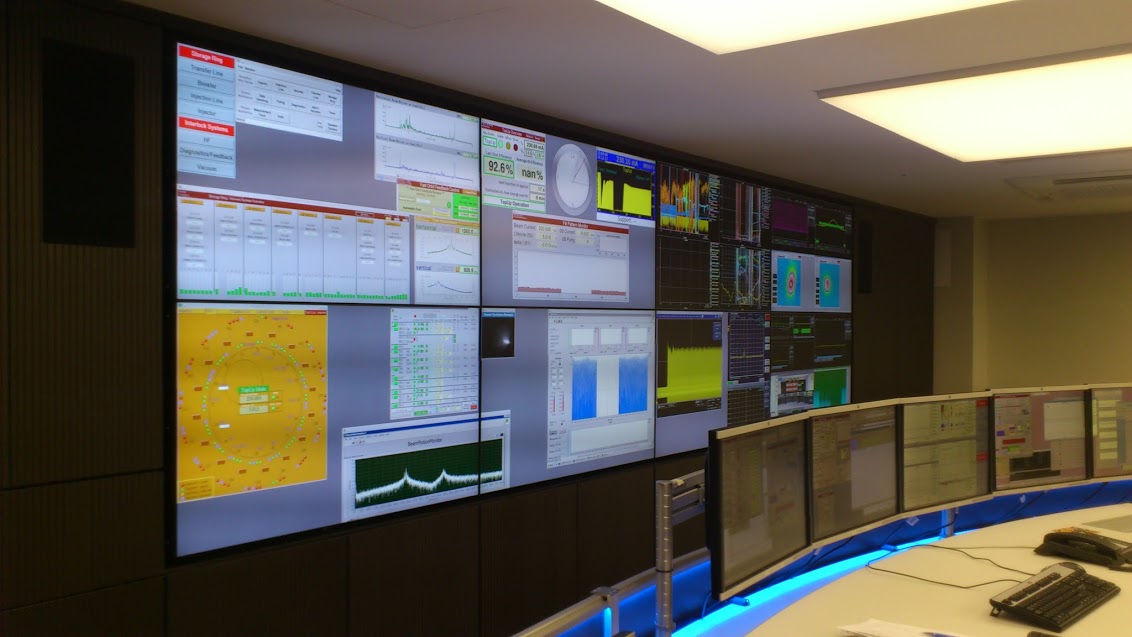
A quick detour through the neuroscience research lab I have been involved with Freedesktop, GNOME and KDE for an incredibly long time now (more than a decade), but my actual job (besides consulting for Purism) is that of a PhD candidate in a neuroscience research lab (working on the morphology of biological neurons and its relation to behavior). I am mostly involved with three research groups in our institute, which is about 35 people. Most of us do all our data analysis on powerful servers which we connect to using RDP (with KDE Plasma as desktop). Since I joined, I have been pushing the envelope a bit to extend Linux usage to data acquisition and regular clients, and to have our data acquisition hardware interface well with it. Linux brings some unique advantages for use in research, besides the obvious one of having every step of your data management platform introspectable with no black boxes left, a goal I value very highly in research (but this would be its own blogpost). In terms of operating system usage though, most systems are still Windows-based. Windows is what companies develop for, and what people use by default and are familiar with. The choice of operating system is very strongly driven by application availability, and WSL being really good makes this somewhat worse, as it removes the need for people to switch to a real Linux system entirely if there is the occasional software requiring it. Yet, we have a lot more Linux users than before, and use it in many places where it makes sense. I also developed a novel data acquisition software that even runs on Linux-only and uses the abilities of the platform to its fullest extent. All of this resulted in me asking existing software and hardware vendors for Linux support a lot more often. Vendor-customer relationship in science is usually pretty good, and vendors do usually want to help out. Same for open source projects, especially if you offer to do Linux porting work for them But overall, the ease of use and availability of required applications and their usability rules supreme. Most people are not technically knowledgeable and just want to get their research done in the best way possible, getting the best results with the least amount of friction.
KDE/Linux usage at a control station for a particle accelerator at Adlershof Technology Park, Germany, for reference (by 25years of KDE)3

Back to the point The point of that story is this: GNOME, KDE, RHEL, Debian or Ubuntu: They all do not matter if the necessary applications are not available for them. And as soon as they are, the easiest-to-use solution wins. There are many facets of easiest : In many cases this is RHEL due to Red Hat support contracts being available, in many other cases it is Ubuntu due to its mindshare and ease of use. KDE Plasma is also frequently seen, as it is perceived a bit easier to onboard Windows users with it (among other benefits). Ultimately, it comes down to applications and 3rd-party support though. Here s a dirty secret: In many cases, porting an application to Linux is not that difficult. The thing that companies (and FLOSS projects too!) struggle with and will calculate the merits of carefully in advance is whether it is worth the support cost as well as continuous QA/testing. Their staff will have to do all of that work, and they could spend that time on other tasks after all. So if they learn that porting to Linux not only means added testing and support, but also means to choose between the legacy X11 display server that allows for 1:1 porting from Windows or the new Wayland compositors that do not support the same features they need, they will quickly consider it not worth the effort at all. I have seen this happen. Of course many apps use a cross-platform toolkit like Qt, which greatly simplifies porting. But this just moves the issue one layer down, as now the toolkit needs to abstract Windows, macOS and Wayland. And Wayland does not contain features to do certain things or does them very differently from e.g. Windows, so toolkits have no way to actually implement the existing functionality in a way that works on all platforms. So in Qt s documentation you will often find texts like works everywhere except for on Wayland compositors or mobile 4. Many missing bits or altered behavior are just papercuts, but those add up. And if users will have a worse experience, this will translate to more support work, or people not wanting to use the software on the respective platform.

What s missing?

Window positioning SDI applications with multiple windows are very popular in the scientific world. For data acquisition (for example with microscopes) we often have one monitor with control elements and one larger one with the recorded image. There is also other configurations where multiple signal modalities are acquired, and the experimenter aligns windows exactly in the way they want and expects the layout to be stored and to be loaded upon reopening the application. Even in the image from Adlershof Technology Park above you can see this style of UI design, at mega-scale. Being able to pop-out elements as windows from a single-window application to move them around freely is another frequently used paradigm, and immensely useful with these complex apps. It is important to note that this is not a legacy design, but in many cases an intentional choice these kinds of apps work incredibly well on larger screens or many screens and are very flexible (you can have any window configuration you want, and switch between them using the (usually) great window management abilities of your desktop). Of course, these apps will work terribly on tablets and small form factors, but that is not the purpose they were designed for and nobody would use them that way. I assumed for sure these features would be implemented at some point, but when it became clear that that would not happen, I created the ext-placement protocol which had some good discussion but was ultimately rejected from the xdg namespace. I then tried another solution based on feedback, which turned out not to work for most apps, and now proposed xdg-placement (v2) in an attempt to maybe still get some protocol done that we can agree on, exploring more options before pushing the existing protocol for inclusion into the ext Wayland protocol namespace. Meanwhile though, we can not port any application that needs this feature, while at the same time we are switching desktops and distributions to Wayland by default.

Window position restoration Similarly, a protocol to save & restore window positions was already proposed in 2018, 6 years ago now, but it has still not been agreed upon, and may not even help multiwindow apps in its current form. The absence of this protocol means that applications can not restore their former window positions, and the user has to move them to their previous place again and again. Meanwhile, toolkits can not adopt these protocols and applications can not use them and can not be ported to Wayland without introducing papercuts.

Window icons Similarly, individual windows can not set their own icons, and not-installed applications can not have an icon at all because there is no desktop-entry file to load the icon from and no icon in the theme for them. You would think this is a niche issue, but for applications that create many windows, providing icons for them so the user can find them is fairly important. Of course it s not the end of the world if every window has the same icon, but it s one of those papercuts that make the software slightly less user-friendly. Even applications with fewer windows like LibrePCB are affected, so much so that they rather run their app through Xwayland for now. I decided to address this after I was working on data analysis of image data in a Python virtualenv, where my code and the Python libraries used created lots of windows all with the default yellow W icon, making it impossible to distinguish them at a glance. This is xdg-toplevel-icon now, but of course it is an uphill battle where the very premise of needing this is questioned. So applications can not use it yet.

Limited window abilities requiring specialized protocols Firefox has a picture-in-picture feature, allowing it to pop out media from a mediaplayer as separate floating window so the user can watch the media while doing other things. On X11 this is easily realized, but on Wayland the restrictions posed on windows necessitate a different solution. The xdg-pip protocol was proposed for this specialized usecase, but it is also not merged yet. So this feature does not work as well on Wayland.

Automated GUI testing / accessibility / automation Automation of GUI tasks is a powerful feature, so is the ability to auto-test GUIs. This is being worked on, with libei and wlheadless-run (and stuff like ydotool exists too), but we re not fully there yet.

Wayland is frustrating for (some) application authors As you see, there is valid applications and valid usecases that can not be ported yet to Wayland with the same feature range they enjoyed on X11, Windows or macOS. So, from an application author s perspective, Wayland does break things quite significantly, because things that worked before can no longer work and Wayland (the whole stack) does not provide any avenue to achieve the same result. Wayland does break screen sharing, global hotkeys, gaming latency (via no tearing ) etc, however for all of these there are solutions available that application authors can port to. And most developers will gladly do that work, especially since the newer APIs are usually a lot better and more robust. But if you give application authors no path forward except use Xwayland and be on emulation as second-class citizen forever , it just results in very frustrated application developers. For some application developers, switching to a Wayland compositor is like buying a canvas from the Linux shop that forces your brush to only draw triangles. But maybe for your avant-garde art, you need to draw a circle. You can approximate one with triangles, but it will never be as good as the artwork of your friends who got their canvases from the Windows or macOS art supply shop and have more freedom to create their art.

Triangles are proven to be the best shape! If you are drawing circles you are creating bad art! Wayland, via its protocol limitations, forces a certain way to build application UX often for the better, but also sometimes to the detriment of users and applications. The protocols are often fairly opinionated, a result of the lessons learned from X11. In any case though, it is the odd one out Windows and macOS do not pose the same limitations (for better or worse!), and the effort to port to Wayland is orders of magnitude bigger, or sometimes in case of the multiwindow UI paradigm impossible to achieve to the same level of polish. Desktop environments of course have a design philosophy that they want to push, and want applications to integrate as much as possible (same as macOS and Windows!). However, there are many applications out there, and pushing a design via protocol limitations will likely just result in fewer apps.

The porting dilemma I spent probably way too much time looking into how to get applications cross-platform and running on Linux, often talking to vendors (FLOSS and proprietary) as well. Wayland limitations aren t the biggest issue by far, but they do start to come come up now, especially in the scientific space with Ubuntu having switched to Wayland by default. For application authors there is often no way to address these issues. Many scientists do not even understand why their Python script that creates some GUIs suddenly behaves weirdly because Qt is now using the Wayland backend on Ubuntu instead of X11. They do not know the difference and also do not want to deal with these details even though they may be programmers as well, the real goal is not to fiddle with the display server, but to get to a scientific result somehow. Another issue is portability layers like Wine which need to run Windows applications as-is on Wayland. Apparently Wine s Wayland driver has some heuristics to make window positioning work (and I am amazed by the work done on this!), but that can only go so far.

A way out? So, how would we actually solve this? Fundamentally, this excessively long blog post boils down to just one essential question: Do we want to force applications to submit to a UX paradigm unconditionally, potentially loosing out on application ports or keeping apps on X11 eternally, or do we want to throw them some rope to get as many applications ported over to Wayland, even through we might sacrifice some protocol purity? I think we really have to answer that to make the discussions on wayland-protocols a lot less grueling. This question can be answered at the wayland-protocols level, but even more so it must be answered by the individual desktops and compositors. If the answer for your environment turns out to be Yes, we want the Wayland protocol to be more opinionated and will not make any compromises for application portability , then your desktop/compositor should just immediately NACK protocols that add something like this and you simply shouldn t engage in the discussion, as you reject the very premise of the new protocol: That it has any merit to exist and is needed in the first place. In this case contributors to Wayland and application authors also know where you stand, and a lot of debate is skipped. Of course, if application authors want to support your environment, you are basically asking them now to rewrite their UI, which they may or may not do. But at least they know what to expect and how to target your environment. If the answer turns out to be We do want some portability , the next question obviously becomes where the line should be drawn and which changes are acceptable and which aren t. We can t blindly copy all X11 behavior, some porting work to Wayland is simply inevitable. Some written rules for that might be nice, but probably more importantly, if you agree fundamentally that there is an issue to be fixed, please engage in the discussions for the respective MRs! We for sure do not want to repeat X11 mistakes, and I am certain that we can implement protocols which provide the required functionality in a way that is a nice compromise in allowing applications a path forward into the Wayland future, while also being as good as possible and improving upon X11. For example, the toplevel-icon proposal is already a lot better than anything X11 ever had. Relaxing ACK requirements for the ext namespace is also a good proposed administrative change, as it allows some compositors to add features they want to support to the shared repository easier, while also not mandating them for others. In my opinion, it would allow for a lot less friction between the two different ideas of how Wayland protocol development should work. Some compositors could move forward and support more protocol extensions, while more restrictive compositors could support less things. Applications can detect supported protocols at launch and change their behavior accordingly (ideally even abstracted by toolkits). You may now say that a lot of apps are ported, so surely this issue can not be that bad. And yes, what Wayland provides today may be enough for 80-90% of all apps. But what I hope the detour into the research lab has done is convince you that this smaller percentage of apps matters. A lot. And that it may be worthwhile to support them. To end on a positive note: When it came to porting concrete apps over to Wayland, the only real showstoppers so far5 were the missing window-positioning and window-position-restore features. I encountered them when porting my own software, and I got the issue as feedback from colleagues and fellow engineers. In second place was UI testing and automation support, the window-icon issue was mentioned twice, but being a cosmetic issue it likely simply hurts people less and they can ignore it easier. What this means is that the majority of apps are already fine, and many others are very, very close! A Wayland future for everyone is within our grasp!  I will also bring my two protocol MRs to their conclusion for sure, because as application developers we need clarity on what the platform (either all desktops or even just a few) supports and will or will not support in future. And the only way to get something good done is by contribution and friendly discussion.


Footnotes
  1. Apologies for the clickbait-y title it comes with the subject
  2. When I talk about Wayland I mean the combined set of display server protocols and accepted protocol extensions, unless otherwise clarified.
  3. I would have picked a picture from our lab, but that would have needed permission first
  4. Qt has awesome platform issues pages, like for macOS and Linux/X11 which help with porting efforts, but Qt doesn t even list Linux/Wayland as supported platform. There is some information though, like window geometry peculiarities, which aren t particularly helpful when porting (but still essential to know).
  5. Besides issues with Nvidia hardware CUDA for simulations and machine-learning is pretty much everywhere, so Nvidia cards are common, which causes trouble on Wayland still. It is improving though.

10 January 2024

Colin Watson: Going freelance

I ve mentioned this in a couple of other places, but I realized I never got round to posting about it on my own blog rather than on other people s services. How remiss of me. Anyway: after much soul-searching, I decided a few months ago that it was time for me to move on from Canonical and the Launchpad team there. Nearly 20 years is a long time to spend at any company, and although there are a bunch of people I ll miss, Launchpad is in a reasonable state where I can let other people have a turn. I m now in business for myself as a freelance developer! My new company is Columbiform, and I m focusing on Debian packaging and custom Python development. My services page has some self-promotion on the sorts of things I can do. My first gig, and the one that made it viable to make this jump, is at Freexian where I m helping with an exciting infrastructure project that we hope will start making Debian developers lives easier in the near future. This is likely to take up most of my time at least through to the end of 2024, but I may have some spare cycles. Drop me a line if you have something where you think I could be a good fit, and we can have a talk about it.

7 January 2024

Jonathan McDowell: Free Software Activities for 2023

This year was hard from a personal and work point of view, which impacted the amount of Free Software bits I ended up doing - even when I had the time I often wasn t in the right head space to make progress on things. However writing this annual recap up has been a useful exercise, as I achieved more than I realised. For previous years see 2019, 2020, 2021 + 2022.

Conferences The only Free Software related conference I made it to this year was DebConf23 in Kochi, India. Changes with projects at work meant I couldn t justify anything work related. This year I m planning to make it to FOSDEM, and haven t made a decision on DebConf24 yet.

Debian Most of my contributions to Free software continue to happen within Debian. I started the year working on retrogaming with Kodi on Debian. I got this to a much better state for bookworm, with it being possible to run the bsnes-mercury emulator under Kodi using RetroArch. There are a few other libretro backends available for RetroArch, but Kodi needs some extra controller mappings packaged up first. Plenty of uploads were involved, though some of this was aligning all the dependencies and generally cleaning things up in iterations. I continued to work on a few packages within the Debian Electronics Packaging Team. OpenOCD produced a new release in time for the bookworm release, so I uploaded 0.12.0-1. There were a few minor sigrok cleanups - sigrok 0.3, libsigrokdecode 0.5.3-4 + libsigrok 0.5.2-4 / 0.5.2-5. While I didn t manage to get the work completed I did some renaming of the ESP8266 related packages - gcc-xtensa-lx106 (which saw a 13 upload pre-bookworm) has become gcc-xtensa (with 14) and binutils-xtensa-lx106 has become binutils-xtensa (with 6). Binary packages remain the same, but this is intended to allow for the generation of ESP32 compiler toolchains from the same source. onak saw 0.6.3-1 uploaded to match the upstream release. I also uploaded libgpg-error 1.47-1 (though I can claim no credit for any of the work in preparing the package) to help move things forward on updating gnupg2 in Debian. I NMUed tpm2-pkcs11 1.9.0-0.1 to fix some minor issues pre-bookworm release; I use this package myself to store my SSH key within my laptop TPM, so I care about it being in a decent state. sg3-utils also saw a bit of love with 1.46-2 + 1.46-3 - I don t work in the storage space these days, but I m still listed as an uploaded and there was an RC bug around the library package naming that I was qualified to fix and test pre-bookworm. Related to my retroarch work I sponsored uploads of mgba for Ryan Tandy: 0.10.0+dfsg-1, 0.10.0+dfsg-2, 0.10.1+dfsg-1, 0.10.2+dfsg-1, mgba 0.10.1+dfsg-1+deb12u1. As part of the Data Protection Team I responded to various inbound queries to that team, both from project members and those external to the project. I continue to keep an eye on Debian New Members, even though I m mostly inactive as an application manager - we generally seem to have enough available recently. Mostly my involvement is via Front Desk activities, helping out with queries to the team alias, and contributing to internal discussions as well as our panel at DebConf23. Finally the 3 month rotation for Debian Keyring continues to operate smoothly. I dealt with 2023.03.24, 2023.06.26, 2023.06.29, 2023.09.10, 2023.09.24 + 2023.12.24.

Linux I had a few minor patches accepted to the kernel this year. A pair of safexcel cleanups (improved error logging for firmware load fail and cleanup on load failure) came out of upgrading the kernel running on my RB5009. The rest were related to my work on repurposing my C.H.I.P.. The AXP209 driver needed extended to support GPIO3 (with associated DT schema update). That allowed Bluetooth to be enabled. Adding the AXP209 internal temperature ADC as an iio-hwmon node means it can be tracked using the normal sensor monitoring framework. And finally I added the pinmux settings for mmc2, which I use to support an external microSD slot on my C.H.I.P.

Personal projects 2023 saw another minor release of onak, 0.6.3, which resulted in a corresponding Debian upload (0.6.3-1). It has a couple of bug fixes (including a particularly annoying, if minor, one around systemd socket activation that felt very satisfying to get to the bottom of), but I still lack the time to do any of the major changes I would like to. I wrote listadmin3 to allow easy manipulation of moderation queues for Mailman3. It s basic, but it s drastically improved my timeliness on dealing with held messages.

3 January 2024

Jacob Adams: Fixing My Shell

For an embarassingly long time, my shell has unnecessarily tried to initialize a console font in every kind of interactive terminal. This leaves the following error message in my terminal:
Couldn't get a file descriptor referring to the console.
It even shows up twice when running tmux! Clearly I ve done something horrible to my configuration, and now I ve got to clean it up.

How does Shell Initialization Work? The precise files a shell reads at start-up is somewhat complex, and defined by this excellent chart 1: Shell Startup Flowchart For the purposes of what I m trying to fix, there are two paths that matter.
  • Interactive login shell startup
  • Interactive non-login shell startup
As you can see from the above, trying to distinguish these two paths in bash is an absolute mess. zsh, in contrast, is much cleaner and allows for a clear distinction between these two cases, with login shell configuration files as a superset of configuration files used by non-login shells.

How did we get here? I keep my configuration files in a config repository. Some time ago I got quite frustrated at this whole shell initialization thing, and just linked everything together in one profile file:
.mkshrc -> config/profile
.profile -> config/profile
This appears to have created this mess.

Move to ZSH I ve wanted to move to zsh for a while, and took this opportunity to do so. So my new configuration files are .zprofile and .zshrc instead of .mkshrc and .profile (though I m going to retain those symlinks to allow my old configurations to continue working). mksh is a nice simple shell, but using zsh here allows for more consistency between my home and $WORK environments, and will allow a lot more powerful extensions.

Updating my Prompt ZSH prompts use a totally different configuration via variable expansion. However, it also uses the PROMPT variable, so I set that to the needed values for zsh. There s an excellent ZSH prompt generator at https://zsh-prompt-generator.site that I used to get these variables, though I m sure they re in the zsh documentation somewhere as well. I wanted a simple prompt with user (%n), host (%m), and path (%d). I also wanted a % at the end to distinguish this from other shells.
PROMPT="%n@%m%d%% "

Fixing mksh prompts This worked but surprisingly mksh also looks at PROMPT, leaving my mksh prompt as the literal prompt string without expansion. Fixing this requires setting up a proper shrc and linking it to .mkshrc and .zshrc. I chose to move my existing aliases script to this file, as it also broke in non-login shells when moved to profile. Within this new shrc file we can check what shell we re running via $0:
if [ "$0" = "/bin/zsh" ]   [ "$0" = "zsh" ]   [ "$0" = "-zsh" ]
I chose to add plain zsh here in case I run it manually for whatever reason. I also added -zsh to support tmux as that s what it presents as $0. This also means you ll need to be careful to quote $0 or you ll get fun shell errors. There s probably a better way to do this, but I couldn t find something that was compatible with POSIX shell, which is what most of this has to be written in to be compatible with mksh and zsh2. We can then setup different prompts for each:
if [ "$0" = "/bin/zsh" ]   [ "$0" = "zsh" ]   [ "$0" = "-zsh" ]
then
	PROMPT="%n@%m%d%% "
else
	# Borrowed from
	# http://www.unixmantra.com/2013/05/setting-custom-prompt-in-ksh.html
	PS1='$(id -un)@$(hostname -s)$PWD$ '
fi

Setting Console Font in a Better Way I ve been setting console font via setfont in my .profile for a while. I m not sure where I picked this up, but it s not the right way. I even tried to only run this in a console with -t but that only checks that output is a terminal, not specifically a console.
if [ -t 1 ]
then
	setfont /usr/share/consolefonts/Lat15-Terminus20x10.psf.gz
fi
This also only runs once the console is logged into, instead of initializing it on boot. The correct way to set this up, on Debian-based systems, is reconfiguring console-setup like so:
dpkg-reconfigure console-setup
From there you get a menu of encoding, character set, font, and then font size to configure for your consoles.

VIM mode To enable VIM mode for ZSH, you simply need to set:
bindkeys -v
This allows you to edit your shell commands with basic VIM keybinds.

Getting back Ctrl + Left Arrow and Ctrl + Right Arrow Moving around one word at a time with Ctrl and the arrow keys is broken by vim mode unfortunately, so we ll need to re-enable it:
bindkey "^[[1;5C" forward-word
bindkey "^[[1;5D" backward-word

Why did it show up twice for tmux? Because tmux creates a login shell. Adding:
echo PROFILE
to profile and:
echo SHRC
to shrc confirms this with:
PROFILE
SHRC
SHRC
For now, profile sources shrc so that running twice is expected. But after this exploration and diagram, it s clear we don t need that for zsh. Removing this will break remote bash shells (see above diagram), but I can live without those on my development laptop. Removing that line results in the expected output for a new terminal:
SHRC
And the full output for a new tmux session or console:
PROFILE
SHRC
So finally we re back to a normal state! This post is a bit unfocused but I hope it helps someone else repair or enhance their shell environment. If you liked this4, or know of any other ways to manage this I could use, let me know at fixmyshell@tookmund.com.
  1. This chart comes from the excellent Shell Startup Scripts article by Peter Ward. I ve generated the SVG from the graphviz source linked in the article.
  2. Technically it has be compatible with Korn shell, but a quick google seems to suggest that that s actually a subset of POSIX shell.
  3. I use oh-my-zsh at $WORK but for now I m going to simplify my personal configuration. If I end up using a lot of plugins I ll reconsider this.
  4. Or if you ve found any typos or other issues that I should fix.

1 January 2024

Tim Retout: Prevent DOM-XSS with Trusted Types - a smarter DevSecOps approach

It can be incredibly easy for a frontend developer to accidentally write a client-side cross-site-scripting (DOM-XSS) security issue, and yet these are hard for security teams to detect. Vulnerability scanners are slow, and suffer from false positives. Can smarter collaboration between development, operations and security teams provide a way to eliminate these problems altogether? Google claims that Trusted Types has all but eliminated DOM-XSS exploits on those of their sites which have implemented it. Let s find out how this can work!

DOM-XSS vulnerabilities are easy to write, but hard for security teams to catch It is very easy to accidentally introduce a client-side XSS problem. As an example of what not to do, suppose you are setting an element s text to the current URL, on the client side:
// Don't do this
para.innerHTML = location.href;
Unfortunately, an attacker can now manipulate the URL (and e.g. send this link in a phishing email), and any HTML tags they add will be interpreted by the user s browser. This could potentially be used by the attacker to send private data to a different server. Detecting DOM-XSS using vulnerability scanning tools is challenging - typically this requires crawling each page of the website and attempting to detect problems such as the one above, but there is a significant risk of false positives, especially as the complexity of the logic increases. There are already ways to avoid these exploits developers should validate untrusted input before making use of it. There are libraries such as DOMPurify which can help with sanitization.1 However, if you are part of a security team with responsibility for preventing these issues, it can be complex to understand whether you are at risk. Different developer teams may be using different techniques and tools. It may be impossible for you to work closely with every developer so how can you know that the frontend team have used these libraries correctly?

Trusted Types closes the DevSecOps feedback loop for DOM-XSS, by allowing Ops and Security to verify good Developer practices Trusted Types enforces sanitization in the browser2, by requiring the web developer to assign a particular kind of JavaScript object rather than a native string to .innerHTML and other dangerous properties. Provided these special types are created in an appropriate way, then they can be trusted not to expose XSS problems. This approach will work with whichever tools the frontend developers have chosen to use, and detection of issues can be rolled out by infrastructure engineers without requiring frontend code changes.

Content Security Policy allows enforcement of security policies in the browser itself Because enforcing this safer approach in the browser for all websites would break backwards-compatibility, each website must opt-in through Content Security Policy headers. Content Security Policy (CSP) is a mechanism that allows web pages to restrict what actions a browser should execute on their page, and a way for the site to receive reports if the policy is violated. Diagram showing a browser communicating with a web server. Content-Security-Policy headers are returned by the URL &ldquo;/&rdquo;, and the browser reports any security violations to &ldquo;/csp&rdquo;. Figure 1: Content-Security-Policy browser communication This is revolutionary, because it allows servers to receive feedback in real time on errors that may be appearing in the browser s console.

Trusted Types can be rolled out incrementally, with continuous feedback Web.dev s article on Trusted Types explains how to safely roll out the feature using the features of CSP itself:
  • Deploy a CSP collector if you haven t already
  • Switch on CSP reports without enforcement (via Content-Security-Policy-Report-Only headers)
  • Iteratively review and fix the violations
  • Switch to enforcing mode when there are a low enough rate of reports
Static analysis in a continuous integration pipeline is also sensible you want to prevent regressions shipping in new releases before they trigger a flood of CSP reports. This will also give you a chance of finding any low-traffic vulnerable pages.

Smart security teams will use techniques like Trusted Types to eliminate entire classes of bugs at a time Rather than playing whack-a-mole with unreliable vulnerability scanning or bug bounties, techniques such as Trusted Types are truly in the spirit of Secure by Design build high quality in from the start of the engineering process, and do this in a way which closes the DevSecOps feedback loop between your Developer, Operations and Security teams.

  1. Sanitization libraries are especially needed when the examples become more complex, e.g. if the application must manipulate the input. DOMPurify version 1.0.9 also added Trusted Types support, so can still be used to help developers adopt this feature.
  2. Trusted Types has existed in Chrome and Edge since 2020, and should soon be coming to Firefox as well. However, it s not necessary to wait for Firefox or Safari to add support, because the large market share of Chrome and Edge will let you identify and fix your site s DOM-XSS issues, even if you do not set enforcing mode, and users of all browsers will benefit. Even so, it is great that Mozilla is now on board.

27 December 2023

Bits from Debian: Statement about the EU Cyber Resilience Act

Debian Public Statement about the EU Cyber Resilience Act and the Product Liability Directive The European Union is currently preparing a regulation "on horizontal cybersecurity requirements for products with digital elements" known as the Cyber Resilience Act (CRA). It is currently in the final "trilogue" phase of the legislative process. The act includes a set of essential cybersecurity and vulnerability handling requirements for manufacturers. It will require products to be accompanied by information and instructions to the user. Manufacturers will need to perform risk assessments and produce technical documentation and, for critical components, have third-party audits conducted. Discovered security issues will have to be reported to European authorities within 25 hours (1). The CRA will be followed up by the Product Liability Directive (PLD) which will introduce compulsory liability for software. While a lot of these regulations seem reasonable, the Debian project believes that there are grave problems for Free Software projects attached to them. Therefore, the Debian project issues the following statement:
  1. Free Software has always been a gift, freely given to society, to take and to use as seen fit, for whatever purpose. Free Software has proven to be an asset in our digital age and the proposed EU Cyber Resilience Act is going to be detrimental to it. a. As the Debian Social Contract states, our goal is "make the best system we can, so that free works will be widely distributed and used." Imposing requirements such as those proposed in the act makes it legally perilous for others to redistribute our work and endangers our commitment to "provide an integrated system of high-quality materials with no legal restrictions that would prevent such uses of the system". (2) b. Knowing whether software is commercial or not isn't feasible, neither in Debian nor in most free software projects - we don't track people's employment status or history, nor do we check who finances upstream projects (the original projects that we integrate in our operating system). c. If upstream projects stop making available their code for fear of being in the scope of CRA and its financial consequences, system security will actually get worse rather than better. d. Having to get legal advice before giving a gift to society will discourage many developers, especially those without a company or other organisation supporting them.
  2. Debian is well known for its security track record through practices of responsible disclosure and coordination with upstream developers and other Free Software projects. We aim to live up to the commitment made in the Debian Social Contract: "We will not hide problems." (3) a.The Free Software community has developed a fine-tuned, tried-and-tested system of responsible disclosure in case of security issues which will be overturned by the mandatory reporting to European authorities within 24 hours (Art. 11 CRA). b. Debian spends a lot of volunteering time on security issues, provides quick security updates and works closely together with upstream projects and in coordination with other vendors. To protect its users, Debian regularly participates in limited embargos to coordinate fixes to security issues so that all other major Linux distributions can also have a complete fix when the vulnerability is disclosed. c. Security issue tracking and remediation is intentionally decentralized and distributed. The reporting of security issues to ENISA and the intended propagation to other authorities and national administrations would collect all software vulnerabilities in one place. This greatly increases the risk of leaking information about vulnerabilities to threat actors, representing a threat for all the users around the world, including European citizens. d. Activists use Debian (e.g. through derivatives such as Tails), among other reasons, to protect themselves from authoritarian governments; handing threat actors exploits they can use for oppression is against what Debian stands for. e. Developers and companies will downplay security issues because a "security" issue now comes with legal implications. Less clarity on what is truly a security issue will hurt users by leaving them vulnerable.
  3. While proprietary software is developed behind closed doors, Free Software development is done in the open, transparent for everyone. To retain parity with proprietary software the open development process needs to be entirely exempt from CRA requirements, just as the development of software in private is. A "making available on the market" can only be considered after development is finished and the software is released.
  4. Even if only "commercial activities" are in the scope of CRA, the Free Software community - and as a consequence, everybody - will lose a lot of small projects. CRA will force many small enterprises and most probably all self employed developers out of business because they simply cannot fulfill the requirements imposed by CRA. Debian and other Linux distributions depend on their work. If accepted as it is, CRA will undermine not only an established community but also a thriving market. CRA needs an exemption for small businesses and, at the very least, solo-entrepreneurs.

Information about the voting process: Debian uses the Condorcet method for voting. Simplistically, plain Condorcets method can be stated like so : "Consider all possible two-way races between candidates. The Condorcet winner, if there is one, is the one candidate who can beat each other candidate in a two-way race with that candidate." The problem is that in complex elections, there may well be a circular relationship in which A beats B, B beats C, and C beats A. Most of the variations on Condorcet use various means of resolving the tie. Debian's variation is spelled out in the constitution, specifically, A.5(3) Sources: (1) CRA proposals and links & PLD proposals and links (2) Debian Social Contract No. 2, 3, and 4 (3) Debian Constitution

26 December 2023

Russ Allbery: krb5-strength 3.3

krb5-strength is a toolkit of plugins and support programs for password strength checking for Kerberos KDCs, either Heimdal or MIT. It also includes a password history mechanism for Heimdal KDCs. This is a maintenance release, since there hadn't been a new release since 2020. It contains the normal sort of build system and portability updates, and the routine bump in the number of hash iterations used for the history mechanism to protect against (some) brute force attacks. It also includes an RPM spec file contributed by Daria Phoebe Brashear, and some changes to the Perl dependencies to track current community recommendations. You can get the latest version from the krb5-strength distribution page.

25 December 2023

Sergio Talens-Oliag: GitLab CI/CD Tips: Automatic Versioning Using semantic-release

This post describes how I m using semantic-release on gitlab-ci to manage versioning automatically for different kinds of projects following a simple workflow (a develop branch where changes are added or merged to test new versions, a temporary release/#.#.# to generate the release candidate versions and a main branch where the final versions are published).

What is semantic-releaseIt is a Node.js application designed to manage project versioning information on Git Repositories using a Continuous integration system (in this post we will use gitlab-ci)

How does it workBy default semantic-release uses semver for versioning (release versions use the format MAJOR.MINOR.PATCH) and commit messages are parsed to determine the next version number to publish. If after analyzing the commits the version number has to be changed, the command updates the files we tell it to (i.e. the package.json file for nodejs projects and possibly a CHANGELOG.md file), creates a new commit with the changed files, creates a tag with the new version and pushes the changes to the repository. When running on a CI/CD system we usually generate the artifacts related to a release (a package, a container image, etc.) from the tag, as it includes the right version number and usually has passed all the required tests (it is a good idea to run the tests again in any case, as someone could create a tag manually or we could run extra jobs when building the final assets if they fail it is not a big issue anyway, numbers are cheap and infinite, so we can skip releases if needed).

Commit messages and versioningThe commit messages must follow a known format, the default module used to analyze them uses the angular git commit guidelines, but I prefer the conventional commits one, mainly because it s a lot easier to use when you want to update the MAJOR version. The commit message format used must be:
<type>(optional scope): <description>
[optional body]
[optional footer(s)]
The system supports three types of branches: release, maintenance and pre-release, but for now I m not using maintenance ones. The branches I use and their types are:
  • main as release branch (final versions are published from there)
  • develop as pre release branch (used to publish development and testing versions with the format #.#.#-SNAPSHOT.#)
  • release/#.#.# as pre release branches (they are created from develop to publish release candidate versions with the format #.#.#-rc.# and once they are merged with main they are deleted)
On the release branch (main) the version number is updated as follows:
  1. The MAJOR number is incremented if a commit with a BREAKING CHANGE: footer or an exclamation (!) after the type/scope is found in the list of commits found since the last version change (it looks for tags on the same branch).
  2. The MINOR number is incremented if the MAJOR number is not going to be changed and there is a commit with type feat in the commits found since the last version change.
  3. The PATCH number is incremented if neither the MAJOR nor the MINOR numbers are going to be changed and there is a commit with type fix in the the commits found since the last version change.
On the pre release branches (develop and release/#.#.#) the version and pre release numbers are always calculated from the last published version available on the branch (i. e. if we published version 1.3.2 on main we need to have the commit with that tag on the develop or release/#.#.# branch to get right what will be the next version). The version number is updated as follows:
  1. The MAJOR number is incremented if a commit with a BREAKING CHANGE: footer or an exclamation (!) after the type/scope is found in the list of commits found since the last released version.In our example it was 1.3.2 and the version is updated to 2.0.0-SNAPSHOT.1 or 2.0.0-rc.1 depending on the branch.
  2. The MINOR number is incremented if the MAJOR number is not going to be changed and there is a commit with type feat in the commits found since the last released version.In our example the release was 1.3.2 and the version is updated to 1.4.0-SNAPSHOT.1 or 1.4.0-rc.1 depending on the branch.
  3. The PATCH number is incremented if neither the MAJOR nor the MINOR numbers are going to be changed and there is a commit with type fix in the the commits found since the last version change.In our example the release was 1.3.2 and the version is updated to 1.3.3-SNAPSHOT.1 or 1.3.3-rc.1 depending on the branch.
  4. The pre release number is incremented if the MAJOR, MINOR and PATCH numbers are not going to be changed but there is a commit that would otherwise update the version (i.e. a fix on 1.3.3-SNAPSHOT.1 will set the version to 1.3.3-SNAPSHOT.2, a fix or feat on 1.4.0-rc.1 will set the version to 1.4.0-rc.2 an so on).

How do we manage its configurationAlthough the system is designed to work with nodejs projects, it can be used with multiple programming languages and project types. For nodejs projects the usual place to put the configuration is the project s package.json, but I prefer to use the .releaserc file instead. As I use a common set of CI templates, instead of using a .releaserc on each project I generate it on the fly on the jobs that need it, replacing values related to the project type and the current branch on a template using the tmpl command (lately I use a branch of my own fork while I wait for some feedback from upstream, as you will see on the Dockerfile).

Container used to run itAs we run the command on a gitlab-ci job we use the image built from the following Dockerfile:
Dockerfile
# Semantic release image
FROM golang:alpine AS tmpl-builder
#RUN go install github.com/krakozaure/tmpl@v0.4.0
RUN go install github.com/sto/tmpl@v0.4.0-sto.2
FROM node:lts-alpine
COPY --from=tmpl-builder /go/bin/tmpl /usr/local/bin/tmpl
RUN apk update &&\
  apk upgrade &&\
  apk add curl git jq openssh-keygen yq zip &&\
  npm install --location=global\
    conventional-changelog-conventionalcommits@6.1.0\
    @qiwi/multi-semantic-release@7.0.0\
    semantic-release@21.0.7\
    @semantic-release/changelog@6.0.3\
    semantic-release-export-data@1.0.1\
    @semantic-release/git@10.0.1\
    @semantic-release/gitlab@9.5.1\
    @semantic-release/release-notes-generator@11.0.4\
    semantic-release-replace-plugin@1.2.7\
    semver@7.5.4\
  &&\
  rm -rf /var/cache/apk/*
CMD ["/bin/sh"]

How and when is it executedThe job that runs semantic-release is executed when new commits are added to the develop, release/#.#.# or main branches (basically when something is merged or pushed) and after all tests have passed (we don t want to create a new version that does not compile or passes at least the unit tests). The job is something like the following:
semantic_release:
  image: $SEMANTIC_RELEASE_IMAGE
  rules:
    - if: '$CI_COMMIT_BRANCH =~ /^(develop main release\/\d+.\d+.\d+)$/'
      when: always
  stage: release
  before_script:
    - echo "Loading scripts.sh"
    - . $ASSETS_DIR/scripts.sh
  script:
    - sr_gen_releaserc_json
    - git_push_setup
    - semantic-release
Where the SEMANTIC_RELEASE_IMAGE variable contains the URI of the image built using the Dockerfile above and the sr_gen_releaserc_json and git_push_setup are functions defined on the $ASSETS_DIR/scripts.sh file:
  • The sr_gen_releaserc_json function generates the .releaserc.json file using the tmpl command.
  • The git_push_setup function configures git to allow pushing changes to the repository with the semantic-release command, optionally signing them with a SSH key.

The sr_gen_releaserc_json functionThe code for the sr_gen_releaserc_json function is the following:
sr_gen_releaserc_json()
 
  # Use nodejs as default project_type
  project_type="$ PROJECT_TYPE:-nodejs "
  # REGEX to match the rc_branch name
  rc_branch_regex='^release\/[0-9]\+\.[0-9]\+\.[0-9]\+$'
  # PATHS on the local ASSETS_DIR
  assets_dir="$ CI_PROJECT_DIR /$ ASSETS_DIR "
  sr_local_plugin="$ assets_dir /local-plugin.cjs"
  releaserc_tmpl="$ assets_dir /releaserc.json.tmpl"
  pipeline_runtime_values_yaml="/tmp/releaserc_values.yaml"
  pipeline_values_yaml="$ assets_dir /values_$ project_type _project.yaml"
  # Destination PATH
  releaserc_json=".releaserc.json"
  # Create an empty pipeline_values_yaml if missing
  test -f "$pipeline_values_yaml"   : >"$pipeline_values_yaml"
  # Create the pipeline_runtime_values_yaml file
  echo "branch: $ CI_COMMIT_BRANCH " >"$pipeline_runtime_values_yaml"
  echo "gitlab_url: $ CI_SERVER_URL " >"$pipeline_runtime_values_yaml"
  # Add the rc_branch name if we are on an rc_branch
  if [ "$(echo "$CI_COMMIT_BRANCH"   sed -ne "/$rc_branch_regex/ p ")" ]; then
    echo "rc_branch: $ CI_COMMIT_BRANCH " >>"$pipeline_runtime_values_yaml"
  elif [ "$(echo "$CI_MERGE_REQUEST_SOURCE_BRANCH_NAME"  
      sed -ne "/$rc_branch_regex/ p ")" ]; then
    echo "rc_branch: $ CI_MERGE_REQUEST_SOURCE_BRANCH_NAME " \
      >>"$pipeline_runtime_values_yaml"
  fi
  echo "sr_local_plugin: $ sr_local_plugin " >>"$pipeline_runtime_values_yaml"
  # Create the releaserc_json file
  tmpl -f "$pipeline_runtime_values_yaml" -f "$pipeline_values_yaml" \
    "$releaserc_tmpl"   jq . >"$releaserc_json"
  # Remove the pipeline_runtime_values_yaml file
  rm -f "$pipeline_runtime_values_yaml"
  # Print the releaserc_json file
  print_file_collapsed "$releaserc_json"
  # --*-- BEG: NOTE --*--
  # Rename the package.json to ignore it when calling semantic release.
  # The idea is that the local-plugin renames it back on the first step of the
  # semantic-release process.
  # --*-- END: NOTE --*--
  if [ -f "package.json" ]; then
    echo "Renaming 'package.json' to 'package.json_disabled'"
    mv "package.json" "package.json_disabled"
  fi
 
Almost all the variables used on the function are defined by gitlab except the ASSETS_DIR and PROJECT_TYPE; in the complete pipelines the ASSETS_DIR is defined on a common file included by all the pipelines and the project type is defined on the .gitlab-ci.yml file of each project. If you review the code you will see that the file processed by the tmpl command is named releaserc.json.tmpl, its contents are shown here:
 
  "plugins": [
     - if .sr_local_plugin  
    "  .sr_local_plugin  ",
     - end  
    [
      "@semantic-release/commit-analyzer",
       
        "preset": "conventionalcommits",
        "releaseRules": [
            "breaking": true, "release": "major"  ,
            "revert": true, "release": "patch"  ,
            "type": "feat", "release": "minor"  ,
            "type": "fix", "release": "patch"  ,
            "type": "perf", "release": "patch"  
        ]
       
    ],
     - if .replacements  
    [
      "semantic-release-replace-plugin",
        "replacements":   .replacements   toJson    
    ],
     - end  
    "@semantic-release/release-notes-generator",
     - if eq .branch "main"  
    [
      "@semantic-release/changelog",
        "changelogFile": "CHANGELOG.md", "changelogTitle": "# Changelog"  
    ],
     - end  
    [
      "@semantic-release/git",
       
        "assets":   if .assets   .assets   toJson   else  []  end  ,
        "message": "ci(release): v$ nextRelease.version \n\n$ nextRelease.notes "
       
    ],
    [
      "@semantic-release/gitlab",
        "gitlabUrl": "  .gitlab_url  ", "successComment": false  
    ]
  ],
  "branches": [
      "name": "develop", "prerelease": "SNAPSHOT"  ,
     - if .rc_branch  
      "name": "  .rc_branch  ", "prerelease": "rc"  ,
     - end  
    "main"
  ]
 
The values used to process the template are defined on a file built on the fly (releaserc_values.yaml) that includes the following keys and values:
  • branch: the name of the current branch
  • gitlab_url: the URL of the gitlab server (the value is taken from the CI_SERVER_URL variable)
  • rc_branch: the name of the current rc branch; we only set the value if we are processing one because semantic-release only allows one branch to match the rc prefix and if we use a wildcard (i.e. release/*) but the users keep more than one release/#.#.# branch open at the same time the calls to semantic-release will fail for sure.
  • sr_local_plugin: the path to the local plugin we use (shown later)
The template also uses a values_$ project_type _project.yaml file that includes settings specific to the project type, the one for nodejs is as follows:
replacements:
  - files:
      - "package.json"
    from: "\"version\": \".*\""
    to: "\"version\": \"$ nextRelease.version \""
assets:
  - "CHANGELOG.md"
  - "package.json"
The replacements section is used to update the version field on the relevant files of the project (in our case the package.json file) and the assets section includes the files that will be committed to the repository when the release is published (looking at the template you can see that the CHANGELOG.md is only updated for the main branch, we do it this way because if we update the file on other branches it creates a merge nightmare and we are only interested on it for released versions anyway). The local plugin adds code to rename the package.json_disabled file to package.json if present and prints the last and next versions on the logs with a format that can be easily parsed using sed:
local-plugin.cjs
// Minimal plugin to:
// - rename the package.json_disabled file to package.json if present
// - log the semantic-release last & next versions
function verifyConditions(pluginConfig, context)  
  var fs = require('fs');
  if (fs.existsSync('package.json_disabled'))  
    fs.renameSync('package.json_disabled', 'package.json');
    context.logger.log( verifyConditions: renamed 'package.json_disabled' to 'package.json' );
   
 
function analyzeCommits(pluginConfig, context)  
  if (context.lastRelease && context.lastRelease.version)  
    context.logger.log( analyzeCommits: LAST_VERSION=$ context.lastRelease.version  );
   
 
function verifyRelease(pluginConfig, context)  
  if (context.nextRelease && context.nextRelease.version)  
    context.logger.log( verifyRelease: NEXT_VERSION=$ context.nextRelease.version  );
   
 
module.exports =  
  verifyConditions,
  analyzeCommits,
  verifyRelease
 

The git_push_setup functionThe code for the git_push_setup function is the following:
git_push_setup()
 
  # Update global credentials to allow git clone & push for all the group repos
  git config --global credential.helper store
  cat >"$HOME/.git-credentials" <<EOF
https://fake-user:$ GITLAB_REPOSITORY_TOKEN @gitlab.com
EOF
  # Define user name, mail and signing key for semantic-release
  user_name="$SR_USER_NAME"
  user_email="$SR_USER_EMAIL"
  ssh_signing_key="$SSH_SIGNING_KEY"
  # Export git user variables
  export GIT_AUTHOR_NAME="$user_name"
  export GIT_AUTHOR_EMAIL="$user_email"
  export GIT_COMMITTER_NAME="$user_name"
  export GIT_COMMITTER_EMAIL="$user_email"
  # Sign commits with ssh if there is a SSH_SIGNING_KEY variable
  if [ "$ssh_signing_key" ]; then
    echo "Configuring GIT to sign commits with SSH"
    ssh_keyfile="/tmp/.ssh-id"
    : >"$ssh_keyfile"
    chmod 0400 "$ssh_keyfile"
    echo "$ssh_signing_key"   tr -d '\r' >"$ssh_keyfile"
    git config gpg.format ssh
    git config user.signingkey "$ssh_keyfile"
    git config commit.gpgsign true
  fi
 
The function assumes that the GITLAB_REPOSITORY_TOKEN variable (set on the CI/CD variables section of the project or group we want) contains a token with read_repository and write_repository permissions on all the projects we are going to use this function. The SR_USER_NAME and SR_USER_EMAIL variables can be defined on a common file or the CI/CD variables section of the project or group we want to work with and the script assumes that the optional SSH_SIGNING_KEY is exported as a CI/CD default value of type variable (that is why the keyfile is created on the fly) and git is configured to use it if the variable is not empty.
Warning: Keep in mind that the variables GITLAB_REPOSITORY_TOKEN and SSH_SIGNING_KEY contain secrets, so probably is a good idea to make them protected (if you do that you have to make the develop, main and release/* branches protected too).
Warning: The semantic-release user has to be able to push to all the projects on those protected branches, it is a good idea to create a dedicated user and add it as a MAINTAINER for the projects we want (the MAINTAINERS need to be able to push to the branches), or, if you are using a Gitlab with a Premium license you can use the api to allow the semantic-release user to push to the protected branches without allowing it for any other user.

The semantic-release commandOnce we have the .releaserc file and the git configuration ready we run the semantic-release command. If the branch we are working with has one or more commits that will increment the version, the tool does the following (note that the steps are described are the ones executed if we use the configuration we have generated):
  1. It detects the commits that will increment the version and calculates the next version number.
  2. Generates the release notes for the version.
  3. Applies the replacements defined on the configuration (in our example updates the version field on the package.json file).
  4. Updates the CHANGELOG.md file adding the release notes if we are going to publish the file (when we are on the main branch).
  5. Creates a commit if all or some of the files listed on the assets key have changed and uses the commit message we have defined, replacing the variables for their current values.
  6. Creates a tag with the new version number and the release notes.
  7. As we are using the gitlab plugin after tagging it also creates a release on the project with the tag name and the release notes.

Notes about the git workflows and merges between branchesIt is very important to remember that semantic-release looks at the commits of a given branch when calculating the next version to publish, that has two important implications:
  1. On pre release branches we need to have the commit that includes the tag with the released version, if we don t have it the next version is not calculated correctly.
  2. It is a bad idea to squash commits when merging a branch to another one, if we do that we will lose the information semantic-release needs to calculate the next version and even if we use the right prefix for the squashed commit (fix, feat, ) we miss all the messages that would otherwise go to the CHANGELOG.md file.
To make sure that we have the right commits on the pre release branches we should merge the main branch changes into the develop one after each release tag is created; in my pipelines the fist job that processes a release tag creates a branch from the tag and an MR to merge it to develop. The important thing about that MR is that is must not be squashed, if we do that the tag commit will probably be lost, so we need to be careful. To merge the changes directly we can run the following code:
# Set the SR_TAG variable to the tag you want to process
SR_TAG="v1.3.2"
# Fetch all the changes
git fetch --all --prune
# Switch to the main branch
git switch main
# Pull all the changes
git pull
# Switch to the development branch
git switch develop
# Pull all the changes
git pull
# Create followup branch from tag
git switch -c "followup/$SR_TAG" "$SR_TAG"
# Change files manually & commit the changed files
git commit -a --untracked-files=no -m "ci(followup): $SR_TAG to develop"
# Switch to the development branch
git switch develop
# Merge the followup branch into the development one using the --no-ff option
git merge --no-ff "followup/$SR_TAG"
# Remove the followup branch
git branch -d "followup/$SR_TAG"
# Push the changes
git push
If we can t push directly to develop we can create a MR pushing the followup branch after committing the changes, but we have to make sure that we don t squash the commits when merging or it will not work as we want.

23 December 2023

Russ Allbery: Review: Bookshops & Bonedust

Review: Bookshops & Bonedust, by Travis Baldree
Series: Legends & Lattes #2
Publisher: Tor
Copyright: 2023
ISBN: 1-250-88611-2
Format: Kindle
Pages: 337
Bookshops & Bonedust is a prequel to the cozy fantasy Legends & Lattes. You can read them in either order, although the epilogue of Bookshops & Bonedust spoils (somewhat guessable) plot developments in Legends & Lattes. Viv is a new member of the mercenary troop Rackam's Ravens and is still possessed of more enthusiasm than sense. As the story opens, she charges well ahead of her allies and nearly gets killed by a pike through the leg. She survives, but her leg needs time to heal and she is not up to the further pursuit of a necromancer. Rackam pays for a room and a doctor in the small seaside town of Murk and leaves her there to recuperate. The Ravens will pick her up when they come back through town, whenever that is. Viv is very quickly bored out of her skull. On a whim, and after some failures to find something else to occupy her, she tries a run-down local bookstore and promptly puts her foot through the boardwalk outside it. That's the start of an improbable friendship with the proprietor, a rattkin named Fern with a knack for book recommendations and a serious cash flow problem. Viv, being Viv, soon decides to make herself useful. The good side and bad side of this book are the same: it's essentially the same book as Legends & Lattes, but this time with a bookstore. There's a medieval sword and sorcery setting, a wide variety of humanoid species, a local business that needs love and attention (this time because it's failing instead of new), a lurking villain, an improbable store animal (this time a gryphlet that I found less interesting than the cat of the coffee shop), and a whole lot of found family. It turns out I was happy to read that story again, and there were some things I liked better in this version. I find bookstores more interesting than coffee shops, and although Viv and Fern go through a similar process of copying features of a modern bookstore, this felt less strained than watching Viv reinvent the precise equipment and menu of a modern coffee shop in a fantasy world. Also, Fern is an absolute delight, probably my favorite character in either of the books. I love the way that she uses book recommendations as a way of asking questions and guessing at answers about other people. As with the first book, Baldree's world-building is utterly unconcerned with trying to follow the faux-medieval conventions of either sword and sorcery or D&D-style role-playing games. On one hand, I like this; most of that so-called medievalism is nonsense anyway, and there's no reason why fantasy with D&D-style species diversity should be set in a medieval world. On the other hand, this world seems exactly like a US small town except the tavern also has rooms for rent, there are roving magical armies, and everyone fights with swords for some reason. It feels weirdly anachronistic, and I can't tell if that's because I've been brainwashed into thinking fantasy has to be medievaloid or if it's a true criticism of the book. I was reminded somewhat of reading Jack McDevitt's SF novels, which are supposedly set in the far future but are indistinguishable from 1980s suburbia except with flying cars. The other oddity with this book is that the reader of the series knows Viv isn't going to stay. This is the problem with writing a second iteration of this story as a prequel. I see why Baldree did it the story wouldn't have worked if Viv were already established but it casts a bit of a pall over the cheeriness of the story. Baldree to his credit confronts this directly, weaves it into the relationships, and salvages it a bit more in the epilogue, but it gave the story a sort of preemptive wistfulness that was at odds with how I wanted to read it. But, despite that, the strength of this book are the characters. Viv is a good person who helps where she can, which sounds like a simple thing but is so restful to read about. This book features her first meeting with the gnome Gallina, who is always a delight. There are delicious baked goods from a dwarf, a grumpy doctor, a grumpier city guard, and a whole cast of people who felt complicated and normal and essentially decent. I'm not sure the fantasy elements do anything for this book, or this series, other than marketing and the convenience of a few plot devices. Even though one character literally disappears into a satchel, it felt like Baldree could have written roughly the same story as a contemporary novel without a hint of genre. But that's not really a complaint, since the marketing works. I would not have read this series if it had been contemporary novels, and I thoroughly enjoyed it. It's a slice of life novel about kind and decent people for readers who are bored by contemporary settings and would rather read fantasy. Works for me. I'm hoping Baldree finds other stories, since I'm not sure I want to read this one several more times, but twice was not too much. If you liked Legends & Lattes and are thinking "how can I get more of that," here's the book for you. If you haven't read Legends & Lattes, I think I would recommend reading this one first. It does many of the same things, it's a bit more polished, and then you can read Viv's adventures in internal chronological order. Rating: 8 out of 10

21 December 2023

Russ Allbery: Review: The Box

Review: The Box, by Marc Levinson
Publisher: Princeton University Press
Copyright: 2006, 2008
Printing: 2008
ISBN: 0-691-13640-8
Format: Trade paperback
Pages: 278
The shipping container as we know it is only about 65 years old. Shipping things in containers is obviously much older; we've been doing that for longer than we've had ships. But the standardized metal box, set on a rail car or loaded with hundreds of its indistinguishable siblings into an enormous, specially-designed cargo ship, became economically significant only recently. Today it is one of the oft-overlooked foundations of global supply chains. The startlingly low cost of container shipping is part of why so much of what US consumers buy comes from Asia, and why most complex machinery is assembled in multiple countries from parts gathered from a dizzying variety of sources. Marc Levinson's The Box is a history of container shipping, from its (arguable) beginnings in the trailer bodies loaded on Pan-Atlantic Steamship Corporation's Ideal-X in 1956 to just-in-time international supply chains in the 2000s. It's a popular history that falls on the academic side, with a full index and 60 pages of citations and other notes. (Per my normal convention, those pages aren't included in the sidebar page count.) The Box is organized mostly chronologically, but Levinson takes extended detours into labor relations and container standardization at the appropriate points in the timeline. The book is very US-centric. Asian, European, and Australian shipping is discussed mostly in relation to trade with the US, and Africa is barely mentioned. I don't have the background to know whether this is historically correct for container shipping or is an artifact of Levinson's focus. Many single-item popular histories focus on something that involves obvious technological innovation (paint pigments) or deep cultural resonance (salt) or at least entertaining quirkiness (punctuation marks, resignation letters). Shipping containers are important but simple and boring. The least interesting chapter in The Box covers container standardization, in which a whole bunch of people had boring meetings, wrote some things done, discovered many of the things they wrote down were dumb, wrote more things down, met with different people to have more meetings, published a standard that partly reflected the fixations of that one guy who is always involved in standards discussions, and then saw that standard be promptly ignored by the major market players. You may be wondering if that describes the whole book. It doesn't, but not because of the shipping containers. The Box is interesting because the process of economic change is interesting, and container shipping is almost entirely about business processes rather than technology. Levinson starts the substance of the book with a description of shipping before standardized containers. This was the most effective, and probably the most informative, chapter. Beyond some vague ideas picked up via cultural osmosis, I had no idea how cargo shipping worked. Levinson gives the reader a memorable feel for the sheer amount of physical labor involved in loading and unloading a ship with mixed cargo (what's called "breakbulk" cargo to distinguish it from bulk cargo like coal or wheat that fills an entire hold). It's not just the effort of hauling barrels, bales, or boxes with cranes or raw muscle power, although that is significant. It's also the need to touch every piece of cargo to move it, inventory it, warehouse it, and then load it on a truck or train. The idea of container shipping is widely attributed, including by Levinson, to Malcom McLean, a trucking magnate who became obsessed with the idea of what we now call intermodal transport: using the same container for goods on ships, railroads, and trucks so that the contents don't have to be unpacked and repacked at each transfer point. Levinson uses his career as an anchor for the story, from his acquisition of Pan-American Steamship Corporation to pursue his original idea (backed by private equity and debt, in a very modern twist), through his years running Sea-Land as the first successful major container shipper, and culminating in his disastrous attempted return to shipping by acquiring United States Lines. I am dubious of Great Man narratives in history books, and I think Levinson may be overselling McLean's role. Container shipping was an obvious idea that the industry had been talking about for decades. Even Levinson admits that, despite a few gestures at giving McLean central credit. Everyone involved in shipping understood that cargo handling was the most expensive and time-consuming part, and that if one could minimize cargo handling at the docks by loading and unloading full containers that didn't have to be opened, shipping costs would be much lower (and profits higher). The idea wasn't the hard part. McLean was the first person to pull it off at scale, thanks to some audacious economic risks and a willingness to throw sharp elbows and play politics, but it seems likely that someone else would have played that role if McLean hadn't existed. Container shipping didn't happen earlier because achieving that cost savings required a huge expenditure of capital and a major disruption of a transportation industry that wasn't interested in being disrupted. The ships had to be remodeled and eventually replaced; manufacturing had to change; railroad and trucking in theory had to change (in practice, intermodal transport; McLean's obsession, didn't happen at scale until much later); pricing had to be entirely reworked; logistical tracking of goods had to be done much differently; and significant amounts of extremely expensive equipment to load and unload heavy containers had to be designed, built, and installed. McLean's efforts proved the cost savings was real and compelling, but it still took two decades before the shipping industry reconstructed itself around containers. That interim period is where this history becomes a labor story, and that's where Levinson's biases become somewhat distracting. In the United States, loading and unloading of cargo ships was done by unionized longshoremen through a bizarre but complex and long-standing system of contract hiring. The cost savings of container shipping comes almost completely from the loss of work for longshoremen. It's a classic replacement of labor with capital; the work done by gangs of twenty or more longshoreman is instead done by a single crane operator at much higher speed and efficiency. The longshoreman unions therefore opposed containerization and launched numerous strikes and other labor actions to delay use of containers, force continued hiring that containers made unnecessary, or win buyouts and payoffs for current longshoremen. Levinson is trying to write a neutral history and occasionally shows some sympathy for longshoremen, but they still get the Luddite treatment in this book: the doomed reactionaries holding back progress. Longshoremen had a vigorous and powerful union that won better working conditions structured in ways that look absurd to outsiders, such as requiring that ships hire twice as many men as necessary so that half of them could get paid while not working. The unions also had a reputation for corruption that Levinson stresses constantly, and theft of breakbulk cargo during loading and warehousing was common. One of the interesting selling points for containers was that lossage from theft during shipping apparently decreased dramatically. It's obvious that the surface demand of the longshoremen unions, that either containers not be used or that just as many manual laborers be hired for container shipping as for earlier breakbulk shipping, was impossible, and that the profession as it existed in the 1950s was doomed. But beneath those facts, and the smoke screen of Levinson's obvious distaste for their unions, is a real question about what society owes workers whose jobs are eliminated by major shifts in business practices. That question of fairness becomes more pointed when one realizes that this shift was massively subsidized by US federal and local governments. McLean's Sea-Land benefited from direct government funding and subsidized navy surplus ships, massive port construction in New Jersey with public funds, and a sweetheart logistics contract from the US military to supply troops fighting the Vietnam War that was so generous that the return voyage was free and every container Sea-Land picked up from Japanese ports was pure profit. The US shipping industry was heavily government-supported, particularly in the early days when the labor conflicts were starting. Levinson notes all of this, but never draws the contrast between the massive support for shipping corporations and the complete lack of formal support for longshoremen. There are hard ethical questions about what society owes displaced workers even in a pure capitalist industry transformation, and this was very far from pure capitalism. The US government bankrolled large parts of the growth of container shipping, but the only way that longshoremen could get part of that money was through strikes to force payouts from private shipping companies. There are interesting questions of social and ethical history here that would require careful disentangling of the tendency of any group to oppose disruptive change and fairness questions of who gets government support and who doesn't. They will have to wait for another book; Levinson never mentions them. There were some things about this book that annoyed me, but overall it's a solid work of popular history and deserves its fame. Levinson's account is easy to follow, specific without being tedious, and backed by voluminous notes. It's not the most compelling story on its own merits; you have to have some interest in logistics and economics to justify reading the entire saga. But it's the sort of history that gives one a sense of the fractal complexity of any area of human endeavor, and I usually find those worth reading. Recommended if you like this sort of thing. Rating: 7 out of 10

Next.

Previous.