Search Results: "otto"

17 August 2013

Daniel Pocock: DebConf13: breakthroughs in OTP and WebRTC

Saturday, 17 August was a day that saw groundbreaking new work revealed at DebConf13 and may have been a watershed moment in the emergence of WebRTC for the free software community.
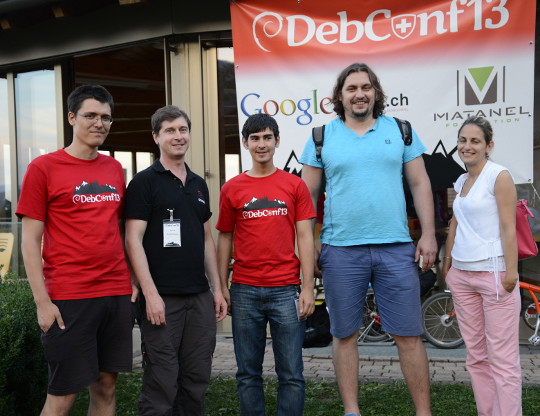
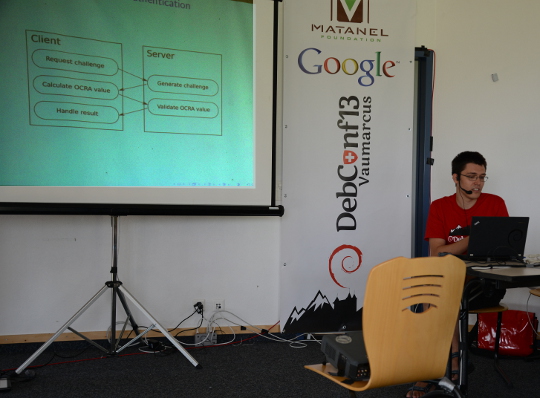
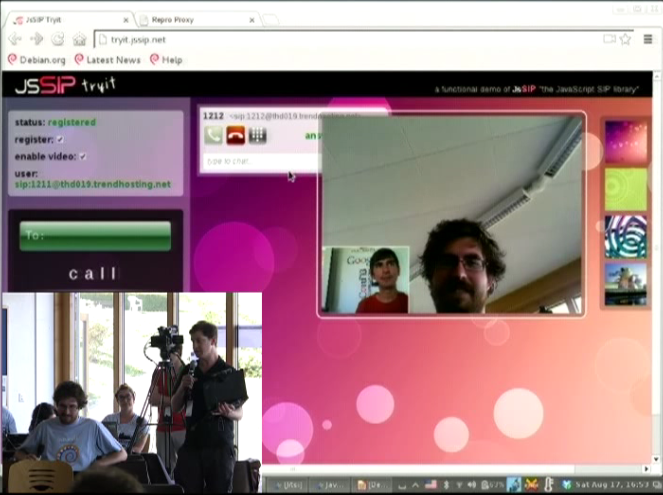
Fabian Gr nbichler, Daniel Pocock, Catalin Constantin Usurelu, Emil Ivov, Yana Stamcheva Advancing the use of One Time Passwords with free software Google Summer of Code (GSoC) student Fabian Gr nbichler has spent the summer enhancing oath-toolkit and dynalogin to support a more diverse range of One Time Password schemes. dynalogin's original 1.0 release supports vanilla HOTP and TOTP authentication schemes. Fabian's work has extended the framework to support the more generic and powerful OCRA approach. To find out about all the benefits this brings, I would strongly encourage you to review his slides and video presentation, with a demo where it is explained thoroughly. While there are existing hardware tokens that support HOTP and TOTP using this open algorithm (Gooze has been kind enough to donate some which were on display), the mutual challenge-response schemes are yet to be widely supported in hardware and this means that Fabian's work is now at the cutting edge of development in this area. WebRTC: premium voice/video chat in modern browsers, no plugin required Another member of Debian's GSoC program, Catalin Constantin Usurelu helped organise and run one of the must-see sessions of DebConf13 (video available). In a demonstration that had all the hallmarks of a magic show, Catalin and I took random members of the audience and invited them to wave a magic wand over their web browsers and effortlessly turn them into Skype-busting softphones. As the grand finale, we took Wookey's blog and showed him how to add a WebRTC "call-me" page in less than 20 seconds, less time than it takes to hand over all your private data to the registration process of those rather uncomfortable alternatives. Anybody else seeking to duplicate this effort is encourage to review options like Drucall for Drupal or just directly use JsSIP Jitsi and the Jitsi Video-bridge The grand-finale of the DebConf13 real-time communications track was our guest speaker, Emil Ivov, founder of the Jitsi softphone project. Jitsi itself has recently been accepted into Debian and is easier than ever before to install and use. Emil's talk (video and slides available) went into some detail about the cutting edge development activities of his team, particularly the new Jitsi Video bridge Subsequent to the talk, we had some out-of-bands discussion about ways to potentially integrate Jitsi Video bridge with the open source dvswitch system used to produce streams and recordings from free software events such as DebConf and FOSDEM. It is hoped that this will provide an additional option for remote participation at free software events of all sizes. Upcoming events Emil and I have been invited to participate in the WebRTC Conference Paris 2013 in December. This will be an excellent opportunity to have further discussion about progress with WebRTC and do more to raise the compelling case for premium quality free software to meet the demanding needs of modern business communications. There are a series of talks for both technical and business-oriented audiences.


8 August 2013

Nicolas Dandrimont: Hello from DebCamp

DebConf flag (minus the wind) Small update as someone was complaining about the lack of pictures from DebCamp on planet. Not to worry, everything is going fine, and some of the most important stuff is ready s3kr3t You can see a few pictures from the gallery. The view from the venue is quite outstanding (it was better when there was some sun on Tuesday, but my camera battery was out ). On my TODO-list: See you there!

30 July 2013

Daniel Pocock: Switzerland's scariest railway (video)

Although promoted as a funicular railway, the Gelmerbahn funicular has the appearance of a giant roller coaster and all of the fun too. For all those still having nightmares about recent rail tragedies in the age of non-stop surveillance and on-line replays, the 108 degree ascent (or descent) may not be your thing. On the other hand, for those who experience the London Underground each morning, "mind the gap" takes on a whole new meaning as you see your feet hanging out the bottom of the train and the tracks descending vertically into the valley below. <video controls="" height="340" poster="http://danielpocock.com/sites/danielpocock.com/files/gbahn-preview.jpg" width="560">

<source src="http://video.danielpocock.com/Gelmerbahn.webm" type="video/webm"></source>
Click to access video on original page
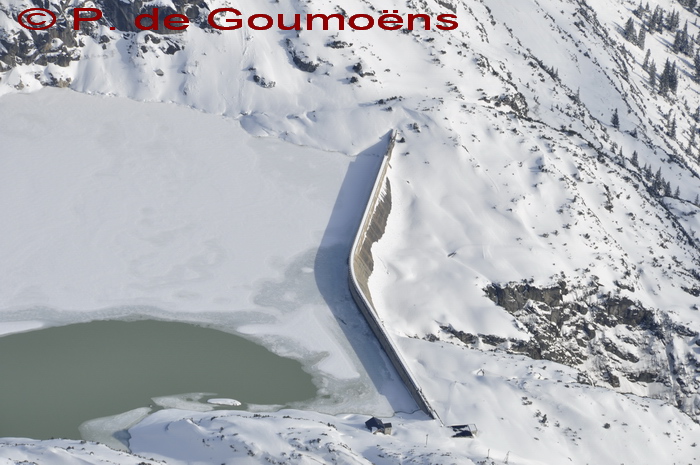
</video> and here are download links for those who prefer to download now and watch later (about 160MB): At the top At the top, there is a scenic two hour walk around Lake Gelmer, the path takes you across the top of a dam built for hydro-electric power generation. Lake Gelmer - hydro-electric dam Getting there from DebConf13 and the Debian 20th birthday For those coming to Switzerland for DebConf13 next month, the Gelmerbahn is probably a little bit too far for a day trip but makes an excellent place to stop during a 2 or 3 day tour around Switzerland. It is accessible using the all-day bus pass for the tour of 3 or 4 mountain passes or by train to Innertkirchen and then a short ride on the bus. The busses are irregular, use sbb.ch to plan the journey. Walking down the mountain from the lake to the bus stop takes about 90 minutes and for those who choose this option, the ticket is cheaper. More Swiss travel blogs Please click here to access some of my previous blogs about Swiss travel with videos and useful ideas for day trips.

20 July 2013

Francesca Ciceri: #debcraft n.3: Debian swirl reverse appliqu on t-shirt

please, do try this at home the finished result This week's project is a quick t-shirt reconstruction with the reverse appliqu technique which basically means layering two different fabrics, sew them togheter, and then cut away part of the top one to reveal the one underneath.
Ready to start? What you will need the t-shirt before the reconstruction A guitar, Infinite Jest, The Illuminatus Trilogy and The Year of the Flood, while suggested for your personal enjoyment, are not strictly necessary for this project. Step 1 cutting the red fabric Cut a square of red fabric of the desired dimensions, I've used the short sleeve of a ruined red t-shirt.
On the wrong side of your patch, apply the fusible interfacing. Step 2 drawing the swirl on the interfacing Draw a swirl on the interfacing.
IMPORTANT: remember to draw the swirl as mirrored, because the interfacing is the wrong side of our patch.
So, if usually the Debian swirl has the back to the left and the front to the right - like a "(" - when you draw it on the interfacing it will need to have the back to the right and front to the side - like a ")".
I do realize that this explanation isn't really clear: just look at the picture above. Step 3 pin the patch to the t-shirt Turn your t-shirt inside out and pin the patch (with the interfacing up) in the place you want to put it: I decided to put mine on the lower left corner, approximately 10 cm above the bottom hem.
(In the picture is lower, I changed idea on the position just before sewing it)
Now you can sew it, following closely the drawn line.
Because I'm lazy, I decided to do it by hand, but if you're not afraid of sewing curved shapes, doing it with the sewing machine is definitely the right (and quick) way to do it. Step 4 cut the extra fabric Now, you can cut the extra fabric around your swirl. Step 5 revealing the swirl Turn your shirt right side out.
Make a snip through the knit in the fabric on the inside part of your stitches and cut off the extra fabric, to reveal the red swirl underneath.
Be careful to not cut the red fabric! Step 6 ending with a embroidered dashed line If you like it, you can end embroidering a dashed line (with running stitches) in a contrasting thread all around the swirl. And you're finished: now you can enjoy your new Debian t-shirt! :) For any questions feel free to contact me.

16 July 2013

Joachim Breitner: Ultimate Tic Tac Toe is always won by X

The blog Math with Bad Drawings recently featured an article about Ultimate Tic Tac Toe, a variant of Tic Tac Toe where each of the nine fields is a separate game of Tic Tac Toe. To mark a field of the large game as your, you have to win the small game therein. If you chose a field in the small game, this position determines the small field that the other play may play next. See the linked article for a full explanation. As far as I know, the question of who wins this game was open; at least nothing definite was known on Hacker News or on the Board Games StackExchange site. We discussed this a bit in our office, and my coworker Denis Lohner came up with what seems to be a winning strategy. Update: Not surprising, but with these variants of the rule, the winning strategy was already known.
Strategy Assume Denis ( ) plays against me ( ). Like most suggestions for a winning strategy for the first player, Denis (X) starts with the middle:


Now I have to put my in the center field of the center game. No matter where I place it, Denis will send me back ot the middle, until one field of the center game is free. Doing this eight times inevitably puts us in a position like this:


The only way I can influence the game is by chosing which I place last; this determines where Denis goes now. But (and please verify that carefully) it will not matter: The only thing required from that field is that there is a second field that, together with the center, forms a row (or column or diagonal); all fields satisfy that. Assume I placed the top-left last, and Denis has to go there. He will send me to that field:


Now the game of the first field is repeated: Whereever I send him, he will send me back. This works great for all fields but the middle field. The middle field is special: When I send him there, he has the free choice. He will pick the bottom-right game. In any case we will end up in this situation: I won the center game; I likely have a few in the top-left game. To be precise: I have a there if and only if the he has a in the top-left corner of the corresponding game. He also has the diagonal of the lower-right game. For example:


I have to put my mark in the lower-right game now. From now on, whereever I go, he will send me to either to the top-left or bottom-right game. I can do nothing about it (I cannot send him to the diagonal any more, and whereever I send him there is at least one of the top-left or bottom-right fields fee), so he wil easily win all the other games by getting the diagonal. Eventually, he wins the whole game with the bottom row or the right column:


This is not a formal proof yet, but hopefully close enough to convince you, or alternatively allow you to precisely describe how you can prevent losing against Denis strategy.

13 July 2013

Francesca Ciceri: #debcraft n.2: a Debian cozy for your smartphone

please, do try this at home My second #debcraft project is a crocheted cozy for a phone, with a nice Debian swirl on it.
As the previous one this is a very quick project - I made mine in half an hour - and easy also for crochet newbies.
As I've not mastered yet the tapestry technic in crochet, I opted for a less elegant solution and used a surface slip stitch to add the swirl.
The only downside of this approach is that you'll need a bit of practice before crocheting a decent and regular swirl (it took me a couple of tries to get the hang of it).
My phone is a Samsung Galaxy, so this pattern fits a phone of 6cm x 11cm x 1cm, but you can easily adapt it to yours. This pattern is written in US crochet terms: check this page for a US/UK conversion table. the finished result What you will need Obviously, the crochet hook's size depends on the weight of the yarn you're using. I used a DK/8 ply cotton yarn. Finished size : 11cm x 8cm x 1cm Stitches used : Instructions Ch 15 + 1 for turning. Continue in flat rows, working 15 sc each row, plus one ch at the end to turn.
Continue till the desired dimensions, in my case I ended with a rectangle 22cm long.
Now the fun part: with the red yarn, start creating a swirl with the surface stitches.
Here's a good tutorial on how to do these, with step-by-step photos. the cozy after having added the surface stitches Now the last part: use the single crochet stitch to join the lateral seams of the cozy as showed in this tutorial. And you're finished! Pretty easy, wasn't it? For any questions feel free to contact me.
And if you are a knitter or a crocheter, did you know that on Ravelry exists the Debian Knitters group?

4 July 2013

EvolvisForge blog: Fun with ssh pubkey auth

Okay, so imagine this: you just generated an SSH RSA key and threw its public part on system B into ~foo/.ssh/authorized_keys and its private part on system A into ~bar/.ssh/id_rsa but can t login. Why? Automated processes (Jenkins *cough*) often need you to ssh(1) manually once, to accept the remote host s server key. Do that. The id_rsa file on system A must be owned by the user bar and chmod 0600 or 0400 (similarily, the .ssh directory has strict permission checks, and everything in the path until there). Check those. And, the most surprising one of the day: if there s an id_rsa.pub it will be used for offering a key to the remote host (B) even if it does not match the secret key. Deleting A:~bar/.ssh/id_rsa.pub apparently makes OpenSSH generate the public part from the secret key each time (or just put the correct pubkey there), but if one s there, it seems to like to use them. (That was the only part of this post that was news to even me, of course ) And, as bottom line: hello to Planet Debian from mirabilos at work , too. I ll occasionally tag posts so they show up here, if I think they re of interest, since I m doing Debian work at the dayjob, too.


24 June 2013

Vincent Sanders: A picture is worth a thousand words

When Sir Tim made a band the first image on the web back in 1992, I do not imagine for a moment he understood the full scope of what was to follow. I also do not imagine Marc Andreessen understood the technical debt he was about to introduce and that fateful day in 1993 when he proposed the img tag allowing inline images.

Many will argue of course that the old adage of my title may not apply to the web, where if it were true, every page view would be like reading a novel! and many of those novels would involve cats or one pixel tall colour gradients.

Leaving aside the philosophical arguments for a moment it takes web browser author a great deal of effort to quickly and efficiently put those cat pictures in front of your eyeballs.
NavigatingImages are navigated by a user in a selection of ways, including:
Whatever the method, the resulting object is subject to the same caching operations as any content object within a browser. These caching and storage operations are not specific to images however images are one of the most resource intensive objects a browser must regularly deal with (though javascript and stylesheet sources are starting to rival it at times) because they are relatively large and numerous.
Pre render processing
When the image object fetch is completed the browser must process the image for rendering which is where this gets even more complicated. I shall use how this works in NetSurf as I know that browsers internals best, but operation is pretty similar in many browsers.

The content fetch will have performed basic content sniffing to determine the received objects mime type. This is necessary because a great number of servers are misconfigured and a disturbingly large number of images served as png are really jpegs etc. Indeed sometimes you even get files served which are not images!

Upon receipt of enough data to decode the image header, for the detected mime type, the images metadata is extracted. This metadata usually includes things like size and colour depth.

If the img tag in the original source document omitted the width or height of the image the entire document render may have to be reflowed at this point to allow the correct spacing. The reflow process is often unsightly and should be avoided. Additionally at this stage if the image is too large to handle or an unhandled format the object will be replaced with the "broken" image icon.

Often that will be everything that is done with the image, when I added "lazy" image conversion to NetSurf we performed extensive profiling and discovered well over 40% of images on visited pages are simply never viewed by the user but that small (100 pixel on a side) images were almost always displayed.

This odd distribution comes down to how images are used in modern web pages, they broadly fall into two categories of "decoration" and "content" for example all the background gradients and sidebar images etc. are generally small images used as decoration whereas the cat picture above is part of the "content". A user may not scroll down a page to see content but almost always gets to "view" the decoration.
Rendering
Created by Andrea R used under CC Attribution-NonCommercial-ShareAlike 2.0 licence
The exact browser heuristics used differ as to when the render operation is performed but they all have a similar job to perform. When i say render here this may be possibly as an "off screen" view if they are actually on another tab etc. Regardless the image data must be converted from the source data (a PNG, JPEG etc.) into a format suitable for the browsers display plotting routines.

The browser will create a render bitmap in whatever format the plotting routines require (for example the GTK plotters use a Cairo image surface) , use an image library to unpack the source image data (PNG) into the render bitmap (possibly performing transforms such as scaling and rotation) and then use that bitmap to update the pixels on screen.

The most common transform at render time is that of scaling, this can be problematic as not all image libraries have output scaling capabilities which results in having to decode the entire source image and then scaling from that bitmap.

This is especially egregious if the source image is large (perhaps a multi megabyte jpeg) but the width and height are set to produce a thumbnail. The effect is amplified if the user has set the image cache size limit to a small value like 8 Megabytes (yes some users do this apparently their machines have 32MB of RAM and they browse the web)

In addition the image may well require tiling (for background gradients) and quite complex transforms (including rotation) thanks to CSS 3. Add in that javascript can alter the css style and hence the transform and you can imagine quite how complex the renderers can become.
CachingThe keen reader might spot that repeated renderings of the source image (e.g. because window is scrolled or clipped) result in this computationally expensive operation also being repeated. We solve this by interposing a render image cache between the source data and the render bitmaps.

By keeping the data in the preferred format, image rendering performance can be greatly increased. It should be noted that this cache is completely distinct from the source object cache and relates only to the rendered images.

Originally NetSurf used to perform the render conversion for every image as it was received without exception, rather than at render time, resulting in a great deal of unnecessary processing and memory usage. This was originally done for simplicity and optimising for "decoration" images.

The rules for determining what gets cached and for how long are somewhat involved and the majority of the code within the current implementation NetSurf uses is metrics and statistic generation to produce better decisions.

There comes a time at which this cache is no longer sufficient and rendering performance becomes unacceptable. The NetSurf renderer errs on the side of reducing resource usage (clearing the cache) at the expense of increased render times. Other browsers make different compromises based on the expected resources of the user base.
FinallyHopefully that gives a reasonable overview to the operations a browser performs just to put that cat picture in front of your eyeballs.

And maybe next time your browser is guzzling RAM to plot thousands of images you might have a bit more appreciation to exactly what it is up to.

19 June 2013

Daniel Pocock: Australia's war on brains (and immigration)

Some weeks ago, our Prime Minister was slashdotted when she suspended her usual racist attacks on refugees to attack foreign IT workers and the companies that employ them with absurd accusations of "rorts" and "stealing" jobs. Today, she's introduced new laws in the parliament aiming to further bastardization of intelligent, skilled and educated workers and anybody who associates with them, including Australian employers. Unwarranted attention on a minority of IT workers This is not just some random bill before the parliament. There are just two weeks left before the parliament concludes and an election campaign begins. It is clear that what we are seeing now is the Real Julia coming though, choosing to make the small minority of foreign workers in our country at the center of people's thoughts as they go to vote in September. A debt of gratitude to foreign workers These verses from our national anthem, Advance Australia Fair say a lot about how Australia became what it is today:
For those who've come across the seas

We've boundless plains to share;

With courage let us all combine

To Advance Australia Fair.
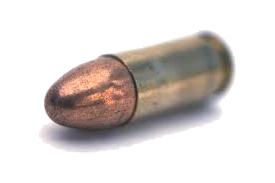
The last 200 years of Australia's history has been a story of immigration. It is not something to be afraid of: our forefathers celebrated it. Foreign workers: why Australia needs you Australia has had some appalling flops in IT and engineering: There is no doubt in my mind that additional foreign workers would have made a positive contribution to all of these problems or can do so in the future. The sun never sets on IT Every day, I collaborate with dozens of IT specialists all over the world through the virtual workplace that is the Internet, particularly in the free and open source software community. Many of these people, I've never even met and in most cases I don't even know where they are, where they were born or what is the colour of their skin. Those details wouldn't make any difference to the way that we work in IT today. How many IT managers have time to waste dealing with more real world bureaucracy when they've experienced online, global productivity? How many IT workers feel demotivated by having to explain trivial details about their personal life to a Government bureaucrat who doesn't understand their skills and just looks at their colour? If you think about it, any immigration officer who really understands IT wouldn't be an immigration officer. They would be working in IT themselves. Immigration officers, who don't understand IT, are now going to be further empowered to bully companies away from employing some talented workers on the basis of race or nationality. Hiring managers will be intimidated into these prejudiced and biased decisions by delays, processing fees and invasive demands for sensitive documents about business planning and recruitment strategies. Australia's immigration system already has a horrendous reputation. Any visa application seems to take more than a year: no small company can keep a job position vacant that long. Families can't plan their children's schooling. Other life events come and go. There are exhorbitant fees, 1000% higher than in other western countries. Fewer and fewer self-respecting skilled workers are willing to put their spouses and children through the degrading medical examinations. Judging the impact of poor immigration policy While the economic impact of this immigration mess on industry is hard to quantify with an exact figure, we can take some insight from the education system. As the visa system has been hijacked by racists over the last 10 years, there has been a dramatic fall in participation (and revenues) from foreign students. In one year, enrolments (and revenue) fell 30%. This is not just bad for the balance sheets of the universities, it also means that in a future where commerce is global, Australians are more and more isolated and inexperienced culturally. IT workers and their employers have plenty of choices: Australia's close neighbor, Singapore, is one of them. Visas are granted in 2 weeks, no degrading medical exam required, low taxes and tropical sunshine all year round. Many companies that find it impractical to deal with Australia's bureaucracy end up moving their best Australian workers to places like Singapore to be part of a global team. This can't be good for the workforce that is left behind without jobs. The training delusion Government officials continue to rant and rave about companies failing to train Australian workers. The new laws supposedly force companies to "fix" this problem and train Australian workers. This, too, is a delusion: employers are not to blame. Some of the best Australian workers are already long gone to places like Singapore, London and the US. With talented foreign workers denied the opportunity to come and fill the void, there is less opportunity for skills to be acquired by more junior workers in Australian workplaces. It is also extremely difficult for more junior workers to get a foot in the door in the international job market and the primary reason for this is the Australian Government's failure to fund university programs beyond a bachelor's degree. Compare this to Europe and the US where all competent graduates are funded through to a Masters or PhD program. The bottom line is that more junior workers are denied the opportunity to get the best training either at home or abroad and in both cases it's not the foreign workers that can be blamed: it's the Government's own fault. Why do we need skilled foreign workers when Australians can win Nobel Prizes? The Australian press recently went into a frenzy when an Australian won the Nobel Prize for physics. There was a catch though: he's a migrant from the United States (just don't tell the Prime Minister). Dr. Schmidt migrated to Australia 20 years ago when the immigration system was not the same as today. Today, future Nobel Prize winners are being shown a brick wall - maybe we even have one of them rotting away in our death camps or left in the sea for sharks to eat. The BBC recently revealed that Britain's successor to Stephen Hawking may be a young girl who migrated from India - it is chilling to imagine where a child like this may be hidden away under Australia's immigration system. Bureaucracy leads to fraud and exploitation It's been clearly demonstrated that wherever you have elaborate, artificial systems of bureaucracy it leads to inefficiency, it suppresses innovation and in the worst cases it enables fraud and exploitation. The typical examples usually involve police in some third-world African nation setting up road blocks and collecting fees from travellers who want to pass the queues. This type of opportunism has also been found in Australia's immigration system, with one Federal politician already directly implicated and jailed for his role in a visa racket. Gillard's own bullet man A Queensland pensioner made international headlines recently when he was caught sending bullets in the mail to the Prime Minister. His demands were clear: stop immigration. While most world leaders refuse to let nutcases like this dictate their actions, Gillard appears to have been transcribing his racist letters directly into these newest immigration laws. It is a sad reality that Australian politics regularly seeks to appeal to the worst instincts in people like bullet man. The ultimate political failure When politicians stoop to the level of demonizing immigrants it is usually a clue that the politicians themselves are past their use-by dates and out of fresh policy ideas. When former French president Sarkozy tried to play the racist card in his campaign for re-election, it bit him in the bum and he was swept from power by the socialists. As always in politics, there is an element of hypocrisy at work: neither our Head of Government (the Prime Minister) nor our Head of State (the Queen) was born in Australia. Gillard was born in Wales and migrated to Australia as a child. If Australians don't vote for her in September, will she be given 28 days notice to pack her bags and go back home'? From the frying pan and into the fire Tony Abbott, Australia's would-be Prime Minister contemplating his colleague's statements on bestiality The scariest thing is that if Australians see through this racist charade and refuse to vote for it, we could end up with something equally obnoxious: the other major political party is now gaining worldwide attention for their campaign linking gay marriage and homosexuals to bestiality. Which prejudice is the lesser evil: racism or homophobia?

13 June 2013

Daniel Pocock: Skype Scandal and the Jedi Council

Normally Skype isn't mentioned by name on this blog, but today I'm making an exception. When a new scandal broke out in the Australian Army today, one of the first questions asked was how does it compare to the Skype Scandal which had everybody talking (and blushing) in 2011. A concise military reply direct from the General: "I'd say it's worse than the Skype matter" (the original Skype Scandal cadets are going on trial in six weeks) Jedi Council brings cultural change in the Army: from Skype to email Since the original scandal, there have been plenty of PR-orchestrated headlines about cultural change in the Army. Sadly, it seems that several ranking officers believed that was a cue to simply start using email instead of live feeds Operating under the operational code name Jedi Council, they've apparently been swapping annotated images of female colleagues and members of the public service. A more detailed account summarises it: "They were calling themselves the Jedi Council but they were doing the exact opposite of what Jedis are supposed to do" While the Skype scandal involved cadets behaving much like college kids elsewhere, this latest scandal involves the officer corp, the most senior officer implicated is allegedly a Lieutenant Colonel. Senior ranking officers like this have given many years of dedicated service to the country. They are widely respected and the vast majority of officers in these positions are unlikely to ever be implicated in such a scandal. Officers are in leadership roles, it should be no surprise if they have top secret security clearances. After the revelation that Australia has a direct and high-volume data sharing arrangement with the US Government (and in turn Facebook, Google, etc), there are all kinds of questions about whether a couple of rogue officers have access to pursue their private Jedi Council project using tools like PRISM and Boundless Informant. It's already been confirmed that they were keeping their own Jedi database of their victim's names, phone numbers, home addresses and various clothing measurements and if they are already emailing these photos about on Defence computers, does it seem improbable that they would be using PRISM or other sources to cross-reference their data? Behavior described as systematic and predatory It can't be ruled out that some defence computer systems may have direct access to NSA copies of images from those invasive airport body scanners - like these pictures that were not supposed to exist. Just like the British undercover cops stealing the identities of dead children and fully engaging with impressionable young women from environment campaign groups, there are a long list of possible abuses when the security state is over-empowered. While this latest Army example involves private pursuits, it is not hard to imagine many other permutations: perhaps a couple of rogue Government employees making unauthorised use of PRISM data for a commercial objective and gaining the upper hand on private sector competitors who have no such data feed. 100% trust? In every organisation there will always be a few people bending the rules. It's human nature, if it wasn't that way, we'd all be robots (or drones). The Army and the Catholic Church tend to be hammered a lot more in the public eye when these transgressions are discovered although statistically their crime rates are no higher than average. The bottom line is that no organisation is perfect and people have to take some responisbility to object to the excessive growth of the security state and keep our data to ourselves as you just never know who you can trust.

17 May 2013

Daniel Pocock: Zermatt, Matterhorn and Gornergrat

The DebConf13 registration deadline for developers requesting sponsorship has been extended up to Sunday, so for those still undecided or anybody else thinking about a visit to .ch, I'm sharing some more pictures today. The Matterhorn is one of the iconic symbols of Switzerland's natural beauty and appears on many postcards. The car-free town of Zermatt is at the bottom and is the final stop on the Matterhorn Gotthard Bahn railway, so it is really easy to get there with one or two trains every hour of the day. One of the most exciting places to view the Matterhorn is from the nearby observatory at Gornergrat, which is 3,089m above sea level. It is great for a single day trip of hiking and there is a convenient train station there too. The scenic train to Zermatt is included in any of the Swiss rail passes, but the train up to Gornergrat is a private railway and a special ticket must be purchased. Discounts are sometimes offered at rail stations in Swiss cities or online or it is possible to hike up and down.

16 May 2013

Vincent Sanders: True art selects and paraphrases, but seldom gives a verbatim translation

In my professional life I am sometimes required to provide technical support to one of our salesmen. I find this an interesting change in pace though sometimes challenging.

Occasionally I fail to clearly convey the solution we are trying to sell because of my tendency to focus on detail the customer probably does not need to understand but I think is the interesting part of the problem.

Conversely sometimes the sales people gloss over important technology choices which have a deeper impact on the overall solution. I was recently in such a situation where as part of a larger project the subject of internationalisation (you can see why it gets abbreviated to i18n) was raised.

I had little direct personal experience with handling this within a project workflow so could not give any guidance but the salesman recommended the Transifex service as he had seen it used before, indicated integration was simple and we moved onto the next topic.

Unfortunately previous experience tells me that sometime in the near future someone is going to ask me hard technical questions about i18n and possibly how to integrate Transifex into their workflow (or at least give a good estimate on the work required).
LearningBeing an engineer I have few coping strategies available for situations when I do not know how something works. The approach I best know how to employ is to give myself a practical crash course and write up what I learned...so I did.

I proceeded to do all the usual things you do when approaching something unfamiliar (wikipedia, google, colleagues etc.) and got a basic understanding of internationalisation and localisation and how they fit together.

This enabled me to understand that the Transifex workflow proposed only covered the translation part of the problem and that, as Aldrich observed in my title quote, there is an awful lot more to translation than I suspected.
PlatformsMy research indicated that there are numerous translation platforms available for both open source and commercial projects and Transifex is one of many solutions.

Although the specific platform used was Transifex most of these observations apply to all these other platforms. The main lesson though is that all platforms are special snowflakes and once a project invests effort and time into one platform it will result in the dreaded lock in. The effort to move to another platform afterwards is at least as great as the initial implementation.

It became apparent to me that all of these services, regardless of their type, boil down to a very simple data structure. They appear to be a trivial table of Key:Language:Value wrapped in a selection of tools to perform format conversions and interfaces to manipulate the data.

There may be facilities to attach additional metadata to the table such as groupings for specific sets of keys (often referred to as resources) or translator hints to provide context but the fundamental operation is common.

The pseudo workflow is:
The first three steps are almost always performed together by the uploading of a resource file containing an initial set of translations in the "default" language and due to the world being the way it is this is almost always english (some services are so poorly tested with other defaults they fail if this is not the case!)

The platforms I looked at generally follow this pattern with a greater or lesser degree of freedom in what the keys are, how the groupings into resources are made and the languages that can be used. The most common issue with these platforms (especially open source ones) is that the input convertors will only accept a very limited number of formats and often restricted to just GNU gettext PO files. This means that to use those platforms a project would have to be able to convert any internal resources into gettext translatable format.

The prevalence of the PO format pushes assumptions into almost every platform I examined, mainly that a resource is for a single language translation and that the Key (msgid in gettext terms) is the untranslated default language string in the C locale.

The Transifex service does at least allow for the Key values to be arbitrary although the resources are separated by language.

Even assuming a project uses gettext PO files and UTF-8 character encoding (and please can we kill every other character encoding and move the whole world to UTF-8) the tools to integrate the import/export into the project must be written.

A project must decide some pretty important policies, including:
These are project policy decisions and, as I discovered, just as difficult to answer as the technical challenges.

Armed with my basic understanding it was time to move on and see how the transifex platform could be integrated into a real project workflow.
ImplementingProof of conceptMy first exercise was to take a trivial command line tool, use xgettext to generate a PO file and add the relevant libintl calls to produce gettext internationalised tool.

A transifex project was created and the english po file uploaded as the initial resource. A french language was added and the online editor used to provide translations for some strings. The PO resource file for french was exported and the tool executed with LANGUAGE=fr and the french translation seen.

This proved the trivial workflow was straightforward to implement. It also provided insight into the need to automate the process as the manual website operation would soon become exceptionally tedious and error prone.
Something more usefulTo get a better understanding of a real world workflow I needed a project that:
I selected the NetSurf web browser as it best fit this list.

Internally NetSurf keeps all the translated messages in a simple associative array this is serialised to an equally straightforward file named FatMessages. The file is UTF-8 encoded with keys separated from values by a colon. The Key is constrained to be ASCII characters with no colons and is structured as language.toolkit.identifier and is unique on identifier part alone.

This file is processed at build time into a simple identifier:value dictionary for each language and toolkit.

Transifex can import several resource formats similar to this, after experimenting with YAML and Android Resource format I immediately discovered a problem, the services import and export routines were somewhat buggy.

These routines coped ok with simple use cases but having more complex characters such as angle brackets and quotation marks in the translated strings would completely defeat the escaping mechanisms employed by both these formats (through entity escaping in android resource format XML is problematic anyway)

Finally the Java property file format was used (with UTF-8 encoding) which while having bugs in the import and export escaping these could at least be worked around. The existing tool that was used to process the FatMessages file was rewritten to cope with generating different output formats and a second tool to merge the java property format resources.

To create these two tools I enlisted the assistance of my colleague Vivek Dasmohapatra as his Perl language skills exceeded my own. He eventually managed to overcome the format translation issues and produce correct input and output.

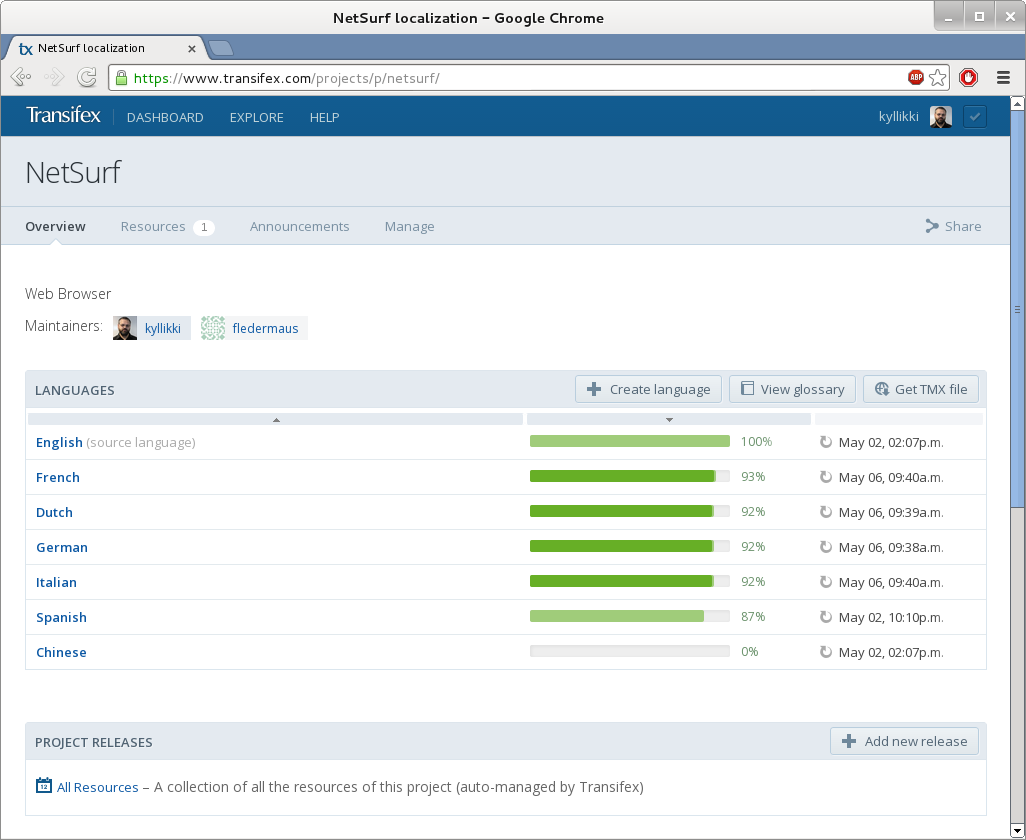
I used the Transifex platforms free open source product, created a new project and configured it for free machine translation from the Microsoft service, all of which is pretty clearly documented by Transifex.

Once this was done the messages file was split up tinto resources for the supported languages and uploaded to the transifex system.

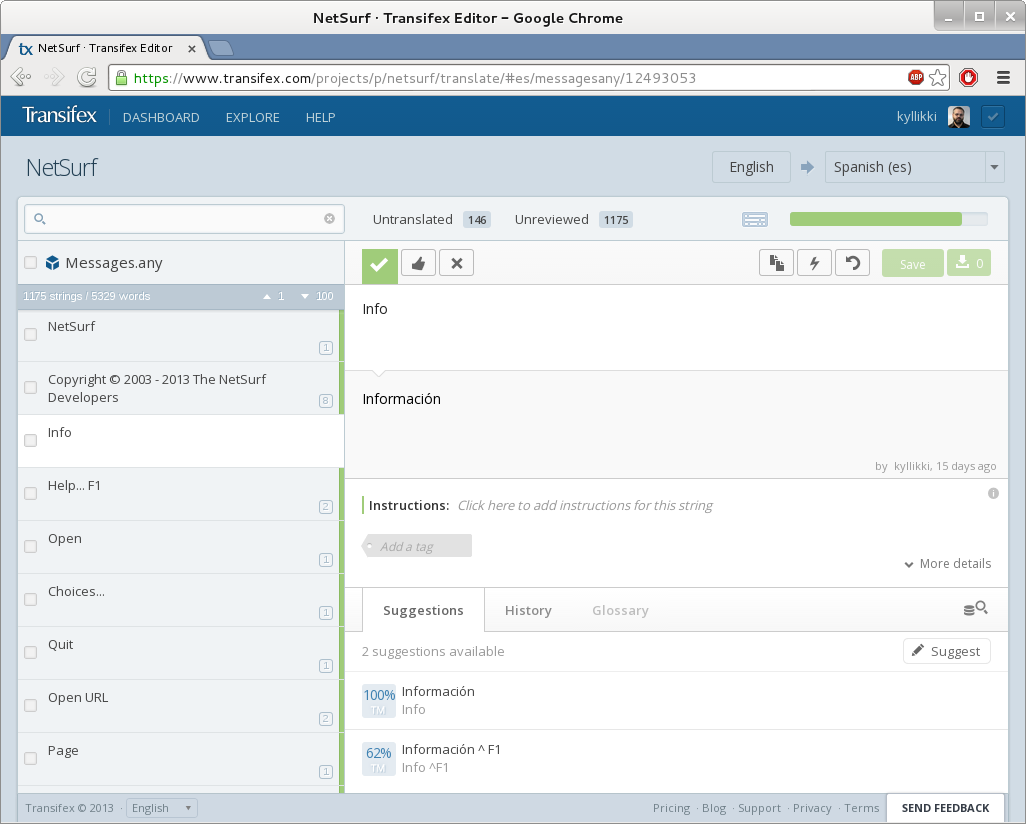
I manually marked all the uploaded translations as "verified" and then added a few machine translations to a couple of languages. I also created spanish as a new language and machine translated most of the keys.

The resources for each language were then downloaded and merged and the resulting FatMessages file checked for differences and verified only the changes I expected appeared.

I quickly determined that manually downloading the language resources every time was not going to work with any form of automation, so I wrote a perl script to retrieve the resources automatically (might be useful for other projects too).

Once these tools were written and integrated into the build system I could finally make an evaluation as to how successful this exercise had been.
ConclusionsThe main things I learned from this investigation were:

Overall I think the final observation has to be that integrating translation services is not a straightforward operation and each project has unique challenges and requirements which reduce the existing platforms to compromise solutions.

Russ Allbery: Review: Asimov's, July 2011

Review: Asimov's Science Fiction, July 2011
Editor: Sheila Williams
Issue: Volume 35, No. 7
ISSN: 1065-2698
Pages: 112
Williams's editorial is a mildly interesting piece about story titles. Silverberg's column is a more interesting (and rather convincing) rebuttal of the joke that fiction authors are "professional liars," combined with an examination of a fake and fantastic 14th travelogue that (at least in Silverberg's telling) was widely believed at the time. The precis of Silverberg's argument is that lying requires an intent to deceive, which is a property of deceptive memoir writers but not of fiction authors. Di Filippo's review column, as usual, is devoted almost entirely to esoterica, although I was moderately interested to hear of Stableford's continued work on translating early French SF. None of it seems compelling enough to go buy, but good translations of early works seem like a good thing to have in the world. "Day 29" by Chris Beckett: The conceit of this novelette is an interstellar travel system akin to a transporter that allows near-instantaneous travel between worlds. The drawback is that all memories from somewhere between 40 and 29 days before transit up until transit are wiped. The progatonist is a data analyst who is about to travel, and therefore by agency rule is required to stop doing work on day 40 before transmission since he can't be held legally liable for anything he has no recollection of doing. (I would like to say that I find this implausible, since one could always keep records, but it's exactly the sort of ass-covering regulation that a human resources department would come up with.) The premise is quite interesting: what do you do during that period that you're going to forget? Beckett wisely mixes Stephen's current waiting period on the colony world with his diary of his original waiting period on Earth the first time he went through the transmission process, and the latter adds greatly to the reader's appreciation of the weirdness of the forgotten interval. Unfortunately, this is a story more about psychological exploration than about plot, and Stephen just isn't very interesting. The telepathic but possibly nonsentient aliens add weirdness but not much else, and the ending of the story provided little sense of closure or conclusion for me. A good idea, but not the execution I wanted. (5) "Pug" by Theodora Goss: Since I grew up with a pug, I have a soft spot for a story featuring one; sadly, though, this story has insufficient pug in it. This is a quiet fantasy (Asimov's calls it SF, presumably on the basis of parallel worlds and a hypothesized scientific explanation, but it reads like fantasy to me) featuring Victorian girls, including one with a bad heart. They discover a hidden door to other versions of their world and do some minor exploration. There's little or nothing in the way of plot; the story is more of an attempt to capture a mood. It's mildly diverting, but I wish it had gone somewhere more substantial. (5) "Dunyon" by Kristine Kathryn Rusch: A Rusch story is often the highlight of an issue, and this is no exception. The protagonist is the owner of a bar in a space station that's become a combination of a refugee camp and a slum. War and chaos have created desperate people, most of whom are attempting to find some way to resources and get out of the bottom of society. The story is about a rumor: a mythical system named Dunyon that's safe and far away. And it's about how people react to that rumor. There's nothing particularly surprising about the direction the story goes (it's fairly short), but Rusch is always a good storyteller. (7) "The Music of the Sphere" by Norman Spinrad: I've had mixed feelings about Spinrad's fiction (and some of his essays), but I liked this story, despite its implausibility. It's set in the near future, featuring an expert in cetaceans and dolphin perception and a composer obsessed with both loud music and classical musical style. Just from that description, you can probably predict much of the story, but I thought it had some neat ideas about dolphins, whales, and alternate perception and aesthetics. (Note: neat, not necessarily biologically plausible.) Enjoyable. (6) "Bring on the Rain" by Josh Roseman: In a change of pace from the rest of the issue, this is a post-apocalyptic story of caravans of wheeled ships traversing a scorched and ruined landscape in search of weather systems and rain. The feel is of an inverted Waterworld, but with more emphasis on military tactics and cooperating fleets. The transposition of fleet maneuvers to huge ground vehicles adds some extra fun. The plot has little to do with the background and is a fairly stock military adventure scenario, but it's reasonably well-told. The story feels like an excerpt from a larger military-SF-inspired adventure, but the length keeps the quantity of tactics and maneuvering below the threshold where I would get bored. (6) "Twelvers" by Leah Cypess: This is a sharp and occasionally mean story of adolescent cruelty and alienation. Darla is a "twelver," a child who was carried an extra three months in the womb using newly-invented medical technology because of a belief in the advantages this would bring in later life. Unfortunately for all those who used this technique, what it also brought was a preternatural calm and an unusual reaction to emotions. Darla finds it almost impossible to get upset at anything, and that, of course, prompts the cruelty and abuse of other children. Most of the story is a description of that abuse, leading up to Darla stumbling into a nasty solution to her immediate problem. It's all very believable (well, apart from the motivating biology), but I didn't enjoy reading about it, and I'm certainly not convinced that the ending will lead to anything good. (5) "The Messenger" by Bruce McAllister: This is a very short time travel story, where time travel is used to try to unwind old family pain. This world follows the unalterable history model: no changes to the past are possible, and anything you do in the past has already happened. The mechanics are mostly avoided. Instead, McAllister concentrates on his mother, his father, and their complex relationship. I would have needed a bit more background on the characters to care enough about them for the story to be fully effective, but while the heartstring-pulling is kind of obvious, it's still a solid story. (6) "The Copenhagen Interpretation" by Paul Cornell: This is the most ingenious of the stories in this issue. It's set in a future world that extends what seemed to me to be pre-World-War-I great power politics, although there may be a hint of the Cold War. Great nations have reached a careful balance of power, and spies and secret services work to sustain that balance. The progatonist is one of those agents, making use of advanced technology like space folds in the service of a cause that he doesn't entirely believe in. Cornell mixes in mental conditioning, artificial people, space travel, and even aliens (maybe) in a taut thriller plot that, for me, gained a great deal from the unexplained strangeness of its background. If you like diving into the deep end and following a fast-moving plot against a background of strangeness, this is the sort of SF you'll enjoy. (7) Rating: 6 out of 10

14 May 2013

Iustin Pop: no-reply@

I had the surprise of seeing this at the bottom of the confirmation email when I ordered something online:
Bei Fragen zu deiner Bestellung antworte bitte auf diese E-Mail.
In translation: If you have questions about your order, please reply to this e-mail . Wow. Someone out there still reads email. The address pointed helpfully to info@ instead of the usual no-reply@ . I am really surprised.

13 May 2013

Hideki Yamane: 100th Tokyo Debian meeting & "Wheezy" release party

We are please to report that we held "100th, Tokyo Area Debian Meeting"... yes, 100th!!! (since 2005), 11th May in Shibuya, Tokyo


Discussed about "stable" releasing,


lectured "cdn.debian.net" by Yasuhiro Araki
and "modern packaging" by Osamu Aoki.


Also, Ubuntu folks showed "Ubuntu phone" and it looks good and interesting (however, it's on the development stage, yet).
Then, party!!! :-) happy to release "Wheezy"


I hope we'll hold "Jessie" in early 2015.

9 May 2013

Benjamin Mako Hill: The Remixing Dilemma: The Trade-off Between Generativity and Originality

This post was written with Andr s Monroy-Hern ndez. It is a summary of a paper just published in American Behavioral Scientist. You can also read the full paper: The remixing dilemma: The trade-off between generativity and originality. It is part of a series of papers I have written with Monroy-Hern ndez using data from Scratch. You can find the others on my academic website.
Remixing the reworking and recombination of existing creative artifacts represents a widespread, important, and controversial form of social creativity online. Proponents of remix culture often speak of remixing in terms of rich ecosystems where creative works are novel and highly generative. However, examples like this can be difficult to find. Although there is a steady stream of media being shared freely on the web, only a tiny fraction of these projects are remixed even once. On top of this, many remixes are not very different from the works they are built upon. Why is some content more attractive to remixers? Why are some projects remixed in deeper and more transformative ways?
Remix Diagram
We try to shed light on both of these questions using data from Scratch a large online remixing community. Although we find support for several popular theories, we also present evidence in support of a persistent trade-off that has broad practical and theoretical implications. In what we call the remixing dilemma, we suggest that characteristics of projects that are associated with higher rates of remixing are also associated with simpler and less transformative types of derivatives.

Our study is focused on two interrelated research questions. First, we ask why some projects shared in remixing communities are more or less generative than others. Generativity a term we borrow from Jonathan Zittrain describes creative works that are likely to inspire follow-on work. Several scholars have offered suggestions for why some creative works might be more generative than others. We focus on three central theories:
  1. Projects that are moderately complicated are more generative. The free and open source software motto release early and release often suggests that simple projects will offer more obvious opportunities for contribution than more polished projects. That said, projects that are extremely simple (e.g., completely blank slates) may also uninspiring to would-be contributors.
  2. Projects by prominent creators are more generative. The reasoning for this claim comes from the suggestion that remixing can act as a form of cultural conversation and that the work of popular creators can act like a common medium or language.
  3. Projects that are remixes themselves are more generative. The reasoning for this final claim comes from the idea that remixing thrives through the accumulation of contributions from groups of people building on each other s work.
Our second question focuses on the originality of remixes and asks when more or less transformative remixing occurs. For example, highly generative projects may be less exciting if the projects produced based on them are all near-identical copies of antecedent projects. For a series of reasons including the fact that increased generativity might come by attracting less interested, skilled, or motivated individuals we suggest that each of the factors associated with generativity will also be associated with less original forms of remixing. We call this trade-off the remixing dilemma. We answer both of our research questions using a detailed dataset from Scratch, where young people build, share, and collaborate on interactive animations and video games. The community was built to support users of the Scratch programming environment, a desktop application with functionality similar to Flash created by the Lifelong Kindergarten Group at the MIT Media Lab. Scratch is designed to allow users to build projects by integrating images, music, sound, and other media with programming code. Scratch is used by more than a million users, most of them under 18 years old. To test our three theories about generativity, we measure whether or not, as well as how many times, Scratch projects were remixed in a dataset that includes every shared project. Although Scratch is designed as a remixing community, only around one tenth of all Scratch projects are ever remixed. Because more popular projects are remixed more frequently simply because of exposure, we control for the number of times each project is viewed. Our analysis shows at least some support for all three theories of generativity described above. (1) Projects with moderate amounts of code are remixed more often than either very simple or very complex projects. (2) Projects by more prominent creators are more generative. (3) Remixes are more likely to attract remixers than de novo projects. To test our theory that there is a trade-off between generativity and originality, we build a dataset that includes every Scratch remix and its antecedent. For each pair, we construct a measure of originality by comparing the remix to its antecedent and computing an edit distance (a concept we borrow from software engineering) to determine how much the projects differ. We find strong evidence of a trade-off: (1) Projects of moderate complexity are remixed more lightly than more complicated projects. (2) Projects by more prominent creators tend to be remixed in less transformative ways. (3) Cumulative remixing tends to be associated with shallower and less transformative derivatives. That said, our support for (1) is qualified in that we do not find evidence of the increased originality for the simplest projects as our theory predicted.
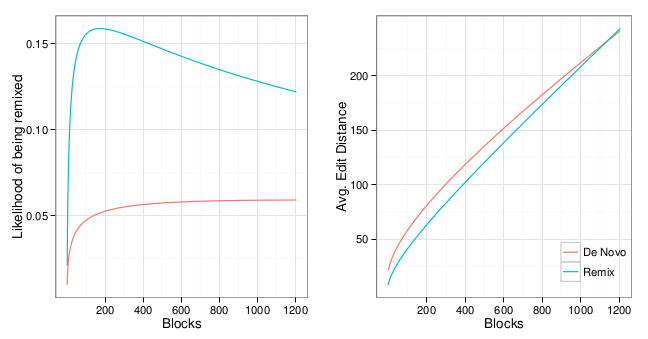
Two plots of estimated values for prototypical projects. Panel 1 (left) display predicted probabilities of being remixed. Panel 2 (right) display predicted edit distances. Both panels show predicted values for both remixes and de novo projects from 0 to 1,204 blocks (99th percentile).

Two plots of estimated values for prototypical projects. Panel 1 (left) displays predicted probabilities of being remixed. Panel 2 (right) displays predicted edit distances. Both panels show predicted values for both remixes and de novo projects from 0 to 1,204 blocks (99th percentile).

We feel that our results raise difficult but important challenges, especially for the designers of social media systems. For example, many social media sites track and display user prominence with leaderboards or lists of aggregate views. This technique may lead to increased generativity by emphasizing and highlighting creator prominence. That said, it may also lead to a decrease in originality of the remixes elicited. Our results regarding the relationship of complexity to generativity and originality of remixes suggest that supporting increased complexity, at least for most projects, may have fewer drawbacks. As supporters and advocates of remixing, we feel that although highly generative works that lead to highly original derivatives may be rare and difficult for system designers to support, understanding remixing dynamics and encouraging these rare projects remain a worthwhile and important goal. Benjamin Mako Hill, Massachusetts Institute of Technology
Andr s Monroy-Hern ndez, Microsoft Research
For more, see our full paper, The remixing dilemma: The trade-off between generativity and originality. Published in American Behavioral Scientist. 57-5, Pp. 643 663. (Official Link, Pay-Walled ).

7 May 2013

Jo Shields: Windows 8: Blood from a Stone

Ordinarily, I m a big believer that it is important to keep up to date with what every piece of software which competes with yours is doing, to remain educated on the latest concepts. Sometimes, there are concepts that get added which are definitely worth ripping off. We ve ripped off plenty of the better design choices from Windows or Mac OS, over the years, for use in the Free Desktop. So, what about Windows 8, the hip new OS on everyone s lips? Well, here s the thing I ve been using it on and off for a few months now for running legacy apps, and I can t for the life of me find anything worth stealing. Let s take the key change Windows 8 has apps built with a new design paradigm which definitely isn t called Metro. Metro apps don t really have windows in the traditional sense they re more modeled on full-screen apps from smartphones or tablets than on Windows 1.0 -> 7. Which is fine, really, if you re running Windows 8 on a tablet or touchscreen device. But what if you re not? What about the normal PC user? As Microsoft themselves ask:

How do you multitask with #windows8? The answer to that is, well, you sorta don t. Metro apps can exist in three states fullscreen, almost fullscreen, or vertical stripe. You re allowed to have two apps at most at the same time one mostly full screen, and one vertical stripe. So what happens if you try to *use* that? Let s take a fairly common thing I do watch a video and play Minesweeper. In this example, the video player is the current replacement for Windows Media Player, and ships by default. The Minesweeper game isn t installed by default, but is the only Minesweeper game in the Windows 8 app store which is gratis and by Microsoft Game Studios. Here s option A:

Unusable Windows 8 option 1 And for contrast, here s option B:

Unusable Windows 8 option 2 Which of these does a better job of letting me play Minesweeper and watch a video at the same time? Oh, here s option C, dumping Microsoft s own software, and using a third-party video player and third party Minesweeper implementation:

Windows 7 flavour It s magical almost as if picking my own window sizes makes the experience better. So, as you can see above, the old OS is still hiding there, in the form of a Windows 8 app called Desktop . Oh, sorry, didn t I say? Metro apps, and non-Metro apps, are segregated. You can run both (the Desktop app can also be almost-fullscreen or a vertical strip), but they get their own lists of apps when multitasking. Compare the list on the left with the list at the bottom:

Needs moar task lists And it s even more fun for apps like Internet Explorer, which can be started in both modes (and you often need both modes). Oh, and notice how the Ribbon interface from Office 2007 has invaded Explorer, filling the view with large buttons to do things you never want to do under normal circumstances. So, that s a short primer on why Windows 8 is terrible. Is there really nothing here worth stealing? Actually, yes, there is! After much research, I have discovered Windows 8 s shining jewel:

win8multitasking-004 The new Task Manager is lovely. I want it on my Linux systems. But that s it.

29 April 2013

Thomas Goirand: Jenkins: building debian packages after a git push (my 2cents of a howto)

The below is written in the hope it will be helpful for my fellow DDs. Why using build after push ? Simple answer: to save time, to always use a clean build environment, to automate more tests. Real answer: because you are lazy, and tired of always having to type these build commands, and that watching the IRC channel is more fun than watching the build process. Other less important answers: building takes some CPU time, and makes your computer run slower for other tasks. It is really nice that building doesn t consume CPU cycles on your workstation/laptop, and that a server does the work, not disturbing you while you are working. It is also super nice that it can maintain a Debian repository for you after a successful build, available for everyone to use and test, which would be harder to achieve on your work machine (which may be behind a router doing NAT, or even sometimes turned off, etc.). It s also kind of fun to have an IRC robot telling everyone when a build is successful, so that you don t have to tell them, they can see it and start testing your work. Install a SID box that can build with cowbuilder
Install Jenkins WARNING: Probably, before really installing, you should read what s bellow (eg: Securing Jenkins). Simply apt-get install jenkins from experimental (the SID version has some security issues, and has been removed from Wheezy, on a request of the maintainer). Normally, after installing jenkins, you can access it through:
http://<ip-of-your-server>:8080/
There is no auth by default, so anyone will be able to access your jenkins web GUI and start any script under the jenkins user (sic!). Jenkins auth
Before doing anything else, you have to enable Jenkins auth, otherwise, you have everything accessible from the outside, meaning that more or less, anyone browsing your jenkins server could be allowed to run any command. It might sound simple, but in fact, Jenkins auth is tricky to activate, and it is very easy to get yourself locked out, with no working web access. So here s the steps: 1. Click on Manage Jenkins then on Configure system 2. Check the enable security checkbox 3. Under security realm select Jenkins s own user database and leave allow users to sign up . Important: leave Anyone can do anything for the moment (otherwise, you will lock yourself out). 5. At the bottom of the screen, click on the SAVE button. 6. On the top right, click to login / create an account. Create yourself an account, and stay logged in. 7. Once logged-in, go back again in the Manage Jenkins -> Configure system , under security. 8. Switch to Project based matrix authentication strategy . Under User/group to add , enter the new login you ve just created, and click on Add . 9. Select absolutely all checkboxes for that user, so that you make yourself an administrator. 10. For the Anonymous user, for Job, check Read, Build and Workspace. For Overall select Read. 11. At the bottom of the screen, hit save again. Now, anonymous (eg: not logged-in) users should be able to see all projects, and be able to click on the build now button. Note that if you lock yourself out, the way to fix is to turn off Jenkins, edit config.xml, remove the useSecurity thing, and all what is in authorizationStragegy and securityRealm , then restart Jenkins. I had to do that multiple times until I had it right (as it isn t really obvious you got to leave Jenkins completely insecure when creating a new user). Securing Jenkins: Proxy Jenkins through apache to use it over SSL
When doing a quick $search-engine search, you will see lots of tutorials to use apache as a proxy, which seems to be the standard way to run Jenkins. Add the following to /etc/apache2/sites-available/default-ssl:
ProxyPass / http://localhost:8080/
ProxyPassReverse / http://localhost:8080/
ProxyRequests Off
Then perform the following commands on the shell:
htpasswd -c /etc/apache2/jenkins_htpasswd <your-jenkins-username>
a2enmod proxy
a2enmod proxy_http
a2enmod ssl
a2ensite default-ssl
a2dissite default
apache2ctl restart
Then disable access to the port 8080 of jenkins from outside:
iptables -I INPUT -d <ip-of-your-server> -p tcp --dport 8080 -j REJECT
Of course, this doesn t mean you shouldn t take the steps to activate Jenkins own authentication, which is disabled by default (sic!). Build a script to build packages in a cowbuilder I thought it was hard. In fact it was not. All together, this was kind of fun to hack. Yes hack. What I did yet another kind of 10km ugly shell script. The way to use it is simply: build-openstack-pkg <package-name>. On my build server, I have put that script in /usr/bin, so that it is accessible from the default path.Ugly, but it does the job! Jenkins build script for openstack At the end of the script, scan_repo() generates the necessary files for a Debian repository to work under /home/ftp. I use pure-ftpd to serve it. /home/ftp must be owned by jenkins:jenkins so that the build script can copy packages in it. This build script is by no mean state of the art, and in fact, it s quite hack-ish (so I m not particularly proud of it, but it does its job ). If I am showing it in this blog post, it is just to show an example of what can be done. It is left as an exercise to the reader to create another build script adapted to its own needs, and write something cleaner and more modular. Dependency building Let s say that you are using the Built-Using: field, and that package B needs to be built if package A changes. Well, Jenkins can be configured to do that. Simply edit the configuration of project B (you will find it, it s easy ). My use case: In my case, for building Glance, Heat, Keystone, Nova, Quantum, Cinder and Ceilometer, which are all components of Openstack, I have written a small (about 500 lines) library of shell functions, and an also small (90 lines) Makefile, which are packaged in openstack-pkg-tools (so Nova, Glance, etc. all build-depends on openstack-pkg-tools). The shell functions are included in each maintainer scripts (debian/*.config and debian/*.postinst mainly) to avoid having some pre-depends that would break debconf flow. The Makefile of openstack-pkg-tools is included in debian/rules of each packages. In such a case, trying to manage the build process by hand is boring and time consuming (spending your time watching the build process of package A, so that you can manually start the build of package B, then wait again ). But it is also error prone: it is easy to do a mistakes in the build order, you can forget to dpkg -i the new version of package A, etc. But that s not it. Probably at some point, you will want Jenkins to rebuild everything. Well, that s easy to do. Simply create a dummy project, and have other project to build after that one. The build steps could simply be: echo Dummy project as a shell script (I m not even sure that s needed ). Configuring git to start a build on each push In Jenkins, pass your mouse over the Build now URL. Well, we just need to wget that URL in your Alioth repository. A small drawing is better than long explanation:
for i in  ls /git/openstack  ; do
    echo "wget -q --no-check-certificate \
    https://<ip-of-your-server>/job/$ PROJ_NAME /build?delay=0sec \
    -O /dev/null" >/git/openstack/$ i /hooks/post-receive \
        && chmod 0770 /git/openstack/$ i /hooks/post-receive;
done
The chmod 0770 is necessary if you don t want every Alioth users to have access to your Jenkins server web interface and see an eventual htpassword protection that you can add to your jenkins box (I m not covering that, but it is fairly easy to add such protection). Note that all of the members of your Alioth group will then have access to this post-receive hook, containing the password of your htaccess, so you must trust everyone in your Alioth group to not do nasty things with your Jenkins. Bonus point: IRC robot If you would like to see the result of your build published on IRC, Jenkins can do that. Click on Manage Jenkins , then on Manage Plugins . Then click on available and check the box in front of IRC plugin . Go at the bottom of the screen and click on Add . Then check the box to restart Jenkins automatically. Once it is restarted, go again under Manage jenkins then Configure system . Select the IRC Notification and configure it to join the network and the channel you want. Click on Advanced to select the IRC nick name of your bot, and make sure you change the port (by default jenkins has 194, when IRC normally uses 6667). Be patient when waiting for the IRC robot to connect / disconnect, this can take some time. Now, for each jenkins Job, you can tick the IRC Notification option. Doing piuparts after build One nice thing with automated builds, is that most of the time, you don t need to wait starring at them. So you can add as many tests as you want, the Jenkins IRC robot will anyway let you know sooner or later the result of your build. So adding piuparts tests in the build script seems the correct thing to do. Though that is still on my todo, so maybe that will be for my next blog post.

26 April 2013

Vincent Sanders: When you make something, cleaning it out of structural debris is one of the most vital things you do.

Collabora recently had a problem with a project's ARM build farm. In a nice change of pace it was not that the kernel was crashing, nor indeed any of the software or hardware.
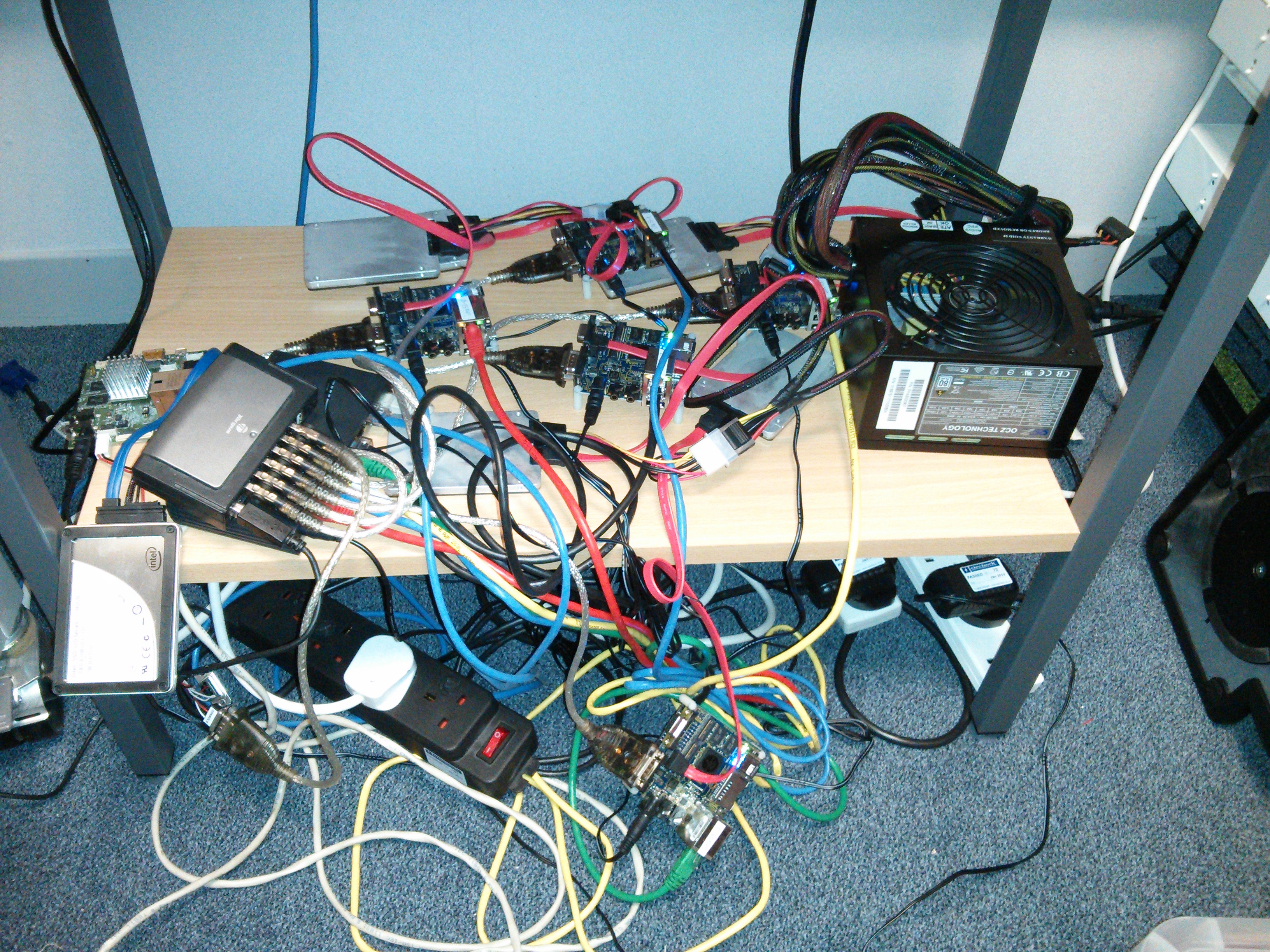
The ProblemInstead our problem was our build farm could best be described as "a pile of stuff" and we wanted to add more systems to it and have switched power control for automated testing.

Which is kinda where the Christopher Alexander quote comes into this. I suggested that I might be able to come up with a better, or at least cleaner, solution.
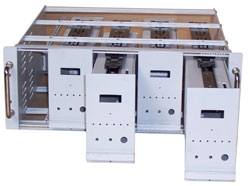
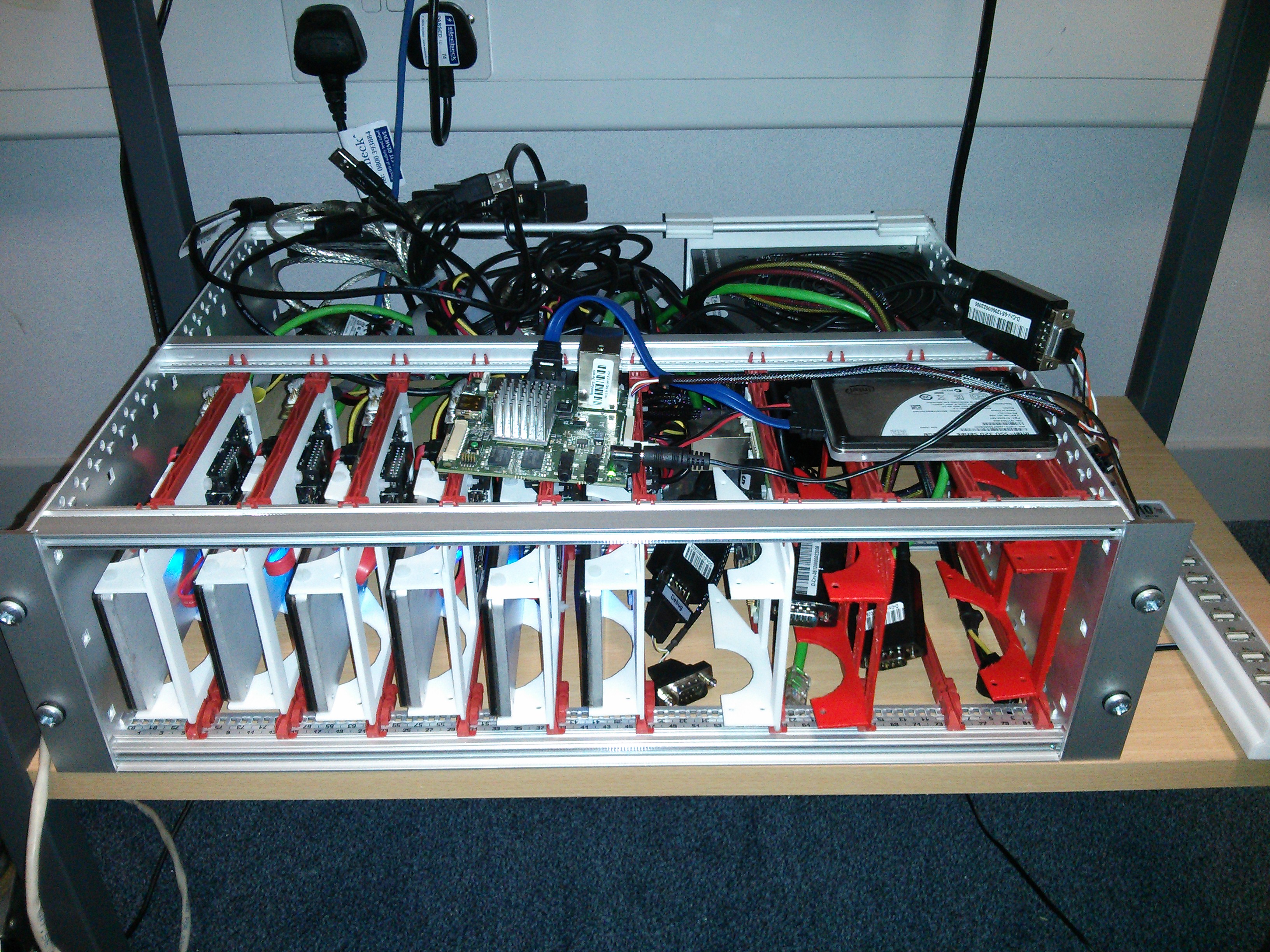
The IdeaA subrack with sub modulesPrevious experience had exposed me to the idea of using 19 inch subracks for mounting circuits inside submodules.

I originally envisaged the dev boards individually mounted inside these boxes. However preliminary investigation revealed that the enclosures were both expensive and used a lot of space which would greatly increase the rack space required to house these systems.

imx53 QSB eurocard carrier
I decided to instead look at eurocard type subracks with carriers for the systems. Using my 3D printer I came up with a carrier design for the imx53 QSB and printed it. I used the basic eurocard size of 100mm x 160mm which would allow the cards to be used within a 3U subrack.

Once assembled it became apparent that each carrier would be able to share resources like power supply, ethernet port and serial console via USB just as the existing setup did and that these would need to be housed within the subrack.
The Prototype
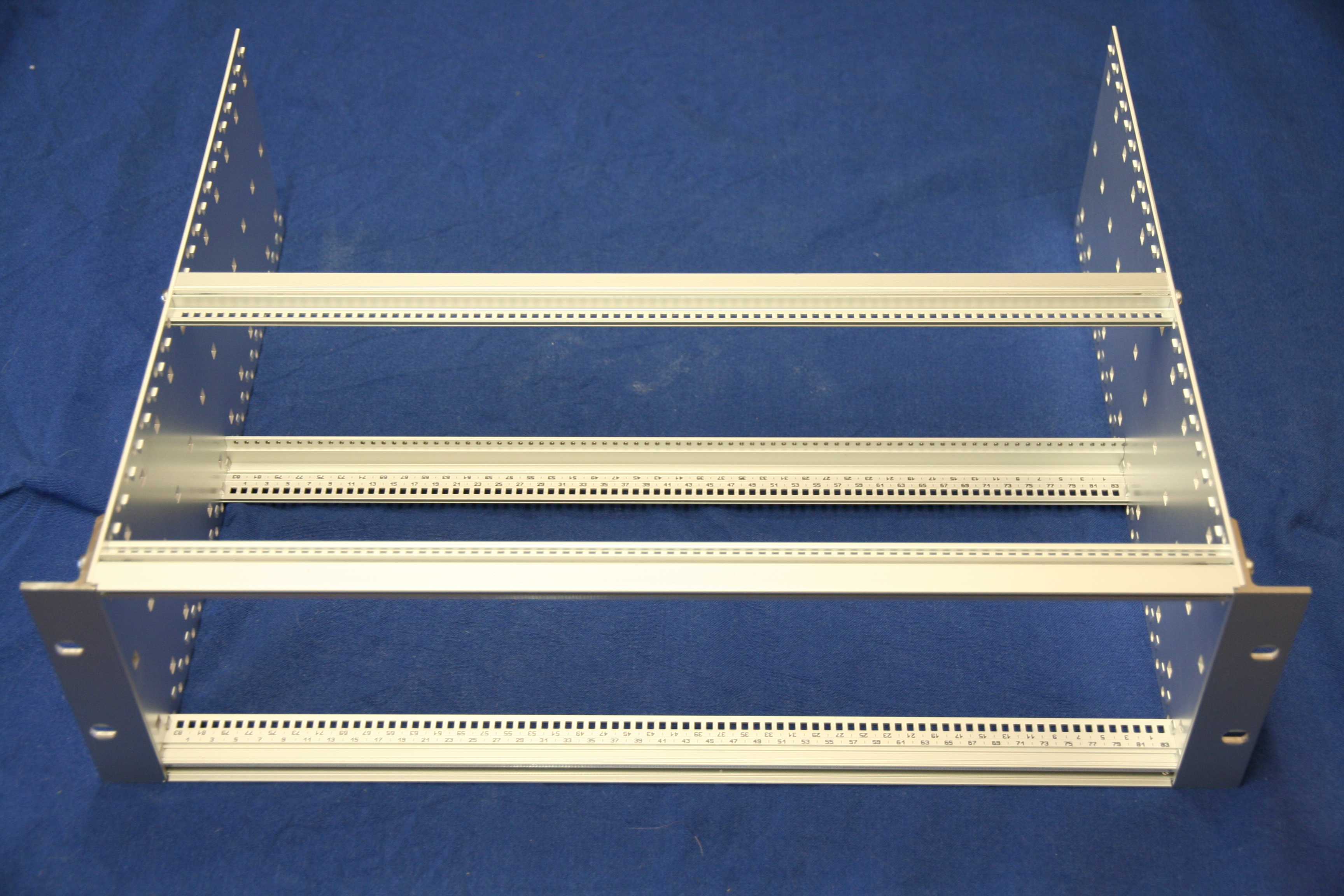
The carrier prototype was enough to get enough interest to allow me to move on to the next phase of the project. I purchased a Schroff 24563-194 subrack kit and three packs of guide rails from Farnell and assembled it.

Initially I had envisaged acquiring additional horizontal rails from Schroff which would enable constructing an area suitable for mounting the shared components behind the card area.

Rear profile for Schroff subrackUnfortunately Schroff have no suitable horizontal profiles in their catalog and are another of those companies who seem to not want to actually sell products to end users but rather deal with wholesalers who do not have their entire product range!

Printed rear profile for Schroff subrack
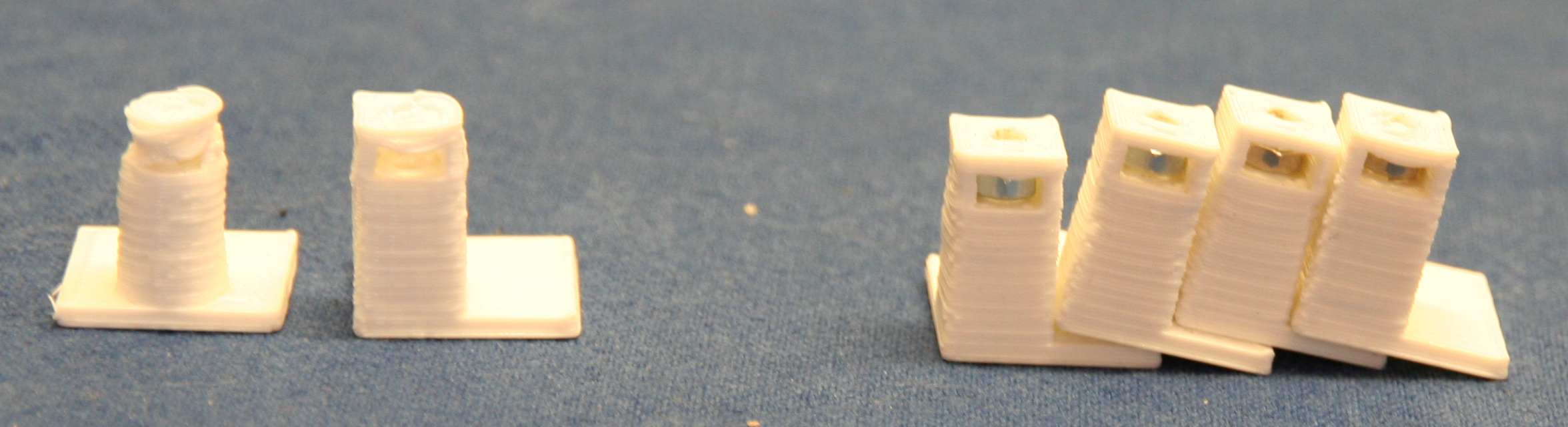
Undaunted by this I created my own horizontal rail profile and 3D printed some lengths. The profile is designed to allow a 3mm thick rear cover sheet attached with M2.5 mounting bolts and fit rack sides in the same way the other profiles do.

At this point I should introduce some information on how these subracks are dimensioned. A standard 19 inch rack (as defined in IEC 60297) has a width of 17.75 inches(450.85mm) between the vertical posts. The height is measured in U (1.75 inches)

A subrack must obviously fit in the horizontal gap while providing as much internal space as possible. A subrack is generally either 3 or 6 U high. The width within a subrack is defined in units called HP (Horizontal Pitch) which are 0.2 inches(5.08 mm) and subracks like the Schroff generally list 84 usable HP.

However we must be careful (or actually just learn from me stuffing this up ;-) as the usable HP is not the same thing as the actual length of the horizontal rails! The enclosures actually leave and additional 0.1 inch at either end giving a total internal width of 85HP (17 inches, 431.8 mm) which leaves 0.75 inches for the subrack sides and some clearance.

The Schroff subrack allows eurocards to be slotted into rails where the card centre line is on HP boundaries, hence we describe the width of a card in the slot in terms of HP

I cannot manufacture aluminium extrusions (I know it is a personal failing) nor produce more than 100 mm long length of the plastic profile on my printer.

Even if full lengths are purchased from a commercial service (120 euros for a pair including tax and shipping) the plastic does not have sufficient mechanical strength.

The solution I came up with was somewhat innovative, as an alternative a M5 bolt into a thread in the aluminium extrusion I used a 444mm long length of 4mm threaded rod with nuts at either end. This arrangement puts the extrusion under compression and gives it a great deal of additional mechanical strength as the steel threaded rod is very strong.

Additionally to avoid having to print enough extrusion for the entire length I used some 6mm aluminium tube as a spacer between 6HP(30.48mm) wide sections of the printed extrusion.

It was intended to use a standard modular PC power supply which is 150mm wide which is pretty close to 30HP (6 inches) so it was decided to have a 6HP section of rail at that point to allow a rear mounting plate for the PSU to be attached.

This gives 6HP of profile, 21HP(106.68mm) of tube spacer, 6HP of profile, 46HP(233.68 mm) of tube spacer and a final 6HP profile summing to our total of 85HP. Of course this would be unnecessary if a full continuous 85HP rail had been purchased, but 6 of 6 HP long profile is only 51 euro a saving of 70 euro.

To provide a flat area on which to mount the power switching, Ethernet switch and USB hubs I ordered a 170 x 431 mm sheet of 3mm thick aluminium from inspiredsteel who, while being an ebay company, were fast, cheap and the cutting was accurate.

Do be sure to mention you would prefer it if any error made the sheet smaller rather than larger or it might not fit, for me though they were accurate to the tenth of a mm! If you would prefer the rear section of the rack to be enclosed when you are finished, buy a second sheet for the top. For my prototype I only purchased a 170 x 280mm sheet as I was unsure if I wanted a surface under the PSU (you do, buy the longer sheet)

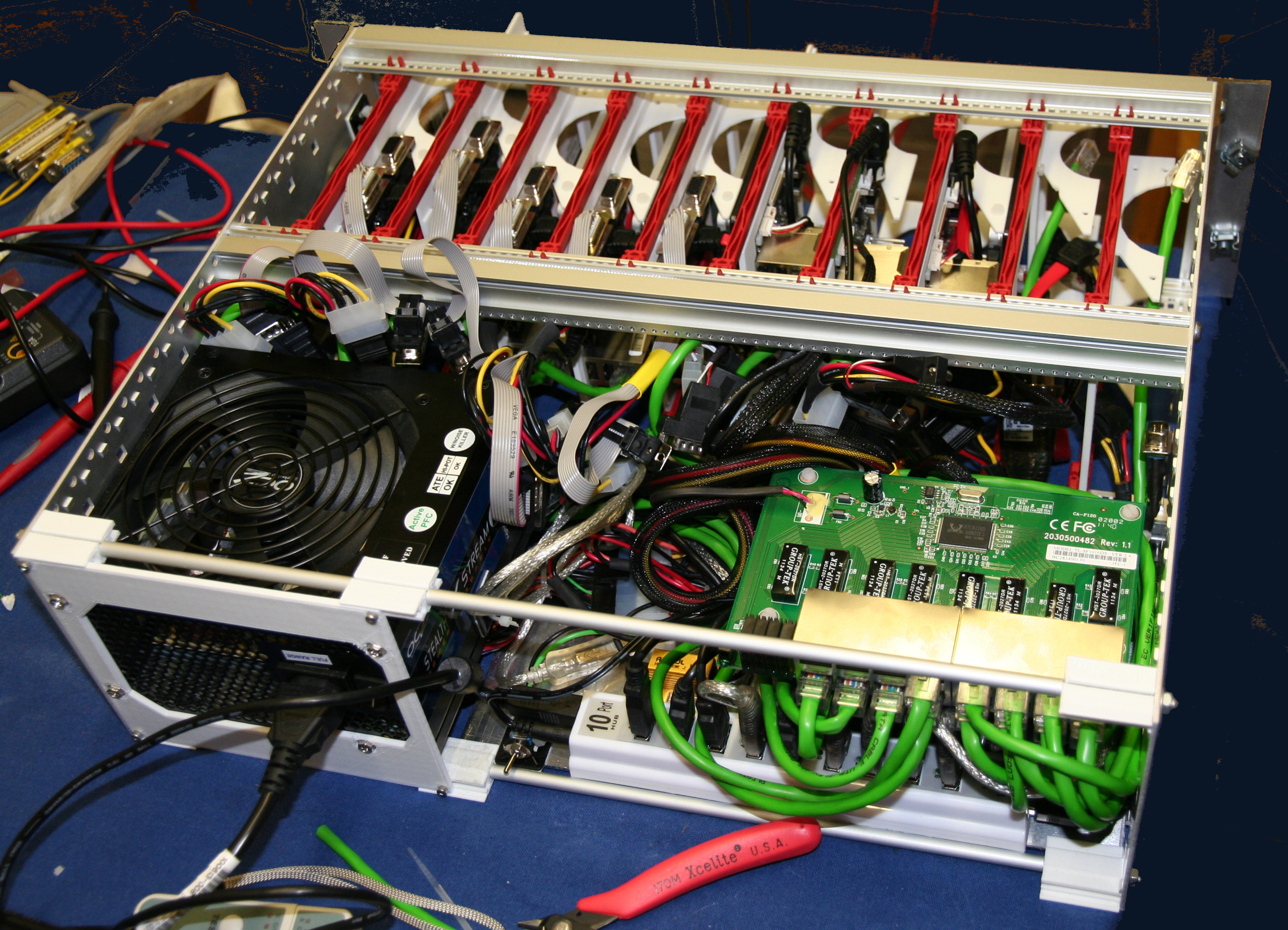
PC power supply mounted to back plateMounting the PSU was a simple case of constructing a 3 mm thick plate with the correct cutouts and mounting holes for an ATX supply. Although the images show the PSU mounted on the left hand side of the rack this was later reversed to improve cable management.

The subrack needed to provide Ethernet switch ports to all the systems. A TP-Link TL-SF1016DS 16-Port 10/100Mbps Switch was acquired and the switch board removed from its enclosure. The switch selected has an easily removed board and is powered by a single 3.3V input which is readily available from the ATX PSU.

Attention now returned to the eurocard carriers for the systems, the boards to be housed were iMX53 QSB and iMX6 SABRE Lite and a Raspberry Pi control system to act as USB serial console etc.

The carriers for both main boards needed to be 8HP wide, comprised of:
Although only 38 mm this is 7.5HP and fractions of an HP are not possible with the selected subrack.

With 8HP wide modules this would allow for ten slots, within the 84 usable HP, and an eleventh 4HP wide in which the Raspberry Pi system fits.

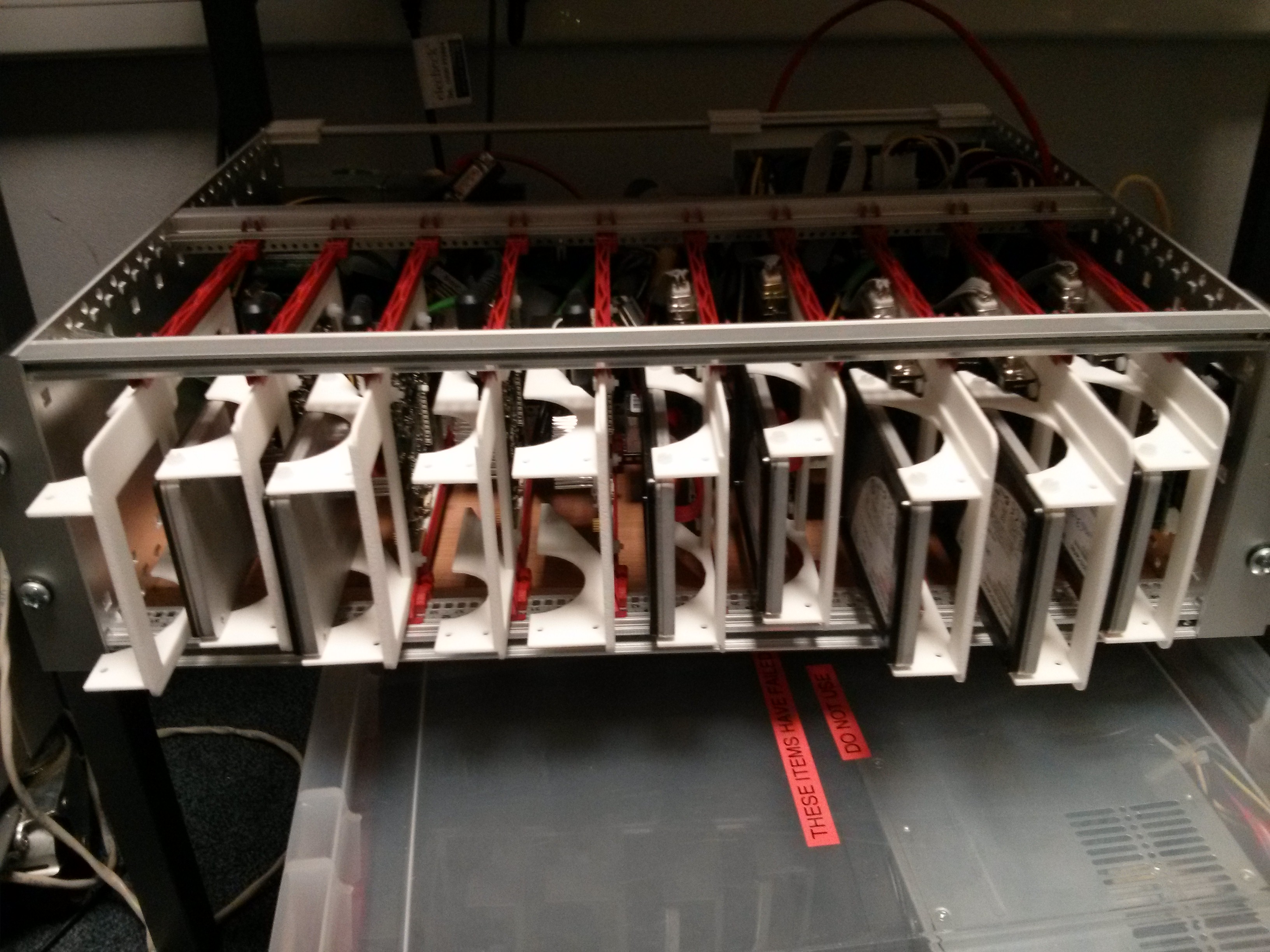
iMX6 SABRE Lite eurocard carrierCarrier designs for both the i.MX53 QSB and the i.MX6 SABRE Lite boards were created and fabricated at a professional 3D print shop which gave a high quality finish product and removed the perceived risk of relying on a personal 3D printer for a quantity of parts.

This resulted in changes in the design to remove as much material as possible as commercial 3D services charge by the cubic cm. This Design For Manufacture (DFM) step removed almost 50% from the price of the initial design.

i.MX53 QSB carriers with wiring loom
The i.MX6 design underwent a second iteration to allow for the heatsink to be mounted and not mechanically interfere with the hard drive (although the prototype carrier has been used successfully for a system that does not require a hard drive). The lesson learned here is to be aware that an design iteration or two is likely and that it is not without cost.

The initial installation was to have six i.MX53 and two i.MX6 this later changed to a five/four split, however the carrier solution allows for almost any combination, the only caveat (discovered later) is the imx53 carriers should be to the right hand side with the small 4HP gap at that end as they have a JTAG connector underneath the board which otherwise foul the hard drive of the next carrier.

Racked cards showing unwanted cable tails
A wiring loom was constructed for each board giving them a connector tail long enough to allow them to be removed. This was the wrong approach! if you implement this design (or when I do it again) the connector tails on the wiring loom should present all the connections to the rear at the same depth as the Ethernet connection.

The rack cables themselves should be long enough to allow the slides to be removed but importantly it is not desirable to have the trailing cable on the cards. I guess the original eurocard designers figured this out as they designed the cards around the standard fixed DIN connectors at the back of the card slots.

USB relay board with wiring loom attached
We will now briefly examine a misjudgement that caused the initially deployed solution to be reimplemented. As the design was going to use USB serial converters to access the serial console a USB connected relay board was selected to switch the power to each slot. I had previously used serial controlled relay boards with a USB serial convertor however these were no longer available.

Initial deployment with USB controlled relay board
All the available USB relay boards were HID controlled, this did not initially seem to be an issue and Linux software was written to provide a reasonable interface. However it soon became apparent that the firmware on the purchased board was very buggy and crashed the host computer's USB stack multiple times.

Deployed solutionOnce it became apparent that the USB controlled power board was not viable a new design was conceived. As the Ethernet switch had ports available Ethernet controlled relay boards were acquired.

Evolution of 3mm PCB pillars
It did prove necessary to design and print some PCB support posts with M3 nut traps to allow the relay boards to be easily mounted using double sided adhesive pads.

By stacking the relay boards face to face and the Ethernet switch on top separated using nylon spacers it was possible to reduce the cable clutter and provide adequate cable routing space.

A busbar for Ground (black) and unswitched 12V (yellow) was constructed from two lengths of 5A chock block.

An issue with power supply stability was noted so a load resistor was added to the 12V supply and an adhesive thermal pad used to attach it to the aluminium base plate.

Completed redesign
It was most fortunate that the ethernet switch mounting holes lined up very well with the relay board mounting holes allowing for a neat stack.

This second edition is the one currently in use, it has proved reliable in operation and has been successfully updated with additional carriers.

The outstanding issues are mainly centered around the Raspberry Pi control board:
  • Needs its carrier fitting. It is currently just stuck to the subrack end plate.
  • Needs its Ethernet cable replacing. The existing one has developed a fault post installation.
  • Needs the USB hub supply separating from the device cable. The current arrangement lets the hub power the Pi which means you cannot power cycle it.
  • Connect its switched supply separately to the USB hub/devices.
Shopping listThe final bill of materials (excluding labour and workshop costs) which might be useful to anyone hoping to build their own version.

Prices are in GBP currency converted where appropriate and include tax at 20% and delivery to Cambridge UK and were correct as of April 2013.

The purchasing was not optimised and for example around 20GBP could be saved just by ordering all the shapeways parts in one order.
Base subrack
ItemSupplierQuantityLine Price
Schroff 24563-194 subrack kitFarnell141.28
Schroff 24560-351 guide railsFarnell313.65
Schroff rack rear horizontal railShapeways2100.00
1000mm length of 4mm threaded rodB and Q11.48
170mm x 431mm x 3mm Aluminium sheetinspired steel240.00
PSU mounting plateShapeways135.42
PCB standoffShapeways422.30
160mm Deep Modular PC supplyCCL155.76
TP-Link TL-SF1016DS 16-Port 10/100Mbps-SwitchCCL123.77
8 Channel 16A Relay Board Controlled Via EthernetRapid2126.00
Raspberry PiFarnell126.48
USB Serial convertersCCL1037.40
10 port strip style USB HUBEbay17.00
Parts for custom Ethernet cablesRS1326.00
Parts for custom molex power cables (salvaged from scrap ATX PSU)Workshop1111.00
33R 10W wirewound resistor for dummy loadRS11.26
24pin ATX female connector pre-wiredMaplin12.99
Akasa double sided thermal padMaplin15.00
Small cable tie basesMaplin16.49
Miscellaneous cable, connectors, nylon standoffs, solder, heatshrink, zip ties, nuts, washers etc. Workshop120.00
Total for subrack603.28

The carriers are similarly not optimally priced as over five GBP each can be saved by combining shipping on orders alone. Also the SSD drive selection was made some time ago and a newer model may be more suitable.
i.MX53 QSB carrier
ItemSupplierQuantityLine Price
i.MX53 QSBFarnell1105.52
Intel 320 SSD 80GCCL1111.83
Carrier boardShapeways130.00
combined sata data and power (15 to 20cm version)EBay15.00
Low profile right angle 5.5mm x 2.1mm barrel jackEBay10.25
Parts for 9pin serial cable extensionRS15.00
Miscellaneous solder, heatshrink, nylon nuts, bolts and washersWorkshop15.00
Total for carrier262.60

i.MX6 SABRE Lite carrier
ItemSupplierQuantityLine Price
i.MX6 SABRE LiteFarnell1128.06
Intel 320 SSD 80GCCL1111.83
Carrier boardShapeways135.00
combined sata data and power (15 to 20cm version)EBay15.00
Low profile right angle 5.5mm x 2.1mm barrel jackEBay10.25
Parts for 9pin serial cable modificationRS12.00
Miscellaneous solder, heatshrink, nylon nuts, bolts and washersWorkshop15.00
Total for carrier287.14
ConclusionThe solution works and in a 3U high 355mm deep subrack ten ARM development boards can be racked complete with local ethernet switching, power control and serial consoles.

Deployed system in situ configured as a build and test farm
The solution is neat and provides flexibility, density and reproducibility the "pile of stuff" solution failed to do.

For current prototype with nine filled slots the total cost was around 3000GBP or around 330GBP per slot which indicates a 100GBP per slot overhead over the "pile of stuff" solution. These figures omit the costs of the engineer and workshop time, which are estimated at an additional 1500GBP. Therefore a completed rack, fully filled with i.MX6 carriers costs around 5000GBP

Density could be increased if boards with lower height requirements were used however above twelve units there issues with Ethernet switch, power switch and USB port availability become a factor. For Example the 16 port Ethernet switch requires a port for uplink, one for each relay board and one for the console server which leaves only 12 ports for systems.

Addressing the outstanding issues would result in a much more user friendly solution. As the existing unit is in full time use and downtime is not easily scheduled for all ten systems, the issues are not likely to be fixed on the prototype and would have to be solved on a new build.

The solution is probably not suitable for turning into a product but that was not really the original aim. A commercial ARM blade server using this format would almost certainly use standard DIN connectors and a custom PCB design rather than adapting existing boards.

5 April 2013

Olivier Berger: Using RDF metadata for traceability among projects and distributions presented at DistroRecipes 2013

I ve given a lightning talk at Distro Recipes 2013 about what I ve been working on for several months: adding Semantic meta-data to Debian PTS, and stuff. Here are my slides :
<iframe allowfullscreen="allowfullscreen" frameborder="0" height="356" marginheight="0" marginwidth="0" mozallowfullscreen="mozallowfullscreen" scrolling="no" src="http://www.slideshare.net/slideshow/embed_code/18183576" style="border:1px solid #CCC;border-width:1px 1px 0;margin-bottom:5px" webkitallowfullscreen="webkitallowfullscreen" width="427"> </iframe> An in PDF. Thanks to the Hupstream staff and other participants of Distro Recipes for the interesting discussions and contacts. Looking forward to participating to the next edition.

Next.

Previous.