Daniel Stender: My work for Debian in August
Here's again a little list of my humble off-time contributions I'm happy to add to the large amount of work we're completing all together each month.
Then there is one more "new in Debian" (meaning: "new in unstable") announcement.
First, the uploads (a few of them are from July):
The example on how to train a neural network on the MNIST database of handwritten digits is refined (it also provides
- afl/2.21b-1
- djvusmooth/0.2.17-1
- python-bcrypt/3.1.0-1
- python-latexcodec/1.0.3-4 (closed #830604)
- pylint-celery/0.3-2 (closed #832826)
- afl/2.28b-1 (closed #828178)
- python-afl/0.5.4-1
- vulture/0.10-1
- afl/2.30b-1
- prospector/0.12.2-1
- pyinfra/0.1.1-1
- python-afl/0.5.4-2 (fix of elinks_dump_varies_output_with_locale)
- httpbin/0.5.0-1
- python-afl/0.5.5-1 (closed #833675)
- pyinfra/0.1.2-1
- afl/2.33b-1 (experimental, build/run on llvm 3.8)
- pylint-flask/0.3-2 (closed #835601)
- python-djvulibre/0.8-1
- pylint-flask/0.5-1
- pytest-localserver/0.3.6-1
- afl/2.33b-2
- afl/2.33b-3
- keras/1.0.7-1 (initial packaging into experimental)
- lasagne/0.1+git20160728.8b66737-1
- squirrel3/3.1-4 (closed #831210)
- yapf: Python code formatter
- spacy: industrial-strength natural language processing for Python
- ralph: asset management and DCIM tool for data centers
- pytest-cookies: Pytest plugin for testing Cookiecutter templates
- blocks: another deep learning framework build on the top of Theano
- fuel: data provider for Blocks and Python DNN frameworks in general
apt-get install python ,3 -lasagne command6.
If wanted with the documentation package lasagne-doc for offline use (no running around on remote airports seeking for a WIFI spot), either in the Python 2 or the Python 3 branch, or both flavours altogether7.
While others have to spend a whole weekend gathering, compiling and installing the needed libraries you can grab yourself a fresh cup of coffee.
These are the advantages of a fully integrated system (sublime message, as always: desktop users switch to Linux!).
When the installation of packages has completed, the MNIST example of Lasagne could be used for a quick check if the whole library stack works properly8:
$ THEANO_FLAGS=device=gpu,floatX=float32 python /usr/share/doc/python-lasagne/examples/mnist.py mlp 5
Using gpu device 0: GeForce 940M (CNMeM is disabled, cuDNN 5005)
Loading data...
Downloading train-images-idx3-ubyte.gz
Downloading train-labels-idx1-ubyte.gz
Downloading t10k-images-idx3-ubyte.gz
Downloading t10k-labels-idx1-ubyte.gz
Building model and compiling functions...
Starting training...
Epoch 1 of 5 took 2.488s
  training loss:        1.217167
  validation loss:      0.407390
  validation accuracy:      88.79 %
Epoch 2 of 5 took 2.460s
  training loss:        0.568058
  validation loss:      0.306875
  validation accuracy:      91.31 %
--help) and explained in detail in the Tutorial section of the documentation in /usr/share/doc/lasagne-doc/html/.
Very good starting points are also the IPython notebooks that are available from the tutorials by Eben Olson9 and Geoffrey French on the PyData London 201610.
There you have Theano basics, examples for employing convolutional neural networks (CNN) and recurrent neural networks (RNN) for a range of different purposes, how to use pre-trained networks for image recognition, etc.
- For a quick comparison of Keras and Lasagne with other toolkits, see Alex Rubinsteyn's PyData NYC 2015 presentation on using LSTM (long short term memory) networks on varying length sequence data like Grimm's fairy tales (https://www.youtube.com/watch?v=E92jDCmJNek 27:30 sq.)
- https://github.com/Lasagne/Recipes/tree/master/examples/styletransfer
- Great introduction to Theano and Lasagne by Eben Olson on the PyData NYC 2015: https://www.youtube.com/watch?v=dtGhSE1PFh0
- The package is "freelancing" currently being in collab-maint, to set up a deep learning packaging team within Debian is in the stage of discussion.
- Only available for amd64 and ppc64el.
-
You would need "testing" as package source in
/etc/apt/sources.listto install it from the archive at the present time (I have that for years, but if Debian Testing could be advised as productive system is going to be discussed elsewhere), but it's coming up for Debian 9. The cuda-toolkit and pycuda are in the non-free section of the archive, thusnon-free(mostly used in combination withcontrib) must be added tomain. Plus, it's a mere suggestion of the Theano packages to keep Theano inmain, so--install-suggestsis needed to pull it automatically with the same command, or this must be given explicitly. - For dealing with Theano in Debian, see this previous blog posting
-
Like suggested in the guideline From Zero to Lasagne on Ubuntu 14.04.
cuDNN isn't available as official Debian package yet, but could be downloaded as a
.debpackage after registration at https://developer.nvidia.com/cudnn. It integrates well out of the box. - https://github.com/ebenolson/pydata2015
- https://github.com/Britefury/deep-learning-tutorial-pydata2016, video: https://www.youtube.com/watch?v=DlNR1MrK4qE
 At this year's
 It's not often that an artist touches you deeply, but
 It has been a while that I have been contacted by a recruiter, and the last few ones were fairly decent conversations, where they made an effort to research me first, and even if they did not get everything right, they still listened, and we had a productive talk. But four days ago, I had another recruiter reach out to me, from a company I know oh so well: one I
 Many people reading this have already suffered me talking to them about


 Another
 I read this tweet a couple of weeks ago:

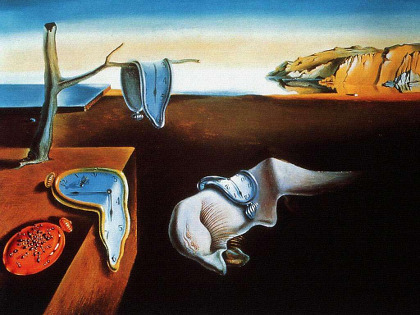 For centuries man has hunted, he brought the animals to pasture, cultivated fields and sailed the seas without any kind of tool to measure time. Back then, the time was not measured, but only estimated with vague approximation and its pace was enough to dictate the steps of the day and the life of man. Subsequently, for many centuries, hourglasses accompanied the civilization with the slow flow of their sand grains. About hourglasses, Ernst Junger writes in Das Sanduhrbuch 1954 (no English translation): This small mountain, formed by all the moments lost that fell on each other, it could be understood as a comforting sign that the time disappears but does not fade. It grows in depth .
For the philosophers of ancient Greece, the time was just a way to measure how things move in everyday life and in any case there was a clear distinction between quantitative time (Kronos) and qualitative time (Kair s). According to Parmenides, time is guise, because its existence
<
 Long flights and lazy afternoons relaxing from teaching, I tried out another game on my Android device,
 Without any explanations given you are thrown into the game and it takes a few iterations until you understand what kind of attacks you are facing, but once you have figured that out, it is a more or less simple game of combination how to manage to get to the exit. I played through the around 50 levels of the story mode and I think it was only in the last five that I once or twice had to actually try and think hard to find a solution.
I found the game quite amusing at the beginning, but soon it became repetitive. But since you can play through the whole story mode in probably one long afternoon, that is not so much of a problem. More a problem is the apparently incredible battery usage of this game. Playing without checking for some time leaves you soon with a near empty battery.
Graphically well done, with more or less interesting gameplay, it still does not stand up to
 After upgrading an Ubuntu 14.04 ("trusty") machine to the latest 16.04
 To be clear: for Stretch we recommend that reproducible builds are done in the same build path as the "original" build.
Finally, and just for our future references, when we enabled build path variation on Saturday, August 20th 2016, the numbers for unstable were:
 I gave a talk about the early days of Linux at the


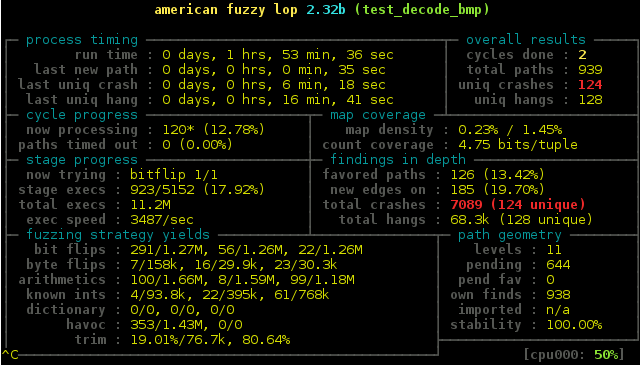
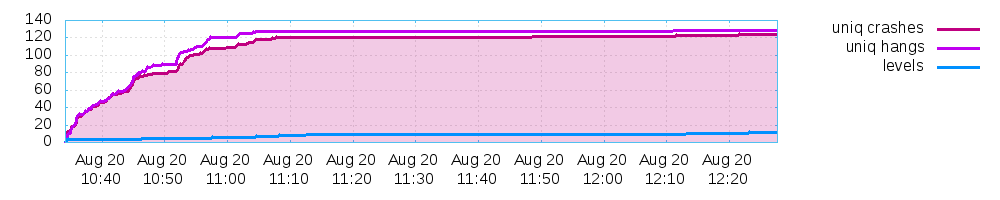
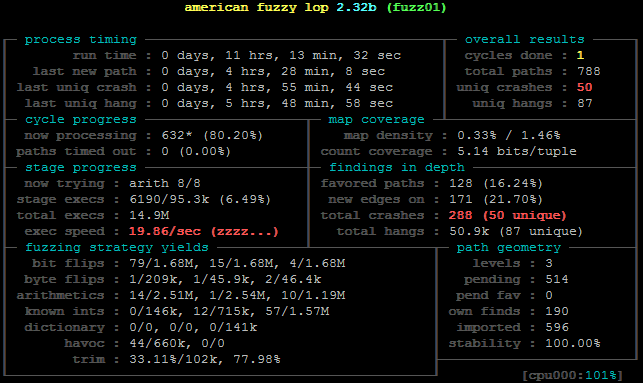
 Over the weekend I've played with continuous integration for