Search Results: "ed"

3 January 2021

Emmanuel Kasper: How to move a single VM between cloud providers

I am running since a decade a small Debian VM, that I use for basic web and mail hosting. Since most of the VM setup is done manually and not following the Infrastructure As Code pattern, it is faster to simply copy the filesystem when switching providers instead of reconfiguring everything.
The steps involved are:1. create a backup of the filesystem using tar of rsync, excluding dynamic content
rsync --archive \
--one-file-system --numeric-ids \
--rsh "ssh -i private_key root@server:/ /local_dir

or
tar -cvpzf backup.tar.gz \
--numeric-owner \
--exclude=/backup.tar.gz \
--one-file-system /


Notice here the --one-file-system switch which avoids back'ing up the content of mount points like /proc, /dev.
If you have extra partitions with a mounted filesystem, like /boot or home you need do add a separate backup for those.

2. create a new VM on the new cloud provider, verify you have a working console access, and power it off.
3. boot on the new cloud provider a rescue image
4. partition the disk image on the new provider.
5. mount the new root partition, and untar your backup on it. You could for instance push the local backup via rsync, or download the tar archive using https.
6. update network configuration and /etc/fstab
7. chroot into the target system, and reinstall grub

This works surprisingly well, and you if made your backup locally, you can test the whole procedure by building a test VM with your backup. Just replace the deboostrap step with a command like tar -xvpzf /path/to/backup.tar.gz -C /mount_point --numeric-owner

Using this procedure, I moved from Hetzner (link in French language) to Digital Ocean, from Digital Ocean to Vultr, and now back at Hetzner.

2 January 2021

Jonathan Wiltshire: RCBW 21.1

Does software-properties-common really depend on gnupg, as described in #970124, or could it be python3-software-properties? Should it be Depends, or Recommends? And do you accept the challenge of finding out and preparing a patch (and even an upload) to fix the bug?

Jonathan Carter: Free Software Activities for 2020-12

Here s a list of some Debian packaging work for December 2020. 2020-12-01: Sponsor package mangohud (0.6.1-1) for Debian unstable (mentors.debian.net request). 2020-12-01: Sponsor package spyne (2.13.16-1) for Debian unstable (Python team request). 2020-12-01: Sponsor package python-xlrd (1.2.0-1) for Debian unstable (Python team request). 2020-12-01: Sponsor package buildbot for Debian unstable (Python team request). 2020-12-08: Upload package calamares (3.2.35.1-1) to Debian unstable. 2020-12-09: Upload package btfs (2.23-1) to Debian unstable. 2020-12-09: Upload package feed2toot (0.15-1) to Debian unstable. 2020-12-09: Upload package gnome-shell-extension-harddisk-led (23-1) to Debian unstable. 2020-12-10: Upload package feed2toot (0.16-1) to Debian unstable. 2020-12-10: Upload package gnome-shell-extension-harddisk-led (24-1) to Debian unstable. 2020-12-13: Upload package xabacus (8.3.1-1) to Debian unstable. 2020-12-14: Upload package python-aniso8601 (8.1.0-1) to Debian unstable. 2020-12-19: Upload package rootskel-gtk (1.42) to Debian unstable. 2020-12-21: Sponsor package goverlay (0.4.3-1) for Debian unstable (mentors.debian.net request). 2020-12-21: Sponsor package pastel (0.2.1-1) for Debian unstable (Python team request). 2020-12-22: Sponsor package python-requests-toolbelt (0.9.1-1) for Debian unstable (Python team request). 2020-12-22: Upload kpmcore (20.12.0-1) to Debian unstable. 2020-12-26: Upload package bundlewrap (4.3.0-1) to Debian unstable. 2020-12-26: Review package python-strictyaml (1.1.1-1) (Needs some more work) (Python team request). 2020-12-26: Review package buildbot (2.9.3-1) (Needs some more work) (Python team request). 2020-12-26: Review package python-vttlib (0.9.1+dfsg-1) (Needs some more work) (Python team request). 2020-12-26: Sponsor package python-formencode (2.0.0-1) for Debian unstable (Python team request). 2020-12-26: Sponsor package pylev (1.2.0-1) for Debian unstable (Python team request). 2020-12-26: Review package python-absl (Needs some more work) (Python team request). 2020-12-26: Sponsor package python-moreorless (0.3.0-2) for Debian unstable (Python team request). 2020-12-26: Sponsor package peewee (3.14.0+dfsg-1) for Debian unstable (Python team request). 2020-12-28: Sponsor package pympler (0.9+dfsg1-1) for Debian unstable (Python team request). 2020-12-28: Sponsor package bidict (0.21.2-1) for Debian unstable (Python team request).

Paul Wise: FLOSS Activities December 2020

Focus This month I didn't have any particular focus. I just worked on issues in my info bubble.

Changes

Issues

Review

Administration
  • Debian: restart bacula director, ping some people about disk usage
  • Debian wiki: unblock IP addresses, approve accounts, update email for accounts with bouncing email

Communication
  • Respond to queries from Debian users and contributors on the mailing lists and IRC

Sponsors All work was done on a volunteer basis.

1 January 2021

Jonathan Wiltshire: WordPress in a subdirectory

For many years now I ve had WordPress installed as a subdirectory to my site but appearing to at the domain level, i.e. /wordpress/index.php is transparently presented as the homepage. This is done by setting the WordPress Address and Site Address settings and then mapping requests which do not match an existing file or directory through as a PHP pathinfo using Apache s mod_rewrite rules in a .htaccess file or server configuration. In this way most of the site is WordPress s dynamic pages and posts, but WordPress itself is neatly contained and random static resources such as /screentest/1024.GIF work as expected. Those .htaccess rules were originally hand-crafted but didn t take account of changing recommendations, e.g. the Authorization header. When I rearranged matters recently I decided to take advantage of WordPress s own generated rules and ditch my old rules. They look like this:
# BEGIN WordPress
# The directives (lines) between "BEGIN WordPress" and "END WordPress" are
# dynamically generated, and should only be modified via WordPress filters.
# Any changes to the directives between these markers will be overwritten.
<IfModule mod_rewrite.c>
RewriteEngine On
RewriteRule .* - [E=HTTP_AUTHORIZATION:% HTTP:Authorization ]
RewriteBase /
RewriteRule ^index\.php$ - [L]
RewriteCond % REQUEST_FILENAME  !-f
RewriteCond % REQUEST_FILENAME  !-d
RewriteRule . /index.php [L]
</IfModule>
# END WordPress
If .htaccess is writable, WordPress adds these rules automatically. Unfortunately, when I switched to them and not my own, the site broke. Crucially the generated rules do not cater for WordPress being in a subdirectory. No matter what combination of settings I tried, local changes to the rules (like RewriteRule . /wordpress/index.php [L]) were rewritten back to the original values at random times and clearly couldn t be relied upon to stay as I need them. This feels like a bug: my intuition is that if the WordPress Address and Site Address settings are different, but within the same domain, the rules should be generated to take care of that. One option is to make the .htaccess file read-only, which WordPress detects and avoids trying to make changes at all. But this rather defeats the object of letting it take care of future changes as the software and specifications change. The second option, which I stuck with, is to add an index.php file with the following contents:
<?php
include('wordpress/index.php');
Now the generated rules, though incorrect, result in the right behaviour and won t break on every setting change.

Russ Allbery: 2020 Book Reading in Review

In 2020, I finished and reviewed 42 books, two more than 2019 (although I had finished but not reviewed two books at the end of 2019, so the total is even more similar than that). This is the best year for reading in terms of book count since 2012, despite being seriously distracted by a new job, a pandemic, and US political meltdowns. Those distractions do show up in the drop in page count. If it weren't for the pandemic, the count would have been higher. Just as I got into a rhythm of reading while I exercised, gyms became a bad idea for the rest of the year. Treadmills are good for reading; long walks around the neighborhood not so much. That time went to podcasts instead, which I'm not too sad about but which don't prompt reviews. Finding the mental space and energy to write reviews proved as much of a challenge as finding time to read this year, and I once again had to do some catch-up at the end of the year. To the extent that I have goals for 2021, it's to tighten up the elapsed time between finishing a book and writing a review so that the reviews don't pile up. I read one book this year that I rated 10 out of 10: Michael Lewis's The Fifth Risk, which is partly about the US presidential transition and is really about what the US government does and what sort of people make careers in civil service. This book is brilliant, fascinating, and surprisingly touching, and I wish it were four times as long. If anything, it's even more relevant today as we enter another transition than it was when Lewis wrote it or when I read it. There were so many 9 out of 10 ratings this year that it's hard to know where to start. I read the last Murderbot novella by Martha Wells (Exit Strategy) and then the first Murderbot novel (Network Effect), both of which were everything I was hoping for. Murderbot's sarcastic first-person voice continues to be a delight, and I expect Network Effect to take home several 2021 awards. I'm eagerly awaiting the next novel, Fugitive Telemetry, currently scheduled for the end of April, 2021. Also on the fiction side were Alix E. Harrow's wonderful debut novel The Ten Thousand Doors of January, a fierce novel about family and claiming power that will hopefully win the 2020 Mythopoeic Award (which was delayed by the pandemic), and TJ Klune's heart-warming The House in the Cerulean Sea, my feel-good novel of the year. Finally, Tamsyn Muir's Gideon the Ninth and Harrow the Ninth were a glorious mess in places, but I had more fun reading and discussing those books than I've had with any novel in a very long time. On the non-fiction side, Tressie McMillan Cottom's Thick is the best collection of sociology that I've read. It's not easy reading, but that book gave me a new-found appreciation and understanding of sociology and what it's trying to accomplish. Gretchen McCulloch's Because Internet is much easier reading but similarly perspective-enhancing, helping me understand (among other things) how choice of punctuation and capitalization expands the dynamic range of meaning in informal text conversation. Finally, Nick Pettigrew's Anti-Social is a funny, enlightening, and sobering look at the process of addressing low-level unwanted behavior that's directly relevant to the current conflicts over the role of policing in society. The full analysis includes some additional personal reading statistics, probably only of interest to me.

Chris Lamb: OpenUK Influencer 2021

After a turbulent 2020, I am very grateful to have been chosen in OpenUK's 2021 honours as one of the 100 top influencers in the UK's open technology community, which recognises contributions to open source software, open data and open hardware. Congratulations to all of the other open source heroes and heroines who were also listed am looking forward to an exciting year together.

Andrej Shadura: Transitioning to a new OpenPGP key

Following dkg s example, I decided to finally transition to my new ed25519/cv25519 key. Unlike Daniel, I m not yet trying to split identities, but I m using this chance to drop old identities I no longer use. My new key only has my main email address and the Debian one, and only those versions of my name I still want around. My old PGP key (at the moment in the Debian keyring) is:
pub   rsa4096/0x6EA4D2311A2D268D 2010-10-13 [SC] [expires: 2021-11-11]
      782130B4C9944247977B82FD6EA4D2311A2D268D
uid                   [ultimate] Andrej Shadura <andrew@shadura.me>
uid                   [ultimate] Andrew Shadura <andrew@shadura.me>
uid                   [ultimate] Andrew Shadura <andrewsh@debian.org>
uid                   [ultimate] Andrew O. Shadoura <Andrew.Shadoura@gmail.com>
uid                   [ultimate] Andrej Shadura <andrewsh@debian.org>
sub   rsa4096/0xB2C0FE967C940749 2010-10-13 [E]
sub   rsa3072/0xC8C5F253DD61FECD 2018-03-02 [S] [expires: 2021-11-11]
sub   rsa2048/0x5E408CD91CD839D2 2018-03-10 [S] [expires: 2021-11-11]
The is the key I ve been using in Debian from the very beginning, and its copies at the SKS keyserver network still have my first DD signature from angdraug:
sig  sig   85EE3E0E 2010-12-03 __________ __________ Dmitry Borodaenko <angdraug@mail.ru>
sig  sig   CB4D38A9 2010-12-03 __________ __________ Dmitry Borodaenko <angdraug@debian.org>
My new PGP key is:
pub   ed25519/0xE8446B4AC8C77261 2016-06-13 [SC] [expires: 2022-06-25]
      83DCD17F44B22CC83656EDA1E8446B4AC8C77261
uid                   [ultimate] Andrej Shadura <andrew@shadura.me>
uid                   [ultimate] Andrew Shadura <andrew@shadura.me>
uid                   [ultimate] Andrej Shadura <andrewsh@debian.org>
uid                   [ultimate] Andrew Shadura <andrewsh@debian.org>
uid                   [ultimate] Andrei Shadura <andrew@shadura.me>
sub   cv25519/0xD5A55606B6539A87 2016-06-13 [E] [expires: 2022-06-25]
sub   ed25519/0x52E0EA6F91F1DB8A 2016-06-13 [A] [expires: 2022-06-25]
If you signed my old key and are reading this, please consider signing my new key; if you feel you need to re-confirm this, feel free to contact me; otherwise, a copy of this statement signed by both the old and new keys is available here. I have uploaded this new key to keys.openpgp.org, and also published it through WKD and the SKS network. Both keys can also be downloaded from my website.

Utkarsh Gupta: FOSS Activites in December 2020

Here s my (fifteenth) monthly update about the activities I ve done in the F/L/OSS world.

Debian
This was my 24th month of contributing to Debian. I became a DM in late March last year and a DD last Christmas! \o/ Amongs a lot of things, this was month was crazy, hectic, adventerous, and the last of 2020 more on some parts later this month.
I finally finished my 7th semester (FTW!) and moved onto my last one! That said, I had been busy with other things but still did a bunch of Debian stuff Here are the following things I did this month:

Uploads and bug fixes:

Other $things:
  • Attended the Debian Ruby team meeting.
  • Mentoring for newcomers.
  • FTP Trainee reviewing.
  • Moderation of -project mailing list.
  • Sponsored golang-github-gorilla-css for Fedrico.

Debian (E)LTS
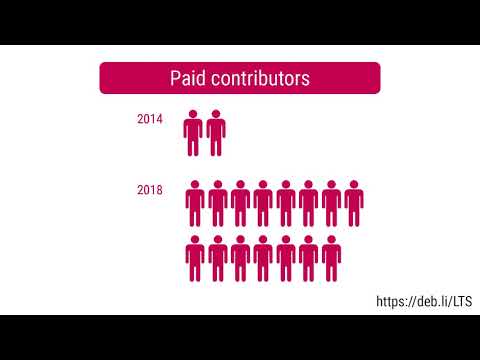
Debian Long Term Support (LTS) is a project to extend the lifetime of all Debian stable releases to (at least) 5 years. Debian LTS is not handled by the Debian security team, but by a separate group of volunteers and companies interested in making it a success. And Debian Extended LTS (ELTS) is its sister project, extending support to the Jessie release (+2 years after LTS support). This was my fifteenth month as a Debian LTS and sixth month as a Debian ELTS paid contributor.
I was assigned 26.00 hours for LTS and 38.25 hours for ELTS and worked on the following things:

LTS CVE Fixes and Announcements:
  • Issued DLA 2474-1, fixing CVE-2020-28928, for musl.
    For Debian 9 Stretch, these problems have been fixed in version 1.1.16-3+deb9u1.
  • Issued DLA 2481-1, fixing CVE-2020-25709 and CVE-2020-25710, for openldap.
    For Debian 9 Stretch, these problems have been fixed in version 2.4.44+dfsg-5+deb9u6.
  • Issued DLA 2484-1, fixing #969126, for python-certbot.
    For Debian 9 Stretch, these problems have been fixed in version 0.28.0-1~deb9u3.
  • Issued DLA 2487-1, fixing CVE-2020-27350, for apt.
    For Debian 9 Stretch, these problems have been fixed in version 1.4.11. The update was prepared by the maintainer, Julian.
  • Issued DLA 2488-1, fixing CVE-2020-27351, for python-apt.
    For Debian 9 Stretch, these problems have been fixed in version 1.4.2. The update was prepared by the maintainer, Julian.
  • Issued DLA 2495-1, fixing CVE-2020-17527, for tomcat8.
    For Debian 9 Stretch, these problems have been fixed in version 8.5.54-0+deb9u5.
  • Issued DLA 2488-2, for python-apt.
    For Debian 9 Stretch, these problems have been fixed in version 1.4.3. The update was prepared by the maintainer, Julian.
  • Issued DLA 2508-1, fixing CVE-2020-35730, for roundcube.
    For Debian 9 Stretch, these problems have been fixed in version 1.2.3+dfsg.1-4+deb9u8. The update was prepared by the maintainer, Guilhem.

ELTS CVE Fixes and Announcements:

Other (E)LTS Work:
  • Front-desk duty from 21-12 until 27-12 and from 28-12 until 03-01 for both LTS and ELTS.
  • Triaged openldap, python-certbot, lemonldap-ng, qemu, gdm3, open-iscsi, gobby, jackson-databind, wavpack, cairo, nsd, tomcat8, and bountycastle.
  • Marked CVE-2020-17527/tomcat8 as not-affected for jessie.
  • Marked CVE-2020-28052/bountycastle as not-affected for jessie.
  • Marked CVE-2020-14394/qemu as postponed for jessie.
  • Marked CVE-2020-35738/wavpack as not-affected for jessie.
  • Marked CVE-2020-3550 3-6 /qemu as postponed for jessie.
  • Marked CVE-2020-3550 3-6 /qemu as postponed for stretch.
  • Marked CVE-2020-16093/lemonldap-ng as no-dsa for stretch.
  • Marked CVE-2020-27837/gdm3 as no-dsa for stretch.
  • Marked CVE-2020- 13987, 13988, 17437 /open-iscsi as no-dsa for stretch.
  • Marked CVE-2020-35450/gobby as no-dsa for stretch.
  • Marked CVE-2020-35728/jackson-databind as no-dsa for stretch.
  • Marked CVE-2020-28935/nsd as no-dsa for stretch.
  • Auto EOL ed libpam-tacplus, open-iscsi, wireshark, gdm3, golang-go.crypto, jackson-databind, spotweb, python-autobahn, asterisk, nsd, ruby-nokogiri, linux, and motion for jessie.
  • General discussion on LTS private and public mailing list.

Other $things! \o/

Bugs and Patches Well, I did report some bugs and issues and also sent some patches:
  • Issue #44 for github-activity-readme, asking for a feature request to set custom committer s email address.
  • Issue #711 for git2go, reporting build failure for the library.
  • PR #89 for rubocop-rails_config, bumping RuboCop::Packaging to v0.5.
  • Issue #36 for rubocop-packaging, asking to try out mutant :)
  • PR #212 for cucumber-ruby-core, bumping RuboCop::Packaging to v0.5.
  • PR #213 for cucumber-ruby-core, enabling RuboCop::Packaging.
  • Issue #19 for behance, asking to relax constraints on faraday and faraday_middleware.
  • PR #37 for rubocop-packaging, enabling tests against ruby3.0! \o/
  • PR #489 for cucumber-rails, bumping RuboCop::Packaging to v0.5.
  • Issue #362 for nheko, reporting a crash when opening the application.
  • PR #1282 for paper_trail, adding RuboCop::Packaging amongst other used extensions.
  • Bug #978640 for nheko Debian package, reporting a crash, as a result of libfmt7 regression.

Misc and Fun Besides squashing bugs and submitting patches, I did some other things as well!
  • Participated in my first Advent of Code event! :)
    Whilst it was indeed fun, I didn t really complete it. No reason, really. But I ll definitely come back stronger next year, heh! :)
    All the solutions thus far could be found here.
  • Did a couple of reviews for some PRs and triaged some bugs here and there, meh.
  • Also did some cloud debugging, not so fun if you ask me, but cool enough to make me want to do it again! ^_^
  • Worked along with pollo, zigo, ehashman, rlb, et al for puppet and puppetserver in Debian. OMG, they re so lovely! <3
  • Ordered some interesting books to read January onward. New year resolution? Meh, not really. Or maybe. But nah.
  • Also did some interesting stuff this month but can t really talk about it now. Hopefully sooooon.

Until next time.
:wq for today.

Dmitry Shachnev: A review of endianness bugs in Qt, and how they were fixed

As you may know, I am Qt 5 maintainer in Debian. Maintaning Qt means not only bumping the version each time a new version is released, but also making sure Qt builds successfully on all architectures that are supported in Debian (and for some submodules, the automatic tests pass). An important sort of build failures are endianness specific failures. Most widely used architectures (x86_64, aarch64) are little endian. However, Debian officially supports one big endian architecture (s390x), and unofficially a few more ports are provided, such as ppc64 and sparc64. Unfortunately, Qt upstream does not have any big endian machine in their CI system, so endianness issues get noticed only when the packages fail to build on our build daemons. In the last years I have discovered and fixed some such issues in various parts of Qt, so I decided to write a post to illustrate how to write really cross-platform C/C++ code. Issue 1: the WebP image format handler (code review) The relevant code snippet is:
if (srcImage.format() != QImage::Format_ARGB32)
    srcImage = srcImage.convertToFormat(QImage::Format_ARGB32);
// ...
if (!WebPPictureImportBGRA(&picture, srcImage.bits(), srcImage.bytesPerLine()))  
    // ...
 
The code here is serializing the images into QImage::Format_ARGB32 format, and then passing the bytes into WebP s import function. With this format, the image is stored using a 32-bit ARGB format (0xAARRGGBB). This means that the bytes will be 0xBB, 0xGG, 0xRR, 0xAA or little endian and 0xAA, 0xRR, 0xGG, 0xBB on big endian. However, WebPPictureImportBGRA expects the first format on all architectures. The fix was to use QImage::Format_RGBA8888. As the QImage documentation says, with this format the order of the colors is the same on any architecture if read as bytes 0xRR, 0xGG, 0xBB, 0xAA. Issue 2: qimage_converter_map structure (code review) The code seems to already support big endian. But maybe you can spot the error?
#if Q_BYTE_ORDER == Q_LITTLE_ENDIAN
        0,
        convert_ARGB_to_ARGB_PM,
#else
        0,
        0
#endif
It is the missing comma! It is present in the little endian block, but not in the big endian one. This was fixed trivially. Issue 3: QHandle, part of Qt 3D module (code review) QHandle class uses a union that is declared as follows:
struct Data  
    quint32 m_index : IndexBits;
    quint32 m_counter : CounterBits;
    quint32 m_unused : 2;
 ;
union  
    Data d;
    quint32 m_handle;
 ;
The sizes are declared such as IndexBits + CounterBits + 2 is always equal to 32 (four bytes). Then we have a constructor that sets the values of Data struct:
QHandle(quint32 i, quint32 count)
 
    d.m_index = i;
    d.m_counter = count;
    d.m_unused = 0;
 
The value of m_handle will be different depending on endianness! So the test that was expecting a particular value with given constructor arguments was failing. I fixed it by using the following macro:
#if Q_BYTE_ORDER == Q_BIG_ENDIAN
#define GET_EXPECTED_HANDLE(qHandle) ((qHandle.index() << (qHandle.CounterBits + 2)) + (qHandle.counter() << 2))
#else /* Q_LITTLE_ENDIAN */
#define GET_EXPECTED_HANDLE(qHandle) (qHandle.index() + (qHandle.counter() << qHandle.IndexBits))
#endif
Issue 4: QML compiler (code review) The QML compiler used a helper class named LEUInt32 (based on QLEInteger) that always stored the numbers in little endian internally. This class can be safely mixed with native quint32 on little endian systems, but not on big endian. Usually the compiler would warn about type mismatch, but here the code used reinterpret_cast, such as:
quint32 *objectTable = reinterpret_cast<quint32*>(data + qmlUnit->offsetToObjects);
So this was not noticed on build time, but the compiler was crashing. The fix was trivial again, replacing quint32 with QLEUInt32. Issue 5: QModbusPdu, part of Qt Serial Bus module (code review) The code snippet is simple:
QModbusPdu::FunctionCode code = QModbusPdu::Invalid;
if (stream.readRawData((char *) (&code), sizeof(quint8)) != sizeof(quint8))
    return stream;
QModbusPdu::FunctionCode is an enum, so code is a multi-byte value (even if only one byte is significant). However, (char *) (&code) returns a pointer to the first byte of it. It is the needed byte on little endian systems, but it is the wrong byte on big endian ones! The correct fix was using a temporary one-byte variable:
quint8 codeByte = 0;
if (stream.readRawData((char *) (&codeByte), sizeof(quint8)) != sizeof(quint8))
    return stream;
QModbusPdu::FunctionCode code = (QModbusPdu::FunctionCode) codeByte;
Issue 6: qt_is_ascii (code review) This function, as the name says, checks whether a string is ASCII. It does that by splitting the string into 4-byte chunks:
while (ptr + 4 <= end)  
    quint32 data = qFromUnaligned<quint32>(ptr);
    if (data &= 0x80808080U)  
        uint idx = qCountTrailingZeroBits(data);
        ptr += idx / 8;
        return false;
     
    ptr += 4;
 
idx / 8 is the number of trailing zero bytes. However, the bytes which are trailing on little endian are actually leading on big endian! So we can use qCountLeadingZeroBits there. Issue 7: the bundled copy of tinycbor (upstream pull request) Similar to issue 5, the code was reading into the wrong byte:
if (bytesNeeded <= 2)  
    read_bytes_unchecked(it, &it->extra, 1, bytesNeeded);
    if (bytesNeeded == 2)
        it->extra = cbor_ntohs(it->extra);
 
extra has type uint16_t, so it has two bytes. When we need only one byte, we read into the wrong byte, so the resulting number is 256 times higher on big endian than it should be. Adding a temporary one-byte variable fixed it. Issue 8: perfparser, part of Qt Creator (code review) Here it is not trivial to find the issue just looking at the code:
qint32 dataStreamVersion = qToLittleEndian(QDataStream::Qt_DefaultCompiledVersion);
However the linker was producing an error:
undefined reference to QDataStream::Version qbswap(QDataStream::Version)'
On little endian systems, qToLittleEndian is a no-op, but on big endian systems, it is a template function defined for some known types. But it turns out we need to explicitly convert enum values to a simple type, so the fix was passing qint32(QDataStream::Qt_DefaultCompiledVersion) to that function. Issue 9: Qt Personal Information Management (code review) The code in test was trying to represent a number as a sequence of bytes, using reinterpret_cast:
static inline QContactId makeId(const QString &managerName, uint id)
 
    return QContactId(QStringLiteral("qtcontacts:basic%1:").arg(managerName), QByteArray(reinterpret_cast<const char *>(&id), sizeof(uint)));
 
The order of bytes will be different on little endian and big endian systems! The fix was adding this line to the beginning of the function:
id = qToLittleEndian(id);
This will cause the bytes to be reversed on big endian systems. What remains unfixed There are still some bugs, which require deeper investigation, for example: P.S. We are looking for new people to help with maintaining Qt 6. Join our team if you want to do some fun work like described above!

Russ Allbery: Review: A Wizard's Guide to Defensive Baking

Review: A Wizard's Guide to Defensive Baking, by T. Kingfisher
Publisher: Red Wombat Studio
Copyright: July 2020
ASIN: B08CJ86Y1W
Format: Kindle
Pages: 287
Mona is fourteen, an orphan, and works in the bakery owned by her Aunt Tabitha. She's also a magicker, although a very minor one. She can tell bread to do things, like bake properly or slice itself, and can make gingerbread men dance. Also, there's Bob, her sourdough starter, into whom she put a bit too much panicked magic when she was ten. Her magic is a useful small talent for a baker, but nothing all that exceptional. The dead body she finds in the kitchen when opening the bakery is certainly exceptional. A Wizard's Guide to Defensive Baking starts as a minor murder mystery. There are constables and sweet buns and Mona is accused of murder by an officious inquisitor, which was rather terrifying, but everything seems like it will work out and get back to normal. Except it won't, because someone is murdering magickers and the authorities who are supposed to be helping Mona don't appear to be on her side. This is a very Ursula Vernon sort of book. (T. Kingfisher is the pseudonym that Vernon uses when not writing children's books.) The protagonist is brave, scared, and stubborn, the first-person narration has a stream-of-consciousness feel and an undercurrent of constant curiosity, and the story has a strong "this is awful but moping about it won't help so we may as well get on with it" energy. It is (as you might guess from the age of the protagonist) pitched a bit younger than Vernon's other recent Kingfisher work. If I had to classify it, I'd call it young adult possibly edging into middle grade. It's also a book about creative use of magic powers. If you're the sort of person who liked analyzing an apparently unimpressive superpower and thinking up all the creative ways in which it could be quite powerful, well, that's a lot of the plot here. Vernon sticks to the rules of the game: Mona can only affect bread and dough and maybe icing in tiny ways if she tries very hard (but it gives her a headache). But there are a lot of creative ways that one can use dough and cookies, particularly once you get some help. The other interesting and unusual thing about this book is its attitude towards authorities and heroism. Authorities who try to do good and authorities who are evil and corrupt are both common in fantasy. Authorities who let themselves get caught up in a tangle of small decisions and minor fears until they become ineffective are not quite as common, and usually fantasy dispenses with that sort of power by calling it weak and inviting the heroes to take over. This book does not go in that direction at all. It's startling and thought-provoking to see a fantasy novel treat Mona's elevation into unwanted heroism as an indefensible societal failure that is not excused by gratitude. This more than any other story element made this feel like a 2020 book. I won't spoil the ending, but it caught me by surprise, was extremely moving, and further broadens that questioning of what heroism is and why we celebrate it. This is not a book full of complex plotting or moral ambiguity. The villain is awful, the threat he provokes is rather thoroughly dehumanized, and the plot is a reasonably straightforward sequence of events. One reads this book for Mona's flustered first-person voice, Vernon's humor and no-nonsense morality, and the creative exploration of the limits of what one can do with bread magic and a seriously irritated sourdough starter. And the thoughtfulness about heroism, and the recognition that heroism comes with an impact that the rest of society doesn't want to think about. To be clear, that thoughtfulness doesn't go beyond questioning here. This is still a heroism book. But it made me want to read the fantasy novel in which people work collectively to remake a society so that it won't need to have heroes again. I think whether you like Vernon's previous Kingfisher books, particularly the more young adult ones, will strongly predict whether you like A Wizard's Guide to Defensive Baking. If you like her protagonists, recommended. Rating: 7 out of 10

Keith Packard: kgames

Reviving Very Old X Code I've taken the week between Christmas and New Year's off this year. I didn't really have anything serious planned, just taking a break from the usual routine. As often happens, I got sucked into doing a project when I received this simple bug report Debian Bug #974011
I have been researching old terminal and X games recently, and realized
that much of the code from 'xmille' originated from the terminal game
'mille', which is part of bsdgames.
...
[The copyright and license information] has been stripped out of all
code in the xmille distribution.  Also, none of the included materials
give credit to the original author, Ken Arnold.
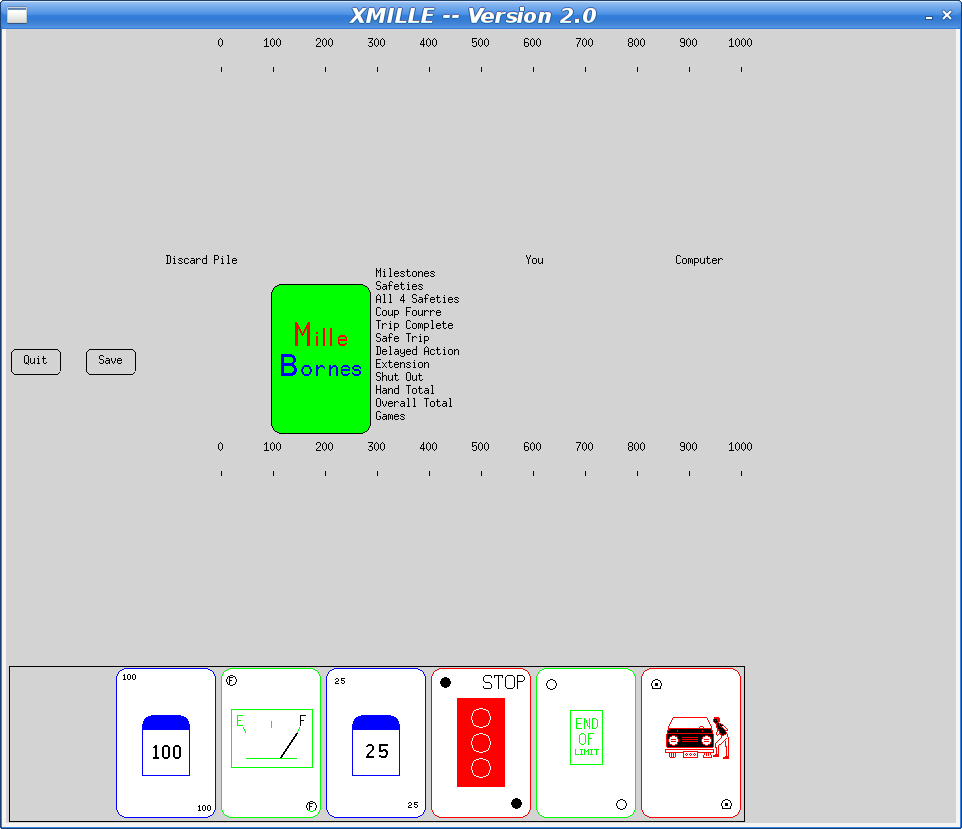
The reason the 'xmille' source is missing copyright and license information from the 'mille' files is that they were copied in before that information was added upstream. Xmille forked from Mille around 1987 or so. I wrote the UI parts for the system I had at the time, which was running X10R4. A very basic port to X11 was done at some point, and that's what Debian has in the archive today. At some point in the 90s, I ported Xmille to the Athena widget set, including several custom widgets in an Xaw extension library, Xkw. It's a lot better than the version in Debian, including displaying the cards correctly (the Debian version has some pretty bad color issues). Here's what the current Debian version looks like: Fixing The Bug To fix the missing copyright and license information, I imported the mille source code into the "latest" Xaw-based version. The updated mille code had a number of bug fixes and improvements, along with the copyright information. That should have been sufficient to resolve the issue and I could have constructed a suitable source package from whatever bits were needed and and uploaded that as a replacement 'xmille' package. However, at some later point, I had actually merged xmille into a larger package, 'kgames', which also included a number of other games, including Reversi, Dominoes, Cribbage and ten Solitaire/Patience variants. (as an aside, those last ten games formed the basis for my Patience Palm Pilot application, which seems to have inspired an Android App of the same name...) So began my yak shaving holiday. Building Kgames in 2020 Ok, so getting this old source code running should be easy, right? It's just a bunch of C code designed in the 80s and 90s to work on VAXen and their kin. How hard could it be?
  1. Everything was a 32-bit computer back then; pointers and ints were both 32 bits, so you could cast them with wild abandon and cause no problems. Today, testing revealed segfaults in some corners of the code.
  2. It's K&R C code. Remember that the first version of ANSI-C didn't come out until 1989, and it was years later that we could reliably expect to find an ANSI compiler with a random Unix box.
  3. It's X11 code. Fortunately (?), X11 hasn't changed since these applications were written, so at least that part still works just fine. Imagine trying to build Windows or Mac OS code from the early 90's on a modern OS...
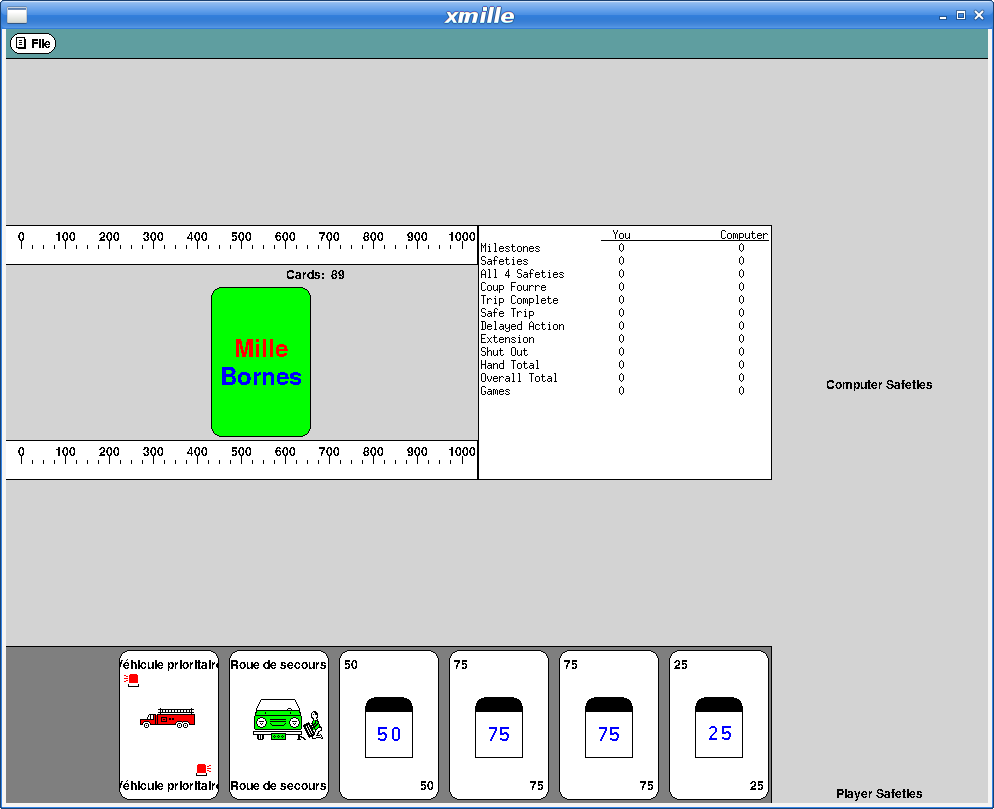
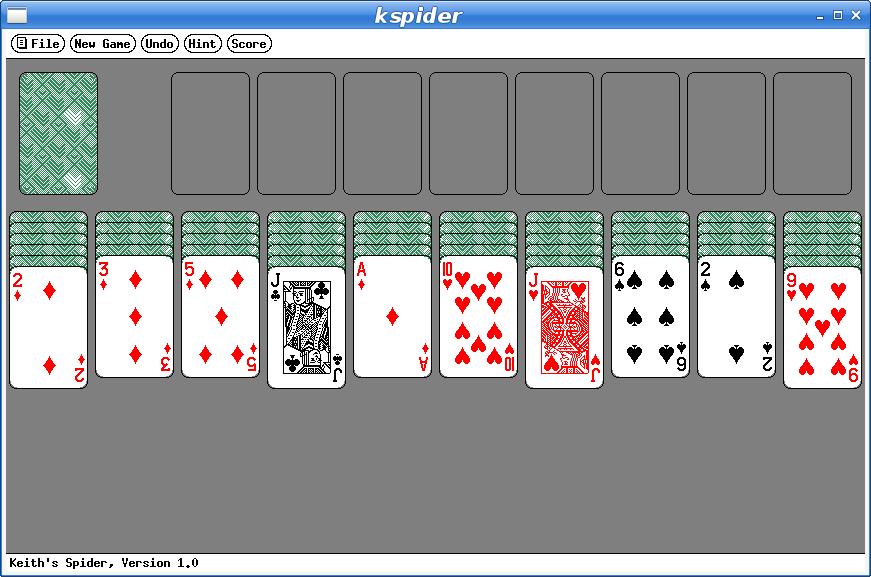
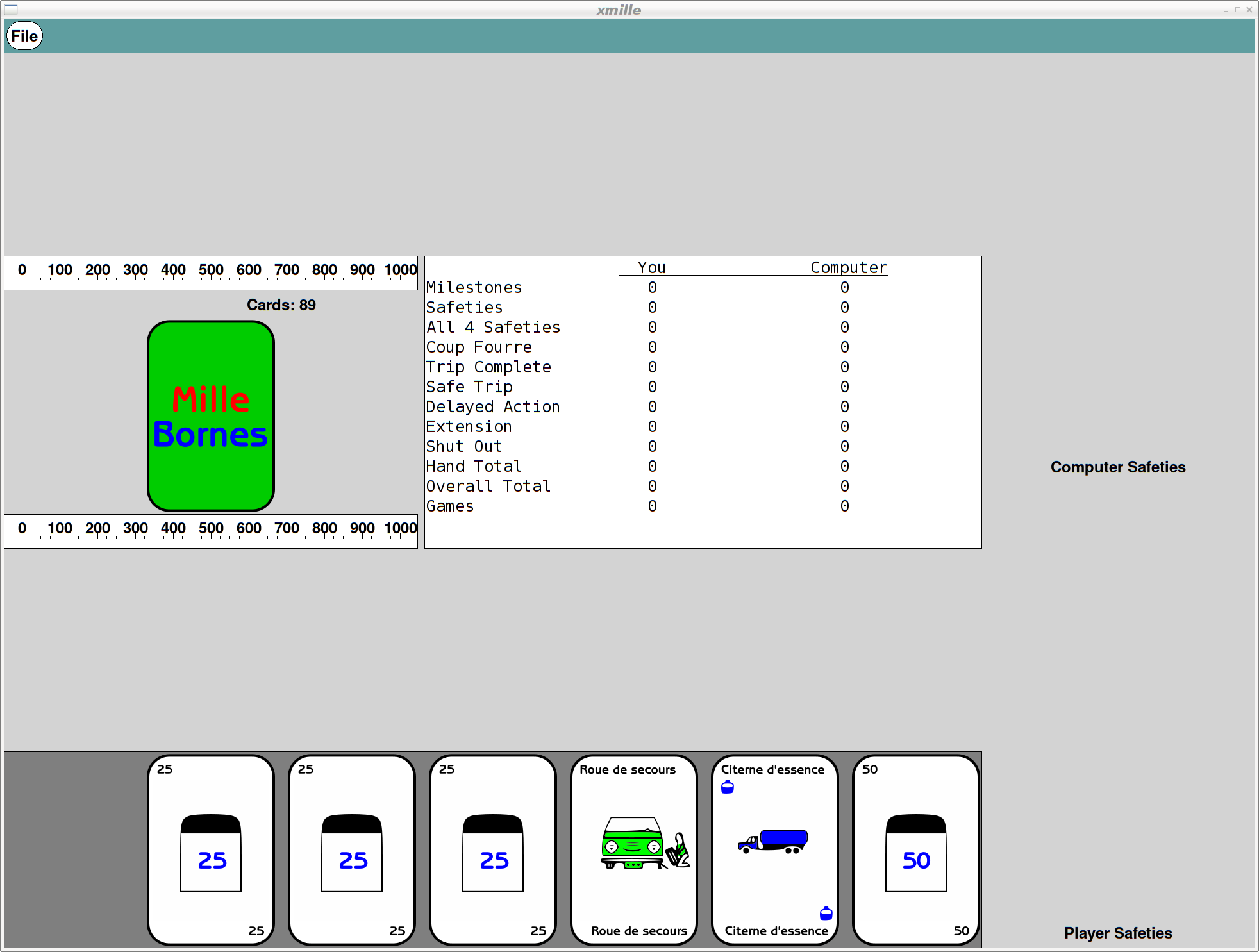
I decided to dig in and add prototypes everywhere; that found a lot of pointer/int casting issues, as well as several lurking bugs where the code was just plain broken. After a day or so, I had things building and running and was no longer hitting crashes. Kgames 1.0 uploaded to Debian New Queue With that done, I decided I could at least upload the working bits to the Debian archive and close the bug reported above. kgames 1.0-2 may eventually get into unstable, presumably once the Debian FTP team realizes just how important fixing this bug is. Or something. Here's what xmille looks like in this version: And here's my favorite solitaire variant too: But They Look So Old Yeah, Xaw applications have a rustic appearance which may appeal to some, but for people with higher resolution monitors and well seasoned eyesight, squinting at the tiny images and text makes it difficult to enjoy these games today. How hard could it be to update them to use larger cards and scalable fonts? Xkw version 2.0 I decided to dig in and start hacking the code, starting by adding new widgets to the Xkw library that used cairo for drawing instead of core X calls. Fortunately, the needs of the games were pretty limited, so I only needed to implement a handful of widgets: The other Xkw widgets all got their rendering switched to using cairo, plus using double buffering to make updates look better. SVG Playing Cards Looking on wikimedia, I found a page referencing a large number of playing cards in SVG form That led me to Adrian Kennard's playing card web site that let me customize and download a deck of cards, licensed using the CC0 Public Domain license. With these cards, I set about rewriting the Xkw playing card widget, stripping out three different versions of bitmap playing cards and replacing them with just these new SVG versions. SVG Xmille Cards Ok, so getting regular playing cards was good, but the original goal was to update Xmille, and that has cards hand drawn by me. I could just use those images, import them into cairo and let it scale them to suit on the screen. I decided to experiment with inkscape's bitmap tracing code to see what it could do with them. First, I had to get them into a format that inkscape could parse. That turned out to be a bit tricky; the original format is as a set of X bitmap layers; each layer painting a single color. I ended up hacking the Xmille source code to generate the images using X, then fetching them with XGetImage and walking them to construct XPM format files which could then be fed into the portable bitmap tools to create PNG files that inkscape could handle. The resulting images have a certain charm: I did replace the text in the images to make it readable, otherwise these are untouched from what inkscape generated. The Results Remember that all of these are applications built using the venerable X toolkit; there are still some non-antialiased graphics visible as the shaped buttons use the X Shape extension. But, all rendering is now done with cairo, so it's all anti-aliased and all scalable. Here's what Xmille looks like after the upgrades: And here's spider: Once kgames 1.0 reaches Debian unstable, I'll upload these new versions.

31 December 2020

Chris Lamb: Free software activities in December 2020

Here is my monthly update covering what I have been doing in the free software world during December 2020 (previous month):

Reproducible Builds One of the original promises of open source software is that distributed peer review and transparency of process results in enhanced end-user security. However, whilst anyone may inspect the source code of free and open source software for malicious flaws, almost all software today is distributed as pre-compiled binaries. This allows nefarious third-parties to compromise systems by injecting malicious code into ostensibly secure software during the various compilation and distribution processes. The motivation behind the Reproducible Builds effort is to ensure no flaws have been introduced during this compilation process by promising identical results are always generated from a given source, thus allowing multiple third-parties to come to a consensus on whether a build was compromised. This month, I: I also made the following changes to diffoscope, our in-depth and content-aware diff utility that can locate and diagnose reproducibility issues, including releasing version 163:

Debian Uploads I also sponsored an upload of adminer (4.7.8-2) on behalf of Alexandre Rossi and performed two QA uploads of sendfile (2.1b.20080616-7 and 2.1b.20080616-8) to make the build the build reproducible (#776938) and to fix a number of other unrelated issues. Debian LTS This month I have worked 18 hours on Debian Long Term Support (LTS) and 12 hours on its sister Extended LTS project. You can find out more about the Debian LTS project via the following video:

Shirish Agarwal: Pandemic, Informal economy and Khau Galli.

Formal sector issues Just today it was published that output from eight formal sectors of the economy who make the bulk of the Indian economy were down on a month to month basis . This means all those apologists for the Government who said that it was ok that the Govt. didn t give the 20 lakh crore package which was announced. In fact, a businessman from my own city, a certain Prafull Sarda had asked via RTI what happened to the 20 lakh crore package which was announced? The answers were in all media as well as newspapers but on the inside pages. You can see one of the article sharing the details here. No wonder Vivek Kaul also shared his take on the way things will hopefully go for the next quarter which seems to be a tad optimistic from where we are atm.
Eight Sectors declining in Indian Economy month-on-month CNBC TV 18
The Informal economy The informal economy has been strangulated by the current party in power since it came into power. And this has resulted many small businesses which informal are and were part of culture of cities and towns. I share an article from 2018 which only shows how good and on the mark it has aged in the last two years. The damage is all to real to ignore as I would share more of an anecdotes and experiences because sadly there never has been any interest shown especially by GOI to seek any stats. about informal economy. Although CMIE has done some good work in that even though they majorly look at formal, usually blue-collar work where again there is not good data. Sharing an anecdote and a learning from these small businesses which probably an MBA guy wouldn t know and in all honesty wouldn t even care. Khau galli Few years back, circa 2014 and on wards, when the present Govt. came into power, it did come with lot of promises. One of which was that lot of informal businesses would be encouraged to grow their businesses and in time hopefully, they become part of the formal economy. Or at least that was the story that all of us were told. Due to that they did lot of promises and also named quite a few places where street food was in abundance. Such lanes were named Khau galli for those who are from North India, it was be easily known and understood. This was just saying that here are some places where you could get a variety of food without paying obscene prices as you would have to vis-a-vis a restaurant. Slowly, they raised the rates of inputs (food grains), gas cylinder etc. which we know of as food inflation and via GST made sure that the restaurants were able to absorb some of the increased inputs (input credit) while still being more than competitive to the street food person/s. The restaurant F&B model is pretty well known so not going there at all. It is however, important to point out that they didn t make any new khau gallis or such, most or all the places existed for years and even decades before that. They also didn t take any extra effort either in marketing the khau gallis or get them with chefs or marketing folks so that the traditional can marry to the anew. They just named them, that was the only gain to be seen on the ground. In its heyday, the khau galli near my home used to have anywhere between 20-30 Thelas or food carts. Most of the food carts would be of wood and having very limited steel. Such food carts would cost anywhere around INR 15-20k instead of the food cart you see here. The only reason I shared that link is to show how a somewhat typical thela or food cart looks in India. Of course YouTube or any other media platform would show many. On top of it, you need and needed permission from the municipality a license for the same which would be auctioned. Now that license could well run from thousands into lakhs depending on various factors or you gave something to the Municipal worker when he did his rounds/beat much like a constable every day or week. Apart from those, you also have raw material expenditure which could easily run into few thousands depending upon what sort of food you are vending. You also would typically have 2-3 workers so a typical Thela would feed not only its customers but also 2-3 families who are the laborer families as well as surrounding businesses. As I used to be loyal and usually go to few whom I found to be either tasty or somehow they were good for me. In either case, a relationship was formed. As I have been never fond of crowds, I usually used to in their off-beat hours either when they are close to packing up of when I know they usually have a lull. That way I knew I would get complete attention of the vendor/s. Many a times I used to see money change hands between the vendors themselves and used to see both camaraderie as well as competition between them. This is years ago, once while sharing a chai (tea) with one of the street vendors I casually asked I have often seen you guys exchanging money with each other and most of the time quite a bit of the money is also given to the guy who didn t make that much sales or any sales at all. The vendor replied sharing practical symbiotic knowledge. All of us are bound by a single thing called poverty. All of us are struggle. Do you know why so many people come here, because they know that there would be a variety of food to be had. Now if we stopped helping each other, the number of people who would make the effort would be also less, we know we are not the only game in town. Also whatever we give, sooner or later it gets adjusted. Also if one of us has good days, he knows hardship days are not far. Why, simply because people change tastes or want variety. So irrespective of good or bad the skills of the vendor is, she or he is bound to make some sales. The vendor either shares the food with us or whatever. Somehow these things just work out. And that doesn t mean we don t have our fights, we do have our fights, but we also understand this. Now you see this and you understand that these guys have and had a community. Even if they changed places due to one reason or the other, they kept themselves connected. Unlike many of us, who even find a hard time keeping up with friends let alone relatives. Now cut to 2020, and where there used to be 20-30 thelas near my home, there are only 4-5. Of course, multiple reasons, but one of the biggest was of course demonetization. That was a huge shock to which many of thela walas succumbed. Their entire savings and capital were turned to dust. Many of their customers will turn up with either a INR 500 or INR 2000/- Re note where at the most a dish costed INR 100/- most times half or even 1/3rd of that amount. How and from where the thela walas could get that kind of cash. These are people who only if they earn, they and their family will have bread at night. Most of the loose change was tied up at middle to higher tier restaurants where they were giving between INR 20/- 30/- for every INR 100/- change of rupees and coins. Quite a few bankers made money by that as well as other means where the thela walas just could not compete. These guys also didn t have any black money even though they were and are part of the black/informal economy. Sadly, till date no economist or even sociologist as far as I know has attempted or done any work from what I know on this industry. If you want to formalize such businesses then at the very least understand their problems and devise solutions. And I suspect, what is and has happened near my house has also happened everywhere else, at least within the geographical confines of the Indian state. Whether it was the 2016 demonetization or the pandemic, the results and effects have been similar the same all over. Some states did do well and still do, the suffering still continues. With the hope that the new year brings cheer to you as well some more ideas to remain in business by the thela walas, I bid you adieu and see you in new year

Holger Levsen: 20201231-no-source-change-source-uploads

On doing 540 no-source-change source-only uploads in two weeks So I've been doing 540 no-source-change source-only uploads in the last two weeks and am planning to do 3000 more in January 2021. We'll see how that goes ;) Let me explain what I have been doing and why. So, starting with the Bullseye release cycle the Release Team changed policy: only packages which were build on buildds are allowed to migrate to testing. Which is pretty nice for reproducible builds as this also ensures that a .buildinfo file is available for anyone wanting to reproduce the binaries of that package. However, there are many binary (and source) packages in Debian which were uploaded before 2016 (which is when .buildinfo files were introduced) or were uploaded with binaries until that change in release policy July 2019. Then Ivo De Decker scheduled binNMUs for all the affected packages but due to the way binNMUs work, he couldn't do anything about arch:all packages as they currently cannot be rebuilt with binNMUs. Ivo and myself discussed what could be done about the remaining packages and (besides long complicated changes to Debian's workflows) the only thing deemed possible was doing many many source uploads with just a new changelog entry:
  * Non maintainer upload by the Reproducible Builds team.
  * No source change upload to rebuild on buildd with .buildinfo files.
These packages are all inherently buggy, because Debian policy mandates that packages should be reproducible and without .buildinfo files one cannot reproducibly rebuild packages. So instead of filing many many bugs we've decided to just fix these bugs by doing a no-source-change source uploads. One nice aspect of these uploads is that there's no follow-up work imposed on the maintainer: whether they keep that changelog entry or whether they discard it, it does not matter. So Ivo had developed an SQL query which showed 570 packages needing an update roughly two weeks ago, on December 18 and so I started slowly. This is the amount of NMUs I did in the last days:
for i in $(seq 18 30) ; do echo -n "Dec $i: " ; ls -lart1 done/*upload grep -c "Dec $i" ; done
Dec 18: 12
Dec 19: 0
Dec 20: 3
Dec 21: 13
Dec 22: 13
Dec 23: 16
Dec 24: 4
Dec 25: 28
Dec 26: 0
Dec 27: 38
Dec 28: 198
Dec 29: 206
Dec 30: 9
About ten packages had FTBFS bugs preventing an upload and seven packages were uploaded by the maintainer before me. I've seen two cases of sudden maintainer uploads after 8 and 10 years of no activity! So what did I do for each upload? Much to my surprise I didn't get much feedback, there were like 6 people on the #debian-reproducible channel cheering and one on #debian-qa, though that person is a Release Team member so that was kind of important cheering. And I've seen some maintainer uploads to packages which haven't seen uploads since some years. And really nice: no-one complained so far. I hope this will stay this way with the plan to do 3000 more uploads of this kind: Those 570 packages were only key packages but there are 3000 more source packages which have a binary in bullseye for which no .buildinfo file exists. So I plan to upload them all in January 2021 and you can help me doing so, by uploading your packages before me - and maybe fixing some other bugs in the process! I've posted the list of packages (sorted by ddlist) to debian-devel@lists.d.o, see https://lists.debian.org/debian-devel/2020/12/msg00419.html. Many thanks to Ivo and the whole Release Team for their support of Reproducible Builds and generally speaking for the many many enhancements to the release process we've seen over the years. Debian in 2021 will rock'n'roll more than ever! So thank you all, once again, for making Debian what it is and what it will be!

Daniel Kahn Gillmor: New OpenPGP certificate for dkg, 2021

dkg's 2021 OpenPGP transition As 2021 begins, I'm changing to a new OpenPGP certificate. I did a similar transition two years ago, and a fair amount has changed since then. You might know my old OpenPGP certificate as:
pub   ed25519 2019-01-19 [C] [expires: 2021-01-18]
      C4BC2DDB38CCE96485EBE9C2F20691179038E5C6
uid          Daniel Kahn Gillmor <dkg@fifthhorseman.net>
uid          Daniel Kahn Gillmor <dkg@debian.org>
My new OpenPGP certificate is:
pub   ed25519 2020-12-27 [C] [expires: 2023-12-24]
      C29F8A0C01F35E34D816AA5CE092EB3A5CA10DBA
uid           [ unknown] Daniel Kahn Gillmor
uid           [ unknown] <dkg@debian.org>
uid           [ unknown] <dkg@fifthhorseman.net>
You can find a signed transition statement if you're into that sort of thing. If you're interested in the rationale for why I'm making this transition, read on.

Dangers of Offline Primary Secret Keys There are several reasons for transitioning, but one i simply couldn't argue with was my own technical failure. I put the primary secret key into offline storage some time ago for "safety", and used ext4's filesystem-level encryption layered on top of dm-crypt for additional security. But either the tools changed out from under me, or there were failures on the storage medium, or I've failed to remember my passphrase correctly, because I am unable to regain access to the cleartext of the secret key. In particular, I find myself unable to use e4crypt add_key with the passphrase I know to get a usable working directory. I confess I still find e4crypt pretty difficult to use and I don't use it often, so the problem may entirely be user error (either now, or two years ago when I did the initial setup). Anyway, lesson learned: don't use cryptosystems that you're not comfortable with to encrypt data that you care about recovering. This is a lesson I'm pretty sure I've learned before, sigh, but it's a good reminder.

Split User IDs I'm trying to split out my User IDs again -- this way if you know me by e-mail address, you don't have to think/worry about certifying my name, and if you know me by name, you don't have to think/worry about certifying my e-mail address. I think that's simpler and more sensible. It's also nice because e-mail address-only User IDs can be used effectively in contexts like Autocrypt, which I think are increasingly important if we want to have usable encrypted e-mail. Last time around I initially tried split User IDs but rolled them back and I think most of the bugs I discovered then have been fixed.

Certificate Flooding Another reason for making a transition to a new certificate is that my older certificate is one of the ones that was "flooded" on the SKS keyserver network last year, which was one of the final straws for that teetering project. Transitioning to a new certificate lets that old flooded cert expire and people can just simply move on from it, ideally deleting it from their local keyrings. Hopefully as a community we can move on from SKS to key distribution mechanisms like WKD, Autocrypt, DANE, and keys.openpgp.org, all of which address some of the known problems with keyserver abuse.

Trying New Tools Finally, I'm also interested in thinking about how key and certificate management might be handled in different ways. While I'm reasonably competent in handling GnuPG, the larger OpenPGP community (which I'm a part of) has done a lot of thinking and a lot of work about how people can use OpenPGP. I'm particularly happy with the collaborative work that has gone into the Stateless OpenPGP CLI (aka sop), which helps to generate a powerful interoperability test suite. While sop doesn't offer the level of certificate management I'd need to use it to manage this new certificate in full, I wish something like it would! Starting from a fresh certificate and actually using it helps me to think through what I might actually need from a tool that is roughly as straightforward and opinionated as sop is. If you're a software developer who might use or implement OpenPGP, or a protocol designer, and you haven't played around with any of the various implementations of sop yet, I recommend taking a look. And feedback on the specification is always welcome, too, including ideas for new functionality (maybe even like certificate management).

Next Steps If you're the kind of person who's into making OpenPGP certifications, feel free to check in with me via whatever channels you're used to using to verify that this transition is legit. If you think it is, and you're comfortable, please send me (e-mail is probably best) your certifications over the new certficate. I'll keep on working to make OpenPGP more usable and acceptable. Hopefully, 2021 will be a better year ahead for all of us.

Russ Allbery: Review: Billion Dollar Loser

Review: Billion Dollar Loser, by Reeves Wiedeman
Publisher: Little, Brown and Company
Copyright: October 2020
ISBN: 0-316-46134-2
Format: Kindle
Pages: 315
WeWork was founded in 2010 by Adam Neumann and Miguel McKelvey as a successor company to their similar 2008 GreenDesk business. (Adam's wife Rebekah is now presented as a co-founder. This seems dubious in Wiedeman's account, although Rebekah's role in the company is murky, ever-changing, and hard to pin down.) Its business model in reality was to provide turn-key, pre-furnished and stocked co-working and small office space to individuals and businesses on flexible, short-term leases. Its business model in Neumann's speeches and dreams, and represented by the later renaming of the company to the We Corporation, was nothing less than to transform the way people worked, learned, and lived. Through aggressive, money-losing expansion, WeWork grew rapidly to over 500 locations in 29 countries and became the largest office tenant in New York City. Based primarily on massive financial support from Masayoshi Son, CEO of Japanese holding company SoftBank, WeWork's private valuation rose to $47 billion. In 2019, the company attempted to go public, but its IPO collapsed, in part due to deeper analysis of the company's books. Neumann was forced out of the company (with an individual payout valued at $1.7 billion), the IPO was withdrawn, SoftBank wrote down 90% of their investment in the company and took control of it, and WeWork laid off more than 20% of its workforce. This book is a detailed history of WeWork's rise and fall, joining a genre that includes The Smartest Guys in the Room (Enron), Bad Blood (Theranos), and Super Pumped (Uber). I believe it's the first full book on WeWork, although it was preceded by several long-form stories, including "The I In We" by Wiedeman for New York magazine. As the first history, it's a somewhat incomplete cut: litigation between Neumann and WeWork is still pending, WeWork staggered into 2020 and a world-wide pandemic that made cramped open-plan offices an epidemiological disaster, and there will doubtless be new revelations yet to come. The discovery process of lawsuits tends to be good for journalists. But despite being the first out of the gate, Billion Dollar Loser reaches a satisfying conclusion with the ouster of Neumann, who had defined WeWork both internally and externally. I'm fascinated by stories of failed venture capital start-ups in general, but the specific question about WeWork that interested me, and to which Wiedeman provides a partial answer, is why so many people gave Neumann money in the first place. Explaining that question requires a digression into why I thought WeWork's valuation was absurd. The basic problem WeWork had when justifying its sky-high valuation is competition. WeWork didn't own real estate; it rented properties from landlords with long-term leases and then re-rented them with short-term leases. If its business was so successful, why wouldn't the landlords cut out the middle man, do what WeWork was doing directly, and pocket all the profit? Or why wouldn't some other company simply copy WeWork and drive the profit margins down? Normally with startups the answer revolves around something proprietary: an app, a server technology, patents, a secret manufacturing technique, etc. But nothing WeWork was doing was different from what innumerable tech companies and partner landlords had been doing with their office space for a decade, and none of it was secret. There are two decent answers to that question. One is simple outsourcing: landlords like being passive rent collectors, so an opportunity to pay someone else to do the market research on office layouts, arrange all the remodeling, adapt to changing desires for how office space should be equipped and stocked, advertise for short-term tenants, and deal with the tenant churn is attractive. The landlord can sit back and pocket the stable long-term rent. The second answer is related: WeWork is essentially doing rental arbitrage between long-term and short-term rents and thus is taking on most of the risk of a commercial real estate downturn. If no one is renting office space, WeWork is still on the hook for the long-term rent. The landlord is outsourcing risk, at least unless WeWork goes bankrupt. (One infuriating tidbit from this book is that Neumann's explicit and often-stated goal was to make WeWork so large that its bankruptcy would be sufficiently devastating to the real estate industry that it would get a bailout.) There's a legitimate business here. But that business looks like a quietly profitable real estate company that builds very efficient systems for managing short-term leases, remodeling buildings, and handling the supply chain of stocking an office. That looks nothing like WeWork's business, has nothing to do with transforming the world of work, and certainly doesn't warrant sky-high valuations. WeWork didn't build an efficient anything. It relied on weekend labor from underpaid employees and an IT person who was still in high school. And WeWork actively resisted being called a real estate company and claimed it was a tech company or a lifestyle company on the basis of essentially nothing. Wiedeman seems almost as baffled by this as I am, but it's clear from the history he tells that part of the funding answer is the Ponzi scheme of start-up investing. People gave Neumann money because other people had previously given Neumann money, and the earlier investors cashed out at the expense of the later ones. Like any Ponzi scheme, it looks like a great investment until it doesn't, and then the last sucker is left holding the bag. That sucker was Masayoshi Son, who in Wiedeman's telling is an astonishingly casual and undisciplined investor who trusted knee-jerk personal reactions to founders over business model analysis and historically (mostly) got away with it by getting extremely lucky. (I now want to read one of these books about SoftBank, since both this book and Super Pumped make it look like a company that makes numerous wild gambles for the flimsiest of reasons, pushes for completely unsustainable growth, and relies on the sheer volume of investments catching some lucky jackpots and cashing out in IPOs. Unfortunately, the only book currently available seems to be a fawning hagiography of Son.) On one hand, the IPO process worked properly this time. The sheer madness of WeWork's valuation scared off enough institutional investors that it collapsed. On the other hand, it's startling how close it came to success. If WeWork had kept the Ponzi scheme going a bit longer, the last sucker could have been the general investing public. Another interesting question that Billion Dollar Loser answers is how Neumann got enough money to start his rapid growth strategy. The answer appears to be the oldest and most obvious explanation: He made friends with rich people. The initial connections appear to have been through his sister, Adi Neumann, who is a model and hosted parties in her New York apartment (and also started dating a Rothschild heir). Adam met his wealthy wife Rebekah, cousin to actress and "wellness" scam marketer Gwyneth Paltrow, via a connection at a party. He built social connections with other parts of the New York real estate scene and tapped them for investment money. The strong impression one gets from the book is that all of these people have way more money than sense and we should raise their taxes. It won't come as a surprise that Adam and Rebekah Neumann are good friends of Jared Kushner and Ivanka Trump. Those are the questions I was the most curious about, but there's much more here. Wiedeman's style is nearly straight chronological reporting with little analysis, but the story is so wild and absurd that it doesn't need much embellishment. Neumann is obviously a megalomaniac whose delusions of grandeur got worse and worse as WeWork was apparently succeeding. Rebekah Neumann is if anything even less in touch with reality than he is, although in her case that appears to stem from having so much money that reality is an inconvenient speed bump. Miguel McKelvey, Neumann's co-founder, is an odd and interesting side note to the story; he appears to have balanced Adam out a bit in the early going but then wisely started to cash out and pocket his winnings while letting Adam dominate the stage. There are some places where I don't think Wiedeman pushed hard enough, and which cut against the view of Neumann as a true believer in his impossible growth vision. Neumann took several investment opportunities to cash out large amounts of his stock even while WeWork employees were being underpaid and told their stock options would make up for it. He clearly used WeWork as a personal piggy bank on multiple occasions. And Wiedeman documents but doesn't, at least in my opinion, make nearly enough of Neumann's self-dealing: buying real estate that WeWork then rented as a tenant, or paying himself for a license for the name We Holdings (although there at least he later returned the money). I think a good argument could be made that Neumann was embezzling from WeWork, at least morally if not legally, and I wish Wiedeman would have pressed harder on that point. But that aside, this is a great first history of the company, told in a clean, readable, and engaging style, and with a lot more detail here than I've touched on (such as Rebekah Neumann's WeGrow school). It's not as good as Bad Blood (what is), but it's a respectable entry in the corporate collapse genre. If you like this sort of thing, recommended. Rating: 7 out of 10

30 December 2020

Andrej Shadura: Making the blog part of the Fediverse and IndieWeb

I ve just made my blog available on the Fediverse, at least partially. Yesterday while browsing Hacker News, I saw Carl Schwan s post Adding comments to your static blog with Mastodon(m) about him replacing Disqus with replies posted at Mastodon. Just on Monday I was thinking, why can t blogs participate in Fediverse? I tried to use WriteFreely as a replacement for Pelican, only to find it very limited, so I thought I might write a gateway to expose the Atom feed using ActivityPub. Turns out, someone already did that: Bridgy, a service connecting websites to Twitter, Mastodon and other social media, also has a Fediverse counterpart, Fed.brid.gy just what I was looking for! I won t go deeply into the details, but just outline issues I had to deal with: The end result is not fully working yet, since posts don t appear yet, but I can be found and followed as @shadura.me@shadura.me. As a bonus I enabled IndieAuth at my website, so I can log into compatible services with just the URL of my website.

John Goerzen: Airgapped / Asynchronous Backups with ZFS over NNCP

In my previous articles in the series on asynchronous communication with the modern NNCP tool, I talked about its use for asynchronous, potentially airgapped, backups. The first article, How & Why To Use Airgapped Backups laid out the foundations for this. Now let s dig into the details. Today s post will cover ZFS, because it has a lot of features that make it very easy to support in this setup. Non-ZFS backups will be covered later. The setup is actually about as simple as it is for SSH, but since people are less familiar with this kind of communication, I m going to try to go into more detail here. Assumptions I am assuming a setup where: Hardware Let s start with hardware for the machine to hold the backups. I initially considered a Raspberry Pi 4 with 8GB of RAM. That would probably have been a suitable machine, at least for smaller backup sets. However, none of the Raspberry Pi machines support hardware AES encryption acceleration, and my Pi4 benchmarks as about 60MB/s for AES encryption. I want my backups to be encrypted, and decided this would just be too slow for my purposes. Again, if you don t need encrypted backups or don t care that much about performance may people probably fall into this category you can have a fully-functional Raspberry Pi 4 system for under $100 that would make a fantastic backup server. I wound up purchasing a Qotom-Q355G4 micro PC with a Core i5 for about $315. It has USB 3 ports and is designed as a rugged, long-lasting system. I have been using one of their older Celeron-based models as my router/firewall for a number of years now and it s been quite reliable. For backup storage, you can get a USB 3 external drive. My own preference is to get a USB 3 toaster (device that lets me plug in SATA drives) so that I have more control over the underlying medium and can save the expense and hassle of a bunch of power supplies. In a future post, I will discuss drive rotation so you always have an offline drive. Then, there is the question of transport to the backup machine. A simple solution would be to have a heavily-firewalled backup system that has no incoming ports open but makes occasional outgoing connections to one specific NNCP daemon on the spooling machine. However, for airgapped operation, it would also be very simple to use nncp-xfer to transport the data across on a USB stick or some such. You could set up automounting for a specific USB stick plug it in, all the spooled data is moved over, then plug it in to the backup system and it s processed, and any outbound email traffic or whatever is copied to the USB stick at that point too. The NNCP page has some more commentary about this kind of setup. Both are fairly easy to set up, and NNCP is designed to be transport-agnostic, so in this article I m going to focus on how to integrate ZFS with NNCP. Operating System Of course, it should be no surprise that I set this up on Debian. As an added step, I did all the configuration in Ansible stored in a local git repo. This adds a lot of work, but it means that it is trivial to periodically wipe and reinstall if any security issue is suspected. The git repo can be copied off to another system for storage and takes the system from freshly-installed to ready-to-use state. Security There is, of course, nothing preventing you from running NNCP as root. The zfs commands, obviously, need to be run as root. However, from a privilege separation standpoint, I have chosen to run everything relating to NNCP as a nncp user. NNCP already does encryption, but if you prefer to have zero knowledge of the data even to NNCP, it s trivial to add gpg to the pipeline as well, and in fact I ll be demonstrating that in a future post for other reasons. Software Besides NNCP, there needs to be a system that generates the zfs send streams. For this project, I looked at quite a few. Most were designed to inspect the list of snapshots on a remote end, compare it to a list on the local end, and calculate a difference from there. This, of course, won t work for this situation. I realized my own simplesnap project was very close to being able to do this. It already used an algorithm of using specially-named snapshots on the machine being backed up, so never needed any communication about what snapshots were present where. All it needed was a few more options to permit sending to a stream instead of zfs receive. I made those changes and they are available in simplesnap 2.0.0 or above. That version has also been uploaded to sid, and will work fine as-is on buster as well. Preparing NNCP I m going to assume three hosts in this setup: The basic NNCP workflow documentation covers the basic steps. You ll need to run nncp-cfgnew on each machine. This generates a basic configuration, along with public and private keys for that machine. You ll copy the public key sets to the configurations of the other machines as usual. On the laptop, you ll add a via line like this:
backupsvr:  
  id: ....
  exchpub: ...
  signpub: ...
  noisepub: ...
  via: ["spooler"]
This tells NNCP that data destined for backupsvr should always be sent via spooler first. You can then arrange for the nncp-daemon to run on the spooler, and nncp-caller or nncp-call on the backupsvr. Or, alternatively, airgapped between the two with nncp-xfer. Generating Backup Data Now, on the laptop, install simplesnap (2.0.0 or above). Although you won t be backing up to the local system, simplesnap still maintains a hostlock in ZFS. Prepate a dataset for it:
zfs create tank/simplesnap
zfs set org.complete.simplesnap:exclude=on tank/simplesnap
Then, create a script /usr/local/bin/runsimplesnap like this:
#!/bin/bash
set -e
simplesnap --store tank/simplesnap --setname backups --local --host  hostname  \
   --receivecmd /usr/local/bin/simplesnap-queue \
   --noreap
su nncp -c '/usr/local/nncp/bin/nncp-toss -noprogress -quiet'
if ip addr   grep -q 192.168.65.64; then
  su nncp -c '/usr/local/nncp/bin/nncp-call -noprogress -quiet -onlinedeadline 1 spooler'
fi
The call to simplesnap sets it up to send the data to simplesnap-queue, which we ll create in a moment. The receivmd, plus noreap, sets it up to run without ZFS on the local system. The call to nncp-toss will process any previously-received inbound NNCP packets, if there are any. Then, in this example, we do a very basic check to see if we re on the LAN (checking 192.168.65.64), and if so, will establish a connection to the spooler to transmit the data. If course, you could also do this over the Internet, with tor, or whatever, but in my case, I don t want to automatically do this in case I m tethered to mobile. I figure if I want to send backups in that case, I can fire up nncp-call myself. You can also use nncp-caller to set up automated connections on other schedules; there are a lot of options. Now, here s what /usr/local/bin/simplesnap-queue looks like:
#!/bin/bash
set -e
set -o pipefail
DEST=" echo $1   sed 's,^tank/simplesnap/,,' "
echo "Processing $DEST" >&2
# stdin piped to this
su nncp -c "/usr/local/nncp/bin/nncp-exec -nice B -noprogress backupsvr zfsreceive '$DEST'" >&2
echo "Queued for $DEST" >&2
This is a pretty simple script. simplesnap will call it with a path based on the store, with the hostname after; so, for instance, tank/simplesnap/laptop/root or some such. This script strips off the leading tank/simplesnap (which is a local fragment), leaving the host and dataset paths. Then it just pipes it to nncp-exec. -nice B classifies it as low-priority bulk data (so if you have some more important interactive data, it would be sent first), then passes it to whatever the backupsvr defines as zfsreceive. Receiving ZFS backups In the NNCP configuration on the recipient s side, in the laptop section, we define what command it s allowed to run as zfsreceive:
      exec:  
        zfsreceive: ["/usr/bin/sudo", "-H", "/usr/local/bin/nncp-zfs-receive"]
       
We authorize the nncp user to run this under sudo in /etc/sudoers.d/local nncp:
Defaults env_keep += "NNCP_SENDER"
nncp ALL=(root) NOPASSWD: /usr/local/bin/nncp-zfs-receive
The NNCP_SENDER is the public key ID of the sending node when nncp-toss processes the incoming data. We can use that for sanity checking later. Now, here s a basic nncp-zfs-receive script:
#!/bin/bash
set -e
set -o pipefail
STORE=backups/simplesnap
DEST="$1"
# now process stdin
runcommand zfs receive -o readonly=on -x mountpoint "$STORE/$DEST"
And there you have it all the basics are in place. Update 2020-12-30: An earlier version of this article had zfs receive -F instead of zfs receive -o readonly=on -x mountpoint . These changed arguments are more robust.
Update 2021-01-04: I am now recommending zfs receive -u -o readonly=on ; see my successor article for more. Enhancements You could enhance the nncp-zfs-receive script to improve logging and error handling. For instance:
#!/bin/bash
set -e
set -o pipefail
STORE=backups/simplesnap
# $1 will be the host/dataset
DEST="$1"
HOST=" echo "$1"   sed 's,/.*,,g' "
if [ -z "$HOST" ]; then
   echo "Malformed command line"
   exit 5
fi
# Log a message
logit ()  
   logger -p info -t " basename "$0" [$$]" "$1"
 
# Log an error message
logerror ()  
   logger -p err -t " basename "$0" [$$]" "$1"
 
# Log stdin with the given code.  Used normally to log stderr.
logstdin ()  
   logger -p info -t " basename "$0" [$$/$1]"
 
# Run command, logging stderr and exit code
runcommand ()  
   logit "Running $*"
   if "$@" 2> >(logstdin "$1") ; then
      logit "$1 exited successfully"
      return 0
   else
       RETVAL="$?"
       logerror "$1 exited with error $RETVAL"
       return "$RETVAL"
   fi
 
exiterror ()  
   logerror "$1"
   echo "$1" 1>&2
   exit 10
 
# Sanity check
if [ "$HOST" = "laptop" ]; then
  if [ "$NNCP_SENDER" != "12345678" ]; then
    exiterror "Host $HOST doesn't match sender $NNCP_SENDER"
  fi
else
  exiterror "Unknown host $HOST"
fi
runcommand zfs receive -F "$STORE/$DEST"
Now you ll capture the ZFS receive output in syslog in a friendly way, so you can look back later why things failed if they did. Further notes on NNCP nncp-toss will examine the exit code from an invocation. If it is nonzero, it will keep the command (and associated stdin) in the queue and retry it on the next invocation. NNCP does not guarantee order of execution, so it is possible in some cases that ZFS streams may be received in the wrong order. That is fine here; zfs receive will exit with an error, and nncp-toss will just run it again after the dependent snapshots have been received. For non-ZFS backups, a simple sequence number can handle this issue.

Russ Allbery: Review: The House in the Cerulean Sea

Review: The House in the Cerulean Sea, by TJ Klune
Publisher: Tor
Copyright: March 2020
ISBN: 1-250-21732-6
Format: Kindle
Pages: 398
Linus Baker is a case worker for the Department in Charge of Magical Youth. His job is to evaluate the orphanages to which children with magical powers are sent and ensure those children are treated properly. This must be done properly, with professional care and detachment and careful documentation so that his superiors can make the correct choices. Linus has no ambition or desire to be anything other than a case worker. He does his job meticulously by the book, namely the DICOMY Rules and Regulations, which he studies religiously. Linus is therefore caught entirely by surprise when he is summoned without explanation to the offices of Extremely Upper Management on the intimidating 5th floor. That summons turns out to be a new assignment for which Extremely Upper Management believes Linus to be ideal: an orphanage on an island far from the city, home to some highly unusual (and, in one case, disturbing) children and a headmaster who is as odd as his charges. Management is correct about Linus up to a point. He is a bureaucrat and a stickler for rules. However, Extremely Upper Management did not account for the possibility that Linus does the work that he does because he cares deeply about children, or that, if the two come into conflict, the children might matter more than the rules. The House in the Cerulean Sea is the sort of book that tells you exactly what it's doing, assures you that you'll enjoy it anyway, and then you actually do. The plot developments are obvious well in advance, the tugs on the heart-strings are telegraphed and obvious, and there are very few surprises. But the story is told with such charm and feeling that I at least didn't mind at all, and indeed would have been furious at the author if he hadn't delivered the expected ending. This is not the book to read if you want to delve deep into the implications of the world-building. It follows children's book logic in several important places: intentions matter more than institutional structure, sincerity is persuasive, and courage is rewarded. A few reviews compare it to Nineteen Eighty-Four, but this is wildly misleading beyond a few trappings of the setting. The internal logic of the book is closer to a cross between Good Omens and Dr. Seuss. It's a "good people are rewarded" sort of book and wears that on its sleeve. One of the things that Klune does extremely well is subtlety of characterization despite the relative lack of subtlety in the plot. Linus starts the book as a caricature whose life is nearly a blank canvas, and by the end of the book he feels like someone you know. Klune pulls this off less by filling in the canvas than by making careful use of all that negative space to put emotional weight and depth behind a few telling details like Linus's pyjamas, records, and cat. He also does an exceptional job with the mannerisms and habits of speech of both Linus and the headmaster of the orphanage. To say much more would be a spoiler; suffice it to say that Klune captures an interaction style that I have rarely seen in novels and certainly not in a fantasy novel of this type, and does it so well that I was strongly reminded of people I've known. Anyone who knows me is unlikely to be surprised that my favorite character in the book is Zoe, the sarcastic and fiercely protective sprite who owns the island on which the orphanage is located, but almost all of the characters are wonderful. One or two of the children are a bit one-note, but the group dynamics make up for that, and the suspicious, thoughtful, and respectful interplay between the three adults is beautifully done. My only real complaints on the characterization front are that some of the confrontations in the nearby village felt a bit strained, and I think Helen got short shrift and could have been fleshed out some more. I will say that the motives of the villains never made much sense, but they didn't have to; they're essentially monsters in Linus's story, and they do enough to serve that purpose. I now want to read the story of how Zoe and the headmaster met, although I'm not sure Klune is the right person to write it, and I'm not sure he left enough emotional space for another novel. Sometimes I want to read a positive, hopeful book in which people learn and grow and good things happen to good people, one where the author is unapologetically manipulating my emotions and I don't care because I want these people to be happy. If you feel the same way, I cannot recommend this book highly enough. It's lovely. Rating: 9 out of 10

Next.

Previous.