Search Results: "ean"

1 February 2013

Martin F. Krafft: A botnet for configuration management

Following my last rant about configuration management, I've had a closer look at Salt, both for my personal use, as well as for a client who would like to deploy something that is not Puppet. Salt has some very good ideas, for instance: But there are also a couple of downsides to Salt: Those are the big issues. There are many small issues two, but those won't be around for too long as the project is moving along quickly and the community is vibrant. This is surely an important point that speaks for Salt. However, the above issues seem to hint at design choices that might well turn out to stand in the way later. Following a day of frustration, I now feel the overpowering urge to write my own configuration management system, because of course I feel that I could do it better than everyone else. Does this sound familiar to you? Let's just say hypothetically that I would, then I'd want to reuse as much existing functionality as possible. For instance, I'd want the entire remote execution framework to be independent from any configuration management implemented on top. So what does this mean? What would such a remote execution framework need? Here are some thoughts: Doesn't this sound like a Unix botnet to you? ;) I could imagine whacking this up with a bit of Python, some shell glue, socat and SSH: the server would have an authorized_keys file with forced commands connecting the client to the server process via sockets. Or I could imagine using twisted for that. But I would prefer if something like this already existed. Anyone? Comments are broken on my blog, and I cannot be bothered to work on them. If you have any input, please write to me. I will (eventually) condense all feedback into a new article. NP: Mouse on Mars: Parastrophics

Matthew Garrett: The current state of UEFI and Linux

Executive summary: Most things work fine.

Things we know are broken:
Not an amazingly positive list, but as far as I know that's about it - other than some Samsungs, one range of Toshibas and one range of Lenovo desktops, Linux should be fine. If you have any other UEFI system that's unable to install Fedora 18, let me know and we'll do our best to work out what's going on.

comment count unavailable comments

Russell Coker: Speaking Stacks

Brianna Laugher wrote a blog post about the speaking stack used in the free software activism BoF at LCA 2013 [1]. Occupy Wall St uses what they call a progressive speaking stack this means that white men step back in the queue and people from marginalised groups step forward [2]. During the free software activism BoF the speaking queue that was used was that people who hadn t already spoken had priority over those who had spoken before. This was a really good idea and could be used a lot more in LCA and other conferences. It is fairly common that a small number of delegates take up the vast majority of question time. I suggest that all white men watch the questions and observe how many are asked by white men and how many are asked by everyone else. Also note the way that questions are asked, who shouts a question, who wins when two delegates ask at the same time, and who waits until the end of the talk. The Reasons for a Speaking Stack In Occupy Wall St there is a real benefit in giving priority to members of minority groups. The political needs of white men are generally reasonably well publicised due to disparities in media coverage. As the aim of the occupy movement is not to replace one group of white men with another there is an obvious need to get opinions from members of minority groups. Bugs in software generally affect members of all groups equally (with the exception of bugs related to accessibility features). But even so I think it is important to encourage diversity among people who ask questions. When someone is in the audience sees that no-one who is in their minority group is asking questions they will get the impression that they are just watching someone else s conference. We should aim to have a conference for everyone. How to Implement it When taking questions for one of my talks I generally try to give priority to people who find it difficult to be heard. But doing that requires some concentration and I often don t have any to spare when giving a demanding technical talk. I think that this needs to be managed by the moderator/MC/microphone holder. Someone who doesn t need to think much about the content of the talk can concentrate on choosing the best people to ask questions. Also a significant issue is questions that are called out during a talk. Some speakers insist that questions are only asked at the end of their talk. But I prefer some degree of interaction with the audience so my talks often end up being more about having a conversation with the audience than reading from a script. The difficulty with an interactive talk is that it strongly favors those who are prepared to shout a question over those who wait their turn. I think I ll try to make a strict policy of having people raise their hand to ask a question in future to address this issue, but I will need assistance from someone who s not concentrating on the technical issues. For a conference I think it would make sense for the people who hold the microphones to keep a mental list of who s asked questions. If someone asks their share of questions on the first day of the conference then they would deserve a lower priority for questions on later days. This would also encourage delegates to consider whether their question is really worth asking during the lecture or whether they should save their question quota and talk to the speaker afterwards. Also we could ask delegates to exercise restraint. One suggestion I heard was that people should set themselves a quota of 3 questions per conference or 1 per day. In a conference with ~600 delegates and ~33 sessions per day if everyone asked a question each day that would be about 18 questions per session more than is typical. So it seems that anyone who asks a single question per day is still likely to be asking more than 1/600 of all questions. Exceptions There are occasions when multiple questions and comments make sense. One example is where a member of the audience has significant expertise in the topic in question. Another is when a speaker completes significantly before the end of their allotted time and some questions from the MC or an experienced member of the audience can help them spend all their time educating the audience. But I think there needs to be a compelling reason that has a clear benefit for the audience. General Benefits How many of the repeat questions are useful to the audience? It seems to me that there is a correlation between multiple questions and questions that are more about the person asking than about clarifying issues that are likely to matter to the audience. Would such limits improve the quality of the discussion even for people who don t care about diversity? Also I have asked a disproportionate number of questions in the past. I am reducing the number of questions that I ask although I think I asked more than 3 at this conference.

Russ Allbery: WebAuth 4.4.1

WebAuth is the site-wide web authentication software that we use at Stanford. We're about to start another round of intensive development on multifactor authentication support, so I wanted to get a minor release out with the other things that have accumulated in the past month and a half. The main feature change in this release is to add support for another WebLogin configuration callback. This one is run whenever WebLogin is attempting to establish the user's identity and can return any identity it wishes, so it's available as a generic callback to determine identity information from the environment. The most likely use will be to inspect the results of client-side certificate authentication (which Apache puts in various environment variables) and interpret them in a site-specific way. Also in this release I refactored the WebLogin scripts so that they use FastCGI more correctly. The application objects are now instantiated only once and then reused for the lifetime of the FastCGI script, rather than torn down and set up for each new request. This is primarily of interest to those using the new features that require a memcached connection, since that connection will no longer be constantly set up and torn down, but it should help with speed in other situations. This is the riskiest change, since if I didn't get it exactly right it would be possible for information to leak from one request to the next. I've audited it fairly carefully, though, and think I've gotten everything. Finally, besides some documentation updates, I've switched the Perl build to Module::Build from ExtUtils::MakeMaker. This should mostly be transparent, but it means some additional Perl modules from CPAN will be required to build the distribution with --enable-webkdc for versions of Perl older than 5.10. (5.10 is fairly old, so I doubt this will be a serious issue.) You can get the latest release from the official WebAuth distribution site or from my WebAuth distribution pages.

31 January 2013

Clint Adams: Why Russ is wrong

After recovering from the shock of seeing consensus spelled correctly for a change, I thought I should respond to some claims of healthiness.
  1. Package fiefdoms waste people's time quite frequently: MIA processing, duplicated effort in DELAYED NMUs, conspiracy and infighting, trying to get an absentee maintainer to respond, the ridiculous things that happen when a maintainer is still around but not doing his job for 3 consecutive years, and so on. Having all packages maintained by "Debian Developers" is a great idea.
  2. The current hierarchy might work better than some lesser evils, but that doesn't mean it's good at all. We should strive toward ZERO hierarchy, not some magical fiction where people imagine themselves wiser than everyone else because their drinking buddies said so.
The anti-consensus features in Debian would better be replaced by a real solution to the problem pervading nearly all free software projects: ego.

Russ Allbery: Consensus failure

As most people reading this have probably seen, xkcd found a particularly entertaining Wikipedia argument. (It is all true. There are at least 40,000 words arguing over whether to capitalize an "i" in a page title. I went and looked last night and spent several hours following the conversation.) This is, of course, funny, and I'm sure lots of people went away smiling at an excellent example of bikeshed painting on the Internet. But I think it's rather more serious than it appears to be. In fact, I would go so far as to say that it is a visible manifestation of a deeply-rooted problem that is the core of why I personally refuse to contribute to Wikipedia in any way that requires me to invest non-trivial time or become a member of that community. To explain that statement requires a bit of background. One of the very first services I found when I joined the Internet in 1993 was Usenet. Originally, I talked about comics collecting and then Magic: The Gathering, but I eventually ended up involved in Usenet governance. I spent more than ten years deeply invested in Usenet hierarchy administration; roughly, the process of agreeing on names for and sometimes moderators for global Usenet discussion groups, as well as all the supporting infrastructure for Usenet news server administrators to agree upon and share articles in those groups. Usenet newsgroup creation was, throughout that period, a consensus-driven process. There was a voting system that was used to measure consensus, but the voting system was largely designed to ensure that rough consensus existed (it was heavily skewed towards not changing anything). We took great pride in that fact. I'm sure that one could find many articles from me proudly championing the concept of a consensus-based decision-making process against many alternatives. That means I was also there when the toxic flaws at the heart of a consensus-based process completely destroyed it and, as a side effect, destroyed the community of people who had formed around it. I will never again invest my time and energy in a community that operates solely via a consensus process unless that community is small enough that consensus can actually work (which means not much more than twenty people). Consensus decision-making in large groups destroys communities and hurts people. These sorts of extended arguments on Wikipedia are not rare anomolies. They happen with some frequency; just by going through the debate xkcd references and looking at pointers, you can easily find others (Sega Genesis, cat ownership vs. companionship, endless notability debates... there are many). They look funny from outside, but from inside they're hugely demoralizing. Even when they don't get heated and spill over into personal animosity (and if they don't do that, you're lucky), they consume astonishingly vast quantities of time exactly not the resource that you want to be squandering in volunteer projects. And they do so without giving back anything emotionally. I know these arguments very well. One of the most contentious and angry arguments in the history of Usenet newsgroup creation was the argument over whether, when breaking up a group into multiple more focused groups, to rename the original group to end in *.misc or leave its existing name. This argument went on for years and led to deep, lingering hatred between the participants. It's the same sort of thing. These arguments happen in the way that they happen because there is toxic waste at the center of Wikipedia's governance process. And that toxic waste hurts people, wastes their time, and destroys their willingness to volunteer. It undermines community, which is sad and ironic because the whole point of consensus decision-making is to create, support, and empower community. But it doesn't work. It doesn't work for two very simple but very closely-related reasons: it's impossible to ever end an argument, and there is no incentive for anyone to shut up. As a result, it is nearly impossible to get the decision-making to cohere into something that is timely, consistent, unambiguous, and final. These are not optional requirements of a decision-making process. Without them, people will lose faith in the decision-making process itself, and some people will learn that, as long as they never stop talking about something, they can prolong the debate indefinitely and possibly eventually get their way. Now, of course, I'm deeply involved and invested in Debian. And on the surface, it may look like Debian also uses a consensus-based decision-making process. But while Debian decision-making has some problems, it's much healthier for a few reasons that are useful to examine:
  1. Individual packages in Debian are not managed by consensus, but rather fall under the authority of the package maintainer, who is either a single person or a small team. (Consensus works in small teams; it's great if the number of people involved is five or less.) This drastically limits the number of decisions that are subject to a large-scale consensus process. Nearly all decisions in Debian are made directly by the person doing the work, and only in exceptional circumstances can some larger process be invoked. This, on the surface, sounds like it could be similar to Wikipedia, but note that appeals to a larger process are much rarer in Debian than they are in Wikipedia. There is a strong bias in favor of letting the person working on the package do their job however they want to do it. This is more social than structural, but it's a core value (and we should be very careful about changing it). As a result, Debian operates less by mass consensus and more as a federation of semi-autonomous fiefdoms. This sounds worse: it sounds authoritarian and non-democratic. But it's significantly more functional, and it doesn't waste people's time.
  2. On appeal, and for broader questions that necessarily cut across multiple packages, there are several people in Debian who are perceived as having clear authority to make timely and relatively final decisions, who are almost never overruled, and who can therefore effectively end arguments. These include core teams like ftp-master or the release team, formal appeal bodies like the Technical Committee, and the Debian Project Leader. Not all of this ability is written in black and white in the governance process, but that's not the important part; the important part is that it works in practice to provide timely, consistent, unambiguous, and final decisions most of the time. (Some parts work better than others, and we do struggle with timely, but I've seen much, much worse.)
  3. There is a well-established ultimate appeal (a General Resolution), the ultimate appeal process is very specific and concrete, there is little or no ambiguity or human interpretation involved in analyzing the results, it is time-limited, and it's almost universally respected. Everyone abides by the result of a GR if matters get to that point, and while it's theoretically possible to propose another GR immediately to overturn the first one, this doesn't happen in practice. There's also substantial pushback against invoking the GR process for anything that isn't really important.
We still occasionally devolve into endless discussion, usually on some technical topic that cuts across the distribution and usually when the options haven't cohered enough for any authority to make a useful decision (often because it's too early for it to be possible to make a final decision). Those cases, such as the recurring systemd vs. upstart discussion, are still quite frustrating. But they're also relatively rare and largely ignorable because they have to be about just the right sort of issue. Wikipedia has these sorts of arguments all the time, and they're much less ignorable, because consensus is invoked for every minor dispute on any page in the entire project. You have to participate in endless consensus process or risk having your work undone, reverted, or removed. We would all like all decisions to be made by consensus, since we don't want anyone in a volunteer project to lose (and because we all love to convince other people we're right). And for small teams, consensus is wonderful. But that's precisely because governance in small teams is very easy; humans are naturally adapted for decision-making in small teams and have a huge variety of natural tools, tendencies, and abilities devoted to making those sorts of decisions. You rarely need any formal decision-making process; most decisions will just happen. You need a decision-making process when enough people are involved that mutual social pressure can't bring a dispute to resolution, and when you're in that situation, consensus is a horrible process. Due to my past experiences, I'm almost certainly at the extreme in dislike of consensus processes. Most people are not going to refuse to participate in communities solely on that basis. But be aware that 40,000 words of discussion about something that an outsider will not consider particularly important is not an accidental phenomenon. It's not something that just happens randomly on the Internet. It's an effect, and symptom, of a governance process, or lack thereof, and it's something that you can do something about if you want to.

30 January 2013

Russell Coker: SE Linux Things To Do

At the end of my talk on Monday about the status of SE Linux [1] I described some of the things that I want to do with SE Linux in Debian (and general SE Linux stuff). Here is a brief summary of some of them: One thing I ve wanted to do for years is to get X Access Controls working in Debian. This means that two X applications could have windows on the same desktop but be unable to communicate with each other by any of the X methods (this includes screen capture and clipboard). It seems that the Fedora people are moving to sandbox processes with Xephyr for X access (see Dan Walsh s blog post about sandbox -X [2]). But XAce will take a lot of work and time is always an issue. An ongoing problem with SE Linux (and most security systems) is the difficulty in running applications with minimum privilege. One example of this is utility programs which can be run by multiple programs, if a utility is usually run by a process that is privileged then we probably won t notice that it requires excess privileges until it s run in a different context. This is a particular problem when trying to restrict programs that may be run as part of a user session. A common example is programs that open files read-write when they only need to read them, if the program then aborts when it can t open the file in question then we will have a problem when it s run from a context that doesn t grant it write access. To deal with such latent problems I am considering ways of analysing the operation of systems to try and determine which programs request more access than they really need. During my talk I discussed the possibility of using a shared object to log file open/read/write to find such latent problems. A member of the audience suggested static code analysis which seems useful for some languages but doesn t seem likely to cover all necessary languages. Of course the benefit of static code analysis is that it will catch operations that the program doesn t perform in a test environment error handling is one particularly important corner case in this regard.

Roland Mas: Various small bits

Dear reader, I know you're wondering what I'm getting up to these days. Or at least, I guess there's a possibility that you're wondering. So since there's no single bit of news that would be worthy of a post here by itself, here's one summarizing things, in the hope that the accumulation makes a tiny bit of a difference. On the rock'n'roll front: Eleven did its first true gig on our own in a pub last Saturday. And when I say on our own , it could almost be taken literally, for we must have had a grand total of about 10 people. A bit of a disappointment, to say the least, especially since the pub was about 120 kilometers from home, 60 of which I rode on my motorbike at 2 AM (and close to 0 C). However, the landlord seemed to like us and hinted at further gigs during seasons where people are more likely to go out for drinks and music than to stay warm at home. In a related note: we got ourselves a small set of stage lights (LED-powered, of course), and they have, in addition to the power cord and various switches, two sockets at the back for plugging XLR-3 cables. On investigation, it seems that this means they can be controlled by a protocol known as DMX 512, which opens up a lot of possibilities for someone who likes to control various things from a computer. I read a few web pages to get an idea of how this is supposed to work, it seems rather simple and straightforward, but the required software isn't in Debian yet. So I guess that if/when I get the necessary hardware, I'll have a new hobby and new toys to play with. Maybe our next gig will have bursts of lights on the big accented beats, triggered by strong enough hits on my drum cymbals. This allows me to link to a new minor release of Wiimidi. The only addition is a new configuration section mapping to the default drumkit provided by Hydrogen. And finally, to stay in the small bits of software , I was prompted to give my simple GPG-encrypted password store, a.k.a. SGEPS, its own page, with a proper release and so on. So there, 0.1 is out, with minimal Debian packaging included.

James Morrison: Penance driven development

Recently, I got to try out working in a couple different environments. Working in these environments helped me formalize some of the things that I like and some of the things I don't like. With these new environments I've come to realize my style of development. It's called penance driven development. It's called this because there are two important things:
1) It's better to ask forgiveness than for permissions
2) You need to be deserving of forgiveness.

So the concept is simple, whenever you break something, you first fix the symptom, then you improve the infrastructure so similar breaks should be harder to do. The cost of the penance doesn't have to be huge, but the penance has to be done, otherwise technical debt accumulates and people believe there is no downside to breaking things.

What needs to be improved depends on what is missing. For example, if an engineer broke a feature, but that feature didn't have a test, the penance should be to write a test. Even if the one that broke the feature isn't the owner or the one that wrote the feature. If someone breaks the build and no one noticed because the continuous build didn't email, the fix could be setting up the continuous build to email out build failures, or even better, run each change on a build bot before allowing commits.

I think I'll have to start a penance of the day blog/twitter stream.

I've been practicing this style of development for most of my career, and it's similar if less precise than the 5 whys . As mentioned in the The Lean Startup, the cost of the penance should be proportional to the cost of the break.

Bastian Venthur: Synchronizing Google Mail Contacts with Thunderbird

Dear Lazyweb, can anyone recommend a good Thunderbird extension which allows for synchronizing the address book with Google mail? So far I tried Google Contacts, but something went wrong with the syncing and some contacts where deleted on both sides. To avoid this problem, one can use Google Contacts in read-only mode (it will only fetch contacts from Google, but never write to it) but then you have to import new Thunderbird contacts to Google mail manually. Google introduced CardDav in December 2012, which allows for syncing of contacts, but since Thunderbird s development is apparently on hold this is probably not gonna be supported out-of-the-box. There are some other extensions for Thunderbird, but since synchronization is hard and a lot more complicated than: replace newer version with older one I m looking for something mature and well tested. Before someone suggests it, I know Evolution has this feature built-in. I gave it a try last week and found so many other grave bugs with the calendar and newsgroups that Evolution is simply unfit for my needs. I really like Thunderbird and want to stick with it for a few more years until I have to look for something else. Yours truly, Basti

Gunnar Wolf: The phone is dead. How to stay reasonably unbound?

So, today an endurance test can be declared as finished. In early 2008, for the first time, I paid for a cellular phone (as my previous ones were all 100% subsidized by the operator in a fixed plan). I got a Nokia N95. And, although at the beginnning I was quite thrilled with my smartphone (when such things were still a novelty), it didn't take much to me to start dumbing it down to what is really useful to me: A phone with a GPS. And the GPS only because it is the only toy I want in such a form factor. Anyway, despite the operator repeatedly offering me newer and more capable models, I kept this one, and as soon as I was free of the forced 18 month rental period, switched to a not-data-enabled, pay-as-you-go plan. I don't want to be connected to the intertubes when I'm away from a usable computer! But yes, five years are over what a modern phone wants to endure. Over time, I first started getting SIM card errors whenever the phone was dropped or slightly twisted - As I'm a non-frequent phone user, I didn't care much. Charging it also became a skill of patience, as getting the Nokia micro-connector to make contact has been less and less reliable. Over one year ago, the volume control (two sensors on the side) died after a phone drop (and some time later I found the switches broken from the mainboard loose) - A nuisance, yes, but nothing too bad. I don't know how, but some time ago the volume went down when using the radio, and as I can't raise it again, my phone became radio-disabled. And today, the screen died (it gets power, but stays black). I can blind-operate the phone, but of course, it is really not meant for that. So, I expect this Saturday to go get a new phone. Between now and then, I'll be cellphone-deprived (in case you wonder why I'm not answering to your messages or whatever). I would love to get a phone with a real keyboard (as I prefer not to look at the screen when writing messages, just to check if everything came out right and fix what's needed). I understand Android phones are more likely to keep me happy as a free software geek, and I'd be delighted to use Cyanogen if it is usable and stable But my phone is *not* my smart computer and it should not attempt to be, so it's not such a big deal. I will look for something with FM radio capability, and GPS. Of course, I want something cheap. It would be great to get it at no cost, but I don't expect I'll find such a bargain. Oh, and I want something I can find at the first Telcel office I come to, am I asking for too much? :) Anyway - I'll enjoy some days of being really disconnected from any wireless bugs (that I am aware off).

29 January 2013

Jonathan Carter: Ubuntu Developer Summit for 13.04 (Raring)

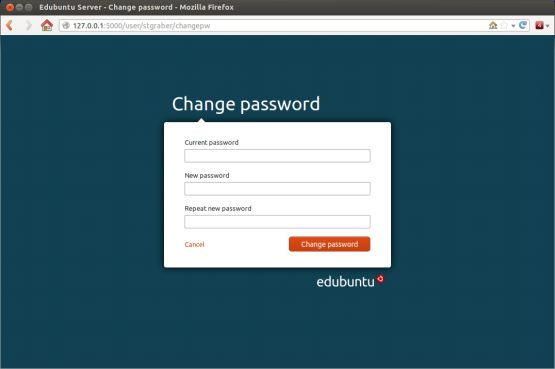
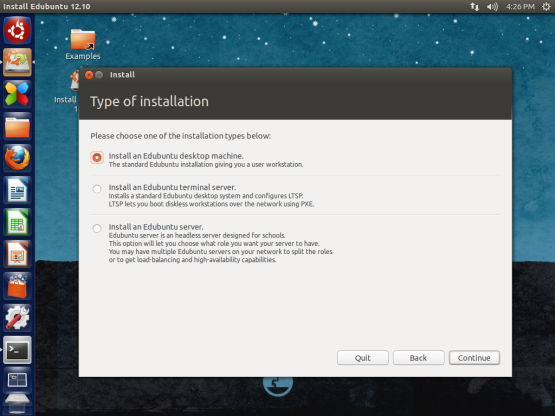
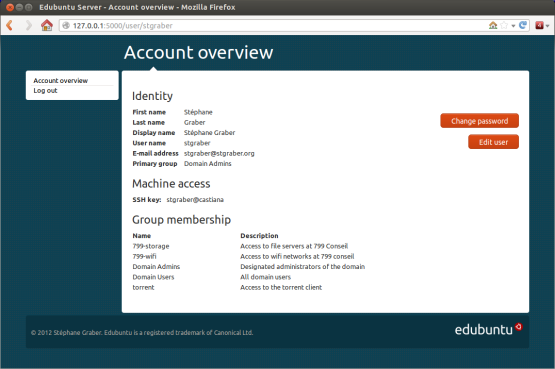
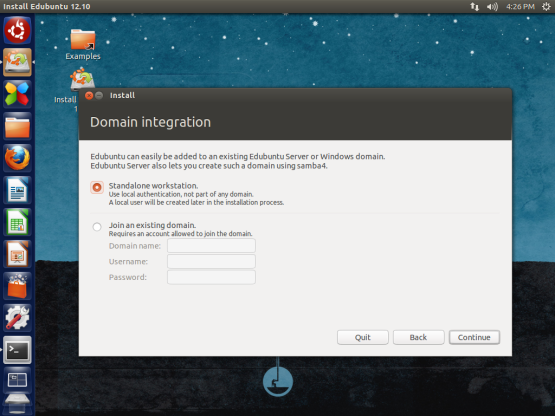
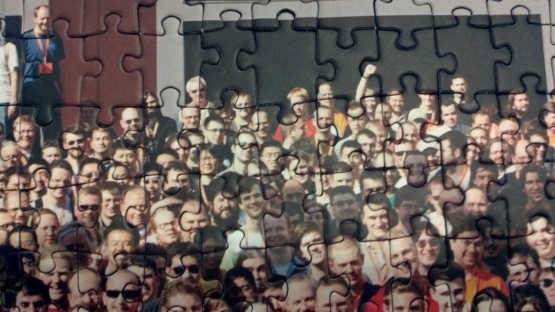
The War on Time Whoosh! I ve been incredibly quiet on my blog for the last 2-3 months. It s been a crazy time but I ll catch up and explain everything over the next few entries. Firstly, I d like to get out a few details about the last Ubuntu Developer Summit that took place in Copenhagen, Denmark in October. I m usually really good at getting my blog post out by the end of UDS or a day or two after, but this time it just flew by so incredibly fast for me that I couldn t keep up. It was a bit shorter than usual at 4 days, as apposed to the usual 5. The reason I heard for that was that people commented in previous post-UDS surveys that 5 days were too long, which is especially understandable for Canonical staff who are often in sprints (away from home) for the week before the UDS as well. I think the shorter period works well, it might need a bit more fine-tuning, I think the summary session at the end wasn t that useful because, like me, there wasn t enough time for people to process the vast amount of data generated during UDS and give nice summaries on it. Overall, it was a great get-together of people who care about Ubuntu and also many areas of interest outside of Ubuntu. Copenhagen, Denmark I didn t take many photos this UDS, my camera is broken and only takes blurry pics (not my fault I swear!). So I just ended up taking a few pictures with my phone. Go tag yourself on Google+ if you were there. One of the first interesting things I saw when arriving in Copenhagen was the hotel we stayed in. The origami-like design reminded me of the design of the Quantal Quetzel logo that is used for the current stable Ubuntu release. 2012-10-28_05-50-14_21 quantal The Road ahead for Edubuntu to 14.04 and beyond St phane previously posted about the vision we share for Edubuntu 14.04 and beyond, this was what was mostly discussed during UDS and how we ll approach those goals for the 13.04 release. This release will mostly focus on the Edubuntu Server aspect. If everything works out, you will be able to use the standard Edubuntu DVD to also install an Edubuntu Server system that will act as a Linux container host as well as an Active Directory compatible directory server using Samba 4. The catch with Samba 4 is that it doesn t have many administration tools for Linux yet. St phane has started work on a web interface for Edubuntu server that looks quite nice already. I m supposed to do some CSS work on it, but I have to say it looks really nice already, it s based on the MAAS service theme and St phane did some colour changes and fixes on it already. edu-server-account edu-server-password From the Edubuntu installer, you ll be able to choose whether this machine should act as a domain server, or whether you would like to join an existing domain. Since Edubuntu Server is highly compatible with Microsoft Active Directory, the installer will connect to it regardless of whether it s a Windows Domain or Edubuntu Domain. This should make it really easy for administrators in schools with mixed environments and where complete infrastructure migrations are planned. Authentication Options Choosing machine role You will be able to connect to the same domain whether you re using Edubuntu on thin clients, desktops or tablets and everything is controllable using the Epoptes administration tool. Many people are asking whether this is planned for Ubuntu / Ubuntu Server as well, since this could be incredibly useful in other organisations who have a domain infrastructure. It s currently meant to be easily rebrandable and the aim is to have it available as a general solution for Ubuntu once all the pieces work together. Empowering Ubuntu Flavours This cycle, Ubuntu is making some changes to the release schedule. One of the biggest changes made this cycle is that the alpha and beta releases are being dropped for the main Ubunut product. This session was about establishing how much divergence and changes the Ubuntu Flavours (Ubuntu Studio, Mythbuntu, Kubuntu, Lubuntu and Edubuntu) could have from the main release cycle. Edubuntu and Kubuntu decided to be a bit more conservative and maintain the snapshot releases. For Edubuntu it has certainly helped so far in identifying and finding some early bugs and I m already glad that we did that. Mythbuntu is also a notable exception since it will now only do LTS releases. We re tempted to change Edubuntu s official policy that the LTS releases are the main releases and treat the releases in between more like technology previews for the next LTS. It s already not such a far stretch from the truth, but we ll need to properly review and communicate that at some point. Valve at UDS and Steam for Linux One of the first plenaries was from Valve where Drew Bliss talked about Steam on Linux. Steam is one of the most popular publishing and distribution systems for games and up until recently it has only been available on Windows and Mac. Valve (the company behind Steam and many popular games such as Half Life and Portal) are actively working on porting games to run natively on Linux as well. Some people have asked me what I think about it, since the system is essentially using a free software platform to promote a lot of non-free software. My views on this is pretty simple, I think it s an overwhelmingly good thing for Linux desktop adoption and it s been proven to be a good thing for people who don t even play games. Since the announcement from Valve, Nvidia has already doubled perfomance in many cases for its Linux drivers. AMD, who have been slacking on Linux support the last few years have beefed up their support drastically with the announcement of new drivers that were released earlier this month. This new collection of AMD drivers also adds support for a range of cards where the drivers were completely discontinued, giving new life to many older laptops and machines which would be destined for the dumpster otherwise. This benefits not only gamers, but everyone from an average office worker who wants snappy office suite performance and fast web browsing to designers who work with graphics, videos and computer aided design. Also, it means that many home users who prefer Linux-based systems would no longer need to dual-boot to Windows or OS X for their games. While Steam will actively be promoting non-free software, it more than makes up for that by the enablement it does for the free software eco-system. I think anyone who disagrees with that is somewhat of a purist and should be more willing to make compromises in order to make progress. Ubuntu Release Changes Last week, there was a lot of media noise stating that Ubuntu will no longer do releases and will become a rolling release except for the LTS releases. This is certainly not the case, at least not any time soon. One meme that I ve noticed increasingly over the last UDSs was that there s an increasing desire to improve the LTS releases and using the usual Ubuntu releases more and more for experimentation purposes. I think there s more and more consensus that the current 6 month cycle isn t really optimal and that there must be a better way to get Ubuntu to the masses, it s just the details of what the better way is that leaves a lot to be figured out. There s a desire between developers to provide better support (better SRUs and backports) for the LTS releases to make it easier for people to stick with it and still have access to new features and hardware support. Having less versions between LTS releases will certainly make that easier. In my opinion it will probably take at least another 2 cycles worth of looking at all the factors from different angles and getting feedback from all the stakeholders before a good plan will have formed for the future of Ubuntu releases. I m glad to see that there is so much enthusiastic discussion around this and I m eager to see how Ubuntu s releases will continue to evolve. Lightning Talks Lightning talks are a lot like punk-rock songs. When it s good, it s really, really amazingly good and fun. When it s bad, at least it will be over soon :) Unfortunately, since it s been a few months since the UDS, I can t remember all the details of the lightning talks, but one thing that I find worth mentioning is that they re not just awesome for the topic they aim to produce (for example, the one lightning talks session I attended was on the topic of Tests in your software ), but since they are more demo-like than presentation-like, you get to learn a lot of neat tricks and cool things that you didn t know before. Every few minutes someone would do something and I d hear someone say something like Awesome! I didn t know you could do that with apt-daemon! . It s fun and educational and I hope lightning talks will continue to be a tradition at future UDSs. Social Stefano Rivera (fellow MOTU, Debianista, Capetonian, Clugger) wins the prize for person I ve seen in the most countries in one year. In 2012, I saw him in Cape Town for Scaleconf, Managua during Debconf, Oakland for a previous UDS and Copenhagen for this UDS. Sometimes when I look at silly little statistics like that I realise what a great adventure the year was! Between the meet n greet, an evening of lightning talks and the closing party (which was viking themed and pretty awesome) there was just one free evening left. I used it to gather with the Debian folk who were at UDS. It was great to see how many Debian people were attending, I think we had around a dozen or so people at the dinner and there were even more who couldn t make it since they work for Canonical or Linaro and had to attend team dinners the same evening. It was as usual, great to put some more faces to names and get to know some people better. It was also great to have a UDS with many strong technical community folk present who is willing to engage in discussion. There were still a few people who felt missing but it was less than at some previous UDSs. I also discovered my face on a few puzzles! They were a *great* idea, I saw a few people come and go to work on them during the week, they seem to have acted as good menial activities for people to fix their brains when they got fried during sessions :) 2012-10-31_14-32-28_374 Overall, this was a good and punchy UDS. I ll probably not make the next one in Oakland due to many changes in my life currently taking place (although I will remotely participate), but will probably make the one later this year, especially if it s in Europe. I ll also make a point of live-blogging a bit more, it s just so hard remembering all the details a few months after the fact. Thanks to everyone who contributed their piece in making it a great week!


Jon Dowland: Puppet and persistent network interface names

On Linux, network interface device naming has been somewhat chaotic: depending on a number of factors, eth0 today might not be eth0 tomorrow. For me, this has never been a problem in practice. At work, our physical servers have a bank of on-mainboard network ports, all managed by the same driver and so are assigned names predictably. For our virtual machines, the same is true: 99% of the time they have one network interface, but when they have more than one, they are of the same type and so are assigned predictably. At home, even on desktops and laptops with multiple network devices being added and removed at a time, I've never actually hit a problem where one was mis-identified. However, it must have been a problem for some people because it has been solved three times now. Sadly, these incompatible solutions cause headaches in all of my use cases. At work we have a puppet snippet that relies on knowing the interface name for a host's "primary" interface. In our case, "primary" means something like "the one the default route is over". We used to hardcode eth0 into this recipe. I don't feel too bad about that, as the puppet folks do the exact same thing in many of their scripts. This breaks for newer physical hosts where one of the three schemes are in play and the interfaces are named/numbered em1 and counting. We worked around it by parameterizing the interface name in our recipe and defining it in our nodes.pp for the troublesome hosts, but that just moves the problem around. My more permanent solution is to define a facter fact primary_interface that tells puppet what the correct interface should be. Here's my first attempt:
Facter.add("primary_interface") do
  setcode do
    ifs = Dir.new("/sys/class/net").each.to_a - \
      Dir.new("/sys/devices/virtual/net").each.to_a
      # filter out ones with no link
      ifs.reject! do  i 
        begin
          File.read("/sys/class/net/# i /carrier") != "1\n"
        rescue Errno::EINVAL
          true
        end
      end
    ifs[0]
  end
end
Of course, there is plenty of room for improvement with this solution: if ifs has more than one element at the end, a lexographic sort may prove more accurate; if there is an existing network default route up, that might be a strong clue too. It's also very Linux specific. My question though is whether this is a sensible approach in the first place?

Tollef Fog Heen: Abusing sbuild for fun and profit

Over the last couple of weeks, I have been working on getting binary packages for [Varnish] modules built. In the current version, you need to have a built, unpacked source tree to build a module against. This is being fixed in the next version, but until then, I needed to provide this in the build environment somehow. RPMs were surprisingly easy, since our RPM build setup is much simpler and doesn't use mock/mach or other chroot-based tools. Just make a source RPM available and unpack + compile that. Debian packages on the other hand, they were not easy to get going. My first problem was to just get the Varnish source package into the chroot. I ended up making a directory in /var/lib/sbuild/build which is exposed as /build once sbuild runs. The other hard part was getting Varnish itself built. sbuild exposes two hooks that could work: a pre-build hook and a chroot-setup hook. Neither worked: Pre-build is called before the chroot is set up, so we can't build Varnish. Chroot-setup is run before the build-dependencies are installed and it runs as the user invoking sbuild, so it can't install packages. Sparc32 and similar architectures use the linux32 tool to set the personality before building packages. I ended up abusing this, so I set HOME to a temporary directory where I create a .sbuildrc which sets $build_env_cmnd to a script which in turns unpacks the Varnish source, builds it and then chains to dpkg-buildpackage. Of course, the build-dependencies for modules don't include all the build-dependencies for Varnish itself, so I have to extract those from the Varnish source package too. No source available at this point, mostly because it's beyond ugly. I'll see if I can get it cleaned up.

28 January 2013

Russ Allbery: Management and the problem stream

Well, today was another day of sleeping, zoning, and having no brain for programming (and no willpower for that or exercise, which is even more frustrating), so you all get more musing about missions and work. Tomorrow, I will re-engage my normal schedule and turn the television off again, because seriously, two days of recovery should be enough even for a whole afternoon of meetings. Perhaps the best concept in the scrum methodology for agile project management is the concept of the product backlog and the product owner. For those who aren't familiar, a scrum project has, as one of its inputs, a prioritized list of stories that the team will implement. During each planning session (generally between once a week and once a month), the development team estimates and takes from the front of the product backlog the top-priority stories that can be completed during that period of time. The product owner is responsible for building the list of pending development stories based on business needs and keeping them sorted in priority order so that the work of the team follows the goals of the larger organization. But the product owner does not get to say how difficult the stories are; the development team estimates the stories, and the product owner may change order based on those estimates (to do simpler things earlier, for example). We've been doing scrum to some extent or another for quite some time now, and while there are a variety of things that I like about it, I think this is the best part. And I think it has very useful concepts for management in general. The product backlog is effectively a problem stream of the sort that I talked about in my last couple of posts. It's a set of problems that need to be solved, that matter to other people. And, if the team is doing scrum properly, the problems are presented in a form that describe a complete unit of desired functionality with its requirements and constraints, but without assuming any sort of implementation. The problem is the domain of the product owner; the solution is the domain of the development team. I am increasingly convinced that my quality of life at work, and that of many other people doing similar sorts of development and project work, would be drastically improved if managers considered this role the core of their jobs. (Ironically, at least in our initial experiences with scrum, it was quite rare for regular managers to be product owners; instead, individual line staff or project managers act as product owners. I think this speaks to how confused a lot of managers are about their roles in a technical development organization. This seems to be improving.) The core of the sort of work that I do is a combination of ongoing maintenance and solving new problems. Both of those can be viewed as a sequence of (possibly recurring) stories; I know this because that's largely how I do my own time management. Apart from HR and staffing, the core role of a manager is almost exactly what scrum calls "backlog grooming": communicating with everyone who has input into what their group is doing, finding out what their problems are, translating that into a list of things that the organization needs to have done, prioritizing them, breaking them into manageable chunks, ensuring they are fully specified and actionable (read: well-written stories), and communicating their completion back to other stakeholders (and then possibly iterating). This lept out at me when I started thinking about our larger strategic vision. That strategic vision is a sort of product backlog: a set of development stories (or, in this case, epics that would be broken down into a large number of smaller stories). But most strategic plans have glaring flaws if they're evaluated by the standards of scrum product backlogs. They're normally written as marketing statements and aimed at the clients or customers rather than at the staff. From the staff perspective, they're often hopelessly vague, not concrete, actionable epics. Often, they are almost entirely composed of grand, conceptual epics that any scrum team would immediately reject as too large and nebulous to even discuss. And often they're undefined but still scheduled: statements that the organization will definitely complete some underspecified thing within the next year or two. Scrum rightfully rejects any form of scheduling for unspecified stories and epics. Additional vagueness and sketchiness is tolerated the farther the story is from the current iteration, so they can be put into the future backlog, but scrum makes no guarantees about when they'll get done until they've been sized and you can apply a reasonable velocity estimate. If you want to put a date on something, you have to make it concrete. This is exactly the problem that I have with long-range strategic plans. We already know this about technology development: long-range strategic plans are feel-good guesses, half-truths, and lies that we tell other people because we're expected to do so, but which no one really believes. The chance that we can predict anything about the shape of projects and rate of delivery of those projects three years from now is laughable, and certainly none of the work that would be required to make real estimates has normally been done for those sorts of long-term strategic projects. There are a lot of scrum advocates who would go farther than I in asking for a complete revolution of how technical projects are planned. I'm not sure how realistic that is, or how well the whole scrum process would work when rolling up work across dozens, if not hundreds, of scrum-sized teams. But in the specific area of the role of managers in a development organization, I think we could learn a lot from this product backlog concept. Right now, there is a constant tension between managers who feel like they need to provide some sort of visionary leadership and guidance (the cult of Steve Jobs) and line staff who feel like managers don't understand enough about specific technology to lead or guide anything. But if you ask a technical developer whether, instead, it would be useful for managers to provide a well-structured, priority-ordered, and clean problem stream from the larger organization so that the developer can trust the problem stream (and not have to go talk to everyone themselves) but have control over the choice of implementation within the described constraints, I think you would find a great deal of enthusiasm. As a further bonus, scrum has a lot of advice about what that problem stream should look like. I think some of the story structuring is overblown (for example, I can't stand the story phrasing structures, the "AS A... I WANT TO... SO THAT..." shackles), but one thing it does correctly emphasize is the difference between problem and solution. The purpose of the story is to describe the outcome from the perspective of the person who will use the resulting technology. Describing the constraints on the solution, in terms of cost or integrations, is actively encouraged. Describing the implementation is verboten; it's up to the project team to choose the implementation that satisfies the constraints. If managers in general would pick up even that simple distinction, I think it would greatly improve the engagement, excitement, and joy that developers could take in their work. There's very little that's more frustrating than to be given an interesting problem in the guise of a half-designed solution and be told that one is not permitted to apply any of one's expertise in elegance, robustness, or durability to replacing the half-baked partial solution. Or even be allowed to know the actual motivating problem, instead of the half-digested form that the manager is willing to pass on.

27 January 2013

Jose Luis Rivas: Less Swap

My old X61 has 2G in RAM and 3G in Swap. It seems my using-habit for Google Chrome is heavy (more than 20 tabs open most of the time) so my swap is normally being used above the 1.8G-mark. That means, my disk is constantly being written and read, and since this is the original hard-drive scare comes to my mind: will I blow-up my disk if I continue doing this? and the heat this disk-use's generating was absurd. That's not good, at all, I prefer having cache used than swap; in Venezuela is not that easy to get a good sale on hard-drives (you know, is hard to get dollars here, since is illegal to buy them unless the govt gives you permission). So the first thing that comes to my mind is sysctl. If I wanted to cofigure swap it would be with a kernel parameter. So running sysctl -a grep swap throws me vm.swappiness = 60, and a little google search tells me more about it. If the swappiness is close to 0 then it will use the swap only if it is really necessary, if it is close to 100 then it will use the swap aggressively. Mine was at 60, and it was really aggressive. The next steps for me was doing sudo echo 'vm.swappiness = 1' >> /etc/sysctl.conf && sudo sysctl -p. Now my system is really smooth and using Chrome + Terminal + Tmux + Rhythmbox is acceptable.

Russell Coker: LCA 2012

LCA 2013 [1] is starting so it seems like time to finish my write-up of LCA 2012. As usual it was a great conference, although I got sick immediately after getting there which reduced my ability to attend. Android A major unofficial theme of the conference was Android. Most delegates seemed to have Android phones, the Samsung Galaxy S and Galaxy Nexus seemed to be the most popular phones. Many delegates had two or more phones for development purposes. A large portion of the casual conversation at the conference concerned Android. There were a couple of really interesting talks about the Serval mesh networking project [2] which involves Android phones running in ad-hoc Wifi mode for long range communication without any official base station. Serval allows transferring messages, pictures, and voice calls. If you need to get longer range you can mount one phone in a convenient place and other phones will decide to use it as a relay there is no need to have a dedicated relay device (such as a mobile phone tower or Wifi access point). Serval is supposed to work with Wifi access points but due to Java not exposing some networking details to the higher levels of software the code that was available at the time of the conference didn t support networks other than a /24, which meant that the conference Wifi network didn t work with Serval. As an aside most people at the conference who installed Serval were using a development version that was newer than the version on the Android market. I can t remember what the extra features were though. Serval was designed for emergency situations, it can be installed on phones (and pushed to other phones via Wifi) in the field and allow communications when the infrastructure is broken. Also it s designed with some aim of circumventing censorship which among other things means that there are no facilities for tracking use. I think it would be really handy to be able to in some way track viewing of or interest in images that are transported via the mesh (maybe by something similar in concept to Google +1). Then in a crowd sourced environment people who take photos would be encouraged in their work by audience appreciation. One thing that interests me is the possibility of using Serval on a cruise ship. A cruise ship is an environment where mobile phone calls are unreasonably expensive, cabin phones aren t much use (who pays for a cruise and hangs out in their cabin?), and where there is usually a Wifi network installed. If a ship has a single bridged Wifi network that allows connecting to Wifi before authenticating for Internet access (which is probably the common case) then you could transport VOIP over that network without paying and without incurring any expense on the cruise company. One of the Serval developers assured me that this should be possible, of course a cruise ship with 3,000 passengers probably doesn t use a /24 for their Wifi so the current versions of Serval won t work At the geek my dinner event (a party where everyone brought $20 of food/drink which was cooked by volunteers) an artist showed me some art work that she created on her Samsung Galaxy Note (which was the biggest phone on sale at the time), it was very impressive. She recommended Picasso Mirror Draw, Sketch Free, Sketch Book Mobile Express, and Freenote as free graphical programs for Android. Samsung has a Noteworthy Project advertising campaign based on the artistic uses of the Galaxy Note which has some good videos of artists [3]. Chris Neugebauer and Paris Buttfield-Addison gave an informative and amusing talk about Android UI development (this link has the video) [4]. It s a pity that I missed seeing that one live but fortunately the video is of high quality. Accommodation picture of women cleaning As I ve become interested in Sociology I couldn t help but notice the pictures that accompanied the rules about cleaning the dormitory (which were displayed over the kitchen sink), it seems to imply that cleaning is only women s work. I wonder whether the people who created that poster deliberately chose pictures of women or whether they just chose the first available pictures from a collection of stock photos. Someone who was near my dorm room seemed to not realise how their alarm impacts other people. For the first two mornings I was woken repeatedly after 6AM by someone who was pressing the snooze button on their alarm. When sleeping in close proximity to other people the reasonable options involve some combination of having no loud alarm, immediately turning the alarm off and getting up (not pressing snooze to have it go off repeatedly), and setting the alarm for a time when almost everyone wants to get up (EG 1 hour before the first session). Networking Chris Neugebauer organised the Unprofessional Delegates Networking Session which was a great event. It was an event held at the same time as the Professional Delegates Networking Session with the difference being that you had to pay $5 for food and there was no free drink. A lot of great people attended the UPDNS so I m glad I don t pay for the PDNS. It seems that we won t have a UPDNS this year unfortunately. Conclusion LCA is always great fun and very educational. I recommend attending every year.

Russ Allbery: Introversion and mission statements

We had our tech leads retreat on Friday, including the discussion about "why," and I thought it was excellent, although I'm still trying to understand some parts of it. Part of why I'm still working on that is, well, you know that introversion thing? I had five and a half hours of meetings on Friday, and the tail end was an intense four and a half hour retreat, during which I was a major participant the whole time. And tried to say some difficult and intense things, both about the "why" conversation that I posted about and about why the tail end of last year was particularly difficult for me. All that went very well. I was very happy with the overall meeting. Sometimes, I half-convince myself that I'm overstating the degree that introversion or that interpersonal interaction affects me, or that I'm using it as an excuse to duck out of things that aren't really what I want to be working on. Then I do something like this, and find myself completely dead on my feet at the end of the meeting. Not physically tired, but utterly and completely drained. I went home and did something completely right-brain and creative and needed that so desperately that I stayed with it until two in the morning, slept in today until past noon, and still have, despite a couple of minor attempts, absolutely no capability to write code or focus on accomplishing anything. I'm fairly sure I'll still be feeling the after-effects on Monday and Tuesday. I'm a little annoyed at having both missed a day of releasing something to the world (I'd managed to post something every day this year until yesterday) and blowing off exercising yesterday evening for only the second time this year. But I think part of coming to terms with what introversion means is being kind to myself about this. That's something Cain talked a lot about in her book, and it's the advice I'd give to any other introvert, but it's something I'm not applying as well as I could. Being an introvert doesn't mean to not do meetings. It means to pick the ones that are important, do them with all your heart, and then be kind to yourself afterwards just as if you'd put in extreme effort to do something quite energetic and difficult. Because you have. So, I'm trying not to be annoyed at myself. And I think we need to be better about teaching people about this, because apart from Susan Cain, I don't remember many people writing about this, or understanding it. Occasionally there are screeds against meetings, but not a lot of discussion about when it's worth expending the energy, and about how to be kind to oneself and recharge after putting one's energy into the social interactions that are important. I did want to mention that while retreats seem to have a bad reputation in tech circles (and I've heard of a lot of retreats that I would hate), the ones that we do in our group are great. We spent about an hour talking about the things I posted about on Thursday, then a couple of hours talking about the larger organizational roadmap and searching out things that aren't on our upcoming work roadmap that feel like large missing pieces, and then a couple of hours identifying and enumerating our technical debt and deciding what major pieces of technical debt we're going to tackle in the next six months. It's a lot of concrete, specific discussion of what we're going to spend time on and what we're going to defend resources for by pushing back against other priorities. If I had to sum it up in a sentence, I'd say that these retreats are all about listing vaguely equal things that exceed our total capacity and making the decisions about which of them we're going to do and which of them we're not going to do so that we don't have to keep wasting time on revisiting unresolved decisions. The actual mission discussion turned into a discussion by each of us of what we most value in work, stated in terms very similar to what I used in my post, and that was wonderful. I found out things about my co-workers that I didn't know, and which will help me a great deal in improving their enjoyment of their work. I think we came away with a better idea of how to support each other in creating that engagement and excitement, and I think that's the best possible outcome. Since, like I said, I think that's the only real mission statement a group should have. We did, still, talk about having a mission statement anyway. Apparently having a shared statement is really important to people who aren't me. I'm still struggling with this, since it doesn't make sense to me and doesn't feel useful to me. But maybe it's a sort of validation and confirmation that we're allowed to focus on what we care about? But the group mission statement we came away with isn't about any specific technology and focuses on exactly the things that I care about: elegance, robustness, durability, and solving whatever problems the university has. As part of that discussion, we reached a surprising and really satisfying unanimity of opinion about what values we care deeply about. It's a value statement as opposed to a distillation of job descriptions, so if a mission statement is valuable for other people, that's one I'm quite happy with. Even if I don't understand why people want to have one. I'm less satisfied with the roadmap and strategic plan for our larger organization, but I'm starting to realize that's because I'm utterly not the target audience and it's not going to engage or interest me. It's more of a marketing statement that's focused externally, and my proper role in that is to try to help ensure that it reflects the enthusiasms and engagement of the line staff, not to try to turn it into a document that will be inspiring for the line staff. Which ties into what I was writing about previously: in my ideal world, these sorts of focuses flow upwards from the people who will be doing the work, not downward from a high-level manager deciding on an inspirational direction.

26 January 2013

Eddy Petrișor: (Serial) console flooded with kernel messages?

(If you want to ignore the explanations and see how to stop the Linux kernel from flooding the console with low importance messages, go straight to the bottom of the article, is the small bit at end with larger font.)

After connecting to the serial console on my Linksys WRT160NL router I was faced with the problem that the console was flooded with all sorts of messages such as:
DROP IN=eth1 OUT= SRC=X.Y.Z.W DST=255.255.255.255 PROTO=UDP SPT=58488 DPT=2008 LEN=26
DROP IN=eth1 OUT= SRC=X.Y.Z.U DST=178.156.183.255 PROTO=UDP SPT=137 DPT=137 LEN=58
DROP IN=eth1 OUT= SRC=X.Y.Z.W DST=255.255.255.255 PROTO=UDP SPT=58488 DPT=2008 LEN=26
ACCEPT IN=br0 OUT=eth1 SRC=a.b.c.d DST=69.171.246.16 PROTO=TCP SPT=3651 DPT=443
DROP IN=eth1 OUT= SRC=X.Y.Z.U DST=178.156.183.255 PROTO=UDP SPT=137 DPT=137 LEN=58
DROP IN=eth1 OUT= SRC=X.Y.Z.W DST=255.255.255.255 PROTO=UDP SPT=58488 DPT=2008 LEN=26
DROP IN=eth1 OUT= SRC=178.156.183.146 DST=255.255.255.255 PROTO=UDP SPT=17500 DPT=17500 LEN=120
DROP IN=eth1 OUT= SRC=178.156.183.146 DST=178.156.183.255 PROTO=UDP SPT=17500 DPT=17500 LEN=120
DROP IN=eth1 OUT= SRC=178.156.183.146 DST=255.255.255.255 PROTO=UDP SPT=17500 DPT=17500 LEN=120
DROP IN=eth1 OUT= SRC=X.Y.Z.W DST=255.255.255.255 PROTO=UDP SPT=58488 DPT=2008 LEN=26
DROP IN=eth1 OUT= SRC=178.156.177.142 DST=255.255.255.255 PROTO=UDP SPT=17500 DPT=17500 LEN=153

The serial console was working, but it was impossible to do anything practical in these conditions. I tried looking on the net for 'linux stop console flooding' and similar terms, but didn't get too far, except the fact the problem was the loglevel.

Here is the explanation of what this means (quote from Documentation/kernel-parameters.txt):

        loglevel=       All Kernel Messages with a loglevel smaller than the
                        console loglevel will be printed to the console. It can
                        also be changed with klogd or other programs. The
                        loglevels are defined as follows:
                        0 (KERN_EMERG)          system is unusable
                        1 (KERN_ALERT)          action must be taken immediately
                        2 (KERN_CRIT)           critical conditions
                        3 (KERN_ERR)            error conditions
                        4 (KERN_WARNING)        warning conditions
                        5 (KERN_NOTICE)         normal but significant condition
                        6 (KERN_INFO)           informational
                        7 (KERN_DEBUG)          debug-level messages


This was enough to go through my local git tree of the kernel in the Documentation directory and grep for loglevel. This brought me to this interesting bit from Documentation/sysctl/kernel.txt
==============================================================
printk:
The four values in printk denote: console_loglevel,
default_message_loglevel, minimum_console_loglevel and
default_console_loglevel respectively.
These values influence printk() behavior when printing or
logging error messages. See 'man 2 syslog' for more info on
the different loglevels.
- console_loglevel: messages with a higher priority than
  this will be printed to the console
- default_message_loglevel: messages without an explicit priority
  will be printed with this priority
- minimum_console_loglevel: minimum (highest) value to which
  console_loglevel can be set
- default_console_loglevel: default value for console_loglevel
==============================================================

So I ran 'cat /proc/sys/kernel/printk' and got (I managed to read it through the flood of messages from the firewall):

7       4       1       7
According to the explanations above, that meant that console_loglevel was too, so to fix it I ran:
echo '2 4 1 7' > /proc/sys/kernel/printk
And, behold, the serial console was usable.

25 January 2013

Richard Hartmann: Please don't do this

Update: They got & reported him. Most of you will have seen the news about various private files being hosted on github as this little has taken the Internet by storm yesterday. Obviously most of those files can be found via Google and other means as well, but this exposure is a bit worse inasmuch people will keep on updating their secret information automagically and continuously. Personal favourites that used to work until yesterday include And various other config and history files for AWS, RT, whatnot. Plus, it was really easy to search for certain actions like so. Another fun thing look for were ENV variables setting passwords, hosts, etc. Ironically, having the SSH identity files means anyone is able to change pretty much anything about a person's repositories on github. This includes files like .zshrc which basically allows complete takeover of any account and often machine that file is sourced from. Which reminds me that I still need to add a way for vcsh to only merge commits that have a tag signed with a trusted key and warn for everything else, but I digress. None of this is a problem with github specifically, it's a problem with users who don't think their actions through. And this is non-trivial for github or anyone else to fix as there are potentially endless sources of otherwise secret information. Initially, I sent email to github's quite responsive security team asking them to forbid certain queries and to email users who checked in their private data by accident and left it at that. They got back to me extremely fast, promising to do their best (as of right now, no queries I tried work any more) and after some conversation asked me to link to their help article on removing sensitive data if I were to blog about this. The topic itself has been covered extensively, github did their best to keep user data private, and so the above could have been done without, but... ...I have gotten word of 4chan's /g/ sleuthing their way through various files and at least one incident of people finding direct evidence of child pornography in a Zsh history file. Sadly, this story found its way to me without a link and the person who saw the thread read it on a tablet, preserving neither the URL nor local cache. They saw it on 2013-01-24 at around 2200 UTC. If you, or someone you know, saw anything plainly illegal, immoral, and simply wrong... please report it to the relevant authorities or at least github. As I suspect that there's some overlap between the subscribers of the various planets I am aggregated on and /g/, this may reach the right eyes. Between the account name, a verified email address, access logs with IPs, and possibly a real name, it should be comparatively easy to find anyone you report.

Next.

Previous.