Search Results: "dom"

3 June 2007

Michael Prokop: Linuxdays in Vienna 2007: done

Linuxdays in vienna were fun (as usual). Lessons learnt: I was responsible for the booth of grml (Linux live-cd for sysadmins and texttool users) as well as for the ones of Debian and Debienna (Debian in vienna) - especially in the first two days, until Markus and Kira joined. Regarding the grml booth: It was once more amazing to see how many people already know and use grml. I had the pleasure to meet people from a professional data rescue organization who use grml in their daily business. Not to forget to mention all the people who let me know how often grml managed to save their lif^Wdata. Oh, and some nice ideas were brought to my attention and are now part of the todo list for grml. Very geeky was the 13 year old boy who visited our booth and when asking him whether he knows how to work on the console (he was staring at our grml-CDs with shining eyes) he replied: "YES, of couuuuurse!" 8-) I couldn’t resist in giving him a grml-CD. Oh, and we were running out of grml-CDs earlier than expected. Thanks to my girlfriend - who can even explain the difference between grml meilenschwein and grml64 to you now :-) - I had the chance to attend some few talks - besides my own one about grml of course. I once more didn’t manage it to take just a single picture :-( but I just received a pointer to the linuxdays photogallery of jostusz, thanks Sven.

Matthew Palmer: Perhaps It Wasn't The Marketing...

It is common wisdom that one of the major reasons that Microsoft has prevailed in the software industry is because it is supremely good at marketing it's products. After watching a Windows 386 promotional video, I'm starting to doubt the validity of that wisdom. To paraphrase Mr. Burns, "Smithers, I'm beginning to think that Microsoft is not the brilliant marketing machine I thought it was".

Nico Golde: debian.net domains

There are a lot of inofficial debian domains (known as debian.net domains). Some of then are really useful like changelogs.debian.net for example and others are just funny.

However I thought it might be useful to have a list of all debian.net domains so I wrote a small script.
The resulting page is on: http://people.debian.org/~nion/net-domains.html.

Matthew Palmer: Project Honeypot

Recently I stumbled across Project Honeypot, an interesting anti-spam system to identify and flag Internet abusers, through the use of honey pots -- systems that look innocent and attractive enough to the passing network abuser, but which actually log and flag the abuser's activity and record it for future reference. It seems cool enough -- anything that aims to stop random assholes from abusing the Internet and making life unpleasant for the rest of us is to be commended -- but I'm wondering if anyone has had any experience with the project, and has any comments? I'm considering joining up and contributing a few resources, but prior experience is always worth listening to. E-mail me at mpalmer@hezmatt.org, and I'll summarise in a future post (possibly with my own experiences, if I do actually join up).

Matthew Palmer: Get Your War On

I've got a number of web comics in my rotation, which I read with varying regularity. I don't know if I'd call "Get Your War On" one of my "favourites" (if only because I don't think it should need to exist), but it does have some viciously biting commentary on the Iraq war. Some of the ones I wish I had on T-shirts: Culturally Sensitive @ Get Your War On Shiite Death Squad Productivity @ Get Your War On The Power of Freedom @ Get Your War On The Writ of Habeus Corpus @ Get Your War On

1 June 2007

Joey Hess: two random thoughts about google maps

  1. It will be interesting to see what new forms of social engineering will come about thanks to the neat new street view feature. To be able to check, from across the world, what car someone had in their driveway (or its license plate), or what a sign on a shopfront says, is sure to be good for something criminal.
  2. The better google maps gets, the more places that don't have all the awesome data become in a sense second class citizens. With the exception of bandwidth, the internet has so far tended to flatten these differences out, not accentuate them. So this is also interesting, though it kinda sucks to be there (google can't even resolve my house on their satellite maps).

31 May 2007

loldebian - Can I has a RC bug?: In case you were wondering

Yes, we had all this free time to post random Debian pics and write lol-captions on them, but we never managed to find time to introduce ourselves, until now, and by popular demmand: loldebian is brought to you by Jacobo and Amaya, in the same spirit as lolgeeks, I can has a Cheezburger and lolcats. No kittens were hurt in the making, and only healthy fun is intended. Do send your contributions our way, and help us make Debian fun again!
(For the gimp-impaired, there’s an online tool that might be helpful: LolCat Buildr)
Now, if you have complaints about flamefests in Debian mailing lists, make sure you check “passive-aggressive notes from roommates, neighbors, coworkers and strangers” and take a minute to realize RL is not that much better at resolving conflict. Happy loling!

Edd Dumbill: Small bundle of sluggy joy

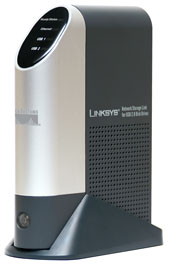
I'm a bit late to this party, but the NSLU2—affectionately known as the 'slug'—is a piece of kit you can't afford to be without on your home or small office network. NSLU2 image Not much bigger than the palm of my hand, and cheaper than a ticket for a Test at Lord's, the NSLU2 is a small fileserver that serves files from attached USB disks. What makes it particularly special is the large amount of alternative firmwares built by Linux open source developers, which allow you to extend the functionality of the NSLU2 beyond merely serving out files via SMB (the Windows file serving protocol.) Cheap NFS serving  So what's the big deal for me? Well, like most laptop-slinging folks whose home network is predominantly wireless, I want my backup disks to sit on the network, available when needed. It turns out it's very difficult to find a standalone network disk that properly supports Unix file system semantics such as symbolic links. Most just support SMB file sharing, with attendant limits such as no links and no files over 2GB. (I found this out the hard way with Apple's Airport Extreme.) With the NSLU2 I was able to install the "Unslung" alternative firmware, and install good old NFS, making my backup disks available in a normal way to Linux and OS X machines alike. (How we used to complain about NFS back in the early 90s, but Windows file sharing still makes it look good!) In the great tradition of open source there are multiple choices of Linux distributions you can install. As it was my first time round, I went for Unslung, which preserves as much as possible of the official Linksys interface, but lets you extend it. Next time, with a better idea of what I'd use the box for, I'd probably plump for Debian.  Constraints breed creativity Inside the case, the NSLU2 is in fact a tiny Linux machine with 32MB of RAM and an Intel XScale CPU. This turns out to be plenty enough resources to serve files on a small network. Aside from my prosaic needs, the NSLU2 has been put to several more innovative uses, such as a music server for Apple ITunes and a 4-line home telephone exchange. I've been astounded at the applications people have devised for this little box. Being fairly cheap makes it a great candidate for home automation projects. It's a great example of how limiting resources fosters innovation. Remember how games on 8-bit microcomputers were so much more ingenious than those on their more well-resourced successors?
So, I may be a little slow in finding this little hardware gem, but I wholeheartedly recommend it.

30 May 2007

Christoph Berg: Debconf Flights booked

I just booked my Debconf flights. Airline websites are a major PITA. Germanwings wasn't even available, "maintenance today from 23 to 2h" - sorry, no happy customer. Ryanair's appearance was the worst. I don't mind crappy html as long as it works, but why do I have to choice between "Herr" (Mr), "Frau" (Mrs), "Mrs" (!), and "Miss"? When I said I lived in "M nchengladbach" they replied with the equivalent of "Please do not use special characters like < > [ ]." Apparently I'm allowed some amount ("20kg 15kg for travel past November 2006") of luggage (except if I'm below the age of 2), but later they charge for it. Then there's a drop-down menu asking me in I which country live, but it doesn't really mention that this is really where I select whether I want travel insurance (I don't). At the end of the page I'm asked to confirm that I accept the travel insurance terms (I still don't), but that's also the checkbox for their general terms of service. That flight would have gone through Prestwick (PIK) which is apparently fairly well connected to Edinburgh, but the flight back would leave at 7.50 am. I don't think I like that. In parallel, I tried easyjet.com. They fly from Dortmund, and while looking where that airport is, I first tried "airport lounges" which was obviously the wrong place. A bit more hidden was a list of airports, but it didn't include Dortmund. Google for the rescue... Then they tell me "your total amount is 99,71 ", only to additionally add 7,50 on the next page just because I'm using a credit card - who doesn't? Of course I'm willing to fill out personal information like my address etc, but why do they want my phone number and email address? And why do they claim "you haven't entered a phone number" when I put it (rather a fake one) in the "mobile phone" field (below "home")? What really drove me crazy was when they refused to accept the booking when I left the "we like to find out about our customers [...] reason for your trip" field empty. That's a drop-down menu with the choices "Business", "Visiting friends or family and staying with them", "Holiday", and "Visiting friends or family but staying elsewhere". No, I'm not going to tell them. (I randomly selected "Business".) In the end, I booked there, but it wasn't really fun. Whatever. Meet you at Debconf :) [Update] Oh, and I had to confirm I "have read, understood, and accept easyJet's terms and conditions, including the new rules for hold baggage". Thats a minimum of 10kB legal blurb - a simple "accept" checkbox would have been enough...

Steve Kemp: Don't make me laugh .. bitterly

Debconf is coming up soon in Edinburgh, so I figured I'd make a couple of posts for people who are coming. Party because I've been busy, but mostly because I'm always busy on the Mondays when meetings happen I'm not involved in organization - I figure when we get closer to the time I'll volunteer to collect people, give directions, and staff the information/reception desk at Teviot for three-four days. (I've got two weeks off work; so I'll be around for 99% of the duration.) Steve's Guide to Edinburgh: Expenses
Compared to many places, such as the USA, Edinburgh is expensive. Partly because it is expensive relative to the UK, but partly because of the exchange rate. Common costs, which will vary a little locally, but are approximately correct for the kind of places you'll be near:
  • 20 cigarettes 5.50
    • Inside a pub ~ 7.00 - but ignore them because a) They'll only have 16, and b) You can't smoke in pubs/clubs/indoors nowadays..
  • 1 pint of beer 3.00
  • 1 pint of milk 0.50
  • Bus fare 1.
    • Any single journey, regardless of duration or distance travelled will cost you a single adult ticket.
    • Make more than three journeys in a day and you could get a single-day ticket which costs 2.20
  • Taxi fare from Teviot to my house ~ 5.00
    • Alfie, Jacob Applebaum, and other random people who want to watch films, drink beer, and catch up.
That's most of the common prices I think people could care about. If you have specific products / items you'd be curious about feel free to post a comment and I'll give you a figure.

Neil Williams: gpe-expenses and forking gnucash

gpe-expenses is now stable enough for a 0.1.0 release - the NEW queue is really short so it should be in unstable soon.

In order to support the developing gpe-cash (and later gpe-invoice) application(s), the package has been split into a (small) binary and a new shared library - both licenced only under the GPL v2 or later.

The binary depends on libqof1, as before (GPL v2 or later). The new shared library contains the QofExpenses and GpeCurrency objects. QofExpenses is registered with QOF to provide data storage and queries. GpeCurrency is based on the Palm Default Currency Table. http://pilot-qof.sourceforge.net/manual/ch06.html#defaultcurrencytable. This provides a much simpler interface to standard currencies whilst retaining GnuCash data compatibility.

Splitting the objects out allows gpe-cash to share live data with gpe-expenses, reading expense data into double-entry accounts and allows gpe-cash to use sane currencies that can still be converted to GnuCash commodities. gpe-cash will itself contain one or more shared
libraries that include the double-entry financial objects, ready for gpe-invoice to collate data from gpe-contacts, gpe-calendar and gpe-expenses, create invoices (in SQLite) and post transactions to gpe-cash. Early days, I know, but that's the plan. (Invoices would be rendered in HTML/PDF/foo using scripts in the datafreedom packages.) pilot-qof already includes the basic support for generating an invoice from contact, calendar and expense data.

gpe-cash is a fork of gnucash, splitting the behemoth into small(est) functional units and dropping large sections of code - like reports which can be better managed using packages like datafreedom-perl on the desktop. datafreedom already includes example reports from
gpe-expenses. Even so, gpe-cash may well be a large application compared to other GPE packages. So far, gpe-cash comes in at just over 1Mb installed (including libqof1) but there's more Gtk+ stuff to write yet. (Compare with gnucash where the architecture-dependent part alone is >5Mb without any translations, images or other common files or the extra dependencies.) gpe-cash will have none of the dependency problems of gnucash: it just has the object definitions, libqof1, glib2.0, gtk+, gpe and sqlite. (There is an issue with GConf2 right now but I'm sure I can remove the need for that.)

http://gpe-expenses.sourceforge.net/ (CVS available via SF)

http://cashutil.sourceforge.net/gpecash.php. (SVN available via SF)

Joey Hess: atari

The Atari 130XE was my first computer. Not the first computer I used, but close. I got it around 1986, when I was in 4th grade. My dad and I bought it at some store, probably Sears. I paid part of the money for it, and he paid part. I think he planned to use it for word processing, since he also got the one piece of commercial software I ever had for it, AtariWriter Plus. We also picked up one game for it, some kind of space battle thing on a cartridge, with a special controller, and a huge, clunky trackball. That game never worked (maybe it was for some other model of Atari?), so I was stuck with playing with programming in BASIC. The Atari had a nice manual that made this very fun to learn. At some point in here, I think in the first year I had it, disaster struck. I had a cup of OJ at the computer and it fell onto the keyboard. I didn't know that you could just toss a computer in a sink and take it out and blow-dry it and it'd be fine, so I did nothing. Until keys began to not work, and others to repeat over and over. Not sure if the OJ etched the circuit board, or just gummed up the connections, but the Atari was out of operation. A bit later, I'm not sure how long, "I" wrote to someone at Atari's offices in Sunnyvale, CA, asking if I could get it fixed, and "I" sent it out there and miracuously they sent back a completely new Atari. I knew it was new, because it was much cleaner than the one I sent out. I'm not sure why I remember doing this, since it seems likely it was really my parents writing the letters and doing the shipping. I am still grateful to that unnamed person at Atari, who may have known at the time he was at the last days of the company's heyday, and sent that replacement to an already out of date and out of warantee machine. The several years after I got it back were probably my most productive on the Atari. I wrote a lot of games and other programs. Often I'd see some program on another computer, like the original Tetris, or Lode Runner on a C64, and write up my own clone on the Atari. I did a lot of semi-original stuff too. I was a pretty horrible programmer, by the way. I remember whaling at code over and over, pretty much at random, until I randomly found something that sort of worked. Well, hey, it was just BASIC.. At one point I found a book at the library about Atari game programming. It had one thing that blew me away; some weird ATASCII characters that if entered just right, in the middle of a BASIC program, would let you redefine the Atari's character set, so you could use characters for sprite based graphics. That was some precompiled assembly code, and while I used it, I had no idea how to change it, or write anything like it. By the time I learned what assembly was and started looking for an Atari Assembler, it was too late to buy one. Anyway, the key thing was that, if I didn't write the software, I didn't have any software. Especially a few years later there was no chance of even buying any, and without a modem, I wasn't tied into any BBS scene. The Atari was its own little island, with its own little colony of unique programs growing up without fear of competition. That, and the lack of an assembler to get really low-level (though I did plenty of PEEKs and POKEs), defined my early programming time, and have probably defined where I went and what I did since. I remember when this ended. My dad got a second computer, a 286 laptop, and I started getting ahold of programs from friends at school and putting them on it. At one point I got ahold of Battle Chess, and I realized that here was a game that I couldn't hope to replicate myself on the Atari. For the first time I compared my attempts on the Atari to the wider world, and found them wanting. The last program I wrote for the Atari was in 1992, when I lent it to Mary Calhoun to use as a display in the waiting room of her office and wrote a program to handle that. This is also the only program that has my name on it, and even a copyright notice. By then I had moved on and was clearly trying to do programs that were more like the stuff I was seeing on the PC.

29 May 2007

Wouter Verhelst: Web passwords

Thomas grumbles about websites with password policies, that make it impossible for you to use your 'standard' password which you use for other sites. I cannot agree with him more. I have memorized a number of multi-character random passwords (generated with 'pwgen -s'), but these cannot be used on such sites; sometimes they require me to use a character that just doesn't happen to be in the password, or sometimes they're "too long", or whatever. The worst of them all is sites which require you to change your password every so often, as I've ranted of before; after all, making people change their password too often makes it harder for them to choose a hard-to-guess password; after all, hard-to-guess passwords are often also hard-to-remember passwords, and nobody likes to memorize something useless every two months In all, I decided not to use my secure passwords on such sites anymore. Not only do their policies usually suck, they also often have dodgy "security questions" which are easy to guess by anyone familiar with yourself. On top of that, there's usually nothing to make me believe their password database is actually secure. Except, of course, if they have OpenID. Because then it's actually my own server where the password is verified. Whoo.

Evan Prodromou: 8 Prairial CCXV

So, I forgot to mention that I had a great evening last Thursday. In the afternoon, Niko and I met with Marie-Claude Doyon to talk about a new project we're working on. I think it's going to be pretty fun. That evening, I met up with Eugene Eric Kim and Seb Paquet at La ka, which was really great. I brought Niko along because we were having fun and thought it would be good to take a walk along av. Mont-Royal. It was great hanging out with EEK and Seb. There's something about talking to people who are as deep into wiki as I am that's really satisfying. It happens too seldom in my life -- just around conferences, really. Eugene got a shot of the four of us together. tags:

Gymnophobia i.never.nu sounds a lot like "I'm never nude". I'm just saying. tags:

28 May 2007

Eric Dorland: The Ghost of Browser Past

Even though Iceweasel has been a reality since November, it seems that there is still some backlash about the rename. Thanks very much to Andrew for jumping to my defense (and also for organizing dinner the last time I was in Mountain View, it was a fun evening). Nothing he said was fundamentally incorrect, but it doesn't paint the full picture.

Once upon a time (somewhere around Firefox 0.9) we happily shipped the fox hugging the globe icon. Then it was pointed out the copyright license on that piece of artwork wasn't DFSG free (and probably wouldn't be free under any reasonable free software or even open content license), so we removed it and used the plain globe icon they shipped in the tarball instead. Eventually the Mozilla Foundation asked us to remove mozilla- from the package name (it was mozilla-firefox at the time) which we did, and the issue of the icon and trademark came up. After explaining why we couldn't ship the icon they gave us permission to continue to use the name. They said they would periodically check up to make sure we weren't shipping crap that would harm the brand. This seemed a fairly good compromise and we accepted.

This situation persisted for a year or so, in both Debian and Ubuntu, but then the Mozilla Corporation (who was now in possession of the trademarks) insisted we couldn't use the name without the non-free logo. They also wanted to approve any changes made before they were uploaded. They are certainly within their rights to do this, but to hear Mr. Fowler tell it we were on a crusade to purge the name from the distro. We were not, we were content with the status quo. I also must take exception with Mr. Fowler stating: "They've persisted, despite the best efforts of the Mozilla project team to engage with the Debian packagers to resolve the situation." I think from the discussion we were trying our best to reach some sort of compromise and the Mozilla side seemed firmly entrenched in their position, not offering us a lot of alternatives. The non-free nature of the logo and the unprecedented "control-freak" review process didn't leave us with a lot of alternatives.

Ubuntu does ship the officially branded version of the Firefox, but they have a weaker set of freedom guidelines than Debian. Whether you think that is good or bad is personal choice, but one of the reasons I like Debian so much is its commitment to free software, even if that means not everything is as easy or expedient as one would like.

With respect to the new name and icon, this is again a matter of personal taste. I do tend to think "Iceweasel" doesn't have that much sex appeal but it was a popular choice and had the benefit of having already been used to refer to a potential name fork of Firefox. And BTW this is really only a name fork, the amount of changes we've actually put in to the tree (beyond renaming ones) are minimal. In fact the last time it was checked, our patches were a strict subset of the patches Ubuntu uses in their Firefox package. So Iceweasel is in fact functionally identical to Firefox with what I like to think are some minor improvements from upstream.

As to your other points, I will admit to being poorly-socialized, but I think most who have met me wouldn't call me self-obsessed, egotistical or a moron.

I think Debian is developing a bit of a bias against it where we're assumed to be a bunch of crazy Free software nuts, and the presumption is anytime we act against the grain we're the ones being unreasonable despite any evidence to the contrary. I don't know how we can fight this perception, but I think we should.

Lars Wirzenius: Random hacks: Static website, with translations, using IkiWiki

One of my current projects involves setting up a website that is translated to at least two languages. For various reasons I wanted to use IkiWiki as the backend, even though the site is static, and does not need the wiki functionality. IkiWiki is, in principle, a wiki engine, but with a difference: it is run off-line, and creates a set of static HTML pages, rather than running every time a page is accessed. This makes it suitable for static websites. For the translation, I wanted to have the following setup: Each page is available in each language, so the pages are named foo.xx.html, with xx being the ISO language code. This also allows HTTP content negotiation to work, if the client asks for the page without the .html suffix. IkiWiki itself does not currently have support for translations. Doing translations by manually editing each page in each language is tiresome and error prone. I wanted to use the gettext approach, where the translations are maintained using .po files. The po4a tool makes this possible: it supports many file formats. English is declared as the original language for this project: all other languages are generated via po4a from the English ones. The page content gets put into foo.xx.mdwn. po4a generates all other language files than English, and these are then fed as input to IkiWiki, which generates the HTML. In summary and horrible ad hoc pseudo-notation:
  • po4a: foo.en.mdwn -> foo.pot
  • cp: foo.pot -> foo.xx.po
  • $EDITOR: update translation in foo.xx.po
  • po4a: foo.en.mdwn + foo.xx.po -> foo.xx.mdwn
  • IkiWiki: foo.*.mdwn -> foo.*.html
This works pretty well, but only for the part of the page that gets put into the content section in the IkiWiki page template (<TMPL_VAR CONTENT>). The page design we have calls for a couple of elements with translatable content outside the content: a logo and a menu/navigation bar. To deal with these, I made a little IkiWiki plugin. The plugin sets a couple of Perl HTML::Template variables, LANG and BASENAME, based on the input file name. If the input name is foo.en.mdwn, the variable get set to en and foo, respectively. The IkiWiki page template then uses the variables to load the right logo for the language of the page being generated. The navigation bar needs further work. Unfortunately, the po4a tools have trouble with the IkiWiki page templates, and can't extract just the menu entries. I ended up doing the navigation bar translation directly in the page template, since it is only a few words anyway.
<li><a href="index.<TMPL_VAR LANG>.html">
<TMPL_IF EN>Home
<TMPL_ELSE FI>Etusivu
</TMPL_IF></a></li>
The "this page in other languages" part of the navigation part looks like this:
<li><a href="<TMPL_VAR BASENAME>.fi.html">suomeksi</a></li>
I made the plugin (my first Perl ever!) available in case anyone else finds it useful. Note that the plugin isn't of much help if you want to maintain a translated wiki, since this all need some Makefile magic to make things smooth. I'm not sure the Makefile is at all optimal, though. We haven't yet gone public with the website, so this setup of mine may well get improvements still.

27 May 2007

Jos Parrella: Recent political issues, travelling to DC and emdevs hacking

A few days ago, some people in Venezuela were shocked by Mark Shuttleworth’s claims against Hugo Ch vez Government and supporting Mar a Corina Machado, a minor opposition leader in the Country. Today, at 23:59:59, the nationwide open air TV broadcaster RCTV will cease operations. In Venezuela, as in several other countries in the World, the economically profitable portion of the electromagnetic spectrum is State’s property, thus requiring a concession to make use of it. RCTV concession was granted in 1987 for twenty years, and the Government has decided to deny the renewal, which is quite unusual (right-wing governments in the past simply would have shut up the antennas) Of course, RCTV is not a pro-Government channel, accounting between 90 and 100 percent of the airtime with anti Government news and opinions, which is not bad per se, though in Venezuela there’s a law requiring equilibrium in times devoted to political ads. Both situations (Mark’s comments and the Government’s decision) pose the threats of a now common situation in our Country: people taking very valid decisions with somewhat doubtful consequences. In the first case, Mark is using his right to freely write what he likes in his blog but it seems that it has damaged a little bit Ubuntu’s image in Venezuela (not that it’s Mark’s fault, of course) In the second case, the Government is taking a lawful decision, but it has actually raised an important discomfort in the population (polls, which are not always accountable, point out as much as 80% rejection rate), the journalists of other media and most foreign observers, which state that they’re actually closing a TV channel and destroying freedom of speech in the Country. Expressing political POVs is quite critical nowadays in Venezuela. Some famous etiquette bookwriters, such as the one at Emily Post’s, always tend to promote a be honest, be respectful position while listening or expressing your points of views in order to keep a productive attitude. I do think that politics are important: I just think mixing them with practical daily tasks, including FLOSS development and promotion, is becoming obnoxious and dangerous. Cheeseconf On June 15th., I’ll be departing to DC7 in Edimburgh. I’ll stay a night in Frankfurt, probably in a hostel, and then I’ll stay at one of the hostels in EDI. I plan to carry white cheese to the Cheese and Wine BoF, and I’d love any comments on how to transport them without posing a biological threat for Europe. I’ll be carrying a 65 liters backpack. How long will it take for the cheese to become a lifeform? Any special tips and tricks to avoid that? Copying files to embedded devices I’ve been trying to copy some binary files into an Axesstel D800 EvDO modem which runs Linux over a tiny ARM processor on less than 16 MB. of memory. I’m actually trying to get netcat in so I can get more useful stuff such as snmpd in. The modem has telnetd, but it has no zmodem utilities, particularly rz. Neither it has wget, nor ftpd. It has thttpd to serve the administrative webpages, but it can’t process shell CGI programs so I can’t send the file through a CGI form. Any ideas? I would love to read comments from hackers who have already managed their ways into embedded devices such as 802.11 devices with Linux, and any generic ideas on how to provide new firmware images for devices such as this Axesstel modem.

26 May 2007

David Welton: Airlines and rand()

Ilenia and I are looking for tickets to go "home" (Eugene, Oregon) this summer. We've had pretty good luck with Lufthansa in the past (as opposed to Air France, which lost a huge bag of my stuff), so we turned to them first to look for flights. I like the page they have for prices/dates, which gives you a nice way to look around for a better price without stabbing randomly at dates: Big long Lufthansa URL However, the maddening thing is that the prices change frequently. Not every day, but often after even 5 minutes! They bounce around up to 100 euro at a time. I understand the theory behind price descrimination, but this is the classic case where the customer ends up feeling like they're being made fun of and goes elsewhere. United, in our case, which offers a cheaper price for the same plane (they're Lufthansa's partner and thus share flights).

23 May 2007

MJ Ray: Government Use of Free Software on TV

There's a TV Show about Bolzano adopting Free Software with English subtitles in-vision. It's quite good, emphasising the double win of more freedom and fairer costs. Tip to Graham and you might want ytplay

David Welton: Domain names vs real estate

I was reading some of the debate regarding this guy and his business: The man who owns the Internet and got to thinking about the comparison between domain names and real estate. One of the things that irritates me about domain name squatters is that they can essentially sit on a good name forever, at very, very little cost. You can't do that in real estate, because you have to pay property taxes, which acts as an incentive to actually do something productive with the property, rather than simply let it sit there until someone comes and offers to buy it from you for even more than you paid. So you can't let the space go completely to waste - you have a big incentive to at the very least rent it out to someone who can make money with it. You can't really rent out a domain name, though. Since it's an integral part of your brand and identity, it would be insane to borrow one for a few years, whereas with a physical business renting space, people will still be able to find you if you move. Perhaps an annual tax based on the purchase price of domain names would encourage people to either do something valuable with them or pass them on to someone who could? I don't think anyone would be sad to see pure speculators gone, but on the other hand, I have a strong suspicion that all the extra taxes and red tape would make the idea a net negative, and taxes on 'real' domains like google or ebay, would simply be passed on to consumers, and so wouldn't be desireable. In any case, it's something interesting to think about.

Next.

Previous.