Enrico Zini: calypso-davdroid
Calypso and DAVDroid
calypso and DAVdroid
appeal to me. Let's try to make the whole thing work.
Update: radicale seems to also support git as a
backend, and I plan to give it a try, too.
A self-signed SSL certificate
Generating the certificate:
$ openssl req -nodes -x509 -newkey rsa:2048 -keyout cal-key.pem -out cal-cert.pem -days 3650
[...]
Country Name (2 letter code) [AU]:IT
State or Province Name (full name) [Some-State]:Bologna
Locality Name (eg, city) []:
Organization Name (eg, company) [Internet Widgits Pty Ltd]:enricozini.org
Organizational Unit Name (eg, section) []:
Common Name (e.g. server FQDN or YOUR name) []:cal.enricozini.org
Email Address []:postmaster@enricozini.org
$ openssl x509 -in cal-cert.pem -outform DER -out cal-cert.crt
$ adb push cal-cert.crt /mnt/sdcard/
$ enrico --follow-instructions http://davdroid.bitfire.at/faq/entry/importing-a-certificate
$ git clone git://keithp.com/git/calypso
$ git checkout debian -b enrico
$ git remote add chrysn  git://prometheus.amsuess.com/calypso-patches
$ git fetch chrysn
$ git merge chrysn/chrysn/integration
$ dch -v 1.4+enrico  "Merged with chrysn integration branch"
$ debuild -us -uc -rfakeroot
# dpkg -i calypso_1.4+enrico_all.deb
# adduser --system --disabled-password calypso
# chsh calypso  # /bin/dash
# cat /etc/default/calypso
CALYPSO_OPTS="-d -P $PIDFILE"
# diff -Nau calypso-init calypso-init.enrico
--- calypso-init        2014-11-26 11:50:35.301001194 +0100
+++ calypso-init.enrico 2014-11-26 12:18:16.564138554 +0100
@@ -62,8 +62,8 @@
          return 1
    mkdir -p $(dirname $PIDFILE)
-       chown calypso:calypso $(dirname $PIDFILE)
-       start-stop-daemon --start -c $NAME --quiet --pidfile $PIDFILE --exec $DAEMON -- \
+       chown calypso:nogroup $(dirname $PIDFILE)
+       start-stop-daemon --start -c $NAME:nogroup --quiet --pidfile $PIDFILE --exec $DAEMON -- \
        $CALYPSO_OPTS \
          return 2
    # Add code here, if necessary, that waits for the process to be ready
# cp calypso-init.enrico /etc/init.d/calypso
# update-rc.d calypso defaults
# su - calypso
$ mkdir .config/calypso/certs
$ mv cal-key.pem .config/calypso/certs/cal.key
$ mv cal-cert.pem .config/calypso/certs/cal.pem
$ chmod 0600 .config/calypso/certs/*
$ cat > .config/calypso/config << EOF
[server]
certificate=/home/calypso/.config/calypso/certs/cal.pem
key=/home/calypso/.config/calypso/certs/cal.key
[acl]
type=htpasswd
encryption=sha1
filename=/home/calypso/.config/calypso/htpasswd
    EOF
$ htpasswd -s .config/calypso/htpasswd enrico
$ mkdir -p .config/calypso/calendars
$ cd .config/calypso/calendars
$ git init
    $ cat > .calypso-collection << EOF
[collection]
is-calendar = True
is-addressbook = False
displayname = Test
description = Test calendar
EOF
    $ git add .calypso-collection
$ git commit --allow-empty -m'initialize new calendar'
# /etc/init.d/calypso start
- Add a new DAVdroid sync account
- Use server/username configuration
- For server, use https://:5233
- Add username and password

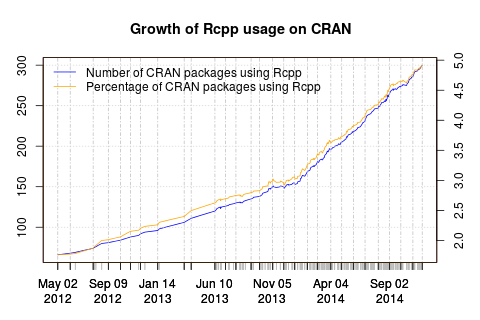 This morning,
 The line of BASIC code that appears as the subject for this post is the title for a book I just finished reading And enjoyed thoroughly. The book is
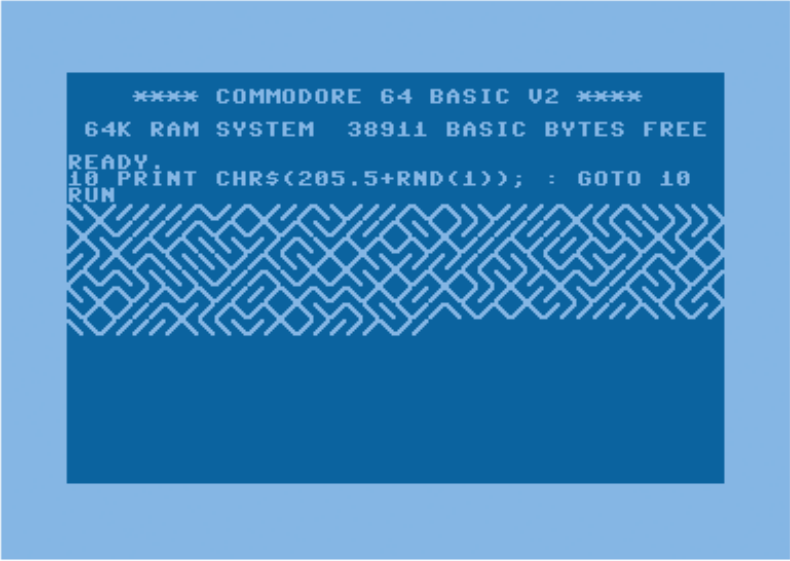 And the analysis is made from every possible angle: What do mazes mean in culture? What have they meant in cultures through history? What about regularity in art (mainly 20th century art)? How would this code look (or how it would be adapted) on contemporary non-C64 computers? And in other languages more popular today? What does randomness mean? And what does random() mean? What is BASIC, and how it came to the C64? What is the C64, and where did it come from? And several other beautiful chapters.
 The book was collaboratively written by ten different authors, in a Wiki-like fashion. And... Well, what else is there to say? I enjoyed so much reading through long chapters of my childhood, of what attracted me to computers, of my cultural traits and values... I really hope that, in due time, I can be a part of such a beautiful project!
 This is, essentially, a call for help, as I don't really know which program
is at a fault here.
Given that Emacs's upstream
 You may have heard that Uber has been under a bit of fire lately for its
desires to


 With
 Tooz provides an API to manage group membership. The basic operations provided
are: the creation of a group, the ability to join it, leave it and list its
members. It's also possible to be notified as soon as a member joins or leaves a
group.
Leader election
 Each group can have a leader elected. Each member can decide if it wants to run
for the election. If the leader disappears, another one is elected from the list
of current candidates. It's possible to be notified of the election result and
to retrieve the leader of a group at any moment.
Distributed locking
 When trying to synchronize several workers in a distributed environment, you may
need a way to lock access to some resources. That's what a distributed lock can
help you with.
Adoption in OpenStack
 Some people may have seen recently that the Barbie series has a rather sexist book out about Barbie the Computer Engineer. Fortunately, there s a way to improve this by









 I've rebuilt many Debian packages over the years, largely to fix bugs which affected me, or to add features which didn't make the cut in various releases. For example I made a package of fabric available for Wheezy, since it wasn't in the release. (Happily in that case a wheezy-backport became available. Similar cases involved repackaging gtk-gnutella when the protocol changed and the official package in the lenny release no longer worked.)
I generally release a lot of my own software as Debian packages, although I'll admit I've started switching to publishing Perl-based projects on CPAN instead - from which they can be debianized via

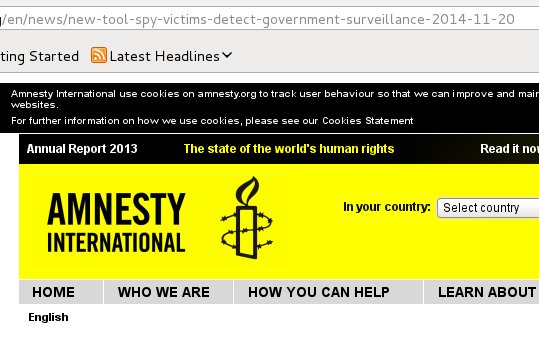 Even before I install the app to find out if the government is monitoring me, Amnesty is keen to monitor my behaviour themselves.
While cookies are used widely, their presence on a site like Amnesty's only further desensitizes Internet users to the downside risks of tracking technologies. By using cookies, Amnesty is effectivley saying a little bit of tracking is justified for the greater good. Doesn't that sound eerily like the justification we often hear from governments too?
Is Amnesty part of the solution or part of the problem?
Amnesty is a well known and widely respected name when human rights are mentioned.
However, their advice that you can install an app onto a Windows computer or iPhone to detect spyware is like telling people that putting a seatbelt on a motorbike will eliminate the risk of death. It would be much more credible for Amnesty to tell people to start by avoiding cloud services altogether, browse the web with
 Write to Amnesty
Amnesty became famous for their letter writing campaigns.
Maybe now is the time for people to write to Amnesty themselves, thank them for their efforts and encourage them to take more comprehensive action.
Feel free to cut and paste some of the following potential ideas

 There s many ways to interpret the last GR. The way I see it is how Joey hoped Debian was: the outcome of the poll shows that we don t want to do technical decisions by voting. At the beginning of this GR, I was supportive of it, and though it was a good thing to enforce the rule that we care for non-systemd setups. Though I have slowly changed my mind. I still think it was a good idea to see what the community thought after a so long debate. I now think that this final outcome is awesome and couldn t have been better. Science (and computer science) has never been about voting, otherwise the earth would be flat, without drifting continents.
So my hope is that the Debian project as a whole, will allow itself to do mistakes, iterative trials, errors, and go back on any technical decision if they don t make sense anymore. When being asked something, it s ok to reply: I don t know , and it should be ok for the Debian project to have this alternative as one of the possible answers. I m convince that refusing to take a drastic choice in this point in time was exactly what we needed to do. And my hope is that Joey comes back after he realizes that we ve all understood and embarrassed his position that science cannot be governed by polls.
For Stretch, I m sure there s going to be a lot of new alternatives. Maybe uselessd, eudev and others. Maybe I ll have a bit of time to work on OpenRC Debian integration myself (hum I m dreaming here ). Maybe something else. Let s just wait. We have more than 300 bugs to fix before Jessie can be released. Let s happilly work on that together, and forget about the init systems for a while
P.S: Just to be on the safe side: the rotten tomatoes image was not about criticizing the persons who started the poll, who I respect a lot, especially Ian, who I am convinced is trying to do his best for Debian (hug).
 Another PSA: something surprising about XML.
As you might all know, XML must be valid UTF-8 (or UTF-16 (or another encoding supported by the parser, but one which yields valid Unicode codepoints when read and converted)). Some characters, such as the ampersand & , must be escaped ( & or & , although & may also work, depending on the domain) or put into a CDATA section ( <![CDATA[&]]> ).
A bit surprisingly, a literal backspace character (ASCII 08h, Unicode U+0008) is not allowed in the text. I

 Disclaimer: I m not used to writing personal stuff on Debian channels. However, there is nothing new here for those who know me from other public channels.