Search Results: "nic"

3 August 2013

Daniel Leidert: Setting up a network buildd with pbuilder, ccache, inoticoming and NFS

I recently bought an N54L HP microserver, which shall act as a build-daemon (buildd) for Debian packaging. The idea of my workflow is the following:
  1. do the maintenance tasks locally, usually using svn-buildpackage, quilt etc.pp
  2. build a source package locally
  3. upload the source to an incoming directory on the server
  4. watch this incoming directory and start a build process as soon as a package is uploaded
  5. put the result into an accessible directory
  6. support different vendors (debian, ubuntu)
  7. support different releases (experimental, unstable, stable, oldstable)
  8. support different architectures (amd64, i386)
  9. speed up the build process
Setting up the building environmentMy first idea was to use sbuild as described in several places. However I went with pbuilder for a long time having a setup I personally like. So I decided to stay with it. I reduce the time and work to update the configure files by using
  • one central file /etc/pbuilderrc.inc defining all the common/shared settings and
  • small configure files defining vendor, release, architecture and mirrors
Here are the relevant parts of my central configure snippet:

[..]
EXTRAPACKAGES="apt-utils debconf debconf-utils libfile-fcntllock-perl"
[..]
BASETGZ="/var/cache/pbuilder/base.$DISTRIBUTION.$ARCHITECTURE.tgz"
APTCACHE="/var/cache/pbuilder/aptcache/$DISTRIBUTION/$ARCHITECTURE/"
BUILDRESULT="/var/cache/pbuilder/result/$DISTRIBUTION/$ARCHITECTURE/"
[..]
case "$VENDOR" in
ubuntu)
MIRRORSITE="http://archive.ubuntu.com/ubuntu"
COMPONENTS="main restricted universe multiverse"
OTHERMIRROR="\
deb http://de.archive.ubuntu.com/ubuntu $DISTRIBUTION main restricted universe multiverse \
deb http://archive.ubuntu.com/ubuntu $DISTRIBUTION-updates main restricted universe multiverse \
deb http://security.ubuntu.com/ubuntu $DISTRIBUTION-security main restricted universe multiverse \
"
;;
*)
MIRRORSITE="http://ftp.debian.org/debian"
COMPONENTS="main contrib non-free"
OTHERMIRROR="\
deb http://ftp.de.debian.org/debian $DISTRIBUTION main contrib non-free \
"
;;
esac
[..]
DEBBUILDOPTS="-us -uc -j2"
AUTO_DEBSIGN=no
USE_PDEBUILD_INTERNAL=yes
[..]
You get the main idea, right? Create own files and directories for each architecture, release and vendor. Further I only want to pull build related packages into the build environment, not into the server environment. So I enabled USE_PDEBUILD_INTERNAL. I don't want to sign anything on the buildd itself and use both cores. That's what DEBBUILDOPTS and AUTO_DEBSIGN are used for. Further I saw some warnings reported during build processes. I therefor install the packages mentioned in EXTRAPACKAGES to every build enviroment. The following are the configure files for the unstable amd64 (default) and the stable i386 build environments:

VENDOR="debian"
DISTRIBUTION="sid"
ARCHITECTURE="amd64"

. /etc/pbuilderrc.inc

VENDOR="debian"
DISTRIBUTION="wheezy"
ARCHITECTURE="i386"

. /etc/pbuilderrc.inc

OTHERMIRROR+="\
deb http://security.debian.org $DISTRIBUTION/updates main contrib non-free \
"
Now to not having to update all of these environments manually there is a small parallelized script /usr/local/sbin/update-pbuilder-chroots:

#!/bin/sh

t=$(tempfile -p .upc. -s .list) exit 1

cat > $t << EOF
/etc/pbuilderrc.amd64.sid
/etc/pbuilderrc.i386.sid
/etc/pbuilderrc.amd64.wheezy
/etc/pbuilderrc.i386.wheezy
/etc/pbuilderrc.amd64.squeeze
/etc/pbuilderrc.i386.squeeze
EOF

parallel /usr/sbin/pbuilder update --override-config --configfile :::: $t tee -a /var/log/pbuilder.log

rm -f $t

exit 0
The script will make sure, that every change to the configuration file(s) will be considered (--override-config) and is run once a week via cron. The default build environment is updated on a daily base without this restriction:

@reboot root rm -rf /var/cache/pbuilder/build/*/ >> /dev/null 2>&1
@daily root test -x /usr/sbin/pbuilder && /usr/sbin/pbuilder update --configfile /etc/pbuilderrc.amd64.sid tee -a /var/log/pbuilder.log >> /dev/null 2>&1
@weekly root test -x /usr/local/sbin/update-pbuilder-chroots && /usr/local/sbin/update-pbuilder-chroots >> /dev/null 2>&1
Speeding up the build processSometimes it is necessary to recompile a package. The tool to speed up this process is ccache, which can be easily integrated into pbuilder by setting CCACHEDIR in /etc/pbuilderrc.inc. It acts like a cache for compiled files and avoids recompilation in several buildd runs.

CCACHEDIR=/var/cache/pbuilder/ccache
It is also possible to use a TMPFS for BUILDPLACE to speed up the build process itself. In this case APTCACHEHARDLINK must be disabled. Well, yeah, I don't do this.Watch an incoming directory and start the build processNot much to say about this except that the user nobody is used to run the pbuilder command. Therefor it is necessary to mention this in /etc/sudoers to allow him to do this via sudo command:

Defaults env_keep = "DH_OPTIONS DH_VERBOSE DEB_BUILD_OPTIONS DH_OPTIONS MAKEFLAGS CC CXX CPP F77 F90"
[..]
nobody ALL=NOPASSWD:/usr/sbin/pbuilder
The first line is only necessary, if a pbuilder command is started with one of these environmental variables set. This can be useful when e.g. debugging a build failure with a future gcc version that is not yet the default or when debugging a clang build issue or when creating non-stripped binary packages for creating a backtrace (BTW: When there is a common repository of all debugging symbols created?).Now to start the build process, I created an incoming directory with mods 777 at /var/cache/pbuilder/incoming/ and use inoticoming to watch it. This is started during boot via cron. The following shows the entry for the default unstable amd64 build environment:

@reboot root /usr/bin/inoticoming --logfile /var/log/inoticoming.log --pid-file /var/run/inoticoming.pid /var/cache/pbuilder/incoming --chdir /var/cache/pbuilder/incoming --suffix .dsc --stderr-to-log --stdout-to-log /bin/su -c '/usr/bin/sudo /usr/sbin/pbuilder build --autocleanaptcache ' nobody \;
Done. That's how the basic buildd works.Getting the resultsThe pbuilder BUILDRESULT directory with mods 777 is shared via NFS mount to the workstation. After successfully building the package, debsign and dput can be used as usual.Setting up the workstationI use svn-buildpackage for most of my packages. Because pbuilder won't download source tarballs on demand by default (maybe via hook?), the tarball must always be included building the source package, which then gets uploaded via dput to the buildd. This is considered in the command listed in svn-builder in ~/.svn-buildpackage.conf (note, below shows my personal layout):

svn-builder=debuild --post-dpkg-buildpackage-hook=\"dput -f buildd /usr/local/src/packages/$PACKAGE/%p_%v_source.changes\" --no-lintian -d -sa -us -uc -S
svn-override=origDir=/usr/local/src/packages/$PACKAGE
svn-override=buildArea=/usr/local/src/packages/$PACKAGE
[..]
The host buildd has been added to ~/.dput.cf:

[buildd]
fqdn = mybuildd
login = mylogin
method = scp
incoming = /var/cache/pbuilder/incoming
allow_unsigned_uploads = 1
run_lintian = 0
Done. Now the svn-buildpackage command will create a source package including the source tarball and upload it to the buildd, where the package building starts right after the upload.ConclusionsThis is the main setup which works nicely for the default build environment so far. On the TODO list is to extend this setup so I can easily deal with all the architectures and releases (point 6..8 at the beginning).

Russell Coker: Religious Conversion

Today I was in the center of Melbourne and I saw two stands run by Muslims advocating their faith. They had a selection of DVDs and brochures to give away and seemed friendly enough for anyone who wanted a chat. I think that this is a good thing, if the majority of the Australian population would think of the Muslim minority as people who give away DVDs rather than as potential suicide bombers then it would be a great benefit for society. Then I saw a Christian stand which had placards indicating that Jesus loves Muslims, which is fine. One of the workers on that stand then gleefully told me that there had been a Muslim stand in that area but the Muslims departed when they arrived. It would be good if advocates for the various religions could work together to promote positive things that they all agree on (generally related to being nice to other people). When they seem to be essentially bullying other religious groups into leaving the area they aren t making a good case for a kind and caring god. The Christian who was so happy about the Muslims departing then tried to convert me. He started by talking about a mobile phone not being able to appear from nothing which was the start of an utterly stupid argument about creationism. That was stupid firstly because it s obvious that evolution doesn t apply to consumer electronics, if I leave a phone lying on top of another phone overnight I m not going to get some little phones appearing as a result. But the bigger stupidity is in even promoting creationism in the first place. Advocating creationism is essentially claiming that god is so incapable that ze can t manage an evolutionary process. An all-seeing all-knowing god of infinite intelligence could just create a plasma cloud that will form into a solar system and evolve life. People who argue for creationism don t believe in a capable god, they believe in a being that resembles a god in the way a magician resembles someone who can actually perform magic. Arguing for creationism is arguing for a limited being which probably isn t worthy of worship (why worship space aliens who are probably only a few thousand years ahead of us). Regardless of the scientific evidence (which is strongly in favor of evolution) just logically thinking about the issue in regard to what a being with infinite powers might actually do suggests that ze could just as easily create or evolve all life and probably wouldn t care about what we believe. Genesis should be taken as metaphor because it s obvious that nothing that s taught in a year 7 science class could be taught to your typical stone age goat-herd, but even if it was taken literally it s not specified as a required belief (as opposed to a belief in a single god, repenting sins, and other beliefs which are required). The greatest stupidity however is the fact that even if it made any sense to promote creationism it wouldn t make sense to do so immediately. Any time you want to convert someone to a set of beliefs it s a good strategy to start with the ones which will seem least wacky. I can have have a conversation with Christians about positive things which we generally agree on such as donating to charity and trying to do good things in various ways. But when they start with the stupid stuff I walk away. When the weather is better I plan to interview representatives of the various religious groups who are trying to convert people on the street and rate them according to how wacky they are. I ll be a little limited in my ability to review them by the total lack of any right to free speech in Australia (our laws are much the same as those in the UK). But I should still be able to give them a reasonable review.

Paul Tagliamonte: Hy: The survival guide

One of my new favorite languages is a peppy little lisp called hy. I like it a lot since it's a result of a hilarious idea I had while talking with some coworkers over mexican food. Since I'm the most experienced Hypster on the planet, I figured I should write a survival guide. This will go a lot easier if you already know Lisp, but you can get away with quite a bit of Python. The Tao of Hy We don't have many rules (yet), but we do have quite a bit of philosophy. The collective Hyve Mind has spent quite a bit of time working out Hy's internals, and we do spend a bit of time looking at how the language feels . The following is a brief list of some of the design decisions we've picked out.
  1. Look like a lisp, DTRT with it (e.g. dashes turn to underscores, earmuffs turn to all-caps.)
  2. We're still Python. Most of the internals translate 1:1 to Python internals.
  3. Use unicode everywhere.
  4. Tests or it doesn't exist.
  5. Fix the bad decisions in Python 2 when we can (see true_division)
  6. When in doubt, defer to Python.
  7. If you're still unsure, defer to Clojure
  8. If you're even more unsure, you're fucked (see also: defer to Common Lisp)
Naturally, this doesn't cover everything, but if you can drop into that mindset, things start to make quite a bit of sense. The Style of Hy Although I am perhaps the least qualified person to do so (I still don't write idiomatic Lisp all the time), I'm going to set up a few ground-rules when it comes to idiomatic Hy code. We borrow quite a bit of syntax from Common Lisp and Clojure, so again, feel free to defer to either if you're not working on Hy internals. I prefer the Clojure Style Guidelines myself. As such, these are what we will defer to in the case that the Hy style is undefined. Clojure-isms Hy has quite a few Clojure-isms that I rather prefer, such as the threading macro, and dot-notation (for accessing methods on an Object), which I would rather see used throught the hylands.
;; good:
(with [fd (open "/etc/passwd")]
    (print (.readlines fd)))
;; bad:
(with [fd (open "/etc/passwd")]
    (print (fd.readlines)))
Some other hy devs very much disagree, and there's nothing syntactically invalid about the latter, and it will continue to be supported (in fact, it makes some things easier!), but it will not be considered for Hy internal code. We also very much encourage use of the threading macro throughout code where it makes sense.
;; good:
(import [sh [cat grep]])
(-> (cat "/usr/share/dict/words") (grep "-E" "tag$"))
;; bad:
(import [sh [cat grep]])
(grep (cat "/usr/share/dict/words") "-E" "tag$")
However, do use it when it helps aid in clarity, like all things, there are cases where it makes a mess out of something that ought to not be futzed with. Python-isms In addition to stealing quite a bit of syntax from Clojure, I'm going to take a few Python rules from PEP8 that apply to Hy as well. These are taken because PEP8 is a really great set of rules, and Hy code ends up pretty, well, Pythonic. The following are a collection of Pythonic rules that explicitly apply to Hy code. Trailing spaces is a huge one. Never ever ever shall it be OK to have trailing spaces on internal Hy code. For they suck. As with Python, you shall always double-space module-level definitions if seperated with a newline. All public functions must always contain docstrings. Inline comments shall be two spaces from the end of the code, if they are inline comments. They must always have a space between the comment character and the start of the comment. Hy-isms Indentation shall be two spaces, except where matching the indentation of the previous line.
;; good (and prefered):
(defn fib [n]
  (if (<= n 2)
      n
      (+ (fib (- n 1)) (fib (- n 2)))))
;; still OK:
(defn fib [n]
  (if (<= n 2) n (+ (fib (- n 1)) (fib (- n 2)))))
;; still OK:
(defn fib [n]
  (if (<= n 2)
    n
    (+ (fib (- n 1)) (fib (- n 2)))))
;; Stupid as hell
(defn fib [n]
    (if (<= n 2)
            n
      (+ (fib (- n 1)) (fib (- n 2)))))
Parens must never be alone, sad, all by their lonesome on their own line.
;; good (and prefered):
(defn fib [n]
  (if (<= n 2)
      n
      (+ (fib (- n 1)) (fib (- n 2)))))
;; Stupid as hell
(defn fib [n] 
    (if (<= n 2)
      n
      (+ (fib (- n 1)) (fib (- n 2)))
    )
)  ; GAH, BURN IT WITH FIRE
Don't use S-Expression syntax where vector syntax is really required. For instance, the fact that:
;; bad (and evil)
(defn foo (x) (print x))
(foo 1)
works is just because the compiler isn't overly strict. In reality, the correct syntax in places such as this is:
;; good (and prefered):
(defn foo [x] (print x))
(foo 1)
Notice This guide is, above all, a guide. This is also only truely binding for working on Hy code internally. This post is also super subject to change in the future, whenever I can be bothered to ensure that we have more of the de facto rules written down.

Benjamin Mako Hill: Doctor of Philosophy

On Wednesday, I successfully defended my PhD dissertation in front of a ridiculously packed house at the MIT Media Lab. I am humbled by the support shown by the MIT Sloan, Media Lab, and Harvard communities. Earlier today, I finished up paperwork and submitted my archival copies. I m done. Although I ve often heard PhDs described as emotional roller coasters, I feel enormously blessed in that I honestly can t relate. My eight years at MIT and Harvard have been almost universally positive and I have learned and grown indescribably. As excited as I am about my next chapter at the University of Washington, I m going to miss my life here. Deeply. My dissertation was three essays on volunteer mobilization in peer production. Once I have a chance to catch up and recover, I ll be posting the previously unpublished pieces. The Remixing Dilemma was included in the dissertation and is already online. The Media Lab AV team shot professional video of the talk. When I get a copy of the video, I ll post that too. But because I think it s important, I ve formatted and published the acknowledgments section of the dissertation today. Although there are too many folks to thank, I ve highlighted the contributions of my co-authors, and friends, Aaron Shaw and Andr s Monroy Hern ndez and my almost unbelievably incredible group of advisors: Eric von Hippel, Yochai Benkler, Mitch Resnick, and Tom Malone.

2 August 2013

Joey Hess: DIY crowdfunding and bitcoin

Well, my git-annex crowdfunding campaign is half way to its August 15th conclusion. So far it's raised more than five times what I hoped it would. I wish I could say I'm like some canny NASA engineer who intentionally sets low expectations for their Mars rover, but in both the previous kickstarter and this campaign I've really had no idea how far it'd go. I'm glad that I'll be working on git-annex for another year. I was particularly unsure if it'd be successful to move off Kickstarter. During the git-annex assistant Kickstarter campaign, I saw many small contributions from people who learned of it due to it being a successfully funded project, a staff pick, etc. Losing that easy network effect is a gamble. So far I've had only half the number of contributors that I got on Kickstarter. I've basically missed out entirely on the $5 level casual contributors. On the other hand, my backers have generally been more generous (and some have been exceedingly generous). And I've avoided rewards that will cost much money, so I may end up in the same ballpark funding level in the end! Incidentially, I'm really enjoying getting in touch to let people know when I make their sponsored commits. There's still time to sponsor one of your own ;) Bitcoin I also was curious to experiment with Bitcoin in this campaign. Partly because Paypal isn't available everywhere internationally, and takes really obnoxious percentages of transactions (though probably not as bad as Kickstarter taking its percentage followed by Amazon payments taking its percentage..) and partly because there seem to be interesting possibilities for supporting free software with Bitcoin. (Especially if any of the microtransactions on top of Bitcoin take off.) So far 5% of backers have used Bitcoin. It's been quite strange to actually have significant amounts of bitcoins in my wallet. Wordpress has had 94 bitcoin payments over 9 months since starting accepting them. I've had 47 payments in the two weeks my campaign has run so far. Wow! Most of the bitcoin payments have come in via Coinbase (a few people have found my direct payment address), but of those very few were using bitcoin purchased on Coinbase. Most are probably transfers of bitcoin they already had, or perhaps bitcoin purchased on other sites. The one technical issue I've had with using bitcoin is that Coinbase has not provided details about who sent most of the donations. Probably some of them are intentionally anonymous, but I suspect Coinbase's interface to claim incoming bitcoin transactions failed for some of them. (If you donated bitcoin and want to actually get a reward, please email me.) By the way, I'm converting most of the bitcoins back to USD pretty quickly. I'm not interested in speculating on currency exchange rates with money that has been donated so I can accomplish a particular task.. DIY I put up the campaign website without any means in place to handle updating it. This is because I never automate anything until I've done it at least 10 times by hand. ;) After the first trickle of donations became a flood, I quickly realized I needed at least something to handle keeping the numbers straight. What I whipped up in an hour of coding is a system where I enter incoming payments into a hledger file and a small haskell program parses that and writes out various files that are included into the website. Amusingly the percentage calculation and display code was copied from git-annex, so part of git-annex is helping run its own fundraising campaign. The campaign video is itself hosted in a public git-annex repository, come to think of it. The rest of the site is built using ikiwiki. Given that it's hosted at Branchable, this is a high level of dogfooding and DIY. There are certianly better crowdfunding platforms, but all I miss in this one is automated transaction entry. And I have total flexability, double entry accounting, and a powerful static website generator that handled being on the top of Hacker News without a sweat. Oh, and some money. What's not to like?

1 August 2013

Russ Allbery: Review: And Playing the Role of Herself

Review: And Playing the Role of Herself, by K.E. Lane
Publisher: Regal Crest
Copyright: 2006
Printing: June 2010
ISBN: 1-932300-72-4
Format: Kindle
Pages: 336
Caidence Harris is an actress who has finally gotten her big shot: a starring role in the hit police drama 9th Precinct. She plays half of a police partnership; the other half is played by her best friend, the considerably more famous Liz Stokley. She's quite happy with her life and her work, and only tentatively pondering what to do about coming out (at least to herself) as a lesbian. But matters get considerably more complicated when she starts falling for Robyn Ward, a star in a parallel legal drama. And the very high-profile girlfriend of one of the best male tennis players in the world. Yes, another lesbian romance. This one has won several awards, including the highest recommendation from my friend who's been prefiltering the genre for me and pointing out only the best stories. And despite being set firmly among the rich and famous and involving TV dramas with the serial numbers filed off, he was right. This is a thoroughly enjoyable story. One of its strongest parts is how Lane develops the romance between Caidence and Robyn. There is a bit of the inevitable physical chemistry so common in romances (I still don't believe kisses work that way), and a few descriptions of physical beauty (after all, there's a built-in excuse for everyone to be TV-star beautiful). But Lane avoids putting either at the center of the relationship. Instead, this is a romance built on trust, tentative at first and then growing but rocky. That speaks to me a lot more than all the descriptions of physical chemistry. For example, we don't see Caidence and Robyn meet for the first time in the novel, as is usually the case. They've been around each other before, with Caidence acting rather tongue-tied and a bit star-struck and Robyn thinking she's rather silly. The story begins when, for whatever reason, Caidence finally manages to relax and become genuine, and then both of them become closer as they find themselves lowering barriers around each other that they normally don't lower. Lane does an excellent job using a few key facial expressions as symbols and hallmarks of that, letting the reader follow the way that trust builds through the story. The other great element of this book is Caidence's friend Liz. She could have been a stereotype of a movie star: drop-dead gorgeous, a new boyfriend each week, but not particularly intelligent. That's how she comes off at first. But as the story progresses, Lane shows more and more of their friendship, and the reader gets to see just how much Liz's first impression is a combination of an act and her unapologetic tendency to do what she wants. Underneath, she's a strong female character and an excellent, if meddling friend; by the end of the book, she was in the running for my favorite character. This is characterization of a quality that I rarely see in any genre of novel. Given that it's a romance that I enjoyed, you can correctly expect there not to be a lot of obnoxious communication breakdowns or chapters full of the main characters refusing to communicate with each other. There are, of course, a wide variety of barriers in the way of a relationship for the main characters, not the least of which being that neither of them was looking for something serious. But while they both do occasionally thoughtless or hurtful things, it's always clear just why they were thoughtless, or where their buttons were accidentally pressed, and few of the character actions are outright stupid. And, delightfully, Lane structures the story so that there are multiple, incremental payoffs. One can not only enjoy the characters getting together in the end, as they always do in this genre, but a lot of important and meaningful steps along the way. Lane does a great job putting the reader in Caidence's head, helped by first-person narration, so that one can feel just how much some moments mean to her emotionally. Add in several other fleshed-out and interesting supporting characters, some incredible architecture that was fun to imagine, and rather more in the way of plot twists and dramatic moments than I usually expect in a romance (and although the book worried me once, none of them go to the dark places that would have been less fun), and one gets a novel that kept me engrossed from start to finish. I'm tempted to read it again, and that's rare for me for a romance novel. If you're in the mood for a heart-warming story about intelligent people learning how to be together, I highly recommend this book. It's a great book to read as a stress relief when you want a story that you know will turn out "right." Rating: 9 out of 10

31 July 2013

Michael Stapelberg: dh-golang in unstable

Good news, everyone! dh-golang is now in Debian unstable. With this debhelper addon, packaging software written in Go is very simple. Have a look at the example/ directory in dh-golang to see how it is meant to be used. Essentially, export the DH_GOPKG variable containing the canonical upstream location of the package (e.g. github.com/stapelberg/godebiancontrol) and then use dh $@ --buildsystem=golang --with=golang. That s it! Now, given that this package is very new and only two packages use it so far (both of which are not yet in Debian, but real soon ), there are most likely bugs and missing features. This is where you come in: when packaging software written in Go, please contact me and tell me whether dh-golang worked for you and what could be improved. In case something does not work, definitely report it. Even if everything worked, I d be happy to have a look at your packaging before you upload. Also see https://wiki.debian.org/MichaelStapelberg/GoPackaging.

Raphael Geissert: Ten years-old ebook reader

I own a ten years-old ebook reader.

Is it a smartphone?
It has features that make it pretty much like one, except that it can't make phone calls. So no. (However, I dare to say that making phone calls is one of the least used features of smartphones nowadays. Perhaps in the feature smartphones won't even be phones anymore, due to atrophy.)

What is it then?
It is a Sony CLI , a PEG-SJ22 to be more precise. A PDA running Palm OS 4.1 that I'm now using as an ebook reader. To my surprise, the Plucker and iSilo readers still exist and at least the latter seems somewhat alive - there is even a version for Android.

Nowadays there are ebook readers with electronic paper displays, wifi or 3G connectivity, and other features but they all come down to the same thing: an ebook reader. Truth be told, the technology is quite old. In 2004, a year after the release of the PEG-SJ22, Sony also released the LIBRI EBR-1000EP in Japan, an ebook reader with a 6" electronic paper display. A few years later is was released in the US as the Sony Reader.

Certainly, there have been advances since those devices were first released, but I have yet to see something that is really innovating. This year we are back to wrist watches, which were first released more than ten years ago - and one of them even ran linux.

Netbooks also had devices like the PEG-UX50 as their ancestor.

And if you were thinking about shoes, you've arrived late: the Puma RS already had some chips in them, and the Adidas 1 were also sported a few years ago. World, it's time to innovate.

30 July 2013

Daniel Pocock: Switzerland's scariest railway (video)

Although promoted as a funicular railway, the Gelmerbahn funicular has the appearance of a giant roller coaster and all of the fun too. For all those still having nightmares about recent rail tragedies in the age of non-stop surveillance and on-line replays, the 108 degree ascent (or descent) may not be your thing. On the other hand, for those who experience the London Underground each morning, "mind the gap" takes on a whole new meaning as you see your feet hanging out the bottom of the train and the tracks descending vertically into the valley below. <video controls="" height="340" poster="http://danielpocock.com/sites/danielpocock.com/files/gbahn-preview.jpg" width="560">

<source src="http://video.danielpocock.com/Gelmerbahn.webm" type="video/webm"></source>
Click to access video on original page
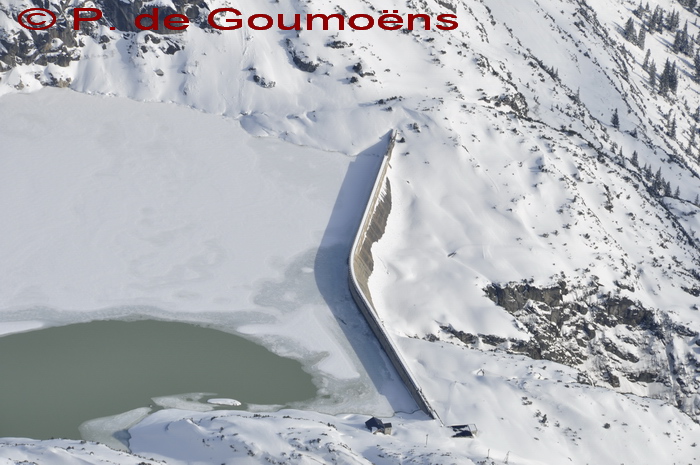
</video> and here are download links for those who prefer to download now and watch later (about 160MB): At the top At the top, there is a scenic two hour walk around Lake Gelmer, the path takes you across the top of a dam built for hydro-electric power generation. Lake Gelmer - hydro-electric dam Getting there from DebConf13 and the Debian 20th birthday For those coming to Switzerland for DebConf13 next month, the Gelmerbahn is probably a little bit too far for a day trip but makes an excellent place to stop during a 2 or 3 day tour around Switzerland. It is accessible using the all-day bus pass for the tour of 3 or 4 mountain passes or by train to Innertkirchen and then a short ride on the bus. The busses are irregular, use sbb.ch to plan the journey. Walking down the mountain from the lake to the bus stop takes about 90 minutes and for those who choose this option, the ticket is cheaper. More Swiss travel blogs Please click here to access some of my previous blogs about Swiss travel with videos and useful ideas for day trips.

28 July 2013

Daniel Pocock: This blog was slashdotted

My earlier blog about rigged elections was slashdotted over the weekend. I had an email from the slashdot team giving me advance warning, having heard the stories about other sites getting knocked offline, I immediately logged into my Ganglia console to start the tsunami watch. I then set about enabling a reverse proxy using Squid to accelerate web server performance. This took about 30 minutes to set up. I chose Squid 3 so I could use a logging format similar to Apache. The wave hits A few hours after the warning email, details appeared on slashdot and sure enough, thousands of visitors started coming to this site. As detailed previously, the site is running on Debian servers with XCP. The web site is managed by Drupal/Apache/MySQL. Everything held together very well. Ganglia demonstrated an initial surge lasting about 10 minutes. From there, traffic has tapered off gradually over 24 hours, although it still remains well above average. slashdot comments One of the most interesting things about the slashdot community are the comments. Given that nobody really wanted to defend the indefensible and nothing in my blog surpasses some of what has been in the news recently (150 charges of fraud against a single MP), most of the discussion quickly turned to a comparison of broadband policies. For those not already aware of it, the Australian Government (Labor Party) is currently rolling out fibre to the home. The project is expected to take about 10 years, although it was delivered very quickly in certain areas where the Government needs votes. Opinions are divided: people who got it first think it is great, some people feel it is too expensive (it's much more expensive than a similar service in Switzerland, for example), some people feel it will be too slow when the final stages are completed in 10 years. It appears technically stronger than the solution proposed by the alternative party.

Joey Hess: git-annex as a podcatcher

As a Sunday diversion, I wrote 150 lines of code and turned git-annex into a podcatcher! I've been using hpodder, a podcatcher written in Haskell. But John Goerzen hasn't had time to maintain it, and it fell out of Debian a while ago. John suggested I maintain it, but I have not found the time, and it'd be another mass of code for me to learn and worry about. Also, hpodder has some misfeatures common to the "podcatcher" genre: So, here's a rethink of the podcatcher genre:
cd annex; git annex importfeed http://url/to/podcast http://another/podcast
There is no database of feeds at all. Although of course you can check a list of them right into the same git repository, next to the files it adds. git-annex already keeps track of urls associated with content, so it reuses that to know which urls it's already downloaded. So when you're done with a podcast file and delete it, it won't download it again. This is a podcatcher that doesn't need to actually download podcast files! With --fast, it only records the existence of files in git, so git annex get will download them from the web (or perhaps from a nearer location that git-annex knows about). Took just 3 hours to write, and that's including full control over the filenames it uses (--template='$ feedtitle)/$ itemtitle $ extension '), and automatic resuming of interrupted downloads. Most of what I needed was already available in git-annex's utility libraries or Hackage. Technically, the only part of this that was hard at all was efficiently querying the git repository for a list of all known urls. I found a pretty fast way to do it, but might add a local cache file later on.

Francois Marier: FISL for foreigners HOWTO

FISL (pronounced FIZZ lay by the locals) is a large Free and Open Source software gathering in Porto Alegre, Brazil. While the primary audience of that conference is the Latin America "libre software" community, a number of overseas speakers also participate in that conference. This is my contribution to them: a short guide for international guests visiting the F rum Internacional do Software Livre.

Planning Before you fly out, make sure you look up the visa requirements for your country of citizenship. Many western countries will require a visa and you will need to visit the local Brazillian embassy ahead of time to get one. Next, have a look at the list of recommended immunizations. As with most destinations, it is recommended that your routine immunizations be up to date, but there are also other specialized ones such as Yellow Fever that are recommended by the Brazillian government. You should therefore visit a travel clinic a few weeks ahead of time. Other than that, I suggest reading up on the country and keeping an eye on the various travel advisories.

Arrival You will be flying at the Porto Alegre airport. If you need to exchange overseas money for Brazilian Reals, you can do that there. You'll probably also want to pick up a power adapter at the airport if you intend to charge your laptop while you're in the country :) Brazil has both 127V and 220V outlets using Type N sockets. Privacy note: using the free airport wifi will require giving your Passport details as part of the registration process.

Language If you don't speak Portuguese, expect a few challenges since most of the people you'll meet (including taxi drivers, many airport workers, some hotel staff) won't speak English. I highly recommend getting a phrase book before you leave and printing paper maps of where you are planning to go (to show to taxi drivers when you get lost). Native Spanish speakers seem to get by speaking Spanish to Portuguese speakers and understanding enough Portuguese to hold a conversation. I wouldn't count on it unless your Spanish is quite good though. Also, the official conference blog posts get eventually translated to English, but there is a delay, so you may want to subscribe to the Portuguese feed and use Google Translate to keep up with FISL news before you get there.

The conference FISL is a large conference and it has a very "decentralized" feel to it. From the outside, it looks like it's organized by an army of volunteers where everyone is taking care of some portion of it without a whole lot of top-down direction. It seems to work quite well! What this means for you as a foreign speaker however is that you're unlikely to be provided with a lot of information or help finding your way around the conference (i.e. no "speaker liaison"). There is a separate registration desk for speakers but that's about all of the attention you'll receive before you deliver your talk. So make sure you know where to go and show up in your assigned room early to speak with the person introducing you. If your talk is in English, it will be live-transated by an interpreter. It's therefore a good idea to speak a bit more slowly and to pause a bit more. Other than that, the organizers make an effort to schedule an English talk in each timeslot so non-Portuguese speakers should still be able to get a lot out of the conference. FISL was a lot of fun for me and I hope that some of these tips will help you enjoy the biggest FLOSS gathering in the southern hemisphere!

27 July 2013

Christian Perrier: [life] Running update July 27th 2013: Bubulle now runs in moutains

My last running update was sent after I had a great April month with two successful trail races (35km then 44km). The next target was Mont-Blanc marathon in Chamonix valley in early July, so it's time for me to send a new update before summer. May and June was mostly training. Huge training. Very long distances with 375km in May and over 430 in June (breaking my former monthly record by over 50 kilometers). Yes, that means over 14 kilometers every day..:-) I indeed achieved that with my "go to work partly by running" habits, which are now deeply included in my daily schedule. Much more convenient than bus ride (with the typical random schedules of RATP, which French people translate by "Rentre Avec Tes Pieds" or "Come back home by walking"....which is exactly what I'm doing). With such training (sometimes including extra rides in the forests, with short but steep ups and downs)....I was well prepared for THE early summer goal : Marathon du Mont-Blanc in Chamonix (not Ultra Trail du Mont-blanc : this one, I'm not ready for....yet).. My first mountain trail race, and what race! Imagine 42km in the moutain lovers heaven, namely the Chamonix Valley, with the Mont-Blanc, Aiguille Verte, Aiguille du Midi, Aiguilles Rouges, etc. above your head. Of course, not only in the valley but goind up and down "slightly"....in short 2200 meters positive climb..:-) I ran it with a female friend of mine, who I met in local races and through runners web forums. Sabine has about the same running skills than me and we developed a good and nice friendship, sharing our love for running in the nature. So, during May and June, we decided to run this race together as we were both registered for it. A first trial in a local 35km trail race two weeks before the MMB was very successful. We ended up in 3h40 and Sabine was ranked 5th female runner. And, moreover, we had a tremendous pleasure by crossing the finishing line together. So, we did it again in Chamonix. And, hell, we did it well: I had set the goal to 6 hours and 30 minutes and we completed the race in..... 6 hours and 34 minutes. Much much better than I and she would have expected. And, believe me, crossing the finishing line was again a special moment, particularly because the crowd at the end of this race make it look like l'Alpe d'Huez on the Tour de France. And, this on a wonderful sunny day, arriving at Planpraz, facing the Mont-Blanc. If you've ever been to Chamonix, you know what I mean. So, first moutain trail and, hell, not the last one! For those of you who can read French...or just want to see some pictures of a running bubulle, here is the link to the story. And these 42 kilometers were indeed so well done that the day after, while coming down from the famous Aiguille du Midi with Elisabeth (who came with me to Chamonix, of course)...I decided to run down from the cable car intermediate stop (2300m altitude) to Chamonix (1050m). Over 1200 meters down in 48 minutes... :-). Just a bit slower than the cable car....:) The remaining of July saw me again running back and forth to work and I'm indeed about to break my monthly record, eventually reaching 450 kilometers in one month and only two days NOT running in the whole month. Yeah, crazy. The upcoming Sunday, August 4th, just before going to Debconf 13, I'll spend a few days in Lanslebourg and will be running the EDF Cenis Tour trail, for 50 kilometers and 2600 meters positive climb. This time, a very "small" race, with no more than 150 runners. So, that will be another experience by running nearly entirely alone between 1400 and 2700 meters altitude. I'll post the outcome (or you'll probably hear about it at DC13....). See you, hopefully not in 3 months, for another update about running Bubulle.

25 July 2013

DebConf team: DebConf13 preliminary schedule available (Posted by Talks team)

We are happy to announce that the schedule for the upcoming DebConf13 in Vaumarcus, Switzerland, is available! It is still possible for some changes to occur, as we always try to accept new proposals, even those submitted during the conference. DebConf13 talks will mostly happen in two rooms simultaneously, except for a few plenaries which will be presented in the main room with no parallel event. A third room will be available for discussion groups and ad-hoc sessions. As usual, we ve tried to cluster related activities in sequence, even though it was not always possible. Besides that there will be many tracks covering specific topics, which are: There will also be two special tracks, since DebConf is not only about hacking, talks and discussions: As in previous years, we provide various ways to access the schedule: the DebConf team

Evgeni Golov: Say hello to Mister Hubert!

Some days ago I got myself a new shiny Samsung 840 Pro 256GB SSD for my laptop. The old 80GB Intel was just too damn small. Instead of just doing a pvmove from the old to the new, I decided to set up the system from scratch. That is an awesome way to get rid of old and unused stuff or at least move it to some lower class storage (read: backup). One of the things I did not bother to copy from the old disk were my ~/Debian, ~/Grml and ~/Devel folders. I mean, hey, it s all in some kind of VCS, right? I can just clone it new, if I really want. Neither I copied much of my dotfiles, these are neatly gitted with the help of RichiH s awesome vcsh and a bit of human brains (no private keys on GitHub, yada yada). After cloning a couple of my personal repos from GitHub to ~/Devel, I realized I was doing a pretty dumb job, a machine could do for me. As I already was using Joey s mr for my vcsh repositories, generating a mr config and letting mr do the actual job was the most natural thing to do. So was using Python Requests and GitHub s JSON API. And here is Mister Hubert, aka mrhub: github.com/evgeni/MisterHubert. Just call it with your GitHub username and you get a nice mr config dumped to stdout. Same applies for organizations. As usual, I hope this is useful :)

Michael Stapelberg: Looking for a USB WLAN stick

Posting this on behalf of a friend of mine in the hope that you can help: I ve failed several times now to find a suitable WLAN USB dongle that works out of the box on Debian testing. Often manufacturers change the chipsets without changing the version numbers, the product pages are incomplete or even state wrong information. I turn to you, in the hopes that someone can give me helpful pointers. The dongle should have: If you have any hints, please send them directly to breunig AT uni-hd DOT de. Thanks!

Michal &#268;iha&#345;: Weblate 1.6

Weblate 1.6 has been released today. It comes with lot of improvements, especially adds voting for suggestions, improves import performance and brings more helpful admin interface. This is also first release with crowdfunded feature, but there are still some features to fund! Full list of changes for 1.6: You can find more information about Weblate on it's website, the code is hosted on Github. If you are curious how it looks, you can try it out on demo server. You can login there with demo account using demo password or register your own user. Ready to run appliances will be soon available in SUSE Studio Gallery. Weblate is also being used https://l10n.cihar.com/ as official translating service for phpMyAdmin, Gammu, Weblate itself and others. If you are free software project which would like to use Weblate, I'm happy to help you with set up or even host Weblate for you.

Filed under: English Phpmyadmin Weblate 0 comments Flattr this!

24 July 2013

Daniel Leidert: Moving from (software) RAID 1 to RAID 5 and testing performance

Finally I finished migrating my new N54L from a 2-disk software RAID 1 (2x2TB WD20EFRX) to 3-disk RAID 5 (3x2TB WD20EFRX) using mdadm. I got an excellent mini HOWTO I followed. Resyncing and reshaping the RAID took several days ... top speed was 110.000K/s ... but left my data untouched. Finally growing the RAID now I have two partitions; one with 0.5GB (md0) and the other with 3.4GB (md1) which both host an EXT4 file system, whereas the first one is encrypted via LUKS and the second one is not. RAID device and file system configuration Below is a summary of the setup and the values I found working well for my system.
3-disk RAID 5 devicefile system
devicechunkstripe_cache_sizeread_ahead_kbtypeencryptionstridestripe-width
/dev/md064409632768ext4luks1632
/dev/md15121638432768ext4no128256
I've played around with the system a bit. Changing the chunk size on the fly however took a long time. /dev/md0 will contain some backups, so there probably will be a mixture of small and large files. So I've chosen to only test the values 64K, 128K and 512K (default) for this device. I left the other untouched as it will mainly contain large files. Performance measurement Below are the results using hdparm to measure performance. First lets take a look at the drives ...

$ hdparm -tT /dev/sd[bcd]
/dev/sdb:
Timing cached reads: 3268 MB in 2.00 seconds = 1634.54 MB/sec
Timing buffered disk reads: 438 MB in 3.00 seconds = 145.87 MB/sec

/dev/sdc:
Timing cached reads: 3292 MB in 2.00 seconds = 1646.32 MB/sec
Timing buffered disk reads: 392 MB in 3.01 seconds = 130.22 MB/sec

/dev/sdd:
Timing cached reads: 3306 MB in 2.00 seconds = 1653.18 MB/sec
Timing buffered disk reads: 436 MB in 3.00 seconds = 145.26 MB/sec

$ hdparm --direct -tT /dev/sd[bcd]
/dev/sdb:
Timing O_DIRECT cached reads: 468 MB in 2.01 seconds = 233.17 MB/sec
Timing O_DIRECT disk reads: 442 MB in 3.00 seconds = 147.15 MB/sec

/dev/sdc:
Timing O_DIRECT cached reads: 468 MB in 2.00 seconds = 233.69 MB/sec
Timing O_DIRECT disk reads: 392 MB in 3.01 seconds = 130.36 MB/sec

/dev/sdd:
Timing O_DIRECT cached reads: 468 MB in 2.00 seconds = 233.94 MB/sec
Timing O_DIRECT disk reads: 442 MB in 3.01 seconds = 146.93 MB/sec
... and now at the RAID devices ...

$ hdparm -tT /dev/md?
/dev/md0:
Timing cached reads: 3320 MB in 2.00 seconds = 1660.37 MB/sec
Timing buffered disk reads: 770 MB in 3.01 seconds = 256.05 MB/sec

/dev/md1:
Timing cached reads: 3336 MB in 2.00 seconds = 1668.07 MB/sec
Timing buffered disk reads: 742 MB in 3.01 seconds = 246.89 MB/sec

$ hdparm --direct -tT /dev/md?
/dev/md0:
Timing O_DIRECT cached reads: 974 MB in 2.00 seconds = 487.08 MB/sec
Timing O_DIRECT disk reads: 770 MB in 3.01 seconds = 256.17 MB/sec

/dev/md1:
Timing O_DIRECT cached reads: 784 MB in 2.00 seconds = 391.18 MB/sec
Timing O_DIRECT disk reads: 742 MB in 3.01 seconds = 246.42 MB/sec
... and now lets see, which actual speed we reach using dd. First lets check the encrypted device:

RAID-5 /dev/md0 (LUKS encrypted EXT4): chunk=64K, stripe_cache_size=4096,
readahead(blockdev)=65536, stride=16, stripe-width=32 ...

$ dd if=/dev/zero of=/mnt/md0/10g.img bs=1k count=10000000
10000000+0 Datens tze ein
10000000+0 Datens tze aus
10240000000 Bytes (10 GB) kopiert, 64,1227 s, 160 MB/s

$ dd if=/mnt/md0/10g.img of=/dev/null bs=1k count=10000000
10000000+0 Datens tze ein
10000000+0 Datens tze aus
10240000000 Bytes (10 GB) kopiert, 85,768 s, 119 MB/s
Well, read speed is consistently lower than write speed for the encrypted file system. Lets take a look at the non-encrypted device:

RAID-5 /dev/md1 (EXT4): chunk=512K, stripe_cache_size=16384,
readahead(blockdev)=65536, stride=128, stripe-width=256 ...

$ dd if=/dev/zero of=/mnt/md1/10g.img bs=1k count=10000000
10000000+0 Datens tze ein
10000000+0 Datens tze aus
10240000000 Bytes (10 GB) kopiert, 37,0016 s, 277 MB/s

$ dd if=/mnt/md1/10g.img of=/dev/null bs=1k count=10000000
10000000+0 Datens tze ein
10000000+0 Datens tze aus
10240000000 Bytes (10 GB) kopiert, 33,5901 s, 305 MB/s
Looks nice to me. How to set these values I use a mixture of udev, util-linux and e2fsprogs to set the values. First I checked, which values for stripe_cache_size and read_ahead_kb are working best for me. For the LUKS encrypted EXT4 I got varying results showing best performances with values of 4096, 8192 and 16384 for stripe_cache_size. I decided for the first value, because it appeared more often with the best performance than the others.

$ less /etc/udev/rules.d/90-local-n54l.rules grep stripe_cache
SUBSYSTEM=="block", KERNEL=="md0", ACTION=="add", TEST=="md/stripe_cache_size", TEST=="queue/read_ahead_kb", ATTR md/stripe_cache_size ="4096", ATTR queue/read_ahead_kb ="32768", ATTR bdi/read_ahead_kb ="32768"
SUBSYSTEM=="block", KERNEL=="md1", ACTION=="add", TEST=="md/stripe_cache_size", TEST=="queue/read_ahead_kb", ATTR md/stripe_cache_size ="16384", ATTR queue/read_ahead_kb ="32768", ATTR bdi/read_ahead_kb ="32768"
The read_ahead_kb value can also be set using blockdev. Note that this command expects a value of 512-byte sectors whereas read_ahead_kb is the size in kbyte. Therefor the difference in values:

$ blockdev --setra 65536 /dev/md[01]
Tuning the EXT4 file system performance with calculated values using tune2fs:

$ tune2fs -E stride=16,stripe-width=32 -O dir_index /dev/mapper/_dev_md0
$ tune2fs -E stride=128,stripe-width=256 -O dir_index /dev/md1
Disabling NCQ reduced the speed a lot for me, so I left the values as is and did not struggle with it:

$ cat /sys/block/sd[bcd]/device/queue_depth
31
31
31

Eddy Petri&#537;or: HOWTO: git - remove those pesky remotes/origin/

Often people create branches to fix various bugs or implement various features, and publish those to a public repository to be pulled in the official repository (e.g. pull requests in the github model).

The problem is that after the fix is merged the local repo still has the branch that tracks the origin (your public repository).

To remove the local branch it is simple:

git branch -d feature_x

To remove the actual branch in the remote repository:

git push origin --delete feature_x

But, still the local tracking branches remain, those pesky 'remotes/origin/feature_x'. Here is an example from one of my repos:

$ git branch -a
activestate
master
next
* py.test
sysplatformtest
remotes/activestate/master
remotes/origin/HEAD -> origin/master
remotes/origin/appauthor-fallback
remotes/origin/linux-fixes
remotes/origin/master
remotes/origin/next
remotes/origin/py.test
remotes/origin/root-directories
remotes/origin/sysplatformtest
remotes/origin/wrapper-defaults

All of those can be removed with this command:

git remote prune origin

And the output for my appdirs repository is:

Pruning origin
URL: git@github.com:eddyp/appdirs.git
* [pruned] origin/appauthor-fallback
* [pruned] origin/linux-fixes
* [pruned] origin/next
* [pruned] origin/root-directories
* [pruned] origin/sysplatformtest
* [pruned] origin/wrapper-defaults
Which, finally removes those damned refs:

$ git branch -a
activestate
* master
py.test
remotes/activestate/master
remotes/origin/HEAD -> origin/master
remotes/origin/master
remotes/origin/py.test
Great!

Update 2013-07-24: There have been also other solutions proposed in the comments section. I am quoting them here for better visibility.

Besides the solution I proposed, people commented about other alternatives for pruning remote branches, by using git fetch --prune or by using git-push's --prune option.

Brice provided a method to remove specific branches one by one with git branch -dr command:
git branch -dr origin/foo
What is ironic is that in the past I have used this format, and before writing the original article I was looking for this, but haven't found it that easily. I hope this article will help some other poor soul or myself in the future.

Keith Packard: present-redirect

Present Extension Redirection Multi-buffered applications have always behaved poorly in the presence of the Composite extension: Owen Taylor suggested that Present should offer a way to redirect operations to the compositing manager as a way to solve these problems. This posting is my attempt to make that idea a bit more concrete given the current Present design. Design Goals Here s a list of features I think we should try to provide:
  1. Provide accurate information to applications about when presentation to the screen actually occurs. In particular, GLX applications using GLX_OML_sync_control should receive the correct information in terms of UST and MSC for each Swap Buffers request.
  2. Ensure that applications still receive correct information as to the contents of their buffers, in particular we want to be able to implement EGL_EXT_buffer_age in a useful manner.
  3. Avoid needing to un-redirect full-screen windows to get page flipping behavior.
  4. Eliminate all extra copies. A windowed application may still perform one copy from back buffer to scanout buffer, but there shouldn t be any reason to copy contents to the composite redirection buffer or the compositing manager back buffer.
Simple Present Redirection With those goals in mind, here s what I see as the sequence of events for a simple windowed application doing a new full-window update without any translucency or window transformation in effect:
  1. Application creates back buffer, draws new frame to it.
  2. Application executes PresentRegion. In this example, the valid and update parameters are None , indicating that the full window should be redrawn.
  3. The server captures the PresentRegion request and constructs a PresentRedirectNotify event containing sufficient information for the compositor to place that image correctly on the screen:
    • target window for the presentation
    • source pixmap containing the new image
    • idle fence to notify when the source pixmap is no longer in use.
    • serial number from the request.
    • target MSC for the presentation. This should probably just be the computed absolute MSC value, and not the original target/divisor/numerator values provided by the application.
  4. The compositing manager receives this event and constructs a new PresentRegion request using the provided source pixmap, but this time targeting the root window, and constructing a valid region which clips the pixmap to the shape of the window on the screen. This request would use the original application s idle fence value so that when complete, the application would get notified. This request would need to also include the original target window and serial number so that a suitable PresentCompleteNotify event can be constructed and delivered when the final presentation is complete.
  5. The server executes this new PresentRegion operation. When complete, it delivers PresentCompleteNotify events to both the compositing manager and the application.
  6. Once the source pixmap is no longer in use (either the copy has completed, or the screen has flipped away from this pixmap), the server triggers the idle fence.
Multiple Application Redirection If multiple applications perform PresentRegion operations within the same frame, then the compositing manager will receive multiple PresentRedirectNotify events, and can simply construct multiple new PresentRegion requests. If these are all queued to the same global MSC, they will execute at the same frame boundary. No inter-operation dependency exists here. Complex Presentations Ok, so the simple case looks like it s pretty darn simple to implement, and satisfies the design goals nicely. Let s look at a couple of more complicated cases in common usage; the first is with translucency, the second with scaling application images down to thumbnails and the third with partial application window updates. Redirection with Translucency If the compositing manager discovers that a portion of the updated region overlays or is overlaid by something translucent (either another window, or drop shadows, or something else), then a composite image for that area must be constructed before the whole can be presented. Starting when the compositing manager receives the event, we have:
  1. The compositing manager receives this event. Using the new pixmap, along with pixmaps for the other involved windows and graphical elements, the compositing manager constructs an updated view for the affected portion of the screen in a back buffer pixmap. Once complete, a PresentRegion operation that uses this back buffer pixmap is sent to the X server. Again, the original target window and serial number are also delivered to the server so that a suitable PresentCompleteNotify event can be delivered to the application.
  2. The server executes this new PresentRegion operation; PresentCompleteNotify events are delivered, and idle fences triggered as appropriate.
Redirection with Transformation Transformation of the window contents means that we cannot always update a portion of the back buffer directly from the provided application pixmap as that will not contain the window border. Contents generated from a region that includes both application pixels and window border pixels must be sourced from a single pixmap containing both sets of pixels. One option that I ve discussed in the past to solve this would be to have the original application allocate the pixmap large enough to hold both the application contents and the surrounding window border. Have it draw the application contents at the correct offset within this pixmap, and then have the window manager contents drawn around that; either automatically by the X server, or even manually by the compositing manager. That would be mighty convenient for the compositing manager, but would require significant additional infrastructure throughout the X server and even harder the drawing system (OpenGL or some other system). There s another reason to want this though, and that s for sub-frame buffer scanout page swapping. The second option would be for the compositing manager to combine these images itself; there s a nice pixmap already containing the window manager image the composite redirect buffer. Taking the provided source pixmap and copying it directly to the target window will construct our composite image, just as if we had no Present redirection in place. This will cost an additional copy though, which we ve promised to avoid. Of course, as it s just for thumb-nailing or other visual effects, perhaps the compositing manager could perform this operation at a reduced frame rate, so that overall system performance didn t suffer. Retaining Access to the Application Buffer Above, I discussed having the idle fence from the redirected PresentRegion operation be sent along with the replacement PresentRegion operation. This ignores the fact that the composting manager may well need the contents of that application frame again in the future, when displaying changes for other applications that involve the same region of the screen. With the goal of making sure the idle fences are triggered as soon as possible so that applications can re-use or free the buffers quickly, let s think about when the triggering can occur.
  1. Full-screen flipped applications. In this case, the application s idle fence can be triggered once the application provides a new frame and the X server has flipped to that new frame, or some other scanout buffer.
  2. Windowed, copied applications. In this case, the application s idle fence can be triggered once the application provides a new frame to the compositing manager, and the X server doesn t have any presentations queued.
In both cases, we require that both the X server and the compositing manager be finished with the buffer before the application s idle fence should be triggered. One easy way to get this behavior is for the composting manager to create a new idle fence for its operations. When that is triggered, it would receive an X event and then trigger the applications idle fence as appropriate. This would add considerable latency to the application s idle fence a round trip through the compositing manager. The alternative would be to construct some additional protocol to make the applications idle fence dependent on the Present operation and some additional state provided by the compositing manager. Some experimentation here is warranted, but my experience with latency in this area is that it causes applications to end up allocating another back buffer as the idle notification arrives just after a buffer allocation request comes down to the rendering library. Definitely sub-optimal. An Aside on Media Stream Counters The GLX_OML_sync_control extension defines the Media Stream Counter (MSC) as a counter unique to the graphics subsystem which is incremented each time a vertical retrace occurs. That would be trivial if we had only one vertical retrace sequence in the world. However, we actually have N+1 such counters, one for each of the N active monitors in the system and a separate fake counter to be used when none of the other counters is available. In the current Present implementation, windows transition among the various Media Stream Counter domains as they move between the various monitors, and those monitors get turned on and off. As they move between these counter domains, Present tracks a global offset from their original domain. This offset ensures that the MSC value remains monotonically increasing as seen by each window. What it does not ensure is that all windows have comparable MSC sequence values; two windows on the same monitor may well have different MSC values for the same physical retrace event. And, even moving a window from one MSC domain to another and back won t make it return to the original MSC sequence values due to differences in refresh rates between the monitors. Internally, Present asserts that each CRTC in the system identifies a unique MSC domain, and it has a driver API which identifies which CRTC a particular window should be associated with. Once a particular CRTC has been identified for a window, client-relative MSC values and CRTC-relative MSC values can be exchanged using an offset between that CRTC MSC domain and the window MSC domain. The Intel driver assigns CRTCs to windows by picking the CRTC showing the greatest number of pixels for a particular window. When two CRTCs show the same number of pixels, the Intel driver picks the first in the list. Vblank Synchronization and Multiple Monitors Ok, so each window lives in a particular MSC domain, clocked by the MSC of the CRTC the driver has associated it with. In an un-composited world, this makes picking when to update the screen pretty simple; Present updates the screen when vblank happens in the CRTC associated with the window. In the composite redirected case, it s a bit harder all of the PresentRegion operations are going to target the root window, and yet we want updates for each window to be synchronized with the monitor containing that window. Of course, the root window belongs to a single MSC domain (likely the largest monitor, using the selection algorithm described above from the Intel driver). So, any PresentRegion requests will be timed relative to that single monitor. I think what is required here is for the PresentRegion extension to take an optional CRTC argument, which would then be used as the MSC domain instead of the window MSC domain. All of the timing arguments would be interpreted relative to that CRTC MSC domain. The PresentRedirectNotify event would then contain the relevant CRTC and the MSC value would be relative to that CRTC. A clever Compositing manager could then decompose a global PresentRegion operation into per-CRTC PresentRegion operations and ensure that multiple monitors were all synchronized correctly. We could take this even further and have the PresentRegion capable of passing a smaller CRTC-sized pixmap down to the kernel, effectively providing per-CRTC pixmaps with no visible explicit protocol Other Composite Users Ok, so the above discussion is clearly focused on getting the correct contents onto the screen with minimal copies along the way. However, what I ve ignored is how to deal with other applications, also using Composite at the same time. They re all going to expect that the composite redirect buffers will contain correct window contents at all times, and yet we ve just spent a bunch of time making that not be the case to avoid copying data into those buffers and instead copying directly to the compositing manager back or front buffers. Obviously the X server is aware of when this happens; the compositing manager will have selected for manual redirection on all top-level windows, while our other application will have only been able to select for automatic redirection. So, we ve got two pretty clear choices here:
  1. Have the X server change how Present redirection works when some other application selects for Automatic redirection on a window. It would copy the source pixmap into the window buffer and then send (a modified?) PresentRedirectNotify event to the compositing manager.
  2. Include a flag in the PresentRedirectNotify event that the composite redirect buffer needs to eventually get the contents of the source pixmap, and then expect the compositing manager to figure out what to do.
Development Plans As usual, I m going to pick the path of least resistance for all of the above options and see how things look; where the easy thing works, we can keep using it. Where the easy thing fails, I ll try something else. The changes required for this are pretty minimal. The PresentRegion request needs to gain a list of window/serial pairs that are also to be notified when the operation completes:
PRESENTNOTIFY  
    window: WINDOW
    serial: CARD32
     
 
    PresentRegion
    window: WINDOW
    pixmap: PIXMAP
    serial: CARD32
    valid-area: REGION or None
    update-area: REGION or None
    x-off, y-off: INT16
    idle-fence: FENCE
    target-crtc: CRTC or None
    target-msc: CARD64
    divisor: CARD64
    remainder: CARD64
    notifies: LISTofPRESENTNOTIFY
 
    Errors: Window, Pixmap, Match
The target-crtc parameter explicitly identifies a CRTC MSC domain. If None, then this request implicitly uses the window MSC domain. notifies provides a list of windows that will also receive PresentCompleteNotify events with the associated serial number when this PresentRegion operation completes.
 
    PresentRedirectNotify
    type: CARD8         XGE event type (35)
    extension: CARD8        Present extension request number
    length: CARD16          2
    evtype: CARD16          Present_RedirectNotify
    eventID: PRESENTEVENTID
    event-window: WINDOW
    window: WINDOW
    pixmap: PIXMAP
    serial: CARD32
    valid-area: REGION
    valid-rect: RECTANGLE
    update-area: REGION
    update-rect: RECTANGLE
    x-off, y-off: INT16
    target-crtc: CRTC
    target-msc: CARD64
    idle-fence: FENCE
    update-window: BOOL
 
The target-crtc identifies which CRTC MSC domain the target-msc value relates to. divisor and remainder have been removed as the target-msc value has been adjusted using the application values. If update-window is True, then the recipient of this event is instructed to provide reasonably up-to-date contents directly to the window by copying the contents of pixmap to the window manually. Beyond these two protocol changes, the compositing manager is expected to receive Sync events when the idle-fence is triggered and then manually perform a Sync operation to trigger the client s idle-fence when appropriate. I m planning to work on these changes, and then go re-work xcompmgr (or perhaps unagi, which certainly looks less messy) to incorporate support for Present redirection. The goal is to have something to demonstrate at Guadec, which doesn t seem impossible, aside from leaving on vacation in four days

Next.

Previous.