Search Results: "ms"

6 July 2016

Bits from Debian: Debian Perl Sprint 2016

Six members of the Debian Perl team met in Zurich over the weekend from May 19 to May 22 to continue the development around perl for Stretch and to work on QA across 3000+ packages. The participants had a good time, met friends from local groups and even found some geocaches. Obviously, the sprint was productive this time too: The full report was posted to the relevant Debian mailing lists. The participants would like to thank the ETH Zurich for hosting us, and all donors to the Debian project who helped to cover a large part of our expenses.

Daniel Pocock: Avoiding SMS vendor lock-in with SMPP

There is increasing demand for SMS notifications about monitoring alerts, trading notifications, flight delays and other events. Various companies are offering SMS transmission services to meet this demand and many of them aggressively pushing their own proprietary interfaces to the SMS world rather than using the more open and widely supported SMPP. There is good reason for this: if users write lots of of scripts to access the REST API of an SMS service, the users won't be able to change their service provider without having to change all their code. Well, that is good if you are an SMPP vendor but not if you are their customer. If an SMS gateway company goes out of business or has a system meltdown, the customers linked to their REST API will have a much bigger effort to migrate to a new provider than those using SMPP. The HTTP REST APIs offered by many vendors hide some details of the SMS protocol and payload. At first glance, this may feel easier. In fact, this leads to unpredictable results when delivering messages to users in different countries and different character sets/languages. It is better to start with SMPP from the beginning and avoid discovering those pitfalls later. The SMS Router free/open source software project helps overcome the SMPP learning curve by using APIs you are already familiar with. More troublesome for large organizations, some of the REST APIs offered by SMS gateways want to make callbacks to your own servers: this means your servers need public IP addresses accessible from the Internet. In some organizations that can take months to organize. SMPP works over one or more outgoing TCP connections initiated from your own server(s) and doesn't require any callback connections from the SMPP gateway. SMS Router lets SMS users have the best of both worlds: the flexibility of linking to any provider who supports SMPP and the convenience of putting messages into the system using any of the transports supported by an Apache Camel component. Popular examples include camel-jms (JMS) for Java and J2EE users, STOMP for scripting languages, camel-mail (SMTP and IMAP) for email integration and camel-sip (SIP) or camel-xmpp (XMPP) for chat/instant messaging systems. If you really want to, you can also create your own in-house HTTP REST API too using camel-restlet for internal applications. In all these cases, SMS Router always uses standard SMPP to reach any gateway of your choice. Architecture overview SMS Router is based on Apache Camel. Multiple instances can be operated in parallel for clustering, load balancing and high availability. It can be monitored using JMX solutions such as JMXetric. The SMPP support is based on the camel-smpp component which is in turn based on the jSMPP library, which comprehensively implements the SMPP protocol in Java. camel-smpp can be used with minimal configuration but for those who want to, many SMPP features can be tweaked on a per-message basis using various headers. The SMPP gateway settings can be configured and changed at will using the sms-router.properties file. The process doesn't require any other files or databases at runtime. The SMS Router is ready-to-run with one queue for sending messages and another queue for incoming messages. The routing logic can be customized by editing the RouteBuilder class to use other Camel components or any of Camel's wide range of functions for inspecting, modifying and routing messages. For example, you can extend it to failover to multiple SMPP gateways using Camel's load-balancer pattern. SMS Router based projects are already used successfully in production, for example, the user registration mechanism for the Lumicall secure VoIP app for Android. Getting started See the README for instructions. Feel free to ask questions about this project on the Camel users mailing list. Disclaimer SMS is not considered secure, the SMS Router developers and telecommunications industry experts discourage the use of this technology for two-factor authentication. Please see the longer disclaimer in the README file and my earlier blog about SMS logins: an illusion of security. The bottom line: if your application is important enough to need two-factor authentication, do it correctly using smart cards or tokens. There are many popular free software projects based on these full cryptographic solutions, for example, the oath-toolkit and dynalogin.

Mike Gabriel: [Arctica Project] Release of nx-libs (version 3.5.99.0)

Introduction NX is a software suite which implements very efficient compression of the X11 protocol. This increases performance when using X applications over a network, especially a slow one. NX (v3) has been originally developed by NoMachine and has been Free Software ever since. Since NoMachine obsoleted NX (v3) some time back in 2013/2014, the maintenance has been continued by a versatile group of developers. The work on NX (v3) is being continued under the project name "nx-libs". History Until January 2015, nx-libs was more mainly a redistribution approach of the original NX (v3) software. We (we as in mainly a group of X2Go developers) kept changes applied to the original NoMachine sources as minimal as possible. We also kept the original files and folders structure. Patches had been maintained via the quilt utility on top of a Git repository, the patches had always been kept separate. That was the 3.5.0.x series of nx-libs. In January 2015, the characteristics of nx-libs as maintained by the X2Go project between 2011 and 2015 changed. A decision was reached: This effort is now about to be released as "nx-libs 3.6.0.0". Contributors Since 2011, the nx-libs code base has to a great extent been maintained in the context of the X2Go Project [1]. Qindel Group joining in... In 2014, developers from the Qindel Group [2] joined the nx-libs maintenance. They found X2Go's work on nx-libs and suggested joining forces as best as possible on hacking nx-libs. The Arctica Project comming up... Starting in January 2015, the development on the 3.6.x branch of the project was moved into a new project called the Arctica Project [3]. Development Funding by Qindel In September 2015, a funding project was set up at Qindel. Since then, the Qindel group greatly supports the development of nx-libs 3.6.x monetarily and with provided man power. The funding project officially is a cooperation between Qindel and DAS-NETZWERKTEAM (business run by Mike Gabriel, long term maintainer of nx-libs). The funding is split into two subprojects and lasts until August 2017: The current nx-libs development effort is coordinated in the context of the Arctica Project (by Mike Gabriel), with use cases in Arctica, X2Go and TheQVD (VDI product worked on at Qindel) in mind. People involved There are various people involved in nx-libs 3.6.x maintenance and development, some of them shall be explicitly named here (in alphabetical order of surnames): Some other people have contributed, but have left the project already. Thanks for your work on nx-libs: A big thanks to everyone involved!!! Special thanks go to Stefan Baur for employing Mihai Moldovan and handling all the bureaucracy, so that Mihai can work on this project and get funded for his work. Achievements of nx-libs 3.5.99.0 We are very close to our self-defined release goal 3.6.0. The below tasks have already been (+/-) completed for version 3.5.99.0: In a previous blog post [4], the code reduction in nx-libs has already been discussed. With this announcement, we want to give a status update about our effort of shrinking the nx-libs code base:
    [mike@minobo nx-libs (3.6.x)]$ cloc --match-f '.*\.(c cpp h)' .
        1896 text files.
        1896 unique files.                                          
        7430 files ignored.
    http://cloc.sourceforge.net v 1.60  T=5.88 s (307.3 files/s, 143310.5 lines/s)
    -------------------------------------------------------------------------------
    Language                     files          blank        comment           code
    -------------------------------------------------------------------------------
    C                              958          68574          74891         419638
    C/C++ Header                   730          25683          33957         130418
    C++                            120          17007          11721          61292
    -------------------------------------------------------------------------------
    SUM:                          1808         111264         120569         611348
    -------------------------------------------------------------------------------
The previous statistics had these sums in the last line. First the nx-libs 3.5.0.x code tree (where we came from):
    -------------------------------------------------------------------------------
    SUM:                          5614         329279         382337        1757743
    -------------------------------------------------------------------------------
Then the nx-libs 3.6.x status as it was on May 9th 2016:
    -------------------------------------------------------------------------------
    SUM:                          1922         118581         126783         662635
    -------------------------------------------------------------------------------
Another 50.000 lines of code have been removed over the past two months. Work pending for the final 3.6.0 release goal Known Issues There are several open issues on the nx-libs Github project space, see https://github.com/ArcticaProject/nx-libs/issues. Testing the nx-libs 3.5.99.0 We are currently working on provisioning release builds and nightly builds of nx-libs for various recent Linux distributions. Please stay tuned and watch Mike Gabriel's blog [5]. We already have nightly builds of nx-libs for Debian and Ubuntu [6], but there are more to come soon. Until now, please use the build recipes provided in the README.md file of the nx-libs source tree [7]. References

5 July 2016

Joey Hess: twenty years of free software -- part 8 github-backup

github-backup is an attempt to take something I don't like -- github's centralization of what should be a decentralized techology -- and find a constrictive way to make it at least meet my baseline requirements for centralized systems. Namely that when they go away, I don't lose data. So, it was written partly with my ArchiveTeam hat on. A recent bug filed on it, Backup fails for repositories unavailable due to DMCA takedown made me happy, because it shows github-backup behaving more or less as intended, although perhaps not in the optimal way. By the way, this is the only one of my projects that uses github for issue tracking. Intentionally ironically. It was my second real Haskell program (after git-annex) and so also served as a good exercise in applying what I'd learned about writing Haskell up to that point. Next: twenty years of free software -- part 9 small projects

4 July 2016

Benjamin Mako Hill: Studying the relationship between remixing & learning

With more than 10 million users, the Scratch online community is the largest online community where kids learn to program. Since it was created, a central goal of the community has been to promote remixing the reworking and recombination of existing creative artifacts. As the video above shows, remixing programming projects in the current web-based version of Scratch is as easy is as clicking on the see inside button in a project web-page, and then clicking on the remix button in the web-based code editor. Today, close to 30% of projects on Scratch are remixes. Remixing plays such a central role in Scratch because its designers believed that remixing can play an important role in learning. After all, Scratch was designed first and foremost as a learning community with its roots in the Constructionist framework developed at MIT by Seymour Papert and his colleagues. The design of the Scratch online community was inspired by Papert s vision of a learning community similar to Brazilian Samba schools (Henry Jenkins writes about his experience of Samba schools in the context of Papert s vision here), and a comment Marvin Minsky made in 1984:
Adults worry a lot these days. Especially, they worry about how to make other people learn more about computers. They want to make us all computer-literate. Literacy means both reading and writing, but most books and courses about computers only tell you about writing programs. Worse, they only tell about commands and instructions and programming-language grammar rules. They hardly ever give examples. But real languages are more than words and grammar rules. There s also literature what people use the language for. No one ever learns a language from being told its grammar rules. We always start with stories about things that interest us.
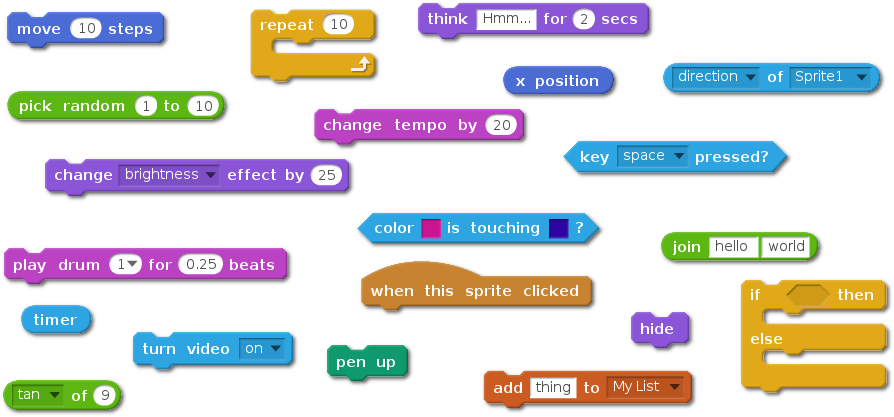
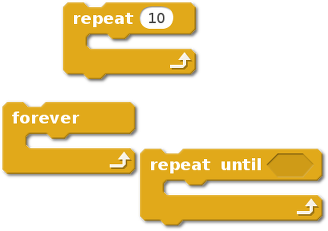
In a new paper titled Remixing as a pathway to Computational Thinking that was recently published at the ACM Conference on Computer Supported Collaborative Work and Social Computing (CSCW) conference, we used a series of quantitative measures of online behavior to try to uncover evidence that might support the theory that remixing in Scratch is positively associated with learning. scratchblocksOf course, because Scratch is an informal environment with no set path for users, no lesson plan, and no quizzes, measuring learning is an open problem. In our study, we built on two different approaches to measure learning in Scratch. The first approach considers the number of distinct types of programming blocks available in Scratch that a user has used over her lifetime in Scratch (there are 120 in total) something that can be thought of as a block repertoire or vocabulary. This measure has been used to model informal learning in Scratch in an earlier study. Using this approach, we hypothesized that users who remix more will have a faster rate of growth for their code vocabulary. Controlling for a number of factors (e.g. age of user, the general level of activity) we found evidence of a small, but positive relationship between the number of remixes a user has shared and her block vocabulary as measured by the unique blocks she used in her non-remix projects. Intriguingly, we also found a strong association between the number of downloads by a user and her vocabulary growth. One interpretation is that this learning might also be associated with less active forms of appropriation, like the process of reading source code described by Minksy. The second approach we used considered specific concepts in programming, such as loops, or event-handling. To measure this, we utilized a mapping of Scratch blocks to key programming concepts found in this paper by Karen Brennan and Mitchel Resnick. For example, in the image below are all the Scratch blocks mapped to the concept of loop . scratchblocksctWe looked at six concepts in total (conditionals, data, events, loops, operators, and parallelism). In each case, we hypothesized that if someone has had never used a given concept before, they would be more likely to use that concept after encountering it while remixing an existing project. Using this second approach, we found that users who had never used a concept were more likely to do so if they had been exposed to the concept through remixing. Although some concepts were more widely used than others, we found a positive relationship between concept use and exposure through remixing for each of the six concepts. We found that this relationship was true even if we ignored obvious examples of cutting and pasting of blocks of code. In all of these models, we found what we believe is evidence of learning through remixing. Of course, there are many limitations in this work. What we found are all positive correlations we do not know if these relationships are causal. Moreover, our measures do not really tell us whether someone has understood the usage of a given block or programming concept.However, even with these limitations, we are excited by the results of our work, and we plan to build on what we have. Our next steps include developing and utilizing better measures of learning, as well as looking at other methods of appropriation like viewing the source code of a project.

This blog post and the paper it describes are collaborative work with Sayamindu Dasgupta, Andr s Monroy-Hern ndez, and William Hale. The paper is released as open access so anyone can read the entire paper here. This blog post was also posted on Sayamindu Dasgupta s blog and on Medium by the MIT Media Lab.

Paul Wise: Check All The thingS!

check-all-the-things (aka cats, Meow!) is a tool that aims to make it easy to know which tools can be used to check a directory tree and to make it easy to run those tools on the directory tree. The tree could either be a source tree or a build tree or both. It aims to check as much of the tree as possible so the output can be very verbose and have many false positives. It is not for the busy, lazy or noise intolerant. It runs the checks by matching file names and MIME types against those registered for a list of checks. Each check has a set of dependencies, flags, filename wildcards, MIME type wildcards, comments and prerequisite commands. By default it: It runs all checks for the current distro/release except: There are command-line options to customise the behaviour and automatic bash shell completion via argcomplete. There are 177 checks (including TODO ones) in 73 different categories. There are an additional 224 not-well-specified TODO items for new checks in comments. It is exceptionally easy to add new checks once one knows how to use the tool one wants to add. At this point in time it is probably not a good idea to run it in an untrusted directory tree for several reasons: The project initially started as really hacky wiki page full of commands to run. At some point I figured it was time to make this actually be maintainable and started on a project to do that. At around the same time Jakub Wilk was working on maquack to replace the wiki page. Somehow I found out about it and talked to him about it. It was vastly less hacky than my version so I ended up taking it over and continuing it under the check-all-the-things name. I polished it for the last two years and finally released it into Debian unstable during DebCamp16.

Gunnar Wolf: Got the C.H.I.P.s for DebConf!

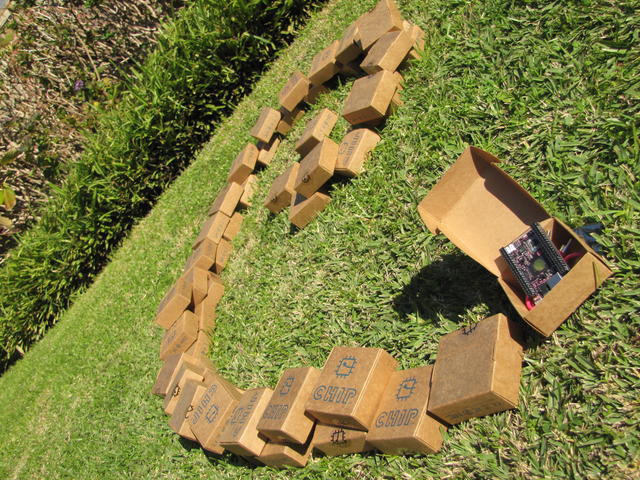
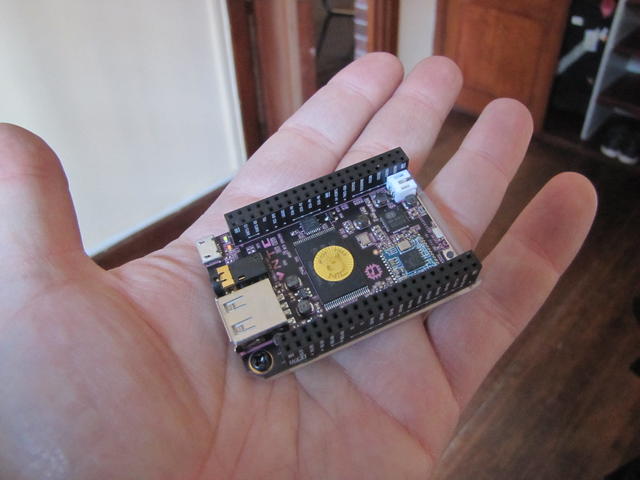
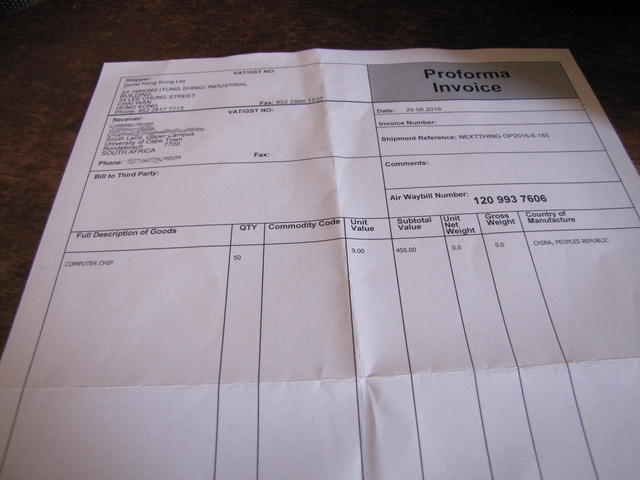
I had my strong doubts as to whether the shipment would be allowed through customs, and was happily surprised by a smiling Graham today before noon. He handed me a smallish box that arrived to his office, containing... Our fifty C.H.I.P. computers, those I offered to give away at DebConf! The little machines are quite neat. They are beautiful little devices, including even a plastic back (so you can safely work with it over a conductive surface or things like that). Quite smaller than the usual Raspberry-like format. It has more than enough GPIO to make several of my friends around here drool about the possibilities. So, what's to this machine besides a nice small ARM CPU, 512MB RAM, wireless connectivity (Wifi and bluetooth)? Although I have not yet looked into them (but intend to do so very soon!), it promises to have the freest available hardware around, and is meant for high hackability! And not that it matters But we managed to import them all, legally and completely hassle-free, into South Africa! That's right We are all used to the declaring commercial value as one dollar mindset. But... The C.H.I.P.s are actually priced at US$9 a piece. The declared commercial value is US$450. South Africans said all their customs are very hard to clear But we were able receive 50 legally shipped computers, declared at their commercial value, without any hassles! (yes, we might have been extremely lucky as well) Anyway, stay tuned By Thursday I will announce the list of people that get to take one home. I still have some left, so feel free to mail me at gwolf+chip@gwolf.org.

3 July 2016

Reproducible builds folks: Reproducible builds: week 61 in Stretch cycle

What happened in the Reproducible Builds effort between June 19th and June 25th 2016. Media coverage GSoC and Outreachy updates Toolchain fixes Other upstream fixes Emil Velikov searched on IRC for hints on how to guarantee unique values during build to invalidate shader caches in Mesa, when also no VCS information is available. A possible solution is a timestamp, which is unique enough for local builds, but can still be reproducible by allowing it to be overwritten with SOURCE_DATE_EPOCH. Packages fixed The following 9 packages have become reproducible due to changes in their build dependencies: cclib librun-parts-perl llvm-toolchain-snapshot python-crypto python-openid r-bioc-shortread r-bioc-variantannotation ruby-hdfeos5 sqlparse The following packages have become reproducible after being fixed: Some uploads have fixed some reproducibility issues, but not all of them: Patches submitted that have not made their way to the archive yet: Package reviews 139 reviews have been added, 20 have been updated and 21 have been removed in this week. New issues found: 53 FTBFS bugs have been reported by Chris Lamb, Santiago Vila and Mateusz ukasik. diffoscope development Quote of the week "My builds are so reproducible, they fail exactly every second time." Johannes Ziemke (@discordianfish) Misc. This week's edition was written by Chris Lamb (lamby), Reiner Herrmann and Holger Levsen and reviewed by a bunch of Reproducible builds folks on IRC.

Joey Hess: twenty years of free software -- part 7 git-annex

My first Haskell program, and the only software I've written that was inspired by living in a particular place, git-annex has received the lion's share of my time for five years. It was written just to solve my own problem, but in a general way, that turned out to be useful in lots of other situations. So over the first half a year or so, it started attracting some early adopters who made some very helpful suggestions. Then I did the git-annex assistant kickstarter, and started blogging about each day I worked on it. Four years of funding and seven hundred and twenty one posts later, the git-annex devblog is still going. So, I won't talk about technical details in this post, they've all been covered. One thing I wondered when starting git-annex -- besides whether I would be able to write it in Haskell at all -- was would that prevent it from getting many patches. I count roughly 65 "thanks" messages in the changelog, so it gets perhaps one patch contributed per month. It's hard to say if that's a lot or a little. Part of git-annex is supporting various cloud storage systems via "special remotes". Of those not written by me, only 1 was contributed in Haskell. Compare with 13 that use the plugin system that lets other programming languages be used. The other question about using Haskell is, did it make git-annex a better program. I think it did. The strong type system did prevent plenty of bugs, although there have still been some real howlers. The code is still not taking full advantage of the power of Haskell's type system, on the other hand it uses many Haskell libraries that do leverage the type system more. I've done more small and large refactorings of git-annex than on any other program I've written, because the strong types and referential transparency makes refactoring easier and safer in Haskell. And the code has turned out to be much more flexible, for all its static types, than the kind of code I was writing before. Examples include building the git-annex assistant, which uses the rest of git-annex as a library, and making git-annex run actions concurrently, thanks to there being no global variables to complicate things (and excellent support for concurrency and parallelism in Haskell). So: Glad I wrote it, glad I used Haskell for it, estatic that many other people have found it useful, and astounded that I've been funded to work on it for four years. Next: twenty years of free software -- part 8 github-backup

Joey Hess: Hacker Holler

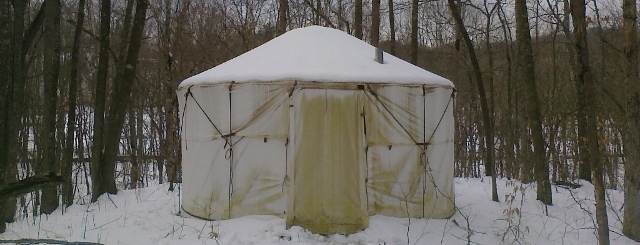
A quiet place in which to get away and code is all I was looking for when I moved here. I found much more, but that's still the essence of the place. On returning home from the beach, I've just learned that after several years renting this house, I will soon have to leave, or buy it. The house is an EarthShip, tucked away in its own private holler (as we say here in the Appalachian Mtns of Tennessee), below a mountain that is National Forest, two miles down back roads from a river. A wonderful place to relax and code, but developing only free software for twenty years doesn't quite stretch to being able to afford buying this kind of place. But, I got to thinking of times friends were able to visit me here. Grilling over wood fires with friends from Debian. Steep hikes and river swims. Sharing dialup bandwidth between our Linux laptops. A bunch of us discussing Haskell in the living room at midnight. And too, I've many times talked about the place with someone who got a gleam in their eye, imagining themselves living there. And then there's my Yurt, my relief valve before I moved here. And a great spot I like to visit on an old logging road above a creek. Could we put all this together somehow? Might a handful of my friends be able to contribute somewhere in the range of $10 thousand to buy in? Interested? Want more details? Have ideas?
Visit the Hacker Holler website and get in touch. (Limited to folks I've met in person or spent a lot of time online with.)

Petter Reinholdtsen: How to use the Signal app if you only have a land line (ie no mobile phone)

For a while now, I have wanted to test the Signal app, as it is said to provide end to end encrypted communication and several of my friends and family are already using it. As I by choice do not own a mobile phone, this proved to be harder than expected. And I wanted to have the source of the client and know that it was the code used on my machine. But yesterday I managed to get it working. I used the Github source, compared it to the source in the Signal Chrome app available from the Chrome web store, applied patches to use the production Signal servers, started the app and asked for the hidden "register without a smart phone" form. Here is the recipe how I did it. First, I fetched the Signal desktop source from Github, using
git clone https://github.com/WhisperSystems/Signal-Desktop.git
Next, I patched the source to use the production servers, to be able to talk to other Signal users:
cat <<EOF   patch -p0
diff -ur ./js/background.js userdata/Default/Extensions/bikioccmkafdpakkkcpdbppfkghcmihk/0.15.0_0/js/background.js
--- ./js/background.js  2016-06-29 13:43:15.630344628 +0200
+++ userdata/Default/Extensions/bikioccmkafdpakkkcpdbppfkghcmihk/0.15.0_0/js/background.js    2016-06-29 14:06:29.530300934 +0200
@@ -47,8 +47,8 @@
          );
      );
 
-    var SERVER_URL = 'https://textsecure-service-staging.whispersystems.org';
-    var ATTACHMENT_SERVER_URL = 'https://whispersystems-textsecure-attachments-staging.s3.amazonaws.com';
+    var SERVER_URL = 'https://textsecure-service-ca.whispersystems.org:4433';
+    var ATTACHMENT_SERVER_URL = 'https://whispersystems-textsecure-attachments.s3.amazonaws.com';
     var messageReceiver;
     window.getSocketStatus = function()  
         if (messageReceiver)  
diff -ur ./js/expire.js userdata/Default/Extensions/bikioccmkafdpakkkcpdbppfkghcmihk/0.15.0_0/js/expire.js
--- ./js/expire.js      2016-06-29 13:43:15.630344628 +0200
+++ userdata/Default/Extensions/bikioccmkafdpakkkcpdbppfkghcmihk/0.15.0_0/js/expire.js2016-06-29 14:06:29.530300934 +0200
@@ -1,6 +1,6 @@
 ;(function()  
     'use strict';
-    var BUILD_EXPIRATION = 0;
+    var BUILD_EXPIRATION = 1474492690000;
 
     window.extension = window.extension    ;
 
EOF
The first part is changing the servers, and the second is updating an expiration timestamp. This timestamp need to be updated regularly. It is set 90 days in the future by the build process (Gruntfile.js). The value is seconds since 1970 times 1000, as far as I can tell. Based on a tip and good help from the #nuug IRC channel, I wrote a script to launch Signal in Chromium.
#!/bin/sh
cd $(dirname $0)
mkdir -p userdata
exec chromium \
  --proxy-server="socks://localhost:9050" \
  --user-data-dir= pwd /userdata --load-and-launch-app= pwd 
The script start the app and configure Chromium to use the Tor SOCKS5 proxy to make sure those controlling the Signal servers (today Amazon and Whisper Systems) as well as those listening on the lines will have a harder time location my laptop based on the Signal connections if they use source IP address. When the script starts, one need to follow the instructions under "Standalone Registration" in the CONTRIBUTING.md file in the git repository. I right clicked on the Signal window to get up the Chromium debugging tool, visited the 'Console' tab and wrote 'extension.install("standalone")' on the console prompt to get the registration form. Then I entered by land line phone number and pressed 'Call'. 5 seconds later the phone rang and a robot voice repeated the verification code three times. After entering the number into the verification code field in the form, I could start using Signal from my laptop. As far as I can tell, The Signal app will leak who is talking to whom and thus who know who to those controlling the central server, but such leakage is hard to avoid with a centrally controlled server setup. It is something to keep in mind when using Signal - the content of your chats are harder to intercept, but the meta data exposing your contact network is available to people you do not know. So better than many options, but not great. And sadly the usage is connected to my land line, thus allowing those controlling the server to associate it to my home and person. I would prefer it if only those I knew could tell who I was on Signal. There are options avoiding such information leakage, but most of my friends are not using them, so I am stuck with Signal for now.

Russ Allbery: Review: Coming Home

Review: Coming Home, by Jack McDevitt
Series: Alex Benedict #7
Publisher: Ace
Copyright: November 2014
Printing: November 2015
ISBN: 0-425-26088-7
Format: Mass market
Pages: 356
Coming Home is a direct sequel to Firebird, the first time McDevitt has done that in this series. You therefore don't want to start here, although the nature of the sequel doesn't require that you remember Firebird in that much detail. The mystery of the disappearing starships was understood in Firebird but not resolved. The title advertises that as a major theme in this book, but it progresses very slowly. There's more media bickering and various factional attempts to draw Alex (and, to a lesser extent, Chase) into the controversies. McDevitt does a good job writing popular media, the strange position of public intellectual and talk-show favorite, and the way this filters into popular arguments. But with Alex trying to take a nuanced and unsure position and with a lot of talk but little action, it's not the most compelling reading. Coming Home holds to form in balancing a mystery and a second plot. Since the starship problem is understood, it can't be the central mystery of the book. That role is taken by the discovery of communication device from the very early days of space flight, which takes Alex and Chase to Earth for the first time in this series (at least that I can recall). This time, the search is for a legendary trove of historical artifacts that was moved from a space flight museum in Florida when the ocean rose to cover the state. From there, its location was lost in the middle of a general economic collapse called the Time of Troubles that destroyed most of Earth's governmental systems (and, apparently rather more importantly to McDevitt, the space program). Anyone who has gotten this far in the series will know the standard problem with McDevitt's futures: they're indistinguishable from the 1960s except that they have flying cars. There is a tiny break from that tradition here, since climate change has clearly happened to Earth, covering Florida with the ocean and shifting the major cities north. But the sense of deep history that McDevitt is trying for in this series doesn't work: I just don't believe as much time has gone by as the story claims. He does offer an explanation for why technology has been stagnant for apparently millennia, but it's just a contention that science ran out of more things to discover due to authorial fiat and is now just a matter of engineering and step-wise refinement. (I think the science behind the disappearing starships happening in this very same book undermines that contention considerably.) Even if one can put that aside, Earth is, well, boring. This is partly an intriguing stylistic choice by McDevitt: Earth is intended to be just one more world. It might have a longer history than many other human-occupied worlds, but history is so long everywhere that this only matters to a few people like Alex and Chase. The choice makes sense, but it doesn't make a good story. And there are other things that I flatly didn't believe, such as the supposed isolation of Earth from the communication network of Alex's home world of Rimway for... no apparent reason other than that different communication networks don't talk to each other except via, essentially, letters. Even if one is willing to ignore the mysterious failure of forward progress in technology, this makes no social or engineering sense given the capabilities already shown in the series. I found the main mystery at best mildly interesting. McDevitt does a good job showing the research and investigation process, with all its tedium and dead ends, but I wasn't as invested in the search as he wanted me to be. The endless space boosterism started getting on my nerves, as it so often does in science fiction of a certain type, and I had a much harder time swallowing McDevitt's Earth than his fictional Rimway. I will give him credit for a surprisingly affecting conclusion of the main mystery, but the missing starship subplot putters to an undistinguished end. I think this series is running out of steam. It's become increasingly formulaic, and the characters, like McDevitt's future technology, have stopped developing. I was hoping the reunion foreshadowed since Firebird would shake things up, but at least in this book it doesn't. Maybe it will in subsequent books, but I'm starting to question whether I really want to keep reading. Rating: 5 out of 10

Thadeu Lima de Souza Cascardo: Debian on old Linux versions

On recent posts, I mentioned that I have a Chromebook, and that I would like to run Debian on devices that ship with old Linux versions. The Samsung ARM Chromebook is such a device, it has Linux 3.4, and that's still what I am running on it most of the time. After an upgrade of Debian, systemd stopped working, and it took me some time before I could look into it. In order to boot, I had to temporarily use System V init. The bug involves the use of new interfaces, bugs in such interfaces, and how versioning would not be a solution to such cases. Cases like this are not common, so it's no excuse to doing the right thing when developing software, like considering portability, API and ABI maintenance and not bundle. But they expose some of the challenges when trying to support different OSes on top of old versions of Linux, or maybe even new versions. The new version of systemd included in Debian Jessie uses a feature of Linux of checking the mount ID of a file by inspecting the mnt_id line in the fdinfo files. fdinfo files are not that new, they have been present since 2007, Linux 2.6.22. The mnt_id line, however, is from Linux 3.15, from 2014. So, a fairly new feature. But systemd falls back to other methods if the feature is not present. However, during the last few weeks of development of Linux 3.4, a bug was introduced to fdinfo handling, which will cause its access to fail in a way that will cause systemd to halt. It simply will refuse to mount the most basic filesystems and not proceed. The bug was fixed not much longer than two weeks after that, but that window of time was enough to have it on a shipped product, one that was not using systemd, let alone one that required a feature not yet present on Linux. But now I wanted to run this new systemd on this old Linux version. Being too early in the boot process, systemd even ignored some of the debug options and I had to resort to other methods of debugging. As I am running a kernel I built by myself, it wasn't hard for me to have a fixed kernel up and running after I found out the problem. Unfortunately, not everyone will be able to do it by themselves. And the point of getting different OSes working on these many varied devices is scaling. If every device needs to be tested, we lose this scalability. The other problem I found was that this old Linux version didn't load firmware files by itself, and requested help from userspace, which used to be the job of udev. Well, udev now does not support loading firmware, and the kernel must do it by itself. I managed to backport that feature too. But now, it sounds like I should get upstream support for this device. Unfortunately, this means not working on the scalability problem, but going back to get upstream support for a lot of devices out there, which is very hard to scale without the necessary people to do the work. I am certainly going to do that, because it's the right thing to do. But not as many people will benefit from that. But I think it has been interesting to look into the possible problems we might find when trying to make Debian and other OSes working on old Linux versions. I know even older Debian versions won't boot fine on Linux 2.6.32, one of the LTS versions of Linux. I have one other device which runs on it, and I am also working on getting better upstream support for it. Let's see if I can get some news on that soon.

2 July 2016

Jonathan Carter: So, that was DebCamp16!

Picture: Adrian Frith

University of Cape Town, host location to DebConf 16. Picture: Adrian Frith

What an amazingly quick week that was Our bid to host DebConf in Cape Town was accepted nearly 15 months ago. And before that, the bid itself was a big collective effort from our team. So it s almost surreal that the first half of the two weeks of DebCamp/DebConf is now over. Things have been going really well. The few problems we ve had so far were too small to even mention. It s a few degrees colder than it usually is this time of the year and there s already snow on the mountains, so Cape Town is currently quite chilly.
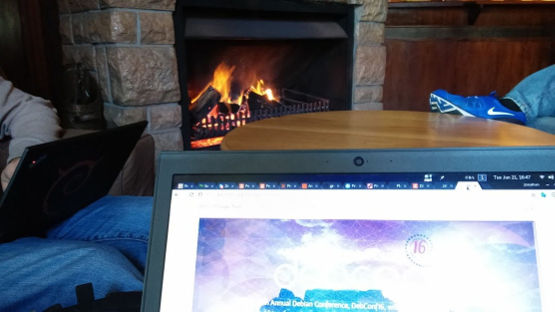
Hacking by the fire at the sports club

Gathering some heat by the fire at the sports club while catching up to the world the day before it all started.

All Kinds of Quality Time I really enjoyed working with the video team last year, but this year there was just 0 time for that. Working on the orga team means dealing with a constant torrent of small tasks, which is good in its own way because you get to deal with a wide variety of Debian people you might not usually get to interact with, but video team problems are more fun and interesting. Next year I hope to do a lot more video work again. If you re at DebConf over the next week, I can highly recommend that you get involved!
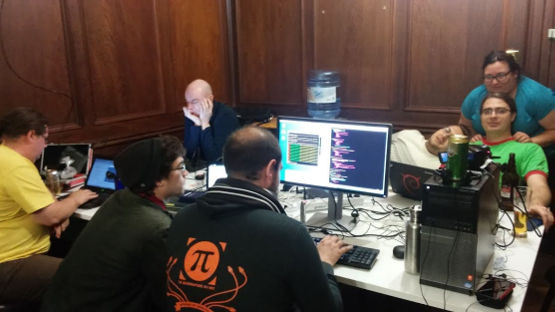
Video team hacking away at problems

Video team members hacking away at problems late at night during DebCamp

The first time I met Debian folk was early in 2004. I worked at the Shuttleworth Foundation as Open Source Technical Co-ordinator at the time, and Mark Shuttleworth had them over for one of the early Ubuntu sprints in Canonical s early days. I was so intimidated by them back then that I could hardly even manage to speak to them. I was already a big free software fan before working there, but little did I even dream to think that I would one day be involved in a project like Ubuntu or Debian. My manager back then encouraged me to go talk to them and get involved and become a Debian Developer and joked that I should become highvoltage@debian.org. I guess that was when the initial seeds got planted and since then I ve met many great people all over the world who have even became friends during UDS, DebConf, BTS and other hackfests where Debianites hang out. It gave me a really nice warm feeling to have all these amazing, talented and really friendly people from all over coming together in this little corner of the world to work together on projects that I think are really important.
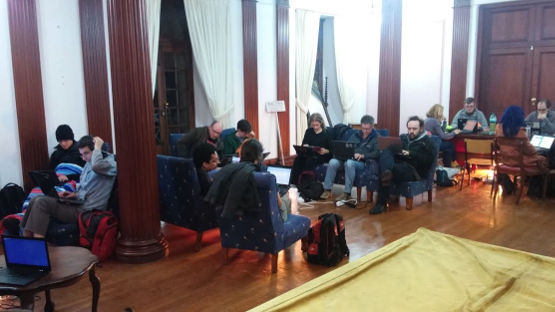
Finding a warm space to work in the Happy Feet hack lab

Finding a warm space to work in the Happy Feet hack lab

Oh the Chicken Back at DebConf12, someone (I don t remember the exact history) brought a rubber chicken to DebConf who was simply called Pollito ( chicken in Spanish). Since then the chicken has grown into somewhat of a mascot for DebConf. Back in 2012 I already imagined that if we would ever host a DebConf, I d make a little of picture book story about Pollito. Last year after DC15, when bringing Pollito over, I created a little story called Pollito s first trip to Africa . I was recovering from flu while putting that together and didn t spend much time on it, but it turned out to be somewhat of a hit. I was surprised to see it in the #debconf topic ever since I posted it :) We gave a tour of the campus on the first and second days and it was quite time consuming and there was no way we could do it every day for the rest of DebCamp, so on the 2nd day I smacked together a new rush job called Pollito s Guide to DC16 . The idea was that newcommers could use it as a visual guide and rely on others who have been there for a while if they get stuck. I wish I had the time to make it a lot nicer, but I think the general idea is good and next year we can have a much nicer one that might not be quite as Pollito focused.

Pollito's Guide to DC16

Pollito s Guide to DC16

Debian Maintainer After all these years, I finally sat down and applied to become a Debian Maintainer, and the application was successful (approved yesterday \o/). Now just for the wait until my key is uploaded to the keyring. I haven t yet had time to properly process this but I think once the DebConf dust settles and I had some time to recover, I will be ecstatic. Some actual DebCampy work Everywhere I go, I see people installing a bunch of GNOME extensions on their Debian GNOME desktops shortly after installation using http://extensions.gnome.org/ (I noticed this even at DebCamp!). A few months ago I thought that it s really about time someone package up some of the really popular ones. So I started to put together some basic packaging for AIMS Desktop around a month ago. During the last few days of DebCamp, things were going well enough with the organisational tasks that I had some time to do some actual packaging work and improve these so that they re ready for upload to the Debian archives. The little DebCamp time I had ended up being my very own little extension fest :) I worked on the following packages which are ready for upload: I worked on the following packages which still need minor work, might be able to get them in uploadable state by the end of DebConf: The actual packaging of GNOME extensions is actually pretty trivial. It s mostly source-only JavaScript with some CSS and translations and maybe some gsettings schemas and dialogs. Or at least, it would be pretty trivial, but many extensions are without licenses, contain embedded code (often JavaScript) from other projects, or have no usable form of upstream tarball, to name a few of the problems. So I ve been contacting the upstream authors of these packages where there have been problems, and for the most part they ve been friendly and pretty quick to address the problems. So that s it, for now. I couldn t possibly sum up the last week and everything that lead up to it in a single blog post. All I can really say is thank you for letting me be a part of this very special project!

Joey Hess: twenty years of free software -- part 6 moreutils

moreutils is a little love letter to the Unix Tools philosophy. It was interesting to try to find new tools as basic as cat and ls. With sponge and vidir and ifne and chronic and others, we managed to find several such tools. So, it was fun to work on moreutils, but it also ran into inherent problems with the Unix Tools philosophy. One is namespacing; there are only so many good short names for commands, and a command like parallel can easily collide with something else. And since Unix Tools have a bigger surface area than a pure function, my parallel is not going to be quite compatible with your parallel, even if they were developed with (erm) parallel intentions. Partly due to that problem, I have gotten pickier about adding new tools to moreutils as it's gotten older, and so there's a lot of suggested additions that I will probably never get to. And as my mention of pure functions suggests, I have kind of moved on from being a big fan of the Unix Tools philosophy. Unix tools are a decent approximation of pure functions for their time, but they are not really pure, and not typed at all, and not usefully namespaced, and this limits them. Next: twenty years of free software -- part 7 git-annex

Paul Tagliamonte: Hello, InfluxDB

Last week, I posted about python-sense, and API wrapper for the internal Sense API. I wrote this so that I could pull data about myself into my own databases, allowing me to use that information for myself. One way I'm doing this is by pulling my room data into an InfluxDB database, letting me run time series queries against my environmental data.
#!/usr/bin/env python
from influxdb import InfluxDBClient
import json
import datetime as dt
from sense.service import Sense
api = Sense()
data = api.room_sensors(quantity=20)
def items(data):
    for flavor, series in data.items():
        for datum in reversed(series):
            value = datum['value']
            if value == -1:
                continue
            timezone = dt.timezone(dt.timedelta(
                seconds=datum['offset_millis'] / 1000,
            ))
            when = dt.datetime.fromtimestamp(
                datum['datetime'] / 1000,
            ).replace(tzinfo=timezone)
            yield flavor, when, value
client = InfluxDBClient(
    'url.to.host.here',
    443,
    'username',
    'password',
    'sense',
    ssl=True,
)
def series(data):
    for flavor, when, value in items(data):
        yield  
            "measurement": " ".format(flavor),
            "tags":  
                "user": "paultag"
             ,
            "time": when.isoformat(),
            "fields":  
                "value": value,
             
         
client.write_points(list(series(data)))
I'm able to run this on a cron, automatically loading data from the Sense API into my Influx database. I can then use that with something like Grafana, to check out what my room looks like over time.

1 July 2016

Thorsten Alteholz: My Debian Activities in June 2016

FTP assistant This month I marked 233 packages for accept and rejected 29. I also sent 11 emails to maintainers asking questions. Currently there are 33 packages in NEW and the minimum this week has been as low as 24 packages. Come on you fellow developers, where are your packages? I am sure you can do better :-) . Debian LTS This was my twenty-fourth month that I did some work for the Debian LTS initiative, started by Raphael Hertzog at Freexian. This month my all in all workload has been 18.75h. This resulted in patches for 13 CVEs and the following uploads: I also looked at mxml and libstruts1.2-java and marked CVEs for these packages as no-dsa . I also reviewed a patch of Salvatore for an embargoed CVE of xerces-c. Last but not least I looked at the remaining two CVEs for asterisk, but was not really able to create working patches This month I called again for testing php5. Thanks a lot to Stefan and anybody else who sent in their reports! As there are already new CVEs for php5 available, I am afraid I need your support again in July This month I also had another term of frontdesk work and answered questions or looked for CVEs that are important for Wheezy LTS or could be ignored. Other stuff I made some progress with the Alljoyn framework. Up to now the following packages are available: Unfortunately as some of those modules still need to be released in current versions, there are some gaps. Anyway, the next uploads will include an XMPP connector, to basically bridge a local AllJoyn bus to a remote AllJoyn bus over XMPP. Further, with the lighting module, real lamps can be switched on and off and much more. Also the Home Appliances and Entertainment Service Framework seems to be interesting as well. In the Javascript world I uploaded some new packages and uploaded new versions for the following packages:

Elena 'valhalla' Grandi: Free Software dreams

Free Software dreams

Tonight I've dreamt I was inside https://wl.widelands.org/, as a barbarian being invaded by the atlanteans.

I've had the same thing happening to me a few times with Battle for Wesnoth http://wesnoth.org/

Mayyybe it is a sign that lately I've been playing it too much, but I'm quite happy with the fact that free software / culture is influencing my dreams.

Thanks to everybody who is involved into Free Culture for creating enough content so that this can happen.

Rapha&#235;l Hertzog: My Free Software Activities in June 2016

My monthly report covers a large part of what I have been doing in the free software world. I write it for my donators (thanks to them!) but also for the wider Debian community because it can give ideas to newcomers and it s one of the best ways to find volunteers to work with me on projects that matter to me. Debian packaging Django and Python. I uploaded Django 1.9.7 and filed an upstream ticket (#26755) for a failure seen in its DEP-8 tests. I packaged/sponsored python-django-modeltranslation and python-paypal. I opened a pull request on model-translation to fix failing tests in the Debian package build. I packaged a new python-django-jsonfield (1.0.0), filed a bug and discovered some regression in its PostgreSQL support. I helped on the upstream ticket and I have been granted commit rights. I used this opportunity to do some bug triage and push a few fixes. I also discussed the future of the module and ended up starting a discussion on Django s developer list about the possibility to add a JSONField to the core. CppUTest. I uploaded a new upstream version (3.8) with more than a year of work. I found out that make install does not install a required header so I opened a ticket with a patch. The package ended up not compiling on quite a few architectures so I opened a ticket and prepared a fix for some of those failures with the help of the upstream developers. I also added a DEP-8 tests after having uploaded a broken (untested) package systemd support in net-snmp and postfix. I worked on adding native systemd service units to net-snmp (#782243) and postfix (#715188). In both cases, the maintainers have not been very reactive so far so I uploaded my changes as delayed NMU. pkg-security team. The team that I started quietly a few months ago is now growing, both with new members and new packages. I created the required Teams/pkg-security wiki page. I sponsored xprobe, hydra, made an upload of medusa to merge Kali changes into Debian (and at the same time submitting the patch to upstream). fontconfig. After having read Jonathan McDowell s analysis of a bug that I experienced multiple times (and that many Kali users had too), I opened bug #828037 to get it fixed once for all. Unfortunately, nothing happened yet. DebConf 16 I spent some time to prepare the 2 talks and the BoF that I will give/manage in Cape Town next week: Distro Tracker I continued to mentor Vladimir Likic who managed to finish his first patch. He is now working on documentation for new contributors based on his recent experience. I enhanced the tox configuration to run tests with Django 1.8 LTS with fatal warnings (python -Werror) so as to ensure that I m not relying on any deprecated feature and so that I can be sure that the codebase will work on the next Django LTS release (1.11). Thanks to this, I did discover quite a few places where I have been using deprecated API and I fixed them all (the JSONField update to 1.0.0 I mentionned above was precisely to fix such a warning). I also fixed a few more issues with folded mail headers that you can t inject back in a new Message object and with messages lacking the subject field. All those have been caught through real (spam) email generating exceptions wich are then mailed to me. Kali related work I uploaded a new live-boot (5.20160608) to Debian to fix a bug where the boot process was blocking on some timeout. I forwarded a Kali bug against libatk-wrapper-java (#827741) which turned out to be an OpenJDK bug. I filed #827749 against reprepro to request a way to remove selected internal file references. This is required if you want to be able to make a file disappear and if that file is part of a snapshot that you want to keep despite this. But in truth, my real need is to be able to replace the .orig.tar.gz used by Kali by the orig.tar.gz used by Debian those conflicts break the mirroring/import script. Salt I have been using salt to deploy a new service, and I developed patches for a few issues in salt formulas. I also created a new letsencrypt-sh formula to manage TLS certificates with the letsencrypt.sh ACME client. Thanks See you next month for a new summary of my activities.

No comment Liked this article? Click here. My blog is Flattr-enabled.

30 June 2016

Chris Lamb: Free software activities in June 2016

Here is my monthly update covering a large part of what I have been doing in the free software world (previously):
Debian My work in the Reproducible Builds project was covered in our weekly reports. (#58, #59 & #60)
Debian LTS

This month I have been paid to work 18 hours on Debian Long Term Support (LTS). In that time I did the following:
  • "Frontdesk" duties, triaging CVEs, etc.
  • Extended the lts-cve-triage.py script to ignore packages that are not subject to Long Term Support.

  • Issued DLA 512-1 for mantis fixing an XSS vulnerability.
  • Issued DLA 513-1 for nspr correcting a buffer overflow in a sprintf utility.
  • Issued DLA 515-1 for libav patching a memory corruption issue.
  • Issued DLA 524-1 for squidguard fixing a reflected cross-site scripting vulnerability.
  • Issued DLA 525-1 for gimp correcting a use-after-free vulnerability in the channel and layer properties parsing process.

Uploads
  • redis (2:3.2.1-1) New upstream bugfix release, plus subsequent upload to the backports repository.
  • python-django (1.10~beta1-1) New upstream experimental release.
  • libfiu (0.94-5) Misc packaging updates.


RC bugs

I also filed 170 FTBFS bugs against a7xpg, acepack, android-platform-dalvik, android-platform-frameworks-base, android-platform-system-extras, android-platform-tools-base, apache-directory-api, aplpy, appstream-generator, arc-gui-clients, assertj-core, astroml, bamf, breathe, buildbot, cached-property, calf, celery-haystack, charmtimetracker, clapack, cmake, commons-javaflow, dataquay, dbi, django-celery, django-celery-transactions, django-classy-tags, django-compat, django-countries, django-floppyforms, django-hijack, django-localflavor, django-markupfield, django-model-utils, django-nose, django-pipeline, django-polymorphic, django-recurrence, django-sekizai, django-sitetree, django-stronghold, django-taggit, dune-functions, elementtidy, epic4-help, fcopulae, fextremes, fnonlinear, foreign, fort77, fregression, gap-alnuth, gcin, gdb-avr, ggcov, git-repair, glance, gnome-twitch, gnustep-gui, golang-github-audriusbutkevicius-go-nat-pmp, golang-github-gosimple-slug, gprbuild, grafana, grantlee5, graphite-api, guacamole-server, ido, jless, jodreports, jreen, kdeedu-data, kdewebdev, kwalify, libarray-refelem-perl, libdbusmenu, libdebian-package-html-perl, libdevice-modem-perl, libindicator, liblrdf, libmail-milter-perl, libopenraw, libvisca, linuxdcpp, lme4, marble, mgcv, mini-buildd, mu-cade, mvtnorm, nose, octave-epstk, onioncircuits, opencolorio, parsec47, phantomjs, php-guzzlehttp-ringphp, pjproject, pokerth, prayer, pyevolve, pyinfra, python-asdf, python-ceilometermiddleware, python-django-bootstrap-form, python-django-compressor, python-django-contact-form, python-django-debug-toolbar, python-django-extensions, python-django-feincms, python-django-formtools, python-django-jsonfield, python-django-mptt, python-django-openstack-auth, python-django-pyscss, python-django-registration, python-django-tagging, python-django-treebeard, python-geopandas, python-hdf5storage, python-hypothesis, python-jingo, python-libarchive-c, python-mhash, python-oauth2client, python-proliantutils, python-pytc, python-restless, python-tidylib, python-websockets, pyvows, qct, qgo, qmidinet, quodlibet, r-cran-gss, r-cran-runit, r-cran-sn, r-cran-stabledist, r-cran-xml, rgl, rglpk, rkt, rodbc, ruby-devise-two-factor, ruby-json-schema, ruby-puppet-syntax, ruby-rspec-puppet, ruby-state-machine, ruby-xmlparser, ryu, sbd, scanlogd, signond, slpvm, sogo, sphinx-argparse, squirrel3, sugar-jukebox-activity, sugar-log-activity, systemd, tiles, tkrplot, twill, ucommon, urca, v4l-utils, view3dscene, xqilla, youtube-dl & zope.interface.

FTP Team

As a Debian FTP assistant I ACCEPTed 186 packages: akonadi4, alljoyn-core-1509, alljoyn-core-1604, alljoyn-gateway-1504, alljoyn-services-1504, alljoyn-services-1509, alljoyn-thin-client-1504, alljoyn-thin-client-1509, alljoyn-thin-client-1604, apertium-arg, apertium-arg-cat, apertium-eo-fr, apertium-es-it, apertium-eu-en, apertium-hbs, apertium-hin, apertium-isl, apertium-kaz, apertium-spa, apertium-spa-arg, apertium-tat, apertium-urd, arc-theme, argus-clients, ariba, beast-mcmc, binwalk, bottleneck, colorfultabs, dh-runit, django-modeltranslation, dq, dublin-traceroute, duktape, edk2, emacs-pdf-tools, eris, erlang-p1-oauth2, erlang-p1-sqlite3, erlang-p1-xmlrpc, faba-icon-theme, firefox-branding-iceweasel, golang-1.6, golang-defaults, golang-github-aelsabbahy-gonetstat, golang-github-howeyc-gopass, golang-github-oleiade-reflections, golang-websocket, google-android-m2repository-installer, googler, goto-chg-el, gr-radar, growl-for-linux, guvcview, haskell-open-browser, ipe, labplot, libalt-alien-ffi-system-perl, libanyevent-fcgi-perl, libcds-savot-java, libclass-ehierarchy-perl, libconfig-properties-perl, libffi-checklib-perl, libffi-platypus-perl, libhtml-element-library-perl, liblwp-authen-oauth2-perl, libmediawiki-dumpfile-perl, libmessage-passing-zeromq-perl, libmoosex-types-portnumber-perl, libmpack, libnet-ip-xs-perl, libperl-osnames-perl, libpodofo, libprogress-any-perl, libqtpas, librdkafka, libreoffice, libretro-beetle-pce-fast, libretro-beetle-psx, libretro-beetle-vb, libretro-beetle-wswan, libretro-bsnes-mercury, libretro-mupen64plus, libservicelog, libtemplate-plugin-datetime-perl, libtext-metaphone-perl, libtins, libzmq-ffi-perl, licensecheck, link-grammar, linux, linux-signed, lua-busted, magics++, mkalias, moka-icon-theme, neutron-vpnaas, newlisp, node-absolute-path, node-ejs, node-errs, node-has-flag, node-lodash-compat, node-strip-ansi, numba, numix-icon-theme, nvidia-graphics-drivers, nvidia-graphics-drivers-legacy-304xx, nvidia-graphics-drivers-legacy-340xx, obs-studio, opencv, pacapt, pgbackrest, postgis, powermock, primer3, profile-sync-daemon, pyeapi, pypandoc, pyssim, python-cutadapt, python-cymruwhois, python-fisx, python-formencode, python-hkdf, python-model-mommy, python-nanomsg, python-offtrac, python-social-auth, python-twiggy, python-vagrant, python-watcherclient, python-xkcd, pywps, r-bioc-deseq2, r-bioc-dnacopy, r-bioc-ensembldb, r-bioc-geneplotter, r-cran-adegenet, r-cran-adephylo, r-cran-distory, r-cran-fields, r-cran-future, r-cran-globals, r-cran-htmlwidgets, r-cran-listenv, r-cran-mlbench, r-cran-mlmrev, r-cran-pheatmap, r-cran-pscbs, r-cran-r.cache, refind, relatorio, reprotest, ring, ros-ros-comm, ruby-acts-as-tree, ruby-chronic-duration, ruby-flot-rails, ruby-numerizer, ruby-u2f, selenium-firefoxdriver, simgrid, skiboot, smtpping, snap-confine, snapd, sniffles, sollya, spin, subuser, superlu, swauth, swift-plugin-s3, syncthing, systemd-bootchart, tdiary-theme, texttable, tidy-html5, toxiproxy, twinkle, vmtk, wait-for-it, watcher, wcslib & xapian-core.

Next.

Previous.