Search Results: "ads"

18 December 2016

Jonathan McDowell: Timezones + static blog generation

So, it turns out when you move to static blog generation and do the generation on your laptop, which is usually in the timezone you re currently physically located, it can cause URLs to change. Especially if you re prone to blogging late at night, which can result in even just a shift to DST changing things. I ve forced jekyll to UTC by adding timezone: 'UTC' to the config, and ensuring all the posts now have timezones for when they were written (a lot of the imported ones didn t), so hopefully things should be stable from here on.

Sean Whitton: progpoking

Programming by poking: why MIT stopped teaching SICP Perhaps there is a case for CS programs keeping pace with workplace technological changes (in addition to developments in the academic field of CS), but it seems sad to deprive undergrads of deeper knowledge about language design.

Dirk Eddelbuettel: RcppArmadillo 0.7.600.1.0

armadillo image Earlier this week, Conrad released Armadillo 7.600.1. The corresponding RcppArmadillo release 0.7.600.1.0 is now on CRAN and in Debian. This follows several of rounds testing at our end with a full reverse-dependency of a pre-release version followed by another full reverse-depency check. Which was of course followed by CRAN testing for two more days. Armadillo is a powerful and expressive C++ template library for linear algebra aiming towards a good balance between speed and ease of use with a syntax deliberately close to a Matlab. RcppArmadillo integrates this library with the R environment and language--and is widely used by (currently) 298 other packages on CRAN -- an increase of 24 just since the last CRAN release of 0.7.500.0.0 in October! Changes in this release relative to the previous CRAN release 0.7.500.0.0 are as follows:

Changes in RcppArmadillo version 0.7.600.1.0 (2016-12-16)
  • Upgraded to Armadillo release 7.600.1 (Coup d'Etat Deluxe)
    • more accurate eigs_sym() and eigs_gen()
    • expanded floor(), ceil(), round(), trunc(), sign() to handle sparse matrices
    • added arg(), atan2(), hypot()

Changes in RcppArmadillo version 0.7.500.1.0 (2016-11-11)
  • Upgraded to Armadillo release 7.500.1
  • Small improvement to return value treatment
  • The sample.h extension was updated to the newer Armadillo interface. (Closes #111)

Courtesy of CRANberries, there is a diffstat report. More detailed information is on the RcppArmadillo page. Questions, comments etc should go to the rcpp-devel mailing list off the R-Forge page.

This post by Dirk Eddelbuettel originated on his Thinking inside the box blog. Please report excessive re-aggregation in third-party for-profit settings.

B lint R czey: Hardening Debian Stretch with PIE is ready but bindnow will be missing

pie-bindnow-notnow-debianHardening all executables by making them position independent by default is basically ready with a few packages to fix (bugs). On the other hand bindnow is not enabled globally (#835146) and it seems it will not be for the next stable release despite my plan :-(. If you are a maintainer you can still have your packages hardened in Stretch by enabling bindnow per package before 25 January, 2017. It could be a nice present for your users! update: It is nice to see how enabling PIE in GCC increased PIE coverage while bindnow coverage is improving slowly with maintainers enabling it package by package:
lintian-pie

From https://lintian.debian.org/tags/hardening-no-pie.html

lintian-no-bindnow

From: https://lintian.debian.org/tags/hardening-no-bindnow.html

update 2: Changed the deadline of enabling bindnow per package to align with the start of the full freeze, not the soft freeze.

Johannes Schauer: Looking for self-hosted filesharing software

The owncloud package was removed from Debian unstable and testing. I am thus now looking for an alternative. Unfortunately, finding such replacement seems to be harder than I initially thought, even though I only use a very small subset of what owncloud provides. What I require is some software which allows me to:
  1. upload a directory of files of any type to my server (no "distributed" filesharing where I have to stay online with my laptop)
  2. share the content of that directory via HTTP (no requirement to install any additional software other than a web browser)
  3. let the share-links be private (no possibility to infer the location of other shares)
  4. allow users to browse that directory (image thumbnails or a photo gallery would be nice)
  5. allow me to allow anonymous users to upload their own content into that directory (also only requiring their web browser)
  6. already in Debian or easy to package and maintain due to low complexity (I don't have enough time to become the next "owncloud maintainer")
I thought this was a pretty simple task to solve but I am unable to find any software that fits above criteria. The below table shows the result of my research of what's currently available. The columns mark whether the respective software fulfills one of the six criteria from above.
Software 123456
owncloud
sparkleshare
dvcs-autosync
git annex assistant
syncthing
pydio
seafile
sandstorm.io
ipfs
bozon
droppy
Pydio, seafile and sandstorm.io look promising but they seem to be beasts similar in complexity to owncloud as they bring features like version tracking, office integration, wikis, synchronization across multiple devices or online editing of files which are features that I do not need. I would already be very happy if there was a script which would make it easy to create a hard-to-guess symlink to a directory with data tracked by git annex under my www-root and then generate some static HTML to provide a thumbnails view or a photo gallery. Unfortunately, even that solution would not be sufficient as it would still disallow public upload by anybody whom I would give the link to... If you know some software that meets my criteria or would like to submit corrections to above table, please shoot an email to josch@debian.org. Thanks!

17 December 2016

Shirish Agarwal: Demonetisation, Indian state and world

Queues get longer, patience runs out- Copyright Indian Express Group.

Queues get longer, patience runs out- Copyright Indian Express Group.

I dunno if people heard or didn t hear about the demonetisation of INR 500 and INR 1000 which happened in India on 8th November 2016 with new currency designed in India of INR 2000 and INR 500. What they did was from that moment onwards, paper currency of INR 500 and INR 1000 notes were declared invalid except few places (Government Hospitals, Petrol Pumps, Booking of Air and Train tickets) . The reasons given were as a. End of corruption There is/was suspicion that there are people who have loads of unaccounted wealth which they keep in the form of Cash in hand, b. Charge against fake/duplicate currency There is/was suspicion that quite a bit of the money esp, high value notes such as INR 500 and INR 1000, so having made them illegal, people had to hand over cash to banks and fake money would go outside the system. c. Terror funding This is related with the above point. There is a popular theory/myth/fact that terrorists use fake money to buy people, arms and ammunition while further devaluing the value of INR against dollar and basket of other high-value currencies that Indian currency follows/bases itself on. Each of these theories/myths/facts has been contested. Every day we are seeing and reading reports of people being caught with new currency in absurd numbers while RBI , our central bank and Lender of Last Resort has had to play multiple roles such as policing along with the country s Income Tax Department as well as pumping in new notes of the NEW INR 2000/- and INR 500/- into ATM s and Bank branches around the country. Now while the above may seem to be reasonable, there have been multiple factors which has made the whole exercise less effective while implementing a. Banking reach While India does and can boast of somewhat good indicators of banking reach . But Quarter of these accounts were opened only in the last couple of years under the Pradhan Mantri Jan Dhana Yojana . There are quite a few limitations of such accounts. It is a good scheme as if you develop a good rapport with a bank and show good credit/debit understanding then there is possibility to move to normal full-fledged bank account. Almost all of these accounts had zero-balances till the demonetization move. Many of these accounts are suspected to have been conduits to convert black money to white as the Govt. had said it will not scrutinize small savings bank accounts. Also many bank accounts historically have laid dormant over the years. One of my first jobs was of a data entry operator in a bank and I used to see hundreds of bank accounts lying dormant for years together. This was in bank digitization in early 90s. Small Savings accounts would not be scrutinized if they bring upto INR 250000 while Jan Dhan accounts have an upper limit of only INR 50000 . Even then, it has lead to a huge surge in balances specifically in Zero balances account. What begs the question is if it is their hard-earned money why hadn t they deposited money before 8th November 2016. While I can t speak about them, I can certainly speak about myself. I hardly keep at the most INR INR 5/10K for medical emergencies in-house for number of years. Unless you are a businessman who has need of cash or have some function, nobody that I know would keep such amounts in their homes, simply for the possibility of theft in homes. So how did such people who are not able to open a full-fledged saving account get access to such large amounts? In most public sector banks, to have a full-fledged savings account the only requirements are a. Have INR 500 to 1000 as balance at all times.
b. Have permanent identity and residential proof
c. Two photographs
d. 2-3 people who are account holders who can act as guarantor. Of the above, b. and d. are probably sticking points for most migrants, while d. may be a sticking point for labourers, craftsman etc. hence the need for that specific scheme. Which leads to the natural suspicion that they may have been white-washing somebody s untaxed, unaccounted money which is being put into bank and made into legitimate white money. People do not have to file an Income Tax Return (ITR) unless they earn more than 250,000 in a single financial year. One good off-shot of the scheme though is the transparency gained about Bank Mitras b. Number of banks, quality of Bank services, number of people per bank at least in Nationalized Banks leaves much to be desired. We can t even try to compare with other BRIC countries, leave alone Germany.
Mobile ATM - Copyright - PTI

Mobile ATM Copyright PTI

One another positive off-shoot has been the introduction of Mobile ATM Vans around the country. I had experienced such vans in Mumbai since ages, but not anywhere else. I do hope that both Bank Mitras as well as such Van Mobile ATMs happen more. There are huge swathes of people who are currently unbanked. Getting them into the banking infrastructure, getting them to *think* about taking rational financial decisions, i.e. saving and spending, different types of saving etc. should not make citizens and the banking systems more productive and efficient, but hopefully improves our GDP and make it more resilient to any outside financial shocks. c. Many bank websites have everything in English. That norm needs to change. I do have few queries though, one of the countries who is supposed to be a prominent supporter and user of cashless society is supposed to be Canada. Could any Canadians (also because debconf is going to happen in Canada in 2017) share how and if they had seen the Canadian banking system evolve in their country ? Also how much of Canada s economy is cashless i.e used to Electronic Money Transfer and other means (but not cash) and how much is cash, more in day-to-day usage and transactions. I am trying to get people s perspective rather than some website which may serve only raw numbers, although even that would be appreciable. Also what, if any charges/commission are paid to a Canadian bank for paying via card/electronic money transfer. I ask as India has reduced charges overall to 1% from 2% for making transactions upto INR 2000 in a day. There has also been recent talk of plastic notes instead of paper currency. Plastic notes are supposed to be more copy-proof and also will work for much longer time. They will not soil as paper notes do. How have countries been looking at Plastic currencies. I do suspect there would be issues while destroying plastic money vis-a-vis paper currencies. A sort of interesting discussion that I had with Bernelle before venturing into South Africa was asking her about monetary transactions in SA. She had replied that the highest denomination notes was 200 ZAR which is roughly equal to ( ZAR 200 x 5 = INR 1000) . What is/was interesting that Bernelle told me to be careful and as far as possible not to show 200 ZAR note, whereas in India, even the cheapest worker I have met, they have seen and used INR 1000 note. The context of the discussion was being safe in South Africa and doing transactions with people around as to what works. It would be curiouser to know how things work in Canada for instance ? Also has Canada or any other country have experimented with plastic notes. If yes, how has the experience been ? I would have to say this is in no way a definitive guide of the different impressions and repercussion that the decision and the way it s playing out even now. Another thing, while researching for the article there were lots of interesting knowledge, for e.g. the Big Mac Index and it s limitations which I didn t know how to integrate into the decision and Policy taken. I also came to know/saw that lots of Policy initiatives being taken by the current (NDA)Government is similar to initiatives taken elsewhere in the world.. Whether the Policy would be fruitful in getting the desired outcome or would it lead to more chaos and down-turn will know in next quarter only. It would be nice and interesting if people have observed something similar in their country s economic policies as well.
Filed under: Miscellenous Tagged: #Bank Mitra, #Bank reach, #blackmoney, #debconf17, #Demonetisation, #fake currencies, #full-fledged savings account, #Jan Dhan scheme, #Moile ATM Van, #Plastic money, #Public Sector Banks (PSB), #Reserve Bank of India, Big Mac Index

Russ Allbery: INN 2.6.1

(As usual, Julien finished this release a bit back, and then I got busy with life stuff and haven't gotten the announcement out.) This is a bug-fix and minor feature release over INN 2.6.0. The biggest change is adding support for the new COMPRESS extension. It also fixes various bugs around state changes when negotiating various compression or integrity layers and fixes some issues with nnrpd's validation of newly-posted messages. (Messages with Received and Posted headers are no longer rejected; messages with all-whitespace headers now are.) This release also supports OpenSSL 1.1.0 and fixes an nntpsend bug under systemd. As always, thanks to Julien LIE for preparing this release and doing most of the maintenance work on INN! You can get the latest version from the official ISC download page or from my personal INN pages. The latter also has links to the full changelog and the other INN documentation.

16 December 2016

Dirk Eddelbuettel: nanotime 0.0.1: New package for Nanosecond Resolution Time for R

R has excellent tools for dates and times. The Date and POSIXct classes (as well as the 'wide' representation in POSIXlt) are versatile, and a lot of useful tooling has been built around them. However, POSIXct is implemented as a double with fractional seconds since the epoch. Given the 53 bits accuracy, it leaves just a bit less than microsecond resolution. Which is good enough for most things. But more and more performance measurements, latency statistics, ... are now measured more finely, and we need nanosecond resolution. For which commonly an integer64 is used to represent nanoseconds since the epoch. And while R does not a native type for this, the bit64 package by Jens Oehlschl gel offers a performant one implemented as a lightweight S3 class. So this package uses this integer64 class, along with two helper functions for parsing and formatting, respectively, at nano-second resolution from the RcppCCTZ package which wraps the CCTZ library from Google. CCTZ is a modern C++11 library extending the (C++11-native) chrono type.

Examples

Simple Parsing and Arithmetic
R> x <- nanotime("1970-01-01T00:00:00.000000001+00:00")
R> print(x)
integer64
[1] 1
R> format(x)
[1] "1970-01-01T00:00:00.000000001+00:00"
R> cat("x+1 is: ")
x+1 is: R> x <- x + 1
R> print(x)
integer64
[1] 2
R> format(x)
[1] "1970-01-01T00:00:00.000000002+00:00"
R>

Vectorised
R> options("width"=60)
R> v <- nanotime(Sys.time()) + 1:5
R> v
integer64
[1] 1481505724483583001 1481505724483583002
[3] 1481505724483583003 1481505724483583004
[5] 1481505724483583005
R> format(v)
[1] "2016-12-12T01:22:04.483583001+00:00"
[2] "2016-12-12T01:22:04.483583002+00:00"
[3] "2016-12-12T01:22:04.483583003+00:00"
[4] "2016-12-12T01:22:04.483583004+00:00"
[5] "2016-12-12T01:22:04.483583005+00:00"
R> 

Use with zoo
R> z <- zoo(cbind(A=1:5, B=5:1), v)
R> options("nanotimeFormat"="%d %b %H:%M:%E*S")  ## override default
R> z
                          A B
12 Dec 01:47:55.812513001 1 5
12 Dec 01:47:55.812513002 2 4
12 Dec 01:47:55.812513003 3 3
12 Dec 01:47:55.812513004 4 2
12 Dec 01:47:55.812513005 5 1
R> 

Technical Details The bit64 package (by Jens Oehlschl gel) supplies the integer64 type used to store the nanosecond resolution time as (positive or negative) offsets to the epoch of January 1, 1970. The RcppCCTZ package supplies the formatting and parsing routines based on the (modern C++) library CCTZ from Google.

Status Version 0.0.1 has now been released. It works with some other packages, notably zoo and data.table. It (at least currently) requires RcppCCTZ to parse and format nanosecond resolution time objects from / to text --- and this package is on Linux and OS X only due to its use of system time zoneinfo. The requirement could be relaxed in the future by rewriting formating and parsing code. Contributions are welcome.

Installation The package is not yet on CRAN. Until it gets there, or to install the development versions, it can also be installed via a standard
install.packages("RcppCCTZ")   # need 0.1.0 or later
remotes::install_github("eddelbuettel/nanotime")  
If you prefer install.packages() (as I do), use the version from the ghrr drat:
install.packages("drat")       # easier repo access + creation
drat:::add("ghrr")             # make it known
install.packages("nanotime")   # install it
If and when it gets to CRAN you will be able to do
install.packages("nanotime")

Contact For questions or comments use the issue tracker off the GitHub repo.

This post by Dirk Eddelbuettel originated on his Thinking inside the box blog. Please report excessive re-aggregation in third-party for-profit settings.

Rapha&#235;l Hertzog: Freexian s report about Debian Long Term Support, November 2016

A Debian LTS logoLike each month, here comes a report about the work of paid contributors to Debian LTS. Individual reports In October, about 150 work hours have been dispatched among 14 paid contributors. Their reports are available: Evolution of the situation The number of sponsored hours did not change this month and in fact we haven t had any new sponsor since September. We still need a couple of supplementary sponsors to reach our objective of funding the equivalent of a full time position. The security tracker currently lists 40 packages with a known CVE and the dla-needed.txt file 36. We don t seem to really catch up the small backlog. The reasons are not clear but I noticed that there are a few packages that take a lot of time due to the number of issues found with fuzzers. We also handle many issues that the security team ends up classifying as not worth an update because we add the package to dla-needed.txt before the security team has done its review and nobody checks afterwards. Thanks to our sponsors New sponsors are in bold.

No comment Liked this article? Click here. My blog is Flattr-enabled.

Michal &#268;iha&#345;: wlc 0.7

wlc 0.7, a command line utility for Weblate, has been just released. There are several new commands like translation file download or statistics fetching. Full list of changes: wlc is built on API introduced in Weblate 2.6 and still being in development, you need Weblate 2.10 for some feature (already available on our hosting offering). You can find usage examples in the wlc documentation.

Filed under: Debian English phpMyAdmin SUSE Weblate 2 comments

15 December 2016

Steve Kemp: A simple Perl alternative to storing data in Redis

I continue to be a big user of Perl, and for many of my sites I avoid the use of MySQL which means that I largely store data in flat files, SQLite databases, or in memory via Redis. One of my servers was recently struggling with RAM, and the suprising cause was "too much data" in Redis. (Surprising because I'd not been paying attention and seen how popular it was, and also because ASCII text compresses pretty well). Read/Write speed isn't a real concern, so I figured I'd move the data into an SQLite database, but that would require rewriting the application. The client library for Perl is pretty awesome, and simple usage looks like this:
# Connect to localhost.
my $r = Redis->new()
# simple storage
$r->set( "key", "value" );
# Work with sets
$r->sadd( "fruits", "orange" );
$r->sadd( "fruits", "apple" );
$r->sadd( "fruits", "blueberry" );
$r->sadd( "fruits", "banannanananananarama" );
# Show the set-count
print "There are " . $r->scard( "fruits" ) . " known fruits";
# Pick a random one
print "Here is a random one " . $r->srandmember( "fruits" ) . "\n";
I figured, if I ignored the Lua support and the other more complex operations, creating a compatible API implementation wouldn't be too hard. So rather than porting my application to using SQLite directly I could juse use a different client-library. In short I change this:
use Redis;
my $r = Redis->new();
To this:
use Redis::SQLite;
my $r = Redis::SQLite->new();
And everything continues to work. I've implemented all the set-related functions except one, and a random smattering of the other simple operations. The appropriate test-cases in the Redis client library (i.e. removing all references to things I didn't implement) pass, and my own new tests also make me confident. It's obviously not a hard job, but it was a quick solution to a real problem and might be useful to others. My image hosting site, and my markdown sharing site now both use this wrapper and seem to be performing well - but with more free RAM. No doubt I'll add more of the simple primitives as time goes on, but so far I've done enough to be useful.

Michal &#268;iha&#345;: Weblate 2.10

Quite on the schedule, Weblate 2.10 is out today. This release brings Git exporter module, improves support for machine translation services and adds various CSV exports and API interfaces. Full list of changes: If you are upgrading from older version, please follow our upgrading instructions. You can find more information about Weblate on https://weblate.org, the code is hosted on Github. If you are curious how it looks, you can try it out on demo server. You can login there with demo account using demo password or register your own user. Weblate is also being used on https://hosted.weblate.org/ as official translating service for phpMyAdmin, OsmAnd, Aptoide, FreedomBox, Weblate itself and many other projects. Should you be looking for hosting of translations for your project, I'm happy to host them for you or help with setting it up on your infrastructure. Further development of Weblate would not be possible without people providing donations, thanks to everybody who have helped so far! The roadmap for next release is just being prepared, you can influence this by expressing support for individual issues either by comments or by providing bounty for them.

Filed under: Debian English phpMyAdmin SUSE Weblate 0 comments

14 December 2016

Carl Chenet: Feed2tweet 0.8, tool to post RSS feeds to Twitter, released

Feed2tweet 0.8, a self-hosted Python app to automatically post RSS feeds to the Twitter social network, was released this December, 14th. With this release Feed2tweet now smartly manages the hashtags, adding as much as possible given the size of the tweet. Also 2 new options are available : Feed2tweet 0.8 is already in production for Le Journal du hacker, a French-speaking Hacker News-like website, LinuxJobs.fr, a French-speaking job board and this very blog. fiesta What s the purpose of Feed2tweet? Some online services offer to convert your RSS entries into Twitter posts. Theses services are usually not reliable, slow and don t respect your privacy. Feed2tweet is Python self-hosted app, the source code is easy to read and you can enjoy the official documentation online with lots of examples. Twitter Out Of The Browser Have a look at my Github account for my other Twitter automation tools: What about you? Do you use tools to automate the management of your Twitter account? Feel free to give me feedback in the comments below.

Dirk Eddelbuettel: anytime 0.1.2: Another bugfix

Another update, now at release 0.1.2, of anytime arrived at CRAN earlier today. anytime is a very focused package aiming to do just one thing really well: to convert anything in integer, numeric, character, factor, ordered, ... format to either POSIXct or Date objects -- and to do so without requiring a format string. See the anytime page, or the GitHub README.md for a few examples, or just consider the following illustration:
R> library(anytime)
R> anytime("20161107 202122")   ## all digits
[1] "2016-11-07 20:21:22 CST"
R> utctime("2016Nov07 202122")  ## UTC parse example
[1] "2016-11-07 14:21:22 CST"
R> 
Release 0.1.2 addresses a somewhat bizarre Windows-only bug reported at GitHub in #33 and at StackOverflow. Formats of the %Y-%b-%d form, ie 2016-Dec-12 for today would fail on Windows as the contiguous string was apparently getting split by a routine looking for splits on spaces. Really strange. Anyway, I switched to using more helper functions from the Boost String Algorithms library, and things are behaving now. An extra shoutout once more to G bor Cs rdi and the R Consortium for the most awesome R-Builder. I was able to test and fix on Windows during the weekend with no access to an actual windows environment. The NEWS file summarises the release:

Changes in anytime version 0.1.2 (2016-12-13)
  • The (internal) string processing and splitting now uses Boost algorithm functions which avoids a (bizarre) bug on Windows.
  • Test coverage was increased.

Courtesy of CRANberries, there is a comparison to the previous release. More information is on the anytime page. For questions or comments use the issue tracker off the GitHub repo.

This post by Dirk Eddelbuettel originated on his Thinking inside the box blog. Please report excessive re-aggregation in third-party for-profit settings.

13 December 2016

Shirish Agarwal: Eagle Encounters, pier Stellenbosch

Before starting, have to say hindsight as they say is always 20/20. I was moaning about my 6/7 hour trip few blog posts back but now came to know about the 17.5 hr. flights (17.5x800km/hr=14000 km.) which are happening around me. I would say I was whining about nothing seeing those flights. I can t even imagine how people would feel in those flights. Six hours were too much in the tin-can, thankfully though I was in the aisle seat. In 14 hours most people would probably give to Air rage . I just saw an excellent article on the subject. I also came to know that seat-selection and food on a long-haul flights are a luxury, hence that changes the equation quite a bit as well. So on these facts, it seems Qatar Airways treated me quite well as I was able to use both those options. Disclaimer My knowledge about birds/avian is almost non-existent, Hence feel free to correct me if I do go wrong anywhere. Coming back to earth literally , I will have to share a bit of South Africa as that is part and parcel of what I m going to share next. Also many of the pictures shared in this particular blog post belong to KK who has shared them with me with permission to share it with the rest of the world. When I was in South Africa, in the first couple of days as well as what little reading of South African History I had read before travelling, had known that the Europeans, specifically the Dutch ruled on South Africa for many years. What was shared to me in the first day or two that Afrikaans is mostly spoken by Europeans still living in South Africa, some spoken by the coloured people as well. This tied in with the literature I had already read. The Wikipedia page shares which language is spoken by whom and how the demographics play out if people are interested to know that. One of the words or part of the word for places we came to know is bosch as is used in many a places. Bosch means wood or forest. After this we came to know about many places which were known as somethingbosch which signified to us that area is or was a forest. On the second/third day Chirayu (pictured, extreme left) shared the idea of going to Eagle Encounters. Other people pictured in the picture are yours truly, some of the people from GSOC, KK is in the middle, the driver Leonard something who took us to Eagle Encounters on the right (pictured extreme right). Update I was informed that it was a joint plan between Chirayu and KK. They also had some other options planned which later got dropped by the wayside. The whole gang/group along with Leonard coming from eagle encounters It was supposed to be somewhat near, (Spier, Stellenbosch). While I was not able to able to see/figure out where Eagle Encounters is on Openstreetmap, somebody named Firefishy added Spier to OSM few years back. So thank you for that Firefishy so I can at least pin-point a closer place. I didn t see/know/try to figure out about the place as Chirayu said it s a zoo . I wasn t enthusiastic as much as I had been depressed by most zoos in India, while you do have national reserves/Parks in India where you see animals in their full glory. I have been lucky to been able to seen Tadoba and Ranthambore National parks and spend some quality time (about a week) to have some idea as to what can/happens in forests and people living in the buffer-zones but those stories are for a different day altogether. I have to say I do hope to be part of the Ranthambore experience again somewhere in the future, it really is a beautiful place for flora and fauna and fortunately or unfortunately this is the best time apart from spring, as you have the game of mist/fog and animals . North India this time of the year is something to be experienced. I wasn t much enthused as zoos in India are claustrophobic for animals and people both. There are small cages and you see and smell the shit/piss of the animals, generally not a good feeling. Chirayu shared with us also the possibility of being able to ride of Segways and range of bicycles which relieved me so that in case we didn t enjoy the zoo we would enjoy the Segway at least and have a good time (although it would have different expenses than the ones at Eagle Encounters). My whole education about what a zoo could be was turned around at Eagle Encounters as it seems to be somewhere between a zoo and what I know as national parks where animals roam free. We purchased the tickets and went in, the first event/happening was Eagle Encounters itself. One of the families at Eagle Encounter handling a snowy eagle Our introduction to the place started by two beautiful volunteer/trainers who were in charge of all the birds in the Eagle Encounters vicinity. The introduction started by every one of us who came for the Eagle Encounter show to wear a glove and to have/hold one of the pair of snowy owls to sit on the glove. That picture is of a family who was part of our show. Before my turn came, I was a little apprehensive/worried about holding a Owl -period. To my surprise, they were so soft and easy-going, I could hardly feel the weight on my hand. While the trainer/volunteers were constantly feeding them earthworm-bits (I didn t ask, just guessing) and we were all happy as they along with the visitors were constantly playing and interacting with the birds, sharing with us the life-cycle of the snowy Owl. It s only then I understood why in the Harry Potter Universe, the owl plays such an important part. They seem to be a nice, curious, easy-going, proud creatures which fits perfectly in the HP Universe. In hind-sight I should have videod the whole experience as the trainer/volunteer showed a battery of owls, eagles, vultures, Hawks (different birds of prey) what have you. I have to confess my knowledge of birds is and was non-existent. Vulture at the Eagle Encounters show Vulture, One of the larger birds we saw at the Eagle Encounters show. Some of the birds could be dangerous, especially in the wild. The other trainer showing off a Black Eagle at Eagle Encounters That was the other Volunteer-Trainer who was showing off the birds. I especially liked the t-shirt she was wearing. The shop at Eagle Encounters had whole lot of them, they were a bit expensive and just not my size Tidbit Just a few years ago, it was a shocker to me to know/realize that what commonly goes/known in the country as a parrot by most people is actually a Parakeet. As can be seen in the article linked, they are widely distributed in India. While I was young, I used to see the rose-ringed parakeets quite a bit around but nowadays due to probably pollution and other factors, they are noticeably less. They are popular as pets in India. I don t know what Pollito would think about that, don t think he would think good. Trainer showing off a Hawk at Eagle Encounters As I cannot differentiate between Hawk, Vulture, Eagle, etc. I would safely say a Bird of Prey as that was what he was holding. This photo was taken after the event was over where we all were curious to know about the volunteer/trainer, their day job and what it meant for them to be taking care of these birds. Update KK has shared with me what those specific birds are called, so in case the names or species are wrong, please take the truck with her and not me. While I don t remember the name of the trainer/volunteer, among other things it was shared that the volunteers/trainers aren t paid enough and they never have enough funds to take care of all the birds who come to them. Trainer showing Hawk and background chart Where the picture was shot (both this and earlier) was sort of open-office. If you look closely, you will see that there are names of the birds, for instance, people who loved LOTR would easily see Gandalf . that board lists how much food (probably in grams) did the bird eat in a day and week. While it was not shared, I m sure there would be a lot of paperwork, studies to get the birds as well as possible. From a computer science perspective, there seemed to be lot of potential for avian and big-data professionals to do lot of computer modelling and analysis and give more insight into the rehabilitation efforts so the process could be more fine-tuned, efficient and economic perhaps. Hawk on stand This is how we saw the majority of the birds. Most of them had a metal/plastic string which was tied to small artificial branches as the one above. I forgot to share a very important point. Eagle Encounters is not a zoo but a Rehabilitation Centre. While the cynic/skeptic part of me tried to not feel or see the before and after pictures of the birds bought to the rehabilitation centre, the caring part was moved to see most of the birds being treated with love and affection. From our conversations with the Volunteer-Trainer it emerged that every week they had to turn away lots of birds due to space constraints. It is only the most serious/life-threatening cases for which they could provide care in a sustainable way they would keep. Some of the birds who were in the cages were large, airy. I wouldn t say clean as what little I read before as well later is that birds shit enormously so cleaning cages is quite an effort. Most of the cages and near those artificial branches there were placards of people who were sponsoring a bird or two to look after them. From what was shared, many of the birds who came had been abused in many ways. Some of them had their bones crushed or/and other cruel ways. As I had shared that I had been wonderfully surprised by seeing birds come so close to me and most of my friends, I felt rage about those who had treated the birds in such evil, bad ways. What was shared with us that while they try to heal the birds as much as possible, it is always suspect how well the birds would survive on their own in nature, hence many of these birds would go to the sponsor or to some other place when they are well. The Secretary birds - cage- sponsors-adopted If you look at the picture closely, maybe look at the higher resolution photo in the gallery, you will see that both the birds have been adopted by two different couples. The birds as the name tag shows are called Secretaries . The Secretaries make a typical sound which is similar to the sound made by old typewriters. Just as woodpeckers make Morse Code noises when they are pecking with their beaks on trees, something similar to the sound of keys emitted by Old Remington typewriters when clicked on was done by the Secretaries. One of the birds in the cage, This is one of the birds in one of the few cages. If you see a higher-resolution picture of the earlier picture, the one which has Secretaries . Also as can be seen in the picture, there is wood-working happening and they are trying to expand the Rehabilitation Centre. All in all, an excursion which was supposed to be for just an hour, extended to something like 3 odd hours. KK shot more than a 1000 odd pictures while trying to teach/converse in Malyalam to some of the birds. She shot well over 1000 photos which would have filled something like 30 odd traditional photo albums. Jaminy (KK s partner-in-crime) used her selfie stick to desired effect, taking pictures with most of the birds as one does with celebrities. I had also taken some but most of them were over-exposed as was new to mobile photography at that time, still am but mostly it works. Lake with Barn Owls near Eagle Encounters That is the lake we discovered/saw after coming back from Eagle Encounters. We had good times. Lastly, a virtual prize distribution ceremony a. Chirayu and KK A platinum trophy for actually thinking and pitching the place in the first place. b. Shirish and Deven Bansod Metal cups for not taking more than 10 minutes to freshen up and be back after hearing the plan to go to Eagle Encounters. c. All the girls/women Spoons for actually making it to the day. All the girls took quite sometime to freshen up, otherwise it might have been possible to also experience the Segways, who knows. All-in-all an enjoyable day spent in being part of Eagle Encounters .
Filed under: Miscellenous Tagged: #Birds of Prey, #Debconf16, #Eagle Encounters, #Rehabilitation, #South African History, #Stellenbosch

Ben Hutchings: Debian LTS work, November 2016

I was assigned 11 hours of work by Freexian's Debian LTS initiative. I worked 9 hours and carry over 2 hours. In my role as Linux 3.2 stable maintainer, I made a 3.2.84 release with a large number of backported fixes. I then rebased wheezy's linux package on this and made some additional changes to maintain the kernel module ABI. This will probably be released some time in December or January, depending on what security issues turn up.
12 December 2016

Jonathan McDowell: No longer a student. Again.

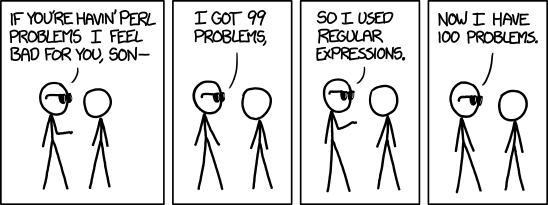
99 Problems (image courtesy of XKCD) Last week I graduated with a Masters in Legal Science (now taught as an MLaw) from Queen s University Belfast. I m pleased to have achieved a Distinction, as well an award for Outstanding Achievement in the Dissertation (which was on the infringement of privacy by private organisations due to state mandated surveillance and retention laws - pretty topical given the unfortunate introduction of the Investigatory Powers Act 2016). However, as previously stated, I had made the decision that I was happier building things, and wanted to return to the world of technology. I talked to a bunch of interesting options, got to various stages in the hiring process with each of them, and happily accepted a role with Titan IC Systems which started at the beginning of September. Titan have produced a hardware accelerated regular expression processor (hence the XKCD reference); the RXP in its FPGA variant (what I get to play with) can handle pattern matching against 40Gb/s of traffic. Which is kinda interesting, as it lends itself to a whole range of applications from network scanning to data mining to, well, anything where you want to sift through a large amount of data checking against a large number of rules. However it s brand new technology for me to get up to speed with (plus getting back into a regular working pattern rather than academentia), and the combination of that and spending most of the summer post DebConf wrapping up the dissertation has meant I haven t had as much time to devote other things as I d have liked. However I ve a few side projects at various stages of completion and will try to manage more regular updates.

Kees Cook: security things in Linux v4.9

Previously: v4.8. Here are a bunch of security things I m excited about in the newly released Linux v4.9: Latent Entropy GCC plugin Building on her earlier work to bring GCC plugin support to the Linux kernel, Emese Revfy ported PaX s Latent Entropy GCC plugin to upstream. This plugin is significantly more complex than the others that have already been ported, and performs extensive instrumentation of functions marked with __latent_entropy. These functions have their branches and loops adjusted to mix random values (selected at build time) into a global entropy gathering variable. Since the branch and loop ordering is very specific to boot conditions, CPU quirks, memory layout, etc, this provides some additional uncertainty to the kernel s entropy pool. Since the entropy actually gathered is hard to measure, no entropy is credited , but rather used to mix the existing pool further. Probably the best place to enable this plugin is on small devices without other strong sources of entropy. vmapped kernel stack and thread_info relocation on x86 Normally, kernel stacks are mapped together in memory. This meant that attackers could use forms of stack exhaustion (or stack buffer overflows) to reach past the end of a stack and start writing over another process s stack. This is bad, and one way to stop it is to provide guard pages between stacks, which is provided by vmalloced memory. Andy Lutomirski did a bunch of work to move to vmapped kernel stack via CONFIG_VMAP_STACK on x86_64. Now when writing past the end of the stack, the kernel will immediately fault instead of just continuing to blindly write. Related to this, the kernel was storing thread_info (which contained sensitive values like addr_limit) at the bottom of the kernel stack, which was an easy target for attackers to hit. Between a combination of explicitly moving targets out of thread_info, removing needless fields, and entirely moving thread_info off the stack, Andy Lutomirski and Linus Torvalds created CONFIG_THREAD_INFO_IN_TASK for x86. CONFIG_DEBUG_RODATA mandatory on arm64 As recently done for x86, Mark Rutland made CONFIG_DEBUG_RODATA mandatory on arm64. This feature controls whether the kernel enforces proper memory protections on its own memory regions (code memory is executable and read-only, read-only data is actually read-only and non-executable, and writable data is non-executable). This protection is a fundamental security primitive for kernel self-protection, so there s no reason to make the protection optional. random_page() cleanup Cleaning up the code around the userspace ASLR implementations makes them easier to reason about. This has been happening for things like the recent consolidation on arch_mmap_rnd() for ET_DYN and during the addition of the entropy sysctl. Both uncovered some awkward uses of get_random_int() (or similar) in and around arch_mmap_rnd() (which is used for mmap (and therefore shared library) and PIE ASLR), as well as in randomize_stack_top() (which is used for stack ASLR). Jason Cooper cleaned things up further by doing away with randomize_range() entirely and replacing it with the saner random_page(), making the per-architecture arch_randomize_brk() (responsible for brk ASLR) much easier to understand. That s it for now! Let me know if there are other fun things to call attention to in v4.9.

2016, Kees Cook. This work is licensed under a Creative Commons Attribution-ShareAlike 3.0 License.
Creative Commons License

Michal &#268;iha&#345;: Gammu 1.38.0

Today Gammu 1.38.0 has been released. Changes in last two testing releases have been stabilized and this is the outcome. You can expect changes in API or SMSD tables as well as some additional features. Also this is first stable release after several years which comes with Windows binaries. These are built using AppVeyor and will help bring Windows users back to latest versions. Full list of changes and new features can be found on Gammu 1.38.0 release page. Would you like to see more features in Gammu? You an support further Gammu development at Bountysource salt or by direct donation.

Filed under: Debian English Gammu 0 comments

Thomas Lange: Two months full of FAI work

The last months were filled with a lot of FAI work. After the release that supports the creation of disk images, I attended the Debian cloud sprint in Seattle. During the sprint, we've looked at some image creation tools and I gave a short demo of the new fai-diskimage command. We've decided to evaluate FAI for creating official Debian cloud images! We've created the FAI configuration for GCE images during the sprint and Sam has now moved his own setup from vmdebootstrap to FAI report. A few weeks ago, I gave a FAI training in cologne for a customer. The participants really loved FAI and they will use it for CentOS, OpenSUSE, Debian and Ubuntu because FAI perfectly fits into their needs Giving this training was a pleasure for me because the participants were really good and they've learned everything about FAI. Later, I wrote some new code for detecting unknown packages names for the command install_packages, which is needed because aptiude does not handle this any more. I've finally released the new version FAI 5.3.2 and also created new ISO images which are now available at http://fai-project.org/fai-cd/. FAI cloud

Next.

Previous.