Search Results: "ema"

22 September 2011

Axel Beckert: Emacs Macros: Repeat on Steroids

vi users have their . (dot) redo command for repeating the last command. The article Repeating Commands in Emacs in Mickey Petersen s blog Mastering Emacs explained Emacs equivalent for that, namely the command repeat, by default bound to C-x z. I though seldomly use it as I mostly have to repeat a chain of commands. What I use are so called Keyboard Macros. For example for the CVE-2011-3192 vulnerability in Apache I added a line like Include /etc/apache2/sites-common/CVE-2011-3192.conf to all VirtualHosts. So I started Emacs with all the relevant files: grep CVE-2011-3192 -l /etc/apache2/sites-available/*[^~] xargs emacs & To remove those Include lines again M-x flush-lines is probably the easiest way in Emacs. So for every file I had to call flush-lines with always the same parameter, save the buffer and then close the file or in Emacsish kill the buffer. So while working on the first file I recorded my doing as a keyboard macro:
C-x (
Start recording
M-x flush-lines<Enter>CVE-2011-3192<Enter>
flush all lines which contain the string CVE-2011-3192
C-x C-s
save the current buffer
C-x C-k<Enter>
kill the current buffer, i.e. close the file
C-x )
Stop recording
Then I just had to call the saved macro with C-x e. It flushed all lines, saved the changes and switched to the next remaining file by closing the current file with three key-strokes. And to make it even easier, from the second occasion on I only had to press e to call the macro directly again. So I just pressed e for a bunch of time and had all files edited. (In this case I used git diff afterwards to check that I didn t wreck anything by half-automating my editing. :-) Of course there are other ways to do this, too, e.g. use sed or so, but I still think it s a neat example for showing the power of keyboard macros in Emacs. More things you can do with Emacs Keyboard Macros are described in the EmacsWiki entry Keyboard Macros. And if you still miss vi s . command in Emacs, you can use the dot-mode, an Emacs mode currently maintained by Robert Wyrick which more or less automatically defines keyboard macros and lets you call them with C-..

21 September 2011

Sune Vuorela: Missing tools for people looking for jobs

I have mentioned it before in some blog posts that I m out looking for a job. In my job searching process, there is a couple of nice tools that I am missing. Maybe if I describe one of them, someone will say that it already exists over there -> or something. Tool 1. Tracking of data related to a job application.
For each such application I send I have a set of data, some pieces only for some applications: I would like one simple way of browsing all this information for a given position. Does this exist? preferably something that can interact with Konqueror, KMail, KAddressbook, KJots, Kopete and irssi on a remote machine. Tool 2: Tracking of tasks with states There is at least the following steps in a job searching process: A job application might go thru some or all of these steps or even more steps, and from each step it can end prematurely with a rejection . Here, I m missing a tool to track my applications and in which state they are currently in. My first thought here is a bug tracking system, but I m wondering if there is something nicer. Currently I m tracking it manually in a KJots notebook. Comments are open. And no, I haven t yet found a job.

20 September 2011

Kai Wasserb ch: TNEF or how to lock-up your e-mails

As the administrator for several MTAs I've received my fair share of support requests for "unreadable" e-mails. They generally have an attachment called winmail.dat. This is what all (for exceptions see the rest of this blog post) non-Outlook MUAs can display, when they receive an e-mail with the application/ms-tnef (or application/vnd.ms-tnef) MIME type. TNEF is a propietary format cooked up in Redmond. When chosen, the e-mail in question isn't sent as text/plain or at least text/html, but the entire e-mail is put into an TNEF-encoded attachment, most often called winmail.dat, in which you (most commonly) find the content of the e-mail in RTF, possible attachments are also put into the winmail.dat. The easieast solution for all involved parties is to convince the sender, that her Outlook and/or Exchange setup needs fixing (disabling TNEF in Outlook and Exchange 2003). Sadly this won't work all the time. The other solutions are to either filter the e-mails on your e-mail server and run them through something like ytnef_smtpd.py (please note, that this might be legally problematic for you as a service provider, opening an e-mail, even automatically, is a violation of communication privacy rights in many jurisdictions). Or, if the legal problem is too big or can't be solved through an local server installation (e.g. because there is no server running 24/7), you're left with either using Outlook (probably what Microsoft intended) or you can use a plug-in/add-on for your client. I've tested the LookOut add-on for icedove and it seems to work well. There are of course plug-ins for many other clients, but I can't honestly tell whether they work or not. [UPDATE 2011-09-20]: Fellow Debian Developer Josselin Mouette wrote me, that Evolution is capable of reading TNEF-encoded e-mails out of the box, but he also said that [TNEF e-mails should] be banned by all means.[/UPDATE 2011-09-20] Now, before I close, please always try to convince the sender/postmaster to fix their setup. It has only advantages: text/plain e-mails are smaller, they're less likely to contain malicious code (i.e. no parts hidden away from the virus scanner on the mail server (amavis can read TNEF e-mails, if libconvert-tnef-perl is installed)) and all recipients can open the e-mails with the client of their choice.

19 September 2011

Stefano Zacchiroli: why there are so many debian derivatives

A while ago I've been interviewed for a forthcoming article in the LinuxUser magazine on the topic of why there are so many Debian derivatives and on the potential impact, on them, of the (potential) advent of the so called "Debian Rolling" experiment. Below you can find my take on those topics. Questions are by Ferdinand Thommes, who has been involved in various Debian derivatives, including the forthcoming Siduction.
1.) Why do you think people base distributions on Debian? Looking at how many there is, since Corel and Libranet set sail in 1999, there must be a reason why, for one, people fork Debian in the first place, and secondly, why they choose Debian to do so and not some other distribution.
There are always advantages in creating a so called "derivative" distribution with respect to creating one from scratch. The main one is the possibility of reusing the packaging work which is already done in the "upstream" distro, focusing derivatives' efforts on customization, usually with clear target public in mind. Debian pushes most of those advantages (for derivatives) at their extremes. But there are also a couple of "political" reasons for basing derivatives on Debian. One is quite subtle and applies mostly to commercial distributions. If you are designing one such commercial distro, you have to be based on an independent distro with no commercial interests, lest risking that petty (technical or otherwise) choices might be made just to undermine your business. Among "popular" GNU/Linux distros, Debian is essentially the only one which is both volunteer-based and not ascribable to any specific company. The last reason why I think many derivatives are based on Debian is our vocation to universality. Since we are not targeting any specific public, but rather trying to provide an operating system suitable for several different use cases (e.g. the tasks supported by the Debian installer or the choice of Debian Pure Blends), we offer an ideal starting point for those who are going to have customization as their main business.
2.) What could be the benefits for Debian and for its Derivates, if the discussions about a second Debian Release based on the Testing branch really come to be reality?
We are considering the possibility of adding a new Debian suite which is "rolling" like Testing, in the sense that new software releases flow in regularly rather than only at periodic bumps corresponding to major distribution releases. There seem to be user demand for that and I personally believe that such a scheme could address the needs of both advanced desktop users and of developers, which are now strand to mix and match Debian suites ending up using package combinations which benefit, as a whole, of very little quality check. The main issues to face to get there is how to make sure that adding such a suite would not get in the way of preparing high quality Stable releases, in terms of quality control, developer focus, etc. Note that such a hypothetical "rolling" suite needs does not necessarily need to be based on Debian Testing, although that is a good starting point. The reason why it's not a good endpoint is that Testing has been created (circa 2000), and is still used, as an internal tool to prepare the forthcoming Debian Stable release. As such, it is not entirely suitable for final user consumption. For instance, during the Debian "freeze" period the flow of new software releases that reach Testing is greatly reduced up to stopping completely just before the release of a new Debian Stable. I've been told that users of testing-based (derivative) rolling releases regularly complain about this aspect during Debian freezes, which is not surprising. The main advantage for derivatives which are already offering a Debian-based "rolling" release will then be the possibility of basing their work on a suite less bound to the life cycle of Debian Stable than Testing is at present. On the converse side, that would also mean that derivatives will need to differentiate more from Debian than by just saying they are "rolling", which is a good thing: differences among distros are healthy and drive innovation. With those derivatives, on the other hand, which will recognize their goals as being aligned with Debian's goals---Debian Stable today, maybe Debian "rolling" tomorrow---we will be happy to join efforts.

Keith Packard: MacBook-Air-2

Fixing the Sandbrige MacBook Air display initialization We left our hero with Debian installed on the MacBook Air, but with the display getting scrambled as soon as the i915 driver loaded. As was reported to Matthew, the problem is as simple as a lack of the right mode for the eDP panel in the machine. This mode is supposed to come from the panel EDID data, but for some reason the driver wasn t able to query the EDID data, and so it decided to try some random panel timings it dug out of the VBT tables, which are generally supposed to be used by LVDS panels. Apple helpfully stuck valid data there, but for some other panel one that is 1280x800 pixels instead of the 1366x768 pixel panel in the MacBook Air. I heard rumors that some machines would get a black screen when the i915 driver loaded. I was fortunate my machine simply displayed a 1366x768 subset of the programmed 1280x800 mode. A bit of garbage on the right side, and a few scanlines missing at the bottom. Quite workable, especially after I ran fbset -yres 768 to keep the console in the visible portion of the screen. DDC failure Looking through the kernel logs, the Intel driver tries to access the EDID data and times out, as if DDC is just completely broken. This is rather unexpected; the eDP spec says that the panel is required to support DDC and provide EDID. Now, we ve seen a lot of panels which don t quite live up to the rigorous eDP specifications, but it s a bit surprising from Apple, who generally do VESA stuff pretty well. We ve heard reports about panels reporting invalid EDID data, or EDID data which didn t actually match the panel (causing us to prefer the VBT data on LVDS machines). But I ve not heard of an eDP panel which didn t have anything hanging off of the DDC channel. But X works fine? During early debugging, I happened to start X up. Much to my surprise, X came up at the native 1366x768 mode. Digging through the kernel logs after that, I discovered that EDID was successfully fetched from the eDP panel while X started up. At this point, I knew it was all downhill the EDID data was present, it just wasn t getting picked up during the early part of the driver initialization when the console mode is initialized. eDP power management The CPU is given complete control over the power management of the eDP panel; sequencing through various power states and waiting appropriate amounts of time when things change. Given the goal of keeping power usage as low as possible, this makes a huge amount of sense. The eDP spec is quite clear though, without power, the panel will not respond to anything over the aux channel, and that includes EDID data. The eDP panel power hardware in the Sandybridge chip has a special mode for dealing with this requirement. If the panel is not displaying data, you can supply power for the aux channel stuff by setting a magic bit in the panel power registers. When initializing the frame buffer, the kernel driver turns off the panel completely so that it has all of the hardware in a known state (yeah, this is not optimal, but that s another bug). When X started, the panel was already running with the console mode. Given the difference between these two states EDID querying with the panel off failed, while EDID querying with the panel on worked, it seemed pretty clear that the panel power wasn t getting managed correctly. So, it seemed pretty clear that the magic power the panel bit wasn t getting turned on at the right times. Getting the power turned on. I stuck a check inside all of the aux channel communication functions to see where things were broken. This pointed out several places missing the panel power calls. This wasn t quite sufficient to get EDID data flowing. The remaining problem was that the code wasn t waiting long enough after turning the panel power on before starting the aux channel communication. A few msleep calls and huzzah! EDID at boot time and the console had the right mode. Making it faster However, it turns out that the driver does this a lot, and the msleeps required were fairly long the eDP panel wants a 500ms delay from turning the panel power off before you can turn it back on. I fix this by simply delaying the panel power off until things were idle for a long time. Now mode setting goes zipping through, and a few seconds later, the bit to force panel power on gets turned off. Getting these bits for yourself I ve pushed out the code to my (temporary) kernel repository git://people.freedesktop.org/~keithp/linux in the fix-edp-vdd-power branch. I d love to hear if you ve tried this on either a MacBook Air or any other eDP machine from Ironlake onwards.

18 September 2011

Biella Coleman: Birds of a Feather for Academics (aka how to study digital media)

lol-bird-watch There is nothing more dispiriting for a scholar of digital media to see the astounding plurality of forms, formats, and politics reduced to one of a handful of tepid categories such as 1) network society 2) peer to peer production 3) digital activism and 4) the absolute most vacuous terms ever, Web 2.0. The problem is summed up rather nicely by a bunch of folks who published an article by the name of Birds of the Internet that every scholar interested in digital media should read: Observing participation without any guide to its diversity is like watching birds with no sense of what distinguishes them other than that they fly and squawk (when of course, many do neither). Rather than
lumping every instance of Internet-mediated participation into boxes labeled digital
culture , virtual reality , online community or network society , a field guide could aid in observing differences and testing, rather than proliferating classifications.

Craig Small: Getting music into the iPod Shuffle

IPod shuffle

Image via Wikipedia

Sounds easy doesn t it? You got a nice debian computer filled with mp3s and you got an iPod Shuffle. You want to get the mp3s onto the Shuffle, simple really! Well, no. I ve got a 2nd Generation iPod Shuffle; its a little blue thing the size of a postage stamp with no screen. Specifically a model A1204. It uses the headphone socket with a special connector to get it connected via USB. It also steadfastly refused to play anything I transferred onto it. gtkpod was first. I knew I was in trouble when my model doesn t appear in their list of supported devices. 2nd Generation Shuffles do, just not an A1204. After a lot of fiddling around and playing with special files and firewire IDs I got a file onto it. Great, but then turning the iPod on I got the green and orange sequence of lights which means no file found. Next, was Rhythmbox. It is supposed to understand iPods too. The funny thing was that it saw the music file I put on the iPod by gtkpod, but adding any file gave me the same colour sequence. What was worse is if you tried to look at the information about the iPod, Rhythmbox crashed. It seemed I was doomed to use iTunes on the windows computer in the living room. A program that seems designed not to work the way I want. (It tries to load all the mp3 files from my son s games into the iPod but ignores my music on the samba share, for starters). I just wanted the files on the player and the player to recognise and play them. It didn t seem like a too hard a task, but I was stuck. That was until I found a small (643 lines) python script called rebuild-db that builds the special iPod files with my music. I found the file at the rebuild-db sourceforge page and it was very simple process. Now I plug the iPod in, wait for the window to appear, push my songs onto the iPod and run the script. It s quick and simple and more importantly it works. Not bad for a program that hasn t been developed since April 2006.

Paul Wise: Revisiting personal software freedom

Since it was Software Freedom Day again, I figured I should revisit my personal software freedom and see what has changed since my post two years ago. There hasn't been a vrms meme again this year so I don't have anyone else to compare with. A small survey on IRC indicates folks still need non-free nVidia drivers, embedded software, GNU documentation, Java and more. Since then I have switched my laptop from the Dell Inspiron 6400 to the Thinkpad X201 Tablet. Nothing really changed with my laptop, GNU documentation is still non-free and the new Intel WiFi chip on my new laptop still uses non-free embedded software. To remind myself of the non-free bits embedded in the hardware (CPU microcode, BIOS, EC etc), I have installed intel-microcode and microcode.ctl. Since then I didn't get any new phone, still the same OpenMoko FreeRunner. I'm now using QtMoko on a 4GB microSD card and Debian and SHR on other cards for testing. QtMoko is based on Debian and is the latest incarnation of Qtopia. It is probably free but I haven't done any audit of it. One interesting thing that changed with the FreeRunner in the past two years is that Harald Welte and friends started OsmocomBB, a project to create free software for the GSM modem built into the FreeRunner and many old feature-phones. I haven't tried it yet due to lack of time. While at the Chaos Communication Camp 2011 I learnt about the blackbox that SIM cards are (video), which hopefully OsmocomBB has a chance to protect against. AFAIK nothing else has changed to improve software freedom on the FreeRunner, the WiFi, GPS and other parts still contain non-free software with no chance of a replacement in sight. Since then I am still using the same wireless router and ADSL modem and I wasn't brave enough to try replacing their software. I still use gmail out of intertia, but I at least have started using offlineimap to prepare for the day when I will move away from it. I still use Google Maps, mainly for searching for public transport routes. With my recent travels in Europe I encountered many places where OpenStreetMap has much better coverage than Google. One nice thing about Google Maps adding public transport information is that public transport organisations have been publishing public data feeds for Google to consume. Apparently there is also a realtime variant. I also found one website using a JSON API for Google street view. The combination of these gives me hope for better support for spatial data in free software. The data (aerial and streets) will obviously remain a much longer term freeness issue though. For flash video on the web get-flash-videos appeared and made it even easier to ignore flash, especially since I got a few patches added to it. In addition Swfdec died but Gnash improved enough to replace it. Lightspark was also created but has so far been pretty buggy and unstable. Free RAR v3 format support appeared in the form of TheUnarchiver. The Voxware audio codec and DigiTrakker MDL files are still not supported by Rhythmbox. Unicode has been updated and so now Debian doesn't support every script fully. I still manage to avoid Skype. The nouveau drivers have matured enough to provide 3D support, multi-monitor support and general stability for the one nVidia card I used in the past two years. Overall, I'm reasonably happy with my level of software freedom. My main strategy for preventing regressions in my software freedom remains to just avoid doing things that require non-free software. The most problematic FLOSS issues for me are embedded software, spatial data support and Flash support. Please feel free to contact me with any comments or questions. Happy Software Freedom Day everyone!

17 September 2011

Joey Hess: destructive impulse

I used to know guys who would take old computer hardware out in the desert and shoot it up. I never went, and I've never gratuitously destroyed a computer in 2 decades of working with the things. Until yesterday when I picked one up by the monitor and introduced it to the floor. My regret isn't that I violently destroyed a computer, but that it was my Mom's computer, and I did it right in front of her, and without even a story-worthy reason, just out of garden variety frustration. And perhaps there's some regret that I was actually unsucessful in destroying anything other than the monitor and some speakers. The computer was salvaged, and my mom has a new monitor and a working system again. Sorry Mom & Maggie. To make up for it, I'll humiliate myself with this recording of "broke mom's computer blues", which will only be available for a very limited time: click to listen (warning: contains harmonica). Anyway, don't worry; any remaining frustration will be taken out the usual way: Splitting firewood.

Petter Reinholdtsen: Ripping problematic DVDs using dvdbackup and genisoimage

For convenience, I want to store copies of all my DVDs on my file server. It allow me to save shelf space flat while still having my movie collection easily available. It also make it possible to let the kids see their favourite DVDs without wearing the physical copies down. I prefer to store the DVDs as ISOs to keep the DVD menu and subtitle options intact. It also ensure that the entire film is one file on the disk. As this is for personal use, the ripping is perfectly legal here in Norway. Normally I rip the DVDs using dd like this:
#!/bin/sh
# apt-get install lsdvd
title=$(lsdvd 2>/dev/null awk '/Disc Title: /  print $3 ')
dd if=/dev/dvd of=/storage/dvds/$title.iso bs=1M
But some DVDs give a input/output error when I read it, and I have been looking for a better alternative. I have no idea why this I/O error occur, but suspect my DVD drive, the Linux kernel driver or something fishy with the DVDs in question. Or perhaps all three. Anyway, I believe I found a solution today using dvdbackup and genisoimage. This script gave me a working ISO for a problematic movie by first extracting the DVD file system and then re-packing it back as an ISO.
#!/bin/sh
# apt-get install lsdvd dvdbackup genisoimage
set -e
tmpdir=/storage/dvds/
title=$(lsdvd 2>/dev/null awk '/Disc Title: /  print $3 ')
dvdbackup -i /dev/dvd -M -o $tmpdir -n$title
genisoimage -dvd-video -o $tmpdir/$title.iso $tmpdir/$title
rm -rf $tmpdir/$title
Anyone know of a better way available in Debian/Squeeze? Update 2011-09-18: I got a tip from Konstantin Khomoutov about the readom program from the wodim package. It is specially written to read optical media, and is called like this: readom dev=/dev/dvd f=image.iso. It got 6 GB along with the problematic Cars DVD before it failed, and failed right away with a Timmy Time DVD. Next, I got a tip from Bastian Blank about his program python-dvdvideo, which seem to be just what I am looking for. Tested it with my problematic Timmy Time DVD, and it succeeded creating a ISO image. The git source built and installed just fine in Squeeze, so I guess this will be my tool of choice in the future.

16 September 2011

Rapha&#235;l Hertzog: How to triage bugs in the Debian bug tracking system

Triaging bugs is one of the easiest way to start contributing to Debian. I ll teach you the basics in this article. 1. Prerequisites All interactions with the Debian Bug Tracking System (BTS) happen through email so you need to have an email account with an address that you re willing to make public. All the mail that you send to the BTS will be archived and publicly available through its web-interface. This also means that you should have some spam filters in place because it will inevitably be harvested by spammers. :-( To ensure that this email address is consistently used by the various tools that we re going to use, it s a good idea to put this email address in the DEBEMAIL environment variable. You can also specify your full name in DEBFULLNAME (in case you don t want to use the name associated with your Unix account). You usually do this by modifying ~/.bashrc (if you use bash as login shell):
export DEBEMAIL="hertzog@debian.org"
export DEBFULLNAME="Rapha l Hertzog"
You should also install the devscripts package, it provides the bts command that we re going to use. 2. Find a package or a team with too many bugs You can literally pick any popular software that s in Debian, they almost always get more bug reports than the maintainers can handle. Instead of picking a package, you can also select a packaging team and concentrate your efforts on the set of packages managed by the team. In any case, it s important to receive the bug traffic for the packages that you re going to work on. If you went for a specific package, you should subscribe to the package via the Package Tracking System (there s a subscribe box on the bottom left corner once you selected the source package of interest). If you decided to help a team, there s usually a dedicated mailing list receiving all bug traffic. You can browse a list of packages with the most bugs if you have troubles finding a package to work on. A stack of bug reports to triage 3. Triage bugs! Bug triaging is all about making sure that bugs are correctly classified so that when a developer looks at the bug list, he can quickly find bugs with all the information required to be able to fix them! 3.1 Adding information to bug Adding supplementary information is easily done just by sending a mail to XXXX@bugs.debian.org (replace XXXX with the bug number). But often you want to reply to a message in the bug history, in that case bts --mbox show XXXX is for you. It will grab the corresponding mailbox and open a mailer (mutt by default) on it. Now you can directly reply in your favorite mailer. 3.2 Classifying bugs The Debian BTS uses tags (click the link and read the doc!) to classify bugs. bts tag XXXX + foo will add the foo tag (replace the + with a to remove a tag). If you want to explain why you re adding a tag, you should instead reply in the bug log as explained above, put control@bugs.debian.org in Bcc (Blind Carbon Copy) and start the body of your message with your tag command:

tag XXXX + foo
thanks
But what tag should you add? When a bug is submitted, you should try to reproduce the bug. If you can reproduce it, then tag the bug confirmed (example in #641710). If you can t, you should request more information (ex: a sample document triggering the bug, a configuration file, the output of some relevant command, etc.) until you can reproduce it or conclude that it was a user mistake. When you request supplementary information due to this, you should tag the bug unreproducible moreinfo (example in #526774). moreinfo should be later dropped when the requested information are provided, and unreproducible should be dropped if those information were enough to actually help reproduce the bug (example in #526774). During that initial evaluation, it s also worth differentiating packaging bugs (which are specific to Debian) from upstream bugs (which are relevant also for non-Debian users). The latter should be tagged upstream (and forwarded upstream if the bug is reproducible or contains enough information for the upstream developers, example in #635112). If you saw a (viable) patch in the bug log, the bug should be tagged patch . This is usually done by the patch submitter but sometimes it s forgotten (example in #632460). Take care though to not reinstate the patch tag if it was initially set but then dropped by the package maintainer after a review of the patch. If the title of the bug report is not descriptive enough, you can change it with a retitle XXXX new-title command (example in #170850). You can also change the severity of the bug report depending on the impact of the problem (with a command severity XXXX new-severity , what a surprise!). Request for new features are wishlist , most documentation problems are minor . On the other side of the scale, you can use important for bugs that are very annoying but that should not block a release. serious , grave and critical are used for release critical bugs, check the official definitions of the severities (examples in 502738 or #506498). 3.3 Closing non-bugs and bugs that are already fixed If your analysis of the bug report is that it s not really a bug but a user mistake, then you should close it by sending a mail to XXXX-done@bugs.debian.org with some explanations of the user s mistake so that he can get past his problem (example in #592853). If the problem was a real bug, but one that is apparently already fixed, you should try to quickly find the version that fixed the bug. If you can t find it in the changelog (there s a link to it in the PTS, or you can use /usr/share/doc/package/changelog.Debian.gz), you ll make the safe assumption that the upstream version you re currently using is the first one where this is fixed. Then you send a mail to XXXX-done@bugs.debian.org but you start your mail with Version: version-that-fixed-the-bug and continue with a small explanation of why you believe the bug to be fixed by this version (example in #122948). 3.4 Reassigning misfiled bug reports Bug reports are not always filed against the proper package. Users file bugs against applications where they experience the bugs, but the real bug might be in an underlying library or application. When that happens, you should use the reassign XXXX correct-package version command to get it filed against the correct package. The version parameter is optional but should be provided if possible, it should be the oldest version that we know to have the problem (example in #626232). 3.5 Forwarding bugs Forwarding bugs means opening bug reports in the upstream bug tracker for issues that have been reported in Debian but that applies to the upstream (unmodified) source code. Be sure to include all the relevant information and a link to the corresponding Debian bug. Depending on the upstream bug tracker, you might have to open an account to be able to file new bug reports. On the Debian side, you must record that a bug has been forwarded with bts forwarded XXXX upstream-bug-url . upstream-bug-url is the URL corresponding to the upstream bug report you created (ex: http://projects.ciarang.com/p/feed2omb/issues/21/ recorded in #609345 ). If the upstream authors fix the bug you reported, you can tag the Debian bug with fixed-upstream so that it s easier to find bugs to close when the next upstream release comes out (example in #637275). 3.6 Updating version information The Debian BTS uses version tracking to know which package versions are affected by a given bug. It s particularly important to have correct version information for release critical bugs since it might affect the migration of packages to testing. You can learn more on this topic here: http://wiki.debian.org/HowtoUseBTS. 4. More advice Colin Watson wrote a constructive rant explaining some mistakes that bug triagers are often doing. While it refers mainly to Ubuntu s launchpad, the advice apply equally as well to Debian. Check it out to become a better bug triager! Note that you can refer to this article with this shorter URL: http://raphaelhertzog.com/go/bugtriaging/

Do you want to read more tutorials like this one? Click here to subscribe to my free newsletter, you can opt to receive future articles by email.

One comment Liked this article? Click here. My blog is Flattr-enabled.

Lior Kaplan: Happy 10th b-day bug #98160

Happy 10th birthday Mozilla bug #98160, I hope you won t make it to your 11th, but who knows I hope the same for your younger brothers bug #166240 which is only 9 years old. Many thanks for all the people who tried to help RTL users switch their textarea directionality and alignment easier. Another bug in the it sometime sucks to be an RTL user department is bug #119857, soon to be age 10. I m lucky to have BiDi Mail UI as a good workaround, otherwise I couldn t read emails in Hebrew with the proper alignment/directionality. In another department, I must say I love daylight saving time, as I have more hours of sun, but this comes on the expense of my schedule as due to bug #504299 all my events aren t on the right local time, but an hour earlier. Although the post is written cynically, I would like to call the Mozilla community to help with fixing these issues. I also want to thank the people who are already helping with these issues or helped in the past.
Filed under: Free software applications, i18n & l10n, Mozilla

Christian Perrier: 2nd update about Debian Installer localization

Two days after my first update, here's a progress report about D-I l10n? Status for D-I level 1 (core D-I files): So, Japanese and Sinhala reached 100%. Great effort by Danishka Davin, the translator from Sri Lanka, who also sent me impressive pictures of a local FLOSS event, apparently taken at the booth of HanthanaLinux, a local distro based on Debian. I had many privat email discussions with translators. Several of them were used to send me updates, which I committed in the past. I really want them to be able to commit themselves. So, I end up explaining how to svn+ssh on Alioth and remotely debugging their setup. I have to say this is really painful...:-) So, I may end up again in committing what they sent to me..:-(
14 September 2011

John Goerzen: Mexico Part 4: Street Scenes and Architecture

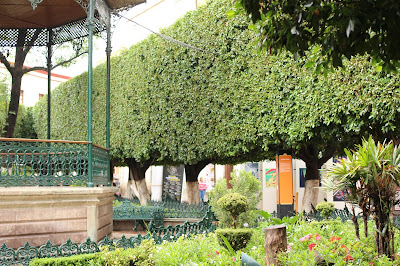
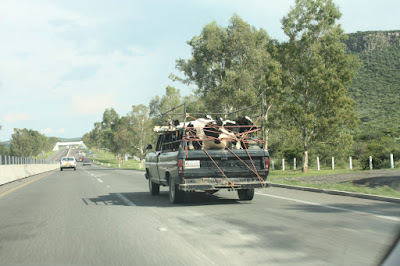
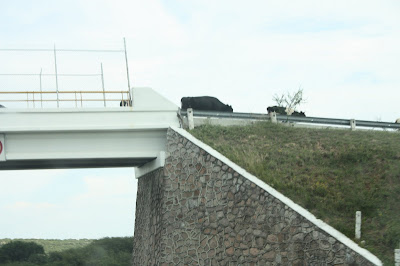
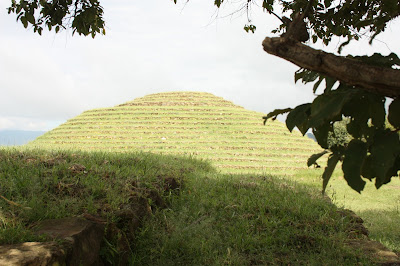
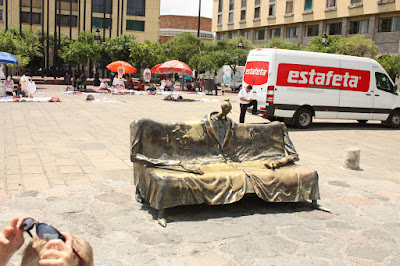
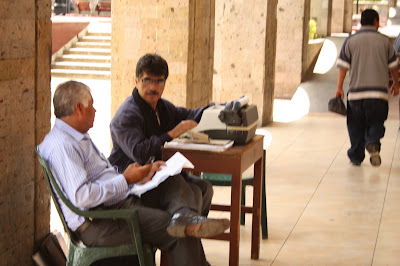
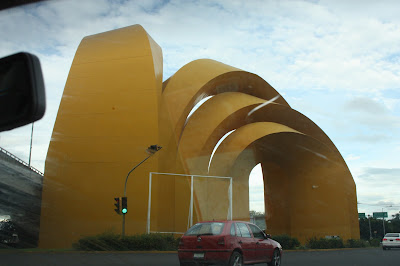
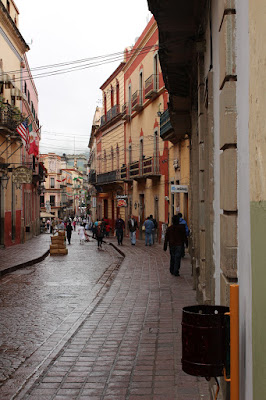
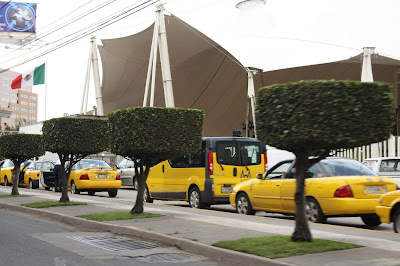
The fourth in a series; see also parts 1, 2, and 3. This post is going to be more a photolog than a narrative, and I apologize in advance for it being a bit disjointed. I ve already touched on these themes a bit in the other post, but now it s time to focus on them. Immediately after leaving the airport, it s quite clear that things are a little different. Trees are square. People ride around in the backs of pickups sometimes on top of piles of debris. Left turns are made in front of other lanes of traffic going the same way. But those are just the things obvious from the road. It s a lot of fun to enjoy the differences. First, the ubiquitous square trees. They look pretty, and are found all over. I also found carefully-manicured trees in cone shapes, more cylindrical shapes, etc. It seems that tree care is taken seriously in Mexico. It was also not uncommon to see the bottom few feet of a tree painted white. A park in Guanajuato had a whole bunch of trees carefully trimmed. And from up on the mountain, it still looked impressive (the green area behind the dome). Driving in Mexico was interesting for a lot of reasons. The highways there aren t quite as limited access as the freeways in the USA. It was quite common to see bicyclists, walkers, a mule, or some cattle ambling along the side of the road. Roadside taco stands don t require taking an exit. You just pull off the road because it s right there. Some sights were a bit surprising. Cattle in a pickup, with rope, for instance. Or cattle crossing the highway on the overpass. Street vendors were everywhere. Stop at a red light and someone might spring from the side of the road and suddenly start washing your windshield (expecting a tip); try to sell you flowers, juice, or bug zappers; or even throw business card-sized advertisements for adult websites into any open windows they can find. One night we saw an incredible fire juggler. I would have tipped him well but he was too far away to do so before the light turned green. Mexico s history stretches back into prehistoric times, and we saw the Teuchitlan ruins at Guachimontones one day. It was truly a remarkable feeling to be able to walk down the middle of the ancient ball court, or to climb up one pyramid and see the other from it. It s not exactly architecture, but Jacob and Oliver sure enjoyed visiting the hot springs at Bosque de la Primavera. Jacob still remembers that where the steam is, the water is 200 degrees, and we CAN T TOUCH IT THERE! Back in Guadalajara, here s a photo from the inside of the grand old cathedral. Compared to the cathedrals we saw in Europe, this was of a similar general size and design, and perhaps only slightly newer. But one big difference: worshipers outnumbered tourists at every Mexican cathedral I saw, whether in the center of Guadalajara or at a rainy intersection in Guanajuato or a plaza in Tlaquepaque. It made them feel more alive, and perhaps more sacred as well. One surprise was seeing people sitting on the steps of the cathedral in downtown Guadalajara selling trinkets such as beads. I think the only other place I had seen something like that was in New Orleans. All of Guadalajara s Centro was beautiful. Much of it survives from colonial days; I think a person could spend days exploring its museums and buildings. Way too many of my 900 photos were taken in Centro to post on the blog, but just for flavor, here s one of the less than historic scenes. Yes, that is a bus shaped like a tequila bottle. Fountains were beautiful and common across Mexico. A few of them were easily reachable by boys, and ours sure loved those. There was a lot of public art, including this interesting chair/skeleton/I m not sure what it is: And, just for good measure while walking around Centro, they tossed in an apparent Redundant Array of Inexpensive Typewriters. I don t know what they were doing, but there were about a dozen guys sitting out in the sun typing on their manual typewriters on their identical tables. And who can leave Guadalajara without seeing one of North America s most impressive traffic circles. I ve got to hand it to the Mexicans for making something that is normally really boring into an interesting work of art. Over in Guanajuato, a lot of driving takes place in the city s vast underground tunnel system. Here s a scene emerging from one of them. Guanajuato was already getting decorated for Mexican independence day festivities (Sept. 15-16) while we were there. Here s a typical Guanajuato street scene. Many of the streets were closed to traffic and perhaps not wide enough to handle vehicles anyway. Those streets had a wonderful peaceful and slow feel to them. I feel that I ve barely done the trip justice with this post. The feelings of walking down a beautiful Guanajuato street, or stepping into a Spanish cathedral, or even seeing a bunch of guys with typewriters, just can t be replicated. It s brimming with history and character, and shouldn t be missed.

13 September 2011

Christian Perrier: 10 years being Debian Developer - part 4: NM process

So, this story begins in January 2001, when I applied in the Debian New Maintainer Process. I wanted to maintain Geneweb, which I was using to publish my genealogy research results. And I wanted to keep it up-to-date while upstream was doing a quite fast development. Moreover, I quickly noticed that Geneweb had big trouble in respecting the way data is organized on a Debian system, and respect the FHS. How to have weveral users able to publish their data on the same server without compromizing the overall system security, etc. Upstream development didn't really care about that. Daniel de Rauglaudre is an excellent genealogist and developer but he was not interested in making Geneweb clean "the Debian way". For instance, at that time, it wasn't easy to setup a server, where genealogy databases could be published without having to manually launch a daemon in user mode at each reboot. Arranging this was indeed my first contribution. I contributed a few patches to make it easier to turn Geneweb into something FHS-compliant...and I developed init scripts and an organization allowing one to have shared databases after system reboots. That was rapidly a great introduction to Debian maintainer scripts and even security-related challenges. And all this....because I needed it. Basically, in 2001, the geneweb package adopted the organization it still has in Debian and Ubuntu, 10 years later: While doing so, I was going through the New Maintainer Process. The Debian developer who had signed my key was Sam Tardieu, of of those longstanding "Freenix" dudes I was sometimes hanging around. I don't remember who did write my advocacy. Michael Mattice was my first Application Manager. Interestingly, here are the three first questions he asked my as part of the Policy and Procedures check : Mike actually asked the questions on February 17th and I probably answered immediately. Unfortunately it seems that I lost my answers. Maybe they are in some archive somewhere. Would be interesting to see how I ended giving an answer about the TeX exception.:-) Immediately, Mike moved to the Tasks and Skills step and checked my geneweb and lifelines packages (I already prepared a package for that other genealogy software). From my records, he found a few lintian warnings, which I probably made my best to fix, then later on, on March 12th, he answered me that thigns were OK and he was marking the T&S step as passed...handing things over to the NM database, asking me what username I wanted on debian.org (obviously, you know what I answered to this!). Then nothing happened..:-) I was not that impatient, but finally, around June 27th, I politely mailed NM Frontdesk (I guess) to get news...and I got a very quick answer by Martin Michlmayr. Martin was indeed worried about the situation (he told me I was on his radar....fun as, many years later, as many DDs, Martin probably went on mine because of pending localization work..:-)) Finally, Martin decided he was not entirely happy with the (maybe too short) processing for P&P and proposed me (very politely, you know how Martin is!) to do it again. So, some more questions...:-) Here, I have the answers. Really fun ro read. Hang on, pure bubulle style, very verbose! What a bunch of questions..:-). Reading my answers ten years after, I see that some answers are somehow naive but, after all, they're not so bad. I really remember spending hours in writing them (my English was somehow more shaky at that time) The last question was: "Please tell me about about yourself and what you intend to do for Debian". Here, Martin opened a big can of worms..:-) So, you'll learn about this in the next episode..:-)

Rapha&#235;l Hertzog: Understand dpkg and don t get stuck with a maintainer script failure

Continuing my series of articles on dpkg s errors, this time I ll cover a pretty common one which has several variations:
Setting up acpid (1:2.0.12-1) ...
rm: cannot remove  /etc/rc1.d/K20acpid': No such file or directory
dpkg: error processing acpid (--configure):
 subprocess installed post-installation script returned error exit status 1
Errors were encountered while processing:
 acpid
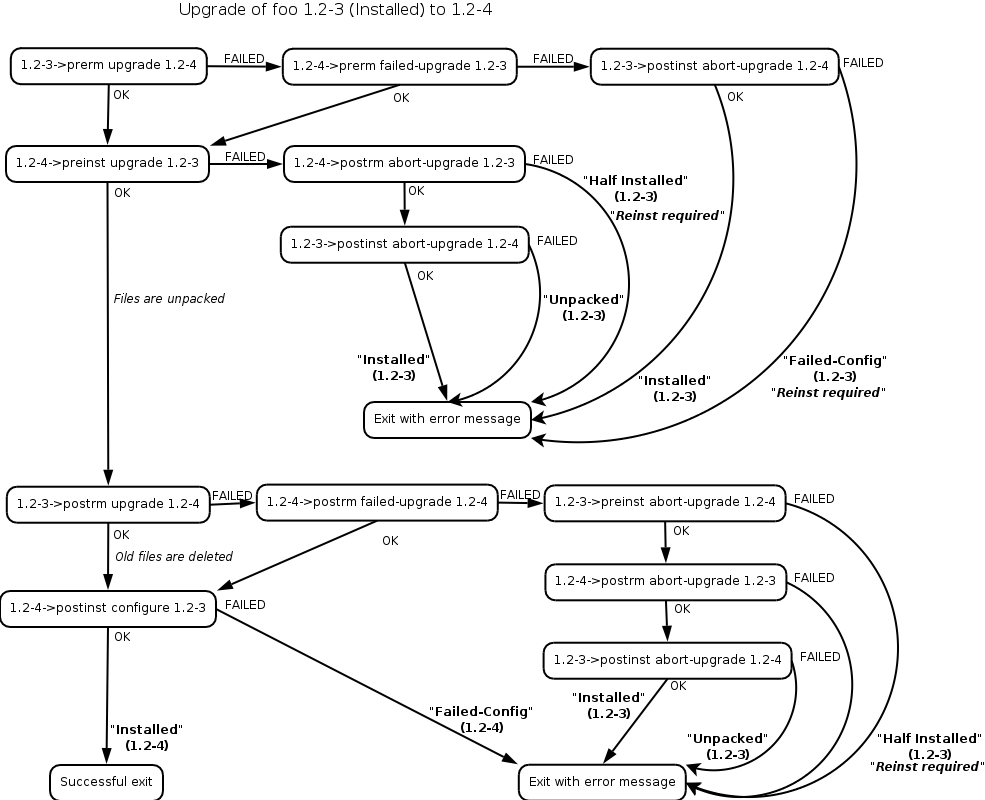
Even if dpkg is failing and outputting the error message, the real problem is not in dpkg but in the installed package (acpid in the example above). As we already learned, a package contains not only files but also maintainer scripts that are executed at various points of the installation process (see some useful graphics to understand how they are called, thanks to Margarita Manterola).

Maintainer scripts in a package upgrade

In the introductory example it was acpid s post-installation script that failed, and dpkg is only forwarding that failure back to the caller. The maintainer scripts are stored in /var/lib/dpkg/info/. You can thus inspect them and even modify them if you hit a bug and want to work around it (do this only if you understand what you do!). One common modification is to add set -x at the start of the script and to retry the failing operation. That way you can see what s executed exactly. Here s what the output could look like after the addition of set -x to /var/lib/dpkg/info/acpid.postinst:
$ sudo dpkg --configure acpid
Setting up acpid (1:2.0.12-1) ...
+ dpkg --compare-versions 1:2.0.11-1 lt-nl 1.0.10-3
+ dpkg --compare-versions 1:2.0.11-1 lt-nl 1.0.6-16
+ dpkg --compare-versions 1:2.0.11-1 lt 1.0.6-6
+ rm /etc/rc1.d/K20acpid
rm: cannot remove  /etc/rc1.d/K20acpid': No such file or directory
dpkg: error processing acpid (--configure):
 subprocess installed post-installation script returned error exit status 1
Errors were encountered while processing:
 acpid
This output helps you locate the command that is actually failing. Here s it s relatively easy since we have an error message from rm . And the fix is trivial too, we replace rm with rm -f so that it doesn t fail when the file doesn t exist (this is a fake bug I made up for this article I just added a failing rm call but it s inspired by real bugs I experienced). Maintainer scripts are supposed to be idempotent: we should be able to execute them several times in a row without bad consequences. It happens from time to time that the maintainer gets this wrong on the first try it works, so he uploads his package and we discover the problem only later once someone ended up executing the same code twice for some reason.

Follow me on Identi.ca, Twitter, Facebook and Google+. Or subscribe to this blog by RSS or by email.

7 comments Liked this article? Click here. My blog is Flattr-enabled.

12 September 2011

Jaldhar Vyas: 9/11: Never Forget

As many people reading this may know, my wife Jyoti was in the World Trade Center on 9/11. When the first plane hit, she joined some colleagues at her employers offices on the 78th floor of the South Tower to see what was going on. A few minutes later she went downstairs to her desk on the 77th floor to call me and tell me about it. That's when the second plane hit. Everyone on the 78th floor was instantly killed as she would have been if she had decided to stay. She and some friends, covered in debris and soaked in jet fuel, blinded by thick black smoke made their way down 77 flights of stairs (the elevators were out of action) and even though she was seven months pregnant with our daughter at the time she went all the way down without stopping to rest. An NYPD officer Ramon Suarez helped her out and to an ambulance. He went back to rescue others and died half an hour later when the North Tower collapsed. I was at home. After getting ready and saying my morning prayers, I was leisurly preparing breakfast before starting the day. I started getting phone calls asking "Is Jyoti ok?" Of course she was. Why wouldn't she be? I somehow don't remember who said it first but I was told to turn on the TV because a plane had hit the World Trade Center. I spent the rest of the morning glued to the screen in horror as information on what exactly had happened. Absolutely the lowest moment of my life was when I saw, in real time, the twin towers fall. It was several more hours before I actually got to talk to Jyoti on the phone, confirmation that she was still alive. I didn't get to actually see her and hold her until the next day owing to the curfew around Manhattan. So that's what happened that day. We have repeatedly been told "Never forget" but truth be told some of the details are already fading from my memory. For my wife too, while she occasionally had panic attacks at first, every day life is foremost now and it is only on days like this that her ordeal comes to mind. Our daughter Shailaja is now 10 years old and an honor roll student who just started 4th grade. She knows the story but is not affected by it. These are good things in my opinion. What the jihadists want most of all is apocalypse. They wanted the world to change course but ten years later America remains as generous, bull-headed, lively, spiritual, garish and crude as ever. That's the sweetest revenge lovers of life can have. Don't give up your rights and your daily routines to fear but make the bastards give up theirs. Or as the cliche goes, the terrorists will win.

11 September 2011

Biella Coleman: Raymond Williams on the masses

Given his theory of the masses, critical theorist Raymond Williams would probably have not liked or believed in the concept of social engineering: The are in fact no masses, but only ways of seeing people as masses.

John Goerzen: Mexico Part 1: Genesis and Travel

My family and I (including our boys) are just back from a great visit to Mexico. It was my first time there, and also the first time our boys have been outside the USA. I ll be writing about all the fun stuff in the posts to come, so you ll have to bear with me on this one as I describe why we did something that appears to horrify a segment of Americans. About a year ago, I wrote a review of Travel as a Political Act by Rick Steves. Rick s point wasn t actually directly political in the conventional sense, but summed up as:
I ve taught people how to travel. I focus mostly on the logistics: finding the right hotel, avoiding long lines But that s not why we travel. We travel to have enlightening experiences, to meet inspirational people, to be stimulated, to learn, and to grow. Travel has taught me the fun in having my cultural furniture rearranged and my ethnocentric self-assuredness walloped.
He speaks of giving onesself permission to have a conversation with someone that doesn t speak a language you know, for instance. I got an email this spring from my longtime friend Jonathan Hall, who had moved to Mexico a couple of years ago. He invited my family and me to go to Mexico, generously offered to host us and show us around, and specifically mentioned my review of Rick Steves as a reason to do so, this was immediately intriguing. Due to his other plans, it was also something of a limited-time offer. Those of you that don t live in the USA may not know what sort of stories we get about Mexico over here. Most of them involve either illegal immigration to the USA or the Mexican drug war. Occasionally there is some sort of drug-related violence on the US side of the border as well, which always makes the news. There are a lot of people that have the perception that Mexico is a dangerous place to be. Terah even knows some people that grew up in Mexico and are too afraid to return. So we did some research, asked some questions, and it became pretty clear that yes, some parts of Mexico are dangerous, but many parts are really quite safe, and Jonathan had invited us to one of those. The reactions we got from Americans when we told them of our plan ranged from excitement that we would get to visit a beautiful country to concern and worry about our safety. Besides that, I knew almost no Spanish and Terah had a few high school and college classes years ago to go on. And, we knew that Mexico would, in many ways, be more different from the USA than Germany was. We concluded that this would get us out of our comfort zone in a significant way, have lots of great things to do, be a good experience for the boys, and something that we wouldn t do without Jonathan. So we bought the tickets for it! As you might notice, I m quite glad we did. I ll follow up with the details in the next stories, but for today I ll end with the story of getting there. It involves two cute boys, so of course it ll be interesting. Jacob is almost 5 and Oliver is 2, and neither one of them had flown for over a year. Despite leaving home at 5AM to drive to the airport (about an hour away), they were both awake and alert. Jacob was jabbering away the whole way there. He enjoyed the security process and found it interesting I had to explain that they were checking to make sure everyone was following the airplane rules. Then as we walked to our gate, he pressed his face against every window, looking at the parked airplanes in the dark. Oliver would see him doing this and run over to join him. With a bit of help, he noticed some airplanes had United Express painted on them, and others had American with an AA on them. He would talk about American AA and United Express airplanes for the rest of the week whenever he heard one in the sky. I sat between the boys on our flight to Dallas, and Terah was in the row ahead of us. This is how Jacob spent most of the flight. And Oliver, who had the aisle seat, enjoyed paging through the inflight magazines, safety brochure, wifi instruction card, and airsickness bag. The real highlight came at the Dallas/Ft. Worth (DFW) airport, where we had a connection. And the reason: we needed to take a train to get to our connecting gate. The DFW Skylink system really works very well but the boys cared most that it s a TRAIN. It was difficult to get them both away from it when we got off. They wanted to see it leave, stay and watch the next one come, etc. Jacob was only happy when he realized he could see the Skylink trains running high above the window at our departure gate for Guadalajara. The 2.5-hour flight to Guadalajara got a little long for them, but they managed OK. We struck up several conversations with friendly people that knew English as we waited in various lines. It seems to be something of a rarity for American families with young children and no Mexican heritage to visit Mexico. People went out of their way to be friendly and welcoming even the customs officials. It felt like a great start to the visit. One Mexican man who was chatting with me encouraged me to learn some Spanish. I said my wife knows some, and that I had tried to learn some German back when I took foreign language classes. Laughing, he said, Why would you do that? Not as an insult; it just genuinely didn t seem useful to him. I think they were happy and proud that someone wanted to visit Mexico and was excited about it! More to come.

10 September 2011

Biella Coleman: How to secure revolution in Silicon Valley

This is the best response to this (simplistic) claim about net access and revolt in Egypt featured in the New York Times: [m] In a widely circulated American Political Science Association conference paper, Yale scholar Navid Hassanpour argues that shutting down the internet made things difficult for sustaining a centralized revolutionary movement in Egypt. But, he adds, the shutdown actually encouraged the development of smaller revolutionary uprisings at local levels where the face-to-face interaction between activists was more intense and the mobilization of inactive lukewarm
[m] maybe we ll have some more fiber optic cable cuts in silicon valley and then the revolution will happen

Next.

Previous.