Search Results: freedom

5 September 2012

Tanguy Ortolo: Datalove USB drives to reform European copyright

La Quadrature du Net is a European advocacy group that has been created to defend our rights and freedoms on the Internet against the continuous political threats driven by major corporations, such as the recent ACTA. After the recent citizen victories against these monsters, it is time to take the initiative and advocate for a reform of the copyright system which has become inappropriate with the omnipresence of copy-based systems.A USB stick, etched with a heart smiley <3 To this end, la Quadrature will give each Member of the European Parliament a customized USB drive, preloaded with a set of elements for a copyright reform, and with an anthology of free cultural works. To fund that campaign, la Quadrature is asking for everyone's help, by the means of an Ulule campaign (Ulule is a crowd-funding platform similar to Kickstarter). This initiative is noteworthy by at least two aspects: If, like me, you are tired of the continuous attacks from the major corporations of mass entertainment, in addition to not helping them by buying their crap, you can now participate in this first counter-attack. This will probably not end the war, so I hope there will be more offensive actions from the citizen group!

4 September 2012

Thomas Koch: leaving facebook

I've never really used facebook so it's not too hard for me to delete my account there. The only thing that's a pity is that I found (or others found me) many people that I once met and which I'd love to meet again once. So I'll go through my facebook contacts list and will try to copy all contact data especially the email adresses and plan to write emails to everybody every quarter or half a year about happenings in our lifes. I'd be glad to receive such emails from others too! They'll surely be read more carefully then my facebook timeline!

This gets me to another point: I still don't have a satisfying free (as in freedom) solution to manage my contacts across devices and available on my web server. The same for image galleries. So I can understand how convenient facebook for many people is. Still facebook is evil and it's an important and ongoing project to provide a better alternative.

It'll be harder for me to leave Twitter. This one comes next. If people would just switch to the free and privacy aware alternative identi.ca...

And then I've to finally provide a better alternative for my family to share baby pictures then Google Plus... Leaving Xing and Linkedin also doesn't worry me, I just have to collect the addresses of my important contacts there. Not so pressing is to leave Couchsurfing for bewelcome.org.

So if you want to hear news from me just pass by www.koch.ro from time to time or put my blogs feed into your feed reader. I'll also keep my identi.ca account.

update: One tiny example of facebooks evilness is, that they don't show me your real email address (anymore). They only show me an @facebook address. So if I don't know your real email address from any other source, I would not be able to send you messages without sending it over facebooks servers. I read that you can change the email address shown back to your real email address somewhere in the options.

2 September 2012

Benjamin Mako Hill: Open Brands

In late July, the Awesome Foundations invited me to participate in an interesting conversation about open brands at their conference. Awesome is a young collection of organizations struggling with the idea of if, and how, they want to try to control who gets call themselves Awesome. I was asked to talk about how the free software community approaches the issue. Guidance from free software is surprisingly unclear. I have watched and participated in struggles over issues of branding in every successful free software project I've worked in. Many years ago, Greg Pomerantz and I wrote a draft trademark policy for the Debian distribution over a couple beers. Over the last year, I've been working with Debian Project Leader Stefano Zacchiroli and lawyers at the Software Freedom Law Center to help draft a trademark policy for the Debian project. Through that process, I've come up with three principles which I think lead to more clear discussion about whether a free culture or free software should register a trademark and, if they do, how they should think about licensing it. I've listed those principles below in order of importance. 1. We want people to use our brands. Conversation about trademarks seem to turn into an exercise in imagining all the horrible ways in which a brand might be misused. This is silly and wrong. It is worth being extremely clear on this point: Our problem is not that people will misuse our brands. Our problem is that not enough people will use them at all. The most important goal of a trademark policy should be to make legitimate use possible and easy. We want people to make t-shirts with our logos. We want people to write books about our products. We want people to create user groups and hold conferences. We want people to use, talk about, and promote our projects both commercially and non-commercially. Trademarks will limit the diffusion of our brand and, in that way, will hurt our projects. Sometimes, after carefully considering these drawbacks, we think the trade-off is worth making. And sometimes it is. However, projects are generally overly risk averse and, as a result, almost always err on the side of too much control. I am confident that free software and free culture projects' desire to control their brands has done more damage than all brand misuse put together. 2. We want our projects to be able to evolve. The creation of a trademark puts legal power to control a brand in the hands of an individual, firm, or a non-profit. Although it might not seem like such a big deal, this power is, fundamentally, the ability to determine what a project is and is not. By doing this, it creates a single point of failure and a new position of authority and, in that process, limits projects' ability to shift and grow organically over time. I've heard that in US politics, there is no trademark for the terms Republican or Democrat and that you do not need permission to create an organization that claims to be part of either party. And that does not mean that everybody is confused. Through social and organizational structures, it is clear who is in, who is out, and who is on the fringes. More importantly, this structure allows for new branches and groups outside of the orthodoxy to grow and develop on the margins. Both parties have been around since the nineteenth century, have swapped places on the political spectrum on a large number of issues, and have played host to major internal ideological disagreements. Almost any organization should aspire to such longevity, internal debate, and flexibility. 3. We should not confuse our communities. Although they are often abused, trademarks are fundamentally pro-consumer. The point of legally protected brands is to help consumers from being confused as the source of a product or service. Users might love software from the Debian project, or might hate it, but it's nice for them to be able to know that they're getting "Debian Quality" when they download a distribution. Of course, legally protected trademarks aren't the only way to ensure this. Domains names, internal policies, and laws against fraud and misrepresentation all serve this purpose as well. The Open Source Initiative applied for a trademark on the term open source and had their application rejected. The lack of a registered trademark has not kept folks from policing use of the term. Folks try to call their stuff "open source" when it is not and are kept in line by a community of folks who know better. And since lawyers are rarely involved, it is hardly clear that a registered trademark would help in the vast majority of these these situations. It is also the case that most free software/culture organizations lack the money, lawyers, or time, to enforce trademarks in any case. Keeping your communities of users and developers clear on what is, and what isn't, your product and your project is deeply important. But how we choose to do this is something we should never take for granted.

28 August 2012

Bdale Garbee: FreedomBox 0.1

FreedomBox 0.1 Ian Sullivan posted a release announcement today regarding the first FreedomBox public release, which we're calling 0.1. This release is, frankly, long overdue. Getting here has been harder and taken much longer than any of us intended. Fortunately, now that we've reached this milestone, I believe that making regular progress towards the vision we have for a "1.0" release will get easier. FreedomBox is far from the only thing that I'll be working on after my upcoming early retirement from HP, but hopefully I will succeed in putting far more time towards the project soon than I have been able to in the past.

22 August 2012

Gunnar Wolf: An industry commits suicide and blames us

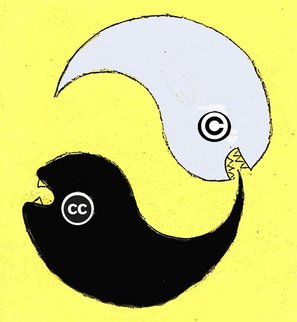
[ once again, I am translating somebody else's material In this case, my good Costa Rican friend Carolina Flores. Please excuse my stylistic mistakes My English is far from native as you well know. But this material is worth sharing, and worth investing some tens of minutes doing a quick translation. If you can read Spanish, go read Caro's original entry ] Have you been to a music record store lately? I did so last Saturday, as a mere excercise. I was not planning on buying anything but I wanted to monitor things and confirm my suspicions. What was I suspicious of? First, that I would only find old records. And so it was: The only recent record I found was ...little broken hearts by Norah Jones. the second, that I would only find music for over 50 year old people. so it was: Were I there to look for a present for my father, I would have walked out with 10 good records. Third, that in the store nothing worth commenting would happen. About that last point, I should point out it was around 10 AM and the store had just opened its doors. Lets concede the benefit of doubt. I don't think many of you will remember, but in Barrio La California (where there is now a beauty parlour, almost in front of AM.PM) there was Auco Disco. In Auco Disco there was a guy specialized in rock (Mauricio Alice) and another one specialized in jazz (I don't remember his name). In that record you could always find rare records, but if they were not there, at least you were sure to find somebody to say: "No, we don't have that, but that's an excellent record, it's the best that [insert group here] have ever recorded because just afterwards they switched their guitar player, they had gone a bit south but with that record they are flying. But no, we don't have it; I can recommend you this record by [insert another group] because it has a guitar solo in track six that is amazing". It would happen more or less like that, which means, one would arrive to Auco Disco at 10 AM and leave around 5 PM with three new records, after having listened to a spectacular music selection. What happened to those stores? Were they killed by The Pirate Bay? That's the simplistic answer from the recording industry! The answer is that those stores never got anything from the industry but an invoice. The industry specially in prescindible markets such as ours was limited to hiring artists, taking care of them recording a sellable product, producing the object called record, and that's it. The more commercial radio stations were paid to program those songs as it cannot be casual that "Mosa, mosa" is the summer hit in all of Latin America, can it? but, record stores? Nothing. Lets carry on with that idea: Radio stations are paid to program said music. This idea should not lead us to believe that recording companies are to blame for bad taste. I won't reveal my sources, but I know the success of the "Locura autom tica" song by La Secta was a real example. Nobody paid for it. That song got to the number one because of its own merits(?) (you don't know the effort it took to find that thing, I cannot recommend it to you). Same thing happens with other stations that don't program reggaet n, that try to save the species, and where they play what we do like. But the thing is, everything we like is not available in any record store in this country. Then, even if we wanted to buy a record or give it as a gift to somebody, it is plain impossible. And don't tell me it's the same to present as a gift a link or a CD full of downloaded MP3 as it is to give a record with cover and booklet, wrapped in gift paper. I might be old-school, but the fetish object record still exists, not only because of its cover, but because of its sound. A 3MB MP3 is akin to drinking coffee dripping from a bag that has been used eight times with the same coffee beans. That format is the worst that has ever happened to music, and if we had any bit dignity we would never purchase digital files in Amazon or iTunes safe for MP3 with an acceptable compression level. That, if we could buy them, because not only that is allowed to us. As the musical industry has no interest in resolving ITS problem (that is not our problem, it is those companies') it has not even been resolved how to charge for a MP3 download that includes import fees (well, if downloading from here a MP3 from a USA-based file server can be considered importing goods into Costa Rica!!!) so we don't have to get dizzy entering into the nineties to Titi Online to discover there is nothing by Muse, Andrew Bird, The Killers, Death Cab for Cutie, Paramore, Bj rk... (believe me, I looked them all up, even Norah jones and La Secta. They also were not there). This all leads me to the question, which I present with all due respect (NOT): What the fuck do they expect us to do??? It is outrageous; above all because in the best case they will sell us a watery coffee download that won't allow us to get all the details a vinyl or less compression would give us. In the worst case, post-MP3 groups will end up recording music with no harmonics or hidden sounds, because, what for? Nobody will hear it. They even admit it: "Some musicians and audio engineers say the MP3 format is changing the way studios mix their recordings. They say the MP3 format "flattens" dynamics differences in tone and volume in a song. As a result, a great deal of new music sounds very much alike, and there is nothing as focusing to create a dynamic listening experience. Why working so hard in creating complex sound if nobody can detect it?" (Rolling Stone, The Death of High fidelity, December 26 2007, taken from here). That's why I am not surprised by Adri n's post regarding the sales of old records. The price has nothing to do with it. The causes are related to the fetish object record and what it means or does not mean for people that have never purchased one. Adri n also asks if somebody here keeps buying records. I answered that I would if the stores sold anything I like. I do it even after the nausea I feel while reading "This phonogram is an intellectual work protected in favor of its producer COPYING IT IN WHOLE OR PARTIALLY IS FORBIDDEN " (like that, uppercased, yelling to whoever is only guilty of having bought a record and defending the producer, not the artist). But I am sure that almost nobody buys records because doing so is no longer a gratifying experience; because if buying a record is clicking to wait 15 days for it to reach the mailbox, we prefer clicking on the download link. But there is another reason for people not to buy records anymore. In one of my talks regarding the dictatorship of the all rights reserved, I asked the 30 twenty-something-year-old students if any of them had ever bought a record. One answered he had, because he is an author and performer (cantautor in Spanish) and understands the effort that producing a record entails. The rest of them had never done so. Is it possible that said young people have never listened to real music? Is it possible that, were it not for concerts, what they consider music is a set of washed-out MP3 that are about to fill up 1TB of their computer? Does people no longer buy records because they cannot differentiate one sound from the other? It is not very clear for me where do I want to get to. The recording industry is despicable. An industry that instead of innovating sets its energy on suing adolescents for downloading songs, trying to pass laws restricting our freedoms in Internet, putting up DRMs making us hostages to our devices* and forcing us to listen just the aroma of music, deserves my whole contempt. If we add ot this that said industry won't allow us to legally download their breadcrumbs because it has not understood that Internet does not need a van crossing borders, besides my contempt they deserve my pity and my heartfelt condolence. But the condolence is also for music, real music, that which is not compressed under the shoe using a terrible format. It is also for independent musicians that have not realized that begging for a bit of space to that industry they just add to themselves the "despicable" tag, given they deserve the fruits of their work to enter their bank account. However, there are good things that have come out of this absurdity. Be it for those that have joined projects such as Aut mata (even if it is in MP3) and for dreams come true such as Musopen (that have achieved that the music that's in theory Public Domain becomes so in practice as well). Good for the Electronic Frontier Foundation and the list of lawyers willing to defend people accused of ilegally downloading music in the USA. Good for the Creative Commons licenses that allow free sharing. All those are growing solutions, although none of them allows me to buy the Panamanian Carlos M ndez's record. Thankfully, a friend of mine who knows I will never give a dime to Apple, bought the files for me in iTunes. I thank him deeply, although I would have prefered to go to Auco Disco and have Mauricio tell me that the 2007 EP I have from Carlos is better than the record he did on 2009. * My devices don't have DRM because I use free software. I also use the ogg file format. Image by verbeeldingskr8
21 August 2012

Gunnar Wolf: Impromptu session on information freedom, network neutrality, etc. COSIT 2011, Mexico

TitleImpromptu session on information freedom, network neutrality, etc. COSIT 2011, Mexico
Publication TypeFilm
Year Released2011
AuthorsWolf G, Romo F, Miranda A, M ndez O, Hern ndez C, Araico S
Refereed DesignationNon-Refereed
Running Time0:56:00
Date Released2011-03-30
PublisherCongreso Mexicano de la Sociedad de la Informaci n y Conocimiento Libre (COSIT)
CountryMexico
Full TextDuring the COSIT 2011 conference, we held a very celebrated and fun impromptu talk. This was a very interesting session where many of the long-time Free Software activists in Mexico took the stage (we were waiting for a speaker who was late, so the audience was bored and waiting) and started talking in a completely irreverent, disorganized way about the status of network neutrality, ACTA, Free Software, Free Culture, legal issues regarding copyright and many other similar points.
At some point or another, we had on stage: Fernando Romo "el Pop", Alejandro Miranda "Pooka", Sandino Araico, Claudia Hern ndez, Octavio M ndez... Anybody else?
Regarding the quality of the recording: Regina just found this file in her cheap, aging hand-held, photo camera. Again, this was not a planned session, so don't expect a high quality recording. It is hard to follow the audio at points, and the video is not steady. Anyway, it's worth following!
Great thanks to Regina, and to her quick sense of opportunity, for reaching for her camera and filming this, as it would otherwise just get lost and stay only in our memory!
AttachmentSize
Full video (Ogg Vorbis+Theora encoded)81.19 MB

20 August 2012

NOKUBI Takatsugu: FSIJ join to Software Freedom Day

We, FSIJ join to Software Freedom Day 2012. Japanese Wiki page had publishd by Nobuhiro Iwamatsu, a developer of Debian Project. I prepared to broadcast the event by 100% Free Software, I can get many suggestion by the last article comments, thank you. The following is my recipie:
ffmpeg -s 320 240 -f video4linux2 -i /dev/video0 -b 128k \
-f alsa -ac 2 -i hw:0,0 -acodec vorbis -vcodec libtheora -r 25 -f ogg -\
oggfwd host.example 8000 passwd /test.ogv

16 August 2012

Matthew Garrett: Building personal trust with UEFI Secure Boot

The biggest objection that most people have to UEFI Secure Boot as embodied in the Windows 8 certification requirements is the position of Microsoft as the root of trust. But we can go further than that - putting any third party in a position of trust means that there's the risk that your machine will end up trusting code that you don't want it to trust. Can we avoid that?

It turns out that the answer is yes, although perhaps a little more complicated than ideal. The Windows 8 certification requirements insist that (on x86, at least) the key databases be completely modifiable. That means you can delete all the keys provided by your manufacturer, including Microsoft's. However, as far as the spec is concerned, a system without keys is in what's called "Setup Mode", and in this state it'll boot anything - even if it doesn't have a signature.

So, we need to populate the key database. This isn't terribly difficult. James Bottomley has a suite of tools here, including support for generating keys and building an EFI binary that will enrol them into the key databases. So, now you have a bunch of keys and the public half of them is in your platform firmware. What next?

If you've got a system with plug-in graphics hardware, what happens next is that your system no longer has any graphics. The firmware-level drivers for any plug-in hardware also need to be signed, and won't run otherwise. That means no graphics in the firmware. If you're netbooting off a plug-in network card, or booting off a plug-in storage controller, you're going to have similar problems. This is the most awkward part of the entire process. The drivers are all signed with a Microsoft key, so you can't just enrol that without trusting everything else Microsoft have signed. There is a way around this, though. The typical way to use Secure Boot is to provide a list of trusted keys, but you can also provide trusted hashes. Doing this involves reading the device ROM, generating a SHA256 hash of it and then putting that hash in the key database.

This is, obviously, not very practical to do by hand. We intend to provide support for this in Fedora by providing a tool that gets run while the system is in setup mode, reads the ROMs, hashes them and enrols the hashes. We'll probably integrate that into the general key installation tool to make it a one-step procedure. The only remaining problem is that swapping your hardware or updating the firmware will take it back to a broken state, and sadly there's no good answer for that at the moment.

Once you've got a full set of enrolled keys and the hashes of any option ROMs, the only thing to do is to sign your bootloader and kernel. Peter Jones has written a tool to do that, and it's available here. It uses nss and so has support for using any signing hardware that nss supports, which means you can put your private key on a smartcard and sign things using that.

At that point, assuming your machine implements the spec properly everything that it boots will be code that you've explicitly trusted. But how do you know that your firmware is following the spec and hasn't been backdoored? That's tricky. There's a complete open implementation of UEFI here, but it doesn't include the platform setup code that you'd need to run it on any x86 hardware. In theory it'd be possible to run it on top of Coreboot, but right now that's not implemented. There is a complete port to the Beagleboard hardware, and there's instructions for using it here. The remaining issue is that you need a mechanism for securing access to the system flash, since if you can make arbitrary writes to it an attacker can just modify the key store. On x86 this is managed by the flash controller being switched into a mode where all writes have to be carried out from System Management Mode, and the code that runs there verifies that writes are correctly authenticated. I've no idea how you'd implement that on ARM.

There's still some work to be done in order to permit users to verify the entire stack, but Secure Boot does make it possible for the user to have much greater control over what their system runs. The freedom to make decisions about not only what your computer will run but also what it won't is an important one, and we're doing what we can to make sure that users have that freedom.

comment count unavailable comments

Leandro G&oacute;mez: Happy birthday Debian!

19 years of freedom and counting!

15 August 2012

Gintautas Miliauskas: Why Software Engineering Is Not Politics

A recent post by Steve Yegge has made quite a splash. The main thesis of his post is:

Software engineering has its own political axis, ranging from conservative to liberal.

Software engineering, like any other social enterprise, does have a political aspect, but I do not think this thesis is apt. The essential property of politics is that you can not have it both ways. A political problem is a coordination problem, and political decisions by its nature apply for an entire political body. Software engineering as a whole does not have these properties. There is absolutely no reason why any two engineering projects have to follow the same ideals and guidelines. Politics in engineering only appears within boundaries of a project (or, at a slightly higher level, a company), at which point it does not really warrant the name of politics, but rather character traits or personal preferences. If Johnny goes for the puck more often than Louie, that does not really warrant a label of a "liberal".

The fundamental quality that Steve is looking at is actually risk aversiveness, as he noted himself. He should have stopped there. Making that next step of conceptualization in political language does not bring any new insights and just muddles the matter.

It seems that the political labels of "liberal" and "conservative" were picked not for their meaning, but rather for their connotations, as political views are perceived to be 1) very stable, part of a person's self-identity and (therefore) hard to change, 2) inherently polarizing, and 3) difficult or impossible to evaluate objectively. Again, these do not apply to software engineering. For example, probably like many engineers, I am clearly a liberal on personal and small projects, and a conservative on larger and more fundamental ones; so much for the idea of a core identity. As for polarization, it may be prevalent in internet echo chambers, but I have not seen much of that in my professional life, especially when working with experienced engineers. When they do have objections, those objections are grounded in engineering. This leads to the third point, claiming that the approaches can not be compared objectively. This one is the most pernicious of all, because it provides an escape hatch from arguments with substance on what is an engineering decision.

Here is my, admittedly less catchy and impressive, counter thesis: Conservativeness of a software engineering project is an objective decision to be based on circumstances. TL;DR: It depends. (Very original, isn't it?) It is a risk management decision, and those are very tricky, but not subjective.

One thing to note is that the architecture of the system should correspond to the implementation style. Schemaless, heavy on magic, untyped approaches are suited for modular systems where each individual module is of limited complexity, and where the modules are isolated from each other and can recover from failures. The more complex the individual modules (and sometimes the complexity is inherent to the problem), the more benefits from "conservative" techniques. (By the way, this lines up nicely with Steve being liberal and a proponent of service-oriented architectures). If you have the freedom to pick between these two approaches, the decision making does get a bit more ideological. However, neither the "liberal" and "conservative" labels, nor risk averseness by itself is enough for a decision here. Say, if you are developing a service, what is more risky: having a "traditional", monolithic service that is inevitably sensitive to failures and is likely to scale poorly, or a cluster of components that are generally more resistant, but have more complicated aggregate behavior?

Despite the criticisms, I have to give fat credit to Steve. His post was thought-provoking, and it brought attention to the subjective side of engineering, one which is often overlooked. That side should not be left to grow - on the contrary - but the only way to reduce its domain it is to be aware of it. I know I will think twice before making another gut decision where risk averseness plays an important factor.

10 August 2012

NOKUBI Takatsugu: How do I broadcast video streaming with Free Software?

I, as a member of FSIJ, consider to broadcast a Software Freedome Day in Japan. In the past, I can do it with gstreamer and icecast2 in The 5th International GPLv3 Conference. Howerver, gstreamer command is very complex and the Interface had changed, so I can t re-do it by my old script. Usteram is easy to use, but it is not Free Software. I could find such packages in Debian repos: I ll try to use them and to find the good tool.

5 August 2012

Stefano Zacchiroli: bits from the DPL for July 2012

Monthly DPL bits, fresh from the oven.
Tip to feel good about the release #476: before reading this, grab and fix one of the RC bugs affecting Wheezy. Done? Now you're ready for a slightly less exciting report of DPL activities. Highlights Assets Logo & trademark Note that the actual logo relicensing should be done by SPI, via their board, upon request of mine (as Debian Project liaison). We won't make it for the next SPI board meeting, as it is on 4 days away. But we can aim for the subsequent meeting, on September 13th. If all goes well (big "if"), we will enjoy a DFSG-free logo after that date. Internal organization Recent flurry of re-organization in the tech-ctte --- which I somewhat triggered pushing for periodic meetings --- seems to be proceeding well. I'm very happy about it, as we all need to trust that tech-ctte decisions will be not only sound, but also prompt. If you're interested into this topic, some recent evidence of the ongoing reorganization and its result can be found in their DebConf12 BoF, minutes of the last meeting, a set of forthcoming GRs, and the recent great decision of posting decisions results to d-d-a (as it happened for node/nodejs). Kudos to tech-ctte members for the recent activism! I haven't worked on it myself directly, but I highlight Enrico's work on server side archival of NM conversations. It has the potential of enabling automatic detection of stuck NM processes. I'm a bit rusty as AM now, but I think missing that ability is one of the main remaining causes of frustration when joining Debian. So, if you are an AM, please opt-in and use this feature with your appicants. If you are not an AM why not? :-) Miscellanea Some misc legal stuff: and some misc "political" stuff: Happy RC bug squashing,
Cheers.
PS the boring day-to-day activity log for July 2012 is available at master:/srv/leader/news/bits-from-the-DPL.txt.201207

1 August 2012

Bdale Garbee: Early Retirement

I am pleased to announce that HP accepted my application for participation in this year's Enhanced Early Retirement program. After 26.5 years, my last day at HP will be 31 August 2012. This isn't because I have a problem with HP, quite the contrary! I feel immensely privileged to have worked on so many interesting things with so many smart people for so long. And there are many exciting things happening right now, including high profile projects like Odyssey and Moonshot expanding both ends of the server scaling continuum with Linux, and the immense commitment to and investment in Open Source represented by the use of Open Stack and Ubuntu LTS in building HP Cloud. The temptation to stay and continue to help guide HP's Open Source engagement was strong. I'm certainly under no pressure to leave... in fact, I think I managed to shock my management with my decision to retire! But I'm very excited about "taking a break" from full-time employment for a while to focus more time on things that matter a lot to me. My son and I have a number of projects we'd like to work on together as he enters high school. The side business I started two years ago with Keith Packard to design, build, and sell avionics solutions for high power model rockets is growing and could use more attention. I'm in the midst of designing the processor board for another amateur radio satellite. And of course, I'm looking forward to putting more "quality time" towards Free Software projects like FreedomBox and Debian! Since they do not depend on my employment status, I do not expect any immediate changes in the various roles I play outside of HP. I will continue to serve on the board of the Linux Foundation representing individual affiliates, on the board of the FreedomBox Foundation, as Chairman of the Debian Technical Committee, and as President of Software in the Public Interest. And while I hope to travel less than I have in recent years, I look forward to continuing to speak and otherwise participate in key Free Software conferences around the world from time to time. After I retire, the primary point of contact with HP on Open Source matters will be the Director of HP's Open Source Program Office, Phil Robb. But if there are open issues regarding HP and Open Source that I can help with over the next month, feel free to contact me and I'll see what I can do to help.

31 July 2012

Russell Coker: The Retina Display

Last night I played with an Apple Macbook Pro with the new Retina Display (Wikipedia link). Wikipedia cites some controversy about whether the display actually has higher resolution than the human eye can perceive. When wearing glasses my vision is considerably better than average (I have average vision without glasses) and while kneeling in front of the Macbook I couldn t easily distinguish pixels. So Apple s marketing claims seem technically correct to me. When I tested the Macbook Pro I found that the quality of the text display was very high, even now the 1680*1050 display on my Thinkpad T61 looks completely crap when compared to the 2880*1800 display on the Macbook. The Macbook was really great for text and for a JPEG that was installed on the system for testing. But unfortunately pictures on web sites didn t look particularly good. Pictures on my blog looked quite poor and pictures returned by a Google search for art didn t look that great either. I wonder if Safari (the Apple web browser) isn t properly optimised for the display or if there is something that we should do when preparing pictures for web sites to make them look better on Safari. The retina display has a 71% greater DPI which means 2.93* the total number of pixels of my Thinkpad. The overall quality of the experience for me (apart from web pictures) seems more like a factor of 2.93 when compared with my Thinkpad than a factor of 1.71. This has to be one of the most desirable products I ve seen from a company that s opposed to freedom for it s users. I m not about to buy one though, $2,300 is a lot of money for a system that can t be upgraded, repaired, or recycled, and doesn t even have an Ethernet port. I m sure that if I bought one I would discover that it some of the hardware features don t work properly with Linux. The new Apple design trend of making it impossible to repair anything works reasonably well for phones and tablets which are cheap enough that they are hardly worth repairing when they have been used for a while. Lots of people can afford to spend about $600 on something that may be discarded after a year or two, but very few people can afford to spend more than $2,000 on such a disposable product. Why is Apple the only company producing systems with such displays? If someone produced regular PCs that have the expected features (including an Ethernet port) with such a display at a lower price then I m sure that there would be a great demand. Related posts:
  1. Modern Laptops Suck One of the reasons why I m moving from a laptop...
  2. A First Digital Camera I ve just been asked for advice on buying a digital...
  3. RPC and SE Linux One ongoing problem with TCP networking is the combination of...

26 July 2012

Benjamin Mako Hill: User Innovation on NPR Radio

I was invited onto NPR in Boston this week for a segment on user innovation alongside Eric von Hippel (my advisor at MIT) and Carliss Baldwin from Harvard Business School. I talked about innovation that has happened on the CHDK platform -- a cool firmware hack for Canon cameras example I use in some of my teaching -- plus a little bit about free software, the democratization of development and design tools, and a little bit about user communities that LEGO has cultivated. I would have liked the conversation and terminology to do more to emphasize user freedom and free software, but I'm otherwise pretty happy with the result. The segment will be aired again on NPR in Boston this weekend and is available on the WGBH website.

24 July 2012

Gunnar Wolf: Ten theses in favor of free download of cultural goods on the Internet (by Enrique G. Gallegos)

This is one of the days where reading my everyday newspaper was worth more than just getting bitter at the news. I found this text in La Jornada, my usual newspaper. I liked it very much, and decided to translate it for a wider audience. Of course, if you can read Spanish, do yourself a favor and go to the original. It is not that the text is so easy to translate. And, after all, I'm not a native English writer. I'm trying to do a literal translation, even when disagreeing with the author. Ten theses in favor of free download of cultural goods on the Internet Enrique G. Gallegos Poet and philosopher. Currently a researcher in Universidad Aut noma Metropolitana-C
  1. Historical legacy. Criticists who promote the persecution of piracy and free downloads of cultural works from the Internet argue that the patrimonial rights have been wronged; they start off suposing that a cultural work is formed from a historical void, as if there was a "nothing" to begin with, and then a "something" appeared. Nothing more fallacious: All cultural products has its precedents, and thanks to these it generates part of its best forces.
  2. Opening towards the future. Human beings are projected into the future. As the main philosophies of the 20th century have explored, one of the singular characteristics of mankind is the ability to think and imagine the future. Products of culture are the best ways to think and project society, politics, love, hope, needs, failures A song, a poem, an essay, can trigger imaginary worlds with a transformative potential. To deny this to humanity with "patrimonial damage" as an argument is to mutilate man's temporal nature.
  3. Recognition of the present. Cultural works generate moments of reflection, criticism and pleasure; they can trigger actions demanding commitment, solidarity and strong indignation against injustice. If every cultural work is adscribed in some way to a historic tradition, and if cultural products anre necessary to imagine other possible worlds and open our future, it's not less true that they also allow us to recognize our present by making us more sensitive to others' ideas, sensations and emotions. Without culture, there is no present nor others' presence.
  4. Divulgation of the cultural heritage. If culture is "heritage of mankind", it should be also spread by any possible way. But not just spread, but actively sought for the biggest number of people to be able to effectively have access to it. In a potentially interconnected world, Internet is the most adequate world for it (despite its limitations). Therefore, penalizing free downloads means avoiding spreading it and restricting access to those groups who don't have enough economic resources.
  5. Preserving cultural heritage. If we agree that cultural works are heritage of mankind, we need to take every action needed to preserve them. But preserving culture does not only mean keeping the products in museums, galleries or never-polluted drawers; it rather means to keep them in the collective memory and in the flow of constant interpretations and appropiations. Said in other words, the genuine way to preserve culture is to allow universal access to cultural goods. That's why, holding that free copies and downloads of books, music, videos, etc. over the Internet are harmful, is an incompatible argument with the obligation to preserve cultural heritage.
  6. They are not goods. Cultural works are material and spiritual manifestations of mankind, concretions of its historicity; they are, also, expressions of emotions, ideas and projections of other lives and other worlds. That's why they cannot be equated to goods or inserted in patrimonialist logic. The market might want to cheat by giving a certain price to a painting by Orozco or auctioning a Baudelaire manuscript, but it will never be able to aprehend their true meaning as cultural works. And it's not that culture is not faluable, but taht its estimation criteria do not follow the rules of market, but those of the imponderable and unlimited.
  7. Price disproportion. Assuming we accept the possibility that intermediaries charge for the services they perform, the value of a book, record or movie should never exceed the daily wage of a worker or employee. But this ellection would only be one more option within the effective possibility that people opt to download or freely copy the cultural work. The final decision as to which media to go to should be a sovereign resolution of the culture-interested person.
  8. The principle of the most benefit. Even when copies and free downloads over Internet could generate a patrimonial "wrong" to third parties, the cultural benefit obtained by it will always be greater in as much that it carries out intensely the principle to foster, spread and access the cultural heritage of mankind. To think otherwise is to privilege the few over the many.
  9. The real evil is elsewhere. Murder, women- and children-trade, poverty and misery are the real evils that ache mankind. According to the United Nations, in 2010 there were 468 thousand murders in the world; the estimation is that 3500 million people live in poverty; in their 2009 inform, the UN found over 2400 victims of "people trade", kidnapped as sex slaves; in some regions in Africa, close to 30% of children suffer acute malnutrition and six people (between children and adults) die every day from hunger. That's why pretending that free download of cultural works is an evil is clearly a tricky and deceptive speech
  10. Against the intermediary-salesman. Culture does not need intermedieries that reduce cultural works to goods. Culture is too important to leavie it in the hands of salespeople that simplistly equate cultural goods with cakes. An intermediary of this kind will never understand the difference between a work of art and a disposable razor blade. What the world needs is more support from the government from every country to artists, creators and poets, as well as ensuring the conditions for the absolute mobility freedom for cultural works.

10 July 2012

Gerfried Fuchs: Mermaids Reloaded

It's almost seven years now since I wrote/published Mermaids. It was an important step in my life, confessing publicly what I've found out about myself, how I feel and identify myself. It definitely has been a certain turning point in my life. A year later, there was the Debconf6 in Mexico, which was just as important. I was wearing a skirt for the first time, and that for the whole duration of the two weeks. It was an enormous feeling of freedom, and I knew I was feeling at home. That was also the time I shaved off my beard. And since? Well, I sort of limited myself to these two weeks every year. Debconf is my haven, Debconf is my home. Here I allow myself to be myself. Debian is my family. And like in every family, there are people who won't understand, but that doesn't matter. I feel comfortable to express myself in this crowd in the way I feel. Being abroad seems to help with the confidence, and it seems like it also shines through. I haven't had lots of strange looks. To the contrary, when I went with a skirt to a homosexual acceptance event at home in Vienna, there was a group of gays who were pointing and laughing. Quite an interesting experience, one would assume that people who are wanting more acceptance would be more acceptable and tolerant themselves... But, I don't think I will ever take the step toward actually turning my body into a female one. It was an important step for me to find out about my inner self, and it actually managed to make me accept my male body; even though I can totally relate to people not being able to understand this both people not in the situation and people being in the situation and needing the physical adjustment to be able to be happy again. But this is what and how I am: Contents may vary from packaging. This though has an inherited problem: as I am not (usually) heading for a female appearance (besides my skirt during Debconf), people keep addressing me with a male pronoun, even, or rather especially when using my nick Rhonda. This is something that I consider a fair bit disturbing, especially when it comes from people that I consider to address with the term friends. One would assume that people who you share a fair bit of private life with would be the ones who can understand and relate better than others. But that's where we are, and I also can understand the troubles: I'm not giving them much visual help for fixing their thoughts. I found the confidence in my body, and like most of you know, I have a son I dearly love (and miss like hell these two weeks), so I know how to use the tools it comes with, frankly spoken. But I won't go the road to adjust my body to be a female one instead, just to convince people that I really am the female person that I identify as. It might be hard for you to understand that, it might be hard for you to accept it it is also hard for me, to fight for the acceptance that I thought are an inherent part of the term friendship. I have deepest respect for the people who feel the requirement and have the strength to adjust their body to their mind. It though just isn't the road for me. I already have enough uncertainties in my life to cope with, and I don't need another one to deal with, related to that I might not be able to accept my body after the transition than I am able to accept it now. It's just not important enough for me to find my place. My place is here, my home is Debconf.

/personal permanent link Comments: 4 Flattr this

15 June 2012

Matthew Garrett: No, really, secure boot does add security

Carla Schroder wrote a piece for linux.com on secure boot, which gives a reasonable overview of the technology and some of the concerns. It unfortunately then encourages everyone to ignore those legitimate concerns by making the trivially false claim that secure boot is just security theatre.

Security isn't some magic binary state where you're either secure or insecure and you can know which. Right now I'd consider my web server secure. If someone finds an exploitable bug in Apache then that would obviously no longer be the case. I could make it more secure by ensuring that Apache runs in a sufficiently isolated chroot that there's no easy mechanism for anyone to break out, which would be fine up until there's also a kernel exploit that allows someone to escalate their privileges enough to change their process root. So it's entirely possible that someone could right now be breaking into my system through bugs I don't even know exist. Am I secure? I don't know. Does that mean I should just disable all security functionality and have an open root shell bound to a well known port? No. Obviously.

Secure boot depends on the correctness of the implementation and the security of the signing key. If the implementation is flawed or if control of the signing key is lost then it stops providing security, and understanding that is important in order to decide how much trust you place in the technology. But much the same is true of any security technique. Kernel flaws make it possible for an unprivileged user to run with arbitrary privileges. Is user/admin separation security theatre? SSL certificate authorities have leaked keys. Is it security theatre for your bank to insist that you use SSL when logging in?

Secure boot doesn't instantly turn an insecure system into a secure one. It's one more technology that makes it more difficult for attackers to take control of your system. It will be broken and it will be fixed, just like almost any other security. If it's security theatre, so is your doorlock.

Why is this important? Because if you tell anyone that understands the technology that secure boot adds no security, they'll just assume that you're equally uninformed about everything else you're saying. It's a perfect excuse for them to just ignore discussion of market restrictions and user freedoms. We don't get anywhere by arguing against reality. Facts are important.

comment count unavailable comments

9 June 2012

Neil McGovern: Anti-ACTA Demo my speech

I'm on my way back from the Anti ACTA demo in London, at which I was asked to speak. I was good to see a number of people attend. I bumped into the wonderful Bridget Fox too! Here's my speech:
As I was travelling here on the train, I found myself thinking: why am I here?
What has gone so wrong with the political system that politicians pass laws - the DMCA, the DEA, SOPA, PIPA, ACTA. Laws that look attractive on the surface, but are so deeply flawed. Why have they stopped listening?
But, they haven't stopped listening. They're falling in to a trap set by big businesses with vested interests. The ones with money to influence policy, the lobbying firms, the corporate hospitality arrangements. They hear that the economy is bumbling along the bottom. That many businesses are struggling, and these are hard problems to solve. And suddenly a shining beacon is held out - support our creative industries and all will be well. No one is interested in this new fangled Internet thing anyway. Well, apart from the people stood here today! People like you, and me. People like Julian Huppert - we helped take a motion to the Liberal Democrat Conference to repeal the damaging parts of the Digital Economy Act. The Alliance of Liberals and Democrats in Europe will vote against ACTA, and in three major committees it has already been rejected it. Something has changed. The people who represent us are starting to hear our stories. How we will not put up with censorship, interference and snooping. And let me tell you this. The big industries are scared. Shady back room negotiations so that they may be able to slip it past the public. Thanks to you, this won't work anymore. We have a voice, and it's here today. It's not too late to stop damaging our freedoms. Go visit your elected representatives. Tell them why we need to stop these bad laws. Help them understand that it's not ok to pass these. Write about it, tell people, shout in the streets! We know ACTA is bad. Let's tell the world.

4 June 2012

Benjamin Mako Hill: Why Facebook's Network Effects are Overrated

A lot of people interested in free software, and user autonomy and network services are very worried about Facebook. Folks are worried for the same reason that so many investors are interested: the networks effects brought by hundreds of millions of folks signed up to use the service. Network effects -- the concept that a good or service increases in value as more people use it -- are not a new problem for free software. Software developers target Microsoft Windows because that is where the large majority of users are. Users with no love for Microsoft and who are otherwise sympathetic to free software use Windows because programs they need will only run there. Folks worried about Facebook are afraid for similar reasons. Sure, you can close down your Facebook account and move to Diaspora. But who will you talk to there? You can already hear people complaining about Facebook the same way they've been complaining about Windows or Office for years. People feel that their hands are tied and that their software, and their social network, will be determined by what everybody is doing. I'm worried about Facebook. But I'm not too intimidated by Facebook's network effects for two reasons. First, using Facebook doesn't preclude using anything else. Twitter has enormous overlapping functionality with Facebook. Sure, people use the systems very differently. But they both ask you to create lists of friends and followers and are designed around sending and receiving short status messages. Millions of people do both and both systems are thriving. For the millions of people who use both Facebook and Twitter, the two services have had to negotiate their marginal utility in a world they share with the other one. People decide that Twitter is for certain types of short messages and Facebook is for others. But these arrangements shift over time. And the relationships between services aren't always peaceful coexistence. Remember Friendster? Remember Orkut? Remember Tribe? Remember MySpace? MySpace, and all the others, are great examples of how social networks die. They very slowly fade away. MySpace users signed up for Facebook accounts and used both. They almost never just switched. Over time, as one platform became more attractive than the other, for many complicated reasons, attention and activity shifted. People logged in on MySpace less and Facebook more and, eventually, realized they were effectively no longer MySpace users. Anyone that has been on the Internet long enough to watch a few of these shifts from one platform to another knows that they're not abrupt -- even if they can be set in motion by a particular event or action. Users of social networking sites simply don't have to choose in the way that a person choosing to boot Windows and GNU/Linux does. I'm sure the vast majority of people with Diaspora accounts use Facebook actively. This is not a problem for Diaspora. It is how Diaspora -- or whatever else eventually achieves what many of us hoped Diaspora would -- could win. Second, Facebook is for the ephemeral. Facebook is primarily used for information that was produced very recently. This week if not today. If not this hour. Facebook has an enormous amount of data that users have fed it that may be hard to get out and move somewhere else. But most people don't care very much about having any regular access to the large majority of this information. What people care deeply about is having access to the data that they and their friends created today. And that data can just as easily be created somewhere else tomorrow. Or, with the right tools, created just as easily in both places. Compare this to something like Windows where moving away would require learning, converting, and perhaps even writing, new software. Perhaps even in new programming languages that most developers don't know yet. Compared to Windows, a migration away from Facebook will be easy. Facebook's photo galleries are an example of an important place where this holds less well. Social network information -- i.e., the list of who is friends with who -- is another example of something that is persistently valuable. That said, people really enjoy the act of finding and friending. Indeed, this process was part of the initial draw of Facebook and other social networks. None of this means that Facebook is over. It doesn't even mean that its ascendancy will be slowed. What it does mean is that Facebook is vulnerable to the next thing more than many technology firms that have benefited from network effects in the past. If users are given compelling reasons to switch to something else, they can with less trouble and they will. That compelling reason might be a new social network with better features or an awesome distributed architecture that allows freedom for users and the ability of those users to benefit from new and fantastic things that Facebook's overseers would never let them have and without the things Facebook's users suffer through today. Or it might be a sexier proprietary box to store users' private information. It doesn't mean that I'm not worried about Facebook. I remain deeply worried. It's just not very hard for me to imagine the end.

Next.

Previous.

