Search Results: "tb"

7 July 2024

Russ Allbery: Review: Welcome to Boy.Net

Review: Welcome to Boy.Net, by Lyda Morehouse
Series: Earth's Shadow #1
Publisher: Wizard's Tower Press
Copyright: April 2024
ISBN: 1-913892-71-9
Format: Kindle
Pages: 355
Welcome to Boy.Net is a science fiction novel with cyberpunk vibes, the first of a possible series. Earth is a largely abandoned wasteland. Humanity has survived in the rest of the solar system and spread from Earth's moon to the outer planets. Mars is the power in the inner system, obsessed with all things Earth and effectively run by the Earth Nations' Peacekeeping Force, the ENForcers. An ENForcer soldier is raised in a creche from an early age, implanted with cybernetic wetware and nanite enhancements, and extensively trained to be an elite fighting unit. As befits a proper military, every ENForcer is, of course, male. The ENForcers thought Lucia Del Toro was a good, obedient soldier. They also thought she was a man. They were wrong about those and many other things. After her role in an atrocity that named her the Scourge of New Shanghai, she went AWOL and stole her command ship. Now she and her partner/girlfriend Hawk, a computer hacker from Luna, make a living with bounty hunting jobs in the outer system. The ENForcers rarely cross the asteroid belt; the United Miners see to that. The appearance of an F-class ENForcer battle cruiser in Jupiter orbit is a very unpleasant surprise. Lucia and Hawk hope it has nothing to do with them. That hope is dashed when ENForcers turn up in the middle of their next job: a bounty to retrieve an AI eye. I first found Lyda Morehouse via her AngeLINK cyberpunk series, the last of which was published in 2011. Since then, she's been writing paranormal romance and urban fantasy as Tate Hallaway. This return to science fiction is an adventure with trickster hackers, throwback anime-based cowboy bars, tense confrontations with fascist thugs, and unexpected mutual aid, but its core is a cyberpunk look at the people who are unwilling or unable to follow the rules of social conformity. Gender conformity, specifically. Once you understand what this book is about, Welcome to Boy.Net is a great title, but I'm not sure it serves its purpose as a marketing tool. This is not the book that I would have expected from that title in isolation, and I'm a bit worried that people who would like it might pass it by. Inside the story, Boy.Net is the slang term for the cybernetic network that links all ENForcers. If this were the derogatory term used by people outside the ENForcers, I could see it, but it's what the ENForcers themselves call it. That left me with a few suspension of disbelief problems, since the sort of macho assholes who are this obsessed with male gender conformance usually consider "boys" to be derogatory and wouldn't call their military cybernetic network something that sounds that belittling, even as a joke. It would be named after some sort of Orwellian reference to freedom, or something related to violence, dominance, brutality, or some other "traditional male" virtue. But although this term didn't work for me as world-building, it's a beautiful touch thematically. What Morehouse is doing here is the sort of concretized metaphor that science fiction is so good at: an element of world-building that is both an analogy for something the reader is familiar with and is also a concrete piece of world background that follows believable rules and can be manipulated by the characters. Boy.Net is trying to reconnect to Lucia against her will. If it succeeds, it will treat the body modifications she's made as damage and try to reverse all of them, attempting to convert her back to the model of an ENForcer. But it is also a sharp metaphor for how gender roles are enforced in our world: a child assigned male is connected to a pervasive network of gender expectations and is programmed, shaped, and monitored to match the social role of a boy. Even if they reject those expectations, the gender role keeps trying to reconnect and convert them back. I really enjoyed Morehouse's handling of the gender dynamics. It's an important part of the plot, but it's not the only thing going on or the only thing the characters think about. Lucia is occasionally caught by surprise by well-described gender euphoria, but mostly gender is something other people keep trying to impose on her because they're obsessed with forcing social conformity. The rest of the book is a fun romp with a few memorable characters and a couple of great moments with unexpected allies. Hawk and Lucia have an imperfect but low drama relationship that features a great combination of insight and the occasional misunderstanding. It's the kind of believable human relationship that I don't see very much in science fiction, written with the comfortable assurance of an author with over a dozen books under her belt. Some of the supporting characters are also excellent, including a non-binary deaf hacker that I wish had been a bit more central to the story. This is not the greatest science fiction novel I've read, but it was entertaining throughout and kept me turning the pages. Recommended if you want some solar-system cyberpunk in your life. Welcome to Boy.Net reaches a conclusion of sorts, but there's an obvious hook for a sequel and a lot of room left for more stories. I hope enough people buy this book so that I can read it. Rating: 7 out of 10

1 July 2024

Russell Coker: VoLTE in Australia

Introduction In Australia the 3G mobile frequencies are to be reused so they are in the process of shutting down the 3G service. That means that everyone has to use VoLTE (Voice Over LTE) for phone calls (including emergency calls). The shutdown time varies by telco, Kogan Mobile (one of the better services which has good value for money and generally works well) shut down their 3G service in January. Aldi Mobile (another one of the good services which is slightly more expensive but has included free calls to most first-world countries and uses the largest phone network) will shut theirs down at the end of August. For background there s a Fosdem talk about OpenSIPS with VoLTE and VoNR [1], it s more complex than you want to know. Also VoNR (Voice over New Radio) is the standard for 5G voice and it s different from VoLTE and has a fallback to VoLTE. Another good lecture for background information is the Fosdem talk on VoLTE at the handset end [2]. The PinePhonePro In October 2023 I tried using my PinePhonePro as my main phone but that only lasted a few days due to problems with calls and poor battery life [3]. Since then I went back to the Huawei Mate 10 Pro that I bought refurbished in June 2019 for $389. So that has been my main phone for 5 years now, giving a cost of $1.50 per week. I had tried using a Huawei Nova 7i running Android without Google Play as an experiment but that had failed, I do many things that need Android apps [4]. I followed the PinePhone wiki to get my PinePhonePro working with VoLTE [5]. That worked fine for me, the only difference from the instructions is that I had to use device /dev/ttyUSB3 and that the modem kept resetting itself during the process and when that happened I had to kill minicom and start again. After changing the setting and saving it the PinePhonePro seemed to work well with VoLTE on a Kogan Mobile SIM (so definitely not using 3G). One issue I have found is that Plasma Mobile (my preferred FOSS phone GUI) appears to have a library issue that results in polling every 14ms even when the screen is locked [6]. If you have a few processes doing that (which means the most lightly used Plasma system) it really hurts battery use. The maintainer has quite reasonably deferred action on this bug report given the KDE 6 transition. Later on in the Trixie development cycle I hope to get this issue resolved, I don t expect it to suddenly make battery life good. But it might make battery life acceptable. I am now idly considering carrying around my PinePhonePro in a powered off state for situations where I might need to do high security operations (root logins to servers or online banking) but for which carrying a laptop isn t convenient. It will do well for the turn on, do 30 mins of work that needs security, and then turn off scenario. Huawei Mate 10 Pro and Redmi 9A The Huawei Mate 10 Pro has been my main phone for 5 years and it has worked well, so it would be ideal if it could do VoLTE as the PinePhonePro isn t ready yet. All the web pages I ve seen about the Mate 10 Pro say that it will either allow upgrading to a VoLTE configuration if run with the right SIM or only support it with the right SIM. I did a test with a Chinese SIM which gave an option of turning on VoLTE but didn t allow any firmware updates and the VoLTE option went away when I put an Australian SIM in. Some forum comments had led me to believe that it would either permanently enable VoLTE or allow upgrading the firmware to one that enables VoLTE if I used a Chinese SIM but that is not the case. I didn t expect a high probability of success but I had to give it a go as it s a nice phone. I did some tests on a Redmi 9A (a terrible phone that has really bad latency on the UI in spite of having reasonably good hardware). The one I tested on didn t have VoLTE enabled when I got it, to test that I used the code *#*#4636#*#* in the dialler to get the menu of SIM information and it showed that VoLTE was not provisioned. I then had to update to the latest release of Android for that phone and enter *#*#86583#*#* in the dialler to enable VoLTE, the message displayed after entering that magic number must end in DISABLE . I get the impression that the code in question makes the phone not check certain aspects of whether the carrier is good for VoLTE and just do it. So apparently Kogan Mobile somehow gives the Redmi 9A the impression that VoLTE isn t supported but if the phone just goes ahead and connects it will work. I don t plan to use a Redmi 9A myself as it s too slow, but I added it to my collection to offer to anyone else I know who needs a phone with VoLTE and doesn t use the phone seriously or to someone who needs a known good phone for testing things. Samsung Galaxy Note 9 I got some Samsung Galaxy Note 9 phones to run Droidian as an experiment [7]. But Droidian dropped support for the Note 9 and I couldn t figure out how to enable VoLTE via Droidian, which was very annoying after I had spent $109 on a test phone and $215 on a phone for real use (I have no plans to try Droidian again at this time). I tried installing LineageOS on one Note 9 [8] which was much easier than expected (especially after previously installing Droidian). But VoLTE wasn t an option. According to Reddit LineageOS doesn t support VoLTE on Samsung devices and you can use a magisk module or a VoLTE enabler module but those aren t supported by LineageOS either [9]. I downloaded an original image for the Note 9 from SamsMobile.com [10]. That image booted past the orange stage (where if you have problems then your phone is probably permanently useless) but didn t boot into the OS. A friend helped me out with that and it turned out that the Heimdal flash tool on Linux didn t do something it needed to do and that Odin on Windows was required. After using Odin everything was fine and I have a Note 9 with VoLTE running the latest Samsung firmware which is security patch level 1st July 2022!!! So I have a choice between using a Note 9 for data and SMS while running a current version of Lineage OS with all security fixes or running a Samsung image with no security updates for 2 years which supports phone calls. So based on this I have to recommend Pixel as the phone of choice, it has a decent level of support from Google and long term support from LineageOS. According to the LineageOS web site you can run the current version of Lineage on the original Pixel phone from 2016! Of course getting VoLTE to work on it might be another saga, but it would probably be easier to do with LineageOS on a Pixel than on a Samsung phone. Conclusion The operation of the Note 9 for me is decent now apart from the potential security issues. The same goes for selling one of the phones. The PinePhonePro still has potential to become my daily driver at some future time if I and others can optimise power use. Also a complicating factor is that I want to have both Jabber and Matrix be actually instant IM systems not IM with a 5 minute delay, so suspend mode isn t a good option. Pixel phones will be a much higher priority when looking at phones to buy in future. The older Pixel phones go for as little as $100 on eBay and can still run the latest LineageOS. VoLTE seems needlessly complicated.

Russell Coker: Links June 2024

Modos Labs have released the design of an e-ink display connected by USB-C [1]. They have provided a lot of background information on e-ink displays which isn t available elsewhere. Excellent work! Informative article about a company giving renters insecure locks while facilitating collusion to raise rents [2]. Insightful video by JimmyTheGiant about the destruction of housing estates in the UK [3]. I wonder how much of this was deliberate by the Tories. Insightful video by Modern Vintage Gamer about the way Nintendo is destroying history by preventing people playing old games [4]. Interesting video by Louis Rossmann about the low quality of products and reviews on Amazon [5]. We all know about Enshittification, but it seems that Amazon is getting to the stage of being unusable for some products. Amusing video by Folding Ideas about Decentraland an attampt at a blockchain based second life type thing which failed as you expect blockchain things to fail [6]. The top comment is a transcription of the actions of the speaker s pet cat. ;)

Russ Allbery: Review: Snuff

Review: Snuff, by Terry Pratchett
Series: Discworld #39
Publisher: Harper
Copyright: October 2011
Printing: January 2013
ISBN: 0-06-221886-7
Format: Mass market
Pages: 470
Snuff is the 39th Discworld novel and the 8th (and last) Watch novel. This is not a good place to start reading. Sam Vines has been talked, cajoled, and coerced into taking a vacation. Since he is now the Duke of Ankh, he has a country estate that he's never visited. Lady Sybil is insistent on remedying this, as is Vetinari. Both of them may have ulterior motives. They may also be colluding. It does not take long for Vimes to realize that something is amiss in the countryside. It's not that the servants are uncomfortable with him talking to them, the senior servants are annoyed that he talks to the wrong servants, and the maids turn to face the wall at the sight of him. Those are just the strange customs of the aristocracy, for which he has little understanding and even less patience. There's something else going on. The nobility is wary, the town blacksmith is angry about something more than disliking the nobles, and the bartender doesn't want to get involved. Vimes smells something suspicious. When he's framed for a murder, the suspicions seem justified. It takes some time before the reader learns what the local nobility are squirming about, so I won't spoil it. What I will say is that Snuff is Pratchett hammering away at one of his favorite targets: prejudice, cruelty, and treating people like things. Vimes, with his uncompromising morality, is one of the first to realize the depth of the problem. It takes most of the rest longer to come around, even Sybil. It's both painful, and painfully accurate, to contemplate how often recognition of other people's worth only comes once they do something that you recognize as valuable. This is one of the better-plotted Discworld novels. Vimes starts out with nothing but suspicions and stubbornness, and manages to turn Snuff into a mystery novel through dogged persistence. The story is one continuous plot arc with the normal Pratchett color (Young Sam's obsession with types of poo, for example) but without extended digressions. It also has considerably better villains than most Pratchett novels: layers of foot soldiers and plotters, each of which have to be dealt with in a suitable way. Even the concluding action sequences worked for me, which is not always a given in Discworld. The problem, unfortunately, is that the writing is getting a bit wobbly. Pratchett died of early-onset Alzheimer's in 2015, four years after this book was first published, and this is the first novel where I can see some early effects. It mostly shows up in the dialogue: it's just a bit flabby and a bit repetitive, and the characters, particularly towards the end of the book, start repeating the name of the person they're talking to every other line. Once I saw it, I couldn't unsee it, and it was annoying enough to rob a bit of enjoyment from the end of the book. That aside, though, this was a solid Discworld novel. Vimes testing his moral certainty against the world and forcing it into a more ethical shape is always rewarding, and here he takes more risks, with better justification, than in most of the Watch novels. We also find out that Vimes has a legacy from the events of Thud!, which has interesting implications that I wish Pratchett had more time to explore. I think the best part of this book is how it models the process of social change through archetypes: the campaigner who knew the right choice early on, the person who formed their opinion the first time they saw injustice, the person who gets there through a more explicit moral code, the ones who have to be pushed by someone who was a bit faster, the ones who have to be convinced but then work to convince others, and of course the person who is willing to take on the unfair and far-too-heavy burden of being exceptional enough that they can be used as a tool to force other people to acknowledge them as a person. And, since this is Discworld, Vetinari is lurking in the scenery pulling strings, balancing threats, navigating politics, and giving Vimes just enough leeway to try to change the world without abusing his power. I love that the amount of leeway Vimes gets depends on how egregious the offense is, and Vetinari calibrates this quite carefully without ever saying so openly. Recommended, and as much as I don't want to see this series end, this is not a bad entry for the Watch novels to end on. Followed in publication order by Raising Steam. Rating: 8 out of 10

29 June 2024

Russ Allbery: Review: Bitter Angels

Review: Bitter Angels, by C.L. Anderson
Publisher: Ballantine Books
Copyright: 2009
ISBN: 0-553-59217-3
Format: Mass market
Pages: 438
Bitter Angels is a stand-alone science fiction novel. It won the Philip K. Dick award for best SF original paperback in 2010. C.L. Anderson is a pen name for Sarah Zettel. Terese was a Guardian, one of the agents of the Pax Solaris who find ways to keep the peace in troubled systems and high-stress situations with the help of an implanted Companion, an assistant AI. Forty years ago, on one of those missions, she was captured and her Companion was forcibly removed. She was rescued by her friend and mentor and retired afterwards, starting a new life and a new family, trying to leave the memories behind. Now, the woman who rescued her is dead. She was murdered on duty in the Erasmus system, a corporate hellhole that appears to be on the verge of exploding into a political hot spot. Bianca's last instructions asked for Terese to replace her. Terese's family is furious at her for even considering returning to the Guardians, but she can't say no. Duty, and Bianca's dying request, call too strongly. Amerand is Security on Dazzle, one of the Erasmus stations. He is one of the refugees from Oblivion, the station that the First Bloods who rule the system let die. He keeps his head above water and tries to protect his father and find his mother without doing anything that the ever-present Clerks might find concerning. Keeping an eye on newly-arriving Solaris saints is a typical assignment, since the First Bloods don't trust the meddling do-gooders. But something is not quite right, and a cryptic warning from his Clerk makes him even more suspicious. This is the second book by Sarah Zettel that I've read, and both of them have been tense, claustrophobic thrillers set in a world with harsh social inequality and little space for the characters to maneuver. In this case, the structure of her future universe reminded me a bit of Iain M. Banks's Culture, but with less advanced technology and only humans. The Pax Solaris has eliminated war within its borders and greatly extended lifespans. That peace is maintained by Guardians, who play a role similar to Special Circumstances but a bit more idealist and less lethal. They show up where there are problems and meddle, manipulating and pushing to try to defuse the problems before they reach the Pax Solaris. Like a Culture novel, nearly all of the action takes place outside the Pax Solaris in the Erasmus system. Erasmus is a corporate colony that has turned into a cross between a hereditary dictatorship and the Corporate Rim from Martha Wells's Murderbot series. Debt slavery is ubiquitous, economic inequality is inconceivably vast, and the Clerks are everywhere. Erasmus natives like Amerand have very little leeway and even fewer options. Survival is a matter of not drawing the attention of the wrong people. Terese and her fellow Guardians are appalled, but also keenly aware that destabilizing the local politics may make the situation even worse and get a lot of people killed. Bitter Angels is structured like a mystery: who killed Bianca, and what was her plan when she was killed? Unlike a lot of books of this type, the villains are not idiots and their plan is both satisfyingly complex and still depressingly relevant. I don't think I'm giving anything away by saying that I have read recent news articles about people with very similar plans, albeit involving less science-fiction technology. Anderson starts with a tense situation and increases the pressure relentlessly, leaving the heroes one step behind the villains for almost the entire novel. It is not happy or optimistic reading at times, the book is quite dark but it certainly was engrossing. The one world-building quibble that I had is that the Erasmus system is portrayed partly as a hydraulic empire, and while this is arguably feasible given that spaceship travel is strictly controlled, it seemed like a weird choice given the prevalence of water on the nearby moons. Water smuggling plays a significant role in the plot, and I wasn't entirely convinced of the politics and logistics behind it. If this sort of thing bugs you, there are some pieces that may require suspension of disbelief. Bitter Angels is the sort of tense thriller where catastrophe is barely avoided and the cost of victory is too high, so you will want to be in the mood for that before you dive in. But if that's what you're looking for, I thought Anderson delivered a complex and satisfying story. Content warning: major character suicide. Rating: 7 out of 10

27 June 2024

Russ Allbery: Review: Lyorn

Review: Lyorn, by Steven Brust
Series: Vlad Taltos #17
Publisher: Tor
Copyright: 2024
ISBN: 1-4668-8971-3
Format: Kindle
Pages: 274
Lyorn is the 17th Vlad Taltos book and a direct sequel to 2014's Hawk. (Yes, actual main story progress!) You do not want to start reading here; you would be hopelessly confused. When this series is complete, I want to re-read the entire thing from the beginning and pick up more of the bits I missed the first time. Vlad is not, in fact, free to see his friends and get entangled in imperial politics again as I thought after Hawk. Despite the successes of that story, there is one remaining small problem: incredibly powerful magic users still want to kill him. His immediate solution is to shelter in a theater, since Draegaran theaters are well-known for their excellent magical shielding. This works well enough at first, but the theater is rehearsing a play about Draegaran politics that is highly offensive to the Lyorn and the theater may be shut down because of it. Vlad's enemies are also willing to lean on his friends to find him and kill him. This series continues to be thoroughly enjoyable. Lyorn is "just" more of Vlad being Vlad, meddling in everyone's business and coming up with elaborate plans with too many moving parts that he somehow manages to pull off, but I'll happily read lots of books like that. Vlad is both anxious and grumpy, both of which give the plot some needed tension without being overwhelming. There are no truly major world-building revelations here (or, if there are, I missed them), but there's a lot of processing of what the reader learned in Tsalmoth. It's increasingly looking like the payoff from those revelations is going to be the series finale. This is the first Vlad book that contains solid confirmation of where the series as a whole is headed. Brust mentioned some time ago that the last book is titled The Last Contract, and Lyorn comes close to stating explicitly what that contract will be. I am sure that it will be more complicated than it appears now and there are misdirections yet to come, but I am excited to see where Brust takes this idea. Vlad has been insistently apolitical for much of the series, meddling in politics only when he has to or to help his friends and otherwise treating it as a system that he has to navigate and survive. That was the root of the conflict in Teckla, all the way back at the start of the series. This may be starting to change, and when Brust ties it together with the Jenoine, the Great Weapon Godslayer, and the rest of the world-building he's cued up, the results are going to be explosive. Two books left: Chreotha and The Last Contract. I can hardly wait. In every Vlad book, Brust plays some sort of structural game. This time, befitting the setting, it's a musical. The action is interspersed with quotes from a fictional history about the play the theater is putting on, a work called Song of the Presses about political censorship during the reign of a Lyorn emperor in the 14th cycle, thousands of years before the time of this book. This was, at times, nearly as interesting as the main plot. The chapters are also numbered like the acts and scenes of a play, although this I didn't notice as much since books often have that structure anyway. Since this is a musical, there are also songs. Specifically, each chapter is introduced by a parody of songs from various musicals in our world, rewritten so that they fit within Brust's fictional musical. Brust is also a musician and a filker, so these songs are actually good, or at least they amused me a great deal. I'm not much of a musical fan and I still could hear the tune playing when I read most of them. Lyorn is not so good that I would rave about it. It's one of those functional connective books of a series that advances the plot, tells a good story, and has some fun along the way. The guns on the mantelpiece of this world have not gone off yet, and Vlad is still maneuvering into position. But it's looking like we're going to get the conclusion, and it's going to be spectacular. If you have read this far, you will want to keep reading. Followed by Chreotha, which may be a bit of a wait because apparently Brust is going to write The Last Contract first to make sure he ties up loose ends properly. Rating: 7 out of 10

26 June 2024

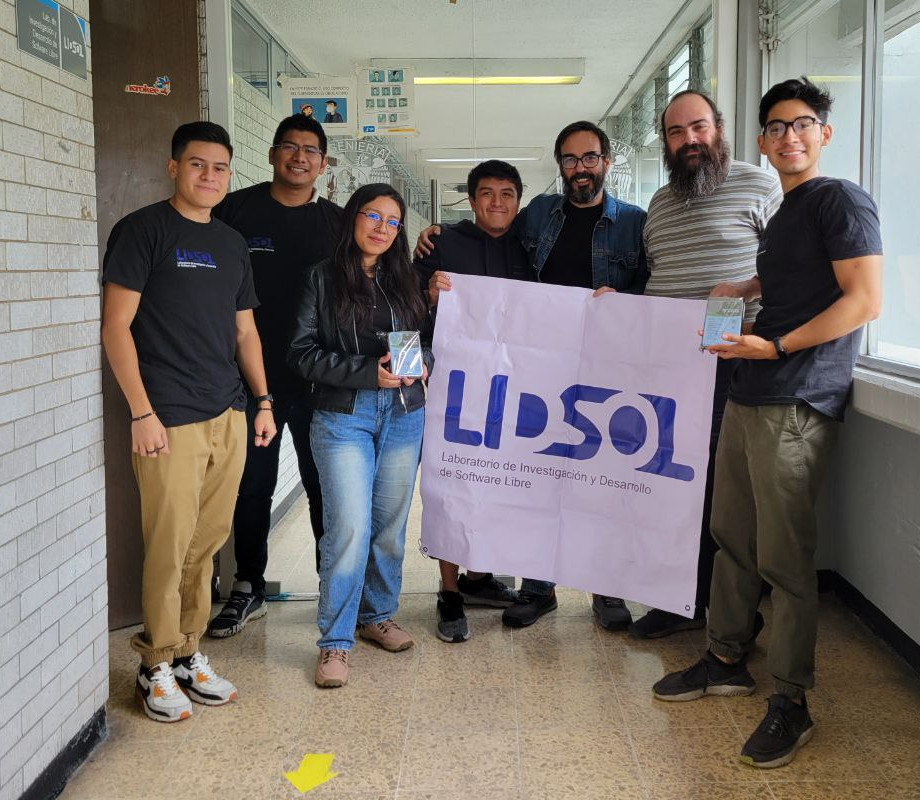
Gunnar Wolf: Many terabytes for students to play with. Thanks Debian!

LIDSOL students receiving their new hard drives My students at LIDSOL (Laboratorio de Investigaci n y Desarrollo de Software Libre, Free Software Research and Development Lab) at Facultad de Ingenier a, UNAM asked me to help them get the needed hardware to set up a mirror for various free software projects. We have some decent servers (not new servers, but mirrors don t require to be top-performance), so A couple of weeks ago, I approached the Debian Project Leader (DPL) and suggested we should buy two 16TBhard drives for this project, as it is the most reasonable cost per byte point I found. He agreed, and I bought the drives. Today we had a lab meeting, and I handed them over the hardware. Of course, they are very happy and thankful with the Debian project In the last couple of weeks, they have already set up an Archlinux mirror (https://archlinux.org/mirrors/fi-b.unam.mx), and now that they have heaps of storage space, plans are underway to set up various other mirrors (of course, a Debian mirror will be among the first).

22 June 2024

Russ Allbery: Review: And the Stars Will Sing

Review: And the Stars Will Sing, by Michelle Browne
Series: The Meaning Wars #1
Publisher: Michelle Browne
Copyright: 2012, 2021
Printing: 2021
ASIN: B0075G7GEA
Format: Kindle
Pages: 85
And the Stars Will Sing is a self-published science fiction novella, the first of a (currently) five book series. I believe it may be Browne's first publication, although I don't have a good data source to confirm. Crystal Weiss is a new graduate from Mars, about to leave the solar system to her first job assignment: installation of a permanent wormhole in the vicinity of Messier 14. Her expertise is the placement calculations. The heavy mathematical lifting is of course done by computers, but humans have to do the mapping and some of the guidance. And the Stars Will Sing is an epistolary novel, told in the form of her letters to her friend Sarah. I feel bad when I stumble across a book like this. I want to stick with my habit of writing a review of each book I read, but it's one thing to pan a bad book by a famous author and another thing to pick on a self-published novella that I read due to some recommendation or mention whose details I've forgotten. Worse, I think this wasn't even the recommended book; I looked up the author, saw that the first of a series was on sale, and thought "oh, hey, I like epistolary novels and I'm in the mood for some queer space opera." This book didn't seem that queer (there is a secondary lesbian relationship but the main relationship seemed rather conventional), but I'll get to the romance in a moment. I was not the reader for this book. There's a reason why most of the books I read are from traditional publishers; I'm too critical of a reader for a lot of early self-published work. It's not that I dislike self-publishing as a concept many self-published books are excellent and the large publishers have numerous problems but publishers enforce a quality bar. Inconsistently, unfairly, and by rejecting a lot of good work, but still, they do. I'm fairly sure traditional publishers would have passed on this book; the quality of the writing isn't there yet. (It's certainly a better book than I could have written! But that's why I'm writing my reviews over in my quiet corner of the Internet and not selling fiction to other people.) The early chapters aren't too bad, although they have a choppy, cliched style that more writing experience usually smoothes out. The later chapters have more dialogue, enough that I started wondering how Crystal could remember that much dialogue verbatim to put into a letter, and it's not good. All of the characters talk roughly the same (even the aliens), the dialogue felt even more cliched than the rest of the writing, and I started getting distracted by the speech tags. Crystal comes across as very young, impulsive, and a drama magnet who likes being all up in her coworkers' business. None of these are objective flaws in the book, but I could tell early on that I was going to find her annoying. She has a heavily-foreshadowed enemies-to-lovers thing with one of her male coworkers. Her constant complaining about him at the start of the story was bad enough, but the real problem is that in the very few places where he has more personality than plastic lawn furniture, he's being obnoxious to Crystal. I'm used to being puzzled by a protagonist's choice in love interests, but this one felt less like an odd personality choice and more a lack of writing skill. Even if the relationship is being set up for failure (not true by the end of this book), you've got to help me understand what the protagonist saw in him or was getting out of the relationship. The plot was so predictable that it ironically surprised me. I was sure that some sort of twist or complication was coming, but no. I will give Browne some credit for writing a slightly more realistic character reaction to violence than most SF authors, but there was nothing in the plot to hold my interest. The world-building was generic science fiction with aliens. It had a few glimmers of promise, but there was some sort of psychic hand-waving involved in siting wormholes that didn't work for me and the plot climax made no sense to me whatsoever. This is the kind of bad book that I don't want to hold against the writer. Twelve years later and with numerous other novels and novellas under her belt, her writing is probably much better. I do think this book would have benefited from an editor telling her it wasn't good enough for publication yet, but that's not how the Kindle self-publishing world works. Mostly, this is my fault: I half-followed a recommendation into an area of publishing that I know from past experience I should avoid without a solid review from an equally critical reader. Followed by The Stolen, a two-story collection. Rating: 3 out of 10

19 June 2024

Sahil Dhiman: First Iteration of My Free Software Mirror

As I m gearing towards setting up a Free Software download mirror in India, it occurred to me that I haven t chronicled the work and motivation behind setting up the original mirror in the first place. Also, seems like it would be good to document stuff here for observing the progression, as the mirror is going multi-country now. Right now, my existing mirror i.e., mirrors.de.sahilister.net (was mirrors.sahilister.in), is hosted in Germany and serves traffic for Termux, NomadBSD, Blender, BlendOS and GIMP. For a while in between, it hosted OSMC project mirror as well. To explain what is a Free Software download mirror thing is first, I ll quote myself from work blog -
As most Free Software doesn t have commercial backing and require heavy downloads, the concept of software download mirrors helps take the traffic load off of the primary server, leading to geographical redundancy, higher availability and faster download in general.
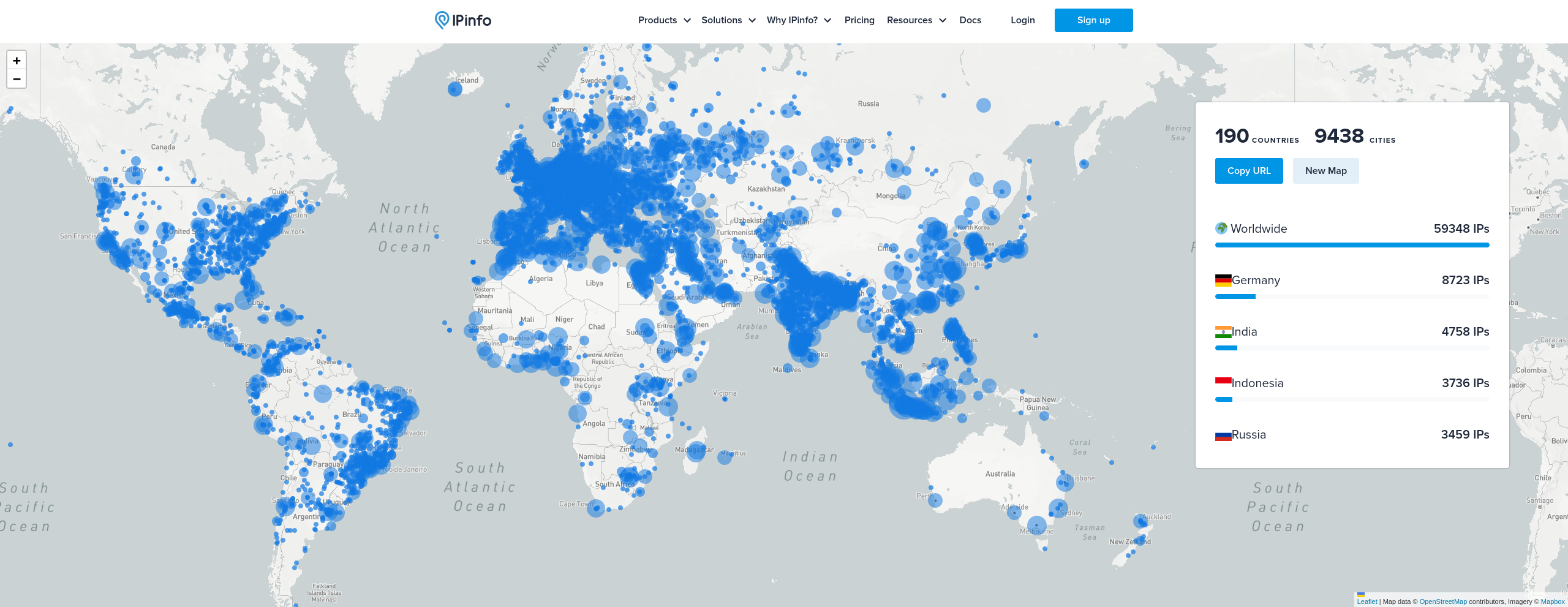
So whenever someone wants to download a particular (mirrored) software and click download, upstream redirects the download to one of the mirror server which is geographical (or in other parameters) nearby to the user, leading to faster downloads and load sharing amongst all mirrors. Since the time I got into Linux and servers, I always wanted to help the community somehow, and mirroring seemed to be the most obvious thing. India seems to be a country which has traditionally seen less number of public download mirrors. IITB, TiFR, and some of the public institutions used to host them for popular Linux and Free Softwares, but they seem to be diminishing these days. In the last months of 2021, I started using Termux and saw that it had only a few mirrors (back then). I tried getting a high capacity, high bandwidth node in budget but it was hard in India in 2021-22. So after much deliberation, I decided to go where it s available and chose a German hosting provider with the thought of adding India node when conditions are favorable (thankfully that happened, and India node is live too now.). Termux required only 29 GB of storage, so went ahead and started mirroring it. I raised this issue in Termux s GitHub repository in January 2022. This blog post chronicles the start of the mirror. Termux has high request counts from a mirror point of view. Each Termux client, usually checks every mirror in selected group for availability before randomly selecting one for download (only other case is when client has explicitly selected a single mirror using termux-repo-change). The mirror started getting thousands of requests daily due to this but only a small percentage would actually get my mirror in selection, so download traffic was lower. Similar thing happened with OSMC too (which I started mirroring later). With this start, I started exploring various project that would be benefit from additional mirrors. Public information from Academic Computer Club in Ume s mirror and Freedif s mirror stats helped to figure out storage and bandwidth requirements for potential projects. Fun fact, Academic Computer Club in Ume (which is one of the prominent Debian, Ubuntu etc.) mirror, now has 200 Gbits/s uplink to the internet through SUNET. Later, I migrated to a different provider for better speeds and added LibreSpeed test on the mirror server. Those were fun times. Between OSMC, Termux and LibreSpeed, I was getting almost 1.2 millions hits/day on the server at its peak, crossing for the first time a TB/day traffic number. Next came Blender, which took the longest time to set up of around 9 10 months. Blender had a push-trigger requirement for rsync from upstream that took quite some back and forth. It now contributes the most amount of traffic on the mirror. On release days, mirror does more than 3 TB/day and normal days, it hovers around 2 TB/day. Gimp project is the latest addition. At one time, the mirror traffic touched 4.97 TB/day traffic number. That s when I decided on dropping LibreSpeed server to solely focus on mirroring for now, keeping the bandwidth allotment for serving downloads only. The mirror projects selection grew organically. I used to reach out many projects discussing the need of for additional mirrors. Some projects outright denied mirroring request as Germany already has a good academic mirrors boosting 20-25 Gbits/s speeds from FTP era, which seems fair. Finding the niche was essential to only add softwares, which would truly benefit from additional capacity. There were months when nothing much would happen with the mirror, rsync would continue to update the mirror while nginx would keep on serving the traffic. Nowadays, the mirror pushes around 70 TB/month. I occasionally check logs, vnstat, add new security stuff here and there and pay the bills. It now saturates the Gigabit link sometimes and goes beyond that, peaking around 1.42 Gbits/s (the hosting provider seems to be upping their game). The plan is to upgrade the link to better speeds. vnstat yearly
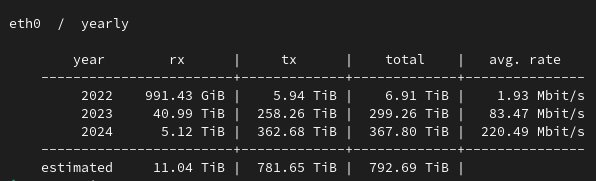
Yearly traffic stats (through vnstat -y )
On the way, learned quite a few things like - GeoIP Map of Clients from Yesterday Access Logs
GeoIP Map of Clients from Yesterday's Access Logs. Click to enlarge
Generated from IPinfo.io
In hindsight, the statistics look amazing, hundreds of TBs of traffic served from the mirror, month after month. That does show that there s still an appetite for public mirrors in time of commercially donated CDNs and GitHub. The world could have done with one less mirror, but it saved some time, lessened the burden for others, while providing redundancy and traffic localization with one additional mirror. And it s fun for someone like me who s into infrastructure that powers the Internet. Now, I ll try focusing and expanding the India mirror, which in itself started pushing almost half a TB/day. Long live Free Software and public download mirrors.

14 June 2024

Paul Tagliamonte: Reverse Engineering a Restaurant Pager system

It s been a while since I played with something new been stuck in a bit of a rut with radios recently - working on refining and debugging stuff I mostly understand for the time being. The other day, I was out getting some food and I idly wondered how the restaurant pager system worked. Idle curiosity gave way to the realization that I, in fact, likely had the means and ability to answer this question, so I bought the first set of the most popular looking restaurant pagers I could find on eBay, figuring it d be a fun multi-week adventure.

Order up! I wound up buying a Retekess brand TD-158 Restaurant Pager System (they looked like ones I d seen before and seemed to be low-cost and popular), and quickly after, had a pack of 10 pagers and a base station in-hand. The manual stated that the radios operated at 433 MHz (cool! can do! Love a good ISM band device), and after taking an inital read through the manual for tips on the PHY, I picked out a few interesting things. First is that the base station ID was limited to 0-999, which is weird because it means the limiting factor is likely the base-10 display on the base station, not the protocol we need enough bits to store 999 at least 10 bits. Nothing else seemed to catch my eye, so I figured may as well jump right to it. Not being the type to mess with success, I did exactly the same thing as I did in my christmas tree post, and took a capture at 433.92MHz since it was in the middle of the band, and immediately got deja-vu. Not only was the signal at 433.92MHz, but throwing the packet into inspectrum gave me the identical plot of the OOK encoding scheme. Not just similar identical. The only major difference was the baud rate and bit structure of the packets, and the only minor difference was the existence of what I think is a wakeup preamble packet (of all zeros), rather than a preamble symbol that lasted longer than usual PHY symbol (which makes this pager system a bit easier to work with than my tree, IMHO). Getting down to work, I took some measurements to determine what the symbol duration was over the course of a few packets, I was able to determine the symbol rate was somewhere around 858 microseconds (0.000858 seconds per symbol), which is a weird number, but maybe I m slightly off or there s some larger math I m missing that makes this number satisfyingly round (internal low cost crystal clock or something? I assume this is some hardware constrait with the pager?) Anyway, good enough. Moving along, let s try our hand at a demod let s just assume it s all the same as the chrismas tree post and demod ones and zeros the same way here. That gives us 26 bits:

00001101110000001010001000
Now, I know we need at least 10 bits for the base station ID, some number of bits for the pager ID, and some bits for the command. This was a capture of me hitting call from a base station ID of 55 to a pager with the ID of 10, so let s blindly look for 10 bit chunks with the numbers we re looking for:
0000110111 0000001010 001000
Jeez. First try. 10 bits for the base station ID (55 in binary is 0000110111), 10 bits for the pager ID (10 in binary is 0000001010), which leaves us with 6 bits for a command (and maybe something else too?) which is 8 here. Great, cool, let s work off that being the case and revisit it if we hit bugs. Besides our data packet, there s also a preamble packet that I ll add in, in case it s used for signal detection or wakeup or something which is fairly easy to do since it s the same packet structure as the above, just all zeros. Very kind of them to leave it with the same number of bits and encoding scheme it s nice that it can live outside the PHY. Once I got here, I wrote a quick and dirty modulator, and was able to ring up pagers! Unmitigated success and good news only downside was that it took me a single night, and not the multi-week adventure I was looking for. Well, let s finish the job and document what we ve found for the sake of completeness.

Boxing everything up My best guess on the packet structure is as follows:
base id
argument
command
For a call or F2 operation, the argument is the Pager s ID code, but for other commands it s a value or an enum, depending. Here s a table of my by-hand demodulation of all the packet types the base station produces:
Type Cmd Id Description
Call8Call the pager identified by the id in argument
Off60Request any pagers on the charger power off when power is removed, argument is all zero
F240Program a pager to the specified Pager ID (in argument) and base station
F344Set the reminder duration in seconds specified in argument
F448Set the pager's beep mode to the one in argument (0 is disabled, 1 is slow, 2 is medium, 3 is fast)
F552Set the pager's vibration mode to the one in argument (0 is disabled, 1 is enabled)

Kitchen s closed for the night I m not going to be publishing this code since I can t think of a good use anyone would have for this besides folks using a low cost SDR and annoying local resturants; but there s enough here for folks who find this interesting to try modulating this protocol on their own hardware if they want to buy their own pack of pagers and give it a shot, which I do encourage! It s fun! Radios are great, and this is a good protocol to hack with it s really nice. All in all, this wasn t the multi-week adventure I was looking for, this was still a great exercise and a fun reminder that I ve come a far way from when I ve started. It felt a lot like cheating since I was able to infer a lot about the PHY because I d seen it before, but it was still a great time. I may grab a few more restaurant pagers and see if I can find one with a more exotic PHY to emulate next. I mean why not, I ve already got the thermal printer libraries working

12 June 2024

Freexian Collaborators: Monthly report about Debian Long Term Support, May 2024 (by Roberto C. S nchez)

Like each month, have a look at the work funded by Freexian s Debian LTS offering.

Debian LTS contributors In May, 17 contributors have been paid to work on Debian LTS, their reports are available:
  • Adrian Bunk did 34.25h (out of 24.0h assigned and 22.0h from previous period), thus carrying over 11.75h to the next month.
  • Bastien Roucari s did 20.0h (out of 20.0h assigned).
  • Ben Hutchings did 16.0h (out of 24.0h assigned), thus carrying over 8.0h to the next month.
  • Chris Lamb did 18.0h (out of 18.0h assigned).
  • Daniel Leidert did 8.0h (out of 10.0h assigned), thus carrying over 2.0h to the next month.
  • Emilio Pozuelo Monfort did 35.5h (out of 46.0h assigned), thus carrying over 10.5h to the next month.
  • Guilhem Moulin did 13.0h (out of 14.75h assigned and 5.25h from previous period), thus carrying over 7.0h to the next month.
  • Lee Garrett did 11.0h (out of 37.25h assigned and 8.75h from previous period), thus carrying over 35.0h to the next month.
  • Lucas Kanashiro did 10.0h (out of 20.0h assigned), thus carrying over 10.0h to the next month.
  • Markus Koschany did 40.0h (out of 40.0h assigned).
  • Ola Lundqvist did 6.5h (out of 22.5h assigned and 1.5h from previous period), thus carrying over 17.5h to the next month.
  • Roberto C. S nchez did 7.75h (out of 11.0h assigned and 1.0h from previous period), thus carrying over 4.25h to the next month.
  • Santiago Ruano Rinc n did 8.0h (out of 16.0h assigned), thus carrying over 8.0h to the next month.
  • Sean Whitton did 5.5h (out of 5.5h assigned and 0.5h from previous period), thus carrying over 0.5h to the next month.
  • Sylvain Beucler did 10.5h (out of 0.75h assigned and 45.25h from previous period), thus carrying over 35.5h to the next month.
  • Thorsten Alteholz did 14.0h (out of 14.0h assigned).
  • Tobias Frost did 7.75h (out of 10.0h assigned and 2.0h from previous period), thus carrying over 4.25h to the next month.

Evolution of the situation In May, we have released 20 DLAs. Notable security updates in May included:
  • apache2: multiple vulnerabilities which may result in HTTP response splitting, denial of service, or authorization bypass (by Bastien Roucari s, in collaboration with apache2 maintainer Yadd)
  • bind9: two vulnerabilities, called KeyTrap and NSEC3, which may result in denial of service (by Santiago Ruano Rinc n)
  • python-pymysql: potential SQL injection attack (by Chris Lamb)
The aforementioned apache2 was prepared by its Debian maintainer Yadd. This update also involved work on the package test suite in buster, which contributor Bastien Roucari s then forwarded to the apache2 package in unstable. More importantly, a regression in fossil was reported, and Bastien prepared a fix for it. Bastien coordinated the upload of both packages to minimize the introduction of regressions. Contributor Daniel Leidert also prepared an upload of runc to Debian 11 in order fix a number of CVEs still affecting that package. Finally, contributor Thorsten Alteholz prepared uploads for qtbase-opensource-src, libjwt, and libmicrohttpd in Debian 11. Note that Debian 11 will pass into the LTS phase of support in August and these updates will improve the state and long-term supportability of Debian 11. Debian 10 is presently in its final month of LTS support (as announced on the debian-lts-announce mailing list, support will end on June 30th), after which no new security updates will be made available on security.debian.org. However, Freexian and its team of paid Debian contributors will continue to maintain Debian 10 going forward for the customers of the Extended LTS offer. Subscribe right away if you sill have Debian 10 which must be kept secure (and which cannot yet be upgraded).

Thanks to our sponsors Sponsors that joined recently are in bold.

8 June 2024

Thorsten Alteholz: My Debian Activities in May 2024

FTP master This month I accepted 347 and rejected 49 packages. The overall number of packages that got accepted was 348.

Debian LTS This was my hundred-nineteenth month that I did some work for the Debian LTS initiative, started by Raphael Hertzog at Freexian. During my allocated time I uploaded or worked on: I also continued to work on tiff and last but not least did a week of FD and attended the monthly LTS/ELTS meeting. Unfortunately I used lots of time to debug an issue with nghttp2. Please see my odyssey below. Debian ELTS This month was the seventieth ELTS month. During my allocated time I uploaded: For some tests I installed the new nghttp2 package on my Stretch VM and started the daemon. Unfortunately I got an unexpected error from getaddrinfo() about ai_socktype not supported. The daemon was configured to listen on lo, the device was available, but the error remained. I was pretty sure that my patch was not the reason for this and indeed the unpatched version showed this error as well. I didn t want to release an untested package, so nghttp2 had to start at least! Therefore I built a minimal example to reproduce the issue. getaddrinfo() failed for hints.ai_socktype=SOCK_STREAM and a numerical IP address. Having no hints at all or localhost instead of 127.0.0.1 made the error disappear (as a remark: localhost resolves to 127.0.0.1, the ipv6 variant is ip6-localhost ). I could see that in nghttp2 as well. Configuring it with localhost let the error vanish but the daemon still exited due to other reasons. After some time of debugging, I added another network interface to my VM and configured it with a dummy IPv4 address. Voila, everything worked as expected. According to Wikipedia, IPv6 was ratified as standard in 2017 and Stretch was also released in 2017. No wonder that a IPv6-only-VM had problems back then and these problems survived to the present. I also continued to work on an update for tiff in Jessie and Stretch, did a week of FD and attended the LTS/ELTS meeting. Debian Printing This month I uploaded new upstream or bugfix versions of: This work is generously funded by Freexian! Debian Astro This month I uploaded a new upstream or bugfix version of: Debian IoT This month I uploaded new upstream or bugfix versions of: Debian Mobcom Due to more and more problems with time_t, I removed osmo-iuh and all dependencies from armel, armhf and i386, sorry. If there is really anybody using this software on 32-bit architectures don t hesitate to get in touch. It is official now, the GSoC student working on the Mobcom packages is Nathan Doris. He already finished the hardest part of the job and I could upload the latest version of libosmocore. I really enjoy working with him and look forward to a pleasant SoC :-). misc This month I uploaded new upstream or bugfix versions of: Did I already mention that I love lists with topics I can work on. I print out such lists and enjoy checking off one after the other. End of May Helmut told me that I am a bit lazy and gave me such a list with all my packages that have one or the other issue with /usr-move. Most of the uploads above are packages on that list and I could check off a lot :-).

1 June 2024

Russ Allbery: Review: I Shall Wear Midnight

Review: I Shall Wear Midnight, by Terry Pratchett
Series: Discworld #38
Publisher: Harper
Copyright: 2010
Printing: 2011
ISBN: 0-06-143306-3
Format: Trade paperback
Pages: 355
I Shall Wear Midnight is the 38th Discworld novel and the 4th Tiffany Aching novel. This is not a good place to start reading. Tiffany has finished her training and has returned to her home on the Chalk, taking up her duties as the local witch. There are a lot of those, because there's a lot that needs doing. In some cases, such as taking away the pain of the old Duke, they involve things that require magic and that only Tiffany can do. In many other cases, other people could pick up some of the work, but they lack Tiffany's sense of duty and willingness to pay attention. The people of the Chalk have always been a bit suspicious of witches, in part because the job was done for so long by Tiffany's grandmother and no one thought she was a witch. (She was a witch.) Of late, however, that suspicion seems to be getting worse. It comes to a head when Tiffany is accused of theft and worse by the old Duke's maid, a woman with very fixed ideas about the evils of witches. Tiffany has to sort out what's going on and clear herself, all while navigating her now-awkward relationship with the Duke's son Roland, his unimpressive fiancee, and his spectacularly annoying aunt. Ah, this is the stuff. This is exactly the Tiffany Aching novel that I have been hoping Pratchett would write. It's pure, snarky competence porn from start to finish.
"I'm a witch. It's what we do. When it's nobody else's business, it's my business."
One of the things that I adore about this series is how well Pratchett shows the different ways in which one can be a witch. Granny Weatherwax out-thinks everyone and nudges (or shoves) people in the right direction, but her natural tendency is to be icy and a bit frightening. Nanny Ogg is that person you can't help but talk to, who may seem happy-go-lucky and hedonistic but who can effortlessly change the mood of a room. And Tiffany is stubborn duty and blunt practicality, which fits the daughter of shepherds. In previous books, we've watched Tiffany as a student, learning the practicalities of being a witch. This is the book where she realizes how much she knows and how much easier the world is to navigate when she's in her own territory. There is a wonderful scene, late in this book, where Pratchett shows Nanny Ogg at her best, doing the kinds of things that only Nanny Ogg can do. Both Tiffany and the reader are in awe.
I should have learned this, she thought. I wanted to learn fire, and pain, but I should have learned people.
And it's true that Nanny Ogg can do things that Tiffany can't. But what makes this book so great is that it shows how Tiffany's personality and her training come together with her knowledge of the Chalk. She may not know people, in general, but she knows her neighbors and how they think. She doesn't manage them the way that Nanny Ogg would; she's better at solving different kinds of problems, in different ways. But they're the right ways, and the right problems, for her home. This is another Discworld novel with a forgettable villain that's more of a malevolent force of nature than a character in its own right. It's also another Discworld novel where Pratchett externalizes a human tendency into a malevolent force that can possess people. I have mixed feelings about this narrative approach. That externalization of evil into (in essence) demons has been repeatedly used to squirm out of responsibility and excuse atrocities, and it neatly avoids having to wrestle with the hard questions of prejudice and injustice and why apparently good people do awful things. I think some of those weaknesses persist even in Pratchett's hands, but I think what he was attempting with that approach in this book is to show how almost no one is immune to nastier ideas that spread through society. Rather than using the externalization of evil as an excuse, he's using it as a warning. With enough exposure to those ideas, they start sounding tempting and partly credible even to people who would never have embraced them earlier. Pratchett also does a good job capturing the way prejudice can start from thoughtless actions that have more to do with the specific circumstances of someone's life than any coherent strategy. Still, the one major complaint I have about this book is that the externalization of evil is an inaccurate portrayal of the world, and this catches up with Pratchett at the ending. Postulating an external malevolent force reduces evil to something that can be puzzled out and decisively defeated, thus resolving the problem. Sadly, this is not how humans actually work. I'll forgive that structural flaw, though, because the rest of this book is so good. It's rare that a plot twist in a Discworld novel surprises me twisty plots are not Pratchett's strength but this one did. I will not spoil the surprise, but one of the characters is not quite who they seem to be, and Tiffany's reactions once she figures that out are one of my favorite parts of this book. Pratchett is making a point about assumptions, observation, and the importance of being willing to change one's mind about someone when you know more, and I thought it was very well done. But, most of all, I enjoyed reading about Tiffany being calm, competent, determined, and capable. There's also a bit of an unexpected romance plot that's one of my favorite types: the person who notices that you're doing a lot of work and quietly steps in and starts helping while paying attention to what's needed and not taking over. And it's full of the sort of pithy moral wisdom that makes Discworld such a delight to read.
"There have been times, lately, when I dearly wished that I could change the past. Well, I can't, but I can change the present, so that when it becomes the past it will turn out to be a past worth having."
This was just what I wanted. Highly recommended. Followed by Snuff in publication order. The next (and last, sadly) Tiffany Aching book is The Shepherd's Crown. Rating: 9 out of 10

Russell Coker: Links May 2024 (late)

VoltageDivide has an interesting article on Unconventional Uses of FPGAs [1]. Tagline Every sensor is a temperature sensor, nearly everything is a resistor or a conductor if you try hard enough and anything is an antenna. Datasheets are just a suggestion, and finally, often we pretend things are ideal, when they often are not. Interesting blog post about the way npm modules that depend on everything exposed flaws in the entire npm system [2]. The conclusion should have included use a fake name for doing unusual tests . Krebs on Security has an interesting article about MFA bombing [3]. Looks like Apple has some flaws in their MFA system, other companies developing MFA should learn from this. Joey wrote an informative blog post about the Vultr hosting company wanting to extract data from VMs run for clients to train ML [4]. If your email is stored on such a VM it could be generated by an AI system. John Goerzen wrote an interesting post looking at the causes of the xz issue from a high level [5]. Interesting article about self proclaimed Autistic pro-natalists [6]. They seem somewhat abusive to their kids and are happy to associate with neo-Nazis. :( Joey Hess wrote an interesting blog post about the possibility of further undiscovered attacks on xz [7]. Going back to an earlier version seems like a good idea. The Guardian has an interesting article about Amazon s 2 pizza rule and the way the company is structured [8]. It s interesting how they did it, but we really need to have it broken up via anti-trust legislation. John Goerzen wrote an informative post about Facebook censorship and why we should all move to Mastodon [9]. Facebook needs to be broken up under anti-trust laws. Kobold Letters is an attack on HTML email that results in the visual representation of email changing when it is forwarded. [10]. You could have the original email hide some sections which are revealed with the recipient forwards it for a CEO impersonation attack.

29 May 2024

Antoine Beaupr : Playing with fonts again

I am getting increasingly frustrated by Fira Mono's lack of italic support so I am looking at alternative fonts again.

Commit Mono This time I seem to be settling on either Commit Mono or Space Mono. For now I'm using Commit Mono because it's a little more compressed than Fira and does have a italic version. I don't like how Space Mono's parenthesis (()) is "squarish", it feels visually ambiguous with the square brackets ([]), a big no-no for my primary use case (code). So here I am using a new font, again. It required changing a bunch of configuration files in my home directory (which is in a private repository, sorry) and Emacs configuration (thankfully that's public!). One gotcha is I realized I didn't actually have a global font configuration in Emacs, as some Faces define their own font family, which overrides the frame defaults. This is what it looks like, before:
A dark terminal showing the test sheet in Fira Mono Fira Mono
After:
A dark terminal showing the test sheet in Fira Mono Commit Mono
(Notice how those screenshots are not sharp? I'm surprised too. The originals look sharp on my display, I suspect this is something to do with the Wayland transition. I've tried with both grim and flameshot, for what its worth.) They are pretty similar! Commit Mono feels a bit more vertically compressed maybe too much so, actually -- the line height feels too low. But it's heavily customizable so that's something that's relatively easy to fix, if it's really a problem. Its weight is also a little heavier and wider than Fira which I find a little distracting right now, but maybe I'll get used to it. All characters seem properly distinguishable, although, if I'd really want to nitpick I'd say the and are too different, with the latter (REGISTERED SIGN) being way too small, basically unreadable here. Since I see this sign approximately never, it probably doesn't matter at all. I like how the ampersand (&) is more traditional, although I'll miss the exotic one Fira produced... I like how the back quotes ( , GRAVE ACCENT) drop down low, nicely aligned with the apostrophe. As I mentioned before, I like how the bar on the "f" aligns with the other top of letters, something in Fira mono that really annoys me now that I've noticed it (it's not aligned!).

A UTF-8 test file Here's the test sheet I've made up to test various characters. I could have sworn I had a good one like this lying around somewhere but couldn't find it so here it is, I guess.
US keyboard coverage:
abcdefghijklmnopqrstuvwxyz 1234567890-=[]\;',./
ABCDEFGHIJKLMNOPQRSTUVWXYZ~!@#$%^&*()_+ :"<>?
latin1 coverage:  
EURO SIGN, TRADE MARK SIGN:  
ambiguity test:
e coC0ODQ iI71lL! 
b6G&0B83  []() /\. 
zs$S52Z%   '" 
all characters in a sentence, uppercase:
the quick fox jumps over the lazy dog
THE QUICK FOX JUMPS OVER THE LAZY DOG
same, in french:
Portez ce vieux whisky au juge blond qui fume.
d s no l, o  un z phyr ha  me v t de gla ons w rmiens, je d ne
d exquis r tis de b uf au kir,   l a  d ge m r, &c tera.
D S NO L, O  UN Z PHYR HA  ME V T DE GLA ONS W RMIENS, JE D NE
D EXQUIS R TIS DE B UF AU KIR,   L A  D GE M R, &C TERA.
Ligatures test:
-<< -< -<- <-- <--- <<- <- -> ->> --> ---> ->- >- >>-
=<< =< =<= <== <=== <<= <= => =>> ==> ===> =>= >= >>=
<-> <--> <---> <----> <=> <==> <===> <====> :: ::: __
<~~ </ </> /> ~~> == != /= ~= <> === !== !=== =/= =!=
<: := *= *+ <* <*> *> <  < >  > <. <.> .> +* =* =: :>
(* *) /* */ [   ]     ++ +++ \/ /\  - -  <!-- <!---
Box drawing alignment tests:


Dashes alignment test:
HYPHEN-MINUS, MINUS SIGN, EN, EM DASH, HORIZONTAL BAR, LOW LINE
--------------------------------------------------


__________________________________________________
Update: here is another such sample sheet, it's pretty good and has support for more languages while being still relatively small. So there you have it, got completely nerd swiped by typography again. Now I can go back to writing a too-long proposal again. Sources and inspiration for the above:
  • the unicode(1) command, to lookup individual characters to disambiguate, for example, - (U+002D HYPHEN-MINUS, the minus sign next to zero on US keyboards) and (U+2212 MINUS SIGN, a math symbol)
  • searchable list of characters and their names - roughly equivalent to the unicode(1) command, but in one page, amazingly the /usr/share/unicode database doesn't have any one file like this
  • bits/UTF-8-Unicode-Test-Documents - full list of UTF-8 characters
  • UTF-8 encoded plain text file - nice examples of edge cases, curly quotes example and box drawing alignment test which, incidentally, showed me I needed specific faces customisation in Emacs to get the Markdown code areas to display properly, also the idea of comparing various dashes
  • sample sentences in many languages - unused, "Sentences that contain all letters commonly used in a language"
  • UTF-8 sampler - unused, similar

Other fonts In my previous blog post about fonts, I had a list of alternative fonts, but it seems people are not digging through this, so I figured I would redo the list here to preempt "but have you tried Jetbrains mono" kind of comments. My requirements are:
  • no ligatures: yes, in the previous post, I wanted ligatures but I have changed my mind. after testing this, I find them distracting, confusing, and they often break the monospace nature of the display
  • monospace: this is to display code
  • italics: often used when writing Markdown, where I do make use of italics... Emacs falls back to underlining text when lacking italics which is hard to read
  • free-ish, ultimately should be packaged in Debian
Here is the list of alternatives I have considered in the past and why I'm not using them:
  • agave: recommended by tarzeau, not sure I like the lowercase a, a bit too exotic, packaged as fonts-agave
  • Cascadia code: optional ligatures, multilingual, not liking the alignment, ambiguous parenthesis (look too much like square brackets), new default for Windows Terminal and Visual Studio, packaged as fonts-cascadia-code
  • Fira Code: ligatures, was using Fira Mono from which it is derived, lacking italics except for forks, interestingly, Fira Code succeeds the alignment test but Fira Mono fails to show the X signs properly! packaged as fonts-firacode
  • Hack: no ligatures, very similar to Fira, italics, good alternative, fails the X test in box alignment, packaged as fonts-hack
  • Hermit: no ligatures, smaller, alignment issues in box drawing and dashes, packaged as fonts-hermit somehow part of cool-retro-term
  • IBM Plex: irritating website, replaces Helvetica as the IBM corporate font, no ligatures by default, italics, proportional alternatives, serifs and sans, multiple languages, partial failure in box alignment test (X signs), fancy curly braces contrast perhaps too much with the rest of the font, packaged in Debian as fonts-ibm-plex
  • Inconsolata: no ligatures, maybe italics? more compressed than others, feels a little out of balance because of that, packaged in Debian as fonts-inconsolata
  • Intel One Mono: nice legibility, no ligatures, alignment issues in box drawing, not packaged in Debian
  • Iosevka: optional ligatures, italics, multilingual, good legibility, has a proportional option, serifs and sans, line height issue in box drawing, fails dash test, not in Debian
  • Jetbrains Mono: (mandatory?) ligatures, good coverage, originally rumored to be not DFSG-free (Debian Free Software Guidelines) but ultimately packaged in Debian as fonts-jetbrains-mono
  • Monoid: optional ligatures, feels much "thinner" than Jetbrains, not liking alignment or spacing on that one, ambiguous 2Z, problems rendering box drawing, packaged as fonts-monoid
  • Mononoki: no ligatures, looks good, good alternative, suggested by the Debian fonts team as part of fonts-recommended, problems rendering box drawing, em dash bigger than en dash, packaged as fonts-mononoki
  • Source Code Pro: italics, looks good, but dash metrics look whacky, not in Debian
  • spleen: bitmap font, old school, spacing issue in box drawing test, packaged as fonts-spleen
  • sudo: personal project, no ligatures, zero originally not dotted, relied on metrics for legibility, spacing issue in box drawing, not in Debian
So, if I get tired of Commit Mono, I might probably try, in order:
  1. Hack
  2. Jetbrains Mono
  3. IBM Plex Mono
Iosevka, Monoki and Intel One Mono are also good options, but have alignment problems. Iosevka is particularly disappointing as the EM DASH metrics are just completely wrong (much too wide). This was tested using the Programming fonts site which has all the above fonts, which cannot be said of Font Squirrel or Google Fonts, amazingly. Other such tools:

28 May 2024

Russell Coker: Creating a Micro Users Group

Fosdem had a great lecture Building an Open Source Community One Friend at a Time [1]. I recommend that everyone who is involved in the FOSS community watches this lecture to get some ideas. For some time I ve been periodically inviting a few friends to visit for lunch, chat about Linux, maybe do some coding, and watch some anime between coding. It seems that I have accidentally created a micro users group. LUGs were really big in the mid to late 90s and still quite vibrant in the early 2000 s. But they seem to have decreased in popularity even before Covid19 and since Covid19 a lot of people have stopped attending large meetings to avoid health risks. I think that a large part of the decline of users groups has been due to the success of YouTube. Being able to choose from thousands of hours of lectures about computers on YouTube is a disincentive to spending the time and effort needed to attend a meeting with content that s probably not your first choice of topic. Attending a formal meeting where someone you don t know has arranged a lecture might not have a topic that s really interesting to you. Having lunch with a couple of friends and watching a YouTube video that one of your friends assures you is really good is something more people will find interesting. In recent times homeschooling [2] has become more widely known. The same factors that allow learning about computers at home also make homeschooling easier. The difference between the traditional LUG model of having everyone meet at a fixed time for a lecture and a micro LUG of a small group of people having an informal meeting is similar to the difference between traditional schools and homeschooling. I encourage everyone to create their own micro LUG. All you have to do is choose a suitable time and place and invite some people who are interested. Have a BBQ in a park if the weather is good, meet at a cafe or restaurant, or invite people to visit you for lunch on a weekend.

27 May 2024

Thomas Koch: Rebuild search with trust

Posted on January 20, 2024
Finally there is a thing people can agree on: Apparently, Google Search is not good anymore. And I m not the only one thinking about decentralization to fix it: Honey I federated the search engine - finding stuff online post-big tech - a lightning talk at the recent chaos communication congress The speaker however did not mention, that there have already been many attempts at building distributed search engines. So why do I think that such an attempt could finally succeed? My definition of success is:
A mildly technical computer user (able to install software) has access to a search engine that provides them with superior search results compared to Google for at least a few predefined areas of interest.
The exact algorithm used by Google Search to rank websites is a secret even to most Googlers. Still it is clear, that it relies heavily on big data: billions of queries, a comprehensive web index and user behaviour data. - All this is not available to us. A distributed search engine however can instead rely on user input. Every admin of one node seeds the node ranking with their personal selection of trusted sites. They connect their node with nodes of people they trust. This results in a web of (transitive) trust much like pgp. For comparison, imagine you are searching for something in a world without computers: You ask the people around you. They probably forward your question to their peers. I already had a look at YaCy. It is active, somewhat usable and has a friendly maintainer. Unfortunately I consider the codebase to show its age. It takes a lot of time for a newcomer to find their way around and it contains a lot of cruft. Nevertheless, YaCy is a good example that a decentralized search software can be done even by a small team or just one person. I myself started working on a software in Haskell and keep my notes here: Populus:DezInV. Since I m learning Haskell along the way, there is nothing there to see yet. Additionally I took a yak shaving break to learn nix. By the way: DuckDuckGo is not the alternative. And while I would encourage you to also try Yandex for a second opinion, I don t consider this a solution.

26 May 2024

Russell Coker: USB-A vs USB-C

USB-A is the original socket for USB at the PC end. There are 2 variants of it, the first is for USB 1.1 to USB 2 and the second is for USB 3 which adds extra pins in a plug and socket compatible manner you can plug a USB-A device into a USB-A socket without worrying about the speeds of each end as long as you don t need USB 3 speeds. The differences between USB-A and USB-C are:
  1. USB-C has the same form factor as Thunderbolt and the Thunderbolt protocol can run over it if both ends support it.
  2. USB-C generally supports higher power modes for charging (like 130W for Dell laptops, monitors, and plugpacks) but there s no technical reason why USB-A couldn t do it. You can buy chargers that do 60W over USB-A which could power one of our laptops via a USB-A to USB-C cable. So high power USB-A is theoretically possible but generally you won t see it.
  3. USB-C has DisplayPort alternate mode which means using some of the wires for DisplayPort.
  4. USB-C is more likely to support the highest speeds than USB-A sockets for super speed etc. This is not a difference in the standards just a choice made by manufacturers.
While USB-C tends to support higher power delivery modes in actual implementations for connecting to a PC the PC end seems to only support lower power modes regardless of port. I think it would be really good if workstations could connect to monitors via USB-C and provide power, DisplayPort, and keyboard, mouse, etc over the same connection. But unfortunately the PC and monitor ends don t appear to support such things. If you don t need any of those benefits in the list above (IE you are using USB for almost anything we do other than connecting a laptop to a dock/monitor/charger) then USB-A will do the job just as well as USB-C. The choice of which type to use should be based on price and which ports are available, EG My laptop has 2*USB-C ports and 2*USB-A so given that one USB-C port is almost always used for the monitor or for charging I don t really want to use USB-C for anything else to avoid running out of ports. When buying USB devices you can t always predict which systems you will need to connect them to. Currently there are a lot of systems without USB-C that are working well and have no need to be replaced. I haven t yet seen a system where the majority of ports are USB-C but that will probably happen in the next few years. Maybe in 2027 there will be PCs on sale with only two USB-A sockets forcing people who don t want to use a USB hub to save both of them for keyboard and mouse. Currently USB-C keyboards and mice are available on AliExpress but they are expensive and I haven t seen them in Australian stores. Most computer users don t wear out keyboards or mice so a lot of USB-A keyboard and mice will be in service for a long time. As an aside there are still many PCs with PS/2 keyboard and mouse ports in service so these things don t go away for a long time. There is one corner case where USB-C is convenient which is when you want to connect a mass storage device for system recovery or emergency backup, want a high speed, and don t want to spend time figuring out which of the ports are super speed (which can be difficult at the back of a PC with poor lighting). With USB-C you can expect a speed of at least 5Gbit/s and don t have to worry about accidentally connecting to a USB 2 port as is the situation with USB-A. For my own use the only times that I prefer USB-C over USB-A are for devices to connect to phones. Eventually I ll get a laptop that only has USB-C ports and this will change, but even then adaptors are possible. For someone who doesn t know the details of how things works it s not unreasonable to just buy the newest stuff and assume it s better as it usually is. But hopefully blog posts like this can help people make more informed decisions.

20 May 2024

Russell Coker: Respect and Children

I attended the school Yarra Valley Grammer (then Yarra Valley Anglican School which I will refer to as YV ) and completed year 12 in 1990. The school is currently in the news for a spreadsheet some boys made rating girls where unrapeable was one of the ratings. The school s PR team are now making claims like Respect for each other is in the DNA of this school . I d like to know when this DNA change allegedly occurred because respect definitely wasn t in the school DNA in 1990! Before I go any further I have to note that if the school threatens legal action against me for this post it will be clear evidence that they don t believe in respect. The actions of that school have wronged me, several of my friends, many people who aren t friends but who I wish they hadn t had to suffer and I hadn t had to witness it, and presumably countless others that I didn t witness. If they have any decency they would not consider legal action but I have learned that as an institution they have no decency so I have to note that they should read the Wikipedia page about the Streisand Effect [1] and keep it in mind before deciding on a course of action. I think it is possible to create a school where most kids enjoy being there and enjoy learning, where hardly any students find it a negative experience and almost no-one finds it traumatic. But it is not possible to do that with the way schools tend to be run. When I was at high school there was a general culture that minor sex crimes committed by boys against boys weren t a problem, this probably applied to all high schools. Things like ripping a boy s pants off (known as dakking ) were considered a big joke. If you accept that ripping the pants off an unwilling boy is a good thing (as was the case when I was at school) then that leads to thinking that describing girls as unrapeable is acceptable. The Wikipedia page for Pantsing [2] has a reference for this issue being raised as a serious problem by the British Secretary of State for Education and Skills Alan Johnson in 2007. So this has continued to be a widespread problem around the world. Has YV become better than other schools in dealing with it or is Dakking and Wedgies as well accepted now as it was when I attended? There is talk about schools preparing kids for the workforce, but grabbing someone s underpants without consent will result in instant dismissal from almost all employment. There should be more tolerance for making mistakes at school than at work, but they shouldn t tolerate what would be serious crimes in other contexts. For work environments there have been significant changes to what is accepted, so it doesn t seem unreasonable to expect that schools can have a similar change in culture. One would hope that spending 6 years wondering who s going to grab your underpants next would teach boys the importance of consent and some sympathy for victims of other forms of sexual assault. But that doesn t seem to happen, apparently it s often the opposite. When I was young Autism wasn t diagnosed for anyone who was capable of having a normal life. Teachers noticed that I wasn t like other kids, some were nice, but some encouraged other boys to attack me as a form of corporal punishment by proxy not a punishment for doing anything wrong (detentions were adequate for that) but for being different. The lesson kids will take from that sort of thing is that if you are in a position of power you can mistreat other people and get away with it. There was a girl in my year level at YV who would probably be diagnosed as Autistic by today s standards, the way I witnessed her being treated was considerably worse than what was described in the recent news reports but it is quite likely that worse things have been done recently which haven t made the news yet. If this issue is declared to be over after 4 boys were expelled then I ll count that as evidence of a cover-up. These things don t happen in a vacuum, there s a culture that permits and encourages it. The word respect has different meanings, it can mean treat a superior as the master or treat someone as a human being . The phrase if you treat me with respect I ll treat you with respect usually means if you treat me as the boss then I ll treat you as a human being . The distinction is very important when discussing respect in schools. If teachers are considered the ultimate bosses whose behaviour can never be questioned then many boys won t need much help from Andrew Tate in developing the belief that they should be the boss of girls in the same way. Do any schools have a process for having students review teachers? Does YV have an ombudsman to take reports of misbehaving teachers in the way that corporations typically have an ombudsman to take reports about bad managers? Any time you have people whose behaviour is beyond scrutiny or oversight you will inevitably have bad people apply for jobs, then bad things will happen and it will create a culture of bad behaviour. If teachers can treat kids badly then kids will treat other kids badly, and this generally ends with girls being treated badly by boys. My experience at YV was that kids barely had the status of people. It seemed that the school operated more as a caretaker of the property of parents than as an organisation that cares for people. The current YV website has a Whistleblower policy [3] that has only one occurrence of the word student and that is about issues that endanger the health or safety of students. Students are the people most vulnerable to reprisal for complaining and not being listed as an eligible whistleblower shows their status. The web site also has a flowchart for complaints and grievances [4] which doesn t describe any policy for a complaint to be initiated by a student. One would hope that parents would advocate for their children but that often isn t the case. When discussing the possibility of boys being bullied at school with parents I ve had them say things like my son wouldn t be so weak that he would be bullied , no boy will tell his parents about being bullied if that s their attitude! I imagine that there are similar but different issues of parents victim-blaming when their daughter is bullied (presumably substituting immoral for weak) but don t have direct knowledge of the topic. The experience of many kids is being disrespected by their parents, the school system, and often siblings too. A school can t solve all the world s problems but can ideally be a refuge for kids who have problems at home. When I was at school the culture in the country and the school was homophobic. One teacher when discussing issues such as how students could tell him if they had psychological problems and no-one else to talk to said some things like the Village People make really good music which was the only time any teacher said anything like It s OK to be gay (the Village People were the gayest pop group at the time). A lot of the bullying at school had a sexual component to it. In addition to the wedgies and dakking (which while not happening often was something you had to constantly be aware of) I routinely avoided PE classes where a shower was necessary because of a thug who hung around by the showers and looked hungrily at my penis, I don t know if he had a particular liking to mine or if he stared at everyone that way. Flashing and perving was quite common in change rooms. Presumably as such boy-boy sexual misbehaviour was so accepted that led to boys mistreating girls. I currently work for a company that is active in telling it s employees about the possibility of free psychological assistance. Any employee can phone a psychologist to discuss problems (whether or not they are work related) free of charge and without their manager or colleagues knowing. The company is billed and is only given a breakdown of the number of people who used the service and roughly what the issue was (work stress, family, friends, grief, etc). When something noteworthy happens employees are given reminders about this such as if you need help after seeing a homeless man try to steal a laptop from the office then feel free to call the assistance program . Do schools offer something similar? With the school fees paid to a school like YV they should be able to afford plenty of psychologist time. Every day I was at YV I saw something considerably worse than laptop theft, most days something was done to me. The problems with schools are part of larger problems with society. About half of the adults in Australia still support the Liberal party in spite of their support of Christian Porter, Cardinal Pell, and Bruce Lehrmann. It s not logical to expect such parents to discourage their sons from mistreating girls or to encourage their daughters to complain when they are mistreated. The Anglican church has recently changed it s policy to suggesting that victims of sexual abuse can contact the police instead of or in addition to the church, previously they had encouraged victims to only contact the church which facilitated cover-ups. One would hope that schools associated with the Anglican church have also changed their practices towards such things. I approve of the respect is in our DNA concept, it s like Google s former slogan of Don t be evil which is something that they can be bound to. Here s a list of questions that could be asked of schools (not just YV but all schools) by journalists when reporting on such things:
  1. Do you have a policy of not trying to silence past students who have been treated badly?
  2. Do you take all sexual assaults seriously including wedgies and dakking?
  3. Do you take all violence at school seriously? Even if there s no blood? Even if the victim says they don t want to make an issue of it?
  4. What are your procedures to deal with misbehaviour from teachers? Do the students all know how to file complaints? Do they know that they can file a complaint if they aren t the victim?
  5. Does the school have policies against homophobia and transphobia and are they enforced?
  6. Does the school offer free psychological assistance to students and staff who need it? NB This only applies to private schools like YV that have huge amounts of money, public schools can t afford that.
  7. Are serious incidents investigated by people who are independent of the school and who don t have a vested interest in keeping things quiet?
  8. Do you encourage students to seek external help from organisations like the ones on the resources list of the Grace Tame Foundation [5]? Having your own list of recommended external organisations would be good too.
Counter Arguments I ve had practice debating such things, here s some responses to common counter arguments. Conclusion I don t think that YV is necessarily worse than other schools, although I m sure that representatives of other private schools are now working to assure parents of students and prospective students that they are. I don t think that all the people who were employed as teachers there when I attended were bad people, some of them were nice people who were competent teachers. But a few good people can t turn around a bad system. I will note that when I attended all the sports teachers were decent people, it was the only department I could say such things about. But sports involves situations that can lead to a bad result, issues started at other times and places can lead to violence or harassment in PE classes regardless of how good the teachers are. Teachers who know that there are problems need to be able to raise issues with the administration. When a teacher quits teaching to join the clergy and another teacher describes it as a loss for the clergy but a gain for YV it raises the question of why the bad teacher in question couldn t have been encouraged to leave earlier. A significant portion of the population will do whatever is permitted. If you say no teacher would ever bully a student so we don t need to look out for that then some teacher will do exactly that. I hope that this will lead to changes both in YV and in other schools. But if they declare this issue as resolved after expelling 4 students then something similar or worse will happen again. At least now students know that when this sort of thing happens they can send evidence to journalists to get some action.

18 May 2024

Russell Coker: Kogan 5120*2160 40 Monitor

I ve just got a new Kogan 5120*2160 40 curved monitor. It cost $599 including shipping etc which is much cheaper than the Dell monitor with similar specs selling for about $2500. For monitors with better than 4K resolution (by which I don t mean 5K*1440) this is the cheapest option. The nearest competitors are the 27 monitors that do 5120*2880 from Apple and some companies copying Apple s specs. While 5120*2880 is a significantly better resolution than what I got it s probably not going to help me at 27 size. I ve had a Dell 32 4K monitor since the 1st of July 2022 [1]. It is a really good monitor and I had no complaints at all about it. It was clearer than the Samsung 27 4K monitor I used before it and I m not sure how much of that is due to better display technology (the Samsung was from 2017) and how much was due to larger size. But larger size was definitely a significant factor. I briefly owned a Phillips 43 4K monitor [2] and determined that a 43 flat screen was definitely too big. At the time I thought that about 35 would have been ideal but after a couple of years using a flat 32 screen I think that 32 is about the upper limit for a flat screen. This is the first curved monitor I ve used but I m already thinking that maybe 40 is too big for a 21:9 aspect ratio even with a curved screen. Maybe if it was 4:4 or even 16:9 that would be ok. Otherwise the ideal for a curved screen for me would be something between about 36 and 38 . Also 43 is awkward to move around my desk. But this is still quite close to ideal. The first system I tested this on was a work laptop, a Dell Latitude 7400 2in1. On the Dell dock that did 4K resolution and on a HDMI cable it did 1440p which was a disappointment as that laptop has talked to many 4K monitors at native resolution on the HDMI port with the same cable. This isn t an impossible problem, as I work in the IT department I can just go through all the laptops in the store room until I find one that supports it. But the 2in1 is a very nice laptop, so I might even just keep using it in 4K resolution when WFH. The laptop in question is deemed an executive laptop so I have to wait another 2 years for the executives to get new laptops before I can get a newer 2in1. On my regular desktop I had the problem of the display going off for a few seconds every minute or so and also occasionally giving a white flicker. That was using 5120*2160 with a DisplayPort switch as described in the blog post about the Dell 32 monitor. When I ran it in 4K resolution with the DisplayPort switch from my desktop it was fine. I then used the DisplayPort cable that came with the monitor directly connecting the video card to the display and it was fine at 5120*2160 with 75Hz. The monitor has the joystick thing that seems to have become some sort of standard for controlling modern monitors. It s annoying that pressing it in powers it off. I think there should be a separate button for that. Also the UI in general made me wonder if one of the vendors of expensive monitors had paid whoever designed it to make the UI suck. The monitor had a single dead pixel in the center of the screen about 1/4 the way down from the top when I started writing this post. Now it s gone away which is a concern as I don t know which pixels might have problems next or if the number of stuck pixels will increase. Also it would be good if there was a dark mode for the WordPress editor. I use dark mode wherever possible so I didn t notice the dead pixel for several hours until I started writing this blog post. I watched a movie on Netflix and it took the entire screen area, I don t know if they are storing movies in 64:27 ratio or if the clipped the top and bottom, it was probably clipped but still looked OK. The monitor has different screen modes which make it look different, I can t see much benefit to the different modes. The standard mode is what I usually use and it s brighter and the movie mode seems OK for the one movie I ve watched so far. In other news BenQ has just announced a 3840*2560 28 monitor specifically designed for programming [3]. This is the first time I ve heard of a monitor with 3:2 ratio with modern resolution, we still aren t at the 4:3 type ratio that we were used to when 640*480 was high resolution but it s a definite step in the right direction. It s also the only time I recall ever seeing a monitor advertised as being designed for programming. In the 80s there were home computers advertised as being computers for kids to program, but at that time it was either TV sets for monitors or monitors sold with computers. It was only after the IBM PC compatible market took off that having a choice of different monitors for one computer was a thing. In recent years monitors advertised as being for office use (meaning bright and expensive) have become common as are monitors designed for gamer use (meaning high refresh rate). But BenQ seems to be the first to advertise a monitor for the purpose of programming. They have a desktop partition feature (which could be software or hardware the article doesn t make it clear) to give some of the benefits of a tiled window manager to people who use OSs that don t support such things. The BenQ monitor is a bit small for my taste, I don t know if my vision is good enough to take advantage of 3840*2560 in a 28 monitor nowadays. I think at least 32 would be better. Google seems to be really into buying good monitors for their programmers, if every Google programmer got one of those BenQ monitors then that would be enough sales to make it worth-while for them. I had hoped that we would have 6K monitors become affordable this year and 8K become less expensive than most cars. Maybe that won t happen and we will instead have a wider range of products like the ultra wide monitor I just bought and the BenQ programmer s monitor. If so I don t think that will be a bad result. Now the question is whether I can use this monitor for 2 years before finding something else that makes me want to upgrade. I can afford to spend the equivalent of a bit under $1/day on monitor upgrades.

Next.

Previous.