Search Results: "mt"

30 October 2021

Dirk Eddelbuettel: dang 0.0.15: Small Correction

A bug-fix release of the dang package arrived at CRAN a little while ago. The dang package regroups a few functions of mine that had no other home as for example lsos() from a StackOverflow question from 2009 (!!), the overbought/oversold price band plotter from an older blog post, the market monitor from the last release as well the checkCRANStatus() function tweeted about by Tim Taylor. This release corrects a small mistake wrapping extern "C" ... around code that is not actually C but C++ which g++ kept silent about yet clang++ complains about, correctly. So CRAN asked me to correct this, which this version does. The NEWS entry follows.

Changes in version 0.0.15 (2021-10-26)
  • Corrected scope of 'extern "C"' declaration to the actually C-callable function (noticed by clang++, change requested by CRAN)

Courtesy of my CRANberries, there is a comparison to the previous release. For questions or comments use the issue tracker off the GitHub repo. If you like this or other open-source work I do, you can now sponsor me at GitHub.

This post by Dirk Eddelbuettel originated on his Thinking inside the box blog. Please report excessive re-aggregation in third-party for-profit settings.

18 October 2021

Dirk Eddelbuettel: dang 0.0.14: Several Updates

A new release of the dang package arrived at CRAN a couple of hours ago, exactly eight months after the previous release. The dang package regroups a few functions of mine that had no other home as for example lsos() from a StackOverflow question from 2009 (!!), the overbought/oversold price band plotter from an older blog post, the market monitor from the last release as well the checkCRANStatus() function recently tweeted about by Tim Taylor. This release regroups a few small edits to several functions, adds a sample function for character encoding reading and conversion using a library already used by R (hence look Ma, no new depends ), adds a weekday helper, and a sample usage (computing rolling min/max values) of a new simple vector class added to tidyCpp (and the function and class need to get another blog post or study ), and an experimental git sha1sum and date marker (as I am not the fan of autogenerated binaries from repos as opposed to marked released meaning: we may see different binary release with the same version number). The full NEWS entry follows.

Changes in version 0.0.14 (2021-10-17)
  • Updated continuous integration to run on Linux only.
  • Edited checkNonAscii.cpp for readability.
  • More robust title display in intradayMarketMonitor.R.
  • New C++-based function to read and convert encoding via the R-supplied iconv library, noted a potential variability.
  • New function wday returning day of the week as integer.
  • The signature to as.data.table was standardized.
  • A new function rollMinMax was added illustrating use of the NumVec class from tidyCpp.
  • The configure script can record the last commit date and sha1 to automate timestamping builds, but not activated in this release.
  • checkCRANStatus() now works correctly for single-package lookups (Jordan Mark Barbone in #4).

Courtesy of my CRANberries, there is a comparison to the previous release. For questions or comments use the issue tracker off the GitHub repo. If you like this or other open-source work I do, you can now sponsor me at GitHub.

This post by Dirk Eddelbuettel originated on his Thinking inside the box blog. Please report excessive re-aggregation in third-party for-profit settings.

6 October 2021

Reproducible Builds: Reproducible Builds in September 2021

The goal behind reproducible builds is to ensure that no deliberate flaws have been introduced during compilation processes via promising or mandating that identical results are always generated from a given source. This allowing multiple third-parties to come to an agreement on whether a build was compromised or not by a system of distributed consensus. In these reports we outline the most important things that have been happening in the world of reproducible builds in the past month:
First mentioned in our March 2021 report, Martin Heinz published two blog posts on sigstore, a project that endeavours to offer software signing as a public good, [the] software-signing equivalent to Let s Encrypt . The two posts, the first entitled Sigstore: A Solution to Software Supply Chain Security outlines more about the project and justifies its existence:
Software signing is not a new problem, so there must be some solution already, right? Yes, but signing software and maintaining keys is very difficult especially for non-security folks and UX of existing tools such as PGP leave much to be desired. That s why we need something like sigstore - an easy to use software/toolset for signing software artifacts.
The second post (titled Signing Software The Easy Way with Sigstore and Cosign) goes into some technical details of getting started.
There was an interesting thread in the /r/Signal subreddit that started from the observation that Signal s apk doesn t match with the source code:
Some time ago I checked Signal s reproducibility and it failed. I asked others to test in case I did something wrong, but nobody made any reports. Since then I tried to test the Google Play Store version of the apk against one I compiled myself, and that doesn t match either.

BitcoinBinary.org was announced this month, which aims to be a repository of Reproducible Build Proofs for Bitcoin Projects :
Most users are not capable of building from source code themselves, but we can at least get them able enough to check signatures and shasums. When reputable people who can tell everyone they were able to reproduce the project s build, others at least have a secondary source of validation.

Distribution work Fr d ric Pierret announced a new testing service at beta.tests.reproducible-builds.org, showing actual rebuilds of binaries distributed by both the Debian and Qubes distributions. In Debian specifically, however, 51 reviews of Debian packages were added, 31 were updated and 31 were removed this month to our database of classified issues. As part of this, Chris Lamb refreshed a number of notes, including the build_path_in_record_file_generated_by_pybuild_flit_plugin issue. Elsewhere in Debian, Roland Clobus posted his Fourth status update about reproducible live-build ISO images in Jenkins to our mailing list, which mentions (amongst other things) that:
  • All major configurations are still built regularly using live-build and bullseye.
  • All major configurations are reproducible now; Jenkins is green.
    • I ve worked around the issue for the Cinnamon image.
    • The patch was accepted and released within a few hours.
  • My main focus for the last month was on the live-build tool itself.
Related to this, there was continuing discussion on how to embed/encode the build metadata for the Debian live images which were being worked on by Roland Clobus.
Ariadne Conill published another detailed blog post related to various security initiatives within the Alpine Linux distribution. After summarising some conventional security work being done (eg. with sudo and the release of OpenSSH version 3.0), Ariadne included another section on reproducible builds: The main blocker [was] determining what to do about storing the build metadata so that a build environment can be recreated precisely . Finally, Bernhard M. Wiedemann posted his monthly reproducible builds status report.

Community news On our website this month, Bernhard M. Wiedemann fixed some broken links [ ] and Holger Levsen made a number of changes to the Who is Involved? page [ ][ ][ ]. On our mailing list, Magnus Ihse Bursie started a thread with the subject Reproducible builds on Java, which begins as follows:
I m working for Oracle in the Build Group for OpenJDK which is primary responsible for creating a built artifact of the OpenJDK source code. [ ] For the last few years, we have worked on a low-effort, background-style project to make the build of OpenJDK itself building reproducible. We ve come far, but there are still issues I d like to address. [ ]

diffoscope diffoscope is our in-depth and content-aware diff utility. Not only can it locate and diagnose reproducibility issues, it can provide human-readable diffs from many kinds of binary formats. This month, Chris Lamb prepared and uploaded versions 183, 184 and 185 as well as performed significant triaging of merge requests and other issues in addition to making the following changes:
  • New features:
    • Support a newer format version of the R language s .rds files. [ ]
    • Update tests for OCaml 4.12. [ ]
    • Add a missing format_class import. [ ]
  • Bug fixes:
    • Don t call close_archive when garbage collecting Archive instances, unless open_archive definitely returned successfully. This prevents, for example, an AttributeError where PGPContainer s cleanup routines were rightfully assuming that its temporary directory had actually been created. [ ]
    • Fix (and test) the comparison of R language s .rdb files after refactoring temporary directory handling. [ ]
    • Ensure that RPM archives exists in the Debian package description, regardless of whether python3-rpm is installed or not at build time. [ ]
  • Codebase improvements:
    • Use our assert_diff routine in tests/comparators/test_rdata.py. [ ]
    • Move diffoscope.versions to diffoscope.tests.utils.versions. [ ]
    • Reformat a number of modules with Black. [ ][ ]
However, the following changes were also made:
  • Mattia Rizzolo:
    • Fix an autopkgtest caused by the androguard module not being in the (expected) python3-androguard Debian package. [ ]
    • Appease a shellcheck warning in debian/tests/control.sh. [ ]
    • Ignore a warning from h5py in our tests that doesn t concern us. [ ]
    • Drop a trailing .1 from the Standards-Version field as it s required. [ ]
  • Zbigniew J drzejewski-Szmek:
    • Stop using the deprecated distutils.spawn.find_executable utility. [ ][ ][ ][ ][ ]
    • Adjust an LLVM-related test for LLVM version 13. [ ]
    • Update invocations of llvm-objdump. [ ]
    • Adjust a test with a one-byte text file for file version 5.40. [ ]
And, finally, Benjamin Peterson added a --diff-context option to control unified diff context size [ ] and Jean-Romain Garnier fixed the Macho comparator for architectures other than x86-64 [ ].

Upstream patches The Reproducible Builds project detects, dissects and attempts to fix as many currently-unreproducible packages as possible. We endeavour to send all of our patches upstream where appropriate. This month, we wrote a large number of such patches, including:

Testing framework The Reproducible Builds project runs a testing framework at tests.reproducible-builds.org, to check packages and other artifacts for reproducibility. This month, the following changes were made:
  • Holger Levsen:
    • Drop my package rebuilder prototype as it s not useful anymore. [ ]
    • Schedule old packages in Debian bookworm. [ ]
    • Stop scheduling packages for Debian buster. [ ][ ]
    • Don t include PostgreSQL debug output in package lists. [ ]
    • Detect Python library mismatches during build in the node health check. [ ]
    • Update a note on updating the FreeBSD system. [ ]
  • Mattia Rizzolo:
    • Silence a warning from Git. [ ]
    • Update a setting to reflect that Debian bookworm is the new testing. [ ]
    • Upgrade the PostgreSQL database to version 13. [ ]
  • Roland Clobus (Debian live image generation):
    • Workaround non-reproducible config files in the libxml-sax-perl package. [ ]
    • Use the new DNS for the snapshot service. [ ]
  • Vagrant Cascadian:
    • Also note that the armhf architecture also systematically varies by the kernel. [ ]

Contributing If you are interested in contributing to the Reproducible Builds project, please visit our Contribute page on our website. However, you can get in touch with us via:

3 October 2021

Louis-Philippe V ronneau: ANC is not for me

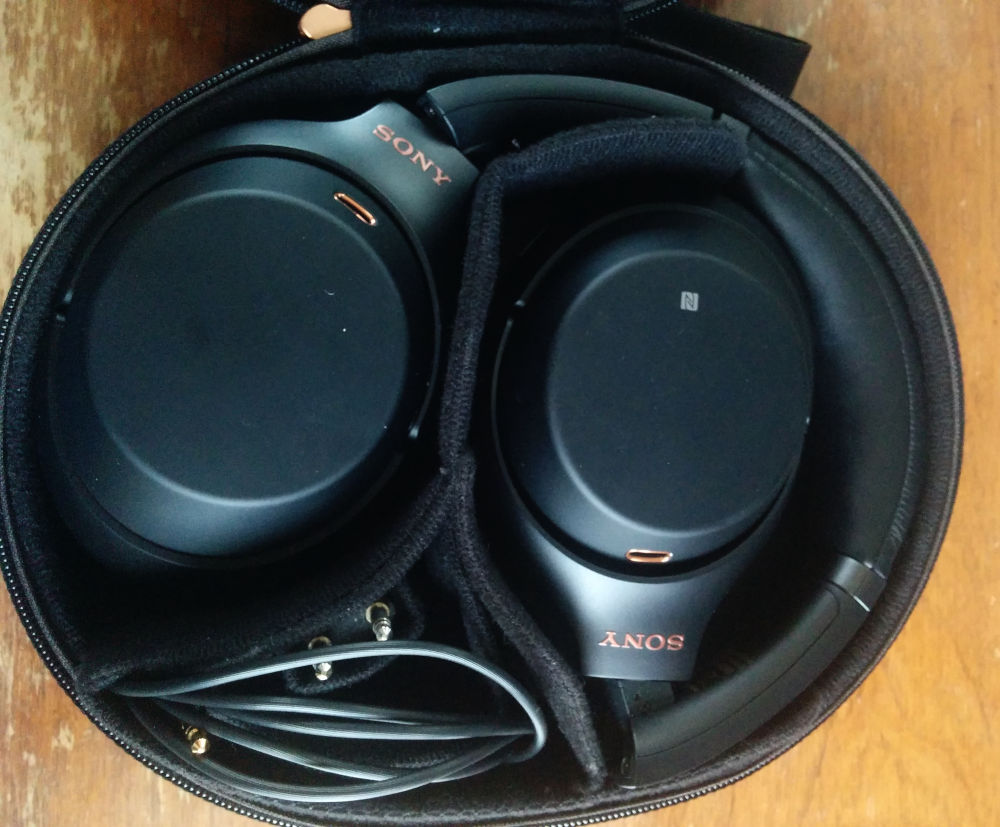
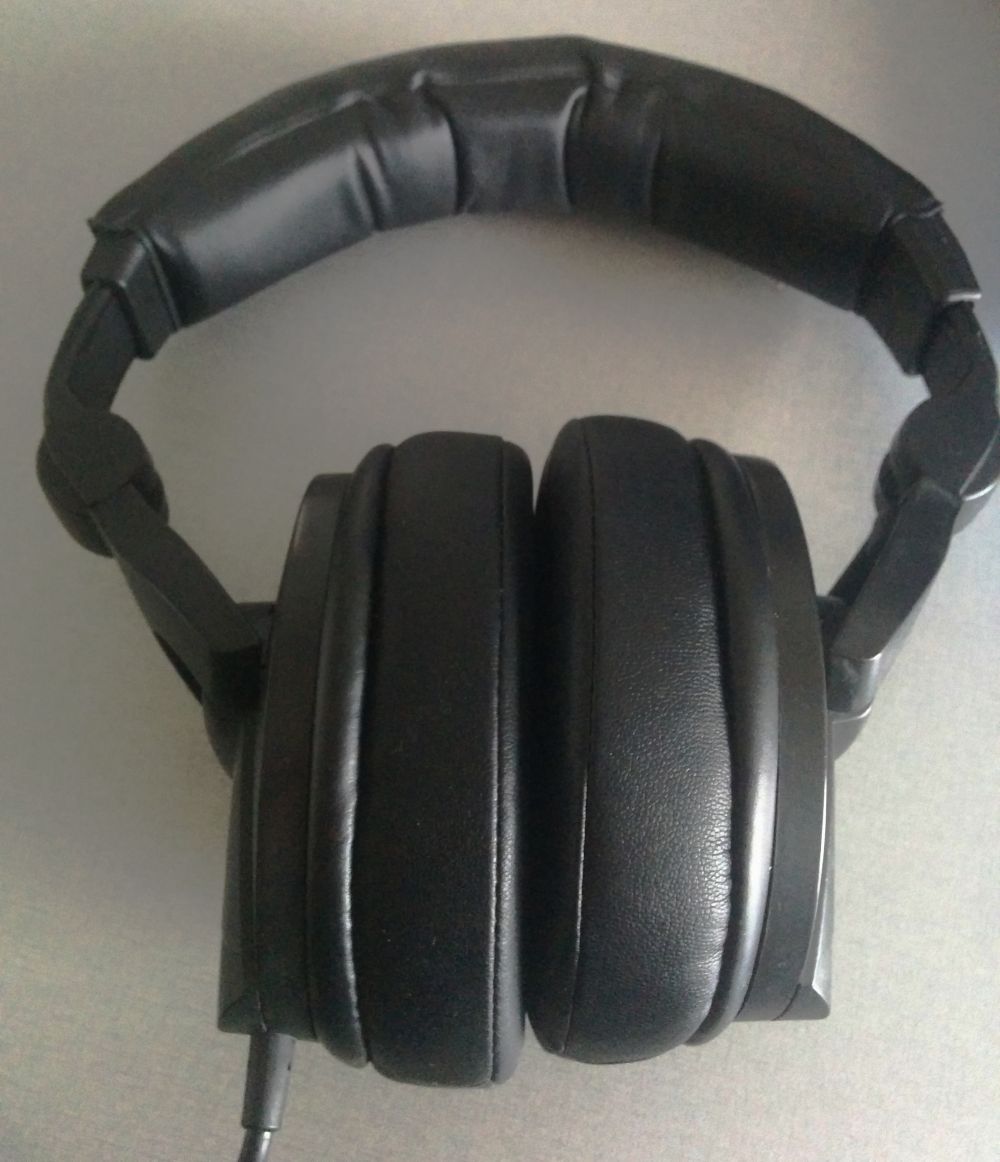
Active noise cancellation (ANC) has been all the rage lately in the headphones and in-ear monitors market. It seems after Apple got heavily praised for their AirPods Pro, every somewhat serious electronics manufacturer released their own design incorporating this technology. The first headphones with ANC I remember trying on (in the early 2010s) were the Bose QuietComfort 15. Although the concept did work (they indeed cancelled some sounds), they weren't amazing and did a great job of convincing me ANC was some weird fad for people who flew often. The Sony WH-1000X M3 folded in their case As the years passed, chip size decreased, battery capacity improved and machine learning blossomed truly a perfect storm for the wireless ANC headphones market. I had mostly stayed a sceptic of this tech until recently a kind friend offered to let me try a pair of Sony WH-1000X M3. Having tested them thoroughly, I have to say I'm really tempted to buy them from him, as they truly are fantastic headphones1. They are very light, comfortable, work without a proprietary app and sound very good with the ANC on2 if a little bass-heavy for my taste3. The ANC itself is truly astounding and is leaps and bounds beyond what was available five years ago. It still isn't perfect and doesn't cancel ALL sounds, but transforms the low hum of the subway I find myself sitting in too often these days into a light *swoosh*. When you turn the ANC on, HVAC simply disappears. Most impressive to me is the way they completely cancel the dreaded sound of your footsteps resonating in your headphones when you walk with them. My old pair of Senheiser HD 280 Pro, with aftermarket sheepskin earpads I won't be keeping them though. Whilst I really like what Sony has achieved here, I've grown to understand ANC simply isn't for me. Some of the drawbacks of ANC somewhat bother me: the ear pressure it creates is tolerable, but is an additional energy drain over long periods of time and eventually gives me headaches. I've also found ANC accentuates the motion sickness I suffer from, probably because it messes up with some part of the inner ear balance system. Most of all, I found that it didn't provide noticeable improvements over good passive noise cancellation solutions, at least in terms of how high I have to turn the volume up to hear music or podcasts clearly. The human brain works in mysterious ways and it seems ANC cancelling a class of noises (low hums, constant noises, etc.) makes other noises so much more noticeable. People talking or bursty high pitched noises bothered me much more with ANC on than without. So for now, I'll keep using my trusty Senheiser HD 280 Pro4 at work and good in-ear monitors with Comply foam tips on the go.

  1. This blog post certainly doesn't aim to be a comprehensive review of these headphones. See Zeos' review if you want something more in-depth.
  2. As most ANC headphones, they don't sound as good when used passively through the 3.5mm port, but that's just a testament of how a great job Sony did of tuning the DSP.
  3. Easily fixed using an EQ.
  4. Retrofitted with aftermarket sheepskin earpads, they provide more than 32db of passive noise reduction.

14 September 2021

Sven Hoexter: PV - Monitoring Envertech Microinverter via envertecportal.com

Some time ago I looked briefly at an Envertech data logger for small scale photovoltaic setups. Turned out that PV inverter are kinda unreliable, and you really have to monitor them to notice downtimes and defects. Since my pal shot for a quick win I've cobbled together another Python script to query the portal at www.envertecportal.com, and report back if the generated power is down to 0. The script is currently run on a vserver via cron and reports back via the system MTA. So yeah, you need to have something like that already at hand. Script and Configuration You've to provide your PV systems location with latitude and longitude so the script can calculate (via python3-suntime) the sunrise and sunset times. At the location we deal with we expect to generate some power at least from sunrise + 1h to sunet - 1h. That is tunable via the configuration option toleranceSeconds. Retrieving the stationId is a bit ugly because it's not provided via any API, instead it's rendered serverside into the website. So I just logged in on the portal and picked it up by looking into the page source. www.envertecportal.com API I guess this is some classic in the IoT land, but neither the documentation provided on the portal frontpage as docx, nor the API docs at port 8090 are complete and correct. The few bits I gathered via the Firefox Web Developer Tools are:
  1. Login https://www.envertecportal.com/apiaccount/login - POST, sent userName and pwd containing your login name and password. The response JSON is very explicit if your login was not successful and why.
  2. Store the session cookie called ASP.NET_SessionId for use on all subsequent requests.
  3. Retrieve station info https://www.envertecportal.com/ApiStations/getStationInfo - POST, sent ASP.NET_SessionId and stationId with the ID of the station. Returns a JSON with an object named Data. The field Power contains the currently generated power as a float with two digits (e.g. 0.01).
  4. Logout https://www.envertecportal.com/apiAccount/Logout - POST, sent ASP.NET_SessionId.
Some Surprises There were a few surprises, maybe they help others dealing with an Envertech setup.
  1. The portal truncates passwords at 16 chars.
  2. The "Forget Password?" function mails you back the password in plain text (that's how I learned about 1.).
  3. The login API endpoint reporting the exact reason why the login failed is somewhat out of fashion. Though this one is probably not a credential stuffing target because there is no money to make, so don't care.
  4. The data logger reports the data to www.envertecportal.com at port 10013.
  5. There is some checksuming done on the reported data, but the system is not replay safe. So you can sent it any valid data string at a later time and get wrong data recorded.
  6. People at forum.fhem.de decoded some values but could not figure out the checksuming so far.

Jonathan Dowland: GHC rewrite rules

The Glasgow Haskell Compiler (GHC) has support for user-supplied rewrite rules, which applied during one of the compiler optimisation stages. An example rule is
 -# RULES
      "streamFilter fuse" forall f g xs.
          streamFilter f (streamFilter g xs) = streamFilter (f.g) xs
  #- 
I spent some time today looking at these more closely. In order for rewrite rules to be applied, optimisation needs to be enabled. This conflicts with interactive use of GHC, so you can't explore these things in GHCi. I think rewrite rules are enabled by default (with optimisation), but you can ask for them explicitly. When investigating these it's also useful to ask ghc to always recompile, otherwise you have to change the source or manually remove .hi or .o files (etc.) between invocations. A starting set of command-line options to use then, are
-O -fenable-rewrite-rules -fforce-recomp
GHC runs several compilation stages, and the source program is transformed into several different languages or language dialects as it goes. Before the phase where rewrite rules are applied, some other optimisations take place, and the source gets desugared. You can see the results of the desugaring by passing the argument -ddump-ds. Here's an example program
main = print (unStream (streamFilter (>3) (streamFilter (<10)
    (mkStream [0..20]))))
And here's what it looks like after the first pass optimisation and desugaring:
main
  = print
      ($fShow[] $fShowInteger)
      (unStream
         (streamFilter
            (let  
               ds
               ds = 3   in
             \ ds -> > $fOrdInteger ds ds)
            (streamFilter
               (let  
                  ds
                  ds = 10   in
                \ ds -> < $fOrdInteger ds ds)
               (mkStream (enumFromTo $fEnumInteger 0 20)))))
(Note: I used -dsuppress-all and -dsuppress-uniques to improve the clarity of the above output. See Suppressing unwanted information for further details). Those short-hand sections ((<3)) in the input program are expanded to something quite a lot longer. Out of curiosity I tried it again with plain lambdas, not sections, and the result was smaller
main
  = print
      ($fShow[] $fShowInteger)
      (unStream
         (streamFilter
            (\ x -> > $fOrdInteger x 3)
            (streamFilter
               (\ x -> < $fOrdInteger x 10)
               (mkStream (enumFromTo $fEnumInteger 0 20)))))
Rewrite rules happen after this. Once they're done (and several other passes), the program is translated into an intermediate representation called Tiny Core. This language faintly resembles the input Haskell. GHC will output the Tiny Core program if you supply the argument -ddump-simpl. Here's (most) of the program in Tiny Core (I've substituted some constants for clarity):
main  = hPutStr' stdout main1 True
main1 = $fShowInteger_$cshowList (catMaybes1 (main_go 0)) []
main_go
  = \ x ->
      case gtInteger# x 20 of  
        DEFAULT ->
          case ltInteger# x 10 of  
            DEFAULT -> main_go (plusInteger x 1);
            1# ->
              case gtInteger# x 3 of  
                DEFAULT -> main_go (plusInteger x 1);
                1# -> : (Just x) (main_go (plusInteger x 1))
               
           ;
        1# -> []
       
After Tiny Core, GHC continues to translate the program into other forms (including STG, CMM, ASM) and you can ask GHC to dump those representations too, but this is all downstream from the rewrites so not relevant to them. The rewrite rule at the top of this blog post is never applied: It doesn't get a chance, because the function it operates on (streamFilter) is inlined by GHC. GHC can detect this in some circumstances (-Winline-rule-shadowing). You instruct GHC to report on which rules fired with -ddump-rule-firings and can see before-and-after snippets of Tiny Core for each rule applied with -ddump-rule-rewrites. I played around with adding -# NOINLINE functionName #- pragmas to disable inlining various functions to try and provoke a situation where the above rule could match, but it was a losing battle: GHC's built-in optimisations are just too good. But, it's also moot: the outcome I want (the filters to be fused) is happening, it's just the built-in rewrite rules are achieving it, once striot's functions have been inlined away.

12 September 2021

Vincent Bernat: Short feedback on Cisco pyATS and Genie Parser

Cisco pyATS is a framework for network automation and testing. It includes, among other things, an open-source multi-vendor set of parsers and models, Genie Parser. It features 2700 parsers for various commands over many network OS. On the paper, this seems a great tool!
>>> from genie.conf.base import Device
>>> device = Device("router", os="iosxr")
>>> # Hack to parse outputs without connecting to a device
>>> device.custom.setdefault("abstraction",  )["order"] = ["os", "platform"]
>>> cmd = "show route ipv4 unicast"
>>> output = """
... Tue Oct 29 21:29:10.924 UTC
...
... O    10.13.110.0/24 [110/2] via 10.12.110.1, 5d23h, GigabitEthernet0/0/0/0.110
... """
>>> device.parse(cmd, output=output)
 'vrf':  'default':  'address_family':  'ipv4':  'routes':  '10.13.110.0/24':  'route': '10.13.110.0/24',
       'active': True,
       'route_preference': 110,
       'metric': 2,
       'source_protocol': 'ospf',
       'source_protocol_codes': 'O',
       'next_hop':  'next_hop_list':  1:  'index': 1,
          'next_hop': '10.12.110.1',
          'outgoing_interface': 'GigabitEthernet0/0/0/0.110',
          'updated': '5d23h' 
First deception: pyATS is closed-source with some exceptions. This is quite annoying if you run into some issues outside Genie Parser. For example, although pyATS is using the ssh command, it cannot leverage my ssh_config file: pyATS resolves hostnames before providing them to ssh. There is no plan to open source pyATS. Then, Genie Parser has two problems:
  1. The data models used are dependent on the vendor and OS, despite the documentation saying otherwise. For example, the data model used for IPv4 interfaces is different between NX-OS and IOS-XR.
  2. The parsers rely on line-by-line regular expressions to extract data and some Python code as glue. This is fragile and may break silently.
To illustrate the second point, let s assume the output of show ipv4 vrf all interface is:
  Loopback10 is Up, ipv4 protocol is Up
    Vrf is default (vrfid 0x60000000)
    Internet protocol processing disabled
  Loopback30 is Up, ipv4 protocol is Down [VRF in FWD reference]
    Vrf is ran (vrfid 0x0)
    Internet address is 203.0.113.17/32
    MTU is 1500 (1500 is available to IP)
    Helper address is not set
    Directed broadcast forwarding is disabled
    Outgoing access list is not set
    Inbound  common access list is not set, access list is not set
    Proxy ARP is disabled
    ICMP redirects are never sent
    ICMP unreachables are always sent
    ICMP mask replies are never sent
    Table Id is 0x0
Because the regular expression to parse an interface name does not expect the extra data after the interface state, Genie Parser ignores the line starting the definition of Loopback30 and parses the output to this structure:1
 
  "Loopback10":  
    "int_status": "up",
    "oper_status": "up",
    "vrf": "ran",
    "vrf_id": "0x0",
    "ipv4":  
      "203.0.113.17/32":  
        "ip": "203.0.113.17",
        "prefix_length": "32"
       ,
      "mtu": 1500,
      "mtu_available": 1500,
      "broadcast_forwarding": "disabled",
      "proxy_arp": "disabled",
      "icmp_redirects": "never sent",
      "icmp_unreachables": "always sent",
      "icmp_replies": "never sent",
      "table_id": "0x0"


While this bug is simple to fix, this is an uphill battle. Any existing or future slight variation in the output of a command could trigger another similar undetected bug, despite the extended test coverage. I have reported and fixed several other silent parsing errors: #516, #529, and #530. A more robust alternative would have been to use TextFSM and to trigger a warning when some output is not recognized, like Batfish, a configuration analysis tool, does. In the future, we should rely on YANG for data extraction, but it is currently not widely supported. SNMP is still a valid possibility but much information is not accessible through this protocol. In the meantime, I would advise you to only use Genie Parser with caution.

  1. As an exercise, the astute reader is asked to write the code to extract the IPv4 from this structure.

5 September 2021

Reproducible Builds: Reproducible Builds in August 2021

Welcome to the latest report from the Reproducible Builds project. In this post, we round up the important things that happened in the world of reproducible builds in August 2021. As always, if you are interested in contributing to the project, please visit the Contribute page on our website.
There were a large number of talks related to reproducible builds at DebConf21 this year, the 21st annual conference of the Debian Linux distribution (full schedule):
PackagingCon (@PackagingCon) is new conference for developers of package management software as well as their related communities and stakeholders. The virtual event, which is scheduled to take place on the 9th and 10th November 2021, has a mission is to bring different ecosystems together: from Python s pip to Rust s cargo to Julia s Pkg, from Debian apt over Nix to conda and mamba, and from vcpkg to Spack we hope to have many different approaches to package management at the conference . A number of people from reproducible builds community are planning on attending this new conference, and some may even present. Tickets start at $20 USD.
As reported in our May report, the president of the United States signed an executive order outlining policies aimed to improve the cybersecurity in the US. The executive order comes after a number of highly-publicised security problems such as a ransomware attack that affected an oil pipeline between Texas and New York and the SolarWinds hack that affected a large number of US federal agencies. As a followup this month, however, a detailed fact sheet was released announcing a number large-scale initiatives and that will undoubtedly be related to software supply chain security and, as a result, reproducible builds.
Lastly, We ran another productive meeting on IRC in August (original announcement) which ran for just short of two hours. A full set of notes from the meeting is available.

Software development kpcyrd announced an interesting new project this month called I probably didn t backdoor this which is an attempt to be:
a practical attempt at shipping a program and having reasonably solid evidence there s probably no backdoor. All source code is annotated and there are instructions explaining how to use reproducible builds to rebuild the artifacts distributed in this repository from source. The idea is shifting the burden of proof from you need to prove there s a backdoor to we need to prove there s probably no backdoor . This repository is less about code (we re going to try to keep code at a minimum actually) and instead contains technical writing that explains why these controls are effective and how to verify them. You are very welcome to adopt the techniques used here in your projects. ( )
As the project s README goes on the mention: the techniques used to rebuild the binary artifacts are only possible because the builds for this project are reproducible . This was also announced on our mailing list this month in a thread titled i-probably-didnt-backdoor-this: Reproducible Builds for upstreams. kpcyrd also wrote a detailed blog post about the problems surrounding Linux distributions (such as Alpine and Arch Linux) that distribute compiled Python bytecode in the form of .pyc files generated during the build process.

diffoscope diffoscope is our in-depth and content-aware diff utility. Not only can it locate and diagnose reproducibility issues, it can provide human-readable diffs from many kinds of binary formats. This month, Chris Lamb made a number of changes, including releasing version 180), version 181) and version 182) as well as the following changes:
  • New features:
    • Add support for extracting the signing block from Android APKs. [ ]
    • If we specify a suffix for a temporary file or directory within the code, ensure it starts with an underscore (ie. _ ) to make the generated filenames more human-readable. [ ]
    • Don t include short GCC lines that differ on a single prefix byte either. These are distracting, not very useful and are simply the strings(1) command s idea of the build ID, which is displayed elsewhere in the diff. [ ][ ]
    • Don t include specific .debug-like lines in the ELF-related output, as it is invariably a duplicate of the debug ID that exists better in the readelf(1) differences for this file. [ ]
  • Bug fixes:
    • Add a special case to SquashFS image extraction to not fail if we aren t the superuser. [ ]
    • Only use java -jar /path/to/apksigner.jar if we have an apksigner.jar as newer versions of apksigner in Debian use a shell wrapper script which will be rejected if passed directly to the JVM. [ ]
    • Reduce the maximum line length for calculating Wagner-Fischer, improving the speed of output generation a lot. [ ]
    • Don t require apksigner in order to compare .apk files using apktool. [ ]
    • Update calls (and tests) for the new version of odt2txt. [ ]
  • Output improvements:
    • Mention in the output if the apksigner tool is missing. [ ]
    • Profile diffoscope.diff.linediff and specialize. [ ][ ]
  • Logging improvements:
    • Format debug-level messages related to ELF sections using the diffoscope.utils.format_class. [ ]
    • Print the size of generated reports in the logs (if possible). [ ]
    • Include profiling information in --debug output if --profile is not set. [ ]
  • Codebase improvements:
    • Clarify a comment about the HUGE_TOOLS Python dictionary. [ ]
    • We can pass -f to apktool to avoid creating a strangely-named subdirectory. [ ]
    • Drop an unused File import. [ ]
    • Update the supported & minimum version of Black. [ ]
    • We don t use the logging variable in a specific place, so alias it to an underscore (ie. _ ) instead. [ ]
    • Update some various copyright years. [ ]
    • Clarify a comment. [ ]
  • Test improvements:
    • Update a test to check specific contents of SquashFS listings, otherwise it fails depending on the test systems user ID to username passwd(5) mapping. [ ]
    • Assign seen and expected values to local variables to improve contextual information in failed tests. [ ]
    • Don t print an orphan newline when the source code formatting test passes. [ ]

In addition Santiago Torres Arias added support for Squashfs version 4.5 [ ] and Felix C. Stegerman suggested a number of small improvements to the output of the new APK signing block [ ]. Lastly, Chris Lamb uploaded python-libarchive-c version 3.1-1 to Debian experimental for the new 3.x branch python-libarchive-c is used by diffoscope.

Distribution work In Debian, 68 reviews of packages were added, 33 were updated and 10 were removed this month, adding to our knowledge about identified issues. Two new issue types have been identified too: nondeterministic_ordering_in_todo_items_collected_by_doxygen and kodi_package_captures_build_path_in_source_filename_hash. kpcyrd published another monthly report on their work on reproducible builds within the Alpine and Arch Linux distributions, specifically mentioning rebuilderd, one of the components powering reproducible.archlinux.org. The report also touches on binary transparency, an important component for supply chain security. The @GuixHPC account on Twitter posted an infographic on what fraction of GNU Guix packages are bit-for-bit reproducible: Finally, Bernhard M. Wiedemann posted his monthly reproducible builds status report for openSUSE.

Upstream patches The Reproducible Builds project detects, dissects and attempts to fix as many currently-unreproducible packages as possible. We endeavour to send all of our patches upstream where appropriate. This month, we wrote a large number of such patches, including: Elsewhere, it was discovered that when supporting various new language features and APIs for Android apps, the resulting APK files that are generated now vary wildly from build to build (example diffoscope output). Happily, it appears that a patch has been committed to the relevant source tree. This was also discussed on our mailing list this month in a thread titled Android desugaring and reproducible builds started by Marcus Hoffmann.

Website and documentation There were quite a few changes to the Reproducible Builds website and documentation this month, including:
  • Felix C. Stegerman:
    • Update the website self-build process to not use the buster-backports suite now that Debian Bullseye is the stable release. [ ]
  • Holger Levsen:
    • Add a new page documenting various package rebuilder solutions. [ ]
    • Add some historical talks and slides from DebConf20. [ ][ ]
    • Various improvements to the history page. [ ][ ][ ]
    • Rename the Comparison protocol documentation category to Verification . [ ]
    • Update links to F-Droid documentation. [ ]
  • Ian Muchina:
    • Increase the font size of titles and de-emphasize event details on the talk page. [ ]
    • Rename the README file to README.md to improve the user experience when browsing the Git repository in a web browser. [ ]
  • Mattia Rizzolo:
    • Drop a position:fixed CSS statement that is negatively affecting with some width settings. [ ]
    • Fix the sizing of the elements inside the side navigation bar. [ ]
    • Show gold level sponsors and above in the sidebar. [ ]
    • Updated the documentation within reprotest to mention how ldconfig conflicts with the kernel variation. [ ]
  • Roland Clobus:
    • Added a ticket number for the issue with the live Cinnamon image and diffoscope. [ ]

Testing framework The Reproducible Builds project runs a testing framework at tests.reproducible-builds.org, to check packages and other artifacts for reproducibility. This month, the following changes were made:
  • Holger Levsen:
    • Debian-related changes:
      • Make a large number of changes to support the new Debian bookworm release, including adding it to the dashboard [ ], start scheduling tests [ ], adding suitable Apache redirects [ ] etc. [ ][ ][ ][ ][ ]
      • Make the first build use LANG=C.UTF-8 to match the official Debian build servers. [ ]
      • Only test Debian Live images once a week. [ ]
      • Upgrade all nodes to use Debian Bullseye [ ] [ ]
      • Update README documentation for the Debian Bullseye release. [ ]
    • Other changes:
      • Only include rsync output if the $DEBUG variable is enabled. [ ]
      • Don t try to install mock, a tool used to build Fedora packages some time ago. [ ]
      • Drop an unused function. [ ]
      • Various documentation improvements. [ ][ ]
      • Improve the node health check to detect zombie jobs. [ ]
  • Jessica Clarke (FreeBSD-related changes):
    • Update the location and branch name for the main FreeBSD Git repository. [ ]
    • Correctly ignore the source tarball when comparing build results. [ ]
    • Drop an outdated version number from the documentation. [ ]
  • Mattia Rizzolo:
    • Block F-Droid jobs from running whilst the setup is running. [ ]
    • Enable debugging for the rsync job related to Debian Live images. [ ]
    • Pass BUILD_TAG and BUILD_URL environment for the Debian Live jobs. [ ]
    • Refactor the master_wrapper script to use a Bash array for the parameters. [ ]
    • Prefer YAML s safe_load() function over the unsafe variant. [ ]
    • Use the correct variable in the Apache config to match possible existing files on disk. [ ]
    • Stop issuing HTTP 301 redirects for things that not actually permanent. [ ]
  • Roland Clobus (Debian live image generation):
    • Increase the diffoscope timeout from 120 to 240 minutes; the Cinnamon image should now be able to finish. [ ]
    • Use the new snapshot service. [ ]
    • Make a number of improvements to artifact handling, such as moving the artifacts to the Jenkins host [ ] and correctly cleaning them up at the right time. [ ][ ][ ]
    • Where possible, link to the Jenkins build URL that created the artifacts. [ ][ ]
    • Only allow only one job to run at the same time. [ ]
  • Vagrant Cascadian:
    • Temporarily disable armhf nodes for DebConf21. [ ][ ]

Lastly, if you are interested in contributing to the Reproducible Builds project, please visit the Contribute page on our website. You can get in touch with us via:

Fran ois Marier: Using implicit TLS in Postfix

In order to mitigate the NO STARTTLS vulnerabilities, I recently switched my local SMTP smarthosts from STARTTLS (port 587) to implicit TLS (port 465). Here are the key configuration parameters for Postfix (i.e. /etc/postfix/main.cf):
relayhost = [smtp.kolabnow.com]:465
smtp_tls_wrappermode = yes
smtp_tls_security_level = secure
Note that this is for KolabNow, but the same works for GMail and Novus. The square brackets around the hostname tell Postfix not to look up the MX name using DNS and instead to use the SMTP server name as-is. Setting the smtp_tls_security_level parameter to secure ensures that the server is using a valid TLS certificate.

20 August 2021

Jonathan Dowland: PhD year 4 progression

I've now completed my 4th year on my part-time PhD (a.k.a. Stage 2). I'm 2/3 of the way through. Here's my stage 2 / year 4 report. As I've written before, this isn't graded so it might not be an example of a good one, but I did pass progression. I had hoped to write some more blog posts about the actual content of my work before another administrative document. I spent a couple of hours drafting one a few weeks back but didn't finish it!

19 August 2021

Jonathan Dowland: Budgeting tools

YNAB On the advice of many friends, I tried to use You Need A Budget. I gave it a seriously long, proper evaluation: over a year. But I just couldn't get it to work for me. I don't want to try and explain why. To be honest, those same friends who advocated for it fairly strongly, also gave me a pretty hard time for giving up on it! Despite it not clicking for me, there are a few concepts from YNAB that I quite like: GNUCash Jimmy Kaplowitz suggested back in 2012 that I should take a look at GNUCash. It took me a few more years before I did. The eventual trigger point for me was organising an event where I paid for a load of things on behalf of others and needed to track who had paid me back. It excelled for that. I've continued to use GNUCash to manage my personal money that is, my "play money" and anything I've accumulated but I haven't committed to it for my family finances. Practically speaking that would lock my wife out of them, which wouldn't be fair. But also because GNUCash's shortcomings (and despite its strengths, it certainly has some) mean that I don't expect I will be using it into the indefinite future, even for my personal stuff. The most significant drawback, in my opinion, is GNUCash's support for scripting. Sometimes, there's a laborious but easily-mechanisable (in theory) task I need to perform that would be ideal to script. GNUCash has built-in scripting support using Guile the GNU lisp/scheme dialect but this is limited to Reports only, I don't think it can be used for a task such as "match a series of transactions using one or more filters or regular expressions, and apply a transformation to them, such as change the account to which they are posted", etc. It also has a C library and auto-generated bindings for other languages. This has a horrible API, which is carried over into the language bindings. Documentation for the whole lot is basically non-existent too. Plain-text accounting For that reason I set out to find some better tools. There's a lot of interest and activity in plain-text accounting (PTA), including tools such as beancount, ledger or the Haskell re-implementation hledger. In a future post I'll write about PTA and hledger.

14 August 2021

Dirk Eddelbuettel: RApiDatetime 0.0.5 (and 0.0.6): Updated (Twice)

After nearly two years, the RApiDatetime package on CRAN has received an update, followed-up a quick bug fix. RApiDatetime provides a number of entry points for C-level functions of the R API for Date and Datetime calculations. The functions asPOSIXlt and asPOSIXct convert between long and compact datetime representation, formatPOSIXlt and Rstrptime convert to and from character strings, and POSIXlt2D and D2POSIXlt convert between Date and POSIXlt datetime. Lastly, asDatePOSIXct converts to a date type. All these functions are rather useful, but were not previously exported by R for C-level use by other packages. Which this package aims to change. This pair of releases updates the code to the current R-devel standard, and refreshes a few standard packaging aspects starting from making builds on the Windows UCRT platform possible. And while making an accomodation for one beloved architecture (in release 0.0.5), we introduced another issue on another almost equally beloved platform which 0.0.6 clears up. It should be ready and stable now.

Changes in RApiDatetime version 0.0.6 (2021-08-13)
  • Correctly account for SunOS to have it avoid GMTOFF use
  • A new test file was added to ensure NEWS.Rd is always at the current release version.

Changes in RApiDatetime version 0.0.5 (2021-08-05)
  • Add a few #nocov tags
  • Update continuous integration to use r-ci, reenable coverage
  • Update DESCRIPTION with URL and BugReports fields
  • Add new CI and LastCommitted badges to README.md
  • Add compiler flag for Windows UCRT build
  • Synchronized datetime function with upstream r-devel code

Courtesy of my CRANberries, there is are comparisons to the previous release 0.0.5, and 0.0.4, respectively. More information is on the rapidatetime page. For questions or comments please use the issue tracker off the GitHub repo.

This post by Dirk Eddelbuettel originated on his Thinking inside the box blog. Please report excessive re-aggregation in third-party for-profit settings.

2 August 2021

Colin Watson: Launchpad now runs on Python 3!

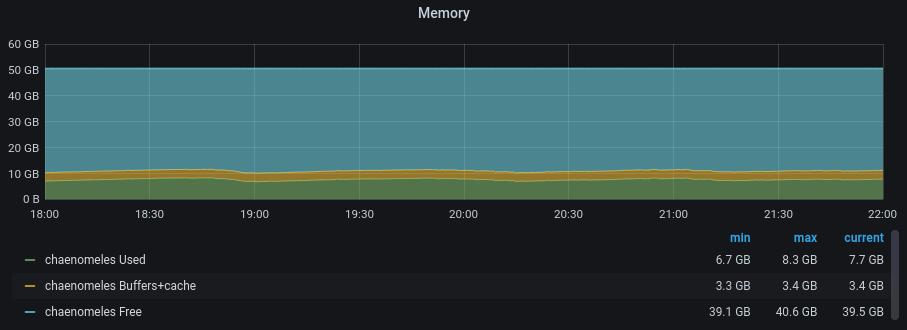
After a very long porting journey, Launchpad is finally running on Python 3 across all of our systems. I wanted to take a bit of time to reflect on why my emotional responses to this port differ so much from those of some others who ve done large ports, such as the Mercurial maintainers. It s hard to deny that we ve had to burn a lot of time on this, which I m sure has had an opportunity cost, and from one point of view it s essentially running to stand still: there is no single compelling feature that we get solely by porting to Python 3, although it s clearly a prerequisite for tidying up old compatibility code and being able to use modern language facilities in the future. And yet, on the whole, I found this a rewarding project and enjoyed doing it. Some of this may be because by inclination I m a maintenance programmer and actually enjoy this sort of thing. My default view tends to be that software version upgrades may be a pain but it s much better to get that pain over with as soon as you can rather than trying to hold back the tide; you can certainly get involved and try to shape where things end up, but rightly or wrongly I can t think of many cases when a righteously indignant user base managed to arrange for the old version to be maintained in perpetuity so that they never had to deal with the new thing (OK, maybe Perl 5 counts here). I think a more compelling difference between Launchpad and Mercurial, though, may be that very few other people really had a vested interest in what Python version Launchpad happened to be running, because it s all server-side code (aside from some client libraries such as launchpadlib, which were ported years ago). As such, we weren t trying to do this with the internet having Strong Opinions at us. We were doing this because it was obviously the only long-term-maintainable path forward, and in more recent times because some of our library dependencies were starting to drop support for Python 2 and so it was obviously going to become a practical problem for us sooner or later; but if we d just stayed on Python 2 forever then fundamentally hardly anyone else would really have cared directly, only maybe about some indirect consequences of that. I don t follow Mercurial development so I may be entirely off-base, but if other people were yelling at me about how late my project was to finish its port, that in itself would make me feel more negatively about the project even if I thought it was a good idea. Having most of the pressure come from ourselves rather than from outside meant that wasn t an issue for us. I m somewhat inclined to think of the process as an extreme version of paying down technical debt. Moving from Python 2.7 to 3.5, as we just did, means skipping over multiple language versions in one go, and if similar changes had been made more gradually it would probably have felt a lot more like the typical dependency update treadmill. I appreciate why not everyone might want to think of it this way: maybe this is just my own rationalization. Reflections on porting to Python 3 I m not going to defend the Python 3 migration process; it was pretty rough in a lot of ways. Nor am I going to spend much effort relitigating it here, as it s already been done to death elsewhere, and as I understand it the core Python developers have got the message loud and clear by now. At a bare minimum, a lot of valuable time was lost early in Python 3 s lifetime hanging on to flag-day-type porting strategies that were impractical for large projects, when it should have been providing for bilingual strategies (code that runs in both Python 2 and 3 for a transitional period) which is where most libraries and most large migrations ended up in practice. For instance, the early advice to library maintainers to maintain two parallel versions or perhaps translate dynamically with 2to3 was entirely impractical in most non-trivial cases and wasn t what most people ended up doing, and yet the idea that 2to3 is all you need still floats around Stack Overflow and the like as a result. (These days, I would probably point people towards something more like Eevee s porting FAQ as somewhere to start.) There are various fairly straightforward things that people often suggest could have been done to smooth the path, and I largely agree: not removing the u'' string prefix only to put it back in 3.3, fewer gratuitous compatibility breaks in the name of tidiness, and so on. But if I had a time machine, the number one thing I would ask to have been done differently would be introducing type annotations in Python 2 before Python 3 branched off. It s true that it s technically possible to do type annotations in Python 2, but the fact that it s a different syntax that would have to be fixed later is offputting, and in practice it wasn t widely used in Python 2 code. To make a significant difference to the ease of porting, annotations would need to have been introduced early enough that lots of Python 2 library code used them so that porting code didn t have to be quite so much of an exercise of manually figuring out the exact nature of string types from context. Launchpad is a complex piece of software that interacts with multiple domains: for example, it deals with a database, HTTP, web page rendering, Debian-format archive publishing, and multiple revision control systems, and there s often overlap between domains. Each of these tends to imply different kinds of string handling. Web page rendering is normally done mainly in Unicode, converting to bytes as late as possible; revision control systems normally want to spend most of their time working with bytes, although the exact details vary; HTTP is of course bytes on the wire, but Python s WSGI interface has some string type subtleties. In practice I found myself thinking about at least four string-like types (that is, things that in a language with a stricter type system I might well want to define as distinct types and restrict conversion between them): bytes, text, ordinary native strings (str in either language, encoded to UTF-8 in Python 2), and native strings with WSGI s encoding rules. Some of these are emergent properties of writing in the intersection of Python 2 and 3, which is effectively a specialized language of its own without coherent official documentation whose users must intuit its behaviour by comparing multiple sources of information, or by referring to unofficial porting guides: not a very satisfactory situation. Fortunately much of the complexity collapses once it becomes possible to write solely in Python 3. Some of the difficulties we ran into are not ones that are typically thought of as Python 2-to-3 porting issues, because they were changed later in Python 3 s development process. For instance, the email module was substantially improved in around the 3.2/3.3 timeframe to handle Python 3 s bytes/text model more correctly, and since Launchpad sends quite a few different kinds of email messages and has some quite picky tests for exactly what it emits, this entailed a lot of work in our email sending code and in our test suite to account for that. (It took me a while to work out whether we should be treating raw email messages as bytes or as text; bytes turned out to work best.) 3.4 made some tweaks to the implementation of quoted-printable encoding that broke a number of our tests in ways that took some effort to fix, because the tests needed to work on both 2.7 and 3.5. The list goes on. I got quite proficient at digging through Python s git history to figure out when and why some particular bit of behaviour had changed. One of the thorniest problems was parsing HTTP form data. We mainly rely on zope.publisher for this, which in turn relied on cgi.FieldStorage; but cgi.FieldStorage is badly broken in some situations on Python 3. Even if that bug were fixed in a more recent version of Python, we can t easily use anything newer than 3.5 for the first stage of our port due to the version of the base OS we re currently running, so it wouldn t help much. In the end I fixed some minor issues in the multipart module (and was kindly given co-maintenance of it) and converted zope.publisher to use it. Although this took a while to sort out, it seems to have gone very well. A couple of other interesting late-arriving issues were around pickle. For most things we normally prefer safer formats such as JSON, but there are a few cases where we use pickle, particularly for our session databases. One of my colleagues pointed out that I needed to remember to tell pickle to stick to protocol 2, so that we d be able to switch back and forward between Python 2 and 3 for a while; quite right, and we later ran into a similar problem with marshal too. A more surprising problem was that datetime.datetime objects pickled on Python 2 require special care when unpickling on Python 3; rather than the approach that ended up being implemented and documented for Python 3.6, though, I preferred a custom unpickler, both so that things would work on Python 3.5 and so that I wouldn t have to risk affecting the decoding of other pickled strings in the session database. General lessons Writing this over a year after Python 2 s end-of-life date, and certainly nowhere near the leading edge of Python 3 porting work, it s perhaps more useful to look at this in terms of the lessons it has for other large technical debt projects. I mentioned in my previous article that I used the approach of an enormous and frequently-rebased git branch as a working area for the port, committing often and sometimes combining and extracting commits for review once they seemed to be ready. A port of this scale would have been entirely intractable without a tool of similar power to git rebase, so I m very glad that we finished migrating to git in 2019. I relied on this right up to the end of the port, and it also allowed for quick assessments of how much more there was to land. git worktree was also helpful, in that I could easily maintain working trees built for each of Python 2 and 3 for comparison. As is usual for most multi-developer projects, all changes to Launchpad need to go through code review, although we sometimes make exceptions for very simple and obvious changes that can be self-reviewed. Since I knew from the outset that this was going to generate a lot of changes for review, I therefore structured my work from the outset to try to make it as easy as possible for my colleagues to review it. This generally involved keeping most changes to a somewhat manageable size of 800 lines or less (although this wasn t always possible), and arranging commits mainly according to the kind of change they made rather than their location. For example, when I needed to fix issues with / in Python 3 being true division rather than floor division, I did so in one commit across the various places where it mattered and took care not to mix it with other unrelated changes. This is good practice for nearly any kind of development, but it was especially important here since it allowed reviewers to consider a clear explanation of what I was doing in the commit message and then skim-read the rest of it much more quickly. It was vital to keep the codebase in a working state at all times, and deploy to production reasonably often: this way if something went wrong the amount of code we had to debug to figure out what had happened was always tractable. (Although I can t seem to find it now to link to it, I saw an account a while back of a company that had taken a flag-day approach instead with a large codebase. It seemed to work for them, but I m certain we couldn t have made it work for Launchpad.) I can t speak too highly of Launchpad s test suite, much of which originated before my time. Without a great deal of extensive coverage of all sorts of interesting edge cases at both the unit and functional level, and a corresponding culture of maintaining that test suite well when making new changes, it would have been impossible to be anything like as confident of the port as we were. As part of the porting work, we split out a couple of substantial chunks of the Launchpad codebase that could easily be decoupled from the core: its Mailman integration and its code import worker. Both of these had substantial dependencies with complex requirements for porting to Python 3, and arranging to be able to do these separately on their own schedule was absolutely worth it. Like disentangling balls of wool, any opportunity you can take to make things less tightly-coupled is probably going to make it easier to disentangle the rest. (I can see a tractable way forward to porting the code import worker, so we may well get that done soon. Our Mailman integration will need to be rewritten, though, since it currently depends on the Python-2-only Mailman 2, and Mailman 3 has a different architecture.) Python lessons Our database layer was already in pretty good shape for a port, since at least the modern bits of its table modelling interface were already strict about using Unicode for text columns. If you have any kind of pervasive low-level framework like this, then making it be pedantic at you in advance of a Python 3 port will probably incur much less swearing in the long run, as you won t be trying to deal with quite so many bytes/text issues at the same time as everything else. Early in our port, we established a standard set of __future__ imports and started incrementally converting files over to them, mainly because we weren t yet sure what else to do and it seemed likely to be helpful. absolute_import was definitely reasonable (and not often a problem in our code), and print_function was annoying but necessary. In hindsight I m not sure about unicode_literals, though. For files that only deal with bytes and text it was reasonable enough, but as I mentioned above there were also a number of cases where we needed literals of the language s native str type, i.e. bytes in Python 2 and text in Python 3: this was particularly noticeable in WSGI contexts, but also cropped up in some other surprising places. We generally either omitted unicode_literals or used six.ensure_str in such cases, but it was definitely a bit awkward and maybe I should have listened more to people telling me it might be a bad idea. A lot of Launchpad s early tests used doctest, mainly in the style where you have text files that interleave narrative commentary with examples. The development team later reached consensus that this was best avoided in most cases, but by then there were far too many doctests to conveniently rewrite in some other form. Porting doctests to Python 3 is really annoying. You run into all the little changes in how objects are represented as text (particularly u'...' versus '...', but plenty of other cases as well); you have next to no tools to do anything useful like skipping individual bits of a doctest that don t apply; using __future__ imports requires the rather obscure approach of adding the relevant names to the doctest s globals in the relevant DocFileSuite or DocTestSuite; dealing with many exception tracebacks requires something like zope.testing.renormalizing; and whatever code refactoring tools you re using probably don t work properly. Basically, don t have done that. It did all turn out to be tractable for us in the end, and I managed to avoid using much in the way of fragile doctest extensions aside from the aforementioned zope.testing.renormalizing, but it was not an enjoyable experience. Regressions I know of nine regressions that reached Launchpad s production systems as a result of this porting work; of course there were various other regressions caught by CI or in manual testing. (Considering the size of this project, I count it as a resounding success that there were only nine production issues, and that for the most part we were able to fix them quickly.) Equality testing of removed database objects One of the things we had to do while porting to Python 3 was to implement the __eq__, __ne__, and __hash__ special methods for all our database objects. This was quite conceptually fiddly, because doing this requires knowing each object s primary key, and that may not yet be available if we ve created an object in Python but not yet flushed the actual INSERT statement to the database (most of our primary keys are auto-incrementing sequences). We thus had to take care to flush pending SQL statements in such cases in order to ensure that we know the primary keys. However, it s possible to have a problem at the other end of the object lifecycle: that is, a Python object might still be reachable in memory even though the underlying row has been DELETEd from the database. In most cases we don t keep removed objects around for obvious reasons, but it can happen in caching code, and buildd-manager crashed as a result (in fact while it was still running on Python 2). We had to take extra care to avoid this problem. Debian imports crashed on non-UTF-8 filenames Python 2 has some unfortunate behaviour around passing bytes or Unicode strings (depending on the platform) to shutil.rmtree, and the combination of some porting work and a particular source package in Debian that contained a non-UTF-8 file name caused us to run into this. The fix was to ensure that the argument passed to shutil.rmtree is a str regardless of Python version. We d actually run into something similar before: it s a subtle porting gotcha, since it s quite easy to end up passing Unicode strings to shutil.rmtree if you re in the process of porting your code to Python 3, and you might easily not notice if the file names in your tests are all encoded using UTF-8. lazr.restful ETags We eventually got far enough along that we could switch one of our four appserver machines (we have quite a number of other machines too, but the appservers handle web and API requests) to Python 3 and see what happened. By this point our extensive test suite had shaken out the vast majority of the things that could go wrong, but there was always going to be room for some interesting edge cases. One of the Ubuntu kernel team reported that they were seeing an increase in 412 Precondition Failed errors in some of their scripts that use our webservice API. These can happen when you re trying to modify an existing resource: the underlying protocol involves sending an If-Match header with the ETag that the client thinks the resource has, and if this doesn t match the ETag that the server calculates for the resource then the client has to refresh its copy of the resource and try again. We initially thought that this might be legitimate since it can happen in normal operation if you collide with another client making changes to the same resource, but it soon became clear that something stranger was going on: we were getting inconsistent ETags for the same object even when it was unchanged. Since we d recently switched a quarter of our appservers to Python 3, that was a natural suspect. Our lazr.restful package provides the framework for our webservice API, and roughly speaking it generates ETags by serializing objects into some kind of canonical form and hashing the result. Unfortunately the serialization was dependent on the Python version in a few ways, and in particular it serialized lists of strings such as lists of bug tags differently: Python 2 used [u'foo', u'bar', u'baz'] where Python 3 used ['foo', 'bar', 'baz']. In lazr.restful 1.0.3 we switched to using JSON for this, removing the Python version dependency and ensuring consistent behaviour between appservers. Memory leaks This problem took the longest to solve. We noticed fairly quickly from our graphs that the appserver machine we d switched to Python 3 had a serious memory leak. Our appservers had always been a bit leaky, but now it wasn t so much a small hole that we can bail occasionally as the boat is sinking rapidly : A serious memory leak (Yes, this got in the way of working out what was going on with ETags for a while.) I spent ages messing around with various attempts to fix this. Since only a quarter of our appservers were affected, and we could get by on 75% capacity for a while, it wasn t urgent but it was definitely annoying. After spending some quality time with objgraph, for some time I thought traceback reference cycles might be at fault, and I sent a number of fixes to various upstream projects for those (e.g. zope.pagetemplate). Those didn t help the leaks much though, and after a while it became clear to me that this couldn t be the sole problem: Python has a cyclic garbage collector that will eventually collect reference cycles as long as there are no strong references to any objects in them, although it might not happen very quickly. Something else must be going on. Debugging reference leaks in any non-trivial and long-running Python program is extremely arduous, especially with ORMs that naturally tend to end up with lots of cycles and caches. After a while I formed a hypothesis that zope.server might be keeping a strong reference to something, although I never managed to nail it down more firmly than that. This was an attractive theory as we were already in the process of migrating to Gunicorn for other reasons anyway, and Gunicorn also has a convenient max_requests setting that s good at mitigating memory leaks. Getting this all in place took some time, but once we did we found that everything was much more stable: A rather flat memory graph This isn t completely satisfying as we never quite got to the bottom of the leak itself, and it s entirely possible that we ve only papered over it using max_requests: I expect we ll gradually back off on how frequently we restart workers over time to try to track this down. However, pragmatically, it s no longer an operational concern. Mirror prober HTTPS proxy handling After we switched our script servers to Python 3, we had several reports of mirror probing failures. (Launchpad keeps lists of Ubuntu archive and image mirrors, and probes them every so often to check that they re reasonably complete and up to date.) This only affected HTTPS mirrors when probed via a proxy server, support for which is a relatively recent feature in Launchpad and involved some code that we never managed to unit-test properly: of course this is exactly the code that went wrong. Sadly I wasn t able to sort out that gap, but at least the fix was simple. Non-MIME-encoded email headers As I mentioned above, there were substantial changes in the email package between Python 2 and 3, and indeed between minor versions of Python 3. Our test coverage here is pretty good, but it s an area where it s very easy to have gaps. We noticed that a script that processes incoming email was crashing on messages with headers that were non-ASCII but not MIME-encoded (and indeed then crashing again when it tried to send a notification of the crash!). The only examples of these I looked at were spam, but we still didn t want to crash on them. The fix involved being somewhat more careful about both the handling of headers returned by Python s email parser and the building of outgoing email notifications. This seems to be working well so far, although I wouldn t be surprised to find the odd other incorrect detail in this sort of area. Failure to handle non-ISO-8859-1 URL-encoded form input Remember how I said that parsing HTTP form data was thorny? After we finished upgrading all our appservers to Python 3, people started reporting that they couldn t post Unicode comments to bugs, which turned out to be only if the attempt was made using JavaScript, and was because I hadn t quite managed to get URL-encoded form data working properly with zope.publisher and multipart. The current standard describes the URL-encoded format for form data as in many ways an aberrant monstrosity , so this was no great surprise. Part of the problem was some very strange choices in zope.publisher dating back to 2004 or earlier, which I attempted to clean up and simplify. The rest was that Python 2 s urlparse.parse_qs unconditionally decodes percent-encoded sequences as ISO-8859-1 if they re passed in as part of a Unicode string, so multipart needs to work around this on Python 2. I m still not completely confident that this is correct in all situations, but at least now that we re on Python 3 everywhere the matrix of cases we need to care about is smaller. Inconsistent marshalling of Loggerhead s disk cache We use Loggerhead for providing web browsing of Bazaar branches. When we upgraded one of its two servers to Python 3, we immediately noticed that the one still on Python 2 was failing to read back its revision information cache, which it stores in a database on disk. (We noticed this because it caused a deployment to fail: when we tried to roll out new code to the instance still on Python 2, Nagios checks had already caused an incompatible cache to be written for one branch from the Python 3 instance.) This turned out to be a similar problem to the pickle issue mentioned above, except this one was with marshal, which I didn t think to look for because it s a relatively obscure module mostly used for internal purposes by Python itself; I m not sure that Loggerhead should really be using it in the first place. The fix was relatively straightforward, complicated mainly by now needing to cope with throwing away unreadable cache data. Ironically, if we d just gone ahead and taken the nominally riskier path of upgrading both servers at the same time, we might never have had a problem here. Intermittent bzr failures Finally, after we upgraded one of our two Bazaar codehosting servers to Python 3, we had a report of intermittent bzr branch hangs. After some digging I found this in our logs:
Traceback (most recent call last):
  ...
  File "/srv/bazaar.launchpad.net/production/codehosting1-rev-20124175fa98fcb4b43973265a1561174418f4bd/env/lib/python3.5/site-packages/twisted/conch/ssh/channel.py", line 136, in addWindowBytes
    self.startWriting()
  File "/srv/bazaar.launchpad.net/production/codehosting1-rev-20124175fa98fcb4b43973265a1561174418f4bd/env/lib/python3.5/site-packages/lazr/sshserver/session.py", line 88, in startWriting
    resumeProducing()
  File "/srv/bazaar.launchpad.net/production/codehosting1-rev-20124175fa98fcb4b43973265a1561174418f4bd/env/lib/python3.5/site-packages/twisted/internet/process.py", line 894, in resumeProducing
    for p in self.pipes.itervalues():
builtins.AttributeError: 'dict' object has no attribute 'itervalues'
I d seen this before in our git hosting service: it was a bug in Twisted s Python 3 port, fixed after 20.3.0 but unfortunately after the last release that supported Python 2, so we had to backport that patch. Using the same backport dealt with this. Onwards!

1 August 2021

Paul Wise: FLOSS Activities July 2021

Focus This month I didn't have any particular focus. I just worked on issues in my info bubble.

Changes

Issues

Review

Administration
  • libusbgx/gt: triage issues
  • Debian packages: triaged bugs for reintroduced packages
  • Debian servers: debug lists mail issue, debug lists subscription issue
  • Debian wiki: unblock IP addresses, approve accounts

Communication
  • Respond to queries from Debian users and contributors on the mailing lists and IRC

Sponsors The microsoft-authentication-library-for-python and purple-discord work was sponsored by my employer. All other work was done on a volunteer basis.

31 July 2021

Chris Lamb: Free software activities in July 2021

Here is my monthly update covering what I have been doing in the free software world during July 2021 (previous month): As part of my role of being the assistant Secretary of the Open Source Initiative and a board director of Software in the Public Interest I attended their respective monthly meetings. As outlined in last months posts, however, my term on the OSI board has been slightly extended due to the discovery of a vulnerability in OSI's recent election as a result, the 2021 election is currently being re-run. Reproducible Builds One of the original promises of open source software is that distributed peer review and transparency of process results in enhanced end-user security. However, whilst anyone may inspect the source code of free and open source software for malicious flaws, almost all software today is distributed as pre-compiled binaries. This allows nefarious third parties to compromise systems by injecting malicious code into ostensibly secure software during the various compilation and distribution processes. The motivation behind the Reproducible Builds effort is to ensure no flaws have been introduced during this compilation process by promising identical results are always generated from a given source, thus allowing multiple third-parties to come to a consensus on whether a build was compromised. This month, I: I also made the following changes to diffoscope, including preparing and uploading versions 178 and 179 to PyPI and Debian: Debian Bugs filed Uploads Debian LTS This month I have worked 18 hours on Debian Long Term Support (LTS) and 12 hours on its sister Extended LTS project. You can find out more about the project via the following video:

30 July 2021

Jonathan Dowland: Accounting: pooling income

I wrote about budgeting nine years ago and I've been a little reluctant to write about it again: by far, it's the blog post that has attracted the most requests from people asking me to link to their blog, site, or service. I wasn't good at budgeting then and I'm still not good at it now, although I have learned a few things in the intervening time. Those things more properly relate to accounting than budgeting (so there's the first thing: I learned the difference!). I wanted to write about some of the things I've learned since then, starting with our family's approach to pooling income. Pooling From talking to friends about how they manage stuff, this doesn't seem to be a common approach. We pay all our income into a shared account. We agree on an amount of "play money" that we can individually spend on whatever we like, and we pay that amount to ourselves from the shared account every month. Crucially, the amount we pick is the same for each of us, irrespective of our relative incomes. All of our shared family expenses come out of the shared account. Some of my friends, especially (exclusively) the bread-winners, find this a bit alarming. One of the things I like about it is that whichever partner earns less than the other is not disadvantaged in terms of their discretionary spending. When my wife earned less than me, and I believe structural sexism was a contributing factor to that, that impacted us both equally. When my wife was not earning a salary at all, but was doing the lion's share of bringing up our children, she has the same discretionary spend as I do. Apart from the equity of it, there's a whole class of gripes and grumbles that some of my friends have about their partner's spending habits or money management that we completely avoid.

22 July 2021

Dirk Eddelbuettel: RcppSpdlog 0.0.6 on CRAN: New upstream

A new version 0.0.6 of RcppSpdlog is now on CRAN. It contains releases 1.9.0 of spdlog which in turn contains an updated version of fmt. RcppSpdlog bundles spdlog, a wonderful header-only C++ logging library with all the bells and whistles you would want that was written by Gabi Melman, and also includes fmt by Victor Zverovich. No R package-side changes were needed or made. The (minimal) NEWS entry for this release follows.

Changes in RcppSpdlog version 0.0.6 (2021-07-21)
  • Upgraded to upstream release spdlog 1.9.0

Courtesy of my CRANberries, there is also a diffstat report. More detailed information is on the RcppSpdlog page. If you like this or other open-source work I do, you can sponsor me at GitHub.

This post by Dirk Eddelbuettel originated on his Thinking inside the box blog. Please report excessive re-aggregation in third-party for-profit settings.

18 July 2021

Shirish Agarwal: BBI Kenyan Supreme Court, U.P. Population Bill, South Africa, Suli Deals , IT rules 2021, Sedition Law and Danish Siddiqui s death.

BBI Kenya and live Supreme Court streaming on YT The last few weeks have been unrelenting as all sorts of news have been coming in, mostly about the downturn in the Economy, Islamophobia in India on the rise, Covid, and electioneering. However, in the last few days, Kenya surpassed India in live-streaming proceeds in a Court of Appeals about BBI or Building Bridges Initiative. A background filler article on the topic can be found in BBC. The live-streaming was done via YT and if wants to they can start from

https://www.youtube.com/watch?v=JIQzpmVKvro One can also subscribe to K24TV which took the initiative of sharing the proceedings with people worldwide. If K24TV continues to share SC proceedings of Kenya, that would add to the soft power of Kenya. I will not go into the details of the case as Gautam Bhatia who has been following the goings-on in Kenya is a far better authority on the subject. In fact, just recently he shared about another Kenyan judgment from a trial which can be seen here. He has shared the proceedings and some hot takes on the Twitter thread started by him. Probably after a couple of weeks or more when he has processed what all has happened there, he may also share some nuances although many of his thoughts would probably go to his book on Comparative Constitutional Law which he hopes to publish maybe in 2021/2022 or whenever he can. Such televised proceedings are sure to alleviate the standing of Kenya internationally. There has been a proposal to do similar broadcasts by India but with surveillance built-in, so they know who is watching. The problems with the architecture and the surveillance built-in have been shared by Srinivas Kodali or DigitalDutta quite a few times, but that probably is a story for another day.

Uttar Pradesh Population Control Bill
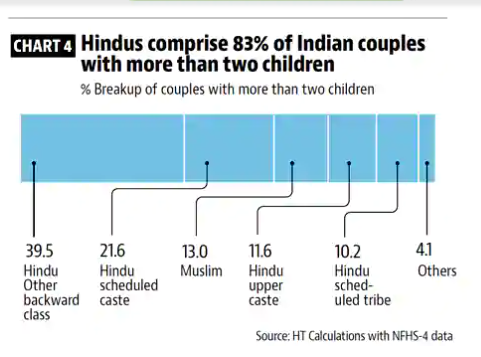
Hindus comprise 83% of Indian couples with more than two child children
The U.P. Population Bill came and it came with lot of prejudices. One of the prejudices is the idea that Muslims create or procreate to have the most children. Even with data is presented as shared above from NFHS National Family Health Survey which is supposed to carry our surveys every few years did the last one around 4 years back. The analysis from it has been instrumental not only in preparing graphs as above but also sharing about what sort of death toll must have been in rural India. And as somebody who have had the opportunity in the past, can vouch that you need to be extremely lucky if something happens to you when you are in a rural area. Even in places like Bodh Gaya (have been there) where millions of tourists come as it is one of the places not to be missed on the Buddhism tourist circuit, the medical facilities are pretty underwhelming. I am not citing it simply because there are too many such newspaper reports from even before the pandemic, and both the State and the Central Govt. response has been dismal. Just a few months back, they were recalled. There were reports of votes being bought at INR 1000/- (around $14) and a bottle or two of liquor. There used to be a time when election monitoring whether national or state used to be a thing, and you had LTO s (Long-time Observers) and STO s (Short-Term Observers) to make sure that the election has been neutral. This has been on the decline in this regime, but that probably is for another time altogether. Although, have to point out the article which I had shared a few months ago on the private healthcare model is flawed especially for rural areas. Instead of going for cheap, telemedicine centers that run some version of a Linux distro. And can provide a variety of services, I know Kerala and Tamil Nadu from South India have experimented in past but such engagements need to be scaled up. This probably will come to know when the next time I visit those places (sadly due to the virus, not anytime soonish.:( ) . Going back to the original topic, though, I had shared Hans Rosling s famous Ted talk on population growth which shows that even countries which we would not normally associate with family planning for e.g. the middle-east and Africa have also been falling quite rapidly. Of course, when people have deeply held prejudices, then it is difficult. Even when sharing China as to how they had to let go of their old policy in 2016 as they had the thing for leftover men . I also shared the powerful movie So Long my Son. I even shared how in Haryana women were and are trafficked and have been an issue for centuries but as neither suits the RW propaganda, they simply refuse to engage. They are more repulsed by people who publish this news rather than those who are actually practicing it, as that is culture . There is also teenage pregnancy, female infanticide, sex-selective abortion, etc., etc. It is just all too horrible to contemplate. Personal anecdote I know a couple, or they used to be a couple, where the gentleman wanted to have a male child. It was only after they got an autistic child, they got their DNA tested and came to know that the gentleman had a genetic problem. He again forced and had another child, and that too turned out to be autistic. Finally, he left the wife and the children, divorced them and lived with another woman. Almost a decade of the wife s life was ruined. The wife before marriage was a gifted programmer employed at IBM. This was an arranged marriage. After this, if you are thinking of marrying, apart from doing astrology charts, also look up DNA compatibility charts. Far better than ruining yours or the women s life. Both the children whom I loved are now in heaven, god bless them  If one wants to, one can read a bit more about the Uttar Pradesh Population bill here. The sad part is that the systems which need fixing, nobody wants to fix. The reason being simple. If you get good health service by public sector, who will go to the private sector. In Europe, AFAIK they have the best medical bang for the money. Even the U.S. looks at Europe and hopes it had the systems that Europe has but that again is probably for another day.
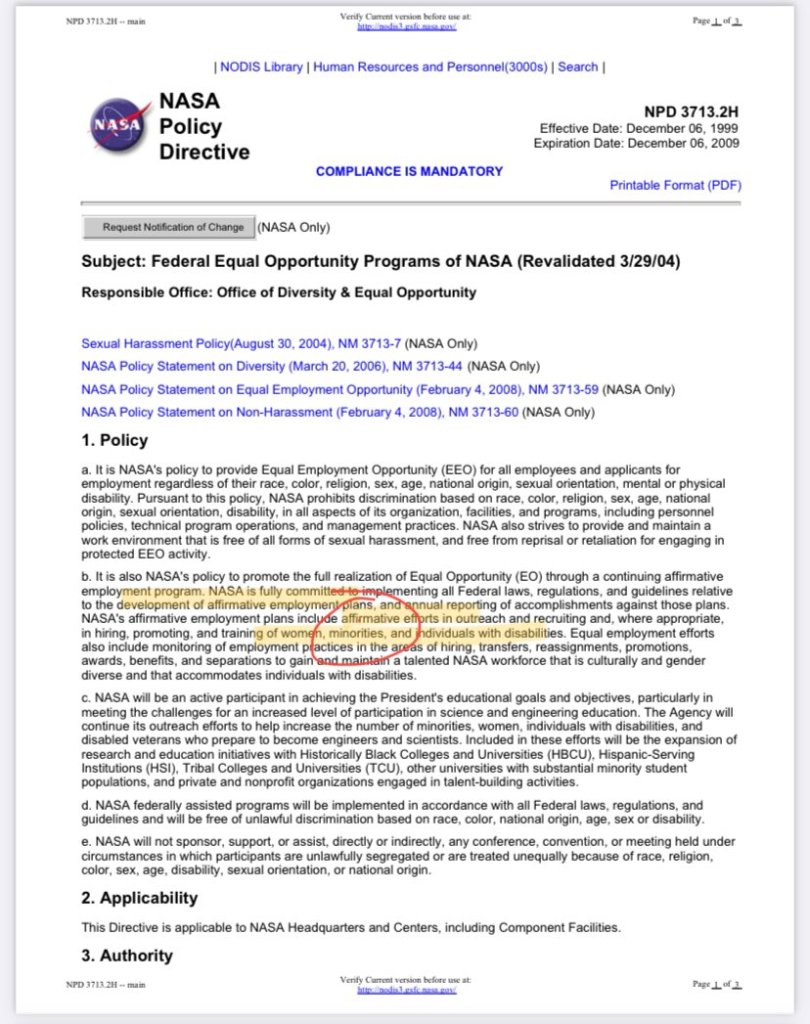
South Africa and India long-lost brothers. As had shared before, after the 2016 South African Debconf convention, I had been following South Africa. I was happy when FeesMustFall worked and in 2017 the then ANC president Zuma declared it in late 2017. I am sure that people who have been regular visitors to this blog know how my position is on student loans. They also must be knowing that even in U.S. till the 1970s it had free education all the way to be a lawyer and getting a lawyer license. It is only when people like Thurgood Marshall, Martin Luther King Jr., and others from the civil rights movement came out as a major force that the capitalists started imposing fees. They wanted people who could be sold to corporate slavery, and they won. Just last week, Biden took some steps and canceled student loans and is working on steps towards broad debt forgiveness. Interestingly, NASA has an affirmative diversity program for people from diverse backgrounds, where a couple of UC (Upper Caste) women got the job. While they got the job, the RW (Right-Wing) was overjoyed as they got jobs on merit . Later, it was found that both the women were the third or fourth generation of immigrants in U.S.
NASA Federal Equal Opportunity Policy Directive NPD 3713 2H
Going back to the original question and topic, while there has been a concerning spate of violence, some calling it the worst sort of violence not witnessed since 1994. The problem, as ascertained in that article, is the same as here in India or elsewhere. Those, again, who have been on my blog know that merit 90% of the time is a function of privilege and there is a vast amount of academic literature which supports that. If, for a moment, you look at the data that is shared in the graph above which shows that 83% of Hindus and 13% of Muslims have more than 2 children, what does it show, it shows that 83+13 = 96% of the population is living in insecurity. The 5% are the ones who have actually consolidated more power during this regime rule in India. Similarly, from what I understood living in Cape Town for about a month, it is the Dutch Afrikaans as they like to call themselves and the immigrants who come from abroad who have enjoyed the fruits of tourism and money and power while the rest of the country is dying due to poverty. It is the same there, it is the same here. Corruption is also rampant in both countries, and the judiciary is virtually absent from both communities in India and SA. Interestingly, South Africa and India have been at loggerheads, but I suspect that is more due to the money and lobbying power by the Dutch. Usually, those who have money power, do get laws and even press on their side, and it is usually the ruling party in power. I cannot help but share about the Gupta brothers and their corruption as I came to know about it in 2016. And as have shared that I m related to Gupta s on my mother s side, not those specific ones but Gupta as a clan. The history of the Gupta dynasty does go back to the 3rd-4th century. Equally interesting have been Sonali Ranade s series of articles which she wrote in National Herald, the latest on exports which is actually the key to taking India out of poverty rather than anything else. While in other countries Exporters are given all sort of subsidies, here it is being worked as how to give them less. This was in Economic times hardly a week back
Export incentive schemes being reduced
I can t imagine the incredible stupidity done by the Finance Minister. And then in an attempt to prove that, they will attempt to present a rosy picture with numbers that have nothing to do with reality. Interestingly enough, India at one time was a major exporter of apples, especially from Kashmir. Now instead of exporting, we are importing them from Afghanistan as well as Belgium and now even from the UK. Those who might not want to use the Twitter link could use this article. Of course, what India got out of this trade deal is not known. One can see that the UK got the better deal from this. Instead of investing in our own capacity expansion, we are investing in increasing the capacity of others. This is at the time when due to fuel price hike (Central taxes 66%) demand is completely flat. And this is when our own CEA (Chief Economic Adviser) tells us that growth will be at the most 6-7% and that too in 2023-2024 while currently, the inflation rate is around 12%. Is it then any wonder that almost 70% are living on Govt. ration and people in the streets of Kolkata, Assam, and other places have to sell kidneys to make sure they have some money for their kids for tomorrow. Now I have nothing against the UK but trade negotiation is an art. Sadly, this has been going on for the last few years. The politicians in India fool the public by always telling of future trade deals. Sadly, as any businessman knows, once you have compromised, you always have to compromise. And the more you compromise, the more you weaken the hand for any future trade deals.
IIT pupil tries to sell kidney to repay loan, but no takers for Dalit organ.
The above was from yesterday s Times of India. Just goes to show how much people are suffering. There have been reports in vernacular papers of quite a few people from across regions and communities are doing this so they can live without pain a bit. Almost all the time, the politicians are saved as only few understand international trade, the diplomacy and the surrounding geopolitics around it. And this sadly, is as much to do with basic education as much as it is to any other factor

Suli Deals About a month back on the holy day of Ramzan or Ramadan as it is known in the west, which is beloved by Muslims, a couple of Muslim women were targeted and virtually auctioned. Soon, there was a flood and a GitHub repository was created where hundreds of Muslim women, especially those who have a voice and fearlessly talk about their understanding about issues and things, were being virtually auctioned. One week after the FIR was put up, to date none of the people mentioned in the FIR have been arrested. In fact, just yesterday, there was an open letter which was published by livelaw. I have saved a copy on WordPress just in case something does go wrong. Other than the disgust we feel, can t say much as no action being taken by GOI and police.

IT Rules 2021 and Big Media After almost a year of sleeping when most activists were screaming hoarsely about how the new IT rules are dangerous for one and all, big media finally woke up a few weeks back and listed a writ petition in Madras High Court of the same. Although to be frank, the real writ petition was filed In February 2021, classical singer, performer T.M. Krishna in Madras High Court. Again, a copy of the writ petition, I have hosted on WordPress. On 23rd June 2021, a group of 13 media outlets and a journalist have challenged the IT Rules, 2021. The Contention came from Digital News Publishers Association which is made up of the following news companies: ABP Network Private Limited, Amar Ujala Limited, DB Corp Limited, Express Network Pvt Ltd, HT Digital Streams Limited, IE Online Media Services Pvt Ltd, Jagran Prakashan Limited, Lokmat Media Private Limited, NDTV Convergence Limited, TV Today Network Limited, The Malayala Manorama Co (P) Ltd, Times Internet Limited, and Ushodaya Enterprises Private Limited. All the above are heavyweights in the markets where they operate. The reason being simple, when these media organizations came into being, the idea was to have self-regulation, which by and large has worked. Now, the present Govt. wants each news item to be okayed by them before publication. This is nothing but blatant misuse of power and an attempt at censorship. In fact, the Tamil Nadu BJP president himself made a promise of the same. And of course, what is true and what is a lie, only GOI knows and will decide for the rest of the country. If somebody remembers Joseph Goebbels at this stage, it is merely a coincidence. Anyways, 3 days ago Supreme Court on 14th July the Honorable Supreme Court asked the Madras High Court to transfer all the petitions to SC. This, the Madras High Court denied as cited/shared by Meera Emmanuel, a reporter who works with barandbench. The Court says nothing doing, let this happen and then the SC can entertain the motion of doing it that level. At the same time, they would have the benefit of Madras High Court opinion as well. It gave the center two weeks to file a reply. So, either of end-week of July or latest by August first week, we might be able to read the Center s reply on the same. The SC could do a forceful intervention, but it would lead to similar outrage as has been witnessed in the past when a judge commented that if the SC has to do it all, then why do we need the High Courts, district courts etc. let all the solutions come from SC itself. This was, admittedly, frustration on the part of the judge, but due in part to the needless intervention of SC time and time again. But the concerns had been felt around all the different courts in the country.

Sedition Law A couple of days ago, the Supreme Court under the guidance of Honorable CJI NV Ramanna, entertained the PIL filed by Maj Gen S G Vombatkere (Retd.) which asked simply that the sedition law which was used in the colonial times by the British to quell dissent by Mahatma Gandhi and Bal Gangadhar Tilak during the Indian freedom struggle. A good background filler article can be found on MSN which tells about some recent cases but more importantly how historically the sedition law was used to quell dissent during India s Independence. Another article on MSN actually elaborates on the PIL filed by Maj Gen S. G. Vombatkere. Another article on MSN tells how sedition law has been challenged and changed in 10 odd countries. I find it equally sad and equally hilarious that the Indian media whose job is to share news and opinion on this topic is being instead of being shared more by MSN. Although, I would be bereft of my duty if I did not share the editorial on the same topic by the Hindu and Deccan Chronicle. Also, an interesting question to ask is, are there only 10 countries in the world that have sedition laws? AFAIK, there are roughly 200 odd countries as recognized by WTO. If 190 odd countries do not have sedition laws, it also tells a lot about them and a lot about the remaining 10. Also, it came to light that police are still filing laws under sec66A which was declared null and void a few years ago. It was replaced with section 124A if memory serves right and it has more checks and balances.

Danish Siddiqui, Pulitzer award-winning and death in Afghanistan Before I start with Danish Siddiqui, let me share an anecdote that I think I have shared on the blog years ago about how photojournalists are. Again, those who know me and those who follow me know how much I am mad both about trains and planes (civil aviation). A few months back, I had shared a blog post about some of the biggest railway systems in the world which shows that privatization of Railways doesn t necessarily lead to up-gradation of services but definitely leads to an increase in tariff/fares. Just had a conversation couple of days ago on Twitter and realized that need to also put a blog post about civil aviation in India and the problems it faces, but I digress. This was about a gentleman who wanted to take a photo of a particular train coming out of a valley at a certain tunnel at two different heights, one from below and one from above the train. This was several years ago, and while I did share that award-winning photograph then, it probably would take me quite a bit of time and effort to again look it up on my blog and share. The logistics though were far more interesting and intricate than I had first even thought of. We came around a couple of days before the train was supposed to pass that tunnel and the valley. More than half a dozen or maybe more shots were taken throughout the day by the cameras. The idea was to see how much light was being captured by the cameras and how much exposure was to be given so that the picture isn t whitened out or is too black. Weather is the strangest of foes for a photojournalist or even photographers, and the more you are in nature, the more unpredictable it is and can be. We were also at a certain height, so care had to be taken in case light rainfall happens or dew falls, both not good for digital cameras. And dew is something which will happen regardless of what you want. So while the two days our gentleman cameraman fiddled with the settings to figure out correct exposure settings, we had one other gentleman who was supposed to take the train from an earlier station and apprise us if the train was late or not. The most ideal time would be at 0600 hrs. When the train would enter the tunnel and come out and the mixture of early morning sun rays, dew, the flowers in the valley, and the train would give a beautiful effect. We could stretch it to maybe 0700 hrs. Anything after that would just be useless, as it wouldn t have the same effect. And of all this depended on nature. If the skies were to remain too dark, nothing we could do about it, if the dewdrops didn t fall it would all be over. On the day of the shoot, we were told by our compatriot that the train was late by half an hour. We sank a little on hearing that news. Although Photoshop and others can do touch-ups, most professionals like to take as authentic a snap as possible. Everything had been set up to perfection. The wide-angle lenses on both the cameras with protections were set up. The tension you could cut with a knife. While we had a light breakfast, I took a bit more and went in the woods to shit and basically not be there. This was too tensed up for me. Returned an hour to find everybody in a good mood. Apparently, the shoot went well. One of the two captured it for good enough. Now, this is and was in a benign environment where the only foe was the environment. A bad shot would have meant another week in the valley, something which I was not looking forward to. Those who have lived with photographers and photojournalists know how self-involved they can be in their craft, while how grumpy they can be if they had a bad shoot. For those, who don t know, it is challenging to be friends with such people for a long time. I wish they would scream more at nature and let out the frustrations they have after a bad shoot. But again, this is in a very safe environment. Now let s cut to Danish Siddiqui and the kind of photojournalism he followed. He followed a much more riskier sort of photojournalism than the one described above. Krittivas Mukherjee in his Twitter thread shared how reporters in most advanced countries are trained in multiple areas, from risk assessment to how to behave in case you are kidnapped, are in riots, hostage situations, etc. They are also trained in all sorts of medical training from treating gunshot wounds, CPR, and other survival methods. They are supposed to carry medical equipment along with their photography equipment. Sadly, these concepts are unknown in India. And even then they get killed. Sadly, he attributes his death to the thrill of taking an exclusive photograph. And the gentleman s bio reads that he is a diplomat. Talk about tone-deafness  On another completely different level was Karen Hao who was full of empathy as she shared the humility, grace, warmth and kinship she describes in her interaction with the photojournalist. His body of work can be seen via his ted talk in 2020 where he shared a brief collage of his works. Latest, though in a turnaround, the Taliban have claimed no involvement in the death of photojournalist Danish Siddiqui. This could be in part to show the Taliban in a more favorable light as they do and would want to be showcased as progressive, even though they are forcing that all women within a certain age become concubines or marry the fighters and killing the minority Hazaras or doing vile deeds with them. Meanwhile, statements made by Hillary Clinton almost a decade, 12 years ago have come back into circulation which stated how the U.S. itself created the Taliban to thwart the Soviet Union and once that job was finished, forgot all about it. And then in 2001, it landed back in Afghanistan while the real terrorists were Saudi. To date, not all documents of 9/11 are in the public domain. One can find more information of the same here. This is gonna take probably another few years before Saudi Arabia s whole role in the September 11 attacks will be known. Last but not the least, came to know about the Pegasus spyware and how many prominent people in some nations were targeted, including in mine India. Will not talk more as it s already a big blog post and Pegasus revelations need an article on its own.

15 July 2021

Jonathan Dowland: Small tweaks to git branch behaviour

Despite my best efforts, I often end up with a lot of branches in my git repositories, many of which need cleaning up, but even so, may which don't. Two git configuration tweaks make the output of git branch much more useful for me. Motivational example, default git behaviour:
 git branch
  2021-apr-cpu-proposed
  OPENJDK-159-openj9-FROM
  OPENJDK-312-passwd
  OPENJDK-407-dnf-modules-fonts
  create_override_files_in_redhat_189
* develop
  inline-container-yaml
  local-modules
  mdrafiur-pr185-jolokia
  openjdk-containers-1.9
  openjdk-rm-jolokia
  osbs-openjdk
  release
  signing-intent-release
  ubi-1.3-mergedown
  ubi-11-singleton-jdk
  ubi8.2
  update-FROM-lines
  update-for-cct-module-changes-maven-etc
The default sort order is alphabetical, but that's never useful for the repositories I work in. The age of the branch is generally more useful. This particular example isn't that long, but often the number of branches can fill the screen. git can be configured to use columns for branch listings, which I think generally improves readability.
 git config --global branch.sort authordate
 git config --global column.branch auto
After:
 git branch
  update-for-cct-module-changes-maven-etc   signing-intent-release
  openjdk-rm-jolokia                        local-modules
  ubi8.2                                    mdrafiur-pr185-jolokia
  ubi-11-singleton-jdk                      OPENJDK-312-passwd
  ubi-1.3-mergedown                         create_override_files_in_redhat_189
  OPENJDK-159-openj9-FROM                   2021-apr-cpu-proposed
  openjdk-containers-1.9                    OPENJDK-407-dnf-modules-fonts
  inline-container-yaml                     release
  update-FROM-lines                       * develop
  osbs-openjdk

5 July 2021

Jonathan Dowland: Photos and WhatsApp

I woke up this morning to a lovely little gallery of pictures of our children that my wife had sent me via WhatsApp. This has become the most common way we interact with family photos. We regularly send and receive photos to and from our families via WhatsApp, which re-compresses them for transit and temporary storage across their network. The original photos, wherever they are, will be in a very high quality (as you get on most modern cameras) and will be backed up in perfect fidelity to either Apple or Google s photo storage solutions. But all of that seems moot, when the most frequent way we engage with the pictures is via a method which compresses so aggressively that you can clearly see the artefacts, even thumbnailed on a phone screen. I still don t feel particularly happy with the solution in place for backing up the photos (or even: getting them off the phone). Both Apple and Google make it less than convenient to get them out of their respective walled gardens. I ve been evaluating the nextCloud app and a Nextcloud instance on my home NAS as a possible alternative.

Next.

Previous.