I was gonna use this blog post to share about the migrant worker woes as there has been multiple stories doing the rounds. For e.g. a story which caught the idea of few people but most of us, i.e. middle-class people are so much into our own thing that we care a fig leaf about what happens to migrants. This should not be a story coming from a humane society but it seems India is no different than any other country of the world and in not a good way. Allow me to share
Or for those who don t like youtube, here s an alternative link
https://www.invidio.us/watch?v=JGEgZq_1jmc
Now the above two editorial shares two stories, one of Trump retaliatory threat to India in the Q&A of the journalist. In fact, Trump has upped the ante on visa sanctions as India buckled so easily under pressure.
There have been other stories doing the rounds how people who have illnesses who need HCQ in India are either dying or are close to death because of unavailability of HCQ in the medicine shop. There have been reports in Pune as well as South Mumbai (one of the poshest localities in Mumbai/Bombay) that medicine shops are running empty or emptier. There have been so many stories on that, with reporters going to shops and asking owners of the medicine shops and shop-owners being clueless.
I think the best article which vividly describes the Government of India (GOI) response to the pandemic is the free-to-read article shared by Arundhati Roy in Financial Times. It has reduced so much of my work or sharing that it s unbelievable. And she has shared it with pictures and all so I can share other aspects of how the pandemic has been affecting India and bringing the worst out in the Government in its our of need. In fact, not surprisingly though, apparently there was also a pro-Israel similar thing which happened in Africa too . As India has too few friends now globally, hence it decided to give a free pass to them.
Government of India, news agencies and paid News
One of the attempts the state tried to do, although very late IMHO is that it tried to reach out to the opposition i.e. Congress party and the others. Mrs. Sonia Gandhi, who is the Congress president asked that the Government should not run any of its ads on private television channels for a period of two years. There had been plenty of articles, both by medianama and others who have alleged that at least from the last 6 odd years, Government ads. comprise of almost 50-60% advertising budget of a channel advertising budget. This has been discussed also in medianama s roundtable on online content which happened few months back. While an edited version is out there on YT, this was full two day s event which happened across two different cities.
or the alternative to youtube
https://www.invidio.us/watch?v=c1PhWR1-Urs
It was as if the roundtable discussions were not enough, Mrs. Gandhi clarion call was answered by News Broadcaster s Association (NBA) and this is what they had to say
News Broadcasters Association reply to Mrs. Gandhi
To put it simply, NBA deplored the suggestion by Mrs. Gandhi and even called the economy in recession and all they had were the Government s own advertising budget to justify their existence. The statements in themselves are highly pregnant and reveal both the relationship that the media, print or mainstream news channels have with the Government of India. Now if you see that, doesn t it make sense that media always slants the story from the Government s perspective rather than remaining neutral. If my bread basket were on the onus of me siding with the Govt. that is what most sane persons would do, otherwise they would resign and leave which many reporters who had a conscience did.
Interestingly enough, the NBA statement didn t just end there but also used the word recession , this is the term that Government of India (GOI) hates and has in turn has been maintaining the word, terminology slowdown . While from a layman s perspective the two terms may seem to be similar, if India has indeed been in recession then the tools and the decisions that should have been taken by GOI should have been much different than what they took. Interestingly, enough GOI has refrained from saying anything on the matter which only reveals their own interests in the matter. Also if an association head is making the statement, it is more than likely that he consulted a lawyer or two and used application of mind while drafting the response. In other words, or put more simply, this was a very carefully drafted letter because they know that tomorrow the opposition party may come into power so they don t want to upset the power dynamics too much.
Privacy issues arising due to the Pandemic
On the same Financial Times, two stories which dealt with the possible privacy violations due to the Pandemic have been doing the rounds. The first one, by Yuval Noah Harari is more exploratory by nature and makes some very good points without going far too deep into specific instances of recent times but rather goes into history and past instances where Governments have used the pandemics to exert more control over their populace and drive their agenda. I especially liked the last few lines which he shared in his op-ed
Even if the current administration eventually changes tack and comes up with a global plan of action, few would follow a leader who never takes responsibility, who never admits mistakes, and who routinely takes all the credit for himself while leaving all the blame to others. Yuval Noah Harari . The whole statement could right fit onto the American President which he was talking about while at the same time, fits right into the current Indian Prime Minister, Boris Johnson of UK and perhaps Jair Bolsanaro of Brazil. All these three-four individuals have in common is that most of them belong to right-wing and hence cater only to the rich industrialist s agenda. While I don t know about Jair Bolsanaro much, at least three out of four had to turn to socialism and had to give some bailout packages to the public at large, even though continuing to undermine their own actions. More on this probably a bit down the line.
The second story shared by Nic Fildes and Javier Espinoza who broke the story of various surveillance attempts and the privacy concerns that people have. Even the Indian PMO has asked this data and because there was no protest by the civil society, a token protest was done by COAI (Cellular Operator Association of India) but beyond that nothing, I am guessing because the civil society didn t make much noise as everybody is busy with their own concerns of safety and things going on, it s possible that such data may have gone to the Government. There is not much new here that people who had been working on the privacy issues know, it s just how easy Governments are finding to do it. The part of informed consent is really a misnomer . Governments lie all the time, for e.g. in the UK, did the leave party and people take informed consent, no they pushed their own agenda. This is and will be similar in many countries of the world.
False Socialism by RW parties
In at least the three countries I have observing, simply due to available time, that lot of false promises are being made by our leaders and more often than not, the bailouts will be given to already rich industrialists. An op-ed by Vivek Kaul, who initially went by his handle which means somebody who is educated but unemployed. While Vivek has been one-man army in revealing most of the Government s mischiefs especially as fudging numbers are concerned among other things, there have been others too. As far as the US is concerned, an e-zine called free press (literally) has been sharing Trump s hollowness and proclamations for U.S. . Far more interestingly, I found New York times investigated and found a cache of e-mails starting from early January, which they are calling Red Dawn . The cache is undeniable proof that medical personnel in the U.S. were very much concerned since January 2020 but it was only after other countries started lock-down that U.S. had to follow suit. I am sure Indian medical professionals may have done similar mail exchanges but we will never know as the Indian media isn t independent enough.
Domestic violence and Patriarchy
There have been numerous reports of domestic violence against women going up, in fact two prominentpublications have shared pieces about how domestic violence has gone up in India since the lockdown but the mainstream press is busy with its own tropes, the reasons already stated above. In fact, interestingly enough, most women can t wear loose fitting clothes inside the house because of the near ones being there 24 7 . This was being shared as India is going through summer where heat waves are common and most families do not have access to A/C s and rely on either a fan or just ventilation to help them out. I can t write more about this as simply I m not a woman so I haven t had to face the pressures that they have to every day. Interestingly though, there was a piece shared by arre. Interestingly, also arre whose content I have shared a few times on my blog has gone from light, funny to be much darker and more serious tone. Whether this is due to the times we live in is something that a social scientist or a social anthropologist may look into in the times to come.
One of the good things though, there hasn t been any grid failures as no industrial activity is happening (at all). In fact SEB s (State Electricity Boards) has shown a de-growth in electricity uptake as no industrial activity has been taken. While they haven t reduced any prices (which they ideally should have) as everybody is suffering.
Loot and price rise
Again, don t think it is an Indian issue but perhaps may be the same globally. Because of broken supply chains, there are both real and artificial shortages happening which is leading to reasonable and unreasonable price hikes in the market. Fresh veggies which were normally between INR 10/- to INR 20/- for 250 gm have reached INR 40/- 50/- and even above. Many of the things that we have to become depend upon are not there anymore. The shortage of plastic bottles being case in point.
Aryan Plastic bottle
This and many others like these pictures have been shared on social media but it seems the Government is busy doing something else. The only thing we know for sure is that the lock-down period is only gonna increase, no word about PPE s (Personal Protection Equipment) or face masks or anything else. While India has ordered some, those orders are being diverted to US or EU. In fact, many doctors who have asked for the same have been arrested, sacked or suspended for asking such inconvenient questions, although whether in BJP ruled states or otherwise. In fact, the Centre has suspended MPLADS funds , members of parliament get funds which they can use to provide relief work or whatever they think the money is best to spend upon.
Conditions of Labor in the Pandemic
Another sort of depressing story has been how the Supreme Court CJI Justice SA Bobde has made statements and refrained from playing any role in directing the Center to provide relief to the daily wage laborers. In fact, Mr. Bobde made statements such as why they need salaries if they are getting food. This was shared by barandbench, a site curated by lawyers and reporters alike. Both livelaw as well as barandbench have worked to enhance people s awareness about the legal happenings in our High Courts and Supreme Court. And while sadly, they cannot cover all, they at least do attempt to cover a bit of what s hot atm.
The Chief Justice who draws a salary of INR 250,000 per month besides other perks is perhaps unaware or doesn t care about fate of millions of casual workers, 400 460 million workers who will face abject poverty and by extension even if there are 4 members of the family so probably 1.2 billion people will fall below the poverty line. Three, four major sectors are going to be severely impacted, namely Agriculture, Construction and then MSME (Micro, small and medium enterprises) which cover everything from autos, industrial components, FMCG, electronics, you name it, it s done by the MSME sector. We know that the Rabi crop, even though it was gonna be a bumper crop this year will rot away in the fields. Even the Kharif crop whose window for sowing is at the most 2-3 weeks will not be able to get it done in time. In fact, with the extended lockdown of another 21 days, people will probably return home after 2 months by which time they would have nothing to do there as well as here in the cities. Another good report was done by the wire, the mainstream media has already left the station.
Ministry of Public Health
There was an article penned by Dr. Edmond Fernandes which he published last year. The low salary along with the complexities that Indian doctors are and may face in the near future are just mind-boggling.
The Loss
Losses have already started pouring in. Just today Air Deccan has ceased all its operations. I had loved Mr. Gopinath s airline which was started in the early 2000 s. While I won t bore you with the history, most of it can be seen from simplify Deccan . This I believe is just the start and it s only after the few months after the lock-down has been lifted would we really know the true extent of losses everywhere. And the more lenghthier the lockdown, the more difficult it would be businesses to ramp back. People have already diagnosed at the very least 15-20 sectors of the economy which would be hit and another similar or more number of sectors which will have first and second-order of losses and ramp-downs. While some guesses are being made, many are wildly optimistic and many are wildly pessimistic, as shared we would only know the results when the lockdown is opened up.
Predictions for the future
While things are very much in the air, some predictions can be made or rationally deduced. For instance, investments made in automation and IT would remain and perhaps even accelerate a little. Logistics models would need to be re-worked and maybe, just maybe there would be talk and action in making local supply chains a bit more robust. Financing is going to be a huge issue for at least 6 months to a year. Infrastructure projects which require huge amount of cash upfront will either have to be re-worked or delayed, how they will affect projects like Pune Metro and other such projects only time will tell.
Raghuram Rajan
Raghuram Rajan was recently asked if he would come back and let bygones be bygones. Raghuram in his own roundabout way said no. He is right now with Chicago Booth doing the work that he always love. Why would he leave that and be right in the middle of the messes other people have made. He probably gets more money, more freedom and probably has a class full of potential future economists.
Immigration Control, Conferences and thought experiment
There are so many clueless people out there, who don t know why it takes so long for any visa to be processed. From what little I know, it is to verify who you say you are and you have valid reason to enter the country. The people from home ministry verify credentials, as well as probably check with lists of known criminals and their networks world-wide. They probably have programs for such scenarios and are part and parcel of their everyday work. The same applies to immigration control at Airports. there has been a huge gap at immigration counters and the numbers of passengers who were flying internationally to and fro from India. While in India, we call them as Ministry of Home Affairs, in U.S. it s Department of Homeland security, other countries using similar jargons.
Now even before this pandemic happened, the number of people who are supposed to do border control and check people was way less and there have been scenes of Air rage especially in Indian airports after people came after a long-distance flight.
Now there are couple of thought experiments, just day before yesterday scientists discovered six new coronaviruses in bats and scientists in Iceland found 40 odd mutations of the virus on people. Now are countries going to ban people from Iceland as in time the icelandic people probably would have anti-bodies on all the forty odd mutations. Now if and when they come in contact onto others who have not, what would happen ? And this is not specifically about one space or ethnicity or whatever, microbes and viruses have been longer on earth than we have. In our greed we have made viruses resistant to antibiotics. While Mr. Trump says as he discovered it today, this has been known to the medical fraternity since tht 1950 s. CDC s own chart shows it. We cannot live in fear of a virus, the only way we can beat it is by understanding it and using science. Jon Cohen shared some of the incredible ways science is looking to beat this thing
or as again an alternative to youtube
https://www.invidio.us/watch?v=MPVG_n3w_vM
One of the most troubling question is how the differently-abled communities which don t have media coverage at the best of times, haven t had any media coverage at all during the pandemic. What are their stories and what they are experiencing ? How are they coping ? Are there anyways we could help each other ? By not having those stories, we perhaps have left them more vulnerable than we intend. And what does that speak about us, as people or as a community or a society ?
Silver Linings
While there is not a lot to be positive about, one interesting project I came about is openbreath.tech . This is an idea, venture started by IISER (Indian Institute of Science Education and Research) , IUCAA (Inter-University Centre for Astronomy and Astrophysics). They are collaborating with octogeneraian Capt (Retd) Rustom Barucha from Barucha Instrumentation and Control, besides IndoGenius, New Delhi, and King s College, London. The first two institutes are from my home town, Pune. While I don t know much of the specifics of this idea other than that there is an existing Barucha ventilator which they hope to open-source and make it easier for people to produce their own. While I have more questions than answers at this point, this is something hopefully to watch out for in the coming days and weeks.
The other jolly bit of good news has come from Punjab where after several decades, people in Northern Punjab are finally able to see the Himalayas or the Himalayan mountain range.
Dhauladhar range Northern Punjab Copyright CNN.Com
There you have it, What I have covered is barely scratching the surface. As a large section of the media only focuses on one narrative, other stories and narratives are lost. Be safe, till later.
Cleopatra the Alchemist who likely lived during the 3rd century AD, was a Greek alchemist, author, and philosopher. She experimented with practical alchemy but is also credited as one of the four female alchemists that could produce the Philosopher's stone. Some writers consider her to be the inventor of the alembic, a distillation apparatus.
Hedy Lamarr (/ he di/), born Hedwig Eva Maria Kiesler (November 9, 1914[a] January 19, 2000), was an Austrian-born American film actress and inventor who was posthumously inducted into the National Inventors Hall of Fame.[1]
Radia Joy Perlman (born December 18, 1951) is an American computer programmer and network engineer. She is most famous for her invention of the spanning-tree protocol (STP), which is fundamental to the operation of network bridges, while working for Digital Equipment Corporation. She also made large contributions to many other areas of network design and standardization, such as link-state routing protocols.
Stephanie Louise Kwolek (July 31, 1923 June 18, 2014) was an American
chemist who is known for inventing Kevlar. She was of Polish heritage and her career
at the DuPont company spanned more than 40 years.[1] She discovered the first of
a family of synthetic fibres of exceptional strength and stiffness: poly-paraphenylene
terephthalamide.
First of all, congratulations to all those who got us 2022 Debconf, so we will finally have a debconf in India. There is of course, lot of work to be done between now and then. For those who would be looking forward to visit India and especially Kochi I would suggest you to hear this enriching tale
I am sorry I used youtube link but it is too good a podcast not to be shared. Those who don t want youtube can use the invidio.us link for the same as shared below.
https://www.invidio.us/watch?v=BvjgKuKmnQ4
I am sure there are lot more details, questions, answers etc. but would direct them gently to Praveen, Shruti, Balasankar and the rest who are from Kochi to answer if you have any questions about that history.
National Science Day, GMRT 2020
First, as always, we are and were grateful to both NCRA as well as GMRT for taking such good care of us. Even though Akshat was not around, probably getting engaged, a few of us were there. About 6-7 from the Mozilla Nasik while the rest representing the foss community. Here is a small picture which commentrates the event
National Science Day, GMRT 2020
While there is and was a lot to share about the event. For e.g. Akshay had bought RPI- Zero as well as RPI-2 (Raspberry Pi s ) and showed some things. He had also bought up a Debian stable live drive with persistence although the glare from the sun was too much that we couldn t show it to clearly to students. This was also the case with RPI but still we shared what and how much we could. Maybe next year, we either ask them to have double screens or give us dark room so we can showcase things much better. We did try playing with contrast and all but it didn t have much of an effect . Of course in another stall few students had used RPI s as part of their projects so at times we did tell some of the newbies to go to those stalls and see and ask about those projects so they would have a much wider experience of things. The Mozilla people were pushing VR as well as Mozilla lite the browser for the mobile.
We also gossiped quite a bit. I shared about indicatelts , a third-party certificate extension although I dunno if I should file a wnpp about it or not. We didn t have a good experience of when I had put an RFP (Request for Package) which was accepted for an extension which had similar functionality which we later come to know was sharing the sites people were using the extension to call home and share both the URL and the IP Address they were using it from. Sadly, didn t leave a good taste in mouth
Delhi Riots
One thing I have been disappointed with is the lack of general awareness about things especially in the youth. We have people who didn t know that for e.g. in the Delhi riots which happened recently the law and order (Police) lies with Home Minister of India, Amit Shah. This is perhaps the only capital in the world which has its own Chief Minister but doesn t have any say on its law and order. And this has been the case for last 70 years i.e. since independance. The closest I know so far is the UK but they too changed their tune in 2012. India and especially Delhi seems to be in a time-capsule which while being dysfunctional somehow is made to work. In many ways, it s three body or a body split into three personalities which often makes governance a messy issue but that probably is a topic for another day. In fact, scroll had written a beautiful editorial that full statehood for Delhi was not only Arvind Kejriwal s call (AAP) but also something that both BJP as well as Congress had asked in the past. In fact, nothing about the policing is in AAP s power. All salaries, postings, transfers of police personnel everything is done by the Home Ministry, so if any blame has to be given it has to be given to the Home Ministry for the same.
American Capitalism and Ventilators
America had been having a history of high cost healthcare as can be seen in this edition of USA today from 2017 . The Affordable Care Act was signed as a law by President Obama in 2010 which Mr. Trump curtailed when he came into power couple of years back. An estimated 80,000 people died due to seasonal flu in 2018-19 . Similarly, anywhere between 24-63,000 have supposed to have died from Last October to February-March this year. Now if the richest country can t take care of their population which is 1/3rd of the population of this country while at the same time United States has thrice the area that India has. This I am sharing as seasonal flu also strikes the elderly as well as young children more than adults. So in one senses, the vulnerable groups overlap although from some of the recent stats, for Covid-19 even those who are 20+ are also vulnerable but that s another story altogether.
If you see the CDC graph of the seasonal flu it is clear that American health experts knew about it. One another common factor which joins both the seasonal flu and covid is both need ventilators for the most serious cases. So, in 2007 it was decided that the number of ventilators needed to be ramped up, they had approximately 62k ventilators at that point in time all over U.S. The U.S. in 2010, asked for bids and got bid from a small californian company called Newport Medic Instruments. The price of the ventilators was approximately INR 700000 at 2010 prices, while Newport said they would be able to mass-produce at INR 200000 at 2010 prices. The company got the order and they started designing the model which needed to be certified by FDA. By 2011, they got the product ready when a big company called Covidgen bought Newport Medic and shutdown the project. This was shared in a press release in 2012. The whole story was broken by New York Times again, just a few days ago which highlighted how America s capitalism rough shod over public health and put people s life unnecessarily in jeopardy. If those new-age ventilators would have been a reality then not just U.S. but India and many other countries would have bought the ventilators as every county has same/similar needs but are unable to pay the high cost which in many cases would be passed on to their citizens either as price of service, or by raising taxes or a mixture of both with public being none the wiser. Due to dearth of ventilators and specialized people to operate it and space, there is possibility that many countries including India may have to make tough choices like Italian doctors had to make as to who to give ventilator to and have the mental and emotional guilt which would be associated with the choices made.
Some science coverage about diseases in wire and other publications
Since Covid coverage broke out, the wire has been bringing variousreports of India s handling of various epidemics, mysteries, some solved, some still remaining unsolved due to lack of interest or funding or both. The Nipah virus has been amply discussed in the movie Virus (2019) which I shared in the last blog post and how easily it could have been similar to Italy in Kerala. Thankfully, only 24 people including a nurse succumbed to that outbreak as shared in the movie. I had shared about Kerala nurses professionalism when I was in hospital couple of years back. It s no wonder that their understanding of hygeine and nursing procedures are a cut above the rest hence they are sought after not just in India but world-over including US and UK and the middle-east. Another study on respitory illness was bought to my attention by my friend Pavithran.
Possibility of extended lockdown in India
There was talk in the media of extended lockdown or better put an environment is being created so that an extended lockdown can be done. This is probably in part due to a mathematical model and its derivatives shared by two Indian-origin Cambridge scholars who predict that a minimum 49 days lockdown may be necessary to flatten the covid curve about a week back.
Predictions of the outcome of the current 21-day lockdown (Source: Rajesh Singh, R. Adhikari, Cambridge University)
Alternative lockdown strategies suggested by the Cambridge model (Source: Rajesh Singh, R. Adhikari, Cambridge University)
India caving to US pressure on Hydroxychloroquine
While there has been lot of speculation in U.S. about Hydroxychloroquine as the wonder cure, last night Mr. Trump threatened India in a response to a reporter that Mr. Modi has to say no for Hydroxychloroquine and there may be retaliations.
As shared before if youtube is not your cup you can see the same on invidio.us
https://www.invidio.us/watch?v=YP-ewgoJPLw
Now while there have been several instances in the past of U.S. trying to bully India, going all the way back to 1954. In fact, in recent memory, there were sanctions on India by US under Atal Bihari Vajpayee Government (BJP) 1998 but he didn t buckle under the pressure and now we see our current PM taking down our own notification from a day ago and not just sharing Hydroxychloroquine but also Paracetemol to other countries so it would look as if India is sharing with other countries. Keep in mind, that India, Brazil haven t seen eye to eye on trade agreements of late and Paracetemol prices have risen in India. The price rise has been because the API (Active Pharmaceutical Ingredients) for the same come from China where the supply chain will take time to be fixed and we would also have to open up, although should we, should we not is another question altogether. I talk about supply chains as lean supply chains were the talk since late 90 s when the Japanese introduced Just-in-time manufacturing which lead to lean supply chains as well as lot of outsourcing as consequence. Of course, the companies saved money but at the cost of flexibility and how this model was perhaps flawed was shared by a series of articles in Economist as early as 2004 when there were lot of shocks to that model and would be exaberated since then. There have been frequent shocks to these fragile ecosystem more since 2008 after the financial meltdown and this would put more companies out of business than ever before.
The MSME sector in India had already been severely impacted first by demonetization and then by the horrendous implementation of GST whose cries can be heard from all sectors. Also the frequent changing of GST taxes has made markets jumpy and investors unsure. With judgements such as retrospective taxes, AGR (Adjusted Gross Revenue) etc. it made not only the international investors scared, but also domestic investors. The flight of the capital has been noticeable. This I had shared before when Indian Government shared about LRS report which it hasn t since then. In fact Outlook Business had an interesting article about it where incidentally it talked about localcircles, a community networking platform where you get to know of lot of things and whom I am also a member of.
At the very end I apologize for not sharing the blog post before but then I was feeling down but then I m not the only one.
Welcome to the March 2020 report from the Reproducible Builds project. In our reports we outline the most important things that we have been up to over the past month and some plans for the future.
What are reproducible builds?
One of the original promises of open source software is that distributed peer review and transparency of process results in enhanced end-user security.
However, whilst anyone may inspect the source code of free and open source software for malicious flaws, almost all software today is distributed as pre-compiled binaries. This allows nefarious third-parties to compromise systems by injecting malicious code into ostensibly secure software during the various compilation and distribution processes.
News
The report from our recent summit in Marrakesh was published and is now available in both PDF and HTML formats. A sincere thank you to all of the Reproducible Builds community for the input to the event a sincere thank you to Aspiration for preparing and collating this report.
Harmut Schorrig published a detailed document on how to compile Java applications in such as way that the .jar build artefact is reproducible across builds. A practical and hands-on guide, it details how to avoid unnecessary differences between builds by explicitly declaring an encoding as the default value differs across Linux and MS Windows systems and ensuring that the generated .jar a variant of a .zip archive does not embed any nondeterministic filesystem metadata, and so on.
Janneke gave a quick presentation on GNU Mes and reproducible builds during the lighting talk session at LibrePlanet 2020. []
Vagrant Cascadian presented There and Back Again, Reproducibly!video at SCaLE 18x in Pasadena in California which generated some attention on Twitter.
Herv Boutemy mentioned on our mailing list in a thread titled Rebuilding and checking Reproducible Builds from Maven Central repository that since the update of a central build script (the parent POM ) every Apache project using the Maven build system should build reproducibly. A follow-up discussion regarding how to perform such rebuilds was also started on the Apache mailing list.
The Telegram instant-messaging platform announced that they had updated their iOS and Android OS applications and claim that they are reproducible according to their full instructions, verifying that its original source code is exactly the same code that is used to build the versions available on the Apple App Store and Google Play distribution platforms respectfully.
Herv Boutemy also reported about a new project called reproducible-central which aims to allow anyone to rebuild a component from the Maven Central Repository that is expected to be reproducible and check that the result is as expected.
In last month s report we detailed Omar Navarro Leija s work in and around an academic paper titled Reproducible Containers which describes in detail the workings of a user-space container tool called dettrace (PDF). Since then, the PhD student from the University Of Pennsylvania presented on this tool at the ASPLOS 2020 conference in Lausanne, Switzerland. Furthermore, there were contributions to dettrace from the Reproducible Builds community itself. [][]
Debian
Chris Lamb further refined his merge request for the debian-installer component to allow all arguments from sources.list files (such as [check-valid-until=no] ) in order that we can test the reproducibility of the installer images on the Reproducible Builds own testing infrastructure. (#13)
Holger Levsen filed a number of bug reports against the debrebuild tool that attempts to rebuild a Debian package given a .buildinfo file as input, including:
Requests to improve the documentation in various ways. (#955049 & #955308)
48 reviews of Debian packages were added, 17 were updated and 34 were removed this month adding to our knowledge about identified issues. Many issue types were noticed, categorised and updated by Chris Lamb, including:
Finally, Holger opened a bug report against the software running tracker.debian.org, a service for Debian Developers to follow the evolution of packages via web and email interfaces to request that they integrate information from buildinfos.debian.net (#955434) and Chris Lamb kept isdebianreproducibleyet.com up to date. []
Software development
diffoscope
Chris Lamb made the following changes to diffoscope, the Reproducible Builds project s in-depth and content-aware diff utility that can locate and diagnose reproducibility issues, including preparing and uploading version 138 to Debian:
Improvements:
Don t allow errors with R script deserialisation cause the entire operation to fail, for example if an external library cannot be loaded. (#91)
Experiment with memoising output from expensive external commands, eg. readelf. (#93)
Use dumppdf from the python3-pdfminer if we do not see any other differences from pdftext, etc. (#92)
Prevent a traceback when comparing two R .rdx files directly as the get_member method will return a file even if the file is missing. []
Reporting:
Display the supported file formats into the package long description. (#90)
Print a potentially-helpful message if the PyPDF2 module is not installed. []
Remove any duplicate comparator descriptions when formatting in the --help output or in the package long description. []
Weaken Install the X package to get a better output message to may produce a better output as the former is not actually guaranteed. []
Misc:
Ensure we only parse the recommended packages from --list-debian-substvars when we want them for debian/tests/control generation. []
Inline the RequiredToolNotFound.get_package method s functionality as it is only used once. []
Drop the deprecated py36 = [..] argument in the pyproject.toml file. []
In addition, Vagrant Cascadian updated diffoscope in GNU Guix to version 138 [], as well as updating reprotest our end-user tool to build same source code twice in widely differing environments and then checks the binaries produced by each build for any differences to version 0.7.14 [].
Upstream patches
The Reproducible Builds project detects, dissects and attempts to fix as many currently-unreproducible packages as possible. We endeavour to send all of our patches upstream where appropriate. This month we wrote a large number of such patches, including:
isbg (report a non-determinstic documentation issue)
Project documentation
There was further work performed on our documentation and website this month including Alex Wilson adding a section regarding using Gradle for reproducible builds in JVM projects [] and Holger Levsen added the report from our recent summit in Marrakesh [][].
In addition, Chris Lamb made a number of changes, including correcting the syntax of some CSS class formatting [], improved some filed against copy a little better [] and corrected a reference to calendar.monthrange Python method in a utility function. []
Testing framework
We operate a large and many-featured Jenkins-based testing framework that powers tests.reproducible-builds.org that, amongst many other tasks, tracks the status of our reproducibility efforts as well as identifies any regressions that have been introduced.
This month, Chris Lamb reworked the web-based package rescheduling tool to:
Require a HTTP POST method in the web-based scheduler as not only should HTTP GET requests be idempotent but this will allow many future improvements in the user interface. [][][]
Improve the authentication error message in said rescheduler to suggest that the developer s SSL certificate may have expired. []
In addition, Holger Levsen made the following changes:
Revisit ordering of Debian suites; sort the experimental distribution last and reverse the ordering of suites to prioritise the suites in development. [][][]
Schedule Debian buster and bullseye a little less in order to allow unstable to catch up on the i386 architecture. [][]
Various cosmetic changes to the web-based scheduler. [][][][]
Improve wordings in the node health maintenance output. []
Lastly, Vagrant Cascadian updated a link to the (formerly) weekly news to our reports page [] and kpcyrd fixed the escaping in an Alpine Linux inline patch []. The usual build nodes maintenance was performed by Holger Levsen [][], Mattia Rizzolo [] and Vagrant Cascadian [][].
If you are interested in contributing to the Reproducible Builds project, please visit our Contribute page on our website. However, you can get in touch with us via:
This month s report was written by Bernhard M. Wiedemann, Chris Lamb, Holger Levsen and Vagrant Cascadian. It was subsequently reviewed by a bunch of Reproducible Builds folks on IRC and the mailing list.
We are proud to announce that dak, the Debian Archive Kit, has been replaced by a neural network for processing package uploads and other archive maintenance. All FTP masters and assistants have been re-deployed to concentrate on managing neuraldak.
neuraldak is an advanced machine learning algorithm which has been taught about appropriate uploads, can write to maintainers about their bugs and can automatically make an evaluation about suitable licenses and code quality. Any uploads which do not meet its standards will be rejected with prejudice.
We anticipate that neuraldak will also monitor social media for discontent about package uploads, and train itself to do better with its decisions.
In terms of licensing , neuraldak has been seeded only with the GPL license. This we consider the gold standard of licenses, and its clauses will be the basis for neuraldak evaluating other licenses as it is exposed to them.
Over the course of the next few weeks, neuraldak will also learn to manage the testing suite. Once it is established, we expect to be able to make a full stable release of Debian approximately every six weeks. We have therefore also re-purposed Janelle Shane s cat name algorithm to invent suitable release names, since the list of Toy Story names is likely to be exhausted before 2021.
neuraldak is an independent software project. Rumours of it being derived from Skynet are entirely unfounded.
The post neuraldak appeared first on jwiltshire.org.uk.
Here is my monthly update covering what I have been doing in the free software world during March 2020 (previous month):
Patched the browserify-lite Javascript compiler to ensure that module dependency maps are rendered in a deterministic order. (#14)
Pushed a change to the "pmemkv" key-value data store to make their documentation build reproducibly. (#615)
As part of my duties of being on the board of directors of the Open Source Initiative and Software in the Public Interest I attended their respective monthly meetings and participated in various licensing and other discussions occurring on the internet as well as the usual internal discussions regarding logistics, licensing, policy and liaising with the ClearlyDefined and so
Congratulations to Megan Sanicki and Josh Simmons who were elected and re-elected respectively to the OSI Board's two individual member seats and to Italo Vignoli who was elected to the affiliate member seat. These newly-elected Directors will took their seats on March 20, 2020.
As part of being on being on the judging panel of the OpenUK Awards I am pleased to announce that after some discussion nominations are now open until 15th June in five different categories.
Merged a number of contributions to my django-cache-toolbox "non-magical" caching library for Django web applications, including caching negative relation lookups locally (#14) and to include the README file in the package long description (#17).
Made some small changes to my tickle-me-email library which implements Gettings Things Done (GTD)-like behaviours in IMAP inboxes to support to optionally limiting the number of messages in the send-later functionality. [...]
In addition, I did even more hacking on the Lintian static analysis tool for Debian packages, including:
New features:
Check for py3versions -i in autopkgtests and debian/rules files. (#954763)
Warn when py3versions -s is used without a python3-all dependency. (#954763)
Correct reference to a bug in a previous debian/changelog entry. [...]
Avoid indenting approximately 150 lines by returning early from a subroutine and other code improvements. [...]
Reproducible builds
One of the original promises of open source software is that distributed peer review and transparency of process results in enhanced end-user security. However, whilst anyone may inspect the source code of free and open source software for malicious flaws, almost all software today is distributed as
pre-compiled binaries. This allows nefarious third-parties to compromise systems by injecting malicious code into ostensibly secure software during the various compilation and distribution processes.
The motivation behind the Reproducible Builds effort is to ensure no flaws have been introduced during this compilation process by promising identical results are always generated from a given source, thus allowing multiple third-parties to come to a consensus on whether a build was compromised.
The initiative is proud to be a member project of the Software Freedom Conservancy, a not-for-profit 501(c)(3) charity focused on ethical technology and user freedom.
Conservancy acts as a corporate umbrella allowing projects to operate as non-profit initiatives without managing their own corporate structure. If you like the work of the Conservancy or the Reproducible Builds project, please consider becoming an official supporter.
This month, I:
Filed an issue against IMAP Spam Begone a script by Louis-Philippe V ronneau (pollo) that makes it easy to process an email inbox using SpamAssassin to report that a (duplicate) documentation entry includes nondeterministic value taken from the value of the XDG cache directory (#151) and filed an upstream pull requests against the pmemkv key-value data store to make their documentation build reproducibly (#615).
Further refined my merge request against the debian-installer component to allow all arguments from sources.list files (such as [check-valid-until=no]) in order that we can test the reproducibility of the installer images on the Reproducible Builds own testing infrastructure. (#13)
Submitted two following patches to fix reproducibility-related toolchain issues within Debian:
node-browserify-lite: Please make the output reproducible. (#954409)
pdb2pqr: Please make the aconf.py file reproducible. (#955287)
Submitted eight patches to fix specific reproducibility issues in beep (caused by a variation between /bin/dash and /bin/bash), cloudkitty (due to a default value being taken from the number of CPUs on the build machine), font-manager (embedding the value of @abs_top_srcdir@ into the resulting binary), gucharmap (due to embedding the absolute build path when generating a comment in a header file), infernal (timestamps are injected into a Python example, which should not be shipped anyway), ndisc6 (embeds the value of CFLAGS into the binary without sanitising any absolute build paths), node-nodedbi (embedded timestamp in binary) & pmemkv (does not respect SOURCE_DATE_EPOCH when populating a YEAR variable).
Improved our website, including correcting the syntax of some CSS class formatting [...], improved some "filed against" copy a little better [...] and corrected a reference to calendar.monthrange Python method. [...]
In our tooling, I also made the following changes to diffoscope, our in-depth and content-aware diff utility that can locate and diagnose reproducibility issues, including preparing and uploading version 138 to Debian:
Improvements:
Don't allow errors with R script deserialisation cause the entire operation to fail, for example if an external library cannot be loaded. (#91)
Experiment with memoising output from expensive external commands, eg. readelf. (#93)
Use dumppdf from the python3-pdfminer if we do not see any other differences from pdftext, etc. (#92)
Prevent a traceback when comparing two R .rdx files directly as the get_member method will return a file even if the file is missing. [...]
Reporting:
Display the supported file formats into the package long description. (#90)
Print a potentially-helpful message if the PyPDF2 module is not installed. [...]
Remove any duplicate comparator descriptions when formatting in the --help output or in the package long description. [...]
Weaken "Install the X package to get a better output." message to "... may produce a better output." as the former is not guaranteed. [...]
Misc:
Ensure we only parse the recommended packages from --list-debian-substvars when we want them for debian/tests/control generation. [...]
Inline the RequiredToolNotFound.get_package method's functionality as it is only used once. [...]
Drop the deprecated "py36 = [..]" argument in the pyproject.toml file. [...]
The Reproducible Builds project also operates a fully-featured and comprehensive Jenkins-based testing framework that powers tests.reproducible-builds.org. This month, I reworked the web-based package rescheduling tool to:
Require a HTTP POST method in the web-based scheduler as not only should HTTP GET requests be idempotent but this will allow many future improvements in the user interface. [...][...][...]
Improve the authentication error message in the rescheduler to suggest that the developer's SSL certificate may have expired. [...]
Investigated and triaged glibc (CVE-2020-1751), jackson-databind, libbsd (CVE-2019-20367), libvirt (CVE-2019-20485), netkit-telnet & netkit-telnet-ssl (CVE-2020-10188), pdfresurrect (CVE-2020-9549) & shiro (CVE-2020-1957), etc.
In the script that reserves a unique advisory number don't warn about potential duplicate work when issuing a regression in order to avoid this message being missed when it does apply. [...]
Frontdesk duties, responding to user/developer questions, reviewing others' packages, participating in mailing list discussions, etc.
xtrlock versions 2.8+deb9u1 (#949112) and 2.8+deb10u1 (#949113) was accepted to the Debian jessie and buster distributions.
Issued DLA 2115-2 to correct a regression in a previous fix (a use-after-free vulnerability) in the ProFTPD FTP server.
Issued DLA 2132-1 to fix an issue where incorrect default permissions on a HTTP cookie store could have allowed local attackers to read private credentials in libzypp, the library underpinning package management tools such as YaST, zypper and the openSUSE/SLE implementation of PackageKit.
Issued DLA 2134-1 to patch an out-of-bounds write vulnerability in pdfresurrect, a tool for extracting or scrubbing versioning data from PDF documents.
Issued DLA 2136-1, addressing an out-of-bounds buffer read vulnerability in libvpx, a library implementing the VP8 & VP9 video codecs.
Issued DLA 2142-1. It was discovered that there was a buffer overflow vulnerability in slirp, a SLIP/PPP emulator for using a dial up shell account. This was caused by the incorrect usage of return values from snprintf(3).
Issued DLA 2145-1 and DLA 2145-2 for twisted to prevent a large number of HTTP request splitting vulnerabilities in Twisted, a Python event-based framework for building various types of internet applications.
Issued ELA-219-1 to address an out-of-bounds read vulnerability during string comparisons in libbsd, a library of functions commonly available on BSD systems but not on others such as GNU.
You can find out more about the Debian LTS project via the following video:
Debian Uploads
xtrlock (2.13) Add a warning that X11 does not support grabbing events under the Wayland display server protocol. (#953319)
gunicorn (20.0.4-4) Ensure that the Python 3.x gunicorn binary package replaces the now-legacy gunicorn3 that was removed in 19.9.0-2 upon installation. I also backported this version to buster-backports. (#953883)
xcb (2.4-6) Remove a vague "pigeon holes" metaphor from package description.
For the Debian Privacy Maintainers team I requested that the pyptlib package be removed from the archive (#953429) as well as uploading onionbalance (0.1.8-6) to fix test failures under Pytest 3.x (#953535) and a new upstream release of nautilus-wipe.
Finally, I sponsored an upload of bilibop (0.6.1) on behalf of Yann Amar.
TL;DR; please help localizing Mailman3 [1]. You can find it on hosted Weblate [2].The next component releases are planned in 1-2 weeks from now. Thanks for your contribution! If you can't make it now, please consider working on Mailman3 translations at some later point of time. Thanks!
Time has come for Mailman3
Over the last months I have found an interest in Mailman3. Given the EOL of Python2 in January 2020 and also being a heavy Mailman2 provider for various of my projects and also for customers, I felt it was time to look at Mailman2's successor: Mailman3 [1].
One great novelty in Mailman3 is the strict split up between backend (Mailman Core), and the frontend components (django-mailman3, Postorius, Hyperkitty). All three are Django applications. Postorius is the list management web frontend whereas Hyperkitty is an archive viewer. Other than in Mailman2, you can also drop list posts into Hyperkitty directly (instead of sending a mail to the list). This makes Hyperkitty also some sort of forum software with a mailing list core in the back. The django-mailman3 module knits the previous two together (and handles account management, login dialog, profile settings, etc.).
Looking into Mailman3 Upstream Code
Some time back in midst 2019 I decided to deploy Mailman3 at a customer's site and also for my own business (which still is the test installation). Living and working in Germany, my customers' demand often is a fully localized WebUI. And at that time, Mailman3 could not provide this. Many exposed parts of the Mailman3 components were still not localized (or not localizable).
Together with my employee I put some hours of effort into providing merge requests, filing bug reports, request better Weblate integration (meaning: hosted Weblate), improving the membership scripting support, etc. It felt a bit like setting the whole i18n thing in motion.
Call for Translations
Over the past months I had to focus on other work and two days ago I was delighted that Abhilash Raj (one of the Mailman3 upstream maintainers) informed me (via closing one of the related bugs [3]) that Mailman3 is now fully integrated with the hosted Weblate service and a continous translation workflow is set to go.
The current translation stati of the Mailman3 components are at ~ 10%. We can do better than this, I sense.
So, if you are a non-native English speaker and feel like contributing to Mailman3, please visit the hosted Weblate site [2], sign up for an account (if you don't have one already), and chime in into the translation of one of the future mailing list software suites run by many FLOSS projects all around the globe. Thanks a lot for your help.
As a side note, if you plan working on translating Mailman Core into your language (and can't find it in the list of supported languages), please request this new language via the Weblate UI. All other components have all available languages enabled by default.
References:
I recently stumbled upon chafa, a tool to display pictures, especially color
pictures on your ANSI text terminal, e.g. inside an xterm.
And I occasionally use aha, the Ansi HTML Adapter to convert a colorful
terminal content into HTML to show off terminal screenshots without
the requirement of a picture so that it also works in
e.g. text browsers or for blinds.
Combining chafa and aha: Examples
A moment ago I had the thought what would happen if I feed the output
of chafa into aha and expected nothing
really usable. But I was surprised by the quality of the outcome.
looks like this after chafa -w 9 -c full -s 160x50 DSCN4692.jpg
aha -n:
Checking the Look in Text Browsers
It even looks not that bad in elinks as far as I know the only text browser
which supports CSS and styles:
In Lynx and Links 2, the text composing the image is displayed only in
black and white, but you at least can recognise the edges in the
picture:
Same Functionality in One Tool?
I knew there was a tool which did this in one step. Seems to have been
png2html.
Tried to play around with it, too, but neither really understood how
to use it (seems to require a text file for the characters to be used
why?) nor did I really got it working. It always ran until I
aborted it and it never filled the target file with any content.
Additionally, png2html insists on one character per pixel, requiring
to first properly resize the image before converting to HTML.
The Keyboard in the Pictures
Oh, and btw., the displayed keyboard is my Zlant. The Zlant is a 40% uniform staggered mechanical keyboard. Currently,
only Zlant
PCBs are available at 1UP Keyboards (USA), i.e. no
complete kits.
It is shown with the SA
Vilebloom key cap set, currently available at MechSupply (UK).
Like each month, here comes a report about the work of paid contributors to Debian LTS.
Individual reports
In February, 226 work hours have been dispatched among 14 paid contributors. Their reports are available:
Abhijith PA gave back 12 out of his assigned 14h, thus he is carrying over 2h for March.
Ben Hutchings did 19.25h (out of 20h assigned), thus carrying over 0.75h to March.
Evolution of the situation
February began as rather calm month and the fact that more contributors have given back
unused hours is an indicator of this calmness and also an indicator that contributing
to LTS has become more of a routine now, which is good.
In the second half of February Holger Levsen (from LTS)
and Salvatore Bonaccorso (from the Debian Security Team)
met at SnowCamp in Italy and discussed
tensions and possible improvements from and for Debian LTS.
The security tracker currently lists 25 packages with a known CVE and the dla-needed.txt file has 21 packages needing an update.
Thanks to our sponsors
New sponsors are in bold.
Lotte Reiniger pioneered early animation, yet her name remains largely unknown.
We pay homage to her life and work, and reflect on why she never received the recognition
she deserves.
Elizabeth Cochran Seaman[1] (May 5, 1864[2] January 27, 1922), better known by her pen name Nellie Bly, was an American journalist who was widely known for her record-breaking trip around the world in 72 days, in emulation of Jules Verne's fictional character Phileas Fogg, and an expos in which she worked undercover to report on a mental institution from within.[3] She was a pioneer in her field, and launched a new kind of investigative journalism.[4] Bly was also a writer, inventor, and industrialist.
Delia Ann Derbyshire (5 May 1937 3 July 2001)[1] was an English musician and composer of electronic music.[2] She carried out pioneering work with the BBC Radiophonic Workshop during the 1960s, including her electronic arrangement of the theme music to the British science-fiction television series Doctor Who.[3][4] She has been referred to as "the unsung heroine of British electronic music,"[3] having influenced musicians including Aphex Twin, the Chemical Brothers and Paul Hartnoll of Orbital.[5]
Charity Adams Earley (5 December 1918 13 January 2002) was the first African-American woman to be an officer in the Women's Army Auxiliary Corps (later WACS) and was the commanding officer of the first battalion of African-American women to serve overseas during World War II. Adams was the highest ranking African-American woman in the army by the completion of the war.
Looking at the date I am posting this it will not come as a surprise
that the season was not a strong one.
For pre-opening I again booked a carving fresh-up workshop with
Pure Boarding in Pitztal (November
21 to November 24). Since the resort extends to more than 3400m of atitude
the weather can be harsh. This year we had strong southern winds and moved to
Riffelsee for Saturday, which turned out to be a really nice resort.
Natural snow turned out to be a rare commodity this year, but
nevertheless I only rode at Diedamskopf where they rely on tnatural snow
almost eclusively. They again managed to prepare quality slopes with
natural snow. First day on snow was 15 December followed by a long pause
until December 28. Having loads of unused vacation days I did three- or
four-day work weeks in January and start of February whenever work
(thanks, colleagues!) weather and conditions were nice. In hindsight
this saved the season.
Since resorts have closed yesterday or will close today due to
COVID-19 I am missing out on riding in Warth/Salober in spring.
While the number of a days is a low number, the quality of riding was still
high.
Health-wise jumper's knee has kept me from finally really improving on my
backside turn.
Well here is the balance-sheet, excluding pre-opening in Pitztal:
In times like these, it is natural to fear. Viruses, incompetent leadership, economic hardship, even death. But remember this:
When I was a boy and I would see scary things in the news, my mother would say to me, Look for the helpers. You will always find people who are helping. To this day, especially in times of disaster, I remember my mother s words, and I am always comforted by realizing that there are still so many helpers so many caring people in this world.
Fred Rogers
This is so true. The examples are everywhere. Here in the United States, our federal government has been weak responding to COVID-19 but others have stepped up. Institutions big and small across the country are following the science and closing or taking other steps to slow the spread of coronavirus, even in areas it hasn t yet been detected, because this is the right thing to do. People are helping their neighbors, or giving up their favorite activities to do their part to slow the spread of COVID-19. I work for a company that s publicly-traded on the NYSE, and it shut down all its offices globally. And kept paying the janitors and other office staff.
Some people are in a vulnerable place today. To them: remember the helpers. There are doctors and nurses, officials, neighbors the care, everywhere.
To those that are able: be a helper. It doesn t take much to brighten someone s day. Maybe a phone call or video call. Maybe delivering groceries to a neighbor that s quarantined. Maybe acts of grace and understanding to the stressed people around you, trying their best to get by in the face of a lack of information and certainty. Maybe giving up some activities you enjoy, in order to help slow the spread of COVID-19, even if you personally aren t especially vulnerable.
I am reminded of this quote, part of a story about a dying cancer patient:
Don t forget that it doesn t take much to make someone s day.
After upgrading to MythTV
30 and MariaDB 10.3.18 on
Debian buster, I noticed the
following errors in my logs:
Jan 14 02:00:05 hostname mysqld[846]: 2020-01-14  2:00:05 62 [Warning] InnoDB: Cannot add field  rating  in table  mythconverg . internetcontentarticles  because after adding it, the row size is 8617 which is greater than maximum allowed size (8126) for a record on index leaf page.
Jan 14 02:00:05 hostname mysqld[846]: 2020-01-14  2:00:05 62 [Warning] InnoDB: Cannot add field  playcommand  in table  mythconverg . videometadata  because after adding it, the row size is 8243 which is greater than maximum allowed size (8126) for a record on index leaf page.
The root cause is that the database is using an InnoDB row
format
that cannot handle the new table sizes.
To fix it, I put the following in alter_tables.sql:
ALTER TABLE archiveitems ROW_FORMAT=DYNAMIC;
ALTER TABLE bdbookmark ROW_FORMAT=DYNAMIC;
ALTER TABLE callsignnetworkmap ROW_FORMAT=DYNAMIC;
ALTER TABLE capturecard ROW_FORMAT=DYNAMIC;
ALTER TABLE cardinput ROW_FORMAT=DYNAMIC;
ALTER TABLE channel ROW_FORMAT=DYNAMIC;
ALTER TABLE channelgroup ROW_FORMAT=DYNAMIC;
ALTER TABLE channelgroupnames ROW_FORMAT=DYNAMIC;
ALTER TABLE channelscan ROW_FORMAT=DYNAMIC;
ALTER TABLE channelscan_channel ROW_FORMAT=DYNAMIC;
ALTER TABLE channelscan_dtv_multiplex ROW_FORMAT=DYNAMIC;
ALTER TABLE codecparams ROW_FORMAT=DYNAMIC;
ALTER TABLE credits ROW_FORMAT=DYNAMIC;
ALTER TABLE customexample ROW_FORMAT=DYNAMIC;
ALTER TABLE diseqc_config ROW_FORMAT=DYNAMIC;
ALTER TABLE diseqc_tree ROW_FORMAT=DYNAMIC;
ALTER TABLE displayprofilegroups ROW_FORMAT=DYNAMIC;
ALTER TABLE displayprofiles ROW_FORMAT=DYNAMIC;
ALTER TABLE dtv_multiplex ROW_FORMAT=DYNAMIC;
ALTER TABLE dtv_privatetypes ROW_FORMAT=DYNAMIC;
ALTER TABLE dvdbookmark ROW_FORMAT=DYNAMIC;
ALTER TABLE dvdinput ROW_FORMAT=DYNAMIC;
ALTER TABLE dvdtranscode ROW_FORMAT=DYNAMIC;
ALTER TABLE eit_cache ROW_FORMAT=DYNAMIC;
ALTER TABLE filemarkup ROW_FORMAT=DYNAMIC;
ALTER TABLE gallery_directories ROW_FORMAT=DYNAMIC;
ALTER TABLE gallery_files ROW_FORMAT=DYNAMIC;
ALTER TABLE gallerymetadata ROW_FORMAT=DYNAMIC;
ALTER TABLE housekeeping ROW_FORMAT=DYNAMIC;
ALTER TABLE inputgroup ROW_FORMAT=DYNAMIC;
ALTER TABLE internetcontent ROW_FORMAT=DYNAMIC;
ALTER TABLE internetcontentarticles ROW_FORMAT=DYNAMIC;
ALTER TABLE inuseprograms ROW_FORMAT=DYNAMIC;
ALTER TABLE iptv_channel ROW_FORMAT=DYNAMIC;
ALTER TABLE jobqueue ROW_FORMAT=DYNAMIC;
ALTER TABLE jumppoints ROW_FORMAT=DYNAMIC;
ALTER TABLE keybindings ROW_FORMAT=DYNAMIC;
ALTER TABLE keyword ROW_FORMAT=DYNAMIC;
ALTER TABLE livestream ROW_FORMAT=DYNAMIC;
ALTER TABLE logging ROW_FORMAT=DYNAMIC;
ALTER TABLE music_albumart ROW_FORMAT=DYNAMIC;
ALTER TABLE music_albums ROW_FORMAT=DYNAMIC;
ALTER TABLE music_artists ROW_FORMAT=DYNAMIC;
ALTER TABLE music_directories ROW_FORMAT=DYNAMIC;
ALTER TABLE music_genres ROW_FORMAT=DYNAMIC;
ALTER TABLE music_playlists ROW_FORMAT=DYNAMIC;
ALTER TABLE music_radios ROW_FORMAT=DYNAMIC;
ALTER TABLE music_smartplaylist_categories ROW_FORMAT=DYNAMIC;
ALTER TABLE music_smartplaylist_items ROW_FORMAT=DYNAMIC;
ALTER TABLE music_smartplaylists ROW_FORMAT=DYNAMIC;
ALTER TABLE music_songs ROW_FORMAT=DYNAMIC;
ALTER TABLE music_stats ROW_FORMAT=DYNAMIC;
ALTER TABLE music_streams ROW_FORMAT=DYNAMIC;
ALTER TABLE mythlog ROW_FORMAT=DYNAMIC;
ALTER TABLE mythweb_sessions ROW_FORMAT=DYNAMIC;
ALTER TABLE networkiconmap ROW_FORMAT=DYNAMIC;
ALTER TABLE oldfind ROW_FORMAT=DYNAMIC;
ALTER TABLE oldprogram ROW_FORMAT=DYNAMIC;
ALTER TABLE oldrecorded ROW_FORMAT=DYNAMIC;
ALTER TABLE people ROW_FORMAT=DYNAMIC;
ALTER TABLE phonecallhistory ROW_FORMAT=DYNAMIC;
ALTER TABLE phonedirectory ROW_FORMAT=DYNAMIC;
ALTER TABLE pidcache ROW_FORMAT=DYNAMIC;
ALTER TABLE playgroup ROW_FORMAT=DYNAMIC;
ALTER TABLE powerpriority ROW_FORMAT=DYNAMIC;
ALTER TABLE profilegroups ROW_FORMAT=DYNAMIC;
ALTER TABLE program ROW_FORMAT=DYNAMIC;
ALTER TABLE programgenres ROW_FORMAT=DYNAMIC;
ALTER TABLE programrating ROW_FORMAT=DYNAMIC;
ALTER TABLE recgrouppassword ROW_FORMAT=DYNAMIC;
ALTER TABLE recgroups ROW_FORMAT=DYNAMIC;
ALTER TABLE record ROW_FORMAT=DYNAMIC;
ALTER TABLE record_tmp ROW_FORMAT=DYNAMIC;
ALTER TABLE recorded ROW_FORMAT=DYNAMIC;
ALTER TABLE recordedartwork ROW_FORMAT=DYNAMIC;
ALTER TABLE recordedcredits ROW_FORMAT=DYNAMIC;
ALTER TABLE recordedfile ROW_FORMAT=DYNAMIC;
ALTER TABLE recordedmarkup ROW_FORMAT=DYNAMIC;
ALTER TABLE recordedprogram ROW_FORMAT=DYNAMIC;
ALTER TABLE recordedrating ROW_FORMAT=DYNAMIC;
ALTER TABLE recordedseek ROW_FORMAT=DYNAMIC;
ALTER TABLE recordfilter ROW_FORMAT=DYNAMIC;
ALTER TABLE recordingprofiles ROW_FORMAT=DYNAMIC;
ALTER TABLE recordmatch ROW_FORMAT=DYNAMIC;
ALTER TABLE scannerfile ROW_FORMAT=DYNAMIC;
ALTER TABLE scannerpath ROW_FORMAT=DYNAMIC;
ALTER TABLE schemalock ROW_FORMAT=DYNAMIC;
ALTER TABLE settings ROW_FORMAT=DYNAMIC;
ALTER TABLE storagegroup ROW_FORMAT=DYNAMIC;
ALTER TABLE tvchain ROW_FORMAT=DYNAMIC;
ALTER TABLE tvosdmenu ROW_FORMAT=DYNAMIC;
ALTER TABLE upnpmedia ROW_FORMAT=DYNAMIC;
ALTER TABLE user_permissions ROW_FORMAT=DYNAMIC;
ALTER TABLE user_sessions ROW_FORMAT=DYNAMIC;
ALTER TABLE users ROW_FORMAT=DYNAMIC;
ALTER TABLE videocast ROW_FORMAT=DYNAMIC;
ALTER TABLE videocategory ROW_FORMAT=DYNAMIC;
ALTER TABLE videocollection ROW_FORMAT=DYNAMIC;
ALTER TABLE videocountry ROW_FORMAT=DYNAMIC;
ALTER TABLE videogenre ROW_FORMAT=DYNAMIC;
ALTER TABLE videometadata ROW_FORMAT=DYNAMIC;
ALTER TABLE videometadatacast ROW_FORMAT=DYNAMIC;
ALTER TABLE videometadatacountry ROW_FORMAT=DYNAMIC;
ALTER TABLE videometadatagenre ROW_FORMAT=DYNAMIC;
ALTER TABLE videopart ROW_FORMAT=DYNAMIC;
ALTER TABLE videopathinfo ROW_FORMAT=DYNAMIC;
ALTER TABLE videosource ROW_FORMAT=DYNAMIC;
ALTER TABLE videotypes ROW_FORMAT=DYNAMIC;
ALTER TABLE weatherdatalayout ROW_FORMAT=DYNAMIC;
ALTER TABLE weatherscreens ROW_FORMAT=DYNAMIC;
ALTER TABLE weathersourcesettings ROW_FORMAT=DYNAMIC;
and then ran it like this:
mysql -umythtv -pPassword1 mythconverg < alter_tables.sql
Welcome to the February 2020 report from the Reproducible Builds project.
One of the original promises of open source software is that distributed peer review and transparency of process results in enhanced end-user security. However, whilst anyone may inspect the source code of free and open source software for malicious flaws, almost all software today is distributed as pre-compiled binaries. This allows nefarious third-parties to compromise systems by injecting malicious code into ostensibly secure software during the various compilation and distribution processes.
The motivation behind the reproducible builds effort is to provide the ability to demonstrate these binaries originated from a particular, trusted, source release: if identical results are generated from a given source in all circumstances, reproducible builds provides the means for multiple third-parties to reach a consensus on whether a build was compromised via distributed checksum validation or some other scheme.
In this month s report, we cover:
Media coverage & upstream news A new paper on reproducible containers, Ruby updates, etc.
Distribution work More work in Debian, openSUSE & friends.
Software development Updates and improvements to our tooling.
Getting in touch How to contribute, more venues for discussion.
If you are interested in contributing to the project, please visit our Contribute page on our website.
All computation that occurs inside a DetTrace container is a pure function of the initial filesystem state of the container. Reproducible containers can be used for a variety of purposes, including replication for fault-tolerance, reproducible software builds and reproducible data analytics. We use DetTrace to achieve, in an automatic fashion, reproducibility for 12,130 Debian package builds, containing over 800 million lines of code, as well as bioinformatics and machine learning workflows.
Debian
Chris Lamb created a merge request for the core debian-installer package to allow all arguments and options from sources.list files (such as [check-valid-until=no] , etc.) in order that we can test the reproducibility of the installer images on the Reproducible Builds own testing infrastructure. (#13)
Thorsten Glaser followed-up to a bug filed against the dpkg-source component that was originally filed in late 2015 that claims that the build tool does not respect permissions when unpacking tarballs if the umask is set to 0002.
Matthew Garrett posted to the debian-devel mailing list on the topic of Producing verifiable initramfs images as part of a wider conversation on being able to trust the entire software stack on our computers.
59 reviews of Debian packages were added, 30 were updated and 42 were removed this month adding to our knowledge about identified issues. Many issue types were noticed and categorised by Chris Lamb, including:
diffoscopediffoscope is our in-depth and content-aware diff-like utility that can locate and diagnose reproducibility issues. It is run countless times a day on our testing infrastructure and is essential for identifying fixes and causes of nondeterministic behaviour.
Chris Lamb made the following changes this month, including uploading version 137 to Debian:
The sng image utility appears to return with an exit code of 1 if there are even minor errors in the file. (#950806)
Also extract classes2.dex, classes3.dex from .apk files extracted by apktool. (#88)
No need to use str.format if we are just returning the string. []
Add generalised support for ignoring returncodes [] and move special-casing of returncodes in zip to use Command.VALID_RETURNCODES. []
Other tools
disorderfs is our FUSE-based filesystem that deliberately introduces non-determinism into directory system calls in order to flush out reproducibility issues. This month, Vagrant Cascadian updated the Vcs-Git to specify the debian packaging branch. []
reprotest is our end-user tool to build same source code twice in widely differing environments and then checks the binaries produced by each build for any differences. This month, versions 0.7.13 and 0.7.14 were uploaded to Debian unstable by Holger Levsen after Vagrant Cascadian added support for GNU Guix [].
Project documentation & website
There was more work performed on our documentation and website this month. Bernhard M. Wiedemann added a Java Gradle Build Tool snippet to the SOURCE_DATE_EPOCH documentation [] and normalised various terms to unreproducible [].
Chris Lamb added a Meson.build example [] and improved the documentation for the CMake [] to the SOURCE_DATE_EPOCH documentation, replaced anyone can with anyone may as, well, not everyone has the resources, skills, time or funding to actually do what it refers to [] and improved the pre-processing for our report generation [][][][] etc.
In addition, Holger Levsen updated our news page to improve the list of reports [], added an explicit mention of the weekly news time span [] and reverted sorting of news entries to have latest on top [] and Mattia Rizzolo added Codethink as a non-fiscal sponsor [] and lastly Tianon Gravi added a Docker Images link underneath the Debian project on our Projects page [].
Upstream patches
The Reproducible Builds project detects, dissects and attempts to fix as many currently-unreproducible packages as possible. We endeavour to send all of our patches upstream where appropriate. This month, we wrote a large number of such patches, including:
Bernhard M. Wiedemann (for the openSUSE distribution):
Testing framework
We operate a fully-featured and comprehensive Jenkins-based testing framework that powers tests.reproducible-builds.org. This month, the following changes were made by Holger Levsen:
In addition, Mattia Rizzolo added an Apache web server redirect for buildinfos.debian.net [] and reverted the reshuffling of arm64 architecture builders []. The usual build node maintenance was performed by Holger Levsen, Mattia Rizzolo [][] and Vagrant Cascadian.
Getting in touch
If you are interested in contributing to the Reproducible Builds project, please visit our Contribute page on our website. However, you can get in touch with us via:
This month s report was written by Bernhard M. Wiedemann, Chris Lamb and Holger Levsen. It was subsequently reviewed by a bunch of Reproducible Builds folks on IRC and the mailing list.
Here is my monthly update covering what I have been doing in the free software world during February 2020 (previous month):
Attended FOSDEM and CopyleftConf in Brussels, Belgium. Thanks to all the organisers and attendees for making this happen.
Further conversations for the next iteration of the OpenUK awards to be presented in June.
As part of my duties of being on the board of directors of the Open Source Initiative and Software in the Public Interest (SPI) I attended and prepared for their respective monthly meetings, participated in various licensing and other free software related topics occurring on the internet, had a number of discussions at FOSDEM and CopyleftConf, as well as participated the usual internal discussions regarding logistics, policy, etc.
python-debianbts is a Python Interface to Debian's Bug Tracking System by Bastian Venthur. This month I submitted two small pull requests including moving to using the warnings.warn method over logging.warning [...] and to document missing archive keyword argument to the get_bugs call [...].
Reviewed and merged two patches for django-enumfield, a library of mine for the Django web application framework to fix tests against some Django versions [...] and to correct an import for migration deconstruction [...].
Opened a number of pull requests to make the build reproducible in upstream projects, including:
In python_example, an example pybind11 module built with a Python-based build system, I suggested sorting the extension sources to ensure a reproducible build in any projects based on this template. [...]
snapd-glib is a GLib library for communicating with the snapd component of the Snappy package manager. Here, I opened a pull request to make the build reproducible. [...]
Even more hacking on the Lintian static analysis tool for Debian packages:
New features:
Check for NO_START and FOO_NO_START in /etc/default scripts. (#950238)
Check for debian/upstream/metadata files without bug tracking information and upstream repository locations. (#950115, #950117)
Debhelper compat level 9 as been deprecated. (#950453)
Bug fixes:
Emit rules-requires-root-explicitly for values other than binary-targets. (#951650)
Permit millisecond-resolution timestamps in tar archives. (#951594)
Reporting:
Clarify the error messages when tags are not covered in the testsuite. [...]
For the Tails privacy-oriented operating system, I uploaded the following packages to Debian:
Add sphinxdoc:Depends to binary package dependencies. (#832588)
Update Tox dependency for Python 3.x.
Use tool:pytest section in setup.cfg over plain "pytest".
Update build-dependency on dh-systemd with debhelper version 9.20160709, specify Rules-Requires-Root: no, use secure URL in debian/copyright, update Vcs-Git & Vcs-Browser and bump the package's Standards-Version to 4.5.0.
Update Vcs-Git and Vcs-Browser, specify Rules-Requires-Root: no, drop unused "lack of hardening" Lintian overrides, drop some boilerplate in debian/rules & bump Standards-Version to 4.5.0.
Reproducible builds
One of the original promises of open source software is that distributed peer review and transparency of process results in enhanced end-user security. However, whilst anyone may inspect the source code of free and open source software for malicious flaws, almost all software today is distributed as pre-compiled binaries. This allows nefarious third-parties to compromise systems by injecting malicious code into ostensibly secure software during the various compilation and distribution processes.
The motivation behind the Reproducible Builds effort is to provide the ability to demonstrate these binaries originated from a particular trusted source release: if identical results are generated from a given source in all circumstances, reproducible builds provides the means for multiple third-parties to reach a consensus on whether a build was compromised via distributed checksum validation or some other scheme.
The initiative is proud to be a member project of the Software Freedom Conservancy, a not-for-profit 501(c)(3) charity focused on ethical technology and user freedom.
Conservancy acts as a corporate umbrella allowing projects to operate as non-profit initiatives without managing their own corporate structure. If you like the work of the Conservancy or the Reproducible Builds project, please consider becoming an official supporter.
This month, I:
Filed upstream pull requests for:
In the libmate-desktop library component of the MATE Desktop Environment I submitted a pull request to make the build reproducible in/around various dialog boxes, etc. [...]
snapd-glib is a GLib library for communicating with the snapd component of the Snappy package manager. Here, I opened a pull request to make the build reproducible. [...]
In python_example, an example pybind11 module built with a Python-based build system, I suggested sorting the extension sources to ensure a reproducible build in any projects based on this template. [...]
Attended FOSDEM and CopyleftConf in Brussels, Belgium and had a number of ad hoc meetings regarding the organisation itself, potential future collaborations with other projects as well as to generally represent the project in a wider ense.
Begun collaborative work on an academic paper to be published within the next few months.
In Debian:
Filed a pull request for the core debian-installer package to allow all arguments from sources.list files (such as [check-valid-until=no]) in order that we can test the reproducibility of the installer images on the Reproducible Builds own testing infrastructure. (#13)
Submitted a patch to openstack-pkg-tools to fix a curious issue where packages built differently if they built "too fast" for example, if we built for both Python 3.7 and Python 3.8 but the installation of the latter occurs within the same wall clock second of the former, the Python 3.8 version will not overwrite the Python 3.7 version and lead to a shebang of #!/usr/bin/python3.7, whilst if it does not occur within the same second, the shebang will be overwritten
to #!/usr/bin/python3.8. (#952762)
I also submitted 9 patches to fix specific reproducibility issues in azure-uamqp-python (nondeterministic #include directives), designate (embedded build path), javatools (nondeterminstic parsing of command-line variables), mate-desktop (build timestamps), msgpack-c (embeds build path), pynwb (embedded timestamps in test files), python-oslo.reports (nondeterminstic/random numbers), snapd-glib (embedded build path) & xavs2 (embedded timestamps).
Categorised a huge number of packages and issues in the Reproducible Builds "notes" repository, including identifying a number of new generalised issues.
Authored a report as part of the Open Technology Fund's previous investment in our project.
I spent a few moments on our website this month including improving the documentation for CMake [...], adding a Meson.build example to the SOURCE_DATE_EPOCH documentation [...], replacing instances of "anyone can" with "anyone may" [...], correcting/improving the logic to skip commits when generating drafts [...][...][...], etc.
In our tooling, I also made the following changes to diffoscope, our in-depth and content-aware diff utility that can locate and diagnose reproducibility issues, including uploading version 137 to Debian:
The sng image utility will return 1 if there are even minor errors in the file. (#950806)
Also extract classes2.dex, classes3.dex from .apk files. (#88)
No need to use str.format if we are just returning the string. [...]
Add generalised support for "ignoring" returncodes [...] and move special-casing of returncodes in zip to use Command.VALID_RETURNCODES. [...]
Frontdesk duties, responding to user/developer questions, reviewing others' packages, participating in mailing list discussions, etc.
Uploaded version 1.10.7-2+deb9u8 to Debian stretch and 1.11.28-1~deb10u1 for Debian buster to address CVE-2020-7471, a potential SQL injection vulnerability.
6.0~rc1-2 Add support for Transport Layer Security added in Redis 6.x (#951255) and add a comment regarding why we export a MAKEFLAGS variable in debian/rules.
5.0.7-2:
Apply patches from Christian G ttsche to update the systemd service to reflect new names & create directories in postinst with the correct SELinux context.
Bump the package Standards-Version to 4.5.0.
Apply a patch from David Pr vot to update the long description to remove duplicate information.
cpio (2.13+dfsg-2) Fix a regression in handling of CVE-2015-1197 with respect to the --no-absolute-filenames argument by reverting part of an upstream commit. (#946267#946469)
hiredis (0.14.0-6) Set the Bug-Database, Bug-Submit, Repository and Repository-Browse upstream metadata fields and rely on pre-initialised dpkg-architecture variables in debian/rules.
About me
Hello, world! For those who are meeting me for the first time, I am a 31 year old History teacher from Porto Alegre, Brazil.
Some people might know me from the Python community, because I have been leading PyLadies Porto Alegre and helping organize Django Girls workshops in my state since 2016. If you don't, that's okay. Either way, it's nice to have you here.
Ever since I learned about Rails Girls Summer of Code, during the International Free Software Forum - FISL 16, I have been wanting to get into a tech internship program. Google Summer of Code made into my radar as well, but I didn't really feel like I knew enough to try and get into those programs... until I found Outreachy. From their site:
Outreachy is an organization that provides three-month internships for people from groups traditionally underrepresented in tech. Interns work remotely with mentors from Free and Open Source Software (FOSS) communities on projects ranging from programming, user experience, documentation, illustration and graphical design, to data science.
There were many good projects to choose from on this round, a lot of them with few requirements - and most with requirements that I believed I could fullfill, such as some knowledge of HTML, CSS, Python or Django.
I ought to say that I am not an expert in any of those. And, since you're reading this, I'm going to be completely honest. Coding is hard. Coding is hard to learn, it takes a lot of studying and a lot of practice. Even though I have been messing around computers pretty much since I was a kid, because I was a girl lucky enough to have a father who owned a computer store, I hadn't began learning how to program until mid-2015 - and I am still learning.
I think I became such an autodidact because I had to (and, of course, because I was given the conditions to be, such as having spare time to study when I wasn't at school). I had to get any and all information from my surroundings and turn into knowledge that I could use to achieve my goals. In a time when I could only get new computer games through a CD-ROM and the computer I was allowed to use didn't have a CD-ROM drive, I had to try and learn how to open a computer cabinet and connect/disconnect hardware properly, so I could use my brother's CD-ROM drive on the computer I was allowed to and install the games without anyone noticing. When, back in 1998, I couldn't connect to the internet because the computer I was allowed to use didn't have a modem, I had to learn about networks to figure out how to do it from my brother's computer on the LAN (local network).
I would go to the community public library and read books and any tech magazines I could get my hands into (libraries didn't usually have computers to be used by the public back then). It was about 2002 when I learned how to create HTML sites by studying at the source code from pages I had saved to read offline in one of the very, very few times I was allowed to access the internet and browse the web. Of course, the site I created back then never saw the light of the day, because I didn't have really have internet access at home.
So, how come it is that only now, 14 years later, I am trying to get into tech?
Because when I finished high school in 2003, I was still a minor and my family didn't allow me to go to Vocational School and take an IT course. (Never mind that my own oldest brother had graduated in IT and working with for almost a decade.)
I ended up going to study... teacher training in History as an undergrad course.
A lot has happened since then. I took the exam to become a public school teacher and more than two years had passed without being called to work. I spent 3 years in odd-jobs that paid barely enough to pay rent (and, sometimes, not even that).
Since the IT is the new thing and all jobs are in IT, finally, finally it seemed okay for me to take that Vocational School training in a public school - and so I did.
I gotta say, I thought that while I studied, I would be able to get some sort of job or internship to help with my learning. After all, I had seen it easily happening with people I met before getting into the course. And by "people", of course, I mean white men. For me, it took a whole year of searching, trying and interviewing for me to get an internship related to the field - tech support in a school computer lab, running GNU/Linux. And, in that very same week, I was hired as a public school teacher.
There is a lot more... actually, there is so much more to this story, but I think I have told enough for now. Enough to know where I came from and who I am, as of now. I hope you stick around. I am bound to write here every two weeks, so I guess I will see you then! o/
After too much time lying to myself, telling myself things like "I'll just add
this neat feature I want on my blog next week", I've finally made the big jump,
ditched django and migrated my website to Pelican.
I'm going to the Cambridge Mini-Debconf at the end of the month for
the Debconf Videoteam Autumn sprint and I've taken the task of making
daily sprint reports for the team. That in return means I have to publish my
blog on Planet Debian. My old website not having
feeds made this a little hard and this perfect storm gave me the energy to make
the migration happen.
Anyway, django was fun. Building a (crappy) custom blogging engine with it
taught me some rough basics, but honestly I don't know why I ever thought it was
a good idea.
Don't get me wrong: django is great and should
definitely be used for large and complicated websites. My blog just ain't one.
Migrating to Pelican was pretty easy since it also uses Jinja2 templates and
generates content from Mardown. The hardest part was actually bending it to
replicate the weird and specific behavior I wanted it to have.
So yeah, woooo, I migrated to Pelican. Who cares, right? Well, if you are
amongst the very, very few people who read the blog posts I mainly write for
myself, you'll be please to know that:
 I was gonna use this blog post to share about the migrant worker woes as there has been multiple stories doing the rounds. For e.g. a story which caught the idea of few people but most of us, i.e. middle-class people are so much into our own thing that we care a fig leaf about what happens to migrants. This should not be a story coming from a humane society but it seems India is no different than any other country of the world and in not a good way. Allow me to share
Or for those who don t like youtube, here s an alternative link
https://www.invidio.us/watch?v=JGEgZq_1jmc
Now the above two editorial shares two stories, one of Trump retaliatory threat to India in the Q&A of the journalist. In fact, Trump has upped the ante on visa sanctions as India buckled so easily under pressure.
There have been other stories doing the rounds how people who have illnesses who need HCQ in India are either dying or are close to death because of unavailability of HCQ in the medicine shop. There have been reports in Pune as well as South Mumbai (one of the poshest localities in Mumbai/Bombay) that medicine shops are running empty or emptier. There have been so many stories on that, with reporters going to shops and asking owners of the medicine shops and shop-owners being clueless.
I think the best article which vividly describes the Government of India (GOI) response to the pandemic is the free-to-read article shared by Arundhati Roy in Financial Times. It has reduced so much of my work or sharing that it s unbelievable. And she has shared it with pictures and all so I can share other aspects of how the pandemic has been affecting India and bringing the worst out in the Government in its our of need. In fact, not surprisingly though, apparently there was also a pro-Israel similar thing which happened in Africa too . As India has too few friends now globally, hence it decided to give a free pass to them.
 News Broadcasters Association reply to Mrs. Gandhi
 Aryan Plastic bottle
 Dhauladhar range Northern Punjab Copyright CNN.Com
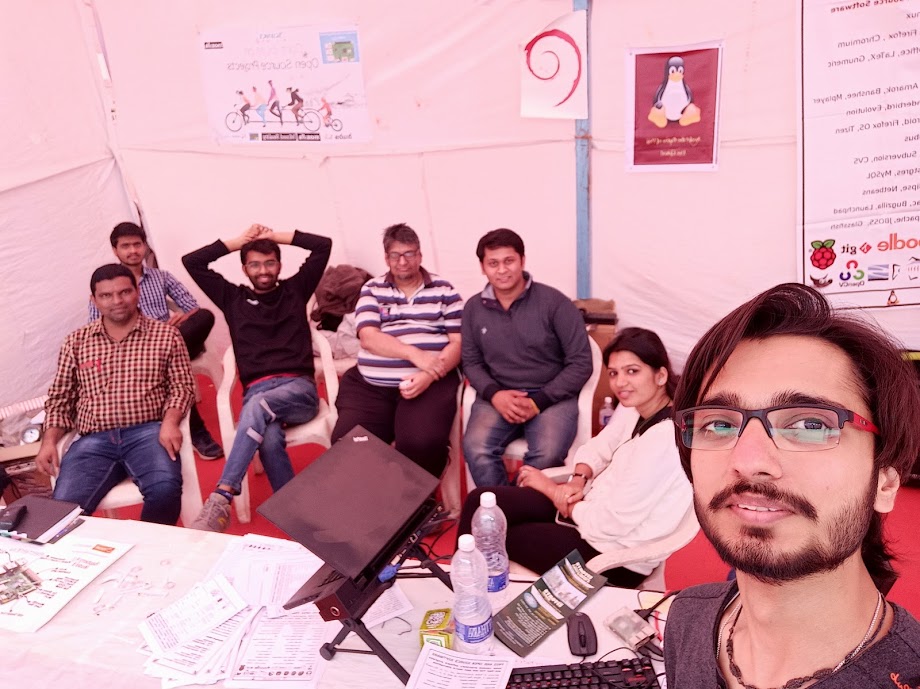
 . Of course in another stall few students had used RPI s as part of their projects so at times we did tell some of the newbies to go to those stalls and see and ask about those projects so they would have a much wider experience of things. The Mozilla people were pushing VR as well as Mozilla lite the browser for the mobile.
We also gossiped quite a bit. I shared about

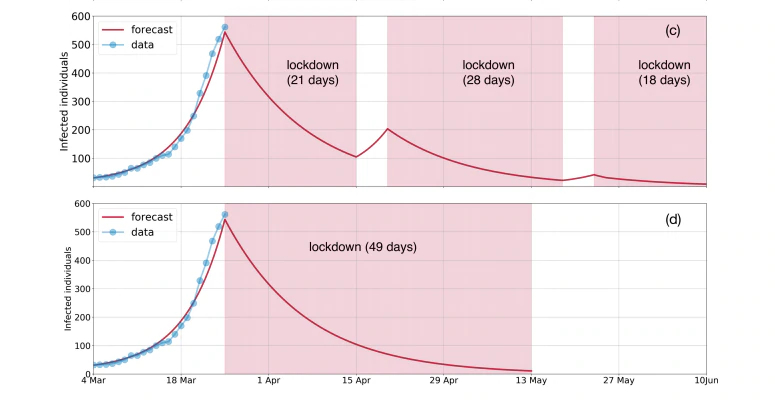










 Here is my monthly update covering what I have been doing in the free software world during March 2020 (





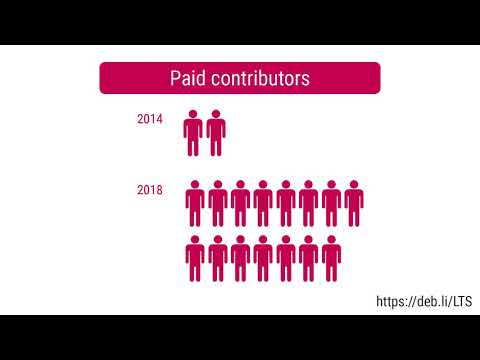
 TL;DR; please help localizing Mailman3 [1]. You can find it on hosted Weblate [2].The next component releases are planned in 1-2 weeks from now. Thanks for your contribution! If you can't make it now, please consider working on Mailman3 translations at some later point of time. Thanks!
Time has come for Mailman3
Over the last months I have found an interest in Mailman3. Given the EOL of Python2 in January 2020 and also being a heavy Mailman2 provider for various of my projects and also for customers, I felt it was time to look at Mailman2's successor: Mailman3 [1].
One great novelty in Mailman3 is the strict split up between backend (Mailman Core), and the frontend components (django-mailman3, Postorius, Hyperkitty). All three are Django applications. Postorius is the list management web frontend whereas Hyperkitty is an archive viewer. Other than in Mailman2, you can also drop list posts into Hyperkitty directly (instead of sending a mail to the list). This makes Hyperkitty also some sort of forum software with a mailing list core in the back. The django-mailman3 module knits the previous two together (and handles account management, login dialog, profile settings, etc.).
Looking into Mailman3 Upstream Code
Some time back in midst 2019 I decided to deploy Mailman3 at a customer's site and also for my own business (which still is the test installation). Living and working in Germany, my customers' demand often is a fully localized WebUI. And at that time, Mailman3 could not provide this. Many exposed parts of the Mailman3 components were still not localized (or not localizable).
Together with my employee I put some hours of effort into providing merge requests, filing bug reports, request better Weblate integration (meaning: hosted Weblate), improving the membership scripting support, etc. It felt a bit like setting the whole i18n thing in motion.
Call for Translations
Over the past months I had to focus on other work and two days ago I was delighted that Abhilash Raj (one of the Mailman3 upstream maintainers) informed me (via closing one of the related bugs [3]) that Mailman3 is now fully integrated with the hosted Weblate service and a continous translation workflow is set to go.
The current translation stati of the Mailman3 components are at ~ 10%. We can do better than this, I sense.
So, if you are a non-native English speaker and feel like contributing to Mailman3, please visit the hosted Weblate site [2], sign up for an account (if you don't have one already), and chime in into the translation of one of the future mailing list software suites run by many FLOSS projects all around the globe. Thanks a lot for your help.
As a side note, if you plan working on translating Mailman Core into your language (and can't find it in the list of supported languages), please request this new language via the Weblate UI. All other components have all available languages enabled by default.
References:
 I recently stumbled upon


 Like
 The following contributors got their Debian Developer accounts in the last two months:




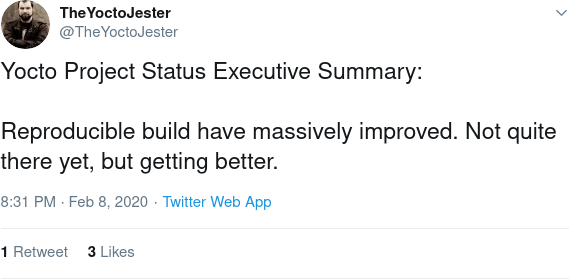



 Here is my monthly update covering what I have been doing in the free software world during February 2020 (


 About me
Hello, world! For those who are meeting me for the first time, I am a 31 year old History teacher from Porto Alegre, Brazil.
Some people might know me from the Python community, because I have been leading
