Search Results: "eric"

28 August 2020

Bits from Debian: DebConf20 welcomes its sponsors!

DebConf20 logo DebConf20 is taking place online, from 23 August to 29 August 2020. It is the 21st Debian conference, and organizers and participants are working hard together at creating interesting and fruitful events. We would like to warmly welcome the 17 sponsors of DebConf20, and introduce them to you. We have four Platinum sponsors. Our first Platinum sponsor is Lenovo. As a global technology leader manufacturing a wide portfolio of connected products, including smartphones, tablets, PCs and workstations as well as AR/VR devices, smart home/office and data center solutions, Lenovo understands how critical open systems and platforms are to a connected world. Our next Platinum sponsor is Infomaniak. Infomaniak is Switzerland's largest web-hosting company, also offering backup and storage services, solutions for event organizers, live-streaming and video on demand services. It wholly owns its datacenters and all elements critical to the functioning of the services and products provided by the company (both software and hardware). Google is our third Platinum sponsor. Google is one of the largest technology companies in the world, providing a wide range of Internet-related services and products such as online advertising technologies, search, cloud computing, software, and hardware. Google has been supporting Debian by sponsoring DebConf for more than ten years, and is also a Debian partner. Amazon Web Services (AWS) is our fourth Platinum sponsor. Amazon Web Services is one of the world's most comprehensive and broadly adopted cloud platforms, offering over 175 fully featured services from data centers globally (in 77 Availability Zones within 24 geographic regions). AWS customers include the fastest-growing startups, largest enterprises and leading government agencies. Our Gold sponsors are Deepin, the Matanel Foundation, Collabora, and HRT. Deepin is a Chinese commercial company focusing on the development and service of Linux-based operating systems. They also lead research and development of the Deepin Debian derivative. The Matanel Foundation operates in Israel, as its first concern is to preserve the cohesion of a society and a nation plagued by divisions. The Matanel Foundation also works in Europe, in Africa and in South America. Collabora is a global consultancy delivering Open Source software solutions to the commercial world. In addition to offering solutions to clients, Collabora's engineers and developers actively contribute to many Open Source projects. Hudson-Trading is a company led by mathematicians, computer scientists, statisticians, physicists and engineers. They research and develop automated trading algorithms using advanced mathematical techniques. Our Silver sponsors are: Linux Professional Institute, the global certification standard and career support organization for open source professionals, Civil Infrastructure Platform, a collaborative project hosted by the Linux Foundation, establishing an open source base layer of industrial grade software, Ubuntu, the Operating System delivered by Canonical, and Roche, a major international pharmaceutical provider and research company dedicated to personalized healthcare. Bronze sponsors: IBM, MySQL, Univention. And finally, our Supporter level sponsors, ISG.EE and Pengwin. Thanks to all our sponsors for their support! Their contributions make it possible for a large number of Debian contributors from all over the globe to work together, help and learn from each other in DebConf20. Participating in DebConf20 online The 21st Debian Conference is being held online, due to COVID-19, from August 23 to 29, 2020. Talks, discussions, panels and other activities run from 10:00 to 01:00 UTC. Visit the DebConf20 website at https://debconf20.debconf.org to learn about the complete schedule, watch the live streaming and join the different communication channels for participating in the conference.

21 August 2020

Reproducible Builds (diffoscope): diffoscope 157 released

The diffoscope maintainers are pleased to announce the release of diffoscope version 157. This version includes the following changes:
[ Chris Lamb ]
* Try obsensibly "data" files named .pgp against pgpdump to determine whether
  they are PGP files. (Closes: reproducible-builds/diffoscope#211)
* Don't raise an exception when we encounter XML files with "<!ENTITY>"
  declarations inside the DTD, or when a DTD or entity references an external
  resource. (Closes: reproducible-builds/diffoscope#212)
* Temporarily drop gnumeric from Build-Depends as it has been removed from
  testing due to Python 2.x deprecation. (Closes: #968742)
* Codebase changes:
  - Add support for multiple file extension matching; we previously supported
    only a single extension to match.
  - Move generation of debian/tests/control.tmp to an external script.
  - Move to our assert_diff helper entirely in the PGP tests.
  - Drop some unnecessary control flow, unnecessary dictionary comprehensions
    and some unused imports found via pylint.
* Include the filename in the "... not identified by any comparator"
  logging message.
You find out more by visiting the project homepage.

14 August 2020

Jonathan Dowland: Generic Haskell

When I did the work described earlier in template haskell, I also explored generic programming in Haskell to solve a particular problem. StrIoT is a program generator: it outputs source code, which may depend upon other modules, which need to be imported via declarations at the top of the source code files. The data structure that StrIoT manipulates contains information about what modules are loaded to resolve the names that have been used in the input code, so we can walk that structure to automatically derive an import list. The generic programming tools I used for this are from Scrap Your Boilerplate (SYB), a module written to complement a paper of the same name. In this code snippet, everything and mkQ are from SYB:
extractNames :: Data a => a -> [Name]
extractNames = everything (++) (\a -> mkQ [] f a)
     where f = (:[])
The input must be any type which implements typeclass Data, as must all its members (and their members etc.): This holds for the Template Haskell Exp types. The output is a normal list of Names. The utility function has a more specific type Name -> [Name]. This is all that's needed to walk over the heterogeneous data structures and do something specific (f) when we encounter a Name. Post-processing the Names to get a list of modules is simple
 nub . catMaybes . map nameModule . concatMap extractNames
Unfortunately, there's a weird GHC behaviour relating to the module names for some Prelude functions that makes the above less useful in practice. For example, the Prelude function words :: String -> [String] can normally be used without an explicit import (since it's a Prelude function). However, once round-tripped through a Name, it becomes GHC.OldList.words. Attempting to import GHC.OldList fails in some contexts, because it's a hidden module or package. I've been meaning to investigate further and, if necessary, file a GHC bug about this. For this reason I've scrapped all the above and gone with a different plan. We go back to requiring the user to specify their required import list explicitly. We then walk over the Exp data type prior to code generation and decanonicalize all the Names. I also use generic programming/SYB to do this:
unQualifyNames :: Exp -> Exp
unQualifyNames = everywhere (\a -> mkT f a)
     where f :: Name -> Name
           f n = if n == '(.)
            then mkName "."
            else (mkName . last . splitOn "." . pprint) n
I've had to special-case composition (.) since that code-point is also used as the delimiter between package, module and function. Otherwise this looks very similar to the earlier function, except using everywhere and mkT (make transformation) instead of everything and mkQ (make query).

13 August 2020

Erich Schubert: Publisher MDPI lies to prospective authors

The publisher MDPI is a spammer and lies. If you upload a paper draft to arXiv, MDPI will send spam to the authors to solicit submission. Within minutes of an upload I received the following email (sent by MDPI staff, not some overly eager new editor):
We read your recent manuscript "[...]" on
arXiv, and sincerely invite you to submit it to our journal Future
Internet, if it has not been published or submitted elsewhere.
Future Internet (ISSN 1999-5903, indexed by Scopus, Ei compendex,
*ESCI*-Web of Science) is a journal on Internet technologies and the
information society. It maintains a rigorous and fast peer review system
with a median publication time of 35 days from submission to online
publication, and 3 days from acceptance to publication. The journal
scope is shown here:
https://www.mdpi.com/journal/futureinternet/about.
Editorial Board: https://www.mdpi.com/journal/futureinternet/editors.
Since Future Internet is an open access journal there is a publication
fee. Your paper will be published, with a 20% discount (amounting to 200
CHF), and provided that it is accepted after our standard peer-review
procedure. 
First of all, the email begins with a lie. Because this paper clearly states that it is submitted elsewhere. Also, it fits other journals much better, and if they had read even just the abstract, they would have known. This is predatory behavior by MDPI. Clearly, it is just about getting as many submissions as possible. The journal charges 1000 CHF (next year, 1400 CHF) to publish the papers. Its about the money. Also, there have been reports that MDPI ignores the reviews, and always publishes even when reviewers recommended rejection The reviewer requests I have received from MDPI came with unreasonable deadlines, which will not allow for a thorough peer review. Hence I asked to not ever be emailed by them again. I must assume that many other qualified reviewers do the same. MDPI boasts in their 2019 annual report a median time to first decision of 19 days in my discipline the typical time window to ask for reviews is at least a month (for shorter conference papers, not full journal articles), because professors tend to have lots of other duties, hence they need more flexibility. Above paper has been submitted in March, and is now under review for 4 months already. This is an annoying long time window, and I would appreciate if this were less, but it shows how extremely short the MDPI time frame is. They also claim 269.1k submissions and 106.2k published papers, so the acceptance rate is around 40% on average, and assuming that there are some journals with higher standards there then some must have acceptance rates much higher than this. I d assume that many reputable journals have 40% desk-rejection rate for papers that are not even on-topic The average cost to authors is given as 1144 CHF (after discounts, 25% waived feeds etc.), so they, so we are talking about 120 million CHF of revenue from authors. Is that what you want academic publishing to be? I am not happy with some of the established publishers such as Elsevier that also overcharge universities heavily. I do think we need to change academic publishing, and arXiv is a big improvement here. But I do not respect publishers such as MDPI that lie and send spam.

12 August 2020

Michael Stapelberg: distri: 20x faster initramfs (initrd) from scratch

In case you are not yet familiar with why an initramfs (or initrd, or initial ramdisk) is typically used when starting Linux, let me quote the wikipedia definition: [ ] initrd is a scheme for loading a temporary root file system into memory, which may be used as part of the Linux startup process [ ] to make preparations before the real root file system can be mounted. Many Linux distributions do not compile all file system drivers into the kernel, but instead load them on-demand from an initramfs, which saves memory. Another common scenario, in which an initramfs is required, is full-disk encryption: the disk must be unlocked from userspace, but since userspace is encrypted, an initramfs is used.

Motivation Thus far, building a distri disk image was quite slow: This is on an AMD Ryzen 3900X 12-core processor (2019):
distri % time make cryptimage serial=1
80.29s user 13.56s system 186% cpu 50.419 total # 19s image, 31s initrd
Of these 50 seconds, dracut s initramfs generation accounts for 31 seconds (62%)! Initramfs generation time drops to 8.7 seconds once dracut no longer needs to use the single-threaded gzip(1) , but the multi-threaded replacement pigz(1) : This brings the total time to build a distri disk image down to:
distri % time make cryptimage serial=1
76.85s user 13.23s system 327% cpu 27.509 total # 19s image, 8.7s initrd
Clearly, when you use dracut on any modern computer, you should make pigz available. dracut should fail to compile unless one explicitly opts into the known-slower gzip. For more thoughts on optional dependencies, see Optional dependencies don t work . But why does it take 8.7 seconds still? Can we go faster? The answer is Yes! I recently built a distri-specific initramfs I m calling minitrd. I wrote both big parts from scratch:
  1. the initramfs generator program (distri initrd)
  2. a custom Go userland (cmd/minitrd), running as /init in the initramfs.
minitrd generates the initramfs image in 400ms, bringing the total time down to:
distri % time make cryptimage serial=1
50.09s user 8.80s system 314% cpu 18.739 total # 18s image, 400ms initrd
(The remaining time is spent in preparing the file system, then installing and configuring the distri system, i.e. preparing a disk image you can run on real hardware.) How can minitrd be 20 times faster than dracut? dracut is mainly written in shell, with a C helper program. It drives the generation process by spawning lots of external dependencies (e.g. ldd or the dracut-install helper program). I assume that the combination of using an interpreted language (shell) that spawns lots of processes and precludes a concurrent architecture is to blame for the poor performance. minitrd is written in Go, with speed as a goal. It leverages concurrency and uses no external dependencies; everything happens within a single process (but with enough threads to saturate modern hardware). Measuring early boot time using qemu, I measured the dracut-generated initramfs taking 588ms to display the full disk encryption passphrase prompt, whereas minitrd took only 195ms. The rest of this article dives deeper into how minitrd works.

What does an initramfs do? Ultimately, the job of an initramfs is to make the root file system available and continue booting the system from there. Depending on the system setup, this involves the following 5 steps:

1. Load kernel modules to access the block devices with the root file system Depending on the system, the block devices with the root file system might already be present when the initramfs runs, or some kernel modules might need to be loaded first. On my Dell XPS 9360 laptop, the NVMe system disk is already present when the initramfs starts, whereas in qemu, we need to load the virtio_pci module, followed by the virtio_scsi module. How will our userland program know which kernel modules to load? Linux kernel modules declare patterns for their supported hardware as an alias, e.g.:
initrd# grep virtio_pci lib/modules/5.4.6/modules.alias
alias pci:v00001AF4d*sv*sd*bc*sc*i* virtio_pci
Devices in sysfs have a modalias file whose content can be matched against these declarations to identify the module to load:
initrd# cat /sys/devices/pci0000:00/*/modalias
pci:v00001AF4d00001005sv00001AF4sd00000004bc00scFFi00
pci:v00001AF4d00001004sv00001AF4sd00000008bc01sc00i00
[ ]
Hence, for the initial round of module loading, it is sufficient to locate all modalias files within sysfs and load the responsible modules. Loading a kernel module can result in new devices appearing. When that happens, the kernel sends a uevent, which the uevent consumer in userspace receives via a netlink socket. Typically, this consumer is udev(7) , but in our case, it s minitrd. For each uevent messages that comes with a MODALIAS variable, minitrd will load the relevant kernel module(s). When loading a kernel module, its dependencies need to be loaded first. Dependency information is stored in the modules.dep file in a Makefile-like syntax:
initrd# grep virtio_pci lib/modules/5.4.6/modules.dep
kernel/drivers/virtio/virtio_pci.ko: kernel/drivers/virtio/virtio_ring.ko kernel/drivers/virtio/virtio.ko
To load a module, we can open its file and then call the Linux-specific finit_module(2) system call. Some modules are expected to return an error code, e.g. ENODEV or ENOENT when some hardware device is not actually present. Side note: next to the textual versions, there are also binary versions of the modules.alias and modules.dep files. Presumably, those can be queried more quickly, but for simplicitly, I have not (yet?) implemented support in minitrd.

2. Console settings: font, keyboard layout Setting a legible font is necessary for hi-dpi displays. On my Dell XPS 9360 (3200 x 1800 QHD+ display), the following works well:
initrd# setfont latarcyrheb-sun32
Setting the user s keyboard layout is necessary for entering the LUKS full-disk encryption passphrase in their preferred keyboard layout. I use the NEO layout:
initrd# loadkeys neo

3. Block device identification In the Linux kernel, block device enumeration order is not necessarily the same on each boot. Even if it was deterministic, device order could still be changed when users modify their computer s device topology (e.g. connect a new disk to a formerly unused port). Hence, it is good style to refer to disks and their partitions with stable identifiers. This also applies to boot loader configuration, and so most distributions will set a kernel parameter such as root=UUID=1fa04de7-30a9-4183-93e9-1b0061567121. Identifying the block device or partition with the specified UUID is the initramfs s job. Depending on what the device contains, the UUID comes from a different place. For example, ext4 file systems have a UUID field in their file system superblock, whereas LUKS volumes have a UUID in their LUKS header. Canonically, probing a device to extract the UUID is done by libblkid from the util-linux package, but the logic can easily be re-implemented in other languages and changes rarely. minitrd comes with its own implementation to avoid cgo or running the blkid(8) program.

4. LUKS full-disk encryption unlocking (only on encrypted systems) Unlocking a LUKS-encrypted volume is done in userspace. The kernel handles the crypto, but reading the metadata, obtaining the passphrase (or e.g. key material from a file) and setting up the device mapper table entries are done in user space.
initrd# modprobe algif_skcipher
initrd# cryptsetup luksOpen /dev/sda4 cryptroot1
After the user entered their passphrase, the root file system can be mounted:
initrd# mount /dev/dm-0 /mnt

5. Continuing the boot process (switch_root) Now that everything is set up, we need to pass execution to the init program on the root file system with a careful sequence of chdir(2) , mount(2) , chroot(2) , chdir(2) and execve(2) system calls that is explained in this busybox switch_root comment.
initrd# mount -t devtmpfs dev /mnt/dev
initrd# exec switch_root -c /dev/console /mnt /init
To conserve RAM, the files in the temporary file system to which the initramfs archive is extracted are typically deleted.

How is an initramfs generated? An initramfs image (more accurately: archive) is a compressed cpio archive. Typically, gzip compression is used, but the kernel supports a bunch of different algorithms and distributions such as Ubuntu are switching to lz4. Generators typically prepare a temporary directory and feed it to the cpio(1) program. In minitrd, we read the files into memory and generate the cpio archive using the go-cpio package. We use the pgzip package for parallel gzip compression. The following files need to go into the cpio archive:

minitrd Go userland The minitrd binary is copied into the cpio archive as /init and will be run by the kernel after extracting the archive. Like the rest of distri, minitrd is built statically without cgo, which means it can be copied as-is into the cpio archive.

Linux kernel modules Aside from the modules.alias and modules.dep metadata files, the kernel modules themselves reside in e.g. /lib/modules/5.4.6/kernel and need to be copied into the cpio archive. Copying all modules results in a 80 MiB archive, so it is common to only copy modules that are relevant to the initramfs s features. This reduces archive size to 24 MiB. The filtering relies on hard-coded patterns and module names. For example, disk encryption related modules are all kernel modules underneath kernel/crypto, plus kernel/drivers/md/dm-crypt.ko. When generating a host-only initramfs (works on precisely the computer that generated it), some initramfs generators look at the currently loaded modules and just copy those.

Console Fonts and Keymaps The kbd package s setfont(8) and loadkeys(1) programs load console fonts and keymaps from /usr/share/consolefonts and /usr/share/keymaps, respectively. Hence, these directories need to be copied into the cpio archive. Depending on whether the initramfs should be generic (work on many computers) or host-only (works on precisely the computer/settings that generated it), the entire directories are copied, or only the required font/keymap.

cryptsetup, setfont, loadkeys These programs are (currently) required because minitrd does not implement their functionality. As they are dynamically linked, not only the programs themselves need to be copied, but also the ELF dynamic linking loader (path stored in the .interp ELF section) and any ELF library dependencies. For example, cryptsetup in distri declares the ELF interpreter /ro/glibc-amd64-2.27-3/out/lib/ld-linux-x86-64.so.2 and declares dependencies on shared libraries libcryptsetup.so.12, libblkid.so.1 and others. Luckily, in distri, packages contain a lib subdirectory containing symbolic links to the resolved shared library paths (hermetic packaging), so it is sufficient to mirror the lib directory into the cpio archive, recursing into shared library dependencies of shared libraries. cryptsetup also requires the GCC runtime library libgcc_s.so.1 to be present at runtime, and will abort with an error message about not being able to call pthread_cancel(3) if it is unavailable.

time zone data To print log messages in the correct time zone, we copy /etc/localtime from the host into the cpio archive.

minitrd outside of distri? I currently have no desire to make minitrd available outside of distri. While the technical challenges (such as extending the generator to not rely on distri s hermetic packages) are surmountable, I don t want to support people s initramfs remotely. Also, I think that people s efforts should in general be spent on rallying behind dracut and making it work faster, thereby benefiting all Linux distributions that use dracut (increasingly more). With minitrd, I have demonstrated that significant speed-ups are achievable.

Conclusion It was interesting to dive into how an initramfs really works. I had been working with the concept for many years, from small tasks such as debug why the encrypted root file system is not unlocked to more complicated tasks such as set up a root file system on DRBD for a high-availability setup . But even with that sort of experience, I didn t know all the details, until I was forced to implement every little thing. As I suspected going into this exercise, dracut is much slower than it needs to be. Re-implementing its generation stage in a modern language instead of shell helps a lot. Of course, my minitrd does a bit less than dracut, but not drastically so. The overall architecture is the same. I hope my effort helps with two things:
  1. As a teaching implementation: instead of wading through the various components that make up a modern initramfs (udev, systemd, various shell scripts, ), people can learn about how an initramfs works in a single place.
  2. I hope the significant time difference motivates people to improve dracut.

Appendix: qemu development environment Before writing any Go code, I did some manual prototyping. Learning how other people prototype is often immensely useful to me, so I m sharing my notes here. First, I copied all kernel modules and a statically built busybox binary:
% mkdir -p lib/modules/5.4.6
% cp -Lr /ro/lib/modules/5.4.6/* lib/modules/5.4.6/
% cp ~/busybox-1.22.0-amd64/busybox sh
To generate an initramfs from the current directory, I used:
% find .   cpio -o -H newc   pigz > /tmp/initrd
In distri s Makefile, I append these flags to the QEMU invocation:
-kernel /tmp/kernel \
-initrd /tmp/initrd \
-append "root=/dev/mapper/cryptroot1 rdinit=/sh ro console=ttyS0,115200 rd.luks=1 rd.luks.uuid=63051f8a-54b9-4996-b94f-3cf105af2900 rd.luks.name=63051f8a-54b9-4996-b94f-3cf105af2900=cryptroot1 rd.vconsole.keymap=neo rd.vconsole.font=latarcyrheb-sun32 init=/init systemd.setenv=PATH=/bin rw vga=836"
The vga= mode parameter is required for loading font latarcyrheb-sun32. Once in the busybox shell, I manually prepared the required mount points and kernel modules:
ln -s sh mount
ln -s sh lsmod
mkdir /proc /sys /run /mnt
mount -t proc proc /proc
mount -t sysfs sys /sys
mount -t devtmpfs dev /dev
modprobe virtio_pci
modprobe virtio_scsi
As a next step, I copied cryptsetup and dependencies into the initramfs directory:
% for f in /ro/cryptsetup-amd64-2.0.4-6/lib/*; do full=$(readlink -f $f); rel=$(echo $full   sed 's,^/,,g'); mkdir -p $(dirname $rel); install $full $rel; done
% ln -s ld-2.27.so ro/glibc-amd64-2.27-3/out/lib/ld-linux-x86-64.so.2
% cp /ro/glibc-amd64-2.27-3/out/lib/ld-2.27.so ro/glibc-amd64-2.27-3/out/lib/ld-2.27.so
% cp -r /ro/cryptsetup-amd64-2.0.4-6/lib ro/cryptsetup-amd64-2.0.4-6/
% mkdir -p ro/gcc-libs-amd64-8.2.0-3/out/lib64/
% cp /ro/gcc-libs-amd64-8.2.0-3/out/lib64/libgcc_s.so.1 ro/gcc-libs-amd64-8.2.0-3/out/lib64/libgcc_s.so.1
% ln -s /ro/gcc-libs-amd64-8.2.0-3/out/lib64/libgcc_s.so.1 ro/cryptsetup-amd64-2.0.4-6/lib
% cp -r /ro/lvm2-amd64-2.03.00-6/lib ro/lvm2-amd64-2.03.00-6/
In busybox, I used the following commands to unlock the root file system:
modprobe algif_skcipher
./cryptsetup luksOpen /dev/sda4 cryptroot1
mount /dev/dm-0 /mnt

10 August 2020

Dirk Eddelbuettel: nanotime 0.3.1: Misc Build Fixes for Yuge New Features!

The nanotime 0.3.0 release four days ago was so exciting that we decided to do it again! Kidding aside, and fairly extensive tests notwithstanding we were bitten by a few build errors: who knew clang on macOS needed extra curlies to be happy, another manifestation of Solaris having no idea what a timezone setting America/New_York is, plus some extra pickyness from the SAN tests and whatnot. So Leonardo and I gave it some extra care over the weekend, uploaded it late yesterday and here we are with 0.3.1. Thanks again to CRAN for prompt processing even though they are clearly deluged shortly before their (brief) summer break. nanotime relies on the RcppCCTZ package for (efficient) high(er) resolution time parsing and formatting up to nanosecond resolution, and the bit64 package for the actual integer64 arithmetic. Initially implemented using the S3 system, it has benefitted greatly from work by Leonardo Silvestri who rejigged internals in S4 and now added new types for periods, intervals and durations. The NEWS snippet adds full details.

Changes in version 0.3.1 (2020-08-09)
  • Several small cleanups to ensure a more robust compilation (Leonardo and Dirk in #75 fixing #74).
  • Show Solaris some extra love by skipping tests and examples with a timezone (Dirk in #76).

Thanks to CRANberries there is also a diff to the previous version. More details and examples are at the nanotime page; code, issue tickets etc at the GitHub repository. If you like this or other open-source work I do, you can now sponsor me at GitHub. For the first year, GitHub will match your contributions.

This post by Dirk Eddelbuettel originated on his Thinking inside the box blog. Please report excessive re-aggregation in third-party for-profit settings.

3 August 2020

Holger Levsen: 20200803-debconf5

DebConf5 This tshirt is 15 years old and from DebConf5. It still looks quite nice! :) DebConf5 was my 3rd DebConf and took place in Helsinki, or rather Espoo, in Finland. This was one of my most favorite DebConfs (though I basically loved them all) and I'm not really sure why, I guess it's because of the kind of community at the event. We stayed in some future dorms of the universtity, which were to be first used by some European athletics chamopionship and which we could use even before that, guests zero. Being in Finland there were of course saunas in the dorms, which we frequently used and greatly enjoyed. Still, one day we had to go on a trip to another sauna in the forest, because of course you cannot visit Finland and only see one sauna. Or at least, you should not. Another aspect which increased community bonding was that we had to authenticate using 802.10 (IIRC, please correct me) which was an authentication standard mostly used for wireless but which also works for wired ethernet, except that not many had used it on Linux before. Thus quite some related bugs were fixed in the first days of DebCamp... Then my powerpc ibook also decided to go bad, so I had to remove 30 screws to get the harddrive out and 30 screws back in, to not have 30 screws laying around for a week. Then I put the harddrive into a spare (x86) laptop and only used my /home partition and was very happy this worked nicely. And then, for travelling back, I had to unscrew and screw 30 times again. (I think my first attempt took 1.5h and the fourth only 45min or so ;) Back home then I bought a laptop where one could remove the harddrive using one screw. Oh, and then I was foolish during the DebConf5 preparations and said, that I could imagine setting up a team and doing video recordings, as previous DebConfs mostly didn't have recordings and the one that had, didn't have releases of them... And so we did videos. And as we were mostly inexperienced we did them the hard way: during the day we recorded on tape and then when the talks were done, we used a postprocessing tool called 'cinelerra' and edited them. And because Eric Evans was on the team and because Eric worked every night almost all night, all nights, we managed to actually release them all when DebConf5 was over. I very well remember many many (23 or 42) Debian people cleaning the dorms thoroughly (as they were brand new..) and Eric just sitting somewhere, exhausted and watching the cleaners. And everybody was happy Eric was idling there, cause we knew why. In the aftermath of DebConf5 Ben Hutchings then wrote videolink (removed from sid in 2013) which we used to create video DVDs of our recordings based on a simple html file with links to the actual videos. There were many more memorable events. The boat ride was great. A pirate flag appeared. One night people played guitar until very late (or rather early) close to the dorms, so at about 3 AM someone complained about it, not in person, but on the debian-devel mailinglist. And those drunk people playing guitar, replied immediatly on the mailinglist. And then someone from the guitar group gave a talk, at 9 AM, and the video is online... ;) (It's a very slowwwwwww talk.) If you haven't been to or close to the polar circles it's almost impossible to anticipate how life is in summer there. It get's a bit darker after midnight or rather after 1 AM and then at 3 AM it get's light again, so it's reaaaaaaally easy to miss the night once and it's absolutly not hard to miss the night for several nights in a row. And then I shared a room with 3 people who all snore quite loud... There was more. I was lucky to witness the first (or second?) cheese and whine party which at that time took place in a dorm room with, dunno 10 people and maybe 15 kinds of cheese. And, of course, I met many wonderful people there, to mention a few I'll say Jesus, I mean mooch or data, Amaya and p2. And thanks to some bad luck which turned well, I also had my first time ever Sushi in Helsinki. And and and. DebConfs are soooooooo good! :-) I'll stop here as I originally planned to only write a paragraph or two about each and there are quite some to be written! Oh, and as we all learned, there are probably no mosquitos in Helsinki, just in Espoo. And you can swim naked through a lake and catch a taxi on the other site, with no clothes and no money, no big deal. (And you might not believe it, but that wasn't me. I cannot swim that well.)

30 July 2020

Russell Coker: Links July 2020

iMore has an insightful article about Apple s transition to the ARM instruction set for new Mac desktops and laptops [1]. I d still like to see them do something for the server side. Umair Haque wrote an insightful article about How the American Idiot Made America Unlivable [2]. We are witnessing the destruction of a once great nation. Chris Lamb wrote an interesting blog post about comedy shows with the laugh tracks edited out [3]. He then compares that to social media with the like count hidden which is an interesting perspective. I m not going to watch TV shows edited in that way (I ve enjoyed BBT inspite of all the bad things about it) and I m not going to try and hide like counts on social media. But it s interesting to consider these things. Cory Doctorow wrote an interesting Locus article suggesting that we could have full employment by a transition to renewable energy and methods for cleaning up the climate problems we are too late to prevent [4]. That seems plausible, but I think we should still get a Universal Basic Income. The Thinking Shop has posters and decks of cards with logical fallacies and cognitive biases [5]. Every company should put some of these in meeting rooms. Also they have free PDFs to download and print your own posters. gayhomophobe.com [6] is a site that lists powerful homophobic people who hurt GLBT people but then turned out to be gay. It s presented in an amusing manner, people who hurt others deserve to be mocked. Wired has an insightful article about the shutdown of Backpage [7]. The owners of Backpage weren t nice people and they did some stupid things which seem bad (like editing posts to remove terms like lolita ). But they also worked well with police to find criminals. The opposition to what Backpage were doing conflates sex trafficing, child prostitution, and legal consenting adult sex work. Taking down Backpage seems to be a bad thing for the victims of sex trafficing, for consenting adult sex workers, and for society in general. Cloudflare has an interesting blog post about short lived certificates for ssh access [8]. Instead of having user s ssh keys stored on servers each user has to connect to a SSO server to obtain a temporary key before connecting, so revoking an account is easy.

29 July 2020

Dima Kogan: An awk corner case?

So even after years and years of experience, core tools still find ways to surprise me. Today I tried to do some timestamp comparisons with mawk (vnl-filter, to be more precise), and ran into a detail of the language that made it not work. Not a bug, I guess, since both mawk and gawk are affected. I'll claim "language design flaw", however. Let's say I'm processing data with unix timestamps in it (seconds since the epoch). gawk and recent versions of mawk have strftime() for that:
$ date
Wed Jul 29 15:31:13 PDT 2020
$ date +"%s"
1596061880
$ date +"%s"   mawk ' print strftime("%H",$1) '
15
And let's say I want to do something conditional on them. I want only data after 9:00 each day:
$ date +"%s"   mawk 'strftime("%H",$1) >= 9  print "Yep. After 9:00" '
That's right. No output. But it is 15:31 now, and I confirmed above that strftime() reports the right time, so it should know that it's after 9:00, but it doesn't. What gives? As we know, awk (and perl after it) treat numbers and strings containing numbers similarly: 5+5 and ="5"+5= both work the same, which is really convenient. This can only work if it can be inferred from context whether we want a number or a string; it knows that addition takes two numbers, so it knows to convert ="5"= into a number in the example above. But what if an operator is ambiguous? Then it picks a meaning based on some internal logic that I don't want to be familiar with. And apparently awk implements string comparisons with the same < and > operators, as numerical comparisons, creating the ambiguity I hit today. strftime returns strings, and you get silent, incorrect behavior that then demands debugging. How to fix? By telling awk to treat the output of strftime() as a number:
$ date +"%s"   mawk '0+strftime("%H",$1) >= 9  print "Yep. After 9:00" '
Yep. After 9:00
With the benefit of hindsight, they really should not have reused any operators for both number and string operations. Then these ambiguities wouldn't occur, and people wouldn't be grumbling into their blogs decades after these decisions were made.

28 July 2020

Chris Lamb: Pop culture matters

Many people labour under the assumption that pop culture is trivial and useless while only 'high' art can grant us genuine and eternal knowledge about the world. Given that we have a finite time on this planet, we are all permitted to enjoy pop culture up to a certain point, but we should always minimise our interaction with it, and consume more moral and intellectual instruction wherever possible. Or so the theory goes. What these people do not realise is that pop and mass culture can often provide more information about the world, humanity in general and what is even more important ourselves. This is not quite the debate around whether high art is artistically better, simply that pop culture can be equally informative. Jeremy Bentham argued in the 1820s that "prejudice apart, the game of push-pin is of equal value with the arts and sciences of music and poetry", that it didn't matter where our pleasures come from. (John Stuart Mill, Bentham's intellectual rival, disagreed.) This fundamental question of philosophical utilitarianism will not be resolved here. However, what might begin to be resolved is our instinctive push-back against pop culture. We all share an automatic impulse to disregard things we do not like and to pretend they do not exist, but this wishful thinking does not mean that these cultural products do not continue to exist when we aren't thinking about them and, more to our point, continue to influence others and even ourselves. Take, for example, the recent trend for 'millennial pink'. With its empty consumerism, faux nostalgia, reductive generational stereotyping, objectively ugly sthetics and tedious misogyny (photographed with Rose Gold iPhones), the very combination appears to have been deliberately designed to annoy me, curiously providing circumstantial evidence in favour of intelligent design. But if I were to immediately dismiss millennial pink and any of the other countless cultural trends I dislike simply because I find them disagreeable, I would be willingly keeping myself blind to their underlying ideology, their significance and their effect on society at large. If I had any ethical or political reservations I might choose not to engage with them economically or to avoid advertising them to others, but that is a different question altogether. Even if we can't notice this pattern within ourselves we can first observe it in others. We can all recall moments where someone has brushed off a casual reference to pop culture, be it Tiger King, TikTok, team sports or Taylor Swift; if you can't, simply look for the abrupt change of tone and the slightly-too-quick dismissal. I am not suggesting you attempt to dissuade others or even to point out this mental tic, but merely seeing it in action can be highly illustrative in its own way. In summary, we can simultaneously say that pop culture is not worthy of our time relative to other pursuits while consuming however much of it we want, but deliberately dismissing pop culture doesn't mean that a lot of other people are not interacting with it and is therefore undeserving of any inquiry. And if that doesn't convince you, just like the once-unavoidable millennial pink, simply sticking our collective heads in the sand will not mean that wider societal-level ugliness is going to disappear anytime soon. Anyway, that's a very long way of justifying why I plan to re-watch TNG.

27 July 2020

Russ Allbery: Summer haul

I'm buying rather too many books at the moment and not reading enough of them (in part because I got back into Minecraft and in part because I got a bit stuck on a few difficult books). I think I've managed to get myself unstuck again, though, and have started catching up on reviews. 2020. It's kind of a lot. And I'm not even that heavily affected. Katherine Addison The Angel of the Crows (sff)
Marie Brennan A Natural History of Dragons (sff)
Kacen Callender Queen of the Conquered (sff)
Jo Clayton Diadem from the Stars (sff)
Jo Clayton Lamarchos (sff)
Jo Clayton Irsud (sff)
Clifford D. Conner The Tragedy of American Science (nonfiction)
Kate Elliott Unconquerable Sun (sff)
Rory Fanning & Craig Hodges Long Shot (nonfiction)
Michael Harrington Socialism: Past & Future (nonfiction)
Nalo Hopkinson Brown Girl in the Ring (sff)
Kameron Hurley The Stars Are Legion (sff)
N.K. Jemisin Emergency Skin (sff)
T. Kingfisher A Wizard's Guide to Defensive Baking (sff)
T. Kingfisher Nine Goblins (sff)
Michael Lewis The Fifth Risk (nonfiction)
Paul McAuley War of the Maps (sff)
Gretchen McCulloch Because Internet (nonfiction)
Hayao Miyazaki Nausica of the Valley of the Wind (graphic novel)
Annalee Newitz The Future of Another Timeline (sff)
Nick Pettigrew Anti-Social (nonfiction)
Rivers Solomon, et al. The Deep (sff)
Jo Walton Or What You Will (sff)
Erik Olin Wright Stardust to Stardust (nonfiction) Of these, I've already read and reviewed The Fifth Risk (an excellent book).

Russ Allbery: Review: Rise of the Warrior Cop

Review: Rise of the Warrior Cop, by Radley Balko
Publisher: PublicAffairs
Copyright: 2013
ISBN: 1-61039-212-4
Format: Kindle
Pages: 336
As the United States tries, in fits and starts, to have a meaningful discussion about long-standing police racism, brutality, overreach, corruption, and murder, I've realized that my theoretical understanding of the history of and alternative frameworks for law enforcement is woefully lacking. Starting with a book by a conservative white guy is not the most ideal of approaches, but it's what I already had on hand, and it won't be the last book I read and review on this topic. (Most of my research so far has been in podcast form. I don't review those here, but I can recommend Ezra Klein's interviews with Ta-Nehisi Coates, Paul Butler, and, most strongly, sujatha baliga.) Rise of the Warrior Cop is from 2013 and has had several moments of fame, no doubt helped by Balko's connections to the conservative and libertarian right. One of the frustrating facts of US politics is that critiques of the justice system from the right (and from white men) get more media attention than critiques from the left. That said, it's a generally well-respected book on the factual history of the topic, and police brutality and civil rights are among the points on which I have stopped-clock agreements with US libertarians. This book is very, very libertarian. In my callow youth, I was an ardent libertarian, so I've read a lot of US libertarian literature. It's a genre with its own conventions that become obvious when you read enough of it, and Rise of the Warrior Cop goes through them like a checklist. Use the Roman Republic (never the Roman Empire) as the starting point for any political discussion, check. Analyze the topic in the context of pre-revolutionary America, check. Spend considerable effort on discerning the opinions of the US founders on the topic since their opinions are always relevant to the modern world, check. Locate some point in the past (preferably before 1960) where the political issue was as good as it has ever been, check. Frame all changes since then as an erosion of rights through government overreach, check. Present your solution as a return to a previous era of respect for civil rights, check. Once you start recognizing the genre conventions, their prevalence in libertarian writing is almost comical. The framing chapters therefore leave a bit to be desired, but the meat of the book is a useful resource. Starting with the 1970s and its use as a campaigning tool by Nixon, Balko traces a useful history of the war on drugs. And starting with the 1980s, the number of cites to primary sources and the evidence of Balko's own research increases considerably. If you want to know how US police turned into military cosplayers with body armor, heavy weapons, and armored vehicles, this book provides a lot of context and history. One of the reasons why I view libertarians as allies of convenience on this specific issue is that drug legalization and disgust with the war on drugs have been libertarian issues for decades. Ideologically honest libertarians (and Balko appears to be one) are inherently skeptical of the police, so when the police overreach in an area of libertarian interest, they notice. Balko makes a solid argument, backed up with statistics, specific programs, legislation, and court cases, that the drug war and its accompanying lies about heavily-armed drug dealers and their supposed threat to police officers was the fuel for the growth of SWAT teams, no-knock search warrants, erosion of legal protections for criminal defendants, and de facto license for the police to ignore the scope and sometimes even the existence of warrants. This book is useful support for the argument that fears for the safety of officers underlying the militarization of police forces are imaginary. One telling point that Balko makes repeatedly and backs with statistical and anecdotal evidence is that the police generally do not use raid tactics on dangerous criminals. On the contrary, aggressive raids are more likely to be used on the least dangerous criminals because they're faster, they're fun for the police (they provide an adrenaline high and let them play with toys), and they're essentially risk-free. If the police believe someone is truly dangerous, they're more likely to use careful surveillance and to conduct a quiet arrest at an unexpected moment. The middle-of-the-night armed break-ins with battering rams, tear gas, and flash-bangs are, tellingly, used against the less dangerous suspects. This is part of Balko's overall argument that police equipment and tactics have become untethered from any realistic threat and have become cultural. He traces an acceleration of that trend to 9/11 and the resulting obsession with terrorism, which further opened the spigot of military hardware and "special forces" training. This became a point of competition between police departments, with small town forces that had never seen a terrorist and had almost no chance of a terrorist incident demanding their own armored vehicles. I've encountered this bizarre terrorism justification personally; one of the reasons my local police department gave in a public hearing for not having a policy against shooting at moving vehicles was "but what if terrorism?" I don't believe there has ever been a local terrorist attack. SWAT in such places didn't involve the special training or dedicated personnel of large city forces; instead, it was a part-time duty for normal police officers, and frequently they were encouraged to practice SWAT tactics by using them at random for some otherwise normal arrest or search. Balko argues that those raids were more exciting than normal police work, leading to a flood of volunteers for that duty and a tendency to use them as much as possible. That in turn normalizes disconnecting police tactics from the underlying crime or situational risk. So far, so good. But despite the information I was able to extract from it, I have mixed feelings about Rise of the Warrior Cop as a whole. At the least, it has substantial limitations. First, I don't trust the historical survey of policing in this book. Libertarian writing makes for bad history. The constraints of the genre require overusing only a few points of reference, treating every opinion of the US founders as holy writ, and tying forward progress to a return to a previous era, all of which interfere with good analysis. Balko also didn't do the research for the historical survey, as is clear from the footnotes. The citations are all to other people's histories, not to primary sources. He's summarizing other people's histories, and you'll almost certainly get better history by finding well-respected historians who cover the same ground. (That said, if you're not familiar with Peel's policing principles, this is a good introduction.) Second, and this too is unfortunately predictable in a libertarian treatment, race rarely appears in this book. If Balko published the same book today, I'm sure he would say more about race, but even in 2013 its absence is strange. I was struck while reading by how many examples of excessive police force were raids on west coast pot farms; yes, I'm sure that was traumatic, but it's not the demographic I would name as the most vulnerable to or affected by police brutality. West coast pot growers are, however, mostly white. I have no idea why Balko made that choice. Perhaps he thought his target audience would be more persuaded by his argument if he focused on white victims. Perhaps he thought it was an easier and less complicated story to tell. Perhaps, like a lot of libertarians, he doesn't believe racism has a significant impact on society because it would be a market failure. Perhaps those were the people who more readily came to mind. But to talk about police militarization, denial of civil rights, and police brutality in the United States without putting race at the center of both the history and the societal effects leaves a gaping hole in the analysis. Given that lack of engagement, I also am dubious of Balko's policy prescriptions. His reform suggestions aren't unreasonable, but they stay firmly in the centrist and incrementalist camp and would benefit white people more than black people. Transparency, accountability, and cultural changes are all fine and good, but the cultural change Balko is focused on is less aggressive arrest tactics, more use of mediation, and better physical fitness. I would not object to those things (well, maybe the last, which seemed odd), but we need to have a discussion about police white supremacist organizations, the prevalence of spousal abuse, and the police tendency to see themselves not as public servants but as embattled warriors who are misunderstood by the naive sheep they are defending. And, of course, you won't find in Rise of the Warrior Cop any thoughtful wrestling with whether there are alternative approaches to community safety, whether punitive rather than restorative justice is effective, or whether crime is a symptom of deeper societal problems we could address but refuse to. The most radical suggestion Balko has is to legalize drugs, which is both the predictable libertarian position and, as we have seen from recent events in the United States, far from the only problem of overcriminalization. I understand why this book is so frequently mentioned on-line, and its author's political views may make it more palatable to some people than a more race-centered or radical perspective. But I don't think this is the best or most useful book on police violence that one could read today. I hope to find a better one in upcoming reviews. Rating: 6 out of 10

24 July 2020

Dirk Eddelbuettel: anytime 0.3.8: Minor Maintenance

A new minor release of the anytime package arrived on CRAN overnight. This is the nineteenth release, and it comes just over six months after the previous release giving further indicating that we appear to have reached a nice level of stability. anytime is a very focused package aiming to do just one thing really well: to convert anything in integer, numeric, character, factor, ordered, format to either POSIXct or Date objects and to do so without requiring a format string. See the anytime page, or the GitHub README.md for a few examples. This release mostly plays games with CRAN. Given the lack of specification for setups on their end, reproducing test failures remains, to put it mildly, somewhat challenging . So we eventually gave up and weaponed up once more and now explicitly test for the one distribution where tests failed (when they clearly passed everywhere else). With that we now have three new logical predicates for various Linux distribution flavours, and if that dreaded one is seen in one test file the test is skipped. And with that we now score twelve out of twelve OKs. This being a game of cat and mouse, I am sure someone somewhere will soon invent a new test The full list of changes follows.

Changes in anytime version 0.3.8 (2020-07-23)
  • A small utility function was added to detect the Linux distribution used in order to fine-tune tests once more.
  • Travis now uses Ubuntu 'bionic' and R 4.0.*.

Courtesy of CRANberries, there is a comparison to the previous release. More information is on the anytime page. The issue tracker tracker off the GitHub repo can be use for questions and comments. If you like this or other open-source work I do, you can now sponsor me at GitHub. For the first year, GitHub will match your contributions.

This post by Dirk Eddelbuettel originated on his Thinking inside the box blog. Please report excessive re-aggregation in third-party for-profit settings.

16 July 2020

Enrico Zini: Build Qt5 cross-builder with raspbian sysroot: compiling with the sysroot

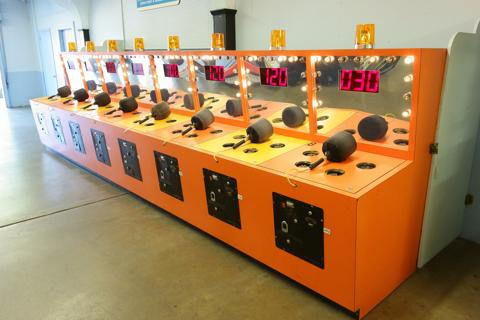
Whack-A-Mole machines from <https://commons.wikimedia.org/wiki/File:Whac-A-Mole_Cedar_Point.jpg> This is part of a series of posts on compiling a custom version of Qt5 in order to develop for both amd64 and a Raspberry Pi. Now that I have a sysroot, I try to use it to build Qt5 with QtWebEngine. Nothing seems to work straightforwardly with Qt5's build system, and hit an endless series of significant blockers to try and work around.
Problem in wayland code QtWayland's source currently does not compile:
../../../hardwareintegration/client/brcm-egl/qwaylandbrcmeglwindow.cpp: In constructor  QtWaylandClient::QWaylandBrcmEglWindow::QWaylandBrcmEglWindow(QWindow*) :
../../../hardwareintegration/client/brcm-egl/qwaylandbrcmeglwindow.cpp:131:67: error: no matching function for call to  QtWaylandClient::QWaylandWindow::QWaylandWindow(QWindow*&) 
     , m_eventQueue(wl_display_create_queue(mDisplay->wl_display()))
                                                                   ^
In file included from ../../../../include/QtWaylandClient/5.15.0/QtWaylandClient/private/qwaylandwindow_p.h:1,
                 from ../../../hardwareintegration/client/brcm-egl/qwaylandbrcmeglwindow.h:43,
                 from ../../../hardwareintegration/client/brcm-egl/qwaylandbrcmeglwindow.cpp:40:
../../../../include/QtWaylandClient/5.15.0/QtWaylandClient/private/../../../../../src/client/qwaylandwindow_p.h:97:5: note: candidate:  QtWaylandClient::QWaylandWindow::QWaylandWindow(QWindow*, QtWayland
Client::QWaylandDisplay*) 
     QWaylandWindow(QWindow *window, QWaylandDisplay *display);
     ^~~~~~~~~~~~~~
../../../../include/QtWaylandClient/5.15.0/QtWaylandClient/private/../../../../../src/client/qwaylandwindow_p.h:97:5: note:   candidate expects 2 arguments, 1 provided
make[5]: Leaving directory '/home/build/armhf/qt-everywhere-src-5.15.0/qttools/src/qdoc'
I am not trying to debug here. I understand that Wayland support is not a requirement, and I'm adding -skip wayland to Qt5's configure options. Next round. nss not found Qt5 embeds Chrome's sources. Chrome's sources require libnss3-dev to be available for both host and target architectures. Although I now have it installed both on the build system and in the sysroot, the pkg-config wrapper that Qt5 hooks into its Chrome's sources, failes to find it:
Command: /usr/bin/python2 /home/build/armhf/qt-everywhere-src-5.15.0/qtwebengine/src/3rdparty/chromium/build/config/linux/pkg-config.py -s /home/build/sysroot/ -a arm -p /usr/bin/arm-linux-gnueabihf-pkg-config --system_libdir lib nss -v -lssl3
Returned 1.
stderr:
Package nss was not found in the pkg-config search path.
Perhaps you should add the directory containing  nss.pc'
to the PKG_CONFIG_PATH environment variable
No package 'nss' found
Traceback (most recent call last):
  File "/home/build/armhf/qt-everywhere-src-5.15.0/qtwebengine/src/3rdparty/chromium/build/config/linux/pkg-config.py", line 248, in <module>
    sys.exit(main())
  File "/home/build/armhf/qt-everywhere-src-5.15.0/qtwebengine/src/3rdparty/chromium/build/config/linux/pkg-config.py", line 143, in main
    prefix = GetPkgConfigPrefixToStrip(options, args)
  File "/home/build/armhf/qt-everywhere-src-5.15.0/qtwebengine/src/3rdparty/chromium/build/config/linux/pkg-config.py", line 82, in GetPkgConfigPrefixToStrip
    "--variable=prefix"] + args, env=os.environ).decode('utf-8')
  File "/usr/lib/python2.7/subprocess.py", line 223, in check_output
    raise CalledProcessError(retcode, cmd, output=output)
subprocess.CalledProcessError: Command '['/usr/bin/arm-linux-gnueabihf-pkg-config', '--variable=prefix', 'nss']' returned non-zero exit status 1
See //build/config/linux/nss/BUILD.gn:15:3: whence it was called.
  pkg_config("system_nss_no_ssl_config")  
  ^---------------------------------------
See //crypto/BUILD.gn:218:25: which caused the file to be included.
    public_configs += [ "//build/config/linux/nss:system_nss_no_ssl_config" ]
                        ^--------------------------------------------------
Project ERROR: GN run error!
It's trying to look into $SYSROOT/usr/lib/pkgconfig, while it should be $SYSROOT//usr/lib/arm-linux-gnueabihf/pkgconfig. I worked around this this patch to qtwebengine/src/3rdparty/chromium/build/config/linux/pkg-config.py:
--- pkg-config.py.orig  2020-07-16 11:46:21.005373002 +0200
+++ pkg-config.py   2020-07-16 11:46:02.605296967 +0200
@@ -61,6 +61,7 @@
   libdir = sysroot + '/usr/' + options.system_libdir + '/pkgconfig'
   libdir += ':' + sysroot + '/usr/share/pkgconfig'
+  libdir += ':' + sysroot + '/usr/lib/arm-linux-gnueabihf/pkgconfig'
   os.environ['PKG_CONFIG_LIBDIR'] = libdir
   return libdir
Next round. g++ 8.3.0 Internal Compiler Error Qt5's sources embed Chrome's sources that embed the skia library sources. One of the skia library sources, when cross-compiled to ARM with -O1 or -O2 with g++ 8.3.0, produces an Internal Compiler Error:
/usr/bin/arm-linux-gnueabihf-g++ -MMD -MF obj/skia/skcms/skcms.o.d -DUSE_UDEV -DUSE_AURA=1 -DUSE_NSS_CERTS=1 -DUSE_OZONE=1 -DOFFICIAL_BUILD -DTOOLKIT_QT -D_FILE_OFFSET_BITS=64 -D_LARGEFILE_SOURCE -D_LARGEFILE64_SOURCE -DNO_UNWIND_TABLES -D__STDC_CONSTANT_MACROS -D__STDC_FORMAT_MACROS -DCR_SYSROOT_HASH=76e6068f9f6954e2ab1ff98ce5fa236d3d85bcbd -DNDEBUG -DNVALGRIND -DDYNAMIC_ANNOTATIONS_ENABLED=0 -I../../3rdparty/chromium/third_party/skia/include/third_party/skcms -Igen -I../../3rdparty/chromium -w -std=c11 -mfp16-format=ieee -fno-strict-aliasing --param=ssp-buffer-size=4 -fstack-protector -fno-unwind-tables -fno-asynchronous-unwind-tables -fPIC -pipe -pthread -march=armv7-a -mfloat-abi=hard -mtune=generic-armv7-a -mfpu=vfpv3-d16 -mthumb -Wall -U_FORTIFY_SOURCE -D_FORTIFY_SOURCE=2 -Wno-psabi -Wno-unused-local-typedefs -Wno-maybe-uninitialized -Wno-deprecated-declarations -fno-delete-null-pointer-checks -Wno-comments -Wno-packed-not-aligned -Wno-dangling-else -Wno-missing-field-initializers -Wno-unused-parameter -O2 -fno-ident -fdata-sections -ffunction-sections -fno-omit-frame-pointer -g0 -fvisibility=hidden -std=gnu++14 -Wno-narrowing -Wno-class-memaccess -Wno-attributes -Wno-class-memaccess -Wno-subobject-linkage -Wno-invalid-offsetof -Wno-return-type -Wno-deprecated-copy -fno-exceptions -fno-rtti --sysroot=../../../../../../sysroot/ -fvisibility-inlines-hidden -c ../../3rdparty/chromium/third_party/skia/third_party/skcms/skcms.cc -o obj/skia/skcms/skcms.o
during RTL pass: expand
In file included from ../../3rdparty/chromium/third_party/skia/third_party/skcms/skcms.cc:2053:
../../3rdparty/chromium/third_party/skia/third_party/skcms/src/Transform_inl.h: In function  void baseline::exec_ops(const Op*, const void**, const char*, char*, int) :
../../3rdparty/chromium/third_party/skia/third_party/skcms/src/Transform_inl.h:766:13: internal compiler error: in convert_move, at expr.c:218
 static void exec_ops(const Op* ops, const void** args,
             ^~~~~~~~
Please submit a full bug report,
with preprocessed source if appropriate.
See <file:///usr/share/doc/gcc-8/README.Bugs> for instructions.
I reported the bug at https://gcc.gnu.org/bugzilla/show_bug.cgi?id=96206 Since this source compiles with -O0, I attempted to fix this by editing qtwebkit/src/3rdparty/chromium/build/config/compiler/BUILD.gn and replacing instances of -O1 and -O2 with -O0. Spoiler: wrong attempt. We'll see it in the next round. Impossible constraint in asm Qt5's sources embed Chrome's sources that embed the ffmpeg library sources. Even if ffmpeg's development libraries are present both in the host and in the target system, the build system insists in compiling and using the bundled version. Unfortunately, using -O0 breaks the build of ffmpeg:
/usr/bin/arm-linux-gnueabihf-gcc -MMD -MF obj/third_party/ffmpeg/ffmpeg_internal/opus.o.d -DHAVE_AV_CONFIG_H -D_POSIX_C_SOURCE=200112 -D_XOPEN_SOURCE=600 -DPIC -DFFMPEG_CONFIGURATION=NULL -DCHROMIUM_NO_LOGGING -D_ISOC99_SOURCE -D_LARGEFILE_SOURCE -DUSE_UDEV -DUSE_AURA=1 -DUSE_NSS_CERTS=1 -DUSE_OZONE=1 -DOFFICIAL_BUILD -DTOOLKIT_QT -D_FILE_OFFSET_BITS=64 -D_LARGEFILE_SOURCE -D_LARGEFILE64_SOURCE -DNO_UNWIND_TABLES -DCR_SYSROOT_HASH=76e6068f9f6954e2ab1ff98ce5fa236d3d85bcbd -DNDEBUG -DNVALGRIND -DDYNAMIC_ANNOTATIONS_ENABLED=0 -DOPUS_FIXED_POINT -I../../3rdparty/chromium/third_party/ffmpeg/chromium/config/Chromium/linux/arm -I../../3rdparty/chromium/third_party/ffmpeg -I../../3rdparty/chromium/third_party/ffmpeg/compat/atomics/gcc -Igen -I../../3rdparty/chromium -I../../3rdparty/chromium/third_party/opus/src/include -fPIC -Wno-deprecated-declarations -fomit-frame-pointer -w -std=c99 -pthread -fno-math-errno -fno-signed-zeros -fno-tree-vectorize -fno-strict-aliasing --param=ssp-buffer-size=4 -fstack-protector -fno-unwind-tables -fno-asynchronous-unwind-tables -fPIC -pipe -pthread -march=armv7-a -mfloat-abi=hard -mtune=generic-armv7-a -mfpu=vfpv3-d16 -mthumb -g0 -fvisibility=hidden -Wno-psabi -Wno-unused-local-typedefs -Wno-maybe-uninitialized -Wno-deprecated-declarations -fno-delete-null-pointer-checks -Wno-comments -Wno-packed-not-aligned -Wno-dangling-else -Wno-missing-field-initializers -Wno-unused-parameter -O0 -fno-ident -fdata-sections -ffunction-sections -std=gnu11 --sysroot=../../../../../../sysroot/ -c ../../3rdparty/chromium/third_party/ffmpeg/libavcodec/opus.c -o obj/third_party/ffmpeg/ffmpeg_internal/opus.o
In file included from ../../3rdparty/chromium/third_party/ffmpeg/libavutil/intmath.h:30,
                 from ../../3rdparty/chromium/third_party/ffmpeg/libavutil/common.h:106,
                 from ../../3rdparty/chromium/third_party/ffmpeg/libavutil/avutil.h:296,
                 from ../../3rdparty/chromium/third_party/ffmpeg/libavutil/audio_fifo.h:30,
                 from ../../3rdparty/chromium/third_party/ffmpeg/libavcodec/opus.h:28,
                 from ../../3rdparty/chromium/third_party/ffmpeg/libavcodec/opus_celt.h:29,
                 from ../../3rdparty/chromium/third_party/ffmpeg/libavcodec/opus.c:32:
../../3rdparty/chromium/third_party/ffmpeg/libavcodec/opus.c: In function  ff_celt_quant_bands :
../../3rdparty/chromium/third_party/ffmpeg/libavutil/arm/intmath.h:77:5: error: impossible constraint in  asm 
     __asm__ ("usat %0, %2, %1" : "=r"(x) : "r"(a), "i"(p));
     ^~~~~~~
The same source compiles with using -O2 instead of -O0. I worked around this by undoing the previous change, and limiting -O0 to just the source that causes the Internal Compiler Error. I edited qtwebengine/src/3rdparty/chromium/third_party/skia/third_party/skcms/skcms.cc to prepend:
#pragma GCC push_options
#pragma GCC optimize ("O0")
and append:
#pragma GCC pop_options
Next round. Missing build-deps for i386 code Qt5's sources embed Chrome's sources that embed the V8 library sources. For some reason, torque, that is part of V8, wants to build some of its sources into 32 bit code with -m32, and I did not have i386 cross-compilation libraries installed:
/usr/bin/g++ -MMD -MF v8_snapshot/obj/v8/torque_base/csa-generator.o.d -DUSE_UDEV -DUSE_AURA=1 -DUSE_NSS_CERTS=1 -DUSE_OZONE=1 -DOFFICIAL_BUILD -DTOOLKIT_QT -D_FILE_OFFSET_BITS=64 -D_LARGEFILE_SOURCE -D_LARGEFILE64_SOURCE -DNO_UNWIND_TABLES -D__STDC_CONSTANT_MACROS -D__STDC_FORMAT_MACROS -DNDEBUG -DNVALGRIND -DDYNAMIC_ANNOTATIONS_ENABLED=0 -DV8_TYPED_ARRAY_MAX_SIZE_IN_HEAP=64 -DENABLE_MINOR_MC -DV8_INTL_SUPPORT -DV8_CONCURRENT_MARKING -DV8_ENABLE_LAZY_SOURCE_POSITIONS -DV8_EMBEDDED_BUILTINS -DV8_SHARED_RO_HEAP -DV8_WIN64_UNWINDING_INFO -DV8_ENABLE_REGEXP_INTERPRETER_THREADED_DISPATCH -DV8_31BIT_SMIS_ON_64BIT_ARCH -DV8_DEPRECATION_WARNINGS -DV8_TARGET_ARCH_ARM -DCAN_USE_ARMV7_INSTRUCTIONS -DCAN_USE_VFP3_INSTRUCTIONS -DUSE_EABI_HARDFLOAT=1 -DV8_HAVE_TARGET_OS -DV8_TARGET_OS_LINUX -DDISABLE_UNTRUSTED_CODE_MITIGATIONS -DV8_31BIT_SMIS_ON_64BIT_ARCH -DV8_DEPRECATION_WARNINGS -Iv8_snapshot/gen -I../../3rdparty/chromium -I../../3rdparty/chromium/v8 -Iv8_snapshot/gen/v8 -fno-strict-aliasing --param=ssp-buffer-size=4 -fstack-protector -fno-unwind-tables -fno-asynchronous-unwind-tables -fPIC -pipe -pthread -m32 -msse2 -mfpmath=sse -mmmx -Wall -U_FORTIFY_SOURCE -D_FORTIFY_SOURCE=2 -Wno-unused-local-typedefs -Wno-maybe-uninitialized -Wno-deprecated-declarations -fno-delete-null-pointer-checks -Wno-comments -Wno-packed-not-aligned -Wno-dangling-else -Wno-missing-field-initializers -Wno-unused-parameter -fno-omit-frame-pointer -g0 -fvisibility=hidden -Wno-strict-overflow -Wno-return-type -O3 -fno-ident -fdata-sections -ffunction-sections -std=gnu++14 -Wno-narrowing -Wno-class-memaccess -Wno-attributes -Wno-class-memaccess -Wno-subobject-linkage -Wno-invalid-offsetof -Wno-return-type -Wno-deprecated-copy -fvisibility-inlines-hidden -fexceptions -frtti -c ../../3rdparty/chromium/v8/src/torque/csa-generator.cc -o v8_snapshot/obj/v8/torque_base/csa-generator.o
In file included from ../../3rdparty/chromium/v8/src/torque/csa-generator.h:8,
                 from ../../3rdparty/chromium/v8/src/torque/csa-generator.cc:5:
/usr/include/c++/8/iostream:38:10: fatal error: bits/c++config.h: No such file or directory
 #include <bits/c++config.h>
          ^~~~~~~~~~~~~~~~~~
compilation terminated.
New build dependencies needed:
apt install lib32stdc++-8-dev
apt install libc6-dev-i386
dpkg --add-architecture i386
apt install linux-libc-dev:i386
Next round. OpenGL build issues Next bump are OpenGL related compiler issues:
/usr/bin/arm-linux-gnueabihf-g++ -MMD -MF obj/QtWebEngineCore/gl_ozone_glx_qt.o.d -DCHROMIUM_VERSION=\"80.0.3987.163\" -DUSE_UDEV -DUSE_AURA=1 -DUSE_NSS_CERTS=1 -DUSE_OZONE=1 -DOFFICIAL_BUILD -DTOOLKIT_QT -D_FILE_OFFSET_BITS=64 -D_LARGEFILE_SOURCE -D_LARGEFILE64_SOURCE -DNO_UNWIND_TABLES -D__STDC_CONSTANT_MACROS -D__STDC_FORMAT_MACROS -DCR_SYSROOT_HASH=76e6068f9f6954e2ab1ff98ce5fa236d3d85bcbd -DNDEBUG -DNVALGRIND -DDYNAMIC_ANNOTATIONS_ENABLED=0 -DQT_NO_LINKED_LIST -DQT_NO_KEYWORDS -DQT_USE_QSTRINGBUILDER -DQ_FORWARD_DECLARE_OBJC_CLASS=QT_FORWARD_DECLARE_CLASS -DQTWEBENGINECORE_VERSION_STR=\"5.15.0\" -DQTWEBENGINEPROCESS_NAME=\"QtWebEngineProcess\" -DBUILDING_CHROMIUM -DQTWEBENGINE_EMBEDDED_SWITCHES -DQT_NO_EXCEPTIONS -D_LARGEFILE64_SOURCE -D_LARGEFILE_SOURCE -DQT_NO_DEBUG -DQT_QUICK_LIB -DQT_GUI_LIB -DQT_QMLMODELS_LIB -DQT_WEBCHANNEL_LIB -DQT_QML_LIB -DQT_NETWORK_LIB -DQT_POSITIONING_LIB -DQT_CORE_LIB -DQT_WEBENGINECOREHEADERS_LIB -DVK_NO_PROTOTYPES -DGL_GLEXT_PROTOTYPES -DUSE_GLX -DUSE_EGL -DGOOGLE_PROTOBUF_NO_RTTI -DGOOGLE_PROTOBUF_NO_STATIC_INITIALIZER -DHAVE_PTHREAD -DU_USING_ICU_NAMESPACE=0 -DU_ENABLE_DYLOAD=0 -DUSE_CHROMIUM_ICU=1 -DU_STATIC_IMPLEMENTATION -DICU_UTIL_DATA_IMPL=ICU_UTIL_DATA_FILE -DUCHAR_TYPE=uint16_t -DWEBRTC_NON_STATIC_TRACE_EVENT_HANDLERS=0 -DWEBRTC_CHROMIUM_BUILD -DWEBRTC_POSIX -DWEBRTC_LINUX -DABSL_ALLOCATOR_NOTHROW=1 -DWEBRTC_USE_BUILTIN_ISAC_FIX=1 -DWEBRTC_USE_BUILTIN_ISAC_FLOAT=0 -DHAVE_SCTP -DNO_MAIN_THREAD_WRAPPING -DSK_HAS_PNG_LIBRARY -DSK_HAS_WEBP_LIBRARY -DSK_USER_CONFIG_HEADER=\"../../skia/config/SkUserConfig.h\" -DSK_GL -DSK_HAS_JPEG_LIBRARY -DSK_USE_LIBGIFCODEC -DSK_VULKAN_HEADER=\"../../skia/config/SkVulkanConfig.h\" -DSK_VULKAN=1 -DSK_SUPPORT_GPU=1 -DSK_GPU_WORKAROUNDS_HEADER=\"gpu/config/gpu_driver_bug_workaround_autogen.h\" -DVK_NO_PROTOTYPES -DLEVELDB_PLATFORM_CHROMIUM=1 -DLEVELDB_PLATFORM_CHROMIUM=1 -DV8_31BIT_SMIS_ON_64BIT_ARCH -DV8_DEPRECATION_WARNINGS -I../../3rdparty/chromium/skia/config -I../../3rdparty/chromium/third_party -I../../3rdparty/chromium/third_party/boringssl/src/include -I../../3rdparty/chromium/third_party/skia/include/core -Igen -I../../3rdparty/chromium -I/home/build/armhf/qt-everywhere-src-5.15.0/qtwebengine/src/core -I/home/build/armhf/qt-everywhere-src-5.15.0/qtwebengine/src/core/api -I/home/build/armhf/qt-everywhere-src-5.15.0/qtdeclarative/include/QtQuick/5.15.0 -I/home/build/armhf/qt-everywhere-src-5.15.0/qtdeclarative/include/QtQuick/5.15.0/QtQuick -I/home/build/armhf/qt-everywhere-src-5.15.0/qtbase/include/QtGui/5.15.0 -I/home/build/armhf/qt-everywhere-src-5.15.0/qtbase/include/QtGui/5.15.0/QtGui -I/home/build/armhf/qt-everywhere-src-5.15.0/qtdeclarative/include -I/home/build/armhf/qt-everywhere-src-5.15.0/qtdeclarative/include/QtQuick -I/home/build/armhf/qt-everywhere-src-5.15.0/qtbase/include -I/home/build/armhf/qt-everywhere-src-5.15.0/qtbase/include/QtGui -I/home/build/armhf/qt-everywhere-src-5.15.0/qtdeclarative/include/QtQmlModels/5.15.0 -I/home/build/armhf/qt-everywhere-src-5.15.0/qtdeclarative/include/QtQmlModels/5.15.0/QtQmlModels -I/home/build/armhf/qt-everywhere-src-5.15.0/qtdeclarative/include/QtQml/5.15.0 -I/home/build/armhf/qt-everywhere-src-5.15.0/qtdeclarative/include/QtQml/5.15.0/QtQml -I/home/build/armhf/qt-everywhere-src-5.15.0/qtbase/include/QtCore/5.15.0 -I/home/build/armhf/qt-everywhere-src-5.15.0/qtbase/include/QtCore/5.15.0/QtCore -I/home/build/armhf/qt-everywhere-src-5.15.0/qtdeclarative/include/QtQmlModels -I/home/build/armhf/qt-everywhere-src-5.15.0/qtwebchannel/include -I/home/build/armhf/qt-everywhere-src-5.15.0/qtwebchannel/include/QtWebChannel -I/home/build/armhf/qt-everywhere-src-5.15.0/qtdeclarative/include/QtQml -I/home/build/armhf/qt-everywhere-src-5.15.0/qtbase/include/QtNetwork -I/home/build/armhf/qt-everywhere-src-5.15.0/qtlocation/include -I/home/build/armhf/qt-everywhere-src-5.15.0/qtlocation/include/QtPositioning -I/home/build/armhf/qt-everywhere-src-5.15.0/qtbase/include/QtCore -I/home/build/armhf/qt-everywhere-src-5.15.0/qtwebengine/include -I/home/build/armhf/qt-everywhere-src-5.15.0/qtwebengine/include/QtWebEngineCore -I/home/build/armhf/qt-everywhere-src-5.15.0/qtwebengine/include/QtWebEngineCore/5.15.0 -I/home/build/armhf/qt-everywhere-src-5.15.0/qtwebengine/include/QtWebEngineCore/5.15.0/QtWebEngineCore -I.moc -I/home/build/sysroot/opt/vc/include -I/home/build/sysroot/opt/vc/include/interface/vcos/pthreads -I/home/build/sysroot/opt/vc/include/interface/vmcs_host/linux -Igen/.moc -I/home/build/armhf/qt-everywhere-src-5.15.0/qtbase/mkspecs/devices/linux-rasp-pi2-g++ -Igen -Igen -I../../3rdparty/chromium/third_party/libyuv/include -Igen -I../../3rdparty/chromium/third_party/jsoncpp/source/include -I../../3rdparty/chromium/third_party/jsoncpp/generated -Igen -Igen -I../../3rdparty/chromium/third_party/khronos -I../../3rdparty/chromium/gpu -I../../3rdparty/chromium/third_party/vulkan/include -I../../3rdparty/chromium/third_party/perfetto/include -Igen/third_party/perfetto/build_config -Igen -Igen -Igen/third_party/dawn/src/include -I../../3rdparty/chromium/third_party/dawn/src/include -Igen -I../../3rdparty/chromium/third_party/boringssl/src/include -I../../3rdparty/chromium/third_party/protobuf/src -Igen/protoc_out -I../../3rdparty/chromium/third_party/protobuf/src -I../../3rdparty/chromium/third_party/ced/src -I../../3rdparty/chromium/third_party/icu/source/common -I../../3rdparty/chromium/third_party/icu/source/i18n -I../../3rdparty/chromium/third_party/webrtc_overrides -I../../3rdparty/chromium/third_party/webrtc -Igen/third_party/webrtc -I../../3rdparty/chromium/third_party/abseil-cpp -I../../3rdparty/chromium/third_party/skia -I../../3rdparty/chromium/third_party/libgifcodec -I../../3rdparty/chromium/third_party/vulkan/include -I../../3rdparty/chromium/third_party/skia/third_party/vulkanmemoryallocator -I../../3rdparty/chromium/third_party/vulkan/include -Igen/third_party/perfetto -Igen/third_party/perfetto -Igen/third_party/perfetto -Igen/third_party/perfetto -Igen/third_party/perfetto -Igen/third_party/perfetto -Igen/third_party/perfetto -Igen/third_party/perfetto -Igen/third_party/perfetto -Igen/third_party/perfetto -I../../3rdparty/chromium/third_party/crashpad/crashpad -I../../3rdparty/chromium/third_party/crashpad/crashpad/compat/non_mac -I../../3rdparty/chromium/third_party/crashpad/crashpad/compat/linux -I../../3rdparty/chromium/third_party/crashpad/crashpad/compat/non_win -I../../3rdparty/chromium/third_party/libwebm/source -I../../3rdparty/chromium/third_party/leveldatabase -I../../3rdparty/chromium/third_party/leveldatabase/src -I../../3rdparty/chromium/third_party/leveldatabase/src/include -I../../3rdparty/chromium/v8/include -Igen/v8/include -I../../3rdparty/chromium/third_party/mesa_headers -fno-strict-aliasing --param=ssp-buffer-size=4 -fstack-protector -fno-unwind-tables -fno-asynchronous-unwind-tables -fPIC -pipe -pthread -march=armv7-a -mfloat-abi=hard -mtune=generic-armv7-a -mfpu=vfpv3-d16 -mthumb -Wall -U_FORTIFY_SOURCE -D_FORTIFY_SOURCE=2 -Wno-psabi -Wno-unused-local-typedefs -Wno-maybe-uninitialized -Wno-deprecated-declarations -fno-delete-null-pointer-checks -Wno-comments -Wno-packed-not-aligned -Wno-dangling-else -Wno-missing-field-initializers -Wno-unused-parameter -O2 -fno-ident -fdata-sections -ffunction-sections -fno-omit-frame-pointer -g0 -fvisibility=hidden -g -O2 -fdebug-prefix-map=/home/build/armhf/qt-everywhere-src-5.15.0=. -fstack-protector-strong -Wformat -Werror=format-security -Wdate-time -D_FORTIFY_SOURCE=2 -O2 -fno-exceptions -Wall -Wextra -D_REENTRANT -I/home/build/sysroot/usr/include/nss -I/home/build/sysroot/usr/include/nspr -std=gnu++14 -Wno-narrowing -Wno-class-memaccess -Wno-attributes -Wno-class-memaccess -Wno-subobject-linkage -Wno-invalid-offsetof -Wno-return-type -Wno-deprecated-copy -fno-exceptions -fno-rtti --sysroot=../../../../../../sysroot/ -fvisibility-inlines-hidden -g -O2 -fdebug-prefix-map=/home/build/armhf/qt-everywhere-src-5.15.0=. -fstack-protector-strong -Wformat -Werror=format-security -Wdate-time -D_FORTIFY_SOURCE=2 -O2 -std=gnu++1y -fno-exceptions -Wall -Wextra -D_REENTRANT -Wno-unused-parameter -Wno-unused-variable -Wno-deprecated-declarations -c /home/build/armhf/qt-everywhere-src-5.15.0/qtwebengine/src/core/ozone/gl_ozone_glx_qt.cpp -o obj/QtWebEngineCore/gl_ozone_glx_qt.o
In file included from ../../3rdparty/chromium/ui/gl/gl_bindings.h:497,
                 from ../../3rdparty/chromium/ui/gl/gl_gl_api_implementation.h:12,
                 from /home/build/armhf/qt-everywhere-src-5.15.0/qtwebengine/src/core/ozone/gl_ozone_glx_qt.cpp:49:
../../3rdparty/chromium/ui/gl/gl_bindings_autogen_egl.h:227:5: error:  EGLSetBlobFuncANDROID  has not been declared
     EGLSetBlobFuncANDROID set,
     ^~~~~~~~~~~~~~~~~~~~~
../../3rdparty/chromium/ui/gl/gl_bindings_autogen_egl.h:228:5: error:  EGLGetBlobFuncANDROID  has not been declared
     EGLGetBlobFuncANDROID get);
     ^~~~~~~~~~~~~~~~~~~~~
../../3rdparty/chromium/ui/gl/gl_bindings_autogen_egl.h:571:46: error:  EGLSetBlobFuncANDROID  has not been declared
                                              EGLSetBlobFuncANDROID set,
                                              ^~~~~~~~~~~~~~~~~~~~~
../../3rdparty/chromium/ui/gl/gl_bindings_autogen_egl.h:572:46: error:  EGLGetBlobFuncANDROID  has not been declared
                                              EGLGetBlobFuncANDROID get) = 0;
                                              ^~~~~~~~~~~~~~~~~~~~~
cc1plus: warning: unrecognized command line option  -Wno-deprecated-copy 
/usr/bin/arm-linux-gnueabihf-g++ -MMD -MF obj/QtWebEngineCore/display_gl_output_surface.o.d -DCHROMIUM_VERSION=\"80.0.3987.163\" -DUSE_UDEV -DUSE_AURA=1 -DUSE_NSS_CERTS=1 -DUSE_OZONE=1 -DOFFICIAL_BUILD -DTOOLKIT_QT -D_FILE_OFFSET_BITS=64 -D_LARGEFILE_SOURCE -D_LARGEFILE64_SOURCE -DNO_UNWIND_TABLES -D__STDC_CONSTANT_MACROS -D__STDC_FORMAT_MACROS -DCR_SYSROOT_HASH=76e6068f9f6954e2ab1ff98ce5fa236d3d85bcbd -DNDEBUG -DNVALGRIND -DDYNAMIC_ANNOTATIONS_ENABLED=0 -DQT_NO_LINKED_LIST -DQT_NO_KEYWORDS -DQT_USE_QSTRINGBUILDER -DQ_FORWARD_DECLARE_OBJC_CLASS=QT_FORWARD_DECLARE_CLASS -DQTWEBENGINECORE_VERSION_STR=\"5.15.0\" -DQTWEBENGINEPROCESS_NAME=\"QtWebEngineProcess\" -DBUILDING_CHROMIUM -DQTWEBENGINE_EMBEDDED_SWITCHES -DQT_NO_EXCEPTIONS -D_LARGEFILE64_SOURCE -D_LARGEFILE_SOURCE -DQT_NO_DEBUG -DQT_QUICK_LIB -DQT_GUI_LIB -DQT_QMLMODELS_LIB -DQT_WEBCHANNEL_LIB -DQT_QML_LIB -DQT_NETWORK_LIB -DQT_POSITIONING_LIB -DQT_CORE_LIB -DQT_WEBENGINECOREHEADERS_LIB -DVK_NO_PROTOTYPES -DGL_GLEXT_PROTOTYPES -DUSE_GLX -DUSE_EGL -DGOOGLE_PROTOBUF_NO_RTTI -DGOOGLE_PROTOBUF_NO_STATIC_INITIALIZER -DHAVE_PTHREAD -DU_USING_ICU_NAMESPACE=0 -DU_ENABLE_DYLOAD=0 -DUSE_CHROMIUM_ICU=1 -DU_STATIC_IMPLEMENTATION -DICU_UTIL_DATA_IMPL=ICU_UTIL_DATA_FILE -DUCHAR_TYPE=uint16_t -DWEBRTC_NON_STATIC_TRACE_EVENT_HANDLERS=0 -DWEBRTC_CHROMIUM_BUILD -DWEBRTC_POSIX -DWEBRTC_LINUX -DABSL_ALLOCATOR_NOTHROW=1 -DWEBRTC_USE_BUILTIN_ISAC_FIX=1 -DWEBRTC_USE_BUILTIN_ISAC_FLOAT=0 -DHAVE_SCTP -DNO_MAIN_THREAD_WRAPPING -DSK_HAS_PNG_LIBRARY -DSK_HAS_WEBP_LIBRARY -DSK_USER_CONFIG_HEADER=\"../../skia/config/SkUserConfig.h\" -DSK_GL -DSK_HAS_JPEG_LIBRARY -DSK_USE_LIBGIFCODEC -DSK_VULKAN_HEADER=\"../../skia/config/SkVulkanConfig.h\" -DSK_VULKAN=1 -DSK_SUPPORT_GPU=1 -DSK_GPU_WORKAROUNDS_HEADER=\"gpu/config/gpu_driver_bug_workaround_autogen.h\" -DVK_NO_PROTOTYPES -DLEVELDB_PLATFORM_CHROMIUM=1 -DLEVELDB_PLATFORM_CHROMIUM=1 -DV8_31BIT_SMIS_ON_64BIT_ARCH -DV8_DEPRECATION_WARNINGS -I../../3rdparty/chromium/skia/config -I../../3rdparty/chromium/third_party -I../../3rdparty/chromium/third_party/boringssl/src/include -I../../3rdparty/chromium/third_party/skia/include/core -Igen -I../../3rdparty/chromium -I/home/build/armhf/qt-everywhere-src-5.15.0/qtwebengine/src/core -I/home/build/armhf/qt-everywhere-src-5.15.0/qtwebengine/src/core/api -I/home/build/armhf/qt-everywhere-src-5.15.0/qtdeclarative/include/QtQuick/5.15.0 -I/home/build/armhf/qt-everywhere-src-5.15.0/qtdeclarative/include/QtQuick/5.15.0/QtQuick -I/home/build/armhf/qt-everywhere-src-5.15.0/qtbase/include/QtGui/5.15.0 -I/home/build/armhf/qt-everywhere-src-5.15.0/qtbase/include/QtGui/5.15.0/QtGui -I/home/build/armhf/qt-everywhere-src-5.15.0/qtdeclarative/include -I/home/build/armhf/qt-everywhere-src-5.15.0/qtdeclarative/include/QtQuick -I/home/build/armhf/qt-everywhere-src-5.15.0/qtbase/include -I/home/build/armhf/qt-everywhere-src-5.15.0/qtbase/include/QtGui -I/home/build/armhf/qt-everywhere-src-5.15.0/qtdeclarative/include/QtQmlModels/5.15.0 -I/home/build/armhf/qt-everywhere-src-5.15.0/qtdeclarative/include/QtQmlModels/5.15.0/QtQmlModels -I/home/build/armhf/qt-everywhere-src-5.15.0/qtdeclarative/include/QtQml/5.15.0 -I/home/build/armhf/qt-everywhere-src-5.15.0/qtdeclarative/include/QtQml/5.15.0/QtQml -I/home/build/armhf/qt-everywhere-src-5.15.0/qtbase/include/QtCore/5.15.0 -I/home/build/armhf/qt-everywhere-src-5.15.0/qtbase/include/QtCore/5.15.0/QtCore -I/home/build/armhf/qt-everywhere-src-5.15.0/qtdeclarative/include/QtQmlModels -I/home/build/armhf/qt-everywhere-src-5.15.0/qtwebchannel/include -I/home/build/armhf/qt-everywhere-src-5.15.0/qtwebchannel/include/QtWebChannel -I/home/build/armhf/qt-everywhere-src-5.15.0/qtdeclarative/include/QtQml -I/home/build/armhf/qt-everywhere-src-5.15.0/qtbase/include/QtNetwork -I/home/build/armhf/qt-everywhere-src-5.15.0/qtlocation/include -I/home/build/armhf/qt-everywhere-src-5.15.0/qtlocation/include/QtPositioning -I/home/build/armhf/qt-everywhere-src-5.15.0/qtbase/include/QtCore -I/home/build/armhf/qt-everywhere-src-5.15.0/qtwebengine/include -I/home/build/armhf/qt-everywhere-src-5.15.0/qtwebengine/include/QtWebEngineCore -I/home/build/armhf/qt-everywhere-src-5.15.0/qtwebengine/include/QtWebEngineCore/5.15.0 -I/home/build/armhf/qt-everywhere-src-5.15.0/qtwebengine/include/QtWebEngineCore/5.15.0/QtWebEngineCore -I.moc -I/home/build/sysroot/opt/vc/include -I/home/build/sysroot/opt/vc/include/interface/vcos/pthreads -I/home/build/sysroot/opt/vc/include/interface/vmcs_host/linux -Igen/.moc -I/home/build/armhf/qt-everywhere-src-5.15.0/qtbase/mkspecs/devices/linux-rasp-pi2-g++ -Igen -Igen -I../../3rdparty/chromium/third_party/libyuv/include -Igen -I../../3rdparty/chromium/third_party/jsoncpp/source/include -I../../3rdparty/chromium/third_party/jsoncpp/generated -Igen -Igen -I../../3rdparty/chromium/third_party/khronos -I../../3rdparty/chromium/gpu -I../../3rdparty/chromium/third_party/vulkan/include -I../../3rdparty/chromium/third_party/perfetto/include -Igen/third_party/perfetto/build_config -Igen -Igen -Igen/third_party/dawn/src/include -I../../3rdparty/chromium/third_party/dawn/src/include -Igen -I../../3rdparty/chromium/third_party/boringssl/src/include -I../../3rdparty/chromium/third_party/protobuf/src -Igen/protoc_out -I../../3rdparty/chromium/third_party/protobuf/src -I../../3rdparty/chromium/third_party/ced/src -I../../3rdparty/chromium/third_party/icu/source/common -I../../3rdparty/chromium/third_party/icu/source/i18n -I../../3rdparty/chromium/third_party/webrtc_overrides -I../../3rdparty/chromium/third_party/webrtc -Igen/third_party/webrtc -I../../3rdparty/chromium/third_party/abseil-cpp -I../../3rdparty/chromium/third_party/skia -I../../3rdparty/chromium/third_party/libgifcodec -I../../3rdparty/chromium/third_party/vulkan/include -I../../3rdparty/chromium/third_party/skia/third_party/vulkanmemoryallocator -I../../3rdparty/chromium/third_party/vulkan/include -Igen/third_party/perfetto -Igen/third_party/perfetto -Igen/third_party/perfetto -Igen/third_party/perfetto -Igen/third_party/perfetto -Igen/third_party/perfetto -Igen/third_party/perfetto -Igen/third_party/perfetto -Igen/third_party/perfetto -Igen/third_party/perfetto -I../../3rdparty/chromium/third_party/crashpad/crashpad -I../../3rdparty/chromium/third_party/crashpad/crashpad/compat/non_mac -I../../3rdparty/chromium/third_party/crashpad/crashpad/compat/linux -I../../3rdparty/chromium/third_party/crashpad/crashpad/compat/non_win -I../../3rdparty/chromium/third_party/libwebm/source -I../../3rdparty/chromium/third_party/leveldatabase -I../../3rdparty/chromium/third_party/leveldatabase/src -I../../3rdparty/chromium/third_party/leveldatabase/src/include -I../../3rdparty/chromium/v8/include -Igen/v8/include -I../../3rdparty/chromium/third_party/mesa_headers -fno-strict-aliasing --param=ssp-buffer-size=4 -fstack-protector -fno-unwind-tables -fno-asynchronous-unwind-tables -fPIC -pipe -pthread -march=armv7-a -mfloat-abi=hard -mtune=generic-armv7-a -mfpu=vfpv3-d16 -mthumb -Wall -U_FORTIFY_SOURCE -D_FORTIFY_SOURCE=2 -Wno-psabi -Wno-unused-local-typedefs -Wno-maybe-uninitialized -Wno-deprecated-declarations -fno-delete-null-pointer-checks -Wno-comments -Wno-packed-not-aligned -Wno-dangling-else -Wno-missing-field-initializers -Wno-unused-parameter -O2 -fno-ident -fdata-sections -ffunction-sections -fno-omit-frame-pointer -g0 -fvisibility=hidden -g -O2 -fdebug-prefix-map=/home/build/armhf/qt-everywhere-src-5.15.0=. -fstack-protector-strong -Wformat -Werror=format-security -Wdate-time -D_FORTIFY_SOURCE=2 -O2 -fno-exceptions -Wall -Wextra -D_REENTRANT -I/home/build/sysroot/usr/include/nss -I/home/build/sysroot/usr/include/nspr -std=gnu++14 -Wno-narrowing -Wno-class-memaccess -Wno-attributes -Wno-class-memaccess -Wno-subobject-linkage -Wno-invalid-offsetof -Wno-return-type -Wno-deprecated-copy -fno-exceptions -fno-rtti --sysroot=../../../../../../sysroot/ -fvisibility-inlines-hidden -g -O2 -fdebug-prefix-map=/home/build/armhf/qt-everywhere-src-5.15.0=. -fstack-protector-strong -Wformat -Werror=format-security -Wdate-time -D_FORTIFY_SOURCE=2 -O2 -std=gnu++1y -fno-exceptions -Wall -Wextra -D_REENTRANT -Wno-unused-parameter -Wno-unused-variable -Wno-deprecated-declarations -c /home/build/armhf/qt-everywhere-src-5.15.0/qtwebengine/src/core/compositor/display_gl_output_surface.cpp -o obj/QtWebEngineCore/display_gl_output_surface.o
In file included from ../../3rdparty/chromium/gpu/command_buffer/client/gles2_interface.h:8,
                 from ../../3rdparty/chromium/gpu/command_buffer/client/client_transfer_cache.h:15,
                 from ../../3rdparty/chromium/gpu/command_buffer/client/gles2_implementation.h:28,
                 from /home/build/armhf/qt-everywhere-src-5.15.0/qtwebengine/src/core/compositor/display_gl_output_surface.cpp:47:
/home/build/sysroot/opt/vc/include/GLES2/gl2.h:78: warning: "GL_FALSE" redefined
 #define GL_FALSE                          (GLboolean)0
In file included from ../../3rdparty/chromium/gpu/command_buffer/client/client_context_state.h:10,
                 from ../../3rdparty/chromium/gpu/command_buffer/client/gles2_implementation.h:27,
                 from /home/build/armhf/qt-everywhere-src-5.15.0/qtwebengine/src/core/compositor/display_gl_output_surface.cpp:47:
../../3rdparty/chromium/third_party/khronos/GLES3/gl3.h:85: note: this is the location of the previous definition
 #define GL_FALSE                          0
In file included from ../../3rdparty/chromium/gpu/command_buffer/client/gles2_interface.h:8,
                 from ../../3rdparty/chromium/gpu/command_buffer/client/client_transfer_cache.h:15,
                 from ../../3rdparty/chromium/gpu/command_buffer/client/gles2_implementation.h:28,
                 from /home/build/armhf/qt-everywhere-src-5.15.0/qtwebengine/src/core/compositor/display_gl_output_surface.cpp:47:
/home/build/sysroot/opt/vc/include/GLES2/gl2.h:79: warning: "GL_TRUE" redefined
 #define GL_TRUE                           (GLboolean)1
In file included from ../../3rdparty/chromium/gpu/command_buffer/client/client_context_state.h:10,
                 from ../../3rdparty/chromium/gpu/command_buffer/client/gles2_implementation.h:27,
                 from /home/build/armhf/qt-everywhere-src-5.15.0/qtwebengine/src/core/compositor/display_gl_output_surface.cpp:47:
../../3rdparty/chromium/third_party/khronos/GLES3/gl3.h:86: note: this is the location of the previous definition
 #define GL_TRUE                           1
In file included from ../../3rdparty/chromium/gpu/command_buffer/client/gles2_interface.h:8,
                 from ../../3rdparty/chromium/gpu/command_buffer/client/client_transfer_cache.h:15,
                 from ../../3rdparty/chromium/gpu/command_buffer/client/gles2_implementation.h:28,
                 from /home/build/armhf/qt-everywhere-src-5.15.0/qtwebengine/src/core/compositor/display_gl_output_surface.cpp:47:
/home/build/sysroot/opt/vc/include/GLES2/gl2.h:600:37: error: conflicting declaration of C function  void glShaderSource(GLuint, GLsizei, const GLchar**, const GLint*) 
 GL_APICALL void         GL_APIENTRY glShaderSource (GLuint shader, GLsizei count, const GLchar** string, const GLint* length);
                                     ^~~~~~~~~~~~~~
In file included from ../../3rdparty/chromium/gpu/command_buffer/client/client_context_state.h:10,
                 from ../../3rdparty/chromium/gpu/command_buffer/client/gles2_implementation.h:27,
                 from /home/build/armhf/qt-everywhere-src-5.15.0/qtwebengine/src/core/compositor/display_gl_output_surface.cpp:47:
../../3rdparty/chromium/third_party/khronos/GLES3/gl3.h:624:29: note: previous declaration  void glShaderSource(GLuint, GLsizei, const GLchar* const*, const GLint*) 
 GL_APICALL void GL_APIENTRY glShaderSource (GLuint shader, GLsizei count, const GLchar *const*string, const GLint *length);
                             ^~~~~~~~~~~~~~
cc1plus: warning: unrecognized command line option  -Wno-deprecated-copy 
I'm out of the allocated hour budget, and I'll stop here for now. Building Qt5 has been providing some of the most nightmarish work time in my entire professional life. If my daily job became being required to deal with this kind of insanity, I would strongly invest in a change of career. Update Andreas Gruber wrote:
Long story short, a fast solution for the issue with EGLSetBlobFuncANDROID is to remove libraspberrypi-dev from your sysroot and do a full rebuild. There will be some changes to the configure results, so please review them - if they are relevant for you - before proceeding with your work.
And thanks to Andreas, the story can continue...

15 July 2020

Evgeni Golov: Scanning with a Brother MFC-L2720DW on Linux without any binary blobs

Back in 2015, I've got a Brother MFC-L2720DW for the casual "I need to print those two pages" and "I need to scan these receipts" at home (and home-office ;)). It's a rather cheap (I paid less than 200 in 2015) monochrome laser printer, scanner and fax with a (well, two, wired and wireless) network interface. In those five years I've never used the fax or WiFi functions, but printed a scanned a few pages. Brother offers Linux drivers, but those are binary blobs which I never really liked to run. The printer part works just fine with a "Generic PCL 6/PCL XL" driver in CUPS or even "driverless" via AirPrint on Linux. You can also feed it plain PostScript, but I found it rather slow compared to PCL. On recent Androids it works using the built in printer service or Mopria Printer Service for older ones - I used to joke "why would you need a printer on your phone?!", but found it quite useful after a few tries. However, for the scanner part I had to use Brother's brscan4 driver on Linux and their iPrint&Scan app on Android - Mopria Scan wouldn't support it. Until, last Friday, I've seen a NEW package being uploaded to Debian: sane-airscan. And yes, monitoring the Debian NEW queue via Twitter is totally legit! sane-airscan is an implementation of Apple's AirScan (eSCL) and Microsoft's WSD/WS-Scan protocols for SANE. I've never heard of those before - only about AirPrint, but thankfully this does not mean nobody has reverse-engineered them and created something that works beautifully on Linux. As of today there are no packages in the official Fedora repositories and the Debian ones are still in NEW, however the upstream documentation refers to an openSUSE OBS repository that works like a charm in the meantime (on Fedora 32). The only drawback I've seen so far: the scanner only works in "Color" mode and there is no way to scan in "Grayscale", making scanning a tad slower. This has been reported upstream and might or might not be fixable, as it seems the device does not announce any mode besides "Color". Interestingly, SANE has an eSCL backend on its own since 1.0.29, but it's disabled in Fedora in favor of sane-airscan even though the later isn't available in Fedora yet. However, it might not even need separate packaging, as SANE upstream is planning to integrate it into sane-backends directly.

13 July 2020

Bits from Debian: Debian Long Term Support (LTS) users and contributors survey

On July 18th Stretch LTS starts, offering two more years of security support to the Debian Stretch release. Stretch LTS will be the fourth iteration of LTS, following Squeeze LTS which started in 2014, Wheezy LTS in 2016 and Jessie LTS in 2018. However, for the first time, we have prepared a small survey about our users and contributors, who they are and why they are using LTS. Filling out the survey should take less than 10 minutes. We would really appreciate if you could participate in the survey online! In two weeks (July 27th 2020) we will close the survey, so please don't hesitate and participate now! After that, there will be a followup email with the results. More information about Debian LTS is available at https://wiki.debian.org/LTS, including generic contact information. Click here to fill out the survey now!

12 July 2020

Enrico Zini: Police brutality links

I was a police officer for nearly ten years and I was a bastard. We all were.
We've detected that JavaScript is disabled in your browser. Would you like to proceed to legacy Twitter?
As nationwide protests over the deaths of George Floyd and Breonna Taylor are met with police brutality, John Oliver discusses how the histories of policing ...
La morte di Stefano Cucchi avvenne a Roma il 22 ottobre 2009 mentre il giovane era sottoposto a custodia cautelare. Le cause della morte e le responsabilit sono oggetto di procedimenti giudiziari che hanno coinvolto da un lato i medici dell'ospedale Pertini,[1][2][3][4] dall'altro continuano a coinvolgere, a vario titolo, pi militari dell Arma dei Carabinieri[5][6]. Il caso ha attirato l'attenzione dell'opinione pubblica a seguito della pubblicazione delle foto dell'autopsia, poi riprese da agenzie di stampa, giornali e telegiornali italiani[7]. La vicenda ha ispirato, altres , documentari e lungometraggi cinematografici.[8][9][10]
La morte di Giuseppe Uva avvenne il 14 giugno 2008 dopo che, nella notte tra il 13 e il 14 giugno, era stato fermato ubriaco da due carabinieri che lo portarono in caserma, dalla quale venne poi trasferito, per un trattamento sanitario obbligatorio, nell'ospedale di Varese, dove mor la mattina successiva per arresto cardiaco. Secondo la tesi dell'accusa, la morte fu causata dalla costrizione fisica subita durante l'arresto e dalle successive violenze e torture che ha subito in caserma. Il processo contro i due carabinieri che eseguirono l'arresto e contro altri sei agenti di polizia ha assolto gli imputati dalle accuse di omicidio preterintenzionale e sequestro di persona[1][2][3][4]. Alla vicenda dedicato il documentario Viva la sposa di Ascanio Celestini[1][5].
Il caso Aldrovandi la vicenda giudiziaria causata dall'uccisione di Federico Aldrovandi, uno studente ferrarese, avvenuta il 25 settembre 2005 a seguito di un controllo di polizia.[1][2][3] I procedimenti giudiziari hanno condannato, il 6 luglio 2009, quattro poliziotti a 3 anni e 6 mesi di reclusione, per "eccesso colposo nell'uso legittimo delle armi";[1][4] il 21 giugno 2012 la Corte di cassazione ha confermato la condanna.[1] All'inchiesta per stabilire la cause della morte ne sono seguite altre per presunti depistaggi e per le querele fra le parti interessate.[1] Il caso stato oggetto di grande attenzione mediatica e ha ispirato un documentario, stato morto un ragazzo.[1][5]
Federico Aldrovandi (17 July 1987 in Ferrara 25 September 2005 in Ferrara) was an Italian student, who was killed by four policemen.[1]
24 Giugno 2020

5 July 2020

Enrico Zini: COVID-19 and Capitalism

If the Reopen America protests seem a little off to you, that's because they are. In this video we're going to talk about astroturfing and how insidious it i...
Techdirt has just written about the extraordinary legal action taken against a company producing Covid-19 tests. Sadly, it's not the only example of some individuals putting profits before people. Here's a story from Italy, which is...
Berlin is trying to stop Washington from persuading a German company seeking a coronavirus vaccine to move its research to the United States.
Amazon cracked down on coronavirus price gouging. Now, while the rest of the world searches, some sellers are holding stockpiles of sanitizer and masks.
And 3D-printed valve for breathing machine sparks legal threat
Ischgl, an Austrian ski resort, has achieved tragic international fame: hundreds of tourists are believed to have contracted the coronavirus there and taken it home with them. The Tyrolean state government is now facing serious criticism. EURACTIV Germany reports.
We are seeing how the monopolistic repair and lobbying practices of medical device companies are making our response to the coronavirus pandemic harder.
Las Vegas, Nevada has come under criticism after reportedly setting up a temporary homeless shelter in a parking lot complete with social distancing barriers.

4 July 2020

Russ Allbery: Review: The Light Brigade

Review: The Light Brigade, by Kameron Hurley
Publisher: Saga
Copyright: 2019
ISBN: 1-4814-4798-X
Format: Kindle
Pages: 355
In the wake of the Blink, which left a giant crater where S o Paulo was, Dietz signed up for the military. To be a hero. To satisfy an oath of vengeance. To kill aliens. Corporations have consumed the governments that used to run Earth and have divided the world between them. Dietz's family, before the Blink, were ghouls in Tene-Silva territory, non-citizens who scavenged a precarious life on the margins. Citizenship is a reward for loyalty and a mechanism of control. The only people who don't fit into the corporate framework are the Martians, former colonists who went dark for ten years and re-emerged as a splinter group offering to use their superior technology to repair environmental damage to the northern hemisphere caused by corporate wars. When the Blink happens, apparently done with technology far beyond what the corporations have, corporate war with the Martians is the unsurprising result. Long-time SF readers will immediately recognize The Light Brigade as a response to Starship Troopers with far more cynical world-building. For the first few chapters, the parallelism is very strong, down to the destruction of a large South American city (S o Paulo instead of Buenos Aires), a naive military volunteer, and horrific basic training. But, rather than dropships, the soldiers in Dietz's world are sent into battle via, essentially, Star Trek transporters. These still very experimental transporters send Dietz to a different mission than the one in the briefing. Advance warning that I'm going to talk about what's happening with Dietz's drops below. It's a spoiler, but you would find out not far into the book and I don't think it ruins anything important. (On the contrary, it may give you an incentive to stick through the slow and unappealing first few chapters.) I had so many suspension of disbelief problems with this book. So many. This starts with the technology. The core piece of world-building is Star Trek transporters, so fine, we're not talking about hard physics. Every SF story gets one or two free bits of impossible technology, and Hurley does a good job showing the transporters through a jaundiced military eye. But, late in the book, this technology devolves into one of my least-favorite bits of SF hand-waving that, for me, destroyed that gritty edge. Technology problems go beyond the transporters. One of the bits of horror in basic training is, essentially, torture simulators, whose goal is apparently to teach soldiers to dissociate (not that the book calls it that). One problem is that I never understood why a military would want to teach dissociation to so many people, but a deeper problem is that the mechanics of this simulation made no sense. Dietz's training in this simulator is a significant ongoing plot point, and it kept feeling like it was cribbed from The Matrix rather than something translatable into how computers work. Technology was the more minor suspension of disbelief problem, though. The larger problem was the political and social world-building. Hurley constructs a grim, totalitarian future, which is a fine world-building choice although I think it robs some nuance from the story she is telling about how militaries lie to soldiers. But the totalitarian model she uses is one of near-total information control. People believe what the corporations tell them to believe, or at least are indifferent to it. Huge world events (with major plot significance) are distorted or outright lies, and those lies are apparently believed by everyone. The skepticism that exists is limited to grumbling about leadership competence and cynicism about motives, not disagreement with the provided history. This is critical to the story; it's a driver behind Dietz's character growth and is required to set up the story's conclusion. This is a model of totalitarianism that's familiar from Orwell's Nineteen Eighty-Four. The problem: The Internet broke this model. You now need North Korean levels of isolation to pull off total message control, which is incompatible with the social structure or technology level that Hurley shows. You may be objecting that the modern world is full of people who believe outrageous propaganda against all evidence. But the world-building problem is not that some people believe the corporate propaganda. It's that everyone does. Modern totalitarians have stopped trying to achieve uniformity (because it stopped working) and instead make the disagreement part of the appeal. You no longer get half a country to believe a lie by ensuring they never hear the truth. Instead, you equate belief in the lie with loyalty to a social or political group, and belief in the truth with affiliation with some enemy. This goes hand in hand with "flooding the zone" with disinformation and fakes and wild stories until people's belief in the accessibility of objective truth is worn down and all facts become ideological statements. This does work, all too well, but it relies on more information, not less. (See Zeynep Tufekci's excellent Twitter and Tear Gas if you're unfamiliar with this analysis.) In that world, Dietz would have heard the official history, the true history, and all sorts of wild alternative histories, making correct belief a matter of political loyalty. There is no sign of that. Hurley does gesture towards some technology to try to explain this surprising corporate effectiveness. All the soldiers have implants, and military censors can supposedly listen in at any time. But, in the story, this censorship is primarily aimed at grumbling and local disloyalty. There is no sign that it's being used to keep knowledge of significant facts from spreading, nor is there any sign of the same control among the general population. It's stated in the story that the censors can't even keep up with soldiers; one would have to get unlucky to be caught. And yet the corporation maintains preternatural information control. The place this bugged me the most is around knowledge of the current date. For reasons that will be obvious in a moment, Dietz has reasons to badly want to know what month and year it is and is unable to find this information anywhere. This appears to be intentional; Tene-Silva has a good (albeit not that urgent) reason to keep soldiers from knowing the date. But I don't think Hurley realizes just how hard that is. Take a look around the computer you're using to read this and think about how many places the date shows up. Apart from the ubiquitous clock and calendar app, there are dates on every file, dates on every news story, dates on search results, dates in instant messages, dates on email messages and voice mail... they're everywhere. And it's not just the computer. The soldiers can easily smuggle prohibited outside goods into the base; knowledge of the date would be much easier. And even if Dietz doesn't want to ask anyone, there are opportunities to go off base during missions. Somehow every newspaper and every news bulletin has its dates suppressed? It's not credible, and it threw me straight out of the story. These world-building problems are unfortunate, since at the heart of The Light Brigade is a (spoiler alert) well-constructed time travel story that I would have otherwise enjoyed. Dietz is being tossed around in time with each jump. And, unlike some of these stories, Hurley does not take the escape hatch of alternate worlds or possible futures. There is a single coherent timeline that Dietz and the reader experience in one order and the rest of the world experiences in a different order. The construction of this timeline is incredibly well-done. Time can only disconnect at jump and return points, and Hurley maintains tight control over the number of unresolved connections. At every point in the story, I could list all of the unresolved discontinuities and enjoy their complexity and implications without feeling overwhelmed by them. Dietz gains some foreknowledge, but in a way that's wildly erratic and hard to piece together fast enough for a single soldier to do anything about the plot. The world spins out of control with foreshadowing of grimmer and grimmer events, and then Hurley pulls it back together in a thoroughly satisfying interweaving of long-anticipated scenes and major surprises. I'm not usually a fan of time travel stories, but this is one of the best I've read. It also has a satisfying emotional conclusion (albeit marred for me by some unbelievable mystical technobabble), which is impressive given how awful and nasty Hurley makes this world. Dietz is a great first-person narrator, believably naive and cynical by turns, and piecing together the story structure alongside the protagonist built my emotional attachment to Dietz's character arc. Hurley writes the emotional dynamics of soldiers thoughtfully and well: shit-talking, fights, sudden moments of connection, shared cynicism over degenerating conditions, and the underlying growth of squad loyalty that takes over other motivations and becomes the reason to keep on fighting. Hurley also pulled off a neat homage to (and improvement on) Starship Troopers that caught me entirely by surprise and that I've hopefully not spoiled. This is a solid science fiction novel if you can handle the world-building. I couldn't, but I understand why it was nominated for the Hugo and Clarke awards. Recommended if you're less picky about technological and social believability than I am, although content warning for a lot of bloody violence and death (including against children) and a horrifically depressing world. Rating: 6 out of 10

2 July 2020

Russell Coker: Desklab Portable USB-C Monitor

I just got a 15.6 4K resolution Desklab portable touchscreen monitor [1]. It takes power via USB-C and video input via USB-C or mini HDMI, has touch screen input, and has speakers built in for USB or HDMI sound. PC Use I bought a mini-DisplayPort to HDMI adapter and for my first test ran it from my laptop, it was seen as a 1920*1080 DisplayPort monitor. The adaptor is specified as supporting 4K so I don t know why I didn t get 4K to work, my laptop has done 4K with other monitors. The next thing I plan to get is a VGA to HDMI converter so I can use this on servers, it can be a real pain getting a monitor and power cable to a rack mounted server and this portable monitor can be powered by one of the USB ports in the server. A quick search indicates that such devices start at about $12US. The Desklab monitor has no markings to indicate what resolution it supports, no part number, and no serial number. The only documentation I could find about how to recognise the difference between the FullHD and 4K versions is that the FullHD version supposedly draws 2A and the 4K version draws 4A. I connected my USB Ammeter and it reported that between 0.6 and 1.0A were drawn. If they meant to say 2W and 4W instead of 2A and 4A (I ve seen worse errors in manuals) then the current drawn would indicate the 4K version. Otherwise the stated current requirements don t come close to matching what I ve measured. Power The promise of USB-C was power from anywhere to anywhere. I think that such power can theoretically be done with USB 3 and maybe USB 2, but asymmetric cables make it more challenging. I can power my Desklab monitor from a USB battery, from my Thinkpad s USB port (even when the Thinkpad isn t on mains power), and from my phone (although the phone battery runs down fast as expected). When I have a mains powered USB charger (for a laptop and rated at 60W) connected to one USB-C port and my phone on the other the phone can be charged while giving a video signal to the display. This is how it s supposed to work, but in my experience it s rare to have new technology live up to it s potential at the start! One thing to note is that it doesn t have a battery. I had imagined that it would have a battery (in spite of there being nothing on their web site to imply this) because I just couldn t think of a touch screen device not having a battery. It would be nice if there was a version of this device with a big battery built in that could avoid needing separate cables for power and signal. Phone Use The first thing to note is that the Desklab monitor won t work with all phones, whether a phone will take the option of an external display depends on it s configuration and some phones may support an external display but not touchscreen. The Huawei Mate devices are specifically listed in the printed documentation as being supported for touchscreen as well as display. Surprisingly the Desklab web site has no mention of this unless you download the PDF of the manual, they really should have a list of confirmed supported devices and a forum for users to report on how it works. My phone is a Huawei Mate 10 Pro so I guess I got lucky here. My phone has a desktop mode that can be enabled when I connect it to a USB-C device (not sure what criteria it uses to determine if the device is suitable). The desktop mode has something like a regular desktop layout and you can move windows around etc. There is also the option of having a copy of the phone s screen, but it displays the image of the phone screen vertically in the middle of the landscape layout monitor which is ridiculous. When desktop mode is enabled it s independent of the phone interface so I had to find the icons for the programs I wanted to run in an unsorted list with no search usable (the search interface of the app list brings up the keyboard which obscures the list of matching apps). The keyboard takes up more than half the screen and there doesn t seem to be a way to make it smaller. I d like to try a portrait layout which would make the keyboard take something like 25% of the screen but that s not supported. It s quite easy to type on a keyboard that s slightly larger than a regular PC keyboard (a 15 display with no numeric keypad or cursor control keys). The hackers keyboard app might work well with this as it has cursor control keys. The GUI has an option for full screen mode for an app which is really annoying to get out of (you have to use a drop down from the top of the screen), full screen doesn t make sense for a display this large. Overall the GUI is a bit clunky, imagine Windows 3.1 with a start button and task bar. One interesting thing to note is that the desktop and phone GUIs can be run separately, so you can type on the Desklab (or any similar device) and look things up on the phone. Multiple monitors never really interested me for desktop PCs because switching between windows is fast and easy and it s easy to resize windows to fit several on the desktop. Resizing windows on the Huawei GUI doesn t seem easy (although I might be missing some things) and the keyboard takes up enough of the screen that having multiple windows open while typing isn t viable. I wrote the first draft of this post on my phone using the Desklab display. It s not nearly as easy as writing on a laptop but much easier than writing on the phone screen. Currently Desklab is offering 2 models for sale, 4K resolution for $399US and FullHD for $299US. I got the 4K version which is very expensive at the moment when converted to Australian dollars. There are significantly cheaper USB-C monitors available (such as this ASUS one from Kogan for $369AU), but I don t think they have touch screens and therefore can t be used with a phone unless you enable the phone screen as touch pad mode and have a mouse cursor on screen. I don t know if all Android devices support that, it could be that a large part of the desktop experience I get is specific to Huawei devices. One annoying feature is that if I use the phone power button to turn the screen off it shuts down the connection to the Desklab display, but the phone screen will turn off it I leave it alone for the screen timeout (which I have set to 10 minutes). Caveats When I ordered this I wanted the biggest screen possible. But now that I have it the fact that it doesn t fit in the pocket of my Scott e Vest jacket [2] will limit what I can do with it. Maybe I ll be buying a 13 monitor in the near future, I expect that Desklab will do well and start selling them in a wide range of sizes. A 15.6 portable device is inconvenient even if it is in the laptop format, a thin portable screen is inconvenient in many ways. Netflix doesn t display video on the Desklab screen, I suspect that Netflix is doing this deliberately as some misguided attempt at stopping piracy. It is really good for watching video as it has the speakers in good locations for stereo sound, it s a pity that Netflix is difficult. The functionality on phones from companies other than Huawei is unknown. It is likely to work on most Android phones, but if a particular phone is important to you then you want to Google for how it worked for others.

Next.

Previous.




