Search Results: "ah"

6 May 2023

Reproducible Builds: Reproducible Builds in April 2023

Welcome to the April 2023 report from the Reproducible Builds project! In these reports we outline the most important things that we have been up to over the past month. And, as always, if you are interested in contributing to the project, please visit our Contribute page on our website.

General news Trisquel is a fully-free operating system building on the work of Ubuntu Linux. This month, Simon Josefsson published an article on his blog titled Trisquel is 42% Reproducible!. Simon wrote:

The absolute number may not be impressive, but what I hope is at least a useful contribution is that there actually is a number on how much of Trisquel is reproducible. Hopefully this will inspire others to help improve the actual metric.
Simon wrote another blog post this month on a new tool to ensure that updates to Linux distribution archive metadata (eg. via apt-get update) will only use files that have been recorded in a globally immutable and tamper-resistant ledger. A similar solution exists for Arch Linux (called pacman-bintrans) which was announced in August 2021 where an archive of all issued signatures is publically accessible.
Joachim Breitner wrote an in-depth blog post on a bootstrap-capable GHC, the primary compiler for the Haskell programming language. As a quick background to what this is trying to solve, in order to generate a fully trustworthy compile chain, trustworthy root binaries are needed and a popular approach to address this problem is called bootstrappable builds where the core idea is to address previously-circular build dependencies by creating a new dependency path using simpler prerequisite versions of software. Joachim takes an somewhat recursive approach to the problem for Haskell, leading to the inadvertently humourous question: Can I turn all of GHC into one module, and compile that? Elsewhere in the world of bootstrapping, Janneke Nieuwenhuizen and Ludovic Court s wrote a blog post on the GNU Guix blog announcing The Full-Source Bootstrap, specifically:
[ ] the third reduction of the Guix bootstrap binaries has now been merged in the main branch of Guix! If you run guix pull today, you get a package graph of more than 22,000 nodes rooted in a 357-byte program something that had never been achieved, to our knowledge, since the birth of Unix.
More info about this change is available on the post itself, including:
The full-source bootstrap was once deemed impossible. Yet, here we are, building the foundations of a GNU/Linux distro entirely from source, a long way towards the ideal that the Guix project has been aiming for from the start. There are still some daunting tasks ahead. For example, what about the Linux kernel? The good news is that the bootstrappable community has grown a lot, from two people six years ago there are now around 100 people in the #bootstrappable IRC channel.

Michael Ablassmeier created a script called pypidiff as they were looking for a way to track differences between packages published on PyPI. According to Micahel, pypidiff uses diffoscope to create reports on the published releases and automatically pushes them to a GitHub repository. This can be seen on the pypi-diff GitHub page (example).

Eleuther AI, a non-profit AI research group, recently unveiled Pythia, a collection of 16 Large Language Model (LLMs) trained on public data in the same order designed specifically to facilitate scientific research. According to a post on MarkTechPost:
Pythia is the only publicly available model suite that includes models that were trained on the same data in the same order [and] all the corresponding data and tools to download and replicate the exact training process are publicly released to facilitate further research.
These properties are intended to allow researchers to understand how gender bias (etc.) can affected by training data and model scale.
Back in February s report we reported on a series of changes to the Sphinx documentation generator that was initiated after attempts to get the alembic Debian package to build reproducibly. Although Chris Lamb was able to identify the source problem and provided a potential patch that might fix it, James Addison has taken the issue in hand, leading to a large amount of activity resulting in a proposed pull request that is waiting to be merged.
WireGuard is a popular Virtual Private Network (VPN) service that aims to be faster, simpler and leaner than other solutions to create secure connections between computing devices. According to a post on the WireGuard developer mailing list, the WireGuard Android app can now be built reproducibly so that its contents can be publicly verified. According to the post by Jason A. Donenfeld, the F-Droid project now does this verification by comparing their build of WireGuard to the build that the WireGuard project publishes. When they match, the new version becomes available. This is very positive news.
Author and public speaker, V. M. Brasseur published a sample chapter from her upcoming book on corporate open source strategy which is the topic of Software Bill of Materials (SBOM):
A software bill of materials (SBOM) is defined as a nested inventory for software, a list of ingredients that make up software components. When you receive a physical delivery of some sort, the bill of materials tells you what s inside the box. Similarly, when you use software created outside of your organisation, the SBOM tells you what s inside that software. The SBOM is a file that declares the software supply chain (SSC) for that specific piece of software. [ ]

Several distributions noticed recent versions of the Linux Kernel are no longer reproducible because the BPF Type Format (BTF) metadata is not generated in a deterministic way. This was discussed on the #reproducible-builds IRC channel, but no solution appears to be in sight for now.

Community news On our mailing list this month: Holger Levsen gave a talk at foss-north 2023 in Gothenburg, Sweden on the topic of Reproducible Builds, the first ten years. Lastly, there were a number of updates to our website, including:
  • Chris Lamb attempted a number of ways to try and fix literal : .lead appearing in the page [ ][ ][ ], made all the Back to who is involved links italics [ ], and corrected the syntax of the _data/sponsors.yml file [ ].
  • Holger Levsen added his recent talk [ ], added Simon Josefsson, Mike Perry and Seth Schoen to the contributors page [ ][ ][ ], reworked the People page a little [ ] [ ], as well as fixed spelling of Arch Linux [ ].
Lastly, Mattia Rizzolo moved some old sponsors to a former section [ ] and Simon Josefsson added Trisquel GNU/Linux. [ ]

Debian
  • Vagrant Cascadian reported on the Debian s build-essential package set, which was inspired by how close we are to making the Debian build-essential set reproducible and how important that set of packages are in general . Vagrant mentioned that: I have some progress, some hope, and I daresay, some fears . [ ]
  • Debian Developer Cyril Brulebois (kibi) filed a bug against snapshot.debian.org after they noticed that there are many missing dinstalls that is to say, the snapshot service is not capturing 100% of all of historical states of the Debian archive. This is relevant to reproducibility because without the availability historical versions, it is becomes impossible to repeat a build at a future date in order to correlate checksums. .
  • 20 reviews of Debian packages were added, 21 were updated and 5 were removed this month adding to our knowledge about identified issues. Chris Lamb added a new build_path_in_line_annotations_added_by_ruby_ragel toolchain issue. [ ]
  • Mattia Rizzolo announced that the data for the stretch archive on tests.reproducible-builds.org has been archived. This matches the archival of stretch within Debian itself. This is of some historical interest, as stretch was the first Debian release regularly tested by the Reproducible Builds project.

Upstream patches The Reproducible Builds project detects, dissects and attempts to fix as many currently-unreproducible packages as possible. We endeavour to send all of our patches upstream where appropriate. This month, we wrote a large number of such patches, including:

diffoscope development diffoscope version 241 was uploaded to Debian unstable by Chris Lamb. It included contributions already covered in previous months as well a change by Chris Lamb to add a missing raise statement that was accidentally dropped in a previous commit. [ ]

Testing framework The Reproducible Builds project operates a comprehensive testing framework (available at tests.reproducible-builds.org) in order to check packages and other artifacts for reproducibility. In April, a number of changes were made, including:

  • Holger Levsen:
    • Significant work on a new Documented Jenkins Maintenance (djm) script to support logged maintenance of nodes, etc. [ ][ ][ ][ ][ ][ ]
    • Add the new APT repo url for Jenkins itself with a new signing key. [ ][ ]
    • In the Jenkins shell monitor, allow 40 GiB of files for diffoscope for the Debian experimental distribution as Debian is frozen around the release at the moment. [ ]
    • Updated Arch Linux testing to cleanup leftover files left in /tmp/archlinux-ci/ after three days. [ ][ ][ ]
    • Mark a number of nodes hosted by Oregon State University Open Source Lab (OSUOSL) as online and offline. [ ][ ][ ]
    • Update the node health checks to detect failures to end schroot sessions. [ ]
    • Filter out another duplicate contributor from the contributor statistics. [ ]
  • Mattia Rizzolo:


If you are interested in contributing to the Reproducible Builds project, please visit our Contribute page on our website. However, you can get in touch with us via:

4 May 2023

Valhalla's Things: Linen Slippers

Posted on May 4, 2023
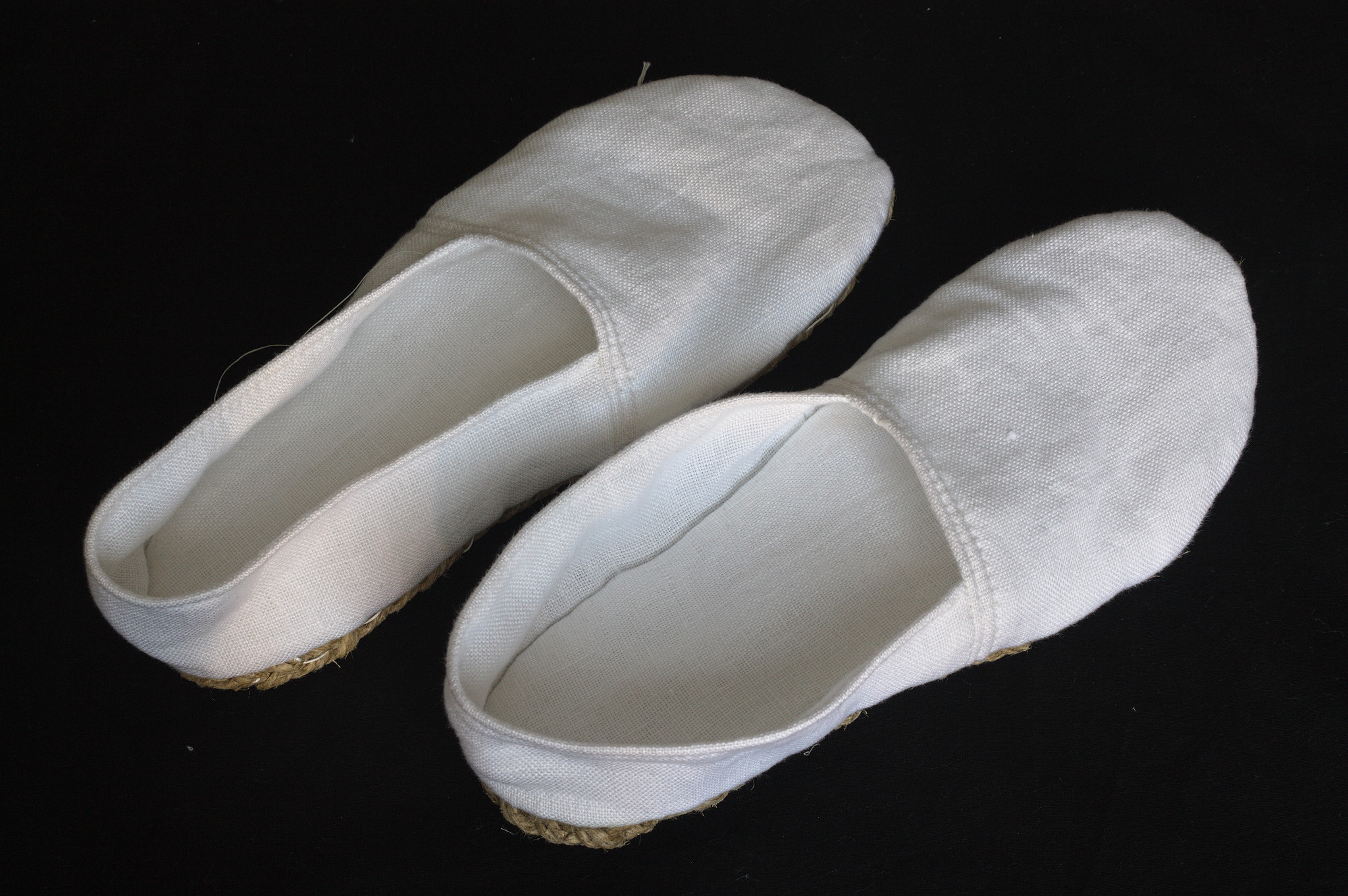
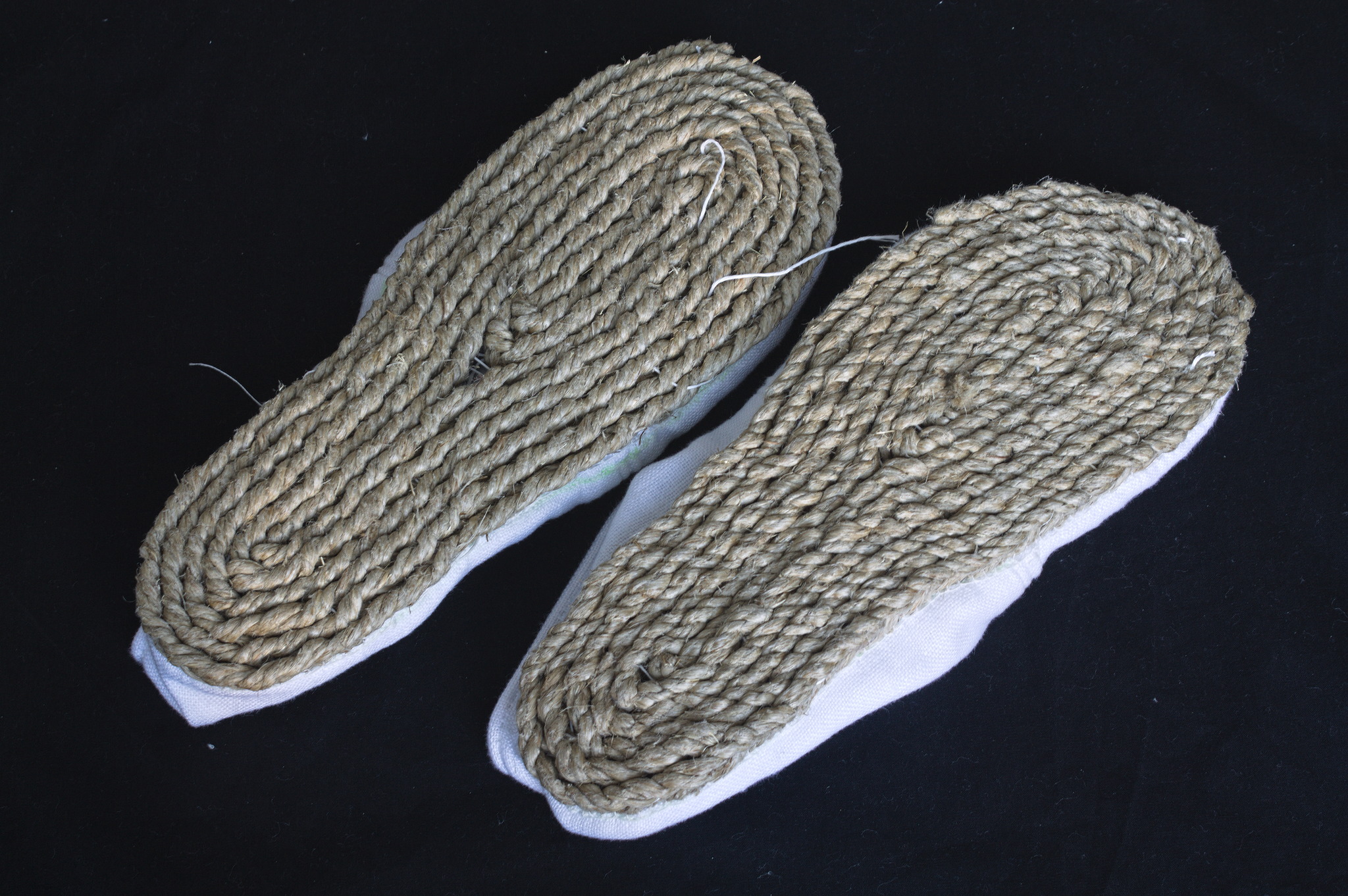
A pair of espadrille-like slippers in white fabric. I hate going out to buy shoes. Even more so I hate buying home shoes, which is what I spend most of my life in, also because no matter what I buy they seem to disintegrate after a season or so. So, obviously, I ve been on a quest to make my own. As a side note, going barefoot (with socks) would only move the wear issue to the socks, so it s not really a solution, and going bare barefoot on ceramic floors is not going to happen, kaythanksbye. For the winter I m trying to make knit and felted slippers; I ve had partial success, and they should be pretty easy to mend (I ve just had to do the first mend, with darning and needle felting, and it seems to have worked nicely). For the summer, I ve been thinking of something sewn, and with the warm season approaching (and the winter slippers needing urgent repairs) I decided it was time to work on them. I already had a shaped (left/right) pattern for a sole from my hiking sandals attempts (a topic for another post), so I started by drafting a front upper, and then I started to have espadrille feeling and decided that a heel guard was needed. As for fabric, looking around in the most easily accessible part of the Stash I ve found the nice heavyweight linen I m using for my Augusta Stays, of which I still have a lot and which looked almost perfect except for one small detail: it s very white. I briefly thought about dyeing, but I wanted to start sewing NOW to test the pattern, so, yeah, maybe it will happen one day, or maybe I ll have patchy dust-grey slippers. If I ll ever have a place where I can do woad dyeing a blue pair will happen, however. Contrary to the typical espadrillas I decided to have a full lining, and some padding between the lining and the sole, using cotton padding leftovers from my ironing board. To add some structure I also decided to add a few rows of cording (and thus make the uppers in two layers of fabric), to help prevent everything from collapsing flat. As for the sole, that s something that is still causing me woes: I do have some rubber sole sheets (see hiking sandals above), but I suspect that they require glueing, which I m not sure would work well with the natural fabric uppers and will probably make repairs harder to do. In the past I tried to make some crocheted rope soles and they were a big failure: they felt really nice on the foot, but they also self-destroyed in a matter of weeks, which is not really the kind of sole I m looking for. the slippers with the braided soles on top. Now I have some ~ 3 mm twine that feels much harsher on the hands while working it (and would probably feel harsher on the feet, but that s what the lining and padding are for), so I hope it may be a bit more resistant, and I tried to make a braided rope sole. Of course, I have published the pattern and instructions for the slippers as well as those for the braided rope sole as #FreeSoftWear. Now what is left is trying everything under daily use, and I hope I will have updates on this at the end of the season, rather than soon :D
2 May 2023

Neil Williams: Carrying Grief

This isn't a book review, although the reason that I am typing this now is because of a book, You Are Not Alone: from the creator and host of Griefcast, Cariad Lloyd, ISBN: 978-1526621870 and I include a handful of quotes from Cariad where there is really no better way of describing things. Many people experience death for the first time as a child, often relating to a family pet. Death is universal but every experience of death is unique. One of the myths of grief is the idea of the Five Stages but this is a misinterpretation. Denial, Anger, Bargaining, Depression and Acceptance represent the five stage model of death and have nothing to do with grief. The five stages were developed from studying those who are terminally ill, the dying, not those who then grieve for the dead person and have to go on living without them. Grief is for those who loved the person who has died and it varies between each of those people just as people vary in how they love someone. The Five Stages end at the moment of death, grief is what comes next and most people do not grieve in stages, it can be more like a tangled knot. Death has a date and time, so that is why the last stage of the model is Acceptance. Grief has no timetable, those who grieve will carry that grief for the rest of their lives. Death starts the process of grief in those who go on living just as it ends the life of the person who is loved. "Grief eases and changes and returns but it never disappears.". I suspect many will have already stopped reading by this point. People do not talk about death and grief enough and this only adds to the burden of those who carry their grief. It can be of enormous comfort to those who have carried grief for some time to talk directly about the dead, not in vague pleasantries but with specific and strong memories. Find a safe place without distractions and talk with the person grieving face to face. Name the dead person. Go to places with strong memories and be there alongside. Talk about the times with that person before their death. Early on, everything about grief is painful and sad. It does ease but it remains unpredictable. Closing it away in a box inside your head (as I did at one point) is like cutting off a damaged limb but keeping the pain in a box on the shelf. You still miss the limb and eventually, the box starts leaking. For me, there were family pets which died but my first job out of university was to work in hospitals, helping the nurses manage the medication regimen and providing specialist advice as a pharmacist. It will not be long in that environment before everyone on the ward gets direct experience of the death of a person. In some ways, this helped me to separate the process of death from the process of grief. I cared for these people as patients but these were not my loved ones. Later, I worked in specialist terminal care units, including providing potential treatments as part of clinical trials. Here, it was not expected for any patient to be discharged alive. The more aggressive chemotherapies had already been tried and had failed, this was about pain relief, symptom management and helping the loved ones. Palliative care is not just about the patient, it involves helping the loved ones to accept what is happening as this provides comfort to the patient by closing the loop. Grief is stressful. One of the most common causes of personal stress is bereavement. The death of your loved one is outside of your control, it has happened, no amount of regret can change that. Then come all the other stresses, maybe about money or having somewhere to live as a result of what else has changed after the death or having to care for other loved ones. In the early stages, the first two years, I found it helpful to imagine my life as a box containing a ball and a button. The button triggers new waves of pain and loss each time it is hit. The ball bounces around the box and hits the button at random. Initially, the button is large and the ball is enormous, so the button is hit almost constantly. Over time, both the button and the ball change size. Starting off at maximum, initially there is only one direction of change. There are two problems with this analogy. First is that the grief ball has infinite energy which does not happen in reality. The ball may get smaller and the button harder to hit but the ball will continue bouncing. Secondly, the life box is not a predictable shape, so the pattern of movement of the ball is unpredictable. A single stress is one thing, but what has happened since has just kept adding more stress for me. Shortly before my father died 5 years ago now, I had moved house. Then, I was made redundant on the day of the first anniversary of my father's death. A year or so later, my long term relationship failed and a few months after that COVID-19 appeared. As the country eased out of the pandemic in 2021, my mother died (unrelated to COVID itself). A year after that, I had to take early retirement. My brother and sister, of course, share a lot of those stressors. My brother, in particular, took the responsibility for organising both funerals and did most of the visits to my mother before her death. The grief is different for each of the surviving family. Cariad's book helped me understand why I was getting frequent ideas about going back to visit places which my father and I both knew. My parents encouraged each of us to work hard to leave Port Talbot (or Pong Toilet locally) behind, in no small part due to the unrestrained pollution and deprivation that is common to small industrial towns across Wales, the midlands and the north of the UK. It wasn't that I wanted to move house back to our ancestral roots. It was my grief leaking out of the box. Yes, I long for mountains and the sea because I'm now living in a remorselessly flat and landlocked region after moving here for employment. However, it was my grief driving those longings - not for the physical surroundings but out of the shared memories with my father. I can visit those memories without moving house, I just need to arrange things so that I can be undisturbed and undistracted. I am not alone with my grief and I am grateful to my friends who have helped whilst carrying their own grief. It is necessary for everyone to think and talk about death and grief. In respect of your own death, no matter how far ahead that may be, consider Advance Care Planning and Expressions of Wish as well as your Will. Talk to people, document what you want. Your loved ones will be grateful and they deserve that much whilst they try to cope with the first onslaught of grief. Talk to your loved ones and get them to do the same for themselves. Normalise talking about death with your family, especially children. None of us are getting out of this alive and we will all leave behind people who will grieve.

29 April 2023

Andrew Cater: Release testing for 11.7 - pictures (with appropriate identity protection)


27 April 2023

Arturo Borrero Gonz lez: Kubecon and CloudNativeCon 2023 Europe summary

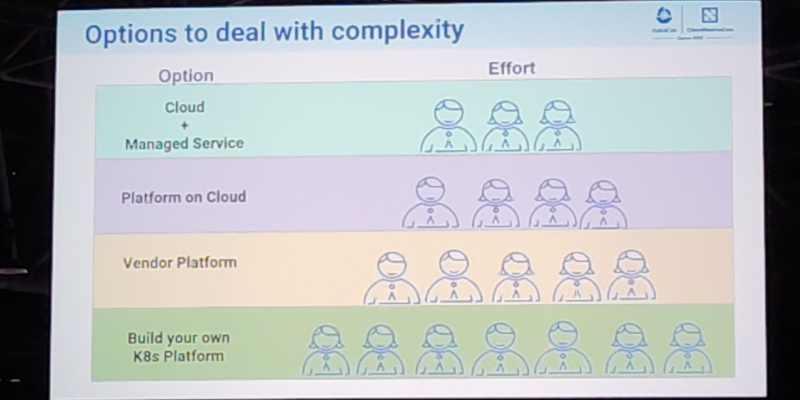
Post logo This post serves as a report from my attendance to Kubecon and CloudNativeCon 2023 Europe that took place in Amsterdam in April 2023. It was my second time physically attending this conference, the first one was in Austin, Texas (USA) in 2017. I also attended once in a virtual fashion. The content here is mostly generated for the sake of my own recollection and learnings, and is written from the notes I took during the event. The very first session was the opening keynote, which reunited the whole crowd to bootstrap the event and share the excitement about the days ahead. Some astonishing numbers were announced: there were more than 10.000 people attending, and apparently it could confidently be said that it was the largest open source technology conference taking place in Europe in recent times. It was also communicated that the next couple iteration of the event will be run in China in September 2023 and Paris in March 2024. More numbers, the CNCF was hosting about 159 projects, involving 1300 maintainers and about 200.000 contributors. The cloud-native community is ever-increasing, and there seems to be a strong trend in the industry for cloud-native technology adoption and all-things related to PaaS and IaaS. The event program had different tracks, and in each one there was an interesting mix of low-level and higher level talks for a variety of audience. On many occasions I found that reading the talk title alone was not enough to know in advance if a talk was a 101 kind of thing or for experienced engineers. But unlike in previous editions, I didn t have the feeling that the purpose of the conference was to try selling me anything. Obviously, speakers would make sure to mention, or highlight in a subtle way, the involvement of a given company in a given solution or piece of the ecosystem. But it was non-invasive and fair enough for me. On a different note, I found the breakout rooms to be often small. I think there were only a couple of rooms that could accommodate more than 500 people, which is a fairly small allowance for 10k attendees. I realized with frustration that the more interesting talks were immediately fully booked, with people waiting in line some 45 minutes before the session time. Because of this, I missed a few important sessions that I ll hopefully watch online later. Finally, on a more technical side, I ve learned many things, that instead of grouping by session I ll group by topic, given how some subjects were mentioned in several talks. On gitops and CI/CD pipelines Most of the mentions went to FluxCD and ArgoCD. At that point there were no doubts that gitops was a mature approach and both flux and argoCD could do an excellent job. ArgoCD seemed a bit more over-engineered to be a more general purpose CD pipeline, and flux felt a bit more tailored for simpler gitops setups. I discovered that both have nice web user interfaces that I wasn t previously familiar with. However, in two different talks I got the impression that the initial setup of them was simple, but migrating your current workflow to gitops could result in a bumpy ride. This is, the challenge is not deploying flux/argo itself, but moving everything into a state that both humans and flux/argo can understand. I also saw some curious mentions to the config drifts that can happen in some cases, even if the goal of gitops is precisely for that to never happen. Such mentions were usually accompanied by some hints on how to operate the situation by hand. Worth mentioning, I missed any practical information about one of the key pieces to this whole gitops story: building container images. Most of the showcased scenarios were using pre-built container images, so in that sense they were simple. Building and pushing to an image registry is one of the two key points we would need to solve in Toolforge Kubernetes if adopting gitops. In general, even if gitops were already in our radar for Toolforge Kubernetes, I think it climbed a few steps in my priority list after the conference. Another learning was this site: https://opengitops.dev/. Group On etcd, performance and resource management I attended a talk focused on etcd performance tuning that was very encouraging. They were basically talking about the exact same problems we have had in Toolforge Kubernetes, like api-server and etcd failure modes, and how sensitive etcd is to disk latency, IO pressure and network throughput. Even though Toolforge Kubernetes scale is small compared to other Kubernetes deployments out there, I found it very interesting to see other s approaches to the same set of challenges. I learned how most Kubernetes components and apps can overload the api-server. Because even the api-server talks to itself. Simple things like kubectl may have a completely different impact on the API depending on usage, for example when listing the whole list of objects (very expensive) vs a single object. The conclusion was to try avoiding hitting the api-server with LIST calls, and use ResourceVersion which avoids full-dumps from etcd (which, by the way, is the default when using bare kubectl get calls). I already knew some of this, and for example the jobs-framework-emailer was already making use of this ResourceVersion functionality. There have been a lot of improvements in the performance side of Kubernetes in recent times, or more specifically, in how resources are managed and used by the system. I saw a review of resource management from the perspective of the container runtime and kubelet, and plans to support fancy things like topology-aware scheduling decisions and dynamic resource claims (changing the pod resource claims without re-defining/re-starting the pods). On cluster management, bootstrapping and multi-tenancy I attended a couple of talks that mentioned kubeadm, and one in particular was from the maintainers themselves. This was of interest to me because as of today we use it for Toolforge. They shared all the latest developments and improvements, and the plans and roadmap for the future, with a special mention to something they called kubeadm operator , apparently capable of auto-upgrading the cluster, auto-renewing certificates and such. I also saw a comparison between the different cluster bootstrappers, which to me confirmed that kubeadm was the best, from the point of view of being a well established and well-known workflow, plus having a very active contributor base. The kubeadm developers invited the audience to submit feature requests, so I did. The different talks confirmed that the basic unit for multi-tenancy in kubernetes is the namespace. Any serious multi-tenant usage should leverage this. There were some ongoing conversations, in official sessions and in the hallway, about the right tool to implement K8s-whitin-K8s, and vcluster was mentioned enough times for me to be convinced it was the right candidate. This was despite of my impression that multiclusters / multicloud are regarded as hard topics in the general community. I definitely would like to play with it sometime down the road. On networking I attended a couple of basic sessions that served really well to understand how Kubernetes instrumented the network to achieve its goal. The conference program had sessions to cover topics ranging from network debugging recommendations, CNI implementations, to IPv6 support. Also, one of the keynote sessions had a reference to how kube-proxy is not able to perform NAT for SIP connections, which is interesting because I believe Netfilter Conntrack could do it if properly configured. One of the conclusions on the CNI front was that Calico has a massive community adoption (in Netfilter mode), which is reassuring, especially considering it is the one we use for Toolforge Kubernetes. Slide On jobs I attended a couple of talks that were related to HPC/grid-like usages of Kubernetes. I was truly impressed by some folks out there who were using Kubernetes Jobs on massive scales, such as to train machine learning models and other fancy AI projects. It is acknowledged in the community that the early implementation of things like Jobs and CronJobs had some limitations that are now gone, or at least greatly improved. Some new functionalities have been added as well. Indexed Jobs, for example, enables each Job to have a number (index) and process a chunk of a larger batch of data based on that index. It would allow for full grid-like features like sequential (or again, indexed) processing, coordination between Job and more graceful Job restarts. My first reaction was: Is that something we would like to enable in Toolforge Jobs Framework? On policy and security A surprisingly good amount of sessions covered interesting topics related to policy and security. It was nice to learn two realities:


  1. kubernetes is capable of doing pretty much anything security-wise and create greatly secured environments.
  2. it does not by default. The defaults are not security-strict on purpose.
It kind of made sense to me: Kubernetes was used for a wide range of use cases, and developers didn t know beforehand to which particular setup they should accommodate the default security levels. One session in particular covered the most basic security features that should be enabled for any Kubernetes system that would get exposed to random end users. In my opinion, the Toolforge Kubernetes setup was already doing a good job in that regard. To my joy, some sessions referred to the Pod Security Admission mechanism, which is one of the key security features we re about to adopt (when migrating away from Pod Security Policy). I also learned a bit more about Secret resources, their current implementation and how to leverage a combo of CSI and RBAC for a more secure usage of external secrets. Finally, one of the major takeaways from the conference was learning about kyverno and kubeaudit. I was previously aware of the OPA Gatekeeper. From the several demos I saw, it was to me that kyverno should help us make Toolforge Kubernetes more sustainable by replacing all of our custom admission controllers with it. I already opened a ticket to track this idea, which I ll be proposing to my team soon. Final notes In general, I believe I learned many things, and perhaps even more importantly I re-learned some stuff I had forgotten because of lack of daily exposure. I m really happy that the cloud native way of thinking was reinforced in me, which I still need because most of my muscle memory to approach systems architecture and engineering is from the old pre-cloud days. List of sessions I attended on the first day: List of sessions I attended on the second day: List of sessions I attended on third day: The videos have been published on Youtube.

17 April 2023

Matthew Garrett: Booting modern Intel CPUs

CPUs can't do anything without being told what to do, which leaves the obvious problem of how do you tell a CPU to do something in the first place. On many CPUs this is handled in the form of a reset vector - an address the CPU is hardcoded to start reading instructions from when power is applied. The address the reset vector points to will typically be some form of ROM or flash that can be read by the CPU even if no other hardware has been configured yet. This allows the system vendor to ship code that will be executed immediately after poweron, configuring the rest of the hardware and eventually getting the system into a state where it can run user-supplied code.

The specific nature of the reset vector on x86 systems has varied over time, but it's effectively always been 16 bytes below the top of the address space - so, 0xffff0 on the 20-bit 8086, 0xfffff0 on the 24-bit 80286, and 0xfffffff0 on the 32-bit 80386. Convention on x86 systems is to have RAM starting at address 0, so the top of address space could be used to house the reset vector with as low a probability of conflicting with RAM as possible.

The most notable thing about x86 here, though, is that when it starts running code from the reset vector, it's still in real mode. x86 real mode is a holdover from a much earlier era of computing. Rather than addresses being absolute (ie, if you refer to a 32-bit address, you store the entire address in a 32-bit or larger register), they are 16-bit offsets that are added to the value stored in a "segment register". Different segment registers existed for code, data, and stack, so a 16-bit address could refer to different actual addresses depending on how it was being interpreted - jumping to a 16 bit address would result in that address being added to the code segment register, while reading from a 16 bit address would result in that address being added to the data segment register, and so on. This is all in order to retain compatibility with older chips, to the extent that even 64-bit x86 starts in real mode with segments and everything (and, also, still starts executing at 0xfffffff0 rather than 0xfffffffffffffff0 - 64-bit mode doesn't support real mode, so there's no way to express a 64-bit physical address using the segment registers, so we still start just below 4GB even though we have massively more address space available).

Anyway. Everyone knows all this. For modern UEFI systems, the firmware that's launched from the reset vector then reprograms the CPU into a sensible mode (ie, one without all this segmentation bullshit), does things like configure the memory controller so you can actually access RAM (a process which involves using CPU cache as RAM, because programming a memory controller is sufficiently hard that you need to store more state than you can fit in registers alone, which means you need RAM, but you don't have RAM until the memory controller is working, but thankfully the CPU comes with several megabytes of RAM on its own in the form of cache, so phew). It's kind of ugly, but that's a consequence of a bunch of well-understood legacy decisions.

Except. This is not how modern Intel x86 boots. It's far stranger than that. Oh, yes, this is what it looks like is happening, but there's a bunch of stuff going on behind the scenes. Let's talk about boot security. The idea of any form of verified boot (such as UEFI Secure Boot) is that a signature on the next component of the boot chain is validated before that component is executed. But what verifies the first component in the boot chain? You can't simply ask the BIOS to verify itself - if an attacker can replace the BIOS, they can replace it with one that simply lies about having done so. Intel's solution to this is called Boot Guard.

But before we get to Boot Guard, we need to ensure the CPU is running in as bug-free a state as possible. So, when the CPU starts up, it examines the system flash and looks for a header that points at CPU microcode updates. Intel CPUs ship with built-in microcode, but it's frequently old and buggy and it's up to the system firmware to include a copy that's new enough that it's actually expected to work reliably. The microcode image is pulled out of flash, a signature is verified, and the new microcode starts running. This is true in both the Boot Guard and the non-Boot Guard scenarios. But for Boot Guard, before jumping to the reset vector, the microcode on the CPU reads an Authenticated Code Module (ACM) out of flash and verifies its signature against a hardcoded Intel key. If that checks out, it starts executing the ACM. Now, bear in mind that the CPU can't just verify the ACM and then execute it directly from flash - if it did, the flash could detect this, hand over a legitimate ACM for the verification, and then feed the CPU different instructions when it reads them again to execute them (a Time of Check vs Time of Use, or TOCTOU, vulnerability). So the ACM has to be copied onto the CPU before it's verified and executed, which means we need RAM, which means the CPU already needs to know how to configure its cache to be used as RAM.

Anyway. We now have an ACM loaded and verified, and it can safely be executed. The ACM does various things, but the most important from the Boot Guard perspective is that it reads a set of write-once fuses in the motherboard chipset that represent the SHA256 of a public key. It then reads the initial block of the firmware (the Initial Boot Block, or IBB) into RAM (or, well, cache, as previously described) and parses it. There's a block that contains a public key - it hashes that key and verifies that it matches the SHA256 from the fuses. It then uses that key to validate a signature on the IBB. If it all checks out, it executes the IBB and everything starts looking like the nice simple model we had before.

Except, well, doesn't this seem like an awfully complicated bunch of code to implement in real mode? And yes, doing all of this modern crypto with only 16-bit registers does sound like a pain. So, it doesn't. All of this is happening in a perfectly sensible 32 bit mode, and the CPU actually switches back to the awful segmented configuration afterwards so it's still compatible with an 80386 from 1986. The "good" news is that at least firmware can detect that the CPU has already configured the cache as RAM and can skip doing that itself.

I'm skipping over some steps here - the ACM actually does other stuff around measuring the firmware into the TPM and doing various bits of TXT setup for people who want DRTM in their lives, but the short version is that the CPU bootstraps itself into a state where it works like a modern CPU and then deliberately turns a bunch of the sensible functionality off again before it starts executing firmware. I'm also missing out the fact that this entire process only kicks off after the Management Engine says it can, which means we're waiting for an entirely independent x86 to boot an entire OS before our CPU even starts pretending to execute the system firmware.

Of course, as mentioned before, on modern systems the firmware will then reprogram the CPU into something actually sensible so OS developers no longer need to care about this[1][2], which means we've bounced between multiple states for no reason other than the possibility that someone wants to run legacy BIOS and then boot DOS on a CPU with like 5 orders of magnitude more transistors than the 8086.

tl;dr why can't my x86 wake up with the gin protected mode already inside it

[1] Ha uh except that on ACPI resume we're going to skip most of the firmware setup code so we still need to handle the CPU being in fucking 16-bit mode because suspend/resume is basically an extremely long reboot cycle

[2] Oh yeah also you probably have multiple cores on your CPU and well bad news about the state most of the cores are in when the OS boots because the firmware never started them up so they're going to come up in 16-bit real mode even if your boot CPU is already in 64-bit protected mode, unless you were using TXT in which case you have a different sort of nightmare that if we're going to try to map it onto real world nightmare concepts is one that involves a lot of teeth. Or, well, that used to be the case, but ACPI 6.4 (released in 2021) provides a mechanism for the OS to ask the firmware to wake the CPU up for it so this is invisible to the OS, but you're still relying on the firmware to actually do the heavy lifting here

comment count unavailable comments

14 April 2023

Russ Allbery: Review: Babel

Review: Babel, by R.F. Kuang
Publisher: Harper Voyage
Copyright: August 2022
ISBN: 0-06-302144-7
Format: Kindle
Pages: 544
Babel, or the Necessity of Violence: An Arcane History of the Oxford Translators' Revolution, to give it its full title, is a standalone dark academia fantasy set in the 1830s and 1840s, primarily in Oxford, England. The first book of R.F. Kuang's previous trilogy, The Poppy War, was nominated for multiple awards and won the Compton Crook Award for best first novel. Babel is her fourth book. Robin Swift, although that was not his name at the time, was born and raised in Canton and educated by an inexplicable English tutor his family could not have afforded. After his entire family dies of cholera, he is plucked from China by a British professor and offered a life in England as his ward. What follows is a paradise of books, a hell of relentless and demanding instruction, and an unpredictably abusive emotional environment, all aiming him towards admission to Oxford University. Robin will join University College and the Royal Institute of Translation. The politics of this imperial Britain are almost precisely the same as in our history, but one of the engines is profoundly different. This world has magic. If words from two different languages are engraved on a metal bar (silver is best), the meaning and nuance lost in translation becomes magical power. With a careful choice of translation pairs, and sometimes additional help from other related words and techniques, the silver bar becomes a persistent spell. Britain's industrial revolution is in overdrive thanks to the country's vast stores of silver and the applied translation prowess of Babel. This means Babel is also the only part of very racist Oxford that accepts non-white students and women. They need translators (barely) more than they care about maintaining social hierarchy; translation pairs only work when the translator is fluent in both languages. The magic is also stronger when meanings are more distinct, which is creating serious worries about classical and European languages. Those are still the bulk of Babel's work, but increased trade and communication within Europe is eroding the meaning distinctions and thus the amount of magical power. More remote languages, such as Chinese and Urdu, are full of untapped promise that Britain's colonial empire wants to capture. Professor Lowell, Robin's dubious benefactor, is a specialist in Chinese languages; Robin is a potential tool for his plans. As Robin discovers shortly after arriving in Oxford, he is not the first of Lowell's tools. His predecessor turned against Babel and is trying to break its chokehold on translation magic. He wants Robin to help. This is one of those books that is hard to review because it does some things exceptionally well and other things that did not work for me. It's not obvious if the latter are flaws in the book or a mismatch between book and reader (or, frankly, flaws in the reader). I'll try to explain as best I can so that you can draw your own conclusions. First, this is one of the all-time great magical system hooks. The way words are tapped for power is fully fleshed out and exceptionally well-done. Kuang is a professional translator, which shows in the attention to detail on translation pairs. I think this is the best-constructed and explained word-based magic system I've read in fantasy. Many word-based systems treat magic as its own separate language that is weirdly universal. Here, Kuang does the exact opposite, and the result is immensely satisfying. A fantasy reader may expect exploration of this magic system to be the primary point of the book, however, and this is not the case. It is an important part of the book, and its implications are essential to the plot resolution, but this is not the type of fantasy novel where the plot is driven by character exploration of the magic system. The magic system exists, the characters use it, and we do get some crunchy details, but the heart of the book is elsewhere. If you were expecting the typical relationship of a fantasy novel to its magic system, you may get a bit wrong-footed. Similarly, this is historical fantasy, but it is the type of historical fantasy where the existence of magic causes no significant differences. For some people, this is a pet peeve; personally, I don't mind that choice in the abstract, but some of the specifics bugged me. The villains of this book assert that any country could have done what Britain did in developing translation magic, and thus their hoarding of it is not immoral. They are obviously partly lying (this is a classic justification for imperialism), but it's not clear from the book how they are lying. Technologies (and magic here works like a technology) tend to concentrate power when they require significant capital investment, and tend to dilute power when they are portable and easy to teach. Translation magic feels like the latter, but its effect in the book is clearly the former, and I was never sure why. England is not an obvious choice to be a translation superpower. Yes, it's a colonial empire, but India, southeast Asia, and most certainly Africa (the continent largely not appearing in this book) are home to considerably more languages from more wildly disparate families than western Europe. Translation is not a peculiarly European idea, and this magic system does not seem hard to stumble across. It's not clear why England, and Oxford in particular, is so dramatically far ahead. There is some sign that Babel is keeping the mechanics of translation magic secret, but that secret has leaked, seems easy to develop independently, and is simple enough that a new student can perform basic magic with a few hours of instruction. This does not feel like the kind of power that would be easy to concentrate, let alone to the extreme extent required by the last quarter of this book. The demand for silver as a base material for translation magic provides a justification for mercantilism that avoids the confusing complexities of currency economics in our actual history, so fine, I guess, but it was a bit disappointing for this great of an idea for a magic system to have this small of an impact on politics. I'll come to the actual thrust of this book in a moment, but first something else Babel does exceptionally well: dark academia. The remainder of Robin's cohort at Oxford is Remy, a dark-skinned Muslim from Calcutta; Victoire, a Haitian woman raised in France; and Letty, the daughter of a British admiral. All of them are non-white except Letty, and Letty and Victoire additionally have to deal with the blatant sexism of the time. (For example, they have to live several miles from Oxford because women living near the college would be a "distraction.") The interpersonal dynamics between the four are exceptionally well done. Kuang captures the dislocation of going away to college, the unsettled life upheaval that makes it both easy and vital to form suddenly tight friendships, and the way that the immense pressure from classes and exams leaves one so devoid of spare emotional capacity that those friendships become both unbreakable and badly strained. Robin and Remy almost immediately become inseparable in that type of college friendship in which profound trust and constant companionship happen first and learning about the other person happens afterwards. It's tricky to talk about this without spoilers, but one of the things Kuang sets up with this friend group is a pointed look at intersectionality. Babel has gotten a lot of positive review buzz, and I think this is one of the reasons why. Kuang does not pass over or make excuses for characters in a place where many other books do. This mostly worked for me, but with a substantial caveat that I think you may want to be aware of before you dive into this book. Babel is set in the 1830s, but it is very much about the politics of 2022. That does not necessarily mean that the politics are off for the 1830s; I haven't done the research to know, and it's possible I'm seeing the Tiffany problem (Jo Walton's observation that Tiffany is a historical 12th century women's name, but an author can't use it as a medieval name because readers think it sounds too modern). But I found it hard to shake the feeling that the characters make sense of their world using modern analytical frameworks of imperialism, racism, sexism, and intersectional feminism, although without using modern terminology, and characters from the 1830s would react somewhat differently. This is a valid authorial choice; all books are written for the readers of the time when they're published. But as with magical systems that don't change history, it's a pet peeve for some readers. If that's you, be aware that's the feel I got from it. The true center of this book is not the magic system or the history. It's advertised directly in the title the necessity of violence although it's not until well into the book before the reader knows what that means. This is a book about revolution, what revolution means, what decisions you have to make along the way, how the personal affects the political, and the inadequacy of reform politics. It is hard, uncomfortable, and not gentle on its characters. The last quarter of this book was exceptional, and I understand why it's getting so much attention. Kuang directly confronts the desire for someone else to do the necessary work, the hope that surely the people with power will see reason, and the feeling of despair when there are no good plans and every reason to wait and do nothing when atrocities are about to happen. If you are familiar with radical politics, these aren't new questions, but this is not the sort of thing that normally shows up in fantasy. It does not surprise me that Babel struck a nerve with readers a generation or two younger than me. It captures that heady feeling on the cusp of adulthood when everything is in flux and one is assembling an independent politics for the first time. Once I neared the end of the book, I could not put it down. The ending is brutal, but I think it was the right ending for this book. There are two things, though, that I did not like about the political arc. The first is that Victoire is a much more interesting character than Robin, but is sidelined for most of the book. The difference of perspectives between her and Robin is the heart of what makes the end of this book so good, and I wish that had started 300 pages earlier. Or, even better, I wish Victoire has been the protagonist; I liked Robin, but he's a very predictable character for most of the book. Victoire is not; even the conflicts she had earlier in the book, when she didn't get much attention in the story, felt more dynamic and more thoughtful than Robin's mix of guilt and anxiety. The second is that I wish Kuang had shown more of Robin's intellectual evolution. All of the pieces of why he makes the decisions that he does are present in this book, and Kuang shows his emotional state (sometimes in agonizing detail) at each step, but the sense-making, the development of theory and ideology beneath the actions, is hinted at but not shown. This is a stylistic choice with no one right answer, but it felt odd because so much of the rest of the plot is obvious and telegraphed. If the reader shares Robin's perspective, I think it's easy to fill in the gaps, but it felt odd to read Robin giving clearly thought-out political analyses at the end of the book without seeing the hashing-out and argument with friends required to develop those analyses. I felt like I had to do a lot of heavy lifting as the reader, work that I wish had been done directly by the book. My final note about this book is that I found much of it extremely predictable. I think that's part of why reviewers describe it as accessible and easy to read; accessibility and predictability can be two sides of the same coin. Kuang did not intend for this book to be subtle, and I think that's part of the appeal. But very few of Robin's actions for the first three-quarters of the book surprised me, and that's not always the reading experience I want. The end of the book is different, and I therefore found it much more gripping, but it takes a while to get there. Babel is, for better or worse, the type of fantasy where the politics, economics, and magic system exist primarily to justify the plot the author wanted. I don't think the societal position of the Institute of Translation that makes the ending possible is that believable given the nature of the technology in question and the politics of the time, and if you are inclined to dig into the specifics of the world-building, I think you will find it frustrating. Where it succeeds brilliantly is in capturing the social dynamics of hothouse academic cohorts, and in making a sharp and unfortunately timely argument about the role of violence in political change, in a way that the traditionally conservative setting of fantasy rarely does. I can't say Babel blew me away, but I can see why others liked it so much. If I had to guess, I'd say that the closer one is in age to the characters in the book and to that moment of political identity construction, the more it's likely to appeal. Rating: 7 out of 10

9 April 2023

Marco d'Itri: Installing Debian 12 on a Banana Pi M5

I recently bought a Banana Pi BPI-M5, which uses the Amlogic S905X3 SoC: these are my notes about installing Debian on it. While this SoC is supported by the upstream U-Boot it is not supported by the Debian U-Boot package, so debian-installer does not work. Do not be fooled by seeing the DTB file for this exact board being distributed with debian-installer: all DTB files are, and it does not mean that the board is supposed to work. As I documented in #1033504, the Debian kernels are currently missing some patches needed to support the SD card reader. I started by downloading an Armbian Banana Pi image and booted it from an SD card. From there I partitioned the eMMC, which always appears as /dev/mmcblk1:
parted /dev/mmcblk1
(parted) mklabel msdos
(parted) mkpart primary ext4 4194304B -1
(parted) align-check optimal 1
mkfs.ext4 /dev/mmcblk1p1
Make sure to leave enough space before the first partition, or else U-Boot will overwrite it: as it is common for many ARM SoCs, U-Boot lives somewhere in the gap between the MBR and the first partition. I looked at Armbian's /usr/lib/u-boot/platform_install.sh and installed U-Boot by manually copying it to the eMMC:
dd if=/usr/lib/linux-u-boot-edge-bananapim5_22.08.6_arm64/u-boot.bin of=/dev/mmcblk1 bs=1 count=442
dd if=/usr/lib/linux-u-boot-edge-bananapim5_22.08.6_arm64/u-boot.bin of=/dev/mmcblk1 bs=512 skip=1 seek=1
Beware: Armbian's U-Boot 2022.10 is buggy, so I had to use an older image. I did not want to install a new system, so I copied over my old Cubieboard install:
mount /dev/mmcblk1p1 /mnt/
rsync -xaHSAX --delete --numeric-ids root@old-server:/ /mnt/ --exclude='/tmp/*' --exclude='/var/tmp/*'
Since the Cubieboard has a 32 bit CPU and the Banana Pi requires an arm64 kernel I enabled the architecture and installed a new kernel:
dpkg --add-architecture arm64
apt update
apt install linux-image-arm64
apt purge linux-image-6.1.0-6-armmp linux-image-armmp
At some point I will cross-grade the entire system. Even if ttyS0 exists it is not the serial console, which appears as ttyAML0 instead. Nowadays systemd automatically start a getty if the serial console is enabled on the kernel command line, so I just had to disable the old manually-configured getty:
systemctl disable serial-getty@ttyS0.service
I wanted to have a fully working flash-kernel, so I used Armbian's boot.scr as a template to create /etc/flash-kernel/bootscript/bootscr.meson and then added a custom entry for the Banana Pi to /etc/flash-kernel/db:
Machine: Banana Pi BPI-M5
Kernel-Flavors: arm64
DTB-Id: amlogic/meson-sm1-bananapi-m5.dtb
U-Boot-Initrd-Address: 0x0
Boot-Initrd-Path: /boot/uInitrd
Boot-Initrd-Path-Version: yes
Boot-Script-Path: /boot/boot.scr
U-Boot-Script-Name: bootscr.meson
Required-Packages: u-boot-tools
All things considered I do not think that I would recommend to Debian users to buy Amlogic-based boards since there are many other better supported SoCs.

6 April 2023

Reproducible Builds: Reproducible Builds in March 2023

Welcome to the March 2023 report from the Reproducible Builds project. In these reports we outline the most important things that we have been up to over the past month. As a quick recap, the motivation behind the reproducible builds effort is to ensure no malicious flaws have been introduced during compilation and distributing processes. It does this by ensuring identical results are always generated from a given source, thus allowing multiple third-parties to come to a consensus on whether a build was compromised. If you are interested in contributing to the project, please do visit our Contribute page on our website.

News There was progress towards making the Go programming language reproducible this month, with the overall goal remaining making the Go binaries distributed from Google and by Arch Linux (and others) to be bit-for-bit identical. These changes could become part of the upcoming version 1.21 release of Go. An issue in the Go issue tracker (#57120) is being used to follow and record progress on this.
Arnout Engelen updated our website to add and update reproducibility-related links for NixOS to reproducible.nixos.org. [ ]. In addition, Chris Lamb made some cosmetic changes to our presentations and resources page. [ ][ ]
Intel published a guide on how to reproducibly build their Trust Domain Extensions (TDX) firmware. TDX here refers to an Intel technology that combines their existing virtual machine and memory encryption technology with a new kind of virtual machine guest called a Trust Domain. This runs the CPU in a mode that protects the confidentiality of its memory contents and its state from any other software.
A reproducibility-related bug from early 2020 in the GNU GCC compiler as been fixed. The issues was that if GCC was invoked via the as frontend, the -ffile-prefix-map was being ignored. We were tracking this in Debian via the build_path_captured_in_assembly_objects issue. It has now been fixed and will be reflected in GCC version 13.
Holger Levsen will present at foss-north 2023 in April of this year in Gothenburg, Sweden on the topic of Reproducible Builds, the first ten years.
Anthony Andreoli, Anis Lounis, Mourad Debbabi and Aiman Hanna of the Security Research Centre at Concordia University, Montreal published a paper this month entitled On the prevalence of software supply chain attacks: Empirical study and investigative framework:
Software Supply Chain Attacks (SSCAs) typically compromise hosts through trusted but infected software. The intent of this paper is twofold: First, we present an empirical study of the most prominent software supply chain attacks and their characteristics. Second, we propose an investigative framework for identifying, expressing, and evaluating characteristic behaviours of newfound attacks for mitigation and future defense purposes. We hypothesize that these behaviours are statistically malicious, existed in the past, and thus could have been thwarted in modernity through their cementation x-years ago. [ ]

On our mailing list this month:
  • Mattia Rizzolo is asking everyone in the community to save the date for the 2023 s Reproducible Builds summit which will take place between October 31st and November 2nd at Dock Europe in Hamburg, Germany. Separate announcement(s) to follow. [ ]
  • ahojlm posted an message announcing a new project which is the first project offering bootstrappable and verifiable builds without any binary seeds. That is to say, a way of providing a verifiable path towards trusted software development platform without relying on pre-provided binary code in order to prevent against various forms of compiler backdoors. The project s homepage is hosted on Tor (mirror).

The minutes and logs from our March 2023 IRC meeting have been published. In case you missed this one, our next IRC meeting will take place on Tuesday 25th April at 15:00 UTC on #reproducible-builds on the OFTC network.
and as a Valentines Day present, Holger Levsen wrote on his blog on 14th February to express his thanks to OSUOSL for their continuous support of reproducible-builds.org. [ ]

Debian Vagrant Cascadian developed an easier setup for testing debian packages which uses sbuild s unshare mode along and reprotest, our tool for building the same source code twice in different environments and then checking the binaries produced by each build for any differences. [ ]
Over 30 reviews of Debian packages were added, 14 were updated and 7 were removed this month, all adding to our knowledge about identified issues. A number of issues were updated, including the Holger Levsen updating build_path_captured_in_assembly_objects to note that it has been fixed for GCC 13 [ ] and Vagrant Cascadian added new issues to mark packages where the build path is being captured via the Rust toolchain [ ] as well as new categorisation for where virtual packages have nondeterministic versioned dependencies [ ].

Upstream patches The Reproducible Builds project detects, dissects and attempts to fix as many currently-unreproducible packages as possible. We endeavour to send all of our patches upstream where appropriate. This month, we wrote a large number of such patches, including: In addition, Vagrant Cascadian filed a bug with a patch to ensure GNU Modula-2 supports the SOURCE_DATE_EPOCH environment variable.

Testing framework The Reproducible Builds project operates a comprehensive testing framework (available at tests.reproducible-builds.org) in order to check packages and other artifacts for reproducibility. In March, the following changes were made by Holger Levsen:
  • Arch Linux-related changes:
    • Build Arch packages in /tmp/archlinux-ci/$SRCPACKAGE instead of /tmp/$SRCPACKAGE. [ ]
    • Start 2/3 of the builds on the o1 node, the rest on o2. [ ]
    • Add graphs for Arch Linux (and OpenWrt) builds. [ ]
    • Toggle Arch-related builders to debug why a specific node overloaded. [ ][ ][ ][ ]
  • Node health checks:
    • Detect SetuptoolsDeprecationWarning tracebacks in Python builds. [ ]
    • Detect failures do perform chdist calls. [ ][ ]
  • OSUOSL node migration.
    • Install megacli packages that are needed for hardware RAID. [ ][ ]
    • Add health check and maintenance jobs for new nodes. [ ]
    • Add mail config for new nodes. [ ][ ]
    • Handle a node running in the future correctly. [ ][ ]
    • Migrate some nodes to Debian bookworm. [ ]
    • Fix nodes health overview for osuosl3. [ ]
    • Make sure the /srv/workspace directory is owned by by the jenkins user. [ ]
    • Use .debian.net names everywhere, except when communicating with the outside world. [ ]
    • Grant fpierret access to a new node. [ ]
    • Update documentation. [ ]
    • Misc migration changes. [ ][ ][ ][ ][ ][ ][ ][ ]
  • Misc changes:
    • Enable fail2ban everywhere and monitor it with munin [ ].
    • Gracefully deal with non-existing Alpine schroots. [ ]
In addition, Roland Clobus is continuing his work on reproducible Debian ISO images:
  • Add/update openQA configuration [ ], and use the actual timestamp for openQA builds [ ].
  • Moved adding the user to the docker group from the janitor_setup_worker script to the (more general) update_jdn.sh script. [ ]
  • Use the (short-term) reproducible source when generating live-build images. [ ]

diffoscope development diffoscope is our in-depth and content-aware diff utility. Not only can it locate and diagnose reproducibility issues, it can provide human-readable diffs from many kinds of binary formats as well. This month, Mattia Rizzolo released versions 238, and Chris Lamb released versions 239 and 240. Chris Lamb also made the following changes:
  • Fix compatibility with PyPDF 3.x, and correctly restore test data. [ ]
  • Rework PDF annotation handling into a separate method. [ ]
In addition, Holger Levsen performed a long-overdue overhaul of the Lintian overrides in the Debian packaging [ ][ ][ ][ ], and Mattia Rizzolo updated the packaging to silence an include_package_data=True [ ], fixed the build under Debian bullseye [ ], fixed tool name in a list of tools permitted to be absent during package build tests [ ] and as well as documented sending out an email upon [ ]. In addition, Vagrant Cascadian updated the version of GNU Guix to 238 [ and 239 [ ]. Vagrant also updated reprotest to version 0.7.23. [ ]

Other development work Bernhard M. Wiedemann published another monthly report about reproducibility within openSUSE


If you are interested in contributing to the Reproducible Builds project, please visit our Contribute page on our website. However, you can get in touch with us via:

3 April 2023

Russ Allbery: Review: The Nordic Theory of Everything

Review: The Nordic Theory of Everything, by Anu Partanen
Publisher: Harper
Copyright: 2016
Printing: June 2017
ISBN: 0-06-231656-7
Format: Kindle
Pages: 338
Anu Partanen is a Finnish journalist who immigrated to the United States. The Nordic Theory of Everything, subtitled In Search of a Better Life, is an attempt to explain the merits of Finnish approaches to government and society to a US audience. It was her first book. If you follow US policy discussion at all, you have probably been exposed to many of the ideas in this book. There was a time when the US left was obsessed with comparisons between the US and Nordic countries, and while that obsession has faded somewhat, Nordic social systems are still discussed with envy and treated as a potential model. Many of the topics of this book are therefore predictable: parental leave, vacation, health care, education, happiness, life expectancy, all the things that are far superior in Nordic countries than in the United States by essentially every statistical measure available, and which have been much-discussed. Partanen brings two twists to this standard analysis. The first is that this book is part memoir: she fell in love with a US writer and made the decision to move to the US rather than asking him to move to Finland. She therefore experienced the transition between social and government systems first-hand and writes memorably on the resulting surprise, trade-offs, anxiety, and bafflement. The second, which I've not seen previously in this policy debate, is a fascinating argument that Finland is a far more individualistic country than the United States precisely because of its policy differences.
Most people, including myself, assumed that part of what made the United States a great country, and such an exceptional one, was that you could live your life relatively unencumbered by the downside of a traditional, old-fashioned society: dependency on the people you happened to be stuck with. In America you had the liberty to express your individuality and choose your own community. This would allow you to interact with family, neighbors, and fellow citizens on the basis of who you were, rather than on what you were obligated to do or expected to be according to old-fashioned thinking. The longer I lived in America, therefore, and the more places I visited and the more people I met and the more American I myself became the more puzzled I grew. For it was exactly those key benefits of modernity freedom, personal independence, and opportunity that seemed, from my outsider s perspective, in a thousand small ways to be surprisingly missing from American life today. Amid the anxiety and stress of people s daily lives, those grand ideals were looking more theoretical than actual.
The core of this argument is that the structure of life in the United States essentially coerces dependency on other people: employers, spouses, parents, children, and extended family. Because there is no universally available social support system, those relationships become essential for any hope of a good life, and often for survival. If parents do not heavily manage their children's education, there is a substantial risk of long-lasting damage to the stability and happiness of their life. If children do not care for their elderly parents, they may receive no care at all. Choosing not to get married often means choosing precarity and exhaustion because navigating society without pooling resources with someone else is incredibly difficult.
It was as if America, land of the Hollywood romance, was in practice mired in a premodern time when marriage was, first and foremost, not an expression of love, but rather a logistical and financial pact to help families survive by joining resources.
Partanen contrasts this with what she calls the Nordic theory of love:
What Lars Tr g rdh came to understand during his years in the United States was that the overarching ambition of Nordic societies during the course of the twentieth century, and into the twenty-first, has not been to socialize the economy at all, as is often mistakenly assumed. Rather the goal has been to free the individual from all forms of dependency within the family and in civil society: the poor from charity, wives from husbands, adult children from parents, and elderly parents from their children. The express purpose of this freedom is to allow all those human relationships to be unencumbered by ulterior motives and needs, and thus to be entirely free, completely authentic, and driven purely by love.
She sees this as the common theme through most of the policy differences discussed in this book. The Finnish approach is to provide neutral and universal logistical support for most of life's expected challenges: birth, child-rearing, education, health, unemployment, and aging. This relieves other social relations family, employer, church of the corrosive strain of dependency and obligation. It also ensures people's basic well-being isn't reliant on accidents of association.
If the United States is so worried about crushing entrepreneurship and innovation, a good place to start would be freeing start-ups and companies from the burdens of babysitting the nation s citizens.
I found this fascinating as a persuasive technique. Partanen embraces the US ideal of individualism and points out that, rather than being collectivist as the US right tends to assume, Finland is better at fostering individualism and independence because the government works to removes unnecessary premodern constraints on individual lives. The reason why so many Americans are anxious and frantic is not a personal failing or bad luck. It's because the US social system is deeply hostile to healthy relationships and individual independence. It demands a constant level of daily problem-solving and crisis management that is profoundly exhausting, nearly impossible to navigate alone, and damaging to the ideal of equal relationships. Whether this line of argument will work is another question, and I'm dubious for reasons that Partanen (probably wisely) avoids. She presents the Finnish approach as a discovery that the US would benefit from, and the US approach as a well-intentioned mistake. I think this is superficially appealing; almost all corners of US political belief at least give lip service to individualism and independence. However, advocates of political change will eventually need to address the fact that many US conservatives see this type of social coercion as an intended feature of society rather than a flaw. This is most obvious when one looks at family relationships. Partanen treats the idea that marriage should be a free choice between equals rather than an economic necessity as self-evident, but there is a significant strain of US political thought that embraces punishing people for not staying within the bounds of a conservative ideal of family. One will often find, primarily but not exclusively among the more religious, a contention that the basic unit of society is the (heterosexual, patriarchal) family, not the individual, and that the suffering of anyone outside that structure is their own fault. Not wanting to get married, be the primary caregiver for one's parents, or abandon a career in order to raise children is treated as malignant selfishness and immorality rather than a personal choice that can be enabled by a modern social system. Here, I think Partanen is accurate to identify the Finnish social system as more modern. It embraces the philosophical concept of modernity, namely that social systems can be improved and social structures are not timeless. This is going to be a hard argument to swallow for those who see the pressure towards forming dependency ties within families as natural, and societal efforts to relieve those pressures as government meddling. In that intellectual framework, rather than an attempt to improve the quality of life, government logistical support is perceived as hostility to traditional family obligations and an attempt to replace "natural" human ties with "artificial" dependence on government services. Partanen doesn't attempt to have that debate. Two other things struck me in this book. The first is that, in Partanen's presentation, Finns expect high-quality services from their government and work to improve it when it falls short. This sounds like an obvious statement, but I don't think it is in the context of US politics, and neither does Partanen. She devotes a chapter to the topic, subtitled "Go ahead: ask what your country can do for you." This is, to me, one of the most frustrating aspects of US political debate. Our attitude towards government is almost entirely hostile and negative even among the political corners that would like to see government do more. Failures of government programs are treated as malice, malfeasance, or inherent incompetence: in short, signs the program should never have been attempted, rather than opportunities to learn and improve. Finland had mediocre public schools, decided to make them better, and succeeded. The moment US public schools start deteriorating, we throw much of our effort into encouraging private competition and dismantling the public school system. Partanen doesn't draw this connection, but I see a link between the US desire for market solutions to societal problems and the level of exhaustion and anxiety that is so common in US life. Solving problems by throwing them open to competition is a way of giving up, of saying we have no idea how to improve something and are hoping someone else will figure it out for a profit. Analyzing the failures of an existing system and designing incremental improvements is hard and slow work. Throwing out the system and hoping some corporation will come up with something better is disruptive but easy. When everyone is already overwhelmed by life and devoid of energy to work on complex social problems, it's tempting to give up on compromise and coalition-building and let everyone go their separate ways on their own dime. We cede the essential work of designing a good society to start-ups. This creates a vicious cycle: the resulting market solutions are inevitably gated by wealth and thus precarious and artificially scarce, which in turn creates more anxiety and stress. The short-term energy savings from not having to wrestle with a hard problem is overwhelmed by the long-term cost of having to navigate a complex and adversarial economic relationship. That leads into the last point: schools. There's a lot of discussion here about school quality and design, which I won't review in detail but which is worth reading. What struck me about Partanen's discussion, though, is how easy the Finnish system is to use. Finnish parents just send their kids to the most convenient school and rarely give that a second thought. The critical property is that all the schools are basically fine, and therefore there is no need to place one's child in an exceptional school to ensure they have a good life. It's axiomatic in the US that more choice is better. This is a constant refrain in our political discussion around schools: parental choice, parental control, options, decisions, permission, matching children to schools tailored for their needs. Those choices are almost entirely absent in Finland, at least in Partanen's description, and the amount of mental and emotional energy this saves is astonishing. Parents simply don't think about this, and everything is fine. I think we dramatically underestimate the negative effects of constantly having to make difficult decisions with significant consequences, and drastically overstate the benefits of having every aspect of life be full of major decision points. To let go of that attempt at control, however illusory, people have to believe in a baseline of quality that makes the choice less fraught. That's precisely what Finland provides by expecting high-quality social services and working to fix them when they fall short, an effort that the United States has by and large abandoned. A lot of non-fiction books could be turned into long articles without losing much substance, and I think The Nordic Theory of Everything falls partly into that trap. Partanen repeats the same ideas from several different angles, and the book felt a bit padded towards the end. If you're already familiar with the policy comparisons between the US and Nordic countries, you will have seen a lot of this before, and the book bogs down when Partanen strays too far from memoir and personal reactions. But the focus on individualism and eliminating dependency is new, at least to me, and is such an illuminating way to look at the contrast that I think the book is worth reading just for that. Rating: 7 out of 10

1 April 2023

Paul Wise: FLOSS Activities March 2023

Focus This month I didn't have any particular focus. I just worked on issues in my info bubble.

Changes

Issues

Review

Administration
  • Debian QA services: disabled updating jessie as it was removed
  • Debian IRC: rescued #debian-s390x from inactive person
  • Debian servers: repair a /etc git repo
  • Debian wiki: unblock IP addresses, approve accounts

Communication
  • Respond to queries from Debian users and contributors on the mailing lists and IRC

Sponsors The gensim, sptag, purple-discord, harmony work was sponsored. All other work was done on a volunteer basis.

28 March 2023

Shirish Agarwal: Three Ancient Civilizations, Tesla, IMU and other things.

Three Ancient Civilizations I have been reading books for a long time but somehow I don t know how or when I realized that there are three medieval civilizations that time and again seem to fascinate the authors, either American or European. The three civilizations that do get mentioned every now and then are Egyptian, Greece and Roman and I have no clue as to why. Another two civilizations closely follow them, Mesopotian and Sumerian Civilizations. Why most of the authors irrespective of genre are mystified by these 5 civilizations is beyond me but they also conjure lot of imagination. Now if I was on the right side of 40, maybe 22-25 onwards and had the means or the opportunity or both, I would have gone and tried to learn as much as I can about these various civilizations. There is still a lot of enigma attached and it seems that the official explanations of how these various civilizations ended seems too good to be true or whatever. One of the more interesting points has been how Greece mythology were subverted and flipped to make Roman mythology. Apparently, many Greek gods have a Roman aspect and the qualities are opposite to the Greek aspect. I haven t learned the reason why it is so, yet. Apart from the Iziko Natural Museum in South Africa which did have its share of wonders (the whole South African experience was surreal) nowhere I have witnessed stuff from the above other than in Africa. The whole thing seemed just surreal. I could go on but as I don t know what is real and what is mythology when it comes to various cultures including whatever little I experienced in Africa.

Recent History Having said the above, I also find that many Indians somehow do not either know or are not interested in understanding recent history. I am talking of the time between 1800s and 1950 s. British apologist Mr. William Dalrymple in his book Anarchy has shared how the East Indian Company looted India and gave less than half back to the British. So where did the rest of the money go ? It basically went to the tax free havens around UK. That tale is very much similar as to how the Axis gold was used to have an entity called Switzerland from scratch. There have been books as well as couple of miniseries or two that document that fact. But for me this is not the real story, this is more of a side dish per-se. The real story perhaps is how the EU peace project was born. Because of Hitler s rise and the way World War 2 happened, the Allies knew that they couldn t subjugate Germany through another humiliation as they had after World War 1, who knows another Hitler might come. So while they did fine the Germans, they also helped them via the Marshall plan. Germany also realized that it had been warring with other European countries for over a thousand years as well as quite a few other countries. The first sort of treaty immediately in that regard was the Western Union Alliance . While on the face of it, it was a defense treaty between sovereign powers. Interestingly, as can be seen UK at that point in time wanted more countries to be part of the Treaty of Dunkirk. This was quickly followed 2 years later by the Treaty of London which made way for the Council of Europe to be formed. The reason I am sharing is because a lot of Indians whom I meet on SM do not know that UK was instrumental front and center for the formation of European Union (EU). Also they perhaps don t realize that after World War 2, UK was greatly diminished both financially and militarily. That is the reason it gave back its erstwhile colonies including India and other countries. If UK hadn t become a part of EU they would have been called the poor man of Europe as they had been called few hundred years ago. In fact, after Brexit, UK has been the only nation that has fallen on the dire times as much as it has. They have practically no food, supermarkets running out of veggies and whatnot. electricity sky-high as they don t want to curtail profits of the gas companies which in turn donate money to Tory coffers. Sadly, most of my brethen do not know that hence I have had to share it. The EU became a power in its own right due to Gravity model of trade. The U.S. is attempting the same thing and calls it near off-shoring.

Tesla, Investor Day Presentation, Toyota and Free Software The above brings it nicely about the Tesla Investor Day that happened couple of weeks back. The biggest news though was broken just 24 hours earlier when the governor of Monterrey] shared how Giga New Mexico would be happening and shared some site photographs. There have been bits of news on that off-and-on since then. Toyota meanwhile has been putting lot of anti-EV posters and whatnot. In fact, India seems to be mirroring Japan in a lot of ways, the only difference is Japan is still superior economically than India. I do sincerely hope that at least Japan can get out of its lost decades. I have asked privately if any of the Japanese translators would be willing to translate the anti-EV poster so we may all know.
Anti-EV poster by Toyota

Urinal outside UK Embassy About a week back few people chanting Khalistan entered the Indian Embassy and showed the flags. This was in the UK. Now in a retaliatory move against a friendly nation, we want to make a Urinal. after making a security downgrade for the Embassy. The pettiness being shown by Indian Govt. especially when it has very few friends. There are also plans to do the same for the U.S. and other embassies as well. I do not know when we will get common sense.

Holi Just a few weeks back, Holi happened. It used to be a sweet and innocent festival. But from the last few years, I have been hearing and seeing sexual harassment on the rise. In fact, saw quite a few lewd posts written to women on Holi or verge of Holi and also videos of the same. One of the most shameful incidents occurred with a Japanese tourist. She was not only sexually molested but also terrorized that if she were to report then she could be raped and murdered. She promptly left Delhi. Once it was reported in mass media, Delhi Police tried to show it was doing something. FWIW, Delhi s crime against women stats have been at record high and conviction at record low.

Ecommerce Rules being changed, logistics gonna be tough. Just today there have been changes in Ecommerce rules (again) and this is gonna be a pain for almost all companies big and small with the exception of Adani and Ambani. Almost all players including the Tatas have called them out. Of course, all such laws have been passed without debate. In such a scenario, small startups like these cannot hope to grow their business.

Inertial Measurement Unit or Full Body Tracking with cheap hardware. Apparently, a whole host of companies are looking at 3-D tracking using cheap hardware apparently known as IMU sensors. Sooner than later cheap 3-D glasses and IMU sensors should explode the 3-D market worldwide. There is a huge potential and upside to it and will probably overtake smartphones as well. But then the danger will be of our thoughts, ideas, nightmares etc. to be shared without our consent. The more we tap into a virtual world, what stops anybody from tapping into our brain and practically stealing our identity in more than one way. I dunno if there are any Debian people or FSF projects working on the above. Even Laws can only do so much, until and unless there are alternative places and ways it would be difficult to say the least

Mike Gabriel: UbuntuTouch Focal OTA-1 has been released

Yesterday, the UBports core developer team released Ubuntu Touch Focal OTA-1 (In fact, Raoul, Marius and I were in a conference call when Marius froze and said: the PR team already posted the release blog post; the post is out, but we haven't released yet... ahhhh... panic... Shall I?, Marius said, and we said: GO!!! This is why the release occurred in public five hours ahead of schedule. OMG.) For all the details, please study:

https://ubports.com/blog/ubports-news-1/post/ubuntu-touch-ota-1-focal-re... Credits Thanks to all the developers, other contributors and funding providers that helped to reach this massive milestone. I dare to drop some names here at the risk of forgetting others (I put them in alphanumerical order): Alan, Alfred, Brian, Christoffer, Daniel, Eline, Florian, Guido, Jami, Jonathan, Kugi, Lionel, Maciek, Mardy, Marius, Mike, Nigel, Nikita, Raoul, Ratchanan, Robert, Sergey. I have been involved in the development and release process over the past four years and I feel honoured to work with so many fine and genuine people on such a unique project. It is a pleasure to work with you guys!!! Also a big thanks to the UBports Foundation and its BoD for being the umbrella organisation of all Ubuntu Touch related initiatives. Consumer-Ready Ubuntu Touch is one of the very few Open Source projects that brings fourth a 100% FLOSS phone operating system. After using Ubuntu Touch myself for several months now, I can confirm that it is a consumer grade OS that can be used by non-tech people as a daily driver for mobile communications and connectivity. Go for it and try it out.

27 March 2023

Simon Josefsson: OpenPGP master key on Nitrokey Start

I ve used hardware-backed OpenPGP keys since 2006 when I imported newly generated rsa1024 subkeys to a FSFE Fellowship card. This worked well for several years, and I recall buying more ZeitControl cards for multi-machine usage and backup purposes. As a side note, I recall being unsatisfied with the weak 1024-bit RSA subkeys at the time my primary key was a somewhat stronger 1280-bit RSA key created back in 2002 but OpenPGP cards at the time didn t support more than 1024 bit RSA, and were (and still often are) also limited to power-of-two RSA key sizes which I dislike. I had my master key on disk with a strong password for a while, mostly to refresh expiration time of the subkeys and to sign other s OpenPGP keys. At some point I stopped carrying around encrypted copies of my master key. That was my main setup when I migrated to a new stronger RSA 3744 bit key with rsa2048 subkeys on a YubiKey NEO back in 2014. At that point, signing other s OpenPGP keys was a rare enough occurrence that I settled with bringing out my offline machine to perform this operation, transferring the public key to sign on USB sticks. In 2019 I re-evaluated my OpenPGP setup and ended up creating a offline Ed25519 key with subkeys on a FST-01G running Gnuk. My approach for signing other s OpenPGP keys were still to bring out my offline machine and sign things using the master secret using USB sticks for storage and transport. Which meant I almost never did that, because it took too much effort. So my 2019-era Ed25519 key still only has a handful of signatures on it, since I had essentially stopped signing other s keys which is the traditional way of getting signatures in return. None of this caused any critical problem for me because I continued to use my old 2014-era RSA3744 key in parallel with my new 2019-era Ed25519 key, since too many systems didn t handle Ed25519. However, during 2022 this changed, and the only remaining environment that I still used my RSA3744 key for was in Debian and they require OpenPGP signatures on the new key to allow it to replace an older key. I was in denial about this sub-optimal solution during 2022 and endured its practical consequences, having to use the YubiKey NEO (which I had replaced with a permanently inserted YubiKey Nano at some point) for Debian-related purposes alone. In December 2022 I bought a new laptop and setup a FST-01SZ with my Ed25519 key, and while I have taken a vacation from Debian, I continue to extend the expiration period on the old RSA3744-key in case I will ever have to use it again, so the overall OpenPGP setup was still sub-optimal. Having two valid OpenPGP keys at the same time causes people to use both for email encryption (leading me to have to use both devices), and the WKD Key Discovery protocol doesn t like two valid keys either. At FOSDEM 23 I ran into Andre Heinecke at GnuPG and I couldn t help complain about how complex and unsatisfying all OpenPGP-related matters were, and he mildly ignored my rant and asked why I didn t put the master key on another smartcard. The comment sunk in when I came home, and recently I connected all the dots and this post is a summary of what I did to move my offline OpenPGP master key to a Nitrokey Start. First a word about device choice, I still prefer to use hardware devices that are as compatible with free software as possible, but the FST-01G or FST-01SZ are no longer easily available for purchase. I got a comment about Nitrokey start in my last post, and had two of them available to experiment with. There are things to dislike with the Nitrokey Start compared to the YubiKey (e.g., relative insecure chip architecture, the bulkier form factor and lack of FIDO/U2F/OATH support) but as far as I know there is no more widely available owner-controlled device that is manufactured for an intended purpose of implementing an OpenPGP card. Thus it hits the sweet spot for me.
Nitrokey Start
The first step is to run latest firmware on the Nitrokey Start for bug-fixes and important OpenSSH 9.0 compatibility and there are reproducible-built firmware published that you can install using pynitrokey. I run Trisquel 11 aramo on my laptop, which does not include the Python Pip package (likely because it promotes installing non-free software) so that was a slight complication. Building the firmware locally may have worked, and I would like to do that eventually to confirm the published firmware, however to save time I settled with installing the Ubuntu 22.04 packages on my machine:
$ sha256sum python3-pip*
ded6b3867a4a4cbaff0940cab366975d6aeecc76b9f2d2efa3deceb062668b1c  python3-pip_22.0.2+dfsg-1ubuntu0.2_all.deb
e1561575130c41dc3309023a345de337e84b4b04c21c74db57f599e267114325  python3-pip-whl_22.0.2+dfsg-1ubuntu0.2_all.deb
$ doas dpkg -i python3-pip*
...
$ doas apt install -f
...
$
Installing pynitrokey downloaded a bunch of dependencies, and it would be nice to audit the license and security vulnerabilities for each of them. (Verbose output below slightly redacted.)
jas@kaka:~$ pip3 install --user pynitrokey
Collecting pynitrokey
  Downloading pynitrokey-0.4.34-py3-none-any.whl (572 kB)
Collecting frozendict~=2.3.4
  Downloading frozendict-2.3.5-cp310-cp310-manylinux_2_17_x86_64.manylinux2014_x86_64.whl (113 kB)
Requirement already satisfied: click<9,>=8.0.0 in /usr/lib/python3/dist-packages (from pynitrokey) (8.0.3)
Collecting ecdsa
  Downloading ecdsa-0.18.0-py2.py3-none-any.whl (142 kB)
Collecting python-dateutil~=2.7.0
  Downloading python_dateutil-2.7.5-py2.py3-none-any.whl (225 kB)
Collecting fido2<2,>=1.1.0
  Downloading fido2-1.1.0-py3-none-any.whl (201 kB)
Collecting tlv8
  Downloading tlv8-0.10.0.tar.gz (16 kB)
  Preparing metadata (setup.py) ... done
Requirement already satisfied: certifi>=14.5.14 in /usr/lib/python3/dist-packages (from pynitrokey) (2020.6.20)
Requirement already satisfied: pyusb in /usr/lib/python3/dist-packages (from pynitrokey) (1.2.1.post1)
Collecting urllib3~=1.26.7
  Downloading urllib3-1.26.15-py2.py3-none-any.whl (140 kB)
Collecting spsdk<1.8.0,>=1.7.0
  Downloading spsdk-1.7.1-py3-none-any.whl (684 kB)
Collecting typing_extensions~=4.3.0
  Downloading typing_extensions-4.3.0-py3-none-any.whl (25 kB)
Requirement already satisfied: cryptography<37,>=3.4.4 in /usr/lib/python3/dist-packages (from pynitrokey) (3.4.8)
Collecting intelhex
  Downloading intelhex-2.3.0-py2.py3-none-any.whl (50 kB)
Collecting nkdfu
  Downloading nkdfu-0.2-py3-none-any.whl (16 kB)
Requirement already satisfied: requests in /usr/lib/python3/dist-packages (from pynitrokey) (2.25.1)
Collecting tqdm
  Downloading tqdm-4.65.0-py3-none-any.whl (77 kB)
Collecting nrfutil<7,>=6.1.4
  Downloading nrfutil-6.1.7.tar.gz (845 kB)
  Preparing metadata (setup.py) ... done
Requirement already satisfied: cffi in /usr/lib/python3/dist-packages (from pynitrokey) (1.15.0)
Collecting crcmod
  Downloading crcmod-1.7.tar.gz (89 kB)
  Preparing metadata (setup.py) ... done
Collecting libusb1==1.9.3
  Downloading libusb1-1.9.3-py3-none-any.whl (60 kB)
Collecting pc_ble_driver_py>=0.16.4
  Downloading pc_ble_driver_py-0.17.0-cp310-cp310-manylinux_2_17_x86_64.manylinux2014_x86_64.whl (2.9 MB)
Collecting piccata
  Downloading piccata-2.0.3-py3-none-any.whl (21 kB)
Collecting protobuf<4.0.0,>=3.17.3
  Downloading protobuf-3.20.3-cp310-cp310-manylinux_2_12_x86_64.manylinux2010_x86_64.whl (1.1 MB)
Collecting pyserial
  Downloading pyserial-3.5-py2.py3-none-any.whl (90 kB)
Collecting pyspinel>=1.0.0a3
  Downloading pyspinel-1.0.3.tar.gz (58 kB)
  Preparing metadata (setup.py) ... done
Requirement already satisfied: pyyaml in /usr/lib/python3/dist-packages (from nrfutil<7,>=6.1.4->pynitrokey) (5.4.1)
Requirement already satisfied: six>=1.5 in /usr/lib/python3/dist-packages (from python-dateutil~=2.7.0->pynitrokey) (1.16.0)
Collecting pylink-square<0.11.9,>=0.8.2
  Downloading pylink_square-0.11.1-py2.py3-none-any.whl (78 kB)
Collecting jinja2<3.1,>=2.11
  Downloading Jinja2-3.0.3-py3-none-any.whl (133 kB)
Collecting bincopy<17.11,>=17.10.2
  Downloading bincopy-17.10.3-py3-none-any.whl (17 kB)
Collecting fastjsonschema>=2.15.1
  Downloading fastjsonschema-2.16.3-py3-none-any.whl (23 kB)
Collecting astunparse<2,>=1.6
  Downloading astunparse-1.6.3-py2.py3-none-any.whl (12 kB)
Collecting oscrypto~=1.2
  Downloading oscrypto-1.3.0-py2.py3-none-any.whl (194 kB)
Collecting deepmerge==0.3.0
  Downloading deepmerge-0.3.0-py2.py3-none-any.whl (7.6 kB)
Collecting pyocd<=0.31.0,>=0.28.3
  Downloading pyocd-0.31.0-py3-none-any.whl (12.5 MB)
Collecting click-option-group<0.6,>=0.3.0
  Downloading click_option_group-0.5.5-py3-none-any.whl (12 kB)
Collecting pycryptodome<4,>=3.9.3
  Downloading pycryptodome-3.17-cp35-abi3-manylinux_2_17_x86_64.manylinux2014_x86_64.whl (2.1 MB)
Collecting pyocd-pemicro<1.2.0,>=1.1.1
  Downloading pyocd_pemicro-1.1.5-py3-none-any.whl (9.0 kB)
Requirement already satisfied: colorama<1,>=0.4.4 in /usr/lib/python3/dist-packages (from spsdk<1.8.0,>=1.7.0->pynitrokey) (0.4.4)
Collecting commentjson<1,>=0.9
  Downloading commentjson-0.9.0.tar.gz (8.7 kB)
  Preparing metadata (setup.py) ... done
Requirement already satisfied: asn1crypto<2,>=1.2 in /usr/lib/python3/dist-packages (from spsdk<1.8.0,>=1.7.0->pynitrokey) (1.4.0)
Collecting pypemicro<0.2.0,>=0.1.9
  Downloading pypemicro-0.1.11-py3-none-any.whl (5.7 MB)
Collecting libusbsio>=2.1.11
  Downloading libusbsio-2.1.11-py3-none-any.whl (247 kB)
Collecting sly==0.4
  Downloading sly-0.4.tar.gz (60 kB)
  Preparing metadata (setup.py) ... done
Collecting ruamel.yaml<0.18.0,>=0.17
  Downloading ruamel.yaml-0.17.21-py3-none-any.whl (109 kB)
Collecting cmsis-pack-manager<0.3.0
  Downloading cmsis_pack_manager-0.2.10-py2.py3-none-manylinux1_x86_64.whl (25.1 MB)
Collecting click-command-tree==1.1.0
  Downloading click_command_tree-1.1.0-py3-none-any.whl (3.6 kB)
Requirement already satisfied: bitstring<3.2,>=3.1 in /usr/lib/python3/dist-packages (from spsdk<1.8.0,>=1.7.0->pynitrokey) (3.1.7)
Collecting hexdump~=3.3
  Downloading hexdump-3.3.zip (12 kB)
  Preparing metadata (setup.py) ... done
Collecting fire
  Downloading fire-0.5.0.tar.gz (88 kB)
  Preparing metadata (setup.py) ... done
Requirement already satisfied: wheel<1.0,>=0.23.0 in /usr/lib/python3/dist-packages (from astunparse<2,>=1.6->spsdk<1.8.0,>=1.7.0->pynitrokey) (0.37.1)
Collecting humanfriendly
  Downloading humanfriendly-10.0-py2.py3-none-any.whl (86 kB)
Collecting argparse-addons>=0.4.0
  Downloading argparse_addons-0.12.0-py3-none-any.whl (3.3 kB)
Collecting pyelftools
  Downloading pyelftools-0.29-py2.py3-none-any.whl (174 kB)
Collecting milksnake>=0.1.2
  Downloading milksnake-0.1.5-py2.py3-none-any.whl (9.6 kB)
Requirement already satisfied: appdirs>=1.4 in /usr/lib/python3/dist-packages (from cmsis-pack-manager<0.3.0->spsdk<1.8.0,>=1.7.0->pynitrokey) (1.4.4)
Collecting lark-parser<0.8.0,>=0.7.1
  Downloading lark-parser-0.7.8.tar.gz (276 kB)
  Preparing metadata (setup.py) ... done
Requirement already satisfied: MarkupSafe>=2.0 in /usr/lib/python3/dist-packages (from jinja2<3.1,>=2.11->spsdk<1.8.0,>=1.7.0->pynitrokey) (2.0.1)
Collecting asn1crypto<2,>=1.2
  Downloading asn1crypto-1.5.1-py2.py3-none-any.whl (105 kB)
Collecting wrapt
  Downloading wrapt-1.15.0-cp310-cp310-manylinux_2_5_x86_64.manylinux1_x86_64.manylinux_2_17_x86_64.manylinux2014_x86_64.whl (78 kB)
Collecting future
  Downloading future-0.18.3.tar.gz (840 kB)
  Preparing metadata (setup.py) ... done
Collecting psutil>=5.2.2
  Downloading psutil-5.9.4-cp36-abi3-manylinux_2_12_x86_64.manylinux2010_x86_64.manylinux_2_17_x86_64.manylinux2014_x86_64.whl (280 kB)
Collecting capstone<5.0,>=4.0
  Downloading capstone-4.0.2-py2.py3-none-manylinux1_x86_64.whl (2.1 MB)
Collecting naturalsort<2.0,>=1.5
  Downloading naturalsort-1.5.1.tar.gz (7.4 kB)
  Preparing metadata (setup.py) ... done
Collecting prettytable<3.0,>=2.0
  Downloading prettytable-2.5.0-py3-none-any.whl (24 kB)
Collecting intervaltree<4.0,>=3.0.2
  Downloading intervaltree-3.1.0.tar.gz (32 kB)
  Preparing metadata (setup.py) ... done
Collecting ruamel.yaml.clib>=0.2.6
  Downloading ruamel.yaml.clib-0.2.7-cp310-cp310-manylinux_2_17_x86_64.manylinux2014_x86_64.manylinux_2_24_x86_64.whl (485 kB)
Collecting termcolor
  Downloading termcolor-2.2.0-py3-none-any.whl (6.6 kB)
Collecting sortedcontainers<3.0,>=2.0
  Downloading sortedcontainers-2.4.0-py2.py3-none-any.whl (29 kB)
Requirement already satisfied: wcwidth in /usr/lib/python3/dist-packages (from prettytable<3.0,>=2.0->pyocd<=0.31.0,>=0.28.3->spsdk<1.8.0,>=1.7.0->pynitrokey) (0.2.5)
Building wheels for collected packages: nrfutil, crcmod, sly, tlv8, commentjson, hexdump, pyspinel, fire, intervaltree, lark-parser, naturalsort, future
  Building wheel for nrfutil (setup.py) ... done
  Created wheel for nrfutil: filename=nrfutil-6.1.7-py3-none-any.whl size=898520 sha256=de6f8803f51d6c26d24dc7df6292064a468ff3f389d73370433fde5582b84a10
  Stored in directory: /home/jas/.cache/pip/wheels/39/2b/9b/98ab2dd716da746290e6728bdb557b14c1c9a54cb9ed86e13b
  Building wheel for crcmod (setup.py) ... done
  Created wheel for crcmod: filename=crcmod-1.7-cp310-cp310-linux_x86_64.whl size=31422 sha256=5149ac56fcbfa0606760eef5220fcedc66be560adf68cf38c604af3ad0e4a8b0
  Stored in directory: /home/jas/.cache/pip/wheels/85/4c/07/72215c529bd59d67e3dac29711d7aba1b692f543c808ba9e86
  Building wheel for sly (setup.py) ... done
  Created wheel for sly: filename=sly-0.4-py3-none-any.whl size=27352 sha256=f614e413918de45c73d1e9a8dca61ca07dc760d9740553400efc234c891f7fde
  Stored in directory: /home/jas/.cache/pip/wheels/a2/23/4a/6a84282a0d2c29f003012dc565b3126e427972e8b8157ea51f
  Building wheel for tlv8 (setup.py) ... done
  Created wheel for tlv8: filename=tlv8-0.10.0-py3-none-any.whl size=11266 sha256=3ec8b3c45977a3addbc66b7b99e1d81b146607c3a269502b9b5651900a0e2d08
  Stored in directory: /home/jas/.cache/pip/wheels/e9/35/86/66a473cc2abb0c7f21ed39c30a3b2219b16bd2cdb4b33cfc2c
  Building wheel for commentjson (setup.py) ... done
  Created wheel for commentjson: filename=commentjson-0.9.0-py3-none-any.whl size=12092 sha256=28b6413132d6d7798a18cf8c76885dc69f676ea763ffcb08775a3c2c43444f4a
  Stored in directory: /home/jas/.cache/pip/wheels/7d/90/23/6358a234ca5b4ec0866d447079b97fedf9883387d1d7d074e5
  Building wheel for hexdump (setup.py) ... done
  Created wheel for hexdump: filename=hexdump-3.3-py3-none-any.whl size=8913 sha256=79dfadd42edbc9acaeac1987464f2df4053784fff18b96408c1309b74fd09f50
  Stored in directory: /home/jas/.cache/pip/wheels/26/28/f7/f47d7ecd9ae44c4457e72c8bb617ef18ab332ee2b2a1047e87
  Building wheel for pyspinel (setup.py) ... done
  Created wheel for pyspinel: filename=pyspinel-1.0.3-py3-none-any.whl size=65033 sha256=01dc27f81f28b4830a0cf2336dc737ef309a1287fcf33f57a8a4c5bed3b5f0a6
  Stored in directory: /home/jas/.cache/pip/wheels/95/ec/4b/6e3e2ee18e7292d26a65659f75d07411a6e69158bb05507590
  Building wheel for fire (setup.py) ... done
  Created wheel for fire: filename=fire-0.5.0-py2.py3-none-any.whl size=116951 sha256=3d288585478c91a6914629eb739ea789828eb2d0267febc7c5390cb24ba153e8
  Stored in directory: /home/jas/.cache/pip/wheels/90/d4/f7/9404e5db0116bd4d43e5666eaa3e70ab53723e1e3ea40c9a95
  Building wheel for intervaltree (setup.py) ... done
  Created wheel for intervaltree: filename=intervaltree-3.1.0-py2.py3-none-any.whl size=26119 sha256=5ff1def22ba883af25c90d90ef7c6518496fcd47dd2cbc53a57ec04cd60dc21d
  Stored in directory: /home/jas/.cache/pip/wheels/fa/80/8c/43488a924a046b733b64de3fac99252674c892a4c3801c0a61
  Building wheel for lark-parser (setup.py) ... done
  Created wheel for lark-parser: filename=lark_parser-0.7.8-py2.py3-none-any.whl size=62527 sha256=3d2ec1d0f926fc2688d40777f7ef93c9986f874169132b1af590b6afc038f4be
  Stored in directory: /home/jas/.cache/pip/wheels/29/30/94/33e8b58318aa05cb1842b365843036e0280af5983abb966b83
  Building wheel for naturalsort (setup.py) ... done
  Created wheel for naturalsort: filename=naturalsort-1.5.1-py3-none-any.whl size=7526 sha256=bdecac4a49f2416924548cae6c124c85d5333e9e61c563232678ed182969d453
  Stored in directory: /home/jas/.cache/pip/wheels/a6/8e/c9/98cfa614fff2979b457fa2d9ad45ec85fa417e7e3e2e43be51
  Building wheel for future (setup.py) ... done
  Created wheel for future: filename=future-0.18.3-py3-none-any.whl size=492037 sha256=57a01e68feca2b5563f5f624141267f399082d2f05f55886f71b5d6e6cf2b02c
  Stored in directory: /home/jas/.cache/pip/wheels/5e/a9/47/f118e66afd12240e4662752cc22cefae5d97275623aa8ef57d
Successfully built nrfutil crcmod sly tlv8 commentjson hexdump pyspinel fire intervaltree lark-parser naturalsort future
Installing collected packages: tlv8, sortedcontainers, sly, pyserial, pyelftools, piccata, naturalsort, libusb1, lark-parser, intelhex, hexdump, fastjsonschema, crcmod, asn1crypto, wrapt, urllib3, typing_extensions, tqdm, termcolor, ruamel.yaml.clib, python-dateutil, pyspinel, pypemicro, pycryptodome, psutil, protobuf, prettytable, oscrypto, milksnake, libusbsio, jinja2, intervaltree, humanfriendly, future, frozendict, fido2, ecdsa, deepmerge, commentjson, click-option-group, click-command-tree, capstone, astunparse, argparse-addons, ruamel.yaml, pyocd-pemicro, pylink-square, pc_ble_driver_py, fire, cmsis-pack-manager, bincopy, pyocd, nrfutil, nkdfu, spsdk, pynitrokey
  WARNING: The script nitropy is installed in '/home/jas/.local/bin' which is not on PATH.
  Consider adding this directory to PATH or, if you prefer to suppress this warning, use --no-warn-script-location.
Successfully installed argparse-addons-0.12.0 asn1crypto-1.5.1 astunparse-1.6.3 bincopy-17.10.3 capstone-4.0.2 click-command-tree-1.1.0 click-option-group-0.5.5 cmsis-pack-manager-0.2.10 commentjson-0.9.0 crcmod-1.7 deepmerge-0.3.0 ecdsa-0.18.0 fastjsonschema-2.16.3 fido2-1.1.0 fire-0.5.0 frozendict-2.3.5 future-0.18.3 hexdump-3.3 humanfriendly-10.0 intelhex-2.3.0 intervaltree-3.1.0 jinja2-3.0.3 lark-parser-0.7.8 libusb1-1.9.3 libusbsio-2.1.11 milksnake-0.1.5 naturalsort-1.5.1 nkdfu-0.2 nrfutil-6.1.7 oscrypto-1.3.0 pc_ble_driver_py-0.17.0 piccata-2.0.3 prettytable-2.5.0 protobuf-3.20.3 psutil-5.9.4 pycryptodome-3.17 pyelftools-0.29 pylink-square-0.11.1 pynitrokey-0.4.34 pyocd-0.31.0 pyocd-pemicro-1.1.5 pypemicro-0.1.11 pyserial-3.5 pyspinel-1.0.3 python-dateutil-2.7.5 ruamel.yaml-0.17.21 ruamel.yaml.clib-0.2.7 sly-0.4 sortedcontainers-2.4.0 spsdk-1.7.1 termcolor-2.2.0 tlv8-0.10.0 tqdm-4.65.0 typing_extensions-4.3.0 urllib3-1.26.15 wrapt-1.15.0
jas@kaka:~$
Then upgrading the device worked remarkable well, although I wish that the tool would have printed URLs and checksums for the firmware files to allow easy confirmation.
jas@kaka:~$ PATH=$PATH:/home/jas/.local/bin
jas@kaka:~$ nitropy start list
Command line tool to interact with Nitrokey devices 0.4.34
:: 'Nitrokey Start' keys:
FSIJ-1.2.15-5D271572: Nitrokey Nitrokey Start (RTM.12.1-RC2-modified)
jas@kaka:~$ nitropy start update
Command line tool to interact with Nitrokey devices 0.4.34
Nitrokey Start firmware update tool
Platform: Linux-5.15.0-67-generic-x86_64-with-glibc2.35
System: Linux, is_linux: True
Python: 3.10.6
Saving run log to: /tmp/nitropy.log.gc5753a8
Admin PIN: 
Firmware data to be used:
- FirmwareType.REGNUAL: 4408, hash: ...b'72a30389' valid (from ...built/RTM.13/regnual.bin)
- FirmwareType.GNUK: 129024, hash: ...b'25a4289b' valid (from ...prebuilt/RTM.13/gnuk.bin)
Currently connected device strings:
Device: 
    Vendor: Nitrokey
   Product: Nitrokey Start
    Serial: FSIJ-1.2.15-5D271572
  Revision: RTM.12.1-RC2-modified
    Config: *:*:8e82
       Sys: 3.0
     Board: NITROKEY-START-G
initial device strings: [ 'name': '', 'Vendor': 'Nitrokey', 'Product': 'Nitrokey Start', 'Serial': 'FSIJ-1.2.15-5D271572', 'Revision': 'RTM.12.1-RC2-modified', 'Config': '*:*:8e82', 'Sys': '3.0', 'Board': 'NITROKEY-START-G' ]
Please note:
- Latest firmware available is: 
  RTM.13 (published: 2022-12-08T10:59:11Z)
- provided firmware: None
- all data will be removed from the device!
- do not interrupt update process - the device may not run properly!
- the process should not take more than 1 minute
Do you want to continue? [yes/no]: yes
...
Starting bootloader upload procedure
Device: Nitrokey Start FSIJ-1.2.15-5D271572
Connected to the device
Running update!
Do NOT remove the device from the USB slot, until further notice
Downloading flash upgrade program...
Executing flash upgrade...
Waiting for device to appear:
  Wait 20 seconds.....
Downloading the program
Protecting device
Finish flashing
Resetting device
Update procedure finished. Device could be removed from USB slot.
Currently connected device strings (after upgrade):
Device: 
    Vendor: Nitrokey
   Product: Nitrokey Start
    Serial: FSIJ-1.2.19-5D271572
  Revision: RTM.13
    Config: *:*:8e82
       Sys: 3.0
     Board: NITROKEY-START-G
device can now be safely removed from the USB slot
final device strings: [ 'name': '', 'Vendor': 'Nitrokey', 'Product': 'Nitrokey Start', 'Serial': 'FSIJ-1.2.19-5D271572', 'Revision': 'RTM.13', 'Config': '*:*:8e82', 'Sys': '3.0', 'Board': 'NITROKEY-START-G' ]
finishing session 2023-03-16 21:49:07.371291
Log saved to: /tmp/nitropy.log.gc5753a8
jas@kaka:~$ 
jas@kaka:~$ nitropy start list
Command line tool to interact with Nitrokey devices 0.4.34
:: 'Nitrokey Start' keys:
FSIJ-1.2.19-5D271572: Nitrokey Nitrokey Start (RTM.13)
jas@kaka:~$ 
Before importing the master key to this device, it should be configured. Note the commands in the beginning to make sure scdaemon/pcscd is not running because they may have cached state from earlier cards. Change PIN code as you like after this, my experience with Gnuk was that the Admin PIN had to be changed first, then you import the key, and then you change the PIN.
jas@kaka:~$ gpg-connect-agent "SCD KILLSCD" "SCD BYE" /bye
OK
ERR 67125247 Slut p  fil <GPG Agent>
jas@kaka:~$ ps auxww grep -e pcsc -e scd
jas        11651  0.0  0.0   3468  1672 pts/0    R+   21:54   0:00 grep --color=auto -e pcsc -e scd
jas@kaka:~$ gpg --card-edit
Reader ...........: 20A0:4211:FSIJ-1.2.19-5D271572:0
Application ID ...: D276000124010200FFFE5D2715720000
Application type .: OpenPGP
Version ..........: 2.0
Manufacturer .....: unmanaged S/N range
Serial number ....: 5D271572
Name of cardholder: [not set]
Language prefs ...: [not set]
Salutation .......: 
URL of public key : [not set]
Login data .......: [not set]
Signature PIN ....: forced
Key attributes ...: rsa2048 rsa2048 rsa2048
Max. PIN lengths .: 127 127 127
PIN retry counter : 3 3 3
Signature counter : 0
KDF setting ......: off
Signature key ....: [none]
Encryption key....: [none]
Authentication key: [none]
General key info..: [none]
gpg/card> admin
Admin commands are allowed
gpg/card> kdf-setup
gpg/card> passwd
gpg: OpenPGP card no. D276000124010200FFFE5D2715720000 detected
1 - change PIN
2 - unblock PIN
3 - change Admin PIN
4 - set the Reset Code
Q - quit
Your selection? 3
PIN changed.
1 - change PIN
2 - unblock PIN
3 - change Admin PIN
4 - set the Reset Code
Q - quit
Your selection? q
gpg/card> name
Cardholder's surname: Josefsson
Cardholder's given name: Simon
gpg/card> lang
Language preferences: sv
gpg/card> sex
Salutation (M = Mr., F = Ms., or space): m
gpg/card> login
Login data (account name): jas
gpg/card> url
URL to retrieve public key: https://josefsson.org/key-20190320.txt
gpg/card> forcesig
gpg/card> key-attr
Changing card key attribute for: Signature key
Please select what kind of key you want:
   (1) RSA
   (2) ECC
Your selection? 2
Please select which elliptic curve you want:
   (1) Curve 25519
   (4) NIST P-384
Your selection? 1
The card will now be re-configured to generate a key of type: ed25519
Note: There is no guarantee that the card supports the requested size.
      If the key generation does not succeed, please check the
      documentation of your card to see what sizes are allowed.
Changing card key attribute for: Encryption key
Please select what kind of key you want:
   (1) RSA
   (2) ECC
Your selection? 2
Please select which elliptic curve you want:
   (1) Curve 25519
   (4) NIST P-384
Your selection? 1
The card will now be re-configured to generate a key of type: cv25519
Changing card key attribute for: Authentication key
Please select what kind of key you want:
   (1) RSA
   (2) ECC
Your selection? 2
Please select which elliptic curve you want:
   (1) Curve 25519
   (4) NIST P-384
Your selection? 1
The card will now be re-configured to generate a key of type: ed25519
gpg/card> 
jas@kaka:~$ gpg --card-edit
Reader ...........: 20A0:4211:FSIJ-1.2.19-5D271572:0
Application ID ...: D276000124010200FFFE5D2715720000
Application type .: OpenPGP
Version ..........: 2.0
Manufacturer .....: unmanaged S/N range
Serial number ....: 5D271572
Name of cardholder: Simon Josefsson
Language prefs ...: sv
Salutation .......: Mr.
URL of public key : https://josefsson.org/key-20190320.txt
Login data .......: jas
Signature PIN ....: not forced
Key attributes ...: ed25519 cv25519 ed25519
Max. PIN lengths .: 127 127 127
PIN retry counter : 3 3 3
Signature counter : 0
KDF setting ......: on
Signature key ....: [none]
Encryption key....: [none]
Authentication key: [none]
General key info..: [none]
jas@kaka:~$ 
Once setup, bring out your offline machine and boot it and mount your USB stick with the offline key. The paths below will be different, and this is using a somewhat unorthodox approach of working with fresh GnuPG configuration paths that I chose for the USB stick.
jas@kaka:/media/jas/2c699cbd-b77e-4434-a0d6-0c4965864296$ cp -a gnupghome-backup-masterkey gnupghome-import-nitrokey-5D271572
jas@kaka:/media/jas/2c699cbd-b77e-4434-a0d6-0c4965864296$ gpg --homedir $PWD/gnupghome-import-nitrokey-5D271572 --edit-key B1D2BD1375BECB784CF4F8C4D73CF638C53C06BE
gpg (GnuPG) 2.2.27; Copyright (C) 2021 Free Software Foundation, Inc.
This is free software: you are free to change and redistribute it.
There is NO WARRANTY, to the extent permitted by law.
Secret key is available.
sec  ed25519/D73CF638C53C06BE
     created: 2019-03-20  expired: 2019-10-22  usage: SC  
     trust: ultimate      validity: expired
[ expired] (1). Simon Josefsson <simon@josefsson.org>
gpg> keytocard
Really move the primary key? (y/N) y
Please select where to store the key:
   (1) Signature key
   (3) Authentication key
Your selection? 1
sec  ed25519/D73CF638C53C06BE
     created: 2019-03-20  expired: 2019-10-22  usage: SC  
     trust: ultimate      validity: expired
[ expired] (1). Simon Josefsson <simon@josefsson.org>
gpg> 
Save changes? (y/N) y
jas@kaka:/media/jas/2c699cbd-b77e-4434-a0d6-0c4965864296$ 
At this point it is useful to confirm that the Nitrokey has the master key available and that is possible to sign statements with it, back on your regular machine:
jas@kaka:~$ gpg --card-status
Reader ...........: 20A0:4211:FSIJ-1.2.19-5D271572:0
Application ID ...: D276000124010200FFFE5D2715720000
Application type .: OpenPGP
Version ..........: 2.0
Manufacturer .....: unmanaged S/N range
Serial number ....: 5D271572
Name of cardholder: Simon Josefsson
Language prefs ...: sv
Salutation .......: Mr.
URL of public key : https://josefsson.org/key-20190320.txt
Login data .......: jas
Signature PIN ....: not forced
Key attributes ...: ed25519 cv25519 ed25519
Max. PIN lengths .: 127 127 127
PIN retry counter : 3 3 3
Signature counter : 1
KDF setting ......: on
Signature key ....: B1D2 BD13 75BE CB78 4CF4  F8C4 D73C F638 C53C 06BE
      created ....: 2019-03-20 23:37:24
Encryption key....: [none]
Authentication key: [none]
General key info..: pub  ed25519/D73CF638C53C06BE 2019-03-20 Simon Josefsson <simon@josefsson.org>
sec>  ed25519/D73CF638C53C06BE  created: 2019-03-20  expires: 2023-09-19
                                card-no: FFFE 5D271572
ssb>  ed25519/80260EE8A9B92B2B  created: 2019-03-20  expires: 2023-09-19
                                card-no: FFFE 42315277
ssb>  ed25519/51722B08FE4745A2  created: 2019-03-20  expires: 2023-09-19
                                card-no: FFFE 42315277
ssb>  cv25519/02923D7EE76EBD60  created: 2019-03-20  expires: 2023-09-19
                                card-no: FFFE 42315277
jas@kaka:~$ echo foo gpg -a --sign gpg --verify
gpg: Signature made Thu Mar 16 22:11:02 2023 CET
gpg:                using EDDSA key B1D2BD1375BECB784CF4F8C4D73CF638C53C06BE
gpg: Good signature from "Simon Josefsson <simon@josefsson.org>" [ultimate]
jas@kaka:~$ 
Finally to retrieve and sign a key, for example Andre Heinecke s that I could confirm the OpenPGP key identifier from his business card.
jas@kaka:~$ gpg --locate-external-keys aheinecke@gnupg.com
gpg: key 1FDF723CF462B6B1: public key "Andre Heinecke <aheinecke@gnupg.com>" imported
gpg: Total number processed: 1
gpg:               imported: 1
gpg: marginals needed: 3  completes needed: 1  trust model: pgp
gpg: depth: 0  valid:   2  signed:   7  trust: 0-, 0q, 0n, 0m, 0f, 2u
gpg: depth: 1  valid:   7  signed:  64  trust: 7-, 0q, 0n, 0m, 0f, 0u
gpg: next trustdb check due at 2023-05-26
pub   rsa3072 2015-12-08 [SC] [expires: 2025-12-05]
      94A5C9A03C2FE5CA3B095D8E1FDF723CF462B6B1
uid           [ unknown] Andre Heinecke <aheinecke@gnupg.com>
sub   ed25519 2017-02-13 [S]
sub   ed25519 2017-02-13 [A]
sub   rsa3072 2015-12-08 [E] [expires: 2025-12-05]
sub   rsa3072 2015-12-08 [A] [expires: 2025-12-05]
jas@kaka:~$ gpg --edit-key "94A5C9A03C2FE5CA3B095D8E1FDF723CF462B6B1"
gpg (GnuPG) 2.2.27; Copyright (C) 2021 Free Software Foundation, Inc.
This is free software: you are free to change and redistribute it.
There is NO WARRANTY, to the extent permitted by law.
pub  rsa3072/1FDF723CF462B6B1
     created: 2015-12-08  expires: 2025-12-05  usage: SC  
     trust: unknown       validity: unknown
sub  ed25519/2978E9D40CBABA5C
     created: 2017-02-13  expires: never       usage: S   
sub  ed25519/DC74D901C8E2DD47
     created: 2017-02-13  expires: never       usage: A   
The following key was revoked on 2017-02-23 by RSA key 1FDF723CF462B6B1 Andre Heinecke <aheinecke@gnupg.com>
sub  cv25519/1FFE3151683260AB
     created: 2017-02-13  revoked: 2017-02-23  usage: E   
sub  rsa3072/8CC999BDAA45C71F
     created: 2015-12-08  expires: 2025-12-05  usage: E   
sub  rsa3072/6304A4B539CE444A
     created: 2015-12-08  expires: 2025-12-05  usage: A   
[ unknown] (1). Andre Heinecke <aheinecke@gnupg.com>
gpg> sign
pub  rsa3072/1FDF723CF462B6B1
     created: 2015-12-08  expires: 2025-12-05  usage: SC  
     trust: unknown       validity: unknown
 Primary key fingerprint: 94A5 C9A0 3C2F E5CA 3B09  5D8E 1FDF 723C F462 B6B1
     Andre Heinecke <aheinecke@gnupg.com>
This key is due to expire on 2025-12-05.
Are you sure that you want to sign this key with your
key "Simon Josefsson <simon@josefsson.org>" (D73CF638C53C06BE)
Really sign? (y/N) y
gpg> quit
Save changes? (y/N) y
jas@kaka:~$ 
This is on my day-to-day machine, using the NitroKey Start with the offline key. No need to boot the old offline machine just to sign keys or extend expiry anymore! At FOSDEM 23 I managed to get at least one DD signature on my new key, and the Debian keyring maintainers accepted my Ed25519 key. Hopefully I can now finally let my 2014-era RSA3744 key expire in 2023-09-19 and not extend it any further. This should finish my transition to a simpler OpenPGP key setup, yay!

23 March 2023

Dirk Eddelbuettel: RcppSMC 0.2.7 on CRAN: Extensions and Update

A new release 0.2.7 of our RcppSMC package arrived at CRAN earlier today. It contains several extensions added by team member (and former GSoC student) Ilya Zarubin since the last release. We were a little slow to release those but one of those CRAN emails forced our hand for a release now. The updated uninitialized variable messages in clang++-16 have found a fan in Brian Ripley, and so he sent us a note. And as the issue was trivially reproducible with clang++-15 here too I had it fixed in no time. And both changes taken together form the incremental 0.2.7 release. RcppSMC provides Rcpp-based bindings to R for the Sequential Monte Carlo Template Classes (SMCTC) by Adam Johansen described in his JSS article. Sequential Monte Carlo is also referred to as Particle Filter in some contexts. The package now also features the Google Summer of Code work by Leah South in 2017, and by Ilya Zarubin in 2021. The release is summarized below.

Changes in RcppSMC version 0.2.7 (2023-03-22)
  • Extensive extensions for conditional SMC and resample, updated hello_world example, added skeleton function for easier package creation (Ilya in #67,#72)
  • Small package updates (Dirk in #75 fixing #74)

Courtesy of my CRANberries, there is a diffstat report for this release. More information is on the RcppSMC page. Issues and bugreports should go to the GitHub issue tracker. If you like this or other open-source work I do, you can now sponsor me at GitHub.

This post by Dirk Eddelbuettel originated on his Thinking inside the box blog. Please report excessive re-aggregation in third-party for-profit settings.

22 March 2023

Bits from Debian: New Debian Developers and Maintainers (January and February 2023)

The following contributors got their Debian Developer accounts in the last two months: The following contributors were added as Debian Maintainers in the last two months: Congratulations!

Shirish Agarwal: Anti-national says the Indian Law Minister.

Anti-national and Anti-India judges Kiren Rijiju, Law Minister.
For those who can t see the above poster says the following A handful of retired Supreme Court judges who are part of Anti-India and are trying to make Indian judiciary play role of the Opposition party. Law Minister Kiren Rijiju. Now, just to give bit more of a context, the above has happened as the CJI (Chief Justice has not been listening or toeing their line)
The above is a statement given by CJI DY Chandrachud. He says and I quote Democracy needs truth to survive. Democracy and truth go hand in hand. Speaking truth to power is a right of every citizen in a democracy. It is equally a duty.
Another quote by him. I am personally averse to sealed covers. There has to be transparency in Court. This is about implementing the orders. What can be secrecy here. Now I need to again give context of the various statements given. The law minister who gave this statement, his name incidentally came first under the radar sometime in 2013-2014 in a list given/shared by Union Home Secretary R K Singh (then in UPA, now in BJP) as an anti-India China sympathizer. Of course today all sorts of thugs use the brand nationalism he is one of them. Now as far as the CJI is concerned, AFAIK I know he bent over backwards for them but they were not pleased with him. The latest sealed cover statement is because BJP wanted to put a sealed cover in the ongoing Udhav Thackeray vs Eknath Shinde case where BJP or the Eknath Shinde faction tried to give a sealed cover. The problem with sealed cover is for any defence there is nothing to fight against it. It could be a blank paper, it could be whole lot of gossip or innuendo, unless it s out in the open the prosecution in this case i.e. Udhav Thackeray team could not effectively fight as they do not know the contents of the said sealed cover. This goes against all judicial norms. The U.S. tried with sealed cover and ended the practise only after couple of cases. Even in the OROP case (One Rank One Pension) the Govt. tried the same trick. As I have shared before, this actually comes Senator Joseph Mccarthy who started this whole thing in 1950 s, a bit of background on him. I probably had shared about him before but it bears to know and remember again and again. The same is what Mr. Trump has done time and again. It s a similar script. Bully your opponents and use sealed cover as no questions can be asked about it. The good news though is that the views of CJI have been changing. So, yes they would like to change the CJI, they actually have been trying to have their own man have keys to the judiciary but without success so far, soon though this bastion would also fall, if not today then tomorrow. The EC (Election Commission) has been thoroughly compromised. Would not share more as that EC s bending acts would use a whole blog post or two to share the numerous instances where BJP has been given all rights. In fact, via RTI it came to be known that many of the BJP leaders had given false statements about their education in the EC affidavit. That alone should have been grounds for throwing out the legislators but in their wisdom they see fit to remain blind. The latest case is of Mr. Nishikant Dubey. Of course, even with the legal documents shared in public domain and EC having powers to verify such documents, they are choosing to remain silent. If one has lied about one thing in an affidavit, what or how many lies he has shared in that same document. And how are you supposed to trust anything that comes out of his mouth. This is the state of not just Mr. Dubey but a whole lot of people who are in BJP today. And EC as an institution seems to be let down. There was a time when it was lead by T.N. Seshan who was courageous, fearless and fair. He later went to become Speaker but even then he was harsh but fair. Perhaps people thought we will always have people like him. Hence instead of strong institutions having strong rules, we based our trust on people and hence we are where we are  There is much to share but some other day, Till later.

21 March 2023

Gunnar Wolf: Impact of parallelism and processor architecture while building a kernel

Given that B lint just braggedblogged about how efficiently he can build a Linux kernel (less than 8 seconds, wow! Well, yes, until you read it is the result of aggressive caching and is achieved only for a second run), and that a question just popped up today on the Debian ARM mailing list, is an ARM computer a good choice? Which one? , I decided to share my results of an experiment I did several months ago, to graphically show to my students the effects of parallelism, the artifacts of hyperthreading, the effects of different architecture sets, and even illustrate about the actual futility of my experiment (somewhat referring to John Gustafson s reevaluation of Amdahl s law, already 30 years ago One does not take a fixed-size problem and run it on various numbers of processors except when doing academic research ; thanks for referring to my inconsequential reiterative compilations as academic research! ) I don t expect any of the following images to be groundbreaking, but at least, next time I need to find them it is quite likely I ll be able to find them and I will be able to more easily refer to them in online discussions So What did I do? I compiled Linux repeatedly, on several of the machines I had available, varying the -j flag (how many cores to use simultaneously), starting with single-core, and pushing up until just a bit over the physical number of cores the CPU has. Sadly, I lost several of my output images, but the three following are enough to tell interesting bits of the story: Of course, I have to add that this is not a scientific comparison; the server and my laptop have much better I/O than the Raspberry s puny micro-SD card (and compiling hundreds of thousands of files is quite an IO-stressed job, even though the full task does exhibit the very low compared single-threaded performance of the Raspberry even compared with the Yoga). No optimizations were done (they would be harmful to the effects I wanted to show!), the compile was made straight from the upstream sources.
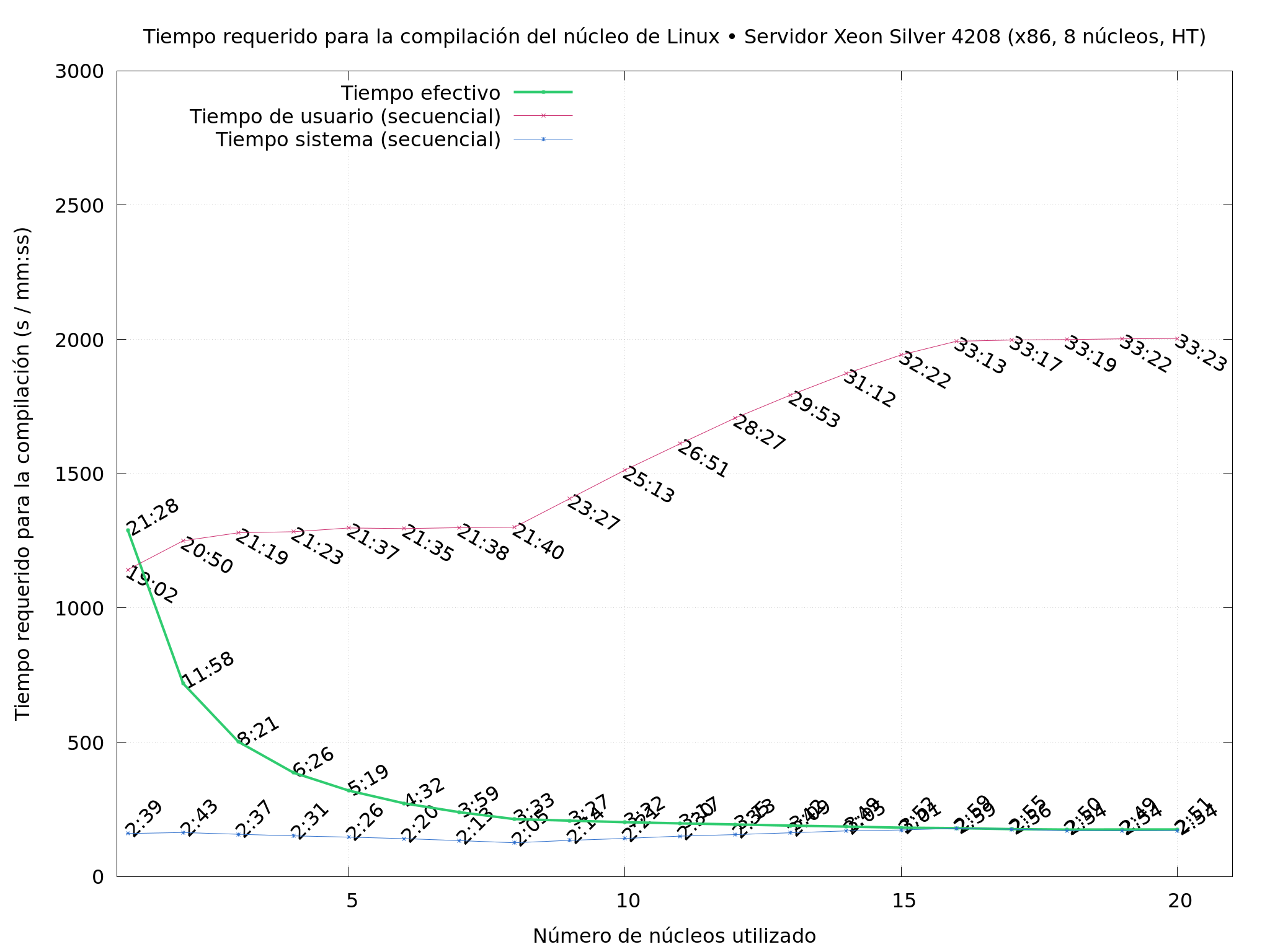
20 March 2023

Freexian Collaborators: Monthly report about Debian Long Term Support, February 2023 (by LTS Team)

Like each month, have a look at the work funded by Freexian s Debian LTS offering.

Debian LTS contributors In February, 15 contributors have been paid to work on Debian LTS, their reports are available:
  • Adrian Bunk did 22.0h (out of 32.25h assigned), thus carrying over 10.25h to the next month.
  • Anton Gladky did 9.75h (out of 11.5h assigned and 3.5h from previous period), thus carrying over 5.25h to the next month.
  • Ben Hutchings did 8.0h (out of 8.0h assigned and 16.0h from previous period), thus carrying over 16.0h to the next month.
  • Chris Lamb did 18.0h (out of 18.0h assigned).
  • Emilio Pozuelo Monfort did 26.25h (out of 0h assigned and 35.0h from previous period), thus carrying over 8.75h to the next month.
  • Guilhem Moulin did 20.0h (out of 20.0h assigned).
  • Helmut Grohne did 5.0h (out of 5.0h assigned and 5.0h from previous period), thus carrying over 5.0h to the next month.
  • Lee Garrett did 26.75h (out of 19.75h assigned and 12.5h from previous period), thus carrying over 5.5h to the next month.
  • Markus Koschany did 32.25h (out of 32.25h assigned).
  • Ola Lundqvist did 11.5h (out of 12.5h assigned and 11.5h from previous period), thus carrying over 12.5h to the next month.
  • Roberto C. S nchez did 5.0h (out of 9.5h assigned and 22.5h from previous period), thus carrying over 27.0h to the next month.
  • Sylvain Beucler did 32.0h (out of 17.25h assigned and 15.0h from previous period), thus carrying over 0.25h to the next month.
  • Thorsten Alteholz did 8.0h (out of 14.0h assigned), thus carrying over 6.0h to the next month.
  • Tobias Frost did 16.0h (out of 16.0h assigned).
  • Utkarsh Gupta did 24.25h (out of 49.25h assigned), thus carrying over 8.0h to the next month.

Evolution of the situation In February, we have released 44 DLAs, which resolved 156 CVEs. We are glad to welcome some new contributors who will hopefully help us fix CVEs in the supported release even faster. However, we also experienced some setbacks as a few sponsors have stopped (or decreased) their support. If your company ever hesitated to sponsor Debian LTS, now might be a good time to join to ensure that we can continue this important work without having to scale down on the number of packages that we are able to support.

Thanks to our sponsors Sponsors that joined recently are in bold.

19 March 2023

Russ Allbery: Review: Allow Me to Retort

Review: Allow Me to Retort, by Elie Mystal
Publisher: The New Press
Copyright: 2022
ISBN: 1-62097-690-0
Format: Kindle
Pages: 257
If you're familiar with Elie Mystal's previous work (writer for The Nation, previously editor for Above the Law, Twitter gadfly, and occasional talking head on news commentary programs), you'll have a good idea what to expect from this book: pointed liberal commentary, frequently developing into rants once he works up a head of steam. The subtitle of A Black Guy's Guide to the Constitution tells you that the topic is US constitutional law, which is very on brand. You're going to get succinct and uncompromising opinions at the intersection of law and politics. If you agree with them, you'll probably find them funny; if you disagree with them, you'll probably find them infuriating. In other words, Elie Mystal is the sort of writer one reads less for "huh, I disagreed with you but that's a good argument" and more for "yeah, you tell 'em, Elie!" I will be very surprised if this book changes anyone's mind about a significant political debate. I'm not sure if people who disagree are even in the intended audience. I'm leery of this sort of book. Usually its function is to feed confirmation bias with some witty rejoinders and put-downs that only sound persuasive to people who already agree with them. If I want that, I can just read Twitter (and you will be unsurprised to know that Mystal has nearly 500,000 Twitter followers). This style can also be boring at book length if the author is repeating variations on a theme. There is indeed a lot of that here, particularly in the first part of this book. If you don't generally agree with Mystal already, save yourself the annoyance and avoid this like the plague. It's just going to make you mad, and I don't think you're going to get anything useful out of it. But as I got deeper into this book, I think Mystal has another, more interesting purpose that's aimed at people who do largely agree. He's trying to undermine a very common US attitude (even on the left) about the US constitution. I don't know if most people from the US (particularly if they're white and male) realize quite how insufferably smug we tend to be about the US constitution. When you grow up here, the paeans to the constitution and the Founding Fathers (always capitalized like deities) are so ubiquitous and unremarked that it's difficult not to absorb them at a subconscious level. There is a national mythology about the greatness of our charter of government that crosses most political divides. In its modern form, this comes with some acknowledgment that some of its original provisions (the notorious three-fifths of a person clause, for instance) were bad, but we subsequently fixed them and everything is good now. Nearly everyone gets taught this in school, and it's almost never challenged. Even the edifices of the US left, such as the ACLU and the NAACP, tend to wrap themselves in the constitution. It's an enlightening experience to watch someone from the US corner a European with a discussion of the US constitution and watch the European plan escape routes while their soul attempts to leave their body. And I think it's telling that having that experience, as rare as it might be given how oblivious we can be, is still more common than a white person having a frank conversation with a black person in the US about the merits of the constitution as written. For various reasons, mostly because this is not very safe for the black person, this rarely happens. This book is primarily Mystal giving his opinion on various current controversies in constitutional law, but the underlying refrain is that the constitution is a trash document written by awful people that sets up a bad political system. That system has been aggressively defended by reactionary Supreme Courts, which along with the designed difficulty of the amendment process has prevented fixing many obviously broken parts. This in turn has led to numerous informal workarounds and elaborate "interpretations" to attempt to make the system vaguely functional. In other words, Mystal is trying to tell the US reader to stop being so precious about this specific document, and is using its truly egregious treatment of black people as the main fulcrum for his argument. Along the way, he gives an abbreviated tour of the highlights of constitutional law, but if you're at all interested in politics you've probably heard most of that before. The main point, I think, is to dig up any reverence left over from a US education, haul it out into the light of day, and compare it to the obvious failures of the constitution as a body of law and the moral failings of its authors. Mystal then asks exactly why we should care about original intent or be so reluctant to change the resulting system of government. (Did I mention you should not bother with this book if you don't agree with Mystal politically? Seriously, don't do that to yourself.) Readers of my reviews will know that I'm fairly far to the left politically, particularly by US standards, and yet I found it fascinating how much lingering reverence Mystal managed to dig out of me while reading this book. I found myself getting defensive in places, which is absurd because I didn't write this document. But I grew up surrounded by nigh-universal social signaling that the US constitution was the greatest political document ever, and in a religious tradition that often argued that it was divinely inspired. If one is exposed to enough of this, it becomes part of your background understanding of the world. Sometimes it takes someone being deliberately provocative to haul it back up to the surface where it can be examined. This book is not solely a psychological intervention in national mythology. Mystal gets into detailed legal arguments as well. I thought the most interesting was the argument that the bizarre and unconvincing "penumbras" and "emanations" reasoning in Griswold v. Connecticut (which later served as the basis of Roe v. Wade) was in part because the Lochner era Supreme Court had, in the course of trying to strike down all worker protection laws, abused the concept of substantive due process so badly that Douglas was unwilling to use it in the majority opinion and instead made up entirely new law. Mystal argues that the Supreme Court should have instead tackled the true meaning of substantive due process head-on and decided Griswold on 14th Amendment equal protection and substantive due process grounds. This is probably a well-known argument in legal circles, but I'd not run into it before (and Mystal makes it far more interesting and entertaining than my summary). Mystal also joins the tradition of thinking of the Reconstruction Amendments (the 13th, 14th, and 15th amendments passed after the Civil War) as a second revolution and an attempt to write a substantially new constitution on different legal principles, an attempt that subsequently failed in the face of concerted and deadly reactionary backlash. I first encountered this perspective via Jamelle Bouie, and it added a lot to my understanding of Reconstruction to see it as a political fight about the foundational principles of US government in addition to a fight over continuing racism in the US south. Maybe I was unusually ignorant of it (I know I need to read W.E.B. DuBois), but I think this line of reasoning doesn't get enough attention in popular media. Mystal provides a good introduction. But, that being said, Allow Me to Retort is more of a vibes book than an argument. As in his other writing, Mystal focuses on what he sees as the core of a controversy and doesn't sweat the details too much. I felt like he was less trying to convince me and more trying to model a different way of thinking and talking about constitutional law that isn't deferential to ideas that are not worthy of deference. He presents his own legal analysis and possible solutions to current US political challenges, but I don't think the specific policy proposals are the strong part of this book. The point, instead, is to embrace a vigorous politics based on a modern understanding of equality, democracy, and human rights, without a lingering reverence for people who mostly didn't believe in any of those things. The role of the constitution in that politics is a flawed tool rather than a sacred text. I think this book is best thought of as an internal argument in the US left. That argument is entirely within the frame of the US legal tradition, so if you're not in the US, it will be of academic interest at best (and probably not even that). If you're on the US right, Mystal offers lots of provocative pull quotes to enjoy getting outraged over, but he provides that service on Twitter for free. But if you are on the US left, I think Allow Me to Retort is worth more consideration than I'd originally given it. There's something here about how we engage with our legal history, and while Mystal's approach is messy, maybe that's the only way you can get at something that's more emotion than logic. In some places it degenerates into a Twitter rant, but Mystal is usually entertaining even when he's ranting. I'm not sorry I read it. Rating: 7 out of 10

Next.

Previous.