Search Results: "agi"

29 August 2024

Jonathan Carter: Orphaning bcachefs-tools in Debian

Around a decade ago, I was happy to learn about bcache a Linux block cache system that implements tiered storage (like a pool of hard disks with SSDs for cache) on Linux. At that stage, ZFS on Linux was nowhere close to where it is today, so any progress on gaining more ZFS features in general Linux systems was very welcome. These days we care a bit less about tiered storage, since any cost benefit in using anything else than nvme tends to quickly evaporate compared to time you eventually lose on it. In 2015, it was announced that bcache would grow into its own filesystem. This was particularly exciting and it caused quite a buzz in the Linux community, because it brought along with it more features that compare with ZFS (and also btrfs), including built-in compression, built-in encryption, check-summing and RAID implementations. Unlike ZFS, it didn t have a dkms module, so if you wanted to test bcachefs back then, you d have to pull the entire upstream bcachefs kernel source tree and compile it. Not ideal, but for a promise of a new, shiny, full-featured filesystem, it was worth it. In 2019, it seemed that the time has come for bcachefs to be merged into Linux, so I thought that it s about time we have the userspace tools (bcachefs-tools) packaged in Debian. Even if the Debian kernel wouldn t have it yet by the time the bullseye (Debian 11) release happened, it might still have been useful for a future backported kernel or users who roll their own. By total coincidence, the first git snapshot that I got into Debian (version 0.1+git20190829.aa2a42b) was committed exactly 5 years ago today. It was quite easy to package it, since it was written in C and shipped with a makefile that just worked, and it made it past NEW into unstable in 19 January 2020, just as I was about to head off to FOSDEM as the pandemic started, but that s of course a whole other story. Fast-forwarding towards the end of 2023, version 1.2 shipped with some utilities written in Rust, this caused a little delay, since I wasn t at all familiar with Rust packaging yet, so I shipped an update that didn t yet include those utilities, and saw this as an opportunity to learn more about how the Rust eco-system worked and Rust in Debian. So, back in April the Rust dependencies for bcachefs-tools in Debian didn t at all match the build requirements. I got some help from the Rust team who says that the common practice is to relax the dependencies of Rust software so that it builds in Debian. So errno, which needed the exact version 0.2, was relaxed so that it could build with version 0.4 in Debian, udev 0.7 was relaxed for 0.8 in Debian, memoffset from 0.8.5 to 0.6.5, paste from 1.0.11 to 1.08 and bindgen from 0.69.9 to 0.66. I found this a bit disturbing, but it seems that some Rust people have lots of confidence that if something builds, it will run fine. And at least it did build, and the resulting binaries did work, although I m personally still not very comfortable or confident about this approach (perhaps that might change as I learn more about Rust). With that in mind, at this point you may wonder how any distribution could sanely package this. The problem is that they can t. Fedora and other distributions with stable releases take a similar approach to what we ve done in Debian, while distributions with much more relaxed policies (like Arch) include all the dependencies as they are vendored upstream. As it stands now, bcachefs-tools is impossible to maintain in Debian stable. While my primary concerns when packaging, are for Debian unstable and the next stable release, I also keep in mind people who have to support these packages long after I stopped caring about them (like Freexian who does LTS support for Debian or Canonical who has long-term Ubuntu support, and probably other organisations that I ve never even heard of yet). And of course, if bcachfs-tools don t have any usable stable releases, it doesn t have any LTS releases either, so anyone who needs to support bcachefs-tools long-term has to carry the support burden on their own, and if they bundle it s dependencies, then those as well. I ll admit that I don t have any solution for fixing this. I suppose if I were upstream I might look into the possibility of at least supporting a larger range of recent dependencies (usually easy enough if you don t hop onto the newest features right away) so that distributions with stable releases only need to concern themselves with providing some minimum recent versions, but even if that could work, the upstream author is 100% against any solution other than vendoring all its dependencies with the utility and insisting that it must only be built using these bundled dependencies. I ve made 6 uploads for this package so far this year, but still I constantly get complaints that it s out of date and that it s ancient. If a piece of software is considered so old that it s useless by the time it s been published for two or three months, then there s no way it can survive even a usual stable release cycle, nevermind any kind of long-term support. With this in mind (not even considering some hostile emails that I recently received from the upstream developer or his public rants on lkml and reddit), I decided to remove bcachefs-tools from Debian completely. Although after discussing this with another DD, I was convinced to orphan it instead, which I have now done. I made an upload to experimental so that it s still available if someone wants to work on it (without having to go through NEW again), it s been removed from unstable so that it doesn t migrate to testing, and the ancient (especially by bcachefs-tools standards) versions that are in stable and oldstable will be removed too, since they are very likely to cause damage with any recent kernel versions that support bcachefs. And so, my adventure with bcachefs-tools comes to an end. I d advise that if you consider using bcachefs for any kind of production use in the near future, you first consider how supportable it is long-term, and whether there s really anyone at all that is succeeding in providing stable support for it.

27 August 2024

Russ Allbery: Review: Dark Horse

Review: Dark Horse, by Michelle Diener
Series: Class 5 #1
Publisher: Eclipse
Copyright: June 2015
ISBN: 0-9924559-3-6
Format: Kindle
Pages: 366
Dark Horse is a science fiction romance novel, the first of a five book series as of this writing. It is self-published, although it is sufficiently well-edited and packaged that I had to do some searching to confirm that. Rose was abducted by aliens. The Tecrans picked her up along with a selection of Earth animals, kept her in a cell in their starship, and experimented on her. As the book opens, she has managed to make her escape with the aid of an AI named Sazo who was also imprisoned on the Tecran ship. Sazo dealt with the Tecrans, dropped the ship in the middle of Grih territory, and then got Rose and most of the animals on shuttles to a nearby planet. Dav Jallan is the commander of the ship the Grih sent to investigate the unexplained appearance of a Class 5 Tecran warship in the middle of their territory. The Grih and the Tecran, along with three other species, are members of the United Council, which means in theory they're all at peace. With the Tecran, that theory is often strained. Dav is not going to turn down one of their highly-advanced Class 5 warships delivered to him on a silver platter. There is only the matter of the unexpected cargo, the first orange dots (indicating unknown life forms) that most of the Grih have ever seen. There is a romance. That romance did not work for me. I thought it was highly unprofessional on Dav's part and a bit too obviously constructed on the author's part. It also leans on the subgenre convention that aliens can be remarkably physically similar and sexually compatible, which always causes problems for my suspension of disbelief even though I know it's no less plausible than faster-than-light travel. Despite that, I had so much fun with this book! It was absolutely delightful and weirdly grabby in a way that caught me by surprise. I was skimming some parts of it to write this review and found myself re-reading multiple pages before I dragged myself back on task. I think the most charming part of this book is that the United Council has a law called the Sentient Beings Agreement that makes what the Tecran were doing extremely illegal, and the Grih and the other non-Tecran aliens take this very seriously and with a refreshing lack of cynicism. Rose has a typical human reaction to ending up in a place where she doesn't know the rules and isn't entirely an expected guest. She almost reflexively smoothes over miscommunications and tensions, trying to adapt to their expectations. And then, repeatedly, the Grih realize how much work she's doing to adapt to them, feel enraged at the Tecran and upset that they didn't understand or properly explain something, and find some way to make Rose feel more comfortable. It's surprisingly soothing and comforting to read. It occurred to me in several places that Dark Horse could be read as a wish-fulfillment fantasy of what life as a woman could be like if men took their fair share of the mental load. (This concept is usually applied to housework, but I think it generalizes to other social and communication contexts.) I suspect this was not an accident. There is a lot of wish fulfillment in this book. The Grih are very human-like but hunky, which is convenient for the romance subplot. They struggle to sing, value music exceptionally highly, and consider Rose's speaking voice beautifully musical. Her typical human habit of singing to herself is a source of immediate and almost overwhelming fascination. The supplies Rose takes from the Tecran ship when she flees just happen to be absurdly expensive scented shampoo and equally expensive luxury adaptable clothing. The world she lands on, and the Grih ship, are low-gravity compared to Earth, so Rose is unusually strong for her size. Grih military camouflage has no effect on her human vision. The book is set up to make Rose special. If that type of wish fulfillment is going to grate, wait on this book until you're more in the mood for it. But I like wish fulfillment books when they're done well. Part of why I like to read is to imagine a better world. And Rose isn't doted on; despite their hospitality, she's constantly underestimated by the Grih. Even with their deep belief in the Sentient Beings Agreement, they find it hard to believe that an unknown sentient, even an advanced sentient, is really their equal. Their concern at the start is somewhat patronizing, so watching Rose constantly surprise them delighted the part of my brain that likes both competence porn and deserved reversals, even though the competence here is often due to accidents of biology. It helps that Diener tells the story in alternating perspectives, so the reader first watches Rose do something practical and straightforward from her perspective and then gets to enjoy the profound surprise and chagrin of the aliens. There is a plot beneath this first contact story, and beyond the political problem of figuring out what to do with Rose and the Tecran. Sazo, Rose's AI friend, does not want the Grih to know he exists. He has a history that Rose does not know about and may not be entirely safe. As the political situation with the Tecran escalates, Sazo is pursuing goals of his own, and Rose has a firm opinion about where her loyalties should lie. The resolution is nothing ground-breaking as far as SF goes, but I thought it was satisfyingly tense and complex. Dark Horse leaves obvious room for a sequel, but it comes to a satisfying conclusion. The writing is serviceable, particularly once you get into the story. I would not call it great, and it's not going to win any literary awards, but it didn't interfere with my enjoyment of the story. This is not the sort of book that will make anyone's award list, but it is easily in the top five of books I had the most fun reading this year. Maybe save it for when you're looking for something light and wholesome and don't mind some rather obvious tropes, but if you're in the mood for imagining people who take laws seriously and sincerely try to help other people, I found this an utterly delightful way to pass the time. I immediately bought the sequel. Recommended. Followed by Dark Deeds. Rating: 8 out of 10

24 August 2024

Jonathan Dowland: Fediverse and feeds

It's clear that Twitter has been circling the drain for years, but things have been especially bad in recent times. I haven't quit (I have some sympathy with the viewpoint don't cede territory to fascists) but I try to read it much less, and I certainly post much less. Especially at the moment, I really appreciate distractions. Last time I wrote about Mastodon (by which I meant the Fediverse1), I was looking for a new instance to try. I settled on Debian's social instance2. I'm now trying to put any energy I might spend engaging on Twitter, into engaging in the Fediverse instead. (You can follow me via the handle @jon@dow.land, I think, which should repoint to my actual handle, @jmtd@pleroma.debian.social.) There are other potential successors to Twitter: two big ones are Bluesky and Facebook-owned Threads. They are effectively cookie-cutter copies of the Twitter model, and so, we will repeat the same mistakes there. Sadly I see the majority of communities and sub-cultures I follow are migrating to one or the other of these. The Fediverse (or the Mastodon-ish bits of it) should avoid the fate of Twitter. JWZ puts it better and more succinctly than I can. The Fedi experience is, sadly, pretty clunky. So I want to try and write a bit from time to time with tips and tricks that might improve people's experiences. First up, something I discovered only today about Mastodon instances. As JWZ noted, If you are worried about picking the "right" Mastodon instance, don't. Just spin the wheel.. You can spend too much time trying to guess a good answer to this. Better to just get started. At the same time, individual instances are supposed to cater to specific niches. So it could be useful to sample the public posts from an entire instance. For example, to find people to follow, or decide to hop over to that instance yourself. You can't (I think) follow an entire instance from within yours, but, they usually have a public page which shows you the latest traffic. For example, the infosec-themed instance infosec.exchange has one here: https://infosec.exchange/public/local These pages don't provide RSS or Atom feeds3, sadly. I hope that's on the software's roadmap, and hasn't been spurned for ideological reasons. For now at least, OpenRSS provide RSS/Atom feeds for many Mastodon instances. For example, an RSS/Atom feed of the above: https://openrss.org/infosec.exchange/public/local One can add these feeds to your Feed reader and over time get a flavour for the kind of discourse that takes place on given instances. I think the OpenRSS have to manually add Mastodon instances to their service. I tried three instances and only one (infosec.exchange) worked. I'm not sure but I think trying an instance that doesn't work automatically puts it on OpenRSS's backlog.

  1. the Fediverse-versus-Mastodon nomenclature problem is just the the tip of the iceberg, in terms of adoption problems. Mastodon provides a twitter-like service that participates in the Fediverse. But it isn't correct to call the twitter-like service "Mastodon" because other softwares also participate in/provide that service. And it's not correct to call it "Fediverse" because that describes a bigger thing, with e.g. youtube clones also taking part. I'm not sure what the right term should be for "the twitter-like thing". Also, everything I wrote here is probably subtly wrong.
  2. Debian's instance actually runs Pleroma, an alternative to Mastodon. Why should it matter? I think it's healthy for there to be more than one implementation in an open ecosystem. However the experience can be janky, as the features don't perfectly align, some Mastodon features/APIs are not documented/standardised/etc.
  3. I have to remind myself that the concept of RSS/Atom feeds and Feedreaders might need explaining to a modern audience too. Perhaps in another blog post.

22 August 2024

Thomas Goirand: Packaging Home Assistant

During Debconf, Edward Betts and myself started packaging Home Assistant for Debian. It consists of hundreds of Python packages. So far, we counted at least 675 packages. That s a lot, though most packages are just libraries to talk with some IoT devices and some APIs. It s fairly easy to create a new package: it takes me about 15 to 20 minutes, probably half that time to Edward. And it s a lot of fun. So far in one month of time, we managed to package about 1 third of the list (probably 200+ Python packages already). Once we ve done all the dependencies, we may start to have fun with the core of the application! At the current speed, hopefully we ll be done before the end of the year. Edward and myself have swear to make at least one package a day, which I ve been doing so far, and Edward did a way more We also received contributions from Silton0506, Tianyu, piotr, EiPi Fun, sourabhtk37, and Count-Dracula, as per the very bottom of the TODO list in the wiki (see link below). If you have a bit of free time, we d love to have more contributors. Here s were to get the needed information: We created a team in Salsa: https://salsa.debian.org/homeassistant-team/ Our TODO list: https://wiki.debian.org/Python/HomeAssistant Our DDPO Q/A page: https://qa.debian.org/developer.php?login=team%2Bhomeassistant%40tracker.debian.org Feel free to join us on IRC: #debian-homeassistant Discussing with a lot of people about it, I realized that A LOT of DDs are actually using Home Assistant. Wouldn t you like it better if it was just a apt install away ? Any DD can simply take a package in the wiki, open an ITP, upload it s debianized source on Salsa, and upload to the Debian archive. Most are very easy simple packages to make.

Jonathan McDowell: Thoughts on Advent of Code + Rust

Diego wrote about his dislike for Advent of Code and that reminded me I hadn t written up my experience from 2023. Mostly because, spoiler, I never actually completed it and always intended to do so and then write it up. I think it s time to accept I m not going to do that, and write down some thoughts before I forget all of them. These are somewhat vague, given the time that s elapsed, but I think still relevant. You might also find Roger s problem write up interesting. I ve tried AoC a couple of times before; I think I had a very brief attempt back in 2021, and I got 4 days in for 2022. For Advent of Code 2023 I tried much harder to actually complete the challenges, and got most of the way there. I didn t allow myself to move on to the next day until fully completing the previous day, and didn t end up doing the second half of December 24th, or any of December 25th.

Rust First I want to talk about Rust, which is the language I chose to use for the problems. I ve dabbled a little in it, but I d like more familiarity with the basic language, and some programming problems seemed like a good way to get that. It s a language I want to like; I ve spent a lot of my career writing C, do more in Go these days, and generally think Rust promises a low level, run-time light environment like C but with the rough edges taken off. I set myself the challenge of using just bare Rust; no external crates, no use of cargo. I was accused of playing on hard mode by doing this, but it really wasn t the intention - I figured that I should be able to do what I needed without recourse to anything outside the core language, and didn t want what seemed like the extra complexity of dealing with cargo. That caused problems, however. I m used to by-default generic error handling in Go through the error type, but Rust seems to have much more tightly typed errors. I was pointed at anyhow as the right way to do this in Rust. I still find this surprising; I ended up using unwrap() a lot when I think with more generic error handling I could have used ?. The other thing I discovered is that by default rustc is heavy on the debug output. I got significantly better results on some of the solutions with rustc -O -C target-cpu=native source.rs. I probably shouldn t be surprised by this, but worth noting. Rust, to me, has a syntax only a C++ programmer could love. I am not a C++ programmer. Coming from C I found Go to be a nice, simple syntax to learn. Rust has not been the same. There s a lot more punctuation, and it s not always clear to me what it s doing. This applies more when reading other people s code than when writing it myself, obviously, but I see a lot of Rust code that could give Perl a run for its money in terms of looking like line noise. The borrow checker didn t bug me too much, but did add overhead to my thinking. The Rust compiler is generally very good at outputting helpful error messages when the programmer is an idiot. I ended up having to use a RefCell for one solution, and using .iter() for loops rather than explicit iterators (why, why is this different?). I also kept forgetting to explicitly mark variables as mutable when declaring them. Things I liked? There s a rich set of first class data types. Look, I m a C programmer, I m easily pleased. You give me some sort of hash array and I ll be happy. Rust manages that, tuples, strings, all the standard bits any modern language can provide. The whole impl thing for adding methods to structures I like as a way of providing some abstraction, though I think Go has a nicer syntax for it. The compiler, as mentioned, is great at spitting out useful errors for the most part. Also although I wasn t using external crates for AoC I do appreciate there s a decent ecosystem there now (though that brings up another gripe: rust seems to still be a fairly fast moving target, to the extent I can no longer rely on the compiler in Debian stable to be able to compile random projects I find).

Advent of Code Let s talk about the advent of code bit now. Hopefully it s long enough since it came out that this won t be spoilers for anyone, but if you haven t attempted the 2023 AoC and might, you might want to stop reading here. First, a refresher on the format for those who might not be aware of it. Problems are posted daily from December 1st until the 25th. Each is in 2 parts; the second part is not viewable until you have provided the correct answer for the first part. There s a whole leaderboard thing going on, but the puzzle opens at midnight UTC-5 so generally by the time I wake up and have time to look the problem has been solved many times over; no chance of getting listed. Credit to AoC creator, Eric Wastl, for writing up the set of problems in an entertaining fashion. I quite enjoyed seeing how the puzzle would be phrased each day, and the whole thing obviously brings a lot of joy to folk I know. I always start AoC thinking it ll be a fun set of puzzles to solve. Then something happens and I miss a day or two, and all of a sudden I ve a bunch of catching up to do and it s all a bit more of a chore. I hit that at some points this time, but made a concerted effort to try and power through it. That perseverance was required up front, because I found the second part of Day 1 to be ill specified, and had to iterate a few times to actually calculate the desired solution (IIRC, issues about whether sevenone at the end of a line ended up as 7 or 1 really tripped me up). I don t recall any other problems that bit me as hard on the specification as this one, but it happening up front was unfortunate. The short example input doesn t always help with this either; either it s not enough to be able to extrapolate patterns, or it doesn t show all the variations you need to account for (that aren t fully specified in the text), or in a few cases it turned out I needed to understand the shape of the actual data to produce a solution that could actually complete in a reasonable time. Which brings me to another matter, sometimes brute force doesn t actually work. This is fine, but the second part of the day s problem can change the approach you d take. So sometimes I got lucky in the way I handled the first half, and doing the second half was a simple 5 minute tweak, and sometimes I had to entirely change the way I was storing data. You might claim that if I was a better programmer I d have always produced a first half solution that was amenable to extension for the second half. First, I dispute that; I think there are always situations where the problem domain can change in enough directions that you can t handle all of them without a lot of effort. Secondly, I didn t find AoC an environment that encouraged me to optimise for generic solutions. Maybe some of the puzzles in isolation would allow for that, but a month of daily problems to solve while still engaging in regular life meant I hacked things up, took short cuts based on the knowledge I had of the input data, etc, etc. Overall I can see the appeal, but the sheer quantity and the fact I write code as part of my day job just made it feel too much like a chore, rather than a fun mental exercise. I did wonder how they d look as a set of interview puzzles (obviously a subset, rather than all of them), but I m not sure how you d actually use them for that - I wouldn t want anyone to have to solve them in a live interview. So, in case it s not obvious, I m not planning to engage in AoC again this yet. But I m continuing to persevere with Rust (though most of my work stuff is thankfully still Go).

21 August 2024

Dirk Eddelbuettel: RcppMagicEnum 0.0.1 on CRAN: New Package!

Happy to announce a new package: RcppMagicEnum. It arrived on CRAN yesterday following the resumption of normal service following the CRAN summer break. RcppMagicEnum brings the magicenum library by Daniil Goncharov to R. Modern C++ is powerful, but still lacks reflection. This may change with C++26 but until then this library can help. A simple example, also shown on the README is as follows (and can be called from R via Rcpp::sourceCpp() if the RcppMagicEnum package is installed):
// [[Rcpp::depends(RcppMagicEnum)]]

#include <RcppMagicEnum>

// define a simple enum class, it uses optional typing as well as optional assigned values
enum class Color : int   RED = -10, BLUE = 0, GREEN = 10  ;

// [[Rcpp::export]]
void example()  
    // instantiate an enum value in variable 'val'
    auto val = Color::RED;

    // show the current value on stdout
    Rcpp::Rcout << "Name of enum: " << magic_enum::enum_name(val) << std::endl;
    Rcpp::Rcout << "Integer value of enum: " << magic_enum::enum_integer(val) << std::endl;
 

/*** R
example()
*/
It produces the following output (where the meta-comment at the end ensure the included and created-by-sourcing function example() is also called):
> Rcpp::sourceCpp("miniex.cpp")

> example()
Name of enum: RED
Integer value of enum: -10
>
The plan to experiment some more with this and then see if we could possible make factor variables map to such enums and vice versa. Help and discussion input is always welcome, and could be submitted either on the rcpp-devel list or as an issue at the repo. The short NEWS entry follows.

Changes in version 0.0.1 (2024-07-31)
  • Initial version and CRAN upload

If you like this or other open-source work I do, you can sponsor me at GitHub.

This post by Dirk Eddelbuettel originated on his Thinking inside the box blog. Please report excessive re-aggregation in third-party for-profit settings.

19 August 2024

Matthew Garrett: Client-side filtering of private data is a bad idea

(The issues described in this post have been fixed, I have not exhaustively researched whether any other issues exist)

Feeld is a dating app aimed largely at alternative relationship communities (think "classier Fetlife" for the most part), so unsurprisingly it's fairly popular in San Francisco. Their website makes the claim:

Can people see what or who I'm looking for?
No. You're the only person who can see which genders or sexualities you're looking for. Your curiosity and privacy are always protected.


which is based on you being able to restrict searches to people of specific genders, sexualities, or relationship situations. This sort of claim is one of those things that just sits in the back of my head worrying me, so I checked it out.

First step was to grab a copy of the Android APK (there are multiple sites that scrape them from the Play Store) and run it through apk-mitm - Android apps by default don't trust any additional certificates in the device certificate store, and also frequently implement certificate pinning. apk-mitm pulls apart the apk, looks for known http libraries, disables pinning, and sets the appropriate manifest options for the app to trust additional certificates. Then I set up mitmproxy, installed the cert on a test phone, and installed the app. Now I was ready to start.

What became immediately clear was that the app was using graphql to query. What was a little more surprising is that it appears to have been implemented such that there's no server state - when browsing profiles, the client requests a batch of profiles along with a list of profiles that the client has already seen. This has the advantage that the server doesn't need to keep track of a session, but also means that queries just keep getting larger and larger the more you swipe. I'm not a web developer, I have absolutely no idea what the tradeoffs are here, so I point this out as a point of interest rather than anything else.

Anyway. For people unfamiliar with graphql, it's basically a way to query a database and define the set of fields you want returned. Let's take the example of requesting a user's profile. You'd provide the profile ID in question, and request their bio, age, rough distance, status, photos, and other bits of data that the client should show. So far so good. But what happens if we request other data?

graphql supports introspection to request a copy of the database schema, but this feature is optional and was disabled in this case. Could I find this data anywhere else? Pulling apart the apk revealed that it's a React Native app, so effectively a framework for allowing writing of native apps in Javascript. Sometimes you'll be lucky and find the actual Javascript source there, but these days it's more common to find Hermes blobs. Fortunately hermes-dec exists and does a decent job of recovering something that approximates the original input, and from this I was able to find various lists of database fields.

So, remember that original FAQ statement, that your desires would never be shown to anyone else? One of the fields mentioned in the app was "lookingFor", a field that wasn't present in the default profile query. What happens if we perform the incredibly complicated hack of exporting a profile query as a curl statement, add "lookingFor" into the set of requested fields, and run it?

Oops.

So, point 1 is that you can't simply protect data by having your client not ask for it - private data must never be released. But there was a whole separate class of issue that was an even more obvious issue.

Looking more closely at the profile data returned, I noticed that there were fields there that weren't being displayed in the UI. Those included things like "ageRange", the range of ages that the profile owner was interested in, and also whether the profile owner had already "liked" or "disliked" your profile (which means a bunch of the profiles you see may already have turned you down, but the app simply didn't show that). This isn't ideal, but what was more concerning was that profiles that were flagged as hidden were still being sent to the app and then just not displayed to the user. Another example of this is that the app supports associating your profile with profiles belonging to partners - if one of those profiles was then hidden, the app would stop showing the partnership, but was still providing the profile ID in the query response and querying that ID would still show the hidden profile contents.

Reporting this was inconvenient. There was no security contact listed on the website or in the app. I ended up finding Feeld's head of trust and safety on Linkedin, paying for a month of Linkedin Pro, and messaging them that way. I was then directed towards a HackerOne program with a link to terms and conditions that 404ed, and it took a while to convince them I was uninterested in signing up to a program without explicit terms and conditions. Finally I was just asked to email security@, and successfully got in touch. I heard nothing back, but after prompting was told that the issues were fixed - I then looked some more, found another example of the same sort of issue, and eventually that was fixed as well. I've now been informed that work has been done to ensure that this entire class of issue has been dealt with, but I haven't done any significant amount of work to ensure that that's the case.

You can't trust clients. You can't give them information and assume they'll never show it to anyone. You can't put private data in a database with no additional acls and just rely on nobody ever asking for it. You also can't find a single instance of this sort of issue and fix it without verifying that there aren't other examples of the same class. I'm glad that Feeld engaged with me earnestly and fixed these issues, and I really do hope that this has altered their development model such that it's not something that comes up again in future.

(Edit to add: as far as I can tell, pictures tagged as "private" which are only supposed to be visible if there's a match were appropriately protected, and while there is a "location" field that contains latitude and longitude this appears to only return 0 rather than leaking precise location. I also saw no evidence that email addresses, real names, or any billing data was leaked in any way)

comment count unavailable comments

12 August 2024

Scarlett Gately Moore: KDE, Kubuntu, Debian Qt6 updates plus Kubuntu Noble .1 updates.

Another loss last week of a friend. I am staying strong and working through it. A big thank you to all of you that have donated to my car fund, I still have a long way to go. I am not above getting a cheap old car, but we live in sand dunes so it must be a cheap old car with 4 4 to get to my property. A vehicle is necessary as we are 50 miles away from staples such as food and water. We also have 2 funerals to attend. Please consider a donation if my work is useful to you. https://gofund.me/1e784e74 All of my work is currently unpaid work, as I am between contracts. Thank you for your consideration. Now onto the good stuff, last weeks work. It was another very busy week with Qt6 packaging in Debian/Kubuntu and KDE snaps. I also have many SRUs for Kubuntu Noble .1 release that needs their verification done. Kubuntu: Debian: Starting the salvage process for kdsoap which is blocking a long line of packages, notably kio-extras. KDE Snaps: Please note: Please help test the edge snaps so I can promote them to stable. WIP Snaps or MR s made Thanks for stopping by.

Freexian Collaborators: Debian Contributions: autopkgtest/incus builds, live-patching, Salsa CI, Python 3.13 (by Stefano Rivera)

Debian Contributions: 2024-07 Contributing to Debian is part of Freexian s mission. This article covers the latest achievements of Freexian and their collaborators. All of this is made possible by organizations subscribing to our Long Term Support contracts and consulting services.

autopkgtest/Incus build streamlining, by Colin Watson Colin contributed a change to allow maintaining Incus container and VM images in parallel. Both of these are useful (containers are faster, but some tests need full machine isolation), and the build tools previously didn t handle that very well. This isn t yet in unstable, but once it is, keeping both flavours of unstable images up to date will be a simple matter of running this regularly:
RELEASE=sid autopkgtest-build-incus images:debian/trixie
RELEASE=sid autopkgtest-build-incus --vm images:debian/trixie

Linux live-patching, by Santiago Ruano Rinc n In collaboration with Emmanuel Arias, Santiago continued the work on the support for applying security fixes to the Linux kernel in Debian, without the need to reboot the machine. As mentioned in the previous month report, kpatch 0.9.9-1 (and 0.9.9-2 afterwards) was uploaded to unstable in July, closing the Intent to Salvage (ITS) bug. With this upload, the remaining RC bugs were solved, and kpatch was able to transition to Debian testing recently. Kpatch is expected to be an important component in the live-patching support, since it makes it easy to build a patch as a kernel module. Emmanuel and Santiago continued to work on the design for Linux live-patching and presented the current status in the DebConf24 presentation.

Salsa CI, by Santiago Ruano Rinc n To be able to add RISC-V support and to avoid using tools not packaged in Debian (See #331), the Salsa CI pipeline first needed to move away from kaniko to build the images used by the pipeline. Santiago created a merge request to use buildah instead, and it was merged last month. Santiago also prepared a couple of more MRs related to how the images are built: initial RISC-V support, that should be merged after improving how built images are tested. The switch to buildah introduced a regression in the work-in-progress MR that adds new build image so the build job can run sbuild. Santiago hopes to address this regression and continue with the sbuild-related MRs in August. Additionally, Santiago also contributed to the install docker-cli instead of docker.io in the piuparts image MR, and reviewed others such as reprotest: Add append-build-command option, fix failure at manual pipeline run when leaving RELEASE variable empty and Fix image not found error on image building stage.

Python 3.13 Betas, by Stefano Rivera As Python 3.13 is approaching the first release, Stefano has been uploading the beta releases to Debian unstable. Most of these have uncovered small bugs that needed to be investigated and fixed. Stefano also took the time to review the current patch set against cPython in Debian. Python 3.13 isn t marked as a supported Python release in Debian s Python tooling, yet, so nothing has been built against it, yet. Now that the Python 3.12 transition has completed, the next task will be to start trying to build Debian s Python module packages against Python 3.13, to estimate the work required to transition to 3.13 in unstable.

Miscellaneous contributions
  • Carles Pina updated the packages python-asyncclick, python-pyaarlo and prepared updates for python-ring-doorbell and simplemonitor.
  • Carles Pina updated (reviewing or translating) Catalan translations for adduser, apt-listchanges, debconf and shadow.
  • Colin merged OpenSSH 9.8, and prepared a corresponding release note for DSA support now being disabled. This version included some substantial changes to split the server into a listener binary and a per-session binary, and those required some corresponding changes in the GSS-API key exchange patch. Sorting out the details of this and getting it to work again took some time.
  • Colin upgraded 11 Python packages to new upstream versions, and modernized the build process and/or added non-superficial autopkgtests to several more.
  • Rapha l Hertzog tweaked tracker.debian.org s debci task to work around changes in the JSON output. He also improved tracker.debian.org s ability to detect bounces due to spam to avoid unsubscribing emails that are not broken, but that are better than Debian at rejecting spam.
  • Helmut Grohne monitored the /usr-move transition with few incidents. A notable one is that some systems have ended up with aliasing links that don t match the ones installed by base-files which could lead to an unpack error from dpkg. This is now prevented by having base-files.preinst error out.
  • Helmut investigated toolchain bootstrap failures with gcc-14 in rebootstrap but would only discover the cause in August.
  • Helmut sent a MR for the cross-exe-wrapper requested by Simon McVittie for gobject-introspection. It is a way of conditionally requesting qemu-user when emulation is required for execution during cross compilation.
  • Helmut sent three patches for cross build failures.
  • Thorsten Alteholz uploaded packages lprint and magicfilter to fix RC-bugs that appeared due to the introduction of gcc-14.
  • Santiago continued to work on activities related to the DebConf24 Content Team, including reviewing the schedule and handling updates on it.
  • Santiago worked on preparations for the DebConf25, to be held in Brest, France, next year. A video of the BoF presented during DebConf24 can be found here.
  • Stefano worked on preparations for DebConf24, and helped to run the event.

10 August 2024

Bits from Debian: DebConf24 closes in Busan and DebConf25 dates announced

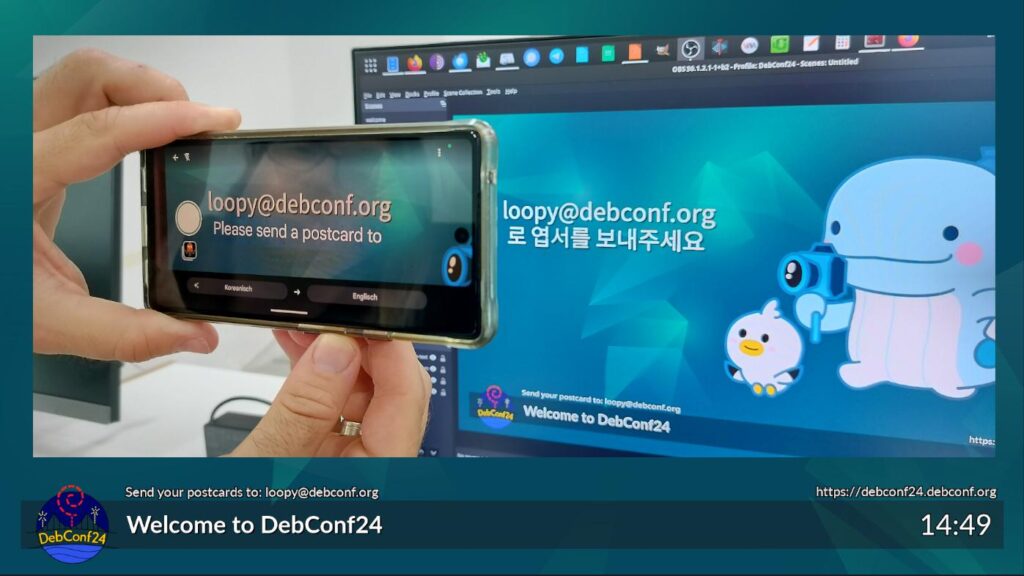
DebConf24 group photo - click to enlarge On Saturday 3 August 2024, the annual Debian Developers and Contributors Conference came to a close. Over 339 attendees representing 48 countries from around the world came together for a combined 108 events made up of more than 50 Talks and Discussions, 37 Birds of a Feather (BoF informal meeting between developers and users) sessions, 12 workshops, and activities in support of furthering our distribution and free software (25 patches submitted to the Linux kernel), learning from our mentors and peers, building our community, and having a bit of fun. The conference was preceded by the annual DebCamp hacking session held July 21st through July 27th where Debian Developers and Contributors convened to focus on their Individual Debian-related projects or work in team sprints geared toward in-person collaboration in developing Debian. This year featured a BootCamp that was held for newcomers with a GPG Workshop and a focus on Introduction to creating .deb files (Debian packaging) staged by a team of dedicated mentors who shared hands-on experience in Debian and offered a deeper understanding of how to work in and contribute to the community. The actual Debian Developers Conference started on Sunday July 28 2024. In addition to the traditional 'Bits from the DPL' talk, the continuous key-signing party, lightning talks and the announcement of next year's DebConf25, there were several update sessions shared by internal projects and teams. Many of the hosted discussion sessions were presented by our technical core teams with the usual and useful meet the Technical Committee and the ftpteam and a set of BoFs about packaging policy and Debian infrastructure, including talk about APT and Debian Installer and an overview about the first eleven years of Reproducible Builds. Internationalization and localization have been subject of several talks. The Python, Perl, Ruby, and Go programming language teams, as well as Med team, also shared updates on their work and efforts. More than fifteen BoFs and talks about community, diversity and local outreach highlighted the work of various team involved in the social aspect of our community. This year again, Debian Brazil shared strategy and action to attract and retain new contributors and members and opportunities both in Debian and F/OSS. The schedule was updated each day with planned and ad-hoc activities introduced by attendees over the course of the conference. Several traditional activities took place: a job fair, a poetry performance, the traditional Cheese and Wine party, the group photos and the Day Trips. For those who were not able to attend, most of the talks and sessions were broadcast live and recorded and the videos made available through a link in their summary in the schedule. Almost all of the sessions facilitated remote participation via IRC messaging apps or online collaborative text documents which allowed remote attendees to 'be in the room' to ask questions or share comments with the speaker or assembled audience. DebConf24 saw over 6.8 TiB (4.3 TiB in 2023) of data streamed, 91.25 hours (55 in 2023) of scheduled talks, 20 network access points, 1.6 km fibers (1 broken fiber...) and 2.2 km UTP cable deployed, more than 20 country Geoip viewers, 354 T-shirts, 3 day trips, and up to 200 meals planned per day. All of these events, activities, conversations, and streams coupled with our love, interest, and participation in Debian and F/OSS certainly made this conference an overall success both here in Busan, South Korea and online around the world. The DebConf24 website will remain active for archival purposes and will continue to offer links to the presentations and videos of talks and events. Next year, DebConf25 will be held in Brest, France, from Monday, July 7 to Monday, July 21, 2025. As tradition follows before the next DebConf the local organizers in France will start the conference activities with DebCamp with particular focus on individual and team work towards improving the distribution. DebConf is committed to a safe and welcome environment for all participants. See the web page about the Code of Conduct in DebConf24 website for more details on this. Debian thanks the commitment of numerous sponsors to support DebConf24, particularly our Platinum Sponsors: Infomaniak, Proxmox, and Wind River. We also wish to thank our Video and Infrastructure teams, the DebConf24 and DebConf committees, our host nation of South Korea, and each and every person who helped contribute to this event and to Debian overall. Thank you all for your work in helping Debian continue to be "The Universal Operating System". See you next year! About Debian The Debian Project was founded in 1993 by Ian Murdock to be a truly free community project. Since then the project has grown to be one of the largest and most influential open source projects. Thousands of volunteers from all over the world work together to create and maintain Debian software. Available in 70 languages, and supporting a huge range of computer types, Debian calls itself the universal operating system. About DebConf DebConf is the Debian Project's developer conference. In addition to a full schedule of technical, social and policy talks, DebConf provides an opportunity for developers, contributors and other interested people to meet in person and work together more closely. It has taken place annually since 2000 in locations as varied as Scotland, Argentina, Bosnia and Herzegovina, and India. More information about DebConf is available from https://debconf.org/. About Infomaniak Infomaniak is an independent cloud service provider recognized throughout Europe for its commitment to privacy, the local economy and the environment. Recording growth of 18% in 2023, the company is developing a suite of online collaborative tools and cloud hosting, streaming, marketing and events solutions. Infomaniak uses exclusively renewable energy, builds its own data centers and develops its solutions in Switzerland, without relocating. The company powers the website of the Belgian radio and TV service (RTBF) and provides streaming for more than 3,000 TV and radio stations in Europe. About Proxmox Proxmox provides powerful and user-friendly Open Source server software. Enterprises of all sizes and industries use Proxmox solutions to deploy efficient and simplified IT infrastructures, minimize total cost of ownership, and avoid vendor lock-in. Proxmox also offers commercial support, training services, and an extensive partner ecosystem to ensure business continuity for its customers. Proxmox Server Solutions GmbH was established in 2005 and is headquartered in Vienna, Austria. Proxmox builds its product offerings on top of the Debian operating system. About Wind River Wind River For nearly 20 years, Wind River has led in commercial Open Source Linux solutions for mission-critical enterprise edge computing. With expertise across aerospace, automotive, industrial, telecom, and more, the company is committed to Open Source through initiatives like eLxr, Yocto, Zephyr, and StarlingX. Contact Information For further information, please visit the DebConf24 web page at https://debconf24.debconf.org/ or send mail to press@debian.org.

Thorsten Alteholz: My Debian Activities in July 2024

FTP master This month I accepted 502 and rejected 40 packages. The overall number of packages that got accepted was 515. In case you want to upload dozens of packages, it would be nice to give some heads-up before. It is kind of a shock to see a full NEW queue in the morning, though it was much shorter in the evening before. Debian LTS This was my hundred-twenty-first month that I did some work for the Debian LTS initiative, started by Raphael Hertzog at Freexian. This month I finished the new version of tiff for Bullseye (and Bookworm). The upload will follow, when Bullseye has been handed over to the LTS team in August. Last but not least I attended the monthly LTS/ELTS meeting. Debian ELTS This month was the seventy-second ELTS month. During my allocated time I uploaded or worked on: For whatever reason, I had trouble with the CI again. The new tiff package wanted to run the autopkgtest of cups but never did it. So the corresponding ELA will appear only in August. I also continued to work on an update for libvirt. There really is a reason why some packages don t get much attention. Nevertheless someone has to take care of them. I also did a week of FD and attended the LTS/ELTS meeting. Debian Printing This month I uploaded This work is generously funded by Freexian! Debian Astro This month I uploaded a new upstream or bugfix version of: Debian IoT This month I uploaded new upstream or bugfix versions of: Debian Mobcom This month I uploaded The following packages have been prepared by the GSoC student Nathan: misc This month I uploaded new upstream or bugfix versions of:

9 August 2024

Kalyani Kenekar: One Backpack, One Passport: My First Solo Trip

Planing A Self Organized Solo Trip You know the movie Queen? The actor Kangana Ranaut plays in that movie the role of Rani Mehra, a 24-year-old Punjabi woman, who was a simple, homely girl that was always reliant on her family. Similar to Rani I too rarely ventured out without my parents and often needed my younger sibling by my side. Inspired by her transformation, I decided it was time to take control of my own story and discover who I truly am. Queen movie picture Of Kangana

Trip Requirements

My First Passport The journey began with a significant first step: Obtaining my first passport Never having had one before, I scheduled the nearest available interview date on June 29 2022. This meant traveling to Solapur, a city 309 km from my hometown, accompanied by my father. After successfully completing the interview, I received my passport on July 14 2022.

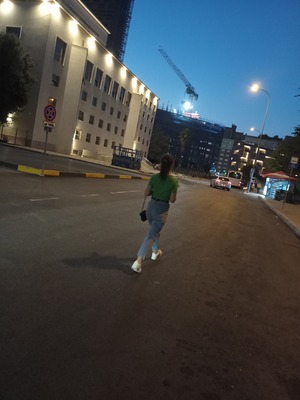
Select A Country, Booking Flights And Accommodation Excited and ready to embark on my adventure, I planed trip to Albania and booked the flight tickets. Why? I had heard from friends that it was a beautiful European country with beaches and other attractions, and importantly, it didn t require a visa for Indian citizens and was more affordable than other European destinations. Before heading to Albania, I planned a overnight stop in Abu Dhabi with a transit visa, thanks to friend who knew the process for obtaining it. Some of my friends did travel also to Europe at the same time and quite close to my plannings, but that I realized just later the trip.

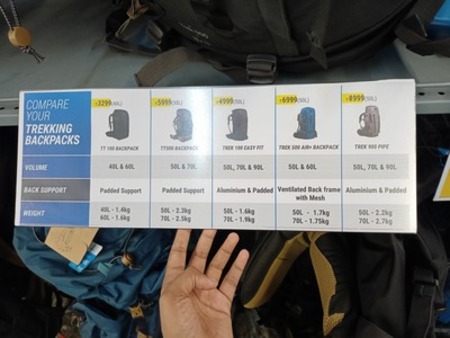
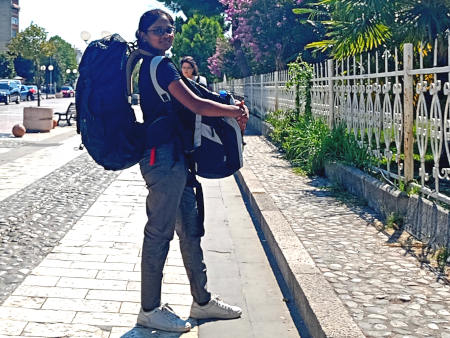
Day 1, Starting The Experience On July 20, 2022, I started my journey by traveling from Pune, Maharashtra, to Delhi, where my brother lives. He came to see me off at the airport, adding a touch of warmth and support to the beginning of my solo adventure. Upon arriving in Delhi, with my next flight scheduled for July 21, I stayed at a backpacker hostel named Zostel, Paharganj, Delhi to rest. During my stay, I noticed that many travelers at the hostel carried rucksacks, which sparked a desire in me to get one for my own trip to Europe. Up until then, I had always shopped with my mom and had never bought anything on my own. Inspired by the travelers, I set out to find a suitable rucksack. I traveled alone by metro from Paharganj to Rohini to visit a Decathlon store, where I purchased a 50-liter rucksack. This was a significant step in preparing for my European adventure and marked a milestone in my journey of self reliance. Rucksack description tag Kalyani s packpacker

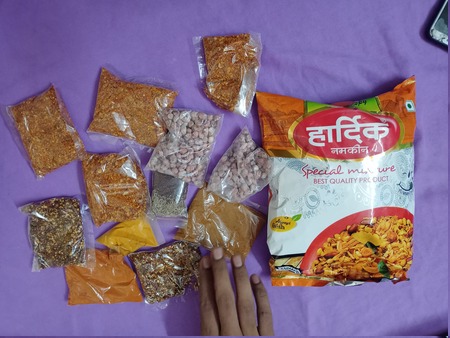
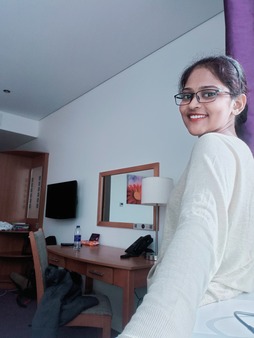
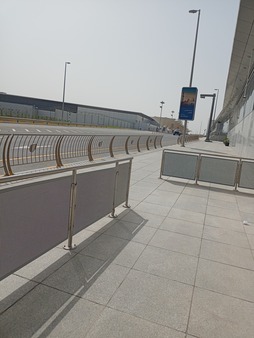
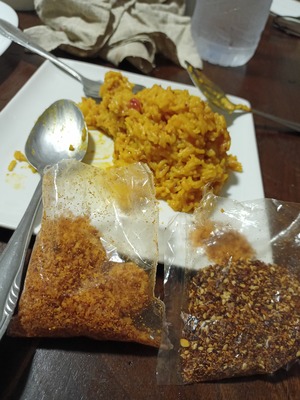
Day 2, Flying To Abu Dhabi The following day, July 21 2024, I had a flight to Abu Dhabi. I spent the night at the hostel to rest before my journey. On the day of the flight, I needed to reach the airport by 3 PM, and a friend kindly came to drop me off. With my rucksack packed and excitement building, I was ready for the next leg of my adventure. When we arrived at the airport, my friend saw me off, marking the start of my international journey. With mom made spices, chutneys, and chilly flakes packed for comfort, I completed my immigration process in about two and a half hours. I then settled at the gate for my flight, feeling a mix of excitement and anxiety as thoughts raced through my mind. mom-made spices Passport and boarding pass To ease my nerves, I struck up a conversation with a man seated nearby who was also traveling to Abu Dhabi for work. He provided helpful information about safety and transportation in Abu Dhabi, which reassured me. With the boarding process complete and my anxiety somewhat eased. I found my window seat on the flight and settled in, excited for the journey ahead. Next to me was a young man from Ranchi(Zarkhand, India), heading to Abu Dhabi for work at a mining factory. We had an engaging conversation about work culture in Abu Dhabi and recruitment from India. Upon arriving in Abu Dhabi, I completed my transit, collected my luggage, and began finding my way to the hotel Premier Inn AbuDhabi, which was in the airport area. To my surprise, I ran into the same man from the flight, now in a cab. He kindly offered to drop me at my hotel, which I gladly accepted since navigating an unfamiliar city with a short acquaintance felt safer. At the hotel gate, he asked if I had local currency (Dirhams) for payment, as sometimes online transactions can fail. That hadn t crossed my mind, and I realized I might be left stranded if a transaction failed. Recognizing his help as a godsend, I asked if he could lend me some Dirhams, promising to transfer the amount later. He kindly assured me to pay him back once I reached the hotel room. With that relief, I checked into the hotel, feeling deeply grateful for the unexpected assistance and transferred the money to him after getting to my room. dhiramm money hotel room Kalyani in hotel room

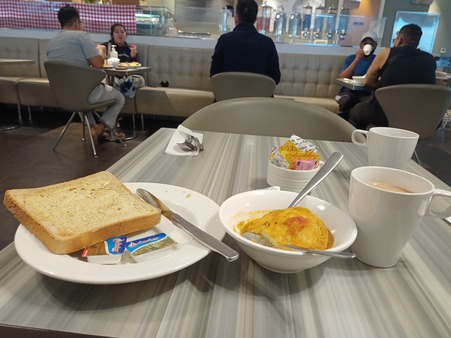
Day 3, Flying And Arrive In Tirana Once in the hotel room, I found it hard to sleep, anxious about waking up on time for my flight. I set an alarm to wake up early, but my subconscious mind kept me alert, and I woke up before the alarm went off. I got freshened up and went down for breakfast, where I found some vegetarian options like Idli-Sambar and bread with butter, along with some morning tea. After breakfast, I headed back to the airport, ready to catch my flight to my final destination: Tirana, Albania. Breakfast at hotel Airport area I reached Tirana, Albania after a six hours flight, feeling exhausted and I was suffering from a headache. The air pressure had blocked my ears, and jet lag added to my fatigue. After collecting my checked luggage, I headed to the first ATM machine at the airport. Struggling to insert my card, I asked a nearby gentleman for help. He tried his best, but my card got stuck inside the machine. Panic set in as I worried about how I would survive without money. Taking a deep breath, I found an airport employee and explained the situation. The gentleman stayed with me, offering support and repeatedly apologizing for his mistake. However, it wasn t his fault, the ATM was out of order, which I hadn t noticed. My focus was solely on retrieving my ATM card. The airport employee worked diligently, using a hairpin to carefully extract my card. Finally, the card was freed, and I felt an immense sense of relief, grateful for the help of these kind strangers. I used another ATM, successfully withdrew money, and then went to an airport mobile SIM shop to buy a new SIM card for local internet and connectivity. sim plans

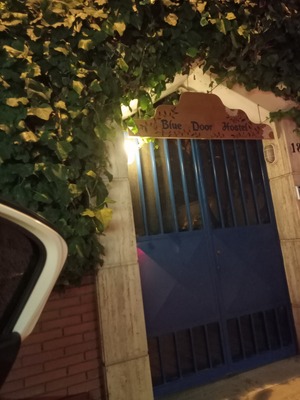
Day 4, Arriving In Tirana, Facing Challenges In A Foreign Country I had booked a stay at a backpacker hostel near the city center of Tirana. After sorting out the ATM and SIM card issues, I searched for a bus or any transport to get there. It was quite late, around 8:30 PM, and being in a new city, I was in a hurry. I saw a bus nearly leaving the airport, stopped it, and asked if it went to the city center. They gave me the green flag, so I boarded the airport service bus and reached the city center. Feeling very tired, I discovered that the hostel was about an hour and a half away by walking. Deciding to take a cab, I faced a challenge as the driver couldn t understand my English or accent. Using a mobile translator to convert my address from English to Albanian, I finally communicated my destination to him. With that sorted out, I headed to the Blue Door Backpacker Hostel and arrived around 9 PM, relieved to have finally reached my destination and I checked in. Hostel gate Street in Tirana I found my top bunk bed, only to realize I had booked a mixed-gender dormitory. This detail had completely escaped my notice during the booking process. I felt unsure about how to handle the situation. Coincidentally, my experience mirrored what Kangana faced in the movie Queen . Feeling acidic due to an empty stomach and the exhaustion of heavy traveling, I wasn t up to cooking in the hostel s kitchen. I asked the front desk about the nearest restaurant. It was nearly 9:30 PM, and the streets were deserted. To avoid any mishaps like in the movie Queen, I kept my passport securely locked in my bag, ensuring it wouldn t be a victim of theft. Venturing out for dinner, I felt uneasy on the quiet streets. I eventually found a restaurant recommended by the hostel, but the menu was almost entirely non-vegetarian. I struggled to ask about vegetarian options and was uncertain if any dishes contained eggs, as some people consider eggs to be vegetarian. Feeling frustrated and unsure, I left the restaurant without eating. I noticed a nearby grocery store that was about to close and managed to get a few extra minutes to shop. I bought some snacks, wafers, milk, and tea bags (though I couldn t find tea powder to make Indian-style tea). Returning to the hostel, I made do with wafers, cookies, and milk for dinner. That day was incredibly tough for me, I filled with exhaustion and struggle in a new country, I was on the verge of tears . I made a video call home before sleeping on the top bunk bed. It was a new experience for me, sharing a room with both unknown men and women. I kept my passport safe inside my purse and under my pillow while sleeping, staying very conscious about its security.
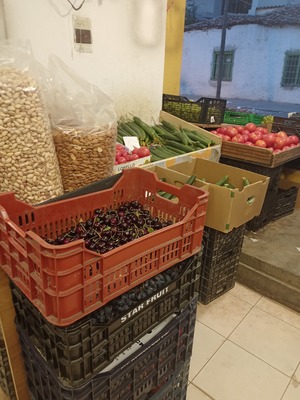
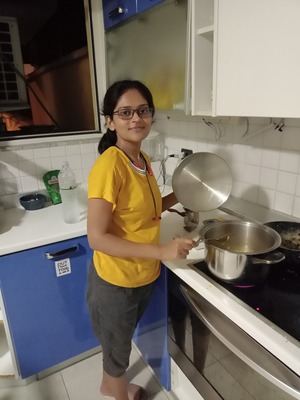
Day 5, Exploring Nearby Places I woke up the next day at noon. After having some coffee, the hostel management girl asked if I wanted breakfast. She offered curd with cornflakes, which I refused because I don t like curd. Instead, I ordered a pizza from a vegetarian pizza place with her help, and I started feeling better. I met some people in the hostel, some from Syria and others from Italy. I struggled to understand their accents but kept pushing myself to get involved in their discussions. Despite the challenges, I felt more at ease and was slowly adapting to my new environment. I went out from the hostel in the evening to buy some vegetables to cook something. I searched for shops and found some potatoes, tomatoes, and rice. I decided to cook Khichdi, an Indian dish made with rice, and added some chili flakes I brought from home. After preparing my dinner, I ate and then went to sleep again. vegetable shop cooking in kitchen Food

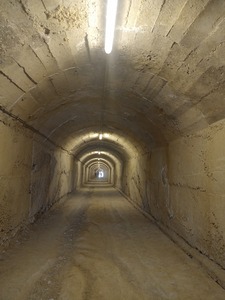
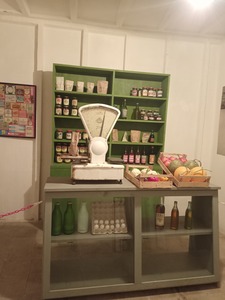
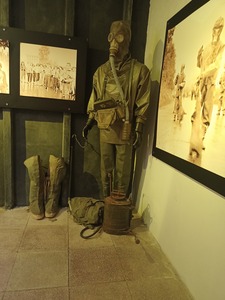
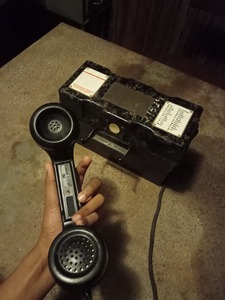
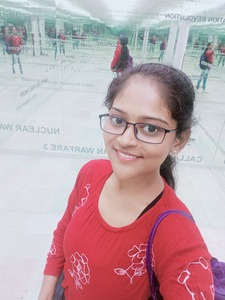
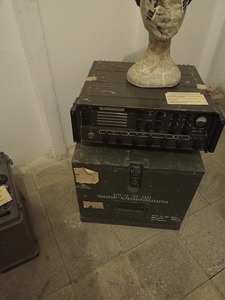
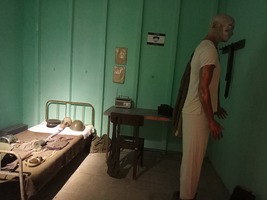
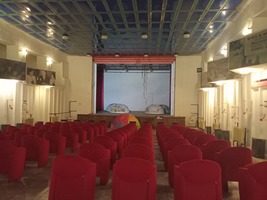
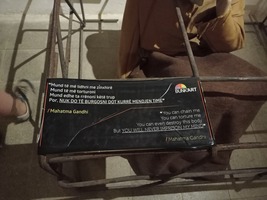
Day 6, Tiranas Recent History The next day, I planned to explore the city and visited Bunkart-1, a fascinating museum in a massive underground bunker from the communist era. Originally built as a shelter for Albania s political and military elite, it now offers a unique glimpse into the country s history under Enver Hoxha s oppressive regime. The museum s exhibits include historical artifacts, photographs, and multimedia displays that detail the lives of Albanians during that time. Walking through the dimly lit corridors, I felt the weight of history and gained a deeper understanding of Albania s past. Bunkart Bunkart Bunkart Bunkart Bunkart Bunkart Bunkar Bunkart Bunkart Bunkart Bunkart

Day 7-8, Meeting Friends From India The next day, I accidentally met with Chirag, who was returning from the Debian Conference 2022 held in Prizren, Kosovo, and staying at the same hostel. When I encountered him, he was talking on the phone, and I recognized he was Indian by his accent. I introduced myself, and we discovered we had some mutual friends. Chirag told me that our common friend, Raju, was also coming to stay at the hostel the next day. This news made me feel relaxed and happy to have known people around. When Raju arrived, the three of us, Chirag, Raju, and I planned to have dinner at an Indian restaurant and explore Tirana city. I had a great time talking and enjoying their company. Friends on street

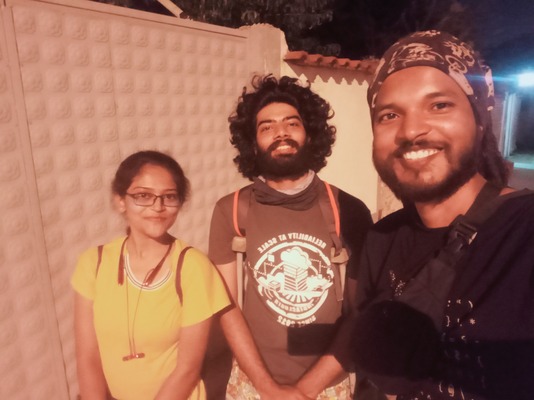
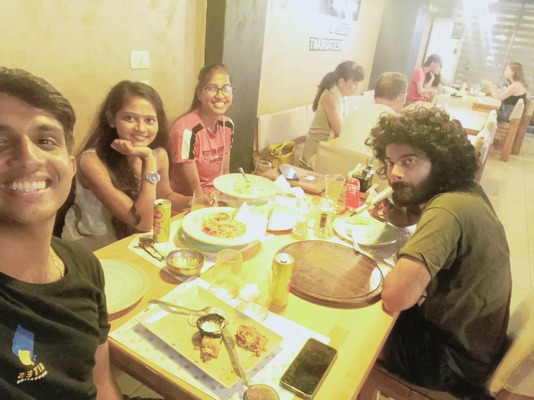
Day 9-10, Meeting More Friends Raju had a ticket to leave soon, so Chirag and I made a plan to visit Shkod r and the nearby Komani Lake for kayaking. We started our journey early in the morning by bus and reached Shkod r. There, we met new friends from the conference, Pavit and Abraham, who were already there. We had dinner together and enjoyed an ice cream treat from Chirag. Friends on dinner

Day 12, Kayaking And Say Good Bye To Friends The next day, Pavit and Abraham had a flight back to India, so Chirag and I went to Komani Lake. We had an adventurous time kayaking, even though neither of us knew how to swim. We took a ferry through the backwaters to the island on Komani Lake and enjoyed a fantastic adventure together. After our trip, Chirag returned to Tirana for his flight back to India, leaving me to continue my journey alone. Lake with mountain Kayak

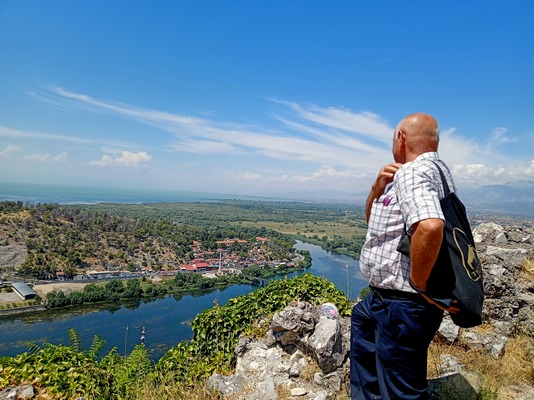
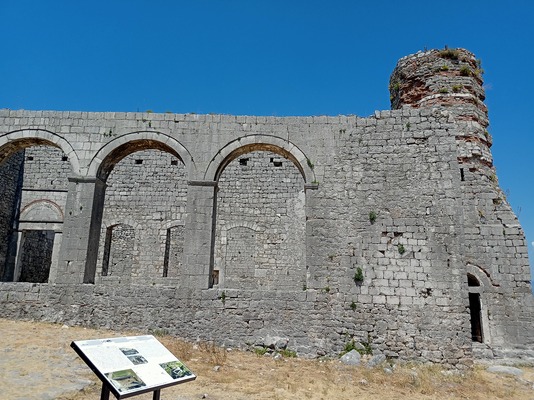
Day 13, Climbing Rozafa Castel By stopping at Shkod r, I visited Rozafa Castle. Despite the language barrier, as most locals only spoke Albanian, people around me guided me correctly on how to get there. At times, I used applications like Google Translate to communicate. To read signs or hotel menus, I used Google Photos' language converter. I even used the audio converter to understand and speak some basic Albanian phrases. View from top of Castel Rozafa castel I took a bus from Shkod r to the southern part of Albania, heading to Sarand . The journey lasted about five to six hours, and I had booked a stay at Mona s Hostel. Upon arrival, I met Eliza from America, and we went together to Ksamil Beach, spending a wonderful day there.

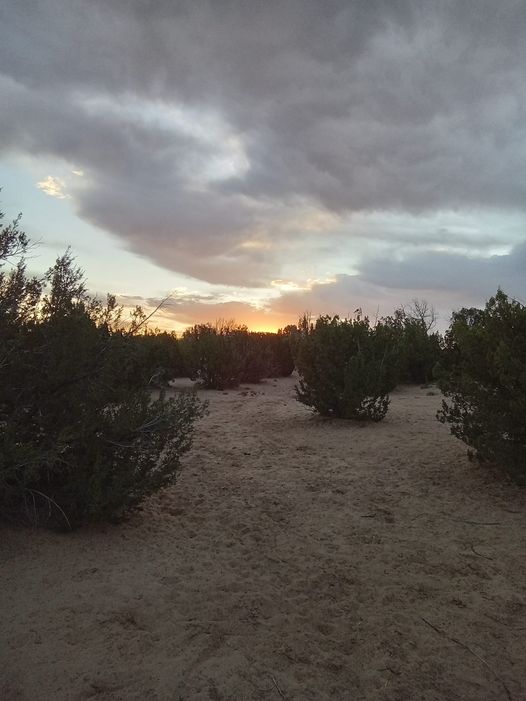
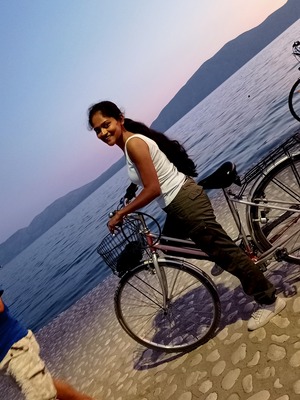
Day 14, Vlora Beach: Beach Side Cycling Next, I traveled to Vlor , where I stayed for one day. During my time there, I enjoyed beach side cycling with a cycle provided by the hostel owner and spent some time feeding fish. I also met a fellow traveler from Delhi who had brought along some preserved Indian curry. He kindly shared it with me, which was a welcome change after nearly 15 days without authentic Indian cuisine, except for what I had cooked myself in various hostels. Sunset on BeachKalyani on Beach Beach with streetBeach side cycling

Day 15-16 Visiting Durress, Travelling Back To Tirana I then visited Durr s, exploring its beautiful beaches, before heading back to Tirana one day before my flight home. On the day of my flight, my alarm didn t go off, and I woke up late at the hostel. In a frantic rush, I packed everything in just five minutes and dashed toward the city center to catch the bus to the airport. If I had been just five minutes later, I would have missed the bus. Thankfully, I managed to stop it just in time and began my journey back home, reflecting on the incredible adventure I had experienced. Fortunately, I wasn t late; I arrived at the airport just in time. After clearing immigration, I boarded my flight, which had a layover in Warsaw, Poland. The journey from Tirana to Warsaw took about two and a half hours, followed by a seven to eight-hour flight from Poland back to India. Once I arrived in Delhi, I returned to Zostel and booked a train ticket to Aurangabad for the next three days.

Backview This trip was an incredible adventure for me. I never imagined I could accomplish something like this, but I did. Meeting diverse people, experiencing different cultures, and learning so much made this journey truly unforgettable. Looking back, I realize how much I ve grown from this experience. Although I may have more opportunities to travel abroad in the future, this trip will always hold a special place in my heart. The memories I made and the incredible people I met along the way are irreplaceable. This experience goes beyond what I can express through this blog or words; it was incredibly precious to me. Every moment of this journey is etched in my memory, and I am grateful for every part of it.

8 August 2024

Reproducible Builds: Reproducible Builds in July 2024

Welcome to the July 2024 report from the Reproducible Builds project! In our reports, we outline what we ve been up to over the past month and highlight news items in software supply-chain security more broadly. As always, if you are interested in contributing to the project, please visit our Contribute page on our website. Table of contents:
  1. Reproducible Builds Summit 2024
  2. Pulling Linux up by its bootstraps
  3. Towards Idempotent Rebuilds?
  4. AROMA: Automatic Reproduction of Maven Artifacts
  5. Community updates
  6. Android Reproducible Builds at IzzyOnDroid with rbtlog
  7. Extending the Scalability, Flexibility and Responsiveness of Secure Software Update Systems
  8. Development news
  9. Website updates
  10. Upstream patches
  11. Reproducibility testing framework


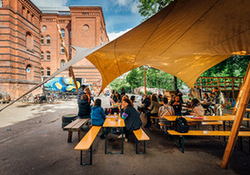
Reproducible Builds Summit 2024 Last month, we were very pleased to announce the upcoming Reproducible Builds Summit, set to take place from September 17th 19th 2024 in Hamburg, Germany. We are thrilled to host the seventh edition of this exciting event, following the success of previous summits in various iconic locations around the world, including Venice, Marrakesh, Paris, Berlin and Athens. Our summits are a unique gathering that brings together attendees from diverse projects, united by a shared vision of advancing the Reproducible Builds effort. During this enriching event, participants will have the opportunity to engage in discussions, establish connections and exchange ideas to drive progress in this vital field. Our aim is to create an inclusive space that fosters collaboration, innovation and problem-solving. If you re interesting in joining us this year, please make sure to read the event page, which has more details about the event and location. We are very much looking forward to seeing many readers of these reports there.

Pulling Linux up by its bootstraps (LWN) In a recent edition of Linux Weekly News, Daroc Alden has written an article on bootstrappable builds. Starting with a brief introduction that
a bootstrappable build is one that builds existing software from scratch for example, building GCC without relying on an existing copy of GCC. In 2023, the Guix project announced that the project had reduced the size of the binary bootstrap seed needed to build its operating system to just 357-bytes not counting the Linux kernel required to run the build process.
The article goes onto to describe that now, the live-bootstrap project has gone a step further and removed the need for an existing kernel at all. and concludes:
The real benefit of bootstrappable builds comes from a few things. Like reproducible builds, they can make users more confident that the binary packages downloaded from a package mirror really do correspond to the open-source project whose source code they can inspect. Bootstrappable builds have also had positive effects on the complexity of building a Linux distribution from scratch [ ]. But most of all, bootstrappable builds are a boon to the longevity of our software ecosystem. It s easy for old software to become unbuildable. By having a well-known, self-contained chain of software that can build itself from a small seed, in a variety of environments, bootstrappable builds can help ensure that today s software is not lost, no matter where the open-source community goes from here

Towards Idempotent Rebuilds? Trisquel developer Simon Josefsson wrote an interesting blog post comparing the output of the .deb files from our tests.reproducible-builds.org testing framework and the ones in the official Debian archive. Following up from a previous post on the reproducibility of Trisquel, Simon notes that typically [the] rebuilds do not match the official packages, even when they say the package is reproducible , Simon correctly identifies that the purpose of [these] rebuilds are not to say anything about the official binary build, instead the purpose is to offer a QA service to maintainers by performing two builds of a package and declaring success if both builds match. However, Simon s post swiftly moves on to announce a new tool called debdistrebuild that performs rebuilds of the difference between two distributions in a GitLab pipeline and displays diffoscope output for further analysis.

AROMA: Automatic Reproduction of Maven Artifacts Mehdi Keshani, Tudor-Gabriel Velican, Gideon Bot and Sebastian Proksch of the Delft University of Technology, Netherlands, have published a new paper in the ACM Software Engineering on a new tool to automatically reproduce Apache Maven artifacts:
Reproducible Central is an initiative that curates a list of reproducible Maven libraries, but the list is limited and challenging to maintain due to manual efforts. [We] investigate the feasibility of automatically finding the source code of a library from its Maven release and recovering information about the original release environment. Our tool, AROMA, can obtain this critical information from the artifact and the source repository through several heuristics and we use the results for reproduction attempts of Maven packages. Overall, our approach achieves an accuracy of up to 99.5% when compared field-by-field to the existing manual approach [and] we reveal that automatic reproducibility is feasible for 23.4% of the Maven packages using AROMA, and 8% of these packages are fully reproducible.

Community updates On our mailing list this month:
  • Nichita Morcotilo reached out to the community, first to share their efforts to build reproducible packages cross-platform with a new build tool called rattler-build, noting that as you can imagine, building packages reproducibly on Windows is the hardest challenge (so far!) . Nichita goes onto mention that the Apple ecosystem appears to be using ZERO_AR_DATE over SOURCE_DATE_EPOCH. [ ]
  • Roland Clobus announced that the Debian bookworm 12.6 live images are nearly reproducible , with more detail in the post itself and input in the thread from other contributors.
  • As reported in last month s report, Pol Dellaiera completed his master thesis on Reproducibility in Software Engineering at the University of Mons, Belgium. This month, Pol announced this on the list with more background info. Since the master thesis sources have been available, it has received some feedback and contributions. As a result, an updated version of the thesis has been published containing those community fixes.
  • Daniel Gr ber asked for help in getting the Yosys documentation to build reproducibly, citing issues in inter alia the PDF generation causing differing CreationDate metadata values.
  • James Addison continued his long journey towards getting the Sphinx documentation generator to build reproducible documentation. In this thread, James concerns himself with the problem that even when SOURCE_DATE_EPOCH is configured, Sphinx projects that have configured their copyright notices using dynamic elements can produce nonsensical output under some circumstances. James query ended up generating a number of replies.
  • Allen gunner Gunner posted a brief update on the progress the core team is making towards introducing a Code of Conduct (CoC) such that it is in place in time for the RB Summit in Hamburg in September . In particular, gunner asks if you are interested in helping with CoC design and development in the weeks ahead, simply email rb-core@lists.reproducible-builds.org and let us know . [ ]

Android Reproducible Builds at IzzyOnDroid with rbtlog On our mailing list, Fay Stegerman announced a new Reproducible Builds collaboration in the Android ecosystem:
We are pleased to announce Reproducible Builds, special client support and more in our repo : a collaboration between various independent interoperable projects: the IzzyOnDroid team, 3rd-party clients Droid-ify & Neo Store, and rbtlog (part of my collection of tools for Android Reproducible Builds) to bring Reproducible Builds to IzzyOnDroid and the wider Android ecosystem.

Extending the Scalability, Flexibility and Responsiveness of Secure Software Update Systems Congratulations to Marina Moore of the New York Tandon School of Engineering who has submitted her PhD thesis on Extending the Scalability, Flexibility and Responsiveness of Secure Software Update Systems. The introduction outlines its contributions to the field:
[S]oftware repositories are a vital component of software development and release, with packages downloaded both for direct use and to use as dependencies for other software. Further, when software is updated due to patched vulnerabilities or new features, it is vital that users are able to see and install this patched version of the software. However, this process of updating software can also be the source of attack. To address these attacks, secure software update systems have been proposed. However, these secure software update systems have seen barriers to widespread adoption. The Update Framework (TUF) was introduced in 2010 to address several attacks on software update systems including repository compromise, rollback attacks, and arbitrary software installation. Despite this, compromises continue to occur, with millions of users impacted by such compromises. My work has addressed substantial challenges to adoption of secure software update systems grounded in an understanding of practical concerns. Work with industry and academic communities provided opportunities to discover challenges, expand adoption, and raise awareness about secure software updates. [ ]

Development news In Debian this month, 12 reviews of Debian packages were added, 13 were updated and 6 were removed this month adding to our knowledge about identified issues. A new toolchain issue type was identified as well, specifically ordering_differences_in_pkg_info.
Colin Percival filed a bug against the LLVM compiler noting that building i386 binaries on the i386 architecture is different when building i386 binaries under amd64. The fix was narrowed down to x87 excess precision, which can result in slightly different register choices when the compiler is hosted on x86_64 or i386 and a fix committed. [ ]
Fay Stegerman performed some in-depth research surrounding her apksigcopier tool, after some Android .apk files signed with the latest apksigner could no longer be verified as reproducible. Fay identified the issue as follows:
Since build-tools >= 35.0.0-rc1, backwards-incompatible changes to apksigner break apksigcopier as it now by default forcibly replaces existing alignment padding and changed the default page alignment from 4k to 16k (same as Android Gradle Plugin >= 8.3, so the latter is only an issue when using older AGP). [ ]
She documented multiple available workarounds and filed a bug in Google s issue tracker.
Lastly, diffoscope is our in-depth and content-aware diff utility that can locate and diagnose reproducibility issues. This month, Chris Lamb uploaded version 272 and Mattia Rizzolo uploaded version 273 to Debian, and the following changes were made as well:
  • Chris Lamb:
    • Ensure that the convert utility is from ImageMagick version 6.x. The command-line interface has seemingly changed with the 7.x series of ImageMagick. [ ]
    • Factor out version detection in test_jpeg_image. [ ]
    • Correct the import of the identify_version method after a refactoring change in a previous commit. [ ]
    • Move away from using DSA OpenSSH keys in tests as support has been deprecated and removed in OpenSSH version 9.8p1. [ ]
    • Move to assert_diff in the test_openssh_pub_key package. [ ]
    • Update copyright years. [ ]
  • Mattia Rizzolo:
    • Add support for ffmpeg version 7.x which adds some extra context to the diff. [ ]
    • Rework the handling of OpenSSH testing of DSA keys if OpenSSH is strictly 9.7, and add an OpenSSH key test with a ed25519-format key [ ][ ][ ]
    • Temporarily disable a few packages that are not available in Debian testing. [ ][ ]
    • Stop ignoring the results of Debian testing in the continuous integration system. [ ]
    • Adjust options in debian/source to make sure not to pack the Python sdist directory into the binary Debian package. [ ]
    • Adjust Lintian overrides. [ ]

Website updates There were a number of improvements made to our website this month, including:

Upstream patches The Reproducible Builds project detects, dissects and attempts to fix as many currently-unreproducible packages as possible. We endeavour to send all of our patches upstream where appropriate. This month, we wrote a large number of such patches, including:

Reproducibility testing framework The Reproducible Builds project operates a comprehensive testing framework running primarily at tests.reproducible-builds.org in order to check packages and other artifacts for reproducibility. In July, a number of changes were made by Holger Levsen, including:
  • Grant bremner access to the ionos7 node. [ ][ ]
  • Perform a dummy change to force update of all jobs. [ ][ ]
In addition, Vagrant Cascadian performed some necessary node maintenance of the underlying build hosts. [ ]

If you are interested in contributing to the Reproducible Builds project, please visit our Contribute page on our website. However, you can get in touch with us via:

Jonathan Carter: DebConf24 Busan, South Korea

I m finishing typing up this blog entry hours before my last 13 hour leg back home, after I spent 2 weeks in Busan, South Korea for DebCamp24 and DebCamp24. I had a rough year and decided to take it easy this DebConf. So this is the first DebConf in a long time where I didn t give any talks. I mostly caught up on a bit of packaging, worked on DebConf video stuff, attended a few BoFs and talked to people. Overall it was a very good DebConf, which also turned out to be more productive than I expeced it would. In the welcome session on the first day of DebConf, Nicolas Dandrimont mentioned that a benefit of DebConf is that it provides a sort of caffeine for your Debian motivation. I could certainly feel that affect swell as the days went past, and it s nice to be excited about some ideas again that would otherwise be fading.

Recovering DPL It s a bit of a gear shift being DPL for 4 years, and DebConf Committee for nearly 5 years before that, and then being at DebConf while some issue arise (as it always does during a conference). At first I jump into high alert mode, but then I have to remind myself it s not your problem anymore and let others deal with it. It was nice spending a little in-person time with Andreas Tille, our new DPL, we did some more handover and discussed some current issues. I still have a few dozen emails in my DPL inbox that I need to collate and forward to Andreas, I hope to finish all that up by the end of August. During the Bits from the DPL talk, the usual question came up whether Andreas will consider running for DPL again, to which he just responded in a slide Maybe . I think it s a good idea for a DPL to do at least two terms if it all works out for everyone, since it takes a while to get up to speed on everything. Also, having been DPL for four years, I have a lot to say about it, and I think there s a lot we can fix in the role, or at least discuss it. If I had the bandwidth for it I would have scheduled a BoF for it, but I ll very likely do that for the next DebConf instead!

Video team I set up the standby loop for the video streaming setup. We call it loopy, it s a bunch of OBS scenes that provide announcements, shows sponsors, the schedule and some social content. I wrote about it back in 2020, but it s evolved quite a bit since then, so I m probably due to write another blog post with a bunch of updates on it. I hope to organise a video team sprint in Cape Town in the first half of next year, so I ll summarize everything before then.

It would ve been great if we could have some displays in social areas that could show talks, the loop and other content, but we were just too pressed for time for that. This year s DebConf had a very compressed timeline, and there was just too much that had to be done and that had to be figured out on the last minute. This put quite a lot of strain on the organisers, but I was glad to see how, for the most part, most attendees were very sympathetic to some rough edges (but I digress ). I added more of the OBS machine setup to the videoteam s ansible repository, so as of now it just needs an ansible setup and the OBS data and it s good to go. The loopy data is already in the videoteam git repository, so I could probably just add a git pull and create some symlinks in ansible and then that machine can be installed from 0% to 100% by just installing via debian-installer with our ansible hooks. This DebConf I volunteered quite a bit for actual video roles during the conference, something I didn t have much time for in recent DebConfs, and it s been fun, especially in a session or two where nearly none of the other volunteers showed up. Sometimes chaos is just fun :-)
Baekyongee is the university mascot, who s visible throughout the university. So of course we included this four legged whale creature on the loop too!

Packaging I was hoping to do more packaging during DebCamp, but at least it was a non-zero amount:
  • Uploaded gdisk 1.0.10-2 to unstable (previously tested effects of adding dh-sequence-movetousr) (Closes: #1073679).
  • Worked a bit on bcachefs-tools (updating git to 1.9.4), but has a build failure that I need to look into (we might need a newer bindgen) update: I m probably going to ROM this package soon, it doesn t seem suitable for packaging in Debian.
  • Calamares: Tested a fix for encrypted installs, and uploaded it.
  • Calamares: Uploaded (3.3.8-1) to backports (at the time of writing it s still in backports-NEW).
  • Backport obs-gradient-source for bookworm.
  • Did some initial packaging on Cambalache, I ll upload to unstable once wlroots (0.18) hits unstable.
  • Pixelorama 1.0 I did some initial packaging for Pixelorama back when we did the MiniDebConf Gaming Edition, but it had a few stoppers back then. Version 1.0 seems to fix all of that, but it depends on Godot 4.2 and we re still on the 3 series in Debian, so I ll upload this once Godot 4.2 hits at least experimental. Godot software/games is otherwise quite easy to run, it s basically just source code / data that is installed and then run via godot-runner (godot3-runner package in Debian).

BoFs Python Team BoF Link to the etherpad / pad archive link and video can be found on the talk page: https://debconf24.debconf.org/talks/31-python-bof/ The session ended up being extended to a second part, since all the issues didn t fit into the first session. I was distracted by too many thing during the Python 3.12 transition (to the point where I thought that 3.11 was still new in Debian), so it was very useful listening to the retrospective of that transition. There was a discussion whether Python 3.13 could still make it to testing in time for freeze, and it seems that there is consensus that it can, although, likely with new experimental features like disabling the global interpreter lock and the just in time compiler disabled. I learned for the first time about the dead batteries project, PEP-0594, which removes ancient modules that have mostly been superseded, from the Python standard library. There was some talk about the process for changing team policy, and a policy discussion on whether we should require autopkgtests as a SHOULD or a MUST for migration to testing. As with many things, the devil is in the details and in my opinion you could go either way and achieve a similar result (the original MUST proposal allowed exceptions which imho made it the same as the SHOULD proposal). There s an idea to do some ongoing remote sprints, like having co-ordinated days for bug squashing / working on stuff together. This is a nice idea and probably a good way to energise the team and also to gain some interest from potential newcomers. Louis-Philipe V ronneau was added as a new team admin and there was some discussion on various Sphinx issues and which Lintian tags might be needed for Python 3.13. If you want to know more, you probably have to watch the videos / read the notes :)
    Debian.net BoF Link to the etherpad / pad archive link can be found on the talk page: https://debconf24.debconf.org/talks/37-debiannet-team-bof Debian Developers can set up services on subdomains on debian.net, but a big problem we ve had before was that developers were on their own for hosting those services. This meant that they either hosted it on their DSL/fiber connection at home, paid for the hosting themselves, or hosted it at different services which became an accounting nightmare to claim back the used funds. So, a few of us started the debian.net hosting project (sometimes we just call it debian.net, this is probably a bit of a bug) so that Debian has accounts with cloud providers, and as admins we can create instances there that gets billed directly to Debian. We had an initial rush of services, but requests have slowed down since (not really a bad thing, we don t want lots of spurious requests). Last year we did a census, to check which of the instances were still used, whether they received system updates and to ask whether they are performing backups. It went well and some issues were found along the way, so we ll be doing that again. We also gained two potential volunteers to help run things, which is great. Debian Social BoF Link to the etherpad / pad archive link can be found on the talk page: https://debconf24.debconf.org/talks/34-debiansocial-bof We discussed the services we run, you can view the current state of things at: https://wiki.debian.org/Teams/DebianSocial Pleroma has shown some cracks over the last year or so, and there are some forks that seem promising. At the same time, it might be worth while considering Mastodon too. So we ll do some comparison of features and maintenance and find a way forward. At the time when Pleroma was installed, it was way ahead in terms of moderation features. Pixelfed is doing well and chugging along nicely, we should probably promote it more. Peertube is working well, although we learned that we still don t have all the recent DebConf videos on there. A bunch of other issues should be fixed once we move it to a new machine that we plan to set up. We re removing writefreely and plume. Nice concepts, but it didn t get much traction yet, and no one who signed up for these actually used it, which is fine, some experimentation with services is good and sometimes they prove to be very popular and other times not. The WordPress multisite instance has some mild use, otherwise haven t had any issues. Matrix ended up to be much, much bigger than we thought, both in usage and in its requirements. It s very stateful and remembers discussions for as long as you let it, so it s Postgres database is continuously expanding, this will also be a lot easier to manage once we have this on the new host. Jitsi is also quite popular, but it could probably be on jitsi.debian.net instead (we created this on debian.social during the initial height of COVID-19 where we didn t have the debian.net hosting yet), although in practice it doesn t really matter where it lives. Most of our current challenges will be solved by moving everything to a new big machine that has a few public IPs available for some VMs, so we ll be doing that shortly. Debian Foundation Discussion BoF This was some brainstorming about the future structure of Debian, and what steps might be needed to get there. It s way too big a problem to take on in a BoF, but we made some progress in figuring out some smaller pieces of the larger puzzle. The DPL is going to get in touch with some legal advisors and our trusted organisations so that we can aim to formalise our relationships a bit more by the time it s DebConf again. I also introduced my intention to join the Debian Partners delegation. When I was DPL, I enjoyed talking with external organisations who wanted to help Debian, but helping external organisations help Debian turned out to be too much additional load on the usual DPL roles, so I m pursuing this with the Debian Partners team, more on that some other time. This session wasn t recorded, but if you feel like you missed something, don t worry, all intentions will be communicated and discussed with project members before anything moves forward. There was a strong agreement in the room though that we should push forward on this, and not reach another DebConf where we didn t make progress on formalising Debian s structure more.

    Social Conference Dinner
    Conference Dinner Photo from Santiago
    The conference dinner took place in the university gymnasium. I hope not many people do sports there in the summer, because it got HOT. There was also some interesting observations on the thermodynamics of the attempted cooling solutions, which was amusing. On the plus side, the food was great, the company was good, and the speeches were kept to a minimum, so it was a great conference dinner, even though it was probably cut a bit short due to the heat. Cheese and Wine Cheese and Wine happened on 1 August, which happens to be the date I became a DD at DebConf17 in Montr al seven years before, so this was a nice accidental celebration of my Debiversary :) Since I m running out of time, I ll add some more photos to this post some time after publishing it :P Group Photo As per DebConf tradition, Aigars took the group photo. You can find the high resolution version on Debian s GitLab instance.
    Debian annual conference Debconf 24, Busan, South Korea
    Photography: Aigars Mahinovs aigarius@debian.org
    License: CC-BYv3+ or GPLv2+
    Talking Ah yes, talking to people is a big part of DebConf, but I didn t keep track of it very well.
    • I mostly listened to Alper a bit about his ideas for his talk about debian installer.
    • I talked to Rhonda a bit about ActivityPub and MQTT and whether they could be useful for publicising Debian activity.
    • Listened to Gunnar and Julian have a discussion about GPG and APT which was interesting.
    • I learned that you can learn Hangul, the Korean alphabet, in about an hour or so (I wish I knew that in all my years of playing StarCraft II).
    • We had the usual continuous keysigning party. Besides it s intended function, this is always a good ice breaker and a way to for shy people to meet other shy people.
    • and many other fly-by discussions.

    Stuff that didn t happen this DebConf
    • loo.py A simple Python script that could eventually replace the obs-advanced-scene-switcher sequencer in OBS. It would also be extremely useful if we d ever replace OBS for loopy. I was hoping to have some time to hack on this, and try to recreate the current loopy in loo.py, but didn t have the time.
    • toetally This year videoteam had to scramble to get a bunch of resistors to assemble some tally light. Even when assembled, they were a bit troublesome. It would ve been nice to hack on toetally and get something ready for testing, but it mostly relies on having something like a rasbperry pi zero with an attached screen in order to work on further. I ll try to have something ready for the next mini conf though.
    • extrepo on debian live I think we should have extrepo installed by default on desktop systems, I meant to start a discussion on this, but perhaps it s just time I go ahead and do it and announce it.
    • Live stream to peertube server It would ve been nice to live stream DebConf to PeerTube, but the dependency tree to get this going got a bit too huge. Following our plans discussed in the Debian Social BoF, we should have this safely ready before the next MiniDebConf and should be able to test it there.
    • Desktop Egg there was this idea to get a stand-in theme for Debian testing/unstable until the artwork for the next release is finalized (Debian bug: #1038660), I have an idea that I meant to implement months ago, but too many things got in the way. It s based on Juliette Taka s Homeworld theme, and basically transforms the homeworld into an egg. Get it? Something that hasn t hatched yet? I also only recently noticed that we never used the actual homeworld graphics (featuring the world image) in the final bullseye release. lol.
    So, another DebConf and another new plush animal. Last but not least, thanks to PKNU for being such a generous and fantastic host to us! See you again at DebConf25 in Brest, France next year!

      Louis-Philippe V ronneau: A Selection of DebConf24 Talks

      DebConf24 is now over! I'm very happy I was able to attend this year. If you haven't had time to look at the schedule yet, here is a selection of talks I liked.
      What happens if I delete setup.py?: a live demo of upgrading to PEP-518 Python packaging A great talk by Weezel showcasing how easy it is to migrate to PEP-518 for existing Python projects. This is the kind of thing I've been doing a lot when packaging upstream projects that still use setup.py. I encourage you to send this kind of patch upstream, as it makes everyone's life much easier.
      Debian on Chromebooks: What's New and What's Next? A talk by Alper Nebi Yasak, who has done great work on running Debian and the Debian Installer on Chromebooks. With Chromebooks being very popular machines in schools, it's nice to see people working on a path to liberate them.
      Sequoia PGP, sq, gpg-from-sq, v6 OpenPGP, and Debian I had the chance to see Justus' talk on Sequoia an OpenPGP implementation in Rust at DebConf22 in Kosovo. Back then, the conclusion was that sq wasn't ready for production yet. Well it seems it now is! This in-depth talk goes through the history of the project and its goals. There is also a very good section on the current OpenPGP/LibrePGP schism.
      Chameleon - the easy way to try out Sequoia - OpenPGP written in Rust A very short talk by Holger on Chameleon, a tool to make migration to Sequoia easier. TL;DW: apt install gpg-from-sq
      Protecting OpenPGP keyservers from certificate flooding Although I used to enjoy signing people's OpenPGP keys, I completely gave up on this practice around 2019 when dkg's key was flooded with bogus certifications and have been refusing to do so since. In this talk, Gunnar talks about his PhD work on fixing this issue and making sure we can eventually restore this important function on keyservers.
      Bits from the DPL Bits from the DPL! A DebConf classic.
      Linux live patching in Debian Having to reboot servers after kernel upgrades is a hassle, especially with machines that have encrypted disk drives. Although kernel live patching in Debian is still a work in progress, it is encouraging to see people trying to fix this issue.
      "I use Debian BTW": fzf, tmux, zoxide and friends A fun talk by Samuel Henrique on little changes and tricks one can make to their setup to make life easier.
      Ideas to Move Debian Installer Forward Another in-depth talk by Alper, this time on the Debian Installer and his ideas to try to make it better. I learned a lot about the d-i internals!
      Lightning Talks Lighting talks are always fun to watch! This year, the following talks happened:
      1. Customizing your Linux icons
      2. A Free Speech tracker by SFLC.IN
      3. Desktop computing is irrelevant
      4. An introduction to wcurl
      5. Aliasing in dpkg
      6. A DebConf art space
      7. Tiny Tapeout, Fomu, PiCI
      8. Data processing and visualisation in the shell

      Is there a role for Debian in the post-open source era? As an economist, I've been interested in Copyright and business models in the Free Software ecosystem for a while. In this talk, Hatta-san and Bruce Perens discuss the idea of alternative licences that are not DFSG-free, like Post-Open.

      Guilherme Puida Moreira: DebConf 24

      I attended my first DebConf this year! It was held in Busan, South Korea, and the whole experience was a blast. It was really fun meeting new people, and I m looking forward to DebConf 25 in Brest! Here is a list of some of the things I did (and that I can remember) during DebCamp/DebConf:

      1 August 2024

      Guido G nther: Free Software Activities July 2024

      A short status update on what happened on my side last month. Looking at unified push support for Chatty prompted some libcmatrix fixes and Chatty improvements (benefiting other protocols like SMS/MMS as well). The Bluetooth status page in Phosh was a slightly larger change code wise as we also enhanced our common widgets for building status pages, simplifying the Wi-Fi status page and making future status pages simpler. But as usual investigating bugs, reviewing patches (thanks!) and keeping up with the changing world around us is what ate most of the time. Phosh A Wayland Shell for mobile devices Phoc A Wayland compositor for mobile devices libphosh-rs Phosh Rust bindings phosh-osk-stub A on screen keyboard for Phosh phosh-mobile-settings phosh-wallpapers Wallpapers, Sounds and other artwork git-buildpackage Suite to help with Debian packages in Git repositories Whatmaps Tool to find processes mapping shared objects Debian The universal operating system Mobian A Debian derivative for mobile devices Calls PSTN and SIP calls for GNOME Livi Minimalistic video player targeting mobile devices libcall-ui Common user interface parts for call handling in GNOME and Phosh. feedbackd DBus service for haptic/visual/audio feedback Chatty Messaging application for mobile and desktop libcmatrix A matrix client client library Eigenvalue A libcmatrix test client Help Development If you want to support my work see donations. This includes list of hardware we want to improve support for.

      31 July 2024

      Reproducible Builds (diffoscope): diffoscope 273 released

      The diffoscope maintainers are pleased to announce the release of diffoscope version 273. This version includes the following changes:
      [ Chris Lamb ]
      * Factor out version detection in test_jpeg_image. (Re:
        reproducible-builds/diffoscope#384)
      * Ensure that 'convert' is from Imagemagick 6.x; we will need to update a
        few things with IM7. (Closes: reproducible-builds/diffoscope#384)
      * Correct import of identify_version after refactoring change in 037bdcbb0.
      [ Mattia Rizzolo ]
      * tests:
        + Add OpenSSH key test with a ed25519 key.
        + Skip the OpenSSH test with DSA key if openssh is >> 9.7
        + Support ffmpeg >= 7 that adds some extra context to the diff
      * Do not ignore testing in gitlab-ci.
      * debian:
        + Temporarily remove aapt, androguard and dexdump from the build/test
          dependencies as they are not available in testin/trixie.  Closes: #1070416
        + Bump Standards-Version to 4.7.0, no changes needed.
        + Adjust options to make sure not to pack the python s-dist directory
          into the debian source package.
        + Adjust the lintian overrides.
      
      You find out more by visiting the project homepage.

      Matthew Palmer: Health Industry Company Sues to Prevent Certificate Revocation

      It s not often that a company is willing to make a sworn statement to a court about how its IT practices are incompatible with the needs of the Internet, but when they do it s popcorn time.
      The Combatants In the red corner, weighing in at nah, I m not going to do that schtick. The plaintiff in the case is Alegeus Technologies, LLC, a Delaware Corporation that, according to their filings, is a leading provider of a business-tobusiness, white-label funding and payment platform for healthcare carriers and third-party administrators to administer consumer-directed employee benefit programs . Not being subject to the US bonkers health care system, I have only a passing familiarity with the sorts of things they do, but presumably it involves moving a lot of money around, which is sometimes important. The defendant is DigiCert, a CA which, based on analysis I ve done previously, is the second-largest issuer of WebPKI certificates by volume.

      The History According to a recently opened Mozilla CA bug, DigiCert found an issue in their domain control validation workflow, that meant it may have been possible for a miscreant to have certificates issued to them that they weren t legitimately entitled to. Given that validating domain names is basically the YOU HAD ONE JOB! of a CA, this is a big deal. The CA/Browser Forum Baseline Requirements (BRs) (which all CAs are required to adhere to, by virtue of their being included in various browser and OS trust stores), say that revocation is required within 24 hours when [t]he CA obtains evidence that the validation of domain authorization or control for any Fully Qualified Domain Name or IP address in the Certificate should not be relied upon (section 4.9.1.1, point 5). DigiCert appears to have at least tried to do the right thing, by opening the above Mozilla bug giving some details of the problem, and notifying their customers that their certificates were going to be revoked. One may quibble about how fast they re doing it, but they re giving it a decent shot, at least. A complicating factor in all this is that, only a touch over a month ago, Google Chrome announced the removal of another CA, Entrust, from its own trust store program, citing a pattern of compliance failures, unmet improvement commitments, and the absence of tangible, measurable progress in response to publicly disclosed incident reports . Many of these compliance failures were failures to revoke certificates in a timely manner. One imagines that DigiCert would not like to gain a reputation for tardy revocation, particularly at the moment.

      The Legal Action Now we come to Alegeus Technologies. They ve opened a civil case whose first action is to request the issuance of a Temporary Restraining Order (TRO) that prevents DigiCert from revoking certificates issued to Alegeus (which the court has issued). This is a big deal, because TROs are legal instruments that, if not obeyed, constitute contempt of court (or something similar) and courts do not like people who disregard their instructions. That means that, in the short term, those certificates aren t getting revoked, despite the requirement imposed by root stores on DigiCert that the certificates must be revoked. DigiCert is in a real rock / hard place situation here: revoke and get punished by the courts, or don t revoke and potentially (though almost certainly not, in the circumstances) face removal from trust stores (which would kill, or at least massively hurt, their business). The reasons that Alegeus gives for requesting the restraining order is that [t]o Reissue and Reinstall the Security Certificates, Alegeus must work with and coordinate with its Clients, who are required to take steps to rectify the certificates. Alegeus has hundreds of such Clients. Alegeus is generally required by contract to give its clients much longer than 24 hours notice before executing such a change regarding certification. In the filing, Alegeus does acknowledge that DigiCert is a voluntary member of the Certification Authority Browser Forum (CABF), which has bylaws stating that certificates with an issue in their domain validation must be revoked within 24 hours. This is a misstatement of the facts, though. It is the BRs, not the CABF bylaws, that require revocation, and the BRs apply to all CAs that wish to be included in browser and OS trust stores, not just those that are members of the CABF. In any event, given that Alegeus was aware that DigiCert is required to revoke certificates within 24 hours, one wonders why Alegeus went ahead and signed agreements with their customers that required a lengthy notice period before changing certificates. What complicates the situation is that there is apparently a Master Services Agreement (MSA) that states that it constitutes the entire agreement between the parties and that MSA doesn t mention certificate revocation anywhere relevant. That means that it s not quite so cut-and-dried that DigiCert does, in fact, have the right to revoke those certificates. I d expect a lot of update to your Master Services Agreement emails to be going out from DigiCert (and other CAs) in the near future to clarify this point. Not being a lawyer, I can t imagine which way this case might go, but there s one thing we can be sure of: some lawyers are going to able to afford that trip to a tropical paradise this year.

      The Security Issues The requirement for revocation within 24 hours is an important security control in the WebPKI ecosystem. If a certificate is misissued to a malicious party, or is otherwise compromised, it needs to be marked as untrustworthy as soon as possible. While revocation is far from perfect, it is the best tool we have. In this court filing, Alegeus has claimed that they are unable to switch certificates with less than 24 hours notice (due to contractual SLAs ). This is a pretty big problem, because there are lots of reasons why a certificate might need to be switched out Very Quickly. As a practical example, someone with access to the private key for your SSL certificate might decide to use it in a blog post. Letting that sort of problem linger for an extended period of time might end up being a Pretty Big Problem of its own. An organisation that cannot respond within hours to a compromised certificate is playing chicken with their security.

      The Takeaways Contractual obligations that require you to notify anyone else of a certificate (or private key) changing are bonkers, and completely antithetical to the needs of the WebPKI. If you have to have them, you re going to want to start transitioning to a private PKI, wherein you can do whatever you darn well please with revocation (or not). As these sorts of problems keep happening, trust stores (and hence CAs) are going to crack down on this sort of thing, so you may as well move sooner rather than later. If you are an organisation that uses WebPKI certificates, you ve got to be able to deal with any kind of certificate revocation event within hours, not days. This basically boils down to automated issuance and lifecycle management, because having someone manually request and install certificates is terrible on many levels. There isn t currently a completed standard for notifying subscribers if their certificates need premature renewal (say, due to needing to be revoked), but the ACME Renewal Information Extension is currently being developed to fill that need. Ask your CA if they re tracking this standards development, and when they intend to have the extension available for use. (Pro-tip: if they say we ll start doing development when the RFC is published , run for the hills; that s not how responsible organisations work on the Internet).

      The Givings If you ve found this helpful, consider shouting me a refreshing beverage. Reading through legal filings is thirsty work!

      29 July 2024

      Sahil Dhiman: Ola Maps and OpenStreetMap Data

      Recently, Ola started rolling out Ola Maps in their main mobile app, replacing Google Maps, while also offering maps as a service to other organizations. The interesting part for me was the usage of OpenStreetMap data as base map with Ola s proprietary data sources. I ll mostly about talk about map data part here. RTI 1
      Screenshot of Ola App.
      OpenStreetMap attribution is shown after clicking the Ola Map icon.
      OpenStreetMap (OSM) for starters, is a community owned and edited map data resource which gives freedom to use map data for any purpose. This includes the condition that attribution is given back to OSM which in turn ideally would encourage other users to contribute, correct and edit, helping everyone in turn. Due to this, OSM is also regarded as Wikipedia of maps. OSM data is not just used by Ola. Many others use it for various purposes like Wikipedia Maps, Strava Maps, Snapchat Map, bus tracking in GoIbibo/Redbus. OSM India community has been following Ola map endeavor to use and contribute to OSM since they went public. As required by OSM for organized mapping efforts, Ola created wiki entry with information regarding their editors, usage, policy and mentions following as their data usage case:
      OSM data is used for the road network, traffic signs and signals, buildings, natural features, landuse polygons and some POIs.
      Creating a map product is a task in itself, an engineering hurdle creating the tech stack for collection, validation, import and serving the map and the map data part. Ola has done a good job describing the development of tech stack in their blog post. Ola holds an enormous corpus of live and constantly updated GPS trace data. Their drivers, users, and delivery partners generate those, which they harness to validate, correct and add missing map data. Ola employees now regularly contribute new or missing roads (including adding dual carriageway to existing ones), fix road geometry, classification, road access type and restrictions pan India. They have been active and engaging in OSM India community channels, though community members have raised some concerns on their OSM edit practices. Ola s venture into the map industry isn t something out of the ordinary. Grab, a South East Asian company which has business interests in food deliveries, ride hailing and a bunch of other services too switched to their in-house map based on OpenStreetMap, followed by launching of their map product. Grab too contributed back data like Ola. Both Ola and Grab heavily rely on map for their business operations and seem to chose to go independent for it, bootstrapping the products on OSM. In India too, a bunch of organizations contribute to OSM like Swiggy, Stackbox, Amazon, Apple. Microsoft, Meta/Facebook and many others. Everyone wants a better map (data), so everyone works together. Ola could have gone their own route, bootstrapping map data from scratch, which would have been a gargantuan task when you re competing against the likes of Google Maps and Bing Maps, which have been into this since many years. Deciding to use OSM and actively giving back to make data better for everyone deserves accolades. Now I m waiting to for their second blog post, which they mention would be on map data. If you re an Ola map user through Ola Electric or Ola app, and find some road unmapped, you can always edit them in OSM. What I have heard from their employee, they import new OSM data weekly, which means your changes should start reflecting for you (and everyone else) by next week. If you re new, follow Beginners guide and join OSM India community community.osm.be/resources/asia/india/ for any doubts and participating in various mapping events. PS You can see live OSM edits in India subcontinent here.

      Next.

      Previous.