Search Results: "sto"

19 January 2015

Daniel Pocock: jSMPP project update, 2.1.1 and 2.2.1 releases

The jSMPP project on Github stopped processing pull requests over a year ago and appeared to be needing some help. I've recently started hosting it under https://github.com/opentelecoms-org/jsmpp and tried to merge some of the backlog of pull requests myself. There have been new releases:
  • 2.1.1 works in any project already using 2.1.0. It introduces bug fixes only.
  • 2.2.1 introduces some new features and API changes and bigger bug fixes
The new versions are easily accessible for Maven users through the central repository service. Apache Camel has already updated to use 2.1.1. Thanks to all those people who have contributed to this project throughout its history.

Daniel Pocock: Storage controllers for small Linux NFS networks

While contemplating the disk capacity upgrade for my Microserver at home, I've also been thinking about adding a proper storage controller. Currently I just use the built-in controller in the Microserver. It is an AMD SB820M SATA controller. It is a bottleneck for the SSD IOPS. On the disks, I prefer to use software RAID (such as md or BtrFs) and not become dependent on the metadata format of any specific RAID controller. The RAID controllers don't offer the checksumming feature that is available in BtrFs and ZFS. The use case is NFS for a small number of workstations. NFS synchronous writes block the client while the server ensures data really goes onto the disk. This creates a performance bottleneck. It is actually slower than if clients are writing directly to their local disks through the local OS caches. SSDs on an NFS server offer some benefit because they can complete write operations more quickly and the NFS server can then tell the client the operation is complete. The more performant solution (albeit with a slight risk of data corruption) is to use a storage controller with a non-volatile (battery-backed or flash-protected) write cache. Many RAID controllers have non-volatile write caches. Some online discussions of BtrFs and ZFS have suggested staying away from full RAID controllers though, amongst other things, to avoid the complexities of RAID controllers adding their metadata to the drives. This brings me to the first challenge though: are there suitable storage controllers that have a non-volatile write cache but without having other RAID features? Or a second possibility: out of the various RAID controllers that are available, do any provide first-class JBOD support? Observations I looked at specs and documentation for various RAID controllers and identified some of the following challenges: Next steps Are there other options to look at, for example, alternatives to NFS? If I just add in a non-RAID HBA to enable faster IO to the SSDs will this be enough to make a noticeable difference on the small number of NFS clients I'm using? Or is it inevitable that I will have to go with one of the solutions that involves putting a vendor's volume metadata onto JBOD volumes? If I do go that way, which of the vendors' metadata formats are most likely to be recognized by free software utilities in the future if I ever connect the disk to a generic non-RAID HBA? Thanks to all those people who provided comments about choosing drives for this type of NAS usage. Related reading

18 January 2015

Dirk Eddelbuettel: Running UBSAN tests via clang with Rocker

Every now and then we get reports from CRAN about our packages failing a test there. A challenging one concerns UBSAN, or Undefined Behaviour Sanitizer. For background on UBSAN, see this RedHat blog post for gcc and this one from LLVM about clang. I had written briefly about this before in a blog post introducing the sanitizers package for tests, as well as the corresponding package page for sanitizers, which clearly predates our follow-up Rocker.org repo / project described in this initial announcement and when we became the official R container for Docker. Rocker had support for SAN testing, but UBSAN was not working yet. So following a recent CRAN report against our RcppAnnoy package, I was unable to replicate the error and asked for help on r-devel in this thread. Martyn Plummer and Jan van der Laan kindly sent their configurations in the same thread and off-list; Jeff Horner did so too following an initial tweet offering help. None of these worked for me, but further trials eventually lead me to the (already mentioned above) RedHat blog post with its mention of -fno-sanitize-recover to actually have an error abort a test. Which, coupled with the settings used by Martyn, were what worked for me: clang-3.5 -fsanitize=undefined -fno-sanitize=float-divide-by-zero,vptr,function -fno-sanitize-recover. This is now part of the updated Dockerfile of the R-devel-SAN-Clang repo behind the r-devel-ubsan-clang. It contains these settings, as well a new support script check.r for littler---which enables testing right out the box. Here is a complete example:
docker                              # run Docker (any recent version, I use 1.2.0)
  run                               # launch a container 
    --rm                            # remove Docker temporary objects when dome
    -ti                             # use a terminal and interactive mode 
    -v $(pwd):/mnt                  # mount the current directory as /mnt in the container
    rocker/r-devel-ubsan-clang      # using the rocker/r-devel-ubsan-clang container
  check.r                           # launch the check.r command from littler (in the container)
    --setwd /mnt                    # with a setwd() to the /mnt directory
    --install-deps                  # installing all package dependencies before the test
    RcppAnnoy_0.0.5.tar.gz          # and test this tarball
I know. It is a mouthful. But it really is merely the standard practice of running Docker to launch a single command. And while I frequently make this the /bin/bash command (hence the -ti options I always use) to work and explore interactively, here we do one better thanks to the (pretty useful so far) check.r script I wrote over the last two days. check.r does about the same as R CMD check. If you look inside check you will see a call to a (non-exported) function from the (R base-internal) tools package. We call the same function here. But to make things more interesting we also first install the package we test to really ensure we have all build-dependencies from CRAN met. (And we plan to extend check.r to support additional apt-get calls in case other libraries etc are needed.) We use the dependencies=TRUE option to have R smartly install Suggests: as well, but only one level (see help(install.packages) for details. With that prerequisite out of the way, the test can proceed as if we had done R CMD check (and additional R CMD INSTALL as well). The result for this (known-bad) package:
edd@max:~/git$ docker run --rm -ti -v $(pwd):/mnt rocker/r-devel-ubsan-clang check.r --setwd /mnt --install-deps RcppAnnoy_0.0.5.tar.gz 
also installing the dependencies  Rcpp ,  BH ,  RUnit 
trying URL 'http://cran.rstudio.com/src/contrib/Rcpp_0.11.3.tar.gz'
Content type 'application/x-gzip' length 2169583 bytes (2.1 MB)
opened URL
==================================================
downloaded 2.1 MB
trying URL 'http://cran.rstudio.com/src/contrib/BH_1.55.0-3.tar.gz'
Content type 'application/x-gzip' length 7860141 bytes (7.5 MB)
opened URL
==================================================
downloaded 7.5 MB
trying URL 'http://cran.rstudio.com/src/contrib/RUnit_0.4.28.tar.gz'
Content type 'application/x-gzip' length 322486 bytes (314 KB)
opened URL
==================================================
downloaded 314 KB
trying URL 'http://cran.rstudio.com/src/contrib/RcppAnnoy_0.0.4.tar.gz'
Content type 'application/x-gzip' length 25777 bytes (25 KB)
opened URL
==================================================
downloaded 25 KB
* installing *source* package  Rcpp  ...
** package  Rcpp  successfully unpacked and MD5 sums checked
** libs
clang++-3.5 -fsanitize=undefined -fno-sanitize=float-divide-by-zero,vptr,function -fno-sanitize-recover -I/usr/local/lib/R/include -DNDEBUG -I../inst/include/ -I/usr/local/include    -fpic  -pipe -Wall -pedantic -
g  -c Date.cpp -o Date.o
[...]
* checking examples ... OK
* checking for unstated dependencies in  tests  ... OK
* checking tests ...
  Running  runUnitTests.R 
 ERROR
Running the tests in  tests/runUnitTests.R  failed.
Last 13 lines of output:
  +     if (getErrors(tests)$nFail > 0)  
  +         stop("TEST FAILED!")
  +      
  +     if (getErrors(tests)$nErr > 0)  
  +         stop("TEST HAD ERRORS!")
  +      
  +     if (getErrors(tests)$nTestFunc < 1)  
  +         stop("NO TEST FUNCTIONS RUN!")
  +      
  +  
  
  
  Executing test function test01getNNsByVector  ... ../inst/include/annoylib.h:532:40: runtime error: index 3 out of bounds for type 'int const[2]'
* checking PDF version of manual ... OK
* DONE
Status: 1 ERROR, 2 WARNINGs, 1 NOTE
See
   /tmp/RcppAnnoy/..Rcheck/00check.log 
for details.
root@a7687c014e55:/tmp/RcppAnnoy# 
The log shows that thanks to check.r, we first download and the install the required packages Rcpp, BH, RUnit and RcppAnnoy itself (in the CRAN release). Rcpp is installed first, we then cut out the middle until we get to ... the failure we set out to confirm. Now having a tool to confirm the error, we can work on improved code. One such fix currently under inspection in a non-release version 0.0.5.1 then passes with the exact same invocation (but pointing at RcppAnnoy_0.0.5.1.tar.gz):
edd@max:~/git$ docker run --rm -ti -v $(pwd):/mnt rocker/r-devel-ubsan-clang check.r --setwd /mnt --install-deps RcppAnnoy_0.0.5.1.tar.gz
also installing the dependencies  Rcpp ,  BH ,  RUnit 
[...]
* checking examples ... OK
* checking for unstated dependencies in  tests  ... OK
* checking tests ...
  Running  runUnitTests.R 
 OK
* checking PDF version of manual ... OK
* DONE
Status: 1 WARNING
See
   /mnt/RcppAnnoy.Rcheck/00check.log 
for details.
edd@max:~/git$
This proceeds the same way from the same pristine, clean container for testing. It first installs the four required packages, and the proceeds to test the new and improved tarball. Which passes the test which failed above with no issues. Good. So we now have an "appliance" container anybody can download from free from the Docker hub, and deploy as we did here in order to have fully automated, one-command setup for testing for UBSAN errors. UBSAN is a very powerful tool. We are only beginning to deploy it. There are many more useful configuration settings. I would love to hear from anyone who would like to work on building this out via the R-devel-SAN-Clang GitHub repo. Improvements to the littler scripts are similarly welcome (and I plan on releasing an updated littler package "soon").

This post by Dirk Eddelbuettel originated on his Thinking inside the box blog. Please report excessive re-aggregation in third-party for-profit settings.

17 January 2015

Diego Escalante Urrelo: Link Pack #03

What s that? The third edition of Link Pack of course!
Playing with Power (7 minutes, Vimeo)
A super awesome story about a stop motion animator that turned a Nintendo Power Glove into the perfect animation tool. It s a fun, inspiring video :-). I love the Power Glove, it s so bad. The Power Glove Angry Video Game Nerd Episode 14 (12 minutes, YouTube)
On the topic of the Power Glove, here s the now classic Angry Video Game Nerd video about it. James Rolfe is funny. Ship Your Enemies Glitter
A rising star in the internet business landscape. You pay them $9.99 and they send an envelope full of glitter to your worst enemy. They promise it will jump into everything, as usual. Damn you glitter. A Guide to Practical Contentment
Be happy with what you have, but understand why:
( ) if you start in this place of fixing what s wrong with you, you keep looking for what else is wrong with you, what else you need to improve. So maybe now feel like you don t have enough muscles, or six pack abs, or you think your calves don t look good, or if it s not about your body, you ll find something else. So it s this never-ending cycle for your entire life. You never reach it. If you start with a place of wanting to improve yourself and feeling stuck, even if you re constantly successful and improving, you re always looking for happiness from external sources. You don t find the happiness from within, so you look to other things.
The Comments Section For Every Video Where Someone Does A Pushup
Comments. From YouTube. Enough said.
These are dips. Not pushups. In the entire history of the world, no one has ever successfully performed a pushup. They re all just dips. STOP DRIVING WITH YOUR HIPS. IF YOU RE DOING A PUSHUP CORRECTLY, YOUR HIPS SHOULD CEASE TO EXIST. You could do 100 pushups like this and it wouldn t improve your strength at all. You re just bending your arms.
Self-Taught Chinese Street Photographer Tao Liu Has an Eye for Peculiar Moments
This Chinese photog uses his lunch break to snap interesting street photography. Funny selection by PetaPixel, his Flickr page has even more stuff. Even more in his photoblog.
From https://www.flickr.com/photos/58083590@N05/14613273495/By Liu Tao. https://www.flickr.com/photos/58083590@N05/14613273495/
Enrique Castro-Mendivil s Agua Dulce photo set
Another interesting photo link. This time it s the most popular beach in Lima, with most people coming from low income neighborhoods, it shows how fragmented the city is.
By Enrique Castro-Mendivil. http://www.castromendivilphoto.com/index.php/component/content/article/11-work/69-agua-dulceBy Enrique Castro-Mendivil. http://www.castromendivilphoto.com/index.php/component/content/article/11-work/69-agua-dulce

Also on Link Pack

15 January 2015

Daniel Pocock: Disk expansion

A persistent problem that I encounter with hard disks is the capacity limit. If only hard disks could expand like the Tardis. My current setup at home involves a HP Microserver. It has four drive bays carrying two SSDs (for home directories) and two Western Digital RE4 2TB drives for bulk data storage (photos, source tarballs and other things that don't change often). Each pair of drives is mirrored. I chose the RE4 because I use RAID1 and they offer good performance and error recovery control which is useful in any RAID scenario. When I put in the 2TB drives, I created a 1TB partition on each for Linux md RAID1 and another 1TB partition on each for BtrFs. Later I added the SSDs and I chose BtrFs again as it had been working well for me. Where to from here? Since getting a 36 megapixel DSLR that produces 100MB raw images and 20MB JPEGs I've been filling up that 2TB faster than I could have ever imagined. I've also noticed that vendors are offering much bigger NAS and archive disks so I'm tempted to upgrade. First I looked at the Seagate Archive 8TB drives. 2TB bigger than the nearest competition. Discussion on Reddit suggests they don't have Error Recovery Control / TLER however and that leaves me feeling they are not the right solution for me. Then I had a look at WD Red. Slightly less performant than the RE4 drives I run now, but with the possibility of 6TB per drive and a little cheaper. Apparently they have TLER though, just like the RE4 and other enterprise drives. Will 6 or 8TB create new problems? This all leaves me scratching my head and wondering about a couple of things though:
  • Will I run into trouble with the firmware in my HP Microserver if I try to use such a big disk?
  • Should I run the whole thing with BtrFs and how well will it work at this scale?
  • Should I avoid the WD Red and stick with RE4 or similar drives from Seagate or elsehwere?
If anybody can share any feedback it would be really welcome.

Lunar: 80%

Unfortunately I could not go on stage at the 31st Chaos Communication Congress to present reproducible builds in Debian alongside Mike Perry from the Tor Project and Seth Schoen from the Electronic Frontier Foundation. I've tried to make it up for it, though and we have made amazing progress. Wiki reorganization What was a massive and frightening wiki page now looks really more welcoming: Screenshot of ReproducibleBuilds on Debian wiki Depending on what one is looking for, it should be much easier to find. There's now a high-level status overview given on the landing page, maintainers can learn how to make their packages reproducible, enthusiasts can more easily find what can help the project, and we have even started writing some history. .buildinfo for all packages New year's eve saw me hacking Perl to write dpkg-genbuildinfo. Similar to dpkg-genchanges, it's run by dpkg-buildpackage to produce .buildinfo control files. This is where the build environment, and hash of source and binary packages are recorded. This script, integrated with dpkg, replace the previous debhelper interim solution written by Niko Tyni. We used to fix mtimes in control.tar and data.tar using a specific addition to debhelper named dh_fixmtimes. To better support the ALWAYS_EXCLUDE environment variable and for pragramtic reasons, we moved the process in dh_builddeb. Both changes were quickly pushed to our continuous integration platform. Before, only packages using dh would create a .buildinfo and thus eventually be considered reproducible. With these modifications, many more packages had their chance and this shows: Growing amount of packages considered reproducible Yes, with our experimental toolchain we are now at more than eighty percent! That's more than 17200 source packages! srebuild Another big item on the todo-list was crossed over by Johannes Schauer. srebuild is a wrapper around sbuild:
Given a .buildinfo file, it first finds a timestamp of Debian Sid from snapshot.debian.org which contains the requested packages in their exact versions. It then runs sbuild with the right architecture as given by the .buildinfo file and the right base system to upgrade from, as given by the version of the base-files package version in the .buildinfo file. Using two hooks it will install the right package versions and verify that the installed packages are in the right version before the build starts.
Understanding problems Over 1700 packages have now been reviewed to understand why build results could not be reproduced on our experimental platform. The variations between the two builds are currently limited to time and file ordering, but this still has uncovered many problems. There are still toolchain fixes to be made (more than 180 packages for the PHP registry) which can make many packages reproducible at once, but others like C pre-processor macros will require many individual changes. debbindiff, the main tool used to understand differences, has gained support for .udeb, TrueType and OpenType fonts, PNG and PDF files. It's less likely to crash on problems with encoding or external tool. But most importantly for large package, it has been made a lot faster, thanks to Reiner Herrmann and Helmut Grohne. Helmut has also been able to spot cross-compilation issues by using debbindiff! Targeting our efforts It gives warm fuzzy feelings to hit the 80% mark, but it would be a bit irrelevant if this would not concern packages that matter. Thankfully, Holger worked on producing statistics for more specific package sets. Mattia Rizzolo has also done great work to improve the scripts generating the various pages visible on reproducible.debian.net. All essential and build-esential packages, except gcc and bash, are considered reproducible or have patches ready. After some lengthy builds, I also managed to come up with a patch to make linux build reproducibly. Miscellaneous After my initial attempt to modify r-base to remove a timestamp in R packages, Dirk Eddelbuettel discussed the issue with upstream and came up with a better patch. The latter has already been merged upstream! Dirk's solution is to allow timestamps to be set using an external environment variable. This is also how I modified FontForge to make it possible to reproduce fonts. Identifiers generated by xsltproc have also been an issue. After reviewing my initial patch, Andrew Awyer came up with a much nicer solution. Its potential performance implications need to be evaluated before submission, though. Chris West has been working on packages built with Maven amongst other things. PDF generated by GhostScript, another painful source of troubles, is being worked on by Peter De Wachter. Holger got X.509 certificates signed by the CA cartel for jenkins.debian.net and reproducible.debian.net. No more scary security messages now. Let's hope next year we will be able to get certificates through Let's Encrypt! Let's make a difference together As you can imagine with all that happened in the past weeks, the #debian-reproducible IRC channel has been a cool place to hang out. It's very energizing to get together and share contributions, exchange tips and discuss hardest points. Mandatory quote:
* h01ger is very happy to see again and again how this is a nice
         learning circle...! i've learned a whole lot here too... in
         just 3 months... and its going on...!
Reproducible builds are not going to change anything for most of our users. They simply don't care how they get software on their computer. But they care to get the right software without having to worry about it. That's our responsibility, as developers. Enabling users to trust their software is important and a major contribution, we as Debian, can make to the wider free software movement. Once Jessie is released, we should make a collective effort to make reproducible builds an highlight of our next release.

14 January 2015

Ritesh Raj Sarraf: apt-offline 1.6

I am pleased to announce the release of apt-offline - 1.6 This release is mostly a bug fix release, which every user should upgrade to. It also fixes a major bug in the way we limited the validation of GPG integrity, for the APT repository lists (Thank you Paul Wise). Also, In the last release, we migrated from custom magic library to the python shipped ctype python-magic library. That allowed some bugs to creep, and hopefully now, all those bugs should be fixed. A big thanks to Roland Summers for his bug reports and continuous feedback. What is apt-offline ?
Description-en: offline APT package manager
 apt-offline is an Offline APT Package Manager.
 .
 apt-offline can fully update and upgrade an APT based distribution without
 connecting to the network, all of it transparent to APT.
 .
 apt-offline can be used to generate a signature on a machine (with no network).
 This signature contains all download information required for the APT database
 system. This signature file can be used on another machine connected to the
 internet (which need not be a Debian box and can even be running windows) to
 download the updates.
 The downloaded data will contain all updates in a format understood by APT and
 this data can be used by apt-offline to update the non-networked machine.
 .
 apt-offline can also fetch bug reports and make them available offline.
Debian changelog for the 1.6 release.
apt-offline (1.6) experimental; urgency=medium
  * [2a4a7f1] Don't abuse exception handlers.
    Thanks to R-Sommer
  * [afc51b3] MIME type for a deb package.
    Thanks to R-Sommer
  * [ec2d539] Also include debian-archive-keyring.
    Thanks to Hans-Christoph Steiner (Closes: #748082)
  * [dc602ac] Update MIME type for .gpg
  * [c4f9b71] Cycle through possible apt keyrings.
    Thanks to Paul Wise (Closes: #747163)
  * [de0fe4d] Clarify manpage for install
  * [b5e1075] Update manpage with some doc about argparse positional
    values to arguments
  * [c22d64d] Port is data type integer.
    Thanks to Roland Sommer
  * [67edebe] autodetect release name
  * [5803141] Disable python-apt support
 -- Ritesh Raj Sarraf <rrs@debian.org>  Wed, 14 Jan 2015 15:34:45 +0530
[1] https://alioth.debian.org/projects/apt-offline/

Categories:

Keywords:

13 January 2015

Simon Josefsson: Replicant 4.2 0003 on I9300

The Replicant project released version 4.2 0003 recently. I have been using Replicant on a Samsung SIII (I9300) for around 14 months now. Since I have blogged about issues with NFC and Wifi earlier, I wanted to give a status update after upgrading to 0003. I m happy to report that my NFC issue has been resolved in 0003 (the way I suggested; reverting the patch). My issues with Wifi has been improved in 0003, with my merge request being accepted. What follows below is a standalone explanation of what works and what doesn t, as a superset of similar things discussed in my earlier blog posts. What works out of the box: Audio, Telephony, SMS, Data (GSM/3G), Back Camera, NFC. 2D Graphics is somewhat slow compared to stock ROM, but I m using it daily and can live with that so it isn t too onerus. Stability is fine, similar to other Android device I m used to. Video playback does not work (due to non-free media decoders?), which is not a serious problem for me but still likely the biggest outstanding issue except for freedom concerns. 3D graphics apparently doesn t work, and I believe it is what prevents Firefox from working properly (it crashes). I m having one annoying but strange problem with telephony: when calling one person I get scrambled audio around 75% of the time. I can still hear what the other person is saying, but can barely make anything out of it. This only happens over 3G, so my workaround when calling that person is to switch to 2G before and switch back after. I talk with plenty other people, and have never had this problem with anyone else, and it has never happened when she talks with anyone else but me. If anyone has suggestion on how to debug this, I m all ears. Important apps to get through daily life for me includes K9Mail (email), DAVDroid (for ownCloud CalDav/CardDAV), CalDav Sync Adapter (for Google Calendars), Conversations (XMPP/Jabber chat), FDroid (for apps), ownCloud (auto-uploading my photos), SMS Backup+, Xabber (different XMPP/Jabber accounts), Yubico Authenticator, MuPDF and oandbackup. A couple of other apps I find useful are AdAway (remove web ads), AndStatus, Calendar Widget, NewsBlur and ownCloud News Reader (RSS readers), Tinfoil for Facebook, Twidere (I find its UI somewhat nicer than AndStatus s), and c:geo. A number of things requires non-free components. As I discussed in my initial writeup from when I started using Replicant I don t like this, but I m accepting it temporarily. The list of issues that can be fixed by adding non-free components include the front camera, Bluetooth, GPS, and Wifi. After flashing the Replicant ROM image that I built (using the fine build instructions), I m using the following script to add the missing non-free files from Cyanogenmod.

# Download Cyanogenmod 10.1.3 (Android 4.2-based) binaries:
# wget http://download.cyanogenmod.org/get/jenkins/42508/cm-10.1.3-i9300.zip
# echo "073a464a9f5129c490502c77374495c38a25ba790c10e27f51b43845baeba6bf  cm-10.1.3-i9300.zip"   sha256sum -c 
# unzip cm-10.1.3-i9300.zip
adb root
adb remount
adb shell mkdir /system/vendor/firmware
adb shell chmod 755 /system/vendor/firmware
# Front Camera
adb push cm-10.1.3-i9300/system/vendor/firmware/fimc_is_fw.bin /system/vendor/firmware/fimc_is_fw.bin
adb push cm-10.1.3-i9300/system/vendor/firmware/setfile.bin /system/vendor/firmware/setfile.bin
adb shell chmod 644 /system/vendor/firmware/fimc_is_fw.bin /system/vendor/firmware/setfile.bin
# Bluetooth
adb push cm-10.1.3-i9300/system/bin/bcm4334.hcd /system/vendor/firmware/
adb shell chmod 644 /system/vendor/firmware/bcm4334*.hcd
# GPS
adb push cm-10.1.3-i9300/system/bin/gpsd /system/bin/gpsd
adb shell chmod 755 /system/bin/gpsd
adb push cm-10.1.3-i9300/system/lib/hw/gps.exynos4.so /system/lib/hw/gps.exynos4.so
adb push cm-10.1.3-i9300/system/lib/libsecril-client.so /system/lib/libsecril-client.so
adb shell chmod 644 /system/lib/hw/gps.exynos4.so /system/lib/libsecril-client.so
# Wifi
adb push cm-10.1.3-i9300/system/etc/wifi/bcmdhd_apsta.bin_b1 /system/vendor/firmware/
adb push cm-10.1.3-i9300/system/etc/wifi/bcmdhd_apsta.bin_b2 /system/vendor/firmware/
adb push cm-10.1.3-i9300/system/etc/wifi/bcmdhd_mfg.bin_b0 /system/vendor/firmware/
adb push cm-10.1.3-i9300/system/etc/wifi/bcmdhd_mfg.bin_b1 /system/vendor/firmware/
adb push cm-10.1.3-i9300/system/etc/wifi/bcmdhd_mfg.bin_b2 /system/vendor/firmware/
adb push cm-10.1.3-i9300/system/etc/wifi/bcmdhd_p2p.bin_b0 /system/vendor/firmware/
adb push cm-10.1.3-i9300/system/etc/wifi/bcmdhd_p2p.bin_b1 /system/vendor/firmware/
adb push cm-10.1.3-i9300/system/etc/wifi/bcmdhd_p2p.bin_b2 /system/vendor/firmware/
adb push cm-10.1.3-i9300/system/etc/wifi/bcmdhd_sta.bin_b0 /system/vendor/firmware/
adb push cm-10.1.3-i9300/system/etc/wifi/bcmdhd_sta.bin_b1 /system/vendor/firmware/
adb push cm-10.1.3-i9300/system/etc/wifi/bcmdhd_sta.bin_b2 /system/vendor/firmware/
adb push cm-10.1.3-i9300/system/etc/wifi/nvram_mfg.txt /system/vendor/firmware/
adb push cm-10.1.3-i9300/system/etc/wifi/nvram_mfg.txt_murata /system/vendor/firmware/
adb push cm-10.1.3-i9300/system/etc/wifi/nvram_mfg.txt_murata_b2 /system/vendor/firmware/
adb push cm-10.1.3-i9300/system/etc/wifi/nvram_mfg.txt_semcosh /system/vendor/firmware/
adb push cm-10.1.3-i9300/system/etc/wifi/nvram_net.txt /system/vendor/firmware/
adb push cm-10.1.3-i9300/system/etc/wifi/nvram_net.txt_murata /system/vendor/firmware/
adb push cm-10.1.3-i9300/system/etc/wifi/nvram_net.txt_murata_b2 /system/vendor/firmware/
adb push cm-10.1.3-i9300/system/etc/wifi/nvram_net.txt_semcosh /system/vendor/firmware/
I hope this helps others switch to a better phone environment!

Jonathan McDowell: Tracking a ship around the world

I moved back from the California Bay Area to Belfast a while back and for various reasons it looks like I m going to be here a while, so it made sense to have my belongings shipped over here. They haven t quite arrived yet, and I ll do another post about that process once they have, but I ve been doing various tweets prefixed with [shipping] during the process. Various people I ve spoken to (some who should know me better) thought this was happening manually. It wasn t. If you care about how it was done, read on. I d been given details of the ship carrying my container, and searching for that turned up the excellent MarineTraffic which let me see the current location of the ship. Turns out ships broadcast their location using AIS and anyone with a receiver can see the info. Very cool, and I spent some time having a look at various bits of shipping around the UK out of interest. I also found the ship s itinerary which give me some idea of where it would be calling and when. Step one was to start recording this data; it was time sensitive and I wanted to be able to see historical data. I took the easy route and set up a cron job to poll the location and itinerary on an hourly basis, and store the results. That meant I had the data over time, if my parsing turned out to miss something I could easily correct it, and that I wasn t hammering Marine Traffic while writing the parsing code. Next I wanted to parse the results, store them in a more manageable format than the HTML, and alert me when the ship docked somewhere or set off again. I ve been trying to learn more Python rather than doing my default action of turning to Perl for these things, and this seemed like a simple enough project to try out. Beautiful Soup seemed to turn up top for HTML parsing in Python, so that formed the basis. Throwing the info into a database so I could do queries felt like the right move so I used SQLite - if this had been more than a one off I d have considered looking at PostgreSQL and its GIS support. Finally Tweepy made it very easy to tweet from Python in about 4 lines of code. The whole thing weighed in at only 175 lines of code, mostly around pulling the info out of the HTML and then a little to deal with checking for state changes against the current status and the last piece of info in the database. The pieces of information I chose to store were the time of the update (i.e. when the ship sent it, not when my script ran), reported area, reported state, the position + course, reported origin, reported destination and eta. The fact this is all in a database makes it very easy to do a few queries on the data. How fast did the ship go?
sqlite> SELECT MAX(speed) FROM status;
MAX(speed)
21.9
What areas did it report?
sqlite> SELECT area FROM status GROUP BY area;
area
-
Atlantic North
California
Caribbean Sea
Celtic Sea
English Channel
Hudson River
Pacific North
Panama Canal
What statuses did we see?
sqlite> SELECT status FROM status GROUP BY status;
status
At Anchor
Moored
Stopped
Underway
Underway using Engine
Finally having hourly data lets me draw a map of where the ship went. The data isn t complete, because the free AIS info depends on the ship being close enough to a receiving station. That means there were a few days in the North Atlantic without updates, for example. However there s enough to give a good idea of just how well traveled my belongings are, and it gave me an excuse to play with OpenLayers.
(Apologies if the zoom buttons aren t working for you here; I think I need to kick the CSS in some manner I haven t quite figured out yet.)

12 January 2015

Daniel Pocock: Lumicall: big steps forward, help needed

I've recently made more updates to Lumicall, the free, open source and secure alternative to Viber and Skype. Here are some of the highlights:
  • The dialing popup is now optional, so if you want to call your friends with Lumicall / SIP but they don't want to see the popup when making calls themselves, you can disable the popup on their phone.
  • The dialer popup now shows results asynchronously so you can dial more quickly
  • SIP SIMPLE messaging is now supported, Lumicall is now taking on WhatsApp
  • Various bugs in the preferences/settings have been fixed and adding SIP accounts is now easier
  • Dialing with a TURN relay is now much more reliable
  • It is now possible to redial SIP calls in the call history without seeing the nasty Android bug / popup telling you that you don't have Internet calling configured
F-Droid not updated yet F-Droid is not yet carrying the latest version. The F-Droid team may need assistance as they appear to be reviewing a lot of the third-party dependencies used by apps they distribute to make sure the full stack is 100% free software. If people want to continue having the option to get Lumicall and other free software through F-Droid instead of Google Play then helping the F-Droid community is the number one way you can help Lumicall. Other ways you can help, even without coding You don't have to be a developer to help with Lumicall. Taking on Viber, Skype and now WhatsApp as well may not sound easy. It isn't. Your help could make the difference though. Here are some of the things that need assistance:
  • Helping to get it on Wikipedia, they keep deleting the page while happily hosting pages about similar products like Sipdroid and CSipSimple
  • Helping get the latest dependencies and Lumicall version into F-Droid
  • UI design ideas
  • Web site assistance
  • Documentation and screenshots, e.g. for use with Asterisk and FreeSWITCH and various SIP proxies
  • Translation
  • Messaging: to be the default SMS app on an Android device, Lumicall would need a full messaging UI and the ability to replace all functions of the default SMS app. Can anybody identify any other free software that does this and is modular enough to share the relevant code with Lumicall?
  • ZRTP: can you help improve the ZRTP stack used by Lumicall?
Try SIP SIMPLE messaging When composing a message to a Lumicall user, the SIP address is written sip:number @sip5060.net. E.g. if the number is +442071234567 then the SIP address to use when calling or composing a message is sip:+442071234567 @sip5060.net Debian Developers should be able to interact with Lumicall users from rtc.debian.org using the SIP over WebSocket messaging. Getting the latest Lumicall It is available from:

Russell Coker: Systemd Notes

A few months ago I gave a lecture about systemd for the Linux Users of Victoria. Here are some of my notes reformatted as a blog post: Scripts in /etc/init.d can still be used, they work the same way as they do under sysvinit for the user. You type the same commands to start and stop daemons. To get a result similar to changing runlevel use the systemctl isolate command. Runlevels were never really supported in Debian (unlike Red Hat where they were used for starting and stopping the X server) so for Debian users there s no change here. The command systemctl with no params shows a list of loaded services and highlights failed units. The command journalctl -u UNIT-PATTERN shows journal entries for the unit(s) in question. The pattern uses wildcards not regexs. The systemd journal includes the stdout and stderr of all daemons. This solves the problem of daemons that don t log all errors to syslog and leave the sysadmin wondering why they don t work. The command systemctl status UNIT gives the status and last log entries for the unit in question. A program can use ioctl(fd, TIOCSTI, ) to push characters into a tty buffer. If the sysadmin runs an untrusted program with the same controlling tty then it can cause the sysadmin shell to run hostile commands. The system call setsid() to create a new terminal session is one solution but managing which daemons can be started with it is difficult. The way that systemd manages start/stop of all daemons solves this. I am glad to be rid of the run_init program we used to use on SE Linux systems to deal with this. Systemd has a mechanism to ask for passwords for SSL keys and encrypted filesystems etc. There have been problems with that in the past but I think they are all fixed now. While there is some difficulty during development the end result of having one consistent way of managing this will be better than having multiple daemons doing it in different ways. The commands systemctl enable and systemctl disable enable/disable daemon start at boot which is easier than the SysVinit alternative of update-rc.d in Debian. Systemd has built in seat management, which is not more complex than consolekit which it replaces. Consolekit was installed automatically without controversy so I don t think there should be controversy about systemd replacing consolekit. Systemd improves performance by parallel start and autofs style fsck. The command systemd-cgtop shows resource use for cgroups it creates. The command systemd-analyze blame shows what delayed the boot process and
systemd-analyze critical-chain shows the critical path in boot delays. Sysremd also has security features such as service private /tmp and restricting service access to directory trees. Conclusion For basic use things just work, you don t need to learn anything new to use systemd. It provides significant benefits for boot speed and potentially security. It doesn t seem more complex than other alternative solutions to the same problems. https://wiki.debian.org/systemd http://freedesktop.org/wiki/Software/systemd/Optimizations/ http://0pointer.de/blog/projects/security.html

11 January 2015

Russ Allbery: Short catch-up haul

First weekend back home after being away for the holidays. That was a lot of fun, but it's also nice to be back home with all my stuff and my normal schedule. Apparently nice enough that today I went on a productivity binge and did lots of random chores that had been building up. Quite satisfying. This is a catch-up haul post for a few random things that popped up over the past few months apart from a full book order. Ibraheem Abbas and Yasser Bahjatt HWJN (sff)
Ibraheem Abbas and Yasser Bahjatt Somewhere! (Hunaak!) (sff)
Shannon Appelcline Designers & Dragons: The '70s (non-fiction)
Shannon Appelcline Designers & Dragons: The '80s (non-fiction)
Shannon Appelcline Designers & Dragons: The '90s (non-fiction)
Shannon Appelcline Designers & Dragons: The '00s (non-fiction)
Tor.com Some of the Best from Tor.com: 2014 (sff anthology) The Appelcline four-volume history of RPGs was a gift from a friend, and a lovely set of books. The first two were available for free on the Kindle (as was the last) as part of an effort to publicize Arab SF, and I always like to broaden my cultural reading horizons.

9 January 2015

Diego Escalante Urrelo: Link Pack #02

First sequel to my Link Pack series (I ll remove the quotes when it s LP#05): Link Pack #01. This time I m going for fewer articles, to try to keep things less overwhelming. There s no special theme, and I m actually leaving out some nice things I read recently. On the plus side, that means I have good material for a Link Pack #03. Also, I m gonna stick with Link Pack as a name, because it s good enough :-).
A Teenager s View on Social Media: Written by an actual teen
A well thought and realistic take on how social media is being used nowadays by teenagers. I have seen the patterns the author describes, and actually follow many of them. Does that mean I m still a teenager? It s interesting that the messaging and group-messaging part of the article is very US centric, or at least very US centric from my point of view. WhatsApp is the default messenger application south of the states, and fills the role of somewhere you can chat with people without having to give them your full personal information , that is, a place where you can chat with someone without running out of SMS and without adding them on Facebook (which would open them to stalk your whole profile and other friends). Some carriers in South Am rica offer unlimited plans for specific applications like WhatsApp. What Would Jesus Buy? (2007) Full movie
Reverend Billy Talen from the Church of Stop Shopping Gospel is trying to prevent the Shopocalypse from happening. It s an entertaining story of a group of funny guys and girls trying to share a message with comedy (that means A+ on my list). Simple and independent, a nice film. 13 Nutrition Lies That Made The World Sick And Fat
A pet peeve of mine. Nutrition is not really that complicated, but unfortunately there are a lot of myths that make people take really bad decisions. If you only read one thing in 2014 2015, read this.
Bottom Line: The low-fat, high-carb diet recommended by the mainstream nutrition organizations is a miserable failure and has been repeatedly proven to be ineffective. ( ) Bottom Line: Low-carb diets are the easiest, healthiest and most effective way to lose weight and reverse metabolic disease. It is pretty much a scientific fact at this point.
GM s hit and run: How a lawyer, mechanic, and engineer blew open the worst auto scandal in history
Cars are so complex nowadays, and dependent on electronics, that I m honestly afraid of them. I have made software for many years and I know how hard, impossible, it is to get things perfect . I can t imagine how hard it is for something so critical as brakes, steering wheels, etc. Even cameras can t get focus right some times, and it s been many many years.
Countless articles have been written about General Motors and its massive recalls earlier this year. What hasn t been fully told is how GM might have gotten away with multiple counts of consumercide were it not for the efforts of three men: a Georgia lawyer, a Mississippi mechanic, and a Florida engineer. ( ) Brooke Melton needn t have died that night. She was killed by a corporation s callous disregard for the safety of its customers, made worse by a regulatory agency reluctant to regulate.
The Long Game: Part 1 and The Long Game: Part 2
Two very short (less than 5 minutes) video essays about how notable people in the story of creativity are always celebrated without mentioning the boring years when they were nothing but losers. It s a fun little video, worth a watch for the idea and the interesting editing. It feels like someone really wanted to create these.

8 January 2015

Wouter Verhelst: ExtreMon example

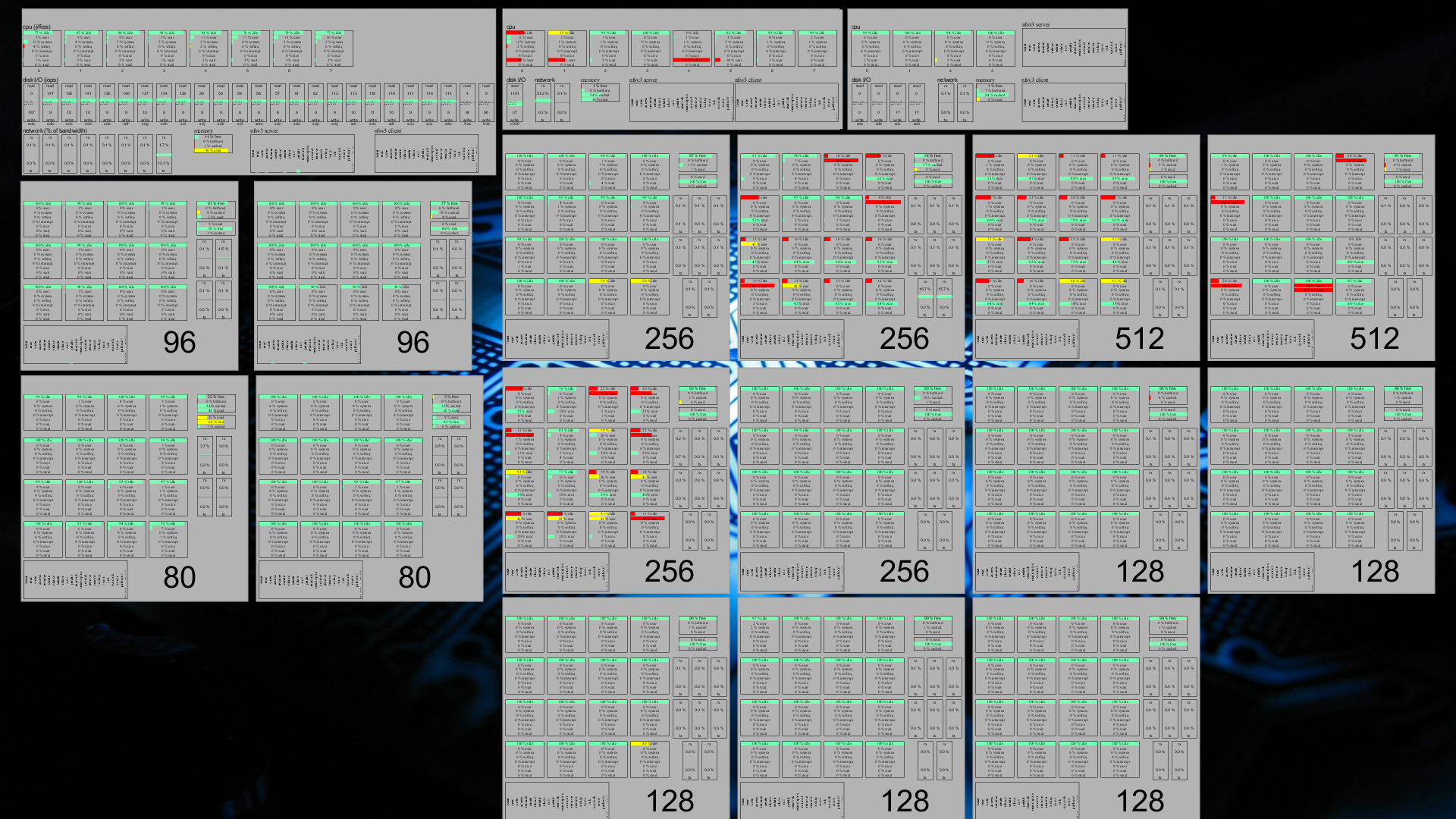
About a month ago, I blogged about extremon. As a reminder, ExtreMon is a monitoring tool that allows you to view things as they are happening, rather than with the ~5 minute delay that munin gives you, and also avoiding the quad-state limitation of Nagios' "good", "bad", "ugly", and "unknown" states. No, they're not really called that. Yes, I know you knew that. Anyway. In my blog post, I explained how you can set up ExtreMon, and I also set up a fairly limited demo version on my own server. But I have since realized that while it is functional, it doesn't actually show why ExtreMon is so great. In an effort to remedy that, I present you an example of what ExtreMon can do. Let's start with a screenshot of the ExtreMon console at the customer for which I spent time trying to figure out how to get it up and running: Click for full sized version. You'll note that even in that full-sized version, many things are unreadable. This is because the ExtreMon console allows one to move around (right mouse button drag for zoom; left mouse button drag for moving around; control+RMB for rotate; center mouse button to reset to default); so what matters is that everything fits on the screen, not whether it is all readable (if you need to read, you zoom). The image shows 18 rectangles. Each rectangle represents a single machine in this particular customer's HPC cluster. The top three rectangles are the cluster's file servers; the rest are its high performance nodes. You'll note that the left fileserver has 8 processor cores (top row), 8 network cards (bottom row, left part), and it also shows information on its memory usage (bottom row, small rectangle in the middle) as well as its NFS client and server procedure calls (bottom row, slightly larger rectangles to the right). This file server is the one on which I installed ZFS a while back; hence the large amount of disks visible in the middle row. The leftmost disk is the root filesystem (which is an ext4 off a hardware RAID1); the two rightmost "disks" are the PCIe-attached SSDs which are used for the ZFS L2ARC and write log. The other disks in this file server nicely show how ZFS does write load balancing over all its disks. The second file server has a hardware RAID1 on which it stores all its data; as such, there is only one disk graph there. It is also somewhat more limited in network, as it has only two NICs. It does, however, also have 8 cores. The last file server has no more than four processor cores; in addition, it also does not have a hardware RAID controller, so it must use software RAID over its four hard disks. This server is used for archival purposes, mostly, since it is insufficient for most anything else. As said, the other nodes are the "compute nodes", where the hard work is done. Most of these compute nodes have 16 cores each; two have 12 instead. When this particular screenshot was taken, four of the nodes (the ones showing red in their processor graphs) were hard at work; the others seem to have been mostly idling. In addition to the familiar memory, NFS (client only), network, and processor graphs, these nodes also show a "swap space" graph (just below the memory one), which seems fine for most nodes, except for the bottom left one (which shows a few bars that are coloured yellow rather than green). The green/yellow/red stuff is supposed to represent the "ok", "warning", "bad" states that would be familiar from Nagios. In this particular case, however, where "processor is busy all the time" is actually a wanted state, a low amount of idleness on the part of the processor isn't actually a problem, on the contrary. I did consider, therefore, to modify the ExtreMon configuration so that the processor graphs would not show red when the system was under high load; however, I found that differences in colour like this actually makes it more easy to see, at a glance, which machines are busy -- and that's one of the main reasons why we wanted to set this up. If you look carefully, you can find a particular processor core in the graph which shows 100% usage for "idle", "system", and "softirq", at the same time. Obviously that can't be the case, so there's a bug somewhere. Frank seems to believe it is a bug in CollectD; I haven't verified that. At any rate, though, this isn't usually a problem, due to the high update frequency of ExtreMon. The amount of data that's flowing through ExtreMon is amazing: Which renders a grand total of 2887 data points that are shown in this particular screenshot; and then I'm not even counting all the intermediate values, some of which also pass through ExtreMon. Nor am I counting the extra bits which have since been added (this screenshot is a few days old, now, and I'm still finetuning things). Yet even so, ExtreMon manages to update those values once every few seconds, in the worst case. As a result, the display isn't static for a moment, constantly moving and updating data so that what you see is never out of date for more than a second or two. Awesome.

Russell Coker: Conference Suggestions

LCA 2015 is next week so it seems like a good time to offer some suggestions for other delegates based on observations of past LCAs. There s nothing LCA specific about the advice, but everything is based on events that happened at past LCAs. Don t Oppose a Lecture Question time at the end of a lecture isn t the time to demonstrate that you oppose everything about the lecture. Discussion time between talks at a mini-conf isn t a time to demonstrate that you oppose the entire mini-conf. If you think a lecture or mini-conf is entirely wrong then you shouldn t attend. The conference organisers decide which lectures and mini-confs are worthy of inclusion and the large number of people who attend the conference are signalling their support for the judgement of the conference organisers. The people who attend the lectures and mini-confs in question want to learn about the topics in question and people who object should be silent. If someone gives a lecture about technology which appears to have a flaw then it might be OK to ask one single question about how that issue is resolved, apart from that the lecture hall is for the lecturer to describe their vision. The worst example of this was between talks at the Haecksen mini-conf last year when an elderly man tried at great length to convince me that everything about feminism is wrong. I m not sure to what degree the Haecksen mini-conf is supposed to be a feminist event, but I think it s quite obviously connected to feminism which is of course was why he wanted to pull that stunt. After he discovered that I was not going to be convinced and that I wasn t at all interested in the discussion he went to the front of the room to make a sexist joke and left. Consider Your Share of Conference Resources I ve previously written about the length of conference questions [1]. Question time after a lecture is a resource that is shared among all delegates. Consider whether you are asking more questions than the other delegates and whether the questions are adding benefit to other people. If not then send email to the speaker or talk to them after their lecture. Note that good questions can add significant value to the experience of most delegates. For example when a lecturer appears to be having difficulty in describing their ideas to the audience then good questions can make a real difference, but it takes significant skill to ask such questions. Dorm Walls Are Thin LCA is one of many conferences that is typically held at a university with dorm rooms offered for delegates. Dorm rooms tend to have thinner walls than hotel rooms so it s good to avoid needless noise at night. If one of your devices is going to make sounds at night please check the volume settings before you start it. At one LCA I was startled at about 2AM but the sound of a very loud porn video from a nearby dorm room, the volume was reduced within a few seconds, but it s difficult to get to sleep quickly after that sort of surprise. If you set an alarm then try to avoid waking other people. If you set an early alarm and then just get up then other people will get back to sleep, but pressing snooze repeatedly for several hours (as has been done in the past) is anti-social. Generally I think that an alarm should be at a low volume unless it is set for less than an hour before the first lecture in which case waking people in other dorm rooms might be doing them a favor. Phones in Lectures Do I need to write about this? Apparently I do because people keep doing it! Phones can be easily turned to vibrate mode, most people who I ve observed taking calls in LCA lectures have managed this but it s worth noting for those who don t. There are very few good reasons for actually taking a call when in a lecture. If the hospital calls to tell you that they have found a matching organ donor then it s a good reason to take the call, but I can t think of any other good example. Many LCA delegates do system administration work and get calls at all times of the day and night when servers have problems. But that isn t an excuse for having a conversation in the middle of the lecture hall while the lecture is in progress (as has been done). If you press the green button on a phone you can then walk out of the lecture hall before talking, it s expected that mobile phone calls sometimes have signal problems at the start of the call so no-one is going to be particularly surprised if it takes 10 seconds before you say hello. As an aside, I think that the requirement for not disturbing other people depends on the number of people who are there to be disturbed. In tutorials there are fewer people and the requirements for avoiding phone calls are less strict. In BoFs the requirements are less strict again. But the above is based on behaviour I ve witnessed in mini-confs and main lectures. Smoking It is the responsibility of people who consume substances to ensure that their actions don t affect others. For smokers that means smoking far enough away from lecture halls that it s possible for other delegates to attend the lecture without breathing in smoke. Don t smoke in the lecture halls or near the doorways. Also using an e-cigarette is still smoking, don t do it in a lecture hall. Photography Unwanted photography can be harassment. I don t think there s a need to ask for permission to photograp people who harass others or break the law. But photographing people who break the social agreement as to what should be done in a lecture probably isn t. At a previous LCA a man wanted to ask so many questions at a keynote lecture that he had a page of written notes (seriously), that was obviously outside the expected range of behaviour but probably didn t justify the many people who photographed him. A Final Note I don t think that LCA is in any way different from other conferences in this regard. Also I don t think that there s much that conference organisers can or should do about such things.

Tanguy Ortolo: Proof of address: use common sense!

As I have just moved to a new home, I had to declare my new address to all my providers, including banks and administrations which require a proof of address, which can be a phone, DSL or electricity bill. Well, this is just stupid, as, by definition, one will only have a bill after at least a month. Until then, that means the bank will keep a false address, and that the mail they send may not be delivered to the customer.Now, bankers and employees of similar administrations, if you could use some common sense, I have some information for you: when someone moves to a new home, unless he is hosted by someone else, he is either renter or owner. Well, you should now that a renter has one contract that proves it, which is called a lease. And an owner has one paper that proves it, which is called a title, or, before it has been issued by administration, a certificate of sale. Now if you do not accept that as a proof of address, you just suck. Besides, such a zeal to check one's address is just pointless, as it is just to get a proof of address without waiting for a phone, DSL or electricity bill (or to prove a false address, actually ) by just faking one. And as a reminder, at least in France, forgery is punishable by law but defined as an alteration of truth which can cause a prejudice, which means modifying a previous electricity bill to prove your actual address is not considered as a forgery (but using the same mean to prove a false address is, of course!).

6 January 2015

Steve McIntyre: Bootstrapping arm64 in Debian

I promised to write about this a long time, ooops... :-) Another ARM port in Debian - yay! arm64 is officially a release architecture for Jessie, aka Debian version 8. That's taken a lot of manual porting and development effort over the last couple of years, and it's also taken a lot of CPU time - there are ~21,000 source packages in Debian Jessie! As is often the case for a brand new architecture like arm64 (or AArch64, to use ARM's own terminology), hardware can be really difficult to get hold of. In time this will cease to be an issue as hardware becomes more commoditised, but in Debian we really struggled to get hold of equipment for a very long time during the early part of the port. First bring-up in Debian Ports To start with, we could use ARM's own AArch64 software models to build the first few packages. This worked, but only very slowly. Then Chen Baozi and the folks running the Tianhe-2 supercomputer project in Guangzhou, China contacted us to offer access to some arm64 hardware, and this is what Wookey used for bootstrapping the new port in the unofficial Debian Ports archive. This has now become the normal way for new architectures to get into Debian. We got most of the archive built in debian-ports this way, and we could then use those results to seed the initial core set of packages in the main Debian archive. Second bring-up - moving into the main Debian archive By the time that first Debian bring-up was done, ARM was starting to produce its own "Juno" development boards, and with the help of my boss^4 James McNiven we managed to acquire a couple of those machines for use as official Debian build machines. The existing machines in China were faster, but for various reasons quite difficult to maintain as official Debian machines. So I set up the Junos as buildds just before going to DebConf in August 2014. They ran very well, and (for dev boards!) were very fast and stable. They built a large chunk of the Debian archive, but as the release freeze for Jessie grew close we weren't quite there. There was a small but persistent backlog of un-built packages that were causing us issues, plus the Juno machines are/were not quite suitable as porter boxes for Debian developers all over the world to use for debugging their packages on the new architecture. More horsepower - Linaro machines This is where Linaro came to our aid. Linaro's goal is to help improve Free and Open Source Software on ARM, and one of the more recent projects in Linaro is a cluster of servers that are made available for software developers to use to get early access to ARMv8 (arm64) hardware. It's a great way for people who are interested in this new architecture to try things out, port their software or indeed just help with the general porting effort. As Debian is seen as such an important part of the FLOSS ecosystem, we managed to negotiate dedicated access to three of the machines in that cluster for Debian's use and we set those up in October, shortly before the freeze for Jessie. Andy Doan spent a lot of his time getting these machines going for us, and then I set up two of them as build machines and one as the porter box we were still needing. With these extra machines available, we quickly caught up with the ever-busy "Needs-Build" queue and we've got sufficient build power now to keep things going for the Jessie release. We were officially added to the list of release architectures at the Cambridge mini-Debconf in November, and all is looking good now! And in the future? I've organised the loan of another arm64 machine from AMD for Debian to use for further porting and/or building. We're also expecting that more and more machines will be coming out soon as vendors move on from prototyping to producing real customer equipment. Once that's happened, more kit will be available and everybody will be able to have arm64-powered computers in the server room, on their desk and even inside their laptop! Mine will be running Debian Jessie... :-) Thanks! There's been a lot of people involved in the Debian arm64 bootstrapping at various stages, so many that I couldn't possibly credit them all! I'll highlight some, though. :-) First of all, Wookey's life has revolved around this port for the last few years, tirelessly porting, fixing and hacking out package builds to get us going. We've had loads of help from other teams in Debian, particularly the massive patience of the DSA folks with getting early machines up and running and the prodding of the ftpmaster, buildd and release teams when we've been grinding our way through ever more package builds and dependency loops. We've also had really good support from toolchain folks in Debian and ARM, fixing bugs as we've found them by stressing new code and new machines. We've had a number of other people helping by filing bugs and posting patches to help us get things built and working. And (last but not least!) thanks to all the folks who've helped us beg and borrow the hardware to make the Debian arm64 port a reality. Rumours of even more ARM ports coming soon are entirely scurrilous... *grin*

Russ Allbery: Review: Code Complete, Second Edition

Review: Code Complete, Second Edition, by Steve McConnell
Publisher: Microsoft
Copyright: June 2004
ISBN: 0-7356-1967-0
Format: Kindle
Pages: 960
As mentioned in the title, this is a review of the second edition of Code Complete, published in 2004. There doesn't appear to be a later edition at the time of this writing. I should say, as a prefix to this review, that I'm the sort of person who really likes style guides. When learning a language, a style guide is usually the second or third document I read. I enjoy debates over the clearest way to express a concept in code, trying to keep all the code in a large project consistent, and discussing the subtle trade-offs that sit on the boundary between mechanical style issues and the expressiveness of programming. I try to spend some time reading good code and getting better at expressing myself in code. Presumably, therefore, I'm the target audience for this book. It sounded good from the descriptions, so I picked it up during one of the Microsoft Press sales. The stated goal of Code Complete is to collect in one place as much as possible of the oral tradition and lore of the programming field, to try to document and communicate the techniques and approaches that make someone a good programmer. The table of contents sounds like a style guide, with entire sections on variables and statements in addition to topics like how to improve existing code and how to design a new program. If you're starting to think that a 960 page style guide sounds like a bad idea, you're wiser than I. (In my defense, I grabbed this as an ebook and didn't realize how large it was before I bought it.) I have not actually finished this book. I hate to do this: I don't like reviewing books I haven't finished (this will be the first), and I hate starting books and not finishing them. (This is probably not particularly wise, since some books aren't worth finishing, but I've gotten into a rhythm of reading and reviewing that works for me, so I try not to mess with it.) But I've been trying to finish this book off and on for about a year, I don't think it's worth the time investment, and I think I've gotten far enough in it to provide some warnings by others who are deceived by the very high ratings that it gets on Amazon and other places. The primarily problem with Code Complete is its sheer, mind-numbing comprehensiveness. It tries to provide a set of guidelines and a checklist to think about at each level of writing code. This is one of those ideas that might sound good on paper, but which completely doesn't work for me. There is no way I'm going to keep this many rules in my head, in the form of rules, while programming. Much of good style has to be done by feel, and the book I'm looking for is one that improves my feel and my sense of taste for code. What Code Complete seems to provide instead is a compilation of every thought that McConnell has ever had about programming. There's a lot of basic material, a few thoughtful statements, a ton of style advice, an endless compilation of trade-offs and concepts that one should keep in mind, and just a massive, overwhelming pile of stuff. Each chapter (and there are a lot of chapters) ends in a checklist of things that you should think about when doing a particular programming task. To give you a feel for the overwhelming level of trivia here, this is the checklist at the end of the chapter where I stopped reading, on quality assurance in software. This is one picked at random; a lot of them are longer than this.
  • Have you identified specific quality characteristics that are important to your project?
  • Have you made others aware of the project's quality objectives?
  • Have you differentiated between external and internal quality characteristics?
  • Have you thought about the ways in which some characteristics might compete with or complement others?
  • Does your project call for the use of several different error-detection techniques suited to finding several different kinds of errors?
  • Does your project include a plan to take steps to assure software quality during each stage of software development?
  • Is the quality measured in some way so that you can tell whether it's improving or degrading?
  • Does management understand that quality assurance incurs additional costs up front in order to save costs later?
I'm not saying those are bad things to think about with quality assurance, but you may notice a few issues immediately. They're very general and vague, they're not phrased in a particularly compelling or memorable way, and there are a lot of them. This falls between two stools: it's too much for the programmer who is thinking about quality as part of an overall project but not focusing on it (particularly when you consider that the book is full of checklists like this for everything from variable naming to how to structuring if statements to program debugging), but it's not nearly specific or actionable enough for someone who is focusing on quality assurance. It's not that the information isn't organized: there's a lot of structure here. And there are bits and pieces here that are occasionally interesting. McConnell is very data-driven and tries to back up recommendations with research on error rates and similar concrete measurements. It's just insufficiently filtered and without elegant or memorable summary. There is far too much here, an overwhelming quantity, and hopelessly mixed between useful tidbits and obvious observations that anyone who has been programming for a while would pick up, all presented in the same earnest but dry tone. It didn't help that there's a lot here I didn't agree with. Some of that is to be expected: I've never agreed completely with any style guide. But McConnell kept advocating variable and function naming conventions that I find rather ugly and tedious, and the general style of code he advocates feels very "bureaucratic" to me. It's not exactly wrong, but one of the things that I look for in style discussions is to be inspired by the elegant and simple way someone finds to phrase something in code. A lot of the code in this book just felt mind-numbing. It's functional, but uninteresting; perfectly adequate for a large project, but not the sort of discussion that inspires me to improve the quality of my craft. So, I didn't finish this. I gave up about halfway through. It's frustrating, since I was occasionally finding an interesting nugget of information. But they were too few and far between, and the rest of the book was mostly... boring. It's possible that I just know too much about programming to be the person for whom that McConnell was writing this book. It's certainly true that the book has not aged particularly well; it's focused on fairly old-school languages (C, C++, Java, and Visual Basic) and says almost nothing about modern language techniques, although it does have a bit about extreme programming. But whatever the reason is, it didn't work for me at all. I would rate it as one of the worst books about programming I've tried to read. And that's notably different enough from its reviews that it seems worth throwing this out there as a warning. I'm quite disappointed, since I'd heard nothing but praise for this book before picking it up. But it's not for me, and I'm now dubious of its value for any programmer outside of a fairly narrow, large-team, waterfall development process involving large numbers of people writing very large quantities of code in languages that aren't very expressive. And, well, in that situation I think one would get more benefit from changing that environment than reading this book. Rating: unfinished

Joey Hess: a bug in my ear

True story: Two days ago, as I was about to drift off to sleep at 2 am, a tiny little bug flew into my ear. Right down to my eardrum, which it fluttered against with its wings. It was a tiny little moth-like bug, the kind you don't want to find in a bag of flour, and it had been beating against my laptop screen a few minutes before. This went on for 20 minutes, in which I failed to get it out with a cue tip and shaking my head. It is very weird to have a bug flapping in your head. I finally gave up and put in eardrops, and stopped the poor thing flapping. I happen to know these little creatures mass almost nothing, and rapidly break up into nearly powder when dead. So while I've not had any bug bits come out, I'm going by the way my ear felt a little stopped up yesterday, and just fine today, and guessing it'll be ok. Oh, and I've been soaking it in the tub and putting in eardrops for good measure. If I've seemed a little distracted lately, now you know why!

5 January 2015

Ben Hutchings: Debian LTS work, December 2014

This was my first month working on Debian LTS. My first project at Codethink was winding down, so Freexian's Debian LTS initiative was able to hire me via Codethink. I spent all of the assigned 11.5 hours working on an update to the kernel package (linux-2.6, version 2.6.32-48squeeze9). We had stopped following the upstream stable branch maintained by Willy Tarreau after 2.6.32.60 (released October 2012). Since then, we have only applied specific security fixes and other critical fixes. Rapha l Hertzog and Holger Levsen started to rebase our package on 2.6.32.64 (released November 2014), bringing in a few security fixes we didn't yet have and a larger number of fixes for functional and performance issues. I spent most of my time reviewing the several hundred changes from the upstream stable branch. I found a number of mistakes that would have caused regressions. Those should all be fixed in the update to linux-2.6, though I did not have nearly enough time for a thorough regression test. I sent my fixes to Willy for inclusion in 2.6.32.65. I also reviewed and applied fixes for several security flaws in the kernel entry and exit paths. Andy Lutomirski identified and fixed a number of problems upstream, the most serious of which was CVE-2014-9322 (though this is not listed in the changelog because the details weren't yet public). Willy found and backported the upstream fixes for inclusion in 2.6.32.65. I checked that these make sense (so far as I understand this code) and verified that Andy's test cases now have the expected results when run on the new kernel version. Updated: Added references to Codethink and Freexian.

Next.

Previous.