Search Results: "ina"

24 February 2016

Dirk Eddelbuettel: RcppEigen 0.3.2.8.0

Another minor release of RcppEigen is on CRAN and getting into Debian. The main focus is an upgrade to the recent 3.2.7 release of Eigen which should address another UBSAN issue. And once again Yixuan Qiu did all the heavy lifting. The NEWS file entry follows.
Changes in RcppEigen version 0.3.2.8.0 (2016-02-23)
  • Updated to version 3.2.8 of Eigen (PR #29 by Yixuan)
Courtesy of CRANberries, there is also a diffstat report for the most recent release.

This post by Dirk Eddelbuettel originated on his Thinking inside the box blog. Please report excessive re-aggregation in third-party for-profit settings.

23 February 2016

Enrico Zini: pdftk-inkscape

In praise of pdftk and inkscape To appease the utterly evil, capricious and monstrous gods of Italian bureaucracy, I needed to craft several PDF files to sacrifice to the altar of the Italian Certified Email. Three of those PDFs (let's call them A.pdf, B.pdf and C.pdf) are copies of multi-page PDFs where I need to sign each page and then send them back. One of them (let's say C.pdf) needs to be signed on each page except the last, which needs instead to be signed twice in two special blank spaces. I have a transparent png with my signature (let's call it signature.png). Let's start with C.pdf:
# Split C.pdf into single-page PDFs
pdftk C.pdf burst
# Edit a random page in inkscape, add a signature to the corner of the
    # page, delete the rest of the contents and save as signature.pdf
    inkscape pg_0001.pdf
# Edit the last page in inkscape, add the signatures where needed, save
    # as pg_0005-signed.pdf
    inkscape pg_0005.pdf
# Stamp the signatures all over all pages but the last one
for f in pg_000[1-4].pdf
do
    pdftk $f stamp signature.pdf output  basename $f .pdf -signed.pdf
done
# Put it all together
pdftk pg_000*-signed.pdf cat output C-signed.pdf
And now that I have signature.pdf, I can easily process A and B:
pdftk A.pdf stamp signature.pdf output A-signed.pdf
pdftk B.pdf stamp signature.pdf output B-signed.pdf
pdftk is much smarted than that, and it would have been able to extract a single document with all pages of C.pdf except the last one, but with Italian bureaucracy it is painful enough to get the job done that afterwards one is more likely to need eating chocolate to avoid depression, rather than to try and redo it all again more elegantly. So, there are times when bureaucracy calls for printing a pile of sheets, mindlessly sign them all, scan them again, shred them, plant a new tree, and then finally book a MRI scan of your wrist to assess the state of your carpal tunnel. In those times, pdftk and inkscape can save the day.

Enrico Zini: In praise of pdftk and inkscape

To appease the utterly evil, capricious and monstrous gods of Italian bureaucracy, I needed to craft several PDF files to sacrifice to the altar of the Italian Certified Email. Three of those PDFs (let's call them A.pdf, B.pdf and C.pdf) are copies of multi-page PDFs where I need to sign each page and then send them back. One of them (let's say C.pdf) needs to be signed on each page except the last, which needs instead to be signed twice in two special blank spaces. I have a transparent png with my signature (let's call it signature.png). Let's start with C.pdf:
# Split C.pdf into single-page PDFs
pdftk C.pdf burst
# Edit a random page in inkscape, add a signature to the corner of the
    # page, delete the rest of the contents and save as signature.pdf
    inkscape pg_0001.pdf
# Edit the last page in inkscape, add the signatures where needed, save
    # as pg_0005-signed.pdf
    inkscape pg_0005.pdf
# Stamp the signatures all over all pages but the last one
for f in pg_000[1-4].pdf
do
    pdftk $f stamp signature.pdf output  basename $f .pdf -signed.pdf
done
# Put it all together
pdftk pg_000*-signed.pdf cat output C-signed.pdf
And now that I have signature.pdf, I can easily process A and B:
pdftk A.pdf stamp signature.pdf output A-signed.pdf
pdftk B.pdf stamp signature.pdf output B-signed.pdf
pdftk is much smarted than that, and it would have been able to extract a single document with all pages of C.pdf except the last one, but with Italian bureaucracy it is painful enough to get the job done that afterwards one is more likely to need eating chocolate to avoid depression, rather than to try and redo it all again more elegantly. So, there are times when bureaucracy calls for printing a pile of sheets, mindlessly sign them all, scan them again, shred them, plant a new tree, and then finally book a MRI scan of your wrist to assess the state of your carpal tunnel. In those times, pdftk and inkscape can save the day.

Steinar H. Gunderson: Multithreaded OpenGL driver quality

Multithreaded OpenGL is tricky, both for application programmers and drivers. Based on some recent experience with developing an application that would like to run on all three major desktop GPU vendors, allow me to present my survey with sample size 1. I'll let you draw your own conclusions: Curiously, somewhat similar to an Intel/Mesa bug I reported back in July, and which has no response yet. Update: The NVIDIA driver is now up to exposing three bugs in my code. One of them even came with a textual error message when running with a debug context (in apitrace).

Alessio Treglia: Analog thinking: the boldness to be creative

The binary code, although necessary for major social and technological developments, is annihilating the Homo Technologicus, stifling his innate freedom for analog connections.

Rodin1The first widespread use of the binary code was the Morse code alphabet. For decades, this communication system allowed to transmit information over long distances, between ships in the ocean and the mainland, between one continent and another, and today its use is still active in emergency situations. In its disarming simplicity (connect or interrupt two electrical wires), this system proved to be the shortest way to transcribe an alphabet.

Then, the Boolean algebra (binary) represented the language of communication between humans and computers, enabling the translation of instructions and commands towards the processing unit (microprocessor / CPU). This determined the Big Bang of the computers and the technological era

<Read More...>

22 February 2016

Matthew Garrett: Freedom, the US Government, and why Apple are still bad

The US Government is attempting to force Apple to build a signed image that can be flashed onto an iPhone used by one of the San Bernardino shooters. To their credit, Apple have pushed back against this - there's an explanation of why doing so would be dangerous here. But what's noteworthy is that Apple are arguing that they shouldn't do this, not that they can't do this - Apple (and many other phone manufacturers) have designed their phones such that they can replace the firmware with anything they want.

In order to prevent unauthorised firmware being installed on a device, Apple (and most other vendors) verify that any firmware updates are signed with a trusted key. The FBI don't have access to Apple's firmware signing keys, and as a result they're unable to simply replace the software themselves. That's why they're asking Apple to build a new firmware image, sign it with their private key and provide it to the FBI.

But what do we mean by "unauthorised firmware"? In this case, it's "not authorised by Apple" - Apple can sign whatever they want, and your iPhone will happily accept that update. As owner of the device, there's no way for you to reconfigure it such that it will accept your updates. And, perhaps worse, there's no way to reconfigure it such that it will reject Apple's.

I've previously written about how it's possible to reconfigure a subset of Android devices so that they trust your images and nobody else's. Any attempt to update the phone using the Google-provided image will fail - instead, they must be re-signed using the keys that were installed in the device. No matter what legal mechanisms were used against them, Google would be unable to produce a signed firmware image that could be installed on the device without your consent. The mechanism I proposed is complicated and annoying, but this could be integrated into the standard vendor update process such that you simply type a password to unlock a key for re-signing.

Why's this important? Sure, in this case the government is attempting to obtain the contents of a phone that belonged to an actual terrorist. But not all cases governments bring will be as legitimate, and not all manufacturers are Apple. Governments will request that manufacturers build new firmware that allows them to monitor the behaviour of activists. They'll attempt to obtain signing keys and use them directly to build backdoors that let them obtain messages sent to journalists. They'll be able to reflash phones to plant evidence to discredit opposition politicians.

We can't rely on Apple to fight every case - if it becomes politically or financially expedient for them to do so, they may well change their policy. And we can't rely on the US government only seeking to obtain this kind of backdoor in clear-cut cases - there's a risk that these techniques will be used against innocent people. The only way for Apple (and all other phone manufacturers) to protect users is to allow users to remove Apple's validation keys and substitute their own. If Apple genuinely value user privacy over Apple's control of a device, it shouldn't be a difficult decision to make.

comment count unavailable comments

21 February 2016

Lunar: Reproducible builds: week 43 in Stretch cycle

What happened in the reproducible builds effort between February 14th and February 20th 2016:

Toolchain fixes Yaroslav Halchenko uploaded cython/0.23.4+git4-g7eed8d8-1 which makes its output deterministic. Original patch by Chris Lamb. Didier Raboud uploaded pyppd/1.0.2-3 to experimental which now serialize PPD deterministically. Lunar submitted two patches for lcms to add a way for clients to set the creation date/time in profile headers and initialize all bytes when writing named colors.

Packages fixed The following packages have become reproducible due to changes in their build dependencies: dbconfig-common, dctrl-tools, dvdwizard, ekg2, expeyes, galternatives, gpodder, icewm, latex-mk, libiio, lives, navit, po4a, tasksel, tilda, vdr-plugin-infosatepg, xaos. The following packages became reproducible after getting fixed: Some uploads fixed some reproducibility issues, but not all of them: Unknown status:
  • tomcat7/7.0.68-1 by Emmanuel Bourg (test suite fails in test environment).
Patches submitted which have not made their way to the archive yet:
  • #814840 on tor by Petter Reinholdtsen: use the UTC timezone when calling asciidoc.
  • #815082 on arachne-pnr by Dhole: use the C locale to format the changelog date.
  • #815192 on manpages-de by Reiner Herrmann: tell grep to always treat the input as text so that it works with non-UTF-8 locales.
  • #815193 on razorqt by Reiner Herrmann: tell grep to always treat the input as text so that it works with non-UTF-8 locales.
  • #815250 on jacal by Reiner Herrmann: use the C locale to format the build date.
  • #815252 on colord by Lunar: remove extra timestamps when generating CMF and spectra and implement support for SOURCE_DATE_EPOCH.

reproducible.debian.net Two new package sets have been added: freedombox and freedombox_build-depends. (h01ger)

diffoscope development diffoscope version 49 was released on February 17th. It continues to improve handling of debug symbols for ELF files. Their content will now be compared separately to make them more readable. The search for matching debug packages is more efficient by looking only for .deb files in the same parent directory. Alongside more bug fixes, support for ICC profiles has been added, and libarchive is now also used to read metadata for ar archives.

strip-nondeterminism development Reiner Herrmann added support to normalize Gettext .mo files.

Package reviews 170 reviews have been removed, 172 added and 54 updated in the previous week. 34 new FTBFS bugs have been opened by Chris Lamb, h01ger and Reiner Herrmann. New issues added this week: lxqt_translate_desktop_binary_file_matched_under_certain_locales, timestamps_in_manpages_generated_by_autogen. Improvements to the prebuilder script: avoid ccache, skip disorderfs hook if device nodes cannot be created, compatibility with grsec trusted path execution (Reiner Herrmann), code cleanup (Esa Peuha).

Misc. Steven Chamberlain highlighted reproducibility problems due to differences in how Linux and FreeBSD handle permissions for symlinks. Some possible ways forward have been discussed on the reproducible-builds mailing list. Bernhard M. Wiedemann reported on some reproducibility tests made on OpenSuse mentioning the growing support for SOURCE_DATE_EPOCH. If you are eligible for Outreachy or Google Summer of Code, consider spending the summer working on reproducible builds!

Mario Lang: Generating C++ from a DTD with Jinja2 and lxml

I recently stumbled across an XML format specified in a DTD that I wanted to work with from within C++. The XML format is document centric, which is a bit of a pain with existing data binding compilers according to my limited experience. So to learn something new, and to keep control over generated code, I started to investigate what it would take to write my own little custom data binding compiler.
Writing a program that writes a program It turns out that there are two very helpful libraries in Python which can really make your life a lot easier:
To keep my life simple, I am focusing on generating accessors for XML attributes only for now. I leave it up to the library client to figure out how to deal with child elements.
A highly simplified DOM Inspired by the hybrid example from libstudxml, we define a simple base class that can store raw XML elements.
class element  
public:
  using attributes_type = std::map<xml::qname, std::string>;
  using elements_type = std::vector<std::shared_ptr<element>>;
  element(const xml::qname& name) : tag_name_(name)  
  virtual ~element() = default;
  xml::qname const& tag_name() const   return tag_name_;  
  attributes_type const& attributes() const   return attributes_;  
  attributes_type&       attributes()         return attributes_;  
  std::string const& text() const   return text_;  
  void text(std::string const& text)   text_ = text;  
  elements_type const& elements() const  return elements_; 
  elements_type&       elements()         return elements_;  
  element(xml::parser&, bool start_end = true);
  void serialize (xml::serializer&, bool start_end = true) const;
  template<typename T> static std::shared_ptr<element> create(xml::parser& p)  
    return std::make_shared<T>(p, false);
   
private:
  xml::qname tag_name_;
  attributes_type attributes_;
  std::string text_;           // Simple content only.
  elements_type elements_;     // Complex content only.
 ;
For each element name in the DTD, we're going to define a class that inherits from the element class, implementing special methods to make attribute access easier. The element(xml::parser&) constructor is going to create the corresponding class whenever it sees a certain element name. This calls for some sort of factory:
class factory  
public:
  static std::shared_ptr<element> make(xml::parser& p);
protected:
  struct element_info  
    xml::content content_type;
    std::shared_ptr<element> (*construct)(xml::parser&);
   ;
  using map_type = std::map<xml::qname, element_info>;
  static map_type *get_map()  
    if (!map) map = new map_type;
    return map;
   
private:
  static map_type *map;
 ;
template<typename T>
struct register_element : factory  
  register_element(xml::qname const& name, xml::content const& content)  
    get_map()->insert( name, element_info content, &element::create<T> );
   
 ;
shared_ptr<element> factory::make(xml::parser& p)  
  auto name = p.qname();
  auto iter = get_map()->find(name);
  if (iter == get_map()->end())  
    // No subclass found, so store plain data so we do not loose on roundtrip.
    return std::make_shared<element>(p, false);
   
  auto const& element = iter->second;
  p.content(element.content_type);
  return element.create(p);
 
The header template Now that we have our required infrastructure, we can finally start writing Jinja2 templates to generate classes for all elements in our DTD:
 %- for elem in dtd.iterelements() % 
   %- if elem.name in forwards_for % 
     %- for forward in forwards_for[elem.name] % 
class  forward ;
     %- endfor % 
   %- endif % 
class  elem.name  : public dom::element  
  static register_element< elem.name > factory_registration;
public:
   elem.name (xml::parser& p, bool start_end = true) : dom::element(p, start_end)  
   
   %- for attr in elem.iterattributes() % 
     %- if attr is required_string_attribute % 
  std::string  attr.name () const;
  void  attr.name (std::string const&);
     %- elif attr is implied_string_attribute % 
  optional<std::string>  attr.name () const;
  void  attr.name (optional<std::string>);
     # more branches to go here # 
     %- endif % 
   %- endfor % 
 ;
 %- endfor % 
required_string_attribute and implied_string_attribute are so-called Jinja2 tests. They are a nice way to isolate predicates such that the Jinja2 templates can stay relatively free of complicated expressions:
templates.tests['required_string_attribute'] = lambda a: \
  a.type in ['id', 'cdata', 'idref'] and a.default == 'required'
templates.tests['implied_string_attribute'] = lambda a: \
  a.type in ['id', 'cdata', 'idref'] and a.default == 'implied'
That is nice, but we have only seen C++ header declarations so far. Lets have a look into the implementation of some of our attribute accessors.
Enum conversion One interesting aspect of DTD based code generation is the fact that attributes can have enumerations specified. Assume that we have some extra data-structure in Python which helps us to define a nice name for each individual enumeration attribute. Then, a part of the Jinja2 template to generate the implementation for an enumeration attribute looks like:
     %- elif attr is known_enumeration_attribute % 
       %- set enum = enumerations[tuple(attr.values())]['name'] % 
       %- if attr.default == 'required' % 
 enum   elem.name :: attr.name () const  
  auto iter = attributes().find(qname " attr.name " );
  if (iter != attributes().end())  
         %- for value in attr.values() % 
     % if not loop.first % else  % else %       % endif -% 
    if (iter->second == " value ") return  enum :: value   mangle ;
         %- endfor % 
    throw illegal_enumeration ;
   
  throw missing_attribute ;
 
void  elem.name :: attr.name ( enum  value)  
  static qname const attr " attr.name " ;
  switch (value)  
         %- for value in attr.values() % 
  case  enum :: value   mangle :
    attributes()[attr] = " value ";
    break;
         %- endfor % 
  default:
    throw illegal_enumeration ;
   
 
       %- elif attr.default == 'implied' % 
 # similar implementation using boost::optional # 
       %- endif % 
     %- endif % 
Putting it all together The header for the library is generated like this:
from jinja2 import DictLoader, Environment
from lxml.etree import DTD
LIBRARY_HEADER = """
 # Our template code # 
"""
bmml = DTD('bmml.dtd')
templates = Environment(loader=DictLoader(globals()))
templates.filters['mangle'] = lambda ident: \
   '8th_or_128th': 'eighth_or_128th',
   '256th': 'twohundredfiftysixth',
   'continue': 'continue_'
   .get(ident, ident)
def template(name):
  return templates.get_template(name)
def hpp():
  print(template('LIBRARY_HEADER').render(
     'dtd': bmml,
     'enumerations': enumerations,
     'forwards_for':  'ornament': ['ornament_type'],
                      'score': ['score_data', 'score_header'] 
     ))
With all of this in place, we can have a look at a small use case for our library.
Printing document content I haven't really explained anything about the document format we're working with until now. Braille Music Markup Language is an XML based plain text markup language. Its purpose is to be able to enhance plain braille music scores with usually hard-to-calcuate meta information. Almost all element text content is supposed to be printed as-is to reconstruct the original plain text. So we could at least define one very basic operation in our library: printing the plain text content of an element. I found an XML stylesheet that is supposed to convert BMML documents to HTML. This stylesheet apparently has a bug, insofar as it forgets to treat the rest_data element in the same way as it already treats the note_data element. note to self, I wish I would've done a code review before the EU-project that developed BMML was finished. It looks like resurrecting maintainance is one of the things I might be able to look into in a meeting in Pisa in the first three days of March this year. If we keep this in mind, we can easily reimplement what the stylesheet does in idiomatic C++:
template<typename T>
typename std::enable_if<std::is_base_of<element, T>::value, std::ostream&>::type
operator<<(std::ostream &out, std::shared_ptr<T> elem)  
  if (!std::dynamic_pointer_cast<note_data>(elem) &&
      !std::dynamic_pointer_cast<rest_data>(elem) &&
      !std::dynamic_pointer_cast<score_header>(elem))
   
    auto const& text = elem->text();
    if (text.empty()) for (auto child : *elem) out << child; else out << text;
   
  return out;
 
The use of std::enable_if is necessary here so that operator<< is defined on the element class and all of its subclasses. Without the std::enable_if magic, client code would be forced to manually make sure it is passing std::shared_ptr<element> each time it wants to use the operatr<< on any of our specially defined subclasses. Now we can easily print BMML documents and get their actual plain text representation.
#include <fstream>
#include <iostream>
#include <xml/parser>
#include <xml/serializer>
#include "bmml.hxx"
using namespace std;
using namespace xml;
int main (int argc, char *argv[])  
  if (argc < 2)  
    cerr << "usage: " << argv[0] << " [<filename.bmml>...]" << endl;
    return EXIT_FAILURE;
   
  try  
    for (int i = 1; i < argc; ++i)  
      ifstream ifs argv[i] ;
      if (ifs.good())  
        parser p ifs, argv[i] ;
        p.next_expect(parser::start_element, "score", content::complex);
        cout << make_shared<bmml::score>(p, false) << endl;
        p.next_expect(parser::end_element, "score");
        else  
        cerr << "Unable to open '" << argv[i] << "'." << endl;
        return EXIT_FAILURE;
       
     
    catch (xml::exception const& e)  
    cerr << e.what() << endl;
    return EXIT_FAILURE;
   
 
That's it for now. The full source for the actual library which inspired this posting can be found on github in my bmmlcxx project. If you have an comments or questions, send me mail. If you like bmmlcxx, don't forget to star it :-).

20 February 2016

Mark Brown: Expedient ABIs

The biggest change we ve seen in the Linux kernel for ARM over the past few years has been the transition to providing descriptions of the hardware in systems via device tree. This splits out the description of the devices in the system that can t be automatically enumerated from the kernel into a separate binary instead of being part of the kernel binary. Currently for most systems that are actively used upstream the device tree source code is kept in the kernel but the goal is to allow people to use device trees that are distributed separately to the kernel, especially device trees that are shipped as part of the board firmware. This is something that other platforms have done for a long time, PowerPC Macs and Sun SPARC systems use device tree as the mechanism for describing the hardware to the operating system. One consequence of this desire to allow the kernel and device tree to be shipped separately is that the device tree becomes an ABI. This is a really big change for people working in the embedded and consumer electronics areas where ARM has been most widely deployed, it means that any descriptions of the hardware need to be something that can stand the test of time. Anything we release is something we have to expect to carry code for indefinitely. When everything was done as part of the kernel binary we could easily do something that doesn t quite represent the hardware with the intention of replacing it later, now it is much harder to do that. An example of this is the SAW in Qualcomm SoCs. This is a block in the SoC which provides control of some regulators used for the CPU cores in the PMIC in very low power states and also allows the CPU to control the regulator with fast memory mapped registers rather than the slower buses used to control the PMIC. Unfortunately it doesn t fully replace direct access to the PMIC, it supports a subset of the control we need for the PMIC but not all of it. We could represent the SAW as an independent regulator but from a system integration point of view it is functioning as an extra control interface for the external PMIC and if we want to use the extra functionality that is only available via direct access to the PMIC we need to consider that and represent the SAW as an extension of it. If we don t need that extra PMIC functionality at the current time this means we need to do some extra work to make sure we describe the PMIC before we can use the SAW even if we have no intention to use anything other than the SAW. Now, few if any people are actually using the device tree as an ABI at present so those working on enabling platforms often forget about the requirement and find it an obstacle to getting things done they have pressure to get things done, they don t have quite the same pressure to make sure that attention is paid to device tree compatibility so it can easily get forgotten. Over time this may change, especially if people start to take advantage of the device tree as an ABI that become more and more important, but for now if we want to enable that in the future it s something we have to actively think about and work on, accepting that this means we won t always be able to do the most expedient thing.

19 February 2016

Holger Levsen: 20160219-debian-has-50k-binary-packages-in-main-sid

more than 50000 binary packages in sid main amd64 So in the last weeks every morning I looked at this graph and yesterday for the first time I finally saw it exceed 50k binary packages: The graph shows the piuparts results for the unstable/sid suite since 2009. In not really related news, in our reproducible builds test setup 87% of the source packages in testing/stretch build on amd64 were reproducible today, which is the highest percentage we've seen so far. Because of some more build failures and due to some more variations added, testing/stretch on armhf is a bit behind and "only" reached a very good 83.6% so far. One of the next statistic quesions is, whether we'll reach 24k source packages in unstable first, or 23k source packages in testing :) And hopefully we'll reach 20k reproducible packages (in our current test framework) on testing/amd64 before that :) (We already reachred 20k reproducible packages on unstable/amd64.) And this is all because of you awesome people! I'm very thankful we enable each other to grow like we do and I look forward to go further!

Joey Hess: Ubuntu trademark nonsense

Canonical appear to require that you remove all trademarks entirely even if using them wouldn't be a violation of trademark law.
-- Matthew Garrett Each time Matthew brings this up, and as evidence continues to mount that Canonical either actually intends their IP policy to be read that way, or is intentionally keeping the situation unclear to FUD derivatives, I start wondering about references to Ubuntu in my software. Should such references be removed, or obscured, like "U*NIX" in software of old, to prevent exposing users to this trademark nonsense?
joey@darkstar:~/src/git-annex>git grep -i ubuntu  wc -l
457
joey@darkstar:~/src/ikiwiki>git grep -i ubuntu  wc -l
80
joey@darkstar:~/src/etckeeper>git grep -i ubuntu  wc -l
14
Most of the code in git-annex, ikiwiki, and etckeeper is licensed under the GPL or AGPL, and so Canonical's IP policy probably does not require that anyone basing a distribution on Ubuntu strip all references to "Ubuntu" from them. But then, there's Propellor:
joey@darkstar:~/src/propellor>git grep -i ubuntu  wc -l
10
Propellor is BSD licensed. It's in Ubuntu universe. It not only references Ubuntu in documentation, but contains code that uses that trademark:
data Distribution
        = Debian DebianSuite
          Ubuntu Release
So, if an Ubuntu-derived distribution has to remove "Ubuntu" from Propellor, they'd end up with a Propellor that either differs from upstream, or that can't be used to manage Ubuntu systems. Neither choice is good for users. Probably most small derived distributions would not have expertise to patch data types in a Haskell program and would have to skip including Propellor. That's not good for Propellor getting wide distribution either. I think I've convinced myself it would be for the best to remove all references to "Ubuntu" from Propellor.
done Similarly, Debconf is BSD licensed. I originally wrote it, but it's now maintained by Colin Watson, who works for Canonical. If I were still maintaining Debconf, I'd be looking at removing all instances of "Ubuntu" from it and preventing that and other Canonical trademarks from slipping back in later. Alternatively, I'd be happy to re-license all Debconf code that I wrote under the AGPL-3+. Update: Another package that comes to mind is Debootstrap, which is also BSD licensed. Of course it contains "Ubuntu" in lots of places, since it is how Ubuntu systems are built. I'm no longer an active developer of Debootstrap, but I hope its current developers carefully consider how this trademark nonsense affects it. PS: Shall we use "*buntu" as the, erm, canonical trademark-free spelling of "Ubuntu"? Seems most reasonable, unless Canonical has trademarked that too.

18 February 2016

Matthew Garrett: Canonical, Ubuntu and why I seem so upset about them all the time

I had no access to the internet for most of my childhood. Nobody in my area knew anything about programming. I learned a great deal from a number of CDs that included free software source code and archives of project mailing lists. When I got to university, I learned even more by being able to develop a Debian-based OS for use in our computer facilities. That gave me the experience and knowledge that I needed to become involved in Debian development, which in turn gave me the background required to be able to help Ubuntu become the first free software operating system to work out of the box on modern laptops. From there, I've been able to build my career around developing free software.

Ubuntu can be translated as "I am who I am because of who we all are". I am who I am because people made the choice to release their software under licenses that permitted examination, modification and redistribution. I am who I am because I was able to participate in communities that took advantages of those freedoms to produce new and better software. I am who I am because when my priorities differed from those of existing communities, it was still possible for me to benefit from their work and for them to benefit from mine.

Free software doesn't mean that the software is entirely free of restrictions. While a core aspect is the right to distribute modified versions of code, it has never been fundamental to free software that you be able to do so while still claiming that the code is the original version. Various approaches have been taken to make it possible for users to distinguish modified versions, ranging from simply including license terms that require modified versions be marked as such, to licenses that require that you change the name of the package if you modify it. However, what's probably the most effective approach has been to apply trademark law to the problem. Mozilla's trademark policy is an example of this - if you modify the code in ways that aren't approved by Mozilla, you aren't entitled to use the trademarks.

A requirement that you avoid use of trademarks in an infringing way is reasonable. Mozilla products include support for building with branding disabled, which makes it very straightforward for a user to build a modified version of Firefox that can be redistributed without any trademark issues. Red Hat have a similar policy for Fedora and RHEL[1] - you simply replace the packages that contain the branding and you're done.

Canonical's IP policy around Ubuntu is fundamentally different. While Mozilla make it clear that you simply no longer have a right to use the trademarks under trademark law, Canonical appear to require that you remove all trademarks entirely even if using them wouldn't be a violation of trademark law. While Mozilla restrict the redistribution of modified binaries that include their trademarks, Canonical insist that you rebuild everything even if the package doesn't contain any trademarks. And while Mozilla give you a single build option that creates binaries that conform with their trademark requirements, Canonical will refuse to tell you what you have to do.

When asked about this at SCALE earlier this year, Mark Shuttleworth claimed that Ubuntu's policy was consistent with that of other projects. This is inaccurate. Nobody else requires that you rebuild every package before you can redistribute it in a modified distribution - such a restriction is a violation of freedom 2 of the Free Software Definition, and as a result the binary distributions of Ubuntu are not free software. Nobody else refuses to discuss whether you're required to remove non-infringing trademarks in order to be able to redistribute. Nobody else responds to offers to make it easier for users to produce non-infringing derivatives with a flat refusal.

Mark claims that I'm only raising this issue because I work for a competitor and wish to harm Canonical. Nothing could be further from the truth. I began discussing this before working for my current employers - my previous employers had no meaningful market overlap with Canonical at all. The reason I care is because I care about free software. I care about people being able to derive new and interesting things from existing code. I care about a small team of people being able to take Ubuntu and make something better in the same way that Ubuntu did with Debian. I care about ensuring that users receive the freedom to do this without having to jump through a significant number of hoops in the process. Ubuntu has been a spectacularly successful vehicle for getting free software into the hands of users. Mark's generosity in funding this experiment has undoubtedly made the world a better place. Canonical employs a large number of talented developers writing high quality software, many of whom I'm fortunate enough to be able to call friends. And Canonical are squandering that by restricting the rights of their users and alienating the free software community.

I want others to be who they are because of my work and the work of all the others like me. Anything that makes that more difficult saddens me, and so I do what I can to fix it. I criticise Canonical's policies in the hope that we, as a community, can convince Canonical to agree that this kind of artificial barrier to modification hurts us more than it helps them. In many ways, Canonical remain one of our best hopes for broadening the reach of free software, and this is why it's unfortunate that they do so in a way that makes it more difficult for people to have the same experiences that I did.

[1] While it's easy to turn a trademark infringing version of RHEL into a non-infringing one, Red Hat don't provide publicly available binary packages for RHEL. If you get hold of them somehow you're entitled to redistribute them freely, but Red Hat's subscriber agreement indicates that if you do this as a Red Hat customer you will lose access to further binary updates - a provision that I find utterly repugnant. Its inclusion reduces my respect for Red Hat and my enthusiasm for working with them, and given the official Red Hat support for CentOS it appears to make no sense whatsoever. Red Hat should drop it.

comment count unavailable comments

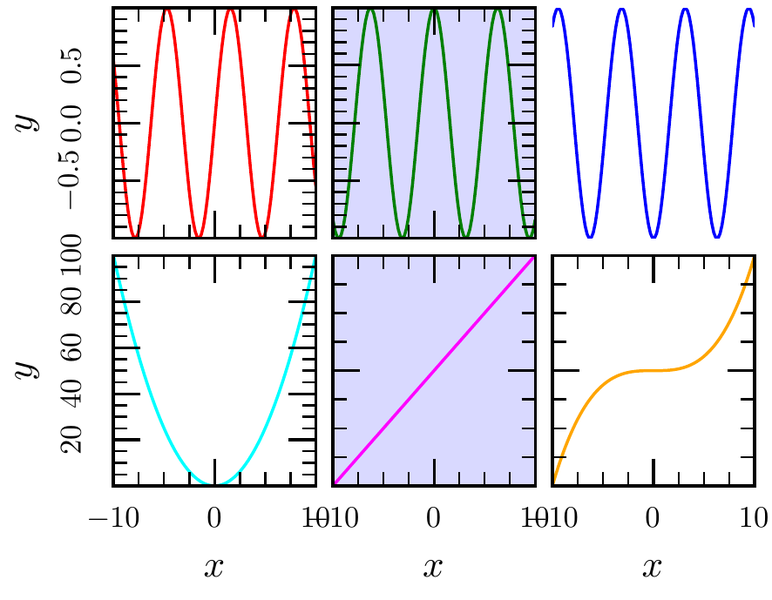
Vincent Fourmond: Release of ctioga2 version 0.14

The day has finally come again to release a new version of my plotting program, ctioga2. Version 0.14 features, among others:
As usual, the best way to update the package is running:
~ gem update ctioga2
An updated Debian package should find its way to the archive later on today. Have fun !

Enrico Zini: gui-debugging-output

Debugging output of GUI apps I have been hit by #643726 again. I was happily working on a terminal while an apt upgrade was running on another, and suddenly kbuildsycoca4 started vomiting on my command line because I had run okular once on that terminal last tuesday. Among the possible workarounds, one can run kdebugdialog from package kde-runtime and check the "Disable all debug output" button. This is the output of kdebugdialog when run on a terminal after enabling "Disable all debug output":
$ kdebugdialog
QDBusConnection: session D-Bus connection created before QCoreApplication. Application may misbehave.
I see it as debugging output turned into an art performance, and I have an appreciation for this kind of things. kdebugdialog, my hat's off to you.

Enrico Zini: Debugging output of GUI apps

I have been hit by #643726 again. I was happily working on a terminal while an apt upgrade was running on another, and suddenly kbuildsycoca4 started vomiting on my command line because I had run okular once on that terminal last tuesday. Among the possible workarounds, one can run kdebugdialog from package kde-runtime and check the "Disable all debug output" button. This is the output of kdebugdialog when run on a terminal after enabling "Disable all debug output":
$ kdebugdialog
QDBusConnection: session D-Bus connection created before QCoreApplication. Application may misbehave.
I see it as debugging output turned into an art performance, and I have an appreciation for this kind of things. kdebugdialog, my hat's off to you.

Stein Magnus Jodal: A guide to poor API management

This is the story of libspotify, as experienced by a Spotify customer and libspotify developer for six years.

Step 1: Support your API for years Since April 2009, libspotify has been a mostly nice although proprietary C library for integrating with the Spotify music streaming service, providing both music metadata and full playback capabilities. Language wrappers have been written for a plenitude of programming languages (including my own pyspotify). libspotify is integrated into numerous open source projects (including my own Mopidy), networked AV receivers, and rumour has it: even cars. In addition to being closed source, there was another catch: in order to use it, you need the Spotify premium subscription. Speaking from my own experience supporting a project integrating with Spotify for the last six years: lots of end users upgraded to premium in order to use the projects built on top of libspotify.

Step 2: Stop accepting bug reports and stop releasing updates In May 2012, Spotify released libspotify 12.1.51 for all supported architectures, which now even included Android. After months of endless requests from the quickly growing hoards of Raspberry Pi users, Spotify released libspotify 12.1.103 for hardfloat armv6 on January 22 2013. The release included minor API additions, like the addition of explicit lyrics and means for accepting Spotify s Terms of Service. The additions in 12.1.103 never reached the other supported architectures and 12.1.51 remains the last release for those. There was no clear communication about this being the end of libspotify, releases have just ceased. libspotify has not been mentioned in a single developer blog post or developer email newsletter since. That s now more than three years ago.

Step 3: Create new APIs Over the next couple of years Spotify released a new Web API and iOS and Android SDKs. Through their developer blog, they communicated quite a bit both about these and about the deprecation of the apps inside the Spotify desktop client. Here are some pieces from their developer blog to illustrate: The Web API grew steadily, as documented by the Web APIs changelog. Over time, its feature list improved, supporting anonymous endpoints for generic music metadata as well as OAuth protected endpoints for managing your own music collection and playlists. The only major part missing that prevented developers replacing libspotify was music playback, as the Web API only provides 30 second previews. From what I recall of 2014 IRC discussions with Spotify employees, they had built a new much smaller library for streaming music. The iOS and Android SDKs were simply platform specific wrappers around this new playback library and the new Web API. My impression is that, after a number of beta releases, the iOS and Android SDKs seamlessly replaced libspotify on those platforms. The plan was apparently to release the new playback library for desktop too, so that it, in combination with the Web API, could replace libspotify there as well. That was all back in 2014.

Step 4: Deprecate old APIs At some point, Spotify deprecated their old web API, the Metadata API. There was no blog post about it and it was not mentioned in any Spotify Developer News email I ve received in recent years. I guess they only published this fact as a note on the Metadata API web page; it is therefore hard to track down exactly when it was deprecated and how the deprecation was communicated. Anyway, it was deprecated, and the natural upgrade path was to the new Web API. Spotify even has a migration guide mapping the concepts of the Metadata API to the new Web API. All good. In May 2015, after 28 months without a single release or any news, libspotify is officially deprecated. The communication channel of choice? A note on the libspotify web page. No post on the developer blog. No Spotify Developer News email. To be able to use libspotify, all developers have registered and requested a personal application key. To my knowledge, none of these registered library users were notified directly.

Step 5: Shut down an old API On January 20 2016 Spotify end-of-lifed their Metadata API. I don t know if this date was communicated on the Metadata API web page well in advance of this shutdown. There s no blog post on the topic. There s no news email. There s no tweet from @SpotifyPlatform or @SpotifyStatus. I can t find anything except users commenting on various Spotify documentation pages that the text is outdated because the API is no longer merely deprecated, but entirely shut down. Hopefully they did publish the shutdown date ahead of time. It had a full replacement API and a migration guide. Fair and square. Nothing much to complain about here. It s time to get porting your code to the Web API! But frankly, I don t really care about this Metadata API because I don t use the Metadata API, do I?

Step 6: Break your API without warning February 3 2016, Mopidy users start reporting General transient error when searching Spotify. This is a libspotify error message known as SP_ERROR_OTHER_TRANSIENT with error code 16. This error usually means that there is some unspecified issue with the Spotify service. We ve actually seen it before and like its name suggests, it is indeed transient and soon goes away. According to a series of tweets between my fellow Mopidy developer Nick Steel and @SpotifyCares it appears that the libspotify search functionality was backed by the Metadata API s search functionality. Who knew? I m not aware of any relation between these APIs ever being mentioned publicly. No libspotify user could possibly have known that the Metadata API shutdown would affect them. Let s summarize: libspotify hasn t had any releases for three years and it was officially deprecated in May last year. But, there have been no warnings about any shutdown. The libspotify project is likely no longer staffed at all. Did someone just forget that libspotify depended on the Metadata API they were shutting down? Many newer networked AV receivers use the Spotify Connect libraries that are exclusive to Spotify s commercial partners. But some receivers probably still use libspotify. If so, did Spotify just break hardware sold with Spotify support as a major feature? Something that people are paying a monthly fee to use? It seems they did! In the Spotify Community forums there are numerous reports of broken devices and software that all have two things in common: the date the problem started occurring, and that search is the only feature that is broken. Surely, Spotify will quickly explain themselves and fix this?

Step 7: Stay quiet Since the API shutdown, Spotify has been very quiet. No posts on the developer blog. No email newsletter. No tweets from @SpotifyPlatform since December 1 last year. Some users at The Spotify Community forum are quoting responses from Spotify. Most responses seem to link to the Metadata API migration docs and state that application developers must migrate. In other cases the responses point the finger at the commercial partner which only adds to the confusion. Some of these devices may use the Metadata API directly, and in those cases the application maintainers are probably to blame. However, I m quite certain that the libspotify search issue is responsible for a fair share of these complaints. libspotify, in contrast to the Metadata API, has never been officially shut down. The responsibility for any breakage caused by libspotify is Spotify s alone.

What I want from Spotify
  1. Apologize to your paying customers and supporters.
  2. Get substantially better at communicating deprecations and shutdowns. We want all news, not just good news.
  3. Give us a new supported C library for audio playback. Now! Not later this year. I ve heard that promise for three consecutive years now. We can live with pre-release software quality initially. Getting the library out sooner rather than later shows us that there is a road ahead for all the projects that stream music from Spotify. Let us get started making new language wrappers.
  4. Release Spotify Connect specifications and libraries. We want to make music players that can be controlled by the Spotify mobile app. We want to make music controllers that can play music on all the Spotify Connect software and hardware players we ve invested in. You ve created this technology, now let us use it.
Thanks to Nick Steel for reviewing this blog post.

17 February 2016

Arturo Borrero Gonz lez: An update about the HA stack on Debian


Great news! The HA stack has been finally updated and you can find now both pacemaker & corosync in Debian stretch.

This is thanks to the hard work of some people, specially Christoph Berg, Ferenc W gner, Martin Loschwitz and others.

By the time of this blogpost, in testing (stretch) you have:

Additionally, unstable contains:
which is great news. However, pcs just joined Debian and there seem to be some rough edges to be worked out.
what to do now
Now that the people mentioned above did the hard work developing the packages, please do test them and report bugs.
Having a great stretch stable release (including the HA stack) is in your hands as well.

best regards!

Next.

Previous.