Search Results: "don"

5 July 2015

Thorsten Alteholz: My Debian Activities in June 2015

FTP assistant This month I marked 539 packages for accept, rejected 61 of them and had to send 24 emails to maintainers. This is a new personal record. Even in the month before the Jessie freeze I accepted only 407 packages. So, very well done (self-laudation has to happen from time to time :-) ). Another record was broken as well. After 19 month of doing this kind of work, I got my first insulting email. I would prefer to wait another 19 month before I get the next one Squeeze LTS This was my twelfth month that I did some work for the Squeeze LTS initiative, started by Raphael Hertzog at Freexian. This month I got assigned a workload of only 14.5h and I spent most of it to work on a new upload of php5. Unfortunately there have been so many CVEs comming in, that I didn t do an upload yet. Other stuff I uploaded was This month I also had my first one and a half weeks of doing frontdesk work. As introduced in this email, every member of the LTS team should do some LTS CVE triage. Up to now it was mainly done by Raphael and he wants to share this task with everybody else. So I answered questions on the IRC channel, on the LTS list and looked for CVEs that are important for Squeeze LTS or could be ignored. Other stuff This month I also uploaded a new version of harminv and wondered why the package didn t move to testing. Of course there is a document how to do a transition of a library properly. But hey, it is me, I know everything better and of course I can use a shortcut. Oh boy, I was wrong. So I also uploaded new versions of meep, meep-lam4, meep-openmpi, meep-mpi-default and meep-mpich2. And the moral of the story: If you don t understand why something should be done in a specific way, you shouldn t try to do it different. Donations Again, thanks alot to all donors. I really appreciate this and hope that everybody is pleased with my commitment. Don t hesitate to make suggestions for improvements.

Robert Edmonds: Git packaging workflow for py-lmdb

Recently, I packaged the py-lmdb Python binding for the LMDB database library. This package is going to be team maintained by the pkg-db group, which is responsible for maintaining BerkeleyDB and LMDB packages. Below are my notes on (re-)Debianizing this package and how the Git repository for the source package is laid out. The upstream py-lmdb developer has a Git-centric workflow. Development is done on the master branch, with regular releases done as fast-forward merges to the release branch. Release tags of the form py-lmdb_X.YZ are provided. The only tarballs provided are the ones that GitHub automatically generates from tags. Since these tarballs are synthetic and the content of these tarballs matches the content on the corresponding tag, we will ignore them in favor of using the release tags directly. (The --git-pristine-tar-commit option to gbp-buildpackage will be used so that .orig.tar.gz files can be replicated so that the Debian archive will accept subsequent uploads, but tarballs are otherwise irrelevant to our workflow.) To make it clear that the release tags come from upstream's repository, they should be prefixed with upstream/, which would preferably result in a DEP-14 compliant scheme. (Unfortunately, since upstream's release tags begin with py-lmdb_, this doesn't quite match the pattern that DEP-14 recommends.) Here is how the local packaging repository is initialized. Note that git clone isn't used, so that we can customize how the tags are fetched. Instead, we create an empty Git repository and add the upstream repository as the upstream remote. The --no-tags option is used, so that git fetch does not import the remote's tags. However, we also add a custom fetch refspec refs/tags/*:refs/tags/upstream/* so that the remote's tags are explicitly fetched, but with the upstream/ prefix.
$ mkdir py-lmdb
$ cd py-lmdb
$ git init
Initialized empty Git repository in /home/edmonds/debian/py-lmdb/.git/
$ git remote add --no-tags upstream https://github.com/dw/py-lmdb
$ git config --add remote.upstream.fetch 'refs/tags/*:refs/tags/upstream/*'
$ git fetch upstream
remote: Counting objects: 3336, done.
remote: Total 3336 (delta 0), reused 0 (delta 0), pack-reused 3336
Receiving objects: 100% (3336/3336), 2.15 MiB   0 bytes/s, done.
Resolving deltas: 100% (1958/1958), done.
From https://github.com/dw/py-lmdb
 * [new branch]      master     -> upstream/master
 * [new branch]      release    -> upstream/release
 * [new branch]      win32-sparse-patch -> upstream/win32-sparse-patch
 * [new tag]         last-cython-version -> upstream/last-cython-version
 * [new tag]         py-lmdb_0.1 -> upstream/py-lmdb_0.1
 * [new tag]         py-lmdb_0.2 -> upstream/py-lmdb_0.2
 * [new tag]         py-lmdb_0.3 -> upstream/py-lmdb_0.3
 * [new tag]         py-lmdb_0.4 -> upstream/py-lmdb_0.4
 * [new tag]         py-lmdb_0.5 -> upstream/py-lmdb_0.5
 * [new tag]         py-lmdb_0.51 -> upstream/py-lmdb_0.51
 * [new tag]         py-lmdb_0.52 -> upstream/py-lmdb_0.52
 * [new tag]         py-lmdb_0.53 -> upstream/py-lmdb_0.53
 * [new tag]         py-lmdb_0.54 -> upstream/py-lmdb_0.54
 * [new tag]         py-lmdb_0.56 -> upstream/py-lmdb_0.56
 * [new tag]         py-lmdb_0.57 -> upstream/py-lmdb_0.57
 * [new tag]         py-lmdb_0.58 -> upstream/py-lmdb_0.58
 * [new tag]         py-lmdb_0.59 -> upstream/py-lmdb_0.59
 * [new tag]         py-lmdb_0.60 -> upstream/py-lmdb_0.60
 * [new tag]         py-lmdb_0.61 -> upstream/py-lmdb_0.61
 * [new tag]         py-lmdb_0.62 -> upstream/py-lmdb_0.62
 * [new tag]         py-lmdb_0.63 -> upstream/py-lmdb_0.63
 * [new tag]         py-lmdb_0.64 -> upstream/py-lmdb_0.64
 * [new tag]         py-lmdb_0.65 -> upstream/py-lmdb_0.65
 * [new tag]         py-lmdb_0.66 -> upstream/py-lmdb_0.66
 * [new tag]         py-lmdb_0.67 -> upstream/py-lmdb_0.67
 * [new tag]         py-lmdb_0.68 -> upstream/py-lmdb_0.68
 * [new tag]         py-lmdb_0.69 -> upstream/py-lmdb_0.69
 * [new tag]         py-lmdb_0.70 -> upstream/py-lmdb_0.70
 * [new tag]         py-lmdb_0.71 -> upstream/py-lmdb_0.71
 * [new tag]         py-lmdb_0.72 -> upstream/py-lmdb_0.72
 * [new tag]         py-lmdb_0.73 -> upstream/py-lmdb_0.73
 * [new tag]         py-lmdb_0.74 -> upstream/py-lmdb_0.74
 * [new tag]         py-lmdb_0.75 -> upstream/py-lmdb_0.75
 * [new tag]         py-lmdb_0.76 -> upstream/py-lmdb_0.76
 * [new tag]         py-lmdb_0.77 -> upstream/py-lmdb_0.77
 * [new tag]         py-lmdb_0.78 -> upstream/py-lmdb_0.78
 * [new tag]         py-lmdb_0.79 -> upstream/py-lmdb_0.79
 * [new tag]         py-lmdb_0.80 -> upstream/py-lmdb_0.80
 * [new tag]         py-lmdb_0.81 -> upstream/py-lmdb_0.81
 * [new tag]         py-lmdb_0.82 -> upstream/py-lmdb_0.82
 * [new tag]         py-lmdb_0.83 -> upstream/py-lmdb_0.83
 * [new tag]         py-lmdb_0.84 -> upstream/py-lmdb_0.84
 * [new tag]         py-lmdb_0.85 -> upstream/py-lmdb_0.85
 * [new tag]         py-lmdb_0.86 -> upstream/py-lmdb_0.86
$
Note that at this point we have content from the upstream remote in our local repository, but we don't have any local branches:
$ git status
On branch master
Initial commit
nothing to commit (create/copy files and use "git add" to track)
$ git branch -a
  remotes/upstream/master
  remotes/upstream/release
  remotes/upstream/win32-sparse-patch
$
We will use the DEP-14 naming scheme for the packaging branches, so the branch for packages targeted at unstable will be called debian/sid. Since I already made an initial 0.84-1 upload, we need to start the debian/sid branch from the upstream 0.84 tag and import the original packaging content from that upload. The --no-track flag is passed to git checkout initially so that Git doesn't consider the upstream release tag upstream/py-lmdb_0.84 to be the upstream branch for our packaging branch.
$ git checkout --no-track -b debian/sid upstream/py-lmdb_0.84
Switched to a new branch 'debian/sid'
$
At this point I imported the original packaging content for 0.84-1 with git am. Then, I signed the debian/0.84-1 tag:
$ git tag -s -m 'Debian release 0.84-1' debian/0.84-1
$ git verify-tag debian/0.84-1
gpg: Signature made Sat 04 Jul 2015 02:49:42 PM EDT using RSA key ID AAF6CDAE
gpg: Good signature from "Robert Edmonds <edmonds@mycre.ws>" [ultimate]
gpg:                 aka "Robert Edmonds <edmonds@fsi.io>" [ultimate]
gpg:                 aka "Robert Edmonds <edmonds@debian.org>" [ultimate]
$
New upstream releases are integrated by fetching new upstream tags and non-fast-forward merging into the packaging branch. The latest release is 0.86, so we merge from the upstream/py-lmdb_0.86 tag.
$ git fetch upstream --dry-run
[...]
$ git fetch upstream
[...]
$ git checkout debian/sid
Already on 'debian/sid'
$ git merge --no-ff --no-edit upstream/py-lmdb_0.86
Merge made by the 'recursive' strategy.
 ChangeLog                        46 ++++++++++++++
 docs/index.rst                   46 +++++++++++++-
 docs/themes/acid/layout.html      4 +-
 examples/dirtybench-gdbm.py       6 ++
 examples/dirtybench.py           19 ++++++
 examples/nastybench.py           18 ++++--
 examples/parabench.py             6 ++
 lib/lmdb.h                       37 ++++++-----
 lib/mdb.c                       281 ++++++++++++++++++++++++++++++++++++++++++++++++++++++++++++---------------------
 lib/midl.c                        2 +-
 lib/midl.h                        2 +-
 lib/py-lmdb/preload.h            48 ++++++++++++++
 lmdb/__init__.py                  2 +-
 lmdb/cffi.py                    120 ++++++++++++++++++++++++-----------
 lmdb/cpython.c                   86 +++++++++++++++++++------
 lmdb/tool.py                      5 +-
 misc/gdb.commands                21 ++++++
 misc/runtests-travisci.sh         3 +-
 misc/runtests-ubuntu-12-04.sh    28 ++++----
 setup.py                          2 +
 tests/crash_test.py              22 +++++++
 tests/cursor_test.py             37 +++++++++++
 tests/env_test.py                73 +++++++++++++++++++++
 tests/testlib.py                 14 +++-
 tests/txn_test.py                20 ++++++
 25 files changed, 773 insertions(+), 175 deletions(-)
 create mode 100644 lib/py-lmdb/preload.h
 create mode 100644 misc/gdb.commands
$
Here I did some additional development work like editing the debian/gbp.conf file and applying a fix for #790738 to make the package build reproducibly. The package is now ready for an 0.86-1 upload, so I ran the following gbp dch command:
$ gbp dch --release --auto --new-version=0.86-1 --commit
gbp:info: Found tag for topmost changelog version '6bdbb56c04571fe2d5d22aa0287ab0dc83959de5'
gbp:info: Continuing from commit '6bdbb56c04571fe2d5d22aa0287ab0dc83959de5'
gbp:info: Changelog has been committed for version 0.86-1
$
This automatically generates a changelog entry for 0.86-1, but it includes commit summaries for all of the upstream commits since the last release, which I had to edit out. Then, I used gbp buildpackage with BUILDER=pbuilder to build the package in a clean, up-to-date sid chroot. After checking the result, I signed the debian/0.86-1 tag:
$ git tag -s -m 'Debian release 0.86-1' debian/0.86-1
$
The package is now ready to be pushed to git.debian.org. First, a bare repository is initialized:
$ ssh git.debian.org
edmonds@moszumanska:~$ cd /srv/git.debian.org/git/pkg-db/
edmonds@moszumanska:/srv/git.debian.org/git/pkg-db$ umask 002
edmonds@moszumanska:/srv/git.debian.org/git/pkg-db$ mkdir py-lmdb.git
edmonds@moszumanska:/srv/git.debian.org/git/pkg-db$ cd py-lmdb.git/
edmonds@moszumanska:/srv/git.debian.org/git/pkg-db/py-lmdb.git$ git --bare init --shared
Initialized empty shared Git repository in /srv/git.debian.org/git/pkg-db/py-lmdb.git/
edmonds@moszumanska:/srv/git.debian.org/git/pkg-db/py-lmdb.git$ echo 'py-lmdb Debian packaging' > description
edmonds@moszumanska:/srv/git.debian.org/git/pkg-db/py-lmdb.git$ mv hooks/post-update.sample hooks/post-update
edmonds@moszumanska:/srv/git.debian.org/git/pkg-db/py-lmdb.git$ chmod a+x hooks/post-update
edmonds@moszumanska:/srv/git.debian.org/git/pkg-db/py-lmdb.git$ logout
Shared connection to git.debian.org closed.
Then, we add a new debian remote to our local packaging repository. Per our repository conventions, we need to ensure that only branch names matching debian/* and pristine-tar and tag names matching debian/* and upstream/* are pushed to the debian remote when we run git push debian, so we add a a set of remote.debian.push refspecs that correspond to these conventions. We also add an explicit remote.debian.fetch refspec to fetch tags.
$ git remote add debian ssh://git.debian.org/git/pkg-db/py-lmdb.git
$ git config --add remote.debian.push 'refs/tags/debian/*'
$ git config --add remote.debian.push 'refs/tags/upstream/*'
$ git config --add remote.debian.push 'refs/heads/debian/*'
$ git config --add remote.debian.push 'refs/heads/pristine-tar'
$ git config --add remote.debian.fetch 'refs/tags/*:refs/tags/*'
We now run the initial push to the remote Git repository. The --set-upstream option is used so that our local branches will be configured to track the corresponding remote branches. Also note that the debian/* and upstream/* tags are pushed as well.
$ git push debian --set-upstream
Counting objects: 3333, done.
Delta compression using up to 8 threads.
Compressing objects: 100% (1083/1083), done.
Writing objects: 100% (3333/3333), 1.37 MiB   0 bytes/s, done.
Total 3333 (delta 2231), reused 3314 (delta 2218)
To ssh://git.debian.org/git/pkg-db/py-lmdb.git
 * [new branch]      pristine-tar -> pristine-tar
 * [new branch]      debian/sid -> debian/sid
 * [new tag]         debian/0.84-1 -> debian/0.84-1
 * [new tag]         debian/0.86-1 -> debian/0.86-1
 * [new tag]         upstream/last-cython-version -> upstream/last-cython-version
 * [new tag]         upstream/py-lmdb_0.1 -> upstream/py-lmdb_0.1
 * [new tag]         upstream/py-lmdb_0.2 -> upstream/py-lmdb_0.2
 * [new tag]         upstream/py-lmdb_0.3 -> upstream/py-lmdb_0.3
 * [new tag]         upstream/py-lmdb_0.4 -> upstream/py-lmdb_0.4
 * [new tag]         upstream/py-lmdb_0.5 -> upstream/py-lmdb_0.5
 * [new tag]         upstream/py-lmdb_0.51 -> upstream/py-lmdb_0.51
 * [new tag]         upstream/py-lmdb_0.52 -> upstream/py-lmdb_0.52
 * [new tag]         upstream/py-lmdb_0.53 -> upstream/py-lmdb_0.53
 * [new tag]         upstream/py-lmdb_0.54 -> upstream/py-lmdb_0.54
 * [new tag]         upstream/py-lmdb_0.56 -> upstream/py-lmdb_0.56
 * [new tag]         upstream/py-lmdb_0.57 -> upstream/py-lmdb_0.57
 * [new tag]         upstream/py-lmdb_0.58 -> upstream/py-lmdb_0.58
 * [new tag]         upstream/py-lmdb_0.59 -> upstream/py-lmdb_0.59
 * [new tag]         upstream/py-lmdb_0.60 -> upstream/py-lmdb_0.60
 * [new tag]         upstream/py-lmdb_0.61 -> upstream/py-lmdb_0.61
 * [new tag]         upstream/py-lmdb_0.62 -> upstream/py-lmdb_0.62
 * [new tag]         upstream/py-lmdb_0.63 -> upstream/py-lmdb_0.63
 * [new tag]         upstream/py-lmdb_0.64 -> upstream/py-lmdb_0.64
 * [new tag]         upstream/py-lmdb_0.65 -> upstream/py-lmdb_0.65
 * [new tag]         upstream/py-lmdb_0.66 -> upstream/py-lmdb_0.66
 * [new tag]         upstream/py-lmdb_0.67 -> upstream/py-lmdb_0.67
 * [new tag]         upstream/py-lmdb_0.68 -> upstream/py-lmdb_0.68
 * [new tag]         upstream/py-lmdb_0.69 -> upstream/py-lmdb_0.69
 * [new tag]         upstream/py-lmdb_0.70 -> upstream/py-lmdb_0.70
 * [new tag]         upstream/py-lmdb_0.71 -> upstream/py-lmdb_0.71
 * [new tag]         upstream/py-lmdb_0.72 -> upstream/py-lmdb_0.72
 * [new tag]         upstream/py-lmdb_0.73 -> upstream/py-lmdb_0.73
 * [new tag]         upstream/py-lmdb_0.74 -> upstream/py-lmdb_0.74
 * [new tag]         upstream/py-lmdb_0.75 -> upstream/py-lmdb_0.75
 * [new tag]         upstream/py-lmdb_0.76 -> upstream/py-lmdb_0.76
 * [new tag]         upstream/py-lmdb_0.77 -> upstream/py-lmdb_0.77
 * [new tag]         upstream/py-lmdb_0.78 -> upstream/py-lmdb_0.78
 * [new tag]         upstream/py-lmdb_0.79 -> upstream/py-lmdb_0.79
 * [new tag]         upstream/py-lmdb_0.80 -> upstream/py-lmdb_0.80
 * [new tag]         upstream/py-lmdb_0.81 -> upstream/py-lmdb_0.81
 * [new tag]         upstream/py-lmdb_0.82 -> upstream/py-lmdb_0.82
 * [new tag]         upstream/py-lmdb_0.83 -> upstream/py-lmdb_0.83
 * [new tag]         upstream/py-lmdb_0.84 -> upstream/py-lmdb_0.84
 * [new tag]         upstream/py-lmdb_0.85 -> upstream/py-lmdb_0.85
 * [new tag]         upstream/py-lmdb_0.86 -> upstream/py-lmdb_0.86
Branch pristine-tar set up to track remote branch pristine-tar from debian.
Branch debian/sid set up to track remote branch debian/sid from debian.
$
After the initial push, we need to configure the remote repository so that clones will checkout the debian/sid branch by default:
$ ssh git.debian.org
edmonds@moszumanska:~$ cd /srv/git.debian.org/git/pkg-db/py-lmdb.git/
edmonds@moszumanska:/srv/git.debian.org/git/pkg-db/py-lmdb.git$ git symbolic-ref HEAD refs/heads/debian/sid
edmonds@moszumanska:/srv/git.debian.org/git/pkg-db/py-lmdb.git$ logout
Shared connection to git.debian.org closed.
We can check if there are any updates in upstream's Git repository with the following command:
$ git fetch upstream --dry-run -v
From https://github.com/dw/py-lmdb
 = [up to date]      master     -> upstream/master
 = [up to date]      release    -> upstream/release
 = [up to date]      win32-sparse-patch -> upstream/win32-sparse-patch
 = [up to date]      last-cython-version -> upstream/last-cython-version
 = [up to date]      py-lmdb_0.1 -> upstream/py-lmdb_0.1
 = [up to date]      py-lmdb_0.2 -> upstream/py-lmdb_0.2
 = [up to date]      py-lmdb_0.3 -> upstream/py-lmdb_0.3
 = [up to date]      py-lmdb_0.4 -> upstream/py-lmdb_0.4
 = [up to date]      py-lmdb_0.5 -> upstream/py-lmdb_0.5
 = [up to date]      py-lmdb_0.51 -> upstream/py-lmdb_0.51
 = [up to date]      py-lmdb_0.52 -> upstream/py-lmdb_0.52
 = [up to date]      py-lmdb_0.53 -> upstream/py-lmdb_0.53
 = [up to date]      py-lmdb_0.54 -> upstream/py-lmdb_0.54
 = [up to date]      py-lmdb_0.56 -> upstream/py-lmdb_0.56
 = [up to date]      py-lmdb_0.57 -> upstream/py-lmdb_0.57
 = [up to date]      py-lmdb_0.58 -> upstream/py-lmdb_0.58
 = [up to date]      py-lmdb_0.59 -> upstream/py-lmdb_0.59
 = [up to date]      py-lmdb_0.60 -> upstream/py-lmdb_0.60
 = [up to date]      py-lmdb_0.61 -> upstream/py-lmdb_0.61
 = [up to date]      py-lmdb_0.62 -> upstream/py-lmdb_0.62
 = [up to date]      py-lmdb_0.63 -> upstream/py-lmdb_0.63
 = [up to date]      py-lmdb_0.64 -> upstream/py-lmdb_0.64
 = [up to date]      py-lmdb_0.65 -> upstream/py-lmdb_0.65
 = [up to date]      py-lmdb_0.66 -> upstream/py-lmdb_0.66
 = [up to date]      py-lmdb_0.67 -> upstream/py-lmdb_0.67
 = [up to date]      py-lmdb_0.68 -> upstream/py-lmdb_0.68
 = [up to date]      py-lmdb_0.69 -> upstream/py-lmdb_0.69
 = [up to date]      py-lmdb_0.70 -> upstream/py-lmdb_0.70
 = [up to date]      py-lmdb_0.71 -> upstream/py-lmdb_0.71
 = [up to date]      py-lmdb_0.72 -> upstream/py-lmdb_0.72
 = [up to date]      py-lmdb_0.73 -> upstream/py-lmdb_0.73
 = [up to date]      py-lmdb_0.74 -> upstream/py-lmdb_0.74
 = [up to date]      py-lmdb_0.75 -> upstream/py-lmdb_0.75
 = [up to date]      py-lmdb_0.76 -> upstream/py-lmdb_0.76
 = [up to date]      py-lmdb_0.77 -> upstream/py-lmdb_0.77
 = [up to date]      py-lmdb_0.78 -> upstream/py-lmdb_0.78
 = [up to date]      py-lmdb_0.79 -> upstream/py-lmdb_0.79
 = [up to date]      py-lmdb_0.80 -> upstream/py-lmdb_0.80
 = [up to date]      py-lmdb_0.81 -> upstream/py-lmdb_0.81
 = [up to date]      py-lmdb_0.82 -> upstream/py-lmdb_0.82
 = [up to date]      py-lmdb_0.83 -> upstream/py-lmdb_0.83
 = [up to date]      py-lmdb_0.84 -> upstream/py-lmdb_0.84
 = [up to date]      py-lmdb_0.85 -> upstream/py-lmdb_0.85
 = [up to date]      py-lmdb_0.86 -> upstream/py-lmdb_0.86
We can check if any co-maintainers have pushed updates to the git.debian.org repository with the following command:
$ git fetch debian --dry-run -v
From ssh://git.debian.org/git/pkg-db/py-lmdb
 = [up to date]      debian/sid -> debian/debian/sid
 = [up to date]      pristine-tar -> debian/pristine-tar
 = [up to date]      debian/0.84-1 -> debian/0.84-1
 = [up to date]      debian/0.86-1 -> debian/0.86-1
 = [up to date]      upstream/last-cython-version -> upstream/last-cython-version
 = [up to date]      upstream/py-lmdb_0.1 -> upstream/py-lmdb_0.1
 = [up to date]      upstream/py-lmdb_0.2 -> upstream/py-lmdb_0.2
 = [up to date]      upstream/py-lmdb_0.3 -> upstream/py-lmdb_0.3
 = [up to date]      upstream/py-lmdb_0.4 -> upstream/py-lmdb_0.4
 = [up to date]      upstream/py-lmdb_0.5 -> upstream/py-lmdb_0.5
 = [up to date]      upstream/py-lmdb_0.51 -> upstream/py-lmdb_0.51
 = [up to date]      upstream/py-lmdb_0.52 -> upstream/py-lmdb_0.52
 = [up to date]      upstream/py-lmdb_0.53 -> upstream/py-lmdb_0.53
 = [up to date]      upstream/py-lmdb_0.54 -> upstream/py-lmdb_0.54
 = [up to date]      upstream/py-lmdb_0.56 -> upstream/py-lmdb_0.56
 = [up to date]      upstream/py-lmdb_0.57 -> upstream/py-lmdb_0.57
 = [up to date]      upstream/py-lmdb_0.58 -> upstream/py-lmdb_0.58
 = [up to date]      upstream/py-lmdb_0.59 -> upstream/py-lmdb_0.59
 = [up to date]      upstream/py-lmdb_0.60 -> upstream/py-lmdb_0.60
 = [up to date]      upstream/py-lmdb_0.61 -> upstream/py-lmdb_0.61
 = [up to date]      upstream/py-lmdb_0.62 -> upstream/py-lmdb_0.62
 = [up to date]      upstream/py-lmdb_0.63 -> upstream/py-lmdb_0.63
 = [up to date]      upstream/py-lmdb_0.64 -> upstream/py-lmdb_0.64
 = [up to date]      upstream/py-lmdb_0.65 -> upstream/py-lmdb_0.65
 = [up to date]      upstream/py-lmdb_0.66 -> upstream/py-lmdb_0.66
 = [up to date]      upstream/py-lmdb_0.67 -> upstream/py-lmdb_0.67
 = [up to date]      upstream/py-lmdb_0.68 -> upstream/py-lmdb_0.68
 = [up to date]      upstream/py-lmdb_0.69 -> upstream/py-lmdb_0.69
 = [up to date]      upstream/py-lmdb_0.70 -> upstream/py-lmdb_0.70
 = [up to date]      upstream/py-lmdb_0.71 -> upstream/py-lmdb_0.71
 = [up to date]      upstream/py-lmdb_0.72 -> upstream/py-lmdb_0.72
 = [up to date]      upstream/py-lmdb_0.73 -> upstream/py-lmdb_0.73
 = [up to date]      upstream/py-lmdb_0.74 -> upstream/py-lmdb_0.74
 = [up to date]      upstream/py-lmdb_0.75 -> upstream/py-lmdb_0.75
 = [up to date]      upstream/py-lmdb_0.76 -> upstream/py-lmdb_0.76
 = [up to date]      upstream/py-lmdb_0.77 -> upstream/py-lmdb_0.77
 = [up to date]      upstream/py-lmdb_0.78 -> upstream/py-lmdb_0.78
 = [up to date]      upstream/py-lmdb_0.79 -> upstream/py-lmdb_0.79
 = [up to date]      upstream/py-lmdb_0.80 -> upstream/py-lmdb_0.80
 = [up to date]      upstream/py-lmdb_0.81 -> upstream/py-lmdb_0.81
 = [up to date]      upstream/py-lmdb_0.82 -> upstream/py-lmdb_0.82
 = [up to date]      upstream/py-lmdb_0.83 -> upstream/py-lmdb_0.83
 = [up to date]      upstream/py-lmdb_0.84 -> upstream/py-lmdb_0.84
 = [up to date]      upstream/py-lmdb_0.85 -> upstream/py-lmdb_0.85
 = [up to date]      upstream/py-lmdb_0.86 -> upstream/py-lmdb_0.86
$
We can check if anything needs to be pushed from our local repository to the git.debian.org repository with the following command:
$ git push debian --dry-run -v
Pushing to ssh://git.debian.org/git/pkg-db/py-lmdb.git
To ssh://git.debian.org/git/pkg-db/py-lmdb.git
 = [up to date]      debian/sid -> debian/sid
 = [up to date]      pristine-tar -> pristine-tar
 = [up to date]      debian/0.84-1 -> debian/0.84-1
 = [up to date]      debian/0.86-1 -> debian/0.86-1
 = [up to date]      upstream/last-cython-version -> upstream/last-cython-version
 = [up to date]      upstream/py-lmdb_0.1 -> upstream/py-lmdb_0.1
 = [up to date]      upstream/py-lmdb_0.2 -> upstream/py-lmdb_0.2
 = [up to date]      upstream/py-lmdb_0.3 -> upstream/py-lmdb_0.3
 = [up to date]      upstream/py-lmdb_0.4 -> upstream/py-lmdb_0.4
 = [up to date]      upstream/py-lmdb_0.5 -> upstream/py-lmdb_0.5
 = [up to date]      upstream/py-lmdb_0.51 -> upstream/py-lmdb_0.51
 = [up to date]      upstream/py-lmdb_0.52 -> upstream/py-lmdb_0.52
 = [up to date]      upstream/py-lmdb_0.53 -> upstream/py-lmdb_0.53
 = [up to date]      upstream/py-lmdb_0.54 -> upstream/py-lmdb_0.54
 = [up to date]      upstream/py-lmdb_0.56 -> upstream/py-lmdb_0.56
 = [up to date]      upstream/py-lmdb_0.57 -> upstream/py-lmdb_0.57
 = [up to date]      upstream/py-lmdb_0.58 -> upstream/py-lmdb_0.58
 = [up to date]      upstream/py-lmdb_0.59 -> upstream/py-lmdb_0.59
 = [up to date]      upstream/py-lmdb_0.60 -> upstream/py-lmdb_0.60
 = [up to date]      upstream/py-lmdb_0.61 -> upstream/py-lmdb_0.61
 = [up to date]      upstream/py-lmdb_0.62 -> upstream/py-lmdb_0.62
 = [up to date]      upstream/py-lmdb_0.63 -> upstream/py-lmdb_0.63
 = [up to date]      upstream/py-lmdb_0.64 -> upstream/py-lmdb_0.64
 = [up to date]      upstream/py-lmdb_0.65 -> upstream/py-lmdb_0.65
 = [up to date]      upstream/py-lmdb_0.66 -> upstream/py-lmdb_0.66
 = [up to date]      upstream/py-lmdb_0.67 -> upstream/py-lmdb_0.67
 = [up to date]      upstream/py-lmdb_0.68 -> upstream/py-lmdb_0.68
 = [up to date]      upstream/py-lmdb_0.69 -> upstream/py-lmdb_0.69
 = [up to date]      upstream/py-lmdb_0.70 -> upstream/py-lmdb_0.70
 = [up to date]      upstream/py-lmdb_0.71 -> upstream/py-lmdb_0.71
 = [up to date]      upstream/py-lmdb_0.72 -> upstream/py-lmdb_0.72
 = [up to date]      upstream/py-lmdb_0.73 -> upstream/py-lmdb_0.73
 = [up to date]      upstream/py-lmdb_0.74 -> upstream/py-lmdb_0.74
 = [up to date]      upstream/py-lmdb_0.75 -> upstream/py-lmdb_0.75
 = [up to date]      upstream/py-lmdb_0.76 -> upstream/py-lmdb_0.76
 = [up to date]      upstream/py-lmdb_0.77 -> upstream/py-lmdb_0.77
 = [up to date]      upstream/py-lmdb_0.78 -> upstream/py-lmdb_0.78
 = [up to date]      upstream/py-lmdb_0.79 -> upstream/py-lmdb_0.79
 = [up to date]      upstream/py-lmdb_0.80 -> upstream/py-lmdb_0.80
 = [up to date]      upstream/py-lmdb_0.81 -> upstream/py-lmdb_0.81
 = [up to date]      upstream/py-lmdb_0.82 -> upstream/py-lmdb_0.82
 = [up to date]      upstream/py-lmdb_0.83 -> upstream/py-lmdb_0.83
 = [up to date]      upstream/py-lmdb_0.84 -> upstream/py-lmdb_0.84
 = [up to date]      upstream/py-lmdb_0.85 -> upstream/py-lmdb_0.85
 = [up to date]      upstream/py-lmdb_0.86 -> upstream/py-lmdb_0.86
Everything up-to-date
Finally, in order to set up a fresh local clone of the git.debian.org repository that's configured like the local repository created above, we have to do the following:
$ git clone --origin debian ssh://git.debian.org/git/pkg-db/py-lmdb.git
Cloning into 'py-lmdb'...
remote: Counting objects: 3333, done.
remote: Compressing objects: 100% (1070/1070), done.
remote: Total 3333 (delta 2231), reused 3333 (delta 2231)
Receiving objects: 100% (3333/3333), 1.37 MiB   1.11 MiB/s, done.
Resolving deltas: 100% (2231/2231), done.
Checking connectivity... done.
$ cd py-lmdb
$ git remote add --no-tags upstream https://github.com/dw/py-lmdb
$ git config --add remote.upstream.fetch 'refs/tags/*:refs/tags/upstream/*'
$ git fetch upstream
remote: Counting objects: 56, done.
remote: Total 56 (delta 25), reused 25 (delta 25), pack-reused 31
Unpacking objects: 100% (56/56), done.
From https://github.com/dw/py-lmdb
 * [new branch]      master     -> upstream/master
 * [new branch]      release    -> upstream/release
 * [new branch]      win32-sparse-patch -> upstream/win32-sparse-patch
$ git branch --track pristine-tar debian/pristine-tar 
Branch pristine-tar set up to track remote branch pristine-tar from debian.
$ git config --add remote.debian.push 'refs/tags/debian/*'
$ git config --add remote.debian.push 'refs/tags/upstream/*'
$ git config --add remote.debian.push 'refs/heads/debian/*'
$ git config --add remote.debian.push 'refs/heads/pristine-tar'
$ git config --add remote.debian.fetch 'refs/tags/*:refs/tags/*'
$
This is a fair amount of effort beyond a simple git clone, though, so I wonder if anything can be done to optimize this.

2 July 2015

Antonio Terceiro: Upgrades to Jessie, Ruby 2.2 transition, and chef update

Last month I started to track all the small Debian-related things that I do. My initial motivation was to be concious about how often I spend short periods of time working on Debian. Sometimes it s during lunch breaks, weekends, first thing in the morning before regular work, after I am done for the day with regular work, or even during regular work, since I do have the chance of doing Debian work as part of my regular work occasionally. Now that I have this information, I need to do something with it. So this is probably the first of monthly updates I will post about my Debian work. Hopefully it won t be the last. Upgrades to Jessie I (finally) upgraded my two servers to Jessie. The first one, my home server, is a Utilite which is a quite nice ARM box. It is silent and consumes very little power. The only problem I had with it is that the vendor-provided kernel is too old, so I couldn t upgrade udev, and therefore couldn t switch to systemd. I had to force systemv for now, until I can manage to upgrade the kernel and configure uboot to properly boot the official Debian kernel. On my VPS things are way better. I was able to upgrade nicely, and it is now running a stock Jessie system. fixed https on ci.debian.net pabs had let me know on IRC of an issue with the TLS certificate for ci.debian.net, which took me a few iterations to get right. It was missing the intermediate certificates, and is now fixed. You can now enjoy Debian CI under https . Ruby 2.2 transition I was able to start the Ruby 2.2 transition, which has the goal of switch to Ruby 2.2 on unstable. The first step was updating ruby-defaults adding support to build Ruby packgaes for both Ruby 2.1 and Ruby 2.2. This was followed by updates to gem2deb (0.18, 0.18.1, 0.18.2, and 0.18.3) and rubygems-integration . At this point, after a few rebuild requests only 50 out of 137 packages need to be looked at; some of them just use the default Ruby, so a rebuild once we switch the default will be enough to make it use Ruby 2.2, while others, specially Ruby libraries, will still need porting work or other fixes. Updated the Chef stack Bringing chef to the very latest upstream release into unstable was quite some work. I had to update: In the middle I also had to package a new dependency, ruby-ffi-yajl, which was very quickly ACCEPTED thanks to the awesome work of the ftp-master team. Random bits

Michael Prokop: HAProxy with Debian/squeeze clients causing random Hash Sum mismatch

Update on 2015-07-02 22:15 UTC: as Petter Reinholdtsen noted in the comments:
Try adding /etc/apt/apt.conf.d/90squid with content like this: Acquire::http::Pipeline-Depth 0; It turn off the feature in apt confusing proxies.
this indeed avoids those Hash Sum mismatch failures with HAProxy as well. Thanks, Petter! Many of you might know apt s Hash Sum mismatch issue and there are plenty of bug reports about it (like #517874, #624122, #743298 + #762079). Recently I saw the Hash Sum mismatch usually only when using random mirrors with e.g. httpredir.debian.org in apt s sources.list, but with a static mirror such issues usually don t exist anymore. A customer of mine has a Debian mirror and this issue wasn t a problem there neither, until recently: Since the mirror also includes packages provided to customers and the mirror needs to be available 24/7 we decided to provide another instance of the mirror and put those systems behind HAProxy (version 1.5.8-3 as present in Debian/jessie). The HAProxy setup worked fine and we didn t notice any issues in our tests, until the daily Q/A builds randomly started to report failures:
Failed to fetch http://example.org/foobar_amd64.deb Hash Sum mismatch
When repeating the download there was no problem though. This problem only appeared about once every 15-20 minutes with random package files and it affected only Debian/squeeze clients (wheezy and jessie aren t affected at all). The problem also didn t appear when directly accessing the mirrors behind HAproxy. We tried plenty of different options for apt (Acquire::http::No-Cache=true, Acquire::http::No-Partial=true, ) and also played with some HAProxy configurations, nothing really helped. With apt s Debug::Acquire::http=True we saw that there really was a checksum failure and HTTP status code 102 ( Processing , or in terms of apt: Waiting for headers ) seems to be involved. The actual problem between apt on Debian/squeeze and HAProxy is still unknown to us though. While digging deeper into this issue is on my todo list yet, I found a way to avoid those Hash Sum mismatch failures: switch from http to https in sources.list. As soon as https is used the problem doesn t appear anymore. I m documenting it here just in case anyone else should run into it.

Norbert Preining: An amusing lintian error Lenna

Well, there we are, trying to build another round of TeX Live packages for Debian, just to realize that the lintian error that should have been downgraded to warning (or removed) is still around, due to doubts about the license. Ok. Well, anyway, but what I found is even more funny:
E: texlive-extra source: license-problem-non-free-img-lenna texmf-dist/doc/latex/reflectgraphics/lenna.jpg
which is about one of the most used images in images processing courses, Lenna: who-is-lenna
Without comments, I just quote the lintian error it is a whole lot of fun to read.
Ref: https://en.wikipedia.org/wiki/Lenna, https://www.debian.org/vote/2012/vote_002, #771191
Info: The given source file is cropped from playboy centerfold. This image is a picture of Lena S derberg, shot by photographer Dwight Hooker, cropped from the centerfold of the November 1972 issue of Playboy magazine. According to Hutchison, Jamie (May June 2001). Culture, Communication, and an Information Age Madonna (PDF). IEEE Professional Communication Society Newsletter 45 (3). (page 5 second column second paragraph), this image is distributable but not free. Moreover, Lenna photo has been pointed to as an example of sexism in the sciences, reinforcing gender stereotypes. Please use well known and free test image. Please also submit md5sum, sha1sum, and sha256 of this file as a bug report for lintian.
How fortunate our generation is that we don t have anything else to care about Anyway, back to rebuilding orig.tars, source packages, and binary packages!

Lars Wirzenius: Obnam 1.10 released (backup software)

I have just released version 1.10 of Obnam, my backup program. See the website at http://obnam.org for details on what it does. The new version is available from git (see http://git.liw.fi) and as Debian packages from http://code.liw.fi/debian, and uploaded to Debian, hopefully soon in unstable. The NEWS file extract below gives the highlights of what's new in this version. Version 1.10, released 2015-07-01 Major bug fixes: Minor new features: Minor fixes:

1 July 2015

Daniel Silverstone: Be careful what you ask for

Date: Wed, 01 Jul 2015 06:13:16 -0000
From: 123-reg <noreply@123-reg.co.uk>
To: dsilvers@digital-scurf.org
Subject: Tell us what you think for your chance to win
X-Mailer: MIME::Lite 3.027 (F2.74; T1.28; A2.04; B3.13; Q3.13)
Tell us what you think of 123-reg!
<!--
.style1  color: #1996d8 
-->
Well 123-reg mostly I think you don't know how to do email.

Christian Perrier: [LIFE] Running activities

Hello dear readers, It has been quite some time since I blogged on Planet Debian,so today, I just want to give some news to fellow Debian pals. My involvment in Debian is still there. I'm probably less visible nowadays, but I'm still actively working on some packages, monotiring some i18n activities and doing work on D-I. But, as you know, running has taken precedence nowadays and is still becoming a growing part of my life (along with my family, of course). This year, I had a first "summit" running the "Vulcain" trail race in French "Massif Central" (mountains in Central France), which was 80km and 3000m positive climb race. It was run mostly in snow and with quite bad weather conditions, a good training for more difficult races. I completed it in about more than 12 hours, for a race that finally had less than 60% finishers. Later on, most races were preparation races for the summer moutain races : I mostly ran three 50km trail races in the Paris and neighbourhood area. All of them were very good results with a good feeling. Some were run along with friends from the Kikourou.net web community, where I am now very active. My training was also strongly increased wrt former years (yes that *is* possible), peaking at more than 500km during May, where I was mostly on holidays all month long (lucky man). And now, the first Great Great Thing of the year is coming : La Montagn'hard, 110 kilometers, about 9000 meters positive climb, around Les Contamines, close to Mont-Blanc in French Alps. That is a Big One, indeed. Technically more difficult than the TDS race I ran last August, during DebConf (120km, but "only" 7000 meters climb). Montagn'hard is indeed known as one of the most difficult moutain trail races in France. I plan to complete it in about 29 hours....but that can indeed be 30, 32 or even 35, who knows what can happen? Given the very high temperatures over Europe this week (they'll peak at about 38 C on Saturday in the Alps), that will be an incredibly difficult challenge and we expect about only 40% finishers. A live tracking will be available for thos who care at http://chrono.geofp.com/montagnhard2015/v3/. Wish me luck ! Next challenge will be end of August, with the "Echappee Belle" race : 144km and 10.000 meters positive climb, still in French Alps (Belledonne range, this time). About 48 hours, or even up to 55, two nights out.....harder and hopefully better, faster, stronger...:-)

Junichi Uekawa: My thermometer (Fplug) is no longer returning temperature.

My thermometer (Fplug) is no longer returning temperature. It does give me humidity. The values don't really look sane either, maybe it's not a great product.

Steve McIntyre: Quick trip to Sweden

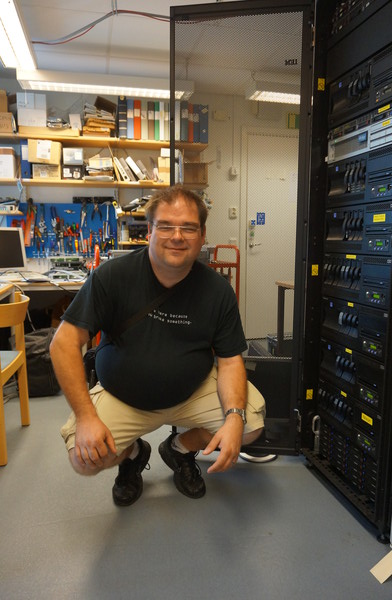
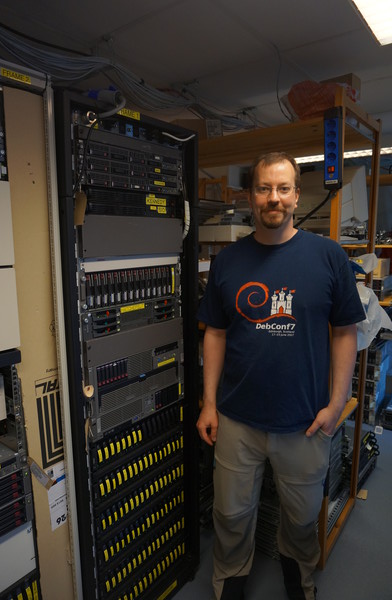
Jo and I spent a few days in Sweden and had an awesome time! The main reason for being there was Leif and Maria's wedding way up north in Skellefte . They cunningly organised their ceremony for the Midsummer weekend, which was an excellent plan - we had a full weekend of partying while we were there. :-) the happy couple We had some time to ourselves while we were there, so we wandered about a little and got to see some of the beautiful coastal countryside. Trund n Then on the way home we stopped off in Ume to visit Mattias Wadenstein (maswan) and his wife Melanie, and he showed me around some of the machines that he's been admining on behalf of Debian. Maybe I'm a sad geek, but I feel quite a bond with one of the machines there, pettersson.debian.org. It's the official CD build machine for Debian, and I've been responsible for thrashing it really hard for the last 5 years or so... :-) Pettersson and friends Massive thanks to the University of Ume and their Academic Computer Club for hosting Debian machines and serving all the CD images for us! maswan and a lot of disks The only downsides from the trip were the massive tiredness (midnight sun is pretty, but notconducive to sleep!) the mosquito bites and the nasty plague^Wcold that we picked up while we were there... Ah well. :-)

29 June 2015

Paul Wise: The aliens are amongst us!

Don't worry, they can't cope with our atmosphere. Alien on the ground Perhaps they are just playing dead. Don't turn your back if you see one. Folks may want to use this alien in free software. The original photo is available on request. To the extent possible under law, I have waived all copyright and related or neighboring rights to this work. The alien has signed a model release. An email or a link to this page would be appreciated though.

Norbert Preining: The Talos Principle Solving puzzles using SAT solvers

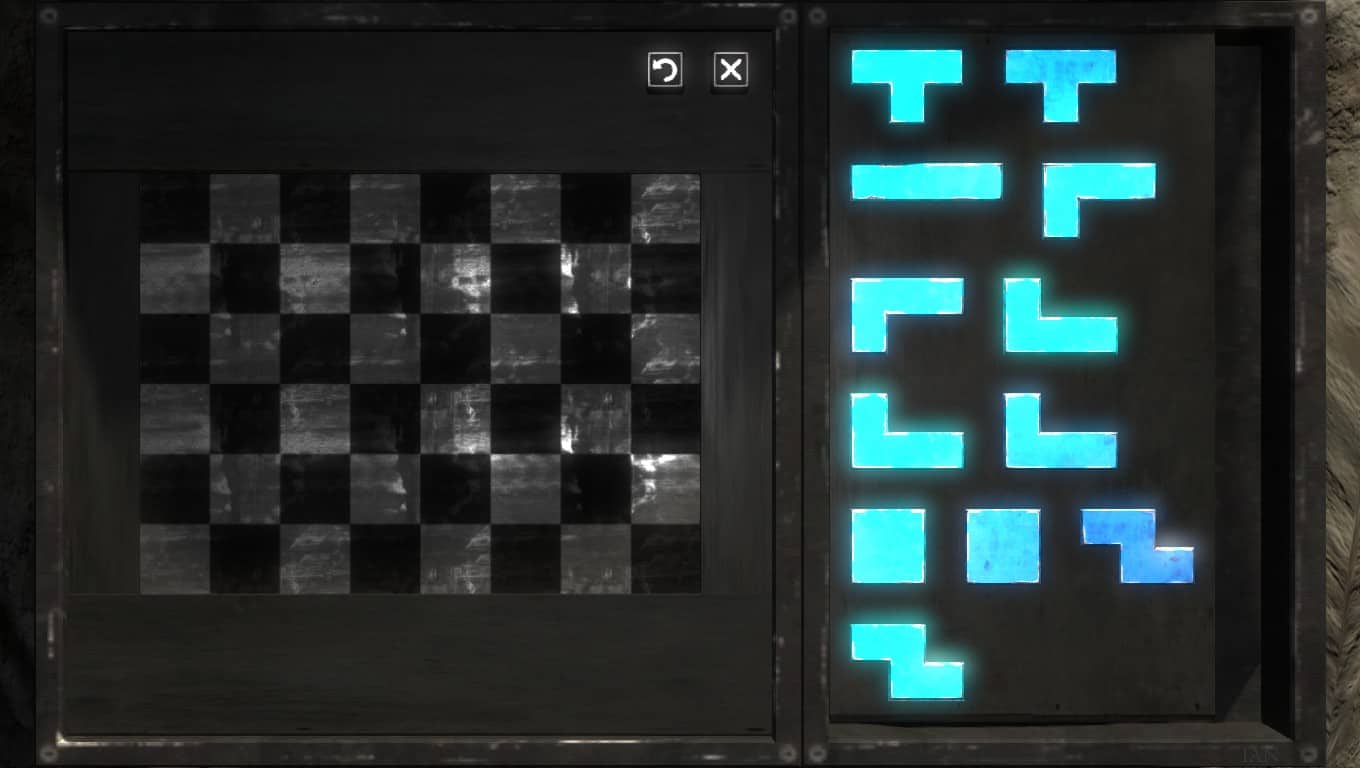
After my last post on Portal, there was a sale of The Talos Principle, so I got it and started playing. And soon I got stuck at these kind of puzzles where one has to fit in pieces into a frame. As a logician I hate to solve something by trial and error, so I decided I write a solver for these kind of puzzles, based on a propositional logic encoding and satisfiability solver. Sometimes it is good to be logician! Talos-Puzzles In the Talos Principle, access to new worlds and specific items is often blocked by gates that open by putting Sigils into the frame. Of course, collecting the sigils is the most challenging part, but that is often solvable by logical thinking. On the other hand, solving these fitting puzzles drove me crazy, so let us solve them with a SAT solver. Encoding I used a propositional encoding that for each combination of cells and sigils assigns a propositional variable, which is true if the specific sigil rests in on that cell in the final solution. That is, we have variable (encoded as x_i_j_n) where runs over the cells of the frame, and over the (numbered) sigils. Setup I have written a perl program that for a definition of a puzzle (see later), outputs SMT2 code, which then is checked for satisfiability and generation of model with the z3 solver (which is available in Debian). Necessary assertions We have to state relations between these propositional variables to obtain a proper solution, in particular we have added the following statements: Let us go through them one by one: Every field has at least on sigil on it That is an easy part by asserting

In the SMT2 code it would look like
(assert (or x_i_j_1 x_i_j_2 ... x_i_j_n))
Every field has at most one sigil on it This can be achieved by asserting for each tile and each pair of different sigil (numbers), that not both of the two hold:

and in SMT2 code:
(assert (and
  (not (and x_1_1_1 x_1_1_2))
  (not (and x_1_1_1 x_1_1_3))
...
(assert (and
  (not (and x_1_2_1 x_1_2_2))
  (not (and x_1_2_1 x_1_2_3))
...
Every sigil is used at least once This was a bit a tricky one. First I thought I want to express that every sigil is used exactly once by excluding that for one sigil there are more fields assigned to it then the sigil contains parts. So if a sigil occupies 4 tiles, then every combination of 5 tiles needs to evaluate to false. But with 8 8 or so frames, the number of combinations simply explodes to above several million, which brings my harddrive size and z3 to an end. The better idea was to say that every sigil was used at least once. Since all sigils together exactly fill the frame, this is enough. This can be done easily by assuming that for each sigil, at least one of the tiles is assigned to it:

or in SMT code for a 6 6 frame and the first sigil:
(assert (or x_1_1_n x_1_2_n ...  x_6_6_1))
Defining equations for the sigil s form Of course the most important part are the defining equations for the various sigils. Here I choose the following path: So for example for the top-most sigil in the above photo, I choose the anchor point to be the center, and if that was in , I need to assume that for the upright position

holds. In the same way, when rotated right, we need

All these options have to be disjunctively connected, in SMT code for the case where the anchor lies at (4,2).
(assert (or
  ...
  (and x_3_2_n x_4_2_n x_5_2_n x_4_3_n)
  (and x_3_3_n x_3_2_n x_3_1_n x_4_2_n)
  (and x_3_2_n x_4_2_n x_5_2_n x_4_1_n)
...
When generating these equations one has to be careful not to include rotated sigils that stick out of the frame, though. Although the above might not be the optimal encoding, the given assertions suffice to check for SAT and produce a model, which allows me to solve the riddles. Implementation in Perl To generate the SMT2 code, I used a Perl script, which is very quickly hacked together. The principle function is (already coded for the above riddle):
create_smt2_def(8,6,'a','a','b','cl','cl','cr','cr','cr','q','q','sl','sl');
where the first two arguments define the size of the frame, and the rest are codes for sigil types: This function first sets up the header of the smt2 file, followed by shipping out all the necessary variable definitions, in SMT these are defined as Boolean functions, and the other assertions (please see the Perl code linked below for details). The most interesting part are the definitions of the sigils:
  # for each piece, call the defining assertions
  for my $n (1..$nn)  
    my $p = $pieces[$n-1];
    print "(assert (or\n";
    for my $i (1..$xx)  
      for my $j (1..$yy)  
        if ($p eq 'q')   
          type_square($xx,$yy,$i,$j,$n); 
          elsif ($p eq 'a')  
          type_potest($xx,$yy,$i,$j,$n);
    ....
Every sigil type has its own definiton, in case of the a podest, the type_podest function:
sub type_potest  
  my ($xx,$yy,$i,$j,$n) = @_;
  my ($il, $jl, $ir, $jr, $iu, $ju);
  $il = $i - 1; $ir = $i + 1; $iu = $i;
  $jl = $jr = $j; $ju = $j + 1;
  do_rotate_shipout($xx,$yy, $i, $j, $n, $il, $jl, $ir, $jr, $iu, $ju);
 
This function is prototypical, one defines the tiles a sigil occupies if the anchor is placed on (i,j) for an arbitrary orientation of the sigil, and then calls do_rotate_shipout on the list of occupied tiles. This function in turn is very simple:
sub do_rotate_shipout  
  my ($xx,$yy, $i, $j, $n, @pairs) = @_ ;
  for my $g (0..3)  
    @pairs = rotate90($i, $j, @pairs);
    check_and_shipout($xx,$yy, $n, $i, $j, @pairs);
   
 
as it only rotates four times by 90 degrees, and then checks whether the rotated sigil is completely within the frame, and if yes ships out the assertion code. The rotation is done by multiplying the vector from (i,j) to the tile position with the (0 -1 1 0) matrix and adding it again to (i,j):
sub rotate90  
  my ($i, $j, @pairs) = @_ ;
  my @ret;
  while (@pairs)  
    my $ii = shift @pairs;
    my $jj = shift @pairs;
    my $ni = $i - ($jj - $j);
    my $nj = $j + ($ii - $i);
    push @ret, $ni, $nj;
   
  return @ret;
 
There are a few more functions, for those interested, the full Perl code is here: tangram.pl. There is no user interface or any config file reading done, I just edit the source code if I need to solve a riddle. Massaging the output Last but not least, the output of the z3 solver is a bit noisy, so I run the output through a few Unix commands to get only the true assignments, which gives me the location of the tiles. That is, I run the following pipeline:
perl tangram.pl   z3 -in   egrep 'define-fun true false'    sed -e 'h;s/.*//;G;N;s/\n//g'   grep true   sort
which produces a list like the following as output:
  (define-fun x_1_1_10 () Bool    true)
  (define-fun x_1_2_10 () Bool    true)
  (define-fun x_1_3_5 () Bool    true)
  (define-fun x_1_4_6 () Bool    true)
  (define-fun x_1_5_6 () Bool    true)
  (define-fun x_1_6_6 () Bool    true)
  (define-fun x_2_1_10 () Bool    true)
  (define-fun x_2_2_10 () Bool    true)
  (define-fun x_2_3_5 () Bool    true)
  ...
from which I can read up the solution that puts the tenth sigil (a square) in the lower left corner:
Talos-Puzzle-solved

28 June 2015

Russell Coker: RAID Pain

One of my clients has a NAS device. Last week they tried to do what should have been a routine RAID operation, they added a new larger disk as a hot-spare and told the RAID array to replace one of the active disks with the hot-spare. The aim was to replace the disks one at a time to grow the array. But one of the other disks had an error during the rebuild and things fell apart. I was called in after the NAS had been rebooted when it was refusing to recognise the RAID. The first thing that occurred to me is that maybe RAID-5 isn t a good choice for the RAID. While it s theoretically possible for a RAID rebuild to not fail in such a situation (the data that couldn t be read from the disk with an error could have been regenerated from the disk that was being replaced) it seems that the RAID implementation in question couldn t do it. As the NAS is running Linux I presume that at least older versions of Linux have the same problem. Of course if you have a RAID array that has 7 disks running RAID-6 with a hot-spare then you only get the capacity of 4 disks. But RAID-6 with no hot-spare should be at least as reliable as RAID-5 with a hot-spare. Whenever you recover from disk problems the first thing you want to do is to make a read-only copy of the data. Then you can t make things worse. This is a problem when you are dealing with 7 disks, fortunately they were only 3TB disks and only each had 2TB in use. So I found some space on a ZFS pool and bought a few 6TB disks which I formatted as BTRFS filesystems. For this task I only wanted filesystems that support snapshots so I could work on snapshots not on the original copy. I expect that at some future time I will be called in when an array of 6+ disks of the largest available size fails. This will be a more difficult problem to solve as I don t own any system that can handle so many disks. I copied a few of the disks to a ZFS filesystem on a Dell PowerEdge T110 running kernel 3.2.68. Unfortunately that system seems to have a problem with USB, when copying from 4 disks at once each disk was reading about 10MB/s and when copying from 3 disks each disk was reading about 13MB/s. It seems that the system has an aggregate USB bandwidth of 40MB/s slightly greater than USB 2.0 speed. This made the process take longer than expected. One of the disks had a read error, this was presumably the cause of the original RAID failure. dd has the option conv=noerror to make it continue after a read error. This initially seemed good but the resulting file was smaller than the source partition. It seems that conv=noerror doesn t seek the output file to maintain input and output alignment. If I had a hard drive filled with plain ASCII that MIGHT even be useful, but for a filesystem image it s worse than useless. The only option was to repeatedly run dd with matching skip and seek options incrementing by 1K until it had passed the section with errors. for n in /dev/loop[0-6] ; do echo $n ; mdadm examine -v -v scan $n grep Events ; done Once I had all the images I had to assemble them. The Linux Software RAID didn t like the array because not all the devices had the same event count. The way Linux Software RAID (and probably most RAID implementations) work is that each member of the array has an event counter that is incremented when disks are added, removed, and when data is written. If there is an error then after a reboot only disks with matching event counts will be used. The above command shows the Events count for all the disks. Fortunately different event numbers aren t going to stop us. After assembling the array (which failed to run) I ran mdadm -R /dev/md1 which kicked some members out. I then added them back manually and forced the array to run. Unfortunately attempts to write to the array failed (presumably due to mismatched event counts). Now my next problem is that I can make a 10TB degraded RAID-5 array which is read-only but I can t mount the XFS filesystem because XFS wants to replay the journal. So my next step is to buy another 2*6TB disks to make a RAID-0 array to contain an image of that XFS filesystem. Finally backups are a really good thing

24 June 2015

Norbert Preining: TeX Live Manager News June 2015

TeX Live 2015 has been released, and normal operation with daily updates has started. During the freeze time and afterwards I have made a few changes to the TeX Live Manager (tlmgr) that I want to highlight here. texlive-tlmgr The main changes are better error and return code handling (which should be hardly visible for the users), and more more informative output of the tlmgr info action, incorporating more data from the TeX Catalogue. Error handling With a program that started as an experiment that has grown into the central configuration and management program, there are lots of old code pieces that did not do proper error signaling via return values. That meant that the return value of a tlmgr run didn t have any meaning, mostly because it was 0 (success) most of the times. I have now tried to do proper return code handling throughout the tlmgr code base, that is the tlmgr.pl and the necessary Perl modules. While this should not be a user visible changes, it turned out that the MacOS TeX Live Utility by Adam Maxwell (btw, a great program, it would be nice to have something similar written for Unix replacing the bit clumsy tlmgr gui), got broken for paper configuration, due to forgotten return value fixes in the TLPaper.pm module. That is fixed now in our repository. All in all we do hope that the return value of a tlmgr run now gives proper information about success or error. I might add a bit more semantics by returning bit-values in case of errors, but this is in early stages of thinking. TeX Catalogue data in tlmgr info Since more or less the very beginning we incorporated information from the TeX Catalogue into our database. In particular did we carry over the license information, version, CTAN directory, and date of last change of information in the Catalogue. ctan-page-asana-mathRecently (or not so recently, I actually don t know), CTAN has enriched their package view with more information, in particular a list of topics, and a list of related packages. Take for example the Asana-math package. It s CTAN page now displays besides the previously available information also a list of topics and a list of related packages. The topic index can also be browsed directly when searching for a specific package. I have now added functionality in the TeX Live Manager that tlmgr info also prints out the topic names and related packages. In the case of Asana Math fonts, that would look like:
$ tlmgr info Asana-Math
package:     Asana-Math
category:    Package
shortdesc:   A font to typeset maths in Xe(La)TeX and Lua(La)TeX.
longdesc:    The Asana-Math font is an OpenType font that includes almost all mathematical Unicode symbols and it can be used to typeset mathematical text with any software that can understand the MATH OpenType table (e.g., XeTeX 0.997 and Microsoft Word 2007). The font is beta software. Typesetting support for use with LaTeX is provided by the fontspec and unicode-math packages.
installed:   Yes
revision:    37556
sizes:       doc: 9k, run: 1177k
relocatable: No
cat-version: 000.955
cat-date:    2015-06-02 20:04:19 +0200
cat-license: ofl
cat-topics:  font font-maths font-otf font-ttf
cat-related: stix xits
collection:  collection-fontsextra
GUIs could use the topic names and related packages to link directly to the CTAN page. At the moment the related packages are named according to CTAN standards, which are a bit different from what we use in TeX Live. I am not sure whether I will change that, or ship out both names. We will see.
The changes are currently in testing, see section about Test version here, and will be pushed out in due time, probably in the next week. As usual, in case of any problems or bugs, please contact us at the TeX Live mailing list. Enjoy.

Russell Coker: Smart Phones Should Measure Charge Speed

My first mobile phone lasted for days between charges. I never really found out how long it s battery would last because there was no way that I could use it to deplete the charge in any time that I could spend awake. Even if I had managed to run the battery out the phone was designed to accept 4*AA batteries (it s rechargeable battery pack was exactly that size) so I could buy spare batteries at any store. Modern phones are quite different in physical phone design (phones that weigh less than 4*AA batteries aren t uncommon), functionality (fast CPUs and big screens suck power), and use (games really drain your phone battery). This requires much more effective chargers, when some phones are intensively used (EG playing an action game with Wifi enabled) they can t be charged as they use more power than the plug-pack supplies. I ve previously blogged some calculations about resistance and thickness of wires for phone chargers [1], it s obvious that there are some technical limitations to phone charging based on the decision to use a long cable at ~5V. My calculations about phone charge rate were based on the theoretical resistance of wires based on their estimated cross-sectional area. One problem with such analysis is that it s difficult to determine how thick the insulation is without destroying the wire. Another problem is that after repeated use of a charging cable some conductors break due to excessive bending. This can significantly increase the resistance and therefore increase the charging time. Recently a charging cable that used to be really good suddenly became almost useless. My Galaxy Note 2 would claim that it was being charged even though the reported level of charge in the battery was not increasing, it seems that the cable only supplied enough power to keep the phone running not enough to actually charge the battery. I recently bought a USB current measurement device which is really useful. I have used it to diagnose power supplies and USB cables that didn t work correctly. But one significant way in which it fails is in the case of problems with the USB connector. Sometimes a cable performs differently when connected via the USB current measurement device. The CurrentWidget program [2] on my Galaxy Note 2 told me that all of the dedicated USB chargers (the 12V one in my car and all the mains powered ones) supply 1698mA (including the ones rated at 1A) while a PC USB port supplies ~400mA. I don t think that the Note 2 measurement is particularly reliable. On my Galaxy Note 3 it always says 0mA, I guess that feature isn t implemented. An old Galaxy S3 reports 999mA of charging even when the USB current measurement device says ~500mA. It seems to me that method the CurrentWidget uses to get the current isn t accurate if it even works at all. Android 5 on the Nexus 4/5 phones will tell the amount of time until the phone is charged in some situations (on the Nexus 4 and Nexus 5 that I used for testing it didn t always display it and I don t know why). This is an useful but it s still not good enough. I think that what we need is to have the phone measure the current that s being supplied and report it to the user. Then when a phone charges slowly because apps are using some power that won t be mistaken for a phone charging slowly due to a defective cable or connector.

23 June 2015

Ben Armstrong: Debian Live Rescue needs some love

You may have noticed that Jessie no longer includes the useful rescue flavour of live image, formerly included in Wheezy and earlier releases, and neither will Stretch unless you take action. This is my second public call for help this year to revive it. So if you care about rescue, here s how you can help: If you have any questions not answered in this post, please feel free to leave a comment on this blog, talk to the Debian Live team on irc I m SynrG, and hang out with the team at #debian-live @ irc.oftc.net) or drop us an email at debian-live@lists.debian.org.

Russell Coker: One Android Phone Per Child

I was asked for advice on whether children should have access to smart phones, it s an issue that many people are discussing and seems worthy of a blog post. Claimed Problems with Smart Phones The first thing that I think people should read is this XKCD post with quotes about the demise of letter writing from 99+ years ago [1]. Given the lack of evidence cited by people who oppose phone use I think we should consider to what extent the current concerns about smart phone use are just reactions to changes in society. I ve done some web searching for reasons that people give for opposing smart phone use by kids and addressed the issues below. Some people claim that children shouldn t get a phone when they are so young that it will just be a toy. That s interesting given the dramatic increase in the amount of money spent on toys for children in recent times. It s particularly interesting when parents buy game consoles for their children but refuse mobile phone toys (I know someone who did this). I think this is more of a social issue regarding what is a suitable toy than any real objection to phones used as toys. Obviously the educational potential of a mobile phone is much greater than that of a game console. It s often claimed that kids should spend their time reading books instead of using phones. When visiting libraries I ve observed kids using phones to store lists of books that they want to read, this seems to discredit that theory. Also some libraries have Android and iOS apps for searching their catalogs. There are a variety of apps for reading eBooks, some of which have access to many free books but I don t expect many people to read novels on a phone. Cyber-bullying is the subject of a lot of anxiety in the media. At least with cyber-bullying there s an electronic trail, anyone who suspects that their child is being cyber-bullied can check that while old-fashioned bullying is more difficult to track down. Also while cyber-bullying can happen faster on smart phones the victim can also be harassed on a PC. I don t think that waiting to use a PC and learn what nasty thing people are saying about you is going to be much better than getting an instant notification on a smart phone. It seems to me that the main disadvantage of smart phones in regard to cyber-bullying is that it s easier for a child to participate in bullying if they have such a device. As most parents don t seem concerned that their child might be a bully (unfortunately many parents think it s a good thing) this doesn t seem like a logical objection. Fear of missing out (FOMO) is claimed to be a problem, apparently if a child has a phone then they will want to take it to bed with them and that would be a bad thing. But parents could have a policy about when phones may be used and insist that a phone not be taken into the bedroom. If it s impossible for a child to own a phone without taking it to bed then the parents are probably dealing with other problems. I m not convinced that a phone in bed is necessarily a bad thing anyway, a phone can be used as an alarm clock and instant-message notifications can be turned off at night. When I was young I used to wait until my parents were asleep before getting out of bed to use my PC, so if smart-phones were available when I was young it wouldn t have changed my night-time computer use. Some people complain that kids might use phones to play games too much or talk to their friends too much. What do people expect kids to do? In recent times the fear of abduction has led to children doing playing outside a lot less, it used to be that 6yos would play with other kids in their street and 9yos would be allowed to walk to the local park. Now people aren t allowing 14yo kids walk to the nearest park alone. Playing games and socialising with other kids has to be done over the Internet because kids aren t often allowed out of the house. Play and socialising are important learning experiences that have to happen online if they can t happen offline. Apps can be expensive. But it s optional to sign up for a credit card with the Google Play store and the range of free apps is really good. Also the default configuration of the app store is to require a password entry before every purchase. Finally it is possible to give kids pre-paid credit cards and let them pay for their own stuff, such pre-paid cards are sold at Australian post offices and I m sure that most first-world countries have similar facilities. Electronic communication is claimed to be somehow different and lesser than old-fashioned communication. I presume that people made the same claims about the telephone when it first became popular. The only real difference between email and posted letters is that email tends to be shorter because the reply time is smaller, you can reply to any questions in the same day not wait a week for a response so it makes sense to expect questions rather than covering all possibilities in the first email. If it s a good thing to have longer forms of communication then a smart phone with a big screen would be a better option than a feature phone , and if face to face communication is preferred then a smart phone with video-call access would be the way to go (better even than old fashioned telephony). Real Problems with Smart Phones The majority opinion among everyone who matters (parents, teachers, and police) seems to be that crime at school isn t important. Many crimes that would result in jail sentences if committed by adults receive either no punishment or something trivial (such as lunchtime detention) if committed by school kids. Introducing items that are both intrinsically valuable and which have personal value due to the data storage into a typical school environment is probably going to increase the amount of crime. The best options to deal with this problem are to prevent kids from taking phones to school or to home-school kids. Fixing the crime problem at typical schools isn t a viable option. Bills can potentially be unexpectedly large due to kids inability to restrain their usage and telcos deliberately making their plans tricky to profit from excess usage fees. The solution is to only use pre-paid plans, fortunately many companies offer good deals for pre-paid use. In Australia Aldi sells pre-paid credit in $15 increments that lasts a year [2]. So it s possible to pay $15 per year for a child s phone use, have them use Wifi for data access and pay from their own money if they make excessive calls. For older kids who need data access when they aren t at home or near their parents there are other pre-paid phone companies that offer good deals, I ve previously compared prices of telcos in Australia, some of those telcos should do [3]. It s expensive to buy phones. The solution to this is to not buy new phones for kids, give them an old phone that was used by an older relative or buy an old phone on ebay. Also let kids petition wealthy relatives for a phone as a birthday present. If grandparents want to buy the latest smart-phone for a 7yo then there s no reason to stop them IMHO (this isn t a hypothetical situation). Kids can be irresponsible and lose or break their phone. But the way kids learn to act responsibly is by practice. If they break a good phone and get a lesser phone as a replacement or have to keep using a broken phone then it s a learning experience. A friend s son head-butted his phone and cracked the screen he used it for 6 months after that, I think he learned from that experience. I think that kids should learn to be responsible with a phone several years before they are allowed to get a learner s permit to drive a car on public roads, which means that they should have their own phone when they are 12. I ve seen an article about a school finding that tablets didn t work as well as laptops which was touted as news. Laptops or desktop PCs obviously work best for typing. Tablets are for situations where a laptop isn t convenient and when the usage involves mostly reading/watching, I ve seen school kids using tablets on excursions which seems like a good use of them. Phones are even less suited to writing than tablets. This isn t a problem for phone use, you just need to use the right device for each task. Phones vs Tablets Some people think that a tablet is somehow different from a phone. I ve just read an article by a parent who proudly described their policy of buying feature phones for their children and tablets for them to do homework etc. Really a phone is just a smaller tablet, once you have decided to buy a tablet the choice to buy a smart phone is just about whether you want a smaller version of what you have already got. The iPad doesn t appear to be able to make phone calls (but it supports many different VOIP and video-conferencing apps) so that could technically be described as a difference. AFAIK all Android tablets that support 3G networking also support making and receiving phone calls if you have a SIM installed. It is awkward to use a tablet to make phone calls but most usage of a modern phone is as an ultra portable computer not as a telephone. The phone vs tablet issue doesn t seem to be about the capabilities of the device. It s about how portable the device should be and the image of the device. I think that if a tablet is good then a more portable computing device can only be better (at least when you need greater portability). Recently I ve been carrying a 10 tablet around a lot for work, sometimes a tablet will do for emergency work when a phone is too small and a laptop is too heavy. Even though tablets are thin and light it s still inconvenient to carry, the issue of size and weight is a greater problem for kids. 7 tablets are a lot smaller and lighter, but that s getting close to a 5 phone. Benefits of Smart Phones Using a smart phone is good for teaching children dexterity. It can also be used for teaching art in situations where more traditional art forms such as finger painting aren t possible (I have met a professional artist who has used a Samsung Galaxy Note phone for creating art work). There is a huge range of educational apps for smart phones. The Wikireader (that I reviewed 4 years ago) [4] has obvious educational benefits. But a phone with Internet access (either 3G or Wifi) gives Wikipedia access including all pictures and is a better fit for most pockets. There are lots of educational web sites and random web sites that can be used for education (Googling the answer to random questions). When it comes to preparing kids for the real world or the work environment people often claim that kids need to use Microsoft software because most companies do (regardless of the fact that most companies will be using radically different versions of MS software by the time current school kids graduate from university). In my typical work environment I m expected to be able to find the answer to all sorts of random work-related questions at any time and I think that many careers have similar expectations. Being able to quickly look things up on a phone is a real work skill, and a skill that s going to last a lot longer than knowing today s version of MS-Office. There are a variety of apps for tracking phones. There are non-creepy ways of using such apps for monitoring kids. Also with two-way monitoring kids will know when their parents are about to collect them from an event and can stay inside until their parents are in the area. This combined with the phone/SMS functionality that is available on feature-phones provides some benefits for child safety. iOS vs Android Rumour has it that iOS is better than Android for kids diagnosed with Low Functioning Autism. There are apparently apps that help non-verbal kids communicate with icons and for arranging schedules for kids who have difficulty with changes to plans. I don t know anyone who has a LFA child so I haven t had any reason to investigate such things. Anyone can visit an Apple store and a Samsung Experience store as they have phones and tablets you can use to test out the apps (at least the ones with free versions). As an aside the money the Australian government provides to assist Autistic children can be used to purchase a phone or tablet if a registered therapist signs a document declaring that it has a therapeutic benefit. I think that Android devices are generally better for educational purposes than iOS devices because Android is a less restrictive platform. On an Android device you can install apps downloaded from a web site or from a 3rd party app download service. Even if you stick to the Google Play store there s a wider range of apps to choose from because Google is apparently less restrictive. Android devices usually allow installation of a replacement OS. The Nexus devices are always unlocked and have a wide range of alternate OS images and the other commonly used devices can usually have an alternate OS installed. This allows kids who have the interest and technical skill to extensively customise their device and learn all about it s operation. iOS devices are designed to be sealed against the user. Admittedly there probably aren t many kids with the skill and desire to replace the OS on their phone, but I think it s good to have option. Android phones have a range of sizes and features while Apple only makes a few devices at any time and there s usually only a couple of different phones on sale. iPhones are also a lot smaller than most Android phones, according to my previous estimates of hand size the iPhone 5 would be a good tablet for a 3yo or good for side-grasp phone use for a 10yo [5]. The main benefits of a phone are for things other than making phone calls so generally the biggest phone that will fit in a pocket is the best choice. The tiny iPhones don t seem very suitable. Also buying one of each is a viable option. Conclusion I think that mobile phone ownership is good for almost all kids even from a very young age (there are many reports of kids learning to use phones and tablets before they learn to read). There are no real down-sides that I can find. I think that Android devices are generally a better option than iOS devices. But in the case of special needs kids there may be advantages to iOS.

Orestis Ioannou: GSoC Debsources updates

The first 4 weeks have been really great. I had the chance to work on the new webapp, the copyright tracker. Here are my first 4 reports for the weeks: Summary During these weeks i completed the navigation (by prefix, list of versions etc) for the copyright tracker, the license rendering and the API for searching by checksum and by package/version/filename. Still under review the batch API (request many files at once) and the the respective views for the API. In the following weeks I ll work on the database and the plugins to mine license information on update time. Experience The experience i accumulate every week is immense. During the review process of my code i receive great feedback from zack, matthieu, and jpleau. It is a great chance for everyone to improve his/hers coding skills. At the university we barely get any feedback on our code, let alone communicate directly with professors to find the best solution for a given problem. I think it gets development in another level. For example at the university we use git/mercurial for our projects, although we don't really pay attention at commit messages and we marginally make use of these tools besides 'commit pull push'. During the last weeks i had the chance to use far more commands in order to squash amend rebase commits to have a beautiful and useful log history! And this is just a minor example. All in all I think it is a great introduction to the free/open source community for somebody, like me, who has been for years only a user and couldn't find the opportunity to contribute! And don't get me wrong, gsoc is not only about coding skills. At least for myself having the chance to get just a small taste of how the Debian community works, gets organised, get things done (!) is somehow priceless! Summer of code TDD I have finally understood why test driven development is so powerful. As i am advancing in the project i am sometimes obliged to retouch some areas, refactor pieces of code. Having a great test suite that keeps you on track about the changes, and possible outages in advance is pretty powerful. What is coming I feel the project is on the right path. Both clemux (fellow gsoc student working on debsources) and me are advancing in a productive pace. I hope that soon enough the copyright Blueprint will be completed (most notable pending functionalities are the plugins-hooks to mine the licenses at update time, introduction of at least another license oracle possible ninka, statistics) so that everyone can take profit of the new tools provided by DebSources. Although we haven't talked much about it the patch tracker should also come into the play sooner rather than later. Stay tuned!
22 June 2015

Sven Hoexter: Free SSL/TLS snakeoil from wosign.com

I've been a proponet of CaCert.org for a long time and I'm still using those certificates in some places, but lately I gave in and searched for something that validates even on iOS. It's not that I strictly need it, it's more a favour to make life for friends and family easier. I turned down startssl.com because I always manage to somehow lose the client certificate for the portal login. Plus I failed to generate several certificates for subdomains within the primary domain. I want to use different keys on purpose so SANs are not helpful, neither are wildcard certs for which you've to pay anyway. Another point against a wildcard cert from startssl is that I'd like to refrain from sending in my scanned papers for verification. On a sidenote I'm also not a fan of random email address extractions from whois to sent validation codes to. I just don't see why the abuse desk of a registrar should be able to authorize on DV certificates for a domain under my control. startssl abuse desk in dv validation So I decided to pay the self proclaimed leader of the snakeoil industrie (Comodo) via cheapsslshop.com. That made 12USD for a 3 year Comodo DV certificate. Fair enough for the mailsetup I share with a few friends, and the cheapest one I could find at that time. Actually no hassle with logins or verification. It looks a bit like a scam but the payment is done via 2checkout if I remember correctly and the certificate got issued via a voucher code by Comodo directly. Drawback: credit card payment. Now while we're all waiting for letsencrypt.org I learned about the free offer of wosign.com. The CA is issued by the StartSSL Root CA, so technically we're very close to step one. Beside of that I only had to turn off uBlock origin and the rest of the JavaScript worked fine with Iceweasel once I clicked on the validity time selection checkbox. They offer the certificate for up to 3 years, you can paste your own csr and you can add up to 100 SANs. The only drawback is that it took them about 12 hours to issue the certificate and the mails look a hell lot like spam if you sent them through Spamassassin. That provides now a free and validating certificate for sven.stormbind.net in case you'd like to check out the chain. The validation chain is even one certificate shorter then the chain for the certificate I bought from Comodo. So in case anyone else is waiting for letsencrypt to start, you might want to check wosign until Mozilla et al are ready. From my point of view the only reason to pay one of the major CAs is for the service of running a reliable OCSP system. I also pointed that out here. It's more and more about the service you buy and no longer just money for a few ones and zeroes.

Next.

Previous.