Search Results: "mak"

23 July 2015

Elena 'valhalla' Grandi: A Makefile for OpenSCAD projects

A Makefile for OpenSCAD projects

When working with OpenSCAD to generate models for 3D printing, I find it convenient to be able to build .stl and .gcode files from the command line, expecially in batch, so I've started writing a Makefile, improving it and making it more generic in subsequent iterations; I've added a page on my website http://www.trueelena.org/computers/howto/makefile_for_openscad_projects.html to hosts my current version.

Most of my projects use the following directory structure.


Running make will generate stl files for all of the models; make gcode adds .gcode files using slic3r; make build/object1.stl and make build/object1.gcode also work, when just one model is needed.


# Copyright 2015 Elena Grandi
# This work is free. You can redistribute it and/or modify it under the
# terms of the Do What The Fuck You Want To Public License, Version 2,
# as published by Sam Hocevar. See http://www.wtfpl.net/ for more details.

BUILDDIR = build
CONFDIR = conf
SRCDIR = src

SLIC3R = slic3r

VPATH = $(SRCDIR):$(BUILDDIR)

STL_TARGETS = $(patsubst $(SRCDIR)/%.scad,$(BUILDDIR)/%.stl,$(wildcard $(SRCDIR)/*.scad))
GCODE_TARGETS = $(patsubst $(SRCDIR)/%.scad,$(BUILDDIR)/%.gcode,$(wildcard $(SRCDIR)/*.scad))

.PHONY: all gcode clean
all: $(STL_TARGETS)

gcode: $(GCODE_TARGETS)

$(BUILDDIR)/%.stl: %.scad $(SRCDIR)/lib/*
mkdir -p $ BUILDDIR
openscad -o $@ $<

$(BUILDDIR)/%.gcode: %.stl $ CONFDIR /basic.ini
$ SLIC3R --load $ CONFDIR /basic.ini $<

clean:
rm -f $ BUILDDIR /*.stl $ BUILDDIR /*.gcode


This Makefile is released under the WTFPL:


DO WHAT THE FUCK YOU WANT TO PUBLIC LICENSE
Version 2, December 2004

Copyright (C) 2004 Sam Hocevar <sam@hocevar.net>

Everyone is permitted to copy and distribute verbatim or modified
copies of this license document, and changing it is allowed as long
as the name is changed.

DO WHAT THE FUCK YOU WANT TO PUBLIC LICENSE
TERMS AND CONDITIONS FOR COPYING, DISTRIBUTION AND MODIFICATION

0. You just DO WHAT THE FUCK YOU WANT TO.

Daniel Pocock: Recording live events like a pro (part 1: audio)

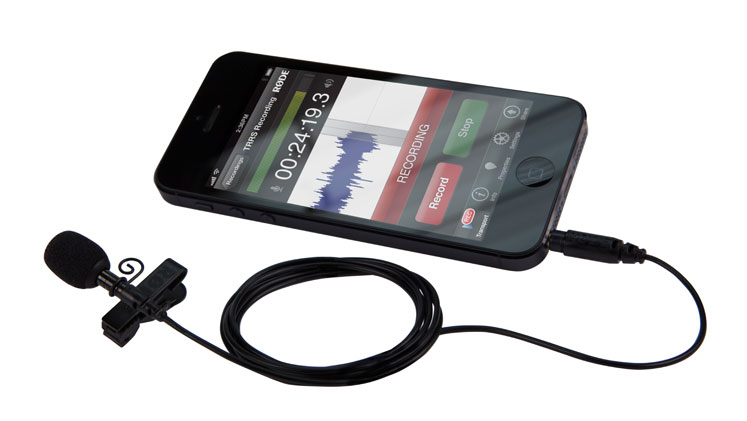
Whether it is a technical talk at a conference, a political rally or a budget-conscious wedding, many people now have most of the technology they need to record it and post-process the recording themselves. For most events, audio is an essential part of the recording. There are exceptions: if you take many short clips from a wedding and mix them together you could leave out the audio and just dub the couple's favourite song over it all. For a video of a conference presentation, though, the the speaker's voice is essential. These days, it is relatively easy to get extremely high quality audio using a lapel microphone attached to a smartphone. Lets have a closer look at the details. Using a lavalier / lapel microphone Full wireless microphone kits with microphone, transmitter and receiver are usually $US500 or more. The lavalier / lapel microphone by itself, however, is relatively cheap, under $US100. The lapel microphone is usually an omnidirectional microphone that will pick up the voices of everybody within a couple of meters of the person wearing it. It is useful for a speaker at an event, some types of interviews where the participants are at a table together and it may be suitable for a wedding, although you may want to remember to remove it from clothing during the photos. There are two key features you need when using such a microphone with a smartphone:
  • TRRS connector (this is the type of socket most phones and many laptops have today)
  • Microphone impedance should be at least 1k (that is one kilo Ohm) or the phone may not recognize when it is connected
Many leading microphone vendors have released lapel mics with these two features aimed specifically at smartphone users. I have personally been testing the Rode smartLav+ Choice of phone There are almost 10,000 varieties of smartphone just running Android, as well as iPhones, Blackberries and others. It is not practical for most people to test them all and compare audio recording quality. It is probably best to test the phone you have and ask some friends if you can make test recordings with their phones too for comparison. You may not hear any difference but if one of the phones has a poor recording quality you will hopefully notice that and exclude it from further consideration. A particularly important issue is being able to disable AGC in the phone. Android has a standard API for disabling AGC but not all phones or Android variations respect this instruction. I have personally had positive experiences recording audio with a Samsung Galaxy Note III. Choice of recording app Most Android distributions have at least one pre-installed sound recording app. Look more closely and you will find not all apps are the same. For example, some of the apps have aggressive compression settings that compromise recording quality. Others don't work when you turn off the screen of your phone and put it in your pocket. I've even tried a few that were crashing intermittently. The app I found most successful so far has been Diktofon, which is available on both F-Droid and Google Play. Diktofon has been designed not just for recording, but it also has some specific features for transcribing audio (currently only supporting Estonian) and organizing and indexing the text. I haven't used those features myself but they don't appear to cause any inconvenience for people who simply want to use it as a stable recording app. As the app is completely free software, you can modify the source code if necessary. I recently contributed patches enabling 48kHz recording and disabling AGC. At the moment, the version with these fixes has just been released and appears in F-Droid but not yet uploaded to Google Play. The fixes are in version 0.9.83 and you need to go into the settings to make sure AGC is disabled and set the 48kHz sample rate. Whatever app you choose, the following settings are recommended:
  • 16 bit or greater sample size
  • 48kHz sample rate
  • Disable AGC
  • WAV file format
Whatever app you choose, test it thoroughly with your phone and microphone. Make sure it works even when you turn off the screen and put it in your pocket while wearing the lapel mic for an hour. Observe the battery usage. Gotchas Now lets say you are recording a wedding and the groom has that smartphone in his pocket and the mic on his collar somewhere. What is the probability that some telemarketer calls just as the couple are exchanging vows? What is the impact on the recording? Maybe some apps will automatically put the phone in silent mode when recording. More likely, you need to remember this yourself. These are things that are well worth testing though. Also keep in mind the need to have sufficient storage space and to check whether the app you use is writing to your SD card or internal memory. The battery is another consideration. In a large event where smartphones are being used instead of wireless microphones, possibly for many talks in parallel, install a monitoring app like Ganglia on the phones to detect and alert if any phone has weak wifi signal, low battery or a lack of memory. Live broadcasts and streaming Some time ago I tested RTP multicasting from Lumicall on Android. This type of app would enable a complete wireless microphone setup with live streaming to the internet at a fraction of the cost of a traditional wireless microphone kit. This type of live broadcast could also be done with WebRTC on the Firefox app. Conclusion If you research the topic thoroughly and spend some time practicing and testing your equipment, you can make great audio recordings with a smartphone and an inexpensive lapel microphone. In subsequent blogs, I'll look at tips for recording video and doing post-production with free software.

22 July 2015

James McCoy: porterbox-logins

Some time ago, pabs documented his setup for easily connecting to one of Debian's porterboxes based on the desired architecture. Similarly, he submitted a wishlist bug against devscripts specifying some requirements for a script to make this functionality generally accessible to the developer community. I have yet to follow up on that request mainly due to ENOTIME for developing new scripts outright. I also have my own script I had been using to get information on available Debian machines. Recently, this came up again on IRC and jwilk decided to actually implement pabs' DNS alias idea. Now, one can use $arch-porterbox.debian.net to connect to a porterbox of the specified architecture. Preference is given to debian.org domains when there are both debian.org and debian.net porterboxes, and it's a simple use first listed machine if there are multiple available porterboxes. This is all well and good, but if you have SSH's StrictHostKeyChecking enabled, SSH will rightly refuse to connect. However, OpenSSH 6.5 added a feature called hostname canonicalization which can help. The below ssh_config snippet allows one to run ssh $arch-porterbox or ssh $arch-porterbox.debian.net and connect to one of the porterboxes, verifying the host key against the canonical host name.
Host *-porterbox
  HostName %h.debian.net
Match host *-porterbox.debian.net
  CanonicalizeHostname yes
  CanonicalizePermittedCNAMEs *-porterbox.debian.net:*.debian.org

21 July 2015

Jonathan Dowland: New camera

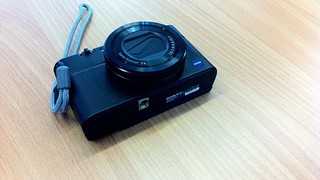
Sony RX100-III
Earlier in the year I treated myself to a new camera. It's been many years since I bought one, which was a perfectly serviceable Panasonic FS-15 compact, to replace my lost-or-stolen Panasonic TZ3, which I loved. The FS-15 didn't have a "wow" factor and with the advent of smartphones and fantastic smartphone cameras, it rarely left a drawer at home. Last year I upgraded my mobile from an iPhone to a Motorola Moto G, which is a great phone in many respects, but has a really poor camera. I was given a very generous gift voucher when I left my last job and so had the perfect excuse to buy a dedicated camera. I'd been very tempted by a Panasonic CSC camera ever since I read this review of the GF1 years ago, and the GM1 was high on my list, but there were a lot of compromises: no EVF... In the end I picked up a Sony RX 100 Mark 3 which had the right balance of compromises for me. I haven't posted a lot of photos to this site in the past but I hope to do so in future. I've got to make some alterations to the software first. Post-script: Craig Mod, who wrote that GF1 review, wrote another interesting essay a few years later: Cameras, Goodbye, where he discusses whether smartphone cameras are displacing even the top end of the Camera market.

20 July 2015

Niels Thykier: Performance tuning of lintian, take 2

The other day, I wrote about our recent performance tuning in lintian. Among other things, we reduced the memory usage by ~33%. The effect was also reproducible on libreoffice (4.2.5-1 plus its 170-ish binaries, arch amd64), which started at ~515 MB and was reduced to ~342 MB. So this is pretty great in its own right But at this point, I have seen what was in Pandora s box . By which, I mean the two magical numbers 1.7kB per file and 2.2kB per directory in the package (add +250-300 bytes per entry in binary packages). This is before even looking at data from file(1), readelf, etc. Just the raw index of the package. Depending on your point of view, 1.7-2.2kB might not sound like a lot. But for the lintian source with ~1 500 directories and ~3 300 non-directories, this sums up to about 6.57MB out of the (then) usage at 12.53MB. With the recent changes, it dropped to about 1.05kB for files and 1.5kB for dirs. But even then, the index is still 4.92MB (out of 8.48MB). This begs the question, what do you get for 1.05kB in perl? The following is a dump of the fields and their size in perl for a given entry:
lintian/vendors/ubuntu/main/data/changes-file/known-dists: 1077.00 B
  _path_info: 24.00 B
  date: 44.00 B
  group: 42.00 B
  name: 123.00 B
  owner: 42.00 B
  parent_dir: 24.00 B
  size: 42.00 B
  time: 42.00 B
  (overhead): 694.00 B
With time, date, owner and group being fixed sized strings (at most 15 characters). The size and _path_info fields being integers, parent_dir a reference (nulled). Finally, the name being a variable length string. Summed the values take less than half of the total object size. The remainder of ~700 bytes is just overhead . Time for another clean up: Which leaves us now with:
lintian/vendors/ubuntu/main/data/changes-file/known-dists: 698.00 B
  _path_info: 24.00 B
  date_time: 56.00 B
  name: 123.00 B
  parent_dir: 24.00 B
  size: 24.00 B
  (overhead): 447.00 B
Still a ~64% overhead, but at least we reduced the total size by 380 bytes (585 bytes for entries in binary packages). With these changes, the memory used for the lintian source index is now down to 3.62MB. This brings the total usage down to 7.01MB, which is a reduction to 56% of the original usage (a.k.a. the-almost-but-not-quite-50%-reduction ). But at least the results also carried over to libreoffice, which is now down to 284.83 MB (55% of original). The chromium-browser (source-only, version 32.0.1700.123-2) is down to 111.22MB from 179.44MB (61% of original, better results expected if processed with binaries). In closing, Lintian 2.5.34 will use slightly less memory than 2.5.33.
Filed under: Debian, Lintian

19 July 2015

Laura Arjona: Family games: Robots

I play Robots with my kid. I ve tested the game with other kids and it seems that for ages 5 to 7 they like it. I ve talked about the game to several adults and it seems they like too, so I thought maybe writing about it here may be useful for somebody to enjoy some summer days. Players One player is the Robot. The other one is the programmer. If there are more players, it can be several robots and several programmers. If players are older, you can make the game more complicated making robots cooperate or programmers cooperate. If not, you make pairs 1-1 or 1 programmer 2 robots if the number is odd. The game The programmer must turn on the robot, pressing the ON/OFF button (robot chooses where s the button: nose, ear, belly, whatever).
Then, the robot say hello , and the programmer asks for the list of commands available (like Hello, robot, give me the list of commands ). The robot says the list of commands available, for example Run, stop, jump, sing a song, somersault, say something in a different language . Then, the programmer thinks a program, and loads it to the robot (speaks the list of orders, loudly, to the robot). Then the programmer presses the START button (Robot choses where it is) and then the robot has to perform the program without errors. If the robot performs correctly, wins one point. If it fails, looses one point. The programmer can design another program (maybe longer, maybe with some conditional expression) and tries the limits of the memory of robot. If the robot is tired, needs to charge batteries, or whatever, the roles programmer/robot are interchanged, and the one with more points in a certain amount of time or rounds, wins. Variants, tips If the programmer does not like the list, of commands, she can ask for updates, and maybe some new commands will be installed (and/or other uninstalled, who knows). Please be creative with the list of commands, or the game will be very boring. Depending on the operating system which runs the robot, it will give more or less options to the programmer, and the behaviour will be more evil or good. Robots shouldn t behave too much evil, though, otherwise the programmer will erase their disk and install Debian on them to make them obedient ;) You can play with a third person being the Robot manufacturer, who controls the robot, even sometimes overriding the programmer instructions (if the robot has an OS which is not free software). Robot will win one point obeying the manufacturer, but if there are more robots, will loose one round of playing because the programmer got angry and turned it off or reinstalled the software. The manufacturer and the programmer cooperate if the robot runs free software, though. Together they can expand robot memory (for example, lend a piece of paper where to store the program), or create new commands, fix bugs, or whatever. Comments? You can comment about this post in Pump.io thread about this post.
Filed under: My experiences and opinion Tagged: Debian, Education, English, Free culture, Free Software, Games, kids

Gregor Herrmann: RC bugs 2015/17-29

after the release is before the release. or: long time no RC bug report. after the jessie release I spent most of my Debian time on work in the Debian Perl Group. we tried to get down the list of new upstream releases (from over 500 to currently 379; unfortunately the CPAN never sleeps), we were & still are busy preparing for the Perl 5.22 transition (e.g. we uploaded something between 300 & 400 packages to deal with Module::Build & CGI.pm being removed from perl core; only team-maintained packages so far), & we had a pleasant & productive sprint in Barcelona in May. & I also tried to fix some of the RC bugs in our packages which popped up over the previous months. yesterday & today I finally found some time to help with the GCC 5 transition, mostly by making QA or Non-Maintainer Uploads with patches that already were in the BTS. a big thanks especially to the team at HP which provided a couple dozens patches! & here's the list of RC bugs I've worked on in the last 3 months:

18 July 2015

Niels Thykier: Performance tuning of lintian

For quite a while, Lintian has been able to create performance logs (--perf-debug --perf-output perf.log) that help diagnose where lintian spends most of its runtime. I decided to make lintian output these logs on lintian.debian.org to help us spot performance issues, though I have not been very good at analysing them regularly. At the beginning of the month, I finally got around to look a bit into one of them. My findings on IRC triggered Mattia Rizzolo to create this following graph. It shows the accumulated runtime of each check/collection measured in seconds. Find these findings, we set out to solve some of the issues. This lead to the following changes in 2.5.33 (in no particular order): Legend: S: run single threaded (1:1 performance improvement). P: run in parallel. Overall, I doubt the changes will give a revolutionary change in speed, but it should improve the 3rd, 4th and 5th slowest parts in Lintian. Beyond runtime performance, we got a few memory optimisations in the pipeline for Lintian 2.5.34: Combined these 6 commits reduce memory consumption in caches by ~33% compared to 2.5.33, when lintian processes itself. In absolute numbers, we are talking about a drop from 12.53MB to 8.48MB. The mileages can certainly vary depending on the package (mscgen only saw an ~25% improvement). Nevertheless, I was happy to list #715035 as being closed in 2.5.34. :)
Filed under: Debian, Lintian

17 July 2015

John Goerzen: First steps with smartcards under Linux and Android hard, but it works

Well this has been an interesting project. It all started with a need to get better password storage at work. We wound up looking heavily at a GPG-based solution. This prompted the question: how can we make it even more secure? Well, perhaps, smartcards. The theory is this: a smartcard holds your private keys in a highly-secure piece of hardware. The PC can never actually access the private keys. Signing and decrypting operations are done directly on the card to prevent the need to export the private key material to the PC. There are lots of standards to choose from (PKCS#11, PKCS#15, and OpenPGP card specs) that are relevant here. And there are ways to use SSH and OpenVPN with some of these keys too. Access to the card is protected by a passphrase (called a PIN in smartcard lingo, even though it need not be numeric). These smartcards might be USB sticks, or cards you pop into a reader. In any case, you can pop them out when not needed, pop them in to use them, and well, pretty nice, eh? So that s the theory. Let s talk a bit of reality. First of all, it is hard for a person like me to evaluate how secure my data is in hardware. There was a high-profile bug in the OpenPGP JavaCard applet used by Yubico that caused the potential to use keys without a PIN, for instance. And how well protected is the key in the physical hardware? Granted, in most of these cards you re talking serious hardware skill to compromise them, but still, this is unknown in absolute terms. Here s the bigger problem: compatibility. There are all sorts of card readers, but compatibility with pcsc-tools and pcscd on Linux seems pretty good. But the cards themselves oh my. PKCS#11 defines an interface API, but each vendor would provide their own .so or .dll file to interface. Some cards (for instance, the ACOS5-64 mentioned on the Debian wiki!) are made by vendors that charge $50 for the privilege of getting the drivers needed to make them work and they re closed-source proprietary drivers at that. Some attempts I ordered several cards to evaluate: the OpenPGP card, specifically designed to support GPG; the ACOS5-64 card, the JavaCOS A22, the Yubikey Neo, and a simple reader listed on the GPG smartcard howto. The OpenPGP card and ACOS5-64 are the only ones in the list that support 4096-bit RSA keys due to the computational demands of them. The others all support 2048-bit RSA keys. The JavaCOS requires the user to install a JavaCard applet to the card to make it useable. The Yubico OpenPGP applet works here, along with GlobalPlatform to install it. I am not sure just how solid it is. The Yubikey Neo has yet to arrive; it integrates some interesting OAUTH and TOTP capabilities as well. I found that Debian s wiki page for smartcards lists a bunch of them that are not really useable using the tools in main. The ACOS5-64 was such a dud. But I got the JavaCOS A22 working quite nicely. It s also NFC-enabled and works perfectly with OpenKeyChain on Android (looking like a Yubikey Neo to it, once the OpenPGP applet is installed). I m impressed! Here s a way to be secure with my smartphone without revealing everything all the time. Really the large amount of time is put into figuring out how all this stuff fits together. I m getting there, but I ve got a ways to go yet. Update: Corrected to read signing and decrypting rather than signing and encrypting operations are being done on the card. Thanks to Beno t Allard for catching this error.

16 July 2015

Petter Reinholdtsen: Typesetting DocBook footnotes as endnotes with dblatex

I'm still working on the Norwegian version of the Free Culture book by Lawrence Lessig, and is now working on the final typesetting and layout. One of the features I want to get the structure similar to the original book is to typeset the footnotes as endnotes in the notes chapter. Based on the feedback from the Debian maintainer and the dblatex developer, I came up with this recipe I would like to share with you. The proposal was to create a new LaTeX class file and add the LaTeX code there, but this is not always practical, when I want to be able to replace the class using a make file variable. So my proposal misuses the latex.begindocument XSL parameter value, to get a small fragment into the correct location in the generated LaTeX File. First, decide where in the DocBook document to place the endnotes, and add this text there:
<?latex \theendnotes ?>
Next, create a xsl stylesheet file dblatex-endnotes.xsl to add the code needed to add the endnote instructions in the preamble of the generated LaTeX document, with content like this:
<?xml version='1.0'?>
<xsl:stylesheet xmlns:xsl="http://www.w3.org/1999/XSL/Transform" version='1.0'>
  <xsl:param name="latex.begindocument">
    <xsl:text>
\usepackage endnotes 
\let\footnote=\endnote
\def\enoteheading \mbox \par\vskip-\baselineskip  
\begin document 
    </xsl:text>
  </xsl:param>
</xsl:stylesheet>
Finally, load this xsl file when running dblatex, for example like this:
dblatex --xsl-user=dblatex-endnotes.xsl freeculture.nb.xml
The end result can be seen on github, where my book project is located.

Osamu Aoki: debmake and debamke-doc and debian-handbook

While updating the maintainer's guide, I had faced with several issues to update it as it is, since it was based on the dh-make package and does not play nice with new features such as multi-arch etc. Also. the lack of capability to create a decent copyright information template was my concern.

I have created the debmake tool to address shortcomings of dh-make. It was good attempt for Jessie, but it has not so nice bug on parsing copyright. So I decided to drop it for Jessie.
https://packages.qa.debian.org/d/debmake.html

The current testing repository has the updated debmake command. With the -k option, you can check if the your debian/copyright is covering all the files properly in source or not.

Since I got this updated package, I rewrote the maintainer's guide from scratch. Now it is available in the debmake-doc package. You can see all the packaging cases including autotools, cmake, and libraries. If I made a mistake, let me know. As you may noticed, debian-doc related web pages are now generated from the latest uploaded packages mostly. debmake-doc is no exception.
"Guide for Debian Maintainers"
https://www.debian.org/doc/manuals/debmake-doc/index.en.html

By using debmake as the template generation tool, the document can be made shorter and there are many practical examples. More over, all the source code examples can be found in the source tree. Try:

$ apt-get source debmake-doc
$ sudo apt-get install devscripts build-essentials
$ sudo apt-get build-dep debmake-doc
$ cd debmake-doc*
$ make

You get the simulated log of building all the details of the packaging examples in this way.

With upcoming uploads, I should fix some CSS for the better cell phone compatibility but this is in good shape from the PC browsers.

Oh, not last ... NOW debian-handbook is on our www.debian.org server and its mirrors.

I think this is the most comprehensive work on Debian system and deserves to be presented in our web pages prominently. Kudos for people who wrote this fine manual.

https://www.debian.org/doc/manuals/debian-handbook/

(I think outdated reference to old TLDP pages should be mostly dropped in our https://www.debian.org/doc/ page.)

Please note web pages on www.debian.org has been modified to make the language based content negotiation. So you should see the page based on your browser settings.

Osamu

Christoph Egger

Mostly a mental note as I've reinvented this the second time now. If you just quickly want to share some org-mode notes with some non-Emacs-users the built-in HTML export comes handy. However it has one Problem: All source syntax highlighting is derived from your current theme. Which of course is a bad idea if your editor has a dark background (say Emacs.reverseVideo: on). The same if your terminal's background color is dark. Running Emacs in batch mode and still getting colorful code formatting seems to be an unsolved problem. All that can be found on the Internet suggests adding a dark background to your HTML export (at least to the code blocks). Or maybe use an external style-sheet. Both not exactly the thing if you just want to scp snippets of HTML somewhere to share. However there's a working hack:

#!/usr/bin/make -f
%.html: %.org
	xvfb-run urxvt +rv -e emacs -nw --visit $< --funcall org-html-export-to-html --kill >/dev/null
So use a terminal you can easily force into light-background-mode (like urxvt +rv) so the emacs -nw runs in light-background-mode and wrap the thing in xvfb-run so you can properly run this over ssh (and don't get annoying windows pop up and disappear again when typing make)

15 July 2015

Matthew Garrett: Canonical's Ubuntu IP policy is garbage

(In order to avoid any ambiguity here, this is a personal opinion. The Free Software Foundation's opinion on this matter is here)

Canonical have a legal policy surrounding reuse of Intellectual Property they own in Ubuntu, and you can find it here. It's recently been modified to handle concerns raised by various people including the Free Software Foundation[1], who have some further opinions on the matter here. The net outcome is that Canonical made it explicit that if the license a piece of software is under explicitly says you can do something, you can do that even if the Ubuntu IP policy would otherwise forbid it.

Unfortunately, "Canonical have made it explicit that they're not attempting to violate the GPL" is about the nicest thing you can say about this. The most troubling statement is Any redistribution of modified versions of Ubuntu must be approved, certified or provided by Canonical if you are going to associate it with the Trademarks. Otherwise you must remove and replace the Trademarks and will need to recompile the source code to create your own binaries.. The apparent aim here is to avoid situations where people take Ubuntu, modify it and continue to pass it off as Ubuntu. But it reaches far further than that. Cases where this may apply include (but are not limited to):
In each of these cases, a strict reading of the policy indicates that you are distributing a modified version of Ubuntu and therefore must either get it approved by Canonical or remove the trademarks and rebuild everything. The strange thing is that this doesn't limit itself to rebuilding packages that include Canonical's trademarks - there's a requirement that you rebuild all binaries.

Now obviously this is good engineering practice in a whole bunch of ways, but it's a huge pain in the ass. And to make things worse, Canonical won't clarify what they consider to be use of their trademarks. Many Ubuntu packages rebuilt from Debian include the word "ubuntu" in their version string. Many Ubuntu packages will contain the word "ubuntu" in maintainer email addresses. Many Ubuntu packages include references to Ubuntu (for instance, documentation might say "This configuration file is located under /etc/default in Debian and Ubuntu"). And many Ubuntu packages will include the compiler version string, which will include the word "ubuntu". Realistically, there's no risk of confusion by using the trademarks in this way, and as a consequence there would be no infringement under trademark law. But Canonical aren't using trademark law here. Canonical assert that they hold copyright over binaries that they have built form source, and require that for you to have permission to redistribute these binaries under copyright law you must remove the trademarks. This means that it doesn't matter whether your use of the trademarks would be infringing or not - you're required to remove them, because fuck you that's why.

This is a huge overreach. It's hostile to free software, in that it makes it significantly more difficult to produce derivative works of Ubuntu and doesn't benefit the community in the process. It's hostile to our understanding of IP law, in that it claims that the mechanical process of turning source code into binaries creates an independently copyrightable work. And in some cases it may make it impossible to create derivative works that interoperate with Ubuntu due to applications making assumptions about the presence of strings.

It'd be easy write this off as an over the top misinterpretation of the policy if it hadn't been confirmed by the Ubuntu Community Manager that any binaries shipped by Ubuntu under licenses that don't grant an explicit right to redistribute the binaries can't be redistributed without permission or rebuilding. When I asked for clarification from Canonical over a year ago, I got no response[2]. Perhaps Canonical don't want to force you to remove every single use of the word Ubuntu from derivative works, but their policy is written such that the natural reading is that they do, and they've refused every single opportunity they've been given to clarify the point.

So, we're left with a policy that makes it hugely impractical to redistribute modified versions of Ubuntu unless Canonical approve of it. That's not freedom, and it's certainly not Ubuntu. If Canonical are serious about participating in the free software community then they need to demonstrate their willingness to continue improving this policy to bring it closer to our goals. Failure to do so will give a strong indication of their priorities.

[1] While I'm a member of the FSF's board of directors, I'm not involved in the majority of the FSF's day to day activities and was not part of this process
[2] Nebula's OS was a mixture of binary packages we pulled straight from Ubuntu and packages we rebuilt, so we were obviously pretty interested in what the answer was

comment count unavailable comments

Michal &#268;iha&#345;: Wammu 0.39

Yesterday, Wammu 0.39 has been released. The list of changes is not really huge: I will not make any promises for future releases (if there will be any) as the tool is not really in active development.

Filed under: English Gammu Wammu 0 comments

14 July 2015

Matthew Palmer: Why DANE isn't going to win

In a comment to my previous post, Daniele asked the entirely reasonable question,
Would you like to comment on why you think that DNSSEC+DANE are not a possible and much better alternative?
Where DANE fails to be a feasible alternative to the current system is that it is not widely acknowledged to be superior in every possible way . A weak demonstration of this is that no browser has implemented DANE support, and very few other TLS-using applications have, either. The only thing I use which has DANE support that I m aware of is Postfix and SMTP is an application in which the limitations of DANE have far less impact. My understanding of the limitations of DANE, for large-scale deployment, are enumerated below.

DNS Is Awful Quoting Google security engineer Adam Langley:
But many (~4% in past tests) of users can t resolve a TXT record when they can resolve an A record for the same name. In practice, consumer DNS is hijacked by many devices that do a poor job of implementing DNS.
Consider that TXT records are far, far older than TLSA records. It seems likely that TLSA records would fail to be retrieved greater than 4% of the time. Extrapolate to the likely failure rate for lookup of TLSA records would be, and imagine what that would do to the reliability of DANE verification. It would either be completely unworkable, or else would cause a whole new round of just click through the security error training. Ugh. This also impacts DNSSEC itself. Lots of recursive resolvers don t validate DNSSEC, and some providers mangle DNS responses in some way, which breaks DNSSEC. Since OSes don t support DNSSEC validation by default (for example, by having the name resolution APIs indicate DNSSEC validation status), browsers would essentially have to ship their own validating resolver code. Some people have concerns around the single point of control for DNS records, too. While the weakest link nature of the CA model is terribad, there is a significant body of opinion that replacing it with a single, minimally-accountable organisation like ICANN isn t a great trade. Finally, performance is also a concern. Having to go out-of-band to retrieve TLSA records delays page generation, and nobody likes slow page loads.

DNSSEC Is Awful Lots of people don t like DNSSEC, for all sorts of reasons. While I don t think it is quite as bad as people make out (I ve deployed it for most zones I manage, there are some legitimate issues that mean browser vendors aren t willing to rely on DNSSEC. 1024 bit RSA keys are quite common throughout the DNSSEC system. Getting rid of 1024 bit keys in the PKI has been a long-running effort; doing the same for DNSSEC is likely to take quite a while. Yes, rapid rotation is possible, by splitting key-signing and zone-signing (a good design choice), but since it can t be enforced, it s entirely likely that long-lived 1024 bit keys for signing DNSSEC zones is the rule, rather than exception.

DNS Providers are Awful While we all poke fun at CAs who get compromised, consider how often someone s DNS control panel gets compromised. Now ponder the fact that, if DANE is supported, TLSA records can be manipulated in that DNS control panel. Those records would then automatically be DNSSEC signed by the DNS provider and served up to anyone who comes along. Ouch. In theory, of course, you should choose a suitably secure DNS provider, to prevent this problem. Given that there are regular hijackings of high-profile domains (which, presumably, the owners of those domains would also want to prevent), there is something in the DNS service provider market which prevents optimal consumer behaviour. Market for lemons, perchance?

Conclusion None of these problems are unsolvable, although none are trivial. I like DANE as a concept, and I d really, really like to see it succeed. However, the problems I ve listed above are all reasonable objections, made by people who have their hands in browser codebases, and so unless they re fixed, I don t see that anyone s going to be able to rely on DANE on the Internet for a long, long time to come.

12 July 2015

Lunar: Reproducible builds: week 11 in Stretch cycle

Debian is undertaking a huge effort to develop a reproducible builds system. I'd like to thank you for that. This could be Debian's most important project, with how badly computer security has been going.

PerniciousPunk in Reddit's Ask me anything! to Neil McGovern, DPL. What happened in the reproducible builds effort this week: Toolchain fixes More tools are getting patched to use the value of the SOURCE_DATE_EPOCH environment variable as the current time:

In the reproducible experimental toolchain which have been uploaded: Johannes Schauer followed up on making sbuild build path deterministic with several ideas. Packages fixed The following 311 packages became reproducible due to changes in their build dependencies : 4ti2, alot, angband, appstream-glib, argvalidate, armada-backlight, ascii, ask, astroquery, atheist, aubio, autorevision, awesome-extra, bibtool, boot-info-script, bpython, brian, btrfs-tools, bugs-everywhere, capnproto, cbm, ccfits, cddlib, cflow, cfourcc, cgit, chaussette, checkbox-ng, cinnamon-settings-daemon, clfswm, clipper, compton, cppcheck, crmsh, cupt, cutechess, d-itg, dahdi-tools, dapl, darnwdl, dbusada, debian-security-support, debomatic, dime, dipy, dnsruby, doctrine, drmips, dsc-statistics, dune-common, dune-istl, dune-localfunctions, easytag, ent, epr-api, esajpip, eyed3, fastjet, fatresize, fflas-ffpack, flann, flex, flint, fltk1.3, fonts-dustin, fonts-play, fonts-uralic, freecontact, freedoom, gap-guava, gap-scscp, genometools, geogebra, git-reintegrate, git-remote-bzr, git-remote-hg, gitmagic, givaro, gnash, gocr, gorm.app, gprbuild, grapefruit, greed, gtkspellmm, gummiboot, gyp, heat-cfntools, herold, htp, httpfs2, i3status, imagetooth, imapcopy, imaprowl, irker, jansson, jmapviewer, jsdoc-toolkit, jwm, katarakt, khronos-opencl-man, khronos-opengl-man4, lastpass-cli, lava-coordinator, lava-tool, lavapdu, letterize, lhapdf, libam7xxx, libburn, libccrtp, libclaw, libcommoncpp2, libdaemon, libdbusmenu-qt, libdc0, libevhtp, libexosip2, libfreenect, libgwenhywfar, libhmsbeagle, libitpp, libldm, libmodbus, libmtp, libmwaw, libnfo, libpam-abl, libphysfs, libplayer, libqb, libsecret, libserial, libsidplayfp, libtime-y2038-perl, libxr, lift, linbox, linthesia, livestreamer, lizardfs, lmdb, log4c, logbook, lrslib, lvtk, m-tx, mailman-api, matroxset, miniupnpd, mknbi, monkeysign, mpi4py, mpmath, mpqc, mpris-remote, musicbrainzngs, network-manager, nifticlib, obfsproxy, ogre-1.9, opal, openchange, opensc, packaging-tutorial, padevchooser, pajeng, paprefs, pavumeter, pcl, pdmenu, pepper, perroquet, pgrouting, pixz, pngcheck, po4a, powerline, probabel, profitbricks-client, prosody, pstreams, pyacidobasic, pyepr, pymilter, pytest, python-amqp, python-apt, python-carrot, python-django, python-ethtool, python-mock, python-odf, python-pathtools, python-pskc, python-psutil, python-pypump, python-repoze.tm2, python-repoze.what, qdjango, qpid-proton, qsapecng, radare2, reclass, repsnapper, resource-agents, rgain, rttool, ruby-aggregate, ruby-albino, ruby-archive-tar-minitar, ruby-bcat, ruby-blankslate, ruby-coffee-script, ruby-colored, ruby-dbd-mysql, ruby-dbd-odbc, ruby-dbd-pg, ruby-dbd-sqlite3, ruby-dbi, ruby-dirty-memoize, ruby-encryptor, ruby-erubis, ruby-fast-xs, ruby-fusefs, ruby-gd, ruby-git, ruby-globalhotkeys, ruby-god, ruby-hike, ruby-hmac, ruby-integration, ruby-jnunemaker-matchy, ruby-memoize, ruby-merb-core, ruby-merb-haml, ruby-merb-helpers, ruby-metaid, ruby-mina, ruby-net-irc, ruby-net-netrc, ruby-odbc, ruby-ole, ruby-packet, ruby-parseconfig, ruby-platform, ruby-plist, ruby-popen4, ruby-rchardet, ruby-romkan, ruby-ronn, ruby-rubyforge, ruby-rubytorrent, ruby-samuel, ruby-shoulda-matchers, ruby-sourcify, ruby-test-spec, ruby-validatable, ruby-wirble, ruby-xml-simple, ruby-zoom, rumor, rurple-ng, ryu, sam2p, scikit-learn, serd, shellex, shorewall-doc, shunit2, simbody, simplejson, smcroute, soqt, sord, spacezero, spamassassin-heatu, spamprobe, sphinxcontrib-youtube, splitpatch, sratom, stompserver, syncevolution, tgt, ticgit, tinyproxy, tor, tox, transmissionrpc, tweeper, udpcast, units-filter, viennacl, visp, vite, vmfs-tools, waffle, waitress, wavtool-pl, webkit2pdf, wfmath, wit, wreport, x11proto-input, xbae, xdg-utils, xdotool, xsystem35, yapsy, yaz. Please note that some packages in the above list are falsely reproducible. In the experimental toolchain, debhelper exported TZ=UTC and this made packages capturing the current date (without the time) reproducible in the current test environment. The following packages became reproducible after getting fixed: Ben Hutchings upstreamed several patches to fix Linux reproducibility issues which were quickly merged. Some uploads fixed some reproducibility issues but not all of them: Uploads that should fix packages not in main: Patches submitted which have not made their way to the archive yet: reproducible.debian.net A new package set has been added for lua maintainers. (h01ger) tracker.debian.org now only shows reproducibility issues for unstable. Holger and Mattia worked on several bugfixes and enhancements: finished initial test setup for NetBSD, rewriting more shell scripts in Python, saving UDD requests, and more debbindiff development Reiner Herrmann fixed text comparison of files with different encoding. Documentation update Juan Picca added to the commands needed for a local test chroot installation of the locales-all package. Package reviews 286 obsolete reviews have been removed, 278 added and 243 updated this week. 43 new bugs for packages failing to build from sources have been filled by Chris West (Faux), Mattia Rizzolo, and h01ger. The following new issues have been added: timestamps_in_manpages_generated_by_ronn, timestamps_in_documentation_generated_by_org_mode, and timestamps_in_pdf_generated_by_matplotlib. Misc. Reiner Herrmann has submitted patches for OpenWrt. Chris Lamb cleaned up some code and removed cruft in the misc.git repository. Mattia Rizzolo updated the prebuilder script to match what is currently done on reproducible.debian.net.

Lars Wirzenius: /u/liw no more

I've used Reddit for many years. I used it for many years without an account, but eventually I made one. The site has always had its share of unpleasantness, people who're more interested in tearing down than in building. In recent years, it's gotten worse, and getting out of hand. During the fairly short reign of Ellen Pao as CEO, I found things to be getting better. The site was starting to make it clear that harrassment, for example, was unacceptable. Unsurprisingly, this made some of the nastier people quite upset. Pao has now resigned, and a new CEO has started. He had an "Ask Me Anything" session yesterday, and made it clear that he's changing things. From my point of view, it's changing to the worse. He made it clear that as long as Reddit itself does not get into legal trouble, and harrassment isn't too overt or particularly public, it's OK now. I've closed my Reddit account.

10 July 2015

Chris Lamb: Where's the principled opposition to the "WhatsApp ban"?

The Independent reports that David Cameron wishes to ban the instant messaging application WhatsApp due its use of end-to-end encryption. That we might merely be pawns in manoeuvring for some future political compromise (or merely susceptible to cheap clickbait) should be cause for some concern, but what should worry us more is that if it takes scare stories about WhatsApp for our culture to awaken on the issues of privacy and civil liberties, then the central argument against surveillance was lost a long time ago. However, the situation worsens once you analyse the disapproval in more detail. One is immediately struck by a predominant narrative of technical considerations; a ban would be "unworkable" or "impractical". A robust defence of personal liberty or a warning about the insidious nature of chilling effects? Perhaps a prescient John Locke quote to underscore the case? No. An encryption ban would "cause security problems." The argument proceeds in a tediously predictable fashion: it was already difficult to keep track whether one should ipso facto be in favour of measures that benefit the economy, but we are suddenly co-opted as technocrats to consider the "damage" it could to do the recovery or the impact on a now-victimised financial sector. The coup-de-gr ce finally appeals to our already inflated self-regard and narcissism: someone could "steal your identity." Perhaps even more disappointing is the reaction from more technically-minded circles who, frankly, should know better. Here, they give the outward impression of metaphorically stockpiling copies of the GnuPG source code in their bunkers, perhaps believing the shallow techno-utopianist worldview that all social and cultural problems can probably be solved with Twitter and a JavaScript intepreter. The tragedy here is that I suspect that this isn't what the vast majority of people really believe. Given a hypothetical ban that could, somehow, bypass all of the stated concerns, I'm pretty upbeat and confident that most people would remain uncomfortable with it on some level. So what, exactly, does it take for us to oppose this kind of intervention on enduring principled grounds instead of transient and circumventable practical ones? Is the problem just a lack of vocabulary to discuss these issues on a social scale? A lack of courage? Whilst it's certainly easier to dissect illiberal measures on technical merit than to make an impassioned case for abstract freedoms, every time we gleefully cackle "it won't work" we are, in essence, conceding the central argument to the authoritarian and the censorious. If one is right but for the wrong reasons, were we even right to begin with?

Joey Hess: our beautiful fake histories

Here's an odd thing about the git bisect command: It has only 1 option (--no-checkout). Compare with eg git commit, which has 36 options by my count. The difference is largely down to git having a pervasive culture of carefully edited history. We need lots of git commit options to carefully produce commits that look Just Right. Staging only some of the files we've edited, perhaps even staging only some of the changes within a file. Amend that commit if we notice we made a mistake. Create a whole series of beautiful commits, and use rebase later to remix them into a more beautiful whole. Beautiful fake histories. Because coding is actually messy; our actual edit history contains blind alleys and doublings back on itself; contains periods of many days the code isn't building properly. We want to sweep that complexity away, hide it under the rug. This works well except when it doesn't, when some detail airbrushed out of the only remaining history turns out to be important. Once we have these beautiful fake histories of changes, we can easily bisect them and find the commit that introduced a bug. So bisect doesn't need a lot of options to control how it works. I'd like to suggest a new option though. At least as a thought experiment. --merges-only would make bisect only check the merge commits in the range of commits being bisected. The bisection would result in not a single commit, but in the set of commits between two merges. I suspect this would be useful for faster bisecting some histories of the beautiful fake kind. But I know it would be useful when the history is messy and organic and full of false starts and points where the code doesn't build. Merges, in such histories, are often the points where things reach a certian level of beauty, where that messy feature branch got to the point it all built again (please let this happen today) and was merged into master. Bisecting such points in a messy organic history should work about as well as bisecting carefully gardened histories. I think I'll save the full rant about beautiful fake history vs messy real history for some other day. Or maybe I've already ranted that rant here before, I can't remember. Let's just say that I personally come down on the side of liking my git history to reflect the actual code I was working on, even if it was broken and even if I threw it away later. I've indeed taken this to extreme lengths with propellor; in its git history you can see every time I've ever run it, and the version of my config file and code at that point. Apologies to anyone who's been put off by that... But oddly, propellor gets by far more contributions from others than any of my other haskell programs. All in the form of beaufiully constructed commits, naturally.

7 July 2015

Lunar: Reproducible builds: week 10 in Stretch cycle

What happened about the reproducible builds effort this week: Media coverage Daniel Stender published an English translation of the article which originally appeared in Linux Magazin in Admin Magazine. Toolchain fixes Fixes landed in the Debian archive: Lunar submitted to Debian the patch already sent upstream adding a --clamp-mtime option to tar. Patches have been submitted to add support for SOURCE_DATE_EPOCH to txt2man (Reiner Herrmann), epydoc (Reiner Herrmann), GCC (Dhole), and Doxygen (akira). Dhole uploaded a new experimental debhelper to the reproducible repository which exports SOURCE_DATE_EPOCH. As part of the experiment, the patch also sets TZ to UTC which should help with most timezone issues. It might still be problematic for some packages which would change their settings based on this. Mattia Rizzolo sent upstream a patch originally written by Lunar to make the generate-id() function be deterministic in libxslt. While that patch was quickly rejected by upstream, Andrew Ayer came up with a much better one which sadly could have some performance impact. Daniel Veillard replied with another patch that should be deterministic in most cases without needing extra data structures. It's impact is currently being investigated by retesting packages on reproducible.debian.net. akira added a new option to sbuild for configuring the path in which packages are built. This will be needed for the srebuild script. Niko Tyni asked Perl upstream about it using the __DATE__ and __TIME__ C processor macros. Packages fixed The following 143 packages became reproducible due to changes in their build dependencies: alot, argvalidate, astroquery, blender, bpython, brian, calibre, cfourcc, chaussette, checkbox-ng, cloc, configshell, daisy-player, dipy, dnsruby, dput-ng, dsc-statistics, eliom, emacspeak, freeipmi, geant321, gpick, grapefruit, heat-cfntools, imagetooth, jansson, jmapviewer, lava-tool, libhtml-lint-perl, libtime-y2038-perl, lift, lua-ldoc, luarocks, mailman-api, matroxset, maven-hpi-plugin, mknbi, mpi4py, mpmath, msnlib, munkres, musicbrainzngs, nova, pecomato, pgrouting, pngcheck, powerline, profitbricks-client, pyepr, pylibssh2, pylogsparser, pystemmer, pytest, python-amqp, python-apt, python-carrot, python-crypto, python-darts.lib.utils.lru, python-demgengeo, python-graph, python-mock, python-musicbrainz2, python-pathtools, python-pskc, python-psutil, python-pypump, python-repoze.sphinx.autointerface, python-repoze.tm2, python-repoze.what-plugins, python-repoze.what, python-repoze.who-plugins, python-xstatic-term.js, reclass, resource-agents, rgain, rttool, ruby-aggregate, ruby-archive-tar-minitar, ruby-bcat, ruby-blankslate, ruby-coffee-script, ruby-colored, ruby-dbd-mysql, ruby-dbd-odbc, ruby-dbd-pg, ruby-dbd-sqlite3, ruby-dbi, ruby-dirty-memoize, ruby-encryptor, ruby-erubis, ruby-fast-xs, ruby-fusefs, ruby-gd, ruby-git, ruby-globalhotkeys, ruby-god, ruby-hike, ruby-hmac, ruby-integration, ruby-ipaddress, ruby-jnunemaker-matchy, ruby-memoize, ruby-merb-core, ruby-merb-haml, ruby-merb-helpers, ruby-metaid, ruby-mina, ruby-net-irc, ruby-net-netrc, ruby-odbc, ruby-packet, ruby-parseconfig, ruby-platform, ruby-plist, ruby-popen4, ruby-rchardet, ruby-romkan, ruby-rubyforge, ruby-rubytorrent, ruby-samuel, ruby-shoulda-matchers, ruby-sourcify, ruby-test-spec, ruby-validatable, ruby-wirble, ruby-xml-simple, ruby-zoom, ryu, simplejson, spamassassin-heatu, speaklater, stompserver, syncevolution, syncmaildir, thin, ticgit, tox, transmissionrpc, vdr-plugin-xine, waitress, whereami, xlsx2csv, zathura. The following packages became reproducible after getting fixed: Some uploads fixed some reproducibility issues but not all of them: Patches submitted which have not made their way to the archive yet: reproducible.debian.net A new package set for the X Strike Force has been added. (h01ger) Bugs tagged with locale are now visible in the statistics. (h01ger) Some work has been done add tests for NetBSD. (h01ger) Many changes by Mattia Rizzolo have been merged on the whole infrastructure: debbindiff development Version 26 has been released on June 28th fixing the comparison of files of unknown format. (Lunar) A missing dependency identified in python-rpm affecting debbindiff installation without recommended packages was promptly fixed by Michal iha . Lunar also started a massive code rearchitecture to enhance code reuse and enable new features. Nothing visible yet, though. Documentation update josch and Mattia Rizzolo documented how to reschedule packages from Alioth. Package reviews 142 obsolete reviews have been removed, 344 added and 107 updated this week. Chris West (Faux) filled 13 new bugs for packages failing to build from sources. The following new issues have been added: snapshot_placeholder_replaced_with_timestamp_in_pom_properties, different_encoding, timestamps_in_documentation_generated_by_org_mode and timestamps_in_pdf_generated_by_matplotlib.

Next.

Previous.