Search Results: "don"

26 July 2015

Lunar: Reproducible builds: week 12 in Stretch cycle

What happened in the reproducible builds effort this week: Toolchain fixes Eric Dorlan uploaded automake-1.15/1:1.15-2 which makes the output of mdate-sh deterministic. Original patch by Reiner Herrmann. Kenneth J. Pronovici uploaded epydoc/3.0.1+dfsg-8 which now honors SOURCE_DATE_EPOCH. Original patch by Reiner Herrmann. Chris Lamb submitted a patch to dh-python to make the order of the generated maintainer scripts deterministic. Chris also offered a fix for a source of non-determinism in dpkg-shlibdeps when packages have alternative dependencies. Dhole provided a patch to add support for SOURCE_DATE_EPOCH to gettext. Packages fixed The following 78 packages became reproducible in our setup due to changes in their build dependencies: chemical-mime-data, clojure-contrib, cobertura-maven-plugin, cpm, davical, debian-security-support, dfc, diction, dvdwizard, galternatives, gentlyweb-utils, gifticlib, gmtkbabel, gnuplot-mode, gplanarity, gpodder, gtg-trace, gyoto, highlight.js, htp, ibus-table, impressive, jags, jansi-native, jnr-constants, jthread, jwm, khronos-api, latex-coffee-stains, latex-make, latex2rtf, latexdiff, libcrcutil, libdc0, libdc1394-22, libidn2-0, libint, libjava-jdbc-clojure, libkryo-java, libphone-ui-shr, libpicocontainer-java, libraw1394, librostlab-blast, librostlab, libshevek, libstxxl, libtools-logging-clojure, libtools-macro-clojure, litl, londonlaw, ltsp, macsyfinder, mapnik, maven-compiler-plugin, mc, microdc2, miniupnpd, monajat, navit, pdmenu, pirl, plm, scikit-learn, snp-sites, sra-sdk, sunpinyin, tilda, vdr-plugin-dvd, vdr-plugin-epgsearch, vdr-plugin-remote, vdr-plugin-spider, vdr-plugin-streamdev, vdr-plugin-sudoku, vdr-plugin-xineliboutput, veromix, voxbo, xaos, xbae. The following packages became reproducible after getting fixed: Some uploads fixed some reproducibility issues but not all of them: Patches submitted which have not made their way to the archive yet: reproducible.debian.net The statistics on the main page of reproducible.debian.net are now updated every five minutes. A random unreviewed package is suggested in the look at a package form on every build. (h01ger) A new package set based new on the Core Internet Infrastructure census has been added. (h01ger) Testing of FreeBSD has started, though no results yet. More details have been posted to the freebsd-hackers mailing list. The build is run on a new virtual machine running FreeBSD 10.1 with 3 cores and 6 GB of RAM, also sponsored by Profitbricks. strip-nondeterminism development Andrew Ayer released version 0.009 of strip-nondeterminism. The new version will strip locales from Javadoc, include the name of files causing errors, and ignore unhandled (but rare) zip64 archives. debbindiff development Lunar continued its major refactoring to enhance code reuse and pave the way to fuzzy-matching and parallel processing. Most file comparators have now been converted to the new class hierarchy. In order to support for archive formats, work has started on packaging Python bindings for libarchive. While getting support for more archive formats with a common interface is very nice, libarchive is a stream oriented library and might have bad performance with how debbindiff currently works. Time will tell if better solutions need to be found. Documentation update Lunar started a Reproducible builds HOWTO intended to explain the different aspects of making software build reproducibly to the different audiences that might have to get involved like software authors, producers of binary packages, and distributors. Package reviews 17 obsolete reviews have been removed, 212 added and 46 updated this week. 15 new bugs for packages failing to build from sources have been reported by Chris West (Faux), and Mattia Rizzolo. Presentations Lunar presented Debian efforts and some recipes on making software build reproducibly at Libre Software Meeting 2015. Slides and a video recording are available. Misc. h01ger, dkg, and Lunar attended a Core Infrastructure Initiative meeting. The progress and tools mode for the Debian efforts were shown. Several discussions also helped getting a better understanding of the needs of other free software projects regarding reproducible builds. The idea of a global append only log, similar to the logs used for Certificate Transparency, came up on multiple occasions. Using such append only logs for keeping records of sources and build results has gotten the name Binary Transparency Logs . They would at least help identifying a compromised software signing key. Whether the benefits in using such logs justify the costs need more research.

25 July 2015

Sandro Tosi: How to change your Google services location

Several services in Google depends on your location, in particular on Google Play (things like apps, devices, contents can be restricted to some countries), but what to do if you relocate and want to update your information to access those exclusive services? Lots of stories out there to make a payment on the playstore with updated credit card info etc etc, it's actually a bit different, but not that much.

There are 3 places where you need to update your location information, all of them on Google Payments:

  1. in Payment Methods, change the billing address of all your payment methods;
  2. in Address Book, change the default shipping address;
  3. in Settings, change your home address.
Once that's done, wait some minutes, and you might also want to logout/login again in your Google account (even tho Google support will tell it's not necessary, it didnt work for me otherwise) and you should be ready to go.

Sandro Tosi: DICOM viewer and converter in Debian

DICOM is a standard for your RX/CT/MRI scans and the format most of the times your result will be given to you, along with Win/MacOS viewers, but what about Debian? the best I could find is Ginkgo CADx (package ginkgocadx).

If you want to convert those DICOM files into images you can use convert (I dont know why I was surprised to find out imagemagik can handle it).

PS: here a description of the format.

23 July 2015

Antoine Beaupr : Is it safe to use open wireless access points?

I sometimes get questions when people use my wireless access point, which, for as long as I can remember, has been open to everyone; that is without any form of password protection or encryption. I arguably don't use the access point much myself, as I prefer the wired connection for the higher bandwidth, security and reliability it provides. Apart from convenience for myself and visitors, the main reason why I leave my wireless access open is that I believe in a free (both as in beer and freedom) internet, built with principles of solidarity rather than exploitation and profitability. In these days of ubiquitous surveillance, freedom often goes hand in hand with anonymity, which implies providing free internet access to everyone. I also believe that, as more and more services get perniciously transferred to the global internet, access to the network is becoming a basic human right. This is therefore my small contribution to the struggle, now also part of the R seau Libre project. So here were my friends question, in essence:
My credit card info was stolen when I used a wifi hotspot in an airport... Should I use open wifi networks? Is it safe to use my credit card for shopping online?
Here is a modified version of an answer I sent to a friend recently which I thought could be useful to the larger internet community. The short answer is "sorry about that", "it depends, you generally can, but be careful" and "your credit card company is supposed to protect you".

Sorry! First off, sorry to hear that our credit card was stolen in an airport! That has to be annoying... Did the credit card company reimburse you? Normally, the whole point of credit cards is that they protect you in case of theft like this and they are supposed to reimburse you if you credit card gets stolen or abused...

The complexity and unreliability of passwords Now of course, securing every bit of your internet infrastructure helps in protecting against such attacks. However: there is a trade-off! First off, it does makes it more complicated for people to join the network. You need to make up some silly password (which has its own security problems: passwords can be surprisingly easy to guess!) that you will post on the fridge or worst, forget all the time! And if it's on the fridge, anyone with a view to that darn fridge, be it one-time visitor or sneaky neighbor, can find the password and steal your internet access (although, granted, that won't allow them to directly spy on your internet connection). In any case, if you choose to use a password, you should use the tricks I wrote in the koumbit wiki to generate the password and avoid writing it on the fridge.

The false sense of security of wireless encryption Second, it can also give a false sense of security: just because a wifi access point appears "secure" (ie. that the communication between your computer and the wifi access point is encrypted) doesn't mean the whole connection is secure. In fact, one attack that can be done against access points is exactly to masquerade as an existing access point, with no security security at all. That way, instead of connecting to the real secure and trusted access point, you connect to an evil one which spies on our connection. Most computers will happily connect to such a hotspot even with degraded security without warning. It may be what happened at the airport, in fact. Of course this particular attack would be less likely to happen if you live in the middle of the woods than an airport, but it's some important distinction to keep in mind, because the same attack can be performed after the wireless access point, for example by your countryside internet access provider or someone attacking it. Your best protection for your banking details is to rely on good passwords (for your back account) but also, and more importantly, what we call end-to-end encryption. That is usually implemented using the "HTTPS" with a pad lock icon in your address bar. This ensures that the communication between your computer and the bank or credit card company is secure, that is: that no wifi access point or attacker between your computer and them can intercept your credit card number.

The flaws of internet security Now unfortunately, even the HTTPS protocol doesn't bring complete security. For example, one attack that can be done is similar to the previous one and that is to masquerade as a legitimate bank site, but either strip out the encryption or even fake the encryption. So you also need to look at the address of the website you are visiting. Attackers are often pretty clever and will use many tricks to hide the real address of the website in the address bar. To work around this, I always explicitly type my bank website address (https://accesd.desjardins.com/ in my case) directly myself instead of clicking on links, bookmarks or using a search engine to find my bank site. In the case of credit cards, it is much trickier because when you buy stuff online, you end up putting that credit card number on different sites which you do not necessarily trust. There's no good solution but complaining to your credit card company if you believe a website you used has stolen your credit card details. You can also use services like Paypal, Dwolla or Bitcoin that hide your credit card details from the seller, if they support the service. I usually try to avoid putting my credit card details on sites I do not trust, and limit myself to known parties (e.g. Via Rail, Air Canada, etc). Also, in general, I try to assume the network connection between me and the website I visit is compromised. This forced me to get familiar with online security and use of encryption. It is more accessible to me than trying to secure the infrastructure i am using, because i often do not control it at all (e.g. internet cafes...). Internet security is unfortunately a hard problem, and things are not getting easier as more things move online. The burden is on us programmers and system administrators to create systems that are more secure and intuitive for our users so, as I said earlier, sorry the internet sucks so much, we didn't think so many people would join the acid trip of the 70s. ;)

Elena 'valhalla' Grandi: A Makefile for OpenSCAD projects

A Makefile for OpenSCAD projects

When working with OpenSCAD to generate models for 3D printing, I find it convenient to be able to build .stl and .gcode files from the command line, expecially in batch, so I've started writing a Makefile, improving it and making it more generic in subsequent iterations; I've added a page on my website http://www.trueelena.org/computers/howto/makefile_for_openscad_projects.html to hosts my current version.

Most of my projects use the following directory structure.


Running make will generate stl files for all of the models; make gcode adds .gcode files using slic3r; make build/object1.stl and make build/object1.gcode also work, when just one model is needed.


# Copyright 2015 Elena Grandi
# This work is free. You can redistribute it and/or modify it under the
# terms of the Do What The Fuck You Want To Public License, Version 2,
# as published by Sam Hocevar. See http://www.wtfpl.net/ for more details.

BUILDDIR = build
CONFDIR = conf
SRCDIR = src

SLIC3R = slic3r

VPATH = $(SRCDIR):$(BUILDDIR)

STL_TARGETS = $(patsubst $(SRCDIR)/%.scad,$(BUILDDIR)/%.stl,$(wildcard $(SRCDIR)/*.scad))
GCODE_TARGETS = $(patsubst $(SRCDIR)/%.scad,$(BUILDDIR)/%.gcode,$(wildcard $(SRCDIR)/*.scad))

.PHONY: all gcode clean
all: $(STL_TARGETS)

gcode: $(GCODE_TARGETS)

$(BUILDDIR)/%.stl: %.scad $(SRCDIR)/lib/*
mkdir -p $ BUILDDIR
openscad -o $@ $<

$(BUILDDIR)/%.gcode: %.stl $ CONFDIR /basic.ini
$ SLIC3R --load $ CONFDIR /basic.ini $<

clean:
rm -f $ BUILDDIR /*.stl $ BUILDDIR /*.gcode


This Makefile is released under the WTFPL:


DO WHAT THE FUCK YOU WANT TO PUBLIC LICENSE
Version 2, December 2004

Copyright (C) 2004 Sam Hocevar <sam@hocevar.net>

Everyone is permitted to copy and distribute verbatim or modified
copies of this license document, and changing it is allowed as long
as the name is changed.

DO WHAT THE FUCK YOU WANT TO PUBLIC LICENSE
TERMS AND CONDITIONS FOR COPYING, DISTRIBUTION AND MODIFICATION

0. You just DO WHAT THE FUCK YOU WANT TO.

Daniel Pocock: Unpaid work training Google's spam filters

This week, there has been increased discussion about the pain of spam filtering by large companies, especially Google. It started with Google's announcement that they are offering a service for email senders to know if their messages are wrongly classified as spam. Two particular things caught my attention: the statement that less than 0.05% of genuine email goes to the spam folder by mistake and the statement that this new tool to understand misclassification is only available to "help qualified high-volume senders". From there, discussion has proceeded with Linus Torvalds blogging about his own experience of Google misclassifying patches from Linux contributors as spam and that has been widely reported in places like Slashdot and The Register. Personally, I've observed much the same thing from the other perspective. While Torvalds complains that he isn't receiving email, I've observed that my own emails are not always received when the recipient is a Gmail address. It seems that Google expects their users work a little bit every day going through every message in the spam folder and explicitly clicking the "Not Spam" button: so that Google can improve their proprietary algorithms for classifying mail. If you just read or reply to a message in the folder without clicking the button, or if you don't do this for every message, including mailing list posts and other trivial notifications that are not actually spam, more important messages from the same senders will also continue to be misclassified. If you are not willing to volunteer your time to do this, or if you are simply one of those people who has better things to do, Google's Gmail service is going to have a corrosive effect on your relationships. A few months ago, we visited Australia and I sent emails to many people who I wanted to catch up with, including invitations to a family event. Some people received the emails in their inboxes yet other people didn't see them because the systems at Google (and other companies, notably Hotmail) put them in a spam folder. The rate at which this appeared to happen was definitely higher than the 0.05% quoted in the Google article above. Maybe the Google spam filters noticed that I haven't sent email to some members of the extended family for a long time and this triggered the spam algorithm? Yet it was at that very moment that we were visiting Australia that email needs to work reliably with that type of contact as we don't fly out there every year. A little bit earlier in the year, I was corresponding with a few students who were applying for Google Summer of Code. Some of them also observed the same thing, they sent me an email and didn't receive my response until they were looking in their spam folder a few days later. Last year I know a GSoC mentor who lost track of a student for over a week because of Google silently discarding chat messages, so it appears Google has not just shot themselves in the foot, they managed to shoot their foot twice. What is remarkable is that in both cases, the email problems and the XMPP problems, Google doesn't send any error back to the sender so that they know their message didn't get through. Instead, it is silently discarded or left in a spam folder. This is the most corrosive form of communication problem as more time can pass before anybody realizes that something went wrong. After it happens a few times, people lose a lot of confidence in the technology itself and try other means of communication which may be more expensive, more synchronous and time intensive or less private. When I discussed these issues with friends, some people replied by telling me I should send them things through Facebook or WhatsApp, but each of those services has a higher privacy cost and there are also many other people who don't use either of those services. This tends to fragment communications even more as people who use Facebook end up communicating with other people who use Facebook and excluding all the people who don't have time for Facebook. On top of that, it creates more tedious effort going to three or four different places to check for messages. Despite all of this, the suggestion that Google's only response is to build a service to "help qualified high-volume senders" get their messages through leaves me feeling that things will get worse before they start to get better. There is no mention in the Google announcement about what they will offer to help the average person eliminate these problems, other than to stop using Gmail or spend unpaid time meticulously training the Google spam filter and hoping everybody else does the same thing. Some more observations on the issue Many spam filtering programs used in corporate networks, such as SpamAssassin, add headers to each email to suggest why it was classified as spam. Google's systems don't appear to give any such feedback to their users or message senders though, just a very basic set of recommendations for running a mail server. Many chat protocols work with an explicit opt-in. Before you can exchange messages with somebody, you must add each other to your buddy lists. Once you do this, virtually all messages get through without filtering. Could this concept be adapted to email, maybe giving users a summary of messages from people they don't have in their contact list and asking them to explicitly accept or reject each contact? If a message spends more than a week in the spam folder and Google detects that the user isn't ever looking in the spam folder, should Google send a bounce message back to the sender to indicate that Google refused to deliver it to the inbox? I've personally heard that misclassification occurs with mailing list posts as well as private messages.

Daniel Pocock: Recording live events like a pro (part 1: audio)

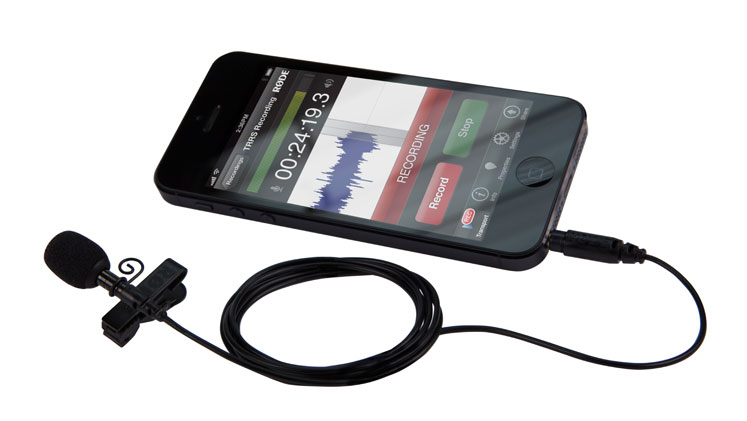
Whether it is a technical talk at a conference, a political rally or a budget-conscious wedding, many people now have most of the technology they need to record it and post-process the recording themselves. For most events, audio is an essential part of the recording. There are exceptions: if you take many short clips from a wedding and mix them together you could leave out the audio and just dub the couple's favourite song over it all. For a video of a conference presentation, though, the the speaker's voice is essential. These days, it is relatively easy to get extremely high quality audio using a lapel microphone attached to a smartphone. Lets have a closer look at the details. Using a lavalier / lapel microphone Full wireless microphone kits with microphone, transmitter and receiver are usually $US500 or more. The lavalier / lapel microphone by itself, however, is relatively cheap, under $US100. The lapel microphone is usually an omnidirectional microphone that will pick up the voices of everybody within a couple of meters of the person wearing it. It is useful for a speaker at an event, some types of interviews where the participants are at a table together and it may be suitable for a wedding, although you may want to remember to remove it from clothing during the photos. There are two key features you need when using such a microphone with a smartphone:
  • TRRS connector (this is the type of socket most phones and many laptops have today)
  • Microphone impedance should be at least 1k (that is one kilo Ohm) or the phone may not recognize when it is connected
Many leading microphone vendors have released lapel mics with these two features aimed specifically at smartphone users. I have personally been testing the Rode smartLav+ Choice of phone There are almost 10,000 varieties of smartphone just running Android, as well as iPhones, Blackberries and others. It is not practical for most people to test them all and compare audio recording quality. It is probably best to test the phone you have and ask some friends if you can make test recordings with their phones too for comparison. You may not hear any difference but if one of the phones has a poor recording quality you will hopefully notice that and exclude it from further consideration. A particularly important issue is being able to disable AGC in the phone. Android has a standard API for disabling AGC but not all phones or Android variations respect this instruction. I have personally had positive experiences recording audio with a Samsung Galaxy Note III. Choice of recording app Most Android distributions have at least one pre-installed sound recording app. Look more closely and you will find not all apps are the same. For example, some of the apps have aggressive compression settings that compromise recording quality. Others don't work when you turn off the screen of your phone and put it in your pocket. I've even tried a few that were crashing intermittently. The app I found most successful so far has been Diktofon, which is available on both F-Droid and Google Play. Diktofon has been designed not just for recording, but it also has some specific features for transcribing audio (currently only supporting Estonian) and organizing and indexing the text. I haven't used those features myself but they don't appear to cause any inconvenience for people who simply want to use it as a stable recording app. As the app is completely free software, you can modify the source code if necessary. I recently contributed patches enabling 48kHz recording and disabling AGC. At the moment, the version with these fixes has just been released and appears in F-Droid but not yet uploaded to Google Play. The fixes are in version 0.9.83 and you need to go into the settings to make sure AGC is disabled and set the 48kHz sample rate. Whatever app you choose, the following settings are recommended:
  • 16 bit or greater sample size
  • 48kHz sample rate
  • Disable AGC
  • WAV file format
Whatever app you choose, test it thoroughly with your phone and microphone. Make sure it works even when you turn off the screen and put it in your pocket while wearing the lapel mic for an hour. Observe the battery usage. Gotchas Now lets say you are recording a wedding and the groom has that smartphone in his pocket and the mic on his collar somewhere. What is the probability that some telemarketer calls just as the couple are exchanging vows? What is the impact on the recording? Maybe some apps will automatically put the phone in silent mode when recording. More likely, you need to remember this yourself. These are things that are well worth testing though. Also keep in mind the need to have sufficient storage space and to check whether the app you use is writing to your SD card or internal memory. The battery is another consideration. In a large event where smartphones are being used instead of wireless microphones, possibly for many talks in parallel, install a monitoring app like Ganglia on the phones to detect and alert if any phone has weak wifi signal, low battery or a lack of memory. Live broadcasts and streaming Some time ago I tested RTP multicasting from Lumicall on Android. This type of app would enable a complete wireless microphone setup with live streaming to the internet at a fraction of the cost of a traditional wireless microphone kit. This type of live broadcast could also be done with WebRTC on the Firefox app. Conclusion If you research the topic thoroughly and spend some time practicing and testing your equipment, you can make great audio recordings with a smartphone and an inexpensive lapel microphone. In subsequent blogs, I'll look at tips for recording video and doing post-production with free software.

21 July 2015

Jonathan McDowell: Recovering a DGN3500 via JTAG

Back in 2010 when I needed an ADSL2 router in the US I bought a Netgear DGN3500. It did what I wanted out of the box and being based on a MIPS AR9 (ARX100) it seemed likely OpenWRT support might happen. Long story short I managed to overwrite u-boot (the bootloader) while flashing a test image I d built. I ended up buying a new router (same model) to get my internet connection back ASAP and never getting around to fully fixing the broken one. Until yesterday. Below is how I fixed it; both for my own future reference and in case it s of use any any other unfortunate soul. The device has clear points for serial and JTAG and it was easy enough (even with my basic soldering skills) to put a proper header on. The tricky bit is that the flash is connected via SPI, so it s not just a matter of attaching JTAG, doing a scan and reflashing from the JTAG tool. I ended up doing RAM initialisation, then copying a RAM copy of u-boot in and then using that to reflash. There may well have been a better way, but this worked for me. For reference the failure mode I saw was an infinitely repeating:
ROM VER: 1.1.3
CFG 05
My JTAG device is a Bus Pirate v3b which is much better than the parallel port JTAG device I built the first time I wanted to do something similar. I put the latest firmware (6.1) on it. All of this was done from my laptop, which runs Debian testing (stretch). I used the OpenOCD 0.9.0-1+b1 package from there. Daniel Schwierzeck has some OpenOCD scripts which include a target definition for the ARX100. I added a board definition for the DGN3500 (I ve also send Daniel a patch to add this to his repo). I tied all of this together with an openocd.cfg that contained:
source [find interface/buspirate.cfg]
buspirate_port /dev/ttyUSB1
buspirate_vreg 0
buspirate_mode normal
buspirate_pullup 0
reset_config trst_only
source [find openocd-scripts/target/arx100.cfg]
source [find openocd-scripts/board/dgn3500.cfg]
gdb_flash_program enable
gdb_memory_map enable
gdb_breakpoint_override hard
I was then able to power on the router and type dgn3500_ramboot into the OpenOCD session. This fetched my RAM copy of u-boot from dgn3500_ram/u-boot.bin, copied it into the router s memory and started it running. From there I had a u-boot environment with access to the flash commands and was able to restore the original Netgear image (and once I was sure that was working ok I subsequently upgraded to the Barrier Breaker OpenWRT image).

19 July 2015

Gregor Herrmann: RC bugs 2015/17-29

after the release is before the release. or: long time no RC bug report. after the jessie release I spent most of my Debian time on work in the Debian Perl Group. we tried to get down the list of new upstream releases (from over 500 to currently 379; unfortunately the CPAN never sleeps), we were & still are busy preparing for the Perl 5.22 transition (e.g. we uploaded something between 300 & 400 packages to deal with Module::Build & CGI.pm being removed from perl core; only team-maintained packages so far), & we had a pleasant & productive sprint in Barcelona in May. & I also tried to fix some of the RC bugs in our packages which popped up over the previous months. yesterday & today I finally found some time to help with the GCC 5 transition, mostly by making QA or Non-Maintainer Uploads with patches that already were in the BTS. a big thanks especially to the team at HP which provided a couple dozens patches! & here's the list of RC bugs I've worked on in the last 3 months:

17 July 2015

John Goerzen: First steps with smartcards under Linux and Android hard, but it works

Well this has been an interesting project. It all started with a need to get better password storage at work. We wound up looking heavily at a GPG-based solution. This prompted the question: how can we make it even more secure? Well, perhaps, smartcards. The theory is this: a smartcard holds your private keys in a highly-secure piece of hardware. The PC can never actually access the private keys. Signing and decrypting operations are done directly on the card to prevent the need to export the private key material to the PC. There are lots of standards to choose from (PKCS#11, PKCS#15, and OpenPGP card specs) that are relevant here. And there are ways to use SSH and OpenVPN with some of these keys too. Access to the card is protected by a passphrase (called a PIN in smartcard lingo, even though it need not be numeric). These smartcards might be USB sticks, or cards you pop into a reader. In any case, you can pop them out when not needed, pop them in to use them, and well, pretty nice, eh? So that s the theory. Let s talk a bit of reality. First of all, it is hard for a person like me to evaluate how secure my data is in hardware. There was a high-profile bug in the OpenPGP JavaCard applet used by Yubico that caused the potential to use keys without a PIN, for instance. And how well protected is the key in the physical hardware? Granted, in most of these cards you re talking serious hardware skill to compromise them, but still, this is unknown in absolute terms. Here s the bigger problem: compatibility. There are all sorts of card readers, but compatibility with pcsc-tools and pcscd on Linux seems pretty good. But the cards themselves oh my. PKCS#11 defines an interface API, but each vendor would provide their own .so or .dll file to interface. Some cards (for instance, the ACOS5-64 mentioned on the Debian wiki!) are made by vendors that charge $50 for the privilege of getting the drivers needed to make them work and they re closed-source proprietary drivers at that. Some attempts I ordered several cards to evaluate: the OpenPGP card, specifically designed to support GPG; the ACOS5-64 card, the JavaCOS A22, the Yubikey Neo, and a simple reader listed on the GPG smartcard howto. The OpenPGP card and ACOS5-64 are the only ones in the list that support 4096-bit RSA keys due to the computational demands of them. The others all support 2048-bit RSA keys. The JavaCOS requires the user to install a JavaCard applet to the card to make it useable. The Yubico OpenPGP applet works here, along with GlobalPlatform to install it. I am not sure just how solid it is. The Yubikey Neo has yet to arrive; it integrates some interesting OAUTH and TOTP capabilities as well. I found that Debian s wiki page for smartcards lists a bunch of them that are not really useable using the tools in main. The ACOS5-64 was such a dud. But I got the JavaCOS A22 working quite nicely. It s also NFC-enabled and works perfectly with OpenKeyChain on Android (looking like a Yubikey Neo to it, once the OpenPGP applet is installed). I m impressed! Here s a way to be secure with my smartphone without revealing everything all the time. Really the large amount of time is put into figuring out how all this stuff fits together. I m getting there, but I ve got a ways to go yet. Update: Corrected to read signing and decrypting rather than signing and encrypting operations are being done on the card. Thanks to Beno t Allard for catching this error.

16 July 2015

Christoph Egger

Mostly a mental note as I've reinvented this the second time now. If you just quickly want to share some org-mode notes with some non-Emacs-users the built-in HTML export comes handy. However it has one Problem: All source syntax highlighting is derived from your current theme. Which of course is a bad idea if your editor has a dark background (say Emacs.reverseVideo: on). The same if your terminal's background color is dark. Running Emacs in batch mode and still getting colorful code formatting seems to be an unsolved problem. All that can be found on the Internet suggests adding a dark background to your HTML export (at least to the code blocks). Or maybe use an external style-sheet. Both not exactly the thing if you just want to scp snippets of HTML somewhere to share. However there's a working hack:
#!/usr/bin/make -f
%.html: %.org
	xvfb-run urxvt +rv -e emacs -nw --visit $< --funcall org-html-export-to-html --kill >/dev/null
So use a terminal you can easily force into light-background-mode (like urxvt +rv) so the emacs -nw runs in light-background-mode and wrap the thing in xvfb-run so you can properly run this over ssh (and don't get annoying windows pop up and disappear again when typing make)

15 July 2015

Matthew Garrett: Canonical's Ubuntu IP policy is garbage

(In order to avoid any ambiguity here, this is a personal opinion. The Free Software Foundation's opinion on this matter is here)

Canonical have a legal policy surrounding reuse of Intellectual Property they own in Ubuntu, and you can find it here. It's recently been modified to handle concerns raised by various people including the Free Software Foundation[1], who have some further opinions on the matter here. The net outcome is that Canonical made it explicit that if the license a piece of software is under explicitly says you can do something, you can do that even if the Ubuntu IP policy would otherwise forbid it.

Unfortunately, "Canonical have made it explicit that they're not attempting to violate the GPL" is about the nicest thing you can say about this. The most troubling statement is Any redistribution of modified versions of Ubuntu must be approved, certified or provided by Canonical if you are going to associate it with the Trademarks. Otherwise you must remove and replace the Trademarks and will need to recompile the source code to create your own binaries.. The apparent aim here is to avoid situations where people take Ubuntu, modify it and continue to pass it off as Ubuntu. But it reaches far further than that. Cases where this may apply include (but are not limited to):
In each of these cases, a strict reading of the policy indicates that you are distributing a modified version of Ubuntu and therefore must either get it approved by Canonical or remove the trademarks and rebuild everything. The strange thing is that this doesn't limit itself to rebuilding packages that include Canonical's trademarks - there's a requirement that you rebuild all binaries.

Now obviously this is good engineering practice in a whole bunch of ways, but it's a huge pain in the ass. And to make things worse, Canonical won't clarify what they consider to be use of their trademarks. Many Ubuntu packages rebuilt from Debian include the word "ubuntu" in their version string. Many Ubuntu packages will contain the word "ubuntu" in maintainer email addresses. Many Ubuntu packages include references to Ubuntu (for instance, documentation might say "This configuration file is located under /etc/default in Debian and Ubuntu"). And many Ubuntu packages will include the compiler version string, which will include the word "ubuntu". Realistically, there's no risk of confusion by using the trademarks in this way, and as a consequence there would be no infringement under trademark law. But Canonical aren't using trademark law here. Canonical assert that they hold copyright over binaries that they have built form source, and require that for you to have permission to redistribute these binaries under copyright law you must remove the trademarks. This means that it doesn't matter whether your use of the trademarks would be infringing or not - you're required to remove them, because fuck you that's why.

This is a huge overreach. It's hostile to free software, in that it makes it significantly more difficult to produce derivative works of Ubuntu and doesn't benefit the community in the process. It's hostile to our understanding of IP law, in that it claims that the mechanical process of turning source code into binaries creates an independently copyrightable work. And in some cases it may make it impossible to create derivative works that interoperate with Ubuntu due to applications making assumptions about the presence of strings.

It'd be easy write this off as an over the top misinterpretation of the policy if it hadn't been confirmed by the Ubuntu Community Manager that any binaries shipped by Ubuntu under licenses that don't grant an explicit right to redistribute the binaries can't be redistributed without permission or rebuilding. When I asked for clarification from Canonical over a year ago, I got no response[2]. Perhaps Canonical don't want to force you to remove every single use of the word Ubuntu from derivative works, but their policy is written such that the natural reading is that they do, and they've refused every single opportunity they've been given to clarify the point.

So, we're left with a policy that makes it hugely impractical to redistribute modified versions of Ubuntu unless Canonical approve of it. That's not freedom, and it's certainly not Ubuntu. If Canonical are serious about participating in the free software community then they need to demonstrate their willingness to continue improving this policy to bring it closer to our goals. Failure to do so will give a strong indication of their priorities.

[1] While I'm a member of the FSF's board of directors, I'm not involved in the majority of the FSF's day to day activities and was not part of this process
[2] Nebula's OS was a mixture of binary packages we pulled straight from Ubuntu and packages we rebuilt, so we were obviously pretty interested in what the answer was

comment count unavailable comments

14 July 2015

Matthew Palmer: Why DANE isn't going to win

In a comment to my previous post, Daniele asked the entirely reasonable question,
Would you like to comment on why you think that DNSSEC+DANE are not a possible and much better alternative?
Where DANE fails to be a feasible alternative to the current system is that it is not widely acknowledged to be superior in every possible way . A weak demonstration of this is that no browser has implemented DANE support, and very few other TLS-using applications have, either. The only thing I use which has DANE support that I m aware of is Postfix and SMTP is an application in which the limitations of DANE have far less impact. My understanding of the limitations of DANE, for large-scale deployment, are enumerated below.

DNS Is Awful Quoting Google security engineer Adam Langley:
But many (~4% in past tests) of users can t resolve a TXT record when they can resolve an A record for the same name. In practice, consumer DNS is hijacked by many devices that do a poor job of implementing DNS.
Consider that TXT records are far, far older than TLSA records. It seems likely that TLSA records would fail to be retrieved greater than 4% of the time. Extrapolate to the likely failure rate for lookup of TLSA records would be, and imagine what that would do to the reliability of DANE verification. It would either be completely unworkable, or else would cause a whole new round of just click through the security error training. Ugh. This also impacts DNSSEC itself. Lots of recursive resolvers don t validate DNSSEC, and some providers mangle DNS responses in some way, which breaks DNSSEC. Since OSes don t support DNSSEC validation by default (for example, by having the name resolution APIs indicate DNSSEC validation status), browsers would essentially have to ship their own validating resolver code. Some people have concerns around the single point of control for DNS records, too. While the weakest link nature of the CA model is terribad, there is a significant body of opinion that replacing it with a single, minimally-accountable organisation like ICANN isn t a great trade. Finally, performance is also a concern. Having to go out-of-band to retrieve TLSA records delays page generation, and nobody likes slow page loads.

DNSSEC Is Awful Lots of people don t like DNSSEC, for all sorts of reasons. While I don t think it is quite as bad as people make out (I ve deployed it for most zones I manage, there are some legitimate issues that mean browser vendors aren t willing to rely on DNSSEC. 1024 bit RSA keys are quite common throughout the DNSSEC system. Getting rid of 1024 bit keys in the PKI has been a long-running effort; doing the same for DNSSEC is likely to take quite a while. Yes, rapid rotation is possible, by splitting key-signing and zone-signing (a good design choice), but since it can t be enforced, it s entirely likely that long-lived 1024 bit keys for signing DNSSEC zones is the rule, rather than exception.

DNS Providers are Awful While we all poke fun at CAs who get compromised, consider how often someone s DNS control panel gets compromised. Now ponder the fact that, if DANE is supported, TLSA records can be manipulated in that DNS control panel. Those records would then automatically be DNSSEC signed by the DNS provider and served up to anyone who comes along. Ouch. In theory, of course, you should choose a suitably secure DNS provider, to prevent this problem. Given that there are regular hijackings of high-profile domains (which, presumably, the owners of those domains would also want to prevent), there is something in the DNS service provider market which prevents optimal consumer behaviour. Market for lemons, perchance?

Conclusion None of these problems are unsolvable, although none are trivial. I like DANE as a concept, and I d really, really like to see it succeed. However, the problems I ve listed above are all reasonable objections, made by people who have their hands in browser codebases, and so unless they re fixed, I don t see that anyone s going to be able to rely on DANE on the Internet for a long, long time to come.

13 July 2015

Bits from Debian: Debian Perl Sprint 2015

The Debian Perl team had its first sprint in May and it was a success: 7 members met in Barcelona the weekend from May 22nd to May 24th to kick off the development around perl for Stretch and to work on QA tasks across the more than 3000 packages that the team maintains. Even though the participants enjoyed the beautiful weather and the food very much, a good amount of work was also done: The full report was posted to the relevant Debian mailing lists. The participants would like to thank the Computer Architecture Department of the Universitat Polit cnica de Catalunya for hosting us, and all donors to the Debian project who helped to cover a large part of our expenses.

12 July 2015

Lunar: Reproducible builds: week 11 in Stretch cycle

Debian is undertaking a huge effort to develop a reproducible builds system. I'd like to thank you for that. This could be Debian's most important project, with how badly computer security has been going.

PerniciousPunk in Reddit's Ask me anything! to Neil McGovern, DPL. What happened in the reproducible builds effort this week: Toolchain fixes More tools are getting patched to use the value of the SOURCE_DATE_EPOCH environment variable as the current time:

In the reproducible experimental toolchain which have been uploaded: Johannes Schauer followed up on making sbuild build path deterministic with several ideas. Packages fixed The following 311 packages became reproducible due to changes in their build dependencies : 4ti2, alot, angband, appstream-glib, argvalidate, armada-backlight, ascii, ask, astroquery, atheist, aubio, autorevision, awesome-extra, bibtool, boot-info-script, bpython, brian, btrfs-tools, bugs-everywhere, capnproto, cbm, ccfits, cddlib, cflow, cfourcc, cgit, chaussette, checkbox-ng, cinnamon-settings-daemon, clfswm, clipper, compton, cppcheck, crmsh, cupt, cutechess, d-itg, dahdi-tools, dapl, darnwdl, dbusada, debian-security-support, debomatic, dime, dipy, dnsruby, doctrine, drmips, dsc-statistics, dune-common, dune-istl, dune-localfunctions, easytag, ent, epr-api, esajpip, eyed3, fastjet, fatresize, fflas-ffpack, flann, flex, flint, fltk1.3, fonts-dustin, fonts-play, fonts-uralic, freecontact, freedoom, gap-guava, gap-scscp, genometools, geogebra, git-reintegrate, git-remote-bzr, git-remote-hg, gitmagic, givaro, gnash, gocr, gorm.app, gprbuild, grapefruit, greed, gtkspellmm, gummiboot, gyp, heat-cfntools, herold, htp, httpfs2, i3status, imagetooth, imapcopy, imaprowl, irker, jansson, jmapviewer, jsdoc-toolkit, jwm, katarakt, khronos-opencl-man, khronos-opengl-man4, lastpass-cli, lava-coordinator, lava-tool, lavapdu, letterize, lhapdf, libam7xxx, libburn, libccrtp, libclaw, libcommoncpp2, libdaemon, libdbusmenu-qt, libdc0, libevhtp, libexosip2, libfreenect, libgwenhywfar, libhmsbeagle, libitpp, libldm, libmodbus, libmtp, libmwaw, libnfo, libpam-abl, libphysfs, libplayer, libqb, libsecret, libserial, libsidplayfp, libtime-y2038-perl, libxr, lift, linbox, linthesia, livestreamer, lizardfs, lmdb, log4c, logbook, lrslib, lvtk, m-tx, mailman-api, matroxset, miniupnpd, mknbi, monkeysign, mpi4py, mpmath, mpqc, mpris-remote, musicbrainzngs, network-manager, nifticlib, obfsproxy, ogre-1.9, opal, openchange, opensc, packaging-tutorial, padevchooser, pajeng, paprefs, pavumeter, pcl, pdmenu, pepper, perroquet, pgrouting, pixz, pngcheck, po4a, powerline, probabel, profitbricks-client, prosody, pstreams, pyacidobasic, pyepr, pymilter, pytest, python-amqp, python-apt, python-carrot, python-django, python-ethtool, python-mock, python-odf, python-pathtools, python-pskc, python-psutil, python-pypump, python-repoze.tm2, python-repoze.what, qdjango, qpid-proton, qsapecng, radare2, reclass, repsnapper, resource-agents, rgain, rttool, ruby-aggregate, ruby-albino, ruby-archive-tar-minitar, ruby-bcat, ruby-blankslate, ruby-coffee-script, ruby-colored, ruby-dbd-mysql, ruby-dbd-odbc, ruby-dbd-pg, ruby-dbd-sqlite3, ruby-dbi, ruby-dirty-memoize, ruby-encryptor, ruby-erubis, ruby-fast-xs, ruby-fusefs, ruby-gd, ruby-git, ruby-globalhotkeys, ruby-god, ruby-hike, ruby-hmac, ruby-integration, ruby-jnunemaker-matchy, ruby-memoize, ruby-merb-core, ruby-merb-haml, ruby-merb-helpers, ruby-metaid, ruby-mina, ruby-net-irc, ruby-net-netrc, ruby-odbc, ruby-ole, ruby-packet, ruby-parseconfig, ruby-platform, ruby-plist, ruby-popen4, ruby-rchardet, ruby-romkan, ruby-ronn, ruby-rubyforge, ruby-rubytorrent, ruby-samuel, ruby-shoulda-matchers, ruby-sourcify, ruby-test-spec, ruby-validatable, ruby-wirble, ruby-xml-simple, ruby-zoom, rumor, rurple-ng, ryu, sam2p, scikit-learn, serd, shellex, shorewall-doc, shunit2, simbody, simplejson, smcroute, soqt, sord, spacezero, spamassassin-heatu, spamprobe, sphinxcontrib-youtube, splitpatch, sratom, stompserver, syncevolution, tgt, ticgit, tinyproxy, tor, tox, transmissionrpc, tweeper, udpcast, units-filter, viennacl, visp, vite, vmfs-tools, waffle, waitress, wavtool-pl, webkit2pdf, wfmath, wit, wreport, x11proto-input, xbae, xdg-utils, xdotool, xsystem35, yapsy, yaz. Please note that some packages in the above list are falsely reproducible. In the experimental toolchain, debhelper exported TZ=UTC and this made packages capturing the current date (without the time) reproducible in the current test environment. The following packages became reproducible after getting fixed: Ben Hutchings upstreamed several patches to fix Linux reproducibility issues which were quickly merged. Some uploads fixed some reproducibility issues but not all of them: Uploads that should fix packages not in main: Patches submitted which have not made their way to the archive yet: reproducible.debian.net A new package set has been added for lua maintainers. (h01ger) tracker.debian.org now only shows reproducibility issues for unstable. Holger and Mattia worked on several bugfixes and enhancements: finished initial test setup for NetBSD, rewriting more shell scripts in Python, saving UDD requests, and more debbindiff development Reiner Herrmann fixed text comparison of files with different encoding. Documentation update Juan Picca added to the commands needed for a local test chroot installation of the locales-all package. Package reviews 286 obsolete reviews have been removed, 278 added and 243 updated this week. 43 new bugs for packages failing to build from sources have been filled by Chris West (Faux), Mattia Rizzolo, and h01ger. The following new issues have been added: timestamps_in_manpages_generated_by_ronn, timestamps_in_documentation_generated_by_org_mode, and timestamps_in_pdf_generated_by_matplotlib. Misc. Reiner Herrmann has submitted patches for OpenWrt. Chris Lamb cleaned up some code and removed cruft in the misc.git repository. Mattia Rizzolo updated the prebuilder script to match what is currently done on reproducible.debian.net.

9 July 2015

Simon Kainz: DUCK challenge: week 1

After announcing the DUCK challenge last week the following packages were fixed and uploaded into unstable: A big "Thank You" to you. The list of the fixed and updated packages is availabe here. I will try to update this ~daily. If I missed one of your uploads, please drop me a line. There is still lots of time till the end of DebConf15 and the end of the DUCK Challenge, so please get involved.

8 July 2015

Sven Hoexter: F5 BigIP and 1K DH parameter vs SSL Labs

So as a consequence of the weakdh issue(s) Qualys SSL Labs started to cap the rating at a B level if you provide DH cipher suites with 1K DH parameter. Now if you're terminating your TLS connections on F5s BigIP you're currently not able to change the DH parameter (they're random but of a fixed size). Finally there is a public comment from F5 written by Brian McHenry which is worth reading if you're running those boxes. As a side note, what most people running on TMOS 11.6.x should've already done is preferring ECDHE over DHE, which would look like this:
ciphers "!LOW:!SSLv3:!MD5:!RC4-SHA:!EXPORT:ECDHE+AES-GCM:ECDHE+AES:DHE+AES-GCM:DHE+AES:DHE+3DES:AES-GCM+RSA:RSA+AES:RSA+3DES"
That of course does not bring back the somewhat overrated A grade on the SSL Labs site. That boils down to choosing to provide DHE with 1K DH parameter or let everyone else, who does not yet support ECDHE, use RSA with your 2K public key. Honestly, for a public portal with a very wide range of users, I'm far from sure which one is the better choice. Looking at the weakest link "RSA+3DES" with TLSv1.0 is nothing that can convince the paranoid, but this cipher setting would bring you back the A grade:
ciphers "!LOW:!SSLv3:!MD5:!RC4-SHA:!EXPORT:ECDHE+AES-GCM:ECDHE+AES:AES-GCM+RSA:RSA+AES:RSA+3DES"

7 July 2015

Lunar: Reproducible builds: week 10 in Stretch cycle

What happened about the reproducible builds effort this week: Media coverage Daniel Stender published an English translation of the article which originally appeared in Linux Magazin in Admin Magazine. Toolchain fixes Fixes landed in the Debian archive: Lunar submitted to Debian the patch already sent upstream adding a --clamp-mtime option to tar. Patches have been submitted to add support for SOURCE_DATE_EPOCH to txt2man (Reiner Herrmann), epydoc (Reiner Herrmann), GCC (Dhole), and Doxygen (akira). Dhole uploaded a new experimental debhelper to the reproducible repository which exports SOURCE_DATE_EPOCH. As part of the experiment, the patch also sets TZ to UTC which should help with most timezone issues. It might still be problematic for some packages which would change their settings based on this. Mattia Rizzolo sent upstream a patch originally written by Lunar to make the generate-id() function be deterministic in libxslt. While that patch was quickly rejected by upstream, Andrew Ayer came up with a much better one which sadly could have some performance impact. Daniel Veillard replied with another patch that should be deterministic in most cases without needing extra data structures. It's impact is currently being investigated by retesting packages on reproducible.debian.net. akira added a new option to sbuild for configuring the path in which packages are built. This will be needed for the srebuild script. Niko Tyni asked Perl upstream about it using the __DATE__ and __TIME__ C processor macros. Packages fixed The following 143 packages became reproducible due to changes in their build dependencies: alot, argvalidate, astroquery, blender, bpython, brian, calibre, cfourcc, chaussette, checkbox-ng, cloc, configshell, daisy-player, dipy, dnsruby, dput-ng, dsc-statistics, eliom, emacspeak, freeipmi, geant321, gpick, grapefruit, heat-cfntools, imagetooth, jansson, jmapviewer, lava-tool, libhtml-lint-perl, libtime-y2038-perl, lift, lua-ldoc, luarocks, mailman-api, matroxset, maven-hpi-plugin, mknbi, mpi4py, mpmath, msnlib, munkres, musicbrainzngs, nova, pecomato, pgrouting, pngcheck, powerline, profitbricks-client, pyepr, pylibssh2, pylogsparser, pystemmer, pytest, python-amqp, python-apt, python-carrot, python-crypto, python-darts.lib.utils.lru, python-demgengeo, python-graph, python-mock, python-musicbrainz2, python-pathtools, python-pskc, python-psutil, python-pypump, python-repoze.sphinx.autointerface, python-repoze.tm2, python-repoze.what-plugins, python-repoze.what, python-repoze.who-plugins, python-xstatic-term.js, reclass, resource-agents, rgain, rttool, ruby-aggregate, ruby-archive-tar-minitar, ruby-bcat, ruby-blankslate, ruby-coffee-script, ruby-colored, ruby-dbd-mysql, ruby-dbd-odbc, ruby-dbd-pg, ruby-dbd-sqlite3, ruby-dbi, ruby-dirty-memoize, ruby-encryptor, ruby-erubis, ruby-fast-xs, ruby-fusefs, ruby-gd, ruby-git, ruby-globalhotkeys, ruby-god, ruby-hike, ruby-hmac, ruby-integration, ruby-ipaddress, ruby-jnunemaker-matchy, ruby-memoize, ruby-merb-core, ruby-merb-haml, ruby-merb-helpers, ruby-metaid, ruby-mina, ruby-net-irc, ruby-net-netrc, ruby-odbc, ruby-packet, ruby-parseconfig, ruby-platform, ruby-plist, ruby-popen4, ruby-rchardet, ruby-romkan, ruby-rubyforge, ruby-rubytorrent, ruby-samuel, ruby-shoulda-matchers, ruby-sourcify, ruby-test-spec, ruby-validatable, ruby-wirble, ruby-xml-simple, ruby-zoom, ryu, simplejson, spamassassin-heatu, speaklater, stompserver, syncevolution, syncmaildir, thin, ticgit, tox, transmissionrpc, vdr-plugin-xine, waitress, whereami, xlsx2csv, zathura. The following packages became reproducible after getting fixed: Some uploads fixed some reproducibility issues but not all of them: Patches submitted which have not made their way to the archive yet: reproducible.debian.net A new package set for the X Strike Force has been added. (h01ger) Bugs tagged with locale are now visible in the statistics. (h01ger) Some work has been done add tests for NetBSD. (h01ger) Many changes by Mattia Rizzolo have been merged on the whole infrastructure: debbindiff development Version 26 has been released on June 28th fixing the comparison of files of unknown format. (Lunar) A missing dependency identified in python-rpm affecting debbindiff installation without recommended packages was promptly fixed by Michal iha . Lunar also started a massive code rearchitecture to enhance code reuse and enable new features. Nothing visible yet, though. Documentation update josch and Mattia Rizzolo documented how to reschedule packages from Alioth. Package reviews 142 obsolete reviews have been removed, 344 added and 107 updated this week. Chris West (Faux) filled 13 new bugs for packages failing to build from sources. The following new issues have been added: snapshot_placeholder_replaced_with_timestamp_in_pom_properties, different_encoding, timestamps_in_documentation_generated_by_org_mode and timestamps_in_pdf_generated_by_matplotlib.

6 July 2015

Matthew Garrett: Anti Evil Maid 2 Turbo Edition

The Evil Maid attack has been discussed for some time - in short, it's the idea that most security mechanisms on your laptop can be subverted if an attacker is able to gain physical access to your system (for instance, by pretending to be the maid in a hotel). Most disk encryption systems will fall prey to the attacker replacing the initial boot code of your system with something that records and then exfiltrates your decryption passphrase the next time you type it, at which point the attacker can simply steal your laptop the next day and get hold of all your data.

There are a couple of ways to protect against this, and they both involve the TPM. Trusted Platform Modules are small cryptographic devices on the system motherboard[1]. They have a bunch of Platform Configuration Registers (PCRs) that are cleared on power cycle but otherwise have slightly strange write semantics - attempting to write a new value to a PCR will append the new value to the existing value, take the SHA-1 of that and then store this SHA-1 in the register. During a normal boot, each stage of the boot process will take a SHA-1 of the next stage of the boot process and push that into the TPM, a process called "measurement". Each component is measured into a separate PCR - PCR0 contains the SHA-1 of the firmware itself, PCR1 contains the SHA-1 of the firmware configuration, PCR2 contains the SHA-1 of any option ROMs, PCR5 contains the SHA-1 of the bootloader and so on.

If any component is modified, the previous component will come up with a different measurement and the PCR value will be different, Because you can't directly modify PCR values[2], this modified code will only be able to set the PCR back to the "correct" value if it's able to generate a sequence of writes that will hash back to that value. SHA-1 isn't yet sufficiently broken for that to be practical, so we can probably ignore that. The neat bit here is that you can then use the TPM to encrypt small quantities of data[3] and ask it to only decrypt that data if the PCR values match. If you change the PCR values (by modifying the firmware, bootloader, kernel and so on), the TPM will refuse to decrypt the material.

Bitlocker uses this to encrypt the disk encryption key with the TPM. If the boot process has been tampered with, the TPM will refuse to hand over the key and your disk remains encrypted. This is an effective technical mechanism for protecting against people taking images of your hard drive, but it does have one fairly significant issue - in the default mode, your disk is decrypted automatically. You can add a password, but the obvious attack is then to modify the boot process such that a fake password prompt is presented and the malware exfiltrates the data. The TPM won't hand over the secret, so the malware flashes up a message saying that the system must be rebooted in order to finish installing updates, removes itself and leaves anyone except the most paranoid of users with the impression that nothing bad just happened. It's an improvement over the state of the art, but it's not a perfect one.

Joanna Rutkowska came up with the idea of Anti Evil Maid. This can take two slightly different forms. In both, a secret phrase is generated and encrypted with the TPM. In the first form, this is then stored on a USB stick. If the user suspects that their system has been tampered with, they boot from the USB stick. If the PCR values are good, the secret will be successfully decrypted and printed on the screen. The user verifies that the secret phrase is correct and reboots, satisfied that their system hasn't been tampered with. The downside to this approach is that most boots will not perform this verification, and so you rely on the user being able to make a reasonable judgement about whether it's necessary on a specific boot.

The second approach is to do this on every boot. The obvious problem here is that in this case an attacker simply boots your system, copies down the secret, modifies your system and simply prints the correct secret. To avoid this, the TPM can have a password set. If the user fails to enter the correct password, the TPM will refuse to decrypt the data. This can be attacked in a similar way to Bitlocker, but can be avoided with sufficient training: if the system reboots without the user seeing the secret, the user must assume that their system has been compromised and that an attacker now has a copy of their TPM password.

This isn't entirely great from a usability perspective. I think I've come up with something slightly nicer, and certainly more Web 2.0[4]. Anti Evil Maid relies on having a static secret because expecting a user to remember a dynamic one is pretty unreasonable. But most security conscious people rely on dynamic secret generation daily - it's the basis of most two factor authentication systems. TOTP is an algorithm that takes a seed, the time of day and some reasonably clever calculations and comes up with (usually) a six digit number. The secret is known by the device that you're authenticating against, and also by some other device that you possess (typically a phone). You type in the value that your phone gives you, the remote site confirms that it's the value it expected and you've just proven that you possess the secret. Because the secret depends on the time of day, someone copying that value won't be able to use it later.

But instead of using your phone to identify yourself to a remote computer, we can use the same technique to ensure that your computer possesses the same secret as your phone. If the PCR states are valid, the computer will be able to decrypt the TOTP secret and calculate the current value. This can then be printed on the screen and the user can compare it against their phone. If the values match, the PCR values are valid. If not, the system has been compromised. Because the value changes over time, merely booting your computer gives your attacker nothing - printing an old value won't fool the user[5]. This allows verification to be a normal part of every boot, without forcing the user to type in an additional password.

I've written a prototype implementation of this and uploaded it here. Do pay attention to the list of limitations - without a bootloader that measures your kernel and initrd, you're still open to compromise. Adding TPM support to grub is on my list of things to do. There are also various potential issues like an attacker being able to use external DMA-capable devices to obtain the secret, especially since most Linux distributions still ship kernels that don't enable the IOMMU by default. And, of course, if your firmware is inherently untrustworthy there's multiple ways it can subvert this all. So treat this very much like a research project rather than something you can depend on right now. There's a fair amount of work to do to turn this into a meaningful improvement in security.

[1] I wrote about them in more detail here, including a discussion of whether they can be used for general purpose DRM (answer: not really)

[2] In theory, anyway. In practice, TPMs are embedded devices running their own firmware, so who knows what bugs they're hiding.

[3] On the order of 128 bytes or so. If you want to encrypt larger things with a TPM, the usual way to do it is to generate an AES key, encrypt your material with that and then encrypt the AES key with the TPM.

[4] Is that even a thing these days? What do we say instead?

[5] Assuming that the user is sufficiently diligent in checking the value, anyway

comment count unavailable comments

Matthew Garrett: Internet abuse culture is a tech industry problem

After Jesse Frazelle blogged about the online abuse she receives, a common reaction in various forums[1] was "This isn't a tech industry problem - this is what being on the internet is like"[2]. And yes, they're right. Abuse of women on the internet isn't limited to people in the tech industry. But the severity of a problem is a product of two separate factors: its prevalence and what impact it has on people.

Much of the modern tech industry relies on our ability to work with people outside our company. It relies on us interacting with a broader community of contributors, people from a range of backgrounds, people who may be upstream on a project we use, people who may be employed by competitors, people who may be spending their spare time on this. It means listening to your users, hearing their concerns, responding to their feedback. And, distressingly, there's significant overlap between that wider community and the people engaging in the abuse. This abuse is often partly technical in nature. It demonstrates understanding of the subject matter. Sometimes it can be directly tied back to people actively involved in related fields. It's from people who might be at conferences you attend. It's from people who are participating in your mailing lists. It's from people who are reading your blog and using the advice you give in their daily jobs. The abuse is coming from inside the industry.

Cutting yourself off from that community impairs your ability to do work. It restricts meeting people who can help you fix problems that you might not be able to fix yourself. It results in you missing career opportunities. Much of the work being done to combat online abuse relies on protecting the victim, giving them the tools to cut themselves off from the flow of abuse. But that risks restricting their ability to engage in the way they need to to do their job. It means missing meaningful feedback. It means passing up speaking opportunities. It means losing out on the community building that goes on at in-person events, the career progression that arises as a result. People are forced to choose between putting up with abuse or compromising their career.

The abuse that women receive on the internet is unacceptable in every case, but we can't ignore the effects of it on our industry simply because it happens elsewhere. The development model we've created over the past couple of decades is just too vulnerable to this kind of disruption, and if we do nothing about it we'll allow a large number of valuable members to be driven away. We owe it to them to make things better.

[1] Including Hacker News, which then decided to flag the story off the front page because masculinity is fragile

[2] Another common reaction was "But men get abused as well", which I'm not even going to dignify with a response

comment count unavailable comments

Next.

Previous.