
Search Results: "reg"

18 June 2012

Gunnar Wolf: Turning failure into apparent success, and carrying on: e-voting in Jalisco

I will sound monothematic, but I have been devoting quite a bit of work to this topic lately: Trying to stop the advance of e-voting in Mexico, Latin America and the world. Why trying to stop it? Isn't technology supposed to help us, to get trustable processes? Yes, it's supposed to... but it just cannot achieve it, no matter how hard it is tried I won't get into explanations in this blog post, but there is plenty of information. Feel free to ask me for further details. Anyway Yesterday (Sunday, 2012-06-17) was the fifth simulated voting that will lead to the first wide-scale deployment of electronic voting booths in my country: About 10% of the population of the state of Jalisco (that means, ~500,000 people) will cast their votes on July 1st electronically. This particular case illustrates how simulated votings can be used to forge a lie: Pounce Consulting, the company that won the e-voting project for IEPC (Jalisco's voting authority), delivered their booths over 40 days late, just before the deadline for the project to be canceled. Oh, and by the way, it's the same company that just failed to deliver on time for another planned local authority (10% of the booths in the Federal District, where I live, where fortunately 100% of the votes will be cast on traditional, auditable and cheap paper). After this delay, five voting simulations were programmed, to get the local population acquinted with them. The first ones just failed to get the population's interest and had close to 40% failure rates (mainly regarding transmission). Several other "minor details" were reported, including mechanical details that allowed subsequent voters to see the vote of who had just left. Anyway, making long story short: The fifth and last simulation was held yesterday. Officially, it was finally successful (about time). As these booths include the "facilities" to communicate the results via the cellular network, but the populations where they are to be deployed do not yet have cellular coverage, 10% of the booths will have to be carried back to the Districtal Header (that can be a ~10hr trip) to be counted. Also, in all places, traditional paper stationery and paraphernalia will be printed just in case it is needed (and when will they now? When half of the votes are cast and lost?) Anyway... e-voting is still in its first stage in Mexico. Right now, I'm sure, no attempts to rig the election will be made (centrally). But every effort will be made (as it has been made) to dismiss the obviously big and nontrivial ways it has failed and will fail, and any problems will be labeled as "minor". And probably by 2018 we will be facing many more states (even nationwide) deployments. But propaganda fails to see the obvious: E-voting is more expensive, more complicated, leads to more possible failure states. E-voting should not be deployed in large-scale (i.e. more than a couple of hundred voters) elections. Electronic voting is insecure, violates secrecy, allows for fraud. No matter how many locks are put into it.

17 June 2012

Gregor Herrmann: RC bugs 2012/24

here's my weekly list of RC bugs that I've worked on:

C.J. Adams-Collier: Service Interruption

They heard my internets were down BEGIN PGP SIGNED MESSAGE
Hash: SHA256 , During the month of June, we experienced a service interruption which
has caused our mutual customer, School, an
inability to initiate outgoing calls. CenturyLink has also caused the
interruption of the school s DSL Internet service. During the interim
period, I have installed a VoIP phone and tied in to one of my backup
providers so that the school can function during the CenturyLink outage. My understanding is that will begin paying CenturyLink
directly for its service again due to the service interruption. Until
such time as I receive acknowledgment from you, we will continue paying
roughly $27/mo for the school s phone service. Once the transfer has
been completed to the satisfaction of the school board, Collier
Technologies LLC will discontinue payment for the DID - - ,
leaving a single DID, - - . I expect that the DID will be
moved back into the school s name within the next week. Please confirm
this or provide information as to why this will not happen. I have CC d
and , who represent the school board on this
email. Please include them in the reply. Since the DSL service has been interrupted at both the School s address
and at ours, and since CenturyLink has failed to provision the remaining
two $14.99/mo 10Mbit DSL circuits which Collier Technologies LLC has
been paying for despite their un-provisioned state, we will be reducing
the monthly payment from $150 to $70. My understanding is that $70 will
be more than sufficient to cover the two voice lines, inside wire
maintenance and regulatory fees. If this is not the case, please keep
us appraised of the situation. Do note that our decision to stop payment for service which is not being
provided does not, in our estimation, relieve CenturyLink from the three
year contract period negotiated verbally by you on its behalf on October
4th 2011. We currently consider CenturyLink to be in breach of
contract. Sincerely, C.J. Adams-Collier BEGIN PGP SIGNATURE
Version: GnuPG v1.4.12 (GNU/Linux) iQEcBAEBCAAGBQJP3TqdAAoJEEyimPmPQm23qqoH/jRmiIVHNCnH8EqgzsNQiUIm
LVrFg7kvpRIM692mzrGgkZTxG9KlVK+1/dZl1aPsmMP5Q6ni3NigzRDnywJZI53a
yTwTZhid8B4Tf+JOrhUhKPpmm+2YoHTYaobwgxk+rRgUGUHEMCZMPnjKNGGPDCgO
2jNz5fSnI6IinRz4nXwhAtGQRUXVJWXGrUCX1kQXGH4pNvjbgE8n6yAsC6sixlPa
ljDaNjxUEjUY4PmQdKNetkzQLxlq/OGJgRHZXHzfg37cJEF4L28DJBYvf8CHbt2K
87ELXGs6nDn54yI4q4ojODln9k/GzC+NY6MDXYdof7dNbeEPujvjQCiyRgjLc9E=
=uLKs
END PGP SIGNATURE

10 June 2012

Gregor Herrmann: RC bugs 2012/23

here's the list of RC bugs I've worked on during the last week:

Gregor Herrmann: DebConf12

Yo voy a ir a la DebConf 12

finally I managed to book a flight to MGA. here's my itinerary, in case someone shares a flight:
Munich        Madrid        IB3537   Jul  1   07:30   10:30
Madrid        San Jose      IB6313   Jul  1   12:05   15:05
San Jose      Managua       LR679    Jul  1   18:24   19:24


Managua Panama City CM105 Jul 21 14:49 17:24 Panama City Madrid IB6346 Jul 21 18:55 12:10+1 Madrid Munich IB3564 Jul 22 16:10 18:55

C.J. Adams-Collier: Spinning up a telco with Asterisk

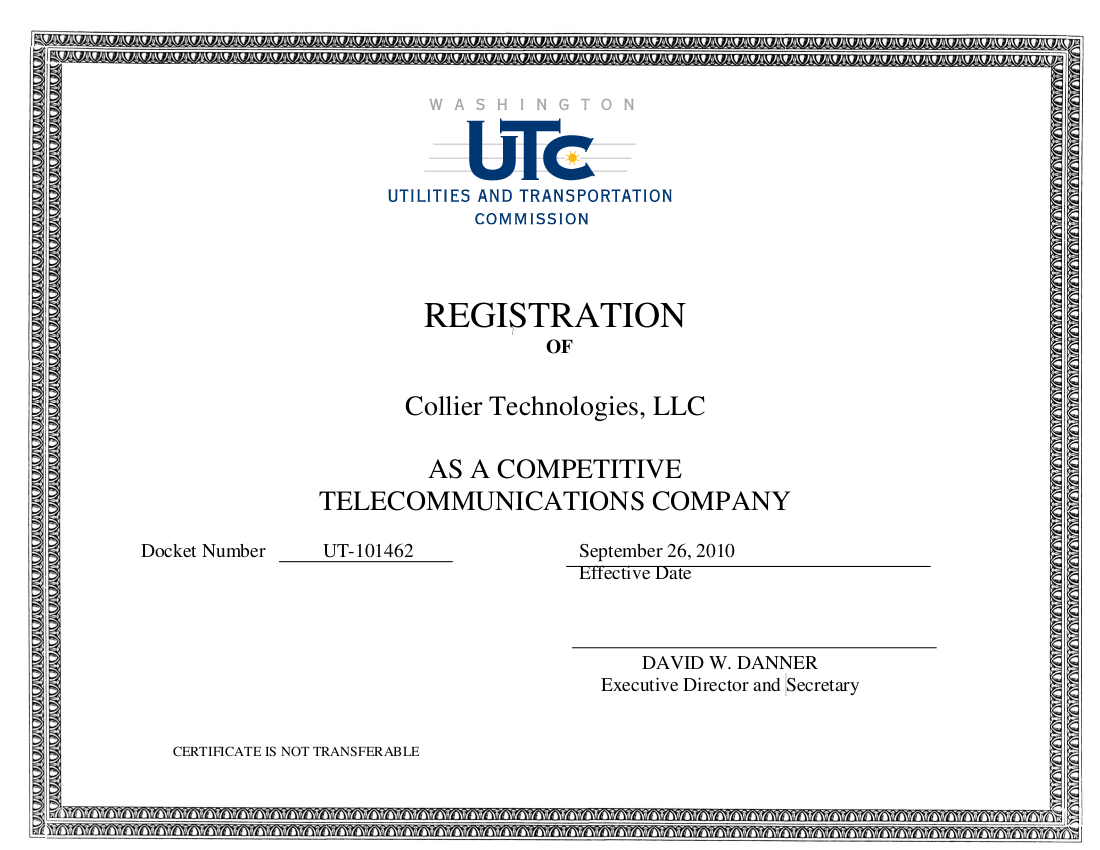
Back in 2010 our family moved to an island in an archipelago in the very top left of the US s continental 48. Before moving, we did some research regarding high speed network access. There are a number of ISPs in the county, and even one headquartered on our particular island. But we found that the location where we were moving was in a location that was only serviced by 1.5Mbit DSL. We had been spoiled in our previous two locations and had seen bittorrent swarms reach over 1 megabyte (8Mbit) per second. Our bill said 12 down and 2 up and I wouldn t be surprised if we achieved that. At any rate, we were disappointed by the speeds available and I wanted to do something to increase the availability of higher speed network access. Some of my friends from the North American Network Operators Group (NANOG) told me that one way to improve the infrastructure would be to get involved with telecommunications provisioning as a Competitive Local Exchange Carrier (CLEC). With the above in mind, I did some research and found that in my state, the authority which certifies and regulates telecommunication companies is the Washington Utilities and Transportation Commission (UTC). I found the application forms on their web site, filled them in, filed the appropriate documents with the appropriate departments and received a certificate in the mail shortly thereafter. We have since filed annual reports as required by regulations. And with the regulatory bits out of the way, we re now left with only the technical details. We have established collocation of some equipment near our state s central telecommunications facility at the Westin Building. Technically speaking, the equipment is not in the Westin, but at a facility connected to the Westin by multiple 10Gbit links. Close enough for me. On this equipment, we re running a Debian Squeeze Xen virtual machine and Digium s Asterisk packages:
cjac@sip0:/etc/asterisk$ grep -B1 -A3 Digium /etc/apt/sources.list
#
#  Digium asterisk packages
#
deb http://packages.asterisk.org/deb squeeze main
deb-src http://packages.asterisk.org/deb squeeze main
cjac@sip0:/etc/asterisk$ dpkg -l   grep digium
ii  asterisk                           1:1.8.11.1-1digium1~squeeze  Open Source Private Branch Exchange (PBX)
ii  asterisk-config                    1:1.8.11.1-1digium1~squeeze  Configuration files for Asterisk
ii  asterisk-core-sounds-en-gsm        1.4.21-1digium1~squeeze      asterisk PBX sound files - English/gsm
ii  asterisk-voicemail                 1:1.8.11.1-1digium1~squeeze  simple voicemail support for the Asterisk PBX
We saved up our nickles and dimes to purchase a 24-port analog telephony adapter (ATA). At the recommendation of one of the denizens of the #asterisk IRC channel on Freenode, we decided on the GrandStream GXW4024. It is pretty simple to configure them to register with the Asterisk server using SIP. The only problem we had was getting the RTP streams, and specifically their dynamically negotiated service ports, to traverse the NATting routers. We currently have no public IPv4 address space at the facility which hosts the ATA and so the rest of the internet sees all traffic originating from this facility as sourced from a single IP address. In order for this to work, the edge NAT/router device (in our case, BIG-IP LTM) needs to map its external L4 ports (TCP and UDP) to the ports of internal hosts so that traffic can flow correctly. This works fine for traffic which originates from internal hosts and is destined to hosts on the outside, but does not work so well when hosts on the outside wish to establish connections to hosts on the inside. Call management sessions established with the SIP protocol fall in the former category, but call media (voice, video, txt) sessions established with the RTP protocol fall into the latter; the host and port used to carry the media data are negotiated during the SIP session and the media socket is established out of band. The problem occurs when the call server (on the outside) attempts to establish an RTP stream with the caller (on the inside). The call server attempts to connect to the caller using the IP address from which it connected. The problem is that this address belongs to the NATting router, not the caller, and the router is not expecting the incoming request. To get around the NAT problem, we temporarily configured an OpenVPN tunnel to extend our L2 network segment. Our long-term solution will be to provision an Asterisk server in the same facility as the ATA and then register with it instead of the server in the exterior facility. Calls will then be switched at the local facility and the upstream link will be established using the IAX2 protocol, which does not suffer from the same NAT problems. All of the above provides us with the ability to make voice calls between the 24 channels of the ATA and any other SIP client which happens to be registered with our call server. This is all well and good, but we want to allow our customers to call the rest of the world. Enter our upstream provider, Threshold Communications, Inc. These folks are experienced and professional and have helped us successfully establish both outbound and inbound calling for very reasonable monthly costs. The call quality is indistinguishable from the lines provisioned by the local bell company, and inter-operates flawlessly with the Asterisk call server stack. Because calls transit our Asterisk server, we can add additional features such voicemail, speech to text, DTMF-driven menus, or call forwarding, for instance. We could even theoretically set up autopatch service using amateur frequencies or launch perl scripts to automate arbitrary fancyness. Our next step is to finish configuration of our 12-channel ZyXEL AAM1212 DSLAM modules so that we can deliver ADSL service over the same copper pairs as we deliver voice.

9 June 2012

Stefano Zacchiroli: bits from the DPL for May 2012

Just posted to d-d-a, here are the monthly DPL bits.
Dear project members,
here's the periodic report of what has happened in DPL land, this time during May 2012. It's briefer than usual, as this year I've enjoyed the lovely French habit of frequent holidays during the month of May. Highlight First highlight for this month is an invitation to us all. We're now in June and the Wheezy freeze is literally a few days away. The RC bugs count is moving in the right direction, but it's still stellar if we want to ensure a short freeze. And a short freeze is of paramount importance: it'll reduce the time during which we can't implement great plans for the future, increase the "freshness" of software we'll ship with Wheezy, and reduce the inconveniences for those who run the testing suite due to its nice "rolling" feature. So please set out some regular time to do RC bug squashing, by providing patches and doing NMUs. Releasing Wheezy is not something that could be outsourced to the Release Team, it's a collective responsibility that kicks in as soon as our own packages are RC bug free (which they already are, right? :-)) The second highlight is more on the internal structure camp. As mentioned last month, I've discussed with the tech-ctte insisting a bit to set up periodic IRC meetings, to ensure outstanding issues get periodically reviewed. At the end of May the first IRC meeting has happened, and has been very productive. See the minutes. Another one has been scheduled, trying to setup a monthly cadence, for the end of June. Many thanks to all tech-ctte members who have took part in and helped with the meeting organization. Communication I've given an interview to iTWire, answering a number of questions about several past and future Debian challenges. Discussions The ongoing discussion to harmonize packaging of multimedia software between the official Debian archive and the unofficial debian-multimedia.org archive (dmo) has progressed. I've tried to help the two groups reaching an agreement on which packages belong where, so that both duplicate packaging efforts and user inconveniences are minimized. That seems not to have worked and dmo maintainers have simply announced that they will move away from the current domain name to a new one that does not include "debian" in its name. Sprints There will be a Debian Science sprint in June, co-located with the broader Debian Science event organized by European Synchrotron Radiation Facility (ESRF) in Grenoble. I've confirmed my attendance for the opening talk of the conference day. ESRF organizers have kindly sponsored travel for all Debian attendees, many thanks to them! Another sprint will happen next week-end in Paris, this time by the i18n/l10n team. I've approved the corresponding tentative budget for travel sponrship for ~2'000 EUR. Other expenses Hardware replacement plans go on. We've ordered SSDs (for ~3'000 CAD) for recently bought machines meant to replace bugs-mirror, bugs-master, and udd. On the "small emergencies" front, we also had to replace failing disks on wagner (1/2 of alioth), for as little as 100 GBP. Miscellanea Happy Wheezy freeze,

and RC bugs squashing!
PS the boring day-to-day activity log for May is available at master:/srv/leader/news/bits-from-the-DPL.txt.201205

8 June 2012

Dmitrijs Ledkovs: Hello Debian, Planet and Debconf12

I am going to Debconf12
I'm going to Debconf12
Hello Debian Planet!

I have recently became a Debian Developer. One of the first things I did, was fix some RC bugs in my packages due to an ABI break from upstream in a point release. Then I fixed some bugs in offlineimap... Little did I know, that I broke it for many Debian developers including my ex boss and the Debian Project Leader all at the same time.

Speaking of which, any help will be appreciated in hunting down a memory leak in offlineimap.

I am going to Debconf12, thanks to my employer. I am interested in Python/dh_python[2-3], dh, 3.0 (quilt) with a DVCS, lvm2, mdadm, btrfs-tools, autofs, e2fsprogs, dm-crypt, debian-installer, init-systems & friends, OpenERP, offlineimap... if you are as well, find me and talk to me =)))

Regards,
xnox

7 June 2012

Philipp Kern: Adding zFCP drives on Debian GNU/Linux

If you want to add System z zFCP drives to a Debian GNU/Linux system, you first need to make the HBA known to the system. For this you add an (initially empty) file with the (lowercase) device ID of the zFCP HBA to /etc/sysconfig/hardware. There should already be files for the ECKD/FBA disks and the network adapters.

Then you need to list the drives to initialize by placing the following array in it with a list of WWPN:LUN, seperated by spaces within the parentheses:

ZFCP_DEVICES=(0x1234567890abcdef:0x4000400000000000)

Please keep in mind that the WWPN and LUN need to be specified in hex and again entirely in lower case. This will cause hwup ccw 0.0.4000 (with 4000 being the CHPID) to instruct the HBA to add the drive after setting it online. Then you should regenerate your initrd, so that it happens on-boot, by running update-initramfs -u -k all.

With current kernels the available WWPNs should be probed and listed in /sys/bus/ccw/devices/0.0.4000 without further intervention after the HBA is initialized.

Sadly there's no way to set up a zFCP disk in debian-installer.

Rog rio Brito: I am not going to DebConf 12

Due to some real life impediments (including a beautiful one with just over 2 months of life called Daniel), I will not be able to go to this year's DebConf, even though it seems that this DebConf will exceed many expectations with the support that the governement of Nicaragua just offered. Things that I would like to have worked on Unfortunately, this means that I will not be working with some fellows that may be there, like people from the pkg-multimedia team. In particular, as I am working on some packages that are not that well suited to distributions (especially regarding HandBrake), it would be highly productive to have a hacking session or two with other people interested in having this popular and easy-to-use video ripper/transcoder on Debian. I would also like to be able to talk in person with other people (including Joey Hess) about controversial packaging of some programs, like GNU Parallel, which I maintain in Debian. There are many things else that I would love to work on, besides helping a bit with some of the still pending transitions of the the Debian Fonts Task Force umbrella, meeting friends and other social stuff. Oh, well. I guess that working at home will be the solution for some time.

6 June 2012

Tanguy Ortolo: Beware of the newest Intel Atom GPU

Do you remember how Intel used to be the white knight of graphic card manufacturers, the one from which you could buy hardware without looking, being sure that it would be supported by GNU/Linux directly? Do you remember how they broke that by releasing the infamous Poulsbo card? Well, they did it again. The newest Intel Atom D2500, D2550, D2700, N2600 and N2800 processors, codenamed CedarView and Cedar Trail , include a graphic core that is only supported by a proprietary driver only available on Meego (read: unusable on regular GNU/Linux.So, if you plan to buy a netbook, beware! Intel is not a manufacturer you can trust to provide freely usable hardware. Just like other manufacturers, check that the hardware you are planning to buy is supported, by asking on #intel-gfx on Freenode. The most relevant course of action probably consists in buying a previous model or waiting for the next models.

Jon Dowland: Debian Day #2

One interesting side-effect of setting aside a regular slot of time for a task is that you are guaranteed to spend some time, perhaps not much, thinking about that task, every week. As a consequence, even one evening a week is enough for me to think about my Debian work at other times. This means I am in a better position to use any unplanned free time more effectively. This Tuesday was a bank holiday which I spent on DIY, lounging in a chocolate shop and catching up on The Apprentice, so there wasn't a 'Debian Day' per se. However, I did upload a few versions of lhasa. Following on from last week's thoughts on sound-juicer, I'm pleased to report that the two folks working on a more recent musicbrainz update were in fact working together, and after some discussion Michael Biebl sponsored an upload. Thanks Michael! Once that had gone in I was free to sponsor flactag, which was packaged by the same folks. There's some follow-on work to do for musicbrainz5. In Debian, gnome-mplayer, gnome-sushi, goobox, kdemultimedia, rhythmbox and sound-juicer need updating; I'm fairly sure Michael sorted out a patch for gnome-sushi at least but upstream want a patch that implements falling back to version 4 if version 5 doesn't exist. Finally, I sponsored Gustavo's vavoom package.

4 June 2012

Niels Thykier: Parsing bash/shell

I have been avoiding #629247 for quite a while. Not because I think we couldn t use a better shell parser, but because I dreaded having to write the parser. Of course, #629247 blocks about 16 bugs and that number will only increase, so someone has to solve it eventually Unfortunately, that someone is likely to be me . So I managed to scrabble down the following Perl snippet. It does a decent job at getting lines split into words (which may or may not contain spaces, newlines, quotes etc.). It currently tokenizes the <<EOF -constructs (heredocs?). Also it does not allow one to distinguish between EOF and EOF (the former ends the heredoc, the latter doesn t.). Other defects includes that it does not tokenize all operators (like >& ). Probably all I need is a list of them and all the special cases (Example: >& can optionally take numbers on both sides, like >&2 or 2>&1 ). It does not always appear to terminate (I think EOF + unclosed quote triggers this). If you try it out and notice something funny, please let me know. You can also find an older version of it in the bug #629247 and the output it produced at that time (that version used instead of as token marker).
#!/usr/bin/perl
use strict;
use warnings;
use Text::ParseWords qw(quotewords);
my $opregex;
 
  my $tmp = join( " ", map   quotemeta $_   qw (&&     ; ));
  # Match & but not >& or <&
  # - Actually, it should eventually match those, but not right now.
  $tmp .= ' (?<![\>\<])\&';
  $opregex = qr/$tmp/ox;
 
my @tokens = ();
my $lno;
while (my $line = <>)  
  chomp $line;
  next if $line =~ m/^\s*(?:\# $)/;
  $lno = $. unless defined $lno;
  while ($line =~ s,\\$,,)  
  $line .= "\n" . <>;
  chomp $line;
   
  $line =~ s/^\s++//;
  $line =~ s/\s++$//;
  # Ignore empty lines (again, via "$empty \ $empty"-constructs)
  next if $line =~ m/^\s*(?:\# $)/;
  my @it = quotewords ($opregex, 'delimiters', $line);
  if (!@it)  
  # This happens if the line has unbalanced quotes, so pop another
  # line and redo the loop.
  $line .= "\n" . <>;
  redo;
   
  foreach my $orig (@it)  
  my @l;
  $orig =~ s,",\\\\",g;
  @l = quotewords (qr/\s++/, 1, $orig);
  pop @l unless defined $l[-1] && $l[-1] ne '';
  shift @l if $l[0] eq '';
  push @tokens, map   s,\\\\",",g; $_   @l;
   
  print "Line $lno: -" . join ("- -", map   s/\n/\\n/g; $_   @tokens ) . "-\n";
  @tokens = ();
  $lno = undef;
 
Here is a little example script and the tokenization of that script (no, the example script is not supposed to be useful).
$ cat test
#!/bin/sh
for p in *; do
    if [ -d "$p" ];then continue;elif
    [ -f "$p" ]
    then echo "$p is a file";fi
done
$ ./test.pl test
Line 3: -for- -p- -in- -*- -;- -do-
Line 4: -if- -[- --d- -"$p"- -]- -;- -then- -continue- -;- -elif-
Line 5: -[- --f- -"$p"- -]-
Line 6: -then- -echo- -"$p is a file"- -;- -fi-
Line 7: -done-

MJ Ray: I m going to kohacon12

Probably by the time you read this, I ll be on the road to kohacon12. It s been a fun week or so with the final arrangements on top of our other planned work and some unexpected work too, but I think we ve done enough and it will all come together. (There are still a few places left if you d like to register, but not lots.) The most nerve-wracking bit has been the sponsorship. Kohacons are free to attend and funded entirely by sponsors, which is great in so many ways. It s a bit scary for the host organisation(s), but I think the community has helped so much that it ll break even. We won t know for sure until the final reckoning in a month or so. One unneeded worry was Paypal freezing our account for a couple of weeks and sending us contradictory and absurd demands for information. Why isn t there an easier way to get money out of the USA (and Australia and NZ, actually) that isn t either slow (cheques) or expensive (wire)? Once again, I m left feeling that banks are being a big problem for business. The best bit has been the spirit of the volunteers. Our co-op couldn t have done this without them. Some of them have gone a really long way to help metaphorically, bailing us out while Paypal was chewing up our time, and sometimes physically, flying around the world I ll be raising a glass to all of them, whether they re in Edinburgh or not. So, next update should be from Edinburgh!

Benjamin Mako Hill: Why Facebook's Network Effects are Overrated

A lot of people interested in free software, and user autonomy and network services are very worried about Facebook. Folks are worried for the same reason that so many investors are interested: the networks effects brought by hundreds of millions of folks signed up to use the service. Network effects -- the concept that a good or service increases in value as more people use it -- are not a new problem for free software. Software developers target Microsoft Windows because that is where the large majority of users are. Users with no love for Microsoft and who are otherwise sympathetic to free software use Windows because programs they need will only run there. Folks worried about Facebook are afraid for similar reasons. Sure, you can close down your Facebook account and move to Diaspora. But who will you talk to there? You can already hear people complaining about Facebook the same way they've been complaining about Windows or Office for years. People feel that their hands are tied and that their software, and their social network, will be determined by what everybody is doing. I'm worried about Facebook. But I'm not too intimidated by Facebook's network effects for two reasons. First, using Facebook doesn't preclude using anything else. Twitter has enormous overlapping functionality with Facebook. Sure, people use the systems very differently. But they both ask you to create lists of friends and followers and are designed around sending and receiving short status messages. Millions of people do both and both systems are thriving. For the millions of people who use both Facebook and Twitter, the two services have had to negotiate their marginal utility in a world they share with the other one. People decide that Twitter is for certain types of short messages and Facebook is for others. But these arrangements shift over time. And the relationships between services aren't always peaceful coexistence. Remember Friendster? Remember Orkut? Remember Tribe? Remember MySpace? MySpace, and all the others, are great examples of how social networks die. They very slowly fade away. MySpace users signed up for Facebook accounts and used both. They almost never just switched. Over time, as one platform became more attractive than the other, for many complicated reasons, attention and activity shifted. People logged in on MySpace less and Facebook more and, eventually, realized they were effectively no longer MySpace users. Anyone that has been on the Internet long enough to watch a few of these shifts from one platform to another knows that they're not abrupt -- even if they can be set in motion by a particular event or action. Users of social networking sites simply don't have to choose in the way that a person choosing to boot Windows and GNU/Linux does. I'm sure the vast majority of people with Diaspora accounts use Facebook actively. This is not a problem for Diaspora. It is how Diaspora -- or whatever else eventually achieves what many of us hoped Diaspora would -- could win. Second, Facebook is for the ephemeral. Facebook is primarily used for information that was produced very recently. This week if not today. If not this hour. Facebook has an enormous amount of data that users have fed it that may be hard to get out and move somewhere else. But most people don't care very much about having any regular access to the large majority of this information. What people care deeply about is having access to the data that they and their friends created today. And that data can just as easily be created somewhere else tomorrow. Or, with the right tools, created just as easily in both places. Compare this to something like Windows where moving away would require learning, converting, and perhaps even writing, new software. Perhaps even in new programming languages that most developers don't know yet. Compared to Windows, a migration away from Facebook will be easy. Facebook's photo galleries are an example of an important place where this holds less well. Social network information -- i.e., the list of who is friends with who -- is another example of something that is persistently valuable. That said, people really enjoy the act of finding and friending. Indeed, this process was part of the initial draw of Facebook and other social networks. None of this means that Facebook is over. It doesn't even mean that its ascendancy will be slowed. What it does mean is that Facebook is vulnerable to the next thing more than many technology firms that have benefited from network effects in the past. If users are given compelling reasons to switch to something else, they can with less trouble and they will. That compelling reason might be a new social network with better features or an awesome distributed architecture that allows freedom for users and the ability of those users to benefit from new and fantastic things that Facebook's overseers would never let them have and without the things Facebook's users suffer through today. Or it might be a sexier proprietary box to store users' private information. It doesn't mean that I'm not worried about Facebook. I remain deeply worried. It's just not very hard for me to imagine the end.

3 June 2012

Gregor Herrmann: RC bugs 2012/22

since most of the gcc 4.7 bugs are fixed by now, I looked again at the general RC bugs too this week. here's the usual short report:

Sandro Tosi: How to migrate your entire Google account to a new one

I've been using a Google account since years, but having a "more serious" one along. The time has come to make the switch and elect the other as main one.

Google has a lot of services, and I'm using several of them, so changing the main account requires to migrate data of those services to the new account, given it's not possible to merge two accounts. To know the full list of services your account is signed in, go to your Account Product page. Some migrations are easy, others hell no: so I'm writing this post to keep track of the migration as it's going on.

First of all, there's a really good post about this migration at LifeHacker: it contains a lot of info I'm using here, but not all the services I need. Additionally, Google has a list of services and methods to migrate from one account to another.

Just to be generic, I'll call AccountSRC the original account and AccountDST the one I want to migrate to.

Migrate GMail

GMail is probably the most important service I have, and also the most difficult one to migrate. I have a lot of filters, so the first step is to migrate them:
  1. Login into GMail for AccountSRC
  2. Gear icon > Settings > Labs
  3. Enable the "Filter import/export" plugin
  4. Reload GMail to enable the plugin (if not done automatically)
  5. Gear icon > Settings > Filters
  6. At the bottom of the page, Select all
  7. Export: this will download an XML file with the filters in it
  8. Login into GMail for AccountDST
  9. Enable "Filter import/export" plugin
  10. Load the file containing the saved filters
  11. Import all (or select which one) filters; this will also create automatically the labels defined in the filters.
I currently have a forward rule from AccountDST to AccountSRC: so let's revert the forward direction: from AccountSRC to AccountDST. This will allow the new account to receive the mails sent to the old one.
  1. Login into GMail for AccountDST
  2. Gear icon > Forwarding and POP/IMAP > Disable forwarding: this will stop redirecting mails from AccountDST to AccountSRC
  3. Login into GMail for AccountSRC
  4. Gear icon > Forwarding and POP/IMAP > add a forwarding address
  5. Enter AccountDST as the address to forward mails to
  6. A verification code is sent to AccountDST and you'll need to enter that code in AccountSRC to verify you have access to both mailboxes
  7. Once verified, select "Forward a copy of incoming mail to" to AccountDST and to delete the GMail copy on AccountSRC
There's no automatic way to migrate all your settings from the old GMail account to the new one, so you'll have to comparing settings pages to set what you had before to AccountDST. I suggest to first enable the labs you have on AccountSRC, and then go thru every page and report the configurations.

Did I forget something? yes, the hardest part: migrate mails! There are a lot of guides about migrating mails, the way I prefer is thru IMAP and Thunderbird (as described here): you'll move IMAP folders, and since they are equivalent to GMail labels, you'll automatically get your email with the correct labels (yes, the same mail appears in several folders, one for each label, and moving an email from one folder will not remove it from all the others).
  1. Enable IMAP access on both AccountSRC and AccountDST
  2. Open Thunderbird (or Icedove if you're on Debian like me) and register both accounts
  3. You can now start moving folders/emails from AccountSRC to AccountDST
    1. Copying a (missing) folder, will automatically create a label with the same name
    2. Moving a mail from the same folders on the two accounts will add the label called with the name of the folder to that email
  4. Be ready, it's a LOOOOONG process, but it's safe and it guarantees a perfect result
With the method above you have all the labels you had before, but not the label colors (and I have a lot :( ).

Another tool that's would be interesting to evaluate for this task is Gmvault.


Migrate Contacts

Contacts are available inside GMail:
  1. Login into GMail for AccountSRC
  2. On the combobox on top-left, select Contacts
  3. More > Export
  4. Export all the contacts in Google CSV, since it's specific to be re-imported
  5. Login into GMail for AccountDST
  6. Contacts > More > Import
  7. Select the previously saved file and import it

Migrate Reader

Migrating Reader subscriptions is easy:
  1. Login into Reader for AccountSRC
  2. Reader Settings -> Import/export
  3. Export your subscriptions in OPML format
  4. Now login into Reader for AccountDST
  5. Reader Settings -> Import/export
  6. And import the saved OPML file
Sadly, that doesn't migrate your starred items, but there's a (long & manual) solution here.


Migrate Blogger

Login to Blogger for AccountSRC; then, for each blog you have there do this dance:
  1. Select the blog
  2. Go into Settings > Permissions
  3. Add AccountDST as a new author: this will send an email to AccountDST GMail account
  4. Accept the invitation (this will ask you to create a new Blogger account for AccountDST if you don't already have one)
  5. Go back to to Blogger with AccountSRC
  6. Blog > Settings > Permissions
  7. Grand admin rights to AccountDST
At this point, both AccountSRC and AccountDST have admin rights; you can leave it as it is, or remove AccountSRC and so only AccountDST will be the admin (other shares should be kept unchanged). The same procedure is described in this Google support answer.

What can't be migrated as easily are all the profile settings you've done on AccountSRC. So profile information, blogs followed and so on have to be migrated by hand: boring but they are just few things, doable in a bunch of minutes.


Migrate Android phone

Android phones require a primary Google account to work, and of course my phone uses AccountSRC. Several sources say the only way to change primary account is to factory reset the phone. But since new market app supports multiple accounts and Android 4.0 (Ice Cream Sandwich) not longer needs a primary account, I just waited for the update to ICS to come.

What you really need to do is to add a new account, AccountDST, to Settings > Account & Sync, and all the Google apps on the phone will be able to use the new account (you might need to select what to sync, and the new account from inside each app).


Migrate Calendar

Even with Calendar the settings will have to be migrated by hand: they are just in one page, so just keep two windows opened and keep switching to sync them. The calendars are easy to move over: for the main calendar:
  1. Login into Calendars for AccountSRC
  2. Go into Settings > Calendars tab
  3. Select export calendars: this will download an archive of your calendars in a zip file; you will need to extract all the ics files from that zip archive so you'll have the main calendar readily available
  4. Login into Calendars for AccountDST
  5. Settings > Calendars tab
  6. Import the main calendar
for the other calendars you can do this way:
  1. Login into Calendars for AccountSRC
  2. Settings > Calendars tab
  3. Share the calendar with AccountDST and give it "Make changes AND manage sharing" right - the new account will have full control over that calendar

Migrate Docs

The procedure to migrate documents in Google Docs (now Google Drive) is described here, and it boils down to:
  1. Login into Docs for AccountSRC
  2. Select all the documents
  3. Share them with AccountDST
  4. In the same window select AccountDST as "is owner"
and you've got all the docs as owned by the new account.


Migrate Groups

There's no way to migrate all your Groups subscriptions from one account to another (if not playing with alternate email address, but it was too risky to try it), so you'll have to migrate all of them by hand.

On the other hand, if you've created some groups, that's possible to move them to the new account:
  1. Login into Groups for AccountSRC
  2. Enter in the "manage" area for the groups you've created
  3. Manage members > Invite members
  4. Invite AccountDST
  5. Accept the invitation, clicking on the email sent to AccountDST account
  6. Go back into AccountSRC manage area
  7. Select the AccountDST account
  8. Edit the subscription and set "Membership type" to "owner": now AccountDST is the owner of the list

Migrate Analytics

The process to migrate the account on Google Analytics is similar to Groups:
  1. Login into Analytics for AccountSRC
  2. Select Admin on top-right, then for each account you have
  3. Select the account, select "Users" tab, click on "+ New User"
  4. Enter AccountDST into the "Email Address" field and give that account the "Administrator" role
  5. Save
  6. Now AccountDST is able to access the same data on Analytics as AccountSRC

Migrate Picasa

To transfer your whole Picasa account follow these steps (as also described in this support post):
  1. Login into Picasa for AccountSRC
  2. Click on the gear on top-right > Photo Settings > Privacy and permissions
  3. On the "Migrate account" line click on "Migrate my photos"
  4. Insert AccountDST into the box for destination address
  5. In case you're using picasa to store blogger photos, also select the tick below
  6. At this point, AccountSRC will receive an email: copy the link in a session where you've logged in as AccountDST and then visit the page: that will start the process
  7. Wait until the transfer is completed: you'll receive an email to AccountDST when it's done

Migrate Google+

I'm not exactly a heavy user of G+ but I have some circles I'd like to move over (also because Reader sharing now works with G+ and it's a feature I user a lot), this is a process to move circles and contacts; as stated there, there's no way to move shared items and stuff (sad!).


Migrate AdSense

It's not possible to migrate the current AdSense account: you have to register a new one. When you do, it's possible that Google notice the new account is for the same person of the first one, and will ask to close the old account on AdSense in favor of the new one.


Migrate Alert

Alerts allows to export the list of alerts you've created but it's not possible to import that list in another Google account, so you'll have to recreate them from scratch (I had just a few so it was a matter of 1 minute or so).


Migrate Zoho Notebook

If you still miss Google Notebook (why big-G you let it die? couldn't you open-sourced it? it was so awesome! anyway...), you probably know that there are two main alternatives to it: Evernote and Zoho Notebook. I decided to go with Zoho (I'm not entirely happy with it, but it's running for now), and given it allows to login with Google account, it was currently using AccountSRC, so I need to migrate that too:
  1. Login into Zoho Notebook for AccountSRC
  2. My Account > Profile > Email address
  3. "Add new email" and add AccountDST, it will send a confirmation email
  4. Then "Make Primary" on AccountDST, so now the new account can login into Zoho notebook with the Google info and have all the notes there.

Migrate Bookmarks

Google provides a guide to migrate Bookmarks from one account to another that basically is:
  1. Login into Bookmarks for AccountSRC
  2. Click on Export bookmarks and it will save an HTML file with the bookmarks in it
  3. Import the file in a browser
  4. Use the Google toolbar to import in into AccountDST
That's kinda ugly way, but it seems to work.


Re-enable Web History

If you used History, then you need to re-enable it on the new account:
  1. Login into History for AccountDST
  2. Click on "Turn Web History on" to enable Web History on the new account
but it seems to be impossible to export/import or migrate the history from one account to another, that's a shame: years and years of stats lost.


Migrate Books

Books doesn't allow to migrate the contents between accounts, so you'll have to do it by hand:
  1. Select one book from AccountSRC, copying its link
  2. Go to AccountDST and navigate to the copied link
  3. Add the book to the right category, as it was before.

Migrate Webmaster Tools

Google released a document that describes how to migrate to another account; it's similar to Analytics and Groups migration.

In addition to that, you might also want to become an owner, that will give full control on the sites.


Did I forget some services? Let me know!

Everyone has a different experience with Google products, so in case you want me to let know how you migrated from one account to another for a product I didn't mentioned, just leave a comment and I'll edit the post (to be as complete as possible).

Jordi Mallach: GNOME 3.4 in wheezy

Users of Debian sid will have noticed: the final (and interesting) bits of GNOME 3.4 have landed and if all looks as good as it does now, they should migrate to wheezy in about a week. 3.2 3.4 hasn't been as complicated as the previous horrible transition, but still had some complications due to Cogl/Clutter incompatibilities. Other than that, our major problem has been manpower, but this isn't new for many other Debian teams. We've also seen new incarnations of Linux-only technology is now mandatory which makes our lives a bit more miserable due to kfreebsd-* and hurd-i386, but for now we've still been able to dodge it. It seems wheezy+1 will be fun in that regard though, and we might need to take drastic approaches. If all goes well and the current lot (GNOME Shell, Control Center, Settings daemon, Mutter...) transitions without additional problems, we should be wrapping up our transitions for wheezy with Evolution and friends (currently sitting in experimental), and hopefully GDM 3.4. As we get many questions regarding the status of GDM in Debian, let's add a short note on this. Packaging GDM, at least in its current upstream form, is not a matter of unpacking a new tarball and editing debian/changelog. When Joss works on a new major version, the amount of tweaking to break away from stuff that works on other distros but is not so simple in Debian is outstanding (see, for example, the current unfinished work for GDM 3.2 in our SVN repo). In our case, to handle our GDM defaults, we even need changes to the underlying configuration system, dconf. This evidently takes some effort to do, and unfortunately our GDM expert has had little time for Debian lately, but we're confident we'll end up with a GDM in wheezy that is on par with Debian standards. We are, as always, reachable at #debian-gnome in the OFTC IRC network. Have fun!
1 June 2012

C.J. Adams-Collier: Vacation Tasks

So, I m taking vacation this week and next. Here s a (partial) list of tasks that are left to do: That s probably enough, if not too much. Here s some of the bits I ve done this week: And probably some other stuff ;-)

Petter Reinholdtsen: SOAP based webservice from Dell to check server support status

A few years ago I wrote how to extract support status for your Dell and HP servers. Recently I have learned from colleges here at the University of Oslo that Dell have made this even easier, by providing a SOAP based web service. Given the service tag, one can now query the Dell servers and get machine readable information about the support status. This perl code demonstrate how to do it:
use strict;
use warnings;
use SOAP::Lite;
use Data::Dumper;
my $GUID = '11111111-1111-1111-1111-111111111111';
my $App = 'test';
my $servicetag = $ARGV[0] or die "Please supply a servicetag. $!\n";
my ($deal, $latest, @dates);
my $s = SOAP::Lite
    -> uri('http://support.dell.com/WebServices/')
    -> on_action( sub   join '', @_   )
    -> proxy('http://xserv.dell.com/services/assetservice.asmx')
    ;
my $a = $s->GetAssetInformation(
    SOAP::Data->name('guid')->value($GUID)->type(''),
    SOAP::Data->name('applicationName')->value($App)->type(''),
    SOAP::Data->name('serviceTags')->value($servicetag)->type(''),
);
print Dumper($a -> result) ;
The output can look like this:
$VAR1 =  
          'Asset' =>  
                     'Entitlements' =>  
                                       'EntitlementData' => [
                                                             
                                                              'EntitlementType' => 'Expired',
                                                              'EndDate' => '2009-07-29T00:00:00',
                                                              'Provider' => '',
                                                              'StartDate' => '2006-07-29T00:00:00',
                                                              'DaysLeft' => '0'
                                                             ,
                                                             
                                                              'EntitlementType' => 'Expired',
                                                              'EndDate' => '2007-07-29T00:00:00',
                                                              'Provider' => '',
                                                              'StartDate' => '2006-07-29T00:00:00',
                                                              'DaysLeft' => '0'
                                                             
                                                          ]
                                      ,
                     'AssetHeaderData' =>  
                                          'SystemModel' => 'GX620',
                                          'ServiceTag' => '8DSGD2J',
                                          'SystemShipDate' => '2006-07-29T19:00:00-05:00',
                                          'Buid' => '2323',
                                          'Region' => 'Europe',
                                          'SystemID' => 'PLX_GX620',
                                          'SystemType' => 'OptiPlex'
                                         
                    
         ;
I have not been able to find any documentation from Dell about this service outside the inline documentation, and according to one comment it can have stability issues, but it is a lot better than scraping HTML pages. :) Wonder if HP and other server vendors have a similar service. If you know of one, drop me an email. :)

Next.

Previous.