Search Results: "nate"

13 April 2010

Steve Kemp: Dwayne, I think you might be colorblind.

It is unfortunate that most server-packages don't seperate out their init scripts into separate packages: Right now its a real pain to have to modify things like /etc/init.d/ssh to launch two daemons, running on two different ports, with two different configuration files. Running multiple copies of SMTP daemons, databases, and similar things is basically more complex than it has to be, because our packages aren't setup for it. If you maintain a daemon please do consider this, failing that honoring a flag such as "DISABLED=true" in /etc/default/foo would allow people to use their own /etc/init.d/foo.local initscript. (That's not perfect, but it is a step in the right direction.) ObFilm: Little Miss Sunshine.

10 April 2010

Andrew Pollock: [tech/security] How not to do it

From http://www.symantec.com/connect/articles/active-directory-and-linux...
An alternative to allowing anonymous searches on your Active Directory is to allow the nss_ldap routines to bind as an administrator DN to your directory and perform searches in privileged mode. To do this, insert the following lines in your /etc/ldap.conf file: binddn cn=Administrator,cn=Users, bindpw You should be used to the "" thing by now. WARNING: The above example shows that the administrator user name and password have been coded in clear text in the /etc/ldap.conf file! Unfortunately, this file must always remain world-readable, because otherwise users logged on to the system will not be able to read data from the directory. You should not do this on a system where any user has shell access to your system, or can in any other way read this file.
If you've put the Administrator password in a world-readable file, you've already lost.

9 April 2010

Ingo Juergensmann: Syncing N97

We now have year 2010 but sometimes it still feels like living in the Stone Age of Computing. There's a smartphone, let's call it N97, with Symbian on it. Then there are a bunch of client computers such as a Debian workstation/homeserver running Sid, a Laptop running OS X with iCal and a Windows XP machine at work. Every machine itself (well, with the exception of the XP machine) is a nice piece of hard- and software offering a bunch of possibilities: you can manage your calendars, contacts and tasks.

The difficulty arise when you want to sync those calendars, contacts and tasks between all of the different machines.

There are several ways to address this task:

  1. WebDAV:
    Setting up a WebDAV is no rocket science and you can easily sync your calendars easily with Sunbird or Thunderbird/Lightning for example. But that leaves the N97 ouf of syncing. The N97 can be synced with iSync on OS X, but iCal is not able to work on a single calendar. You can either export a calendar to a remote WebDAV or subscribe it. iCal ignores changes done in other clients and will overwrite those.


  2. CalDAV 1:
    CalDAV (calendarserver) does require some more configuration before you can use it properly, but when done, it should be capable of syncing calendars, resources, tasks and such. Using CalDAV should work aorund the limitations of WebDAV as mentioned above. The calendars can be synced to CalDAV from iCal by creating a remote account and you can sync with iSync via Bluetooth. But you will need a local calendar in iCal, because you can't use iSync to sync your smartphone to your CalDAV remote calendar in iCal.

    iSync unable to use CalDAV for syncing


    Additionally there are problems when you delete an event from your CalDAV calendar on your smartphone. iSync will report an error like this:

    Freitag, 9. April 2010 21:45
    [Nokia N97]
    Changes of Events in writeprotected calendar on this phone are not permitted. These changes were ignored: test, 04/09/2010 23:00


    Deleting events in your local iCal calendar, however, is working well. In the end this result is not encouraging as I need the CalDAV calendars being in sync.
    Syncing with Sunbird on OS X doesn't work either. Maybe it would with DAViCal as server frontend?


  3. CalDAV 2:
    Because syncing via iSync doesn't work as expected it would be a decent solution if the N97 could sync directly to CalDAV. Unfortunately it can't, although there seems some progress with Symbian there. If that is already integrated into v21.0.102 of N97 firmware, it would nice if someone could point me to how configure the N97 properly.


  4. SyncML:
    Maybe another option would be to use some sort of SyncML server in order to sync calendars and stuff between those machines, but I don't know how OS X will work with that approach. Again, hints are welcome!


Syncing calendars and other stuff really seems to be painful. Using a third party webservice such as .Mac or Google Calendar is no option at all. I don't want to give private data out of my hands and control. So, a self hosted service is needed.
Dear lazyweb, is there a solution available for my problem? I hope so...

Christian Perrier: [life] Once you run a marathon...

...you want to run many. Everybody told me so. Which is why I was warned when I ran my first one year ago in Paris, I knew I would run other. So, on Sunday will be my fourth one and my second Paris Marathon. So, after 4h10mins in Paris (april 2009), 4h12 in Rambouillet Forest (all alone in full autonomy mode) and 4h00'49" in Cologne, my target this time is 3h50. Weather is announced to be perfect, my physical condition is AFAIK good, the motivation is very high....my only fear is that I registred in the "4h target" group (because, back in November, I wasn't expecting the results I got in February/March in half-marathons). As many people overestimate their target, I expect to be passing hundreds of runners during the first 5 kilometers, which is not the best way to start....but, hey, Paris streets are wide enough (except Place de la Bastille, my nightmare....I hope organizers solved the jam problem there). Of course, I kinda hope seeing fellow Paris DD's waving giant Debian swirls, including our wanabee-DPL.....but let's stop dreaming. And running in a sunny day all across Paris and along river Seine, will be great again even without Zack. I'll also be missing Ralf and No l who ran it last year: Ralf is unfortunately suffering from knee problems and No l is preparing for Mainz marathon (target: 3h??). Anyway, more news on Sunday afternoon....and let's enjoy a full rest tomorrow!

David Welton: US Exports: "The Cloud"?

An Economist special report in last week's print edition talks about how the US will need focus more on savings and exports:

A special report on America's economy: Time to rebalance I've been thinking about that for a while too, especially after the dollar's recent weakness, although it has been strengthening some, lately, apparently due to the state of Greece's finances... I think that the computing industry is, in general, well poised to take advantage of that. For instance, what could be easier to export than computing power or "Software as a Service"? All it takes is a few minutes for someone in Europe to sign up to a US-based service with a credit card. For instance, compare Linode's prices and good service with most of their European competitors (gandi.net for instance, who are good people, and you have to love that they put "no bullshit" right on their front page). Not that they don't have good service in Europe, but it's very difficult to compete on price with the dollar being significantly cheaper. With the dollar where it is right now, gandi is almost, but not quite, competitive with Linode. If you don't include taxes. If the dollar weakens again, though, things could easily tilt far in Linode's favor. Besides a weak dollar, I think it will be important for companies in a position to do so in the US to focus on "the rest of the world". The US is a big, populous country where it's very easy to forget about far-off lands. Compare my home town of Eugene, Oregon to where I live in Padova. Google Maps says that it takes 7+ hours to drive to Vancouver, Canada (which, to tell the truth, isn't all that foreign in that they speak English with an accent much closer to mine than say, Alabama or Maine). Going south, Google says it's 15+ hours just to San Diego, although I think that's optimistic myself, given traffic in California. From Padova, I can be in France in 5 hours, according to Google, 3 hours to Switzerland, 4 to Innsbruck, in Austria, less than 3 hours to the capital of Slovenia, Ljubljana, and around 3 hours to Croatia, too. And if you wanted to throw in another country, the Republic of San Marino is also less than 3 hours away, according to Google's driving time estimates. You could probably live your entire life in a place like Eugene and never really deal much with foreigners, whereas here, nearby borders are both a historic and an ever-present fact. The outcome of this is that, to some degree, people in the US have traditionally focused their businesses "inwards" until they got to a certain size. Which is, of course, a natural thing to do when you have such a big, homogenous market to deal with before you even start thinking about foreign languages, different laws, exchange rates and all the hassle those things entail. However, if exchange rates hold steady or favor the US further, and internal spending remains weaker, it appears as if it may be sensible for companies to invest some time and energy to attract clients in "the rest of the world". "Cloud" (anyone got a better term? this one's awfully vague, but I want to encompass both "computing power" like Linode or Amazon's EC2, as well as "software as a service") companies likely will have a much easier time of things: for many services, it's easy to just keep running things in the US for a while, and worry about having physical or legal infrastructure abroad later. Your service might not be quite as snappy as it may be with a local server, but it'll do, if it performs a useful function. Compare that with a more traditional business where you might have to do something like open a factory abroad, or at the very least figure out the details of how to ship physical products abroad and sell them, and do so in a way that you're somewhat insured against the large array of things that could go wrong between sending your products on their merry way, and someone buying them in Oslo, Lisbon or Prague. Since this barrier to entry is lower, it makes more sense to climb over it earlier on. As an example, Linode recently did a deal to provide VPS services from a London data center, to make their service more attractive to European customers. However, they still don't appear have marketing materials translated into various languages, and presumably they don't have support staff capable of speaking languages like Chinese, German or Russian either (well, at least not in an official capacity). This isn't to pick on them; they may have considered those things and found them too much of an expense/distraction/hassle for the time being - they certainly know their business better than I do - and that they simply are content to make do with English. Other businesses, however, may decide that a local touch is important to attracting clients. What do you need to look at to make your service more attractive to people in other countries? In no particular order:

There's certainly no lack of work there, but on the other hand, it's possible to do almost all of it from wherever you happen to be located, rather than spending lots of money and time flying around to remote corners of the globe, as is still common practice in many industries.

Bdale Garbee: TeleMetrum v1.0 Boards Arrive

The first production run of TeleMetrum boards arrived from our assembler today, and overall things are looking good! Unfortunately, I specified the wrong value for a capacitor associated with the new and improved 150mA 3.3 volt regulator. The resulting symptom was interesting to debug... everything seemed to be fine except that the GPS chip wouldn't talk to us. After some investigation, it became clear that the 3.3 volt power supply was taking much longer to stabilize than it should... long enough that the power-on reset circuit was relaxing before the supply was stable! The cc1111 apparently handles this just fine, but the GPS chip doesn't. Since the new cap is optional, just removing it caused everything on the first test board to start working! The ultimate solution will probably be to both replace the new bypass capacitor with one of the correct value, and to swap out the cap in the reset circuit for a somewhat larger value to ensure we have plenty of margin in the reset circuit. I now have 4 of the new boards completed, turned on, and passing initial tests. Hopefully tomorrow I'll be able to wrap up the rest of the required functional testing. I then need to focus my attention on a business trip all of next week... but if all keeps going well, we're very close to taking our first orders. Stay tuned!

8 April 2010

Gunnar Wolf: Caffeinated cats

After being away from home for almost two weeks (and, due to unforseen circumstances, having the longest time away from my mailbox I can recall in almost 15 years), last Monday I met with Pooka and Caro, originally just for lunch, but it evolved into an evening-long work session on the SECO3 project (which I continued long into the night But I'm drifting into offtopicness). Caro is now living again in Costa Rica, and to prove it, she brought us two delicious-smelling bags of coffee. Now, I know my cats like the smell of coffee, I know specially Santa loves to completely put her head inside my coffee cup and lick what's left of my espresso's foam But this was really surprising. It was not until today, three days later, I had the heart of bringing my coffee to the office where I'll enjoy it. It is so aromatic that Chupchic and Santa seemed to be taking turns to keep me from claiming the bag At all times, either (or both!) of them layed on top of my precious. It was not until today, when I gave them their breakfast, I was able to take the (still warm) bag of coffee and bring it to work.

7 April 2010

Romain Beauxis: [Security] Mediawiki 1.15.3

The Wikimedia fundation has just released a new security update for mediawiki. Unfortunately, I will have no time to prepare updated packages before next week. Hence, any interested contributor is welcome to propose/upload a fixed package. Additionally, there is a patch available. You may use it to update your installation while the package is being prepared..

4 April 2010

Andreas Barth: RFH: Release Team

The next Debian release needs help. Releasing Debian is a community effort, only we together can make it happen. What needs to be done is mostly one of: If any of the above lists seem suited to you, but you are missing the required rights to do so, please don't hesitate to contact us. And if we notice someone does always the right things, we're keen ourselves to make sure we don't need touch every request unnecessarily. Whatever you do: Write about what you achived. Coordinate with others in time. Have fun!

3 April 2010

Joerg Jaspert: Fun with broken hardware

As you might have read, one of Debians slightly important machines had some hardware trouble. Before I get into more details of this story, let me say thank you to all the people who worked on this issue: - The DSA (Debian System Administrators) team, - the local admins at Brown University Computer Science department. I intentionally leave out the HP support here, I think their work in this issue was pretty suboptimal. While they do follow a certain schema, it took a bit long and the stunt with the technician not finding the replacement board and later on leaving without further notice wasn t all that great. (Update: Just to clarify this: In general we are happy with HP and the hardware and relationship and all that stuff. And usually the support works pretty well, like for all the times we had to replace broken disks.) Now, the story. This all started by us noticing something in ries kernel output telling about some trouble with the ram:
ries kernel: [168074.392016] Northbridge Error, node 0, core: -1
ries kernel: [168074.392186] K8 ECC error.
This was first noticed somewhere at the beginning of January. A DSA member then used the usual HP tools to check whats up, none of it reported an error. There wasn t much of an option left besides waiting what happens in the future. No support would do anything here. Until March we did not have any trouble. But at the 14th of March this changed, as the HP tools now found a serious error, reporting Status: DIMM is degraded for the third DIMM module. A support ticket was opened at this point and a replacement DIMM got sent out. Unfortunately the well known Mr. Murphy did look at this issue and so the wrong thing was sent out to the wrong place. Countdown continued and 10 days later the host decided to randomly lockup. And as HP servers have an Automatic Server Reset function in such cases, the whole machine rebooted. Not only once. Guess how much a filesystem likes such things when the machine is active. And for added fun a second DIMM got reported as broken, we now had DIMM #3 and #4 gone off. A certain ping-pong with HP support later we asked the local admins to take out the broken DIMMs and then also to change the order in which the remaining DIMMs are arranged. Unfortunately this did not help, the errors stayed. At this time we already turned off the services running on the machine and it mostly waited in the HP Insight Diagnostics test from HPs SmartStart CD. (And it always locked itself at 97% here). The support asked us to try another round of work on the machine, which our DSA team and the local admins did. But as it already was the 30th of March and nothing helped, our DSA got a little more direct in asking for a working solution. Like replacing the board and sending a technician to look and fix the machine. This was scheduled for the 1st of April, but turned out to not work as hoped. For some reason the technician was not able to find the board that was sent as replacement (no fault of our local admins!), so nothing happened the 1st of April except us getting a little upset. DSA communicated this to HP support, asking for escalation and finally getting this fixed. Our local admins could at last greet a HP technician on the 2nd of April then and he even had the replacement board with him, so he did his work there. He also confirmed that the two DIMMs mentioned above are faulty. For some reason he did not replace them, but left them outside of the machine. He also left the place without telling the Brown CS staff, so it wasn t the best performance he made. Fortunately the machine was in a working state again, only missing 2 of its DIMMs, 4Gb RAM. This has to be replaced by HP in the next days. When the Brown CS staff found out the technician left without notice they enabled our DSA to access the ilo of the machine again, so they could get the machine back up. Of course the first run was the HP SmartStart stuff again, running a full test. It reported no error, pheeew. There had been a few more steps in getting the settings of the ilo correct again and running a full filesystem check on it, but somewhere in the night the machine was back up and ready for us FTPMasters and Release team to get the services back. As the machine was back up in the middle of the night where I was sleeping, I did start my work somewhere this morning. At 10:25 CEST this started with a md5sum check of all files we have in our pool/ structure, ie. the Debian archive. We had 655k files to check, so it naturally took a while. Luckily we only found 32 broken files. Even better a set of them is already fixed, the rest of them is easily fixable with a set of binnmus the buildd people helpfully schedule, so not too much work involved in fixing this issue. Could have been worse. (Actually, when the first reboots happened, before the long downtime, we also had some broken logfiles, unreadable changes files and such things. But those I already fixed back then). More or less in parallel to the md5sum check we also started the queue daemons again, to let our upload queues from the other hosts forward their files to the central queue on ftp-master, tested the triggers to the new buildd peoples machine and the release team did a britney run. This took the first 5 hours (and a bit) of the process. As a second step, and we are still in this, we started the processing of the incoming queue. Turned out we have to process 10gigabytes of new uploads, in a total of 1285 uploads. This process is still running at the time I write this blog post, having processed about 1100 uploads. A good 9 til 10 hours run, but this was expected. I actually thought it will take even longer. When this is done I will go and have a manual dinstall run. That is, I will run every action a dinstall is usually doing by hand. And verify each step. Usually dinstall takes some 2 hours, manually it can take a bit more. Somewhere during this run a mirror push will also be done, a fairly huge one this time, with all those updates. When this all works I will turn on FTPMaster cronjobs after this dinstall, or at latest tomorrow morning, as usual, and service is back as usual. As far as I know the release team plans to turn on their cronjobs tomorrow morning too, so this will all be nice then. Apropos release: Please note what I wrote in my latest d-d-a mail:
As a sidenote from me: If you have a package that might be involved in
whatever transition to testing, or simply might get involved, it could
really help if you wait a day or two with the next upload, so the
release team can sort through all before you give them new trouble. If
in doubt, try mailing debian-release@lists.debian.org and ask. :)
So, thats it, enough annoyance with all those status bits here and there. I go leave you alone now. :)

Russell Coker: Too Stupid to be a Bishop

A Stupid Bisop breaks the Godwin Rule The Sydney Morning Herald reports that Catholic Bishop Anthony Fisher has just claimed that GODLESSNESS and secularism led to Nazism, Stalinism, mass murder and abortion [1]. This is a violation of the rule part of Godwin s Law. We might not expect clerics to have enough general knowledge of society to know this rule, but it does seem reasonable to expect them to have enough empathy to understand why inappropriate Hitler analogies will just offend people and don t advance their cause. But anyone in a position of leadership in a global organisation who is going to talk to the media should have enough intelligence to check historical references. The Wikipedia article about Positive Christianity is worth reading, it includes references to Christian based race-hate in Nazi Germany as well as modern references [2]. There is also an interesting Wikipedia page about the Religious aspects of Nazism [3], there seems to be room for a lot of debate on the matter of how religion fit in to the Nazi regime but it seems quite clear that it was not an atheist regime. The Wikipedia page about the Rechskonkordat (the agreement between the Nazi Germany and the Catholic Church) is also worth reading [4]. Also I m sure that the Chilean Dictator Augusto Pinochet wasn t the only Catholic despot. Community Services and Moral Authority Cardinal Pell was quoted in the same SMH article as saying we find no community services sponsored by the atheists , of course if he was to investigate who is contributing to the religious based community service organisations he would find plenty of atheists. I know I m not the only atheist who donates to The Salvation Army [5] on occasion. I wonder how many religious people would be happy to donate to an explicitly atheist organisation, I suspect that the prevalence of religious charities is due to the fact that a religious charity can get money from both religious people and atheists while a charity that advocated atheism in any way would be limited to atheist donors. If I was to establish a community service charity I would seriously consider adding some religious element to help with fund raising it s just a matter of doing what s necessary to achieve the main goal. Even if it wasn t for violating Godwin s law and a total lack of any knowledge of history Anthony would still have failed. We all know the position of the Catholic Church on the sexual abuse of children. The Catholic policies are implemented in the same way in every country and as far as we can tell have been done so for all time. I believe that makes them unqualified to offer moral advice of any kind. Criticising the Secular World Peter Craven has written an article for The Age criticising the secular world [6]. He makes the extraordinary claim the molesting clergy are like the brutal policemen and negligent doctors and corrupt politicians: they come with the territory because pennies have two sides . The difference of course is that police, doctors, and politicians tend to get punished for doing the wrong thing even when they do things that are far less serious. But the molesting clergy seem to be protected by all levels of the church hierarchy. Peter makes some claims about the secular world as if there is a Borg collective of atheists and claims that there is an incomprehension of Christian values . I believe that the attitudes of atheists and the secular justice system correspond quite well with what most Christians would regard as Christian values the problem is that the actions of the church leaders tend not to match that. It s All About Money I would like to know why Christians almost never change church and never cease donating. Religious organisations are much like corporations, they seek new members and new revenue sources. If a significant number of Catholics were to pledge to not donate any money to their church for a year after every child sex abuse scandal then Catholic policies might change. Also if Catholics were to start changing to Christian denominations that do the right thing in regard to moral issues then the Catholic church would either change or eventually become irrelevant. If you keep paying people who do bad things then you are supporting them! I suggest that any church member who cares about the moral issues of the day should vote with their checkbook. If their church fails to do the right thing then inside the donation envelope they should put a note saying due to the immoral actions of the church I will donate to other charities . I am not aware of any church that would expel members for such a protest, but I know that some smaller parishes have cash-flow problems and would rapidly escalate the issue through the management chain if even a few members were to protest in such a manner.

31 March 2010

Christoph Egger: Another piece of well done software

As I really liked saying why I think Open Game Art is a good project I decided to start a small serie of well done free (well not only software) projects. This time SFML got to be the one. SFML is, as the name already tells, a Simple and Fast Multimedia Library written in C++ but providing bindings for a whole bunch of other languages like Python, Ruby, C, D and others. Debian currently provides the original library as well as the C and Python bindings maintained by the Games Team and myself. On a side remark, SFML also uses my favourite License, zlib. What I really like about SFML is the readable code all through the project. Every time I was unsure what some function does having a look at the actual implementation (and some OpenGL and X11) knowledge turned out to be quite satisfactory. This is, of course, aided by the fact that SFML's development is driven by a single Developer, Laurent Gomila. On the rather weak points I'm still hoping the to-be-released 2.0 Version of SFML will introduce something like a stable API which it currently lacks (although the API has settled and there are no such huge changes as from 1.2 to 1.3 in recent updates any more). SFML also uses hand-made Makefiles for building (now supporting DESTDIR at least -- in some non-standard way) and has the usual load of embedded libraries which results in it's current load of patches. For a nice time burner make sure you take a look at the python binding's snake-like clone. It clearly misses some important aspects to form a full game but it's nice nontheless. I have a (not-quite) small SFML based Project myself, a forward ported game from my old DirectX days, however it's unfortunately not yet playable again und rather stalled at the moment due to lack of time. So much for SFML. If you feel like it feel free to join me on writing about well done pieces of software or just about pieces on how you think it should be done and tell us where you found it happening.

30 March 2010

Norbert Tretkowski: MySQL distro meeting in Brussels

Last month I spent two days in Belgium, after I got invited to the MySQL distro meeting. It was a non-public meeting with some people from Sun Microsystems and MySQL maintainers from different Linux distributions. It took place directly after FOSDEM (which I unfortunately could not attend due to personal reasons) at the Sun Microsystems Belgium office in Brussels. It was great to meet with Mathias Gug from the Ubuntu Server team in person. He had some really good ideas on how we could reduce the differences between MySQL in Debian and Ubuntu in the future. As a consequence, Debian will soon switch from Subversion to Bazaar for maintenance of most MySQL packages.

However, we were not only talking about the MySQL Server itself, but also about MySQL Cluster, MySQL Proxy, the MySQL Connectors and the MySQL GUI Tools. Giuseppe Maxia has a more detailed blog entry about the event, including the whole list of participants and some pictures. I fully agree with him: The meeting was a success, we also had a lot of fun, and we should do that more often!

Thanks a lot to Sun Microsystems for sponsoring, and of course to Lenz Grimmer for organizing the event.

David Welton: Where Tcl and Tk Went Wrong

I've been pondering this subject for a while, and I think I'm finally ready to write about it.
Tcl was, for many years, my go-to language of choice. It's still near and dear to me in many ways, and I even worked on a portion of a book about it ( http://journal.dedasys.com/2009/09/15/tcl-and-the-tk-toolkit-2nd-edition ). However, examining what "went wrong" is quite interesting, if one attempts, as much as possible, a dispassionate, analytical approach that aims to gain knowledge, rather than assign blame or paper over real defects with a rose-colored vision of things. It has made me consider, and learn, about a variety of aspects of the software industry, such as economics and marketing, that I had not previously been interested in. Indeed, my thesis is that Tcl and Tk's problems primarily stem from economic and marketing (human) factors, rather than any serious defects with the technology itself. Before we go further, I want to say that Tcl is not "dying". It is still a very widely used language, with a lot of code in production, and, importantly, a healthy, diverse, and highly talented core team that is dedicated to maintaining and improving the code. That said, since its "heyday" in the late 90ies, it has not ... "thrived", I guess we can say. I would also like to state that "hindsight is 20-20" - it's easy to criticize after the fact, and not nearly so easy to do the right thing in the right moment. This was one reason why I was reticent to write this article. Let me repeat that I am writing it not out of malice or frustration (I went through a "frustrated" phase, but that's in the past), but because at this point I think it's a genuinely interesting "case history" of a the rise and gentle decline of a widely used software system, and that there is a lot to be learned. At the height of its popularity, Tcl was up there with Perl, which was the scripting language in those days. Perl, Tcl, and Python were often mentioned together. Ruby existed, but was virtually unknown outside of Japan. PHP was on the rise, but still hadn't really come into its own. Lua hadn't really carved out a niche for itself yet, either. Tcl is no longer one of the popular languages, these days, so to say it hasn't had problems is to bury one's head in the sand: it has fallen in terms of popularity. To examine what went wrong, we should probably start off with what went right: These features led to Tcl being widely used, from Cisco routers to advanced television graphics generation programs to the AOLserver web server, which was busy serving out large quantities of dynamic web pages when many of us were still fiddling around with comparatively slow and clunky CGI programs in Perl. Note also that there have been a lot of cool things to have gone into Tcl in the mean time. It has a lot of impressive features; many more than most people realize, and has had a lot of them for a while. Check out http://www.tcl.tk to learn more about the "good stuff". But that's not the point of this article... There was a healthy, active community of developers producing lots of interesting add-ons for the language, and working on the language itself. This culminated in its adoption by Sun Microsystems, which hired the language's creator, Dr. John Ousterhout, and a team of people, who added a lot of great features to the language. Quoting from Ousterhout's history of Tcl page:

The additional resources provided by Sun allowed us to make major improvements to Tcl and Tk. Scott Stanton and Ray Johnson ported Tcl and Tk to Windows and the Macintosh, so that Tcl became an outstanding cross-platform development environment; Windows quickly came to be the most common platform. Jacob Levy and Scott Stanton overhauled the I/O system and added socket support, so that Tcl could easily be used for a variety of network applications. Brian Lewis built a bytecode compiler for Tcl scripts, which provided speedups of as much as a factor of 10x. Jacob Levy implemented Safe-Tcl, a powerful security model that allows untrusted scripts to be evaluated safely. Jacob Levy and Laurent Demailly built a Tcl plugin, so that Tcl scripts can be evaluated in a Web browser, and we created Jacl and TclBlend, which allow Tcl and Java to work closely together. We added many other smaller improvements, such as dynamic loading, namespaces, time and date support, binary I/O, additional file manipulation commands, and an improved font mechanism. Unfortunately, after several years, Sun decided that they wanted to promote one and only one language. And that language was Java. So Ousterhout and many people from his team decamped to a startup that Ousterhout founded, called Scriptics, where the Tcl and Tk innovations continued:

In 1998, Scriptics made several patch releases for Tcl 8.0 to fix bugs and add small new features, such as a better support for the [incr Tcl] extension. In April 1999, Scriptics made its first major open source release, Tcl/Tk 8.1. This release added Unicode support (for internationalization), thread safety (for multi-threaded server applications), and an all-new regular expression package by Henry Spencer that included many new features as well as Unicode support.
However, as many a company based around open source was to find later, it's a tough space to be in. Scriptics changed its name to Ajuba, and was eventually sold (at a healthy profit, apparently, making it a relative dot com success story, all in all) to Interwoven, for the "B2B" technology that Ajuba had developed. Interwoven was not interested in Tcl, particularly, so, to create a system for the ongoing development and governance of the language, the "Tcl Core Team" was created. This was something of a blow to Tcl, but certainly not fatal: Perl, Python, Ruby, PHP, Lua have all had some paid corporate support, but it has by no means been constant, or included large teams. At the same time in the late 90ies, open source was really starting to take off in general. Programmers were making all kinds of progress, and had begun to make Linux into what is today the world's most widely used server platform, and laying the groundwork for the KDE and Gnome desktops. While these may still not be widely used, they are for the most part very polished systems, and leaps and bounds better than what passed for the 'Unix desktop' experience in the 90ies. One of the key bits of work that was added to Tk was to make it look pretty good on Microsoft Windows systems. This was in an time when the "enterprisey" folks were turning away from Unix in the form of AIX, Solaris, HPUX, et al. and taking up NT as the platform of choice, so it was in some ways sensible to make Tk work well there, and in any case as a cross platform GUI toolkit, it ought to work well there in any case. And, on the Unix side, Tk emulated the expensive, professional Motif look and feel that serious Unix programmers used. What could go wrong? As Gnome and KDE continued to mature, though, what would become one of Tk's major (in my opinion) marketing blunders took root. I have it on good authority, from someone who was there in the office, that the Scriptics guys working on Tcl and Tk viewed Gnome and KDE (and the Gtk and Qt toolkits) as not really worth their while. To be fair, since Tk has always been under a liberal BSD style license, the Qt toolkit has always been "off limits". Still, though, the attitude was that Tk was a standalone system, and since it ran on pretty much any Unix system, it didn't need to bother with Gnome or KDE. Gradually, though, as more and more people used Gnome and KDE exclusively on Linux, the Tk look and feel began to look more and more antiquated, a relic from the 1990ies when Motif (which has since pretty much disappeared) was king. Tk applications started to really stand out by not looking at all like the rest of the operating system. And, while Linux may not be responsible for a vast portion of the world's desktops, it is widely used by developers, who were turned off by the increasingly creaky look of the Tk applications they saw. Tk is and was actually a fairly flexible system, and it would have been possible to tweak the look and feel to make it look a bit better on Linux, without even doing any major work. Maybe not perfect, but certainly better looking. Nothing happened, though. Another problem was that Tk and Tcl made it so easy to create GUIs that anyone could, and did, despite, in many cases, a complete lack of design skills. You can't particularly blame the tools for how they're used, but there was certainly a cultural problem: if you read most of the early Tcl and Tk books, and even many of the modern ones, there are hundreds of pages dedicated to exactly how to use Tk, but few to none explaining even basic user interface concepts, or even admonitions to the user to seek out that knowledge prior to attempting a serious GUI program. The end result is that a lot of Tk programs, besides just looking "old fashioned" had fairly poor user interfaces because they were made by programmers who did not have a UI/design culture. Contrast that with Gnome and KDE, which have made a point of focusing on how to make a good GUI for their systems, complete with guidelines about how applications should behave. It may have taken them some time to get things right, but they have done a lot to try and instill a culture of creating high quality, well-integrated GUI's that are consistent with the system where they run. Lately, there has been a lot of work to update the Tk look and feel, and it has finally started to bear fruit. However, in terms of marketing, the damage has already been done: the image of "old, crufty Tk" has been firmly planted in countless developers' minds, and no amount of facts are going to displace it in the near future. Another problem Tcl faced, as it grew, was the tug-of-war between those wishing to see it small, light, and easy to distribute embedded within some other program, and those wishing it to become a "full-fledged" programming language, with lots of tools for solving every day programs. Unfortunately, that tug of war seems to have left it somewhere in the middle. Lua is probably more popular these days as an embedded language, because it is very small, and very fast, and doesn't have as much "baggage" as Tcl. Meaning, of course, that it doesn't do as much as Tcl either, but for a system where one merely wishes to embed a scripting language, without much 'extra stuff', Tcl's extra functionality is perhaps a burden rather than a bonus. On the other hand, while Perl was happily chugging along with their CPAN system for distributing code, giving users easy access to a huge array of add-on functionality, and Python was building up a "batteries included" distribution, that included a lot of very useful software straight out of the box. Tcl, on the other hand, chose to keep the core distribution smallish, and only lately has got some semblance of a packaging and distribution system, that is, however, run by ActiveState, and is (at least according to a cursory glance at the Tcl'ers wiki), not even fully open source. The lack of a good distribution mechanism, and, in the meantime, eschewing a larger, batteries-included main distribution left Tcl users with a language that, out of the box, did significantly less than the competition. Technically, a Python style "big" distribution would not have been all that difficult, so once again, I think this is a marketing problem: a failure of the Tcl Core Team to observe the "market", assess what users needed, and act on it in a timely manner. Somewhat related to the large Tcl vs small Tcl issue was one particular extension, or extensions to the language that was noticeably absent: a system for writing "object oriented" code. Tcl, at heart, will never be an OO language through and through, like Ruby or Smalltalk, but that doesn't mean that an OO system for it is not a useful way of organizing larger Tcl systems. Indeed, Tcl's syntax is flexible enough that it's possible to write an OO system in Tcl itself, or, optimizing for speed, utilizing the extensive C API in order to create new commands. Over the years, a number of such systems have arisen, the most well-known being "Incr Tcl" (a play on the incr command, which is akin to += 1 in languages like C). However, none of these extensions was ever included with the standard Tcl distribution or somehow "blessed" as the official OO system for Tcl. This meant that a newcomer to Tcl wishing to organize their code according to OO principles had to pick a system to use from several competing options. And of course, newcomers are the least able to judge a complex feature like that in a language, making it a doubly stressful choice. Furthermore, even experienced Tcl programmers who wanted to share their code could not utilize an OO system if they wanted their code to work with just standard Tcl. Also, if their code had a dependancy on some OO system, it would require the user to download not only the extension in question, but the OO system it was built on, which, naturally, might conflict with whatever OO system the user had already selected! As of Tcl 8.6, thanks to the work of Donal Fellows, Tcl is finally integrating the building blocks of an OO system in the core itself, but this effort is probably something like 10 years too late. Some other more or less minor things that have taken too long to get integrated in the Tcl or Tk distributions include the PNG format (still not there in a production release of Tcl), a readline-based command line (Tkcon is nice, but not a replacement for simply being able to type "tclsh" and get a nice, functional shell like Python, Ruby and most other languages have. This could easily lead to a bad first experience for someone trying out Tcl). Tcl also took too long to integrate a first-class hash type (accessed with the 'dict' command), which only appeared in 8.5. Its "arrays" aren't bad, but don't quite have the full power of a hash table as dict implements them. Once again, the code to do these things was/is out there, it has just been a matter of integrating it into Tcl and Tk, which has been a slow process. One actual technical problem that Tcl faces is the concept that all values must be representable as a string. This is more or less ok for things like lists, hash tables or numbers, but is problematic when the user wishes to represent a value that simply isn't a string. A basic example is a file handle, which at the C API level is a FILE*. How does Tcl get around this? It keeps an internal hash table with a Tcl-script accessible string, such as "file5" that points to a FILE * value that is used internally by file commands. This works pretty well, but there is a big "but": since you can compose a string like "file5" at any time, that must be able to access the actual file pointer, you can't do any sort of "garbage collection" to determine when to clean things up automatically. Other languages have explicit references to resources, so the program "knows" when a resource is no longer referenced by the rest of the program, and can clean it up. Therefore, the programmer must explicity free any resources referenced this way. This explanation is simplifying things somewhat, but it is something I view as a technical problem with Tcl. If you've been following along, you've noticed a lot of "these days" and "recently". That's because Tcl is still very actively developed, with a lot of new ideas going into it. However, if you look at the release dates, it seems that after Ajuba was sold off, and Ousterhout pretty much abandoned an active role in the language for good, placing it in the hands of the Tcl Core Team, there was a lull in the momentum, with Tcl 8.5 taking 5 years to be released. This is actually, in my opinion, an interesting phenomenon in languages: you risk hitting some kind of local maximum when your language is popular enough to have a lot of users who will be angry if things are changed or accidentally broken in the course of big upheavals. So you have to slow down, go carefully, and not rock the boat too much. On the other hand, there is an opportunity cost in that newer languages with less to lose can race ahead of you, adding all kinds of cool and handy new things, or simply fix and remove "broken" features. Erlang is another system that has, in my opinion, suffered from this problem to some degree, but this article is long enough already! Once again, though, not really a technical issue, but a problem with how the code was managed (and not an easy one to solve, at that). A Tcl failure that I was personally involved with was the web infrastructure. What went on to become Apache Rivet was one of the first open source Apache/Tcl projects, and was actually quite a nice system: it was significantly faster than PHP, and of course made use of Tcl, which at the time had a large library of existing code, and could be easily repurposed for projects outside the web (or the other way around: non-web code could be brought in to a web-based project). One thing I ought to have done differently with the Apache Rivet project was listen to the wise advice of Damon Courtney, my "partner in crime" on the project, who wanted to see Apache Rivet have a fairly "fat" distribution with lots of useful goodies. Rails and Django, these days, have shown that that's a sensible approach, rather than relying on lots of little extensions that the user has to go around and collect. The code was out there, I should have helped make Rivet do more "out of the box". A problem that is and it isn't: the syntax. Tcl's syntax is amazingly flexible. Since everything is a command, you can write new commands in Tcl itself - and that goes for control structures, too! For instance, Tcl has a "while" command, but no "do ... while". It's very easy to implement that in Tcl itself. You simply can't do that in most "everyday" languages. However, this comes at something of a "cost". The syntax, for your average programmer who doesn't want to go too far out of their comfort zone, is perhaps a little bit further afield from the C family of languages than they would prefer. Still though, a "human" problem, rather than a technical one. Perhaps, sadly, the message is that you'd better not "scare" people when introducing a new language, by showing people something that doesn't look at least a little bit familiar. Conclusions? First and foremost, that, gradually, Tcl and Tk continue to be improved. However, if one visits developer forums, there are also a lot of negatives associated with the Tcl and Tk "brands", and I am not sure if it will be possible to rectify that. So what can we learn from the rise and subsequent "stagnation" of Tcl?

29 March 2010

John Goerzen: Trip part 6: Prague

Note: this post written on March 20-21 and posted after our return. IMG_2895
(two women looking into the crypt at St. George s Basilica) We ve had a good couple of days in Prague. The city definitely feels more, well, foreign than Germany and that is perhaps accentuated by the fact that I don t know any Czech at all, while I know some basic German. It s been slow going at times, and surprisingly easy at others. Despite my lack of knowledge of Czech, I d say communicating here has been roughly as easy as in Germany. That is perhaps partially due to the fact that, of the places where we ve needed to communicate, we are either making simple requests (buying bread at a bakery) or the people we re talking to know some basic English. (Or, in one case, a guard at a museum at the Prague Castle complex used German to ask me to check a bag at the coat check, mildly surprising me and confusing Terah when I started to comply with instructions she didn t understand, and didn t know how I did.) The very first time we had a situation where it was a bit difficult to communicate, in the bakery, I got into my difficult to communicate mode and accidentally slipped in a couple of German words. Oops. Terah was laughing at me later, and commented that the store owner might have also been laughing at me or perhaps at his employee that also accidentally slipped into basic German mode. On Friday, we visited Vy ehrad Castle, the one that nobody that visits Prague seems to know about. That is perhaps because the palace/castle part of the complex has been mostly destroyed (but we did know that before going there.) It is in a nice, quiet, and beautiful park, and has the beautiful and old Basilica of Saints Peter and Paul, as well as a large ornate cemetery. Then we visited two iconic Prague places: V clavsk n m st (Wenceslas Square) and Starom stsk n m st (Old Town Square). Both were beautiful. And, unfortunately, also packed with tourists and made-in-China plastic trinket shops. There I got my first clue that large tour groups tend to have a detrimental effect on any free site in Prague. They come in, the guides yell, they clog up things, and also generally miss the sites of true interest because buying tickets to them makes the price of the tour uncompetitive. On Saturday, we took the tram out to Pra sk hrad (Prague Castle) the one that everybody knows about. We got there at about 8:15, and although the grounds are open, most of the buildings weren t open until 9. As a result, we had 45 minutes almost to ourselves in the nearly-empty castle complex. We could walk around on the giant squares, take some photos, and generally enjoy a crisp and quiet morning. IMG_2771 At 9, it was still pretty empty and we went into the ticket offices to buy our tickets. By the time we got out a few minutes later, it was packed mostly due to the arrival of innumerable tour groups from all over Europe and, apparently, Japan. We went to the Star kr lovsk pal c (Old Royal Palace) first, since I knew from their website that it would close at noon due to a visit from Prince Charles. That was a beautiful building, and it s amazing to read about the features of it that are centuries old or even almost a thousand years old. The Vladislavsk s l (Vladislav Hall) and chapel particularly caught my eye. Underneath the palace is a museum, including some 1000-year-old jewelry and flooring, and some clothing that is several hundred years old recoverd from burial plots. IMG_2775
(Vladislav Hall) Next, we went to the iconic (and free) Katedr la svat ho V ta (St. Vitus Cathedral). Our audioguides fortunately allowed us to bypass the long line, and we could step inside at a side door. That was one of many times in Europe I stepped inside a building, and suddenly came to a stop with a wow . That building is every bit as much impressive as it is made out to be, even crowded as it was. IMG_2839 We also went to Bazilika Sv. Ji (St. George s Basilica), which one of the guides described as ancient . It was another wow moment, and it felt like the oldest church we were in yet. I think it probably was, actually; last rebuilt in 1142. IMG_2874 For lunch, we asked for a recommendation from our hotel. They suggested one place, which we walked to. It was a nice easy walk down some Prague side streets, but the restaurant and all the others along our walk were closed on Saturday. We eventually made our way back to the hotel and asked for a new recommendation, which was successful this time. Terah ordered some ribs, while I ordered a more traditional Czech goulash, which happened to be served in a bread bowl. A minute later, the waiter brought Terah a fork and knife. And he brought me a bowl of water with a slice of lemon, and announced wash for you. That was a surprise, and a bit puzzling one at that. Turns out that eating bread that had stew served in it is indeed a bit messy, and having some water to clean up with is indeed helpful. We met up with Anna from Leipzig and one of her Czech friends for dinner Saturday night. We found a nice local Czech place. I had ham with sauerkraut in a folded potato cake. It was excellent, and the total bill for Terah and me came to 235 Kc or about $12.50. We had a nice walk back to the hotel in the crisp, dark evening. Sunday morning we had breakfast at our hotel the only time we ate a meal at a hotel this whole trip then got on the tram, the metro, and the bus to the airport. Total cost for that trip for two: 52 Kc, or about $2.75. Far cheaper than a taxi. One weird thing happened to us in Prague. We were riding the tram towards downtown, and as we would be on it for several stops, Terah was sitting. I was standing as there wasn t an available seat for me. Terah and I were both looking out windows, until Terah was startled because her arm was wet. She looked around and it turned out a middle-aged woman had spit on her, and was glaring at her. We never did figure out why. About all we can think of is maybe someone else, such as a very old person, had gotten aboard but Terah hadn t noticed and therefore didn t offer to give up her seat. That was probably the only real rude gesture towards us on the entire trip. We ran the story by Anna s friend (the native Czech) and she was as surprised and baffled as we were. As I wrap this up, we re sitting at our gate in Prague waiting for our flight to Munich. In this airport, in an out of the way corner on the very lowest floor, I spotted only the second drinking fountain I ve seen in Europe this entire time and also perhaps the continent s most expensive cup of coffee. After we get to Munich, it s a flight to Chicago, another to Indianapolis, and finally a drive home Monday.

Matt Brown: Initial Review of Xero Personal

I ve been eagerly looking forward to the release of Xero Personal which has been heavily promoted by Xero and BNZ (as MoneyMap) for the last few months. Unfortunately my first impressions of the product today are extremely underwhelming. Xero Personal is definitely not worth anywhere close to $5/month for me at this point in time and I m unlikely to even keep using the free trial. To set the context for that statement, Xero Business set the bar high. I first used the original version of Xero while it was still in beta and even then it was clear that it was an application that took accounting to a new level and would provide an order of magnitude improvement in how I maintained the accounts for our business. That promise held true once we started paying for it, even though the cost of Xero is more than 10% of our annual expenses, the time and hassle it saves makes it a worthwhile investment. By contrast today s release of Xero Personal offers nothing new above existing personal finance websites or desktop packages and would take me extra time to use as it fails to handle many of the basic transactions that a normal household will encounter. The way Xero Personal works is by having you manually upload your bank statements (the automatic import functionality that is so useful in the business version of Xero has been restricted to BNZ MoneyMap customers only). For each transaction you are asked to provide two pieces of information. The first is a category which serves as a basic form of account to track expenses and income. For each category you can set a spending or saving goal which Xero will help you track progress towards. The second is a name to identify the other party in the transaction. Xero Personal comes pre-loaded with some fairly generic categories. Annoyingly you re restricted to no more than 8 additional custom categories and the names associated with each transaction are are simple strings you can t link a transaction to another account or entity. To represent a transfer you need two separate transactions, one in each account, which you assign to the special category Transfer so that Xero knows to essentially ignore it. Nothing links the transactions together or ensures that the values balance. In addition to the basic categorisation functionality the application also attempts to track your assets and liabilities (bank accounts and credit cards show up automatically) so that it can compute your net worth. Unfortunately as soon as you try and use this you hit the problem that there is no way to link transactions from your accounts back to your assets and liabilities. This means unless you regularly and manually update your assets and liabilities the net worth calculation only takes into account changes in your cash position and becomes blatantly incorrect. As an example, take the common case of a household with a weekly mortgage (or other loan) repayment. You want the weekly payment to decrease the balance of your current account, increase the balance of your interest expense category and decrease the value of your mortgage liability. Your net worth should decrease by the value of the interest expense only, as the decrease in the value your mortgage liability offsets the remainder of the decrease in the value of your current account. Xero Personal doesn t come close to being able to handle this example today. The ability to split payments to different categories has also been left out (even though it s present in Xero Business and therefore presumably in the underlying engine) so your only option is to categorise the entire payment as a mortgage or housing expense, decreasing your net worth by the full value of the payment. Even if you could split the payment between two categories, one for the interest and one for the principal the inability to link the category for the principal to the liability account means the net worth calculation will still be incorrect. Maybe I m being to hard on this newly released product? It is a SaaS application after all and Xero has an excellent history of releasing regular updates to the business version of Xero. The reason I m so surprised and disappointed by this initial release is that it essentially lacks any double-entry accounting support many of the missing features are core functionality that is already implemented in the accounting platform that supports the business version. Assuming that Xero Personal is built on the same platform (and that would be the obvious choice wouldn t it?) the fact that Xero Personal has been released and is being heavily promoted without these features (compared to the initial version of Xero Business which was fully functional and obviously awesome even in beta) suggests to me that it s a conscious decision to significantly limit the scope and usefulness of the application rather than simply a limit on what could be implemented before the initial release. I sincerely hope that I m wrong and that the coming months bring significant improvements to the functionality of Xero Personal, but until it can support common transactions like mortgage repayments correctly I won t be using it or recommending it to anyone.

28 March 2010

John Goerzen: Trip part 5: Leipzig

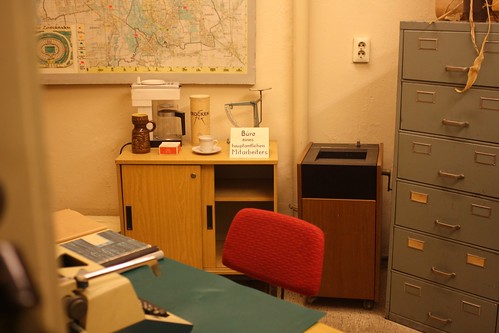
Note: this post written on March 19 for posting after we return. We arrived at Leipzig surprisingly about 5 minutes late on Wednesday morning. My friend Brad was at the Leipzig Hauptbahnhof (central stration) to meet us. As we walked through the city with him, he commented that I hadn t yet tried Currywurst, and there was a stand selling them with different levels of spiciness. I tried one and liked it; Terah was afraid to touch them. After a light lunch with Brad and Anna, we went back into town and saw the V lkerschlachtdenkmal (Monument to the Battle of the Nations). We were warned that it was weird and ugly. And when we arrived, I noticed that it was enormous. And, well, somewhat ugly. And, yes, weird. IMG_2681 After that, we walked through the old trade fair grounds. Leipzig has a long history as a trade center, and after they built the new trade fair grounds, the old ones were reused for other things except for the old Soviet building, which is now both gaudy and abandoned. We picked up Fritzi, who is a very cute 4 years old, from preschool and returned to their house for supper. After that, Brad and I went back into town, intending to hear a reading at the old city pool. When we realized it was a different day, we walked around the city center for awhile and then had a beer at a yes combination cafe/laundromat. Thursday was our day to explore the city. Brad showed us a couple of buildings in the university, including the library, then dropped us off at St. Thomaskirche. That s the church where J. S. Bach was music director for many years, and was buried. Like so many, it was impressive in its height and history. IMG_2703 Next we went to the Stasi museum. The Stasi were the feared and powerful East German secret police during the Communist times. The museum itself was housed in the former Stasi headquarters for Leipzig and was involved with the history of the overthrow of the Communists. The museum covered a lot of the history of the Stasi, including its frantic last days during the 1989 revolution. The level of spying on people was incredible and sophisticated, and they tried to destroy records as the overthrow of the government was imminent. One of the offices in the inner part of the building was left untouched from the Communist years, right down to the typewriter and coffee machine. IMG_2717 After that, we went to the Altes Rathaus (old city hall or townhouse, built in 1556) to do a bit of shopping. Terah was wanting some souvenirs, and I had spotted a shop I thought she might like when walking through the city with Brad the night before. We had already bought some souvenirs at the Schloss Charlottenburg museum store in Berlin (some East German-style crosswalk fridge magnets, and a decorative egg), but wanted something a bit nicer for us and were on the lookout for gifts for others too. We wound up buying a wood carved church scene with a woven wheat tree for us, and another item for others. The shopkeeper spoke no English, and my German vocabulary is small, but we managed to communicate the question of whether or not she could wrap it up in a box for our trip home and she could, and did. Excellent. (I didn t know how to ask about box, but knew how to say that we were Americans, and with a fair bit of gesturing all around, managed to get the idea across.) Then we went in the Altes Rathaus itself, which was both a museum and an interesting cultural experience. We bought our tickets at the booth downstairs, then went upstairs to the entrance. We asked for the English audio guide, which is very common at museums in Germany. (They are small digital audio players that contain recorded information; each room or display has a number you can key in to hear about it in your own language.) We got it, and were told in incredible detail how to use it, even though they are quite easy to figure out and we had used them before. The museum employee told us where the audio tour starts, and in what order it usually goes, which was an effort for her given her limited English. But we all understood and went on our way. It wasn t even 5 minutes later when she had left her desk and came over to us. She was slightly alarmed at two things: one that we didn t have the volume at full blast (which was loud enough for the entire room to hear), and secondly that we weren t looking at the exhibits in the proper order. Never mind that it s easy enough to pull up the audio information about any room just by keying in the number posted in it, I guess. Anyhow, we sort of inwardly shrugged, let her turn the volume up to potentially disturbing the other visitors level, and went through the museum in the order she wanted us to. (Note that this wasn t a museum where there is a one-way flow of traffic or something; you walk into one exhibit, back to the main hall, and then pick your next one.) So we went through the rest of the museum with our English audioguide blaring throughout the large, echoing, wood rooms, feeling a bit rude to the other visitors (maybe 5 of them while we were there) due to its volume. Anyhow, the Altes Rathaus was beautiful and interesting, covering mainly the pre-industrial history of Leipzig. We learned about some of the guilds, the city treasury (vault), and where the town council/parliament met along with rich merchants. There were about as many museum guards as visitors there, and one or two of them sort of followed us around, pointing out the large and completely obvious signs with audio guide numbers in the rooms for us. They are serious about their audio guides in Leipzig. I m glad we went, and I m glad we had the experience we did, too. Terah told me later that she felt reprimanded about the audio guide and visiting order. My take on it was a bit different: the museum is impressive and interesting, but obviously not visited by tourists as much as museums in other cities, or even touristy sites like Thomaskirche in Leipzig. I think they they noticed two people, obviously very foreign (speaking only a little German, and with an American accent) with an interest in their city s history, and took pride in making sure we got the most of our visit and learned as much as possible about something they care about. Here is the main hall of the Altes Rathaus. IMG_2727 We met up with Brad in a cafe near St. Thomaskirche for coffee and cake, then it was on to St. Nikolaikirche (the Church of St. Nicholas), the other large church in town. We stepped out of a passageway to face the large building, and walked in. The interior was decorated in pastels, and was also beautiful and historic. I can t get enough of that sort of building, I think. This building was especially important because it was the site of organizing for the Monday evening protests against the Communist government in 1989. People met at the church, sang a few hymns (to qualify it as a religious service, perhaps), then organized their protest for the evening. Sometimes they would wind through city streets and put flowers at the Stasi headquarters steps, and once the citizens actually overtook the Stasi headquarters. IMG_2745 After awhile we grabbed a bit more for lunch: a pretzel for Terah and a Currywurst for me. (This one wasn t spicy and wasn t all that good.) Then we went to the GDR museum, which was large and interesting, but unfortunately for us, completely in German with no English guide available. That evening, we went to a Bach concert at the Leipzig Gewandhaus, celebrating Bach s 325th birthday. That was fun, and a neat experience with such good music in a very nice venue. The program included Bach s Suite for Orchestra no. 1 in C Major (BWV 1066), Concerto for Violin no. 2 in E major (BWV 1042), Ich habe genug (BWV 82), and Suite for Orchestra no. 4 in D major (BWV 1069). Sir Roger Norrington was conducting, and was rather fun and atypical to watch. He had the audience chuckling a few times with his minimalist conducting or perhaps his flamboyant gestures. Anyhow, the music was excellent and the tickets included free passage on the public transit system 3 hours before and after the concert a nice touch. Due to our schedule, we didn t spend much time with Fritzi, but we did get to play with her a bit. She likes to pretend to be a shopkeeper, and had her store all ready to lay out. We would ask her for some items, which she d put in a basket for us, and then of course there would be a child s twist: we d get our items, and she d pay us for them too. Terah and I brought some books for Fritzi. The particularly enjoyed Goodnight Moon because inside it is an picture of The Runaway Bunny, which she already had. Fritzi chose one of her books to give to Jacob it was a German book (Maulwurf) based on a Czech cartoon mole. That was nice of her, and Jacob really liked it (I ll write about that later). We had a good time in Leipzig, and I was getting fairly good at navigating downtown and with the trams and then, of course, it was time to move on. So Friday morning we caught our 7:50 train from the Leipzig Hauptbahnhof. We took the ICE train to Dresden, then walked a few feet to get onto the EC to Prague. That was a bit of a funny experience. The ICE trains are all sleek, modern, meticulously maintained, and the passengers tend to be very quiet. Talking is barely above a whisper, and people seem alarmed if their cell phone rings, even outside the quiet car. The EC passenger car appears to have been built, or last renovated, in the 1970s, and may have been Hungarian. The seats and curtains are old and faded; some of the seat backs have rips in the vinyl headrests. People were talking or eating loudly, in a very different setting than on the ICE train. As we rode along, we were on the right side the river Elbe for many miles. The scenery was beautiful, with small houses in the river valley, and the occasional house up in the hillside. At one point (a bit before we passed through K nigstein on the way to the Bad Schandau stop), we spotted what looked like an old walled city up on the hill. I figured out later that it was Festung K nigstein (K nigstein Fortress). Update: I forgot to mention a couple of things about Leipzig. One was our walk through a forest yes, a forest in the city. That was a nifty, quiet, and pleasant surprise. Secondly was seeing all the DDR apartment blocks, where the apartments evidently were quite literally blocks. It is interesting to see the Communist architecture.

27 March 2010

Russell Coker: How to Choose a Free Software Mission

Jane McGoningal gave an interesting TED talk about how Online Gaming can Make a Better World [1]. One of her points is that there is no unemployment in games such as World of Warcraft, there is always a world saving mission available to you which is just within reach of your skill level and no-one is assigned a mission that they can t possibly do. It seems to me that the free software development community has a similar issue, there are always missions available at all skill levels. Our challenge is to find ways to encourage people to accept the missions and to provide them appropriate levels of support to encourage them on their path to an epic win . Choosing a suitable mission is a particularly difficult problem as you often don t know how difficult a task will be until you are more than half complete. Jane makes points about humans being happier when working hard and a desire for epic meaning . She says that it s a problem that gamers believe that they can change a virtual world but not the real world . If you change the virtual world of software development then that changes the real-world . Jane cites Herodotus as reporting a kingdom that was gripped in a famine for 18 years where the king instituted a policy of playing games and eating on alternate days with the aim being that the games would distract people from their hunger. I m sure that I m not the only person who s gone without food or water for a day because of being too busy coding She has a lot of other interesting points and I recommend that you read the Institute For The Future [2] web site for more background information. Now my question is, how can we encourage programmers to start doing Free Software and Open Source development and achieving some Epic Wins? I don t claim to have good answers and I would appreciate any suggestions. If you blog about this please leave a comment on this post to direct readers to your blog.

26 March 2010

Steve Kemp: I don't like it when people yell at me for no reason at all

Ubuntu always gets a lot of coverage in blogs, and the recent controvesy realisation that it isn't a 100% community-made distribution has triggered yet another round of this. A lot of the controvesy, coverage, and attention can be laid at the feet of Canonical themselves; I think it is fair to say that the visibility, hype, advertising, and the goal of trying to be all things to all men means that even relatively trivial issues can easily get blown out of proportion, and to a certain extent this is a self-inflicted. Live by the sword media & etc ... I think it is fair to say that Ubuntu has attracted a huge swathe of non-technical users. They want something "easy", "free", and "sexy", but more than that they want to use their computer, not develop the operating system. When a particular bug report, with 400+ comments, hits the press we're primarily seeing a marketing-fail rather than technical-fail. The realisation that yes bugs are reported, but no the community (of users) doesn't get input into every single thing is as it should be. If you look back over "controvesy" in the past you'll see comments from the non-technical users which are tantamoint to blackmail:
This should be fixed ... or I'm gonna .. install .. gentoo. yeah. really.
(Similarly you see many comments of the form "I agree", "oh noes", or "Please revert ASAP", rather than technical arguments.) This non-technical nature of the userbase is also readily apparent if you browse through the answers to problems posted in forums for example "Delete this file, I don't know why it works but it fixes it for me!!2!". (I've seen some truly horrific advice upon Ubuntu forums, even so far as chmodding various parts of the system to allow users to write binaries to /bin.) Similarly you'll see that the launchpad is full of generic linux misunderstandings and bugs that aren't "real". The unfortunate fact is that the Ubuntu bug tracker is a wasteland in many places: The tight timescale of releases combined with the sheer number of incoming bug reports means that often issues are overlooked. (For example one bug that bit a colleague is #402188 - on the one hand it is a trivial bug, on the other hand its readily apparent to users. If something like that can be missed it makes you wonder ..?) ObRandom: Ubuntu has 100 bugs open against its Vim package, some of which have been marked as NEW since 2009 (ie. untouched, ignored). By contrast the Debian vim package has way fewer bugs. I'm sure there are packages where the situation is reversed but I think is not an unusual comparison. Finally in addition to sheer numbers of bugs, and tight timescales, it has to be noted that the relative number of developers to users is miniscule, and this in turn has lead to some interesting solutions. The Ubuntu PPA system (personal package archive) should be a good thing. It should allow people to submit new packages for testing, for bugfixes, and for more visibility. Instead downloading a PPA file is no different than going to download.com and downloading a random binary - sure it might be legit, but there's no oversight, no quality control, and most likely no future updates.
Ubuntu as a distribution is interesting, and I'm not trying to be overly critical - A year or two ago had somebody thrown money at me I might have been inclined to accept it. I think most of the perceived problems stem from a single common source, which is largely the issue of scale. (e.g. bug reports to bug handlers. developer numbers to user numbers.)
There are many good things to be said about Ubuntu (& Canonical) in addition to the negative ones that we see in the press or that I've perceived and mentioned above. The truth is it works for a lot of people, and the growing pains will continue until it either dies or both its audience and itself matures. Either way I don't hate Ubuntu, in the same way that I don't hate Microsoft, Oracle, Fedora, Gentoo, or other mass-entities. There are pros and cons to be made for most of them, (and of course Debian itself is no different).
However I will say that every time I see people write "If you want a sexy/shiny/easy to use Linux desktop then install Ubuntu" I glance over at my Debian Lenny desktop, marvel at how sexy, shiny and easy to use it is, and get a little bit disappointed at our own marketing failure(s).
ObFilm: Day of the Woman

Colin Watson: Thoughts on 3.0 (quilt) format

Note: I wrote most of this before Neil Williams' recent comments on the 3.0 family of formats, so despite the timing this isn't really a reaction to that although I do have a couple of responses. On the whole I think I agree that the Lintian message is a bit heavy-handed and I'm not sure I'm thrilled about the idea of the default source format being changed (though I can see why the dpkg maintainers are interested in that). That said, as far as I personally am concerned, there is a vast cognitive benefit to me in having as much as possible be common to all my packages. Once I have more than a couple of packages that require patching and benefit from the 3.0 (quilt) format as a result, I find it in my interest to use it for all my non-native packages even if they're patchless right now, so that for instance if they need patches in the future I can handle them the same way. It's not unheard of for me to apply temporary patches even to packages I actively maintain upstream, so I don't discount those either. I haven't decided what to do with my native packages yet; unless they're big enough for bzip2 compression to be worthwhile, there doesn't seem to be much immediate advantage to 3.0 (native). Anyway, on to the main body of this post: I've been one of the holdouts resisting use of patch systems for a long time, on the basis that I felt strongly that dpkg-source -x ought to give you the source that's actually built, rather than having to mess around with debian/rules targets in order to see it. Now that the 3.0 (quilt) format is available to fix this bug, I felt that I ought to revisit my resistance and start trying to use it. Migrating to it from monolithic diffs is of course a bit more work than migrating to it from other patch systems, so it's taken me a little while to get round to it. I'd been thinking about holding off until there was better integration with revision control (e.g. bzr looms), as I feel that patch files really ought to be an export format, but I eventually decided that I shouldn't let the perfect be the enemy of the good. I have enough experience with co-maintaining packages that use build-time patch systems to be able to compare my reactions. After experimenting with a couple of small packages, I moved over to the deep end and converted openssh a few weekends ago, since quite a few people have requested over the years that the Debian changes to openssh be easier to audit. This was a substantial job - over 6000 lines of upstream patches - but not actually as much work as I expected. I took a fairly simplistic approach: first, I unapplied all the upstream patches from my tree; then I ran bzr di interdiff -q /dev/stdin /dev/null >x, reduced it to a single logically-discrete patch, applied it to a new quilt patch using quilt fold, and repeated until x was empty. This was maybe an hour or two of work, and then I went through and tagged all the patches according to DEP-3, which took another few hours. After the first pass, I ended up with 38 patches and a much clearer idea of what has been forwarded upstream and what hasn't; I currently have 5 patches to forward or eliminate, down from 18. Good things: Bad things: On the whole I'm satisfied with this, and the benefits definitely outweigh the costs. Thanks to the dpkg team for all their work on this!

Next.

Previous.